Vue lecture

EU Fines Google $1 Billion For Breaking Digital Antitrust Regulations

The European Union fined Google more than $1 billion for allegedly using Google Play and Search to steer users toward its own services and apps at the expense of competitors. The Associated Press reports: Google had recently lost its appeal of a $4.5 billion antitrust fine imposed by the EU for throttling competition and reducing consumer choice through the dominance of its mobile Android operating system. The European Commission, the bloc's executive branch and highest antitrust enforcer, said it was acting in the interest of consumers after an investigation of Google. "The best products should succeed because they're better, not because they're owned by the company running the search engine. And European consumers have a right to be told by app developers where to sign up to the best offers, even when the app store owner does not get a cut," said Teresa Ribera, the commission's Executive Vice President for Clean, Just and Competitive Transition. Google's President of Global Affairs Kent Walker blasted the fine as "product degradation driven by a small group of self-serving complainants" that will have a negative impact on European businesses and consumers. He said that the EU's Digital Markets Act forces Google "to strip away real-time search features Europeans love -- like instant pricing and direct availability for hotels, flights, and restaurants -- and dismantle safety protections on Google Play."

Read more of this story at Slashdot.

  •  

Bon Plan : Jeu Foretales offert sur Epic

Une terrible malédiction ravage le royaume et la seule personne capable de l’arrêter est un petit voleur nommé Volepain. La Tisserande a confié les instruments de création à ses enfants, les nymphants.

La Tisserande a placé le destin de la création et de la stabilité du monde entre les mains de ses enfants. Les instruments de création ont le pouvoir de créer et de détruire les nombreux mondes de Foretales. Découvrez les véritables intentions des nymphants et du culte, ou laissez le maelström vous emporter pour l’éternité !

Dispo gratuitement sur Epic

PEGI 12 – Audio en Anglais et Texte en Francais – Windows

Retrouvez tous mes bons plans sur Mistermatos.com

Bon Plan : Jeu Foretales offert sur Epic © MiniMachines.net. 2026

  •  

France Becomes First European Country To Ban Social Media Access For Under-15s

An anonymous reader quotes a report from The Guardian: France's parliament has approved a bill banning social media access for children under 15, making it the first European country to bar children from apps such as TikTok. The president, Emmanuel Macron, has championed the ban as a key reform of his final term in office and pledged to enforce it by September. "France is leading the way in Europe when it comes to protecting our children and teenagers," Macron said in a video posted on social media, hailing "a major step forward." He thanked members of parliament for backing the legislation on Tuesday. "The Constitutional Council must now rule on it, and then it will be time to take action to make this measure a reality and protect our children online," he added on X. After approval by the Senate earlier on Tuesday, members of the National Assembly passed the bill by 279 votes to 81. A growing number of countries are taking steps to restrict social media access amid multiplying warnings over its harmful effects on children. The ban was to be introduced in two stages, with under-15s blocked from creating new accounts from September 1. The ban would apply to existing accounts from January 2027, according to the legislation. The digital minister, Anne Le Henanff, said before the vote that the timeline was realistic, "because age-verification tools already exist" and others are still in the works, and the onus was on the platforms to impose the rule. "For four months, all of us in France will have to prove our age," she told journalists. "If someone is under 15, the account will be closed." The minister also gave assurances that users' personal data would be protected.

Read more of this story at Slashdot.

  •  

France Orders ISPs to Block Access to Polymarket

France's regulatory authority for licensed gambling/betting games "announced this week that it ordered ISPs to block access to Polymarket," reports Engadget. Anyone caught advertising an unauthorized betting site "could be fined up to 100,000 euros, or around $114,000." (The article notes this follows a previous regulatory action from November placing a geoblock on financial transactions from French residents on Polymarket's site.) In May Spain blocked access to Polymarket and Kalshi while it launched a gambling license investigation.

Read more of this story at Slashdot.

  •  

EU Forces Google To Share Search Data, Open Android To Rivals

The EU is imposing new rules requiring Google to share anonymized search data and open up Android to rival AI companies. "Thanks to these measures, we hope to see emerging alternatives to Google Search and Google's AI services, such as Gemini, and that users in the EU can enjoy greater choice of services," Henna Virkkunen, an executive vice president at the European Commission overseeing tech, said. The Associated Press reports: In issuing the two new rules, the commission said it found that AI agents not made by Google were unable to function on Android phones at the same level as Google's Gemini. Google must now allow voice-activation of these alternative AI agents and enable them to run background tasks like booking restaurants via third-party apps. By January 2027, Google must also begin sharing anonymized search data with some rivals. The commission said the move is meant to level the playing field since Google controls a vast trove of user data that no competitor can match. Google argues the measures could weaken privacy and security by exposing user searches and reducing safeguards around third-party AI assistants. "Europeans' private searches would be exposed to unfamiliar companies, without adequate anonymization of the data and without user knowledge or consent," said Kent Walker, president of global affairs for Google and Alphabet. "This would weaken citizens' privacy, risk business trade secrets, and endanger national security."

Read more of this story at Slashdot.

  •  

EU Won't Require User-Replaceable Batteries for Wearables

The European Commission has exempted wearables from upcoming EU rules requiring portable-device batteries to be removable and user-replaceable. The broader Batteries Regulation still takes effect in February 2027 for many consumer products, but the exemption means companies like Apple, Google, Samsung, and Meta won't have to redesign their wearables for the EU. Thurrott reports: Yesterday, the Commission announced that new product categories would be exempted from complying with its Batteries Regulation, including wearable devices such as smartwatches, fitness trackers, and smart glasses. This will likely be good news for companies like Apple, Google, Samsung, and Meta, which won't have to redesign their devices to include user-replaceable batteries for consumers in the EU market. The EU's Batteries Regulation will come into effect in February 2027, which is when Nintendo plans to stop selling all models of the original Nintendo Switch in the EU. While Nintendo had no choice but to redesign its handheld console to keep selling it in the EU, it probably didn't make sense for the company to put in the same effort for the OG Switch, which will celebrate its 10th anniversary in March 2027.

Read more of this story at Slashdot.

  •  

Disable Autoplay and Infinite Scroll Or Risk Massive Fines, EU Tells Meta

An anonymous reader quotes a report from Ars Technica: The European Union is ramping up pressure on Meta to make big changes to Facebook and Instagram after the European Commission preliminarily found that features like autoplay, infinite scroll, and highly personalized content recommendations were addictive. On Thursday, the EC said its investigation indicated that "Meta did not adequately assess the risks of its addictive design on the physical and mental wellbeing of users, including minors and vulnerable adults." "These features fuel the user's urge to keep scrolling and shift the brain into 'autopilot mode,' contributing to unhealthy habits and compulsive use," the commission said. Over the next few months, Meta will have an opportunity to dispute the claims, and it has already taken a defensive stance. Meta's spokesperson, Ben Walters, told Reuters that Meta disagrees with the commission's preliminary findings, which supposedly "don't accurately take into account the significant steps we've taken to protect teens." "Since this investigation began, we rolled out Teen Accounts that automatically protect teens and put parents in control -- allowing them to block access to Instagram at night and cap daily screen time at just 15 minutes," Walters said. However, the EC emphasized that Meta's current mitigation efforts, including time management tools activated by default for teens, "failed to effectively tackle the risks stemming from its addictive design." Additionally, parental controls were deemed "only effective if parents and guardians possess adequate technical expertise" and dedicated "effort and time to understand them effectively." "This undermines the efficiency of such measures in addressing the inherent risks posed by Instagram and Facebook's addictive design," the EC said, particularly for minors. At this stage, the EC recommended that Meta consider "disabling key addictive features such as 'autoplay' and 'infinite scroll' by default, implementing effective 'screen time breaks,' and adapting its recommender system to make it less engagement-oriented." If Meta fails to make changes to comply with the EU's Digital Services Act, the company risks fines up to 6 percent of its global annual turnover when the EC makes its final decision in the coming months. "Our starting point is that, based on our findings, this design is too addictive and changes need to be made," Henna Virkkunen, the EU's tech chief, told Reuters. "The next step is either that Meta changes its design or a non-compliance decision will follow," she said, noting in the press release that the EU's priority is "protecting the physical and mental health of Europeans." "The Digital Services Act provides a clear framework to hold platforms accountable for the addictive design and effects of their services," Virkkunen said. "We are fully committed to enforcing our legislation in Europe." The report also notes that the EC will share findings from experts on Monday that "could help pave the way for a Europe-wide social media ban for teenagers." It's not looking much better for Meta in the U.S., either. The company faces a lawsuit from 29 states that claim Meta's platforms addict kids. "That trial begins in August, and states may seek up to $1.4 trillion in penalties if Meta is found guilty," reports Ars.

Read more of this story at Slashdot.

  •  

Apple Loses EU Fight Over App Store Gatekeeper Label

Europe's General Court dismissed Apple's challenge to the EU's designation of its App Stores and iOS as "gatekeepers" under the Digital Markets Act. The ruling means Apple remains subject to DMA obligations requiring it to allow alternative app stores, support interoperability with rival services, and avoid favoring its own services over competitors. MacRumors reports: Apple took its case to Luxembourg's General Court in 2024 after the European Commission designated its five App Stores -- on the iPhone, iPad, Mac, Apple TV, and Apple Watch -- as a single core platform service under the Digital Markets Act (DMA), a label that brings with it a set of strict obligations. Designated "gatekeepers" are prohibited from favoring their own services over those of rivals, and are prevented from combining personal data across different services. They also have to give users the option to use alternative app stores. Apple also challenged the EU's designation of iOS as a gateway platform, a status that requires the operating system allows rival services to interoperate with it. The company also disputed the classification of iMessage as a number-independent interpersonal communications service, or NIICS, which would subject the app to EU telecoms rules. But the General Court said Apple's actions regarding the iMessage service are inadmissible.

Read more of this story at Slashdot.

  •  

Google Ordered to Pay $2 Billion For Anti-Competitive Practices By Swedish Court

Google was ordered to pay almost $2 billion this week to Pricerunner, reports Bloomberg: The Patent and Market Court in Stockholm, which issued the judgment on Wednesday, dismissed most parts of the claim in which Pricerunner sought 80 billion Swedish kronor, or roughly $8.2 billion, in the wake of a European Union antitrust crackdown... The Swedish price-comparison website argued that Google has been abusing its dominant position as a search engine by favoring its own comparison shopping service over competing portals for more than a decade. Wednesday's award compensates for lost revenue caused by Google's preferential treatment of its own comparison-shopping service over independent price-comparison services, conduct that also drives up costs for consumers, [Pricerunner owner] Klarna said in a statement after the judgment... A Google spokesperson said the company doesn't agree with the court's decision and will consider its legal options. [The ruling can be appealed.] Changes implemented in 2017 to Google's platform are working and generating growth and jobs for hundreds of comparison shopping services operating more than 1500 websites across Europe, according to the statement. The litigation is linked to a 2017 decision by the European Commission to fine Google €2.4 billion for illegally leveraging its search dominance to give its own shopping service an edge. The EU decision unleashed a wave of so-called follow-on suits, which were delayed for years as Google appealed the EU fine. Two years ago the EU's top tribunal confirmed that the company did violate antitrust laws — meaning EU-based plaintiffs no longer have to prove that in court. A Berlin court last year ordered the tech giant to pay €573 million in damages to two German price-comparison websites, a ruling Google appealed. Similar cases are pending across Europe.

Read more of this story at Slashdot.

  •  

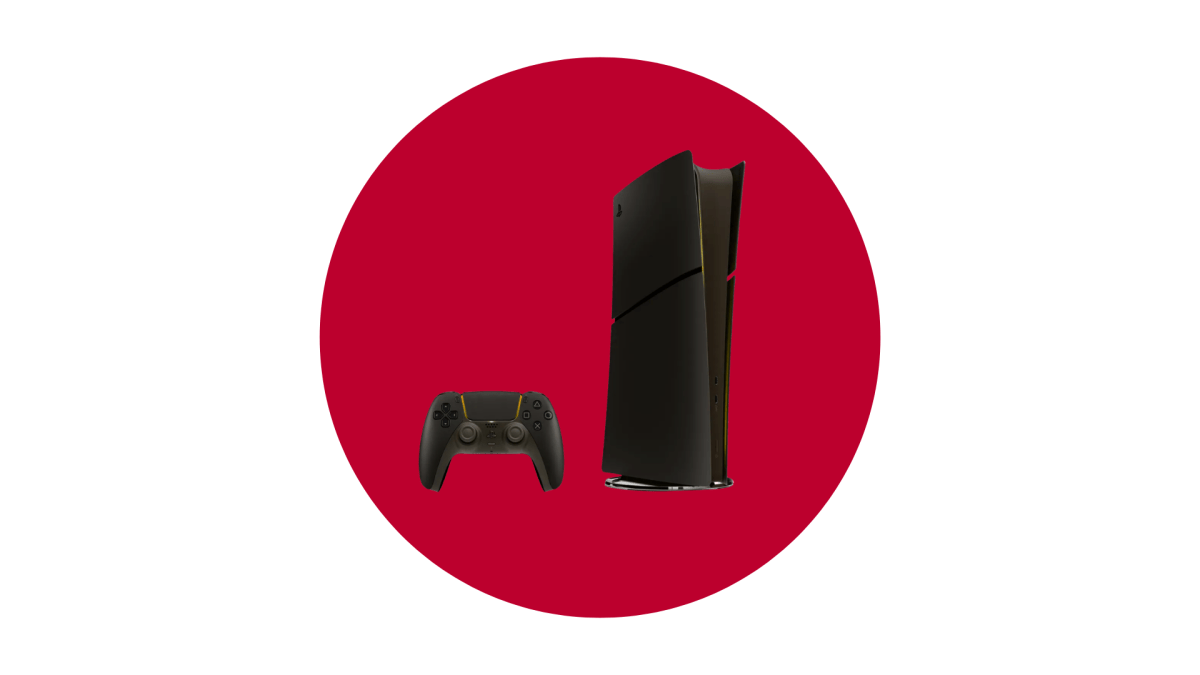
« C’est un pur monopole que va faire Sony » : la fin des jeux PlayStation physiques met-elle en péril les boutiques ?

Sony a démarré le second semestre de l'année 2026 par une annonce fracassante : à partir de janvier 2028, plus aucun jeu physique PlayStation ne sera produit. Une immense épée de Damoclès qui s'abat sur les revendeurs spécialisés, comme nous l'explique Thomas 'Gyo' Bachellerie, commerçant et consultant indépendant.

  •  
❌