Vue lecture

New Problem for NASA's 'Lunar Gateway': Corrosion in Two Modules Caused by Supplier

In March, NASA Administrator Jared Isaacman announced that the moon-orbiting "Lunar Gateway" space station was being "paused" to focus instead of missions to the moon's surface. And Ars Technica agrees that the project was essentially "spending billions of dollars to make it more difficult to reach the lunar surface and faced the prospect of watching Chinese astronauts wander around on the Moon from orbit instead of being there themselves." "But this week, we learned another reason that Gateway is going away, and it's pretty shocking." During testimony before the US House Committee on Science, Space, and Technology, Isaacman faced questions about NASA's budget... He then publicly confirmed rumors (reported last month by Ars) that there is corrosion in both the HALO [Habitation and Logistics Outpost] and I-HAB modules of the Gateway. "The only two habitable volumes that were delivered — both were corroded," Isaacman said. "And that's unfortunate because it would have delayed, probably beyond 2030, the application of Gateway...." In a statement, Northrop confirmed the issue as well. "Using NASA-approved processes, Northrop Grumman is completing repairs to HALO after a manufacturing irregularity," a company spokesperson told Ars. "We expect to complete repairs by the end of the third quarter. HALO can still be repurposed for any mission, and it's the most mature technology to support a deep space or lunar habitat." By referring to a "manufacturing irregularity," Northrop answered the central mystery here: how corrosion could appear in both modules. This is because a French-Italian space and defense company, Thales Alenia Space, built the primary structure of HALO for Northrop Grumman. The module was delivered from Italy to the United States about a year ago Thales is a powerhouse of the European space industry. It built several pressurized modules of the International Space Station, and it's working with Axiom Space to build its commercial space station. The company also had a big piece of the Lunar Gateway in addition to HALO, developing the I-HAB module and a future communications and refueling module known as ESPRIT... After the issue was discovered, the European Space Agency established a "tiger team" to investigate. "Based on the investigation and available data, the corrosion issue was understood to be technically manageable and did not constitute a showstopper for I-HAB, which was, in any case, in better conditions than HALO from [a] corrosion point of view," the spokesperson said... After publication of this story on Friday, Axiom Space confirmed that it has also experienced corrosion issues. In a statement, the company said: "Axiom Space has experienced a similar phenomenon with the first module; we are leveraging the expertise of NASA and Thales Alenia Space to address the issue. Module 1 is on track to launch in 2028."

Read more of this story at Slashdot.
  •  

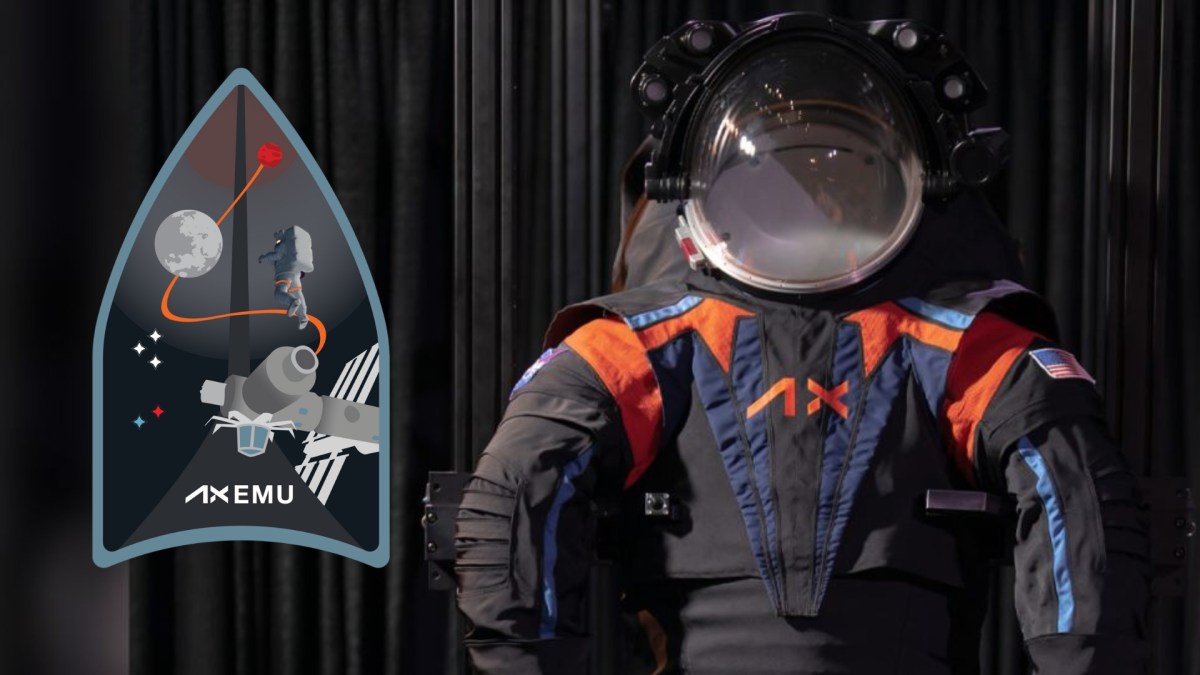
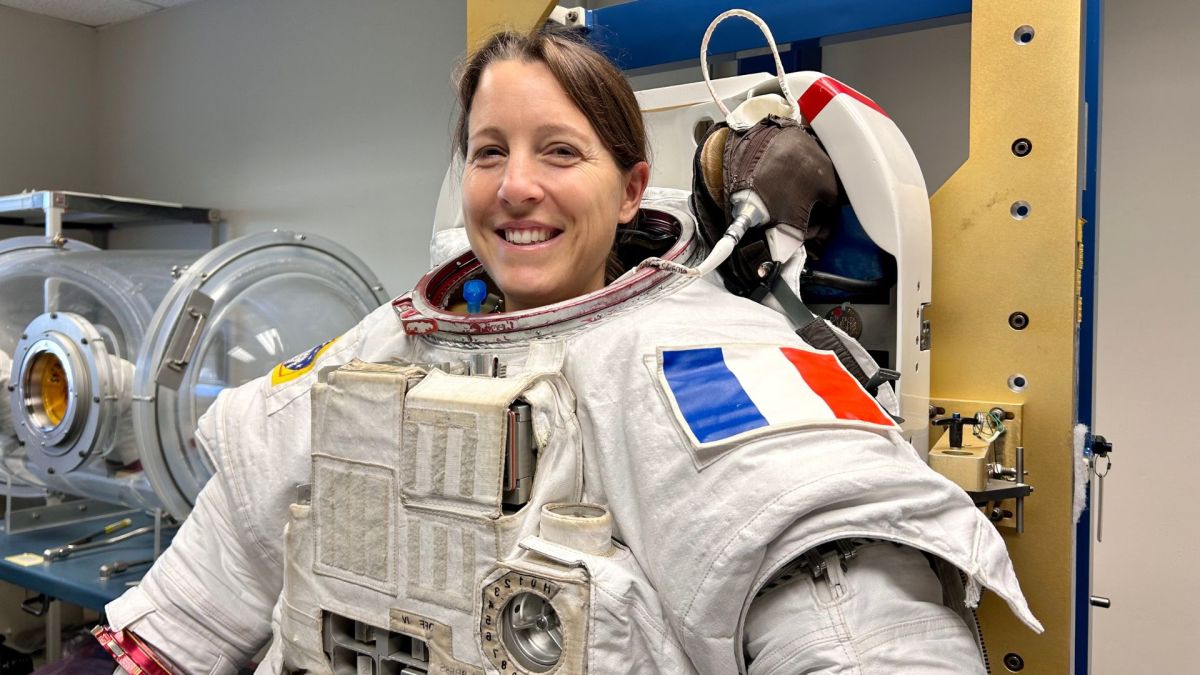
La Nasa prévoit une arrivée sur la Lune en 2028… Mais les scaphandres seront prêts en 2031 ?

Le programme Artémis risque d'être compromis, ou repoussé, à cause de difficultés dans la conception des futures combinaisons spatiales. En conséquence, il pourrait être difficile d'envisager un retour sur la Lune avant 2031 au mieux, soit un retard de trois ans par rapport au planning actuel de la NASA.

  •  

À 25 milliards de km, le pari de la NASA pour modifier le fonctionnement électrique des sondes Voyager

À 25 milliards de kilomètres de la Terre, les sondes Voyager luttent contre le froid et l’épuisement de leurs batteries nucléaires. Pour éviter le silence définitif, la NASA lance une opération de la dernière chance baptisée Big Bang. Objectif : réorganiser totalement la consommation d'énergie pour gagner de précieuses années de vie interstellaire.

  •  

Voyager 1 is Running Out of Power. NASA Just Switched Part of It Off

After 49 years of space travel, Voyager 1 "is running out of power," reports NPR: The spacecraft runs on a radioisotope thermoelectric generator — a device that converts heat from decaying plutonium into electricity. It carries no solar panels, no rechargeable batteries. Just the slow, steady release of nuclear warmth, which diminishes by about 4 watts each year. After nearly five decades, that decline has become critical. During a routine maneuver in late February, Voyager 1's power levels fell unexpectedly, bringing the probe dangerously close to triggering an automatic fault-protection shutdown — a self-preservation response that would have forced engineers into a lengthy and risky recovery process. The team needed to act first. On April 17, mission engineers sent a sequence of commands to deactivate the Low-energy Charged Particles experiment, known as the LECP, which is one of Voyager 1's remaining science instruments. The LECP has measured ions, electrons, and cosmic rays originating from both our solar system and the galaxy beyond it, helping scientists map the structure of interstellar space in a way no other instrument could... Voyager 1 now carries two operational science instruments: one that listens for plasma waves, and one that measures magnetic fields. Engineers believe the latest shutdown could buy the mission roughly another year of breathing room. The team is also developing a more sweeping power conservation plan they informally call "the Big Bang" — a coordinated swap of several powered components all at once, trading older systems for lower-power alternatives. If testing on Voyager 2, planned for May and June 2026, goes well, the same procedure will be attempted on Voyager 1 no sooner than July. If it works, there is even a slim chance the LECP could once more continue to work. The engineers say they hope to keep at least one instrument operating on each spacecraft into the 2030s. It would leave both still reporting from places no machine has ever gone before.111 Voyager 1 is now 15 billion miles from Earth, the article points out. (Radio signals take 23 hours to arrive...) Thanks to long-time Slashdot reader fahrbot-bot for sharing the article.

Read more of this story at Slashdot.

  •  

NASA Restarts Work To Support Europe's Uncrewed Trip To Mars After Years of Setbacks

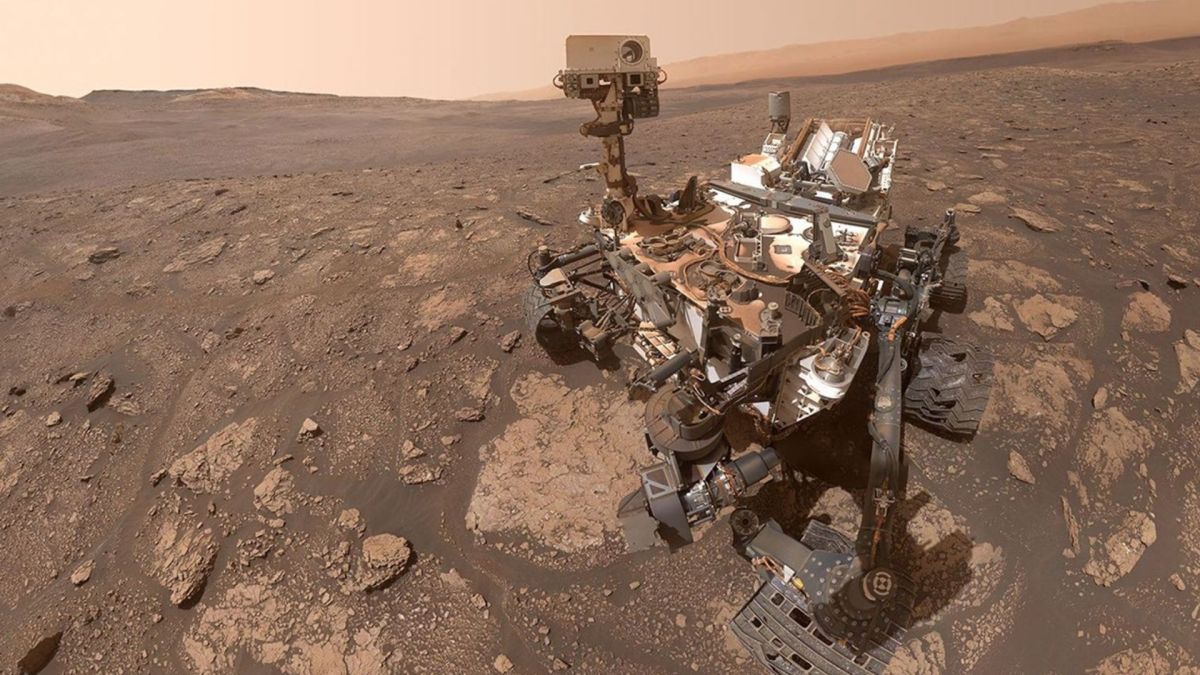
NASA has revived support for the European Space Agency's long-delayed Rosalind Franklin Mars rover mission. According to the space agency, the current plan is to launch via a SpaceX Falcon Heavy no earlier than 2028. Engadget reports: This is a partnership between NASA and the ESA, with the European agency providing the rover, the spacecraft and the lander. The US will provide braking engines for the lander, heater units for the rover's internal systems and, of course, assistance with the actual launch. The rover will be outfitted with scientific instruments to look for signs of ancient life on the red planet. These include a state-of-the-art mass spectrometer and an organic molecule analyzer, which will come in handy as the vehicle collects samples at the Oxia Planum landing site. The mission has been stuck in development limbo since 2001, with delays caused by budget problems, technical issues, shifting international partners, and geopolitical fallout. After NASA dropped out, Russia stepped in, then was cut loose after invading Ukraine, and now -- despite NASA rejoining in 2024 and fresh political budget threats -- the rover is tentatively back on track for a 2028 launch.

Read more of this story at Slashdot.

  •  

ExoMars 2028 : sauvée de la malédiction, la mission européenne s’envolera vers Mars sur un Falcon Heavy

Falcon Heavy

Longtemps considérée comme maudite, la mission européenne ExoMars voit enfin son horizon s’éclaircir. Épaulé par la NASA, le rover Rosalind Franklin s’envolera fin 2028 à bord du rare et surpuissant Falcon Heavy de SpaceX, prêt à traquer d'anciennes traces de vie sous le sol martien.

  •  
❌