
Vue lecture

Spotify, UMG To Let Fans Make Their Own Music With AI

An anonymous reader quotes a report from Billboard: Spotify and Universal Music Group (UMG) announced a licensing deal for recorded music and publishing rights, enabling Spotify to launch generative AI music models in the future. With this deal, Spotify's models will allow fans to create covers and remixes of their favorite songs from participating artists and songwriters signed to UMG. The new deal was announced on Thursday (May 21) as part of Spotify's Investor Day presentation, and the company touts that it will open up additional revenue streams on top of what artists already earn on Spotify and will provide new discovery opportunities for participating UMG talent. These AI products will eventually become available to premium users as a paid add-on. It is unclear when they are set to launch. "We recognize there's a wide range of views on use of generative music tools within the artistic community," the announcement read. "Therefore, artists and rightsholders will choose if and how to participate to ensure the use of AI tools aligns with the values of the people behind the music." Spotify also announced a feature called "Reserved" that will set aside concert tickets for Premium subscribers it identifies as an artist's most dedicated fans. "Getting concert tickets today can feel like a race you're set up to lose," Spotify wrote in a post on Thursday. "You show up at the right time, refresh endlessly, and still miss out. Too often, the experience is stressful, unpredictable, and disconnected from what should matter most: whether real fans actually get tickets. We think there's a better way."

Read more of this story at Slashdot.
  •  

Trump Calls Off AI Executive Order Over Concern It Could Weaken US Tech Edge

Trump called off a planned AI executive order just hours before a signing ceremony because he said he was worried the framework could slow America's lead over China. "We're leading China, we're leading everybody, and I don't want to do anything that's going to get in the way of that lead," Trump told reporters. The Associated Press reports: The order would have established a framework for the government to vet the national security risks of the most advanced AI systems before their public release, according to a person familiar with the White House's deliberations with the tech industry but not authorized to speak about it publicly. The directive was being characterized as a voluntary collaboration with participating U.S.-based tech companies, including Anthropic, OpenAI and Google, the person said. There are competing factions within the administration, said Serena Booth, a computer science professor at Brown University and former AI policy fellow in a Democratic-led Senate committee. "We do see this kind of public fighting," she said. "'We will release an executive order. No, we won't. We're going to sign it this afternoon. Oh, the signing is canceled.' I think this whiplash is because we're seeing these fractures.'" Some of those divides are balancing what Booth said is a "reasonable idea" to test the most capable AI models before their public release, with a concern that government scrutiny, if it takes too long, could burden AI developers. "It does come at a potential very large cost to innovation and speed of development," she said. "There is, I think, a real risk here and I do see both sides." [...] "They don't want to do it because it's politically risky in a million different ways," said Dean Ball, now at the Foundation for American Innovation. Ball said he would welcome an executive order that would get those companies working more closely with the government on cybersecurity but "ultimately, I'm fine with them taking time to get this right."

Read more of this story at Slashdot.
  •  

OpenAI Claims It Solved an 80-Year-Old Math Problem

An anonymous reader quotes a report from TechCrunch: OpenAI claims its new reasoning model has produced an original mathematical proof disproving a famous unsolved conjecture in geometry, which was first posed by Paul Erdos in 1946. If this sounds familiar to you, it's because this isn't the first time OpenAI has made such a bold claim. Seven months ago, the AI giant's former VP Kevin Weil posted on X: "GPT-5 found solutions to 10 (!) previously unsolved Erds problems and made progress on 11 others." It turns out, GPT-5 didn't actually solve those problems; it just found solutions that already existed in the literature. Taunts from rivals like Yann LeCun and Google DeepMind CEO Demis Hassabis followed, and Weil promptly took down his premature post. Today, at least, it seems OpenAI didn't make the same mistake twice. Alongside the announcement, the company published companion remarks (PDF) in support of the disproof from mathematicians like Noga Alon, Melanie Wood, and Thomas Bloom, who maintains the Erdos Problems website, and previously called Weil's post "a dramatic misrepresentation." [...] The proof, per OpenAI, came from a new general-purpose reasoning model, not a system specifically designed to solve math problems or even this problem in particular. OpenAI says this is significant because it means AI systems are now more capable of holding together long, difficult chains of reasoning and connecting ideas across fields in ways researchers may not have previously explored. That has implications for biology, physics, engineering, and medicine.

Read more of this story at Slashdot.

  •  

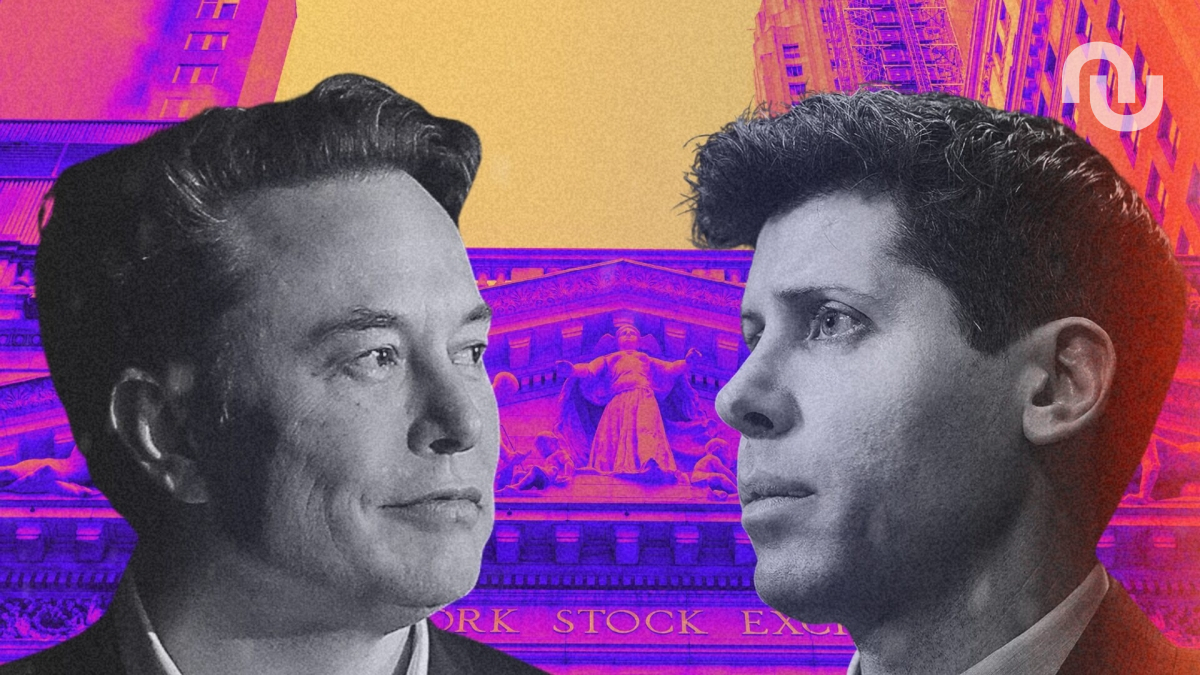
OpenAI fonce vers la Bourse et pourrait voler la vedette à SpaceX

OpenAI s’apprêterait à déposer confidentiellement son dossier d’introduction en Bourse aux États-Unis, avec une IPO potentiellement prévue dès septembre 2026, rapporte Reuters le 20 mai 2026. Une opération historique qui pourrait raviver la rivalité entre Sam Altman et Elon Musk, alors que SpaceX prépare elle aussi son arrivée sur les marchés.

  •  
❌