Vue lecture

SpaceX's Upgraded Starship V3 Launches For First Time

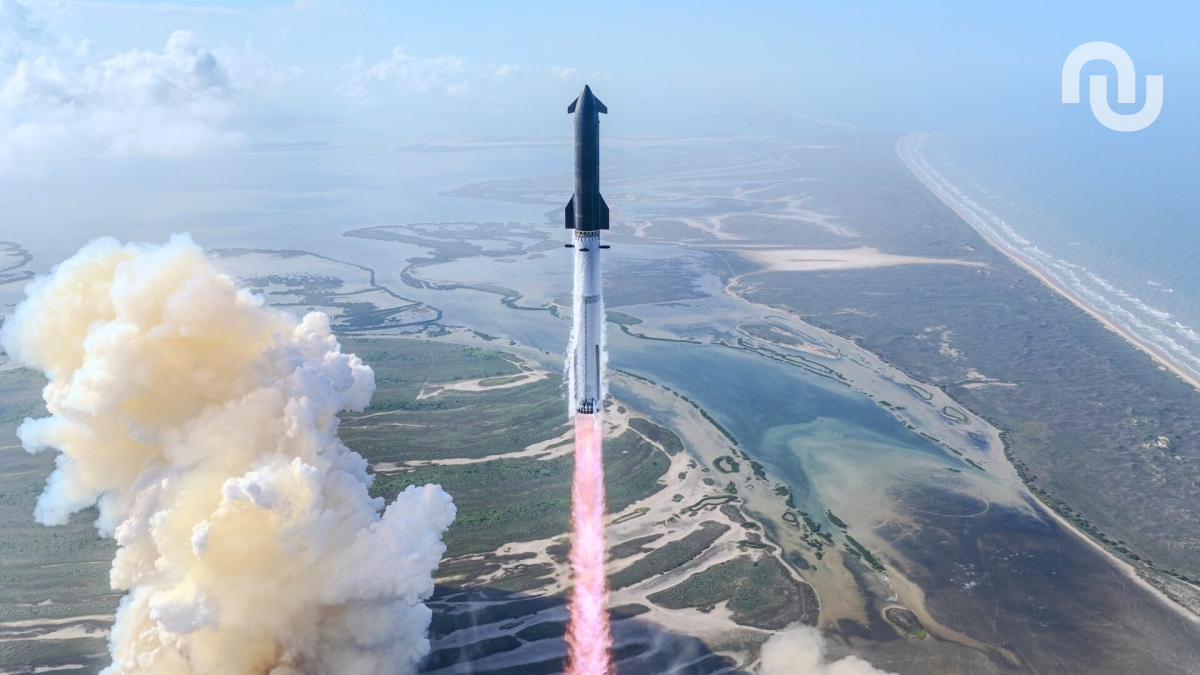
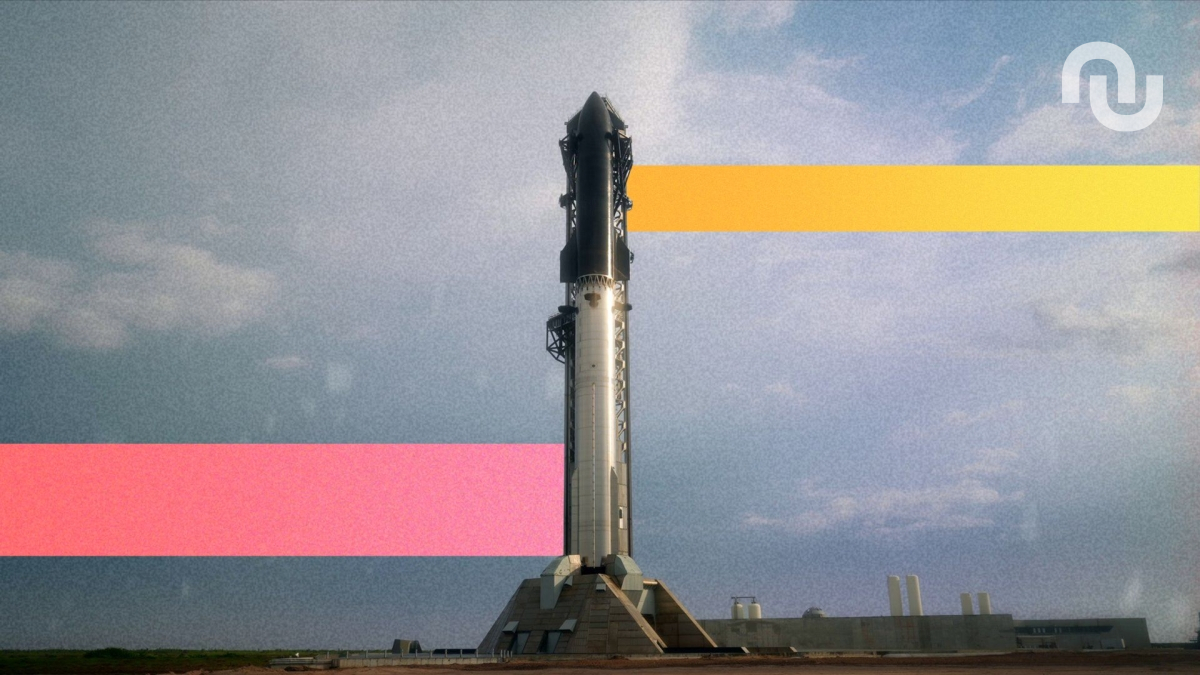
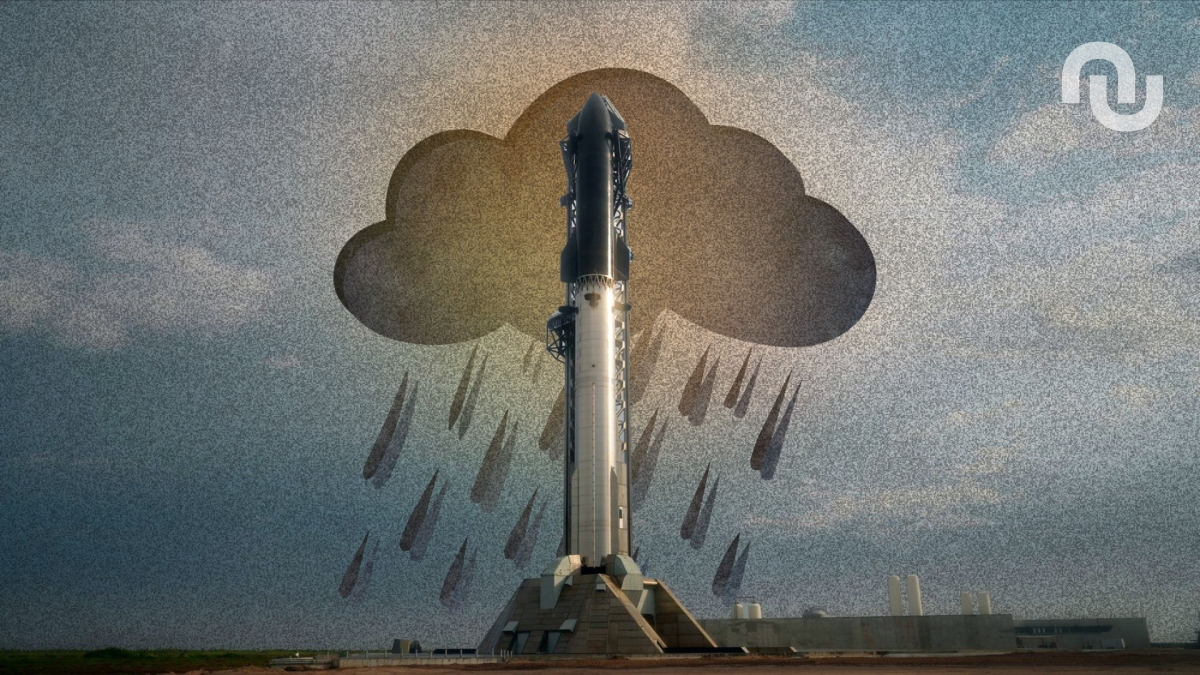
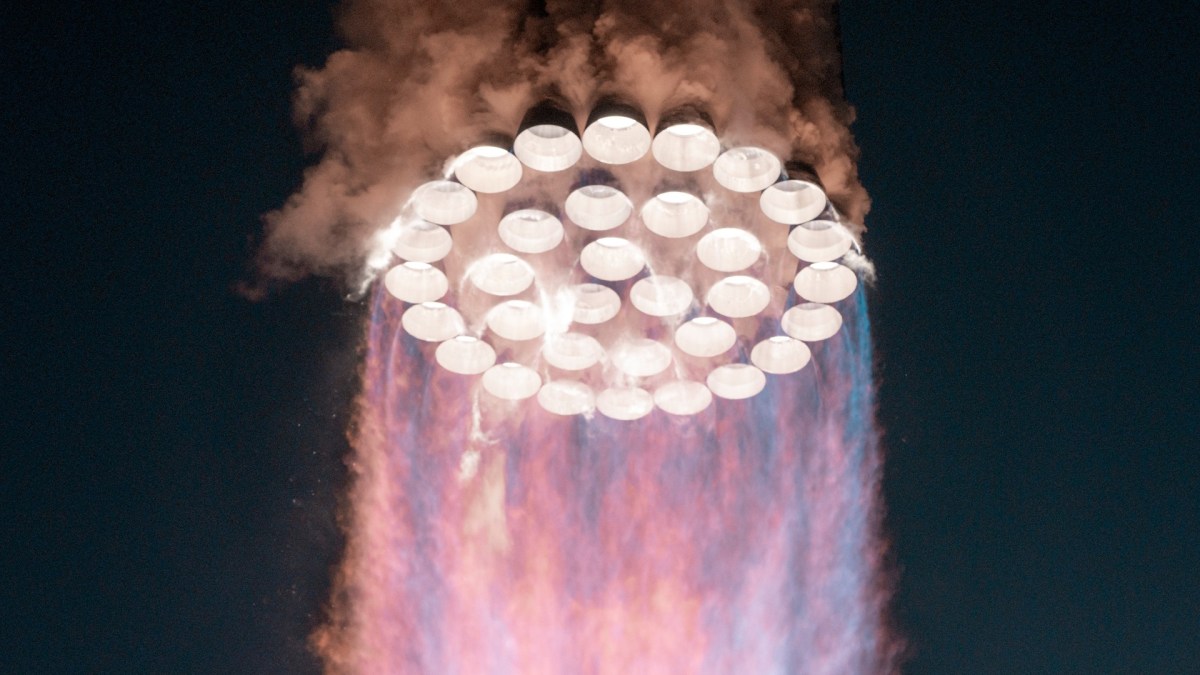
SpaceX's upgraded Starship V3 launched today from Starbase, Texas, for the first time, successfully deploying 22 dummy Starlink satellites and completing a planned fiery splashdown in the Indian Ocean. Reuters reports: The towering vehicle, consisting of the upper-stage Starship astronaut vessel stacked atop a Super Heavy booster rocket, blasted off at about 5:30 p.m. CT on Friday (2230 GMT) from SpaceX facilities in Starbase, Texas, on the Gulf of Mexico near Brownsville. A live SpaceX webcast of the liftoff showed the rocketship, more than 40 stories tall, climbing from the launch tower as the Super Heavy's cluster of Raptor engines thundered to life in a ball of flames and billowing clouds of vapor and exhaust. The test ended about an hour later when the Starship vehicle made it through a blazing re-entry through Earth's atmosphere and splashed down into the Indian Ocean, nose up as planned, as SpaceX employees who gathered to watch a live webcast of the flight cheered. The lower-stage Super Heavy came down separately in the Gulf of Mexico about six minutes after blast-off. The launch marked SpaceX's 12th Starship test flight since 2023 and the first ever for the V3 iteration of both the cruise vessel and its Super Heavy booster, as well as the first blast-off from a new launch pad designed for the more powerful rocket. During its suborbital cruise phase, Starship successfully released its payload of 20 mock Starlink satellites one by one, plus two actual modified satellites that scanned the spacecraft's heat shield and transmitted data back to operators on the ground during the vehicle's descent. Starship made it to its cruise phase despite the loss of one of its six upper-stage engines, and mission controllers opted not to attempt an inflight re-ignition of the engines before re-entry. But the vehicle did execute a return-landing burn at the very end of its flight, along with several aerodynamic maneuvers deliberately intended to place the spacecraft under maximum stress, and Starship completed those moves intact for its controlled final descent. You can watch a recorded livestream of the launch on YouTube.

Read more of this story at Slashdot.

  •  

« Vous n’êtes jamais allés dans l’espace ! » : Les astronautes d’Artémis II interpellés au Capitole

Pendant une visite du Capitole, à Washington, les quatre membres de l'équipage d'Artémis II ont été verbalement agressés par un homme qui les accuse d'avoir menti sur la mission, assurant que tout était faux. Une interpellation étonnante au vu du nombre de preuves transmises lors de ce voyage.

  •  

OpenAI fonce vers la Bourse et pourrait voler la vedette à SpaceX

OpenAI s’apprêterait à déposer confidentiellement son dossier d’introduction en Bourse aux États-Unis, avec une IPO potentiellement prévue dès septembre 2026, rapporte Reuters le 20 mai 2026. Une opération historique qui pourrait raviver la rivalité entre Sam Altman et Elon Musk, alors que SpaceX prépare elle aussi son arrivée sur les marchés.

  •  

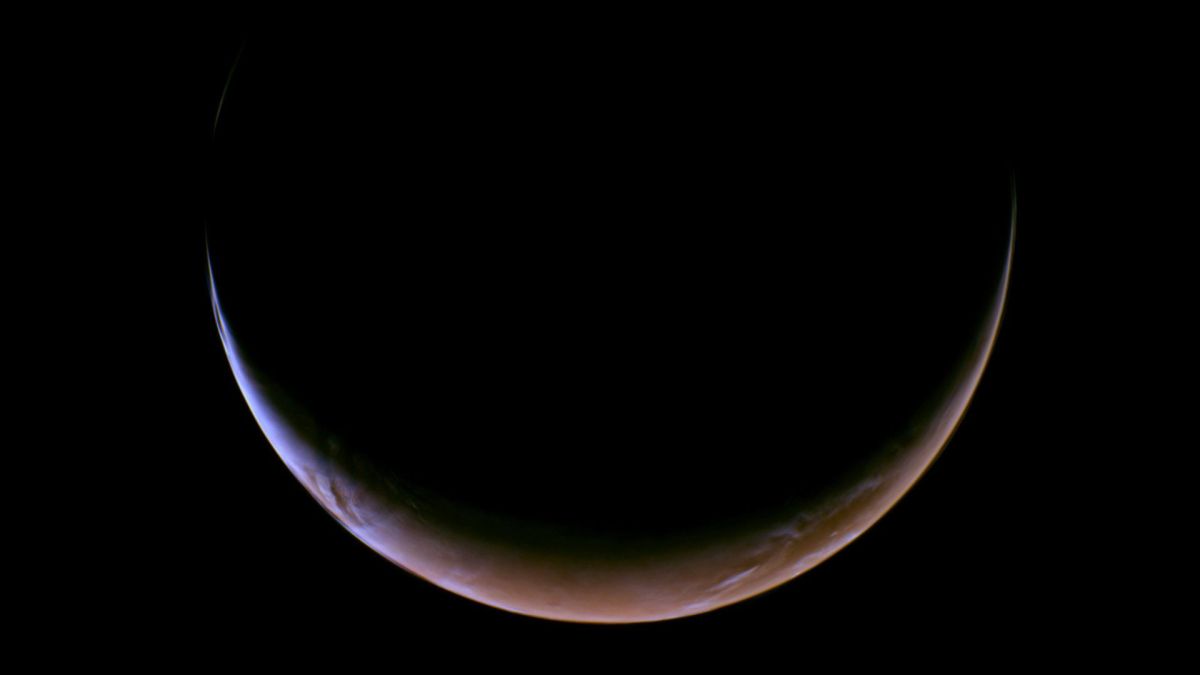
Mars en croissant : la magnifique et surprenante photo capturée par la sonde Psyché

croissant mars

En route vers son mystérieux astéroïde de métal, la sonde Psyché a profité d'un survol de Mars le 15 mai 2026 pour s'offrir un coup d'accélérateur cosmique. Un « vol rase-motte » spectaculaire qui lui a aussi permis d'immortaliser la planète rouge sous un angle rare : un fin croissant lumineux sculpté par les poussières martiennes.

  •  

Course à la Lune : l’ESA tape du poing sur la table face au déclin européen

Ariane 6

Lunar Gateway suspendu, Mars Sample Return sabré... Face aux choix unilatéraux des États-Unis, le directeur général de l’ESA tire la sonnette d’alarme. Pour Josef Aschbacher, l'Europe doit d’urgence s’unir pour financer son autonomie spatiale avant d'être définitivement reléguée au rang de simple passagère de l'Histoire.

  •  

En plein vol rase-motte, la sonde Psyché de la NASA immortalise une vue inédite de Mars

croissant mars

En route vers son mystérieux astéroïde de métal, la sonde Psyché a profité d'un survol de Mars le 15 mai 2026 pour s'offrir un coup d'accélérateur cosmique. Un « vol rase-motte » spectaculaire qui lui a aussi permis d'immortaliser la planète rouge sous un angle rare : un fin croissant lumineux sculpté par les poussières martiennes.

  •  

Webb Discovers One of the Universe's First Galaxies

Astronomers using the James Webb Space Telescope have identified an ultra-faint galaxy seen just 800 million years after the Big Bang. The galaxy contains almost no heavy elements, shows signs of intense early stellar radiation, and could offer a rare glimpse into the first stages of galaxy formation. Phys.org reports: In a paper published in the journal Nature, a team of scientists led by Kimihiko Nakajima, an astronomer at Kanazawa University, Japan, describes how they used the telescope to study a part of the deep universe and discovered a faint galaxy called LAP1-B. "LAP1-B establishes a 'fossil in the making,' a direct high-redshift progenitor of the ancient ultra-faint dwarf galaxies observed in the local universe," they wrote. Because the galaxy is so small and distant, it would normally be impossible to see. However, it was spotted due to a phenomenon known as gravitational lensing, in which a massive cluster of closer galaxies acts like a giant magnifying glass, boosting the light from LAP1-B by 100 times. The scientists realized that most of the light from the galaxy wasn't coming from the stars, but from glowing clouds of gas. They analyzed this light by splitting it into a spectrum and studying the emission lines, which revealed the chemical composition of the gas. They found that the galaxy contains almost no heavy elements, and its oxygen abundance is about 240 times lower than the sun's, making it one of the most primitive star-forming galaxies ever observed. The emission lines also revealed intense ionizing radiation, which is what scientists expect to see from the first generation of stars. The team also measured an elevated carbon-to-oxygen ratio. This matches the predicted chemical signature for the first star explosions in history from Population III stars, the first stars to exist in the universe. The stars we see today are Population I stars, which formed later and contain more heavy elements. Another fascinating finding is that, after measuring the gas's motion and speed, the researchers concluded that the galaxy is held together by a massive cloud of invisible dark matter.

Read more of this story at Slashdot.

  •  

S’unir ou subir : il est urgent que l’Europe cesse d’être à la remorque de la conquête spatiale, prévient l’ESA

Ariane 6

Lunar Gateway suspendu, Mars Sample Return sabré... Face aux choix unilatéraux des États-Unis, le directeur général de l’ESA tire la sonnette d’alarme. Pour Josef Aschbacher, l'Europe doit d’urgence s’unir pour financer son autonomie spatiale avant d'être définitivement reléguée au rang de simple passagère de l'Histoire.

  •  

Tempêtes solaires : le satellite Smile s’envole pour filmer notre bouclier magnétique en action

Vue d'artiste de la mission Smile

La mission Smile a décollé dans la matinée du 19 mai depuis le Centre spatial guyanais de Kourou. Il s'agit d'un satellite, fruit d'une collaboration entre l'Europe et la Chine, qui doit récolter des informations sur les vents solaires, ces flux encore mal connus qui mettent parfois à mal nos satellites en orbite autour de la Terre.

  •  

Smile, la mission européenne et chinoise qui part explorer les vents solaires

Vue d'artiste de la mission Smile

La mission Smile a décollé dans la matinée du 19 mai depuis le Centre spatial guyanais de Kourou. Il s'agit d'un satellite, fruit d'une collaboration entre l'Europe et la Chine, qui doit récolter des informations sur les vents solaires, ces flux encore mal connus qui mettent parfois à mal nos satellites en orbite autour de la Terre.

  •  
❌