Vue lecture

Rust Will Save Linux From AI, Says Greg Kroah-Hartman

Linux stable kernel maintainer Greg Kroah-Hartman says Rust can help Linux deal with a flood of AI-discovered security bugs (namely Dirty Frag, Copy Fail, and Fragnesia) by preventing common C mistakes around memory, locking, error handling, and untrusted data at build time rather than during human review. It's "not a silver bullet" and does not mean rewriting the whole kernel, but he said new drivers and subsystems will increasingly use Rust as Linux evolves forward. ZDNet reports: Kroah-Hartman illustrated those pitfalls with real C bugs in the kernel, including a 15-year-old Bluetooth bug that dereferenced a pointer without checking it and a Xen bug where "we forgot to unlock" in an error path. "The majority of the bugs in the kernel are this tiny, minor stuff," he explained. "Error conditions aren't checked, locks aren't forgotten, unreleased memories leak, and vulnerabilities add up over time. They crash the kernel. This is what we live with in C. This is why we don't like it." Kroah-Hartman argued that the "best beauty of Rust" is catching those mistakes at build time rather than in review. For example, when it comes to locking, he highlighted Rust's locking abstractions in the kernel: "The only way you can get access to inner pointers of structures is by grabbing that lock, and releasing the lock automatically. The compiler does it, it's guarded, the lock happens, everything's happy. You just can't write code to access these values...without grabbing the lock. The compiler will not let you." Those properties, he argued, directly remove a huge fraction of the bugs he sees: "This is going to save us those two things. First, 60% of the bugs in the kernel right there, they're gone. Thank you." The payoff is earlier, more automated enforcement: "If this happens at build time, not review time, don't make me a maintainer who has to read your code [and] say, 'Oh, then you properly check that error value. Oh, did you properly grab the locks in the right spot?' Rust gives us that for free. This is the best thing ever." Even if Rust vanished tomorrow, Kroah-Hartman argued, it has already forced the kernel to clean up C code and interfaces. He credited Rust's influence outright: "We stole this from Rust. Thank you. It's a good idea, so if Rust disappeared tomorrow, we have cleaned up the C code in the kernel so much and taken in the ideas. We thank you, you've made Linux better with it just by existing." [...] What ultimately sold a number of core maintainers, including him, on Rust was how it "makes reviewing code easier." With CI [Continuous Integration] bots enforcing builds and Rust's type system enforcing key invariants, maintainers can "focus on the logic" rather than resource bookkeeping: "I can care about that one function. I don't have to worry about the rest of this stuff, because I assume that it works properly, because it was built properly." Internally, he said, the top maintainers have already made their call on Rust's status: "The Linux kernel maintainers, we get together every year and talk about what the processes are doing. Last year, we said the Rust experiment is over. It's not an experiment. This is for real." The rationale: "The people behind it are real. We trust them. We know what they're doing. They've shown and put in the work to make Rust a viable language in the kernel, and we're going to make this stick. Let's go full speed ahead. And, as always," he said wryly, "world domination proceeds." "If you never remember anything else in my talk, just remember these four words. It came from Microsoft Security many, many years ago," Kroah-Hartman told attendees. "They realized all input is evil. You have to validate all input."

Read more of this story at Slashdot.
  •  

The AI Fight Brewing Inside the New York Times

An anonymous reader quotes a report from The Verge: How newsrooms should use AI -- or if they should at all -- has been a recurrent debate within the media industry over the last several years. Increasingly, these rules are being hammered out at the bargaining table between unions and publishers. Right now, employees at The New York Times are gearing up for a fight. Unionized staff with the Tech Guild say Times management has refused to provide the union with information related to how the company has used AI, its plans for AI use in the future, and how it will affect employees' jobs and workflow. (The union filed an unfair labor practice charge earlier this month.) The Tech Guild, a NewsGuild of New York unit of around 700 software engineers, designers, product and project managers, and data analysts, also filed grievances saying Times management violated their collective bargaining agreement when it started using two internal AI tools that track and evaluate employee performance and activity. [...] Both the Tech Guild and the Times Guild (which represents 1,500 editorial, ad sales, and support staff at the Times) filed unfair labor practice charges against the Times, saying that company violated labor law by refusing to respond to their requests for information around AI use at the outlet. The Times did not respond to specific questions about how it uses DX and Glean, but spokesperson Danielle Rhoades Ha said in an email that the company disagrees with the characterizations made in grievances and that it would respond as part of its "normal contractual process." "Likewise, we will respond to this Request for Information (RFI) in due course as we've done with 80+ other RFIs from the Guild in recent years," Rhoades Ha said. The Times Guild is currently bargaining a new contract, pushing for robust protections against AI, like requirements that a human is behind any AI tool being used, that any journalism utilizing AI is transparently labeled, and that staff are compensated for AI model training deals the company might make. The Times deploys artificial intelligence tools for some reporting, like using it to parse millions of documents related to Jeffrey Epstein or scan satellite images of Gaza to try to find where Israel had dropped a specific kind of bomb. [...] [Ben Harnett, a software engineer at the Times and chair of the unit's generative AI committee] emphasizes that the unit's position is not that AI shouldn't ever be used, but that workers should have a say in how it's deployed. Metrics like how many tokens an employee uses or how often they're using AI to do their jobs create pressure to do more and incentives that don't align with doing quality work. "It's going to distract [you] from actually doing a good job, which is what we think the company should want," he says. Two of the contentious AI tools mentioned in the report are DX and Glean. DX is an engineering productivity tool that tracks a developer's output, generative AI use, efficiency, and other related metrics. Meanwhile, Glean is an internal knowledge-search tool that indexes materials like wikis, GitHub documents, Google Docs, and emails so employees can query company information. The concern, according to Times Tech Guild members, is that data meant to measure broader developer experience is now being applied to individuals and cited in performance or disciplinary contexts. There's also worry that it could be used to monitor individual contributions and produce false or misleading results.

Read more of this story at Slashdot.
  •  

Tech CEOs Are Apparently Suffering From AI Psychosis

An anonymous reader quotes a report from TechCrunch: There is a certain wildness in the tech industry these days that both mimics previous eras of large changes, like cloud computing (runaway costs in the early days), and is like nothing we've ever seen before (record revenues accompanied by mass layoffs). One possible explanation: tech executives, especially CEOs, are collectively suffering from delusions of AI grandeur. And at least one tech CEO has said as much out loud: Box founder Aaron Levie. "CEOs are uniquely prone to AI psychosis because they're sufficiently distant from the last mile of work that still has to happen to generate most value with AI," Levie wrote on X. CEOs "play with AI," develop a prototype, or generate a contract, to use Levie's examples, and then make the leap to believing agents can do the work. But these top-level executives aren't the people who have to review code, discover bugs, and identify calls to hallucinated libraries before software is deployed. They aren't responsible for training AI models on a company's idiosyncratic contract terms, nor do they have to spend days combing through contracts to find sneaky terms, as Levie indicates. In other words, Levie's theory posits, CEOs don't really understand processes well enough to know what really can and can't be automated. But that lack of knowledge doesn't stop them from acting on their beliefs. [...] So what are CEOs to do instead? Levie advises CEOs to use AI "a ton" to really see what it can and can't do, "and come out the other side with an appreciation for both the upside and the real work."

Read more of this story at Slashdot.
  •  

Company Behind School Bus AI Cameras Wants To Share Footage With Police

joshuark writes: BusPatrol, a company that has installed AI-powered cameras in tens of thousands of school buses around the U.S., now plans to turn those cameras into automatic license plate readers (ALPRs), capturing the location of every vehicle the buses drive past, and give that data to law enforcement, 404 Media has learned. BusPatrol has already taken steps to share the collected data with law enforcement contracting giant Axon, according to leaked BusPatrol documents and a source with knowledge of the plans. BusPatrol has acknowledged how controversial its plan to collect and share this data is, pointing specifically to concerns about ICE using license plate data, but emphasizes the likely success of selling the angle of protecting children. "Who would have thought that school buses would be turned into the mass surveillance state?," Michael Soyfer, an attorney from the Institute for Justice, which has various ongoing ALPR-related lawsuits The Institute for Justice argues that warrantless use of ALPR systems is unconstitutional, describing similar systems as a "dragnet." Kate Spree, senior manager of brand communications at BusPatrol, said in an email "This inquiry is based on a false premise and inaccurate information. BusPatrol does not pool or sell data across communities; student safety program data is used only to support the BusPatrol program in the community where that data was created." When 404 Media asked clarifying questions and said that the reporting is based on leaked BusPatrol material, Spree stopped replying to text messages and emails. This plan gives new meaning to the animated cartoon series "The Magic School Bus"... Further reading: FBI Wants to Buy Nationwide Access to License Plate Readers

Read more of this story at Slashdot.
  •  

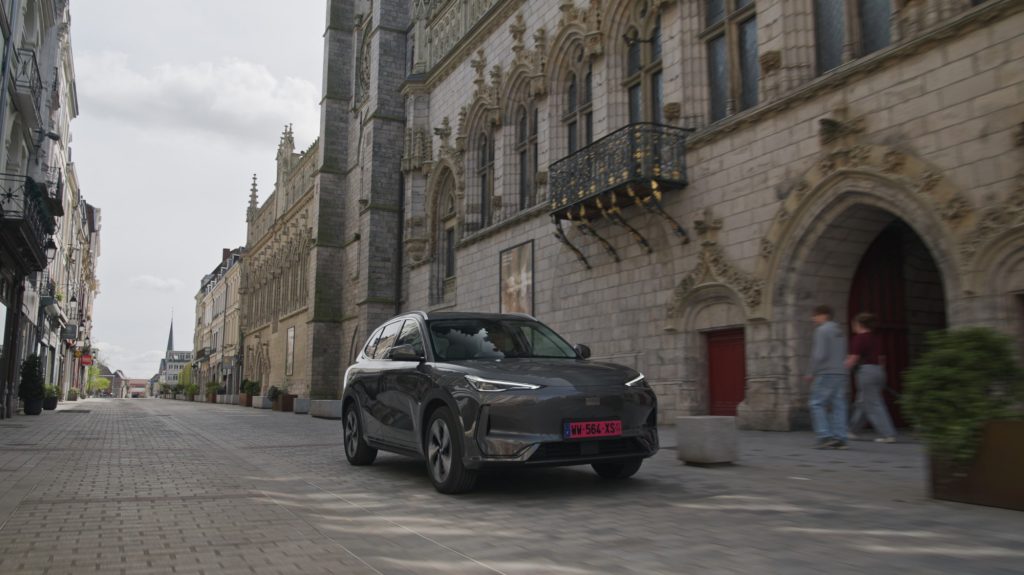
Essai Geely E5 de 218 ch

Cela faisait bien au moins une semaine qu’un constructeur chinois n’avait pas débarqué en France. Voici venu le tour de Geely Auto de venir sur notre territoire avec deux SUV, dont l’électrique E5. Après une présentation en grande pompe au Carrousel du Louvre, quelques jours après l’autre Chinois Denza à l’Opéra Garnier, nous nous sommes rendus dès le lendemain en Bretagne pour en prendre le volant.

Geely, ce géant chinois qui connaît déjà bien l’Europe

Oui, vous avez déjà entendu parler de Geely, mais pas en tant que constructeur. Ce groupe chinois, vieux de 40 ans, est devenu depuis un géant mondial de l’automobile. On ne va pas refaire toute l’histoire, mais celui qui occupe aujourd’hui la première place sur son marché domestique possède dans son portefeuille, dans le désordre, Volvo Cars, Polestar, Zeekr, Lotus, et partage la moitié de Smart avec Mercedes, entre autres. Le groupe a de l’appétit puisqu’il vise le top 5 mondial d’ici la fin de la décennie, grâce notamment à son expansion en Europe. On a l’impression de vous conter une histoire déjà entendue, mais avec l’arrivée d’un modèle hybride Starray EM-i et d’un électrique E5, Geely Auto vient s’attaquer frontalement aux généralistes.

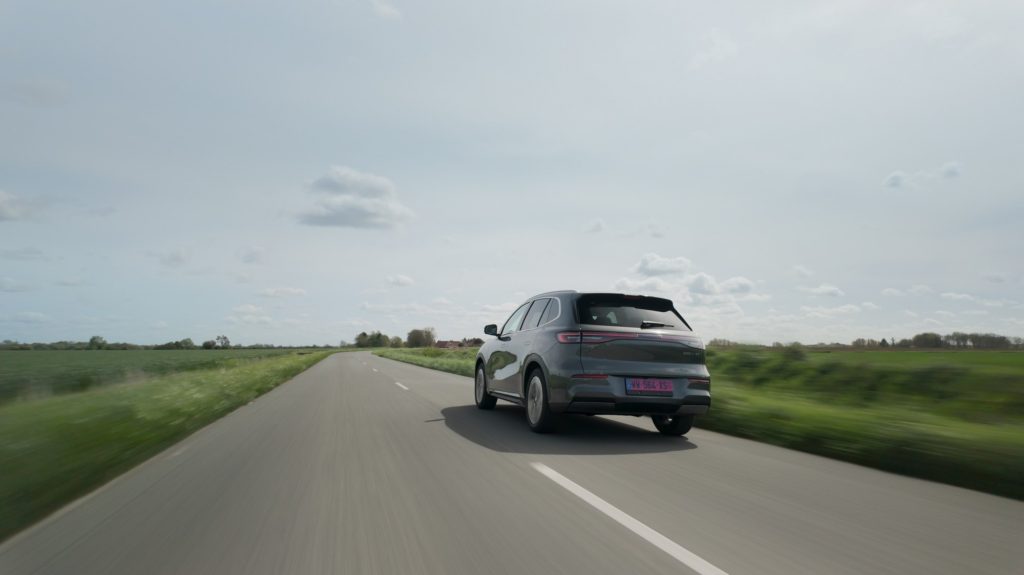
Cette E5 se la joue plutôt discrète dans son style. Les formes policées et fluides la rendent quasiment invisible dans la circulation. Même le logo de la marque, un bouclier composé de six éléments, paraît timide sur la face avant dépourvue de calandre. On trouve bien en dessous des aérations avec des volets actifs. Son profil très lisse intègre des poignées de porte escamotables. L’arrière n’apparaît pas particulièrement travaillé non plus, avec des feux tout en longueur et plutôt fins. Un becquet de toit habille le haut de la lunette arrière. La trappe de recharge se trouve sur l’aile avant droite. Plus classique que ça, difficile de faire.

L’essentiel et de l’espace

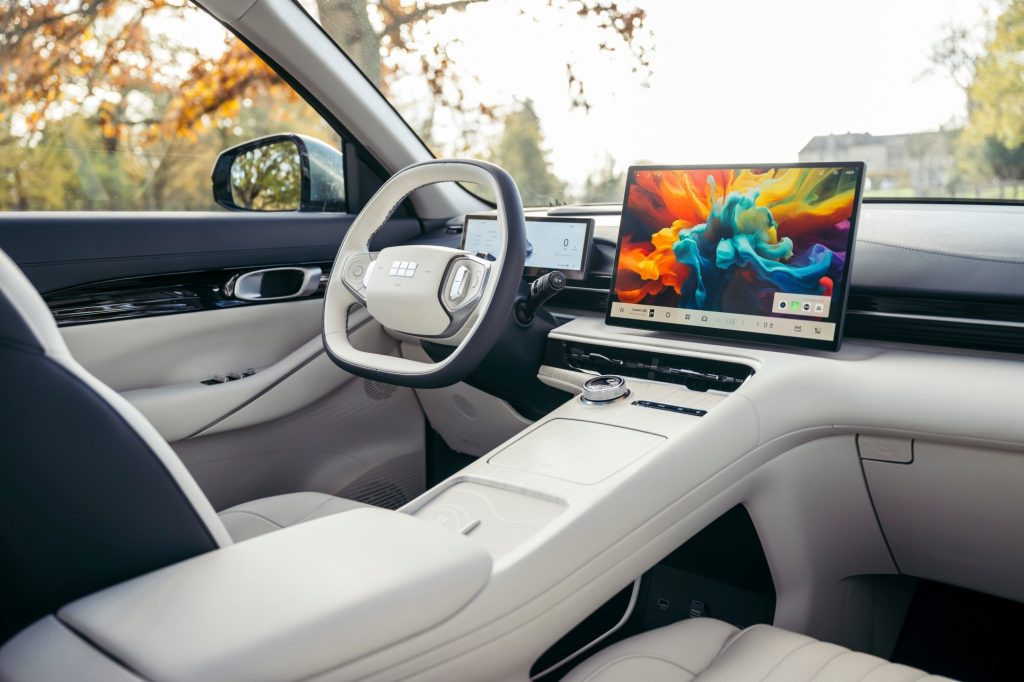
À bord, là aussi, on note que le Chinois se la joue zen avec un mobilier dépouillé, peut-être même un peu trop. Vision tête haute, un large écran derrière le volant et une énorme dalle tactile au milieu de la planche de bord demandent un temps d’adaptation, mais on en loue la lisibilité quasi parfaite. La console, assez enveloppante, est également flottante. On regrette souvent l’absence de molette de volume dans les voitures actuelles, mais ici elle s’avère gigantesque. Le volant n’apparaît pas spécialement rond, puisqu’il est très aplati en bas, à peine moins en haut, et ne compte que deux branches. Cela ressemble davantage à un gouvernail de Boeing qu’à un volant.

Devant le vide-poche fermé, on trouve un chargeur à induction qui refroidit assez mal les téléphones, si l’on en croit la température du nôtre lors de notre essai. Dans l’espace situé en dessous, on trouve une prise USB-C et une USB-A, qui, dans notre monde moderne, devient presque inutile. On note la présence de nombreux revêtements doux et rembourrés, même sur les tapis. L’assemblage apparaît plutôt correct. Comme pour beaucoup de voitures, on s’interroge surtout sur la tenue dans le temps des matériaux. Comme toute bonne chinoise qui se respecte, l’espace à l’arrière ne manque pas. En revanche, on est déçu par le manque de confort de l’assise passager type aviation d’affaires, finalement peu agréable en configuration allongée. Notez une capacité de coffre de 461 l avec double fond.

Une autonomie ambitieuse

Le Geely E5 dispose d’un moteur développant une puissance modeste de 218 chevaux pour un SUV électrique, avec un couple de 320 Nm. La batterie de 68,4 kWh de capacité (60,2 kWh pour l’entrée de gamme) assure une autonomie de 475 km selon le protocole WLTP. Comme souvent, il est difficile de faire des projections sur le kilométrage réel possible dans notre usage sur un parcours aussi court. Néanmoins, le chiffre annoncé par Geely nous a paru un peu ambitieux compte tenu de la consommation relevée. Il nous faudra toutefois le reprendre pour mieux vérifier sa capacité à parcourir de longues distances.

En tout cas, il ne se montre pas particulièrement amorphe lorsqu’il s’agit de décoller, avec un 0 à 100 km/h abattu en à peine 7 secondes. En réalité, il fait preuve d’une fluidité peu commune pour un véhicule électrique de cette puissance, en évitant l’effet “fusée” à chaque démarrage. Cela participe grandement au confort de conduite observé. Car ce Geely E5 se distingue par une douceur de conduite très agréable pour enchaîner les kilomètres dans une quiétude qui peut presque pousser à l’endormissement si l’on ne coupe pas les ADAS bruyants, pour ne pas dire agaçants. Heureusement, ces alertes sonores sont faciles à désactiver.

Tout pour le confort

L’E5 repose sur la plateforme GEA, il s’agit donc d’une traction. L’architecture apparaît assez classique, notamment pour une électrique, avec les batteries dans le plancher et des suspensions de conception traditionnelle. Geely a réussi le tour de force de maintenir l’E5 largement sous les 2 tonnes sur la balance, avec 1 815 kg dans sa configuration la plus lourde. La voiture encaisse correctement les obstacles urbains, notamment les dos-d’âne, mais on note une certaine sensibilité au rebond. Rien de vraiment rédhibitoire, e SUV reste très confortable. Il s’apprécie clairement à un rythme de bon père de famille.

Tout semble pensé pour maximiser le confort. Il existe bien un mode Sport, mais à part renforcer la consistance de la direction, ce qui est appréciable, il n’invite pas à défier le premier Macan venu. Il n’y a pas vraiment de mauvaise surprise, même lorsque le rythme augmente. Au contraire, il présente des réactions plutôt prévenantes qui procurent un sentiment de maîtrise assez accessible. On a également constaté qu’en matière de freinage, deux réglages de force sont disponibles dans la pédale. Dans les deux cas, les freins s’avèrent efficaces. Du côté de la recharge, Geely annonce des chiffres un peu décevants. La marque communique sur un passage de 30 à 80%, contre 10 ou 20% habituellement, en près de 30 minutes. Cela mérite également d’être vérifié.

Une concurrence plutôt chinoise

Le Geely E5 exécute sa tâche sans trop en faire, ce qui est presque surprenant compte tenu de son lancement en grande pompe à Paris. En termes de prix, il n’apparaît pas particulièrement bon marché, avec des tarifs allant de 37 990 € pour la petite batterie à 41 990 €. On n’est finalement pas si éloigné des ID.4 ou du Scénic, mais avec des puissances inférieures. La concurrence est en réalité à chercher du côté des autres modèles chinois, comme le Leapmotor C10 ou le MG5 EV.

L’article Essai Geely E5 de 218 ch est apparu en premier sur Le Blog Auto.

  •  

Pope Leo Warns of Risks From AI In 42,300-Word Encyclical

An anonymous reader quotes a report from the New York Times: Pope Leo XIV on Monday set out a sweeping vision for corporate executives, politicians and individuals who will shape and be shaped by the future of artificial intelligence, warning leaders to safeguard humanity from A.I.'s most disruptive effects. Leo's declaration came in the form of a papal encyclical, an open letter to "all people of good will" that ran to roughly 42,300 words in its English version. It outlined his desire to protect human dignity and agency in an age in which technology threatens to replace humans in many professional and social roles. He presented it alongside Christopher Olah, a co-founder of Anthropic, a major A.I. developer, in a symbolic gesture of dialogue between leaders of the spiritual and technological worlds. While emphasizing that "technology should not be considered, in itself, as a force antagonistic to humanity," he wrote that "the pursuit of greater profits cannot justify choices that systematically sacrifice jobs." Among other things, Leo called for: - government regulation of the private companies that are driving the development of A.I. - protection and retraining for workers whose jobs are threatened - education to help students think critically about the technology - action to protect children from violent, hypersexualized or fake information online that is often generated by A.I. - safeguards to ensure that humans, not artificial intelligence, remain responsible for all decisions regarding the use of weapons. Above all he emphasized the importance of retaining a fundamental social role for all human beings. "A society that guarantees employment to only a small fraction of the population, despite having a high level of technical development, risks exposing many to forced inactivity," he wrote. "This creates a paradox of material progress and anthropological regression that undermines the foundations of a just and stable social peace," he added. Anthropic's Christopher Olah said companies like his own need moral guidance to avoid being swayed by "a set of incentives and constraints that can sometimes conflict with doing the right thing." "We need moral voices that the incentives cannot bend," Olah said. "Today is just the beginning -- the start of a long collaboration between those of us who are building this and those who can see what we, from the inside, cannot."

Read more of this story at Slashdot.
  •  

« Je suis ravi de m’être trompé » : Sam Altman reconnaît finalement que l’IA n’a pas provoqué d’« apocalypse de l’emploi »

Le PDG d’OpenAI, Sam Altman, estime s’être trompé sur la rapidité avec laquelle l’intelligence artificielle provoquerait des suppressions massives d’emplois, notamment parmi les travailleurs cols blancs. Un réajustement notable, alors que le débat sur l’impact de l’IA sur le marché du travail reste particulièrement tendu.

  •  

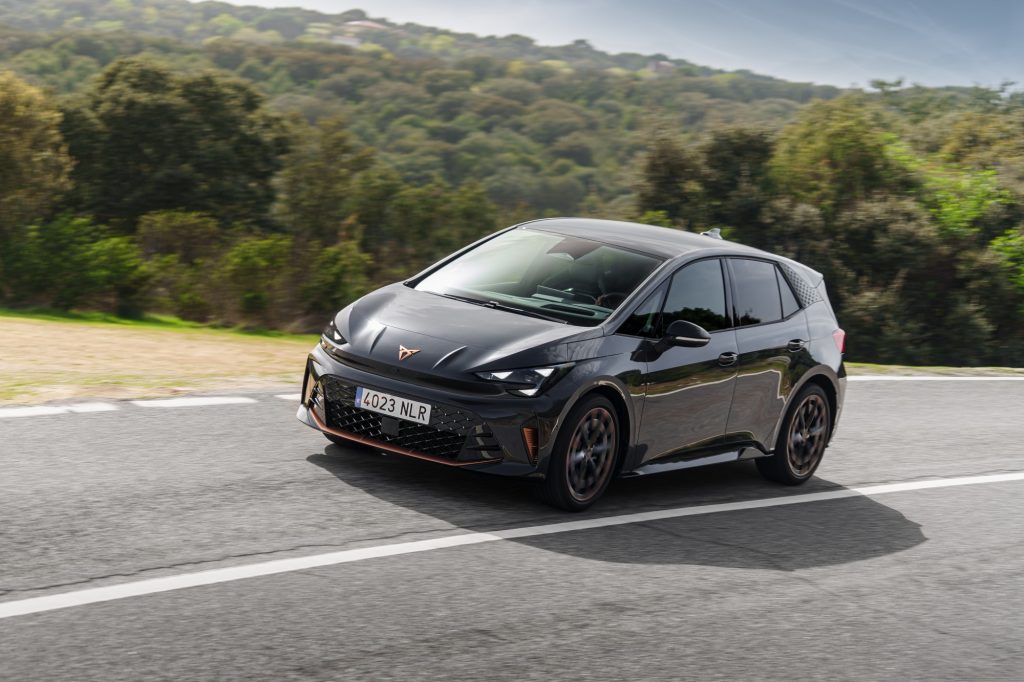
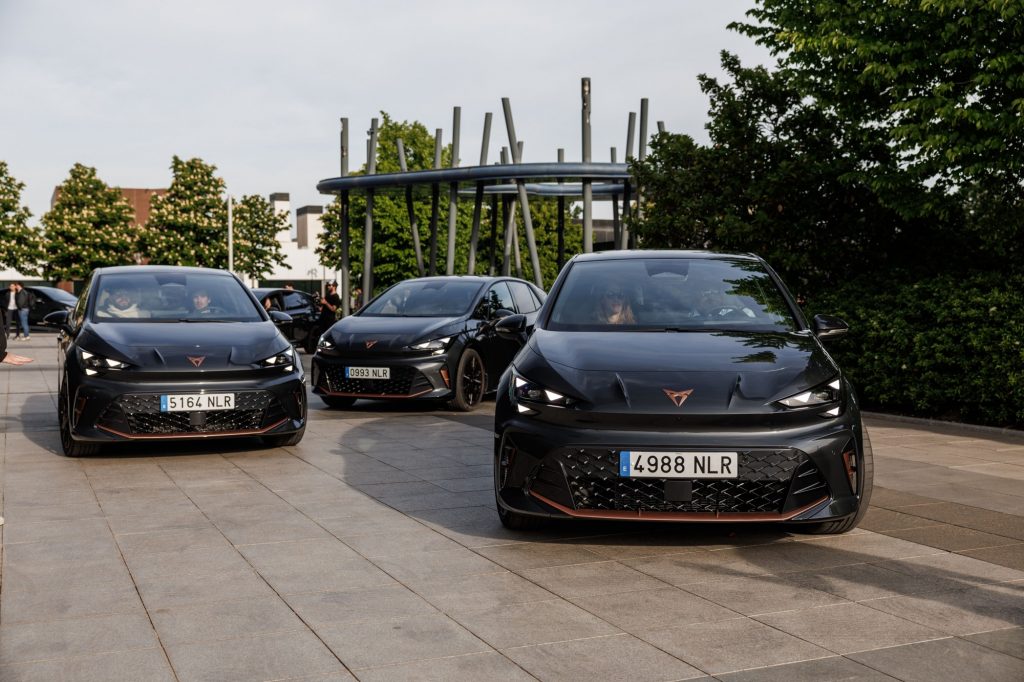
Essai Cupra Born VZ 2026 de 326 ch

L’arrivée d’une énième marque chinoise ne surprend plus personne aujourd’hui. On se rappelle toutefois de l’audace pour Seat, à l’époque, d’en lancer une nouvelle, en l’occurrence Cupra. La gamme s’est depuis bien étoffée et largement électrifiée. La Born, arrivée en 2022, a droit à un restylage et quelques ajustements techniques pour booster sa carrière commerciale. Nous l’avons essayée dans les environs de Madrid.  

Un style plus agressif

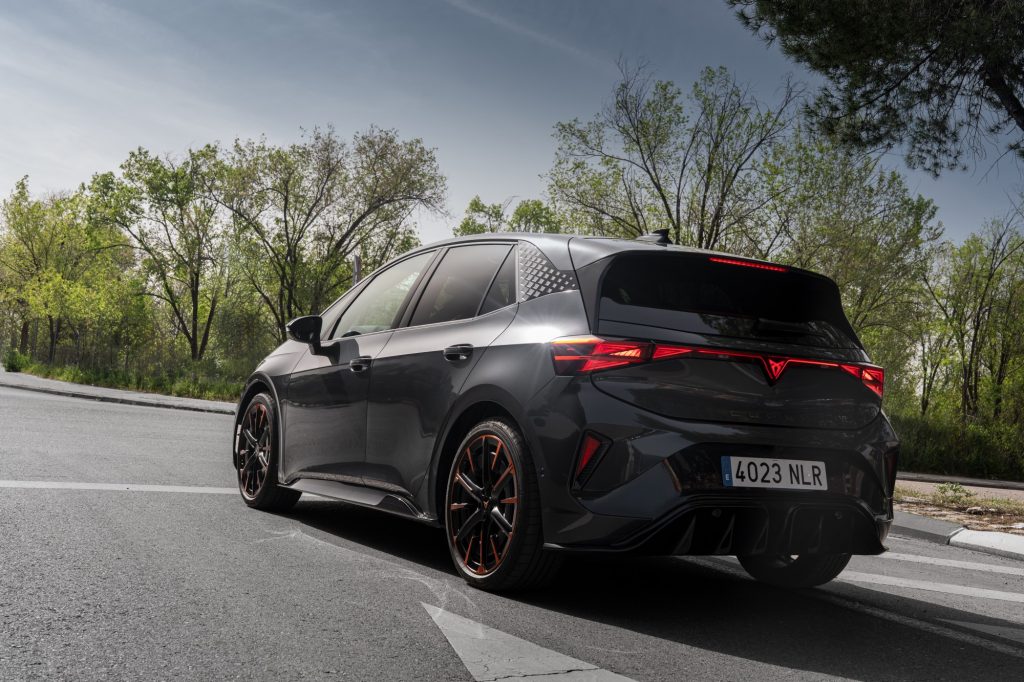
La Cupra Born a tenu le rôle de première voiture 100% électrique de la jeune marque Cupra en 2022. Cousine technique de la Volkswagen ID.3, elle en reprenait l’allure monovolume. En 2026, il ne s’agit que d’un restylage, il ne faut donc pas s’attendre à une révolution. Néanmoins, il faut bien admettre qu’au design, les femmes et hommes tenant les crayons n’ont pas chômé pour la rendre encore plus agressive qu’elle ne l’était déjà. On note en premier lieu la signature lumineuse, désormais commune à toutes les Cupra, à l’avant et à l’arrière. Le bouclier de notre version VZ, très ajouré, et ses appendices cuivre boostent sa personnalité et sa sportivité.  

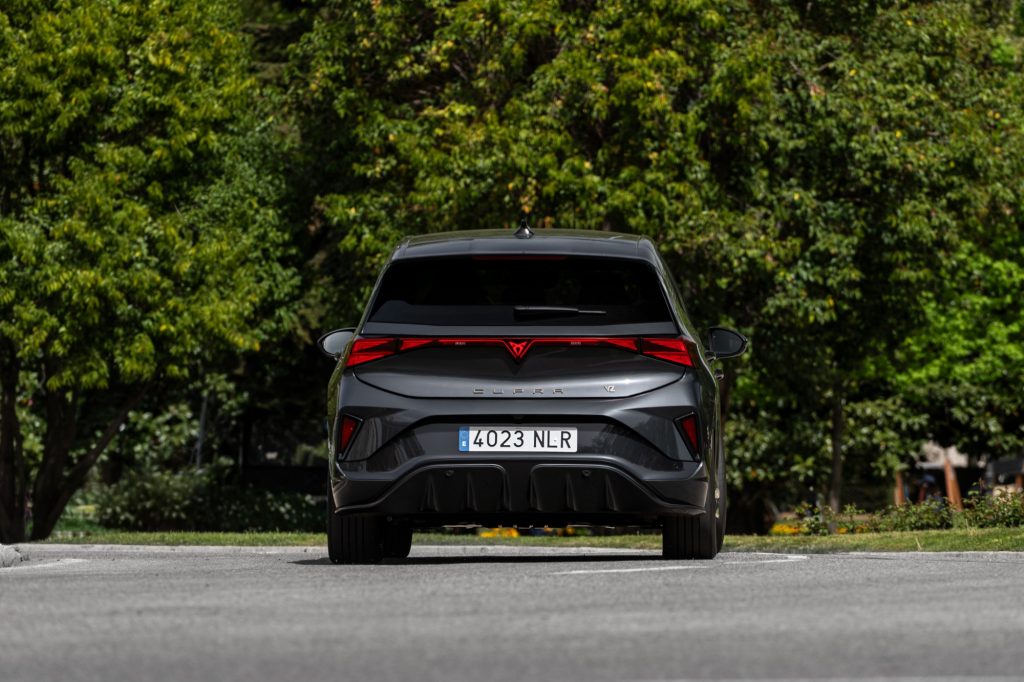
Pour le reste, en dehors de nouveaux jeux de jantes, le profil évolue peu. La poupe gagne un grand bandeau rouge et le logo rétroéclairé. Surtout, on ne peut pas passer à côté du diffuseur extrêmement imposant compte tenu des dimensions générales de la voiture. Cette Cupra Born 2026 se veut ainsi un peu plus agressive, surtout dans cette version VZ qui coiffe la gamme. Reconnaissons que la marque a su insuffler à ses voitures une âme sportive dans leurs lignes, même si cela ne s’accompagne pas systématiquement de motorisations hyper puissantes. Cela a quelque chose de rafraîchissant dans le paysage.  

Le retour des commandes physiques

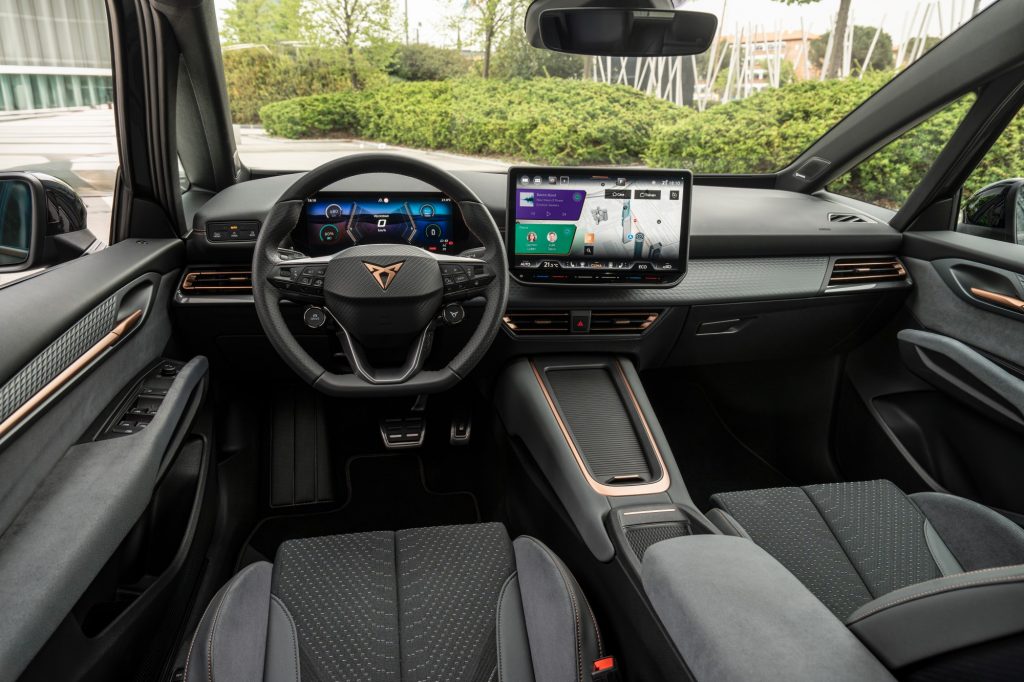
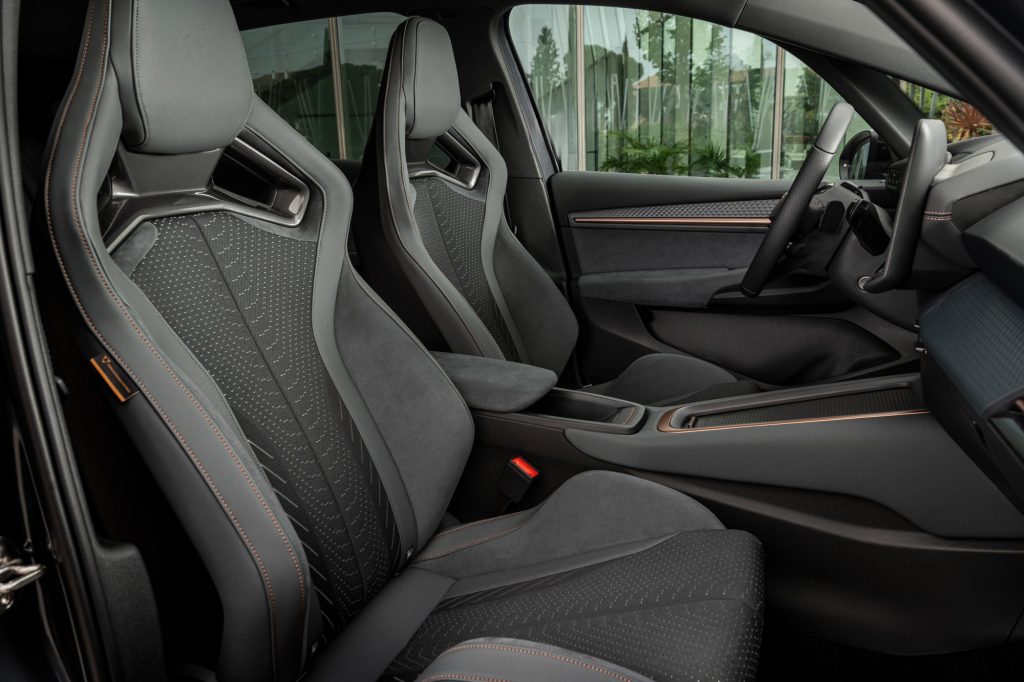
À l’intérieur, les changements sont plus importants qu’il n’y paraît. On note déjà une meilleure qualité perçue avec quelques habillages plus softs. On ne parlera pas de retour en arrière, mais disons… d’adaptation aux demandes des clients. En effet, on retrouve des commandes physiques sur le volant, et pour les quatre boutons des vitres. Terminée l’étape du switch « REAR » pour actionner les glaces arrière depuis le poste du conducteur. On aurait juste aimé que Cupra aille jusqu’au bout de la démarche en faisant la même chose pour la climatisation. Au passage, on trouve aussi des aérateurs à l’arrière.  

L’autre grosse évolution provient de l’écran derrière le volant, dont la taille double pour atteindre les 10,25 pouces. À l’ère où les dalles prennent parfois toute la place sur la planche de bord, Cupra ne pouvait plus se contenter du rikiki hérité de l’ID.3. En outre, le grand écran tactile a revu le look de ses menus, avec une ergonomie qui gagne en logique, même si tout n’est pas encore parfait en la matière. Pour le reste, statu quo ! La place disponible pour les passagers n’évolue pas, tout comme le coffre de 385 litres qui suffit pour le quotidien, peut-être un peu moins quand il s’agit de préparer les vacances.  

Puissante et endurante

Cupra, à l’occasion de ce lancement, ne nous a pas laissé le choix de la version. Des VZ pour tout le monde! On disposait donc de la motorisation la plus véloce de 326 chevaux, avec un couple maxi de 545 Nm. Elle ne manque donc pas de puissance pour dépasser et lors des reprises. Le décollage pour atteindre les 100 km/h ne prend que 5,6 secondes. Simplement, on devient gourmand quand on sait qu’il s’agit d’une VZ, et l’on oublie qu’en électrique, Cupra ne peut pas aller aussi loin que pour un Formentor VZ5 à moteur thermique cinq cylindres. Ça tombe sous le sens. Dommage, car encore plus de réactivité aurait donné un meilleur sentiment d’agilité.  

Le nerf de la guerre reste la batterie de 79 kWh (capacité nette). Sur le papier, elle atteint les 631 km, ce qui la place a priori dans le haut du panier de sa catégorie. Sur des essais aussi courts, il nous est toujours difficile de tirer des conclusions pertinentes sur l’autonomie. D’autant plus que, pour balayer le plus de situations de conduite possibles, on ne favorise pas nécessairement l’éco-conduite tout le long de notre itinéraire. Cupra a un peu poussé à l’extrême l’utilisation des modes jouant sur la réactivité du moteur. On préférera toujours n’en avoir que trois, eco, normal et sport. Ici on a un « VZ » en plus. Si l’on ajoute les possibilités de personnalisation, on finit par un peu s’y perdre.  

Lourde propulsion

En 2026, la voiture gagne aussi la possibilité de conduire à une pédale. Cela a le mérite d’exister, mais de notre côté, on n’arrivera jamais à s’y faire. Pour rendre tout ça ludique, on dispose de suspensions pilotées qui renforcent sa polyvalence, que l’on veuille voyager dans le confort ou jouer les pilotes du dimanche. Dans les faits, en conduite dynamique, on mène une voiture à l’amortissement rigoureux, qui assure une assez bonne stabilité, tant que l’on ne la maltraite pas trop tout de même. Il y a d’abord les freins, qui nous rappellent, dans une rapide descente de col, qu’ils doivent à chaque fois ralentir deux tonnes.  

Jusqu’à une certaine vitesse, la voiture sait garder sa trajectoire et se place même assez facilement grâce à cette direction bien calibrée. Mais cette propulsion semble toutefois pousser le train avant quand on réaccélère fortement roues braquées. La trajectoire s’élargit alors.  Néanmoins, il faut déjà bien se cracher dans les mains pour en arriver là. On a bien aussi tenté de tout débrancher pour essayer de jouer avec le train arrière. L’action est difficile à trouver dans les menus, et surtout l’électronique a la fâcheuse tendance à se rebrancher à la première virgule. On se rappelle alors que, toute VZ qu’elle est, elle ne chasse pas sur les terres d’une GTi non plus.  

De 190 à 326 ch, dès 36 570 €

Cette Cupra Born VZ sauce 2026 apporte les améliorations, notamment en termes de vie à bord, que l’on attendait. Ajoutez à cela un look reboosté et l’on obtient une voiture encore plus intéressante. On aime aussi ses performances, son autonomie qui apparaît confortable selon nos premières projections, même si cela reste à vérifier sur un parcours long. On aurait aimé aussi du 800 V, mais ne soyons pas trop gourmands. Il faudra toujours se contenter de 29 minutes pour passer de 10 à 80% (DC 180 kW). Cette Espagnole fabriquée en Allemagne, pour notre modèle d’essai, coûte 46 170 €. La gamme démarre à 36 570 € avec un moteur de 190 ch.

L’article Essai Cupra Born VZ 2026 de 326 ch est apparu en premier sur Le Blog Auto.

  •  

California Executive Order Directs Businesses and State Agencies to Prepare for AI-Driven Workforce Disruption

Thursday California's governor issued an executive order "directing state agencies to prepare workers and businesses for AI-driven workforce disruption," reports San Francisco's KQED. In a statement the governor said "This moment demands that we reimagine the entire system — how we work, how we govern, how we prepare people for the future." The order mandates agencies to explore a range of policy options, including severance standards, expanded unemployment insurance, job retraining programs aimed specifically at white-collar workers, worker ownership models and a concept the governor called "universal basic capital," giving all residents a stake in assets such as corporate stocks, bonds or wealth funds... Tom Kemp, executive director of the California Privacy Protection Agency, applauded the fact that the order named data privacy as a consumer protection concern and highlighted the CPPA's automated decision-making technology regulations, which he called "the nation's most comprehensive." Others are more skeptical. "Catastrophic job loss from AI is not inevitable, it's a political choice," Lorena Gonzalez, president of the California Federation of Labor Unions, AFL-CIO, wrote in a statement. However, Gonzalez noted one area of genuine agreement: the order's emphasis on collective bargaining as a tool for protecting workers from AI displacement... According to Stanford HAI's 2026 AI Index, software developers ages 22 to 25 are among those most likely to see their skills made redundant earliest. This year, U.S. employment fell nearly 20% from 2024, even as headcount for older developers continued to grow. Following the job cuts announced at Meta, a union of Alphabet workers in the U.S. and Canada released a statement that suggests Silicon Valley's own labor force may seek to organize... "It's undeniable that our whole industry is being transformed by the corporate push to adopt new AI tools," [Alphabet Workers Union-CWA Local 9009 said in a statement]. "It's hard not to feel anxiety and fear when we can see more and more tech companies cutting huge portions of their workforce both in anticipation of replacing them with AI, and to fund their multi-billion-dollar bets on AI as the future of the industry..." In February, AFL-CIO President Liz Shuler and Gonzalez delivered what amounted to an ultimatum to Newsom: regulate AI or lose labor's support for any future presidential run. Shuler called a potential AI-driven economic collapse a coming "crisis." In August 2025, Newsom announced a partnership with Google, Microsoft, IBM and Adobe to expand AI education in California schools and community colleges, a workforce preparation push that now looks like a precursor to Thursday's more sweeping order. The article notes that after signing the bill the governor shared this comment on X.com. "California will pursue new policies that make sure working Californians — not just Big Tech — benefit from the wealth and breakthroughs coming out of this space." Newsom telegraphed Thursday's order earlier this week, when he appeared at the Center for American Progress IDEAS Conference in Washington. "Businesses are going to make a fortune, and that's why you cannot continue to have a payroll tax system that taxes jobs and then subsidizes automation."

Read more of this story at Slashdot.

  •  

Apple Preparing New 'Gen AI' Website Ahead of WWDC — and New AI Features?

Apple just registered a new subdomain record: genai.apple.com. The domain was spotted by a MacRumors contributing researcher, and though it doesn't yet lead to a live web page, they believe it's tied to Apple's annual developers conference WWDC which starts June 8, "where the company has promised to announce 'AI advancements' across its software platforms." The blog 9to5Mac speculates that "All signs point to WWDC 2026 being Apple's major AI renaissance, where the company will live up to the promises it made back at WWDC 2024, as well as a few additional new announcements." [I]it goes without saying that this is probably related to Apple's upcoming generative AI announcements at WWDC... Siri should finally be able to understand more personal context, have on screen awareness, and be able to take action in apps for you. This'll finally be made possible thanks to Apple's new partnership with Google, where Apple will be using Gemini-diffused models hosted on Private Cloud Compute to power Siri... Apple will also reportedly be introducing a new Siri app. This'll allow you to access your previous Siri conversations, as well as have text-based conversations with Siri. Other Apple Intelligence upgrades coming at WWDC 2026 include the ability to generate wallet passes from physical tickets, new editing features in the Photos app, and additional functionality for Visual Intelligence...

Read more of this story at Slashdot.

  •  

Linus Torvalds on How AI is Impacting the Hunt for Linux Kernel Bugs

Linus Torvalds spoke this week at the Linux Foundation's Open Source Summit North America, reports ZDNet — and described how AI is impacting Linux kernel development: "In the last six months, we've seen a lot more commits," Torvalds noted, estimating that "the last two releases, it's been about 20% more commits than we had in the previous releases over many years.... The real change that happened in the last six months was that the AI tools actually got good enough for a lot of people... we're seeing a definite uptick in just development on pretty much all fronts...." On the positive side, he framed AI-discovered bugs as "short-term pain" with long-term benefits: "When AI finds a bug in any source code... long term is you found a bug, we fixed it, that the end result is better for it." After all, he continued, "I think finding bugs is great, because the real problem is all the bugs you didn't find..." For small teams or solo maintainers, he said, flood-style AI bug reports can cause real burnout, especially when "it's a bug report, and when you ask for more information, the person has done a drive-by and doesn't even answer your questions anymore." The AI news site Techstrong notes this quote from Torvalds. "I have a love-hate relationship with AI. I actually really like it from a technical angle, I love the tools, I find it very useful and interesting, but it is definitely causing pain points." The chief challenge with AI is that it forces people to change how they work, he found. People get into a rut, and AI challenges their norm. The Linux security mailing list got the brunt of this new wave of AI-generated commits. Not all bugs are security issues, but when "people think that when they find a bug with AI, the first reaction seems to sometimes be let's send it to the security list, because this may have security implications," Torvalds said. As a result, the security list — watched over by a small group of maintainers — was overrun by duplicate entries... The Linux project learned to manage the bug influx with a set number of tools to sort out and deprioritize the obvious drive-by reports (ones where the person submitting the report won't even answer any questions). One tool, Sashiko, reviews all the patches submitted on the mailing list. "Sometimes the review is not great, but quite often it finds issues and it asks questions and says, 'Hey, what about this issue?'" he said. Linux also updated their documentation, partly just to address "an uptick in bug and security reports from discoveries made in full or in part with AI."

Read more of this story at Slashdot.
  •  

US Layoffs Haven't Increased, and New Tech Industry Hiring Balances Firings

"The numbers show that layoffs in the U.S. are roughly at or below levels from before the pandemic," reports the Washington Post, "although they are higher than in 2022 when businesses snapped up workers as the economy roared back to life... "A different measure that accounts for the growing U.S. workforce shows that layoffs affected about 1.2% of employed people in March, a number that has been steady for years outside of the pandemic..." In the technology industry, where Meta and other companies are regularly announcing job cuts, the layoff picture is complex. There has been a marked increase in layoffs in recent months in what the Labor Department calls the information industry, which includes employment of software developers and other tech workers. But Matthew Martin, senior U.S. economist at the research and consulting firm Oxford Economics, noted that hiring has also increased in that category, which includes media and entertainment. The combination of hiring minus layoffs in the information industry is effectively a wash, Martin said. Layoffs at Big Tech companies like Meta and other high-profile employers don't necessarily reflect what is happening in the country, Martin said, and draw far more attention than what may be slow and steady workforce growth. "There's a lot more headlines about job cuts than there are [about] expansion plans by businesses," he said. In his view, technology companies may be pushing out some workers and replacing them with people who have different skills as they respond to the demands of AI. It's true that businesses in some industries are devoting enormous sums of money and attention to AI. It's changing how some people work and a minority of American businesses are rolling out AI tools. But it's also become a trend for bosses to blame layoffs on the productive capabilities of AI and its ability to replace workers, even when job cuts may have little to do with the technology. Sam Altman, CEO of ChatGPT-maker OpenAI, has taken note of the pattern that he and others call "AI washing," essentially a high-tech form of whitewashing... "You know something is happening all the time when they have a word for it," said Gautam Mukunda, who teaches leadership at the Yale School of Management... AI-related employment changes are tiny so far, said Nathan Goldschlag, director of research at the Economic Innovation Group, a Washington think tank. He pointed to a recently published analysis of Census Bureau surveys, which found more than 95 percent of businesses that use AI said it hasn't changed their staff sizes — and AI-related employment increases were more common than decreases.

Read more of this story at Slashdot.
  •  

Friday Google's AI-Powered Search Results Glitched on the Word 'Disregard'

On Friday TechCrunch reported they could no longer Google the word "disregard". Google's AI Overview responded "Understood. Let me know whenever you have a new prompt or question!" below an icon for hearing the word "disregard" pronounced — then displayed several inches of blank whitespace. "The Merriam-Webster link is still in there, but you have to scroll..." Earlier this week, Google rolled out a completely new Search experience, foregrounding AI summaries and kicking the traditional "10 blue links" far down the page. But the sheer scale of Google Search means there are lots of edge cases that the company doesn't seem to have considered... Google has been catching some flack on social media for this, and it's easy to see why... For most users, that single reply is the only thing you'll see. And crucially, the AI response serves no conceivable value to a user searching the word "disregard." It's just a broken tool. Google appears to have fixed the issue — sort of. Now Googling the word "disregard" brings up a list of news stories about how Google's AI Overviews misinterpreted the word disregard in search queries.

Read more of this story at Slashdot.
  •  

Tech CEOs Call for a Universal Basic Income. But What are the Alternatives?

The Washington Post looks at arguments that "AI's coming upheaval may demand massive infusions of cash to everyday Americans". But they also look at some of the alternatives: Anthropic CEO Dario Amodei has called for similar public-relief measures, including, potentially, universal basic income, or UBI. Eventually "our current economic setup will no longer make sense," he wrote in a blog post, adding that "there will be a need for a broader societal conversation about how the economy should be organized." Though OpenAI CEO Sam Altman once championed universal basic income, he has since embraced a new structure where the public has "collective ownership" of aspects of AI, according to Business Insider. "I think any version of the future that I can get really excited about means that everybody's got to participate in the upside," he said in a recent podcast interview. In April, OpenAI laid out a set of policy proposals aiming to address the coming upheaval, referencing the transition to the industrial age and the New Deal as points of comparison for what's on the horizon... But some experts question whether tech billionaires, who spent decades resisting regulation, unions and higher taxes, would support the kind of massive redistribution such programs would require. "The only way to pay for UBI is to massively tax those enormously rich people who own the UBI machines," said Jesse Rothstein, a professor of public policy and economics at the University of California at Berkeley who served as chief economist at the U.S. Department of Labor. "It's a nice surprise to hear Elon Musk advocating for that...." Rothstein co-authored a study in 2019 that estimated granting a small income to the entire country would cost a massive amount — nearly double the total spending of Social Security, Medicare and Medicaid. To issue payments of $12,000 a year to U.S. adults, for example, "would require nearly doubling federal tax revenues," according to the paper... Economists appear to broadly support other solutions beyond redistribution, such as job retraining. A working paper published this spring by the Federal Reserve Bank of Chicago showed economists support more narrowly tailored solutions to the economic disruption. In late April, Meta appeared to embrace that path, announcing "a multi-year initiative that provides free, rapid training to turn thousands of Americans with no prior experience into high-paid fiber technicians" for projects including data centers. Key quotes from the article: Elon Musk said in an X post that "Universal HIGH INCOME via checks issued by the Federal government is the best way to deal with unemployment caused by AI." "I think it's a marketing tactic" responded Scott Santens, a universal basic income advocate and is CEO of the nonprofit Income to Support All Foundation. He argued to the Washington Post that Musk's comment is "trying to thread this needle of, 'I want to solve this stuff that will potentially put a lot of people out of work.' And how do you avoid people getting really [angry] at that? Okay, well, you're still going to get money, everything will be great it's just you won't have to work anymore...." The article also cites a recent commentary from Jay W. Richards, a senior research fellow and VP of social and domestic policy at the Heritage Foundation. "The new AI prophets of doom suffer from a failure of imagination. They simply cannot envision what work the future will bring, so they conclude it will bring none,"

Read more of this story at Slashdot.
  •  

Spotify, UMG To Let Fans Make Their Own Music With AI

An anonymous reader quotes a report from Billboard: Spotify and Universal Music Group (UMG) announced a licensing deal for recorded music and publishing rights, enabling Spotify to launch generative AI music models in the future. With this deal, Spotify's models will allow fans to create covers and remixes of their favorite songs from participating artists and songwriters signed to UMG. The new deal was announced on Thursday (May 21) as part of Spotify's Investor Day presentation, and the company touts that it will open up additional revenue streams on top of what artists already earn on Spotify and will provide new discovery opportunities for participating UMG talent. These AI products will eventually become available to premium users as a paid add-on. It is unclear when they are set to launch. "We recognize there's a wide range of views on use of generative music tools within the artistic community," the announcement read. "Therefore, artists and rightsholders will choose if and how to participate to ensure the use of AI tools aligns with the values of the people behind the music." Spotify also announced a feature called "Reserved" that will set aside concert tickets for Premium subscribers it identifies as an artist's most dedicated fans. "Getting concert tickets today can feel like a race you're set up to lose," Spotify wrote in a post on Thursday. "You show up at the right time, refresh endlessly, and still miss out. Too often, the experience is stressful, unpredictable, and disconnected from what should matter most: whether real fans actually get tickets. We think there's a better way."

Read more of this story at Slashdot.
  •  

Trump Calls Off AI Executive Order Over Concern It Could Weaken US Tech Edge

Trump called off a planned AI executive order just hours before a signing ceremony because he said he was worried the framework could slow America's lead over China. "We're leading China, we're leading everybody, and I don't want to do anything that's going to get in the way of that lead," Trump told reporters. The Associated Press reports: The order would have established a framework for the government to vet the national security risks of the most advanced AI systems before their public release, according to a person familiar with the White House's deliberations with the tech industry but not authorized to speak about it publicly. The directive was being characterized as a voluntary collaboration with participating U.S.-based tech companies, including Anthropic, OpenAI and Google, the person said. There are competing factions within the administration, said Serena Booth, a computer science professor at Brown University and former AI policy fellow in a Democratic-led Senate committee. "We do see this kind of public fighting," she said. "'We will release an executive order. No, we won't. We're going to sign it this afternoon. Oh, the signing is canceled.' I think this whiplash is because we're seeing these fractures.'" Some of those divides are balancing what Booth said is a "reasonable idea" to test the most capable AI models before their public release, with a concern that government scrutiny, if it takes too long, could burden AI developers. "It does come at a potential very large cost to innovation and speed of development," she said. "There is, I think, a real risk here and I do see both sides." [...] "They don't want to do it because it's politically risky in a million different ways," said Dean Ball, now at the Foundation for American Innovation. Ball said he would welcome an executive order that would get those companies working more closely with the government on cybersecurity but "ultimately, I'm fine with them taking time to get this right."

Read more of this story at Slashdot.
  •  

OpenAI Claims It Solved an 80-Year-Old Math Problem

An anonymous reader quotes a report from TechCrunch: OpenAI claims its new reasoning model has produced an original mathematical proof disproving a famous unsolved conjecture in geometry, which was first posed by Paul Erdos in 1946. If this sounds familiar to you, it's because this isn't the first time OpenAI has made such a bold claim. Seven months ago, the AI giant's former VP Kevin Weil posted on X: "GPT-5 found solutions to 10 (!) previously unsolved Erds problems and made progress on 11 others." It turns out, GPT-5 didn't actually solve those problems; it just found solutions that already existed in the literature. Taunts from rivals like Yann LeCun and Google DeepMind CEO Demis Hassabis followed, and Weil promptly took down his premature post. Today, at least, it seems OpenAI didn't make the same mistake twice. Alongside the announcement, the company published companion remarks (PDF) in support of the disproof from mathematicians like Noga Alon, Melanie Wood, and Thomas Bloom, who maintains the Erdos Problems website, and previously called Weil's post "a dramatic misrepresentation." [...] The proof, per OpenAI, came from a new general-purpose reasoning model, not a system specifically designed to solve math problems or even this problem in particular. OpenAI says this is significant because it means AI systems are now more capable of holding together long, difficult chains of reasoning and connecting ideas across fields in ways researchers may not have previously explored. That has implications for biology, physics, engineering, and medicine.

Read more of this story at Slashdot.
  •  

OpenAI fonce vers la Bourse et pourrait voler la vedette à SpaceX

OpenAI s’apprêterait à déposer confidentiellement son dossier d’introduction en Bourse aux États-Unis, avec une IPO potentiellement prévue dès septembre 2026, rapporte Reuters le 20 mai 2026. Une opération historique qui pourrait raviver la rivalité entre Sam Altman et Elon Musk, alors que SpaceX prépare elle aussi son arrivée sur les marchés.

  •  
❌