Vue lecture

« La meilleure défense, c’est l’attaque » : le gouvernement dévoile son plan pour une IA souveraine dans l’État

ENTRETIEN - Le ministre de l’Action et des Comptes publics David Amiel détaille à Numerama sa stratégie systémique pour déployer une IA souveraine au cœur de l'administration française. Plusieurs outils seront généralisés à l'ensemble des agents à partir de ce mardi 16 juin 2026.

  •  

C’est quoi Le Chaton Fat, le « modèle » de Mistral AI qui affole les réseaux sociaux ?

Sur X (anciennement Twitter), « Le Chaton Fat » est un des sujets les plus discutés du week-end, en France et à l'international. Ce prétendu nouveau modèle surpuissant de Mistral AI, meilleur que Claude Mythos dans les premiers benchmarks, est en réalité une blague. Certains s'amusent juste du nom, d'autres en profitent pour railler Emmanuel Macron et son discours sur la « relance européenne » de l'IA. Même le patron de Mistral AI se prête au jeu.

  •  

Workers Spend As Much Time 'Botsitting' AI As Producing Useful Work, Survey Finds

"As the use of artificial intelligence spreads across companies worldwide, it is relieving workers of tedious old chores but creating new ones," reports the Los Angeles Times. "Most people don't realize the amount of time that they're spending working on the tools to get the time savings that they're professing," said Paul Leonardi, Duca Family professor of technology management at UC Santa Barbara." Leonardi is one of the co-authors of the new study published by the Work AI Institute, whose contributors include academics from Stanford University and UC Berkeley. The institute is sponsored by AI company Glean... The research surveyed 6,000 digital workers across the United States, the United Kingdom, and Australia between December and January. The report found that we are in a phase of significant personal productivity gains, but few companies are translating these gains into revenue and business growth. While 75% of individuals reported a boost in productivity, only 13% of the organizations say they have seen significant business gains as a result of AI adoption, the survey found... The reason the boost in productivity sometimes leads to waste, Leonardi said, is the time people spend correcting the bot's work and gathering the right files, documentation, and tacit knowledge required for it to produce high-quality output. "It's pretty striking the amount of time and effort people are spending," Leonardi said. Most employees now spend over six hours a week of their workday babysitting their work chatbots, the survey said. There is a "thick, mostly invisible layer of human labor holding the whole thing together," the report said. The survey found that for every hour a worker spends getting useful output from AI, they spend roughly another hour making it usable. Of the total time workers spend interacting with AI each week, 37% goes to botsitting, 36% to actually using the tool to produce work. Part of the reason so much time disappears into botsitting is how often the tools fall short: Workers report that more than a third of AI sessions fail outright, requiring a full restart or substantial rework. Paradoxically, as more workers hand over bigger parts of their jobs to AI, they are offloading personal judgment and responsibilities to the bots. The survey found 41% of workers say they sometimes deliver AI-generated work they couldn't explain if asked... "I think what's happening with a lot of these Gen AI tools right now is we're essentially expecting individual contributors to act as managers," Leonardi said. "They're just managing these AI tools, AI agents, and we're expecting that they'll be able to produce way more, but we're not taking into account all of the work that actually goes into managing." This problem isn't likely to go away.

Read more of this story at Slashdot.

  •  

Will Meta's $14 Billion Bet on AI Ever Pay Off?

"A year after spending over $14 billion to bring in Alexandr Wang and a group of his top Scale AI engineers to revamp its artificial intelligence efforts, Meta is at least back on the map in AI," reports CNBC, "though it's still far behind OpenAI, Anthropic and Google in the market." Wang's big accomplishment was the delivery of the Muse Spark AI model in April, marking Meta's first jump into proprietary foundation models and away from a strict adherence to open source, or open weight as it's more commonly called in AI... "Meta needs to provide more proof points of both adoption and commercialization," said Ralph Schackart, an analyst at William Blair who recommends buying the stock. "Investors are looking for Meta to monetize a new AI-first product, beyond the substantial positive impact AI is having on enhancing the advertising models." Wall Street, at least so far, is unimpressed. Meta's stock is down 18% over the past 12 months, the worst performer in the megacap group, along with Microsoft, which has its own challenges in AI. That's even after Meta reported 33% revenue growth in the first quarter, the fastest rate of expansion for any period since 2021. For Meta, the problem started with what some industry experts called, in hindsight at least, a strategic blunder. The company jumped into AI with its Llama family of models, offering an open-source approach that allowed developers to freely tinker, while the other big model makers charged for access. In April of last year, Meta's release of Llama 4 fell flat, failing to captivate developers and leading Zuckerberg to reconsider his company's approach to AI development... Since the release of Muse Spark, Meta has unveiled new AI and business-related subscription plans as part of an effort to expand its business beyond online ads. Historically, it hasn't worked. Meta still counts on ads for 98% of revenue. Schackart said he wants to see "tangible evidence of a growing list of new, AI-first products created by Muse Spark, even if monetization lags." He said that's "what investors are looking for." No matter how good Wang's model may be, Zuckerberg has a high hill to climb with developers coming off the Llama debacle. "I think the AI community largely ignores Meta at this point," said Rob May, CEO of the startup Neurometric, which works in the realm of token engineering.... Krish Subramanian, the CEO of consulting firm KOI AI and former product head at IBM Consulting, said developers are more excited about Google's AI models than what Meta is offering. The appeal of Llama was that it specifically targeted developers wanting open-weight alternative models, while with Muse Spark, Meta has made little effort in that direction, he said. "The lack of developer trust will come back to hit them if they don't focus on third-party developers," Subramanian said, noting that it took years for Microsoft to regain trust from open-source coders during the early days of Azure. "To just focus on a walled-garden kind of an ecosystem and ad revenue as the main source of income, they probably will never become the big player," he said. A Meta spokesperson pointed to Wang's recent comments about the company's continued support for the open-source ecosystem, and said Meta still plans to offer outside developers access to Muse Spark's underlying technology via an API, as it previously announced. "We're already testing with some early partners, and look forward to releasing it this month," the spokesperson said. "That Zuckerberg's metaverse and virtual reality ambitions have generated over $80 billion in total losses since late 2020 makes the AI pitch a tougher sell," the article points out, citing this observation from Howard Yu, business professor at Switzerland's International Institute for Management Development. "He's running out of the space for his credibility to last," Yu said. "I think the virtual reality foray may have burned up a lot of his goodwill in front of investors."

Read more of this story at Slashdot.

  •  

How America's Energy Department is Building a National Platform for Doing Science with AI

America's Energy Department "wants to build a single national platform for doing science with AI," reports Communications of the ACM: It is called the Genesis Mission, and the idea is to connect the country's 17 national laboratories, their supercomputers, scientific datasets, and a growing layer of AI models and agents into one system researchers can access. The DOE has taken to calling it 'a national operating system for science.' That means treating compute, data, and AI models the way the country treats power lines and highways, as shared national plumbing everyone else builds on top of. If it works, Genesis will change how scientific work gets organized, checked, and scaled, with AI helping run the whole pipeline from hypothesis to simulation to experiment and back. The pitch is that this is better understood as infrastructure policy than as another research program. Genesis is now moving from announcement into execution. President Trump signed the executive order launching it in November 2025. This past February, the DOE published 26 science and technology challenges for the program, and in March it opened a $294-million call for research teams in fields like nuclear energy, quantum information science, semiconductors, and biotechnology. The program is also beginning to reach beyond U.S. borders. In June 2026, Japan moved to become Genesis's first international partner. The two governments plan to invest a combined $1 billion over five years, with Japan contributing $500 million toward joint work in quantum technology, nuclear fusion, and biotechnology. The stated goal is staying ahead of China in the fields where AI is advancing fastest. The open question is whether a federated platform this big can actually work, or whether it ends up as one more expensive coordination exercise.

Read more of this story at Slashdot.

  •  

Shutterstock 'Evolves' Into 'Human-Led, AI-Powered Creative Platform'

Slashdot reader BrianFagioli writes: Shutterstock has unveiled what it calls a "human-led, AI-powered" creative platform that combines its massive library of [human] contributor-created content with AI image and video generation, AI editing, conversational search, prompt enhancement, and automated model selection tools. The company says the goal is to help creators move from idea to finished work faster [in a single application] while maintaining commercial licensing protections and contributor royalty payments... While Shutterstock repeatedly emphasizes human creativity, much of the platform's future appears centered on AI-generated and AI-modified content. An article at Nerds.xyz suggests Shutterstock's AI tools let users "transform existing content into something new," while noting Shutterstock's repeated references to human creativity "almost feel defensive." But it points out other companies including Adobe and Canva "and countless startups are all racing to integrate AI into creative workflows."

Read more of this story at Slashdot.

  •  

OpenAI Investigated By Coalition of America's State Attorneys General

"A coalition of state attorneys general has opened an investigation into OpenAI," reports the Wall Street Journal, citing "people familiar with the matter." OpenAI was served Friday with a subpoena seeking documents related to a broad range of its activities and impact on users, including advertising, user engagement and retention, handling of consumer data and health data, activities related to minors and seniors, deep learning models, model sycophancy and company policies, some of the people said. The subpoena, viewed by The Wall Street Journal, was sent by New York's attorney general.... Earlier this month, Florida became the first state to file a lawsuit against OpenAI and its chief executive, Sam Altman. The lawsuit claims OpenAI and Altman knowingly released an unsafe product and ignored warnings that it could harm users. Florida's Attorney General, James Uthmeier, opened a criminal investigation into OpenAI in April over the role its chatbot played in a mass shooting that killed two people at Florida State University last year. The suspect allegedly turned to ChatGPT as a confidant and sounding board to plan the attack, and the chatbot dispensed advice for his questions... State attorneys general have been scrutinizing OpenAI's competitors in the AI industry as well. In December, a coalition of 42 state attorneys general led by Pennsylvania's Dave Sunday sent a letter to companies including OpenAI, Meta, Anthropic, Google and xAI. In the letter, the Attorneys General demanded safeguards to protect vulnerable users from harmful interactions with chatbots, warning that "developers may be held accountable for the outputs of their GenAI products" for "encouraging an individual to commit a criminal act." "We take the concerns raised by state attorneys general seriously," OpenAI told the Journal in a statement, "and intend to engage constructively with their offices." The article also acknowledges that The Wall Street Journal's parent company "has a content-licensing partnership with OpenAI."

Read more of this story at Slashdot.

  •  

Quick AI Background Removal with Aiarty Image Matting (43% off Lifetime License + Extra Coupon)

Removing backgrounds from images has always been one of the more time-consuming parts of photo editing. Fine hair, fur, feathers, and semi-transparent objects like glass or veils often require precise manual masking, which slows down the entire workflow.

Fortunately, recent advances in AI-powered image processing are making this task easier. One solution gaining attention among designers and photographers is Aiarty Image Matting, an AI-driven background removal tool designed to deliver precise cutouts while preserving intricate details.

Aiarty Image Matting: Precise Background Removal with AI

Aiarty Image Matting uses advanced AI algorithms to automatically detect subjects and separate them from backgrounds with minimal user input. You can batch export transparent cutouts, replace background color, or refine the matte to blend the subject with any new backgrounds.

Key advantages include:

  • 1-click detection with AI for one or multiple subjects.
  • Precise masking for transparent, fuzzy edges, or solid subjects.
  • Preserve transparency variations in tricky edges, hair, lace, glass, etc.
  • Quick auto masking and optional brush editing for refinements.
  • atch export transparent cutouts, mattes, or custom backgrounds.

For product listings, portraits, custom stickers, and creative composites, Aiarty Image Matting makes background removal faster and more precise. It is particularly useful for portrait, wildlife, and commercial photographers dealing with challenging subjects that contain fine edge details.

Anniversary Offer: 43% OFF Lifetime License + Extra Saving

Aiarty is currently celebrating its anniversary with 43% OFF Aiarty Image Matting Lifetime License. For photographers and designers looking to streamline their workflow, it’s a nice chance to enjoy these benefits:

  • Unlock full features and use on up to 3PCs/Macs.
  • Free updates to all versions for a lifetime.
  • 30-day money-back guarantee.

Besides, by entering the limited-time code “ANNIVERSARY” at checkout, you can also enjoy extra $5 OFF Aiarty Image Matting, or extra $10 OFF Bundle product purchase. The special offer ends June 21.

Below are some hands-on tests of this background remover and background replacement tool, from professional projects to family and hobbyist use cases.

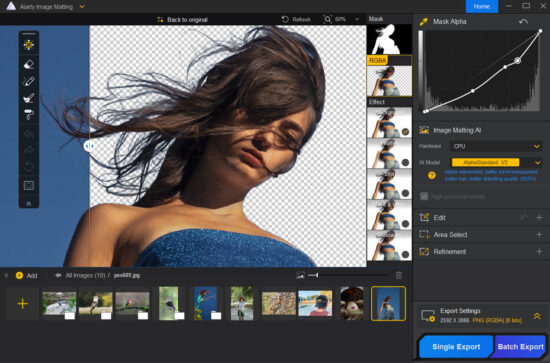
Remove Backgrounds and Preserve Fine Hair, Fur, and Feathers

Traditional masking tools often require hours of manual tracing around complex edges, and they fail to preserve the natural edges in flowing hair or fuzzy fur.

AI models in Aiarty Image Matting are trained to recognize and preserve individual strands of hair, animal fur, and bird feathers, producing a clean result for both transparent output and blend in with new backgrounds.
Handle Transparent and Semi-Transparent Subjects

Glass, lace, veils, and transparent materials are notoriously difficult to mask accurately. Aiarty maintains gradual transparency values while separating the subject from the background, delivering realistic transitions.

This image background remover helps photographers maintain a professional look when working with product photography, event banners, and creative composites.

Separate Subjects from Complex Backgrounds

A complex environment often confuses traditional background remover tools, with background remnants sticking around a subject in cutouts.
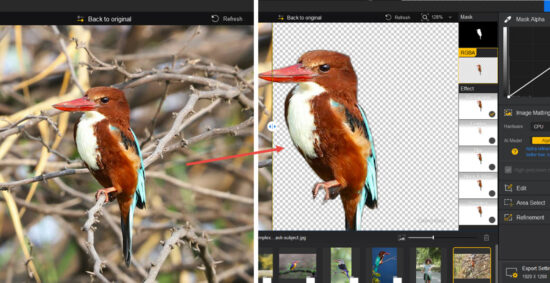
To solve that, AI inference in Aiarty Image Matting helps distinguish subjects even when backgrounds contain complicated textures, branches, foliage, or overlapping elements.

Create Stickers for Journals and Creative Projects

For wildlife photographers, nature journal hobbyists, and school projects, Aiarty Image Matting makes it handy to create stickers in batches, which can be used in field journals, presentations, banners, infographics, posters, and other creative projects.
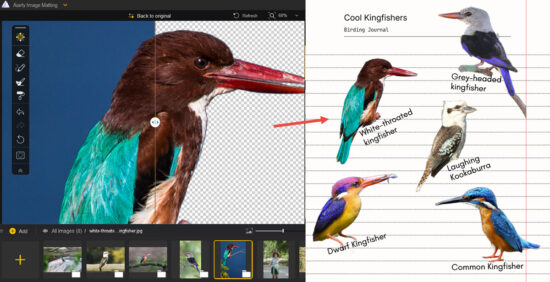
Flexible Auto Masking and Manual Refinement

Some background removal tools fall into one of two extremes: fully automatic tools that offer little control over the result, or manual masking features that require time-consuming tracing.

Aiarty Image Matting combines the strengths and flexibility of both approaches. With a single click, its AI models can auto-detect and isolate subjects, creating a high-quality mask as a strong starting point for most images.

For further refinement, it also provides editing tools to adjust masks, erase unwanted areas, or brush over to bring back details. The combination of the Mask alpha curve tool and erasing threshold is handy to handle challenging areas such as hair, fur, lace, and transparent objects.

Batch Processing for Large Projects

Editing and masking hundreds of images individually is inefficient. Aiarty supports batch processing, allowing designers and photographers to process large numbers of images automatically.
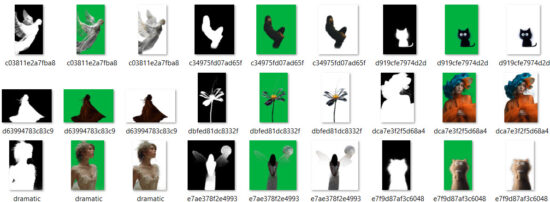
Whether handling event photography, wildlife shoots, or e-commerce catalogs, photographers can save editing time with precise masking and background removal.

Optionally, you can use the built-in 2X upscaling feature to enhance image quality, making the cutouts clear even at 4K and 8K displays.

Specialized AI Models for Different Scenarios and Subject Types

For clean cutouts and transparent PNGs, users might prefer a clear edge around the subjects. For background replacement, such as placing the person on a new canvas, a natural blend-in requires transparency transitions near the edges.

Instead of providing a one-size-fits-all tool, Aiarty Image Matting has 4 AI models optimized for different image types and masking scenarios.

Masking Model: AlphaStandard V2

It is designed for semi-transparent and translucent subjects such as wedding veils, glassware, water splashes, fine hair, and animal fur.
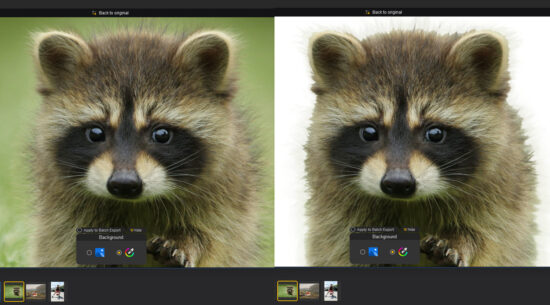
When you prefer to preserve natural transparency and smooth transitions, apply this model.

Masking Model: AlphaEdge V2

For those semi-transparent and translucent objects mentioned above, when you want to prioritize edge sharpness over soft transparency variations, then instead of using AlphaStandard, apply AlphaEdge.

Masking Model: EdgeClear V2

It is built for detailed solid objects such as vehicles, jewelry, sports equipment, and furniture. When you want to emphasize edge clarity while maintaining realistic detail, use this model for background removal and replacement.
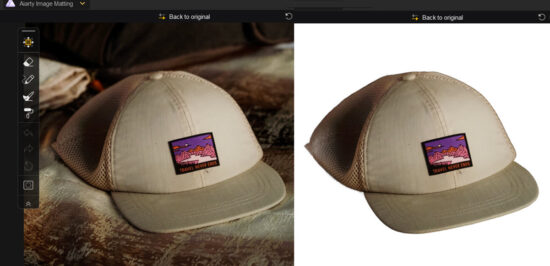
Masking Model: SolidMat V2

It is trained for products and structured subjects with defined boundaries, including: buildings, consumer products, electronics, and commercial catalogs.
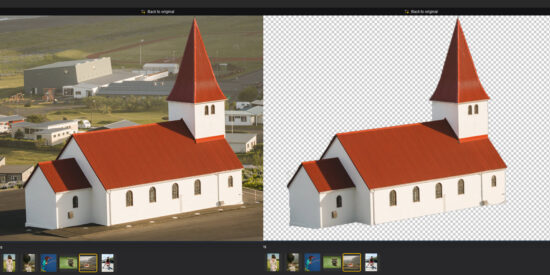
Besides the 4 AI models, Aiarty has an Alpha mask curve, brushes, and erasers, and more options to refine selection. With both auto masking and optional manual adjustment, it is versatile enough to tackle various subjects and scenarios, be it for semi-transparency variations, fuzzy edges, or solid subjects.

Final Thoughts

Background removal doesn’t have to be slow or tedious. With AI-powered subject isolation and optional manual refinement, Aiarty Image Matting offers photographers and designers a faster way to create clean cutouts while keeping full control over tricky edges.

For PhotoRumors readers, Aiarty Image Matting is currently available for $65 (43% off the regular price). The Lifetime License works on up to 3 Windows or Mac computers and includes free lifetime upgrades. Apply the code ANNIVERSARY at checkout to get an extra $5 off. The special offer ends June 21.

For those looking for a more creative toolkit, Aiarty also offers Anniversary bundles with image enhancement, upscaling, and video software – currently discounted up to 52%.

Learn more and grab the Anniversary offer here >

The post Quick AI Background Removal with Aiarty Image Matting (43% off Lifetime License + Extra Coupon) appeared first on Photo Rumors.

  •  

Jeff Bezos' AI Startup Aims To Build an 'Artificial General Engineer'

Jeff Bezos says his new AI startup, Prometheus, is working toward an "artificial general engineer" capable of helping design complex physical products such as robots, drugs, manufacturing systems, and rocket engines. The Verge reports: The NYT first reported on Prometheus last November, but now Bezos is sharing more information about the startup after a $12 billion funding round, putting the company at a $41 billion valuation. Bezos serves as co-CEO of Prometheus alongside Vik Bajaj, who co-founded Alphabet's health-focused research group, Verily. The startup currently has around 150 employees. The tools Prometheus intends to build could help develop physical products across several industries, including robotics, drug design, and manufacturing, the NYT reports. "Blue Origin is a perfect example of a company that could benefit from the tools that Prometheus is building," Bezos tells the NYT. "Any company that is building sophisticated devices -- like rocket engines -- would benefit greatly from this kind of technology."

Read more of this story at Slashdot.

  •  

Coinbase Launches Tool To Let AI Agents Manage Trading and Payments

Coinbase has launched Coinbase for Agents, a tool that lets AI agents like ChatGPT or Claude execute crypto trades and manage payments on a user's behalf. "For example, customers can prompt their agent to rebalance portfolios, identify trading opportunities, execute strategies and manage positions over time," reports CNBC. "It will eventually expand these capabilities to stocks and predictions." From the report: [U]sing Coinbase's machine-to-machine payments protocol, called x402, agents can pay directly for digital services like paywalled research, data APIs and on-demand compute without a human in the loop -- and execute trades based on those insights. The company sees this stage of agentic payments, which lets customers bypass the need to manage traditional logins or subscriptions, as a precursor to agentic shopping, where agents browse, find the best deals, select and make purchases on users' behalf. [...] The whole idea is to give agents access to money and, through that financial independence, improve their set of capabilities to pretty much anything on the internet," Lincoln Murr, Coinbase's AI product lead, told CNBC. "In the 2010s, every internet company dealt with the transition from desktop and web into a mobile environment. And now in the late 2020s, we're seeing the exact same thing happen where agents are going to be the new primary economic actors on the internet." The x402 protocol was created in May 2025 and has seen more than 100 million transactions since its debut, Murr said. There are about 157,000 agents acting as buyers using the protocol in the past 30 days, according to x402scan.com. "We saw immediate demand and interest in the ability for agents to pay for things autonomously and that was a huge waking up moment for us [on] the ability of agents to become these new primary financial actors across the internet," he said.

Read more of this story at Slashdot.

  •  

OpenAI Mulls Slashing Prices As It Competes With Anthropic For Users

OpenAI is reportedly considering sharp price cuts for paid access to its AI models as competition with Anthropic intensifies and both companies race for users ahead of potential IPOs. "The company is weighing significant cuts to what it charges for tokens, the unit of measurement artificial-intelligence firms use to bill for their products," the Wall Street Journal said, adding that it was "in anticipation of similar cuts the company expects at Anthropic." CNBC reports: The ChatGPT producer, which did not immediately respond to CNBC's requests for comment, currently charges consumers in tiered subscriptions of $8, $20 and $100 and above each month for access to its flagship GPT-5.5 models. Anthropic conversely charges users $17 each month with an annual subscription to Claude Pro, and $100 and above monthly for a subscription to Claude Max. OpenAI confidentially filed for an IPO on Monday, just a week after Anthropic made its own filing.

Read more of this story at Slashdot.

  •  

Opendoor Ends India Operations, Fueling a Bigger Conversation About AI and Outsourcing

Opendoor is shutting down its India operations less than two years after opening offices there. Slashdot reader alternative_right shares a post from Opendoor CEO Kaz Nejatian: "I shared this note earlier today with the entire team at Opendoor. Today we began to say goodbye to our colleagues in India as we wind down our India operations. Our customers are in America, and that's where our operational work belongs." TechCrunch reports: In announcing the decision on Wednesday, CEO Kaz Nejatian cited a push to bring operational work back to the U.S., where Opendoor's customers are, and a shift toward smaller AI-native teams. The company did not respond to requests for comment on how many employees were affected or how much of the decision was driven by AI efficiency. But the announcement quickly gained traction across Silicon Valley, where founders, investors, and outsourcing experts see it as an early example of how AI is reshaping the economics that made India a global hub for back-office operations. [...] Some investors viewed the decision as a sign of what AI could mean for India's vast outsourcing workforce. "As manual work gets replaced by AI, a lot of jobs will be lost in India," wrote Sheel Mohnot, co-founder of Better Tomorrow Ventures. Others viewed Opendoor as evidence of a larger shift in how companies are organized. Keshav Lohia, a venture capitalist at Emergent Ventures, described the decision as a "watershed moment" for AI-driven operations, arguing that advances in AI are beginning to challenge the cost-arbitrage model that made India a popular offshoring destination. Phil Fersht, chief executive of HFS Research, an advisory firm that tracks the global outsourcing and business services industry, told TechCrunch that the development should not be viewed simply as jobs moving from India to the U.S. The more important shift, he said, is that AI is reducing the amount of operational labor companies require in the first place, allowing firms to run leaner organizations regardless of location. "This is not an isolated restructuring," Fersht said. "It is part of a much broader pattern we are starting to see as companies redesign operations around AI, automation, and much leaner workflows." Fersht argued that the winners would be companies that combine AI, software and human expertise to deliver outcomes without continually adding headcount, a model he described as "Services-as-Software." While Opendoor may be one of the first high-profile examples, he said it is unlikely to be the last. Some investors are already extrapolating beyond individual companies. Varun Rekhi, a venture capitalist at Speedinvest, argued that if AI reduces demand for labor-intensive services, it could eventually pressure one of India's most important export industries, which is built around supplying talent and expertise to global corporations.

Read more of this story at Slashdot.

  •  

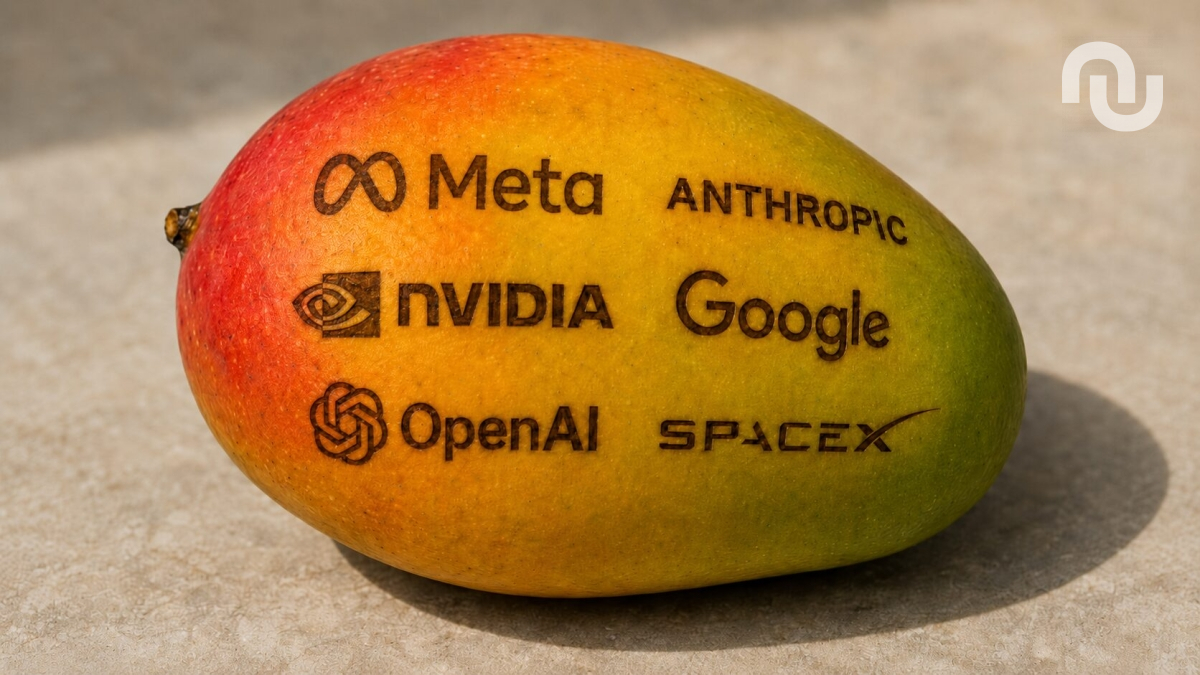
Les GAFAM sont morts, vive les MANGOS

Et si les GAFAM avaient déjà leur successeur ? Né sur X le 9 juin 2026, le mème « MANGOS » remplace les géants historiques par Meta, Anthropic, Nvidia, Google, OpenAI et SpaceX. Un acronyme rigolo, mais surtout révélateur d’un basculement de la tech.

  •  

Seattle Enacts Year-Long Ban On New AI Datacenters

Seattle has enacted a one-year moratorium on new datacenters, making it the largest U.S. city to do so as the backlash against AI infrastructure grows across the country. The city council voted unanimously in favor of the ban. The Guardian reports: Lawmakers have framed the pause as an opportunity to draft regulations specifically targeting the electricity-hungry datacenters being built nationwide to serve the AI sector, and to protect local residents from environmental risks and rising electricity bills. According to Seattle mayor Katie Wilson, the moratorium will also let city officials determine whether datacenters are a "good use of urban land," and potentially impose new stipulations on their approval, such as requiring developers to invest in local transit and housing initiatives in exchange for construction permits. "There are times when public pressure forces elected officials to do something they don't want to do, but in other cases, public pressure just supports and helps to spur on elected officials to do things that they already want to do," said Wilson. "I think this was one of those latter cases." [...] An amendment to the moratorium that passed unanimously last week allows existing datacenters in Seattle to apply for expansions requiring up to 20 megawatts of additional power during the year-long pause. Activists are concerned that the provision may lead to a spike in datacenters' demand for power while the moratorium is in place, and may undermine the premise of the pause. Lawmakers justified the amendment as a way to differentiate between the datacenters that already exist in Seattle and serve a civic purpose, like those powering health facilities and emergency-call systems, from large-scale centers designed to serve the AI sector.

Read more of this story at Slashdot.

  •  

Essai MG4 Urban de 160 ch

MG Motor lance la MG4 Urban sur le marché. Nous l’avons découverte à l’occasion de sa présentation à la presse à Francfort, où l’on a aussi discuté de sa batterie semi-solide, qui, à terme, devrait se retrouver sur plusieurs modèles du catalogue. Mais surtout, nous en avons pris le volant sur les redoutables routes du Pays basque. 

Elle s’appelle aussi MG4, mais elle est très différente

La MG4 Urban arrive en France en tant que voiture électrique plus abordable que la MG4 classique, pour un usage supposément un peu plus citadin, avec des autonomies plus modestes. On a presque failli s’y perdre, mais il s’agit de deux voitures différentes. La MG4 repose sur la plateforme MSP, et l’Urban sur l’E3. Il faut noter que le modèle d’entrée de gamme de la MG4 2026 disparaît, et, d’une certaine façon, la nouvelle venue le remplace. Alors qu’elle a une vocation plus citadine, plus en phase avec une utilisation quotidienne, elle s’avère en fait plus longue de 10 cm que sa grande sœur, à 4,39 m. 

Le style s’avère aussi radicalement différent. D’après Joseph Kaban, vice-président du design chez SAIC (Shanghai Automotive Industry Corporation), il faut y voir du Cyberster dans les lignes de la MG4 Urban. On vous laisse en juger. En tout cas, elle apparaît beaucoup plus sobre que la MG4 « normale », avec des lignes très fluides. Il faut rappeler qu’il s’agit du nouveau modèle électrique le moins cher du catalogue MG Motor et que, dans son allure, la voiture n’a pas du tout l’air d’une auto au rabais : entendez par là qu’elle fait bien plus sérieuse qu’une Dacia Spring, par exemple. Avec ses cotes de compacte, on a du mal à voir en elle une citadine. 

De l’espace et du coffre

Quand on se glisse à l’intérieur, on se rend compte que, là aussi, elle n’a rien d’une voiture faite juste pour se faufiler en ville. On a tout d’abord de l’espace à toutes les places. On est suffisamment bien installé sur la banquette arrière pour regretter l’absence d’un accoudoir central. Oui, en fait, on en devient un peu gourmand avec autant d’espace. Et les surfaces vitrées supérieures à celles de l’autre MG4 renforcent ce sentiment. Avec son empattement pour le moins confortable de 2,75 m, les occupants aux grandes jambes n’y trouveront rien à redire. Comme toujours, la vie est meilleure à deux sur la banquette plutôt qu’à trois. En enlevant le double fond, on accède à 480 l de capacité. Un record pour une voiture de 4,40 m. 

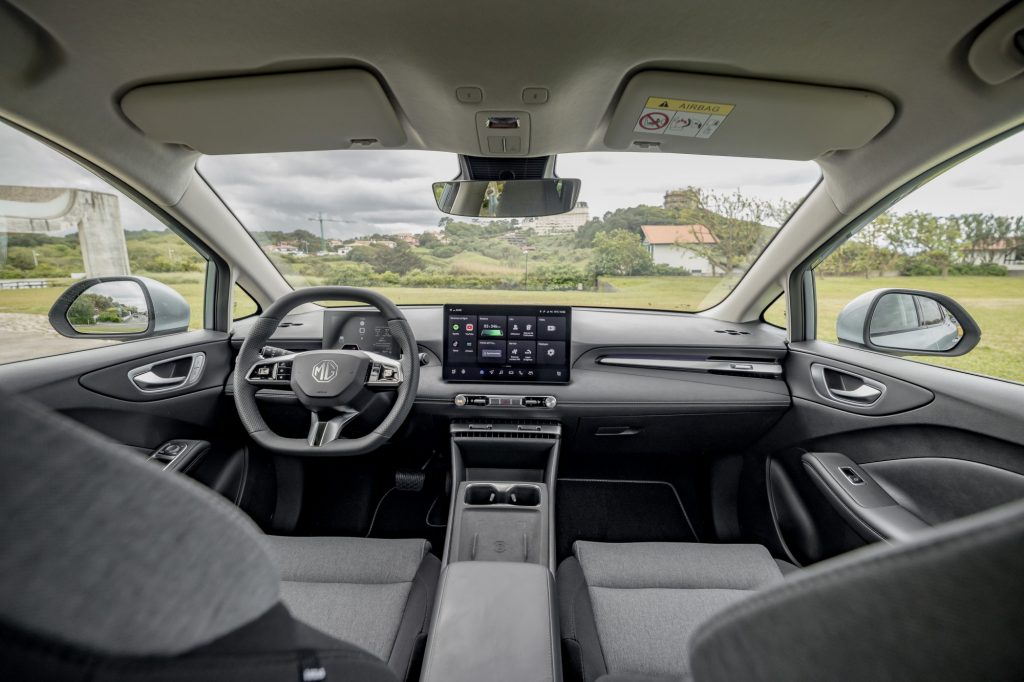
La présentation de la planche de bord apparaît plutôt simple, avec un petit écran derrière le volant et une dalle tactile de très grande dimension. On accède aux fonctions essentielles pour la climatisation ou l’infodivertissement via des boutons physiques. Et, pour ne rien gâcher, on a droit à un grand bac de rangement sur la console centrale, ainsi qu’à deux porte-gobelets sans devoir sacrifier l’un ou l’autre. La recharge à induction fait partie de la dotation, comme toute la connectivité que l’on attend d’une compacte, mais le système a manqué de stabilité. On peut pester contre l’ergonomie des menus, néanmoins, on progresse en la matière chez MG Motor, avec des raccourcis notamment pour désactiver les alertes sonores agaçantes de plusieurs ADAS. Certains trouveront aussi que quelques matériaux mériteraient un meilleur traitement, mais attendez qu’on évoque le tarif… 

Une batterie semi-solide très bientôt!

On a parlé batterie quelques jours auparavant à Francfort, à l’occasion d’un « tech day » organisé par la marque. La MG4 Urban sera la première voiture de la marque à recevoir ses nouvelles cellules semi-solides (SolidCore). Ici, il ne s’agit pas d’avoir un pack qui permet une autonomie record, même si elle s’améliore grâce à une meilleure densité énergétique. Tout d’abord, sa structure permet d’améliorer sa sécurité en cas d’accident. On n’entrera pas dans les détails de la chimie. Il faut tout de même noter une légère amélioration de la vitesse de recharge, de l’ordre de 15% par rapport à une LFP de conception classique. Le plus intéressant apparaît surtout dans sa capacité à rester efficace par temps froid, notamment lors de la recharge, puisque l’on peut, selon ses concepteurs, se passer de conditionnement avant une recharge en DC et la remplir à 100% sans que cela ne l’use prématurément. En attendant qu’elle arrive d’ici la fin de l’année, il faut se contenter pour l’instant d’une LFP d’une capacité de 54 kWh dans notre cas. 

Cette MG4 Urban à traction (l’autre est une propulsion) dispose de 160 chevaux, qui sont bien suffisants pour le quotidien et même un peu plus. Avec son couple largement dimensionné pour déplacer son modeste poids de 1 520 kilos, elle a franchement l’énergie qu’il faut pour ne paraître ridicule dans aucune situation de conduite. Calmons-nous, elle ne rivalisera pas avec la MG4 au chapitre de la performance pure, avec son 0 à 100 en environ 9 secondes, mais elle ne sera pas la dernière au jeu des relances et des dépassements. Cette voiture, destinée à une utilisation urbaine avec une certaine polyvalence, surprend par sa consommation plutôt contenue, proche des 15 kWh aux 100 km sur un parcours pas du tout favorable comprenant voies rapides et cols de montagne. On table sur un chiffre réel probablement proche des 360 km, voire largement supérieur en usage exclusivement urbain. 

Plutôt compacte que citadine, comme son nom ne l’indique pas

Les accros à la conduite à une pédale seront plutôt déçus. Il ne s’agit clairement pas de la meilleure en la matière. On n’a pas grand-chose à dire sur la gestion du freinage régénératif, si ce n’est qu’on aurait aimé des palettes ou, du moins, une gestion qui ne nécessite pas d’aller fouiller dans les menus pour en régler le niveau. On n’est clairement pas au volant de l’autre MG4, avec laquelle, finalement, elle ne partage quasiment rien. Elle fait preuve d’un très bon confort et d’un comportement facile, rassurant. On n’ira pas jusqu’à dire qu’on a pris du plaisir, mais elle fait assez bien son office, avec une rigueur qui la place dans la bonne moitié de tableau sur son segment de marché. 

Il faut dire, en outre, qu’avec son poids particulièrement contenu, on a vraiment le sentiment de conduire une auto conventionnelle, comme une compacte thermique finalement, mais avec une fluidité offerte par la propulsion électrique qui renforce le sentiment de confort et de sérénité. Ce silence de roulage est tout juste parfois troublé par une insonorisation que l’on aurait aimée d’un meilleur niveau à haute vitesse. Honnêtement, cette MG4, qui porte si mal son nom d’« Urban », nous rend même gourmands. On la sent capable d’un petit peu plus, dans quasiment tous les domaines. 

Dès 19 990 € (remise constructeur de 5 005 € déduite)

En attendant sa batterie « révolutionnaire », cette MG4 Urban se contente d’une recharge de 10 à 80% en une demi-heure. On espère vraiment que la semi-solide promise pour la fin de l’année améliorera ce chiffre. Cette MG4 Urban met tout le monde d’accord avec un tarif d’entrée de gamme de 19 990 €, comprenant une batterie de 43 kWh et un équipement déjà riche. 22 490 € pour la grosse batterie, et moins de 26 000 € pour la version la plus huppée. Oui, les concurrentes des constructeurs historiques sont souvent plus puissantes, mieux finies avec des vitesses de recharge supérieures, mais aussi très chères. En fait, de plus en plus, un constructeur comme MG Motor voit ses principaux concurrents du côté des autres marques chinoises…

L’article Essai MG4 Urban de 160 ch est apparu en premier sur Le Blog Auto.

  •  

Anthropic Releases Claude Fable, a 'Safe' Version of Mythos

Anthropic is releasing Claude Fable 5, a Mythos-class AI model for enterprise customers and paid subscribers. The company says broader access is possible thanks to new safeguards that block high-risk requests in areas like cybersecurity and biology. "For us, it's really around what we call 'race to the top,' being able to provide this technology in a valuable fashion, and at the same time providing the right safety guardrails so that it can do asymmetrically more benefits than harm," Dianne Penn, Anthropic's head of product management for research, told CNBC in an interview. CNBC reports: [W]ith the launch of Claude Fable 5, Anthropic is honoring its stated "eventual goal" to deploy Mythos-class models at scale. It's also capitalizing on growing momentum and investor interest in its technology ahead of a potentially massive IPO, which is expected to take place as soon as this year. Anthropic said Claude Fable 5 shows "exceptional performance" across software engineering and knowledge work tasks. On some benchmarks, it scored more than 10% higher than Claude Opus 4.8, another model the company announced late last month, according to a blog post. Claude Fable 5 represents a "significant jump" in capability, which is why Anthropic had to implement additional guardrails to prevent misuse, Penn said. If a user asks a high-risk question, like how to make ricin, a toxin, for instance, the model will block its response and fall back to Claude Opus 4.8 to deliver a safe answer. "What we wanted to do was to be very intentional about building new types of classifiers and new types of safety guardrails in place for this launch," Penn said. Anthropic also released an updated Mythos model called Claude Mythos 5. "It's the same underlying model as Claude Fable 5, but with the safeguards lifted in some areas," reports CNBC.

Read more of this story at Slashdot.

  •  

EU Says Decision Not to Launch Siri AI in Europe Is Apple's Alone

The European Commission says Apple's decision not to launch Siri AI in the EU is Apple's alone, arguing that the company sought an exemption from Digital Markets Act interoperability rules instead of building a compliant privacy- and security-preserving solution. Apple, meanwhile, says regulators rejected its proposals and claims the DMA would require giving third-party AI systems overly broad access to users' devices. MacRumors reports: Commission spokesperson Thomas Regnier told reporters in Brussels: "The decision not to roll out Siri AI in the EU is Apple's and Apple's only. Apple was simply unable to develop interoperability solutions that meet essential EU privacy and security standards. Instead of trying to find a suitable compliance solution, Apple simply made a request to the European Commission to be exempted from their interoperability obligations. That's not an option." Craig Federighi, Apple's senior vice president of Software Engineering, said the company was "deeply disappointed" and cited what it described as regulators' refusal to accept any of Apple's proposals, including a system called Trusted System Agent that would have allowed third-party virtual assistants to safely access the same device capabilities as Siri AI. The Commission's account tells a different story. Rather than negotiating over Apple's proposed solutions, regulators say Apple simply requested a blanket exemption from its interoperability obligations under the Digital Markets Act, something the Commission says is not an available option. Apple's statement framed the DMA's requirements as demanding that any AI system be given "nearly unlimited access" to a user's device.

Read more of this story at Slashdot.

  •  

NHS Prescribes Half a Million Copilot Licenses For Its Paperwork Headache

NHS England plans to roll out Microsoft Copilot to 505,000 clinicians and support staff after a 30,000-person pilot claimed the AI assistant saved users an average of 43 minutes a day on administrative work. The Register reports: The rollout won't happen overnight. NHS England said that each trust will receive a central allocation of licenses based on headcount, typically starting with around 2,000 Copilot seats, and that more than half a million staff are expected to have access by October 2026. The NHS has no shortage of administrative work to throw at the software. The rollout envisions Copilot helping with discharge paperwork, bed management, rota planning, meeting minutes, board papers, briefings, data analysis, and assorted HR, finance, and procurement tasks. NHS organizations will also receive access to Copilot Studio, Microsoft's toolkit for building custom AI agents. NHS England said trusts will be able to develop agents for tasks such as handling Freedom of Information requests, processing complaints, reducing helpdesk workloads, and assisting with financial analysis. A governance framework called Agent 365 will oversee the deployment of those systems.

Read more of this story at Slashdot.

  •  
❌