Vue lecture

Google revient sur le marché des enceintes connectées : le Google Home Speaker est enfin là

Six ans après le Google Nest Audio, le géant du web lance enfin une nouvelle enceinte connectée : le Google Home Speaker. Déjà brièvement présenté en octobre 2025, quand Gemini for Home n'était qu'un projet, ce nouvel objet connecté à 119,99 euros a pour objectif d'installer l'IA générative dans des millions de foyers.

  •  

Waymo se rapproche encore plus d’Uber en obligeant ses clients à payer pour avoir une course plus vite

Waymo lance une offre de fidélité par abonnement à 30 dollars par mois. Destiné aux clients réguliers de San Francisco, Los Angeles et Phoenix, ce programme baptisé « Waymo Premier » propose des trajets prioritaires et du cashback sur les courses. Une stratégie qui vise à sécuriser des revenus récurrents face à la concurrence indirecte d'Uber et Lyft.

  •  

Les GAFAM sont morts, vive les MANGOS

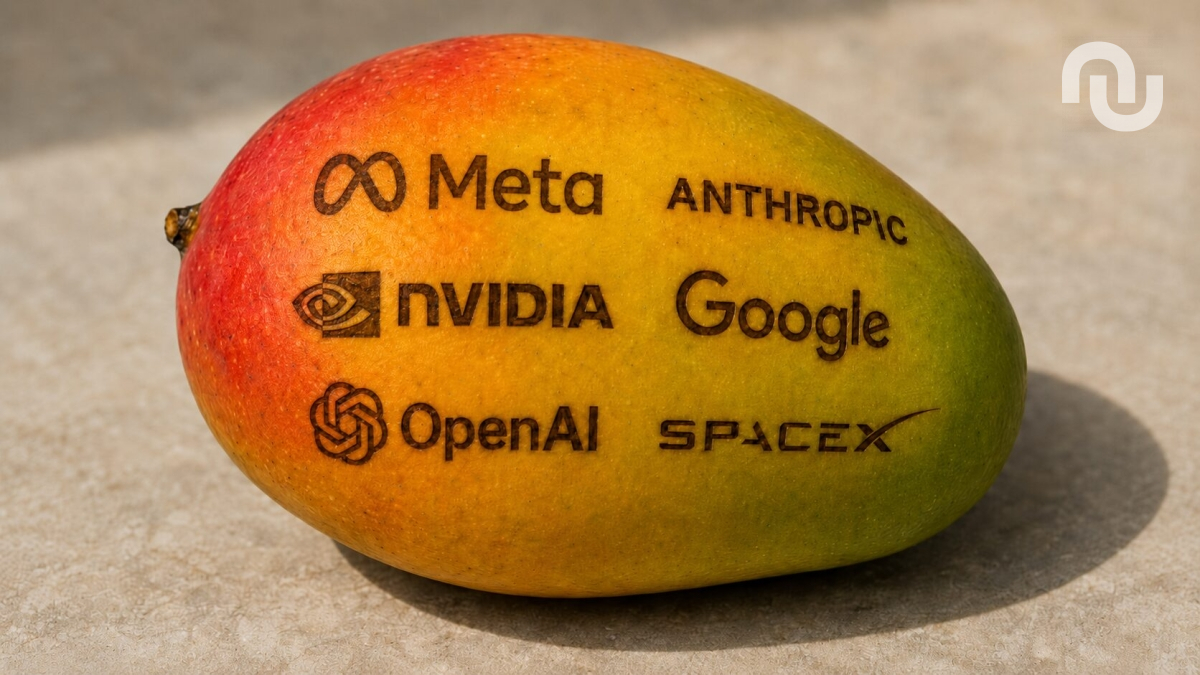
Et si les GAFAM avaient déjà leur successeur ? Né sur X le 9 juin 2026, le mème « MANGOS » remplace les géants historiques par Meta, Anthropic, Nvidia, Google, OpenAI et SpaceX. Un acronyme rigolo, mais surtout révélateur d’un basculement de la tech.

  •  

Tapez « 6-7 » dans Google

Google a encore glissé une petite surprise dans son moteur de recherche. En tapant « 6 7 » (ou « 6-7 »), la page de résultats se met à vaciller, en clin d’œil au meme absurde devenu viral chez la Gen Alpha.

  •  

Le nouveau Siri expliqué : cinq modèles maison, le vrai rôle de Google Gemini et des GPU Nvidia

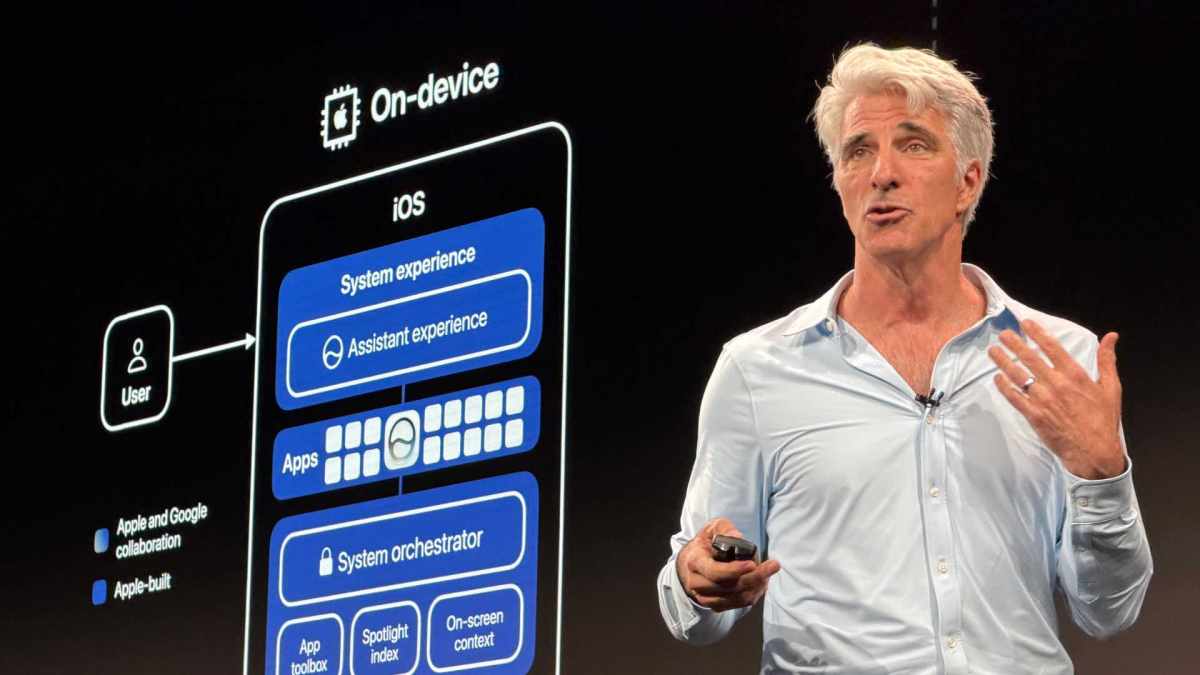
AFM Core, AFM Core Advanced, AFM Cloud, ADM Cloud et AFM Cloud Pro : Apple ne lance pas un, mais cinq modèles d'IA. Contrairement à ce que beaucoup écrivent, la marque californienne ne se contente pas d'utiliser les modèles Gemini de Google pour son nouvel assistant Siri AI : la réalité est bien plus complexe. Numerama a assisté à plusieurs sessions techniques à Cupertino et vous explique tout.

  •  

Google Says It Will Replenish More Water Than It Uses At Data Centers

An anonymous reader quotes a report from 9to5Google: There's been a lot of pushback in recent months around the impact of AI data centers on local communities, with the use of water being a key issue for many. Google, in an expansion of its "water stewardship" programs, is making commitments that include replenishing more water than it uses at its data center sites. AI data centers go through a lot of water use in cooling the hardware used to power models, and Google is no exception. While Google stands by saying that the impact of AI data centers on U.S. water consumption is "small," it also says it is focusing on "protecting local water resources in all aspects of our data center operations." In a post, Google explains five new commitments regarding water use at its data centers in the U.S. These include replenishing more water than is consumed at data centers, helping local utilities to modernize water infrastructure, using air-cooled solutions in areas where watersheds are at risk, "transparently" reporting water use at data centers, and focusing on "alternative and reclaimed" water solutions. [...] In a linked paper (PDF), Google says it will replenish 120% of the water it uses at data center sites by 2030. Google is also committing $17 million to new water stewardship projects in Georgia, Iowa, Michigan, Minnesota, Missouri, Nebraska, and Texas in addition to 165 other projects already in place throughout the U.S.

Read more of this story at Slashdot.

  •  

Gemini piégé par de simples notifications : une attaque par injection de prompt a détourné l’assistant de Google

Dans un article publié le 3 juin 2026, des chercheurs de SafeBreach ont prouvé comment de simples notifications pouvaient suffire à manipuler Google Gemini. En exploitant le résumé vocal des messages, ils sont notamment parvenus à injecter des instructions invisibles, capables de tromper l’utilisateur à son insu.

  •  

Google Ordered To Put Clearer Links In AI Search, Let UK Publishers Opt Out

An anonymous reader quotes a report from Ars Technica: UK regulators today ordered (PDF) Google to put clearer attributions and links to publishers' content in its AI-generated search features. The UK's Competition and Markets Authority (CMA) also said Google must give publishers a way to opt out of AI features in search. "In a world first, publishers will now have effective tools to prevent their content being used to power AI features in search, such as AI Overviews," the CMA said today. "This will put publishers, like news organizations, in a stronger position to negotiate content deals with Google. To boost consumer trust, Google is also now required to make sure that publisher content is properly attributed, using clear links, in AI-generated search results." The CMA ruled that Google may not penalize publishers for opting out of AI, meaning that Google can't downrank opted-out publishers in general search results. The CMA said Google will have nine months to comply with all requirements but that the agency "expects important parts of the controls to become available to publishers well before that deadline. Google will also be required to submit and publish compliance reports, supported by key data and metrics, explaining changes it has made and how it has complied." [...] The CMA applied the rules to Google after determining that it has "strategic market status" in general search services, and has ongoing investigations into Apple and Microsoft. Google today said it will comply with the CMA decision. The News Media Association, a trade group in the UK, said that "the legally enforceable Conduct Requirements for Google Search published today are a significant step towards leveling the playing field and building a fair, transparent digital economy where premium content is properly respected and fairly compensated." The group called on the UK to implement "robust enforcement."

Read more of this story at Slashdot.

  •  

Google Launches 'Gemma 4 12B' AI Model That Can Run On Your Laptop

Google has launched Gemma 4 12B, a 12-billion-parameter open AI model designed to run locally on your laptop without depending entirely on cloud infrastructure. WION reports: According to Google, the new model delivers performance close to much larger AI systems while requiring significantly less memory. The company says Gemma 4 12B can run locally on devices equipped with just 16GB of VRAM, making advanced AI more accessible to developers, researchers and businesses. The launch highlights a growing trend across the AI industry: bringing powerful AI models directly to personal computers instead of relying solely on remote data centers. Gemma is Google's family of open AI models built using technology and research from its Gemini program. The new Gemma 4 12B model contains 12 billion parameters and has been designed to handle multiple types of information, including text, images and audio. Unlike traditional AI systems that focus only on text, Gemma 4 12B can understand visual content, process audio inputs and perform advanced reasoning tasks. This makes it suitable for a wider range of applications, from software development and content creation to research and automation. Google says the model is available under the Apache 2.0 licence, allowing developers and organizations to use, modify and deploy it with relatively few restrictions. [...] One of the most significant technical changes in Gemma 4 12B is its new unified architecture. Traditionally, multimodal AI systems use separate components known as encoders to process images, audio and text before combining the information. Google says Gemma 4 12B removes the need for separate multimodal encoders. Instead, the model processes different types of information through a unified architecture. According to the company, this helps improve efficiency while reducing memory requirements and computational overhead. The result is a model that can deliver advanced multimodal capabilities while remaining small enough to run locally on modern hardware.

Read more of this story at Slashdot.

  •  

Google Shares Fitbit Air Blueprints So Anyone Can 3D-Print Accessories

Google has released (PDF) technical specs and 2D CAD drawings for the Fitbit Air to encourage users to make their own accessories. "These CAD drawings include crucial mating dimensions, tolerances, and mating force specifications -- including attach and detach force -- to help you build a high-quality accessory band," Google says on a store page listing. 9to5Google reports: Noting how the "community has already come up with innovative and creative new ideas to make the Fitbit Air [their] own" since launch last month, Google is "officially releasing the hardware specifications and accessory design guidelines for the Fitbit Air tracker to the public." For example, owners have already found their own bicep band solutions. This information would typically just be available for third-party accessory companies, but Google wants to open things up to "independent designers and artisan makers." The Google Store page also lists other things developers should keep in mind, such as sensor clearance, sensor pressure, secure retention, and skin-friendly materials.

Read more of this story at Slashdot.

  •  

Qwant remplace Google au Parlement européen : le vrai début de la souveraineté numérique ?

Le 4 juin, le Parlement européen remplacera Google par Qwant comme moteur de recherche par défaut sur ses ordinateurs. Une bascule qui intervient au moment où les institutions européennes multiplient les initiatives pour réduire leur dépendance aux logiciels américains… et où les grands groupes américains s'inquiètent de la politique européenne.

  •  

Apple Working To Cram Massive Gemini Model Into iPhone To Power New Siri

Apple is reportedly working to shrink Google's Gemini models enough to power parts of a long-delayed AI-enhanced Siri on iPhones. But despite Apple's best efforts to run the AI locally, "the iPhone's Gemini makeover will lean heavily on Google and Nvidia in the cloud," reports Ars Technica. That could complicate Apple's privacy-first AI messaging, especially if more complex Siri requests are routed through Google infrastructure and Nvidia's encrypted cloud-computing platform. Ars Technica reports: After inking the Google deal, Apple apparently got to work distilling Google's giant cloud-based Gemini models. Distillation is a process in which a small, less resource-intensive model learns to mimic a large, expensive one. With enough time, this can reliably transfer useful capabilities while pruning less important weights from the model. That may enable Siri to handle some tasks with private local compute, but a cloud component looks inevitable. Processing users' AI data in the cloud could be a problem for Apple. At WWDC, the company will probably promote its years of experience designing chips and how well that positions it for AI. However, The Information claims that Apple has struggled to even get Google's massive undistilled Gemini models running on its custom Private Cloud Compute infrastructure, which is built on on M-series Mac chips. When the smarter Siri rolls out, it will probably route more complex tasks to Google's cloud infrastructure instead of Apple's, but it won't be running on Google TPUs. Apple has reportedly signed a deal with Nvidia to use its Confidential Computing platform for this purpose. Confidential Computing keeps data encrypted on Nvidia GPUs while it's being processed in the cloud, which could help Apple claim it's still sensitive to user privacy concerns. It might even retain its own Private Cloud Compute branding for the system. The iPhone probably won't tell you which version of Gemini is handling individual Siri requests. Device makers designing hybrid systems that rely on local and cloud-based AI like to talk about making the experience feel "seamless." There might be clues, though.

Read more of this story at Slashdot.

  •  
❌