Vue lecture

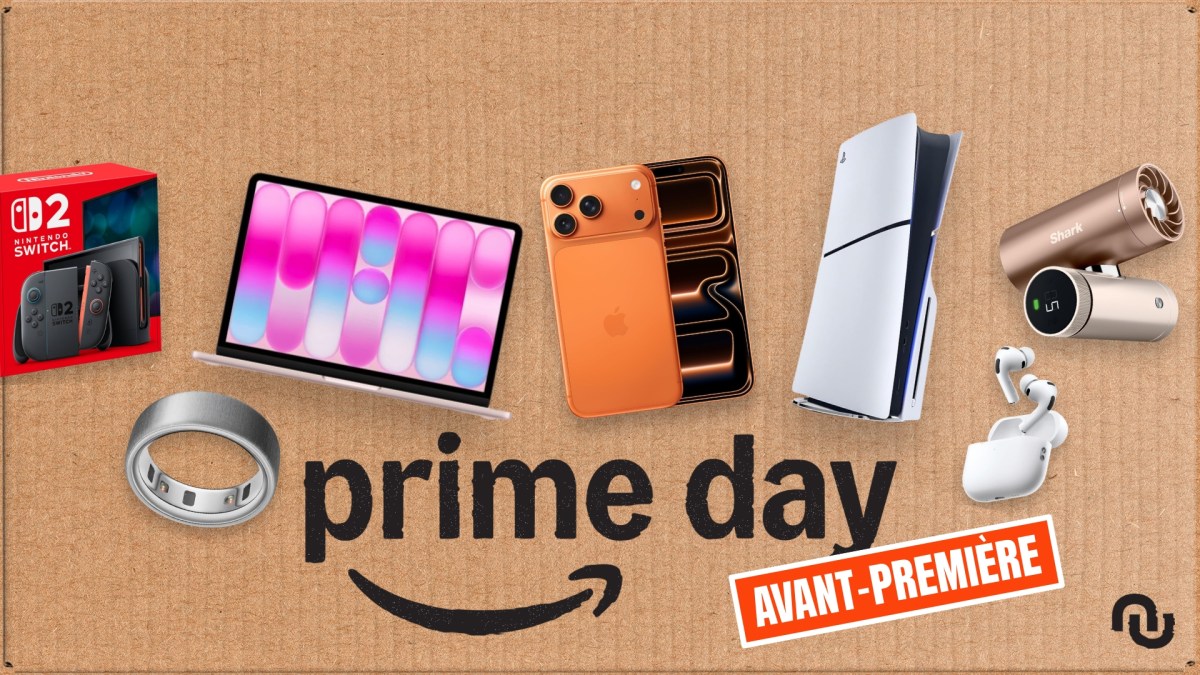
Prime Day : les meilleures offres en avant-première encore disponibles

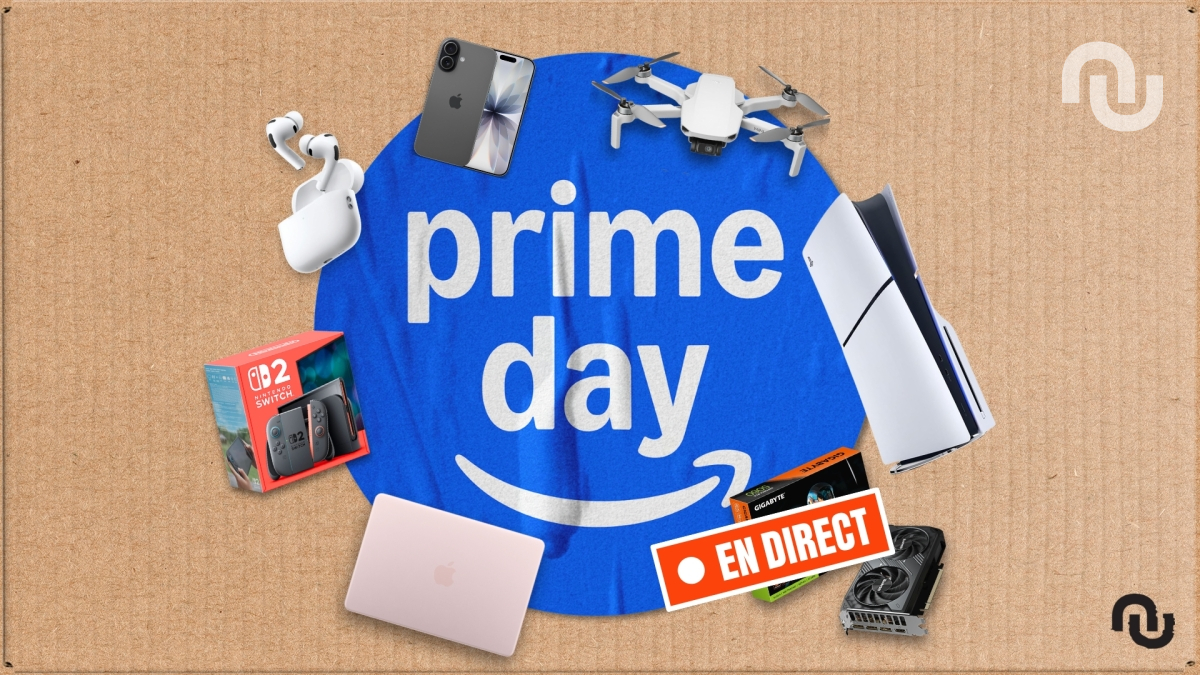
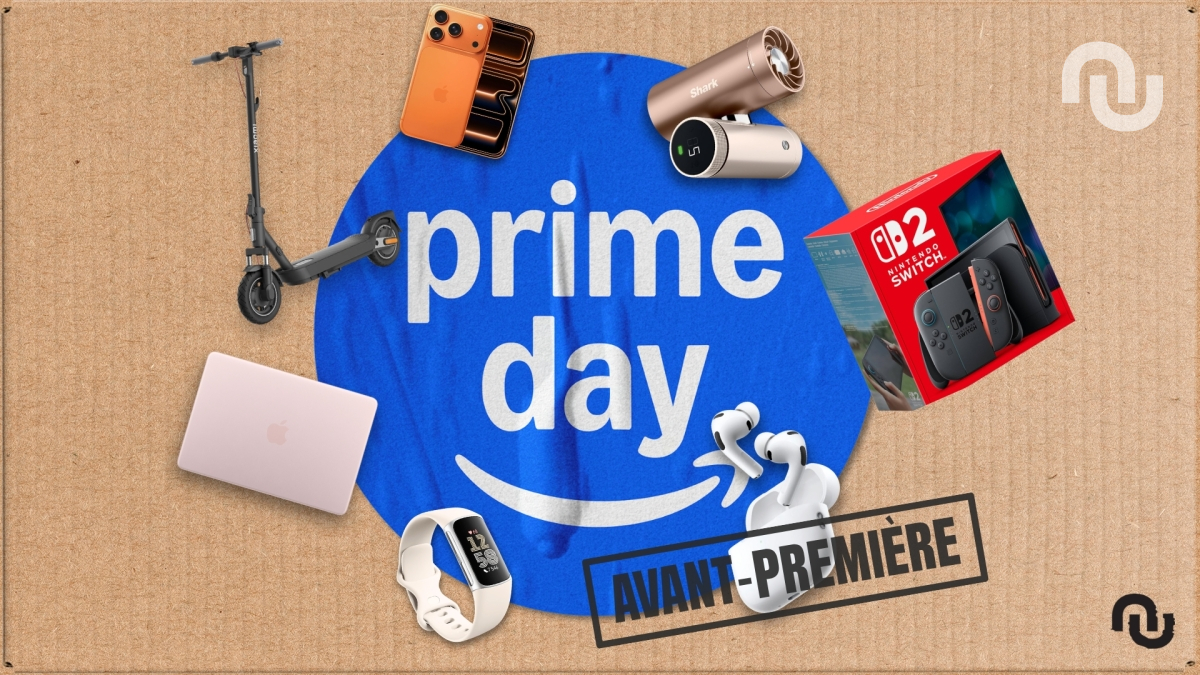
Amazon a lancé ses premières promotions des Prime Day le 15 juin dernier, soit bien avant le lancement officiel de l'évènement, prévu le 23 juin. Après trois jours d'avant-première, le rythme se calme un peu, mais la quasi-totalité des bons plans repérés ces derniers jours sont encore accessibles aux abonnés Prime. On continue donc de faire le tri en direct.

  •  

Smartphone Market To Shrink 15% This Year Due To Memory Crisis

CCS Insight expects global smartphone shipments to fall 15% this year as AI-driven demand pushes memory manufacturers toward higher-margin server chips. "[S]ome entry-level devices have already seen their sticker prices go up by more than 50 percent since last year," reports The Register. From the report: The firm found that the primary smartphone market (meaning new devices) contracted 4.4 percent in the first quarter of this year, despite sales channels front-loading (meaning stockpiling) product inventory, as device prices begin to rise sharply. As CCS notes, this casts an ominous shadow on the outlook for the rest of the year, and it seems things have worsened since The Register first started reporting on the smartphone memory woes. Back in January, the forecast was for handset price rises of 6-8 percent, while the most pessimistic outlook was that the global market might contract as much as 5.2 percent. By February, analysts were expecting to see a decline in shipments of around 8 percent across the global market, and for prices to increase by about 14 percent. The root cause of all this is the AI craze, which has seen huge demand for high-performance GPU-filled servers to process it all. Chipmakers have moved to capitalize on this by prioritizing production of high-margin memory components for those servers, rather than making the plain old DRAM and NAND needed for PCs and phones. "The memory chip crisis shows no sign of slowing down in the near future, ramping up the pressure on manufacturers and consumers. Memory components now account for more than 30 percent of a manufacturer's bill of materials in some smartphones." said CCS research analyst Ben Hatton. "The full impact has yet to be felt in many regions, but it's clear that device prices will accelerate over the rest of the year."

Read more of this story at Slashdot.

  •  

OPPO Find X9 Ultra : test, prix et offre Bouygues

Le OPPO Find X9 Ultra s’impose aujourd’hui comme le meilleur photophone Android du moment. Ce modèle vise d’abord les passionnés de photo, car il combine un zoom puissant et une autonomie record. Désormais, Bouygues Telecom le propose avec une offre de lancement attractive. Voici donc notre décryptage complet de sa fiche technique, de ses qualités […]

L'article OPPO Find X9 Ultra : test, prix et offre Bouygues a été publié en premier sur Bbox-Mag

  •  

Commodore's Callback 8020 Is a $499 Flip Phone That Blocks Social Media and Browsers

Commodore has unveiled the Callback 8020, a $499 Sailfish OS flip phone that runs most Android apps but deliberately blocks social media, browsers, email, and workplace apps to discourage doomscrolling. The "not dumb dumbphone" still supports messaging, music, maps, ridesharing, hotspots, a removable battery, and plenty of Commodore nostalgia. "The phone uses T9-style texting with predictive input, includes Commodore SID ringtones, ships with a selection of Commodore and Sailfish games, and even includes Snake," reports TechSpot. From the report: Commodore says it has developed patent-pending technology that prevents browsers and social media apps from being sideloaded, while DNS-level blocking should stop them from working even if someone finds a way to install them. Users can still sideload nearly anything else if it's not available on the Commostore, but apps designed for doomscrolling remain off limits. That means useful services such as WhatsApp, SMS, Signal, Telegram, WeChat, Spotify, Uber, Lyft, maps, podcasts, QR scanning, voice notes, and hotspot support work, but the likes of Instagram, TikTok, Facebook, Gmail, and browsers do not. The Callback 8020 has a 3.25-inch 480 x 640 internal display, a MediaTek Helio G81 chip, 4GB of RAM, 64GB of storage, a 48MP Sony rear camera, an autofocus front camera, dual SIM support, USB-C, a headphone jack, FM radio, and something many of us miss from flagships: a removable battery. There's no 5G as Commodore argues that 4G VoLTE and Wi-Fi better fit a device meant to discourage constant streaming and scrolling. [...] The main screen is touch-capable but disabled by default, while the outer display keeps things deliberately sparse, showing basics such as time, battery, signal, and notifications via dome LEDs. The 8020 name is a nod to Commodore's 8010 modem from 1980. The phone comes in ProtoPET White, SX Silver, BASIC Beige, a translucent Starlight Edition, and a gold Founders Edition with a 24-karat gold-plated Commodore button. Standard models start at $499, the Starlight version is $549.99, and the Founders Edition costs $640. Preorders open June 30, with shipping targeted for winter. You can watch the launch ad on YouTube.

Read more of this story at Slashdot.

  •  

Trump's 'Made In the USA' Phone Is Just a Reskinned HTC U24 Pro

Longtime Slashdot reader necro81 writes: The heavily promoted, $499 T1 "Trump Phone" was originally said to be "Made in the USA" and ship in September 2025. Later, that was downgraded to "Assembled in the USA." Given the Trump Organization's lack of engineering or supply chain expertise, many assumed the "T1" would just be a private-label phone made by someone else. After a number of delays, the first phones are finally shipping. iFixit has performed a teardown and concluded that the T1 is a just gold-painted 2024 HTC U24 Pro -- a device from a Taiwanese company, probably using mainland China design and supply chains. In collaboration with NBC News, the iFixit team examined both phones using CT scans, side-by-side teardowns, and even reassembled a working T1 using a U24 Pro main board. As for "assembled in the USA," that may be true, in the same sense that your phone's repairman can "assemble" a phone from a handful of subassemblies sourced from someone else. Or it may have been assembled in Guangdong, China like the other U24 Pros. iFixit sums it up: "What you have is not an 'American-Proud Design,' but a phone designed in China, made in China, with the vast majority of parts sourced from China. I'm failing to find any stirring of American pride within me. I've certainly felt it before, so I can confirm that it is absent at this time." Quinn Nelson of Snazzy Labs on YouTube also published a comprehensive video of his experience ordering, unboxing, and tearing down the phone. "From pre-order emails landing in Gmail spam thanks to botched DMARC records, to paying for the $47.45 Trump Mobile 47 Plan over the phone, the entire buying experience was a disaster worthy of its own review," writes Nelson.

Read more of this story at Slashdot.

  •  

UK Scientists See Little Evidence for Claims Smartphones Are Rewiring Kids' Brains

UK's Members of Parliament (MP) were "looking for proof that smartphones and social media are rotting children's brains," writes The Register — but they got "a less satisfying answer from neuroscientists on Wednesday: nobody can really prove it." Appearing before the Science, Innovation and Technology Committee this week, three researchers spent much of the session explaining that concern and evidence are not quite the same thing. Asked what evidence exists on the impact of digital devices on infants and young children, Professor Denis Mareschal, director of the Centre for Brain and Cognitive Development at Birkbeck, replied: "There is very little, if any, causal research in the early years. Almost everything is correlational." MPs kept coming back to the question — and the experts kept coming back to the same answer. When questioned about social media's impact on adolescents, Professor Sarah-Jayne Blakemore of the University of Cambridge was equally cautious. "What evidence do we have of the impact of digital devices or social media on the adolescent brain?" she asked. "Almost nothing. There are a few small studies, but they haven't been replicated, and they're purely correlational...." MPs also wanted to know whether neuroscience could settle one of the liveliest arguments in the debate: how old a child should be before they're allowed onto social media. "What neuroscience can't do is pinpoint a precise age," Blakemore said. "The individual differences in brain development are vast...." If there was a takeaway from the hearing, it was that concern about digital childhood is running well ahead of the evidence needed to settle the argument.

Read more of this story at Slashdot.

  •  
❌