This week OpenAI announced a 750-task test to to measure "whether AI systems can support realistic life science research tasks, not just answer biology questions."
But while OpenAI's top-performing GPT-Rosalind model led the rankings, Slashdot reader BrianFagioli notes that "it achieved a pass rate of just 36.1 percent, failing nearly two-thirds of benchmark tasks." Nerds.xyz points out that means "the best-performing model failed nearly two-thirds of the benchmark's tasks."
The benchmark also revealed a familiar weakness. AI systems generally perform better when everything is presented as text. Once they are forced to work with supporting documents, figures, or complex datasets, performance drops noticeably. GPT-Rosalind's pass rate fell from 45.1 percent on text-only tasks to 28.1 percent on tasks involving artifacts or URLs.
To be fair, the benchmark is not intended to suggest AI is useless in research. Quite the opposite. OpenAI found that models are becoming increasingly capable of scientific communication, evidence synthesis, and translating research findings into practical explanations. Those are valuable skills, particularly for researchers drowning in information. But LifeSciBench serves as a useful reminder that today's AI systems are still far from autonomous scientists. They can help. They can assist. They can sometimes provide surprisingly useful insights. What they cannot reliably do, however, is replace the expertise, judgment, and skepticism that real scientific research requires.
Long-time Slashdot reader smooth wombat writes: Alan Turing, one of the more famous people who worked at Bletchley Park to decipher the German Enigma coding machine, was also working on a separate project. His private papers, known as the Bayley papers for his assistant Donald Bayley who held onto the papers until his death in 2020, reveal Turning had produced a working model of a portable voice encryption device. He even demonstrated it by using a Winston Churchill speech recording. "Weighing just 39 kg, including its power pack," Jack Copeland wrote in an article for IEEE Spectrum, "Delilah would be at home in a truck, a trench, or a large backpack."
More from Popular Mechanics:
Turingâ(TM)s work at Bletchley Park actually informed the Delilah experimentation he was doing at Hanslope Park, and not just because he used Red Forms, the Army-issue sheets Hanslope staffers were meant to use to alert Bletchley staffers to enemy signals, as his personal scrap paper for Delilah experiments. He drew inspiration from one of the German cipher machines they had decoded at Bletchley; not the famed Enigma machine, but rather the SZ42. While the former relied on Morse Code, the latter utilized a 5-bit telegraph code, which Copeland notes âoewas a forerunner of ASCII and Unicode and is still used by some ham radio operators.â The SZ42 produced an obscuring key of telegraph characters, with an identical key produced to both the sender and receiver. If it could be done for text, Turing reasoned it could be done for sound as well...
[T]he reason Delilah fell to the wayside of history isnâ(TM)t because it was a failure, but rather because it simply wasnâ(TM)t needed anymore. By the time Turing had built and demonstrated his device, the war was over. What good was a portable voice encryptor if you had no major enemies trying to intercept your calls, the government reasoned. So funding for the project stopped, and Turingâ(TM)s two-year experiment ended with a whimper. Turingâ(TM)s time as an electrical engineer at Hanslope Park became a footnote in his story, if even that.
Long-time tech pundit Robert Cringely started his career at the Stanford Artificial Intelligence Lab back in 1978. Last month 73-year-old Cringely explained why his site went on a two-year hiatus — and it's not just because of a heart attack and a stroke last July:
Just like everyone else, I've been busy all this time on Artificial Intelligence, founding with two partners a company called 2Brains... The work we were doing together is unfinished, but it's not stopped. The patents are filed, the architecture is documented, and the small team continuing the work includes me.
Cringely's first piece made the cast that "the trillion-dollar bet the AI industry is making right now may be wrong, and that there's an architectural alternative we've patented and built."
In Machines of Loving Grace, Amodei made the case that scaling compute would eventually solve essentially every hard problem in artificial intelligence. Buried in that optimism — or maybe not buried, maybe right out in the open — was a quiet absolution. Hallucinations, the embarrassing tendency of these systems to state falsehoods with total confidence, would take care of themselves. Make the models big enough, train them long enough, and the problem dissolves. You don't have to solve it. You just have to wait, and spend. And so the entire AI industry breathed a sigh of relief.
I have spent forty years watching this industry, and I know a permission slip when I see one.
Because that is what the essay became, whatever Amodei intended. It gave every other person writing nine- and ten-figure checks a reason not to worry about the one thing that should worry them most. The hallucination problem is the difference between a clever toy and a system a hospital or a bank or a court can actually rely on. It is the whole ballgame for enterprise AI. And the prevailing wisdom, blessed from the top, is that you needn't address it directly. Scale will provide...
A small company I helped start, 2Brains Inc., set out in 2022 to solve hallucinations — before ChatGPT, before the scaling consensus hardened into received truth, back when the polite assumption was that the problem was simply insurmountable. We did not solve it by waiting for bigger models. We solved it architecturally, by separating the part of the system that generates language from the part that retrieves and verifies facts, and reconciling the two before anything reaches the user. It runs on ordinary processors. It is cheap. And on the industry's own benchmark for this kind of faithfulness, it more than doubles the published baseline, with no fabricated facts in the verified case at all.
The article asks whether scaling will, at tremendous cost, eventually reduce hallucinations — or even worse, if the largest companies in the world "are spending a fortune chasing a cure that is not coming."
And last week Cringely pitched more advantages for their solution, noting that most prompts aren't even chatbot-level creative prompts — but just requests to retrieve simple data:
The reason 2Brains doesn't lie and the reason it's cheap are the same reason. It looks the fact up instead of guessing it — so it cannot fabricate, and the lookup runs on a processor that sips power instead of a chip that gulps it. Trust and thrift are not a trade-off you balance against each other. They fall out of a single design decision. You do not pay extra for the honest version. The honest version is the cheap version. That sentence is the whole company.
CNBC reports:
Waymo is recalling almost 3,900 robotaxis in the U.S. to fix software issues after some cars drove into freeway construction zones, according to notices filed with the National Highway Traffic Safety Administration. The voluntary recall, the Alphabet-owned company's second in just over a month, followed 13 known incidents where Waymo robotaxis drove into construction zones on freeways in Phoenix, or entered freeway lanes with active construction in the San Francisco area, the filings published Thursday said...
A letter posted to the regulator's website... noted that, "Driving through a closed construction zone increases the risk of a crash..."
[Waymo said in a statement emailed to CNBC] "We voluntarily restricted freeway operations last month while making improvements, proactively notified state and federal regulators, and decided to file a voluntary software recall with NHTSA. We continue to safely serve riders on surface streets in all the cities where we operate...."
The company implemented another voluntary recall in May after some of its robotaxis had driven into flooded zones or standing water. The NHTSA Safety Board also initiated a probe of Waymo after a January incident in which a robotaxi illegally passed a stopped school bus.
CNN reports:
An unauthorized alert bearing a mysterious message that was sent to cell phones in several states across Brazil on Saturday morning is suspected to be the work of hackers, the Brazilian government said. Devices lit up with the word "misantropi4," an alphanumeric spelling of the Portuguese word "misantropia," which in English translates to "misanthropy". The final letter "a" was substituted with a number '4' — a practice often used by hackers and termed "leetspeak.". The alert — categorized as "extreme" — was initially received in the southern state of Paraná, but a second warning was triggered a few minutes later for cell phones in the major cities of São Paulo and Rio de Janeiro. Brazilian authorities said that the National Civil Defense's warning platform was taken offline after being targeted by a likely hacker attack, and the government is working to restore the tool once all security conditions are reestablished.
The Society of Motion Picture and Television Engineers has published over 800 technical standards over the years (as a professional association for the media and entertainment industry).
But this week SMPTE "announced that its complete Standards catalog, the technical backbone behind everything from SDI and timecode to IP-based broadcast workflows, is now freely available to anyone in the global media technology community," reports the filmmaking news site CineD, arguing it's "one of the more meaningful structural shifts we have seen from a standards body in years" that could "reshape how smaller developers and educators engage with professional media technology."
The move covers all published Standards, Recommended Practices, Engineering Guidelines and Registered Disclosure Documents, plus every future release, ending a long-standing model in which individual documents often sold for well over $100 each. For more than a century, SMPTE Standards have quietly governed how images and sound move through the production chain. If you have ever recorded timecode in the HH:MM:SS:FF format, routed a signal over 3G-SDI, or built a facility around the ST 2110 suite for media over IP, you have relied on SMPTE specifications, whether you knew it or not... Until now, accessing the actual text of those documents usually meant paying per file, a barrier that this announcement removes entirely... The latest releases are available through the Recently Published Documents page on the SMPTE website, with the complete archive reachable through the SMPTE Standards Library...
There is also a practical, behind-the-scenes story here. The open-access move is part of a broader modernization of how SMPTE develops and publishes Standards. Recent initiatives include adopting GitHub-based workflows for version control, issue tracking and automation, transitioning to structured HTML-based authoring, and implementing an integrated publishing pipeline that streamlines document creation, review, validation and release... The most consequential beneficiaries are arguably not the large members already inside the system, but the developers, integrators, educators and manufacturers who previously worked around the paywall... The practical upshot is that developers and emerging markets can build from accurate primary specifications rather than secondhand sources, which matters enormously when a single misread tolerance or metadata field can break compatibility down the line.
This also fits a wider pattern of the industry moving toward openness. We have previously covered moments like GoPro's decision to make its CineForm codec open source and release the SDK, a codec that SMPTE itself standardized in 2015 as an open standard for acquisition and post production. Lowering the cost of knowledge tends to widen the pool of people who can contribute to it, and a freely readable standards library is a significant step in that direction for an organization that has historically sat behind a per-document fee.
"This was a decision we did not make lightly," says SMPTE President Rich Welsh. But "For 110 years, SMPTE has evolved alongside the media technology industry, helping to drive change and innovation — and we're not stopping now."
"Our industry is confronting transformative shifts, from IP-based workflows to AI authenticity and content provenance, and we find ourselves at another inflection point. We listened to our Members, Partners and the global Standards community, and the answer was clear: Interoperability is essential to the future of media. Now is the time to open the gates and ensure the next generation of media technology is built on a stronger, more accessible foundation."
Thanks to innocent_white_lamb (Slashdot reader #151,825) for sharing the news.
Ars Technica's senior security editor reports:
Microsoft says it has detected new self-propagating malware that spreads through USB drives in search of cryptocurrency credentials, which it then sends to attacker-controlled servers.
The company named the worm Crypto Clipper because it monitors the contents of device clipboards for patterns consistent with wallet addresses or seed phrases. When found, the malware also takes five screenshots over a 10-second period... "The execution of this clipper is notable because it does not depend on a traditional installer or exposed IP-based C2 infrastructure," Microsoft said Thursday. "Instead, it deploys a portable Tor client, routes traffic through a local SOCKS5 proxy, and blends data theft with remote code execution, turning a financially motivated stealer into a lightweight backdoor."
Microsoft said it observed Crypto Clipper spreading through .lnk file on a USB drive. These files store executable code. When an infected USB drive is plugged into a device, the code checks whether it is already installed on the machine. If it isn't, the malware downloads it through the Tor proxy. To better conceal evidence of the worm, the malware scans the infected USB drive and names the .lnk files with similar names... The stealer also replaces addresses it finds with ones belonging to attacker-controlled wallets. This allows the malware to divert payments to the attacker's pockets. Microsoft believes the purpose of the screenshots is to provide context that may be useful. "This malware family shows how lightweight, script-based stealers can deliver outsized impact when paired with anonymized communications and runtime tasking," Microsoft said. "The combination of Tor-routed C2, clipboard targeting, screenshot capture, and remote code execution gives attackers both immediate monetization paths and continued control over compromised devices."
Thanks to Slashdot reader joshuark for sharing the news.
On en a déjà parlé et reparlé sur H&Co : en 2026, l'AM4 est toujours loin de la retraite ! AMD en a d'ailleurs profité pour relancer son Ryzen 7 5800X3D en "version anniversaire", et c'est au tour d'ASRock de lancer une nouveauté AM4 en ce mois de juin 2026, une carte mère cette fois. Certaines...
The Free Software Foundation's GNU Savannah hosts thousands of free software projects — both GNU and non-GNU projects, including Drupal.
But in early May, security researchers from Hacktron.AI reported vulnerabilities and demonstrated an exploit, according to a new statement Friday from the FSF:
We have been working with these researchers since their initial report, and have also addressed additional security issues they submitted. All reported issues have been patched thanks to the hard work of GNU and FSF volunteers, as well as FSF staff. After thorough review, we have found no reason to believe that sensitive project data or credentials were accessed, nor that there has been any compromise of Savannah's software supply chain.
Nevertheless, we take the security of the GNU system, the tools which make it possible, and the projects we host very seriously. This body of software has become essential to millions (if not billions) of users around the world. We are therefore taking additional precautionary steps. Though the initial security issue was reported to us in early May, the vulnerabilities were discovered in software that was published approximately two years prior. We will be communicating directly with Savannah-hosted projects about steps they can take to review and strengthen the security of their projects.
We have also communicated with the other Savane instances we're aware of to assist their review of their own environments, and take any steps needed to help protect their users... This statement is intended as an initial notice. We expect to publish a report on the incident within 30 days.
Hacktron.AI bills itself as "Your AI teammate for security." Its web page notes that its investors include Meta, DeepMind, and Perplexity.
Il y a seulement deux petits jours, nous vous parlions de la décision prise par AMD de ne plus proposer le chiffrement hardware des échanges entre le CPU et la RAM à ses processeurs Ryzen AM5 grand public. Une fonctionnalité baptisée TSME par AMD, pour Transparent Secure Memory Encryption. Il y avai...
Il y a un mois jour pour jour, le 19 mai 2026 donc, Thibaut vous expliquait qu'un des deux grands patrons de PlayStation avait confirmé qu'il n'y aurait plus de portage PC des jeux solo de la PS5. Eh bien contre toute attente, c'est l'autre grand patron de PlayStation qui s'exprime cette fois, publi...
Le 8 mai 2026, à 19 h 00 pétantes en France, Valve lançait une phase de réservations pour son nouveau Steam Controller. La firme n'avait visiblement pas anticipé l'ampleur de la demande concernant la nouvelle version de sa manette, et il semblerait bien que l'attente sera longue, très longue même, p...
Il en a environ dix ans de cela maintenant, en même temps qu'arrivaient l'AM4 et l'architecture Zen, AMD lançait une sécurité hardware baptisée TSME, pour Transparent Secure Memory Encryption. Le TSME s'active dans le BIOS, et permet de chiffrer les échanges de données entre la sortie du CPU et la R...
Si vous vous intéressez de près aux cartes mères, et suivez par exemple les analyses faites régulièrement par Thibaut sur H&Co, vous savez déjà qu'il y a des subtilités parfois bien complexes dans la gestion des lignes PCI Express. On se laisse parfois enflammer par les caractéristiques maximale...
Excellent prix qui s'offre à vous si vous êtes à la recherche d'une carte mère de qualité et bourrée de fonctionnalités au format Mini-ITX en AM5. La GIGABYTE X870I AORUS PRO ICE est en effet en ce moment à un prix tout simplement jamais vu grâce à une double promotion chez JoyBuy, de quoi repartir...
Vous n'avez évidemment pas eu besoin de Silicon Motion pour constater que les prix des SSD s'envolent en 2026. Nous avions par exemple fait un point sur les prix courants de plusieurs références populaires fin avril 2026 sur H&Co, et il y avait de quoi "tirer la tronche". Depuis, les choses ne s...
En ce mercredi 17 juin 2026, KRAFTON a déployé une nouvelle mise à jour de son jeu phare PUBG: BATTLEGROUNDS. Estampillée 42.1, elle apporte évidemment son lot de nouveautés, dont une qui nous intéresse plus particulièrement en tant qu'amateurs de hardware PC.À partir d'aujourd'hui, et pour une duré...
Le 14 mai 2026, AMD officialisait son planning pour porter, enfin, son FSR 4.1 à ses précédentes générations de GPU. Enfin il serait plus juste de dire "précédentes générations de cartes graphiques", car les GPU intégrés aux processeurs Ryzen sont pour l'heure exclus du programme de la société. Le F...
Le 28 janvier 2026, le mouvement Stop Killing Games devenait la 14e initiative citoyenne européenne validée par la Commission européenne. Il y avait alors, parmi vous, certainement deux camps. D'un côté, les pessimistes qui se disaient que l'Europe n'oserait probablement pas légiférer contre les édi...
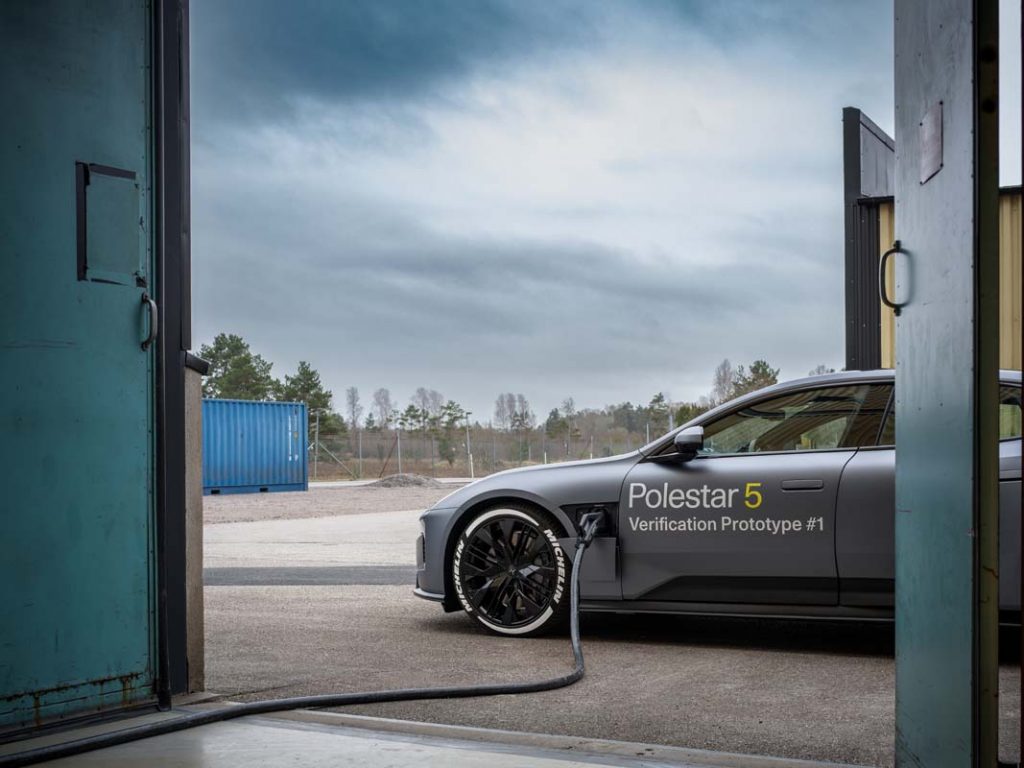
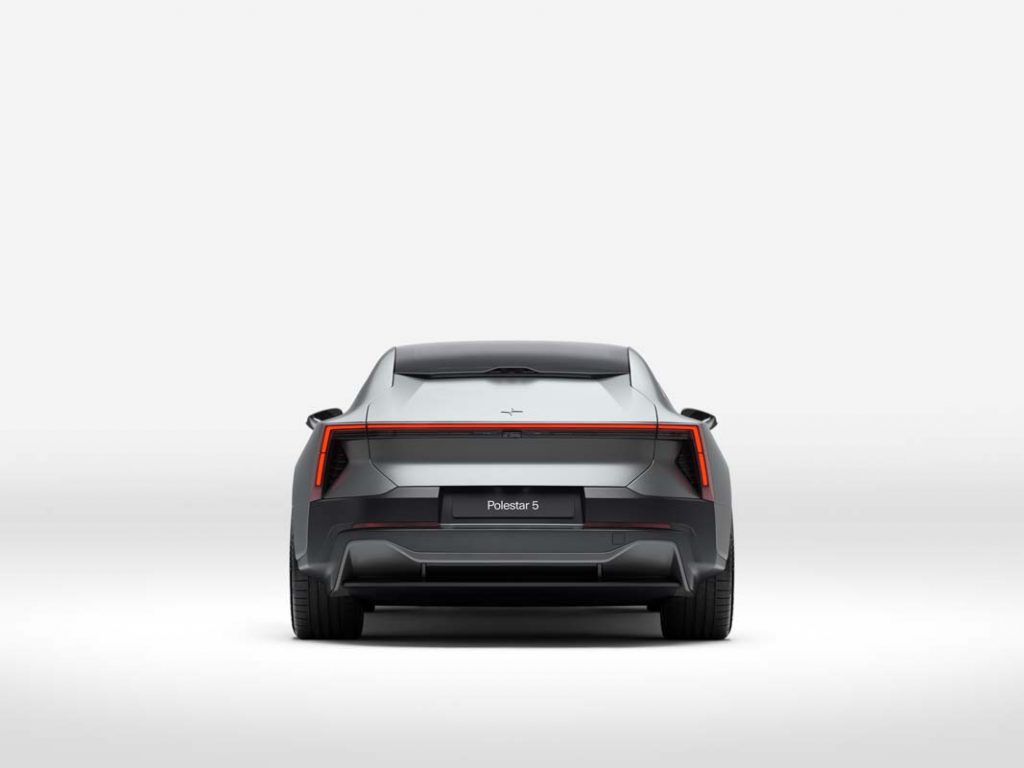
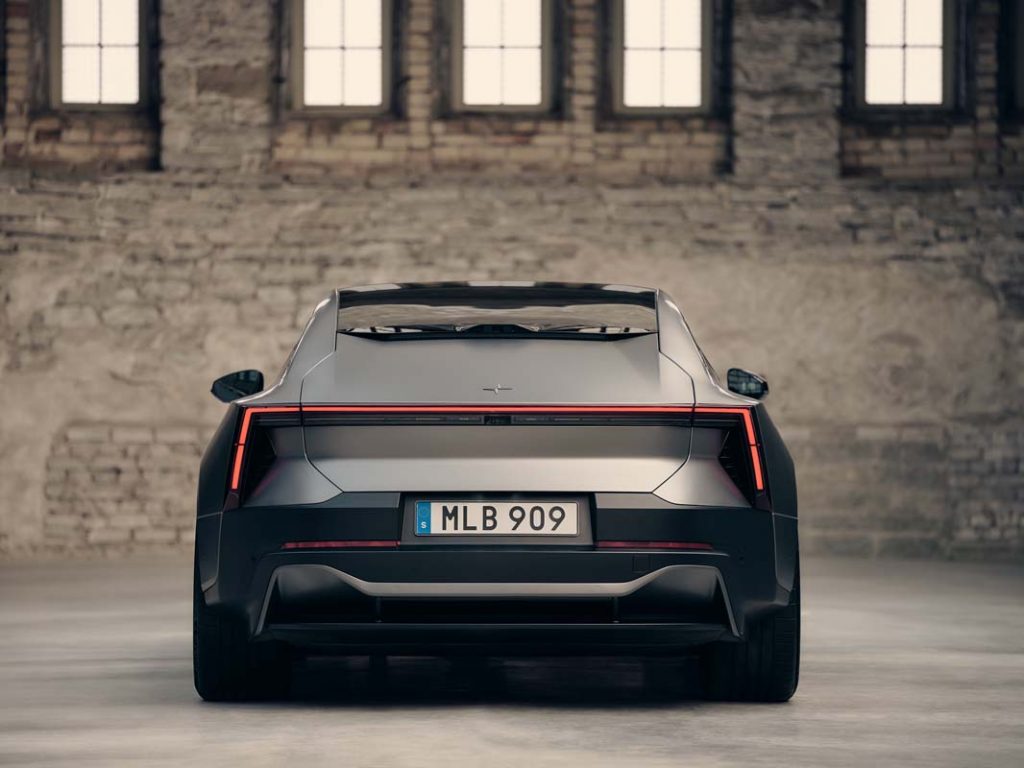
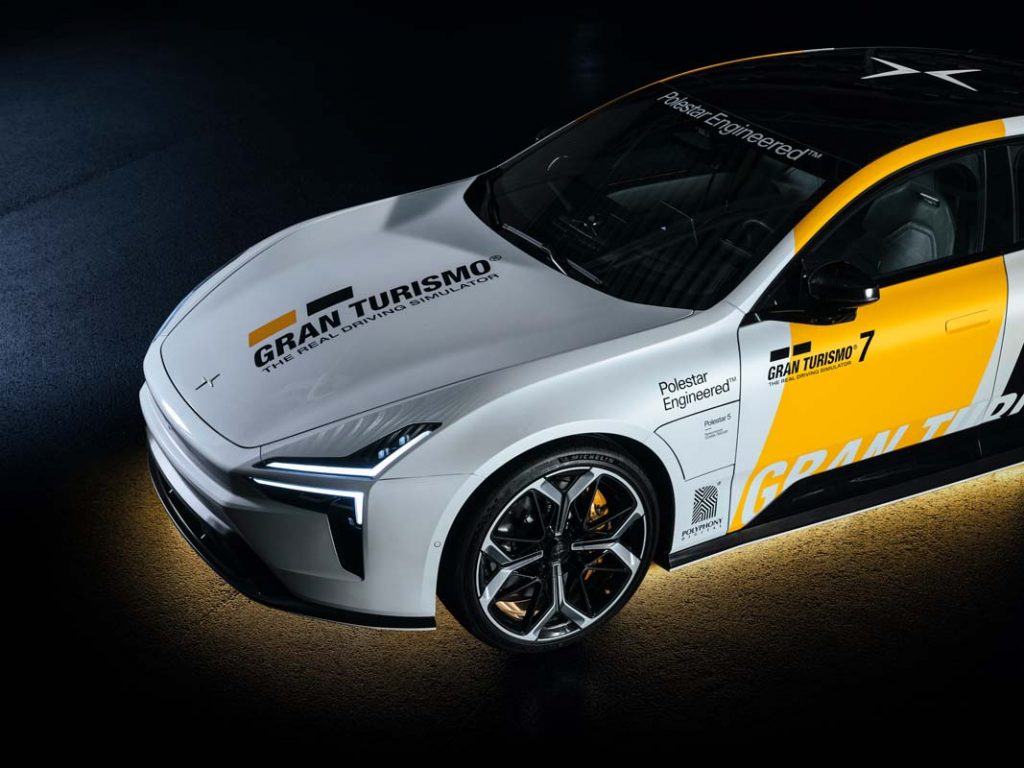
Il aura fallu du temps mais la Polestar 5 est enfin là, et elle n’est pas venue pour faire de la figuration. Présentée à l’IAA de Munich à l’automne 2025 puis au Salon de Bruxelles en janvier 2026, cette GT électrique haute performance à quatre portes du segment F est construite sur la première architecture EV sur mesure de la marque. En France, les commandes sont ouvertes et les livraisons démarrent. La marque entre dans la cour des grands.
Une naissance longtemps attendue
L’histoire de la Polestar 5 remonte au concept Precept, dévoilé en 2020 comme manifeste des ambitions futures de la marque. Cinq ans de développement, un prototype présenté au Goodwood Festival of Speed en 2022, et voilà enfin la version de production. Les premières livraisons parviendront aux clients dès le printemps 2026, et la commercialisation a d’ores et déjà débuté.
Pour la France en particulier, le lancement prend une saveur particulière. Polestar avait pris du retard par rapport aux autres pays européens dans la diffusion de ses modèles, en raison d’un différend de droits d’auteur sur son logo avec Citroën/DS — un problème résolu en 2024. La marque peut désormais avancer sereinement, avec 25 points de vente prévus d’ici fin 2026.
Une architecture inédite : l’aluminium collé
Ce qui distingue fondamentalement la Polestar 5 de ses grandes sœurs (les 3 et 4, qui s’appuient sur des plateformes Volvo/Geely), c’est son châssis entièrement nouveau. La Polestar 5 inaugure ce que la marque appelle la Polestar Performance Architecture (PPA), un châssis entièrement en aluminium collé plutôt que soudé. Polestar affirme que les extrusions, emboutissages et moulages offrent un niveau de rigidité équivalent à l’acier, tout en étant plus léger. L’architecture adopte une électronique de puissance en 800 volts, ouvrant la voie à une recharge ultrarapide. Le poids à vide s’établit entre 2 462 et 2 503 kg — la rançon d’une grande berline électrique de ce gabarit.
Des dimensions de grande berline
La Polestar 5, c’est d’abord une présence physique imposante. Elle mesure 5 087 mm de long, repose sur un empattement de 3 054 mm, et affiche 2 015 mm de large pour seulement 1 425 mm de hauteur — un profil très allongé, presque sculpté. Cette grande berline s’inscrit dans le segment F, celui des Porsche Taycan, Mercedes EQS et autre BMW i5 M60. Polestar a notamment astucieusement placé la batterie sous le plancher avec une découpe débutant derrière les sièges avant, ce qui abaisse la position des passagers arrière et leur offre plus de dégagement pour la tête — malin.
Deux versions, deux philosophies
La Polestar 5 se décline en deux finitions, dont la première disponible en France est la Dual Motor Launch Edition.
En version Dual Motor, la voiture développe 748 ch et offre jusqu’à 670 km d’autonomie WLTP. Le 0 à 100 km/h est abattu en 3,9 secondes. La version de pointe, baptisée Performance, pousse les curseurs encore plus loin : 884 ch, 1 015 Nm de couple, 0 à 100 km/h en 3,2 secondes et 565 km d’autonomie WLTP — avec des suspensions adaptatives MagneRide. Ces amortisseurs actifs peuvent analyser la route jusqu’à 1 000 fois par seconde avec un temps de réaction de 3 millisecondes. Impressionnant sur le papier, et nos confrères qui ont pu approcher la voiture en témoignent.
La batterie et la recharge : le point fort
La Polestar 5 embarque une batterie lithium-ion NMC de 112 kWh bruts, pour une capacité utile de 106 kWh, produite par le fabricant coréen SK Innovation. Grâce à son architecture 800 V, la recharge rapide est acceptée jusqu’à 350 kW en courant continu, ce qui permet de récupérer l’essentiel de l’autonomie en une courte pause autoroutière. La consommation homologuée s’établit entre 17,6 et 18,3 kWh/100 km selon les versions.
L’équipement : le niveau grand luxe
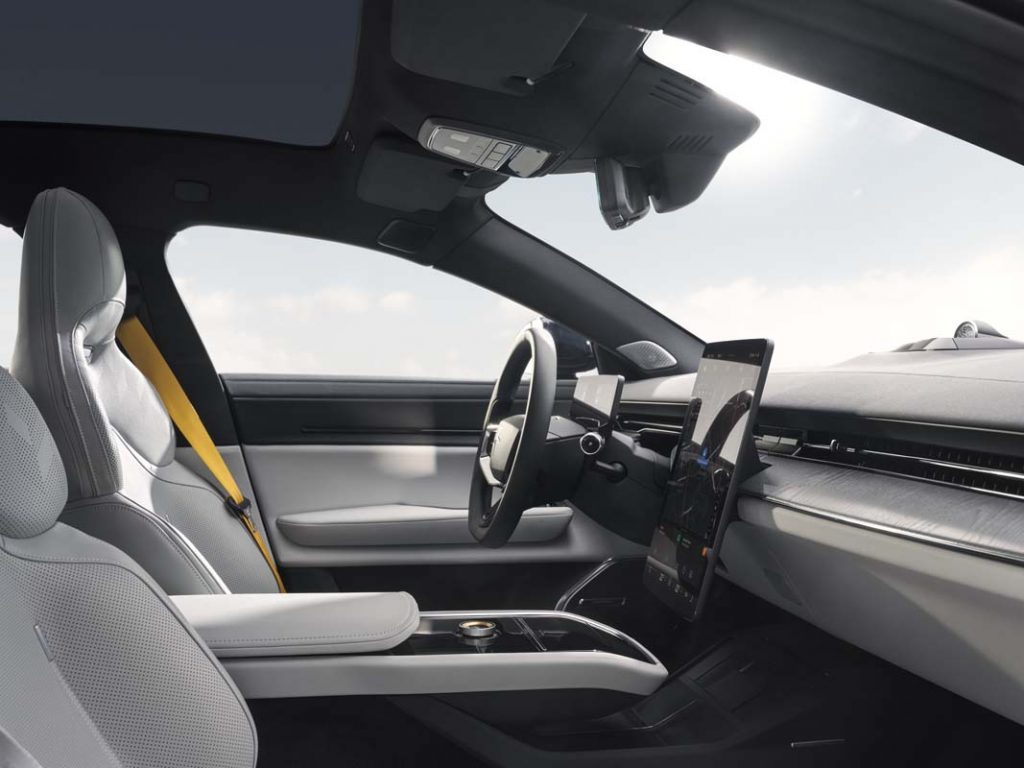
À bord, Polestar ne fait pas semblant. On trouve un écran tactile de 14,5 pouces, un combiné d’instrumentation de 9 pouces, un affichage tête haute, une climatisation à quatre zones et des sièges Recaro. L’ensemble est complété par Google intégré avec planificateur de recharge natif. À l’extérieur, des freins Brembo à quatre pistons à l’avant avec des disques deux pièces de 400 mm, et des amortisseurs BWI sur les deux versions viennent compléter un package sportif cohérent.
Le prix : le nerf de la guerre
C’est là que le débat commence vraiment. Les prix débutent à 119 900 euros TTC en version Dual Motor Launch Edition de 748 ch. Pour ceux qui préfèrent l’usage sans décaissement immédiat, Polestar propose une LLD à partir de 1 490 €/mois sur 48 mois et 40 000 km, sans apport.
Face à une Porsche Taycan Turbo qui dépasse les 180 000 €, la Polestar 5 s’affiche donc comme une proposition offensive. Mais la marque doit aussi composer avec une réalité commerciale difficile en France : le réseau se construit, la notoriété se forge, et les volumes restent encore modestes. Le chemin sera long avant de rivaliser avec les volumes des constructeurs premium allemands.
Un avenir sous production coréenne
Dernière information, et non des moindres pour les entreprises et gestionnaires de flottes : la Polestar 5 devrait être produite dès 2026 dans l’ancienne usine Samsung-Nissan de Busan, en Corée du Sud, dans le cadre d’un accord entre Geely et le groupe Renault. Ce changement d’origine lui permettrait d’échapper à la surtaxe douanière sur les véhicules en provenance de Chine — un argument de poids pour convaincre les acheteurs professionnels.
Et ce n’est qu’un début : Polestar a annoncé la plus grande offensive produits de son histoire, avec trois nouveaux modèles d’ici 2028 — une nouvelle Polestar 2, un SUV compact Polestar 7, et une variante inédite de la Polestar 4. La 5 n’est donc pas un coup isolé, mais la tête de proue d’une stratégie de montée en gamme assumée.
La Polestar 5 arrive donc en France avec tous les atouts d’une vraie grande routière électrique : une architecture propre, une puissance démesurée, une recharge ultrarapide et un design affirmé. Il lui reste maintenant à convaincre au-delà du seul enthousiasme des spécialistes.
Polestar 5Polestar 5Polestar 5Polestar 5Polestar 5Polestar 5Polestar 5Polestar premieres film starring Alexander SkarsgårdPolestar 5Polestar 5 in Gran Turismo 7Polestar 5 x Gran TurismoPolestar 5 x Gran TurismoPolestar 5, Polestar 4, Polestar 2, Polestar 7

 Connexion


 On en a déjà parlé et reparlé sur H&Co : en 2026, l'AM4 est toujours loin de la retraite ! AMD en a d'ailleurs profité pour relancer son Ryzen 7 5800X3D en "version anniversaire", et c'est au tour d'ASRock de lancer une nouveauté AM4 en ce mois de juin 2026, une carte mère cette fois. Certaines...
 Il y a seulement deux petits jours, nous vous parlions de la décision prise par AMD de ne plus proposer le chiffrement hardware des échanges entre le CPU et la RAM à ses processeurs Ryzen AM5 grand public. Une fonctionnalité baptisée TSME par AMD, pour Transparent Secure Memory Encryption. Il y avai...
 Il y a un mois jour pour jour, le 19 mai 2026 donc, Thibaut vous expliquait qu'un des deux grands patrons de PlayStation avait confirmé qu'il n'y aurait plus de portage PC des jeux solo de la PS5. Eh bien contre toute attente, c'est l'autre grand patron de PlayStation qui s'exprime cette fois, publi...
 Le 8 mai 2026, à 19 h 00 pétantes en France, Valve lançait une phase de réservations pour son nouveau Steam Controller. La firme n'avait visiblement pas anticipé l'ampleur de la demande concernant la nouvelle version de sa manette, et il semblerait bien que l'attente sera longue, très longue même, p...
 Si vous vous intéressez de près aux cartes mères, et suivez par exemple les analyses faites régulièrement par Thibaut sur H&Co, vous savez déjà qu'il y a des subtilités parfois bien complexes dans la gestion des lignes PCI Express. On se laisse parfois enflammer par les caractéristiques maximale...
 Excellent prix qui s'offre à vous si vous êtes à la recherche d'une carte mère de qualité et bourrée de fonctionnalités au format Mini-ITX en AM5. La GIGABYTE X870I AORUS PRO ICE est en effet en ce moment à un prix tout simplement jamais vu grâce à une double promotion chez JoyBuy, de quoi repartir...
 Vous n'avez évidemment pas eu besoin de Silicon Motion pour constater que les prix des SSD s'envolent en 2026. Nous avions par exemple fait un point sur les prix courants de plusieurs références populaires fin avril 2026 sur H&Co, et il y avait de quoi "tirer la tronche". Depuis, les choses ne s...
 En ce mercredi 17 juin 2026, KRAFTON a déployé une nouvelle mise à jour de son jeu phare PUBG: BATTLEGROUNDS. Estampillée 42.1, elle apporte évidemment son lot de nouveautés, dont une qui nous intéresse plus particulièrement en tant qu'amateurs de hardware PC.À partir d'aujourd'hui, et pour une duré...
 Le 14 mai 2026, AMD officialisait son planning pour porter, enfin, son FSR 4.1 à ses précédentes générations de GPU. Enfin il serait plus juste de dire "précédentes générations de cartes graphiques", car les GPU intégrés aux processeurs Ryzen sont pour l'heure exclus du programme de la société. Le F...
 Le 28 janvier 2026, le mouvement Stop Killing Games devenait la 14e initiative citoyenne européenne validée par la Commission européenne. Il y avait alors, parmi vous, certainement deux camps. D'un côté, les pessimistes qui se disaient que l'Europe n'oserait probablement pas légiférer contre les édi...