Adventure photographer and filmmaker Jimmy Chin recently sat down for a Q&A with Canon, sharing tips for finding your creative voice.
Canon
Jimmy Chin is an Academy Award-winning filmmaker, National Geographic photographer, author and elite mountain athlete. Known for telling epic adventure stories from remote corners of the world, Chin is also a Canon Explorer of Light. He recently sat down for a Q&A session on Canon’s YouTube channel, sharing his insight on his gear considerations and general approach to photography.
One thing I found particularly interesting was that he’s reduced the amount of gear he brings on shoots. Instead of hauling a huge kit, he’ll only take a couple of lenses, or sometimes just a single lens. “I’ve found that when you are working within certain constraints, it actually pushes you creatively,” he says. “It makes you find creative solutions to the different problems and challenges that you face on a shoot.” Of course, for the type of photography and videography he does, having less gear is also helpful logistically and physically, but I appreciate his mindset of using less to grow creatively.
Adaptability is also a key trait according to Chin, both in terms of gear and overall mindset. “Adaptability is a huge part of being a great photographer and being able to roll with the punches on shoots,” he says. “Sometimes you get really focused on the single shot that you really want, and you’re missing all kinds of other shots. So you have to keep your eyes open and your mind open.”
Chin also recommends looking at a lot of photography and, specifically, paying attention to many genres, even beyond what you’re personally interested in. “Look at all the greats. Understand kind of the approach that all these different artists have come to their craft,” he says. “I think that understanding and the thought processes of creating images is a really good place to make photography fun for you, because all of a sudden you are looking at the world in these different ways and then you kind of find your own language and your own ideas for how you think about photograph, and that’s what makes your photography special.”
The video has plenty of other great advice, too. It’s well worth a watch, especially for newer photographers trying to figure out how to move forward.
About the Author: Abby Ferguson holds an MFA in photography and blends a fine-art background with extensive editorial and commercial experience. She built and led an in-house imaging program for a large vacation rental company and has served as an associate editor at Popular Photography. She also teaches at a local community college and serves on its Photographic Technology Program Advisory Board, sharing her knowledge and enthusiasm for the medium.
Want to stay up to date on the latest product news and releases? Add DPReview as a preferred source to ensure our independent journalism makes it to the top of your Google search results.
Three years after acquiring DPReview from Amazon, Gear Patrol’s founder reflects on the unglamorous, expensive work of rebuilding the site from the ground up.
Photographers and creators, the new DPReview is live in beta.
Or, in DPReview terms, let’s call it slightly pre-release firmware.
Holy smokes, this thing was not easy to pull off. We still have a lot to do, but this feels like the right moment to pause, crack my knuckles, and walk through how we got here.
The acquisition came to us under circumstances we did not expect, but it fit something I believed and still believe deeply: enthusiast communities matter. Product journalism still matters. And there is still a bright future for brands built around expertise, trust, and obsession, especially where a product sits at the heart of a passion.
That is what cameras are for: photographers and creators.
Teaching my youngest son, Everett, how to use my new camera, the Sony RX1R III. It’s so confounding but I love it. Aren’t the quirks what make camera gear so great?Hannah Yang
But it was also a real risk.
Dedicated cameras may no longer be the default for everyday photography. For many people, the iPhone is enough.
But I actually see a world where photography is building an exciting future. There is incredible innovation in both the products and creatives. Engineers and designers are still building tools that allow people to capture images and video in ways they could not before. Even film, monitors and printers are exciting. And yes, some bad-ass and occasionally questionable new product ideas are still making it to market.
I take that as a good sign. It means there is still some appetite for risk out there, and that the entire industry is not just trying to make the most pin-sharp 24-70mm f/2.8 lens in the world.
Acquiring DPReview was not easy for us. Working with Amazon put me in rooms with people above my pay grade. But we made a bet that we could be good stewards of one of the most important archives of photography knowledge on the web, one of the most deeply invested communities online, and a deeply respected editorial team.
I am still thankful Amazon agreed, because they certainly did not need to pick us.
Product journalism still matters.
But we also inherited a rabbit hole of aging infrastructure.
It’s staggering to even say this out loud, but until this week, DPReview was still operating without a responsive site for mobile users.
The job has been hard. We knew it would be. We have been working toward this launch for three years, with a couple of false starts along the way. We have been hammering on code, design, migration, UX, ad tech, editorial workflow, product decisions, and budgeting, so much budgeting, in earnest for well over a year.
It has taken a lot of resources, meaning cash, to get here. And as an independent media company, every dollar had to be earned and stretched.
I have questioned my own judgment more than once. I have worn out Ben Bowers, my partner in this whole endeavor, with an onslaught of meme GIFs; Sanford and Son was particularly poignant when I was bereft of productive words. I bought a monitor that I put into portrait-orientation so I could help debug CSS and stare into the abyss that was (and still is) the bug tracker.
There are times when no one knows how to say it better than Fred G. Sanford.
Thankfully, we are now at a place where we can go live, knowing full well that we still have so much work to do.
We first rebuilt the forums last year, migrating them to XenForo. And now we’ve moved the publishing side to WordPress VIP. We also modernized the tech stack. We rebuilt signature tools like the Image Comparison Tool and product comparisons. We made the site responsive. And we paid off huge chunks of technical debt that had accumulated over many years.
There have been moments where the project has felt bigger than I thought we were ready for.
But thankfully, I work with real pros. Many of them have lived and breathed DPReview for the majority of their careers. That is why being honest about how difficult this has been feels important. We are proud of the step forward, but we are not pretending the work is done. Those career-DPR staffers would never let me.
The new DPReview is live, but it is far from finished.
We launched in beta, and beta means what beta has always meant: bugs, fixes, feedback, and iteration.
This beta reminds me a little of the industry’s shift from DSLRs to mirrorless. The first bodies were not perfect. Autofocus had to improve. Lens ecosystems had to catch up. Firmware updates did real work. But the foundation was right, and the direction was clear. You had to start somewhere.
But DPReview is alive. It is moving forward. And it now has a new foundation we can build on.
That foundation matters. The legacy site was running on aging, increasingly expensive infrastructure that was getting harder to maintain and harder for modern internet users to find, understand, and share. Audience traffic and engagement are the lifeblood that keep DPReview free and alive.
Subscriptions can help, but we’ve done the math and are clear-eyed that they cannot carry the entire site on their own. People already have enough subscriptions in their lives, and we want DPReview to remain open and accessible.
So this is not just a redesign. It is the start of making DPReview sustainable for its next chapter. We will keep tuning, fixing, and improving it in public. Feedback is welcome. Patience is appreciated.
This beta reminds me a little of the industry’s shift from DSLRs to mirrorless. The first bodies were not perfect. Autofocus had to improve. Lens ecosystems had to catch up. Firmware updates did real work. But the foundation was right, and the direction was clear.
I am grateful to the team that carried this work through the unglamorous middle, where most of the real difficulty lives.
I am also grateful to the DPReview community for caring enough to keep pushing, questioning, and showing up. I know you still have real feelings about threaded views. We’re working on light mode. Maybe the new logo too. I get it. I have been reading this site and lurking in the forums for more than two decades as well.
Most of all, though, I am proud that we made this bet.
Joe Tornatzky (Creative Director) and I working side by side in the Culver City studio on designs with Scott Everett (GM, Product and Technology) and Caitlyn Shaw (Director, Growth Strategy & Development). I’m sure Richard Laws (Sr. Software Development Engineer) is in one of those windows too. There’s still much to do and we’re excited to get that rolled out in the future.Eric Yang
The future of media is not just algorithms. It is trust. It is inspiration. It is expertise. An example of that future we’re hoping to be a part of is supporting a community of people who care deeply about specific, ultra-niche things that only fellow enthusiasts fully understand, and can debate endlessly online and over beers. That is a special, very real thing.
That is why people trust DPReview’s little corner of the internet.
And today is a big step toward making sure it remains one.
Thanks for letting us take care of DPReview. We do not take the job lightly.
Eric Yang Founder, Gear Patrol
Huge shout-out to the launch team: Mathew Anderson, Dale Baskin, Mike Bailey, Ben Bowers, Richard Butler, Mitchell Clark, Mykim Dang, Scott Everett, Abby Ferguson, Richard Laws, Caitlyn Shaw, Joe Tornatzky, Anthony Wybornyand our talented counterparts at Fueled.
Want to stay up to date on the latest product news and releases? Add DPReview as a preferred source to ensure our independent journalism makes it to the top of your Google search results.
A promotional video for Olivia Wilde’s “The Invite” offers an unpolished look inside Kodak’s film processing lab.
Kodak / A24
A new video from Kodak and movie studio A24 follows actress Olivia Wilde as she tours Kodak’s Film Lab in New York City. The tour is technically a promotional stop for “The Invite,” a recently released dark comedy Wilde both directed and stars in, though it doesn’t come across that way. Instead, the four-minute video offers a short glimpse into what goes on behind the scenes when movies are shot on film.
In the video, Wilde walks through various parts of the lab with technicians who briefly explain what they do, from loading the film in the darkroom to running it through the development steps and splicing it all together. What struck me is how very low-budget the space looks. Aside from the required specialized equipment (I especially love the fancy machine used to dry the negatives), it looks like any gritty big-city studio/lab space. Piles of miscellaneous items are piled everywhere, there are old radiators with paint rubbed off, and the people working there don’t seem fussed by any of the attention. It’s far from a glamorous space.
The video is a short watch, so it absolutely doesn’t get into the nitty-gritty details of the process. But it’s a nice overview of how the lab turns exposed negatives into usable images, and it’s always neat to see behind-the-scenes looks like this.
Want to stay up to date on the latest product news and releases? Add DPReview as a preferred source to ensure our independent journalism makes it to the top of your Google search results.
Buying a new camera is an exciting feeling. For this week’s community question, we’re asking readers: what image made you realize your new gear was worth it?
Abby Ferguson
This image was taken with an Olympus M-1, which Abby bought while in Japan for CP+. It was from the first roll of film she put through the camera, and while the subject matter is near and dear, it was also one of the images that made her especially happy she purchased the camera.
With the updated DPReview website, new things are all the rage today. We’ve previously asked you about your first and favorite new cameras, about your first and favorite photos, and now we’d like to combine the two for this week’s community question.
What image made you realize your new gear was worth it?
We’d love to hear the story behind the piece of gear – whether it’s a lens, camera, flash or something else – and see the images that sparked that appreciation. It could be a piece of equipment that was only new to you, as was the case for the camera used to take the image at the top of the article, or something fresh out of a box.
Drop a reply in the comments section below, and if you’ve got a photo to include, it may be selected for next week’s showcase article on this topic!
About the Author: Mathew Anderson is a proud Community Manager for the technology industry and a past visitor to DPReview.com for all his camera needs. He is currently the lead of DPReview’s community and primary communication link between the community and DPReview’s team.
Want to stay up to date on the latest product news and releases? Add DPReview as a preferred source to ensure our independent journalism makes it to the top of your Google search results.
Canon is trying something new with its latest power zoom to make it more appealing to photographers. Does it work?
The key to the Canon RF 20-50mm F4 L IS USM PZ for photographers is the switch to go between power and manual zoom mode.
Alongside the EOS R6 V, Canon introduced the 20-50mm F4 L IS USM PZ. Like most power-zoom lenses, it’s clearly mainly focused at video users who have access to a zoom toggle at their fingertips. But Canon made the unusual decision to take a hybrid approach; with the flick of a switch, you can control the zoom in the traditional manner by rotating a ring on the lens barrel between two fixed points.
We’re in the process of testing the EOS R6 V, but thought it’d be worth taking the lens out to shoot a few photos, too, to see if it also makes a decent photo lens on a camera without that zoom lever.
To answer the most obvious question first: no, the manual zoom mode isn’t mechanical. The lens’s focal length is still controlled by the power zoom motors, and there is an ever-so-slight delay between you turning the ring and the lens arriving at its destination. The lens is pretty quick, so it’s not too noticeable if you’re just zooming in slightly, but you can definitely see (and maybe hear) it if you’re going from 20mm to 50mm.
This somewhat breaks the illusion of direct control that the manual zoom portion of the lens is designed to add. It also doesn’t help that the ring is just a bit too easy to turn. That both makes it easy to accidentally change your zoom level when you didn’t mean to, and acts as another signal to your brain that you’re actually remote-controlling something, rather than physically moving parts of the lens yourself.
The good news is that, unless you bump the zoom ring, the lens will retain its focal length setting when you turn the camera body off; unlike with a compact camera, you don’t have to wait for it to move back through its range to 50mm when you turn your camera back on. However, if you move the zoom ring while the camera’s off (accidentally or otherwise), you’ll have to wait an extra moment or two for the lens’s motors to change its focal length when you turn the camera back on, during which time you won’t have any live view preview.
I also found the 20-50mm focal length to be quite enjoyable to shoot. I’m a fan of 50mm, so I don’t mind it ending there if it means a smaller lens, and being able to go that bit wider came in handy quite often.
Canon EOS R5 II | Canon RF 20-50mm F4 L IS USM PZ @ 21mm | F8 | 1/250 sec | ISO 100 | Processed with Capture One
While I imagine some photographers may be disappointed reading the above, I’ll also say this: after about an hour or two of shooting with the lens, I mostly stopped noticing the quirks. That’s not something I can say about any of the other power zooms I’ve shot photos with, which were always that bit more annoying to use. Sure, the experience of using the 20-50mm isn’t the same as using a mechanically zooming lens. But it’s also much
nicer for photography than a traditional power zoom that can only be controlled with a rocker or finicky on-lens control.
The W – T control on the lens isn’t just a toggle. If you only push it a bit towards either end, it’ll move through the range slowly. Push if further, and the zoom will happen faster.
For those who care about video, the story is more straightforward: this lens is really nice to use, especially if the camera it’s on has a zoom toggle. Even if it doesn’t, the power zoom control on the lens works well. With a bit of finesse, you can use it for slow, purposeful pushes or pulls, or for crash zooms, depending on how far you push it to the W or T side.
There are also times when it’s nice to use it in the manual zoom mode, where how easy the ring is to turn becomes a feature, rather than a bug. I’ve always found it quite difficult to get smooth zoom pushes or pulls using a lens’s traditional mechanical zoom ring, but with this lens, it’s a breeze, while still offering a bit finer-grained control than the traditional power zoom control.
Want to stay up to date on the latest product news and releases? Add DPReview as a preferred source to ensure our independent journalism makes it to the top of your Google search results.
How to go beyond taking pictures of fireworks with your phone, or sticking your camera into fireworks mode.
Canon EOS 5D | F8 | 3 sec | ISO 250Rishi Sanyal
This weekend, people and cities across the US will be celebrating the Fourth of July with the traditional large firework displays. If you’re trying to capture those, there are a few things you’ll want to keep in mind if you want to get pictures that truly sparkle.
We’ve outlined the most important ones in a video, which you can watch below:
If you’re looking for a more in-depth look at how to shoot fireworks, including tips from someone who’s done it professionally, we have a few articles you can dive into, too. Stay safe, have fun, and get some great shots!
PS: not American? These tips will work just as well on November 5th, December 31st or any other day with big fireworks displays. It’s never too early to start planning!
Want to stay up to date on the latest product news and releases? Add DPReview as a preferred source to ensure our independent journalism makes it to the top of your Google search results.
DPReview reader Kathie Thomas loves birds and would like to share her spectacular bird photography with you. This story is part of a weekly community spotlight series.
Rainbow Lorikeet eating a fig
Nikon Coolpix P950 | 714mm (2000mm equiv.) | F6.5 | 1/400 sec | ISO 450Kathie Thomas
Community member, Kathie Thomas
, loves birds. She greatly enjoys getting that shot that shows off a bird’s unique color palette and physique, and fortunately lives in an area with hundreds of beautiful bird species.
“Birds are my #1 genre – I just love them. I’m always trying to get that better shot, and when I get a really good one, it’s not long before I’m trying to do even better. I am blessed to live in a region with many bird species year-round. Some live here, some are seasonal and some are just passing through. I keep a daily eBird record of the birds I’ve seen and heard, and of course, a photo with it.”
This story is part of our What’s in your bag? community spotlight series
. The series showcases the diverse gear and photography of our community, and shares their stories of how that gear helped them to capture the perfect shot.
Nikon D7100 | AF-S Nikkor 200-500mm F5.6E ED VR @ 500mm | F5.6 | 1/1250 sec | ISO 320Kathie Thomas
Meet Kathie Thomas
Home base:
Dandenong Ranges, Victoria, Australia
“My uncle was a wedding and portrait photographer and often shared with me what he’d been doing when I was in my early teens. My parents bought me my first camera for my 14th birthday. It’s been a journey ever since! My uncle is long gone now, but my aunt tells me that he always wanted to do the type of photography I do, which is nature photography – he never got around to it, sadly.”
What’s in Kathie’s bag
Kathie Thomas
Favorite camera:
“Nikon is the brand I’ve been using for over 20 years now. In fact, my husband gave me my first digital camera in the early 2000s, a Nikon, of course. I later upgraded to a D90, which I wore out after about 6 years, having taken almost 100,000 images with it. I’ve been a Nikon girl a long time now! I currently have a Nikon D7000
, D7100
, Coolpix P950
and a variety of lenses. The P950 is my favorite – it’s lightweight, and I get excellent bird shots with it.”
Support gear:
Kathie typically carries spare batteries for her P950, as its battery life can be limited during long birding sessions, along with a water bottle and a few snacks for time spent out in the bush or along the coast.
Camera bags:
“I use a simple, colorful backpack with a zippered compartment against my back, so no one can open it while I’m wearing it. It’s big enough to carry my camera, although that’s usually hanging at my hip on a shoulder strap.”
Barking Owl in flight
Nikon D7100 | AF-S DX Nikkor 18-300mm F3.5-6.3G ED VR @ 300mm | F8 | 1/2000 sec | ISO 800Kathie Thomas
How has your photography changed since you started?
“It’s improved heaps – I understand so much more about it now. I chose to do a Diploma of Photography Course back in 2014, just for the sake of doing it, so I could learn more. But it’s the regular usage and learning from other photographers that have really helped me improve. I also belong to a local photography club.”
“I learned from a professional nature photographer some years ago, that when tracking a bird, don’t look it in the eye, look around elsewhere, move slowly towards it, take a shot now and then, and keep moving slowly without eye contact. It often has helped to get the shots I’ve wanted – especially before I got my P950.”
What trip memories come to mind where you discovered a new bird?
“Many! Before we retired, we used to take overseas trips by plane and by cruise ship, visiting many places. But since retiring, my husband and I have invested in a campervan (motorhome) and have begun traveling around our own country, Australia, and exploring a bit more consistently. My goal is to record as many different species of birds as I can.”
Australasian Darter
Nikon D7100 | AF-S DX Nikkor 18-300mm F3.5-6.3G ED VR @ 268mm | F6.3 | 1/1600 sec | ISO 500Kathie Thomas
“Don’t underestimate your abilities and work at surprising yourself. Move out of your comfort zone and try different things. A friend thought she wasn’t very good, but she recently got a Highly Commended in our photography club exhibition. I could tell she was really choked up about it and thrilled. I told her I always thought she did well.”
Kathie really enjoyed participating in this spotlight article and would be grateful if you could join her in the forums
.
Kathie’s work
You can check out her other work on Instagram
. Thanks, Kathie, for being featured!
If you’d like to share your photography, tell us about your main camera, lens choices, key settings and strategies. Your photos and story could be featured in the next article!
Editor’s note:
This article continues a series, ‘What’s in your bag?’, highlighting DPReview community members, their photography and the gear they depend on. Would you like to be featured in a future installment? Tell us a bit about yourself and your photography by filling out this form
. If you’re selected for a feature, we’ll be in touch with next steps.
About the Author: Mathew Anderson is a proud Community Manager for the technology industry and a past visitor to DPReview.com for all his camera needs. He is currently the lead of DPReview’s community and primary communication link between the community and DPReview’s team.
Want to stay up to date on the latest product news and releases? Add DPReview as a preferred source to ensure our independent journalism makes it to the top of your Google search results.
We’ve seen some concerns expressed about the performance of the Panasonic L10 in our test scene, so we borrowed another copy, just to be certain.
Richard Butler
When we wrote our review of the Panasonic L10, we tried to make sure we put the studio comparison into context
. For mirrorless cameras and DSLRs we use good prime lenses, stopped-down to the point that their performance is reliably excellent: zoom lenses and, in particular, the downsized, retractable zoom lenses in compact cameras, can’t match up to this standard. As a result, compacts don’t look quite as impressive.
Our test scene lets you compare images in incredibly fine detail, revealing differences that you wouldn’t see in most real-world situations: they exist but that doesn’t mean they matter. That’s exactly why we also post a gallery of real-world sample images
so that you can relate the things you see in the studio scene to their photographic impact.
We’d gone through our usual processes for compact cameras: carefully align, shoot a series of images, compare to cameras we’d expect to perform similarly, then do it again at a different focal length, to make sure we were representing the camera fairly.
However, we still saw some concerns expressed that we were testing a “faulty” or sub-standard copy. Just to be certain, we requested another L10, to see whether we’d get a significantly different result.
Test and retest
It didn’t. With the first copy, we found that the 75mm setting looked better than the 50mm we’d used on the LX100 cameras. The difference was much smaller on the second copy. Both copies could be a touch sharper at the center
at 75mm whereas 50mm equiv was less sharp at the center, more consistent out to the corners
, which is presumably why we chose it for the LX100s.
Multiple focus attempts, using both manual focus and autofocus, appear to suggest that a lot of the softness in the corners is a result of curvature of field: a non-flat focus field, meaning it’s not possible to get the whole of the chart in focus at the same time. The images with the sharpest center focus had worse looking corners
than the images with slightly miss-focused center
.
Ultimately we were able to shoot some images that are sharper at the center
than the ones displayed in our image comparison tool, but they have visibly less sharp corners
. The second copy of the camera also appears less consistent, with what appears to be slight decentering sometimes affecting the top left corner.
The images between the two cameras are similar enough (decentering aside) that we don’t think we can get consistently better images from the second copy than the ones already in the scene. Those images already exhibit aliasing
– a sign that the lens is resolving detail beyond the level the sensor’s resolution can accurately capture – suggesting the lens is doing a good job. You just need to consider the context of how finely you’re scrutinizing them and how impossibly the high the standards set by good, prime lenses are.
We re-tested the L10 because we want to make sure our image comparison tool shows all the cameras in it in as fair a light as possible. And if that means re-doing some of the work and re-checking our assumptions to ensure our standards are maintained, then it’s worth doing.
About the Author: Richard graduated as a scientist but had a lot more fun writing and shooting for his university magazine. A number of years spent variously as a reporter, writer and editor on science and engineering titles combined his knowledge of science with his interest in images and words. But it was spotting the connections between emission spectra, white balance and all the nonsense he’d taught himself playing around in Photoshop that helped kindle an interest in digital photography. Searching for a camera led to him discovering DPReview and Richard was recruited by Phil Askey in 2007. He’s been combining his love of photography, communication and attention to detail (pedantry?) ever since.
He has unusually strong opinions about lenses for the APS-C format.
Want to stay up to date on the latest product news and releases? Add DPReview as a preferred source to ensure our independent journalism makes it to the top of your Google search results.
Get the latest community updates in this once-a-month review of articles and other news from DPReview readers. See what happened in June 2026.
Photo from a Question of the week entry that didn’t make it into the original article. This is a photo of community member, Blufftonian’s memorable camera collection.Blufftonian
A ton of great content and related photography is created by the DPReview community in our forums: lively discussions, sharing of gear and photography in spotlight articles, collaborative photo events and more. In this “What you missed” roundup for June, we highlight community forum activity from the past month, including some of the photography that didn’t make it into articles.
Scroll down to the section of interest as previewed in this list:
Article of the month: Joining a local photography group
‘What’s in your bag?’ community member spotlights
Question of the week
Join our collaborative photo chain
Discussion of the month: Why is it so difficult to buy a first camera today?
Article of the month: Joining a local photography group
“A group shot (excluding me) of that first meetup that I attended.”
DPReview’s Features Editor, Abby Ferguson, wrote a great piece about the benefits of joining local photography groups
. As a community manager, I naturally found this article fascinating and the kind of advice I feel all of you would find a great insight into photographers outside our forums. After reading her article, I even took it upon myself to look up some photography groups in my local corner of Texas, United States.
“Despite my reluctance, I knew meeting other photographers would only be a good thing. Plus, as this is a place my husband and I will be for the long term, I wanted to set down some roots and finally make some connections here. And so, last fall, I finally put aside my reservations and attended a meetup.” – Abby
What’s in your bag? A community member spotlight
Every week, we spotlight a community member’s unique photographs and gear in our ‘What’s in your bag?’ series
. The series highlights a reader’s favorite camera gear and how they use it. You’ll also get tips and tricks on capturing your own photography.
“Soot-blackened steam traction engine driver – the youngest in the country. Seen at the Pickering
traction engine rally in the north of England.”
Mark Lamb shared his portrait photography
in celebration of our week of portrait-themed community content. Below is an interesting excerpt from Mark’s story about his fondness for portrait photography in Britain. The photo above is a new one he provided us that we couldn’t fit into the article.
“In recent years, my work has become centered on a long-term project called One Thousand Contemporary Portraits
, an attempt to create a broad and inclusive portrait archive of contemporary Britain. The project has taken me from fishing communities and military veterans to Goths, performers, campaigners, artists and ordinary people whose stories might otherwise go unrecorded.”
Every other week, we ask the community a question about their photography, usually on a specific topic, with the results spotlighted on DPReview’s front page and in the forums the following week. There are often many great photos submitted that we don’t get a chance to spotlight them all in a single article.
Here is a newly revealed reader’s photo and excerpt of their story from the latest question.
What camera is your most memorable?
thorstenwulff
Featured quote
: “My first love was the F3. In the summer of 1987, she went to New York with me and a box of T-Max 400. Paired with a 24mm F2.8 lens, it was my perfect combo for street photography, even if you had to get a bit closer. The other lens was the 105mm F2.5. In early May this year, I took them back to Manhattan, but was put off a bit by the flood of gimbal-toting influencers everywhere Instagram deems worthy of a shot. This couple is one of my favorite pictures from 39 years ago. I love the tenderness between them.” – thorstenwulff
Discussion of the month: Why is it so difficult to buy a first camera today?
FrancoD
Community member, BernardoSC
, asked a great question in the forums
that has gained quite a bit of traction. He asked everyone, “Why is it so difficult to buy a first camera today?” This is an excellent question, BernardoSC! I have asked this question of myself recently about various purchase interests, from cameras to computer equipment.
Here is a peek at what others had to say:
JT26
: It’s hard as there are so many options now. New cameras and new versions of the above are using new tech and are not sold in millions like they used to be, so they are naturally more expensive.
ahaslett
: The optical viewfinder is what limits your choice. Apart from retro designs, cameras these days are nearly all mirrorless. There isn’t much between a phone and a camera for £1,000, given how fast phones have improved.
Plankowner110
: In the 1960s, you simply adjusted aperture, shutter speed, and focus ring, and it didn’t matter if you were using an inexpensive Sears Tower (camera)
or a rugged pro-body Nikon F. The major variable was selecting which film to use. Cameras all operated basically the same way, and one could easily pick up any brand of camera and begin shooting. We didn’t have to peruse a myriad of menu settings or press tiny re-programmable buttons all over the camera body.
What community content did you enjoy reading, and what more would you like to see in these regular updates? Let us know in the comments below.
For even more content directly from our readers, join the discussion forums
and share your camera gear and photography curiosities!
Editor’s note:
Future editions of this article may include camera use and photo-taking tips and tricks, additional quotes from community members in various discussions and more. If you are interested in seeing community content presented this way, please let me know.
About the Author: Mathew Anderson is a proud Community Manager for the technology industry and a past visitor to DPReview.com for all his camera needs. He is currently the lead of DPReview’s community and primary communication link between the community and DPReview’s team.
Want to stay up to date on the latest product news and releases? Add DPReview as a preferred source to ensure our independent journalism makes it to the top of your Google search results.
The 2026 Hasselblad Masters show that compelling photography can come from everywhere and be about everything.
Hasselblad Masters 2026 winners
Photo: Kevin Boyle
Hasselblad has announced the winners of the Hasselblad Masters 2026 photography competition. The contest awarded 7 photographers from 70 finalists, chosen from more than 108,000 submissions across 160 countries.
Winners were selected across seven categories: Landscape, Architecture, Portrait, Art, Street, Wildlife, and Project//21. The winning photographers were selected by the Hasselblad Masters Grand Jury, which included representatives from National Geographic, Magnum Photos, Aperture Magazine, Getty Images, Foam, The Metropolitan Museum of Art and the Three Shadows Photography Art Centre. Images were chosen based on their conceptual strength, originality, creativity and technical excellence.
The competition drew some attention earlier this year when Hasselblad confirmed it had disqualified one shortlisted photographer for including AI-generated elements in violation of competition rules, replacing them with a new finalist. It’s worth noting that the finalists were selected through an internal selection process at Hasselblad, not by the acclaimed photographers on the Grand Jury. A representative has confirmed that all of the winning images were “thoroughly vetted, and EXIF data was confirmed,” and that they are all authentic photographs.
Each winner receives the title of Hasselblad Master, a Hasselblad medium format camera, two XCD lenses, and a €5,000 creative fund. Their work will also be featured in the commemorative Hasselblad Masters book.
We’re showing one image per winner below, but you can view all three selected images for each photographer on the Hasselblad Masters website
. Traditional captions and EXIF data were not available, and the descriptions and jury quotes accompanying each image are taken directly from Hasselblad’s competition materials.
Art winner: Yudha Kusuma Putera
Yudha Kusuma Putera | Waste Colonialism (Sapi-Sapi Piyungan)
| Indonesia
Rooted in everyday life and inspired by its complexity, Yudha Kusuma Putera turns a keen eye toward the social issues that hide in plain sight, exploring the tensions between humans, nature, and the systems we build around us.
The winning images are part of a project examining how developed nations export their waste to developing countries, where labor and costs are lower. This logic repeats on a smaller scale too: within cities, landfills are built on the outskirts, kept out of sight and out of mind. At Yogyakarta’s Piyungan landfill, a city’s waste is sorted by scavengers and consumed by cows, quietly piling up into a second hill.
He photographed the backs of these cows stacked together, with their forms mirroring the landscape of trash around them. The work does not seek to assign blame, but to invite collective reflection on the waste we produce, and the futures we are building from it.
“On the surface, the images appear direct and unambiguous, and yet they consistently resist easy reading, generating a sense of visual uncertainty that keeps the viewer engaged and questioning. The images do not announce themselves loudly, but reward sustained attention with a slow-building sense of strangeness that is both intellectually stimulating and visually striking,” says Kalle Sanner, Executive Director at the Hasselblad Foundation.
Architecture winner: Kevin Boyle
Kevin Boyle | DaySleeper
| Movieland
| Canada
Kevin Boyle was shaped by the open skies and close-knit communities of the Canadian prairies. After the loss of his father, he returned home, only to find the places he once knew hollowed out and silent, their gathering spaces boarded up and left to disappear. For over ten years, his photographic journey has been a profound tribute to the abandoned architecture of North America’s local communities.
The winning series is comprised of photographic montages, with each part of the building lit with flashlights and blended in post-production to create an ethereal ‘portrait’ of once important gathering places. Through his lens, these forgotten spaces become vibrant, glowing symbols of community heritage and shared human connection.
“The composition, and the fact that the images are empty of people, triggers our imaginations, taking us back to a time when these buildings would have thrived with the community meeting for evening entertainment. By making this series, the photographer invites us to consider the myriad of small venues that make up the social fabric of small communities,” says Sonia Jeunet, Photography Consultant and Education at Magnum Photos.
Portrait winner: Svetlana Jovanovic
Svetlana Jovanovic | Otherness
| The Netherlands
With a psychology background, Svetlana Jovanovic’s portraiture is driven by a deep curiosity about identity – how we experience the world, construct our sense of self, and see ourselves through the eyes of others. Her style brings together fine art portraiture and a commitment to visual beauty, believing that the conceptual and the aesthetic are inseparable: each gives the other meaning.
The winning images are part of Otherness, an ongoing long-term project exploring identical twins and the tension between shared identity and individual presence. While twins share so much, it is the small differences that emerge over time, the subtle ways each person’s character becomes visible within the shared image, that lie at the heart of the work. Each portrait is a collaboration, shaped as much by the relationship between the twins as by the photographer’s own vision, inviting viewers to reflect on how we define ourselves both apart from, and through, one another.
“Through precise use of light and composition, this portrait series explores the themes of mirroring and duality. Whether capturing two sides of the same face or the closeness of two kindred souls, the images reveal subtle layers of emotion with quiet precision,” says RongRong, Co-founder and Artistic Director at The Three Shadows Photography Art Center.
Landscape winner: Rohan Reilly
Rohan Reilly | Ephemeral Visions
| Ireland
Rooted in the discipline of a composer, Rohan Reilly’s images strip away complexity to reveal the essentials, which are texture, tone, and stillness. His signature long-exposure technique transforms moving water and shifting skies into silk-like surfaces, while vast negative space and low saturation give his work a poetic, meditative quality that transcends documentation. The process is one of patience and preparation: studying weather patterns, returning season after season, and waiting for the precise conditions that cannot be engineered but only earned.
This winning series captures a row of poplar trees planted along the banks of the River Po in Italy, which are natural guardians against flooding, now standing immersed in perfectly still water beneath soft, diffused light. What was once a purely functional landscape transforms into something surreal and dreamlike. In this quietly breathtaking scene, the photographer’s vision can find its fullest expression: nature distilled to its core, and time momentarily held still.
“A forest of birch trees could be a monotonous subject. But these photographs are hypnotic objects of meditation, creating something expansive through repetition and ostensible sameness,” says Zack Hatfield, Managing Editor at Aperture Magazine.
Project//21 winner: Panitbhand Paribatra Na Ayudhya
Panitbhand Paribatra Na Ayudhya | Dwellers of the Night
| Thailand
Panitbhand Paribatra Na Ayudhya is a young underwater photographer and scuba diver from Thailand. His work is rooted in a quiet dedication to the ocean, documenting its life, its fragility, and the ecosystems that sustain it, in the hope that what is seen through his lens will not be forgotten.
His winning series was captured in the waters of Anilao, Philippines, where pelagic and larval marine life migrate from the depths each night to feed under the cover of darkness. Using slow shutter speeds to capture the elegant motion of his subjects, and carefully chosen coloured lighting to reveal their form and beauty, he illuminates a world rarely seen. For the ribbon eel, a diffused warm light conjures a subtle sunset behind the subject – crowning it as a master of the night. Some of these creatures spend their entire lives in the open ocean, making the pelagic ecosystem as fragile as it is extraordinary.
“I’m drawn to the quiet whimsy of these sea creatures. Set against black, the creatures feel almost otherworldly- strange, delicate, and entirely captivating. There’s a simplicity to the presentation that allows their inherent oddness to shine, reminding us how unfamiliar and compelling the natural world can be when seen without distraction,” says Alex Pollack, Director of Photography at National Geographic.’
Street winner: Gosse Bouma
Gosse Bouma | Morning Ritual
| The Netherlands
Gosse Bouma is a photographer whose work is driven by a quiet pursuit: to offer moments of tranquility in a world that rarely slows down. His distinct style lies at the intersection of urban geometry and natural elements, pairing the hard lines of architecture with the soft, unpredictable textures of weather. Each photograph is infused with the intention of invoking serenity amidst the chaos of everyday life, creating visual experiences that invite stillness and reflection, even if only for a fleeting moment.
His winning series, taken across the Netherlands, turns to the street market as its subject, a space where people of all ages and backgrounds meet, exchange a few words, share warmth, and move on. In capturing these small, unhurried encounters, Bouma preserves something increasingly rare in contemporary life: a genuine sense of togetherness.
“The photographer understands atmosphere, scale and timing. The small lit kiosks within the vast blue urban emptiness create images that feel both intimate and monumental. Here, genuine photographic tension emerges. The series uses color structurally, not decoratively. Mist, artificial light and architecture form one coherent world,” says Aya Musa, Senior Curator at Foam.
Wildlife winner: Alfred Minnaar
Alfred Minnaar | The Forest I Roam
| South Africa
Alfred Minnaar’s creative process often begins with observation and patience. Rather than simply documenting his subjects, he seeks to understand their behavior, environment, and relationship with the surrounding ecosystem. Over a decade of global exploration, his fine-art philosophy has evolved from a traveler’s passion into a powerful voice for conservation, capturing fleeting deep-sea and wildlife narratives to inspire the preservation of our planet.
The winning images of a tiny goby living amongst coral were created to challenge our perception of scale and encourage viewers to look closer. Rather than focusing solely on the fish, the photographer wanted to use it as a point of reference within a much larger world. By placing the goby within its environment, the reef itself becomes the subject, inviting viewers to imagine its vastness from the perspective of one of its smallest inhabitants.
“The vibrancy of the palette immediately draws you in, and the way the small fish are framed against their environments creates a sense of scale that almost reads as landscape. There’s a nice balance here between detail and composition, with the micro subjects holding their own within a larger, almost abstracted environment,” says Alex Pollack, Director of Photography at National Geographic.
Want to stay up to date on the latest product news and releases? Add DPReview as a preferred source to ensure our independent journalism makes it to the top of your Google search results.
Come celebrate World Camera Day with us by checking out which cameras our readers say are their most memorable in this edition of our Question of the week series.
Leonp
Happy World Camera Day! In honor of the day, we are sharing your responses to last week’s Question of the week
. We asked you which camera was (or is) your most memorable, and to share a photo of the camera and an interesting story about it. This is a spin-off of another question asked a couple of months ago about which camera brand was your favorite, but this time, it may not have been your favorite camera brand that took the spotlight.
Several of you, as expected, mentioned more prominent brands like Canon, Nikon and Sony, but others made unique selections dating back to brands that no longer exist. While the technology of those cameras is now dated, dusty and rusty, the photographs and the memories they conjure up are forever, as they say. With our community over 25 years old and its members’ collective experience spanning well beyond that, there were plenty of memories shared.
Keep reading to see which cameras our readers chose as their most memorable.
Your most memorable camera
Leonp
:
“In the late 1970s, my nephew bought a Pentax camera. My father was jealous, so he bought one for himself, too. My father wasn’t really into high-tech stuff and never made it through the manual, so I must have sneaked into his bedroom to take the above photo in the mirror using a diving lamp as a light source, which, if you look closely, is also a selfie of me. It took years for it to become my camera, and it changed the way I looked at the world forever.”
Daithi
: “The Nikon D850. It was a troubling time for the birth of mirrorless cameras. They were all basically the ugly litter of the well-established DSLR world. For me, this camera kept on truckin’ for many years. The D850 had peerless resolution/image quality, and still does to a large degree.”
GruberSrb
:
“Minolta Dynax 9xi (with booster). It was hated in photography circles, but its tech and fabulous design remind me of a ballerina in ‘Swan Lake’. It still works flawlessly with a carbon shutter 1/12000sec like new, despite very heavy usage over the last 30 years in some of the worst conditions on Earth, from Patagonia to Kamchatka.”
Thorstenwulff
:
“My first love was the F3. In the summer of 1987 she went to New York with me, and a box of T-Max 400. Paired with the 24/2,8 it was my perfect combo for street photography, even if you had to get a bit closer. The other Lens was the 105/2,5.”
lonewolf1983
lonewolf1983
:
“I present you the Sony A850. I had been shooting with the Sony APS-C SLT cameras (A57/A77/A77ii) and picked up the A850 to complement them and check out what the full-frame thing was all about. I took it soon after on a trip to New Zealand, and captured some amazing images with its 24mp sensor, rock solid build quality, amazing OVF and IBIS, clicking that shutter and hearing the mirror/shutter was just glorious.”
LJ – Eljot
: “Canon G3: My first digital camera. Introduced in 2003, a 4MP digital compact. This one was aimed at enthusiasts and featured RAW images. Unusual at that time. Base ISO is 50, and it is basically unusable at the max ISO of 400. It takes about a full second to take a picture after pressing the shutter button. A terrible camera, but I learned to love the tilt-screen. And at ISO 50, the images look quite good, actually. Good macro capability as well. And a hot shoe with full flash compatibility.”
fatplanediaries
: “The Sony a6300. It overheated like crazy and had rolling shutter only comparable to the most wobbly of jelly, but it was the camera where I honed my photography and learned videography. I shot my film school application film with it on a homemade gimbal.”
GeoffRG
: “The Olympus OM1: I bought it in 1979, and it traveled with me to Seattle, Tanzania, Trinidad, and Australia. I sold it in 1990, along with my OM2n, a pair of OM4s, and a pile of lenses and accessories. I still don’t understand why Olympus discontinued the motor drive system.”
wood_gnome
: “The Certo SL 110, because it was my very first camera. I bought it secretly and conspiratorially from pocket money when I was 9 (!) in March 1980.”
Gato Amarillo
Gato Amarillo
:
“Always my favorite, my Deardorff. The above is a 5×7 model, but I used it with a 4×5 back. The lens is a Schneider Symmar 180mm, a longish normal for 4×5. Contrary to what most might expect, I used it mostly as a portrait camera. The camera was a basket case when I got it. My partner said it looked like something that had fallen off a truck on the freeway. You may notice a couple of odd knobs – I was never able to get together a full matching set.”
Don Sata
: “I loved my X-Pro1 to the point that I sold a Sony full frame prize camera from the Sony World Photography awards to get this gem with three primes (18, 27 and 60 mm). In this picture, the camera is posing with a set of Zeiss lenses lent to me for a month. I shot the camera, banged it on rocks, got it splashed, scratched and dented until the shutter died.”
Otto Union
: “Without a doubt, my long-gone Leitz Minolta CL with 40/2 Rokkor and 90/4 Elmar lenses. I bought these with tax refund money in April 1978. It was my first real camera and a real gem. It was extremely pocketable and accompanied me to many concerts in the late 70s / early 80s. It was stolen from my residence in 1983, and I’m still gutted about it.”
cbf_si
: “I was introduced to photography at 17 during the era of the first AF film cameras in the second half of the 1980s. My classmates were enthusiastic about cameras like the Canon EOS 650 and the Minolta Dynax 7000, but the Minolta X-700 caught my eye. I only got a used one when I got a job in 1998. Like many others, I initially equipped myself with the classic three focal lengths, 28 mm, 50 mm, and 135 mm. Today, I have lenses with focal lengths from 7.5 mm to 250 mm.”
RLHN
RLHN
:
My most memorable (and first serious) film camera was the Petri 7S, a rangefinder film camera with a selenium cell meter that required no batteries and used “match needle” metering, which made it trivial to tweak exposure. I bought it “used” at a local camera store with my high school graduation gift funds, after someone traded it in because it was “too complicated”. It was barely used, if at all. I took many great photos with it for years, until the photo cell sadly died.
BobKo
:
I’ve had many cameras, but the camera I remember most fondly is a Panasonic Lumix GH5. I primarily shoot video, and the GH5 was just a video beast. It made shooting really high-quality video a pleasure, and it really upped the quality of my YouTube uploads. Suddenly, my videos looked as good as the big boys. I got my GH5 in 2018, and it still works fine today — I use it for a back-up camera and to shoot time lapses. What a great camera!
Gramar
:
The one stand out camera from the many I’ve owned over the past 50 + years has to be the original Sony RX100. I bought mine new in 2016 four years after they were launched. I found it ticked every box and was always my go to camera until I sold it in 2024 for almost what I paid for it new. It went everywhere with me despite owning a number of other camera during those times.
So many other stories
we couldn’t fit in this article are shared in the forums. Thanks to everyone who took the time to explain what your most memorable cameras are and why.
Keep watch for the next Question of the week every other Wednesday to participate in this series. New questions are posted here on the homepage and in the forums
. We can’t wait to read and share your stories!
Want to stay up to date on the latest product news and releases? Add DPReview as a preferred source to ensure our independent journalism makes it to the top of your Google search results.
A recent video with the cinematographer for Olivia Rodrigo’s “drop dead” music video goes deep on the creative process.
Since it was released two months ago, Olivia Rodrigo’s music video for the song “drop dead” has already garnered 42 million views. There are probably a lot of reasons it’s been so popular: it’s the lead single for a very popular artist’s new album, was shot on location in Versailles and clips from it have been popular on social media sites like Instagram. But the aesthetic of the video probably helps too; it has a dreamy, old-school look to it that taps directly into 90s VHS nostalgia.
While that’s well-trodden ground for modern music videos, the effect is very convincing… because it’s real. A recent video from the YouTube channel Frame Set goes deep on how the video, directed by Petra Collins, was shot, in a wide-ranging interview with its cinematographer, Todd Banhazl.
The interview also covers how the team captured the dreamy, undercranked effect used in the striking opening scene.
The video obviously covers the mix of cameras used, going into why the crew chose to use BetaCam, VHS and MiniDV, and the different situations where they needed to go with one over the other. There are plenty of interesting details in it for camera nerds, but it also doesn’t slack on discussing craft; a lot of the video is focused on the interesting lighting setups needed to film in a historic building with limited control while using cameras with very low sensitivity.
It also touches on other technical aspects, like the difficulties of editing interlaced footage that will eventually be shown using a platform designed for progressive video, and deeper topics like the rise of the lo-fi aesthetic in the age of AI-generated imagery. Even if you’re not into music videos or Olivia Rodrigo’s brand of pop-rock singer-songwriting, the interview is well worth a watch just to see a clearly talented creative talk about their process.
Want to stay up to date on the latest product news and releases? Add DPReview as a preferred source to ensure our independent journalism makes it to the top of your Google search results.
What is the company’s new workhorse professional telephoto like to use?
Mitchell Clark
Earlier this year, Nikon introduced a new version of one of its professional full-frame workhorse lenses: the Nikkor Z 70-200 F2.8 VR S II. We’ve now had the chance to spend some time with it, shooting portraits, firefighting aircraft and more. You can jump straight to the gallery
to see the results for yourself, or read on to see what we thought about how it feels to use and the images it produces.
In Use
its smallest and lightest configuration (998g / 35oz). Middle: the lens with the cosmetic bayonet cover (1028g / 36.3oz). Right: the lens with its foot and hood (1248g / 44oz).
The big (or rather, not so big) selling point of this lens is its size and weight. Without the tripod foot and cosmetic sleeve installed, it’s only 998g (35.2oz); the lightest full-frame 70-200mm F2.8 for a mirrorless system. With that said, I typically preferred to use it with the tripod foot; it’s Arca-Swiss compatible, making it very easy to mount to a tripod, and the lens isn’t quite
light enough that I feel terribly comfortable toting it around without a solid handle to remind me that I’m carrying a camera attached to a lens, not the other way around.
Even with the foot, the lens’s weight is competitive with that of its lightest competitors, and is a substantial improvement over the original. The lens’s center of gravity is also remarkably consistent as you move through its zoom range, so you don’t have to shift your grip as you change focal lengths.
The tripod foot and decorative bayonet collar are toollessly removable using a button and a bit of a tug.
In terms of features and controls, this lens has most everything you could want, with the exception of the top-display from the previous generation that some – though not I – may miss. And as someone who has long disliked clickless control rings, it’s good to see Nikon providing the option to click or declick the one on this lens, even if I’d still personally prefer a dedicated aperture ring.
I also appreciate the ample number of function buttons, which are available no matter what orientation you’re holding the lens in. The manual focus and zoom rings are also satisfying to turn, and the latter is a relatively short throw, letting you move through the range quickly if need be. While the pattern on them provides plenty of grip, I do wish they were just a bit softer, but not enough that I’d be willing to accept any trade-off in durability.
The tripod collar can be freely rotated, making it easy to switch from portrait to landscape, even when mounted on a tripod. I do wish it had detents or clicks at 90° intervals, though, as those make it easier to tell when you’re perfectly aligned.
Nikon says the lens has an upgraded autofocus system, and I found it always kept up with the camera, snapping into focus very quickly. It never felt like the lens’s autofocusing motors were bottlenecking the body, or like I would have gotten a shot if only it had moved a bit faster.
When working in concert with a stabilized sensor, this lens’s optical stabilization is among the most impressive that I’ve used in a full-frame zoom. It’s so effective, in fact, that it can occasionally be a bit difficult to precisely recompose your image with it on, though I only really noticed that in a few situations.
Optics
With the lens wide open at F2.8, there’s noticeable vignetting
at the corners throughout its focal range (though it’s most noticeable at the long end
). It mostly clears up by F4, though you’ll see further improvements going to F5.6. While this can easily be corrected using the lens’s profile, this will come at the cost of having fractionally more noise visible in the corners of the image.
You can gain a small sharpness advantage in the corners by stopping down, too, but in our experience, this lens is very sharp corner-to-corner no matter what focal length or aperture you’re shooting at.
I find the lens’s bokeh to be very pleasing, rendering even busy backgrounds relatively smoothly. The specular highlights are also quite clean, without distracting aberrations, which is exactly what we’d want to see in a professional lens destined to shoot a lot of weddings with trendy lighting.
Nikon’s latest coatings are also quite impressive. There was one time when I was shooting pretty much directly into the afternoon sun, which produced a somewhat washed-out image, but things improved as soon as I was shooting even a little off-axis.
Even with the sun directly outside of, or even in the frame, the lens was able to hold onto a fair amount of color and contrast.
Nikon Z8 | Nikon Z 70-200mm F2.8 VR S II | 200mm | F8 | ISO 64 | Processed in Capture One
The lens makes use of minor software corrections for geometric distortion – there’s a very mild amount of pincushion distortion at the long end and barrel distortion on the short end – but we wouldn’t consider using them mandatory. And, indeed, neither does Nikon; with the 70-200mm F2.8 VR S II attached, the camera allows you to turn off Auto Distortion Control, which isn’t the case with every Z mount lens, such as the Nikon 24-120 F4 S.
Sample Gallery
Please do not reproduce any of these images on a website or any newsletter/magazine without prior permission (see our copyright page
). We make the originals available for private users to download to their own machines for personal examination or printing (in conjunction with this review); we do so in good faith, so please don’t abuse it.
Loading gallery…
Thank you to Nikon for the loan of a Nikon Z8 to capture this gallery. All images were processed using our standard lens workflow in Capture One, with the manufacturer’s distortion correction applied but no correction of vignetting.
Want to stay up to date on the latest product news and releases? Add DPReview as a preferred source to ensure our independent journalism makes it to the top of your Google search results.
C’est avec de tristes nouvelles que nous revenons vers vous près de 2 ans après nos dernières news concernant le jeu au développement tumultueux. Core Decay, le FPS de science-fiction fortement inspiré par le cultissime Deus Ex, ne donne plus de signes de vie depuis bien longtemps, et les récentes évolutionsobservables sur sa page Steam viennent appuyer les théories les plus pessimistes pour ce qui est de l’avenir du titre. En effet, il y a quelques semaines, les images du jeu en ont toutes été supprimées, tandis que lesite dédiétenu par le lead dev a vu son contenu et ses forums disparaître également, ne laissant qu’un vide qui laisse présager le pire.
Bien sûr, rien n’est certain, et il n’y a à l’horizon aucune prise de parole d’Ivar Hill, le principal – si ce n’est seul – développeur restant sur le projet. Mais depuis que l’éditeur 3D Realms avait quitté le navire en 2024, on savait bien que la tournure du développement sentait mauvais. Et c’est bien dommage, car l’ambition artistique du titre nous donnait véritablement envie de donner sa chance à l’expérience. Enfin, ne vendons pas la peau de l’ours avant de savoir s’il a été tué, nous vous tiendrons au jus si jamais Core Decay revenait miraculeusement à la vie. En attendant de ses nouvelles, vous pouvez toujours l’ajouter à votre wishlist via Steam, du moins si la page n’a pas disparu au moment où vous lisez ces lignes.
Difficile de se réjouir comme il se doit après le cataclysme qui vient de toucher id Software (et bien d’autres). La terrible vague de licenciements engagée par Microsoft n’épargne pas grand monde, et ce n’est pas rassurant pour la suite de la série, mais on peut tout de même célébrer le travail réalisé par les développeurs avant de tomber au combat. C’est d’ailleurs clairement cette solidarité qui transparaît avant tout dans les premiers avis élogieux des joueurs à l’égard de Revelations.
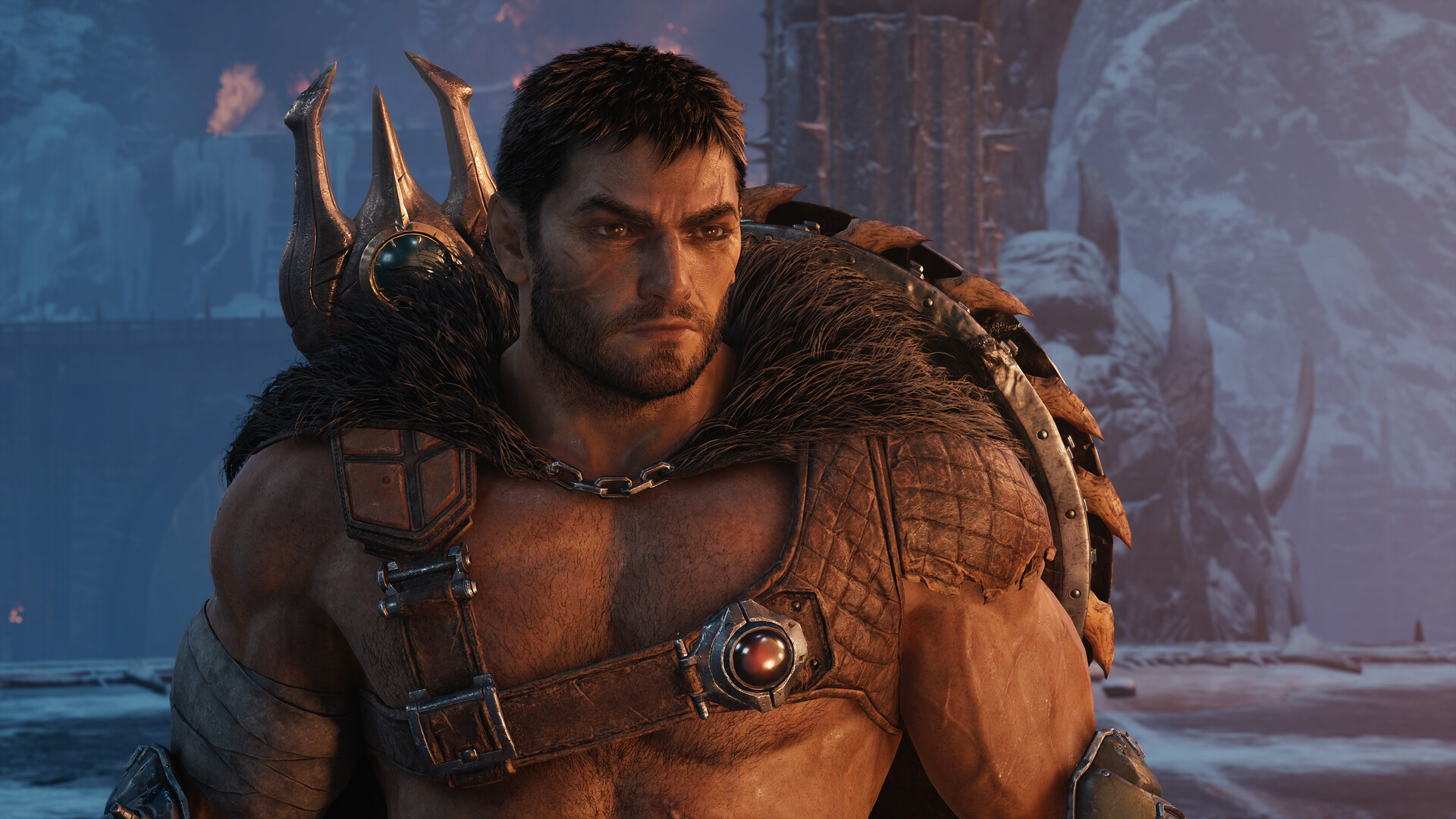
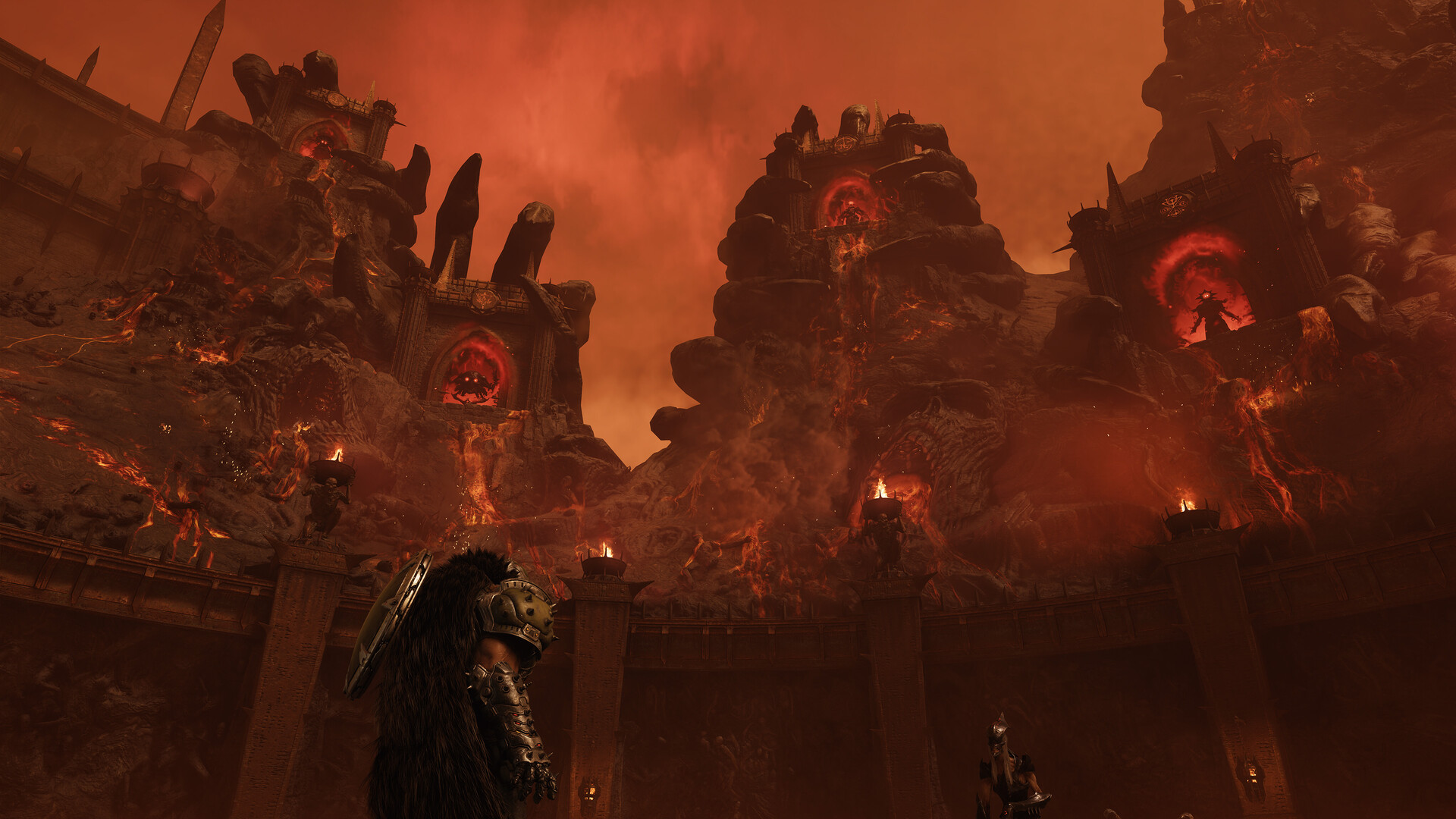
Comme prévu, c’est donc en ce 7 juillet de l’an de grâce 2026 que DOOM: The Dark Ages fait un retour qui s’annonce plus brutal que jamais avec son premier DLC. Annoncée il y a environ un mois au cours du Xbox Games Showcase, l’extension fourmille de nouveaux contenus en tous genres et surtout, de nouvelles manières de trucider du démon. Les previews publiées il y a quelques jours par certains médias permettent notamment de découvrir, à travers quelques affrontements, les mécaniques de jeu qui caractérisent Revelations.
L’incarnation de ce renouvellement au sein du gameplay, c’est principalement la fameuse lance à chaîne : une nouvelle arme que l’on pourra échanger à souhait avec le bouclier en main gauche en fonction de la situation. Cette lance pourra être utilisée comme une arme de corps à corps, mais également être lancée, et exploitée à la manière d’un grappin afin de vous projeter violemment sur vos ennemis ou encore de leur tourner autour en les mitraillant. Bref, un nouvel atout qui rend notre DOOM Slayer plus polyvalent, mobile et efficace que jamais dans ses tueries. En plus, ça a l’air super fun.
Plus globalement, ce DLC présente une bonne dose de lieux inédits à parcourir dans la bonne humeur, avec pas moins de 6 nouveaux niveaux articulés autour d’un hub, lui même explorable petit à petit avec une composante metroidvania. On notera d’ailleurs dans ces nouvelles zones des environnements plus verticaux, sans doute dédiés à une exploitation optimale de la fonction de grappin octroyée par la lance à chaîne. Les dernières aventures du DOOM guy seront également l’occasion pour les plus étranges d’entre vous de découvrir avec enthousiasme votre dose de lore, puisque – comme l’indique le titre de l’extension avec subtilité – la narration y aura une place importante. Il en faut pour tous les gouts, soyons ouverts d’esprit.
En tout cas, l’attente touche à sa fin ! Avec une petite pensée pour les devs, on se donne rendez-vous sur la page Gamesplanet de DOOM: The Dark Ages | Revelations pour reprendre le combat là où on l’avait laissée l’an dernier. Par ailleurs, des promotions sont actuellement en cours sur toute la série DOOM, c’est pourquoi si vous n’aviez toujours pas le jeu de base de The Dark Ages (sérieusement ?) ou que vous souhaitez en profiter pour découvrir les titres précédents, le moment est peut-être venu. Ça se passe sur Steam, mais dépêchez-vous, c’est seulement jusqu’au 9 juillet !
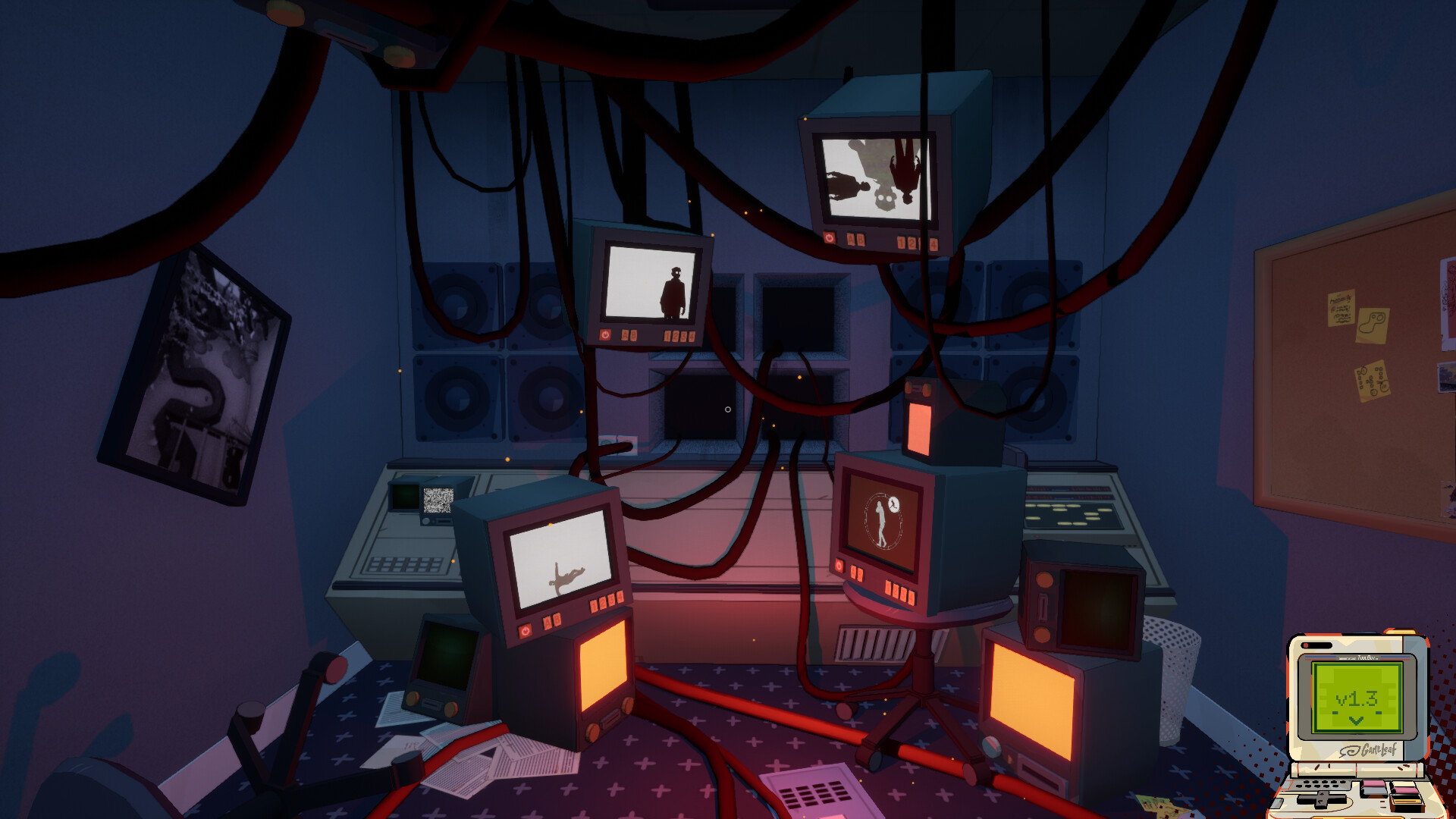
C’est en effet la date de sortie annoncée dernièrement par l’éditeur ARTE Interactive sur Bluesky. Le puzzle-game initialement réalisé par le studio indépendant Swing Swing Submarine a finalement été co-produit avec La Poule Noire et ARTE France pour un résultat qu’on espère satisfaisant, car il nous avait fait bonne impression jusqu’ici. C’est notamment après avoir jeté un oeil à la démo publiée l’an dernier que la qualité des énigmes et l’originalité de la direction artistique ont suscité notre intérêt pour le titre.
On vous avait détaillé le concept du jeu lors de sa première annonce, mais pour rappel, cette aventure vous lancera à la recherche de votre colocataire, Fael (vous l’avez pas vu venir, hein ?), perdu dans un étrange complexe d’appartements labyrinthique. L’épopée surnaturelle, pensée comme un escape game, demandera visiblement un peu de jugeote pour en voir le bout. C’est en tout cas ce que l’on a hâte de découvrir ce 16 juillet, et si c’est votre cas, n’hésitez pas à mettre Looking for Fael dans votre wishlist via Steam.
On espère que vous n’étiez pas trop pressés de vous plonger dans la nouvelle expérience horrifique des développeurs de SOMA, parce-que ce n’est pas pour tout de suite. Pourtant, ONTOS, annoncé il y a quelques mois, semble être pile dans la lignée du savoir-faire de Frictional Games : une aventure narrative terrifiante qui vous immerge dans un univers de SF, avec en prime quelques énigmes à vous faire frire les neurones. Mais, à en croire la prise de parole du studio sur Twitter, le niveau d’ambition de ce nouveau titre a entraîné un léger retard sur la production.
Comme nous l’annonce donc la courte vidéo aussi sobre qu’efficace publiée à l’occasion, ce report amène la release du jeu à 2027. Mais très franchement, même si Amnesia : TheBunker avait réhaussé la barre, tous leurs récents jeux n’ont pas fait l’unanimité, et il serait effectivement plus sage de la part des devs de sortir une expérience peaufinée qui soit digne des heures de gloire de leurs licences. C’est en tout cas ce que l’on espère ! En attendant, vous pouvez mettre ONTOS dans votre wishlist en passant par sa page Steam s’il vous intéresse, ou encore profiter des promotions actuelles pour découvrir SOMA et Amnesia : The Dark Descent sans vous ruiner.
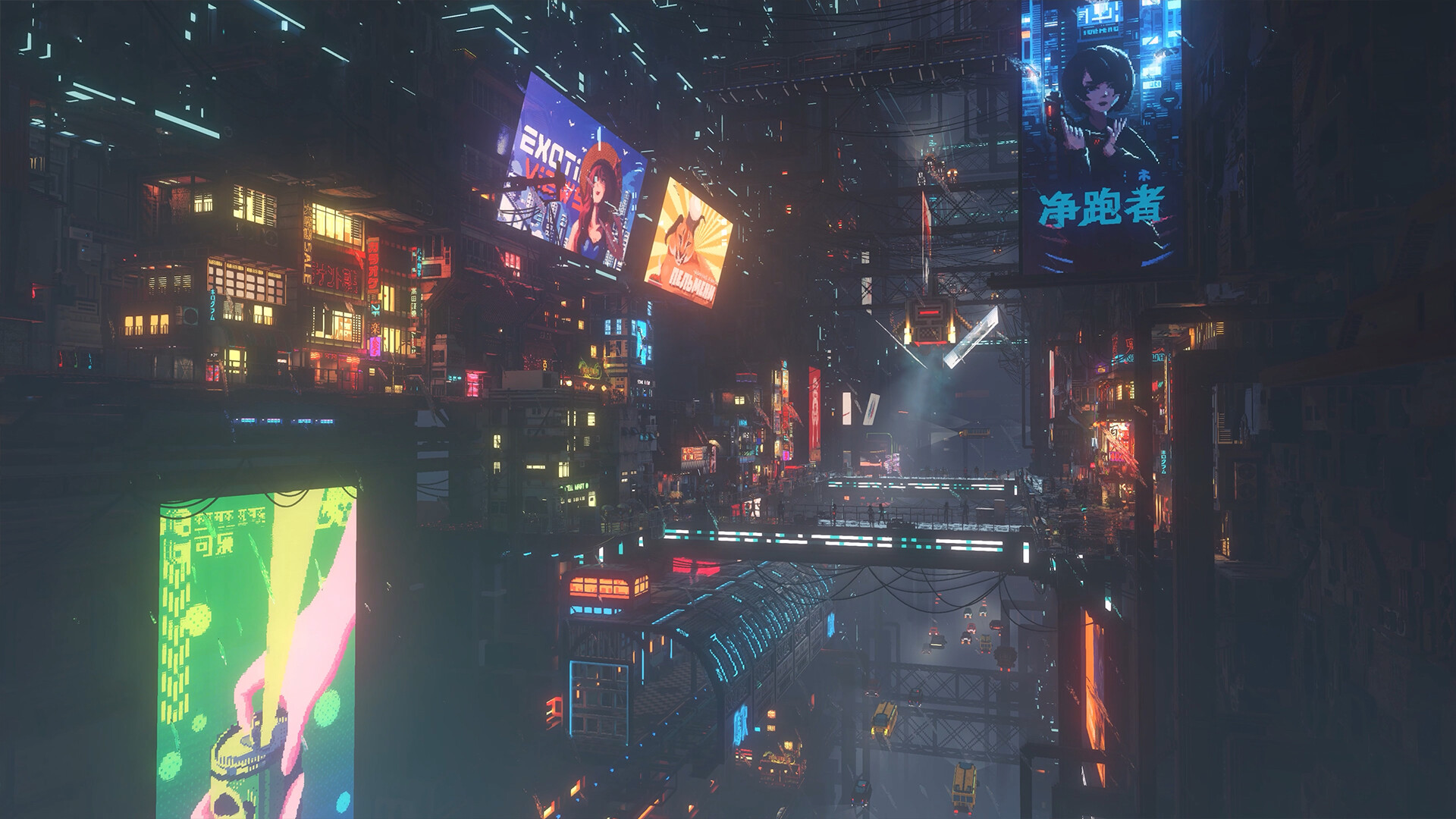
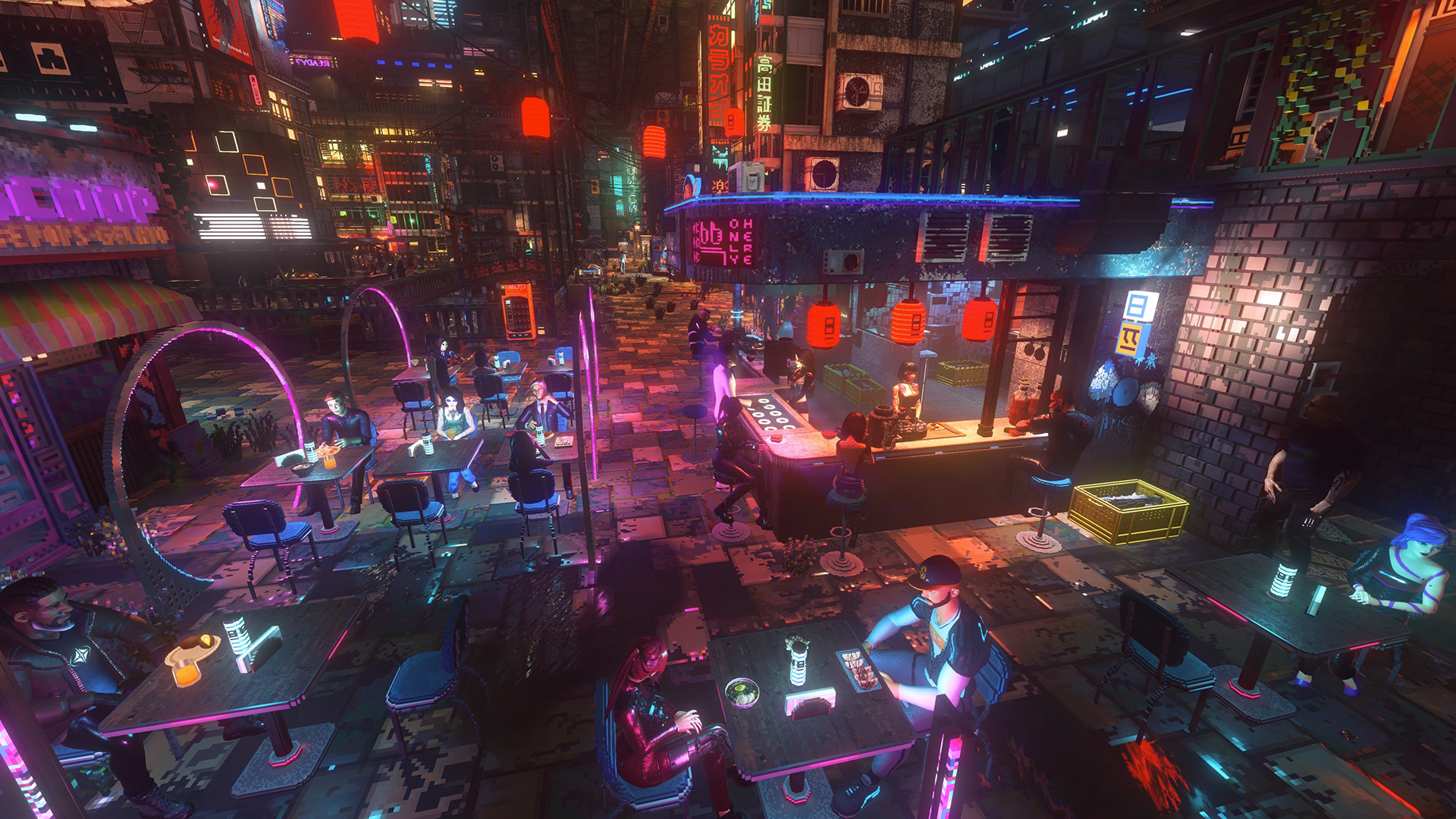
On a tous notre vision de la vie de rêve pour laquelle on donnerait tout. Selon certains, c’est la vue idyllique des blocs d’immeubles insipides aux façades saturées de panneaux publicitaires. Pour d’autres, c’est l’odeur douteuse à l’angle d’une ruelle mal famée, le regard rivé sur ses pieds pour éviter de croiser celui d’un cyberpsycho armé jusqu’aux dents. Certains encore trépignent à l’idée d’une balade digestive entre deux shifts sous le joug d’une mégacorporation dont la toute puissance n’a d’égale que la corruption… Oui, car après tout, quoi de mieux que de vivre dans un univers cyberpunk ? Mais à présent, rassurez-vous, votre salut se dessine très nettement, et vous pourrez en profiter dès cet automne.
Après un lourd silence médiatique de près de 9 mois, ION LANDS est de retour avec de bonnes nouvelles sur sa simulation de vie urbaine dystopique ! Nivalis, de son ancien nom, est pour rappel le troisième titre du studio, et se déroulera dans la même métropole futuriste que Cloudpunk, leur précédent jeu au succès suffisamment remarquable pour être évoqué. On a donc droit à un billet de blog Steam qui révèle avec enthousiasme que des problèmes juridiques avaient empêché le développeur indé de s’exprimer depuis octobre dernier, pour ensuite évoquer le fameux changement de titre… On se demande bien ce qui a pu leur causer problème ! Fort heureusement, une petite rectification a permis à ION d’éviter les foudres de la dizaine de boîtes américaines qui partagent le même nom. On se retrouve donc avec pour titre final Nivalis Nights, ainsi que le nouveau logo qui va bien pour l’accompagner. Le tout est présenté dans un beau trailer plein de néons multicolores, avec en prime une sortie fin septembre annoncée dans la foulée. Que demande le peuple ?
Cela dit, mis à part le rebranding du jeu, on ne peut pas dire que les nouveaux extraits de gameplay soient généreux en informations inédites. Certains pans du contenu restent flous, on sait seulement qu’on pourra mener une existence relativement paisible au coeur de Nivalis, que ce soit en sociabilisant, en ouvrant un resto ou encore en devenant un pêcheur du futur. Après les retours très positifs des joueurs sur Cloudpunk, une certaine curiosité est de mise pour ce nouveau titre dont l’interprétation originale du mouvement cyberpunk s’avérera peut-être rafraichissante. En tout cas, n’hésitez pas à mettre le jeu en wishlist sur sa page Steam s’il vous intéresse en attendant la sortie le 29 septembre prochain.
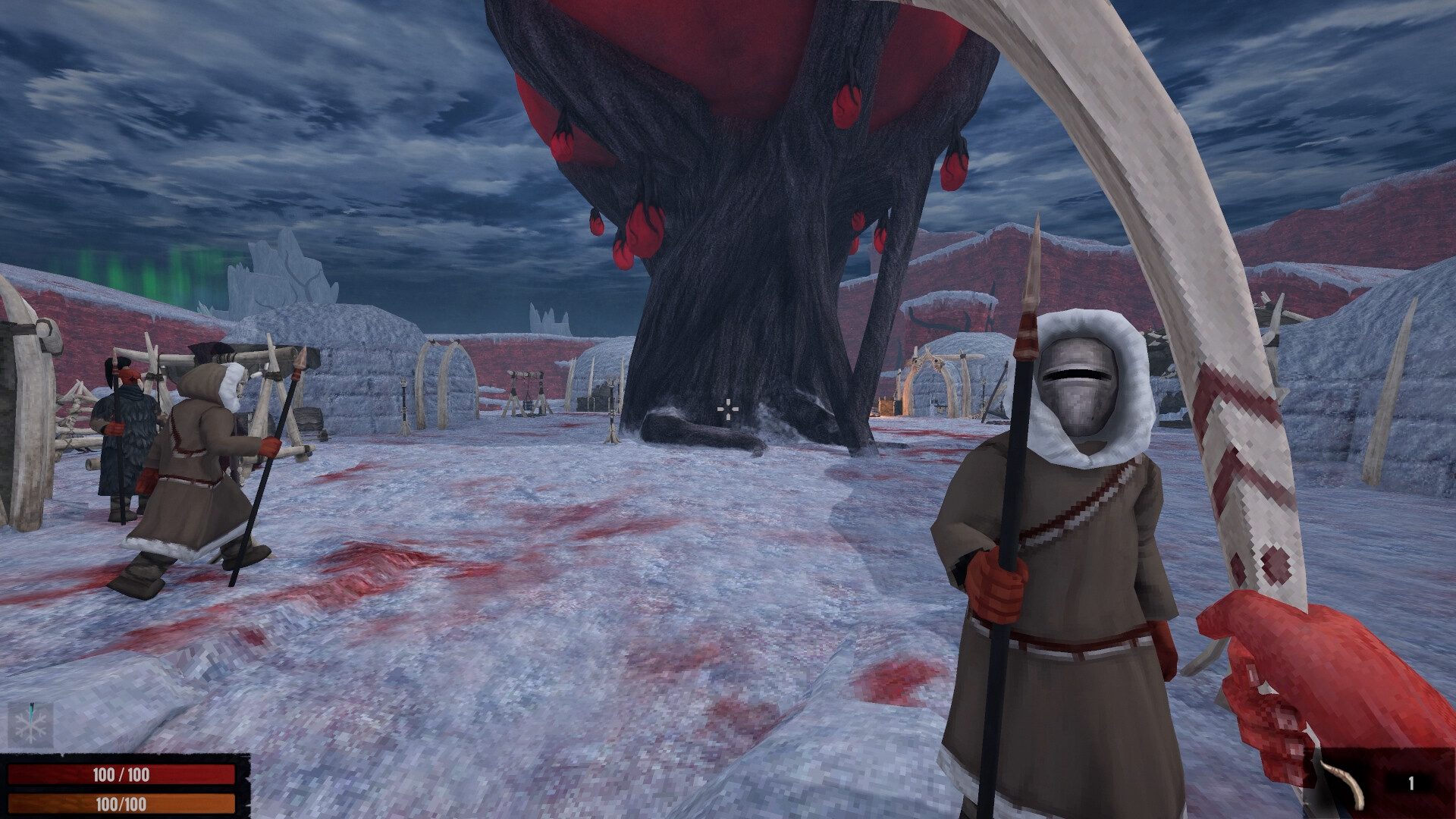
Imaginez un univers terriblement froid et rempli de créatures cauchemardesques, où chaque rencontre que les étendues enneigées mettent sur votre chemin peut signer la fin de votre existence. Vous, parmi tant d’autres, avez été conçu et êtes né dans une cuve ensanglantée au coeur du cadavre d’un dieu déchu. À présent, vous devez vous faire une place dans ce monde aussi austère qu’hostile où règnent des monstres venus tout droit d’une planète lointaine… Le setting donne envie, non ? Décidément, Piotr Szekalski, le directeur de Blood West, a clairement un faible pour le sang et les univers glauques à souhait. Là-dessus, son nouveau projet, Bloodwoven, coche toutes les cases.
Récemment annoncé, le nouveau titre édité par Hyperstrange est décrit comme une histoire dont vous n’êtes PAS le héros. Simple chasseur arpentant le glacier, le personnage joueur aura visiblement pour principale préoccupation sa propre survie, puisque nombreux sont les périls qui peuvent la mettre en danger au cours de l’exploration. La gestion des ressources et de l’équipement permettant de résister au froid sera donc centrale, tandis que la discrétion et une approche tactique seront nécessaires pour affronter convenablement les prédateurs de la banquise. Enfin, les interactions effectuées avec les diverses tribus rencontrées auront visiblement des conséquences, puisqu’il sera possible de s’en faire des alliés tout comme d’impitoyables ennemis.
S’il n’est certes pas exactement ce qu’on pourrait qualifier de claque visuelle, ce nouveau projet tirera donc peut-être son épingle du jeu à travers sa proposition de gameplay ou encore son worldbuilding aux petits oignons. On peut en tout cas faire confiance au directeur du projet, qui s’est fait un petit nom avec son précédent succès (Blood West est d’ailleurs actuellement à -75 %, soit 6 €, si jamais). Côté rédaction, c’est une expérience qu’on avait trouvé loin de la perfection, mais ne serait-ce que pour faire honneur aux avis élogieux des joueurs, on peut prudemment accorder une chance à ce nouveau titre. S’il vous intéresse, on vous invite donc à vous rendre sur la page Steam de Bloodwoven pour mettre le jeu dans votre liste de souhaits.
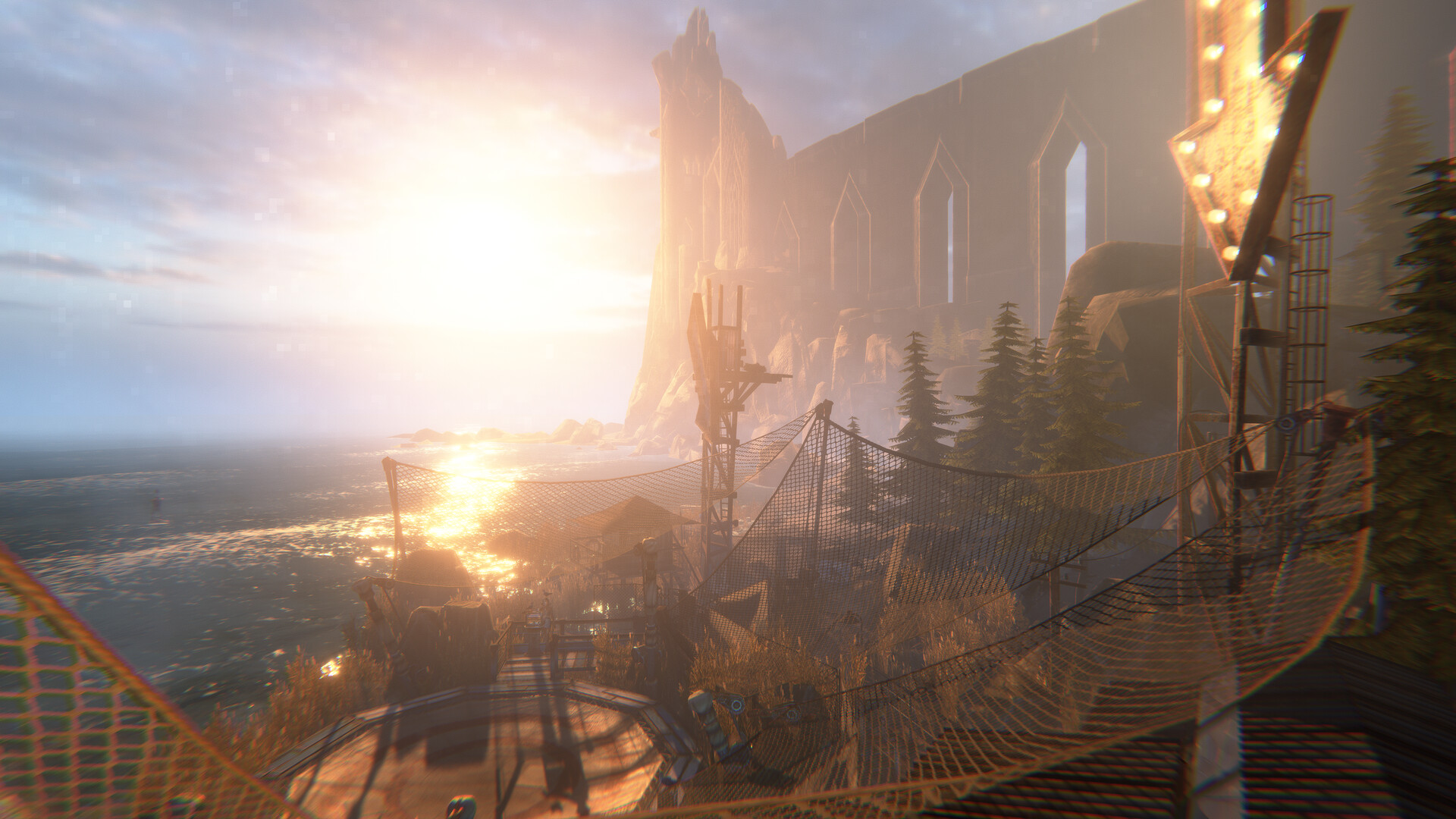
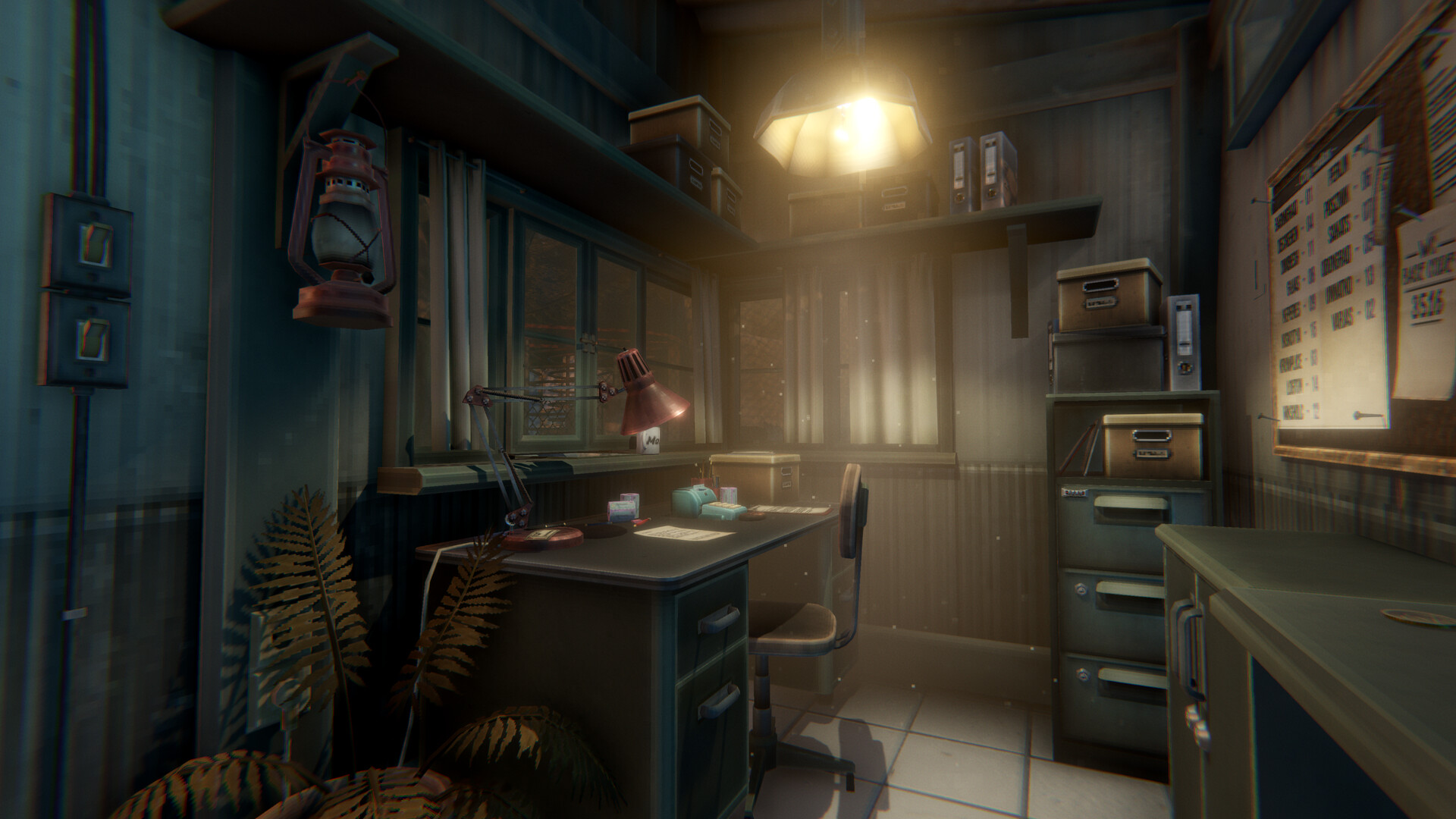
Étonnamment, sur NoFrag, on ne vous a jamais parlé de Quern. C’est pourtant un excellent jeu d’aventure à énigmes, très apprécié des joueurs et encensé par la presse. Eh bien, il se trouve que l’équipe de développement derrière ce titre est de retour avec une nouvelle expérience qui semble ambitionner de détrôner son précédent succès. Dimhaven – The Lost Source est sorti, et est ainsi le fruit d’une vision qui a déjà fait ses preuves, agrémenté de nouvelles idées destinées à sublimer la formule.
Si vous choisissez d’entreprendre cette enquête insulaire, munissez-vous d’un bloc note, d’un crayon et de toute la matière grise que vous conservez dans vos placards neuronaux, parce-que Dimhaven ne vous fera aucun cadeau de ce côté-là ! Attendez-vous à une aventure exigeante qui, à l’inverse de son prédécesseur, mise ici sur une héroïne à la personnalité marquée et donne une vraie place à la narration. Narration servie d’ailleurs par une direction artistique rétro fort agréable à la rétine.
Pour notre part, la découverte de la démo avait été un réel plaisir, et indiquait une expérience prometteuse – ce qui a depuis été confirmé par les premiers retours des joueurs, déjà largement positifs. Elle est d’ailleurs toujours disponible, si vous souhaitez vous y essayer avant d’impliquer votre carte bleue dans l’histoire. Une fois votre choix fait, sachez que le titre bénéficie actuellement de 15 % de réduction, et se retrouve donc à 22 €. Que vous passiez à la caisse où souhaitiez simplement l’ajouter à votre wishlist, ça se passe sur la page Steam de Dimhaven – The Lost Source.

 Connexion
 Canon
Canon