Vue lecture

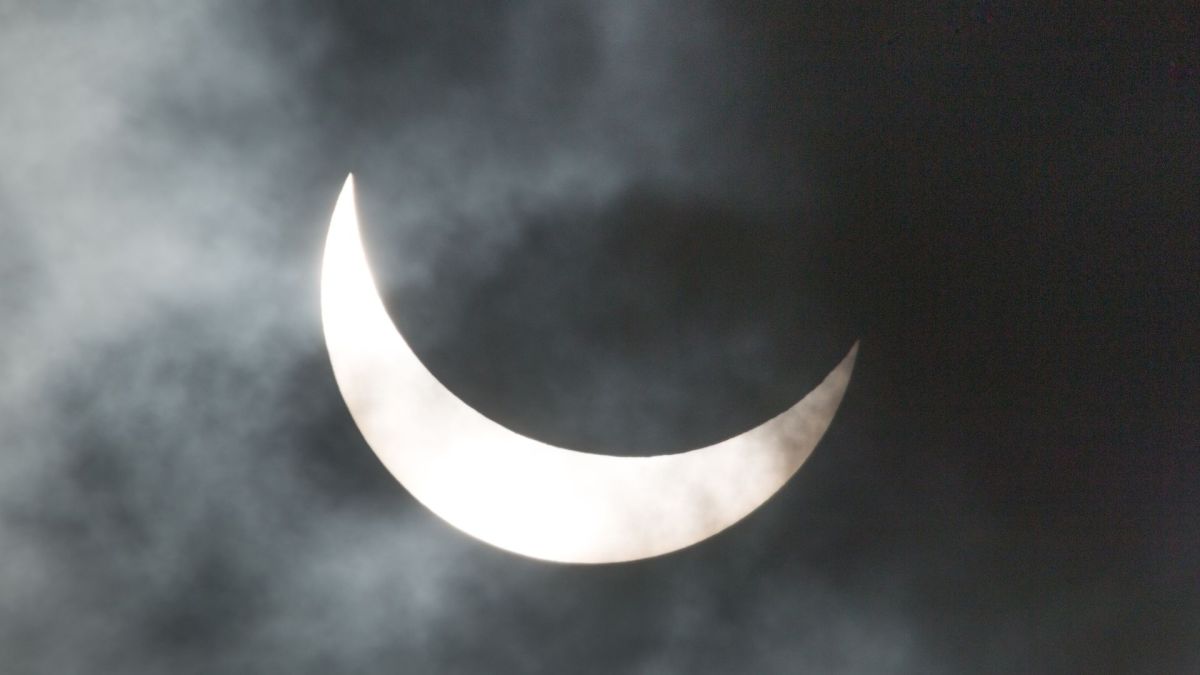
Lors de l’éclipse solaire du 12 août 2026, il ne faut pas réutiliser vos vieilles lunettes de 1999

La France métropolitaine se prépare à un spectacle grandiose : l'observation de l'éclipse solaire du 12 août 2026. Cette éclipse de Soleil totale sera partielle dans l'Hexagone. Ne gâchez surtout pas cet instant unique en optant pour des lunettes trop anciennes, par exemple une paire distribuée pendant l'éclipse de 1999. Elles risqueraient de vous mettre en danger et de provoquer des séquelles à vie.

  •  

Scientists Find Sugar Deep In Our Galaxy

Astronomers have detected erythrulose, a sugar found in raspberries and self-tanners, in a gas cloud near the center of the Milky Way. While not essential for life itself, the molecule can convert into a form thought to be important for life's origins, adding evidence that key prebiotic ingredients may be widespread across the galaxy. The Associated Press reports: Using two dish-shaped radio telescopes in Spain, researchers collected data from a large gas cloud near the center of the Milky Way. They identified the sugar in gas form by comparing telescope signals to samples in the lab. It's the latest kind of sugar detected in space -- in a region crossed by NASA's twin Voyager, the farthest spacecraft to ever travel from Earth. Scientists have found interesting chemistry in our galaxy, including building blocks for genetic material and parts of the cell. They spotted a cousin to table sugar near the center of the Milky Way about 25 years ago, and black grains from asteroid Bennu retrieved by NASA's Osiris-Rex spacecraft yielded other sugars, including a key DNA ingredient. The latest sugar isn't essential for life, but can easily convert to a form that's thought to be crucial to kick-starting life on Earth. And it's one of the most complex sugars spotted so far, said astrophysicist Erika Hamden with the University of Arizona. The results were published in the journal Nature Astronomy.

Read more of this story at Slashdot.

  •  

Orbital Datacenter Plans Need an Environmental Review, FCC Told

Environmental groups want America's FCC "to slam the brakes on orbital datacenters," writes The Register. They're arguing for an environmental impact assessment for what could be 1 million satellites: Earthjustice, acting on behalf of DarkSky International, Environment America, and Public Employees for Environmental Responsibility (PEER), filed a petition this week... The filing doesn't target any single company. Instead, it asks the regulator to put the entire emerging orbital datacenter sector on hold while it assesses the cumulative effects of proposals from SpaceX, Starcloud, Blue Origin, Cowboy Space, and any similar applications that follow. According to the petition, those proposals collectively seek "well over a million datacenter satellites" in low Earth orbit.... " increasing the existing volume of satellites in low-earth orbit by multiple orders of magnitude." The groups argue that the FCC is trying to apply licensing rules written for much smaller satellite constellations to an entirely new class of infrastructure. "If ever a situation warranted a Programmatic Environmental Impact Statement [PEIS], it is this one," the petition says. It argues that a single review would allow the agency to examine "the risks, alternatives, needs, costs, and impacts of this sudden transformation of Earth's exosphere" before deciding whether any of the projects are in the public interest. The petition raises concerns about rocket launch emissions, pollutants released as satellites burn up during atmospheric reentry, depletion of the ozone layer, orbital debris, light pollution, impacts on wildlife, and interference with astronomy. It also argues that the combined effects of these constellations cannot be understood by evaluating applications one at a time.... "It is difficult to imagine a better example of multiple projects presenting essentially identical impacts and risks that compound synergistically and cumulatively than the present proposals..." The petition argues that the FCC's current approach, which generally treats satellite licenses as categorically excluded from detailed environmental review, is no longer fit for proposals measured not in dozens or thousands of spacecraft but in hundreds of thousands and, potentially, millions. If the FCC agrees, orbital datacenter operators will have a mountain of paperwork to clear before sending their hardware skyward.

Read more of this story at Slashdot.

  •  

FCC Approves Reflect Orbital's Space Mirror Satellite That Astronomers Hate

The FCC has approved (PDF) Reflect Orbital's Earendil-1 test satellite, which will use a 60-by-60-foot mirror to reflect sunlight back to Earth after dark. "The reflected light from the satellite is supposed to span an area about 3 miles wide on the ground," reports PCMag. It comes despite objections from astronomers and environmental groups who are concerned that the satellites will unleash intrusive light pollution. From the report: The approval is only for one satellite, dubbed Earendil-1, which is meant to test Reflect Orbital's technology for shining sunlight back to Earth. The satellite will boast a steerable thin-film reflector measuring about 60 feet by 60 feet, with the goal of powering solar farms at night or illuminating disaster-struck areas after dark to help rescue teams. Reflect Orbital envisions operating over 50,000 satellites by 2035, effectively surrounding the Earth with a fleet of mirrors. The proposal has faced stiff pushback from environmental groups and astronomers who are concerned that the satellites will unleash intrusive light pollution. The opposition has been so strong that the FCC received over 1,800 public comments on the application, many of them objecting to Reflect Orbital's plan for Earendil-1. [...] [T]he FCC approved the satellite, noting the grant is only "for a single demonstration satellite" to test an innovative technology that could advance American leadership in space. "The Communications Act states that it is the policy of the United States to 'encourage the provision of new technologies and services to the public,' and Reflect Orbital's demonstration satellite is an example of a potentially groundbreaking technology that the Commission has found is in the public interest to support," the order says. But on the most controversial aspect of the satellite, the FCC said the concerns around Reflect Orbital's solar reflector are "unrelated to the Commission's role in authorizing use of radiofrequency spectrum, and even if the Commission had authority to review and condition these operations (which it does not), these harms are unlikely to occur. In addition, the commission said that U.S. courts have blocked the FCC from using "a generalized public interest requirement beyond its statutory authority in regulating communications. Accordingly, the operations of a solar reflector in space would not be reviewed as part of the Bureau's public interest analysis." The regulator also noted that conducting an environmental review for the satellite went beyond its authority. Even if the FCC did have the power, the commission emphasized that the grant is for a single satellite, not 50,000. "The majority of these comments focus on a hypothetical plan to deploy tens of thousands of satellites, and those who argue the single satellite will harm the human environment do not demonstrate with specificity the potential harm will be caused by the single satellite, but rather rely on the same studies as the commenters objecting to a larger constellation," the FCC adds.

Read more of this story at Slashdot.

  •  

China Lands Rocket During an Orbital Launch For First Time

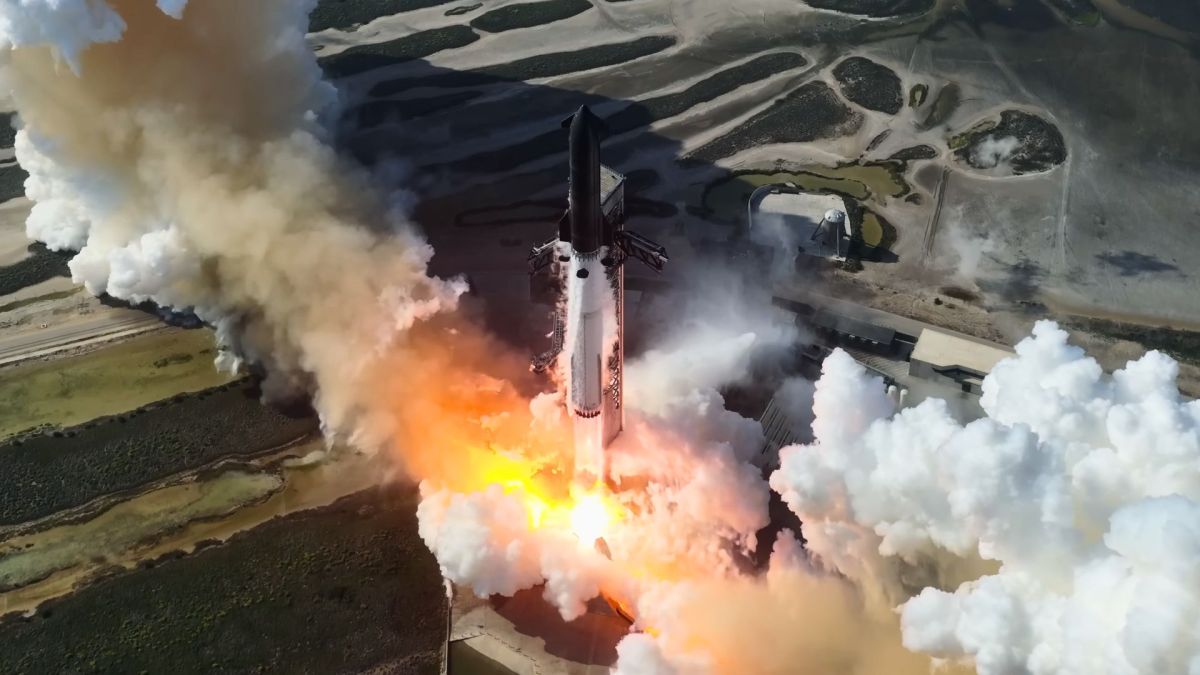
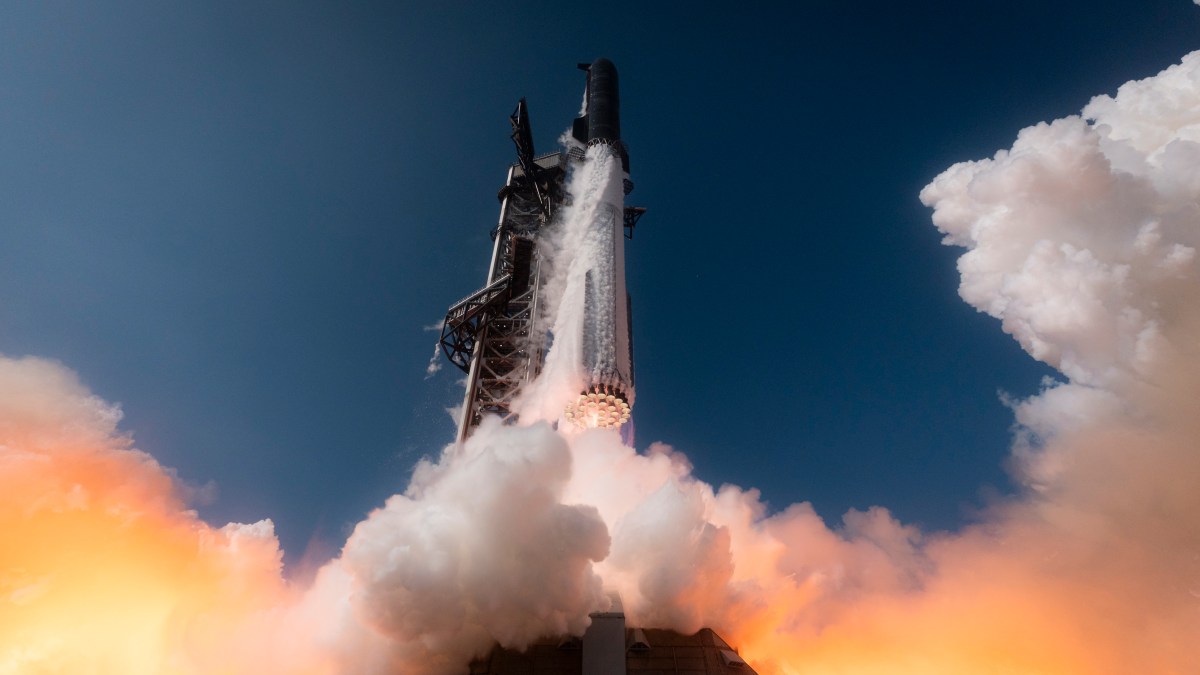
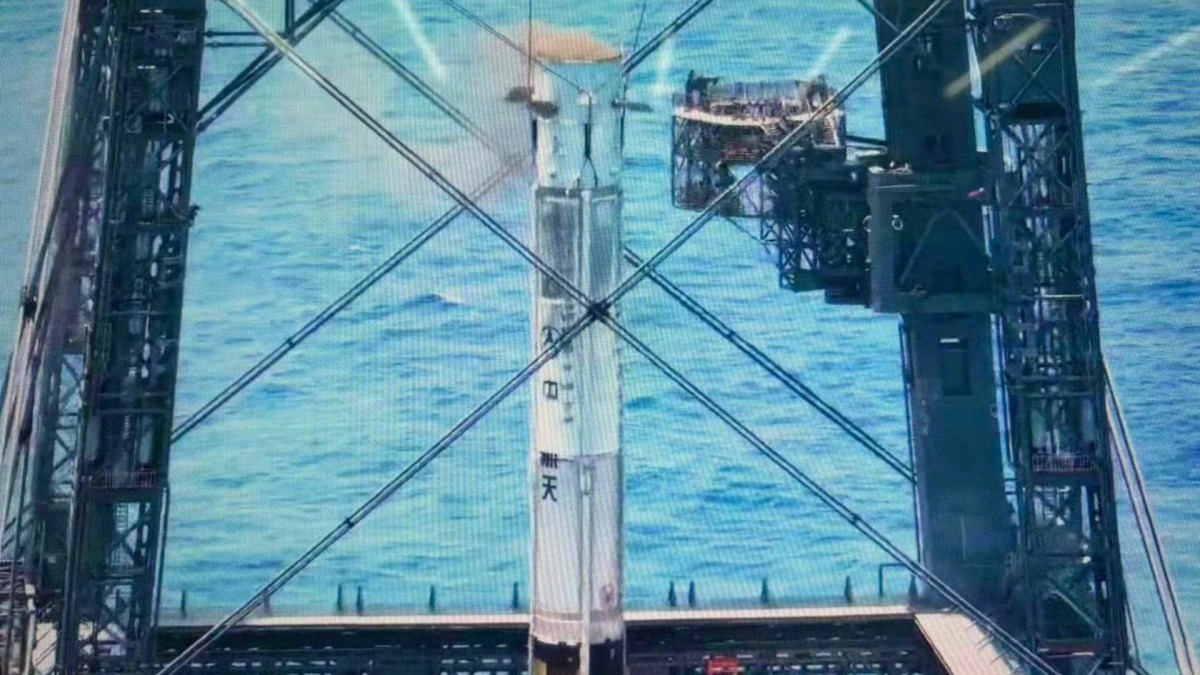
China successfully recovered an orbital rocket booster for the first time, landing the Long March 10B's first stage into a net-equipped sea platform after its maiden launch. "This mission marks my country's first successful controlled recovery of a launch vehicle and the world's first network-based recovery of a launch vehicle," the China Aerospace Science and Technology Corporation (CASC) announced via social media shortly after the launch. (Translation by Google.) "It signifies a historic breakthrough for my country in the field of reusable rocket technology and will lay a solid foundation for accelerating the improvement of my country's space access capabilities." Space.com reports: The Long March 10B is a two-stage rocket that stands about 207 feet (63 meters) tall, according to the state-owned CASC, the main contractor for China's space program. The vehicle's first stage burns kerosene and liquid oxygen (LOX) propellants, whereas the second stage uses LOX and liquid methane. In reusable mode, the Long March 10B can loft about 16 tons of payload to low Earth orbit. And the rocket flew with a payload on its debut liftoff -- a satellite that successfully reached "its predetermined orbit," according to the CASC update. That post did not provide any details about the spacecraft or its orbit. It did give a brief rundown of the first-stage recovery, however. "Approximately 6 minutes after the first and second stages separated, the first stage returned vertically and was successfully recovered at a sea-based recovery platform using a net system," CASC officials wrote, noting that launch occurred from the Hainan Commercial Space Launch Site on Friday at 12:15 a.m. EDT (0415 GMT; 12:15 p.m. Beijing time.) "The launch and first-stage recovery missions were a complete success."

Read more of this story at Slashdot.

  •  

Une fusée chinoise réutilisable envoyée avec succès : “La course à la Lune s’intensifie”

Le lancement d’une fusée Longue Marche 10B et la récupération de son lanceur sont salués par “The South China Morning Post”. Pékin reprend du galon face aux États-Unis, affirme le titre hongkongais. Et l’envoi d’une mission habitée vers la Lune est à portée de main.

© Photo/AFP

Le décollage d’une fusée Longue Marche 10B, depuis Hainan, dans le sud de la Chine, le 10 juillet 2026.
  •  

Le télescope Euclid a découvert des quasars datant de l’enfance de l’Univers

Le télescope spatial européen a commencé une pêche miraculeuse : en deux ans, il a trouvé 31 quasars, les objets célestes les plus brillants, parmi lesquels les plus anciens identifiés à ce jour. “Aussi incroyable que cela paraisse, 12 des quasars identifiés par Euclid remonteraient aux 770 premiers millions d’années de l’Univers”, s’enthousiasme “Scientific American”.

© photo ESA

Vue d’artiste d’un quasar.
  •  

Mysterious Spheres Found In Australia Are Likely Space Debris

An anonymous reader quotes a report from the New York Times: An Australian beach community was confused -- and later delighted -- by the discovery of six metallic-looking spheres that washed ashore last week. The mystery, and the ensuing attention, prompted a bunch of alien jokes from local residents and businesses. But Australia's space agency put the speculation to rest on Monday, saying that the spheres appeared to be rocket debris that had recently re-entered the atmosphere from orbit. The objects were found on Forrest Beach in the northeastern state of Queensland over the weekend, the state's fire department said. Residents described them as being about twice the size of a basketball. "The recovered objects appear to be pressure vessels from a space launch vehicle," the Australian Space Agency said in a statement, adding that they were "consistent with debris from a foreign rocket body." The agency said that it had identified the likely source of the objects, without providing further details, and was working with international authorities to confirm the vehicle from which the debris originated.

Read more of this story at Slashdot.

  •  

Superconducting Thruster Harnesses Earth's Magnetic Field In First Orbital Test

New Zealand startup Zenno Astronautics has completed the first orbital test of its "Supertorquer," a shoebox-sized superconducting magnet system that uses solar power and Earth's magnetic field to help control a satellite without fuel. The company says the technology could eventually support fuel-free satellite maneuvers, docking, deep-space trajectory changes, and even magnetic radiation shielding for astronauts. Space Magazine reports: The tests began shortly after Mira's launch in November last year aboard the SpaceX Transporter 12 mission and saw the shoebox-size device perform with flying colors, Zenno Astronautics CEO and founder Max Arshavsky, told Space.com. "It's a technology that allows a spacecraft to not tumble violently in space and point in the right direction," Arshavsky said. "The unit has multiple super-conducting magnets that are positioned in different axes. When we power up the magnets, they generate a magnetic field, which interacts with Earth's magnetic field, and because we can control the magnetic field on the satellite, we can control the way in which it turns with respect to Earth." Superconducting magnets are made of coils of superconducting wire that have zero electrical resistance and can therefore conduct much larger currents than normal wires. That larger current translates into a greater magnetic force. There is, however, a catch: Superconducting materials need to be cooled to extremely low temperatures to gain their wonder properties. [...] The unit housing the superconducting magnets is wrapped in layers of insulation and fitted with a heat pump that removes all the excess heat from the system. Every time the satellite needs a push, the superconducting coils power up, drawing energy from a battery charged by the satellite's solar panels. "It's converting solar energy straight into useful work," Arshavsky said. "Energy is the one thing that is abundant in space, and you can use it to energize the magnet to create a magnetic acceleration device. It gives you acceleration without fuel." In the future, Zenno Astronautics plans to launch larger systems that could enable spacecraft to dock in space or conduct close proximity operations using just the power of their solar-powered superconducting magnets. Arshavsky envisions powerful magnets that could, in the future, propel spacecraft on missions to the moon and Mars using only solar power.

Read more of this story at Slashdot.

  •  

Japan Releases Snowman-Like Asteroid Image After Flyby

Japan's Hayabusa2 probe captured rare close-up images of near-Earth asteroid Torifune, revealing a snowman-like shape made of two joined lobes. Phys.org reports: The fridge-sized Hayabusa2 skimmed asteroid Torifune on Sunday in a mission that demonstrated the ability to deflect a potentially dangerous space rock away from Earth. A new image released by the Japan Aerospace Exploration Agency (JAXA) on Monday could aid such efforts, as researchers say near-Earth asteroids vary in their size, shape and surface characteristics. "The moment I actually saw this image and the scientific data -- it really gave me goosebumps," JAXA scientist Yuya Mimasu told reporters, adding the asteroid "personally looked like a snowman." The black-and-white image, captured by a telescopic camera, showed what appeared to be two round objects joined together. "You can actually see the rocks... I really hadn't expected to be able to take a photo like this, so I'm absolutely over the moon," he said. [...] Moving at a speed of more than 18,000 kilometers (11,185 miles) per hour, the probe was due to fly within 800 meters (2,625 feet) of the asteroid, but JAXA said it would analyze the distance later. If confirmed, the mission would be one of the closest flybys of a near-Earth asteroid ever. JAXA also said Monday it succeeded in acquiring data from three other devices that can measure the distance from the asteroid and examine the existence of water.

Read more of this story at Slashdot.

  •  
❌