Vue lecture

OpenAI se lance dans les périphériques PC avec le Codex Micro, mais quèsaco ?

Depuis plusieurs mois déjà, des rumeurs affirmaient qu'OpenAI travaillerait en secret avec Jony Ive, l'emblématique responsable des designs chez Apple durant plus de 20 ans. Ensemble, ils auraient pour projet de mettre au point l'assistant personnel IA "physique" de demain, quelque chose capable, se...

  •  

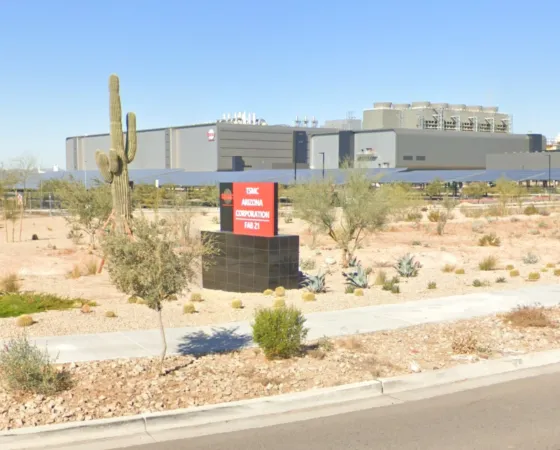
C'est Trump qui va être content : TSMC investit 100 milliards de plus dans son campus en Arizona !

Fin 2020, TSMC achetait dans l'Arizona un terrain de 445 hectares pour y construire son campus industriel qui a tant fait parler ces dernières années. En janvier 2026, la firme participait à une enchère publique lancée par l'État d'Arizona concernant un autre terrain faisant lui 364 hectares et situ...

  •  

Palit confirme le retour de la GeForce RTX 3060 12 Go, mais pour quoi faire ?

Après des mois et des mois de rumeurs régulières, le retour de la NVIDIA GeForce RTX 3060 12 Go était finalement acté fin juin / début juillet, puisque des stocks sont réapparus par-ci par-là chez certains revendeurs. Il devient néanmoins 100 % concret en ce 15 juillet 2026, car Palit vient tout sim...

  •  

Le boitier PC de Cooler Master avec 3 ventilateurs géants de 40 mm d'épaisseur arrivera en septembre, à 185 €

Nous vous l'avions présenté lors du Computex 2026, le voilà finalement d'ores et déjà annoncé pour un lancement dans le courant du mois de septembre 2026. Le boitier HAF II 500 n'était pas juste un prototype dévoilé par Cooler Master pour faire parler de lui, mais un projet concret, sur lequel vous...

  •  

L'ASUS ROG NUC 16 Edition 20 arrive : une puissance folle dans seulement 3 L, mais à 6500 €...

En ce 14 juillet 2026, ASUS vient d'officialiser le lancement mondial de son nouveau fleuron en matière de mini-PC dédié au jeu : le ROG NUC 16 Edition 20. On entendait parler de lui depuis un long moment, ainsi que de toute la gamme "ROG Edition 20", mais surtout pour le marché chinois, où il a été...

  •  

Tour de magie sur la Steam Machine, pour moins voir la grosse lumière rouge angoissante

Les premières semaines de vie de la Steam Machine ne sont pas un long fleuve tranquille, et nombreux sont ceux qui attendent la moindre occasion de pouvoir lui cracher dessus, notamment sur les réseaux sociaux. Un "buzz à tout prix" qui a même infecté certains médias. Ainsi, quand un internaute, un...

  •  

America May Soon Be Facing Largest Labor Shortage in Its History

America "is facing what's projected to become the largest labor shortage in its history," according to experts interviewed by the Washington Post: Economists warn that the worsening labor problem, due in part to a skills shortage and population shifts, will be vast and reach beyond tech. It "could hobble the American economy for years to come," predicts the Georgetown University Center on Education and the Workforce. Lightcast, a labor market data company, calls it "the largest labor shortage the country has ever seen." JPMorgan Chase warns of a national security risk from "a pervasive talent deficit that constrains the nation's capacity to build, compete, and protect its interests." There will be shortages in the tens or even hundreds of thousands of nurses, physicians, teachers, engineers, pharmacists, mental health counselors, construction worker and airplane mechanics — jobs AI generally can't do... Among the trends that have been leading to this moment: a mismatch between the careers college graduates are pursuing and the jobs employers are struggling to fill. Far fewer students are majoring in health care fields than are needed to meet demand, for instance. "We have pumped so many young people into business and finance" when what's really in demand are graduates in other fields, [said Ron Hetrick, Lightcast's principal economist]. "It's like a factory producing these workers like widgets, even though society is saying, 'We really don't need them.' And the factory just keeps pumping them out." But the principal reason for the looming workforce shortages is much more basic. A protracted decline in birth rates is coinciding with a record wave of retirements, data shows. From 2024 to 2032, when the last baby boomers sign up for Social Security payments, more than 18 million college-educated workers will leave the labor force while fewer than 14 million enter it, according to the Georgetown center. Meanwhile, even as the number of people with associate and bachelor's degrees falls, the number of jobs requiring them will grow, the center forecasts. That will leave a gap of 4.6 million workers. Lightcast puts the deficit at an even higher 6 million... The effect of population shifts on the supply of talent, with or without degrees, has been compounded by a drop in the proportion of high school graduates choosing to go to college, a sharply reduced rate of immigration, and a growing number of Americans leaving the workforce altogether because of such issues as lack of child care, early retirement, incarceration and substance addiction, according to the Chamber of Commerce. Three interesting statistics from the article: U.S. college/university enrollment in 2023 was down by nearly 2 million students since its peak in 2010, according to the most recent data from the U.S. Education Department. America's low birth rate since 2010 "means the number of college-age Americans is forecast to decline by another 13 percent through 2041." South Dakota has just 41 workers for every 100 open jobs... while California and nine other states have more workers than jobs, the Chamber of Commerce found.

Read more of this story at Slashdot.

  •  

Linus Torvalds on Rust, C, Bugs, and AI Patch-Checking Tools

"Git and email are the two really only tools I use," Linus Torvalds said at Open Source Summit India 2026. But ZDNet reports that he also shared his thoughts on Rust, C, and patch-checking tools: "I use Google as a way to look things up." He added, "I'm unusual; most of the other maintainers end up using many more tools, and I think a lot of them are starting to use AI tools for patch checking," while he "works at a higher level. I work with people, not tools." When asked about Rust both in Git and the kernel, he pushed back against hype: "I'm not sure Rust is going to take over the world. I still think Rust is very interesting, [but] I still find C to be a much simpler tool." Torvalds continued, "I'm much more excited about all the tools we have for verification of C," including "automated patch verification tools" and "automated email checking tools for patches like Sashiko." Summing up, Torvalds told the Mumbai audience: "I'm more of a hack-and-slash kind of person, and I still like the raw and simple power of C, and I don't think that's going to change." Torvalds also warned against overestimating Rust's benefits: "Rust fixes a few easy bugs that you can make in C, but it does not fix the logic errors, right? It does not think for you, and when you write incorrect code, the language does not matter. The end result will be incorrect." On mixed C/Rust code bases, he pointed out that guarantees are limited: "The guarantees that Rust give you only apply in the Rust-only parts of your code base, and wherever you interact with C code, all bets are off," with most Rust code in Linux talking to "core kernel C code" that is "much better quality... because that code has been tested in every single environment." At the same time, Torvalds pointed out, "some of our big and more high-profile bugs in the kernel lately have been logic errors" rather than the kind of memory errors Rust prevents. "It was just bad programming, which sadly happens even in carefully maintained subsystems and important kernels that are supposed to be very secure."

Read more of this story at Slashdot.

  •  

Thermaltake lance son boitier pouvant accueillir deux configurations PC complètes : le CAPO X

En janvier 2026, Thermaltake était arrivé au CES avec un prototype dont nous vous avions d'ailleurs brièvement parlé à H&Co : le View Cross TG. Rebelote lors du Computex début juin 2026, où le boitier est apparu avec quelques retouches esthétiques et pratiques, ainsi qu'un nouveau nom : le CAPO...

  •  

Japan's Space Agency Conducts First Test Flight For Experimental Reusable Rocket

"Japan's experimental reusable rocket took off and safely landed in a first test flight Saturday," reports the Associated Press, as Japan "seeks to achieve the technology key to cut launch costs and compete in the global space market dominated by SpaceX." The RV-X rocket lifted off, hovered and moved horizontally before landing [watch the video here] during its less than one-minute flight at the Japan Aerospace Exploration Agency's Noshiro Testing Center in northeastern Japan, which was livestreamed by the NVS, a group of space fans... Saturday's flight is a step forward for Japan in achieving the technology needed to develop a lower cost successor to the country's current mainstay, single-use H3 series. Japan's test comes the same week that China recovered an orbital booster rocket for the first time.

Read more of this story at Slashdot.

  •  

[Bon plan] Watercooling AIO CORSAIR Nautilus 240 RS LCD à seulement 59,90 € livré

C'est l'été, il fait chaud, et les Bons plans autour du refroidissement de nos PC s'enchainent ces derniers jours, ce qui tombe plutôt à pic. Aujourd'hui, nous nous adressons à ceux d'entre vous qui cherchent une valeur sûre du monde des watercoolings autonomes pour CPU (AIO). En disant cela, certai...

  •  

America May Soon Be Facing It's Largest Labor Shortage in Its History

America "is facing what's projected to become the largest labor shortage in its history," according to experts interviewed by the Washington Post: Economists warn that the worsening labor problem, due in part to a skills shortage and population shifts, will be vast and reach beyond tech. It "could hobble the American economy for years to come," predicts the Georgetown University Center on Education and the Workforce. Lightcast, a labor market data company, calls it "the largest labor shortage the country has ever seen." JPMorgan Chase warns of a national security risk from "a pervasive talent deficit that constrains the nation's capacity to build, compete, and protect its interests." There will be shortages in the tens or even hundreds of thousands of nurses, physicians, teachers, engineers, pharmacists, mental health counselors, construction worker and airplane mechanics — jobs AI generally can't do... Among the trends that have been leading to this moment: a mismatch between the careers college graduates are pursuing and the jobs employers are struggling to fill. Far fewer students are majoring in health care fields than are needed to meet demand, for instance. "We have pumped so many young people into business and finance" when what's really in demand are graduates in other fields, [said Ron Hetrick, Lightcast's principal economist]. "It's like a factory producing these workers like widgets, even though society is saying, 'We really don't need them.' And the factory just keeps pumping them out." But the principal reason for the looming workforce shortages is much more basic. A protracted decline in birth rates is coinciding with a record wave of retirements, data shows. From 2024 to 2032, when the last baby boomers sign up for Social Security payments, more than 18 million college-educated workers will leave the labor force while fewer than 14 million enter it, according to the Georgetown center. Meanwhile, even as the number of people with associate and bachelor's degrees falls, the number of jobs requiring them will grow, the center forecasts. That will leave a gap of 4.6 million workers. Lightcast puts the deficit at an even higher 6 million... The effect of population shifts on the supply of talent, with or without degrees, has been compounded by a drop in the proportion of high school graduates choosing to go to college, a sharply reduced rate of immigration, and a growing number of Americans leaving the workforce altogether because of such issues as lack of child care, early retirement, incarceration and substance addiction, according to the Chamber of Commerce. Three interesting statistics from the article: U.S. college/university enrollment in 2023 was down by nearly 2 million students since its peak in 2010, according to the most recent data from the U.S. Education Department. America's low birth rate since 2010 "means the number of college-age Americans is forecast to decline by another 13 percent through 2041." South Dakota has just 41 workers for every 100 open jobs... while California and nine other states have more workers than jobs, the Chamber of Commerce found.

Read more of this story at Slashdot.

  •  

Semi-Trailer Trucks Test Converting Into Plug-In Hybrids

Long-time Slashdot reader necro81 writes: There are several companies, such as Tesla, trying to make semi trucks fully electric. The capital cost for such a truck, and the MW-scale infrastructure to recharge it, may be a hard sell for some operators. [IEEE Spectrum notes that's a charging infrastructure "that most freight corridors do not yet reliably provide."] But some companies are instead adding batteries and an electric motor to the semi-trailers that trucks haul behind them. "The Nivalis Powered Trailer Kit centers on an electric axle [rated at 50 kilowatts-peak]... capable of both propulsion assistance and regenerative braking. It draws on a 60-kilowatt-hour, 400-volt lithium-ion battery pack charged from three sources: the axle itself during braking and deceleration, a full-rooftop array of photovoltaic panels generating up to 3.7 kilowatts-peak, and a 32-amp, three-phase AC grid connection available during parking stops." This approach is more akin to a plug-in hybrid: the truck may still be diesel-powered, but the electric assist from the trailer allows the truck to run more efficiently. Replacing diesel with kWh can save operators money while also reducing emissions. This incremental approach may be more accessible and less capital-intensive than replacing the truck itself. From the article: The driver's only window into the system is a small display readable from the cab's side mirror that shows the system status and battery charge level. Nothing about the trailer's handling or licensing requirements changes. The partners project savings of up to 7,000 liters of diesel per trailer per year, which is enough to keep about 19 tonnes of carbon dioxide out of the air... Trailer Dynamics, an Aachen-based company, has conducted field tests with BMW Logistics, DB Schenker, Duvenbeck, and Volkswagen Konzernlogistik, reporting average fuel savings of around 40% for diesel tractor combinations, substantially higher than the up to 18% reduction implied by the Nivalis projection... Trailer Dynamics prices its system between €145,000 and €195,000 and targets a payback period of no more than five years. Nivalis targets five to six years at current costs.

Read more of this story at Slashdot.

  •  

'Billionaire Exodus? California Drew 10x More Venture Capital Than Any Other State This Year'

California drew more than $335 billion in venture capital funding this year, reports the Los Angeles Times, citing data released Thursday by PitchBook on private market funding: Its next biggest competitor, New York, raised less than a tenth of California's total. Texas raised 1/40th of the amount... Although a campaign for a new tax on billionaires has convinced some ultra-rich residents to shift to other states and businesses often complain that high property and energy costs and an anti-business regulatory regime make it too tough to make money in the state, the inability of the top talent, companies and investors in AI to set up elsewhere shows California's enduring attraction. The state's economy grew 5% last year to a record $4.25 trillion, making it larger than every country other than the U.S., China and Germany. It is home to nearly 400 billion-dollar startups — more than any other state, according to CB Insights... Among metropolitan regions, Los Angeles ranked behind only Silicon Valley and New York, which attracted $98 billion and $11.5 billion in venture investment, respectively... Investors poured in nearly $8 billion across 207 deals in the Los Angeles, Long Beach, and Santa Ana metro areas, up 28% from a year earlier, according to PitchBook... Nearly 90% of invested dollars [in California] went to AI firms, up from last year, when around 65% of new funds were allocated to AI. "If you're a tech company and you're not an AI company, you have a very, very difficult opportunity ahead of you to raise capital," Stanford said.

Read more of this story at Slashdot.

  •  

'Forget Coders. The Real AI Threat Is In the Back Office'

Which jobs are most threatened by AI? "Programmers, software engineers and other tech industry employees," goes one common answer. "But many economists are more concerned about a different, larger group of white-collar workers," reports the New York Times: customer service reps, bookkeepers, payroll clerks and HR specialists, "who fly under the radar but collectively account for tens of millions of jobs..." They are spread across the country and throughout the economy, working in every industry, in big cities and small towns, at major corporations and mom-and-pop businesses... These jobs typically offer a middle-class salary or a pathway to achieving one — much as manufacturing jobs did for men before decades of globalisation and automation wiped many of them away... For now, such an outcome is a fear, not a forecast. Despite high-profile layoffs in tech and finance, there is little firm evidence that AI has hurt the labour market as a whole. Economists have become increasingly convinced that disruptions are likely, but they say it is too early to know where or how widespread they will be. They remain broadly sceptical of claims that the technology will lead to mass unemployment in the near future. Some AI industry leaders have walked back such predictions in recent weeks. But given the extraordinary pace at which companies are adopting AI — and at which the technology is improving — economists say policymakers need to consider the potential effects on the labour market. And they say they are concerned that the public debate has focused too much on software engineers and a relative handful of other high-status careers — lawyers, consultants, economists — rather than the workers who could be most vulnerable... Economists at Northwestern University recently recalculated measures of AI exposure based on the makeup of the total workforce, not just the people using the technology. Administrative and front-line roles, such as customer service representatives, rose to the top of the list. "The most affected jobs are secretaries, are routine clerks," said Michelle Yin, one of the working paper's authors. "They're not computer scientists or data scientists at all." The article also includes this counterpoint from an economist at the University of Illinois who has studied earlier waves of white-collar automation: that like other disruptive technologies, AI likely will also create new jobs. So the possibility exists AI will make workers more productive and allow them to earn more. "I would be cautious about just focusing on what are we losing as opposed to what are we going to gain on the other side."

Read more of this story at Slashdot.

  •  

Linus Torvalds on AI, Junk Patches, Humans, and Godzilla

Linus Torvalds once said LLMs might bring a 10X increase to programmer productivity. But speaking at Open Source Summit India 2026, he now says that number was "not scientific," reports ZDNet. "That was pulled out of my ass number, obviously." Today, he continued, "we're at the point where hopefully it creates more productivity than it takes away," but "we certainly saw more junk being generated by LLMs than we saw useful code up until the like early this year.... it can actually be a huge drain on resources when it takes humans a lot of effort to figure out that, hey, this machine-generated report was not true." Even now, he said, "most of the good ones require more than just the LLM," because "we've had to push back quite a bit... if you find a bug with an LLM, it's not enough to just ask the LLM to make a bug report and then throw it over the fence to us. We want to see a suggested patch; we want to see the human who ran the LLM act as a kind of back-and-forth." Torvalds described many AI-generated patches as "mindless band-aid kind of patches... they may fix the immediate problem, but the kind of bug remains, and it just is waiting in the hallway to hit you in another place." For his own toy projects, he uses LLMs as prototypers: "I use them as a way to prototype things... quite often the code is not usable in that form, but it's a great way to try something out," while insisting that for kernel-level fixes, "LLMs, in my experience, have not been at that level yet." Torvalds acknowledged that some AI-found issues have been "absolutely, stunningly, I mean, interesting in a painful kind of way," especially security problems that "show up in the technology press two days later." Despite the embarrassment, he said, "I'm very much not a shoot-the-messenger kind of person. I think we're much better off with LLMs finding bugs, even when they are embarrassing, and they are things that we should probably have found two decades ago." Torvalds also said he's using AI "for my own toy projects... Every time I travel to some new place, and this is the first time I've been to India, I send the kids pictures of where I am, and for some strange reason, Godzilla seems to follow me around and gets added to those pictures." ZDNet notes that Torvalds concluded, "There are many useful and less useful uses for AI," and "I think Godzilla is a great place to stop." Thanks to Slashdot reader joshuark for sharing the article.

Read more of this story at Slashdot.

  •  

Elon Musk And Sam Altman Spar On X After Apple Files OpenAI Lawsuit

"Elon Musk and Sam Altman criticized each other in new posts on X," reports CNBC, "highlighting the billionaires' long-standing tussle over OpenAI's evolution." This week, SpaceX released the Grok 4.5 generative AI model, while OpenAI debuted its own GPT-5.6 Sol. For days, Musk and Altman have hyped up their respective releases, but on Saturday the rivalry got personal. In response to a post about Apple filing suit against OpenAI on Friday over alleged theft of trade secrets, Musk wrote, "Scam Altman strikes again ...." Minutes after his post, Musk doubled down, writing, "He takes scamming to a whole new level." Next, Musk published a photo of Altman that included the words, "I'm doing this because I love it." "By 'this' he means scamming," Musk wrote, including two rolling-on-the-floor-laughing emojis. Musk then replied to that post, writing, "He might literally love scamming more than any human alive!" The flurry of social activity got Altman's attention. "[H]omeboy you're the one sellling public market investors on short-term space datacenters," Altman wrote in an X post of his own that garnered over 11 million views. "We start flying them next year. Maybe you can come see them if your parole officer approves," Musk fired back. Separately, Altman put Musk's fresh wave of attention in the context of OpenAI's fresh model release. "[T]here are a lot of benchmarks that suggest 5.6 sol is the best model in the world right now, but the most reliable way to tell is that elon is obsessed with me again," Altman wrote on X. Reacting to another post, Altman wrote that he was "not afraid of apple, but i have tremendous respect for them. s-tier company," CNBC reports — leading to a sarcastic response from X's head of product. "Incredible trade secrets as well, some of the best." And CNBC notes that Musk "replied with a face-with-tears-of-joy emoji."

Read more of this story at Slashdot.

  •  

SK Hynix CEO Warns 2027 Will Be Memory's 'Worst Year' Ever. Shortages May Outlast the Decade

The CEO of SK Hynix, one of the three largest DRAM producers, predicted to Reuters that the memory industry will see its "worst-ever" supply shortages in 2027, reports the hardware/gaming news site Wccftech: SK Hynix has also forecasted that, given the current market demand, they will fall way short of fulfilling the market demand, and that will continue beyond 2030. The comments from SK Hynix are in line with what Samsung and Micron executives have already said. Samsung has warned of 2027 being the worst year in terms of shortages and that things will continue this way till 2028 and beyond. Meanwhile, Micron has said that the current shortages are only the "first innings" and that both DRAM/NAND supply will be tight, as they are only able to meet 40-50% of the total market demand in the coming years. Heightened demand from AI customers and multi-year agreements further put pressure on the market. The big three DRAM makers have already prioritized premium DRAM segments such as HBM and LPDDR5X, while commodity memory such as DDR5, DDR4, and entry-level LPDDR RAM has taken a back seat. While these have boosted the profits of SK Hynix, Micron, and Samsung, they have devastated the consumer segment, which is facing the worst kind of price hikes that are affecting all sorts of components and platforms, including PCs, Smartphones, Consoles, etc... SK Hynix, like Samsung and Micron, is also preparing to embark on a multi-year and multi-billion dollar expansion plan with new fabs and facilities being laid out across South Korea. SK Hynix is also considering the construction of Fabs in the US, Japan, and Southeast Asia, though the final plans are yet to be cemented. Micron recently started construction of its new facility that will be used for DRAM production. As SK Hynix proudly marks its Nasdaq debut, its CEO's sobering forecast serves as a clear reminder: the memory industry is entering its most challenging chapter yet. With 2027 poised to bring the worst supply shortages in history and tight conditions likely persisting beyond 2030, the AI boom is reshaping the entire semiconductor landscape.

Read more of this story at Slashdot.

  •  
❌