America "is facing what's projected to become the largest labor shortage in its history," according to experts interviewed by the Washington Post:
Economists warn that the worsening labor problem, due in part to a skills shortage and population shifts, will be vast and reach beyond tech. It "could hobble the American economy for years to come," predicts the Georgetown University Center on Education and the Workforce. Lightcast, a labor market data company, calls it "the largest labor shortage the country has ever seen." JPMorgan Chase warns of a national security risk from "a pervasive talent deficit that constrains the nation's capacity to build, compete, and protect its interests." There will be shortages in the tens or even hundreds of thousands of nurses, physicians, teachers, engineers, pharmacists, mental health counselors, construction worker and airplane mechanics — jobs AI generally can't do...
Among the trends that have been leading to this moment: a mismatch between the careers college graduates are pursuing and the jobs employers are struggling to fill. Far fewer students are majoring in health care fields than are needed to meet demand, for instance. "We have pumped so many young people into business and finance" when what's really in demand are graduates in other fields, [said Ron Hetrick, Lightcast's principal economist]. "It's like a factory producing these workers like widgets, even though society is saying, 'We really don't need them.' And the factory just keeps pumping them out." But the principal reason for the looming workforce shortages is much more basic. A protracted decline in birth rates is coinciding with a record wave of retirements, data shows.
From 2024 to 2032, when the last baby boomers sign up for Social Security payments, more than 18 million college-educated workers will leave the labor force while fewer than 14 million enter it, according to the Georgetown center. Meanwhile, even as the number of people with associate and bachelor's degrees falls, the number of jobs requiring them will grow, the center forecasts. That will leave a gap of 4.6 million workers. Lightcast puts the deficit at an even higher 6 million... The effect of population shifts on the supply of talent, with or without degrees, has been compounded by a drop in the proportion of high school graduates choosing to go to college, a sharply reduced rate of immigration, and a growing number of Americans leaving the workforce altogether because of such issues as lack of child care, early retirement, incarceration and substance addiction, according to the Chamber of Commerce.
Three interesting statistics from the article:
U.S. college/university enrollment in 2023 was down by nearly 2 million students since its peak in 2010, according to the most recent data from the U.S. Education Department.
America's low birth rate since 2010 "means the number of college-age Americans is forecast to decline by another 13 percent through 2041."
South Dakota has just 41 workers for every 100 open jobs... while California and nine other states have more workers than jobs, the Chamber of Commerce found.


Read more of this story at Slashdot.

 Connexion
 C'est une rumeur croustillante que nous sert VideoCardz en ce vendredi 17 juillet 2026, puisque le site avoir quelques informations exclusives concernant les futurs processeurs Nova Lake-S d'Intel. La gamme pourrait avoir de nombreuses déclinaisons comme nous l'évoquions lors de précédentes brèves....
 Fin juin 2026, nous vous parlions d'ASUS et GIGABYTE qui lançaient de nouvelles révisions de certaines de leurs GeForce RTX 5060. Leur particularité : embarquer un GPU Blackwell initialement destiné aux GeForce RTX 5070 : le GB205. Une démarche habituelle, qui permet en fait de recycler les GB205 qu...
 On le sait, les prix des NVIDIA GeForce RTX 5090 se sont envolés ces derniers mois, et nous nous retrouvons avec des prix que beaucoup jugeront "indécents" chez les différents revendeurs du web comme locaux. Seulement, chaque fois qu'on voit un de ces prix diaboliquement élevés, la question se pose...
 Depuis plusieurs mois déjà, des rumeurs affirmaient qu'OpenAI travaillerait en secret avec Jony Ive, l'emblématique responsable des designs chez Apple durant plus de 20 ans. Ensemble, ils auraient pour projet de mettre au point l'assistant personnel IA "physique" de demain, quelque chose capable, se...
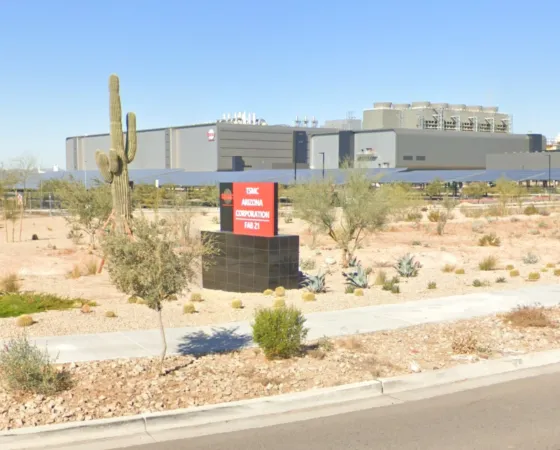 Fin 2020, TSMC achetait dans l'Arizona un terrain de 445 hectares pour y construire son campus industriel qui a tant fait parler ces dernières années. En janvier 2026, la firme participait à une enchère publique lancée par l'État d'Arizona concernant un autre terrain faisant lui 364 hectares et situ...
 Après des mois et des mois de rumeurs régulières, le retour de la NVIDIA GeForce RTX 3060 12 Go était finalement acté fin juin / début juillet, puisque des stocks sont réapparus par-ci par-là chez certains revendeurs. Il devient néanmoins 100 % concret en ce 15 juillet 2026, car Palit vient tout sim...
 Nous vous l'avions présenté lors du Computex 2026, le voilà finalement d'ores et déjà annoncé pour un lancement dans le courant du mois de septembre 2026. Le boitier HAF II 500 n'était pas juste un prototype dévoilé par Cooler Master pour faire parler de lui, mais un projet concret, sur lequel vous...
 En ce 14 juillet 2026, ASUS vient d'officialiser le lancement mondial de son nouveau fleuron en matière de mini-PC dédié au jeu : le ROG NUC 16 Edition 20. On entendait parler de lui depuis un long moment, ainsi que de toute la gamme "ROG Edition 20", mais surtout pour le marché chinois, où il a été...
 Les premières semaines de vie de la Steam Machine ne sont pas un long fleuve tranquille, et nombreux sont ceux qui attendent la moindre occasion de pouvoir lui cracher dessus, notamment sur les réseaux sociaux. Un "buzz à tout prix" qui a même infecté certains médias. Ainsi, quand un internaute, un...
 On le sait, AMD travaille activement à l'implémentation du Multi Frame Generation dans sa suite de technologies d'upscaling maison : le FSR. Il a même déjà été rendu public que le MFG sera partie intégrante du FSR Diamond de la future console XBOX, mais qu'en est-il des cartes graphiques AMD Radeon ...
 En janvier 2026, Thermaltake était arrivé au CES avec un prototype dont nous vous avions d'ailleurs brièvement parlé à H&Co : le View Cross TG. Rebelote lors du Computex début juin 2026, où le boitier est apparu avec quelques retouches esthétiques et pratiques, ainsi qu'un nouveau nom : le CAPO...
 C'est l'été, il fait chaud, et les Bons plans autour du refroidissement de nos PC s'enchainent ces derniers jours, ce qui tombe plutôt à pic. Aujourd'hui, nous nous adressons à ceux d'entre vous qui cherchent une valeur sûre du monde des watercoolings autonomes pour CPU (AIO). En disant cela, certai...