Vue lecture

James Webb Space Telescope Discovers How Black Holes Feed Themselves

"Thanks to the James Webb Space Telescope, astronomers have been given a glimpse of the mechanisms that supermassive black holes use to feed themselves," reports Space.com: The powerful cosmic titans get really puzzling when astronomers using the JWST spot them before the universe was even 1 billion years old. That's because the mechanisms by which black holes devour matter to grow and then merge to create even more massive black holes should take at least 1 billion years to achieve supermassive status. This is even more confusing because theories also say the most ravenously feeding black holes (and thus the fastest growing) should also push the matter they use for this growth away, in effect putting themselves on a diet. So, with all this in mind, how did supermassive black holes grow so rapidly in the early universe? One explanation suggests supermassive black holes push away gas, starving themselves as predicted, but also that this matter eventually cools and falls back to the black hole. That would allow for another period of feeding and thus growth. This explanation further suggests that as this gas cools down, it forms "streamers," or filaments, of gas just a few hundred light-years wide but which stretch thousands of light-years long. These would fall back to the center of the galaxy and form a swirling disk around its incumbent black hole, once again feeding it and triggering a new period of growth. This would then restart the jets from the black hole, which would again cut off the cosmic titan's food supply, allowing the whole process to begin once more. The process would in essence be a self-regulating cycle of feasting followed by fasting. However, the connection between these filaments and supermassive black holes has been elusive, meaning this mechanism has resisted confirmation. To solve the mystery of feasting black holes, the JWST turned its attention to a relatively close AGN situated at the heart of the central galaxy of the Centaurus Cluster, NGC 4696, located just 145 million light-years from Earth. The Hubble Space Telescope previously studied this galaxy, uncovering a strange, hook-shaped swirl of gas near the central supermassive black hole of NGC 4696. The JWST followed up this discovery by producing a detailed map of gas flowing at the heart of the galaxy. This revealed the hook-shaped feature is around 800 light-years wide and is composed of gas moving at incredible speeds of around 1.3 million miles per hour (600 kilometers per second). More excitingly, the swirl of gas appears to be connected to a vast filament of material falling in toward the central supermassive black hole. The team tested the JWST observations against a computer simulation, finding gas in the infalling filament scenario would indeed take a shape similar to that seen in NGC 4696. "JWST is now showing us the final link of this closed loop," team member Helen Russell of the School of Physics and Astronomy at the University of Nottingham in the U.K. said in the statement. "The vast filamentary network of gas flows ultimately funnels gas down to a disk that fuels the black hole." The team's research was published on Wednesday (July 16) in the Astrophysical Journal Letters. "We are finally seeing this self-sustaining cycle in action," team leader Julie Hlavacek-Larrondo of the Université de Montréal said in a statement.

Read more of this story at Slashdot.
  •  

Alien World Chemistry Found Inside Meteorite That Struck New Jersey Home

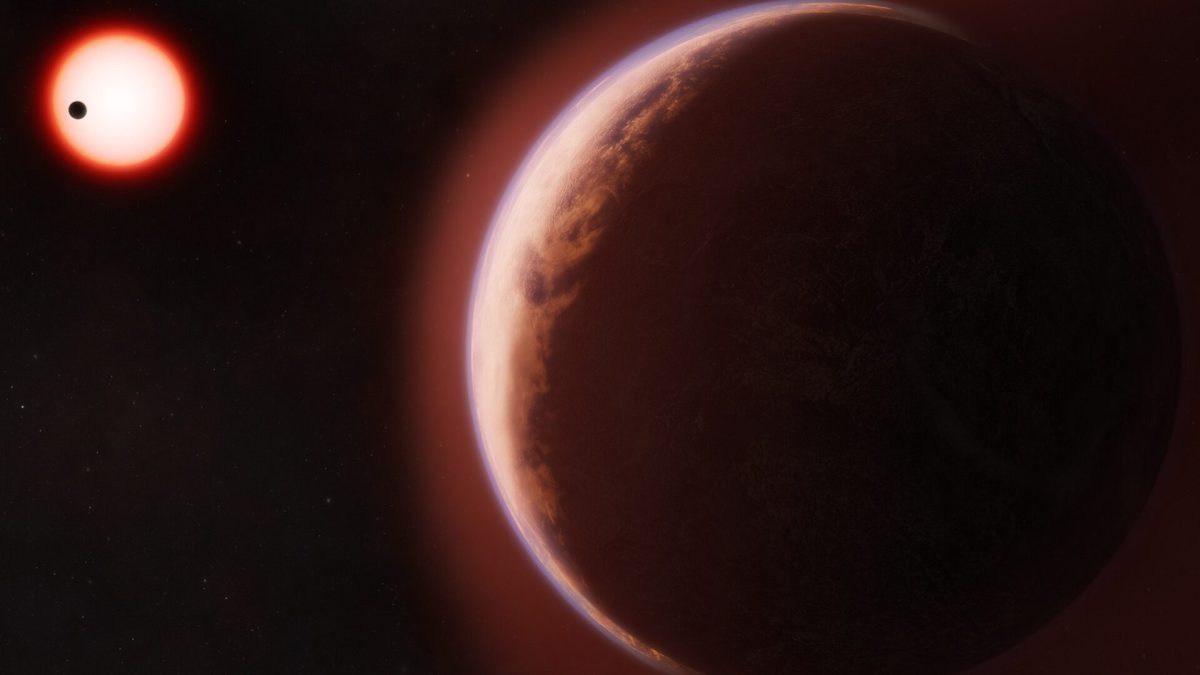
Researchers say a meteorite that crashed through the roof of a Hillsborough, New Jersey, home in 2024 contains unusually pristine evidence of salty fluids and organic chemistry from near the surface of a primitive asteroid. "A forensic study of the fragments revealed that they contained preserved bits from near the surface of a primitive asteroid, where it experienced concentrated salty fluids -- a process not previously known from this type of protoplanet world," said lead author and meteor astronomer Peter Jenniskens of the SETI Institute and NASA's Ames Research Center in California's Silicon Valley. Phys.org reports: According to paper co-author Mike Zolensky, a meteoriticist at NASA's Johnson Space Center in Houston, analysis of the Hillsborough meteorite found fragments that were more extensively altered by water on the meteorite's parent asteroid than is typically seen in CM2 carbonaceous chondrites. The analysis classified the specimen as a CM1/2 carbonaceous chondrite, an intermediate classification between petrographic types CM1 and CM2. [...] Zolensky and colleague JangMi Han found small salt-rich CM1 fragments within the Hillsborough meteorite, suggesting they originated from a near-surface region of the parent asteroid where liquid water evaporated and concentrated salts. They are now working to identify the salt minerals for comparison with similar phases found among samples returned to Earth from asteroids Ryugu and Bennu. The high concentration of salt in briny fluids can potentially create molecules crucial to life on Earth. Brines allow phosphate to remain in solution and can catalyze chemical reactions between organics and precipitate minerals. "Isotope studies of carbon and nitrogen suggest that primitive carbonaceous chondrites, including CM types, delivered organic matter to the early Earth," said cosmochemist Queenie Chan of Royal Holloway University of London, England, and biogeochemist Nana Ogawa of the Biogeochemistry Research Center at the Japan Agency for Marine-Earth Science and Technology. "The Hillsborough meteorite contained 1.8% by weight of carbon and 0.07% of nitrogen, and had carbon and nitrogen isotopes typical for CM-type meteorites." The meteorite contained a wide variety of soluble organic compounds, and its compositional range confirms that the Hillsborough meteorite was more altered by water than most other CM-type meteorites. "A high fraction of compounds were the product of organic chemistry with minerals," said organic mass spectrometry specialist Phil Schmitt-Kopplin of Technical University Munich. "We do not know if these magnesium organic compounds were contributed by brine chemistry or were simply left over from earlier impact shock processes." In living organisms, organometallic compounds are found in blood and used in photosynthesis. Among the soluble organic compounds were many amino acids, similar to those found in more moderately altered CM2 chondrites. Astrobiologist Danny Glavin of NASA's Goddard Space Flight Center in Greenbelt, Maryland, and his team in Goddard's Astrobiology Analytical Lab concluded that the delivery of amino acids, carboxylic acids and other soluble organic molecules by CM-type bodies may have contributed to the prebiotic organic inventory that preceded the emergence of life on Earth. Their analysis suggests the complex distribution of amino acids observed in the Hillsborough meteorite formed within the parent body, likely assisted by brine fluid chemistry. The findings have been published in the journal Science Advances.

Read more of this story at Slashdot.

  •  

L’IA rend l’édition scientifique « plus lente, de moins bonne qualité et plus chère »

Pas si productif, finalement ?
L’IA rend l’édition scientifique « plus lente, de moins bonne qualité et plus chère »

Alors que de plus en plus d’articles scientifiques sont créés en utilisant l’IA générative, le rédacteur en chef de Science, Holden Thorp, considère qu’elle fait plus de mal que de bien à l’édition scientifique.

Pour Holden Thorp, le responsable éditorial de toutes les revues de l’éditeur scientifique Science, l’arrivée de l’IA générative pousse l’édition scientifique dans une forme de « taylorisme ». « Ce défi exige encore plus d’efforts humains, ce qui rend l’ensemble du processus plus lent et plus coûteux », explique-t-il dans un édito de la revue phare.

L’année dernière, des chercheurs prévenaient que l’IA pourrait faire, au final, « plus de mal que de bien » à la recherche sans pour autant nier certaines avancées qu’elle pouvait amener. Fin 2025, submergée par les propositions d’articles générées par IA, la plateforme de prépublications arXiv décidait de modérer plus strictement. Elle a ensuite mis en place une mesure de suspension d’un an des chercheurs qui soumettent des articles erronés générés par IA.

Hallucinations, cherry picking et manipulation de données

Mais les revues et les conférences scientifiques sont aussi touchées par le phénomène. Holden Thorp ne nie pas la capacité des grands modèles de langage (LLM) à permettre des avancées scientifiques comme la prédiction des structures protéiques ou l’accélération de la découverte de nouveaux matériaux.

Mais il s’appuie sur un article scientifique récent qui explique que les LLM « éprouvent encore des difficultés dans les domaines qui exigent un jugement clinique nuancé, un raisonnement expérimental ou une réflexion et une synthèse approfondies en biologie » et sur l’existence des hallucinations (dont même les chercheurs d’OpenAI avouent avoir du mal à se débarrasser) pour expliquer que leur utilisation dans la rédaction d’articles scientifiques peut être problématique.

« De plus, certains de ces agents sont plus enclins que les humains à se livrer à ce qui s’apparente à des fautes professionnelles en matière de recherche, telles que la sélection arbitraire de données [cherry picking] et la manipulation des analyses statistiques jusqu’à l’obtention du résultat souhaité », ajoute-t-il, citant un autre article mis en ligne sur arXiv [PDF].

Et, alors que l’ajout d’erreurs par l’IA générative dans les articles demande une attention accrue, elle accélère aussi le rythme de soumission d’articles aux revues scientifiques et crée des goulots d’étranglement. Certains éditeurs, comme Elsevier, laissent facilement passer des erreurs parfois impardonnables. « La prolifération d’AI slop [informations erronées liées à l’IA] dans la littérature scientifique et, plus généralement, sur Internet, nuit à la crédibilité de la science », déplore le responsable éditorial de Science.

Le taylorisme arrive dans l’édition scientifique

Holden Thorp compare ce moment de l’arrivée de l’IA générative dans l’édition scientifique à l’arrivée du taylorisme dans l’économie américaine. Frederick Winslow Taylor « a encouragé les entreprises à recourir à la surveillance pour pousser les salariés à travailler plus dur et plus longtemps, une approche qui a épuisé et découragé les travailleurs et a conduit au transfert des connaissances et de tout pouvoir décisionnel des travailleurs vers la direction », explique-t-il.

Remarquons quand même que, si Holden Thorp déplore l’utilisation massive de l’IA générative dans les articles scientifiques, son article est lui-même parsemé de liens accompagnés de paramètres UTM laissant la trace de l’utilisation de ChatGPT (par exemple : https://arxiv.org/abs/2605.07723?utm_source=chatgpt.com).

  •  

L’IA rend l’édition scientifique « plus lente, de moins bonne qualité et plus chère »

Pas si productif, finalement ?
L’IA rend l’édition scientifique « plus lente, de moins bonne qualité et plus chère »

Alors que de plus en plus d’articles scientifiques sont créés en utilisant l’IA générative, le rédacteur en chef de Science, Holden Thorp, considère qu’elle fait plus de mal que de bien à l’édition scientifique.

Pour Holden Thorp, le responsable éditorial de toutes les revues de l’éditeur scientifique Science, l’arrivée de l’IA générative pousse l’édition scientifique dans une forme de « taylorisme ». « Ce défi exige encore plus d’efforts humains, ce qui rend l’ensemble du processus plus lent et plus coûteux », explique-t-il dans un édito de la revue phare.

L’année dernière, des chercheurs prévenaient que l’IA pourrait faire, au final, « plus de mal que de bien » à la recherche sans pour autant nier certaines avancées qu’elle pouvait amener. Fin 2025, submergée par les propositions d’articles générées par IA, la plateforme de prépublications arXiv décidait de modérer plus strictement. Elle a ensuite mis en place une mesure de suspension d’un an des chercheurs qui soumettent des articles erronés générés par IA.

Hallucinations, cherry picking et manipulation de données

Mais les revues et les conférences scientifiques sont aussi touchées par le phénomène. Holden Thorp ne nie pas la capacité des grands modèles de langage (LLM) à permettre des avancées scientifiques comme la prédiction des structures protéiques ou l’accélération de la découverte de nouveaux matériaux.

Mais il s’appuie sur un article scientifique récent qui explique que les LLM « éprouvent encore des difficultés dans les domaines qui exigent un jugement clinique nuancé, un raisonnement expérimental ou une réflexion et une synthèse approfondies en biologie » et sur l’existence des hallucinations (dont même les chercheurs d’OpenAI avouent avoir du mal à se débarrasser) pour expliquer que leur utilisation dans la rédaction d’articles scientifiques peut être problématique.

« De plus, certains de ces agents sont plus enclins que les humains à se livrer à ce qui s’apparente à des fautes professionnelles en matière de recherche, telles que la sélection arbitraire de données [cherry picking] et la manipulation des analyses statistiques jusqu’à l’obtention du résultat souhaité », ajoute-t-il, citant un autre article mis en ligne sur arXiv [PDF].

Et, alors que l’ajout d’erreurs par l’IA générative dans les articles demande une attention accrue, elle accélère aussi le rythme de soumission d’articles aux revues scientifiques et crée des goulots d’étranglement. Certains éditeurs, comme Elsevier, laissent facilement passer des erreurs parfois impardonnables. « La prolifération d’AI slop [informations erronées liées à l’IA] dans la littérature scientifique et, plus généralement, sur Internet, nuit à la crédibilité de la science », déplore le responsable éditorial de Science.

Le taylorisme arrive dans l’édition scientifique

Holden Thorp compare ce moment de l’arrivée de l’IA générative dans l’édition scientifique à l’arrivée du taylorisme dans l’économie américaine. Frederick Winslow Taylor « a encouragé les entreprises à recourir à la surveillance pour pousser les salariés à travailler plus dur et plus longtemps, une approche qui a épuisé et découragé les travailleurs et a conduit au transfert des connaissances et de tout pouvoir décisionnel des travailleurs vers la direction », explique-t-il.

Remarquons quand même que, si Holden Thorp déplore l’utilisation massive de l’IA générative dans les articles scientifiques, son article est lui-même parsemé de liens accompagnés de paramètres UTM laissant la trace de l’utilisation de ChatGPT (par exemple : https://arxiv.org/abs/2605.07723?utm_source=chatgpt.com).

  •  

C’était la plus grande crainte des astronomes : les miroirs géants en orbite approuvés par les autorités américaines 

Vue d'artiste de la constellation de Reflect Orbital

Le projet de satellites-miroirs de Reflect Orbital a été validé par les régulateurs américains. La promesse : apporter la lumière du Soleil à la demande, n'importe où sur la planète à tout moment de la nuit. Mais ce serait aussi une source majeure de pollution lumineuse, ce qui fait craindre le pire à la communauté scientifique.

  •  

Astronomers Find an Atmosphere On a Nearby Earth-Like Planet

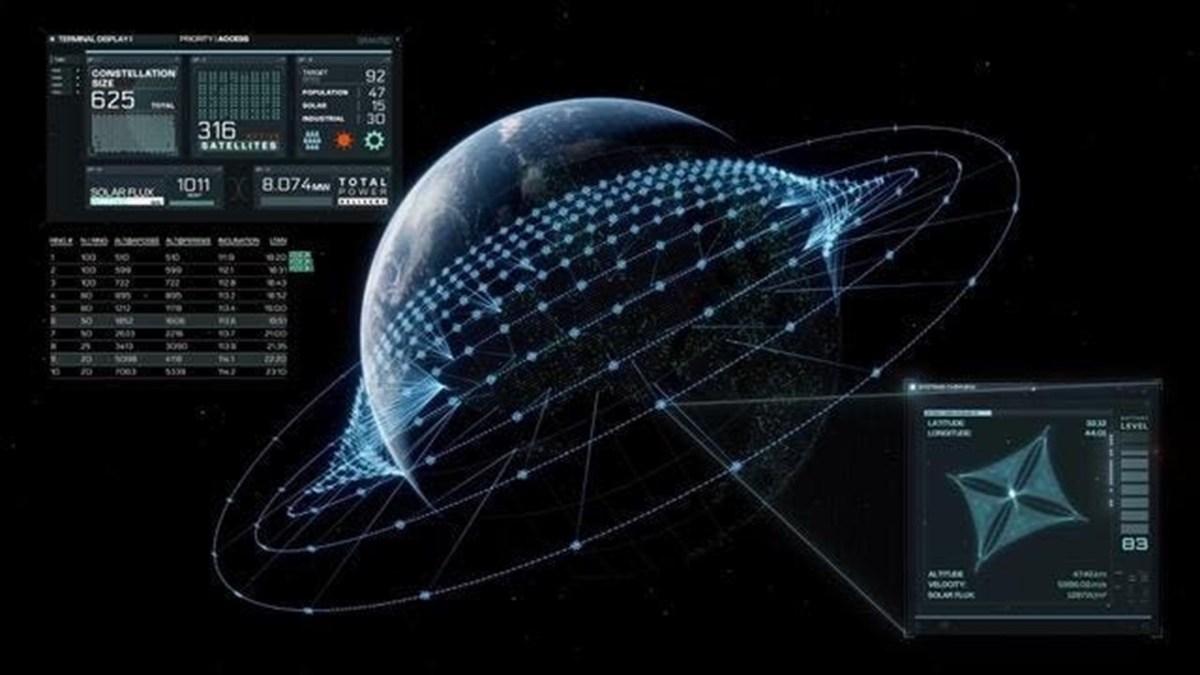
Astronomers have directly detected helium in the atmosphere of LHS 1140 b, a rocky exoplanet 48 light-years away that sits in its star's habitable zone. The finding marks the first confirmed atmosphere around a rocky, Earth-like planet in the habitable zone, strengthening the case that some planets orbiting red dwarfs can retain atmospheres and potentially support liquid water. "We have actually detected directly the helium present in the atmosphere itself, and that's the first direct detection for any rocky exoplanet, which is really exciting ... and then there's this added bonus that it's in the habitable zone, which is super exciting for astrobiology and habitability and searching for life," lead author Collin Cherubim, who recently earned his Ph.D. from Harvard University, told Space.com. "It feels kind of surreal." From the report: This exoplanet, or planet outside of our solar system, was first discovered in 2017 by a team led by astronomer Jason Dittmann who is now a co-author on this new discovery. "This planet was found like 10 years ago, and we're just now saying, okay, that's an atmosphere," Dittman told Space.com. "We're slowly narrowing the gap and checking these boxes ... we're finding a planet that's rocky, a planet that's of the right temperature and now ... it's like okay, we finally found one that has an atmosphere." And being a rocky planet, "there's definitely a surface ... it's made of rocks," Dittman said. What does the planet's surface look like? We can't say yet, but the researchers who found this planet's atmosphere think there's a good chance it could have water. While it orbits a red dwarf star, which is smaller and cooler than the sun, it orbits closer than we do to our star, maintaining a temperature that keeps the planet in the "Goldilocks zone" where liquid water could exist on its surface. "It probably also has a lot of water," Cherubim said. "If it has some amount of atmosphere that can provide a bit of a greenhouse effect, which we know that it does now ... it will very likely be what we consider to be habitable conditions on Earth, and conditions that would likely support liquid water." So is it Earth-like? While it's certainly not an Earth copy, this planet can be considered Earth-like in two main ways, Cherubim shared. One: its overall composition. The planet is rocky, likely with an iron core and (now we know) it has an atmosphere. And two: the planet's temperature is just right for liquid water, which is necessary for life at least as far as we understand it on our planet. [...] "I'm not claiming this planet has life," Cherubim made clear. With further investigation, scientists could better understand what else might be in this planet's atmosphere, and they could confirm if it has water. Further observations might not be able to confirm habitability or identify any life on the planet, but they could at least help us to better understand planets like this. The findings have been published in the journal Science.

Read more of this story at Slashdot.
  •  

Lors de l’éclipse solaire du 12 août 2026, il ne faut pas réutiliser vos vieilles lunettes de 1999

La France métropolitaine se prépare à un spectacle grandiose : l'observation de l'éclipse solaire du 12 août 2026. Cette éclipse de Soleil totale sera partielle dans l'Hexagone. Ne gâchez surtout pas cet instant unique en optant pour des lunettes trop anciennes, par exemple une paire distribuée pendant l'éclipse de 1999. Elles risqueraient de vous mettre en danger et de provoquer des séquelles à vie.

  •  

Scientists Find Sugar Deep In Our Galaxy

Astronomers have detected erythrulose, a sugar found in raspberries and self-tanners, in a gas cloud near the center of the Milky Way. While not essential for life itself, the molecule can convert into a form thought to be important for life's origins, adding evidence that key prebiotic ingredients may be widespread across the galaxy. The Associated Press reports: Using two dish-shaped radio telescopes in Spain, researchers collected data from a large gas cloud near the center of the Milky Way. They identified the sugar in gas form by comparing telescope signals to samples in the lab. It's the latest kind of sugar detected in space -- in a region crossed by NASA's twin Voyager, the farthest spacecraft to ever travel from Earth. Scientists have found interesting chemistry in our galaxy, including building blocks for genetic material and parts of the cell. They spotted a cousin to table sugar near the center of the Milky Way about 25 years ago, and black grains from asteroid Bennu retrieved by NASA's Osiris-Rex spacecraft yielded other sugars, including a key DNA ingredient. The latest sugar isn't essential for life, but can easily convert to a form that's thought to be crucial to kick-starting life on Earth. And it's one of the most complex sugars spotted so far, said astrophysicist Erika Hamden with the University of Arizona. The results were published in the journal Nature Astronomy.

Read more of this story at Slashdot.

  •  

Orbital Datacenter Plans Need an Environmental Review, FCC Told

Environmental groups want America's FCC "to slam the brakes on orbital datacenters," writes The Register. They're arguing for an environmental impact assessment for what could be 1 million satellites: Earthjustice, acting on behalf of DarkSky International, Environment America, and Public Employees for Environmental Responsibility (PEER), filed a petition this week... The filing doesn't target any single company. Instead, it asks the regulator to put the entire emerging orbital datacenter sector on hold while it assesses the cumulative effects of proposals from SpaceX, Starcloud, Blue Origin, Cowboy Space, and any similar applications that follow. According to the petition, those proposals collectively seek "well over a million datacenter satellites" in low Earth orbit.... " increasing the existing volume of satellites in low-earth orbit by multiple orders of magnitude." The groups argue that the FCC is trying to apply licensing rules written for much smaller satellite constellations to an entirely new class of infrastructure. "If ever a situation warranted a Programmatic Environmental Impact Statement [PEIS], it is this one," the petition says. It argues that a single review would allow the agency to examine "the risks, alternatives, needs, costs, and impacts of this sudden transformation of Earth's exosphere" before deciding whether any of the projects are in the public interest. The petition raises concerns about rocket launch emissions, pollutants released as satellites burn up during atmospheric reentry, depletion of the ozone layer, orbital debris, light pollution, impacts on wildlife, and interference with astronomy. It also argues that the combined effects of these constellations cannot be understood by evaluating applications one at a time.... "It is difficult to imagine a better example of multiple projects presenting essentially identical impacts and risks that compound synergistically and cumulatively than the present proposals..." The petition argues that the FCC's current approach, which generally treats satellite licenses as categorically excluded from detailed environmental review, is no longer fit for proposals measured not in dozens or thousands of spacecraft but in hundreds of thousands and, potentially, millions. If the FCC agrees, orbital datacenter operators will have a mountain of paperwork to clear before sending their hardware skyward.

Read more of this story at Slashdot.
  •  

FCC Approves Reflect Orbital's Space Mirror Satellite That Astronomers Hate

The FCC has approved (PDF) Reflect Orbital's Earendil-1 test satellite, which will use a 60-by-60-foot mirror to reflect sunlight back to Earth after dark. "The reflected light from the satellite is supposed to span an area about 3 miles wide on the ground," reports PCMag. It comes despite objections from astronomers and environmental groups who are concerned that the satellites will unleash intrusive light pollution. From the report: The approval is only for one satellite, dubbed Earendil-1, which is meant to test Reflect Orbital's technology for shining sunlight back to Earth. The satellite will boast a steerable thin-film reflector measuring about 60 feet by 60 feet, with the goal of powering solar farms at night or illuminating disaster-struck areas after dark to help rescue teams. Reflect Orbital envisions operating over 50,000 satellites by 2035, effectively surrounding the Earth with a fleet of mirrors. The proposal has faced stiff pushback from environmental groups and astronomers who are concerned that the satellites will unleash intrusive light pollution. The opposition has been so strong that the FCC received over 1,800 public comments on the application, many of them objecting to Reflect Orbital's plan for Earendil-1. [...] [T]he FCC approved the satellite, noting the grant is only "for a single demonstration satellite" to test an innovative technology that could advance American leadership in space. "The Communications Act states that it is the policy of the United States to 'encourage the provision of new technologies and services to the public,' and Reflect Orbital's demonstration satellite is an example of a potentially groundbreaking technology that the Commission has found is in the public interest to support," the order says. But on the most controversial aspect of the satellite, the FCC said the concerns around Reflect Orbital's solar reflector are "unrelated to the Commission's role in authorizing use of radiofrequency spectrum, and even if the Commission had authority to review and condition these operations (which it does not), these harms are unlikely to occur. In addition, the commission said that U.S. courts have blocked the FCC from using "a generalized public interest requirement beyond its statutory authority in regulating communications. Accordingly, the operations of a solar reflector in space would not be reviewed as part of the Bureau's public interest analysis." The regulator also noted that conducting an environmental review for the satellite went beyond its authority. Even if the FCC did have the power, the commission emphasized that the grant is for a single satellite, not 50,000. "The majority of these comments focus on a hypothetical plan to deploy tens of thousands of satellites, and those who argue the single satellite will harm the human environment do not demonstrate with specificity the potential harm will be caused by the single satellite, but rather rely on the same studies as the commenters objecting to a larger constellation," the FCC adds.

Read more of this story at Slashdot.

  •  

China Lands Rocket During an Orbital Launch For First Time

China successfully recovered an orbital rocket booster for the first time, landing the Long March 10B's first stage into a net-equipped sea platform after its maiden launch. "This mission marks my country's first successful controlled recovery of a launch vehicle and the world's first network-based recovery of a launch vehicle," the China Aerospace Science and Technology Corporation (CASC) announced via social media shortly after the launch. (Translation by Google.) "It signifies a historic breakthrough for my country in the field of reusable rocket technology and will lay a solid foundation for accelerating the improvement of my country's space access capabilities." Space.com reports: The Long March 10B is a two-stage rocket that stands about 207 feet (63 meters) tall, according to the state-owned CASC, the main contractor for China's space program. The vehicle's first stage burns kerosene and liquid oxygen (LOX) propellants, whereas the second stage uses LOX and liquid methane. In reusable mode, the Long March 10B can loft about 16 tons of payload to low Earth orbit. And the rocket flew with a payload on its debut liftoff -- a satellite that successfully reached "its predetermined orbit," according to the CASC update. That post did not provide any details about the spacecraft or its orbit. It did give a brief rundown of the first-stage recovery, however. "Approximately 6 minutes after the first and second stages separated, the first stage returned vertically and was successfully recovered at a sea-based recovery platform using a net system," CASC officials wrote, noting that launch occurred from the Hainan Commercial Space Launch Site on Friday at 12:15 a.m. EDT (0415 GMT; 12:15 p.m. Beijing time.) "The launch and first-stage recovery missions were a complete success."

Read more of this story at Slashdot.

  •  

Une fusée chinoise réutilisable envoyée avec succès : “La course à la Lune s’intensifie”

Le lancement d’une fusée Longue Marche 10B et la récupération de son lanceur sont salués par “The South China Morning Post”. Pékin reprend du galon face aux États-Unis, affirme le titre hongkongais. Et l’envoi d’une mission habitée vers la Lune est à portée de main.

© Photo/AFP

Le décollage d’une fusée Longue Marche 10B, depuis Hainan, dans le sud de la Chine, le 10 juillet 2026.
  •  
❌