Vue lecture

Samsung’s new foldable gets an “Ultra” makeover

The company has upgraded its existing folding phones, and added a new model in-between them.

The rear camera bump on a Samsung Galaxy Z Fold 8 Ultra, showing its three cameras.Samsung

Samsung has announced three new folding phones, updating its existing models and adding a new one to its lineup, complete with a new form factor.

The flagship model is getting a rebrand. Formerly known as the Galaxy Z Fold series, this year’s entry is called the Galaxy Z Fold 8 Ultra. Like its predecessor, it has a 6.5″ display on the outside, and an 8″ one on the inside. As you’d expect from an “Ultra” phone, it has a triple-camera setup. The main “wide” and telephoto cameras are unchanged from the ones found on the Galaxy Z Fold 7, but the ultrawide has been upgraded from a 12MP Type 1/2.5 (25mm²) sensor with an F2.2 lens, to a 50MP one with an F1.9 lens, which Samsung says will let in 33% more light.

Diagram showing the different cameras for the Samsung Galaxy Z Fold 8 Ultra.
The camera hardware on the Galaxy Z Fold 8 Ultra is largely the same as that of the Galaxy Z Fold 7, but the ultra wide camera has been upgraded with a higher-resolution sensor and faster lens.
Samsung

The company says it has enhanced its HDR mode for the main camera, as well as its low-light “Nightography” mode. The phone’s 8K video also now records in the APV codec, which Samsung says “gives users greater flexibility and quality for editing and production workflows.”

Aside from the upgraded ultrawide camera, Samsung has included the new Snapdragon 8 Elite Gen 5 processor with 12 or 16GB of memory (dependent on what storage size you get), along with a higher-capacity 5000 mAh battery, up 600 mAh from the one in the Z Fold 7. The company has also re-engineered the phone’s internal screen to make the crease less visible, while making it brighter and nicer-feeling to open. And despite all this, it weighs the same 215g (7.6oz) as its predecessor, and each half is a hair thinner at 4.1mm.

None of these improvements come cheap, though. Last year’s Z Fold 7 was $100 more than its predecessor, and Samsung has bumped the price again, with the Z Fold 8 Ultra starting at $2100 for the 256GB model.

Two hands holding two folding phones. On the left is a tall, thin one, and on the right is a wider, shorter one.
The Galaxy Z Fold 8 Ultra (left) retains more or less the same form factor that the series has always had. The new Galaxy Z Fold 8, meanwhile, adopts the “passport” size and shape that’s been popularized by other phone makers like Oppo and Google (and which Apple is rumored to adopt with its folding phone).
Samsung

There is, however, now a new option below it: the Z Fold 8, which takes on a slightly different form factor. While the Ultra has a relatively tall and narrow 3:7 outer screen and a nearly-square 1.11:1 inner screen, the new model’s cover is a wider, shorter 10:16, and the inner display is 4:3. The Z Fold 8’s outer display has a 5.5″ diagonal, while the inner one is 7.6″.

While the Z Fold 7 (which was, remember, moreso the predecessor to the phone now called “Ultra”) marked a turning point as a folding phone that didn’t come with big compromises to its camera system compared to its candybar counterpart, that trend hasn’t continued with the Z Fold 8. It drops the telephone camera entirely, and its main 23mm equiv. camera is smaller, slower and lower resolution than the one on the Ultra. The ultrawide, however, is the same 50MP model.

Galaxy Z Fold 8 UltraGalaxy Z Fold 8Galaxy Z Fold 7
Main camera200MP
Type 1/1.3 (72mm²)
24mm equiv.
F1.7 (F6 equiv.)
50MP, 23mm
Type 1/1.57 (50mm²)
23mm equiv.
F1.8 (F7.6 equiv.)
200MP
Type 1/1.3 (72mm²)
24mm equiv.
F1.7 (F6 equiv.)
Ultrawide camera50MP
Type 1/2.5 (25mm²)
F1.9 (11.5 equiv.)
50MP
Type 1/2.5 (25mm²)
F1.9 (11.5 equiv.)
12MP
Type 1/2.5 (25mm²)
F2.2 (F13.3 equiv.)
Telephoto camera10MP
Type 1/3.94 (10mm²)
67mm equiv.
F2.4 (F22.7 equiv.)
10MP
Type 1/3.94 (10mm²)
67mm equiv.
F2.4 (F22.7 equiv.)
Size (Folded)158 x 73 x 8.9mm124 x 82 x 9.7mm158 x 73 x 8.9mm
Weight215g201g215g
Battery5000mAh4800mAh4400mAh
Price$2100$1900$2000

Not everything is a downgrade compared to the Ultra, though. The displays may be a different size, but are still just as bright, and the Z Fold 8 has the same processor and storage options. And while it’s thicker both folded and unfolded, it’s also a touch lighter. Even if you don’t prefer the more passport-style form factor, though, the price may be slightly more attractive than the Ultra’s, as the phone starts at “just” $1900.

Two pink Samsung Galaxy Z Flip 8 folding phones on a table, displaying some of the different camera modes.
The Z Flip 8’s camera hardware is largely unchanged; most of its improvements come from software.
Samsung

Finally, Samsung has also updated its Z Flip 8, the smaller model that unfolds to be a similar size to a more traditional smartphone. The company doesn’t seem to have made any changes to its cameras – it still has a wide 50MP Type 1/1.57 (50mm²) and ultra-wide 12MP Type 1/3.2 (15mm²) – but it’s lighter and thinner than its predecessor. The company has also updated the processor to that same Snapdragon model (though there’s no option for one with 16GB of RAM like with the larger models), and has made improvements to the front screen’s interface, making it easier to use if you want to avoid opening your phone and potentially getting sucked in by feeds and apps.

The Z Flip 8 retains its position as Samsung’s least expensive foldable, but its $1200 price tag represents a $100 increase over its predecessor’s.

The Z Fold 8 Ultra, Z Fold 8, and Z Flip 8 are all available to pre-order today, and are set to become available on August 7th.

About the Author: Mitchell started taking pictures at 10 and hasn’t stopped since. It’s been a wide-ranging adventure, spanning a wide variety of genres and locales, and occasionally dipping into fascinations with video and filmmaking. They honed their technical knowledge doing documentation, programing and QA, writing for The Verge, and just generally messing around on the computer to see what breaks.

Want to stay up to date on the latest product news and releases? Add DPReview as a preferred source to ensure our independent journalism makes it to the top of your Google search results.

add as a preferred source on google

  •  

Micro Four Thirds may be getting a new champion

Viltrox seems set to start selling lenses for the mount.

The word "Viltrox" written in white italics on a black backgroundViltrox

Viltrox seems poised to start selling lenses for Micro Four Thirds, according to a post on social media platform Xiaohongshu. It shows a puzzle piece about to be slotted into a hole labeled “M4/3,” and teases an announcement coming on July 23rd. While the company hasn’t posted about it on its Instagram pages, the Viltrox US account did comment on a Reddit post about the teaser, saying “Something new coming soon.”

The teaser doesn’t say what to expect, beyond having hashtags that translate to “lens.” But the idea of getting a Micro Four Thirds lens from Viltrox is exciting on its own; the company has become a major player in the world of third-party lenses, and it’s an interesting sign that it’s looking to throw at least some of its weight behind the mount, as we haven’t seen many others do so for a while.

Viltrox

There are a wide variety of companies, well known and not, making manual focus lenses for the system, and a few that continue to sell a handful of autofocus options, too. But beyond Panasonic and OM System, who also make cameras using the mount, there haven’t been any new Micro Four Thirds lenses from a major player in quite some time. Sigma used to have some options for the system, which you can still buy, but they haven’t been updated like we’ve seen with the company’s APS-C and full-frame offerings.

Of course, there are many ways to release a lens for a system. While Viltrox could come out with a lens custom-designed for Micro Four Thirds, with a sensible focal length and a small, compact size. It could also, however, just be swapping out the mount on one of its existing APS-C or, worse, full-frame designs (not that such a move would be unheard of). Even if it is a lens with a larger-than-neccesary image circle, though, it’s still a start. If whatever Viltrox releases ends up being successful, it could lead to the brand giving Micro Four Thirds more attention.

Or it could wind up being something completely unexpected, like a camera that uses the mount. It’s hard to put anything past companies at this point. Whatever it is, we won’t have to wait too long to find out.

About the Author: Mitchell started taking pictures at 10 and hasn’t stopped since. It’s been a wide-ranging adventure, spanning a wide variety of genres and locales, and occasionally dipping into fascinations with video and filmmaking. They honed their technical knowledge doing documentation, programing and QA, writing for The Verge, and just generally messing around on the computer to see what breaks.

Want to stay up to date on the latest product news and releases? Add DPReview as a preferred source to ensure our independent journalism makes it to the top of your Google search results.

add as a preferred source on google

  •  

À défaut d’une date de sortie, RetroSpace dévoile de nouveaux extraits de gameplay

Désormais édités par Kwalee (à qui l’on doit notamment la récente fermeture du studio derrière Luna Abyss), les devs de The Wild Gentlemen ont profité du Convergence Games Showcase pour dévoiler du gameplay de RetroSpace, un immersive sim d’horreur disco-punk à la première personne se déroulant dans l’espace. On y découvre moult façons d’utiliser l’environnement et les objets présents à notre avantage. Par exemple, un simple extincteur peut devenir un jetpack improvisé et votre vaporisateur peut être utilisé pour stun l’ennemi ou créer un piège électrique en arrosant le sol près d’un boîtier sous tension. Concrètement, il ne tient donc qu’à vous de découvrir les possibilités offertes et de résoudre de manière créative une situation donnée. Présenté comme ça, le tout a l’air plutôt fun et on a envie d’en découvrir davantage. Lors du dernier Steam Neo Fest, les membres de la rédac avaient plutôt apprécié la démo pour son univers et son gameplay, rappelant notamment sur bien des aspects System Shock 2.

Du côté du synopsis, la station spatiale dans laquelle vous vivez est entrée dans un trou noir et suite à ce fâcheux incident, une partie de l’équipage s’est transformée en monstres. Dès lors, pour sauver votre peau, vous décidez de trouver un moyen de rejoindre la Terre, quitte à condamner l’humanité. Pour le moment, RetroSpace n’a toujours pas de date de sortie. En attendant de nouvelles infos, vous pouvez toujours ajouter ce dernier à votre liste de souhaits Steam, si vous êtes intéressés.

  •  

Sony’s new cinema camera is coming tomorrow

“Lighting the way forward”

The silhouette of a camera with a lens and top handle.Sony

Sony has released a teaser for a new product announcement in its cinema line. As always, the video is very short on details, showing just the silhouette of a camera, tally lights blazing and a top handle attached, and the tagline “lighting the way forward.”

The company is no stranger to posting teaser videos, but, unlike with the one for what turned out to be the RX10 V, it isn’t giving a lot of time for hype to build. The video says the announcement is coming on July 22nd at 7 AM PT (15:00 BST), which is just around 24 hours after the video was published. Whatever the camera is, it seems we won’t have to wait long to get more details.

About the Author: Mitchell started taking pictures at 10 and hasn’t stopped since. It’s been a wide-ranging adventure, spanning a wide variety of genres and locales, and occasionally dipping into fascinations with video and filmmaking. They honed their technical knowledge doing documentation, programing and QA, writing for The Verge, and just generally messing around on the computer to see what breaks.

Want to stay up to date on the latest product news and releases? Add DPReview as a preferred source to ensure our independent journalism makes it to the top of your Google search results.

add as a preferred source on google

  •  

Adobe will tell you if an out of focus picture is your fault (for some cameras)

ACR has a new feature that lets you see where your camera’s focus point was set to

adobe photoshop wordmarkAdobe

The latest version of Adobe Camera Raw, 18.4.1, started rolling out a few weeks ago, but it quietly introduces a feature that I’ve personally wanted for years: the ability to see where your camera’s focus point was set to. This makes it much easier to tell whether it was your camera’s autofocus system that messed up, or if you simply put the focus point in the incorrect place (which is especially important when, say, you review cameras for a living).

The way it works is relatively simple (if a bit of a finger workout): you open up a Raw in ACR, and press Ctrl + Alt + Shift + O on Windows, or Command + Option + Shift + O on Mac. You can also right click on the image and select the “Show Autofocus Points” option. After you do, ACR will draw a red box around the camera’s selected focus point or area.

Screenshot of Adobe Camera Raw. It's displaying a photo of a dog, which has a red box drawn over its eye to show the selected autofocus mode.Screenshot: Mitchell Clark

While the feature isn’t a fool-proof way of assigning blame for an out-of-focus image – if the box is in the wrong place, it could either mean that you put it there in error, or that your camera’s tracking failed – it’s still very nice to have access to this information without having to view it on your camera’s screen, or in camera makers’ own software. Sometimes it’s just nice to be able to check where you were trying to focus, or, to pick a random example, to see where the photographers from your favorite camera review site were focusing in the images they uploaded to their sample galleries.

Screenshot of Adobe Camera Raw. It's displaying a photo of a dam, which is overlaid with a grid of boxes, some of which are highlighted in red to display the selected autofocus points

Currently, the feature is available for Raw files from Canon, Sony and Nikon cameras. We confirmed that we weren’t able to see autofocus points from the most recent cameras from any other manufacturer, so hopefully Adobe will expand the models it’s available to in the future. We’d also hope that this feature, which is currently only available in Photoshop’s ACR module, makes its way to Lightroom and Lightroom Classic, too.

ACR 18.4.1 also adds a “presentation” mode that shows the photo you’re editing full-screen with a customizable matte around it, and which lets you use the arrow keys to move through the photos you currently have open within the tool. It also lets you use the company’s AI-powered “Generative Expand” feature to fill transparent edges, and improves bidirectional gradient masks, adding support for feathering and giving you more precise control over them. You can download the update through the Creative Cloud app, or via the standalone installer.

About the Author: Mitchell started taking pictures at 10 and hasn’t stopped since. It’s been a wide-ranging adventure, spanning a wide variety of genres and locales, and occasionally dipping into fascinations with video and filmmaking. They honed their technical knowledge doing documentation, programing and QA, writing for The Verge, and just generally messing around on the computer to see what breaks.

Want to stay up to date on the latest product news and releases? Add DPReview as a preferred source to ensure our independent journalism makes it to the top of your Google search results.

add as a preferred source on google

  •  

Dieathlon : oui, NoFrag se met à couvrir les jeux de ski

Vous souvenez-vous de vos après-midi d’hiver passées sur votre bonne vieille PS3 devant Shaun White Snowboarding, ou encore plus récemment de Steep, qui offrait des sensations de glisse et de liberté inégalées alors que vous y traversiez les Alpes en hors-piste ? Eh bien sachez que Dieathlon offre une expérience qui n’a à peu près aucun point commun avec ces jeux-là. Non, ici, il s’agit de survivre à des hordes de monstres assoiffés de sang alors que vous dévalez une montagne à toute vitesse en shootant tout ce qui bouge. Original, non ?

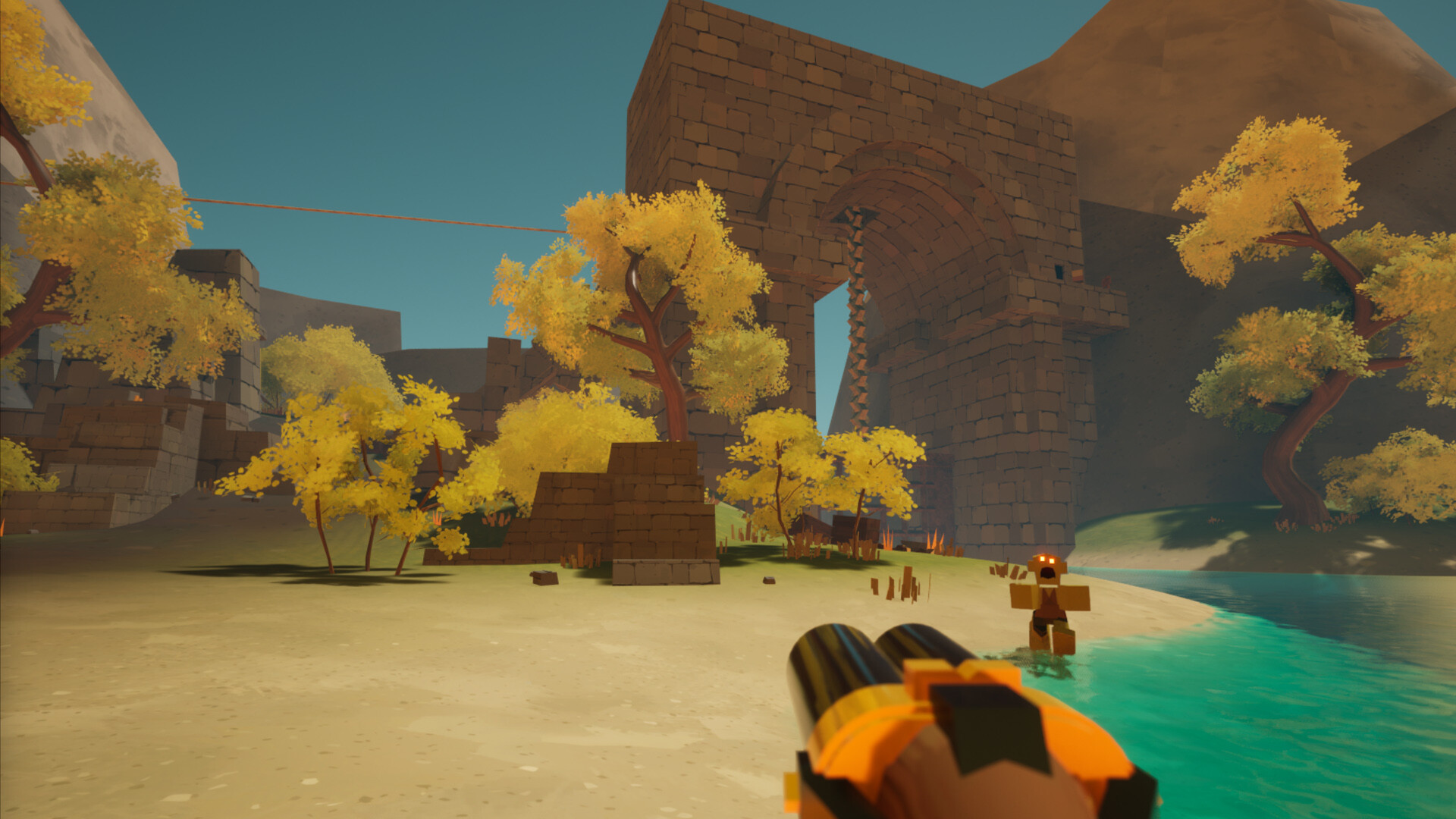
Capture d'écran nº 0

Au développement, on retrouve le petit studio Long Void Games, qui en est pour ainsi dire à son coup d’essai, et a récemment dégoté l’éditeur Loopr Partners (uniquement connu pour Zombutcher, un jeu plutôt glauque bourré d’AI slop). Et si, certes, on comprend au premier coup d’oeil que les visuels rugueux ne sont pas ceux d’un AAA, le concept du titre pourrait faire mouche si bien exécuté. Car oui, côté gameplay, les sensations n’ont pas l’air trop mauvaises. On pourrait presque qualifier le jeu de rail shooter, mais en vue subjective et avec une bonne dose de nervosité.

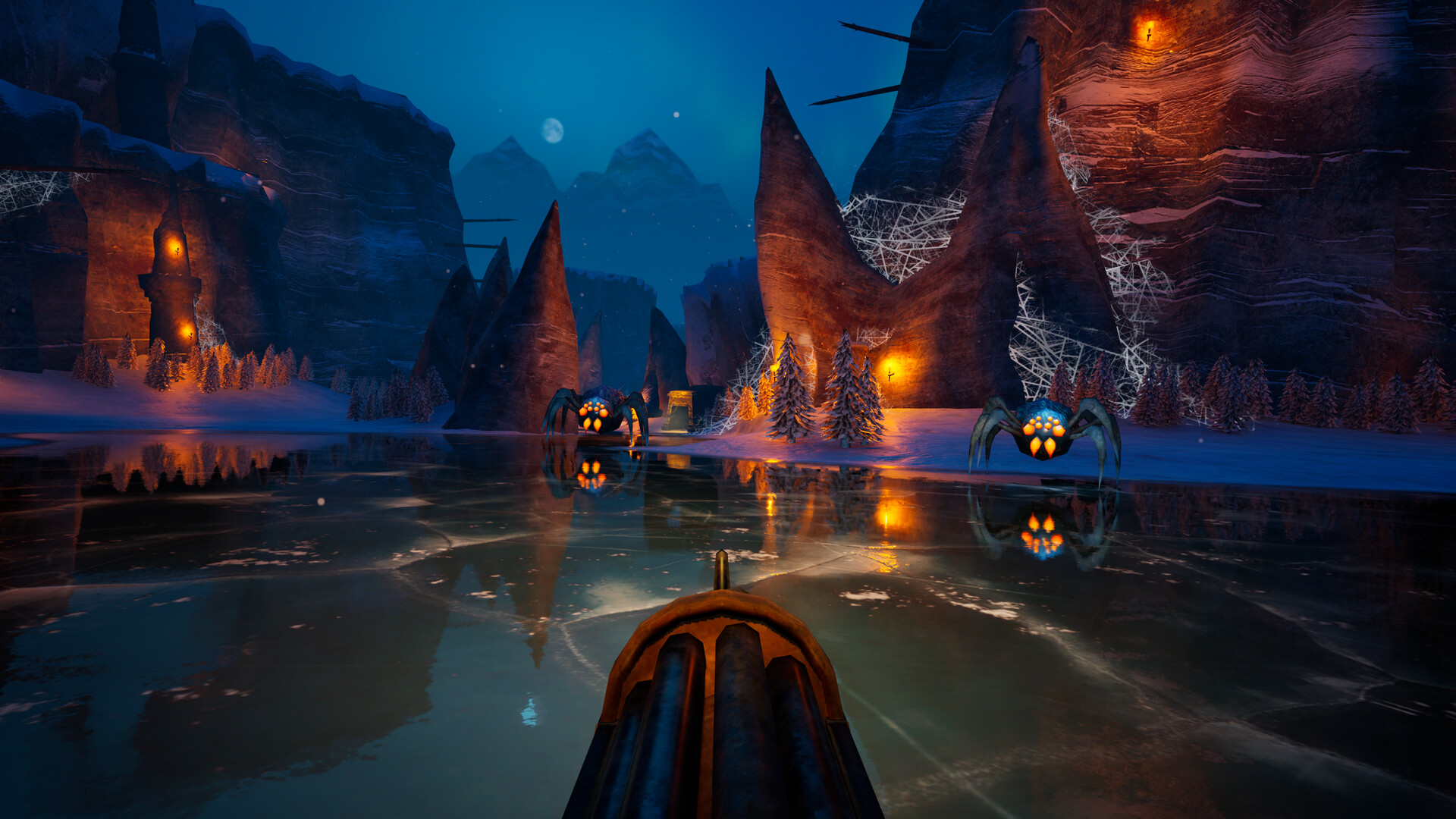
Capture d'écran nº 2

Même si le déroulé d’une session reste légèrement floue, il semble que l’expérience s’articule selon un système inspiré des roguelikes, puisque des « runs » sont évoquées, elles-mêmes composées de niveaux et entrecoupées par de nouvelles compétences à débloquer. Avec différents passages secrets et embranchements au cours des zones, on peut s’attendre à une bonne rejouabilité. Ainsi, d’une façon similaire à une campagne de Star Fox, chaque run pourra varier de la précédente en empruntant des niveaux différents et en tentant d’optimiser son score.

Capture d'écran nº 1

Difficile de dire si Dieathlon méritera notre argent à ce stade. La perspective de dévaler les pistes un shotgun à la main et de se défouler un bon coup donne envie de s’essayer au titre, mais il y a de quoi se demander s’il saura nous tenir en haleine plus d’une poignée d’heures. C’est donc avec autant de prudence que de curiosité que nous resterons à l’affut des prochaines nouvelles au sujet du projet, qui devrait pointer le bout de son nez sur la fin de l’année. Quoi qu’il en soit, si le jeu vous intéresse, on vous invite à jeter un oeil à sa page Steam et à l’ajouter à votre liste de souhaits.

  •  

US retroactive ban could wipe Xtra and other suspected DJI clones from shelves

A new enforcement push goes after suspected DJI clones and leans on the FCC’s recently expanded power to shut off previously‑approved gear.

Compact handheld gimbal camera labeled “XTRA,” floating against a soft yellow background, with its rear screen showing a person in an orange jacket raising an arm toward snow‑covered mountains.Xtra

The U.S. Federal Communications Commission (FCC) is proposing a retroactive ban on suspected DJI‑linked drones and cameras, affecting products sold under brands like Xtra and Skyrover. The move escalates last week’s announcement of proposed $25,000 fines against eight companies that allegedly ignored FCC inquiries about DJI‑related gear marketed in the U.S., penalties that were technically for non‑response rather than the hardware itself.

In the past, the FCC’s decisions generally couldn’t touch products that were already approved, but a recent rule adjustment changed that. As The Verge reported, in late 2025, the Commission amended its equipment‑authorization rules so it can now restrict the import and sale of previously approved devices from companies on its national‑security “Covered List,” without formally revoking those original approvals or disabling gear that’s already in users’ hands.

DJI itself was added to the Covered List in late 2025 after a national‑security review under the Secure and Trusted Communications Networks Act, a designation that already blocks new DJI radio‑equipped products from receiving FCC approval in the U.S.

A yellow drone and its accessories are on a white background.
Skyrover’s X1 drone has drawn scrutiny for its close resemblance to DJI’s Mini‑series designs and its ties to SZ Knowact, a manufacturer named in the FCC’s DJI‑linked enforcement action.
Skyrover

This could be the first time the FCC uses its new power, with potential bans on products from Cogito, Fikaxo, Lyno Dynamics, Skyhigh Tech, Spatial Hover, SZ Knowact, WaveGo, Xtra and XAG. The Commission says those products “pose an unacceptable risk” to U.S. national security because they are suspected of containing DJI‑designed radio components under different brand names.

Those who already own products from the at-risk companies won’t be impacted by the FCC’s decision and can continue using them. However, affected drones and cameras are expected to disappear from major online retailers and from the brands’ own sites if the order is finalized, and unsold inventory in the U.S. could need to be written off.

The FCC is accepting public comments for 30 days, so the ban won’t take effect immediately. The Commission says it will consider “specific evidence” that might show the products are compliant, though, as The Verge points out, the organization doesn’t have a great track record of listening to public sentiment. If you would still like to voice your opinion, you can do so via the FCC’s Electronic Comment Filing System on the FCC website.

Want to stay up to date on the latest product news and releases? Add DPReview as a preferred source to ensure our independent journalism makes it to the top of your Google search results.

add as a preferred source on google

  •  

You can now see fewer ads on DPReview. Here’s how

It only takes one step, but there’s more you should know

fewer ads text in white pill shapeDPReview

It’s been about two weeks since we launched the new DPReview website, and our team is still hard at work. Along with fixing some critical behind-the-scenes bugs, we’ve been collecting your feedback and have already made some fixes where we could act quickly, with much more to come.

In the whirlwind since launch, however, there’s one new feature we haven’t talked about much: it’s now possible to see fewer ads on DPReview.

Ads were a source of frustration on the legacy site, and the new site gives you an easy way to cut down on them.

How to see fewer ads

It’s simple: use DPReview while logged in. That’s it. Logged-in readers see fewer ads, particularly the most disruptive kinds, like motion-heavy and video ads.

To be clear, this isn’t an ad-free experience; you’ll still see ads, just fewer of them. Consider it our way of thanking logged-in readers for your support as we continue to improve the ad experience for everyone.

Don’t have a DPReview account? Now’s a great time to create one. Just click the Register link to get started.

Website interface displaying camera news articles with accompanying images and brief descriptions on the left, and a navigation menu on the right listing sections such as News, Reviews, Forums and Sign In.
The Sign In link appears in the upper-right corner of the website (L) or in the mobile menu (R). You can also register to create a new account.

We know nobody loves ads. Believe me, we don’t either, but they’re a necessity to keep the site running. It costs real money to operate DPReview, and advertising is an important part of how we cover those costs. It’s not our only source of revenue, but it’s one of the things that lets us offer all of our content for free, whether you visit every day or once in a blue moon.

We also get why people use ad blockers. The reasons aren’t lost on us. We just ask you to keep one thing in mind: when you block ads, you’re not only preventing us from earning revenue, you’re actively costing us money. A photography-rich site uses a lot of bandwidth, and that’s a big part of our expenses. Every time you load our content without ads, we lose money, which makes it harder to do things like pay our writers and maintain our servers.

So if you’ve been browsing with an ad blocker, we ask that you try the new site without it (while logged in). We think you’ll find the ads less intrusive than they were on the legacy site, and you’ll be helping us stay on the internet.

In case you missed it

If you haven’t seen our earlier coverage about the new website, a few links are worth your time:

Gear Patrol founder and CEO Eric Yang – a DPReview user for over two decades – wrote about why we needed to rebuild the site from the ground up, including some helpful historical perspective.

If you want to track improvements as we make them, report a bug or usability issue, or just discuss the new site in our forums, we’ve published a guide on how to do that.

Finally, thank you for bearing with us as we improve the site. We know some things aren’t working as expected and that there’s plenty left to fix and improve. We appreciate your patience while our team works overtime to address those issues so we can remove the beta logo from the site.

About the Author: Dale Baskin is a professional photographer, writer, and filmmaker based in the Pacific Northwest. He is the Managing Editor of DPReview.com.

Want to stay up to date on the latest product news and releases? Add DPReview as a preferred source to ensure our independent journalism makes it to the top of your Google search results.

add as a preferred source on google

  •  

Peak Design’s latest product is the start of a new ecosystem

The Peak Design Field Bracket is designed as a modular system with optional accessories for greater versatility.

An over-the-shoulder view of a photographer adjusting a tripod-mounted camera to photograph a vertical product against a white backdrop.Peak Design

Peak Design’s latest product is much more than just a standard L-bracket.

After becoming a go-to brand for tripods and various ways to carry your camera around, Peak Design is tackling the next piece of the puzzle: the L-bracket. As is its usual style, the company isn’t content with simply making a piece of hardware that makes it easy to switch between portrait and landscape shooting. Instead, it has built the Field Bracket as a modular system, launching it alongside additional accessories that aim to solve multiple issues.

The Field Bracket takes design cues from the “Field” tripod plate the company released last year. Like the Field Plate, the L-bracket doesn’t require a tool for installation. Instead, it uses the company’s “Field Latch” mechanism, which features a tab that pops up with the press of a button, turning into a thumb-drive handle. That means no more relying on having a hex tool on hand at all times.

Close-up of hands adjusting an extendable L-bracket or cage attached to a mirrorless camera with a large lens.
The bracket is modular, so it can be used as a low-profile base plate as well. It’s designed to fit into Arca-style tripod heads without a separate plate.
Peak Design

The tool‑free design makes it quick and easy to attach the part of the bracket that goes up the side of the camera, transforming from a simple base plate into a full L‑bracket for shooting in portrait orientation on a tripod. Users can also adjust the upright position to provide room for tethering cables, making it easier to use in a studio setup. The Field Bracket is camera-specific, with versions for select Sony, Canon, Nikon, Fujifilm and Leica camera systems.

Peak Design says that the Field Bracket is the base of a modular system of accessories. In that spirit, it’s also launching the Beacon Finder Tag, a smaller version of its card-sized tracker that it released with its wallet system and which ties in with Apple’s Find My ecosystem. Peak Design says the tag is the first tracker specifically designed to fit in Arca-compatible camera plates, offering a discreet way to keep track of camera gear.

An exploded-view product rendering shows a white mirrorless camera with various black accessories.
The Cheese Plate, Hand Strap and Beacon Finder Tag are all optional accessories sold separately.
Peak Design

The company has also created a few additional new accessories for the Field Bracket. Its Cheese Plate adds 1/4″-20, 3/8″-16 and cold shoe mounting points for adding accessories like lights, mics, monitors and more. There’s also a hand strap, making it easier to work handheld with it attached to your camera. No matter which accessories are attached, Peak Design says all your camera’s ports and controls will remain easily accessible. It also allows full integration with existing Peak Design accessories, such as its camera straps and Capture Clip.

As is typical for Peak Design product launches, the new gear will first be available via Kickstarter (its 17th such launch). The Kickstarter campaign will allow users to purchase the system at a discount before the retail release. The camera-specific Field Brackets have an MSRP of $150, while the Cheese Plate, Hand Strap and Beacon Finder tag will be sold separately, starting at $40.

Press release:

Peak Design Rethinks the Traditional L-Bracket with New Field Bracket System

A tool-free, modular L-bracket system that gives photographers flexibility on and off their tripod

San Francisco, CA (July 21st, 2026)Peak Design, Peak Design, a global leader in camera accessories and everyday carry solutions, is proud to announce Field Bracket™, a modular L-bracket system that eliminates many of the compromises of traditional L-brackets. While L-brackets have become indispensable for quickly switching between portrait and landscape tripod shooting, they’ve remained largely unchanged, fixed in form, and often at odds with the rest of a photographer’s kit. Peak Design’s Field Bracket rethinks this accessory category with a modular design that adapts as photographers’ needs change.

At the heart of Field Bracket is a camera-specific baseplate precision-machined from recycled aluminum to hug the contours of each supported camera body. Using Peak Design’s custom Field Latch™ mechanism, photographers can attach or remove Field Bracket’s upright in seconds without tools, transforming the system from a low-profile baseplate into a full L-bracket for portrait tripod shooting. The upright can also be repositioned to provide clearance for tethering and other connected cables, allowing photographers to keep their camera mounted on a tripod without disrupting their workflow.

Field Bracket serves as the foundation for an expandable system. The optional Beacon Finder Tag is the first tracker specifically designed to fit inside an Arca-compatible camera plate, offering a discreet way to help locate and secure camera gear without the bulk of conventional tracking solutions. For added versatility, photographers can replace Field Bracket’s upright with the optional Cheese Plate, creating a lightweight rig with 1/4″-20, 3/8″-16, and cold shoe mounting points for lights, microphones, monitors, and other accessories. For handheld shooting, users can also add the optional Hand Strap, which integrates directly with Field Bracket to provide greater comfort and security. Across the system, Field Bracket preserves access to camera ports and controls while cleanly integrating with Peak Design Capture, Peak Design camera straps, and a wide range of third-party accessories.

“The best camera accessories disappear into your workflow until you need them. That idea shaped every decision we made with Field Bracket,” commented Peak Design Founder and CEO, Peter Dering. “Instead of asking photographers to permanently attach functionality they only use some of the time, we built a system that can transform in seconds while remaining just as rigid and dependable as a traditional L-bracket.”

Field Bracket will launch on Kickstarter as part of Peak Design’s 17th crowdfunding campaign beginning July 21. Customers will have an opportunity to pre-order the system at a limited-time discount before its retail release. Camera-specific Field Brackets will be available for select Sony, Canon, Nikon, Fujifilm, and Leica camera systems. The optional Cheese Plate, Hand Strap, and Beacon Finder Tag will be sold separately, allowing photographers to configure the system around their individual needs. Field Bracket carries an MSRP of $149.95, with optional accessories beginning at $39.95.

About the Author: Abby Ferguson holds an MFA in photography and blends a fine-art background with extensive editorial and commercial experience. She built and led an in-house imaging program for a large vacation rental company and has served as an associate editor at Popular Photography. She also teaches at a local community college and serves on its Photographic Technology Program Advisory Board, sharing her knowledge and enthusiasm for the medium.

Want to stay up to date on the latest product news and releases? Add DPReview as a preferred source to ensure our independent journalism makes it to the top of your Google search results.

add as a preferred source on google

  •  

Travel Knight Adventure, un petit open world aussi fun que mignon

Ce qu’il y a de beau avec l’industrie du jeu vidéo, de nos jours, c’est que n’importe quel développeur solo un peu créatif et motivé peut pondre le prochain gros carton du milieu. Bon, il y a peu de chances que ce soit le cas pour Travel Knight Adventure, mais après avoir découvert ce petit jeu indé aux atours fort sympathiques, on s’est dit qu’il valait au moins la peine qu’on vous en touche deux mots.

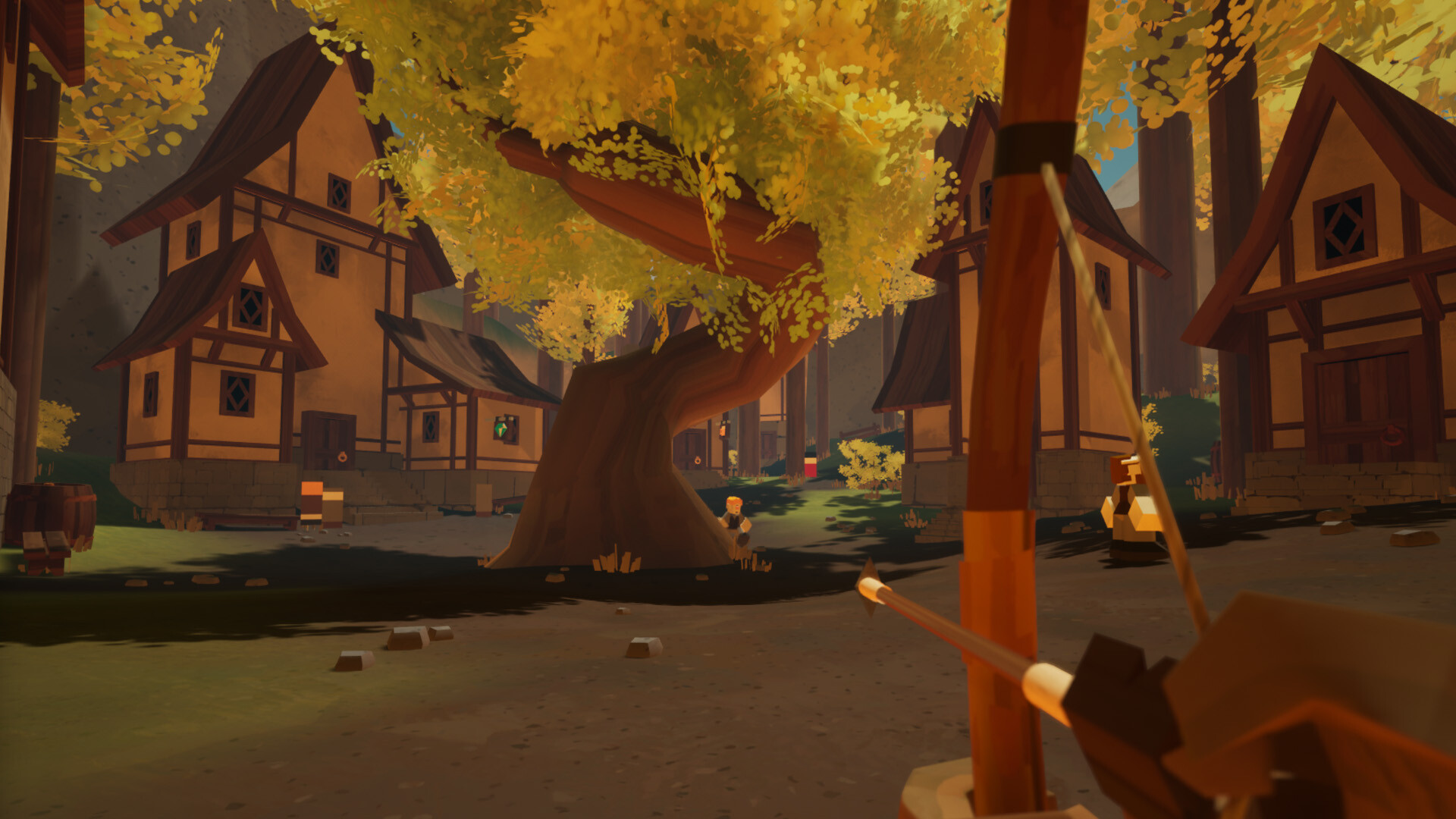
Capture d'écran nº 15

Pour la remise en contexte côté développement, il s’agit ici du projet d’une unique personne, dont le travail avait déjà pu être observé sur la petite expérience d’arena shooter déjantée FFFF YOU MACHINE, qui, à défaut d’avoir réuni énormément de joueurs, a visiblement été appréciée par chacun d’entre eux pour son concept et ses sensations réussies. Il ne s’agit pour l’instant que d’une démo, si jamais vous voulez y jeter un oeil via Steam.

Capture d'écran nº 5

En ce qui concerne Travel Knight Adventure, on est sur un projet au ton très différent, porté sur l’exploration, et dont la direction artistique, le sound design et l’ambiance au global donnent un rendu très cozy à l’expérience de jeu. On s’y balade dans un open world dit dénué de génération procédurale, vous invitant à traverser forêts, cités et donjons sinueux. Mais si la promenade semble paisible aux premiers abords, le système de combat, lui, se veut au contraire assez nerveux, recelant de nombreuses armes et possibilités à travers une composante RPG non-négligeable.

Capture d'écran nº 17

En effet, le titre n’a pas peur de mixer les flingues, les épées ou encore la magie, ce qui passe notamment par la complétion d’un arbre de compétences au fil du voyage, afin d’orienter votre style de jeu. Il semble même que les JRPG à l’ancienne aient mis leur grain de sel dans la formule, puisqu’une world map apparaît lors des déplacements en bateau ou à cheval. De quoi attiser la curiosité, même si le culot du mélange des genres peut faire un peu peur quant à la maîtrise globale.

Capture d'écran nº 8

Ce qui est sûr, c’est que malgré le polish encore requis côté UI et autres, le jeu a l’air très fun à parcourir. Bien entendu, le développement prend du temps, déjà en cours depuis plusieurs années, mais il est rassurant de constater la rigueur avec laquelle fleewortep donne des nouvelles des features qui progressent via des billets de blogs réguliers. De notre côté, on a hâte d’en savoir plus et on croise les doigts pour que ça donne quelque chose de solide ! Et si c’est votre cas, n’hésitez pas à tester la démo déjà disponible ou encore à mettre Travel Knight Adventure en wishlist via sa page Steam.

  •  

La version remastérisée d’Arma: Cold War Assault est sortie ce 16 juillet

À l’occasion des 25 ans de la licence d’Operation Flashpoint, le studio Bohemia Interactive avait annoncé une surprise, à savoir qu’Arma: Cold War Assault aurait sa version remastérisée prochainement. Il n’aura pas fallu attendre très longtemps étant que donné que ce remaster est sorti ce 16 juillet, accompagné d’un trailer de lancement et du classique billet de blog Steam. Pour les heureux possesseurs du jeu de base, Arma: Cold War Assault Remastered vous est offert. Si vous êtes trop nostalgiques de vieux polygones des années 2000, la version d’origine reste toujours disponible et est entièrement dissociée de sa version remaster, ce qui signifie que vos profils et sauvegardes ne sont pas compatibles entre ces deux builds. Désormais, vous pouvez profiter des nombreuses améliorations qui ont été apportées, à savoir :

  • La prise en charge du système natif 64 bits pour Windows et Linux
  • Le nouveau moteur graphique OpenGL3.3 préservant l’atmosphère d’origine
  • Le support des résolutions et périphériques modernes, incluant les écrans larges
  • Une meilleure prise en charge de la spatialisation audio
  • Une amélioration de la stabilité et des performances pour les systèmes actuels
  • Le multijoueur en LAN, la prise en charge de serveurs dédiés et un chat vocal
  • La fonctionnalité (non finalisée) pour rejoindre des missions

Également, le studio informe que le code source du moteur est désormais accessible au public sur GitHub, sous le répertoire BohemiaInteractive/cwr.

Si vous êtes intéressé par cet opus remastérisé de la licence Arma, vous pouvez vous le procurer sur Steam pour environ 10 €.

  •  

Adobe wants you to play with generative AI in its Project Indigo camera app

The experimental tools enable distraction removal, art style–based edits and more, but only for a small subset of users.

A side-by-side image of the same ornate metal lantern, shown on a stone pedestal in a lush garden on the left and on a rocky mountain ledge with dramatic peaks at sunset on the right.Adobe

Last year, Adobe’s Nextcam team launched Project Indigo, an experimental camera app for iPhones that offered full manual controls and promised a more natural look from smartphone photos. Now, the team has announced AI Playground, an experimental generative AI tool inside of Project Indigo.

In its announcement, Adobe explains that text-based editing (e.g., asking an AI chatbot to make changes to a photo for you) is still clunky, both in its results and usability. This new tool aims to improve that experience by keeping more of the process – both capture and edit – in one app. It says that AI Playground aims to “explore how generative AI can assist mobile photographers at the point of capture.”

AI Playground offers a handful of buttons that, when tapped, trigger specific generative AI prompts engineered by Adobe. These include options for removing distractions, creating a shallow depth of field, applying certain styles, changing lighting and critiquing photos. There’s also a Custom Edit button where users can input their own prompts, either via typing or dictation. For now, Adobe says it is using Google’s Nano Banana model, but that is subject to change, and may even change on a per-button basis.

A photo of a stone garden lantern with a mobile AI editing interface overlaid in the center, flanked by the original garden scene on the left and a hand-drawn-style illustration of the same lantern on the right.
For now, the AI Playground offers four different buttons: Object Editing, Styles, Photo Guidance and Custom Edit.
Adobe

The “Styles” button allows users to apply a range of preset styles, turning photos into drawings or paintings or changing the lighting. Adobe says the available options “represent techniques we have found to be most successful when applied to everyday snapshots,” so it isn’t an endless list. It also clarifies that it trained the model to identify and highlight the main subject to keep focus on the most important parts of the photo.

A side-by-side image of a smiling woman in an art gallery, first with a busy crowd behind her on the left and then with the background cleared of people so only the empty gallery and paintings remain on the right.
The AI Playground allows users to remove distractions in the camera app, instead of opening a separate editing app.
Adobe

Object Editing offers tools familiar to editing apps, but Adobe says it is “exploring whether simple editing operations can be performed in the camera app using a generative model.” There are buttons for removing distractions and creating a shallow depth of field. If those specific tools don’t cover what you are looking to do, the Custom Edits button lets you change almost anything, similar to standalone generative AI tools. That includes completely swapping out backgrounds and specifying different styles. Adobe also showed off the ability to turn a drawing into a photo-like image, or change a sculpture into a “real” person.

A side-by-side image in an art gallery showing a white marble statue of a woman leaning to listen on the left, and on the right the same pose transformed into a lifelike young woman in flowing white clothing standing on the statue’s base.
The AI Playground lets you completely reimagine photos, including turning sculptures or paintings into photo-realistic-style people or scenes.
Adobe

Adobe also highlighted the feedback section, which looks to be a more robust version of Google’s “Camera Coach,” albeit one that critiques photos after the fact, rather than giving you suggestions as you’re composing. It says that it is aimed at helping users learn or advance their photography by providing critique. The tool can provide both reshooting suggestions since it operates within a camera app, along with editing suggestions. Adobe says it is “working on customizing these prompts to reflect individual phone models and lenses, each of which has unique capabilities,” so that users get suggestions specific to what their phone is capable of.

There are some caveats with the AI Playground. First, while it’s free (for now) and doesn’t require sign-in, Adobe is only rolling this out to a small percentage of Project Indigo users. It says that if AI Playground is successful, there will be a paid version. Adobe also makes it clear that this is an experiment inside of an experimental app, so things are subject to change. You need to be connected to the internet to use AI Playground, and to save transmission and generation time, images are 2K pixels on a side.

A three-panel image showing a man in glasses lit dramatically at a table on the left, and on the center and right his photo displayed within a mobile “AI Playground” interface that provides detailed photo critique and reshooting tips.
The critique tool can provide detailed feedback on how to improve an image.
Adobe

The Nextcam team also explains that it has had to create a workaround for HDR images, as image-generation models only output SDR images at this point. So, if you use Nano Banana to edit an HDR photo (even one taken with Project Indigo), it will produce an SDR image. To address this, Adobe says it built a custom ML model to post-process the SDR image and boost it back to HDR, but warns that it isn’t always accurate.

The announcement also briefly addresses ethics as well. Adobe says it is “working to attach metadata to AI-edited images produced from the AI Playground by using technology from Adobe’s Content Authenticity Initiative,” and specifies that some models, such as Nano Banana, apply invisible watermarks to images. At the end of the day, though, Adobe puts the onus on users: “Whether the edits you apply are ‘fair’ or ‘misleading’ depend on what you do, who you share the images with, and how you present them.”

A cyclist in a bright jacket rides up a rural road lined with grass and trees, shown first in heavy gray fog and then in warm golden sunlight, highlighting a dramatic change in lighting.
The AI Playground means you can completely alter a photo with a simple prompt.
Adobe

Ethics aside, it seems like an interesting move for the app, given that the original goal of Project Indigo was to produce more natural images that offer “SLR-like” quality from your iPhone. DPReview’s Dale Baskin even chose Project Indigo as his Gear of the Year last year, because it unlocked the ability to take more natural images, encouraging him to use his phone for photos more often. The AI Playground tools, however, seem to take things in a very different, more synthetic direction.

Additionally, the results, at least for now, don’t necessarily inspire confidence. The image at the top of this article looks more like a video game rendering than a photograph, with a distinctly synthetic sheen rather than the ‘natural’ look Indigo set out to offer. Plus, in some instances, such as the cycling image above, Adobe acknowledges that the models will change details that you don’t want changed. That includes altering face shape and expressions, even if it isn’t part of the user’s prompt or intent. The company’s workaround is to upload reference photos, which certainly isn’t ideal.

For those interested in testing AI Playground, you’ll need to update the Project Indigo app to version 1.1. If you are one of the selected users, you’ll see a screen pop up inviting you to use the feature. If you’re not a fan of GenAI in your camera app and you get invited, you can simply decline and keep using Project Indigo as you did before. Adobe also says that the Nextcam team is working on non-GenAI computational photography features that it plans to launch soon.

About the Author: Abby Ferguson holds an MFA in photography and blends a fine-art background with extensive editorial and commercial experience. She built and led an in-house imaging program for a large vacation rental company and has served as an associate editor at Popular Photography. She also teaches at a local community college and serves on its Photographic Technology Program Advisory Board, sharing her knowledge and enthusiasm for the medium.

Want to stay up to date on the latest product news and releases? Add DPReview as a preferred source to ensure our independent journalism makes it to the top of your Google search results.

add as a preferred source on google

  •  

Bethesda essaye de faire passer la pilule des licenciements en annonçant suites et remasters

✇NoFrag
Par : XoBaR

Hier après-midi, Bethesda Game Studios a publié un gros pavé sur X pour rassurer les joueurs suite à la récente vague de licenciements chez Xbox. Malgré le blabla habituel (“On adore concevoir des mondes ouverts autant que vous aimez les parcourir”), Bethesda fait preuve de transparence en parlant de tous ses projets en cours.

Nous apprenons tout d’abord la sortie d’une nouvelle extension pour Starfield nommée Starborn pour 2027, sans plus de précisions sur la date ou le contenu. Les bruits de couloir laissaient penser qu’ils allaient abandonner Starfield pour se concentrer sur The Elder Scrolls 6 et Fallout 5, mais apparemment Bethesda bosse encore sur son RPG spatial, au moins jusqu’à l’année prochaine.

Mais l’information qui nous intéresse le plus est l’officialisation des remasters/remakes de Fallout 3 (2008) et Fallout: New Vegas (2010). Pour rappel, l’existence du remaster de Fallout 3 avait fuité en septembre 2023 par un document interne de Microsoft datant de 2020 qui listait les projets à venir de Bethesda sur plusieurs années, et qui s’était malencontreusement retrouvé sur internet lors du rachat d’Activision Blizzard King par Microsoft. Nous pouvions par exemple y voir un certain “DOOM Year Zero”, devenu depuis DOOM: The Dark Ages, ou The Elder Scrolls IV: Oblivion Remastered sorti en avril 2025. Mais depuis, il n’y avait eu aucune officialisation de la part de Microsoft ou Bethesda. Et concernant le remaster de Fallout: New Vegas, il ne s’agissait que de rumeurs d’insiders. Au moins maintenant, c’est officiel. Toujours d’après des rumeurs d’insiders, ces deux remasters suivraient le même modèle qu’Oblivion Remastered, à savoir un rendu moderne sous Unreal Engine 5, mais avec le moteur du jeu de base (le Gamebryo) qui tourne en fond. L’avantage est que le feeling du jeu d’origine est conservé, l’inconvénient c’est que la plupart des bugs d’origine sont toujours présents… Espérons en tout cas que ces nouvelles versions de Fallout 3 et Fallout: New Vegas soient mieux optimisées qu’Oblivion Remastered, qui souffre encore de stuttering même sur les très grosses configurations.

Fallout New Vegas
Même moddées, les goules ont toujours une sale gueule (Fallout: New Vegas)

Toujours concernant la franchise Fallout, le communiqué précise que le cinquième épisode est en pré-production pendant qu’ils finissent de développer The Elder Scrolls 6. Vu le développement interminable du successeur de Skyrim (annoncé en 2018 et pas prévu avant 2028 selon les rumeurs), ne vous attendez pas à Fallout 5 avant de nombreuses années… à condition bien sûr que le monde ne subisse pas une vraie catastrophe nucléaire d’ici là ! Et n’oublions pas que Bestheda Game Studios a perdu une cinquantaine d’employés lors de la vague de licenciements, dont des vétérans.

La bonne nouvelle c’est que nous aurons un autre Fallout inédit à se mettre sous la dent avant, puisque Microsoft vient de confier le développement d’un spin-off à Obsidian Entertainment, les développeurs de Fallout: New Vegas, l’opus le plus apprécié des joueurs de bon goût depuis le virage FPS de la franchise. Nous le savions déjà depuis le 8 juillet, et le communiqué ne nous apprend rien de plus sur ce projet à part que le studio d’Irvine travaillera en collaboration avec Bethesda Game Studios. C’est Josh Sawyer, le directeur et concepteur principal de Fallout: New Vegas, qui est chargé du projet, donc les espoirs sont permis d’avoir un nouvel épisode plus riche et mieux écrit que Fallout 4. C’est d’ailleurs lui qui avait créé le fameux mod “Jsawyer” pour Fallout: New Vegas, qui modifiait complètement l’équilibrage pour rendre l’expérience plus hardcore. Bref, il y aura eu au moins une bonne nouvelle dans ce marasme des licenciements chez Xbox…

  •  

Here’s how to keep updated on new DPReview website changes

What we’ve updated on the new site, and when.

A computer monitor showing the new DPReview.com homepageDPReview.com

We recently launched the new DPReview website with a beta logo at the top of the page. The site is in beta for a reason: we’re aware that there are things to fix and improve, and our team is actively working to address outstanding issues. The beta logo reflects our ongoing effort to improve functionality, features and the overall user experience.

The DPReview logo with a blue tag to the right that says Beta.
The beta logo reflects our ongoing effort to improve functionality, features and the overall user experience. We’ll drop the label once we’re confident the site has earned it.

To make sure you know where to find the latest updates, report bugs or usability issues, or discuss changes to the site, we’ve set up a dedicated forum section to consolidate this information in one place.

Keep updated on changes

Progress updates: To see the latest updates from our team, visit the dedicated Change log thread. This is where we’ll post updates to let you know what changes, updates or bug fixes we’ve made to the site. We are making updates on a rolling basis based on a combination of prioritization and ease of fix. We expect this process to go on for quite some time.

Report a bug or usability issue: If you encounter a bug or usability issue, please use the Known issues and bug reports thread in our forum to share it with us. We keep the first post in that thread updated with all the reports we’re tracking, so please check there first to see if your issue has already been reported before reporting a new one.

New site discussion: If you have other questions or just want to discuss the new site, please create a post in the Website redesign feedback, questions and help section of the forums.

One more thing: If you haven’t already done so, we encourage you to read our article Gear Patrol founder Eric Yang: Why we rebuilt DPReview after 25 years, which provides additional context for why we’re making this change now.

We’ve already heard a lot of valuable feedback, and will continue to gather it to help shape our development and improvement roadmap. Thank you for your patience, feedback and support as we get things dialed in.

About the Author: Dale Baskin is a professional photographer, writer, and filmmaker based in the Pacific Northwest. He is the Managing Editor of DPReview.com.

Want to stay up to date on the latest product news and releases? Add DPReview as a preferred source to ensure our independent journalism makes it to the top of your Google search results.

add as a preferred source on google

  •  

De nouvelles séquences de gameplay et une démo à venir pour DEADBOOT

Découvert l’année dernière durant le Brutal Indies Unleashed Showcase, DEADBOOT, un rétro FPS avec des mécaniques roguelike se déroulant dans un univers cyberpunk, donne de ses nouvelles à l’occasion du Secret Sauce Showcase. On y découvre de nouvelles séquences de gameplay qui font pas mal écho à CRUEL et l’annonce d’une démo prévue pour le 3 août. Pour rappel, vous devrez progresser le plus loin possible tout en massacrant les ennemis présents à l’aide de vos coups de pieds et d’armes qui vous tomberont sous la main. À chaque niveau terminé, vous aurez le choix entre diverses capacités et améliorations d’armes temporaires. Le concept en soi est plutôt simple tout en restant un bon défouloir à priori.

En attendant la démo pour le début du mois d’août et si vous êtes intéressés, vous pouvez toujours ajouter DEADBOOT à votre liste souhaits Steam.

  •  

This Kodak-branded film camera offers a low-cost entry into 35mm film photography

Kodak licensee Reto has launched a new film camera with styling that mimics popular retro compacts, giving film-curious shooters a nostalgic entry point.

Six Kodak cameras in various bright colors rest on a blue-and-white striped blanket outdoors, with assorted fruit and several Kodak film rolls surrounding them.Reto

Kodak licensee Reto has quietly added another beginner-friendly 35mm camera to its analog lineup. The Kodak EC35 is a fixed-focus point-and-shoot aimed squarely at casual shooters and film-curious newcomers thanks to its affordable price and ease of operation.

The EC35 is a simple 35mm film camera with a plastic body and 25mm, fixed-focus, 2-element acrylic lens. It’s a point-and-shoot camera, featuring a fixed F10 aperture and a constant 1/100 sec shutter speed. It does offer manual film advance and rewind, though, for a more traditional film experience. There’s also a built-in flash powered by a single AA battery.

It’s highly compact, weighing 102 g (3.6 oz) and measuring 119 x 65 x 41.5mm (4.7 × 2.6 × 1.6″). It features a slide-out cover to protect the lens, just like highly popular retro compact film cameras, such as the Olympus Stylus (Mju series) and Contax T3.

An empty road extends into the distance, bordered by green bushes and trees, with misty hills visible under a cloudy sky. Scene photographed using a KODAK EC35 reusable 35mm film camera.
A sample image from the Kodak EC35.
Reto

While the camera uses Kodak branding, it comes from Reto, the Kodak licensee behind the viral Kodak Charmera cameras. Reto has been steadily rebuilding a Kodak-branded analog ecosystem with playful, affordable cameras like the Ektar H35 half-frame, the H35N half-frame and the Snapic A1, a compact with a 25mm three-element glass lens and double-exposure mode. The EC35 slots in as a more basic model that produces full 35mm frames, sitting below the feature-rich Snapic A1 with its LCD, auto wind/rewind and multi-exposure features.

The Kodak EC35 comes in six colors: black, white, yellow, lavender, light blue, light pink and light green. It’s available for purchase now for $35, the same price as Lomography’s recently released half-frame camera.

About the Author: Abby Ferguson holds an MFA in photography and blends a fine-art background with extensive editorial and commercial experience. She built and led an in-house imaging program for a large vacation rental company and has served as an associate editor at Popular Photography. She also teaches at a local community college and serves on its Photographic Technology Program Advisory Board, sharing her knowledge and enthusiasm for the medium.

Want to stay up to date on the latest product news and releases? Add DPReview as a preferred source to ensure our independent journalism makes it to the top of your Google search results.

add as a preferred source on google

  •  

Le bataille de Gallipoli débutera finalement le 20 août prochain

Prévu initialement pour le 21 mai, le studio BlackMill Games avait décidé de reporter à une date ultérieure la sortie de Gallipoli, leur nouveau FPS multi se déroulant sur les fronts ottomans durant la Première Guerre mondiale. Continuant leur petit bonhomme de chemin, l’équipe de dev a finalement annoncé aujourd’hui que leur jeu sortira le 20 août en publiant une bande-annonce sur leur chaîne officielle YouTube. Pour rappel, deux équipes de 25 joueurs devront combattre pour la défense ou la conquête du territoire ottoman. Une dizaine de classes ainsi qu’un arsenal authentique de cette période historique seront disponibles. Ici, il ne sera donc pas question de foncer tête baissée, mais de communiquer et de coordonner l’avancée de votre équipe pour éviter un carnage.

Si vous êtes amateurs de batailles réalistes et historiques, Gallipoli est donc prévu pour le mois prochain sur Steam et l’Epic Games Store.

  •  

Un succès mitigé pour la sortie de The Mound: Omen of Cthulhu, le FPS d’horreur coopératif

Comme annoncé, The Mound: Omen of Cthulhu, développé par le studio ACE team à l’origine de la licence Zeno Clash, est sorti ce 15 juillet et la réception est plutôt mitigée avec une note globale moyenne sur Steam. En effet, les joueurs soulignent à peu près les mêmes points que la rédac avait pu énumérer durant la démo du Steam Néo Fest de juin, à savoir :

  • Une direction artistique et une ambiance horrifique plutôt réussies
  • Un système combat au corps-à-corps mal fichu et lent marqué surtout par l’incapacité de se défendre (parade) contre des attaques ennemies puissantes et rapides
  • Des armes ayant une usure trop rapide et des améliorations peu impactantes
  • De multiples bugs et des problèmes de performances ainsi que d’optimisation

En réponse à ces premiers retours, les devs ont d’ores et déjà prévu un bêta test pour le patch à venir et si vous souhaitez y participer, il suffit de consulter le présent billet de blog Steam.

Malgré les défauts soulevés, une partie des joueurs semblent avoir apprécié leur expédition maudite et espèrent que des patchs salvateurs viendront grandement améliorer l’expérience. Si vous êtes toujours intéressés par The Mound: Omen of Cthulhu et souhaitez nous soutenir au passage, vous pouvez vous procurer ce dernier en profitant de la promotion de lancement de notre partenaire Gamesplanet sur l’édition de base et collector, soit environ 20 € et 28 €.

  •  

Lomography’s new half-frame camera doubles your film frames for $35

Lomography’s affordable new half-frame film camera makes shooting film simple.

A colorful disposable camera held up to a face, ready to take a photo, with a green wall in the background.Lomography

Lomography is jumping on the half-frame trend with its latest camera. The appropriately named Half-frame Simple Use Reloadable Film Camera is an affordable option that aims to make film easy for those looking to explore the medium.

As a half-frame camera, it uses half of each 35mm frame, resulting in 17 mm x 24 mm vertical images and letting you get twice as many photos from a roll as a traditional 35mm camera. The small point-and-shoot looks like a classic disposable camera and comes pre-loaded with a roll that gives you 40 shots before you need to reload. Despite its lightweight, disposable-style design, the camera is fully reloadable, and with a standard 36-exposure roll, you can capture up to 72 images.

Split-screen black and white photo: On the left, a person rides a bicycle with legs outstretched. On the right, a person in loose clothing stands against a bright sky, seen from a low angle.Lomography

Lomography designed the camera to be easy to use. It features a fixed-focus 21mm lens, a single 1/120 sec shutter speed, a fixed F9 aperture and no ISO adjustment options. It offers a built-in flash to help in low-light situations and has integrated gels to slide in front of the flash for pops of color. There are also shooting instructions printed on the camera body to help you use it if you’re new to film.

You can choose between two preloaded versions of the half-frame camera: one with LomoChrome Classicolor ISO 200 film, and the other with Lady Gray ISO 400 black and white film. You can also opt for a kit that includes six additional rolls and a case to store your film. Sitting well below options like the Pentax 17, it’s meant to be an affordable, casual way to enjoy film.

The Lomography Half-frame Simple Use Reloadable Film Camera is available for preorder now and costs $30 with black-and-white film and $35 with color film.

About the Author: Abby Ferguson holds an MFA in photography and blends a fine-art background with extensive editorial and commercial experience. She built and led an in-house imaging program for a large vacation rental company and has served as an associate editor at Popular Photography. She also teaches at a local community college and serves on its Photographic Technology Program Advisory Board, sharing her knowledge and enthusiasm for the medium.

Want to stay up to date on the latest product news and releases? Add DPReview as a preferred source to ensure our independent journalism makes it to the top of your Google search results.
add as a preferred source on google

  •  

Hasselblad’s Phocus Mobile app finally arrives on Android

Since Hasselblad launched Phocus Mobile 2 in 2019, its mobile Raw editing workflow has been confined to iOS – until now.

Three smartphone screens, each showing a photo editing app interface with options for exposure, contrast, brightness, and HDR settings; all display a nighttime landscape photo being adjusted.Hasselblad / Albrecht Voss

Hasselblad launched Phocus Mobile 2 in 2019, as an iOS-only app for editing Raw files from its medium format cameras on phones and tablets. Now, the company has announced Phocus Mobile v1.0.0 for Android, finally bringing the mobile workflow to Android users with the X2D II 100C, X2D 100C and 907X + CFV 100C.

Like the iOS version, Phocus Mobile for Android includes a robust set of editing tools, including exposure, curves, white balance, sharpening, cropping, lens correction and more. It also supports batch adjustments and basic asset management with the ability to add ratings and mark favorites. Images can be imported over Wi‑Fi or, for those using the X2D II 100C (with firmware version 1.3.16.1 or later), via USB‑C. Files can then be exported as Ultra HDR JPEG, HDR TIFF, as well as standard JPEG, TIFF, HEIF or 3FR Raw.

Hasselblad says that the Android app brings its end-to-end Natural Color Solution (HNCS) to mobile, allowing for a consistent look whether editing on desktop or mobile. The app supports HDR viewing and editing for X2D II 100C files on compatible HDR devices. It also features the company’s AI-powered Raw noise reduction, which it says is tuned for its 100MP sensors. The noise reduction tool offers two modes, allowing users to prioritize either cleaner files or better micro-contrast.

There are some hardware caveats, though. The app requires an Android device with at least 12 GB of RAM and Android 12 or later. That said, Hasselblad recommends Android 16 or later and devices powered by Snapdragon 8 Gen 3 or newer for the best experience. Given that the phone needs to handle 100MB files, that shouldn’t come as much of a surprise.

Hasselblad’s Phocus Mobile for Android is now available on the Google Play Store for free.

Press release:

HASSELBLAD BRINGS PHOCUS MOBILE TO ANDROID

Phocus Mobile for Android extends the Hasselblad mobile workflow with Hasselblad Natural Colour Solution (HNCS), Hasselblad Natural Noise Reduction (HNNR), a comprehensive editing toolkit, and streamlined photo management.

GOTHENBURG, Sweden — Hasselblad is pleased to announce that Phocus Mobile V1.0.0 for Android is now available¹ for the X2D II 100C, X2D 100C and 907X & CFV 100C. Long requested by the Hasselblad community, the Android release brings the Hasselblad mobile imaging workflow to a broader community of photographers.

Phocus Mobile, the official companion app for Hasselblad medium format digital cameras, delivers the end-to-end Hasselblad Natural Colour Solution (HNCS) experience on mobile. It combines AI-powered noise reduction, a comprehensive editing toolkit, and streamlined photo preview and management into a complete mobile workflow. Android users can now review, edit, organise, and export images directly from their mobile device, allowing them to continue working wherever they are.

THE END-TO-END HNCS MOBILE EXPERIENCE

Phocus Mobile for Android brings the end-to-end Hasselblad Natural Colour Solution (HNCS) experience to Android. True-to-life colours, smooth tonal gradation, and rich highlight detail are preserved from preview through final export. Photographers can review and edit images away from the desktop, knowing the natural colour and tonal precision of their images are preserved throughout the mobile workflow.

On HDR-supported Android devices², HDR images captured with the X2D II 100C reveal the full spectrum of HNCS HDR, with intricate shadow detail, luminous highlights, and colour gradations that closely match what the eye sees. In addition to standard editing tools, the app supports precise HDR highlight adjustment, giving photographers greater control when refining high-contrast images.

HDR images captured with the X2D II 100C, as well as RAW images from the X2D II 100C, X2D 100C, and 907X & CFV 100C, can be previewed, edited, and exported in the app. HDR images can be exported as Ultra HDR JPG, while RAW images can be exported as Ultra HDR JPG or HDR TIFF.

HASSELBLAD NATURAL NOISE REDUCTION FOR HIGH ISO PHOTOGRAPHY

Hasselblad Natural Noise Reduction (HNNR) is now available in Phocus Mobile for Android.³ When shooting at high ISO settings for low-light or night photography, the AI-powered RAW noise reduction solution produces cleaner, more natural-looking images while preserving fine image detail. Calibrated and optimised for Hasselblad medium format sensors and trained on hundreds of thousands of Hasselblad images, HNNR reduces noise in 100MP RAW images in approximately 15 to 20 seconds.

Two processing modes are available. Purity Mode prioritises noise suppression for the cleanest possible result, making it ideal for most scenes. Detail Mode preserves luminance noise to better retain micro-textures and fine image detail. Both modes work seamlessly with Hasselblad Natural Colour Solution (HNCS) to preserve the signature natural colours, colour fidelity, and smooth tonal gradation in every image.

HNNR is especially beneficial for the 907X & CFV 100C, which does not feature in-body image stabilisation, expanding handheld shooting possibilities in low-light conditions.

PROFESSIONAL MOBILE EDITING AND PHOTO MANAGEMENT

Phocus Mobile for Android combines a comprehensive editing toolkit with streamlined photo preview and management. A full suite of editing tools—including exposure adjustment, curves, white balance, monochrome correction, lens correction, noise reduction, sharpening, cropping, rotation, and keystone correction—provides precise control directly from an Android device. Edit settings can also be copied and applied in batches to speed up high-volume editing workflows.

Images can be quickly imported via Wi-Fi or, for supported cameras, a wired USB-C connection.⁴ Once imported, images can be organised using star ratings and favourites for faster image selection and review before being exported in JPG, TIFF, HEIF, or 3FR RAW formats.

¹ Phocus Mobile for Android supports Android devices with at least 12 GB of RAM running Android 12 or later. For the best colour display and editing experience, Hasselblad recommends Android 16 or later and devices powered by Snapdragon 8 Gen 3 or newer. Refer to the official Hasselblad website for compatibility information

² HDR viewing and editing features require a compatible HDR-capable Android device. Refer to the official Hasselblad website for a list of recommended devices.

³ Hasselblad Natural Noise Reduction (HNNR) currently supports only devices powered by Snapdragon 8 Gen 3 or later. Refer to official website for more details.

⁴ Wired USB-C connection is only supported on X2D II 100C with firmware version 1.3.16.1 or later when using Phocus Mobile for Android.

About the Author: Abby Ferguson holds an MFA in photography and blends a fine-art background with extensive editorial and commercial experience. She built and led an in-house imaging program for a large vacation rental company and has served as an associate editor at Popular Photography. She also teaches at a local community college and serves on its Photographic Technology Program Advisory Board, sharing her knowledge and enthusiasm for the medium.

Want to stay up to date on the latest product news and releases? Add DPReview as a preferred source to ensure our independent journalism makes it to the top of your Google search results.

add as a preferred source on google

  •  
❌