Vue lecture

SpaceX's Starship Megarocket Hits Key Milestones in 'Lucky 13' Test Flight

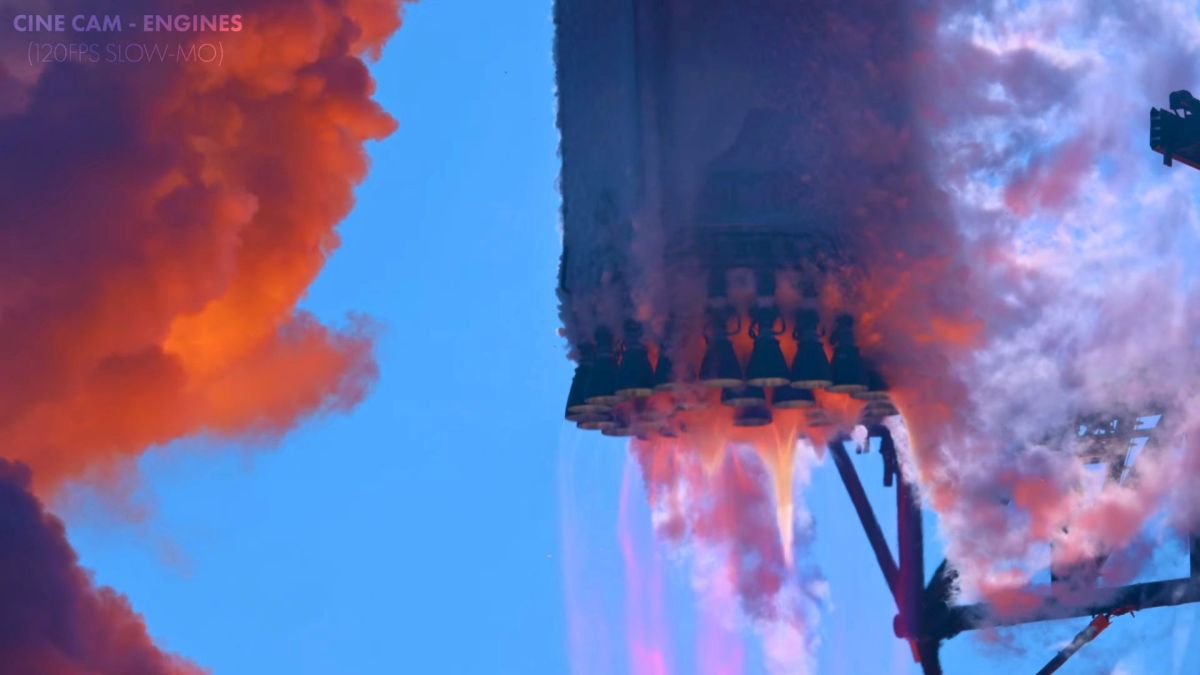
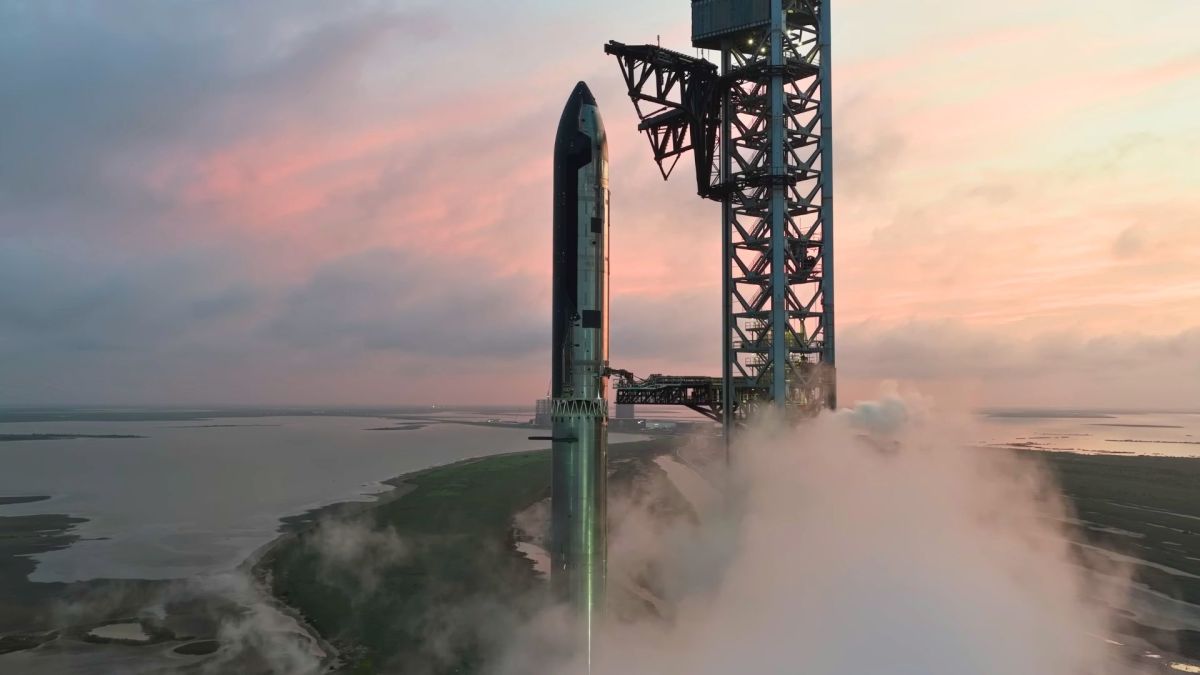
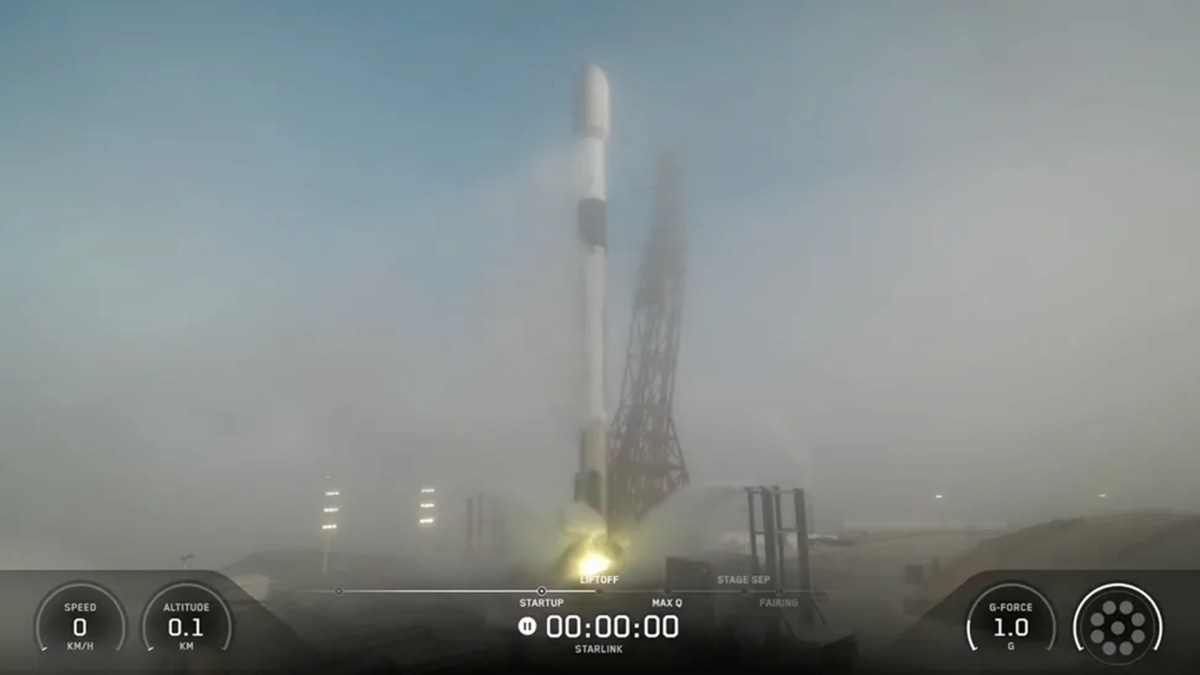
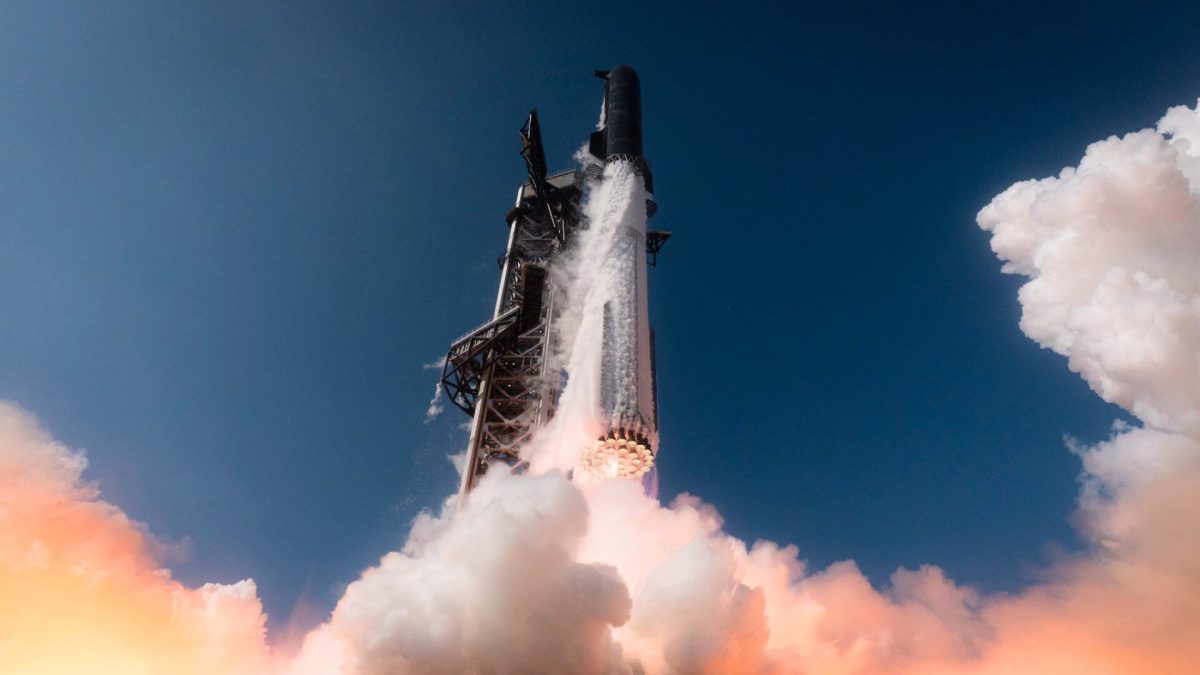
SpaceX's Friday launch of its massive Starship rocket "went quite smoothly," reports CNN, with a SpaceX spokesperson calling this mission "Lucky Number 13" (as the 13th integrated flight test for a Starship spacecraft with a Super Heavy rocket booster): During Starship V3's inaugural test, there were numerous engine issues as several on the booster failed to relight and the Starship spacecraft experienced a nail-biting engine outage. SpaceX also was forced to replace six engines on this vehicle ahead of today's flight because of a likely issue with moisture that prevented at least four from starting up correctly during an initial launch attempt last week... [Friday's Super Heavy rocket booster] fired all 33 of its engines in a pristine performance off the launchpad. The rocket booster also managed to relight 13 engines, as planned, to steer itself back toward a controlled landing. Only when Super Heavy attempted to relight its engines for a controlled landing burn over the Gulf waters did problems arise. The landing was still controlled, though Huot said the vehicle was traveling a bit faster than the company had hoped when it made touchdown. (SpaceX always intended to discard this Super Heavy booster in the ocean.) The Starship spacecraft had no obvious performance issues, making it all the way through its engine burn and managing to reignite one engine mid-flight as part of a test. It also made a controlled splashdown in the Indian Ocean — executing its "softest splashdown" to date in a "dream scenario," according to SpaceX's Dan Huot. The touchdown came about an hour after takeoff, as planned. During its coasting phase, Starship also deployed 20 Starlink test satellites, paving the way for operational missions later down the line in which SpaceX plans to deploy large batches of these satellites in a single launch. In another big win, SpaceX said it was able to make contact with each of those satellites. CNN adds that SpaceX "is facing intense pressure to get Starship ready for a crucial NASA test flight next year that could pave the way for the next moon landing. This flight was also the first for SpaceX as a publicly traded company. Last week's aborted launch attempt sparked a selloff, and shares are still trading below their IPO price. "To cap off the roaring success of today's flight test, SpaceX shared some stunning visuals of the upper Starship spacecraft sailing through space."

Read more of this story at Slashdot.
  •  

SpaceX's Starship Megarocket Hits Key Milestones In Its 'Lucky 13' Test Flight

SpaceX's Friday launch of its massive Starship rocket "went quite smoothly," reports CNN, with a SpaceX spokesperson calling this mission "Lucky Number 13" (as the 13th integrated flight test for a Starship spacecraft with a Super Heavy rocket booster): During Starship V3's inaugural test, there were numerous engine issues as several on the booster failed to relight and the Starship spacecraft experienced a nail-biting engine outage. SpaceX also was forced to replace six engines on this vehicle ahead of today's flight because of a likely issue with moisture that prevented at least four from starting up correctly during an initial launch attempt last week... [Friday's Super Heavy rocket booster] fired all 33 of its engines in a pristine performance off the launchpad. The rocket booster also managed to relight 13 engines, as planned, to steer itself back toward a controlled landing. Only when Super Heavy attempted to relight its engines for a controlled landing burn over the Gulf waters did problems arise. The landing was still controlled, though Huot said the vehicle was traveling a bit faster than the company had hoped when it made touchdown. (SpaceX always intended to discard this Super Heavy booster in the ocean.) The Starship spacecraft had no obvious performance issues, making it all the way through its engine burn and managing to reignite one engine mid-flight as part of a test. It also made a controlled splashdown in the Indian Ocean — executing its "softest splashdown" to date in a "dream scenario," according to SpaceX's Dan Huot. The touchdown came about an hour after takeoff, as planned. During its coasting phase, Starship also deployed 20 Starlink test satellites, paving the way for operational missions later down the line in which SpaceX plans to deploy large batches of these satellites in a single launch. In another big win, SpaceX said it was able to make contact with each of those satellites. CNN adds that SpaceX "is facing intense pressure to get Starship ready for a crucial NASA test flight next year that could pave the way for the next moon landing. This flight was also the first for SpaceX as a publicly traded company. Last week's aborted launch attempt sparked a selloff, and shares are still trading below their IPO price. "To cap off the roaring success of today's flight test, SpaceX shared some stunning visuals of the upper Starship spacecraft sailing through space."

Read more of this story at Slashdot.
  •  

Astronomers May Have Discovered First Moon Outside Our Solar System

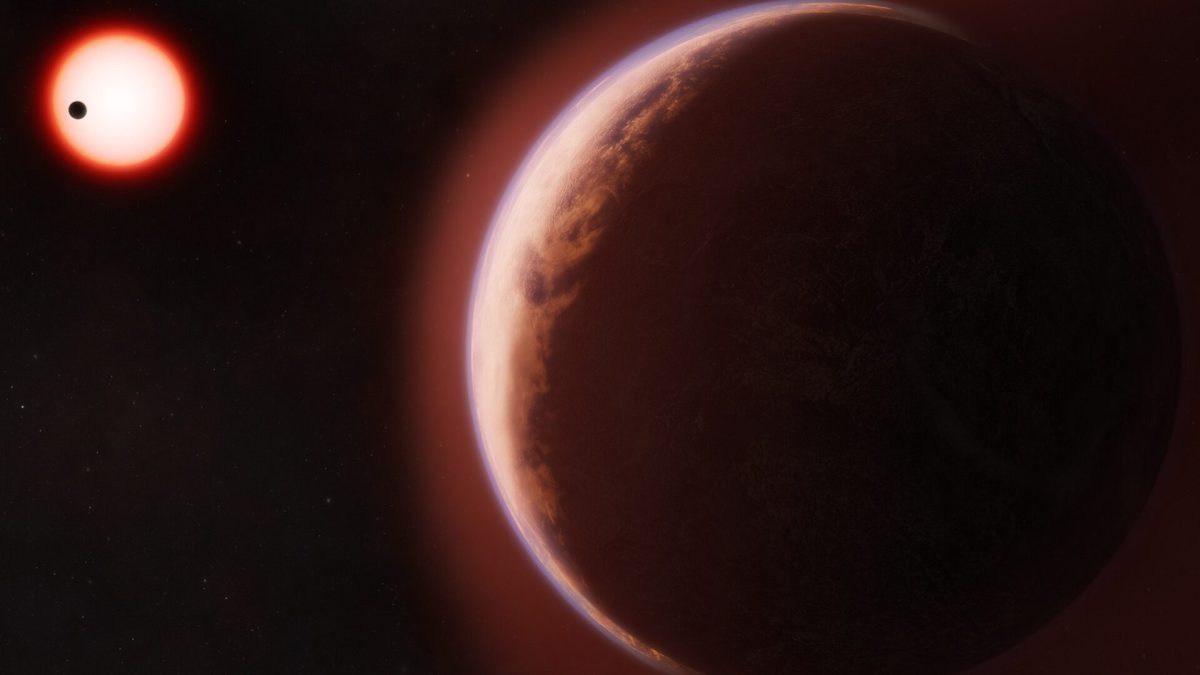
Astronomers studying the star system CD-35 2722 may have found the first known moon-like object outside our solar system. The classification is unusually tricky, however, because it orbits a brown dwarf rather than a planet, making it clearly an "exosatellite" but forcing scientists to rethink where the line between planet, moon, and failed star should be drawn. Space.com reports: The star CD-35 2722 is located around 73 light-years away and has around half the mass of the sun. It is orbited by a "failed star" or brown dwarf. These stellar bodies get their unfortunate nickname because they form like other stars but fail to gather enough mass to trigger the fusion of hydrogen to helium in their cores. In terms of mass, brown dwarfs are more massive than the largest gas giant planets, but smaller than the smallest stars, usually with around 13 to 80 times the mass of Jupiter, or around 0.013 to 0.08 times the mass of the sun. The newly discovered object in CD-35 2722 is certainly moon-like, but rather than orbiting a planet as the moons in the solar system do, it orbits the system's brown dwarf. "This system is somewhat hard to define using solar-system-based words like 'planet' and 'moon.' The exosatellite is clearly massive enough to be a planet, but it does not orbit a star, though it orbits an object that orbits a star," team leader Kevin Hoy of the Universidad Diego Portales and the Millennium Nucleus of Young Exoplanets and their Moons (YEMS) in Chile, said in a statement. "Being the third wheel in this system makes us want to call it a moon, even if it is nothing like the small, rocky moons we have in our system." The team currently isn't able to definitively claim this object in CD-35 2722 is an exomoon, because that would require really nailing down a new definition of what a moon is. "The satellite we report is a giant gaseous body orbiting a highly massive companion, itself several times the mass of Jupiter. We have a clear delineation between the planets and the sun in the solar system, so defining things like moons is simple," team member Alice Zurlo of the Universidad Diego Portales said. "In the CD-35 2722 system, where we are blurring the lines between stars, planets, and moons, the whole thing becomes more complicated to describe." Zurlo and colleagues can, however, confidently claim this is an exosatellite, meaning it is a first-of-its-kind detection no matter what the future holds for its classification. The findings have been published in the journal Nature.

Read more of this story at Slashdot.
  •  

La NASA n’a aucun plan de sauvetage clair en cas d’accident avec ses astronautes sur la Lune

Artémis Lune

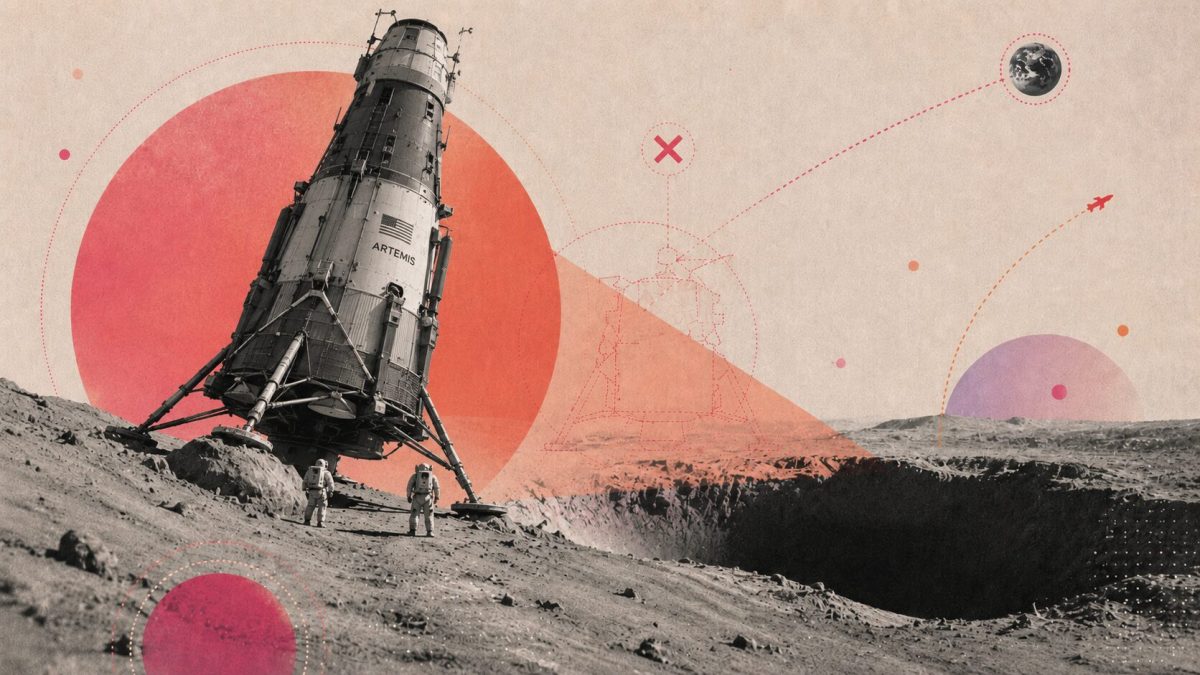
Dans sa course effrénée pour devancer la Chine au pôle Sud de la Lune, la NASA a omis un détail crucial : aucun plan de secours n'est prévu si un atterrisseur bascule ou tombe en panne. Une enquête de Forbes, appuyée par un rapport d'inspection interne, tire la sonnette d'alarme sur le risque mortel encouru par les futurs astronautes d'Artémis.

  •  

À défaut d’une date de sortie, RetroSpace dévoile de nouveaux extraits de gameplay

Désormais édités par Kwalee (à qui l’on doit notamment la récente fermeture du studio derrière Luna Abyss), les devs de The Wild Gentlemen ont profité du Convergence Games Showcase pour dévoiler du gameplay de RetroSpace, un immersive sim d’horreur disco-punk à la première personne se déroulant dans l’espace. On y découvre moult façons d’utiliser l’environnement et les objets présents à notre avantage. Par exemple, un simple extincteur peut devenir un jetpack improvisé et votre vaporisateur peut être utilisé pour stun l’ennemi ou créer un piège électrique en arrosant le sol près d’un boîtier sous tension. Concrètement, il ne tient donc qu’à vous de découvrir les possibilités offertes et de résoudre de manière créative une situation donnée. Présenté comme ça, le tout a l’air plutôt fun et on a envie d’en découvrir davantage. Lors du dernier Steam Neo Fest, les membres de la rédac avaient plutôt apprécié la démo pour son univers et son gameplay, rappelant notamment sur bien des aspects System Shock 2.

Du côté du synopsis, la station spatiale dans laquelle vous vivez est entrée dans un trou noir et suite à ce fâcheux incident, une partie de l’équipage s’est transformée en monstres. Dès lors, pour sauver votre peau, vous décidez de trouver un moyen de rejoindre la Terre, quitte à condamner l’humanité. Pour le moment, RetroSpace n’a toujours pas de date de sortie. En attendant de nouvelles infos, vous pouvez toujours ajouter ce dernier à votre liste de souhaits Steam, si vous êtes intéressés.

  •  

James Webb Space Telescope Discovers How Black Holes Feed Themselves

"Thanks to the James Webb Space Telescope, astronomers have been given a glimpse of the mechanisms that supermassive black holes use to feed themselves," reports Space.com: The powerful cosmic titans get really puzzling when astronomers using the JWST spot them before the universe was even 1 billion years old. That's because the mechanisms by which black holes devour matter to grow and then merge to create even more massive black holes should take at least 1 billion years to achieve supermassive status. This is even more confusing because theories also say the most ravenously feeding black holes (and thus the fastest growing) should also push the matter they use for this growth away, in effect putting themselves on a diet. So, with all this in mind, how did supermassive black holes grow so rapidly in the early universe? One explanation suggests supermassive black holes push away gas, starving themselves as predicted, but also that this matter eventually cools and falls back to the black hole. That would allow for another period of feeding and thus growth. This explanation further suggests that as this gas cools down, it forms "streamers," or filaments, of gas just a few hundred light-years wide but which stretch thousands of light-years long. These would fall back to the center of the galaxy and form a swirling disk around its incumbent black hole, once again feeding it and triggering a new period of growth. This would then restart the jets from the black hole, which would again cut off the cosmic titan's food supply, allowing the whole process to begin once more. The process would in essence be a self-regulating cycle of feasting followed by fasting. However, the connection between these filaments and supermassive black holes has been elusive, meaning this mechanism has resisted confirmation. To solve the mystery of feasting black holes, the JWST turned its attention to a relatively close AGN situated at the heart of the central galaxy of the Centaurus Cluster, NGC 4696, located just 145 million light-years from Earth. The Hubble Space Telescope previously studied this galaxy, uncovering a strange, hook-shaped swirl of gas near the central supermassive black hole of NGC 4696. The JWST followed up this discovery by producing a detailed map of gas flowing at the heart of the galaxy. This revealed the hook-shaped feature is around 800 light-years wide and is composed of gas moving at incredible speeds of around 1.3 million miles per hour (600 kilometers per second). More excitingly, the swirl of gas appears to be connected to a vast filament of material falling in toward the central supermassive black hole. The team tested the JWST observations against a computer simulation, finding gas in the infalling filament scenario would indeed take a shape similar to that seen in NGC 4696. "JWST is now showing us the final link of this closed loop," team member Helen Russell of the School of Physics and Astronomy at the University of Nottingham in the U.K. said in the statement. "The vast filamentary network of gas flows ultimately funnels gas down to a disk that fuels the black hole." The team's research was published on Wednesday (July 16) in the Astrophysical Journal Letters. "We are finally seeing this self-sustaining cycle in action," team leader Julie Hlavacek-Larrondo of the Université de Montréal said in a statement.

Read more of this story at Slashdot.

  •  

Alien World Chemistry Found Inside Meteorite That Struck New Jersey Home

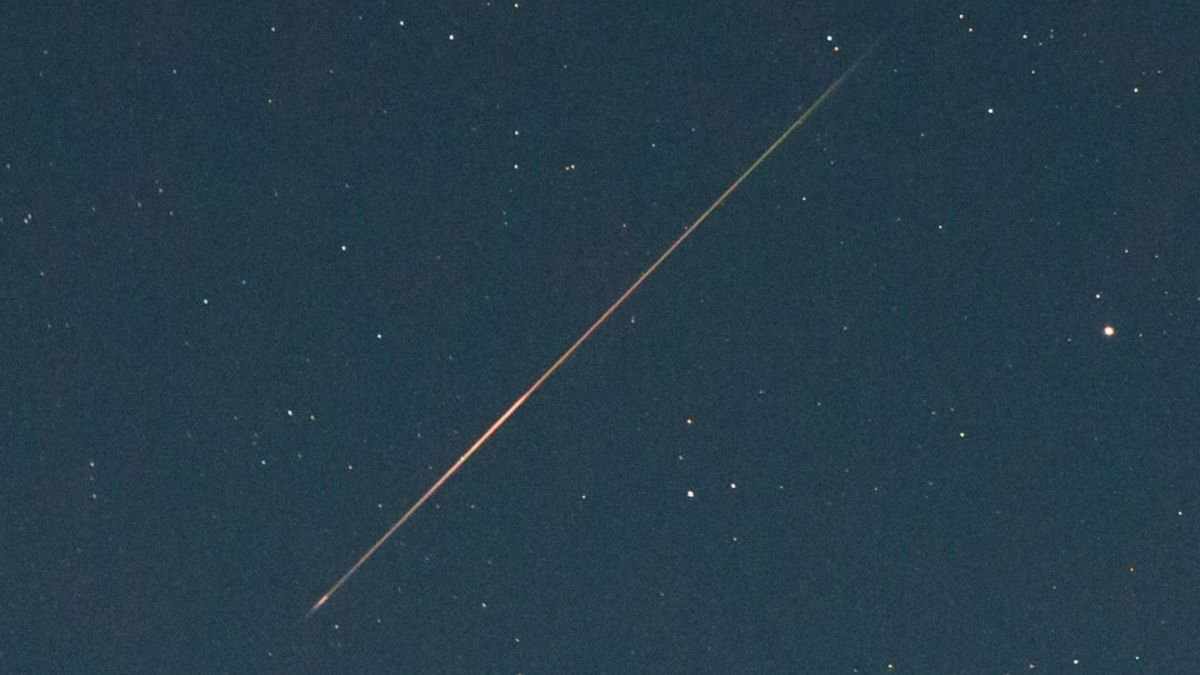
Researchers say a meteorite that crashed through the roof of a Hillsborough, New Jersey, home in 2024 contains unusually pristine evidence of salty fluids and organic chemistry from near the surface of a primitive asteroid. "A forensic study of the fragments revealed that they contained preserved bits from near the surface of a primitive asteroid, where it experienced concentrated salty fluids -- a process not previously known from this type of protoplanet world," said lead author and meteor astronomer Peter Jenniskens of the SETI Institute and NASA's Ames Research Center in California's Silicon Valley. Phys.org reports: According to paper co-author Mike Zolensky, a meteoriticist at NASA's Johnson Space Center in Houston, analysis of the Hillsborough meteorite found fragments that were more extensively altered by water on the meteorite's parent asteroid than is typically seen in CM2 carbonaceous chondrites. The analysis classified the specimen as a CM1/2 carbonaceous chondrite, an intermediate classification between petrographic types CM1 and CM2. [...] Zolensky and colleague JangMi Han found small salt-rich CM1 fragments within the Hillsborough meteorite, suggesting they originated from a near-surface region of the parent asteroid where liquid water evaporated and concentrated salts. They are now working to identify the salt minerals for comparison with similar phases found among samples returned to Earth from asteroids Ryugu and Bennu. The high concentration of salt in briny fluids can potentially create molecules crucial to life on Earth. Brines allow phosphate to remain in solution and can catalyze chemical reactions between organics and precipitate minerals. "Isotope studies of carbon and nitrogen suggest that primitive carbonaceous chondrites, including CM types, delivered organic matter to the early Earth," said cosmochemist Queenie Chan of Royal Holloway University of London, England, and biogeochemist Nana Ogawa of the Biogeochemistry Research Center at the Japan Agency for Marine-Earth Science and Technology. "The Hillsborough meteorite contained 1.8% by weight of carbon and 0.07% of nitrogen, and had carbon and nitrogen isotopes typical for CM-type meteorites." The meteorite contained a wide variety of soluble organic compounds, and its compositional range confirms that the Hillsborough meteorite was more altered by water than most other CM-type meteorites. "A high fraction of compounds were the product of organic chemistry with minerals," said organic mass spectrometry specialist Phil Schmitt-Kopplin of Technical University Munich. "We do not know if these magnesium organic compounds were contributed by brine chemistry or were simply left over from earlier impact shock processes." In living organisms, organometallic compounds are found in blood and used in photosynthesis. Among the soluble organic compounds were many amino acids, similar to those found in more moderately altered CM2 chondrites. Astrobiologist Danny Glavin of NASA's Goddard Space Flight Center in Greenbelt, Maryland, and his team in Goddard's Astrobiology Analytical Lab concluded that the delivery of amino acids, carboxylic acids and other soluble organic molecules by CM-type bodies may have contributed to the prebiotic organic inventory that preceded the emergence of life on Earth. Their analysis suggests the complex distribution of amino acids observed in the Hillsborough meteorite formed within the parent body, likely assisted by brine fluid chemistry. The findings have been published in the journal Science Advances.

Read more of this story at Slashdot.
  •  

L’IA rend l’édition scientifique « plus lente, de moins bonne qualité et plus chère »

Pas si productif, finalement ?
L’IA rend l’édition scientifique « plus lente, de moins bonne qualité et plus chère »

Alors que de plus en plus d’articles scientifiques sont créés en utilisant l’IA générative, le rédacteur en chef de Science, Holden Thorp, considère qu’elle fait plus de mal que de bien à l’édition scientifique.

Pour Holden Thorp, le responsable éditorial de toutes les revues de l’éditeur scientifique Science, l’arrivée de l’IA générative pousse l’édition scientifique dans une forme de « taylorisme ». « Ce défi exige encore plus d’efforts humains, ce qui rend l’ensemble du processus plus lent et plus coûteux », explique-t-il dans un édito de la revue phare.

L’année dernière, des chercheurs prévenaient que l’IA pourrait faire, au final, « plus de mal que de bien » à la recherche sans pour autant nier certaines avancées qu’elle pouvait amener. Fin 2025, submergée par les propositions d’articles générées par IA, la plateforme de prépublications arXiv décidait de modérer plus strictement. Elle a ensuite mis en place une mesure de suspension d’un an des chercheurs qui soumettent des articles erronés générés par IA.

Hallucinations, cherry picking et manipulation de données

Mais les revues et les conférences scientifiques sont aussi touchées par le phénomène. Holden Thorp ne nie pas la capacité des grands modèles de langage (LLM) à permettre des avancées scientifiques comme la prédiction des structures protéiques ou l’accélération de la découverte de nouveaux matériaux.

Mais il s’appuie sur un article scientifique récent qui explique que les LLM « éprouvent encore des difficultés dans les domaines qui exigent un jugement clinique nuancé, un raisonnement expérimental ou une réflexion et une synthèse approfondies en biologie » et sur l’existence des hallucinations (dont même les chercheurs d’OpenAI avouent avoir du mal à se débarrasser) pour expliquer que leur utilisation dans la rédaction d’articles scientifiques peut être problématique.

« De plus, certains de ces agents sont plus enclins que les humains à se livrer à ce qui s’apparente à des fautes professionnelles en matière de recherche, telles que la sélection arbitraire de données [cherry picking] et la manipulation des analyses statistiques jusqu’à l’obtention du résultat souhaité », ajoute-t-il, citant un autre article mis en ligne sur arXiv [PDF].

Et, alors que l’ajout d’erreurs par l’IA générative dans les articles demande une attention accrue, elle accélère aussi le rythme de soumission d’articles aux revues scientifiques et crée des goulots d’étranglement. Certains éditeurs, comme Elsevier, laissent facilement passer des erreurs parfois impardonnables. « La prolifération d’AI slop [informations erronées liées à l’IA] dans la littérature scientifique et, plus généralement, sur Internet, nuit à la crédibilité de la science », déplore le responsable éditorial de Science.

Le taylorisme arrive dans l’édition scientifique

Holden Thorp compare ce moment de l’arrivée de l’IA générative dans l’édition scientifique à l’arrivée du taylorisme dans l’économie américaine. Frederick Winslow Taylor « a encouragé les entreprises à recourir à la surveillance pour pousser les salariés à travailler plus dur et plus longtemps, une approche qui a épuisé et découragé les travailleurs et a conduit au transfert des connaissances et de tout pouvoir décisionnel des travailleurs vers la direction », explique-t-il.

Remarquons quand même que, si Holden Thorp déplore l’utilisation massive de l’IA générative dans les articles scientifiques, son article est lui-même parsemé de liens accompagnés de paramètres UTM laissant la trace de l’utilisation de ChatGPT (par exemple : https://arxiv.org/abs/2605.07723?utm_source=chatgpt.com).

  •  
❌