Vue lecture

SpaceX's Starship Megarocket Hits Key Milestones in 'Lucky 13' Test Flight

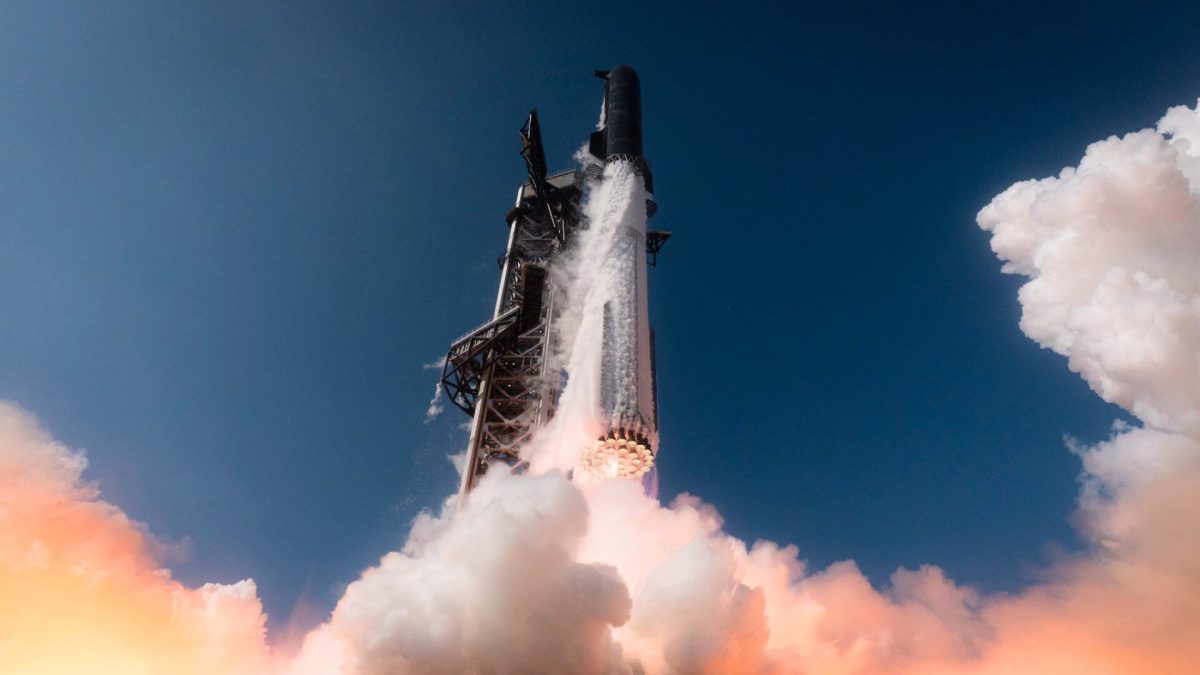
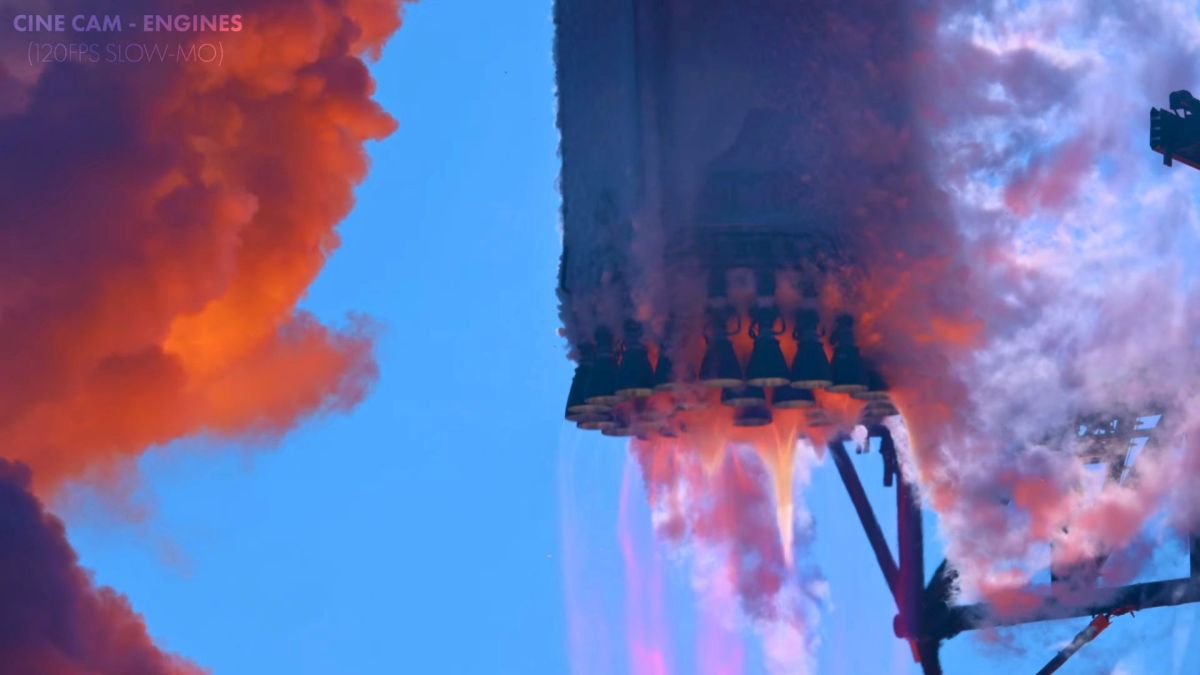
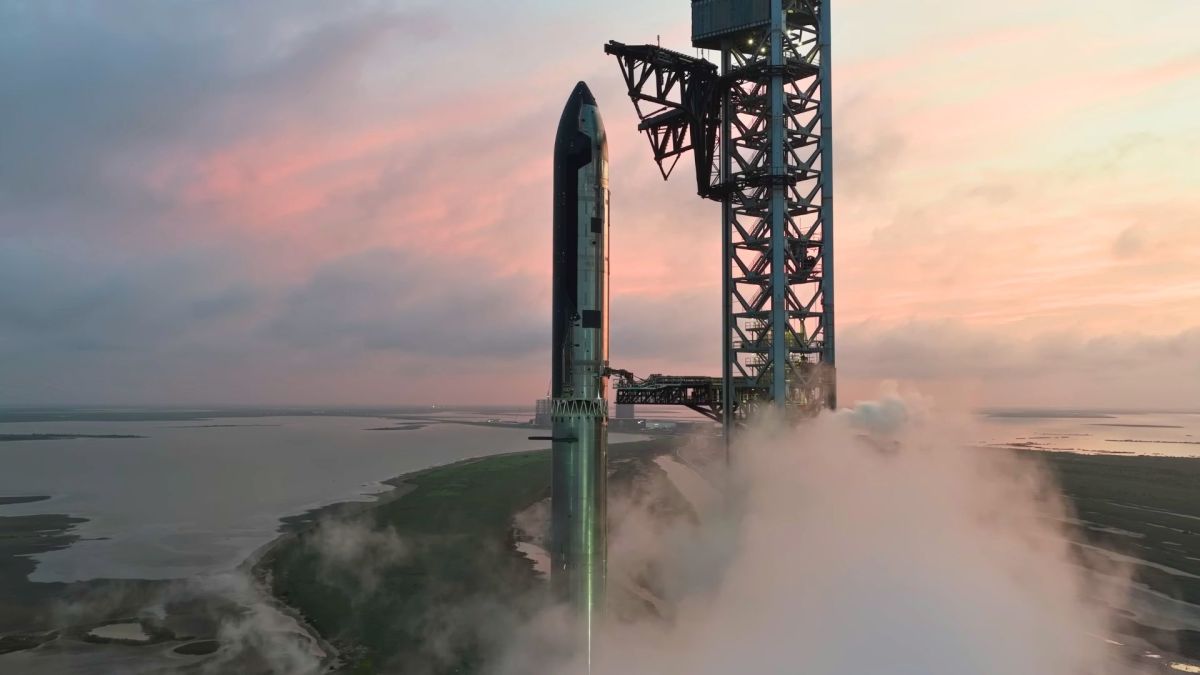
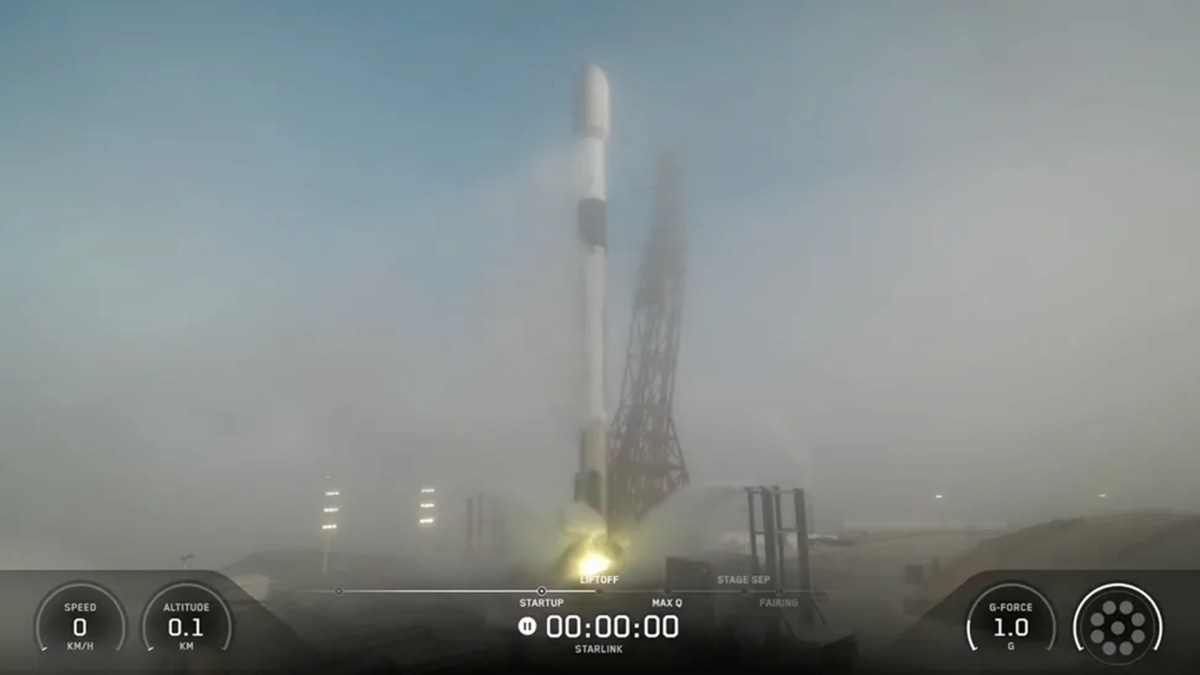
SpaceX's Friday launch of its massive Starship rocket "went quite smoothly," reports CNN, with a SpaceX spokesperson calling this mission "Lucky Number 13" (as the 13th integrated flight test for a Starship spacecraft with a Super Heavy rocket booster): During Starship V3's inaugural test, there were numerous engine issues as several on the booster failed to relight and the Starship spacecraft experienced a nail-biting engine outage. SpaceX also was forced to replace six engines on this vehicle ahead of today's flight because of a likely issue with moisture that prevented at least four from starting up correctly during an initial launch attempt last week... [Friday's Super Heavy rocket booster] fired all 33 of its engines in a pristine performance off the launchpad. The rocket booster also managed to relight 13 engines, as planned, to steer itself back toward a controlled landing. Only when Super Heavy attempted to relight its engines for a controlled landing burn over the Gulf waters did problems arise. The landing was still controlled, though Huot said the vehicle was traveling a bit faster than the company had hoped when it made touchdown. (SpaceX always intended to discard this Super Heavy booster in the ocean.) The Starship spacecraft had no obvious performance issues, making it all the way through its engine burn and managing to reignite one engine mid-flight as part of a test. It also made a controlled splashdown in the Indian Ocean — executing its "softest splashdown" to date in a "dream scenario," according to SpaceX's Dan Huot. The touchdown came about an hour after takeoff, as planned. During its coasting phase, Starship also deployed 20 Starlink test satellites, paving the way for operational missions later down the line in which SpaceX plans to deploy large batches of these satellites in a single launch. In another big win, SpaceX said it was able to make contact with each of those satellites. CNN adds that SpaceX "is facing intense pressure to get Starship ready for a crucial NASA test flight next year that could pave the way for the next moon landing. This flight was also the first for SpaceX as a publicly traded company. Last week's aborted launch attempt sparked a selloff, and shares are still trading below their IPO price. "To cap off the roaring success of today's flight test, SpaceX shared some stunning visuals of the upper Starship spacecraft sailing through space."

Read more of this story at Slashdot.

  •  

SpaceX's Starship Megarocket Hits Key Milestones In Its 'Lucky 13' Test Flight

SpaceX's Friday launch of its massive Starship rocket "went quite smoothly," reports CNN, with a SpaceX spokesperson calling this mission "Lucky Number 13" (as the 13th integrated flight test for a Starship spacecraft with a Super Heavy rocket booster): During Starship V3's inaugural test, there were numerous engine issues as several on the booster failed to relight and the Starship spacecraft experienced a nail-biting engine outage. SpaceX also was forced to replace six engines on this vehicle ahead of today's flight because of a likely issue with moisture that prevented at least four from starting up correctly during an initial launch attempt last week... [Friday's Super Heavy rocket booster] fired all 33 of its engines in a pristine performance off the launchpad. The rocket booster also managed to relight 13 engines, as planned, to steer itself back toward a controlled landing. Only when Super Heavy attempted to relight its engines for a controlled landing burn over the Gulf waters did problems arise. The landing was still controlled, though Huot said the vehicle was traveling a bit faster than the company had hoped when it made touchdown. (SpaceX always intended to discard this Super Heavy booster in the ocean.) The Starship spacecraft had no obvious performance issues, making it all the way through its engine burn and managing to reignite one engine mid-flight as part of a test. It also made a controlled splashdown in the Indian Ocean — executing its "softest splashdown" to date in a "dream scenario," according to SpaceX's Dan Huot. The touchdown came about an hour after takeoff, as planned. During its coasting phase, Starship also deployed 20 Starlink test satellites, paving the way for operational missions later down the line in which SpaceX plans to deploy large batches of these satellites in a single launch. In another big win, SpaceX said it was able to make contact with each of those satellites. CNN adds that SpaceX "is facing intense pressure to get Starship ready for a crucial NASA test flight next year that could pave the way for the next moon landing. This flight was also the first for SpaceX as a publicly traded company. Last week's aborted launch attempt sparked a selloff, and shares are still trading below their IPO price. "To cap off the roaring success of today's flight test, SpaceX shared some stunning visuals of the upper Starship spacecraft sailing through space."

Read more of this story at Slashdot.

  •  

Astronomers May Have Discovered First Moon Outside Our Solar System

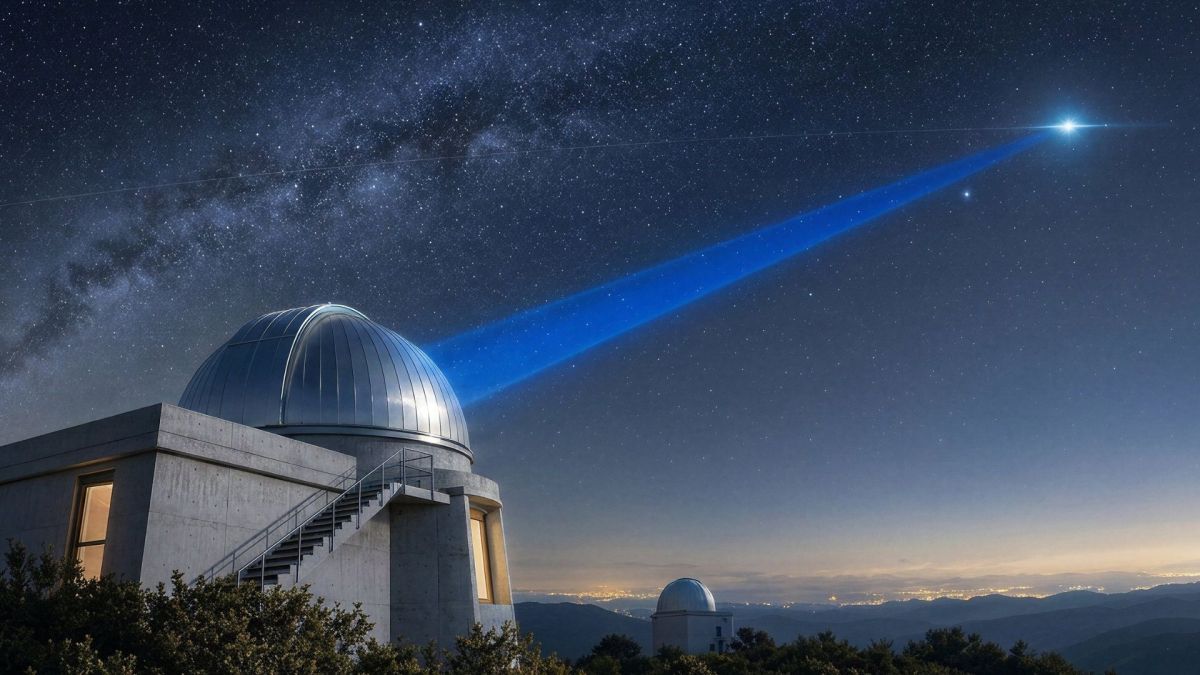
Astronomers studying the star system CD-35 2722 may have found the first known moon-like object outside our solar system. The classification is unusually tricky, however, because it orbits a brown dwarf rather than a planet, making it clearly an "exosatellite" but forcing scientists to rethink where the line between planet, moon, and failed star should be drawn. Space.com reports: The star CD-35 2722 is located around 73 light-years away and has around half the mass of the sun. It is orbited by a "failed star" or brown dwarf. These stellar bodies get their unfortunate nickname because they form like other stars but fail to gather enough mass to trigger the fusion of hydrogen to helium in their cores. In terms of mass, brown dwarfs are more massive than the largest gas giant planets, but smaller than the smallest stars, usually with around 13 to 80 times the mass of Jupiter, or around 0.013 to 0.08 times the mass of the sun. The newly discovered object in CD-35 2722 is certainly moon-like, but rather than orbiting a planet as the moons in the solar system do, it orbits the system's brown dwarf. "This system is somewhat hard to define using solar-system-based words like 'planet' and 'moon.' The exosatellite is clearly massive enough to be a planet, but it does not orbit a star, though it orbits an object that orbits a star," team leader Kevin Hoy of the Universidad Diego Portales and the Millennium Nucleus of Young Exoplanets and their Moons (YEMS) in Chile, said in a statement. "Being the third wheel in this system makes us want to call it a moon, even if it is nothing like the small, rocky moons we have in our system." The team currently isn't able to definitively claim this object in CD-35 2722 is an exomoon, because that would require really nailing down a new definition of what a moon is. "The satellite we report is a giant gaseous body orbiting a highly massive companion, itself several times the mass of Jupiter. We have a clear delineation between the planets and the sun in the solar system, so defining things like moons is simple," team member Alice Zurlo of the Universidad Diego Portales said. "In the CD-35 2722 system, where we are blurring the lines between stars, planets, and moons, the whole thing becomes more complicated to describe." Zurlo and colleagues can, however, confidently claim this is an exosatellite, meaning it is a first-of-its-kind detection no matter what the future holds for its classification. The findings have been published in the journal Nature.

Read more of this story at Slashdot.

  •  

La NASA n’a aucun plan de sauvetage clair en cas d’accident avec ses astronautes sur la Lune

Artémis Lune

Dans sa course effrénée pour devancer la Chine au pôle Sud de la Lune, la NASA a omis un détail crucial : aucun plan de secours n'est prévu si un atterrisseur bascule ou tombe en panne. Une enquête de Forbes, appuyée par un rapport d'inspection interne, tire la sonnette d'alarme sur le risque mortel encouru par les futurs astronautes d'Artémis.

  •  

À défaut d’une date de sortie, RetroSpace dévoile de nouveaux extraits de gameplay

Désormais édités par Kwalee (à qui l’on doit notamment la récente fermeture du studio derrière Luna Abyss), les devs de The Wild Gentlemen ont profité du Convergence Games Showcase pour dévoiler du gameplay de RetroSpace, un immersive sim d’horreur disco-punk à la première personne se déroulant dans l’espace. On y découvre moult façons d’utiliser l’environnement et les objets présents à notre avantage. Par exemple, un simple extincteur peut devenir un jetpack improvisé et votre vaporisateur peut être utilisé pour stun l’ennemi ou créer un piège électrique en arrosant le sol près d’un boîtier sous tension. Concrètement, il ne tient donc qu’à vous de découvrir les possibilités offertes et de résoudre de manière créative une situation donnée. Présenté comme ça, le tout a l’air plutôt fun et on a envie d’en découvrir davantage. Lors du dernier Steam Neo Fest, les membres de la rédac avaient plutôt apprécié la démo pour son univers et son gameplay, rappelant notamment sur bien des aspects System Shock 2.

Du côté du synopsis, la station spatiale dans laquelle vous vivez est entrée dans un trou noir et suite à ce fâcheux incident, une partie de l’équipage s’est transformée en monstres. Dès lors, pour sauver votre peau, vous décidez de trouver un moyen de rejoindre la Terre, quitte à condamner l’humanité. Pour le moment, RetroSpace n’a toujours pas de date de sortie. En attendant de nouvelles infos, vous pouvez toujours ajouter ce dernier à votre liste de souhaits Steam, si vous êtes intéressés.

  •  
❌