
Vue lecture

Toem 2 turns photography into a whimsical adventure game

The upcoming game Toem 2 melds photography and play. The surprisingly delightful and cozy game is due out in September.

Toem 2 casual indie adventure photography game screenshotSomething We Made

I’m just as passionate about gaming as photography, so you can imagine my elation when my team mentioned to me Toem 2 is about to release. Toem 2 is an upcoming casual indie adventure about photographing a character’s world as they adventure through it. Something We Made, the developers behind the game, recently announced that Toem 2 will be available to play on major consoles and PC on September 29, 2026.

Here’s how Something We Made describes the game: “Step back into the shoes of a curious photographer and set off on a brand new adventure all about uncovering hidden details, helping friends along the way, and documenting the world’s little wonders in Toem 2.”

Toem 2 is meant to be a relaxing adventure through a monochrome world filled with whimsical characters. I enjoy playing these types of games because you don’t feel pressured to compete with others for space or points as some arbitrary clock ticks down to zero. The game is single-player and can be played in short increments as you have time.

Toem 2 casual indie adventure photography game screenshot
Something We Made

What’s been revealed of Toem 2‘s gameplay so far reminds me of a blend between Beasts of Maravilla Island, Lush foil Photography Sim and even a sprinkling of Lake. These other games also have photography-related leanings. Toem 2 aims to offer a wide variety of fun events to explore. Its casual, cartoony style isn’t an emulation of professional photography like the tools built into some other games, but sometimes it can be nice to take off our Serious Photographer hats.

Check out the 30-second trailer below. The gameplay is truly a unique blend I personally can’t wait to explore. I especially love how they styled the voices to be language independent, fitting perfectly with their fun character themes:

As soon as Toem 2 is released on September 29, 2026, we’ll get our hands on it and show you all what it’s about. If you don’t want to wait, the original game, Toem 1: A Photo Adventure, is available now on Steam.

About the Author: Mathew Anderson is a proud Community Manager for the technology industry and a past visitor to DPReview.com for all his camera needs. He is currently the lead of DPReview’s community and primary communication link between the community and DPReview’s team.

Want to stay up to date on the latest product news and releases? Add DPReview as a preferred source to ensure our independent journalism makes it to the top of your Google search results.

add as a preferred source on google

  •  

VSCO is turning 50 photographers’ images into public art across the US

VSCO is selecting one photographer per US state to have their image on a public billboard. Here’s how to enter before the September 10 deadline.

VSCO app logo with a circular black geometric design above the word “VSCO” on a soft, blurred gray backgroundVSCO

VSCO is selecting one photographer from every state to have their work licensed for use on public billboards across the country. The campaign, called The Fifty, is a free open call for VSCO members with submissions running through September 10, 2026.

To enter, photographers simply post an image to VSCO using the hashtag #TheFifty with a hashtag for your state, such as #Kansas. There should also be a short caption, and you’ll need to add your state to your bio in the app. VSCO suggests submitting three to five images, especially if they are part of a series. It says it’s looking for “strong, impactful images with a story that extends beyond the frame” and wants to see photographs that prompt people to slow down and look closer. 

The brand says it will curate selections from submissions and compensate the 50 chosen photographers, though exact compensation details have not been publicly specified. Each selected image will appear on a billboard in the photographer’s home state. It also says that selected images may also be showcased through editorial features, curation and licensing opportunities, giving even more exposure to photographers and helping them grow their careers. 

Images may also be showcased through editorial features, curation and licensing opportunities

The campaign fits a pattern VSCO has been building for the past several years of actively spotlighting the work of creatives who share images on its app. The company has made a point of surfacing and celebrating that work through editorial features, curated in-app showcases and now physical placements. It also acquired a freelance mentorship platform in 2025 to expand career support for photographers, and The Fifty extends that same direction into public space, fitting VSCO‘s mission of helping creators grow and be seen.

For the millions of US-based photographers already using VSCO, the barrier to entry is low: you’ll need a VSCO account (the free version works), then post a photo, add the hashtags and your state to your bio, and submit before September 10. For those outside of the US, VSCO says opportunities will be coming in the near future.

About the Author: Abby Ferguson holds an MFA in photography and blends a fine-art background with extensive editorial and commercial experience. She built and led an in-house imaging program for a large vacation rental company and has served as an associate editor at Popular Photography. She also teaches at a local community college and serves on its Photographic Technology Program Advisory Board, sharing her knowledge and enthusiasm for the medium.

Want to stay up to date on the latest product news and releases? Add DPReview as a preferred source to ensure our independent journalism makes it to the top of your Google search results.

add as a preferred source on google

  •  

Télex

Dark Souls et Super Monkey Ball m’ont toujours laissé indifférent, mais j’avoue que Marble Souls, le mariage impie entre ces deux univers proposé par cet idiot de Stuffed Wombat (Qomp, Mosa Lina) me donne envie. Un peu comme le riz au coca, bizarrement pas mauvais, si vous ne connaissez pas. K.
  •  

Les devs de HOLE fêtent les 100 000 joueurs avec des infos sur un nouveau projet

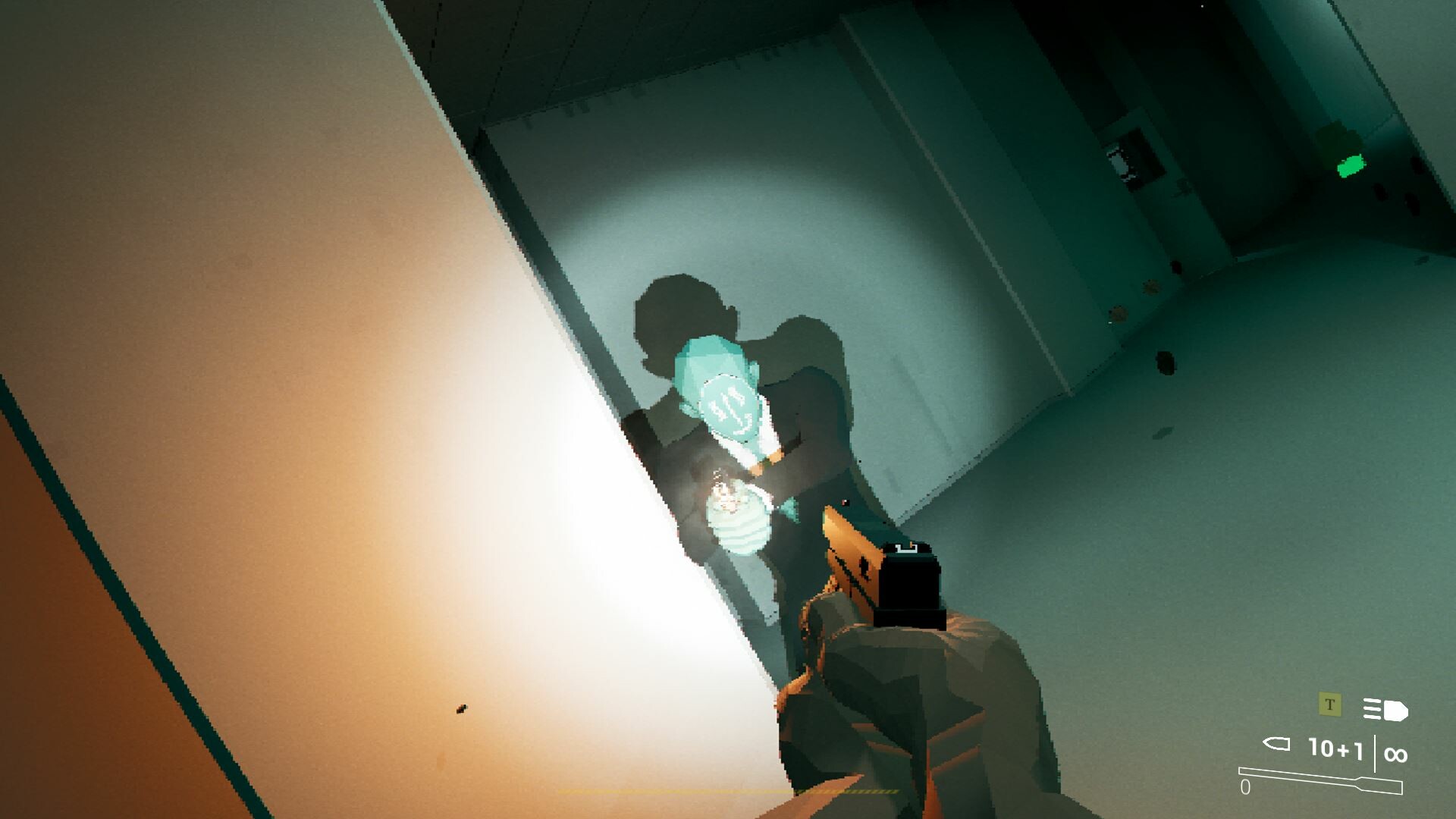
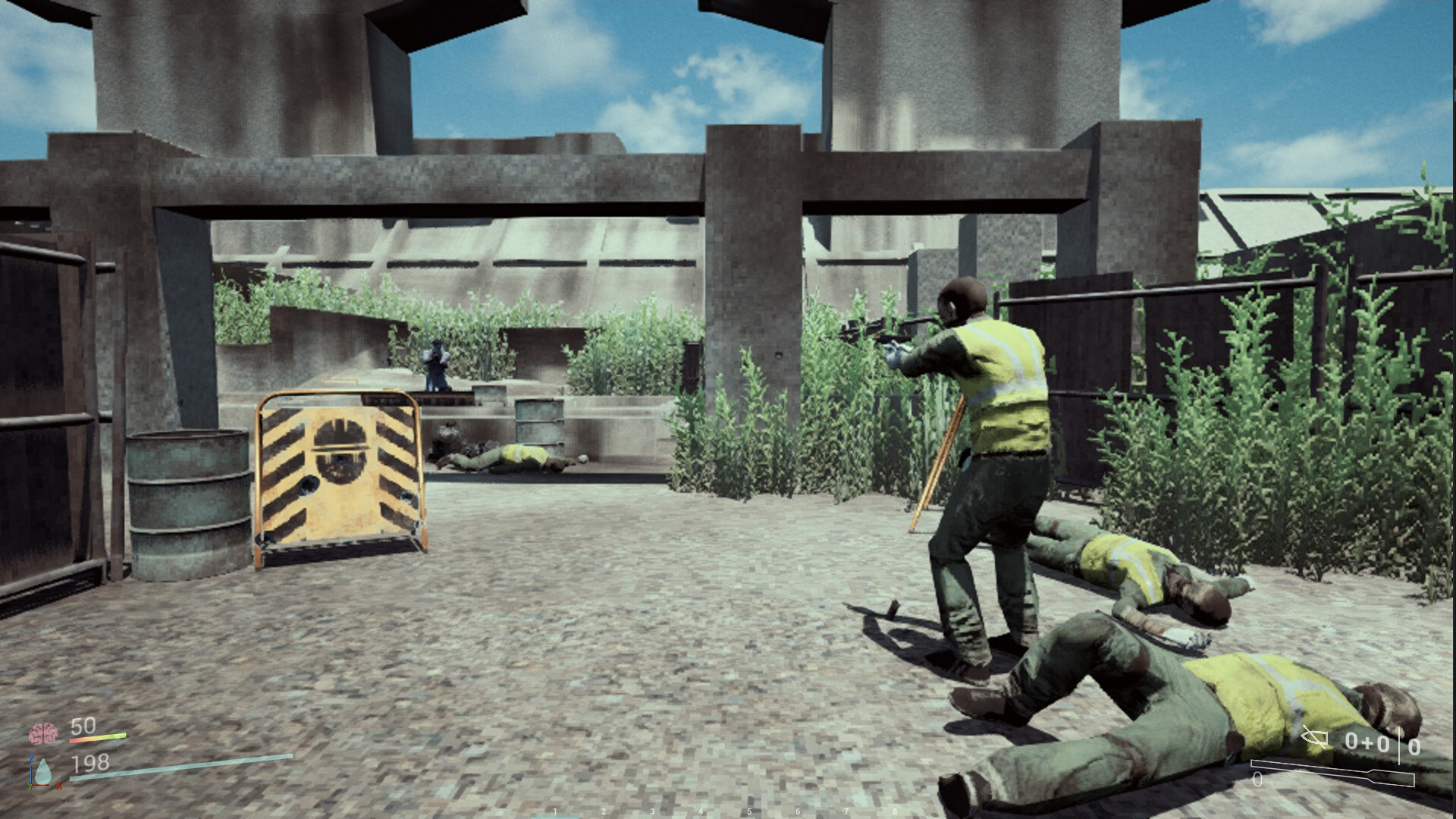
L’an dernier, nous avions découvert ce petit extraction shooter sans prétention et l’avions trouvé fort sympathique, que ce soit côté gunfeel ou même patte visuelle. Eh bien, preuve que ce monde est parfois juste, le succès est bel et bien au rendez-vous ! Une formidable nouvelle pour le créateur solo du FPS indépendant qui a passé le cap des 100 000 copies vendues. Clairement, pour le prix du jeu, on peut affirmer sans se mouiller que la réussite est amplement méritée. On ne peut d’ailleurs que trop vous conseiller de jeter un oeil à notre test sur le sujet.

Capture d'écran nº 2

Pour souligner l’engouement autour du titre et remercier la communauté de joueurs, le studio NEGAFISH, qui se compose maintenant d’un membre supplémentaire, a pris la parole par le biais d’un billet de blog Steam. On y retrouve ainsi, après les remerciements, quelques infos inédites sur le nouveau projet de l’équipe. Il s’agira d’un escape/looter shooter solo réutilisant la base de HOLE en y ajoutant une couche supplémentaire de profondeur de gameplay. Sont notamment évoquées des features liées à l’exploration et des notions de survival, avec une jauge d’hydratation, un inventaire à gérer et de l’équipement à récupérer.

3d593db0d1500d852e92ec74e2fd3d2c8a2e542d

Comme vous pouvez le constater au dessus, le court extrait de jeu présenté par les devs pour l’occasion est un poil mollasson, mais on a suffisamment apprécié HOLE pour leur accorder le bénéfice du doute en attendant d’avoir des news plus fournies au sujet de ce projet, dont le développement n’est probablement pas encore très avancé. En tout cas, si vous êtes curieux de connaître leur titre précédent et avez quelques heures à tuer, il est actuellement à -10 % sur sa page Steam, et ne vous coûtera ainsi que 4,50 €.

  •  

Piratage sur commande

Êtes-vous un des chanceux qui a réussi à se hisser au sommet des listes d’attentes et à commander une Steam Machine ou un Steam Controller dans les deux derniers mois ? Félicitations ! Mais aussi, prenez garde si vous recevez un mail très renseigné sur votre commande, soi-disant venant de Valve, vous expliquant que vous avez droit à un remboursement partiel sur votre achat ou que le paiement n’est pas passé et qu’il faut transmettre à nouveau vos coordonnées bancaires. En effet, Valve a prévenu ses clients concernés que son prestataire de distribution européen a été victime d’une cyberattaque et qu’un certain nombre d’informations ont vraisemblablement été compromises. Après, en bon ressortissant français qui voit une base de données d’une administration publique se faire pirater une fois tous les quinze jours environ, je suis sûr que vous êtes déjà une personne très vigilante. K.
  •  

How Christopher Nolan used a modified Pentax 67 to make IMAX history with The Odyssey

Shooting in a specialized format requires specialized tools.

A composite image of director Christopher Nolan holding a camera, cinematographer Hoyte van Hoytema and various stars of The Odyssey.Universal

Christopher Nolan’s recent blockbuster hit, The Odyssey, was the first full-length narrative movie shot entirely on 15/70mm IMAX film, with each frame exposed onto a 70×48.5mm negative. There’s been a countless amount of ink spilled over the challenges of working with the massive cameras needed to shoot the format for every scene (and about how few people were actaully able to see it as the director intended*), but recently the Instagram account for Sunny16Labs shared more details on a production quirk that movie buffs noticed in behind-the-scenes footage: Nolan’s strange choice of director’s viewfinder.

Directors and their cinematographers often carry around devices that allow them to compose and block shots before having to set up the actual camera. This is especially important if you’re shooting film, as those cameras tend to be bulkier and heavier than their digital counterparts (and don’t have the same ability to give you an exact preview of your shot). These devices often have a lens mount, so you can see what the scene will look like through the actual glass you’re shooting with.

One small problem, though: IMAX cameras don’t use the same lenses as their Super35 or full-frame counterparts, and the optics need to be much larger and heavier to cover the massive film format, so there aren’t many pre-made solutions. According to Sunny16Labs, the IMAX team solved this by modifying a Pentax 67, removing the shutter assembly and modifying the mount so the camera could accept the same lenses as the IMAX film cameras.

Of course, taking out the shutter means that the camera can no longer capture images. But because it was designed to shoot stills on medium format 56mm x 70mm film, its viewfinder and mirror are capable of showing the entire image from an IMAX lens. The modified camera also includes frame-line previews for the IMAX negative, allowing Nolan and longtime collaborator and cinematographer Hoyte van Hoytema to choose their lens and framing before having to set up the massive camera rig.

This isn’t actually the first time Nolan and his team have used this kind of setup, as there are also shots of them using it on the set of Dunkirk. Cary Joji Fukunaga, director of the James Bond film No Time To Die, has also been photographed using a 67 with an IMAX logo on the viewfinder. (It could be that it’s the exact same camera; there’s famously only so much IMAX gear out there.) Likewise, cinematographer James Neihouse has discussed using a modified Pentax 67 as a director’s viewfinder, but he says he was able to take pictures with the version he used, suggesting it was a different design that retained the shutter.

When you keep making a billion dollars at the box office, who’s going to tell you no?

In the photography world, the Pentax 67 is famous for being a relatively large and heavy camera, so it’s funny to see it being used as a lightweight alternative. That goes to show the difficulties of shooting with such large format, but, given that Nolan keeps pioneering what can be done with IMAX with each movie he makes, he clearly thinks it’s worth it. And the market seems to agree: according to an IMAX press release, The Odyssey is the “highest grossing IMAX release of all time,” with 70mm screenings accounting for $37.5 million of the film’s billion-dollar box office run.

* – Not to brag, but I actually did make the seven hour drive to a theater that was showing actual 15/70 IMAX projections of the movie. I absolutely appreciated the extra immersion of the giant screen and 1.43:1 aspect ratio, but did feel like I might have preferred digital IMAX GT projection. Sure, it’d likely have a bit less detail – though probably not enough for me to notice – but it also wouldn’t have had the flicker that comes with film projection, which was especially noticeable in bright scenes. Still, it’s hard to imagine that I could’ve picked a better movie for my first real IMAX viewing, and the sound alone made the premium format worth it. 

About the Author: Mitchell started taking pictures at 10 and hasn’t stopped since. It’s been a wide-ranging adventure, spanning a wide variety of genres and locales, and occasionally dipping into fascinations with video and filmmaking. They honed their technical knowledge doing documentation, programing and QA, writing for The Verge, and just generally messing around on the computer to see what breaks.

Want to stay up to date on the latest product news and releases? Add DPReview as a preferred source to ensure our independent journalism makes it to the top of your Google search results.

add as a preferred source on google

  •  

Blackmagic’s Cinema Camera 6K gets continuous AF, making it a more competitive budget cinema option

The company is making a play to turn its smaller full-frame cinema camera into something useful for run-and-gun shooting.

The rear display and EVF of Blackmagic Design's Cinema Camera 6KBlackmagic

Blackmagic has released a firmware update that adds continuous phase-detect autofocus, complete with object tracking and face detection, to its full-frame Cinema Camera 6K. This makes the camera more competitive in an increasingly crowded landscape of video-centric cameras focused on owner-operators and creators.

When the $3000 Blackmagic Cinema Camera 6K launched, it could acquire focus on something in the center of the frame, but it was a one-time operation; it wasn’t able to keep the subject in focus as it or the camera moved. While this wouldn’t have been a deal-breaker for many users – as the “cinema” name implies, much of its target audience will be using manual-focus lenses with focus pulling equipment – it also narrowed the scope of what you could do with it. It would work fine for more careful, scripted shoots, but wasn’t really ideal for more run-and-gun productions.

A screenshot showing the Blackmagic Cinema Camera 6K's object tracking autofocus interface
The Blackmagic Cinema Camera 6K now lets you do standard AF-S, continuous autofocus, object tracking and face recognition, with an AF-compatible L-mount lens attached.
BlackMagic

Now, though, the camera will be able to continuously focus on a human subject, tracking their face, or on a generic subject through object tracking. Blackmagic also isn’t making you completely give up control to use autofocus; the camera has settings to control how fast it transitions focus, and lets you pause autofocus by holding down a button. That way if your subject goes from moving to stationary, you can make sure the AF system isn’t going to pulse or try to focus on something else.

That last point, however, highlights a potential gap between the Cinema Camera 6K and other video-focused cameras, like the Sony FX3, Canon EOS R6 V and Nikon ZR. Those cameras use AF systems that are much more mature, so you don’t have to worry as much about managing them; you can just leave them on, and trust them to keep your subject in focus in most situations. While Blackmagic’s autofocus system has been out in public beta for around a year now, early adopters reported mixed results, and it’s still not as tried and tested as the others.

This full release is a starting point for the company’s autofocus ambitions

However, this full release is a starting point for the company’s autofocus ambitions and at least puts the Cinema Camera 6K in the conversation with those other cameras, giving people who need autofocus another option that has a robust set of features. It offers 6K open gate recording and internal Raw, full-size HDMI and mini-XLR connectors, a 5″ rear display and an optional detachable EVF. It also uses L-mount for lenses, which is relatively adaptable and has a growing selection of native options.

Hopefully now that the Cinema Camera 6K’s autofocus support has fully launched, we’ll see it come to more cameras in Blackmagic’s lineup. While not all of them will have the phase detection hardware on their sensors, the company promised it’d be coming for more, unspecified cameras when it initially announced the feature last year, and it’s currently available in beta for the Pyxis 6K.

The Blackmagic Camera 10.2.2 firmware that enables autofocus is available as a free download from the company’s website. It also adds support for Blackmagic’s cloud streaming system, 4-channel audio recording and up to 10 minutes of pre-recording, letting you save the moments before you press the record button.

About the Author: Mitchell started taking pictures at 10 and hasn’t stopped since. It’s been a wide-ranging adventure, spanning a wide variety of genres and locales, and occasionally dipping into fascinations with video and filmmaking. They honed their technical knowledge doing documentation, programing and QA, writing for The Verge, and just generally messing around on the computer to see what breaks.

Want to stay up to date on the latest product news and releases? Add DPReview as a preferred source to ensure our independent journalism makes it to the top of your Google search results.
add as a preferred source on google

  •  

Super Nintendomination

Dans une industrie où tout le monde se fait virer et où la course à l’IA transforme le jeu vidéo en loisir de riche, on a besoin de repères rassurants. En voici un : Nintendo écoule ses Switch 2 avec la même facilité qu’un marchand d’eau minérale en plein désert. Sur le premier trimestre de l’année fiscale 2026-2027, l’entreprise annonce avoir livré 3,82 millions de Switch 2, soit 23,68 millions d’unités sur ses 13 premiers mois ; le meilleur démarrage de l’histoire du constructeur sur cette période. Un destin intéressant pour une console dont on se plaignait d’un prix prohibitif il y a encore un an. Car aujourd’hui, avec la plus petite PS5 à 600 €, le plus petit Steam Deck à 779 €, une next-gen promise à plus de 1000 € et des composants PC qui se payent désormais en glacières d’organes, la Switch 2, même quand elle passera à 500 €, est devenue de facto la machine d’entrée de gamme. K.
  •  

Disque disque rage

S’il y a un sujet qui fait couler de l’encre en ce moment, c’est bien l’annonce de Sony de l’arrêt de production de disques pour les nouveaux jeux PS5 à partir de janvier 2028. En d’autres termes, le tout démat', que les gens le veuillent ou non. D’ailleurs, pour bien que tout le monde soit au courant, y compris ceux qui ne lisent pas la presse jeu vidéo (contrairement à vous, bande de zèbres sapio HPI) et certainement pour respecter certaines législations européennes encadrant l’obsolescence des produits mis en vente, le consolier applique désormais sur les boîtes des PS5 avec lecteur disque un autocollant informant les consommateurs dans sept langues différentes quant à cette décision dont l’objectif est surtout, disons-le, de faire grossir la marge de Sony et de réduire le contrôle des joueurs sur les produits culturels qu’ils achètent. K.
  •  

Get Back On the Road, bientôt une suite à Road 96 ?

Digixart, le studio montpelliérain à l’origine du walking sim Road 96, ainsi que de l’excellent Tides of Tomorrow 🌊 – une aventure narrative multijoueur asynchrone que nous avions particulièrement appréciée – a publié un énigmatique teaser lors du THQ Nordic – Digital Showcase 2026, intitulé Get Back On the Road. Quelques secondes suffisent à comprendre que le studio prépare un nouveau jeu dans l’univers de Road 96. Nous n’avions pas eu l’occasion de réaliser un test à l’époque, mais néanmoins, nous l’avions tout de même essayé à la rédaction. Comme certains de nos lecteurs, nous avions apprécié le jeu pour son histoire et son concept, sa direction artistique, ainsi que la qualité de son écriture et ses dialogues. Mais ce sont surtout ses choix et l’aspect roguelite qui donnaient cette saveur particulière et une très bonne immersion.

Le court extrait met en scène un échange entre John et Fanny, deux des protagonistes du jeu original, dans une atmosphère presque suspendue, comme si le temps s’était arrêté. La mise en scène, volontairement minimaliste, laisse le personnage de Fanny occuper tout l’espace, et ce choix narratif suggère que Get Back On the Road pourrait s’intéresser à ce qu’elle devient après les événements tumultueux de Road 96.

Pour l’heure, rien de concret : aucune date de sortie, aucune confirmation que Get Back On the Road sera le titre définitif. Si vous souhaitez découvrir Road 96 en attendant d’en découvrir plus, le jeu est actuellement en promotion chez notre partenaire Gamesplanet à -83%, soit moins de 4€.

  •  

Télex

Essoré par les coupes sombres de Microsoft, id Software fait la gueule. Un vétéran du studio tacle sévèrement Xbox, estimant que la direction « ne comprend rien à l'art » et que boucler un blockbuster comme DOOM : The Dark Ages relève désormais de l'impossible. Chez Microsoft, on affirme qu'il faut y croire très très fort et que le pouvoir de l'amitié suffira. P.
  •  

The Atrium, un roguelite pour ceux qui aiment souffrir en silence sous terre

The Atrium, développé en solo par FlyingPenguin, est un FPS roguelite où l’on se réveille après une longue chute au fond d’une grotte qui, à première vue, n’a rien d’abandonnée mais n’a clairement pas envie de vous laisser repartir. Le pitch tient en une phrase : pour remonter, il faut creuser plus profondément, ce qui est évidemment la pire idée possible, mais la seule que votre personnage semble avoir sur le moment. Creuser comme un dératé, creuser là où personne n’a envie d’aller, creuser toujours plus profond jusqu’à comprendre ce qui se cache au fond de la grotte avant que tout ne s’effondre. 

Le jeu repose sur une ambiance anxiogène, une progression incrémentale et une cave qui semble vous observer à mesure que vous avancez, comme si elle attendait le moment idéal pour vous broyer. Chaque outil que vous débloquez ressemble à une tentative désespérée de repousser l’inévitable. Le développeur promet une montée en puissance à coups d’outils de plus en plus absurdes, du simple pic à la foreuse laser, et une tension qui grimpe à chaque descente. La boucle de gameplay repose sur un cycle quotidien : descendre, miner, ramasser des ressources, remonter, améliorer son équipement, puis replonger encore plus loin. Un rythme qui ferait passer une journée dans une fosse du Nord–Pas‑de‑Calais pour une promenade de santé, avec cette impression permanente que la grotte vous regarde comme un vieux terril qui a vu disparaître trop de mineurs. Chaque descente ressemble à une journée de travail dans une galerie mal étayée, où l’on vous assure que « non, vraiment, c’est pas dangereux », juste avant que tout ne menace de s’effondrer sur votre tête.

Pas encore de date de sortie, mais The Atrium dispose d’une page Steam depuis laquelle vous pouvez l’ajouter à votre liste de souhaits, si vous êtes intéressés.

  •  

Tamron lays out its plan for four more releases this year

The company’s goal is to hit ten new models for 2026, but that doesn’t necessarily mean four new lenses.

Tamron's wordmark on a blue and gold background.Tamron

Tamron has announced its second quarter financial results for 2026, reiterating its goal of releasing ten new own-branded lens models this year. While the promise isn’t new, the company bringing it back up to investors is a chance to measure its progress towards that goal.

By Tamron’s math, it has released six new models already this year. That decidedly doesn’t mean six new lenses, though: it means two versions of the 35-100mm F2.8 (one for E-mount, one for Z-mount), bringing the 17-70mm F2.8 from 2021 to Canon RF and Nikon Z mount, and releasing the new 12-20mm F2.8 for both Sony and Nikon.

Chart displaying Tamron's releases for 2024, 2025 and 2026, along with descriptions of how many lenses it has for each mount.
This chart shows Tamron’s six model launches to-date for 2026 (not to be confused with it having made six new lenses), as well as how many options it makes for each of its supported systems.
Tamron

While Tamron hitting its goal of releasing 10 models this year theoretically means it has four more models to go, that’s unlikely to mean that we’ll see that many new optical designs. Indeed, the company can hit that goal without any new optical designs, as it still makes plenty of lenses that are currently only available on E-mount that it could bring to other platforms.

Still, it’s clear the company is becoming more ambitious with its releases. The chart in its financial statement says that from 2023 to 2025, its goal was six to seven models launched per year; before that, it was five new models.

tamron 12-20mm f2p8 front element
It’s not impossible that we could still get an actually new lens this year too; Tamron did just introduce a new design language, so perhaps it plans on updating some older models with it.
Mitchell Clark

Part of the strategy to increase releases likely involves a shift away from only releasing new lenses on E-mount. When we interviewed the company at the CP+ trade show earlier this year, Kei Nagai, the section manager of Tamron’s Overseas Sales Department, told us the company was “moving toward simultaneous multi-mount launches.” He also said Tamron would “take a holistic view of the entire market and existing lineups to carefully determine which spec and mounts to prioritize.”

At the same time, the company’s future is more in question now than ever. Last week, Tamron announced that Sony had made an offer to acquire it, and said it had set up a special committee to evaluate that offer. If that deal goes through, it’s unclear how it would affect that strategy, or the company’s goals.

One thing is sure, though: with the promise of more releases and a potential resolution to the Sony story, the next few months are shaping up to be very interesting for Tamron.

About the Author: Mitchell started taking pictures at 10 and hasn’t stopped since. It’s been a wide-ranging adventure, spanning a wide variety of genres and locales, and occasionally dipping into fascinations with video and filmmaking. They honed their technical knowledge doing documentation, programing and QA, writing for The Verge, and just generally messing around on the computer to see what breaks.

Want to stay up to date on the latest product news and releases? Add DPReview as a preferred source to ensure our independent journalism makes it to the top of your Google search results.
add as a preferred source on google

  •  

Toujours vivant, toujours debout

Dix-neuf nouvelles cartes à sa campagne, accompagnées d'une bande-son inédite, de nouvelles armes et ennemis, une carte en mode match à mort, le tout pour pas un rond dans une extension gratuite intitulée Dawn of the Machine, vraiment quel beau cadeau pour les joueurs de Maratho.... ah non, finalement on me signale dans l'oreillette que tout cela est pour Quake, qui a fêté ses 30 ans en juin dernier. Le studio id Software est mis à mal par les licenciements chez Microsoft, mais son héritage est donc toujours vivace. Voir papy Quake aussi généreux envers ses fidèles devrait servir de leçon à tous les jeunes FPS de nos jours, qui ont oublié la politesse et le respect envers leurs joueurs et les anciens. Il leur faudrait une bonne guerre des consoles à ces petits cons ! P.
  •  

Quake fête enfin ses 30 ans avec Dawn of The Machine

On ne l’attendait pas, mais l’annonce est finalement tombée hier à la QuakeCon : Quake reçoit une nouvelle campagne officielle, Dawn of the Machine, développée par MachineGames et disponible gratuitement pour tous les possesseurs de la version remastérisée. Une surprise d’autant plus marquante que, dans notre article précédent, nous regrettions qu’id Software n’ait rien fait pour célébrer les 30 ans de la licence. C’est désormais chose faite, et de manière particulièrement généreuse. MachineGames, déjà auteur de Dimension of the Machine sortie en 2021 avec le remaster de Quake, revient avec une campagne complète de 19 cartes, une nouvelle carte multijoueur, une bande‑son inédite et une structure de progression entièrement repensée. Le studio y réaffirme son amour pour la série, porté par son fameux « Quake Club », une équipe interne qui développe du contenu Quake sur son temps libre.

Cette nouvelle extension propose une aventure plus ambitieuse que les précédentes. Dawn of the Machine abandonne le système de hub utilisé dans Dimension of the Machine pour adopter une progression linéaire où santé, munitions et améliorations persistent d’un niveau à l’autre, renforçant la tension et la cohésion de la campagne. Le Ranger se retrouve à explorer une dimension fracturée où chaque zone dissimule des accès verrouillés qu’il faudra débloquer en récupérant des artefacts anciens, ouvrant ainsi des sections jusqu’ici inaccessibles, riches en détours inattendus, combats supplémentaires et secrets bien enfouis. Le monde regorge également de bonus durables comme des augmentations de vitalité ou de réserves d’armes qui modifient subtilement la manière d’aborder les affrontements sans transformer Quake en roguelite. À cela s’ajoutent des déclinaisons inédites de l’arsenal, dont la Super Hache, qui déchaîne la foudre lors de frappes successives, et le Canon laser, qui tire des projectiles à ricochet dont les impacts rebondissent sur les surfaces pour frapper les ennemis sous des angles improbables. MachineGames introduit en parallèle de nouveaux adversaires, Rocket Ogre, Demo Dog, Blood Shambler, et quelques surprises supplémentaires qui devraient répondre aux attentes de la communauté. Les 19 cartes promettent un mélange d’horreur, d’action et de folie fidèle à l’esprit du Quake original, tout en cherchant à surprendre les joueurs aguerris.

DOTM MAP1 Action yywovwPour les curieux, un making-of est disponible, ainsi qu’une vidéo de 15 minutes réalisée par nos confrères de Digital Foundry. On y découvre notamment comment le Quake Club s’est organisé pour créer cette campagne en parallèle de projets plus lourds comme Indiana Jones and the Great Circle, comment l’équipe a défini ses objectifs – célébrer les 30 ans, surprendre les joueurs, et s’amuser – et comment la simplicité technique de Quake permet à chacun de toucher à tous les aspects du développement, du level design au scripting. Le document revient aussi sur les inspirations thématiques, les défis liés à la structure linéaire et la volonté de rester fidèle à l’essence du jeu sans tomber dans la nostalgie figée. Un aperçu passionnant, mais qui ne dévoile pas tout, laissant aux lecteurs le plaisir de découvrir les coulisses et le jeu dans leur intégralité.

DOTM BTS Map yu6eyoDifficile de ne pas se réjouir de cette annonce. Non seulement Quake fête enfin dignement ses 30 ans, mais MachineGames prouve une fois de plus que la licence mérite bien plus qu’un statut d’icône entretenue par sa communauté, aussi passionnée soit-elle, comme nous l’expliquions encore récemment. On espère désormais que cette dynamique ouvrira la voie à un véritable retour de la série, au travers d’une suite à Quake 4 (2005). Après Dawn of the Machine, difficile de ne pas rêver d’un nouveau Quake. On organisera dès qu’on le pourra une soirée avec la communauté pour se faire un avis sur Dawn of The Machine. Si vous êtes intéressés, le jeu est actuellement en promotion sur Steam, et chez notre partenaire Gamesplanet en promo à –62 %, soit 3,8 €.

  •  

Salamèche courte

Alerte diplomatique majeure : le ministère japonais des Affaires étrangères a poliment supplié la Maison-Blanche d’arrêter de salir ses licences dans ses mèmes de propagande. Il faut dire que l’équipe de communication de Trump enchaîne les chefs-d’œuvre du malaise : générique de Pokémon collé sur des arrestations de clandestins, frappes de missiles en Iran montées sur du Wii Sports, et citations de Naruto pour justifier des baisses d'impôts. Gênée aux entournures, Tokyo essaie de sauver l’honneur de ses mascottes avant que Pikachu ne finisse cité à la tribune de l'ONU pour crimes de haine. Malheureusement, tant que les juristes de Nintendo n’auront pas envoyé leurs escadrons de la mort judiciaires pour distribuer du copyright strike à tour de bras, l'oncle Sam continuera d'étaler sa confiture intellectuelle sur vos souvenirs d'enfance. P.
  •  

Panasonic did what Apple, Sony and Nikon couldn’t: overturn a Red Raw video patent

Japan’s patent court just invalidated one of the patents that stood in the way of Raw video’s adoption

An array of Red Cinema Camera products with the V-Raptor XL 8K at the frontRed

The Japanese Patent Office has declared one of Red’s key Raw video patents as invalid, following a challenge by Panasonic.

The court determined that many of the claims made in the patent, first filed in the US in 2008, would have been obvious to someone skilled in the subject area and familiar with existing developments.

The news, first reported by Thom Hogan, put Nikon’s video subsidiary in the position of trying to defend a patent that Nikon had previously argued was invalid.

The patent itself describes a high-resolution video camera that compresses its Raw data, and appears to correspond to the patent at the center of historic claims against Sony and Apple and the almost inevitable counter-suits from those companies. We reported on many of these challenges, as well as Nikon’s, over the years. 

Nikon famously resolved the dispute by buying the company. Some of Red’s cinema camera and Raw knowledge has subsequently been applied to recent Nikon models.

It’s difficult to know what the impact the rejection of this patent will be, given Canon, Panasonic, Sony and Blackmagic Design all now produce cameras with internal Raw video capture. One possibility the abolition of the license fees reportedly due to Red from users of Apple’s ProRes RAW codec. But given Red went from being privately held to being absorbed into Nikon, it’s difficult to get a sense for how significant these might be. And, of course, we shouldn’t assume even a minor cost reduction would necessarily get passed on to consumers.

About the Author: Richard graduated as a scientist but had a lot more fun writing and shooting for his university magazine. A number of years spent variously as a reporter, writer and editor on science and engineering titles combined his knowledge of science with his interest in images and words. But it was spotting the connections between emission spectra, white balance and all the nonsense he’d taught himself playing around in Photoshop that helped kindle an interest in digital photography. Searching for a camera led to him discovering DPReview and Richard was recruited by Phil Askey in 2007. He’s been combining his love of photography, communication and attention to detail (pedantry?) ever since. He has unusually strong opinions about lenses for the APS-C format.

Want to stay up to date on the latest product news and releases? Add DPReview as a preferred source to ensure our independent journalism makes it to the top of your Google search results.

add as a preferred source on google

  •  

Flashback’s “dream job” pays you to live and shoot in Hong Kong for up to 6 months

The film-inspired digicam maker is asking for a one-minute video, some samples of your work and a link to your portfolio – if you have one.

Black vintage-style camera with an orange stripe and "Flashback" label, featuring lens, flash, viewfinder, and slider; set against a light blue background.Flashback

Flashback, the company behind a digital camera built to replicate the disposable film camera experience, is advertising a “dream job” for a lucky content creator or photographer. The winner will spend up to six months in Hong Kong, fully paid, shooting content for the brand.

Flashback makes the One35 V2, a 13MP digital camera engineered to feel like a single-use film camera: it’s screenless, with a mechanical winding dial to advance frames, an optical viewfinder and a Xenon flash. Shots are capped at a 27-frame ‘roll’, after which images transfer to a companion app for ‘developing’ (with an optional 24-hour wait, a nod to dropping film at the lab).

Text graphic displays the words: "Flashback. DREAM JOB. What if you could spend the next three to six months living in Hong Kong, travelling and getting paid to create content with the Flashback team?"
Flashback is offering one lucky photographer or content creator up to six months in Hong Kong, all expenses covered.
Flashback

The company relocated its operations to Hong Kong to stay close to its Shenzhen production facility, so the city isn’t just a backdrop here; it’s central to the brand right now. The winner will be expected to produce photo and video content featuring the city.

Unlike most jobs, there’s no lengthy application process. The company simply asks for a one-minute video introducing yourself and explaining why you want the job, examples of content you’ve created and a link to your portfolio if you have one. Flashback hasn’t disclosed the compensation beyond describing the role as fully paid.

If that pitch sounds familiar, it should. Icelandair ran a similar campaign earlier this year, also built around a 60-second audition video, except it was hunting for the world’s worst photographer, on the theory that Iceland is beautiful enough to survive anyone’s bad photography skills. That one drew 127,642 entries from 178 countries, and the winner, Blanche Mortemard, walked away with a 10-day trip and $50,000.

If you shoot with any retro-inspired compact – Flashback’s or otherwise – love travel and want to get paid to document a city for six months, this could be your chance.

How to apply

Applications can be submitted through Flashback’s online form. The company hasn’t announced a deadline, so it’s probably better to apply sooner rather than later.

About the Author: Dale Baskin is a professional photographer, writer, and filmmaker based in the Pacific Northwest. He is the Managing Editor of DPReview.com.

Want to stay up to date on the latest product news and releases? Add DPReview as a preferred source to ensure our independent journalism makes it to the top of your Google search results.

add as a preferred source on google

  •  

S.T.A.L.K.E.R. 2: Cost of Hope présente l’Iron Forest et la centrale nucléaire de Tchernobyl

GSC Game World a partagé une nouvelle vidéo de S.T.A.L.K.E.R. 2: Cost of Hope, le premier DLC de S.T.A.L.K.E.R. 2: Heart of Chornobyl. La vidéo, d’une durée de 8 minutes, montre du gameplay inédit au sein de deux des nouveaux environnements prévus dans l’extension. L’aventure, annoncée comme non-linéaire et d’une douzaine d’heures, s’inscrit directement dans l’histoire principale. Les joueurs y incarneront de nouveau Skif, plongé au cœur d’un conflit opposant les factions du Devoir et de la Liberté.

La vidéo s’ouvre sur Iron Forest, un environnement totalement inédit dans la série. On y découvre une vaste zone industrielle abritant d’anciennes installations électriques abandonnées, toujours sources d’anomalies et de phénomènes mystérieux. L’occasion également d’apprécier la nouvelle atmosphère brumeuse et dense, réduisant fortement la visibilité. Les jeux de lumière et d’ombres y gagnent en réalisme, promettant des séquences d’exploration particulièrement oppressantes. La gestion de l’éclairage semble tirer pleinement parti de Lumen, même si l’on constate immédiatement que les ombres projetées par la lampe torche n’en bénéficient pas encore, et que la transition lumineuse entre intérieur et extérieur des bâtiments reste imparfaite. Cette ambiance visuelle fait partie de la refonte graphique rendue possible par la transition vers Unreal Engine 5.5.4, qui sera intégrée via la mise à jour gratuite 2.0. La seconde partie de la vidéo nous emmène au cœur de la centrale nucléaire de Tchernobyl, entre salles de machines, bâtiments administratifs et autres zones abandonnées. Le gameplay présenté reste principalement orienté vers l’exploration, malgré quelques affrontements peu inspirés contre des zombies. GSC Game World nous a toutefois réservé une surprise en fin de vidéo : un premier aperçu d’un nouvel ennemi, visiblement bien plus redoutable.

753205166 18107706599318759 3913901834940276410 n
752108009 18107614373318759 7636931594953824508 n
750755263 18107495735318759 6031488193876791729 n
747695420 18107139959318759 8793490131752266944 n
747217384 18107027699318759 435754383145728698 n

S.T.A.L.K.E.R. 2: Cost of Hope est prévu pour le 20 août. En attendant, vous pouvez d’ores et déjà ajouter le DLC à votre liste de souhaits, et retrouver le jeu original sur Steam, l’Epic Games Store, GOG, ou chez notre partenaire Gamesplanet en promo à –43 %, soit 34 €.

  •  

Lost Arsenal : un FPS nerveux où la mobilité est votre meilleure arme

On présente régulièrement des productions de développeurs indépendants à la rédaction. Souvent, au détour d’une conversation ou d’une discussion, on découvre des jeux comme Lost Arsenal qui attire tout de suite notre attention. Le titre est présenté par Marginal Error, son développeur solo, comme un jeu d’action/mêlée à la première personne, avec une touche de plateforme, où vous parcourez votre château en bannissant les sbires invoqués par un mage envahisseur. Comment ne pas tout de suite être attiré ? D’autant plus lorsqu’on découvre que la mécanique principale est que toutes les armes que vous obtenez peuvent être lancées et téléportées, offrant des options de mobilité hors du commun. Une idée peut-être inspirée du très exigeant Shady Knight, lui aussi développé en solo et sorti en 2024.

La bande annonce montre un gameplay très nerveux, où l’on mise avant tout sur la mobilité, la vitesse et la maîtrise des armes pour réussir des mouvements et exécutions aussi exigeants que spectaculaires. Le pouvoir unique de chaque arme, qui sera modifiable à tout moment au cours de la partie dans votre arsenal (appelé Le Magasin), ainsi que le level design des niveaux, semblent apporter une vraie dynamique à la boucle de gameplay, utile pour éviter au jeu de souffrir d’une monotonie au bout de quelques heures. La direction artistique est également soignée, et possède une identité graphique marquée. On y découvre un univers stylisé et coloré, mêlant fantasy et esthétique cel-shading, associé à une architecture médiévale, à la fois sombre, mais qui conserve une lisibilité nécessaire à un gameplay rapide.

Lost Arsenal s’annonce comme un FPS frénétique qui pourrait offrir des combats particulièrement originaux. Un titre à surveiller de près si vous aimez le style, l’exigence et montrer votre skill à vos proches. Le titre n’a pas encore de date de sortie, mais il est déjà possible de rejoindre le playtest ou d’ajouter le jeu à sa liste de souhaits depuis Steam.

  •  
❌