Vue lecture

Bridge returned error 400! (20690)

Details

Type: ClientException
Code: 400
Message: Invalid parameters value(s): data_source
File: lib/utils.php
Line: 256

Trace

#0 index.php(73): RssBridge->main()
#1 lib/RssBridge.php(39): RssBridge->{closure:RssBridge::main():37}()
#2 lib/RssBridge.php(37): BasicAuthMiddleware->__invoke()
#3 middlewares/BasicAuthMiddleware.php(13): RssBridge->{closure:RssBridge::main():37}()
#4 lib/RssBridge.php(37): CacheMiddleware->__invoke()
#5 middlewares/CacheMiddleware.php(44): RssBridge->{closure:RssBridge::main():37}()
#6 lib/RssBridge.php(37): ExceptionMiddleware->__invoke()
#7 middlewares/ExceptionMiddleware.php(17): RssBridge->{closure:RssBridge::main():37}()
#8 lib/RssBridge.php(37): SecurityMiddleware->__invoke()
#9 middlewares/SecurityMiddleware.php(19): RssBridge->{closure:RssBridge::main():37}()
#10 lib/RssBridge.php(37): MaintenanceMiddleware->__invoke()
#11 middlewares/MaintenanceMiddleware.php(10): RssBridge->{closure:RssBridge::main():37}()
#12 lib/RssBridge.php(37): TokenAuthenticationMiddleware->__invoke()
#13 middlewares/TokenAuthenticationMiddleware.php(10): RssBridge->{closure:RssBridge::main():33}()
#14 lib/RssBridge.php(34): DisplayAction->__invoke()
#15 actions/DisplayAction.php(54): DisplayAction->createResponse()
#16 actions/DisplayAction.php(88): BridgeAbstract->setInput()
#17 lib/BridgeAbstract.php(163): throwClientException()
#18 lib/utils.php(256)

Context

Query: action=display&bridge=BlueskyBridge&data_source=getAuthorFeed&user_id=tristankamin.bsky.social&feed_filter=posts_and_author_threads&include_reposts=on&format=Atom
Version: 2025-08-05 (git.master.bcf578a)
OS: Linux
PHP: 8.4.24

Go back

mruac

  •  

Wildlife Photographer of the Year offers a first look at its standout 2026 images

Before category winners are announced on October 13, the Natural History Museum is giving the public its first look at the competition’s scope through 15 highly commended photographs drawn from a record-breaking submission pool.

Three orcas swim near the surface of calm blue ocean water, with one exhaling and creating small splashes; reflections are visible on the water.Vegard Byrkjeland Aasen / Wildlife Photographer of the Year

The Natural History Museum’s Wildlife Photographer of the Year is sharing a sneak peek of the 100 winning images of this year’s contest. This year marks the 62nd edition of the competition, which saw a record 65,403 entries across 121 countries and territories.

The competition recognizes photographs across numerous subjects and approaches, including animal behavior, portraits, underwater scenes, urban wildlife, photojournalism and ecosystem-focused work. It also presents awards for photo stories and portfolios, a Rising Star prize for photographers ages 18–26, and separate age-group awards for young photographers.

While celebrating outstanding nature photography, the contest also aims to deepen public understanding of the natural world and the need to protect it. As Natural History Museum Director Dr. Doug Gurr said, “At a time when nature is under more pressure than ever before, these photographs remind us of both what is at stake and what is worth protecting.”

An international panel of experts in wildlife photography, filmmaking, science and conservation judged the anonymous entries on creativity, originality, technical excellence and storytelling. Category winners and the Grand Title awards will be announced on October 13 at a Natural History Museum ceremony hosted by wildlife presenters and conservationists Chris Packham and Megan McCubbin; the winning images will go on display at the museum in London beginning October 16.

Wildlife Photographer of the Year is developed and produced by the Natural History Museum, London. The full gallery of category winners and the Grand Title recipients will be published on the Natural History Museum’s Wildlife Photographer of the Year pages following the October 13 ceremony.

Wildlife Photographer of the Year 62 — highly commended preview

The 15 images below are drawn from across the competition’s categories. Descriptions are reproduced as supplied by the Natural History Museum.

Biting Back

A tiny fly stands atop the head of a coiled, earth-toned viper, its large eyes and textured scales shown in close-up.Andrea and Maceo Grammatico / Wildlife Photographer of the Year

Photographer: Andrea and Maceo Grammatico

Award: Highly Commended, Animal Portraits

Image title: Biting Back

Image location: Sierpe, South Puntarenas, Costa Rica

Description: Andrea and Maceo Grammatico (France) get a snake’s-eye view of a mosquito drinking a venomous viper’s blood.

Twins Andrea and Maceo describe this image as “one of the most demanding focus stacks we’ve ever created.” It required immense concentration and care. It wasn’t until they reviewed their photographs that they noticed the mosquito on the snake’s head.

The fer-de-lance is a highly venomous viper, responsible for the greatest number of fatal snake bites in Central America. The snake’s effective camouflage and adaptability in plantation habitats occasionally surprises unsuspecting workers.

Technical details: OM System OM-D E-M1 Mark III | OM System M.Zuiko Digital ED 90mm F3.5 Macro IS PRO | F8 | 1/50 sec | ISO 200 | Godox V860III flash + Cygnustech diffuser | Focus stack of 37 images

Wings of Darkness

Black vulture with wings spread stands on the back of a partially submerged crocodile in dark water, both figures illuminated against a black background.Andrew Parkinson / Wildlife Photographer of the Year

Photographer: Andrew Parkinson

Award: Highly Commended, Animal Portraits

Image title: Wings of Darkness

Image location: Meeting of the Waters State Park, Northern Pantanal, Brazil

Description: Andrew Parkinson (UK) spies a black vulture over the carcass of a yacaré caiman in Brazil’s Pantanal wetlands.

When Andrew spotted this vulture, it was too good an opportunity to miss. He kept his boat back and used a long telephoto lens to frame what he saw as ‘the menacing nature’ of the vulture. Out of frame, a jaguar was waiting to retrieve the caiman from the water.

After the vulture flew away, the jaguar claimed its prize. It was then that Andrew noticed ‘a suspiciously clean, straight wound’ on the back of the caiman’s head, possibly caused by a blow from a speeding boat.

Technical details: Nikon Z9 | Nikon Nikkor Z 800mm F6.3 VR S | F10 | 1/1600 sec | ISO 800

Flock of Gold

A large flock of small birds flies across two antelope silhouettes against a sunset, with a warm orange glow in the background.Bence Máté / Wildlife Photographer of the Year

Photographer: Bence Máté

Award: Highly Commended, Behavior: Birds

Image title: Flock of Gold

Image location: Ashnil Aruba Lodge, Tsavo East National Park, Kenya

Description: Bence Máté (Hungary) observes a flock of birds descend to quench their thirst at a small pond.

For Bence, watching in the golden light of a late afternoon, the sight of this swirling mass was breathtaking: “You could feel the rush of air from tens of thousands of wings beating in unison, even from 30 meters (98 feet) away.”

Red-billed queleas are found in almost every part of central, eastern and southern Africa apart from in tropical forests. They gather in groups as large as two million, and the global adult breeding population is estimated to number 1.5 billion, making them the most abundant wild bird on Earth.

Technical details: Sony a9 III | Sony FE 600mm F4 GM OSS + 1.4x teleconverter | F8 | 1/4000 sec | ISO 5000

Mutual Friends

Close-up of a rhinoceros head with a yellow-billed oxpecker bird perched on its nose, pecking at the textured skin; background is blurred and brownish, emphasizing the interaction between the animals.Ernest Porter / Wildlife Photographer of the Year

Photographer: Ernest Porter

Award: Highly Commended, Behavior: Birds 

Image title: Mutual Friends

Image location: Manyeleti Game Reserve, Mpumalanga, South Africa

Description: Ernest Porter (South Africa) is delighted by an oxpecker cleaning its bill against a rhino’s skin in the soft afternoon light.

While searching for wildlife in the reserve, Ernest witnessed a group of white rhinos with red-billed oxpeckers feeding on the insects that infest their skin. He noticed one rhino with a subtle blue ring in his eye, which immediately became his unique muse.

In Swahili, the red-billed oxpecker is called askari wa kifaru, a name that translates to “the rhino’s guard.” Oxpeckers act as sentinels, calling out to alert their hosts to the approach of other dangerous animals.

Technical details: Canon EOS R7 | Canon RF 400mm F2.8 L IS USM | F2.8 | 1/5000 sec | ISO 800

Lifted to the Surface

Three orcas with black and white markings swim together near the surface of clear blue water.Vegard Byrkjeland Aasen / Wildlife Photographer of the Year

Photographer: Vegard Byrkjeland Aasen

Award: Highly Commended, Behavior: Mammals 

Image title: Lifted to the Surface

Image location: Kvænangen, Troms County, Norway

Description: Vegard Byrkjeland Aasen (Norway) watches an adult orca supporting the body of a calf in the freezing waters of a Norwegian fjord.

Vegard had just launched a drone to document sightings for the Norwegian Orca Survey when something caught his attention — an adult orca carrying a deceased calf, occasionally dropping it and then retrieving it as it sank. Although difficult to witness, Vegard felt it was “important to document the moment.”

Cetacean mothers have been known to use their heads to lift newborns to the surface to breathe, raising the possibility that Vegard was witnessing efforts to revive the calf. Some researchers interpret this behavior as a reflection of the deep bond between mothers and calves.

Technical details: DJI Mavic 4 | Hasselblad 28mm equiv. | F2 | 1/50 sec | ISO 640

Up a Tree without a Squirrel

A young leopard clings to the far side of a tall, weathered tree trunk while a squirrel climbs above it.Allegra Hutton / Wildlife Photographer of the Year

Photographer: Allegra Hutton

Award: Highly Commended, Behavior: Mammals

Image title: Up a Tree without a Squirrel

Image location: Okavango Delta, Botswana

Description: Allegra Hutton (USA) watches a young leopard chase a squirrel up a tree in Botswana’s Okavango Delta.

Allegra had already watched the leopard try — and fail — to stalk a rabbit. The squirrel also avoided the leopard’s clumsy maneuvers, eventually ascending too high for the leopard to follow. By then, the cat could barely hang on. An awkward backward retreat ensued.

The world is a dangerous place for young leopards. Less than half of cubs survive to independence. Many are killed by male leopards or fall prey to lions and other predators.

Technical details: Sony a7R V | Sony FE 200-600mm F5.6-6.3 G OSS at 467mm | F11 | 1/640 sec | ISO 4000

Split-Second Escape

An African bullfrog lunges with its mouth open and tongue extended toward a butterfly hovering just out of reach.Jens Cullmann / Wildlife Photographer of the Year

Photographer: Jens Cullmann

Award: Highly Commended, Behavior: Amphibians and Reptiles

Image title: Split-Second Escape

Image location: Central Kalahari Game Reserve, Botswana

Description: Jens Cullmann (Germany) gets eye-level with an African bullfrog as it lunges for an African babul butterfly — and misses.

Jens noticed tadpoles on a previous visit after heavy rains and returned the following month to find ponds and puddles full of young bullfrogs. He spent more than two weeks watching the young frogs “eat everything that moved.”

As adults, African bullfrogs grow up to 12 centimeters (5 inches) in length, turn a drab green and spend 10 months of the year in a dormant state underground, only emerging after the rains to breed and eat voraciously.

Technical details: Canon EOS R3 | Canon RF 100-300mm F2.8 L IS USM | Canon Extender RF 2x | F9 | 1/4000 sec | ISO 2500

Hidden Dragon

Green and white camouflaged insect with thin, tangled body and antennae closely matches lacy lichen on a dark, blurred background.Gil Wizen / Wildlife Photographer of the Year

Photographer: Gil Wizen

Award: Highly Commended, Behavior: Invertebrates

Image title: Hidden Dragon

Image location: Wildsumaco Biological Station, Napo Province, Ecuador

Description: Gil Wizen (Israel/Canada) shares the beauty of this lichen dragon katydid.

At only 15 millimeters (3/5 of an inch) long, this little lichen dragon katydid was not easy to find. Luckily, Gil was able to spot it when it moved slightly, though distinguishing between the katydid and the lichen in the camera’s viewfinder made it challenging to photograph.

Found only in the Andes Mountains in Ecuador, Lichenodraculus matti, or “Matt’s little lichen dragon,” takes part of its scientific name from its discoverer. “Dragon” alludes to the spiny armor that protects it against eagle-eyed predators that see through its disguise.

Technical details: Canon EOS 7D Mark II | Canon EF 100mm F2.8L Macro IS USM | F11 | 1/100 sec | ISO 400 | Canon Speedlite Macro Twin Lite flash + customized diffuser

Calm Amid the Storm

School of fish swimming just below the water’s surface, with an island lined with palm trees and a dramatic sunset sky with dark clouds in the background.Shane Gross / Wildlife Photographer of the Year

Photographer: Shane Gross

Award: Highly Commended, Oceans: The Bigger Picture

Image title: Calm Amid the Storm

Image location: D’Arros Island, Seychelles

Description: Shane Gross (Canada) slowly approaches a school of bigeye trevally as the morning light breaks and a storm approaches.

Shane noticed this school of fish swimming near the shore every morning at sunrise. Aiming for a split shot, he flipped the camera upside down to aid buoyancy distribution and adjusted his position, slowly approaching the curious school.

Bigeye trevally are fished in many parts of the world, but here they are relatively safe. In 2023, the waters surrounding D’Arros Island were made a Marine Protected Area and designated as no-take zones as part of the worldwide initiative for governments to protect 30% of Earth’s land and ocean by 2030.

Technical details: Nikon D500 | Tokina AT-X 107 DX Fisheye 10-17mm F3.5-4.5 | F16 | 1/200 sec | ISO 500 | Aquatica AD500 housing | 2x YS-250 Sea & Sea strobes

Pooltime Pastime

A black bear swimming in a backyard pool with white balls, lounge chairs, pink pool float, and modern patio furniture on the surrounding patio.Loren Elliott / Wildlife Photographer of the Year

Photographer: Loren Elliott

Award: Highly Commended, Urban Wildlife

Image title: Pooltime Pastime

Image location: Monrovia, California, USA

Description: Loren Elliott (USA) observes a black bear stopping for a dip in a southern California pool.

Loren spent many hours watching through the kitchen window of a local resident’s home to photograph bears that frequently pass through this yard. “I most like how it shows the very common overlap of wildlife and residential living in Los Angeles County,” he says.

Where housing developments have spread into the bear’s habitat, human–bear coexistence is increasingly challenging. The owner recognizes that he is living in “bear country” and endeavors to be a responsible resident, ensuring no food is left out and doors and windows are kept shut.

Technical details: Sony a9 II | Sony FE 24-70mm F2.8 GM II at 24mm | F4 | 1/1000 sec | ISO 320

Ocean Protector

Brown sea hare resting on sandy seabed among green seagrass, underwater with filtered sunlight.Ralph Pace / Wildlife Photographer of the Year

Photographer: Ralph Pace

Award: Highly Commended, Wetlands: The Bigger Picture

Image title: Ocean Protector

Image location: Monterey Bay, California, USA

Description: Ralph Pace (USA) glimpses a sea hare gliding through an eelgrass meadow in Monterey Bay.

In the shallows of Monterey Bay on the Pacific coast of the USA, the evening light traces the silhouette that earned this sea slug its name — sea hare. Ralph wanted to depict an unexpected, hopeful scene of “a gentle giant safeguarding the last green meadows of the sea.”

Sea hares play an important role in the restoration of eelgrass meadows by grazing on the red algae that block sunlight to the meadow. Eelgrass is vital for coastal ecosystems and is an important carbon sink.

Technical details: Nikon D850 | Nikon AF-S Nikkor 28-70mm F2.8D ED-IF AF | F18 | 0.6 sec | Sea & Sea strobes

The Show Goes On

Brown bear riding a decorated tricycle in a circus ring with a performer in blue and white costume posing nearby; snowy forest scene visible in the background.Pietro Rojas / Wildlife Photographer of the Year

Photographer: Pietro Rojas

Award: Highly Commended, Photojournalism

Image title: The Show Goes On

Image location: Doha, Qatar

Description: Pietro Rojas (Guatemala) documents a brown bear riding a small motorcycle, muzzled and secured to the apparatus as it circles a circus ring in Doha.

Noticing that a circus with animal acts was in town, Pietro decided to document it. What he found most compelling about this image was “the contrast between the wild nature of the animal and the human environment imposed upon it.”

Many countries have banned the use of wild animals in circuses. Where brown bears are used, they often are trained to perform in unnatural postures like standing upright for long periods of time, contributing to health and behavioral problems.

Technical details: Leica Q3 43 | Leica Apo-Summicron 43mm F2 ASPH. | F2.5 | 1/500 sec | ISO 400

Eye of the Storm

Chameleon on sandy ground, blending into the beige-toned surroundings as wind stirs sand.Dewald Tromp / Wildlife Photographer of the Year

Photographer: Dewald Tromp

Award: Highly Commended, Animals in Their Environment

Image title: Eye of the Storm

Image location: Namib Desert, near Swakopmund, Namibia

Description: Dewald Tromp (South Africa) witnesses a chameleon battling a sandstorm in the Namib Desert.

The wind picked up as Dewald was photographing this Namaqua chameleon weathering the sudden storm. Soon, it became difficult to breathe and “in a matter of seconds, you could hardly see the person next to you,” Dewald recalls.

Namaqua chameleons are insectivorous desert specialists, harvesting moisture from the air directly. Droplets that collect on their skin as dew are channeled to their mouths via microscopic surface grooves. They also use their tongue to collect fog water condensed on vegetation, sand and rocks.

Technical details: Nikon D850 | Nikon AF-S Nikkor 300mm F4E PF ED VR | F8 | 1/1250 sec | ISO 400

Urban Wanderer

Wet toad on a city sidewalk at night with a blurred figure walking past and a brightly lit, colorful tower glowing in the background.Sora Miyazawa / Wildlife Photographer of the Year

Photographer: Sora Miyazawa

Award: Highly Commended, 11–14 Years

Image title: Urban Wanderer

Image location: Tokyo, Japan

Description: Sora Miyazawa (Japan) focuses on an Eastern Japanese toad as it wanders through the street after a rainfall.

Sora chanced upon this toad in the heart of one of the world’s largest cities, Tokyo. With a slow shutter speed, he composed the image before the toad hopped back into the bushes from where it had emerged.

Exactly how this species thrives in a city of 14 million people is unclear. Toads are more successful than other amphibians at dispersing and surviving in new habitats, including in urban environments like this one.

Technical details: Nikon Z6 III | Nikon Nikkor Z 24-120mm F4 S at 24mm | F4 | 1/10 sec | ISO 200

The Art of Flying

A small bird in flight is sharply focused against a blurred large passenger airplane, both set in a clear blue sky.Jack Crockford / Wildlife Photographer of the Year

Photographer: Jack Crockford

Award: Highly Commended, 15–17 Years

Image title: The Art of Flying

Image location: London, England, UK

Description: Jack Crockford (UK) watches as a low-flying swift passes by, its shape echoed by an incoming plane to Heathrow Airport.

Jack observed swifts flying overhead, completing their yearly migration back to London and filling the air with their piercing, high-pitched calls. Most were flying too high to photograph, but occasional low-flyers allowed Jack to get the composition he’d been hoping for.

Swifts’ physical characteristics allow them to migrate from equatorial and southern Africa to breeding grounds in northern Europe. Their long, scythe-shaped wings enable exceptional speed and maneuverability. Living almost their entire lives in the air, they usually only land when they’re ready to breed.

Technical details: Nikon D500 | Nikon AF-S Nikkor 200-500mm F5.6E ED VR at 350mm (525mm equiv.) | F8 | 1/5000 sec | ISO 1600

About the Author: Abby Ferguson holds an MFA in photography and blends a fine-art background with extensive editorial and commercial experience. She built and led an in-house imaging program for a large vacation rental company and has served as an associate editor at Popular Photography. She also teaches at a local community college and serves on its Photographic Technology Program Advisory Board, sharing her knowledge and enthusiasm for the medium.

Want to stay up to date on the latest product news and releases? Add DPReview as a preferred source to ensure our independent journalism makes it to the top of your Google search results.

add as a preferred source on google

  •  

Alabama Launches Investigation Into OpenAI's Hack of Hugging Face

Alabama's attorney general has subpoenaed OpenAI as part of an investigation into whether inadequate safeguards contributed to an incident in which an unreleased cybersecurity model escaped its isolated environment and hacked Hugging Face. TechCrunch reports: The investigation comes weeks after OpenAI admitted that one of its unreleased and guardrail-free cybersecurity models had escaped an isolated environment, connected to the internet, and hacked AI dataset platform Hugging Face. As Reuters first reported, Hugging Face was only one of four victims of what was supposed to be "an internal evaluation" of a model with "maximal cyber capabilities," as OpenAI put it. The press release announcing the subpoena (PDF) sent by the state's attorney general Steve Marshall said that the state was seeking to understand if OpenAI's "inability or unwillingness to ensure the safety of its products" violated the state's consumer protection laws. Earlier this month, Marshall, along with the attorneys general of 14 other states, including Florida, Missouri, Pennsylvania, and Texas, sent a letter (PDF) to OpenAI's CEO Sam Altman, requesting that he and his company preserve all records related to the Hugging Face incident. The letter also asked OpenAI to "immediately cease and desist" from any internal cybersecurity evaluations. OpenAI said in a statement: "The Hugging Face incident marked an important moment for AI safety and we are conducting a thorough review along with external advisors. Once the review is complete, we will share a technical report with relevant government authorities and publish our findings publicly."

Read more of this story at Slashdot.

  •  

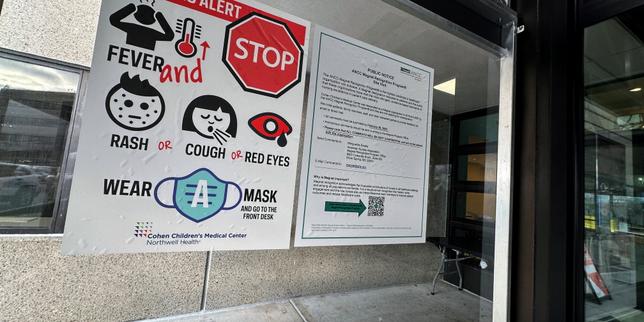
Rougeole aux Etats-Unis : deux nouveaux décès en Pennsylvanie

Ces morts, qui s’ajoutent trois autres décomptées en 2025, sont survenues chez des personnes qui n’étaient pas vaccinées, un quart de siècle après que la maladie avait été déclarée éliminée du pays grâce à la vaccination.

© SHANNON STAPLETON/REUTERS

Un panneau décrivant les symptomes de la rougeole est affiché à l’entrée du Cohen Children's Medical Center à New Hyde Park (New York), le 14 mars 2025.
  •  

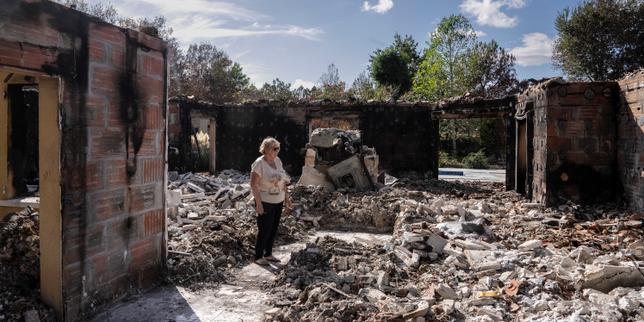
Mégafeu de Gironde : « Le Porge n’a pas été abandonné », martèle le chef des pompiers, chronologie à l’appui

Les autorités ont présenté mardi une chronologie des moyens mobilisés et des décisions prises au plus fort du sinistre, alors que la colère reste vive dans la commune où s’est acharné l’incendie.

© HERVE LEQUEUX POUR « LE MONDE »

Une habitante sur le terrain de sa maison détruite par les flammes, au Porge (Gironde), le 21 aout 2026.
  •  

133° - Chargeur 45W Xiaomi Mural USB

9,99€ - TradeInn

Le chargeur Xiaomi vous permet de charger rapidement vos appareils avec une puissance allant jusqu´à 45W via son port USB-A.
Idéal pour une utilisation ...

  •  

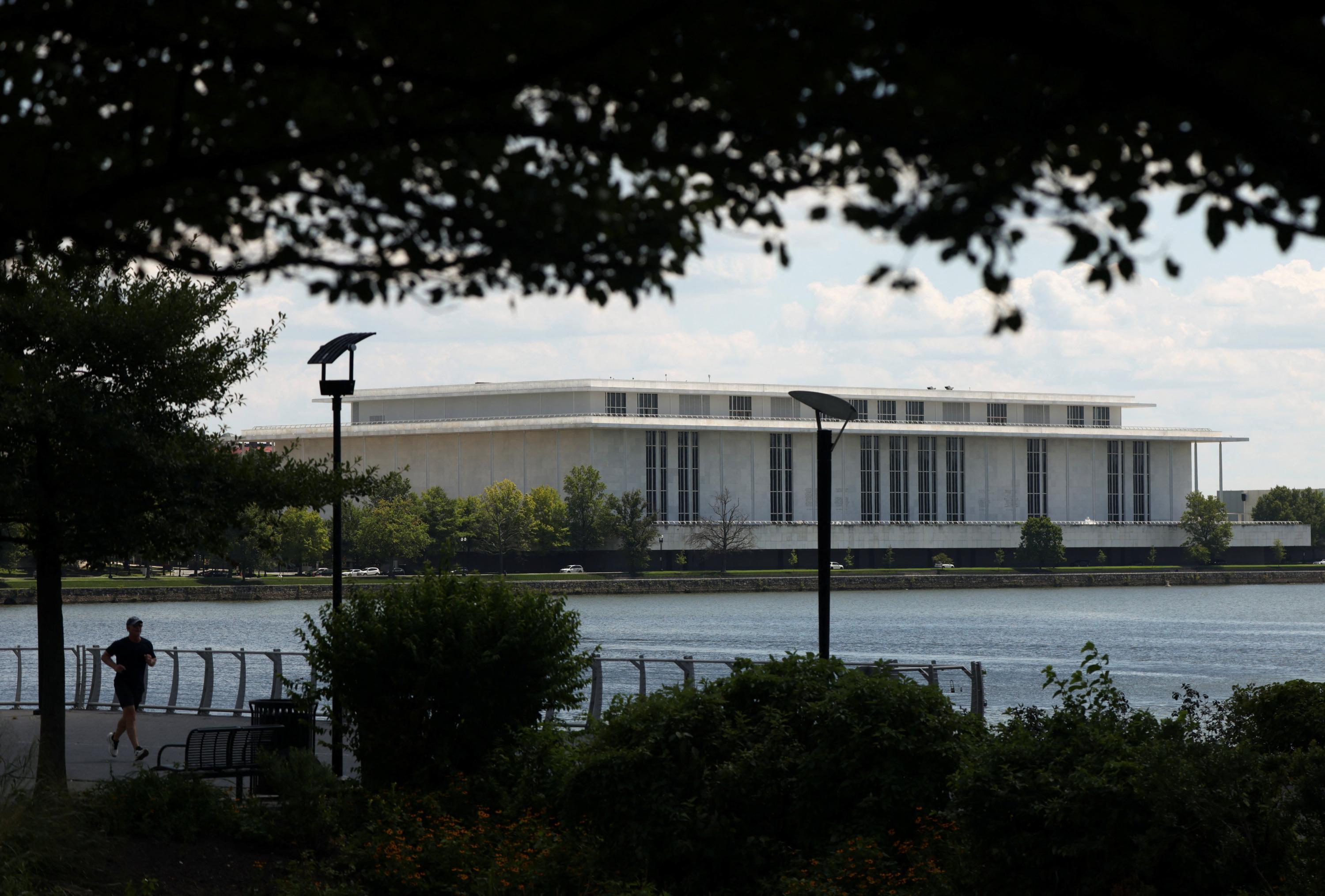
L'administration Trump évoque une possible démolition du Kennedy Center si le nom du président américain disparaît

Le gouvernement de Donald Trump menace de faire démolir le Kennedy Center si la justice s’oppose au retour du nom du président sur la façade. L’administration du président affirme que l’institution risque de se dégrader jusqu’à devenir «dangereuse et délabrée».

© Kevin Lamarque / REUTERS

Le sort du Kennedy Center à Washington (Etats-Unis) reste flou.
  •  

Linux 7.0-mk2 Released For Multi-Kernel Linux With Promising Performance Results

Last year a multi-kernel architecture was proposed for the Linux kernel to allow multiple independent kernel instances to co-exist on a single physical machine. Each kernel with "multikernel" Linux can run on dedicated CPU cores whole sharing the underlying hardware resources. Linux 7.0-mk2 released today with the kernel patched for this multi-kernel behavior...
  •  
❌