Avant le démarrage officielle de l’Opening Night Live 2026 de la Gamescom, un pré-show d’une demi-heure avait eu lieu pour placer quelques trailers par-ici, par-là. Ainsi, on a pu y voir Valor Mortis dont la sortie est toujours prévue pour le 13 octobre. Dans cette nouvelle vidéo, William Dowsett, le héros de cet univers corrompu par une bien étrange peste, fera la connaissance de Shrike, la cheffe des rebelles luttant contre le régime de Napoléon. Également, William pourra compter sur son camarade de guerre James Stewart et l’allumeur de lanternes Lucjan Skawiński, qui est probablement lié aux lanternes (l’équivalent des feux de camp dans les Dark Souls et autres) servant de point de repos. En dehors de ça, on voit l’utilisation des différents pouvoirs et une nouvelle créature au design plutôt réussi ressemblant à une sorte de sphynx. À la rédac, on est toujours aussi impatients de mettre la main sur Valor Mortis et de s’abreuver de la voix sensuelle de Vincent Cassel qui tiendra le rôle de Napoléon.
En attendant la sortie prévue pour le mois d’octobre, vous pouvez ajouter Valor Mortis à votre liste de souhaits et jouer à la démo toujours disponible depuis la page Steam, si vous êtes intéressés.
40mm equiv. variant of snapshooting classic should arrive this year.
Ricoh
Ricoh has confirmed it is developing an “x” variant of its GR IV enthusiast compact. The GR IVx will be built around an all-new 40mm equivalent F2.8 prime lens.
The new model will use the same 26MP BSI CMOS APS-C sensor as the recent GR IV, rather than the 24MP FSI chip used in the GR IIIx.
Ricoh
The company has released the full planned spec of the camera, suggesting development is already well advanced. Details include a lens with 8 elements in 6 groups, including 3 aspheric elements, which is a more complex design than the previous model.
As with the 28mm-equiv GR IV, the specs say we’ll can expect improved startup times, a move to 5-axis image stabilization and the adoption of the larger DB-120 battery. It will also see the adoption of faster WiFi 5 standard.
Ricoh says the GR IVx will be launched in “Winter 2026 or later,” with no details of price yet given. For reference, the GR IV hit the shelves three months after its development was announced.
About the Author: Richard graduated as a scientist but had a lot more fun writing and shooting for his university magazine. A number of years spent variously as a reporter, writer and editor on science and engineering titles combined his knowledge of science with his interest in images and words. But it was spotting the connections between emission spectra, white balance and all the nonsense he’d taught himself playing around in Photoshop that helped kindle an interest in digital photography. Searching for a camera led to him discovering DPReview and Richard was recruited by Phil Askey in 2007. He’s been combining his love of photography, communication and attention to detail (pedantry?) ever since.
He has unusually strong opinions about lenses for the APS-C format.
Want to stay up to date on the latest product news and releases? Add DPReview as a preferred source to ensure our independent journalism makes it to the top of your Google search results.
Mauvaise nouvelle pour les fans de coop et de zombies nazis, les développeurs allemands de Projekt Z: Beyond Order ont annoncé que leur bébé leur avait finalement glissé des doigts. Peut-être vous souvenez-vous de leur retour d’entre les morts en 2023, lorsque Modus Games avait finalement décidé de soutenir le projet, malgré une précédente campagne Kickstarter ratée. Mais l’actualité récente n’a pas été très heureuse pour l’éditeur suédois, entre-temps renommé Maximum Entertainment, puisqu’il fait face à des difficultés financières qui ont mené à la fermeture de sa branche américaine, sans indemnité de licenciement, d’après nos confrères d’Insider Gaming. Cela nous mène à ce devlog sur Projekt Z – sans doute le dernier –, dans lequel le co-fondateur du studio 314 Arts explique qu’ils ont fait une erreur lorsqu’ils ont signé avec leur éditeur. Ils ont donné tous les droits sur la licence, les dépossédant de leur création. Si ça ne devait pas poser trop de problème au début, les développeurs ont senti que leur projet leur échappait peu à peu, jusqu’à ne plus pouvoir du tout travailler dessus. Il semble néanmoins qu’il leur reste un maigre espoir de récupérer le projet, mais le studio préfère rester prudent pour l’instant.
Comme ils avaient senti le coup venir, ils ont discrètement entamé un nouveau projet au cas où Projekt Z serait définitivement perdu. Il s’agit de NightRunner, un mélange de survie coopérative en mode horde avec de l’extraction shooter, un peu d’exploration et du tower defense, inspiré de Killing Floor et du mode Zombies de Call of Duty.
Vu comme ça, le projet semble un peu ambitieux, surtout si leur éditeur les a lâchés… Mais le studio promet des playtests dès septembre pour nous montrer tout le potentiel du jeu. Vous pouvez d’ailleurs d’ores et déjà demander l’accès depuis sa page Steam toute neuve.
Dans tous les cas, la situation pour 314 Arts semble être un peu tendue. Il est difficile d’imaginer qu’ils aient de quoi survivre très longtemps, s’ils ont signé un contrat aussi défavorable en 2023 et qu’ils ne sont maintenant plus liés à leur éditeur. Certes, on peut penser qu’ils ont été franchement stupides d’accepter ce deal, mais ils étaient peut-être au pied du mur et n’avaient pas d’autre solution pour subsister. Dans tous les cas, c’est aussi un bon rappel que la plupart des éditeurs sont là pour sucer le moindre dollar possible des créateurs en prenant le moins de risque possible, quitte à les déposséder de leurs créations pour faire quelques économies.
En attendant de savoir ce qu’il adviendra de ProjektZ: Beyond Order, vous pouvez toujours jeter un œil à NightRunner en vous rendant sur sa page Steam, et en l’ajoutant à votre liste de souhaits s’il vous intéresse.
Reporté finalement en 2027, ONTOS, développé par le studio Frictionnal Games (Penumbra, Amnesia et SOMA), s’est dévoilé un peu plus à l’occasion de l’Opening Night Live 2026 de la Gamescom. On ne pensait pas que leur nouveau titre de science-fiction serait aussi glauque. Dans ce trailer, on y voit l’héroïne, Aditi Amani, échanger avec une entité directement raccordée à un mur de souris et tenter d’aider, si on peut dire ça comme ça, un pauvre malheureux qui a été la victime d’une expérience foireuse. Même si ce n’est pas clairement explicité, on a le sentiment que la protagoniste aurait pu avoir le choix d’interagir différemment en écoutant ou non l’IA. Comme si cela n’était pas suffisant, les devs nous montrent une moitié de tête maintenu en vie, un singe cobaye et un mycophile qui prend son pied. Cette visite sur la station lunaire Samsara s’annonce des plus réjouissantes et laissera probablement quelques séquelles à notre protagoniste.
Prévu courant 2027, vous pouvez toujours ajouter ONTOS à votre liste de souhaits Steam, GoG ou Epic Games Store, si vous êtes intéressés par ce nouveau projet de Frictionnal Games.
Apple has announced a special event on September 9 at 10am PT (1pm ET / 6pm BST). While the company is characteristically coy about what’ll be announced – basically the only information that it’s shared is the title of the event, which is “surprise and shine” – its early September events are traditionally reserved for new iPhones.
There was a time when it was relatively easy to predict what would be announced at these events: two sizes of iPhone Pro and one or two sizes of the standard iPhone. But Apple’s roster of annually updated models has expanded, and is rumored to do so further. There’s now a budget model (currently the iPhone 17e) and an ultra-thin phone called the “Air.” If rumors are to be believed, this year’s event will also see the introduction of what would be Apple’s first folding phone, too.
Based on how Apple’s release schedule has worked in previous years, we wouldn’t expect to see a new “e” model at this event, though there are murmurs that Apple may even defer the launch of the new base model iPhone to a later event. In other words, we’d get what’ll presumably be called the iPhone 18 Pro, but not the standard iPhone 18.
At the moment, though, that’s all still speculation. Only Apple knows for sure what it has in store, and we’ll find out in around two weeks.
About the Author: Mitchell started taking pictures at 10 and hasn’t stopped since. It’s been a wide-ranging adventure, spanning a wide variety of genres and locales, and occasionally dipping into fascinations with video and filmmaking. They honed their technical knowledge doing documentation, programing and QA, writing for The Verge, and just generally messing around on the computer to see what breaks.
Want to stay up to date on the latest product news and releases? Add DPReview as a preferred source to ensure our independent journalism makes it to the top of your Google search results.
Initialement prévu pour cet automne, Turok: Origins, développé par le studio Saber Interactive, peinait à convaincre aussi bien les joueurs que la rédac avec ses vidéos de gameplay particulièrement molles et chiantes. Durant l’Opening Night Live 2026 de la Gamescom, les devs nous ont à nouveau gratifié d’une bande-annonce mêlant des cinématiques et quelques séquences de gameplay plutôt dynamiques, enfin ! On y apprend que nous sommes l’élu des élus, le Turok, armé jusqu’aux dents et doté de pouvoirs afin d’occire le général Hexagis et sa troupe de reptiliens accompagnée de dinosaures modifiés. Le grand méchant souhaite mettre la main sur une ancienne technologie présente sur le territoire du Lost Lands et exterminer la race humaine. Alors que l’on s’attendait sans grande conviction à l’annonce d’une date de sortie officielle, quelle ne fut pas notre surprise de constater un report pour le printemps 2027 à la fin du trailer. Du coup, ça laissera un peu plus de temps à l’équipe de dev pour peaufiner leur jeu et à vous pour lire ce billet de blog Steam pour en apprendre davantage sur ce scénario très profond.
En attendant une date de sortie plus précise, vous pouvez toujours ajouter Turok: Origins à votre liste de souhaits de Steam, si vous estimez que c’est bien un FPS.
The 7Artisans AF 10mm F2.5 Max FF targets three full-frame mounts with a combination of AF and a 185° field of view that has rarely existed at this price.
7Artisans
When you use DPReview links to buy products, the site may earn a commission.
7Artisans has announced the AF 10mm F2.5 Max FF, a full-frame fisheye lens that offers autofocus with a 185-degree field of view. The lens is available for Sony E, Nikon Z and L-mounts and fills a gap for ultrawide photographers, as autofocus fisheye options for full-frame mirrorless cameras are particularly thin.
At 510g (1.1 lbs), the AF 10mm is still relatively compact for a full-frame fisheye, particularly given its autofocus mechanism, F2.5 maximum aperture and metal construction. It is 60g (2.1 oz) less than 7Artisans’ manual focus 10mm F2.8 fisheye, though just slightly heavier than Canon’s RF 7-14mm F2.8-3.5 L Fisheye STM (476g (1.3 lbs)). Thankfully, it substantially undercuts Sigma’s bulky 1.36 kg (3.0 lbs) 15mm F1.4 fisheye.
7Artisans didn’t specify the type of autofocus motor, but says it is smooth and reliable enough for dynamic genres like street photography. It can focus as close as 0.15 m (5.9″). The optical design comprises 11 elements in 8 groups, including 1 aspheric and 2 extra-low-dispersion elements. It also features a nine-blade aperture diaphragm.
7Artisans
Despite the budget price and compact build, 7Artisans included some useful on-lens controls, which the company says are designed for video use as well as still photography. There are two customizable control buttons, an AF/MF switch and a clicked aperture ring. 7Artisans also says the lens supports A-B Focus, a video-oriented feature that automates focus transitions between two saved distances.
The 10mm F2.5 is the second lens to carry 7Artisans’ Max designation, following the AF 135mm F1.8 Max. While the company has not yet fully defined the sub-brand, its first two entries suggest it is being used for higher-spec full-frame autofocus primes with more ambitious optical designs, metal construction and expanded on-lens controls.
The 7Artisans AF 10mm F2.5 Max FF lens is available for purchase as of today for $449.
About the Author: Abby Ferguson holds an MFA in photography and blends a fine-art background with extensive editorial and commercial experience. She built and led an in-house imaging program for a large vacation rental company and has served as an associate editor at Popular Photography. She also teaches at a local community college and serves on its Photographic Technology Program Advisory Board, sharing her knowledge and enthusiasm for the medium.
Want to stay up to date on the latest product news and releases? Add DPReview as a preferred source to ensure our independent journalism makes it to the top of your Google search results.
OM System is teasing “something new” coming September 9. Whatever it is, the company wants you to know it’ll have an EVF: the video it posted to its social media channels prominently focuses on that particular feature, while showing way more than we’ve come to expect for this kind of pre-announcement teaser.
Usually, companies will post a silhouette of a camera draped in deep shadows, with just a few parts sticking through to suggest its shape. And at first, that’s what OM System’s video seems like, opening with a shot looking through an EVF before presumably showing several sample photos depicting city life. But then, it closes with a shot of a camera floating up through the air with a surprising amount of the top and back plate visible. Sure, there are still plenty of shadows, but we can still see that the camera is using OM System’s familiar design language, and that it’ll have a fair number of controls.
Of course, there’s still plenty the teaser doesn’t reveal; there’s no hint at specs, price or branding. For those, we’ll have to wait until September 9.
About the Author: Mitchell started taking pictures at 10 and hasn’t stopped since. It’s been a wide-ranging adventure, spanning a wide variety of genres and locales, and occasionally dipping into fascinations with video and filmmaking. They honed their technical knowledge doing documentation, programing and QA, writing for The Verge, and just generally messing around on the computer to see what breaks.
Want to stay up to date on the latest product news and releases? Add DPReview as a preferred source to ensure our independent journalism makes it to the top of your Google search results.
The Mission 1 Pro ILS has a Micro Four Thirds mount, opening GoPro’s ecosystem to a world of lenses that action cams haven’t offered.
Mitchell Clark
When you use DPReview links to buy products, the site may earn a commission.
GoPro is finally releasing the Mission 1 Pro ILS, the tiny video camera with a Micro Four Thirds mount the company announced back in April. The standard Mission 1 Pro, which comes with a fixed lens and a Type 1 (128mm²) sensor, has been available for a while now and represented a big step up from the company’s traditional action cameras, but the version with an interchangeable lens is an even bigger change.
Like the standard Mission 1 Pro, the ILS’s Type 1 sensor has very fast readout speeds, allowing it to capture 4:3 open gate footage at 8K up to 30p, and at 4K up to 120p. Switch to 16:9 recording, and it can do 60p and 240p, respectively. It can also record using an HLG curve for HDR footage straight out of camera, or in GoPro’s GP-Log2 for more flexibility in post, and supports 32-bit float for audio, to virtually eliminate the risk of your sound clipping.
GoPro is launching a new app called Mission Monitor
While it’s tempting to see the Mission 1 Pro ILS as an enthusiast camera, there are clear indications that it’s aimed more towards video professionals, and the time we’ve spent with the camera so far supports this. Its Micro Four Thirds mount has no electronic contacts, so it can’t do autofocus, nor does it support the focus-by-wire or electronic aperture actuation required by most of the photo-focused Micro Four Thirds lenses on the market (as in, almost everything from Panasonic or OM System). That also means you’ll need to manually pull focus, and while the camera has assistance tools like focus peaking and magnification, that’s still no easy task if you’re using the 2.59″ rear display.
Thankfully, alongside the ILS, GoPro is launching a new app for iPhone and iPad called Mission Monitor. It not only lets you use a phone or tablet to preview your image and control the camera on a much larger screen, but also supports tools like focus peaking, LUT view assist and frameline overlays.
That app mainly operates over USB, rather than Wi-Fi, like the consumer-focused Quik app (though that can be used with this camera, too). This again reinforces that the camera is aimed towards a very different audience than the company’s traditional action cameras. Rather than being a self-contained option that you can set and forget, it’s something you or a dedicated camera operator actively have to manage, likely with the assistance of a rig with tools like a monitor and follow-focus rig. It’s also worth noting that, unsurprisingly, given its lens mount, this is a GoPro that’s only weatherproof, rather than waterproof.
We plan on doing some more testing with the Mission 1 Pro ILS soon to see how it works for a variety of use cases, including as a tool for photographers, as it also has the ability to take 50MP stills, and an accessory grip that makes it feel more like a traditional compact (albeit one with even less manual control than usual and no autofocus). If you have any questions about it, let us know in the comments below.
The GoPro Mission 1 Pro ILS is available to pre-order for $700 from the company’s website, which is the same price as the standard Mission 1 Pro (though it’s already on sale at a $100 discount and has a built-in lens). The company says it’ll be available at traditional retailers in September.
About the Author: Mitchell started taking pictures at 10 and hasn’t stopped since. It’s been a wide-ranging adventure, spanning a wide variety of genres and locales, and occasionally dipping into fascinations with video and filmmaking. They honed their technical knowledge doing documentation, programing and QA, writing for The Verge, and just generally messing around on the computer to see what breaks.
Want to stay up to date on the latest product news and releases? Add DPReview as a preferred source to ensure our independent journalism makes it to the top of your Google search results.
Alors que tout le monde est unanimement ronchon à cause de la volonté de Sony d’arrêter la production de versions disques pour les jeux PlayStation sortis après janvier 2028, le constructeur ne trouve rien de mieux à faire que d’envoyer des mails automatisés pour rappeler les conditions d’utilisation de ses services. Des conditions qui expliquent noir sur blanc, que, concernant les titres dématérialisés, « vous détenez une licence du logiciel, il ne vous est pas vendu » et qu’en aucun cas, le client n’a le droit de faire des choses qui étaient parfaitement possibles avec des jeux physiques, à savoir les prêter, les donner ou les revendre. Le timing de ce rappel est d’autant plus cocasse qu’il intervient quelques jours avant une tentative de boycott des services PlayStation d'une semaine par des gens qui, justement, se soucient de ce recul net des droits du consommateur. K.
Apple’s latest desktop excel at running the tech that have made them so expensive.
Apple
When you use DPReview links to buy products, the site may earn a commission.
Apple has updated its popular desktop computers, the Mac Mini and the more powerful Mac Studio. Alongside the new models come new chips: Apple is introducing an “Ultra” model into its M5 lineup, as well as its next generation of processor, the M6. But while the new models are exciting, their prices aren’t; the impacts of AI on RAM and storage pricing are extremely evident here.
The Mac Mini and M6
Apple
Lets start with the Mac Mini, as it’s Apple’s mainline desktop computer, which will be more than powerful enough for most photographers. The biggest change is internal, as the base level Mac Mini ships with the M6, a new chip in Apple’s lineup. It has a 12-core CPU, made up of two “Super” high-performance cores, 4 “performance” cores for mid-level tasks and 6 “efficiency” cores. The M4 found in the previous generation had 4 “performance” cores – though at the time those were Apple’s fastest cores, closer to what it’d call “super” cores now – and 6 efficiency cores. The chip can now access its memory slightly faster, with 170GB/s of bandwidth, up from 120GB/s. Likewise, the GPU has two additional cores for a total of 12.
Apple says the M6 “is built using cutting-edge 2 nm process” (though, as is typical, that doesn’t necessarily mean all, or even any, of its features actually measure 2nm), and that it includes a “Dual 16-core Neural Engine” that can provide double the performance in on-device AI tasks compared to the M5. The company also claims the M6 has 1.2 times faster single-core performance than the previous-gen (not that you could buy the Mac Mini with that chip in it).
You can also now get the Mac Mini with the same M5 Pro chip found in the company’s MacBook Pros. While it’s built on an older process, it offers more cores – starting with 15 CPU cores and 16 GPU cores, and going up to an 18-core CPU and 20-core GPU – and higher memory and SSD capacity. The M6 Mac Mini can handle up to 32GB of RAM and a 2TB SSD; with the M5 Pro version, that expands to 64GB and 8TB, respectively. And while the M6 Mac Mini’s Thunderbolt ports are still the fourth-gen versions that can run up to 40Gbps, the M5 Pro’s are Thunderbolt 5, which can reach up to 80Gbps (or 120Gbps in an asynchronous mode).
Apple
Outside of the updated processors, not much has changed about the Mini’s capabilities. It still has three ThunderBolt Ports, two USB-C ports and an HDMI port, and can drive up to three external displays. Apple updated its Bluetooth and Wi-Fi to versions 6 and 7 respectively (the latter being a very welcome addition). Likewise, the Ethernet port has been updated, too; it’s now a 2.5Gb model, rather than a 1Gb one, which will be a big upgrade for anyone who often finds themselves transferring large files over the network. Of course, you can still upgrade to a 10Gb ethernet port for $100 at time of purchase.
These upgrades don’t come cheap, though. When the M4 Mac Mini launched in late 2024, you could get a model with 16GB of RAM and a 256GB SSD for $599. However, following the skyrocketing prices of DRAM chips, Apple recently got rid of that model, and the base level became the $799 version with 16GB of RAM and a 512GB SSD. The M6 version comes in at $899, but drops the SSD back down to 256GB. You still get 16GB of memory. While the starting price has “only” jumped $100 compared to yesterday, you’re getting less for more money than you would’ve previously, and much less compared to what you would’ve been able to buy a year ago.
These upgrades don’t come cheap
The story is slightly less painful with the M5 Pro model. The previous version with an M4 Pro launched for $1,399 with 24GB of RAM and a 512GB SSD, while the new model is $1699 for those same specs.
From ISO invariance to computational photography, Rishi’s insistence on understanding a camera from the inside out influenced how DPReview – and much of the industry – thought about image quality.
Carey Rose
It is with great sadness that we have to announce that DPReview’s former Science Editor, Rishi Sanyal, has passed away. Rishi, whose full name was Saurarshi Sanyal, died on June 26, 2026, at his home in California. He was 46.
During his years with DPReview, Rishi was a driving force behind the site’s scientific approach to camera testing, setting the standard for how we investigated cameras and lenses and, just as importantly, how we interpreted the results.
Rishi Sanyal processes images at his desk in the DPReview office.
Rishi’s enthusiasm and intellect were evident from his very first interview with DPReview, and came to define his time with the site. Rishi wasn’t interested in data for data’s sake. He wanted to know what was happening inside a camera, why it was happening, and how a photographer could use that information to improve their work. A test result became interesting when it explained something a photographer might see in an image or, ideally, use to their creative advantage. Rishi might have been a journalist for a consumer website, but he was also a highly accomplished photographer and filmmaker, and as a scientist he was more than capable of meeting engineers on equal terms.
With his rare combination of deep technical understanding and an artist’s eye for color, light and composition, Rishi made a genuine and lasting impact on our industry. He changed the way many of us think about image-making, and exemplified DPReview at its best, as a site that could not only inform but also inspire. Among his many contributions, he was instrumental in our collective understanding of what is now known as “ISO invariance” (a term he helped coin), and his early fascination with the potential of computational photography led him to take on a camera performance engineering role at Apple.
Rishi sorts camera gear as former DPReview Studio Manager Sam Spencer observes from the neighboring cubicle.
Rishi’s scientific range had always been unusually broad. At Princeton, where he studied molecular biology, his thesis work included the design of a DNA nanomachine; he later earned a Ph.D. in biophysics. The subjects changed, but the instinct was recognizably the same: understand the system deeply enough to see what others might miss.
As far back as ten years ago, long before the distinction between “camera” and “software” became as blurred as it is today, Rishi was digging into how advanced processing algorithms could overcome traditional hardware limitations and change what photographers could expect from small sensors. Work that attracted the attention of some of the foremost imaging scientists working today, including Marc Levoy.
Levoy, then at Google and now Professor Emeritus of Computer Science at Stanford and Vice President and Fellow at Adobe, recalls interacting with Rishi many times during his tenure at Google. One example came around the Pixel 4, when Rishi independently estimated the improvement in signal-to-noise ratio achieved by capturing, aligning and merging bursts of Raw frames.
“That is not a calculation one expects a journalist to do,” Levoy wrote, “and speaks to Rishi’s deep understanding of photographic technology.”
Of course, like many perfectionists, Rishi could be exasperating. Not only to his coworkers and managers (his genuine bafflement in the face of deadlines was legendary) but also to the camera and lens manufacturers with whom he corresponded, both publicly in articles on DPReview and privately in lengthy, densely argued emails. To his editors, often the biggest challenge was persuading him that merely excellent was good enough, that it was time to hit publish, and perfect might have to wait.
Rishi and former editor Barney Britton review camera footage during a video shoot in the DPReview studio.
His editors were not the first people who had tried to convince Rishi that a problem had been solved well enough to move on. His father, Gautam, remembers giving him essentially the same advice from childhood: there comes a point when the work is already excellent and you have to let it go. Rishi was rarely inclined to believe that point had arrived if he thought there was still something left to understand.
That drive was visible early. In seventh grade, Rishi built a working magnetic-levitation demonstration for a regional science fair, earning a gold medal and an invitation to attend the International Science and Engineering Fair as an observer.
At age 15, Rishi earned a US Department of Energy prize at an international science fair for analyzing the best materials for designing magnetic-levitation trains.
The same instinct could also be remarkably generous. Scott Everett, who worked closely with Rishi and later managed him at DPReview, remembers showing him a photograph he had taken at White Sands National Park that he wanted to print. Rishi liked the image, and almost immediately became invested in making sure the finished print lived up to what he knew was there in the file. What followed was characteristically thorough: Rishi took over the processing and sent long text threads about monitors, color, printing technology and how to prepare the file properly. It was far more information than Scott needed, but that was partly the point. Rishi knew what was possible, and because the photograph mattered to his friend, he wanted the finished print to live up to the memory behind it.
More than anything else, the same instinct ran through all of it. Rishi wanted to understand things deeply and make them better, whether that meant a science project, a photograph, studio analysis or hardware design.
Above: Rishi excelled at science projects and science fairs.
Those of us who worked closely with Rishi remember the good times we shared with our friend. Long days in the studio, figuring out some esoteric aspect of a camera’s behavior. Press events. Tradeshows. Video shoots in locations all over the US (he may have been the world’s worst camper, but he played a mean campfire guitar). And jet-lagged interviews with executives in Japan, whose obvious respect for his abilities spoke for itself. More than anything, we remember Rishi’s beaming warmth, and the ease with which he could strike up a conversation with almost anyone. The same curiosity he brought to imaging science extended to everyone he met. We’ll miss him.
Not long ago, former editor Barney Britton was looking through a book of photographs of the Grand Canyon, taken by a renowned National Geographic photographer. The daytime images were strong, but the nighttime landscapes and starscapes were technically disappointing. Before Barney was even conscious of making the comparison, one thought occurred to him:
“They should have given Rishi the job.”
Rishi celebrates with other members of the DPReview team at PIX2015, a photography expo organized by DPReview in Seattle in 2015.
Long before DPReview, Rishi was already bringing the same instincts to science and photography. As a teenager, he became fascinated by sonoluminescence, a phenomenon in which sound waves moving through liquid can produce tiny flashes of light. He spent night after night in his family’s basement building an apparatus to reproduce it. Eventually, he succeeded and, naturally, photographed the result.
His parents still have the glass vessel Rishi used for that experiment, the same one in which he finally managed to turn sound into visible light.
Tributes from colleagues and readers
To honor Rishi’s legacy, we invited current and former DPReview colleagues to share memories of Rishi that have stayed with them. Their recollections are below, in their own words.
We know that many members of the DPReview community will have their own memories of Rishi. We hope you’ll add them in the comments below and in the forums.
At some point around 2014, I mentioned to Rishi that my iMac was struggling. He was almost offended that I was doing photo and video work on a machine without maxing out its RAM and SSD. On that generation of iMac, upgrading meant pulling the display off and disassembling a good portion of the machine to get inside, which Rishi treated as a minor implementation detail. Before long, Rishi, our colleague Eugene, and I were crowded around the desk with the machine in pieces, while Rishi talked us through everything in great detail.
Eugene took this photo that afternoon. I wouldn’t have thought much of it at the time. I’m grateful to have it now.Eugene Hsu
Buried deep in my phone’s text history is a sort of archive of Rishi’s mind as I often experienced it: long threads about display calibration, HDR tone mapping, and the exact way an image should render on a screen. A simple question routinely became an exhaustive technical breakdown, because he simply wasn’t capable of leaving an interesting problem halfway explored.
And those conversations weren’t only about technology. Rishi and I often bonded over film and music. He especially admired Christopher Nolan films and Hans Zimmer scores, and cared deeply about experiencing them as well as the equipment would allow. All that calibration ultimately had a purpose.
One of these nights I’ll dig up those threads, calibrate my setup exactly as he would have insisted, put on Interstellar, turn the volume up, and watch it the way Rishi believed it deserved to be seen
Working with Rishi was like having access to a personal masterclass. He didn’t just want you to understand how cameras worked; he wanted that understanding to change the way you took pictures. I’m a better photographer today because of the things Rishi taught me.
Rishi loved whiteboards. I recall many an afternoon in the DPReview office, standing at one with him as he walked me through an important concept or technology. By the time we were done, the board would be covered with graphs, equations and illustrations. He was passionate about sharing his knowledge, not just with other DPReview staff but with everybody.
I saw him explain new camera technology to famous photographers with multiple National Geographic covers to their credit. When the two of us interviewed Academy Award-winning cinematographer Emmanuel Lubezki, Rishi went off on a tangent and started geeking out about the dynamic range of the Nikon D810. I’m pretty sure Lubezki came away from that conversation having learned something from Rishi, and not the other way around.
The first time I met him was when he interviewed me for a job at DPReview. He asked tough, technical questions that required me to synthesize a lot of information. When I told him I wasn’t sure about something, he stood up and walked to – what else? – the whiteboard, and talked me through the answer. He might be the only person I’ve ever seen turn a job interview into a teaching opportunity.
If there’s one thing I can be certain of, it’s that he’s already cornered an angel or two in front of a whiteboard, explaining dynamic range.
Rishi possessed a remarkable intellect, a patient teaching demeanor, an almost painful obsession with perfection, and a talent for photography. He understood that abstract lab measurements were meaningless unless they could be translated into tangible benefits when capturing real-world images. By combining his unique blend of scientific expertise and artistic vision, Rishi revolutionized the way we evaluate camera technology. He brought scientific rigor to our testing processes and earned the respect of the entire industry.
Rishi was also, for the last 10 years or so, someone I was lucky to call a friend – albeit a friend that would regularly drag me into drawn-out conversations about the latest developments in sensor technology or the failings of smart home technology. Not that I ever complained; Rishi’s infectious enthusiasm for his work was contagious, and I always gained something valuable from our interactions. Above all though, Rishi was the sweetest, kindest, and most genuinely humble person I’ve ever known, and his passing is a profound loss for everyone whose lives he touched.
I didn’t expect to ever have to write this, and I don’t know quite how to begin. So I’ll start with a gripe, which I know my friend Rishi would relate to. Among the most common lines of criticism of any technical analysis of a piece of photographic equipment is: “fine, but what relevance does this have to ordinary photographers?” I’ve always found this irritating. The idea that scientific testing is somehow “un-creative” is understandable: how many photographers (ordinary or otherwise) spend their time shooting test charts? But the best reviewers don’t test cameras and lenses because they enjoy plotting charts. They do it because they want to know how to use those data to take better photos, and to share that knowledge with others.
Rishi exemplified this goal. His ability to communicate the creative potential of technology that even camera manufacturers sometimes seemed not to fully understand was rare, if not unique. He knew what data mattered to photographers and, equally as important, he knew what didn’t. He was a scientist, yes, and a highly accomplished one, but he was also an artist, in the truest sense. A highly, highly unusual combination, even among imaging professionals.
My main memory of Rishi is just how immensely likable he was. I first met him more than ten years ago when he approached us about a position at DPReview. We interviewed him over lunch, and I recall Rishi actually struggling to eat in his excitement, almost choking at one point, so enthusiastic about what we did and what he might do with us, overflowing with ideas that seemed to come tumbling after one another, faster than he could verbalize them. He brought the same endearing enthusiasm to everything he did at DPReview. Outside of work hours, he was an avid cinophile, a borderline-obsessive audiophile, an accomplished musician and a loyal friend.
Even now, years after we last worked at DPReview, Rishi’s name still comes up in conversations I have with photo industry figures. Not just because of his intelligence and professional accomplishments (although they earned deserved respect) but because of his character. His warmth, his genuine interest in people, his unflagging creative passion and his total lack of cynicism (again—rare) impressed everyone he came into contact with. He was an extraordinary person, and he will be greatly missed.
When I had my first conversation with Rishi, I was still a photographer at the local power company. I had just applied to a rare opening at a website I visited almost every day, DPReview. I knew that Rishi was the Science Editor there, and I knew he was very smart, and I also knew that this conversation I was about to have was going to be a bit of a test.
When I picked up the phone around the end of the workday, I worked out my nervous energy by pacing endlessly around a corporate courtyard, phone pressed hard enough to my ear and face to leave a mark afterward. Introductions were made, and we promptly dove in.
Though I don’t remember exactly how we ended up on it, Rishi and I soon found ourselves animatedly extolling the virtues of Nikon’s 3D-Tracking autofocus to each other, and lamenting that so many photographers we knew never used it. (I later discovered that many a conversation with Rishi, if gone on long enough, would land on Autofocus eventually.)
Fast forward to my in-person interview, and Rishi comes in with a Sony a7R II. Now, I had never even seen a mirrorless camera in person before, much less used one, and perhaps sensing my naïveté, Rishi proceeded to absolutely blow my mind with the camera’s Eye Autofocus feature. Not only was this system fundamentally more accurate than what I had experienced with my DSLR’s, but it could track someone’s eye almost to the very edge of the frame.
For someone used to a middling clump of central AF points in an optical viewfinder, it was a revelation for me. And that really sums up what I remember and admire most about Rishi. When you got him on a topic he was into, and there were a wide variety of those, his enthusiasm would fill the room. He found so much joy in all of the details, and he couldn’t help but share that joy (and all those details) with everyone around him.
I’m so grateful to have gotten to know and work alongside Rishi for six years at DPReview. We spent a lot of time in the studio together, a lot of time shooting videos together, and a lot of time on press trips together. We had the privilege of working two of the best jobs on this earth, and I will treasure those memories for the rest of my life. Farewell, Rishi. I’ll miss you.
Rishi’s influence expanded the way I approach photography, both from a technical and a compositional standpoint, almost certainly more than any other colleague I’ve worked with over the past 20 years. His brilliance and creativity behind a camera, and unmatched knowledge of imaging science, were a rare and potent combination that made Rishi an infectious person to be around and especially to talk shop with. But it wasn’t just Rishi’s technical chops that made him a delight; it was also his big open heart.
Rishi wasn’t afraid to open up about deep, personal topics. He was also a fantastic and reliable listener, and someone I felt safe sharing my own inner musings, both good and bad, with. Our working relationship started rocky – what do you expect when you put two guys from Jersey in the same room? – but blossomed into something really special. Rishi, I miss you profoundly, but am so glad our paths intertwined as they did. A true friend and celebrated colleague, I’ll think of you every time I expose to the right in-camera and pull my shadows in post.
I’ve never worked with anyone else quite like Rishi. We butted heads often, usually around deadlines and such, but we could always laugh about something in the middle of it. I’ll remember those moments with him most of all. Making Rishi laugh always felt really good, and he laughed easily, even when we were annoyed with each other about something. He was truly one of a kind.
Rishi was a dear friend who changed the course of my professional career a decade ago.
We had become friendly while attending press trips, with him representing DPReview and Chris Niccolls and I still working for The Camera Store’s YouTube channel. While I felt I had adequate technical skill to review cameras, Rishi’s astounding depth of knowledge was somewhat intimidating, but more importantly inspiring. I began messaging him directly for clarification or information on sensors and autofocus systems whenever I got a wall.
Eventually, Chris, Rishi and I were on an extended press trip in Thailand, having one of our regular conversations that careened from the incredibly nerdy to surprisingly personal when he said “You guys should come work for DPreview with me.” The opportunity to work side-by-side with Rishi and learn just a fraction of his incredible scientific knowledge was too good to pass up.
While I wasn’t able to see Rishi in person as I may have hoped, our near-daily text exchanges were a source of inspiration, levity and occasional temple rubbing frustration as I attempting to understand topics that seemed obvious to my co-worker. My time at DPReview was an incredible education, and Rishi was a massive reason for that.
We both went our separate ways in a few years, with Rishi leaving to work with Apple, and Chris and I taking our YouTube show to PetaPixel. While those text exchanges were no longer daily, I’d still regularly hear from Rishi, especially when an exciting new camera or lens was announced. Thankfully though, reviewing the latest iPhone every year gave me the opportunity to grab a bite and catch up with Rishi when I was in Cupertino. While it only happened annually, we always picked up like no time at all had passed.
There is a lot to love about my job making videos, from using the latest technology to traveling to beautiful places, but the best part is the opportunity to get to know many amazing people I’d otherwise never have the chance to interact with. Rishi Sanyal was one of those.
Lundi dernier, nous avons enregistré le 89ᵉ numéro de NoScope sur notre chaîne Twitch. Comme on n’avait pas fait d’émission depuis début juillet, on avait beaucoup de tests en réserve, alors on est seulement revenus sur une poignée de news, comme les mouvements autour des immerisive sim (Warren Spector, Harvey Smith, Arkane), la fin du mod SPTarkov, la bêta de Call of Duty 23: Modern Warfare 4, ou encore celle de WARDOGS.
00:00:00 – Intro 00:01:40 – Les actus FPS : les actus autour de Call of Duty: Modern Warfare 4 00:06:50 – Les actus FPS : du mouvement autour des immersive sim 00:17:14 – Les actus FPS : ça bouge du côté de Tarkov, et le mod SPT a failli y passer 00:28:18 – Les actus FPS : nos retours sur la bêta de WARDOGS 00:50:45 – QUIZ : les toilettes dans les FPS 01:10:54 – TEST : S.T.A.L.K.E.R. 2: Cost of Hope 01:28:38 – TEST : Halo: Campain Evolved 01:37:40 – TEST : Hell Let Loose: Vietnam 01:58:15 – TEST : Agent 64: Spies Never Die 02:08:46 – TEST : DOOM: The Dark Ages – Revelations & les licenciements chez id Software 02:15:29 – TEST : No More Room in Hell 2 02:30:59 – TEST : Looking for Fael 02:37:45 – À venir (SPRAWL Zero, WARDOGS…) 02:49:13 – À quoi on joue ? (Kingdom Come Deliverance II, 7 Days to Die, Rogue Point 1.0, PIGFACE, Gallipoli, la démo d’IVOR, le mod VR de Ready or Not…)
Et si vous n’aimez pas nos tronches, l’émission est également disponible en version podcast sur Spotify, Deezer, Anchor.fm ou Pocket Casts.
En espérant que ça vous fasse autant marrer à entendre que nous à le faire, on vous donne rendez-vous dans deux ou trois semaines pour un nouveau NoScope !
Fast, affordable telephoto zooms for L-mount have been rather scarce. LK Samyang’s AF 60-180mm F2.8 changes that, arriving lighter and cheaper than the established Lumix and Sigma alternatives.
LK Samyang
When you use DPReview links to buy products, the site may earn a commission.
LK Samyang’s AF 60-180mm F2.8 is now available for L-mount, following its initial release for Sony E-mount in June. Developed in collaboration with Schneider-Kreuznach, the lens brings a lightweight, affordable telephoto zoom option to L-mount photographers.
The AF 60-180mm F2.8 weighs just 730 g (1.6 lbs), which is substantially lighter than the comparable F2.8 telephoto zooms for L-mount. While offering slightly more reach, optical stabilization and internal zoom, the Sigma 70–200mm F2.8 DG DN OS Sports is one of the closest alternatives, and it weighs 1345 g (2.9 lbs). The Panasonic Lumix S Pro 70–200mm F2.8 OIS comes in at 1570 g (3.5 lbs), though it’s worth noting that it’s one of the heaviest options on the market, coming in at 400-500g more than comparable options from Sony, Canon and Nikon.
Mitchell Clark
Both the Sigma and Panasonic options are internally zooming, whereas the LK Samyang lens uses an extending zoom design. The length of the LK Samyang 60-180mm F2.8 increases from 149mm (5.9″) at the wide end to 174mm (6.9″) when zoomed in, which is still shorter than the Sigma, Leica and Panasonic 70–200mm F2.8 lenses.
The L-mount model shares the E-mount version’s core optical and physical specifications. It consists of 17 elements in 14 groups, which include one high-refractive, seven extra-low dispersion and two aspherical elements. A linear stepping motor drives the autofocus, and it features a floating focus system that promises to maintain image quality across the focus range. The lens can focus as close as 0.35m (1.2′) when zoomed out, with a maximum magnification of 0.26x.
While more limited in on-lens controls than more expensive offerings, it does feature an AF/MF switch, a customizable control button and a zoom lock to keep the zoom constant even when moving. It accepts 77mm filters, offers a USB-C port for firmware updates and features weather sealing. It does not include optical image stabilization.
The lens completes a trio of F2.8 zooms covering 14-24mm, 24-60mm and 60-180mm, though L-mount shooters still can’t get the 24-60mm middle piece.LK Samyang
The AF 60-180mm F2.8 is part of a trio of lightweight zoom lenses with a constant F2.8 maximum aperture, which also includes a 14-24mm and a 24-60mm. Thus far, however, LK Samyang has only made the AF 14-24mm F2.8 and now AF 60-180mm F2.8 available to L-mount. The standard zoom still remains an E-mount-only lens.
DPReview’s Mitchell Clark recently tested the E-mount version and found it capable for its price, despite a stiff and inconsistent zoom ring and comparatively basic-feeling plastics and controls. For L-mount photographers who value a smaller, lighter F2.8 telephoto zoom at a more budget-friendly price over 200mm reach, top-end image quality, optical stabilization and an internal-zoom design, it is a compelling alternative.
There is a slight downside for L-mount users: the 60-180mm costs $1199, which is $100 more than the E-mount model. Still, that price is substantially lower than the alternatives for the mount.
About the Author: Abby Ferguson holds an MFA in photography and blends a fine-art background with extensive editorial and commercial experience. She built and led an in-house imaging program for a large vacation rental company and has served as an associate editor at Popular Photography. She also teaches at a local community college and serves on its Photographic Technology Program Advisory Board, sharing her knowledge and enthusiasm for the medium.
Want to stay up to date on the latest product news and releases? Add DPReview as a preferred source to ensure our independent journalism makes it to the top of your Google search results.
Denshattack !, ce formidable jeu de train acrobatique que SEGA n’aurait absolument pas renié, a tout de même trouvé 150 000 preneurs en un peu plus d'un mois d’après son éditeur, ce qui est franchement pas mal du tchou tchou, considérant la petite niche dans laquelle ce titre surexcité évoluait. K.
Hier Valve a fêté ses 30 ans. Le 24 août 1996, Gabe Newell et Mike Harrington, ont décidé de créer un studio de jeux vidéo, Valve Corporation, qui deviendra au fil du temps l’un des développeurs les plus marquants de l’histoire du FPS, mais également le pionnier de la distribution numérique avec la plateforme Steam. Coïncidence, Team Fortress, qui s’apprête à devenir un chef-d’œuvre absolu du FPS en multijoueur, est né le même jour. Une synchronicité presque ironique, lorsqu’on sait que les deux naissances influenceront le monde du jeu vidéo, et bien au-delà.
de Quakeworld Team Fortress
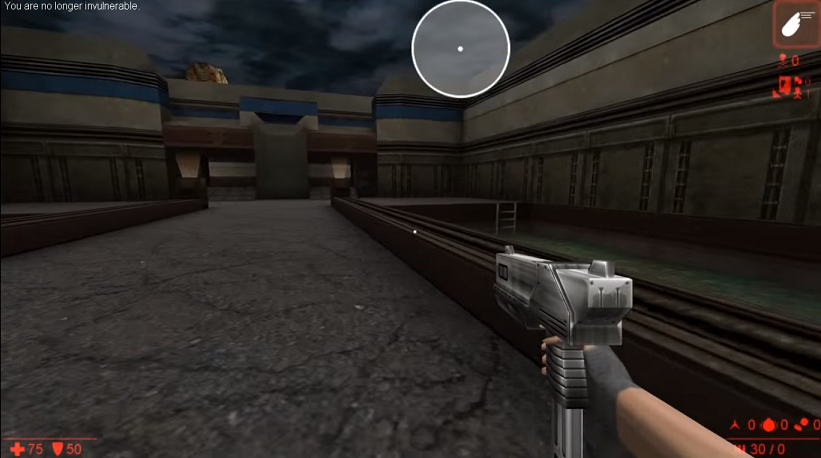
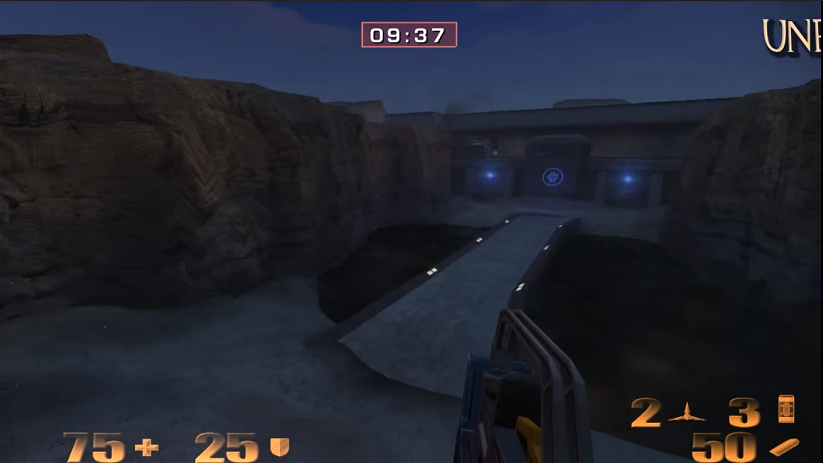
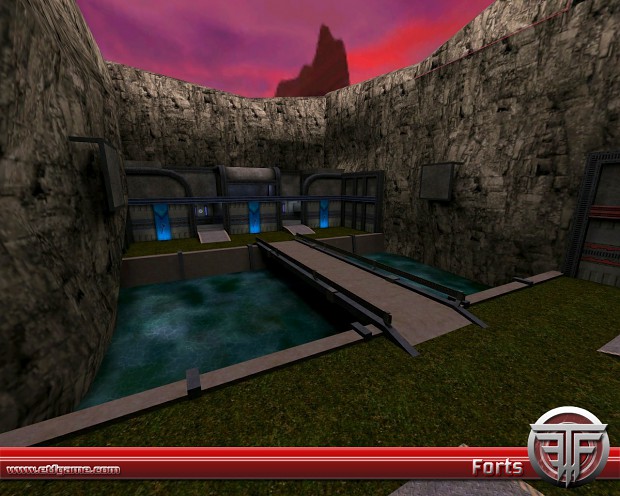
À l’origine, en 1996, trois développeurs australiens nommés Robin Walker, John Cook et Ian Caughley conçoivent un simple mod gratuit pour Quake. Profitant des prouesses techniques inédites du Quake Engine, ils mettent au point un concept simple et efficace, basé sur neuf classes de personnages aux compétences uniques. À une époque dictée par le chacun-pour-soi, celle des deathmatchs, le jeu impose pour la toute première fois un esprit d’équipe et une coopération obligatoire pour décrocher la victoire. Un changement discret mais fondamental pour le FPS multijoueur. Le succès auprès de la communauté est immédiat, et donne naissance à la fois à des cartes incontournables comme 2fort, mais également à de nombreuses versions basées sur d’autres FPS comme Unreal Tournament.
1 de 15
Quakeworld Team Fortress (1996)
Quake 3 Fortress (1999)
Team Fortress Classic (1999)
Unreal Fortress (2000)
Unreal Fortress Evolution (2004)
Enemy Territory Fortress (2005)
Quake 4: Fortress (2006)
Team Fortress 2: Brotherhood of Arms (annulé)
Team Fortress : Invasion (annulé)
Fortress Forever (2007)
Team Fortress 2 (2007)
Doom Fortress (2010)
Fortress One (2010)
Team Fortress 2 Classified (2026)
Open Fortress (en développement)
L’engouement au fil des années pousse Valve à proposer à notre trio d’acheter le projet et d’intégrer les équipes de Bellevue. La transition vers une suite officielle s’avère pourtant un véritable chemin de croix, marqué par de profonds bouleversements de game design. Après avoir sorti Team Fortress Classic en 1999 sur le moteur de Half-Life, l’équipe s’enfonce dans un enfer de développement qui va durer neuf longues années. Durant cette période d’incertitude, le projet change maintes fois d’orientation. En 1998, Valve dévoile d’abord une version ultra-réaliste baptisée Team Fortress 2: Brotherhood of Arms. Cette mouture devait intégrer de vraies armes militaires (comme le FAMAS), une classe Commandant offrant une vue aérienne tactique pour diriger l’équipe, ainsi qu’une classe Officier dont la survie conditionnait directement le moral et la vitesse des troupes. Face à la difficulté technique de différencier visuellement les silhouettes des douze classes prévues dans ce schéma réaliste, Valve abandonne le projet pour concevoir une version de transition orientée science-fiction nommée Team Fortress 2: Invasion, avant de faire à nouveau feuille blanche et de se tourner vers la polyvalence du moteur Source, et enfin créer ce qui deviendra Team Fortress 2. Un développement compliqué, mais qui donnera naissance à une identité artistique et mécanique unique.
Team Fortress 2 en 2008.
à Team Fortress 2
Le titre est publié en 2007 au sein de la compilation The Orange Box. Le design et la direction artistique étonnent à l’époque par l’esthétique cartoon inspirée de l’illustrateur J.C. Leyendecker, mais aussi par son univers incroyablement absurde. Valve, comme à son habitude, décide d’inclure à son jeu un lore complètement loufoque à travers des bandes dessinées numériques, narrant la guerre stupide entre deux frères milliardaires, Redmond et Blutarch Mann. Une démarche narrative atypique pour un FPS compétitif, qui contribue à ancrer le jeu dans une culture propre. Le génie marketing du studio, fidèle à ses expérimentations de l’époque, a été les courts-métrages Meet the Team. Une série de vidéos qui, encore aujourd’hui, étonnent par leur réalisation et leur humour, présentant les classes de soldats disponibles dans le jeu, réalisés via l’outil Source Filmmaker. Si une vidéo m’a marquée à l’époque, et arrive encore à me faire rire aujourd’hui, c’est Meet the Spy. Un véritable chef-d’œuvre d’écriture et d’animation, parodiant le cinéma d’espionnage tout en illustrant la paranoïa caractéristique des mécaniques d’infiltration de la classe du Spy. Un moment culte qui a largement dépassé le cadre du jeu.
Au fil des années, l’évolution du jeu a été jalonnée de mises à jour majeures, de nouveaux modes de jeu comme Payload, Arena, King of the Hill, ou de mises à jour communautaires comme la WAR! Update opposant le Soldier et le Demoman à coups de répliques acérées pour l’obtention de nouveaux équipements exclusifs. Le jeu a également intégré des modifications qui ont redéfini son modèle économique et communautaire. La plus célèbre, considérée comme l’un des changements majeurs de son histoire, mais également la plus détestée par une bonne partie de la communauté, Classless, introduit les dix-huit premiers chapeaux cosmétiques et pose les bases d’une économie encore aujourd’hui florissante basée sur le marché Steam. Le jeu innovera également en lançant son premier événement d’Halloween, une mise à jour d’abord modeste apportant la provocation Thriller, des citrouilles de bonbons et des sacs effrayants, ouvrant la voie aux gigantesques célébrations annuelles de Scream Fortress. Ces événements ont façonné une culture communautaire où humour, compétition et créativité se mêlent. Malgré une communauté solide, le nombre de joueurs de Team Fortress 2 n’était très probablement pas dans les objectifs de Valve. L’année 2011 sera celle du passage au modèle Free-to-Play, mais également celle où le studio commencera à délaisser progressivement son bébé au profit de Dota 2 et Counter-Strike, laissant l’intrigue des comics définitivement inachevée. Pire encore, au tournant des années 2020, le jeu a subi une invasion massive de bots et de cheaters, sans aucune réaction de Valve. Face à ce quasi-abandon, les joueurs se sont mobilisés à travers des campagnes massives sur les réseaux sociaux pour pousser Valve, qui a fini par réagir à gros coups de Valve Hammer avec des vagues de bannissements sans précédent dans l’histoire du jeu.
Scream Fortress, un événement à l’image de Team Fortress 2, complètement barré.
Pourtant, même si le studio continue à organiser des événements comme des LAN ou des tournois, Valve s’appuie désormais sur la communauté pour faire vivre le jeu depuis plusieurs années. Que ce soit avec des maps communautaires officialisées dans le jeu, ou encore en travaillant parfois avec des moddeurs comme cela a été le cas après avoir ouvert la voie à la création et la publication de projets comme Team Fortress 2 Classified. À ses côtés, d’autres initiatives communautaires majeures comme Open Fortress continuent de s’efforcer de proposer de nouvelles choses. Pour célébrer dignement les 30 ans de la franchise, Valve étant peut-être trop occupé avec The International, l’équipe de développement de Team Fortress 2 Classified a déployé l’événement TF2C – Team Fortress 30th. Au programme : des maps rétro rendant hommage aux origines sur Quake, une direction artistique nostalgique et la résurrection complète du mode Randomizer dont les statistiques d’armes aléatoires s’affichent désormais directement dans les menus, et bien d’autres choses à découvrir sur le site dédié à l’événement.
Trente ans après ses premiers pas dans l’ombre de Quake, la franchise est toujours là, et est considérée comme le père spirituel du Hero Shooter moderne. De Overwatchà Valorant, en passant par Rainbow Six Siège, tous les grands succès multijoueurs actuels découlent directement des choix de game design instaurés en 1996 par trois petits gars.
Ça fait des mois qu’on vous déprime avec ces histoires de mémoire vive monopolisée par les hyperscalers irresponsables de l’IA qui font exploser le coût des barrettes de RAM. J’ai creusé pour trouver la moindre bonne nouvelle, mais j’ai lamentablement échoué. Un article de PC Gamer (qui reprend le Straits Time et BenchLife) explique, par exemple, qu’un grand constructeur de cartes graphiques prédit une augmentation prochaine de leur prix, en particulier dans l’entrée de gamme. Il explique que ce n’est même plus qu’une question de VRAM, mais bien de tous les composants, de l’alimentation jusqu’aux circuits imprimés, dont l’approvisionnement subit des tensions liées à la folie spéculative autour de l’IA. Tout ça pour dire que tout va bientôt coûter plus cher, même votre grille-pain connecté, afin de permettre aux zinzins sur X de créer des nudes de personnes sans leur consentement. K.
Its padded insert is designed to transition between hard case and carryable in a moment’s notice.
Pelican
When you use DPReview links to buy products, the site may earn a commission.
Pelican, the company famous for its ultra-rugged hard cases, is introducing a new backpack aimed squarely at photographers and creators. The not-so-catchily-named PX35 Aegis 35L Creator Backpack is made out of durable 500D Cordura fabric, lets you access your camera without taking it off and has a removable insert that can be directly transferred into one of its Air or Protector cases.
As its name implies, the pack has a 35L capacity, which is mainly in its large central compartment. You can access that space from the top of the bag, from the back, or from either side. The main flap, which has a variety of zippered and elastic pouches and a laptop pocket, can fully unzip, giving you unobstructed access to the pack’s interior. There’s also a small brain area on top with hard padding and space for various accessories like multitools, headphones and passports, and the front has MOLLE attachment points and a front flap that can be clipped up to hold oversized items like tripods or jackets.
Pelican says the bag is designed for “carry-on compliance on most airlines.”Pelican
Included with the bag is a removable padded divider, with compartments you can configure to hold your specific gear, be that camera bodies, lenses, small drones or a mixture thereof. The pouch is removable, making it easy to take out at a moment’s notice. It’s also designed to fit in the company’s Pelican Protector 1510 and Pelican Air 1535 hard cases, so you can keep your gear secure during air or ground travel, then pull the insert out and slide it into your pack when you get wherever you’re going. This means you don’t have to repack all your gear when you get where you’re going, which can be an annoying process, especially if you haven’t quite accounted for differences in capacities or layouts.
The company says the pack has a “rigid, protective shell” to keep your gear protected, but also says it’s a “last mile solution” that’s not as heavy or protective as its hard cases. To that end, it’s also not completely waterproof, though Pelican says it’s “weather-resistant” on its own, and comes with a rain fly.
Pelican
The pack’s ruggedness comes at a cost that’s both weight and monetary. It comes in at 5.4lbs (2.45kg) on its own, and costs $325. To manage the former, it has an integrated but unpadded hipbelt, as well as a sternum strap, complete with a whistle integrated into the clip. And while the price is definitely on the high end – it’s around an $80 premium compared to one of DPReview managing editor Dale Baskin’s favorite packs – it’s not unheard of if you’re comparing it to options from companies like Peak Design, once you factor in its inclusion of a padded divider.
The bag comes in black or “charcoal sage” green, and has a five-year warranty.
About the Author: Mitchell started taking pictures at 10 and hasn’t stopped since. It’s been a wide-ranging adventure, spanning a wide variety of genres and locales, and occasionally dipping into fascinations with video and filmmaking. They honed their technical knowledge doing documentation, programing and QA, writing for The Verge, and just generally messing around on the computer to see what breaks.
Want to stay up to date on the latest product news and releases? Add DPReview as a preferred source to ensure our independent journalism makes it to the top of your Google search results.
Il y a quelques jours, deux nouvelles dans le monde de l’immersive sim sont tombées coup sur coup. La première, c’est l’annonce par Warren Spector de son départ à la retraite. L’un des pères de l’immersive sim, il a notamment travaillé sur System Shock, Thief: The Dark Project, Deus Ex, et très récemment, sur l’éphémèreThick as Thieves. Il ne ferme pas la porte à un hypothétique dernier projet, mais ne semble plus avoir envie de travailler dans une industrie vidéoludique qui ne lui convient plus, préférant s’orienter vers l’écriture, les conférences et le conseil.
De l’autre côté, un autre pilier de l’immersive sim, Harvey Smith (Deus Ex, Dishonored 1 & 2, Prey, Redfall…) a été interviewé chez nos collègues de The Game Business pour parler du studio qu’il a créé sur les cendres d’Arkane Austin après la catastrophe Redfall : Black Pony Immersive. Aux commandes, il y a également Ben Horne, producteur, et Ricardo Bare, lead designer. Tous trois ont travaillé chez Arkane de nombreuses années. Si l’annonce du studio s’est faite il y a quelques jours, la création remonte à l’année dernière. Il est composé de 26 personnes, qui constituent le « noyau dur », et fera travailler des sociétés prestataires plutôt que d’employer davantage de développeurs. Apparemment, la recherche d’investisseurs a été un peu compliquée, mais ils ont fini par trouver un éditeur, dont le nom n’a pas été révélé. Pour l’instant, aucun projet n’a été annoncé, mais l’objectif est de réaliser « des jeux solo, axés sur la narration et à la première personne, dans lesquels on explore et on résout des problèmes de manière créative, à la manière de Deus Ex ou Dishonored ».
Harvey Smith, en janvier 2018 dans une interview pour la chaîne /noclip
Pour montrer d’où vient le studio, Black Pony Immersive a partagé sur Bluesky un petit « arbre généalogique », initialement dessiné par Sinnoware, créateur de contenu spécialisé en immersive sim :
I made this immersive sim studio lineage chart in 2023. It was an ordinary afternoon / evening sitting in a small park in Tokyo. I called it atrocious at the time. The structure was messy, the handwriting was awful. I shouldn’t have drawn it with fingers on my phone. (1/4)
Au cours de l’interview, on apprend également comment l’ultime patch pour Redfall a vu le jour. Alors que tous les développeurs avaient été licenciés, une poignée d’entre eux sont revenus vers Microsoft pour demander s’ils ne pouvaient tout de même pas finir le patch 1.4, sur lequel ils avaient commencé à travailler avant la fermeture du studio. Et à leur grande surprise, la firme de Redmond a autorisé six ou sept anciens membres de l’équipe à revenir dans les locaux pour achever leur projet. Dommage que le jeu ait été merdique, mais cela montre la détermination et la passion des développeurs, à l’opposé des décisions parfois débiles de la direction.
On est donc plutôt impatients de voir les futures annonces de Black Pony Immersive, surtout pendant cette période particulièrement incertaine pour les studios qui font des immersive sim. On pense notamment à Arkane Lyon, actuellement dans une situation délicate, à la suite de la volonté de Microsoft d’arrêter leur projet. Qui sait, peut-être qu’on aura quelque chose à se mettre sous la dent avant d’avoir des nouvelles du prochain titre de Wolfeye Studios, fondé par Raphaël Colantonio ?
From a single album cover to more than 640 workshop students, Maisel’s reach across American visual culture was wider than most photographers ever realize.
Mind Hive Films / Crooked Mile
Jay Maisel, the influential American photographer and devoted educator whose images reshaped the visual language of advertising, editorial and street photography, died on August 24, 2026, at age 95. Across a career spanning more than seven decades, Maisel made iconic pictures while teaching generations of photographers to recognize the expressive possibilities of light, color and human gesture.
Maisel began his professional photography career in 1954 and went on to make pictures for major magazines, advertisers and cultural institutions, bringing the same alert, keen eye to celebrity portraiture, magazine covers and street scenes. He received numerous honors over the course of his career, including induction into the Art Directors Club Hall of Fame; the American Society of Media Photographers’ Lifetime Achievement Award; the International Center of Photography’s Infinity Award; and a Lucie Lifetime Achievement Award. His most famous single image may be the cover photograph for Miles Davis’s landmark 1959 album Kind of Blue, a portrait now inseparable from the best-selling jazz album of all time.
For nearly 50 years, Maisel lived and worked in the six-story Germania Bank Building on the Bowery, a former 1898 bank he bought in 1966 and transformed into an extraordinary home, studio and repository for his work. Known simply as “the Bank,” the 72-room building became as legendary in photography circles as its owner. The 2019 documentary Jay Myself, directed by Stephen Wilkes, offers a look inside the remarkable space and chronicles Maisel’s departure from it after he sold the building in 2015.
I have long been drawn to Maisel’s interest in objects and their photographic potential. The Bank’s floors held different collections, and the way he surrounded himself with things seemed to embody the curiosity and sense of play evident in his photographs. As someone who also collects objects, I found his ability to show familiar things anew a direct influence on my own work. “Art is, to some effect, trying to make others see what you see,” he said; it’s an idea I have returned to often in my own work.
Art is, to some effect, trying to make others see what you see.
Jay Maisel
That way of seeing also informed Maisel’s teaching, for which he was equally admired. His core framework – light, gesture and color – was an invitation to pay closer attention to the world: to the way illumination can shape a scene, color can organize it and a fleeting gesture can give it life. He also urged photographers to take responsibility for every part of the frame, finding images through sustained observation. Through workshops, seminars and lectures, Maisel extended his influence far beyond his own pictures, leaving photographers with one clear instruction: look harder.
About the Author: Abby Ferguson holds an MFA in photography and blends a fine-art background with extensive editorial and commercial experience. She built and led an in-house imaging program for a large vacation rental company and has served as an associate editor at Popular Photography. She also teaches at a local community college and serves on its Photographic Technology Program Advisory Board, sharing her knowledge and enthusiasm for the medium.
Want to stay up to date on the latest product news and releases? Add DPReview as a preferred source to ensure our independent journalism makes it to the top of your Google search results.

 Connexion




 Immersive Sim (@sinnoware.bsky.social)

