Vue lecture

Trump Creates a Space Academy and Honors the Artemis Astronauts

President Trump awarded the four-member Artemis II crew the Congressional Space Medal of Honor and signed an executive order directing the creation of a new U.S. Space Academy. The proposed academy would train engineers, scientists, technicians, operators, and astronauts for NASA, the Space Force, and the commercial space industry. Houston Public Media reports: The Artemis II crew -- NASA's Reid Wiseman, Victor Glover, Christina Koch, and the Canadian Space Agency's Jeremy Hansen -- retraced history as they flew around the moon and back in April, the first time humans have been in lunar territory since the 1970s. He had previously hosted the crew members at the White House following their mission and called them during the mission while the crew was tens of thousands of miles away. "The one thing that really sticks out to us [from that call] is you said how proud you are and how proud our nation is for the job that we've just accomplished," Wiseman said during Friday's ceremony. "And for us, that is what we set out to do. We wanted to inspire this nation to learn." During the ceremony, Trump also signed an executive order to create the "United States Space Academy." Under the order, a Presidential Commission on the U.S. Space Academy has 120 days to create a report with guidelines for the U.S. Space Academy. The Commission will include NASA Administrator Jared Isaacman as its Chair, as well as other NASA and space officials. Secretary of Defense Pete Hegseth, Trump's Chief of Staff Susie Wiles, and Michael Kratsios, assistant to the president for science and technology. In effect, it allows the Trump Administration to build the U.S. Space Academy to its liking. "It will serve both the United States Space Force as well as NASA and the civilian spaceflight industry," Trump said. "And it will attract, train, graduate the very best that our nation and our nation really has to offer." As for where the academy will be located, Trump said he was "going to be choosing a location very shortly."

Read more of this story at Slashdot.

  •  

Rush Rescue Mission for NASA's $500M Space Telescope Fails

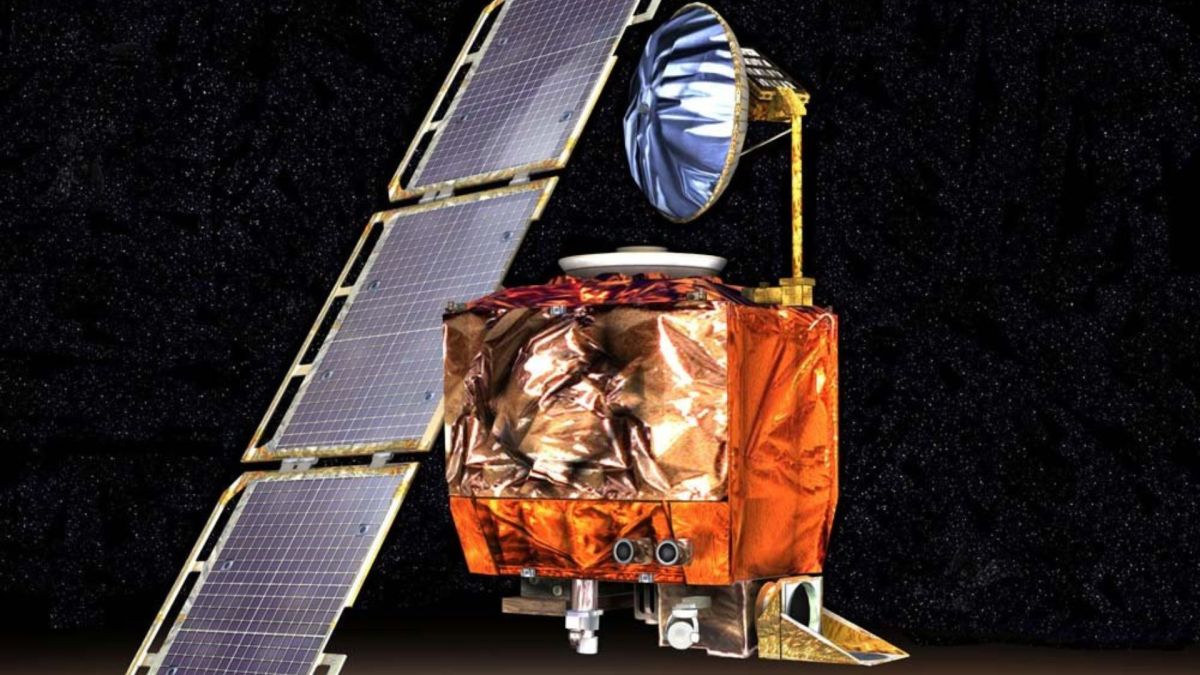
Remember that rush rescue mission for NASA's $500M space telescope? It failed, reports CNN, and the LINK satellite won't be able to boost the telescope's orbit. NASA says its decades-old Swift telescope will now continue losing altitude, until it reaches Earth's atmosphere later this year and burns up. CNN reports: Just weeks after LINK lifted off on July 3, it started to spin out of control. [Satellite designer] Katalyst was able to regain control of the satellite, but the company acknowledged that the issue cost it time, which would delay LINK's rendezvous with Swift by about a month. However, that postponement — at least initially — did not seem to be a deterrent to the mission. Now, NASA and Katalyst have announced that LINK's mission will not capture and boost Swift to a higher orbit "due to ongoing attitude control issues," according to statements Wednesday. "NASA should be willing to move quickly and take smart risks when the potential return is worth it, and that is exactly what we did with this mission," NASA Administrator Jared Isaacman said in a statement. "This is not the outcome we were working toward, but it does not change why this mission was worth attempting. The team moved with extraordinary speed to give Swift a chance to carry out more science while advancing capabilities America will need for satellite servicing in the future...." The mission team is forging ahead with its plan for LINK to rendezvous with Swift — but as a demonstration rather than a rescue. "We are going to learn everything we can from LINK's rendezvous attempt and put those lessons to work on the missions that follow," Isaacman said... Swift wasn't designed to be serviced in space, which means that insights from the demonstration could be used for future missions... "We have already learned a tremendous amount," [said Ghonhee Lee, CEO of Katalyst Space Technologies], "and now our job is to turn those lessons into something durable — building a repeatable playbook to inform future rendezvous and proximity operations and satellite servicing."

Read more of this story at Slashdot.
  •  

Rescue Mission Is Called Off For NASA's Aging Swift Space Telescope

NASA has called off a $30 million mission to rescue its aging Swift space telescope after Katalyst Space's Link spacecraft developed persistent control and positioning problems. The Associated Press reports: Katalyst said Link will not attempt to capture Swift and boost it to a higher orbit because of problems with controlling the spacecraft. NASA said this means the telescope will plunge through the atmosphere after more than 20 years of tracking some of the biggest explosions in the universe like gamma ray bursts and exploding stars. Its demise is not expected before October. NASA paid $30 million to Katalyst in an attempt to raise the telescope to a safer, longer-lasting orbit. Intense solar activity caused it to lose altitude faster than expected. The rescue spacecraft went into an uncontrollable spin a few weeks after its liftoff in early July. While flight controllers managed to slow Link's tumble, issues continued to plague its pointing and positioning in orbit. "This is not the outcome we were working toward, but it does not change why this mission was worth attempting," NASA Administrator Jared Isaacman said in a statement. As a consolation prize, Katalyst will continue to operate Link in proximity with the telescope to demonstrate capabilities for future rescue operations. Katalyst CEO Ghonhee Lee said it was an ambitious mission on an aggressive timeline that was thrown together in under a year. "We took on this high-risk, high-reward challenge and are proud of the milestones we reached along the way," Lee said in a statement. "We have already learned a tremendous amount."

Read more of this story at Slashdot.
  •  
❌