Vue lecture

Humanoid Robots Run 100 Meters Faster Than Usain Bolt's Record Pace

Two humanoid robots competing at the World Humanoid Robot Games in Beijing on Saturday ran the 100-meter dash faster than Usain Bolt's 9.58-second world-record time. "[T]he Tiangong Ultra humanoid robot completed the 100-meter dash in 9.39 seconds during a preliminary heat," reports Engadget. "Developed by Beijing Humanoid Robot Innovation Center, the record-holding robot overtook Honor's Lightning robot, which completed the sprint in 9.47 seconds. From the report: Despite the impressive finish times, don't expect these humanoid robots to be used for any commercial purposes yet. After their sprints, they slammed directly into pads and some even required human assistance to be stretchered off the course. However, it's still a major improvement from last year's inaugural World Humanoid Robot Games, where the Tiangong Ultra won the 100-meter dash in 21.5 seconds. Beijing has also hosted a humanoid robot half-marathon, where Honor's Lightning won in 50 minutes and 26 seconds, which also beat the pace of another human world record. "The World Humanoid Robot Games in Beijing kicked off August 22 and will run until the 26, hosting thousands of robot participants competing in more than just track and field events, including soccer, table tennis and boxing," adds Engadget.

Read more of this story at Slashdot.
  •  

Chinese Robotics Giant Unitree Soars In Stock Market Debut

Chinese robotics giant Unitree surged more than 600% in its Shanghai stock market debut, marking the first mainland Chinese listing by a humanoid robot maker and a major milestone for Beijing's robotics ambitions. The BBC reports: Unitree, officially known as Yushu Technology Co Ltd, was founded in 2016 and now plays a key role in Beijing's ambitions to develop advanced technology. It has become a robotics industry leader, selling devices from sensors and automated arms to four-legged and human-like machines. The firm shipped more than 5,500 humanoid robots last year as demand for the technology grows. Unitree is one of the few companies in the sector to make money, delivering a net profit of 278 million yuan in 2025. It is a fierce rival to developers in the US as it produces robots with similar features but at lower prices. The company is based in Hangzhou, in eastern China. The region is home to a so-called golden cluster zone of robotics firms, which have benefited from huge government investments. That support helped drive a more than threefold increase in the number of Chinese robotics firms between 2020 and 2024, according to state-run China Daily. [...] Unitree's robot dogs start at $2,700, a fraction of the roughly $70,000 price tag for Boston Dynamics' four-legged device, Spot. "They're not exactly comparable because some of Unitree's dogs are much smaller," [said Harold Soh, a researcher from the National University of Singapore]. "But the price is a big difference." Unitree has been selling humanoid robots since 2023, with its $13,500 child-sized G1 model hitting the market the following year. Meanwhile, major US rivals -- including Elon Musk's Tesla -- have yet to start delivering rival products. [...] Some experts expect Unitree's market debut to be a gauge of investor appetite for the fast-growing humanoid robotics sector. The listing has given the public a rare chance to invest in a humanoid robotics company and could set a benchmark for other manufacturers, said Jack Pearson from investment firm RoboStrategy. The listing also marks a "turning point" for China's robotics industry, as Unitree's success comes even as the US is curbing imports of foreign-made robots, Pearson said.

Read more of this story at Slashdot.

  •  

Robots That Walk and Talk Are Coming To Car Factories

An anonymous reader quotes a report from The New York Times: At a BMW factory in South Carolina, a human-shaped robot with a screen for a face recently stepped from a charging station toward a stack of green plastic boxes. It grasped an auto part from one of the boxes, pivoted, placed the part in a trolley, then pulled the trolley across the floor. The robot's slow, stiff movements suggested a worker with a bad hangover rather than a technological revolution. "They're still slower than humans," Ulrich Wieland, a BMW vice president in charge of logistics at the factory, in Spartanburg, told reporters invited to see the robot in June. But, he added, "they're advancing fast." Automakers have used robots for decades, but they are usually powerful, one-armed machines that are fixed in place and perform repetitive tasks like welding body frames or applying adhesives to door panels. Now, most major automakers are betting that robots designed to resemble human beings, known as humanoids, will usher in a new wave of automation and efficiency. Equipped with artificial intelligence, they are expected to move around and do tasks now done by humans without any modifications to factories or heavy equipment. Unlike most of the robots now in use, humanoids would respond to voice commands and theoretically solve problems and react to unforeseen events. They would never take a lunch break, join a union or require health insurance. To optimists, robots could rescue U.S. manufacturing by increasing productivity, solving shortages of skilled workers and giving Western carmakers a fighting chance at competing with Chinese rivals that enjoy lower costs. Boring but important jobs like sorting parts would be done by robots, freeing humans for more interesting and specialized work.

Read more of this story at Slashdot.

  •  

Swarms of Tiny Robots Remove Microplastics From Soil and Water

alternative_right shares a report from Phys.org: Scientists from the Czech Republic have created microscopic cleanup robots that successfully removed microplastics from both soil and aquatic environments in the lab. Details of their work are published in the journal npg Asia Materials. To build the robots, researchers started with microscopic MXene particles made of ultrathin, stacked layers. The material has a large surface area and surface chemistry that help it attract and hold plastic. They then coated the particles with magnetic nickel nanoparticles so rotating magnetic fields could drive the tiny robots. Then came the testing phase. The team placed swarms of these microbots into water and soil samples contaminated with plastic. The externally generated magnetic fields made the robots spin and tumble through the liquid and squeeze through tiny water-filled gaps in the soil. "In soil environments, the microrobots can navigate through water-permeated soil microenvironments, actively disrupt microplastic entrapment within soil matrices, and extract them," the study authors commented in their paper. As they moved, their sticky surfaces collided with microplastics, binding to them and dragging them along. The researchers then used a magnet to pull the microrobots, along with their trapped plastic cargo, out of the samples. They performed well. In water, they removed about 94% of test polystyrene particles and 89% of PET (polyethylene terephthalate) in around an hour. In the model soil, they removed about 81% of the polystyrene and 72% of PET. This outperformed the same MXene material used without magnetic motion, which relied on passive adsorption rather than actively moving through soil and water.

Read more of this story at Slashdot.

  •  

The Roboguard Revolution Is Short-Circuiting

alternative_right shares a report from 404 Media: Robotics companies promise that video-camera-toting security robots can deter and detect crime. But many companies are rethinking the approach after a trail of canceled contracts and questions about whether the artificial intelligence-powered bots are meeting the needs of businesses and local governments. Proof News found evidence of at least 21 security robot deployments since 2015. We contacted contract holders and combed news articles and determined that at least 13 of those programs have ended. Silicon Valley-based Knightscope secured the most security robot contracts, according to Proof's analysis, and also suffered the bulk of cancellations. For example, New York City's then-Mayor Eric Adams installed a Knightscope robot on the overnight shift at the Times Square subway station, but the program was scrapped when the pilot expired in 2024. City leaders did not respond to Proof News' questions about why the robot wasn't renewed. By the end of its assignment, it was reportedly gathering dust in an empty storefront. Outside Columbus, Ohio, the city of Dublin pulled the plug on a Knightscope robot in May, ending its two-year pilot program after less than 10 months. The city enlisted the robot, dubbed DubBot, to patrol a downtown park, but city spokeswoman Robyn Gray said it "did not fully meet our operational needs," and failed to identify any criminal incidents or lead to any tickets or arrests. [...] Seeking a new path forward in the security industry, Knightscope CEO William Santana Li said the company is forging a new model, combining its robots and AI-powered software with another key ingredient: human security guards. Knightscope announced it purchased Event Risk LLC, a national security guard firm, earlier this year. Knightscope has incurred net losses since inception in 2013, according to its most recent quarterly filing with the U.S. Securities and Exchange Commission, and is $273 million in debt. Knightscope hopes its pivot to incorporate people will give it a greater share of the physical security market -- which the company believes is worth an estimated $230 billion annually. Li declined to answer questions about the disbanded programs, but said in an email, "Technology cannot do everything -- and neither can people -- but the combination can be very powerful."

Read more of this story at Slashdot.

  •  

Who Wins and Who Loses After US Bans Foreign Robots?

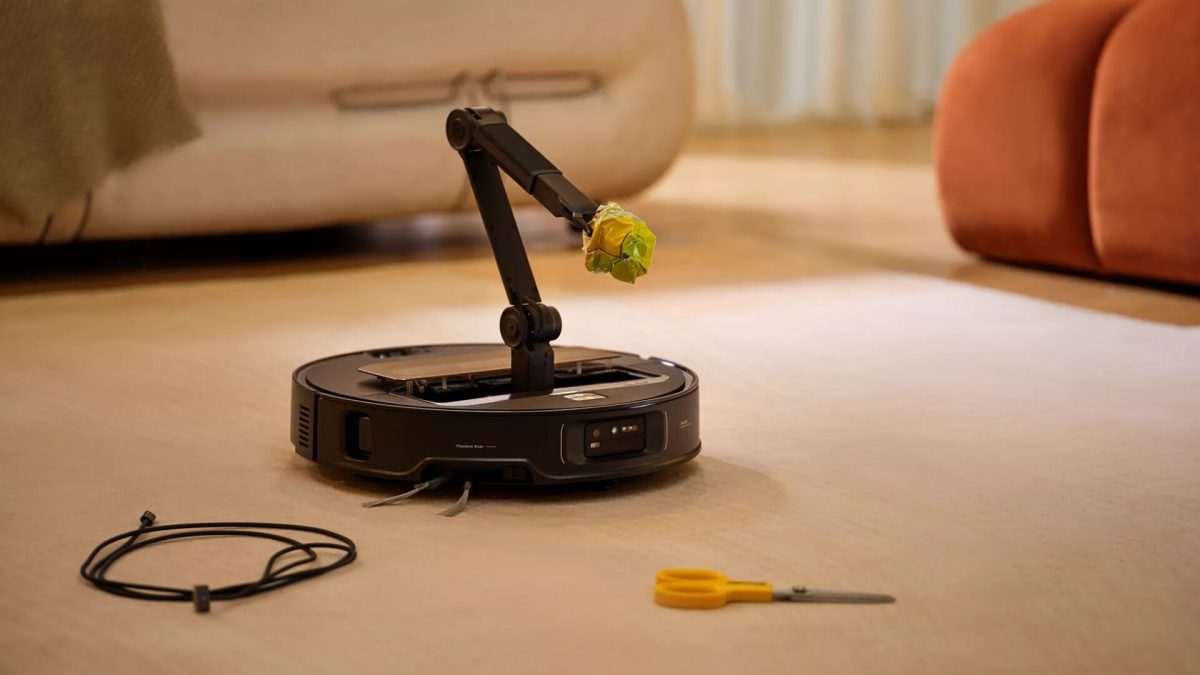
The FCC's ban on Chinese-made robots extends well beyond humanoids to quadrupeds, research platforms, and many robot vacuums from allied countries. Supporters call it a major boost for domestic robotics, but critics warn that cutting researchers and startups off from affordable foreign hardware could slow U.S. innovation instead. Ars Technica's Jeremy Hsu examines who stands to gain and who stands to lose from the prohibition: Such an import ban would apply to some of the most affordable robots primarily produced by Chinese companies, including Unitree's humanoid robots that are used by robotics labs and researchers for tasks such as experimental robot surgeries. US consumers would also likely lose access to the newest robot vacuum cleaners that are mainly manufactured by Chinese companies such as Roborock. But the ban also broadly applies to foreign-made robots produced by countries nominally allied to the United States, including Japan, South Korea, and Germany. [...] The ban on foreign-made robots could theoretically encourage more US and foreign companies to set up manufacturing facilities in the United States. There are already multiple companies racing to scale up production of humanoid robots in US factories, including Agility Robotics, 1X Technologies, and Figure AI. Tesla has been attempting to shift production away from older electric vehicle models and toward its Optimus humanoid robot. Boston Dynamics has already been making its Atlas humanoid robot, along with its four-legged Spot robot and wheeled Stretch robot, at its main facility in Waltham, Massachusetts. The US robotics company is also planning to massively scale up manufacturing of the Atlas robot under South Korea's Hyundai Motor Company, which gained full ownership of Boston Dynamics in July 2026. "This is one of the strongest technology-security actions in modern US history," wrote Evan Beard, CEO of Standard Bots, in a LinkedIn post. "The message is unambiguous: robotics is a technology America must lead and own -- and foreign-subsidized robots will not be allowed to unfairly dominate US robotics as they did solar." Similar praise came from Rush Doshi, director of the Initiative on China Strategy at the Council on Foreign Relations, who, in a social media post, described the FCC decision as "one of the most significant actions taken so far in support of the US robotics ecosystem." However, several robotics researchers and analysts interviewed by The Robot Report expressed skepticism about any potential boost to US competitiveness in robotics. Some even warned that the ban could prove counterproductive for US robotics efforts to develop humanoid robots. "In the near term, the measure could slow US physical AI innovation by cutting startups and researchers off from future low-cost Chinese platforms before comparable Western alternatives exist," said Georg Stieler, a global robotics advisor and managing director for Asia at Stieler Technology & Market Advisory, in an interview with The Robot Report. US domestic production of robots lags behind China in terms of mass manufacturing at lower cost, said Rueben Scriven, a senior analyst at Interact Analysis. "This announcement is more likely to inhibit the US humanoid robotics industry, as the presence of low-cost Chinese humanoid robots has been helping educate the US market through promotional and entertainment use cases -- an effect this policy risks undermining," Scriven told The Robot Report. The report notes that previous FCC bans have done little to help create competitive U.S. alternatives, with restrictions on Chinese drones instead prompting companies to sell barely disguised versions of DJI technology.

Read more of this story at Slashdot.

  •  

Trump Administration Bans New Chinese Humanoid Robots

The Trump administration has banned newly authorized foreign-made humanoid and four-legged robots, along with power inverters, citing "unacceptable risks" to the country's national security. FCC chairman Brendan Carr said the agency was doing its part "to secure America's critical supply chains." The BBC reports: The FCC has added the items to its Covered List -- a register of goods and services that are deemed a risk to US national security. The ban applies to new foreign-produced advanced robotic devices and power inverters and does not prevent the sale or import of any existing models that had been previously authorized by the FCC. The FCC cited concerns that the use of foreign-made inverters could allow overseas firms to turn them off, steal data, facilitate remote access and surveillance by "foreign government actors, or be otherwise exploited through a cyberattack." It added that the use of robots made outside the US could allow "malign actors to surveil Americans, enhance the capabilities of foreign intelligence services, or to remotely commandeer the robots."

Read more of this story at Slashdot.

  •  
❌