Vue lecture

SpaceX Launching NASA's Roman Space Telescope to Explore Dark Energy and Habitable Planets

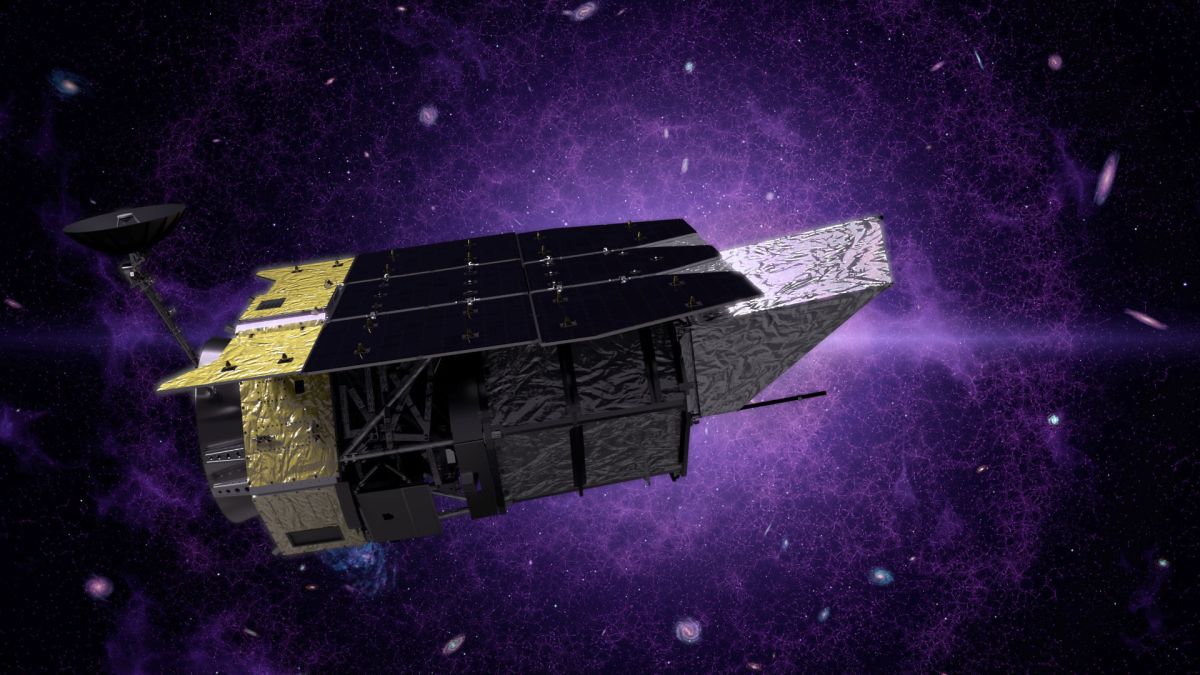
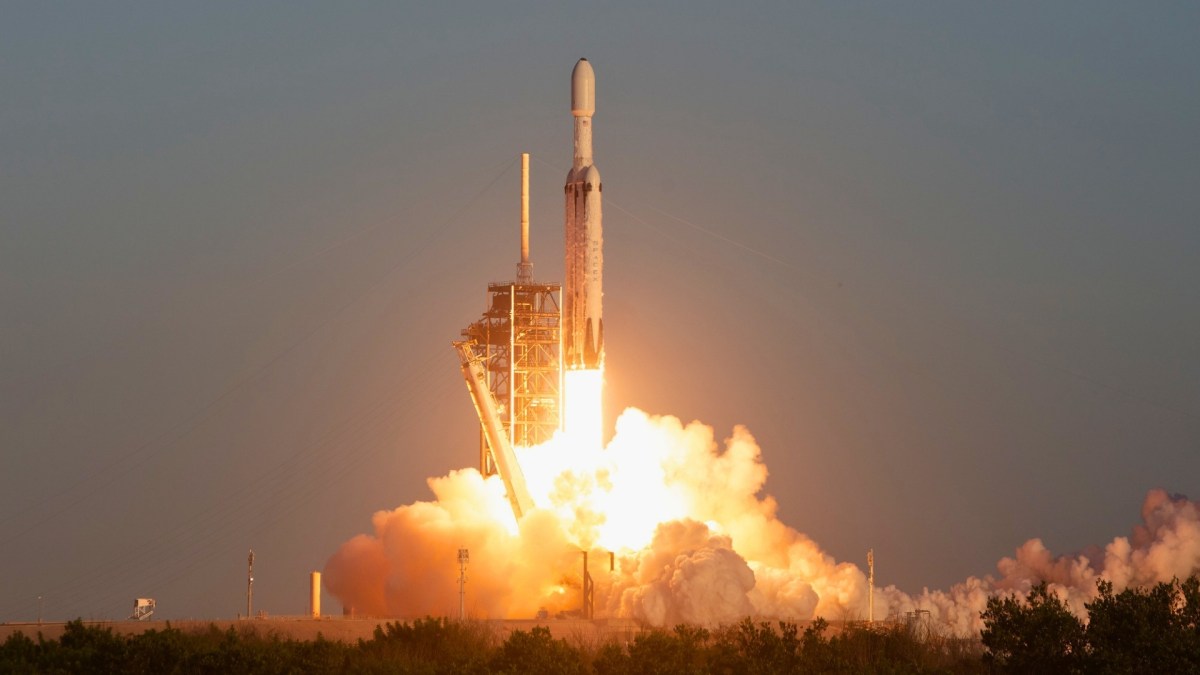
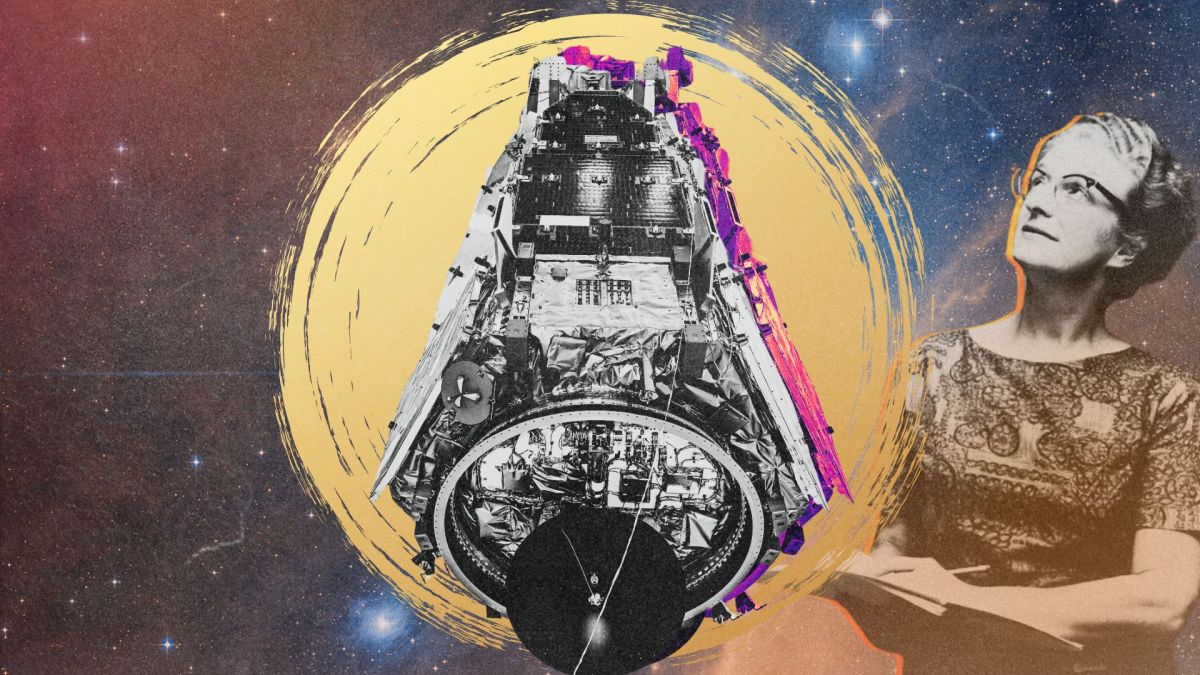
SpaceX is scheduled to launch the Roman Space Telescope on a Falcon Heavy rocket, with the launch window opening at 7:26 a.m. EDT (1126 GMT). NASA will carry the launch live on YouTube. CNN offers this mission overview from NASA Administrator Jared Isaacman. "Roman will investigate dark matter, dark energy and the structure of the universe itself, and accelerate the future of discovery of potentially habitable planets outside our solar system." In fact, "NASA anticipates that Roman will image more than 50 times as much of the sky in the next five years as Hubble covered in three decades," reports USA Today, noting that "every single image it beams back to Earth will contain the equivalent of 100 pictures Hubble would capture." The barrel-shaped Roman telescope is due to set up operations nearly 1 million miles from Earth and begin scouring previously unobservable areas of the cosmos... NASA will make all of Roman's data available for anyone to peruse, meaning astronomers from all over the world will have the opportunity to make use of the observatory for advanced research, NASA says... Spanning 42 feet long and more than 14 feet wide, the Nancy Grace Roman Space Telescope is outfitted with two primary instruments Its 300-megapixel near-infrared camera is built to look across the universe and study the three-dimensional distribution of dark matter, reports The Conversation. But it's also carrying a coronagraph instrument built to dramatically reduce the glare from distant stars "that will test the technology for future missions that plan to detect Earth-like planets around other stars." The mission's generating some excitement. "Nearly three decades after dark energy's discovery, astronomers are letting themselves hope that a breakthrough is almost at hand," writes Scientific American, adding that cosmologists "are increasingly questioning the validity of their vaunted standard model, although no one can decide exactly what comes next." Roman will chase down three different ways of detecting dark energy, seeking to more precisely define what its effects on the universe are and whether they're changing over time. The first one involves surveying the skies for a special variety of supernova that's so predictable that scientists can use it as a beacon for calculating what a host galaxy's distance is and how fast it's moving away from us — the same technique that first betrayed dark energy back in the 1990s. The second entails mapping large numbers of galaxies to discern huge, faint bubbles in the cosmos that represent the fossilized signatures of sound waves that froze out of the universe's primordial plasma as it expanded and cooled. The sizes of those bubbles scale with the size and growth of the very early universe, offering a powerful probe for studying cosmic change over time. The third tracer uses a technique called microlensing, which reveals clumps of dark matter via their warping of background starlight, to fill in scientists' still incomplete reckoning of matter's cosmic distribution. The Houston Chronicle reports that the telescope will also study rogue planets, isolated black holes, starquakes and planet-forming disks around nearby stars. "Almost regardless of what your scientific interest is, Roman is probably already planning to take observations," Julie McEnery, Roman's senior project scientist at NASA, said during a July news conference." NBC News reports that after the Roman telescope launches, "it's set to spend more than three months journeying to its final destination, located roughly 1 million miles from Earth." Three primary surveys are planned over the course of the Roman telescope's mission. During the largest one, which will last over a year, the telescope will peer through the Milky Way's dense, star-packed center, known as the galactic bulge, building a vast catalog of all the astronomical objects it observes. The second and third surveys will focus on dark matter and dark energy. Axios notes that Roman's primary mirror "is about the same size as that of Hubble's, but at 80% less weight — reflecting huge tech advancements since Hubble was built in the 1970s." And NPR reports NASA began planning the $4.3 billion telescope 15 years ago to search for supernovas to help explore dark energy — when "a call came in from the government office in charge of surveillance satellites." "The National Reconnaissance Office reached out to NASA," [remembers cosmologist Daniel Scolnic at Duke University], "saying, 'We have this amazing satellite sitting in a hangar that we're not using. And what what do you guys think about instead of pointing downwards, we point upwards, and you guys use it?'" NASA said yes. It took some substantial modifications, but now that old satellite is set to become NASA's next major space observatory.... Another goal of the telescope is to spend a month surveying all the stars in the Milky Way galaxy. Julie McEnery is Roman's project scientist. She says even though Roman has broadly the same sensitivity and sharpness of vision as the currently orbiting Hubble Space Telescope, its design lets it do things much faster. "That one month of observations to survey our Milky Way galaxy would take about a century with Hubble," says McEnery.

Read more of this story at Slashdot.

  •  

Trump Creates a Space Academy and Honors the Artemis Astronauts

President Trump awarded the four-member Artemis II crew the Congressional Space Medal of Honor and signed an executive order directing the creation of a new U.S. Space Academy. The proposed academy would train engineers, scientists, technicians, operators, and astronauts for NASA, the Space Force, and the commercial space industry. Houston Public Media reports: The Artemis II crew -- NASA's Reid Wiseman, Victor Glover, Christina Koch, and the Canadian Space Agency's Jeremy Hansen -- retraced history as they flew around the moon and back in April, the first time humans have been in lunar territory since the 1970s. He had previously hosted the crew members at the White House following their mission and called them during the mission while the crew was tens of thousands of miles away. "The one thing that really sticks out to us [from that call] is you said how proud you are and how proud our nation is for the job that we've just accomplished," Wiseman said during Friday's ceremony. "And for us, that is what we set out to do. We wanted to inspire this nation to learn." During the ceremony, Trump also signed an executive order to create the "United States Space Academy." Under the order, a Presidential Commission on the U.S. Space Academy has 120 days to create a report with guidelines for the U.S. Space Academy. The Commission will include NASA Administrator Jared Isaacman as its Chair, as well as other NASA and space officials. Secretary of Defense Pete Hegseth, Trump's Chief of Staff Susie Wiles, and Michael Kratsios, assistant to the president for science and technology. In effect, it allows the Trump Administration to build the U.S. Space Academy to its liking. "It will serve both the United States Space Force as well as NASA and the civilian spaceflight industry," Trump said. "And it will attract, train, graduate the very best that our nation and our nation really has to offer." As for where the academy will be located, Trump said he was "going to be choosing a location very shortly."

Read more of this story at Slashdot.

  •  

Rush Rescue Mission for NASA's $500M Space Telescope Fails

Remember that rush rescue mission for NASA's $500M space telescope? It failed, reports CNN, and the LINK satellite won't be able to boost the telescope's orbit. NASA says its decades-old Swift telescope will now continue losing altitude, until it reaches Earth's atmosphere later this year and burns up. CNN reports: Just weeks after LINK lifted off on July 3, it started to spin out of control. [Satellite designer] Katalyst was able to regain control of the satellite, but the company acknowledged that the issue cost it time, which would delay LINK's rendezvous with Swift by about a month. However, that postponement — at least initially — did not seem to be a deterrent to the mission. Now, NASA and Katalyst have announced that LINK's mission will not capture and boost Swift to a higher orbit "due to ongoing attitude control issues," according to statements Wednesday. "NASA should be willing to move quickly and take smart risks when the potential return is worth it, and that is exactly what we did with this mission," NASA Administrator Jared Isaacman said in a statement. "This is not the outcome we were working toward, but it does not change why this mission was worth attempting. The team moved with extraordinary speed to give Swift a chance to carry out more science while advancing capabilities America will need for satellite servicing in the future...." The mission team is forging ahead with its plan for LINK to rendezvous with Swift — but as a demonstration rather than a rescue. "We are going to learn everything we can from LINK's rendezvous attempt and put those lessons to work on the missions that follow," Isaacman said... Swift wasn't designed to be serviced in space, which means that insights from the demonstration could be used for future missions... "We have already learned a tremendous amount," [said Ghonhee Lee, CEO of Katalyst Space Technologies], "and now our job is to turn those lessons into something durable — building a repeatable playbook to inform future rendezvous and proximity operations and satellite servicing."

Read more of this story at Slashdot.

  •  

Rescue Mission Is Called Off For NASA's Aging Swift Space Telescope

NASA has called off a $30 million mission to rescue its aging Swift space telescope after Katalyst Space's Link spacecraft developed persistent control and positioning problems. The Associated Press reports: Katalyst said Link will not attempt to capture Swift and boost it to a higher orbit because of problems with controlling the spacecraft. NASA said this means the telescope will plunge through the atmosphere after more than 20 years of tracking some of the biggest explosions in the universe like gamma ray bursts and exploding stars. Its demise is not expected before October. NASA paid $30 million to Katalyst in an attempt to raise the telescope to a safer, longer-lasting orbit. Intense solar activity caused it to lose altitude faster than expected. The rescue spacecraft went into an uncontrollable spin a few weeks after its liftoff in early July. While flight controllers managed to slow Link's tumble, issues continued to plague its pointing and positioning in orbit. "This is not the outcome we were working toward, but it does not change why this mission was worth attempting," NASA Administrator Jared Isaacman said in a statement. As a consolation prize, Katalyst will continue to operate Link in proximity with the telescope to demonstrate capabilities for future rescue operations. Katalyst CEO Ghonhee Lee said it was an ambitious mission on an aggressive timeline that was thrown together in under a year. "We took on this high-risk, high-reward challenge and are proud of the milestones we reached along the way," Lee said in a statement. "We have already learned a tremendous amount."

Read more of this story at Slashdot.

  •  
❌