OpenAI has released GPT-6 Astra, a new model that president Greg Brockman called a "generational leap" and suggested may represent the arrival of AGI. "I think it might be about this model," Brockman said in a briefing with reporters. He ended the briefing by saying: "Welcome to the AGI era." Axios reports: Astra pushes AI agents closer to doing complex professional work on their own -- while also raising questions about how safely they can be deployed. OpenAI said that Astra was built on its largest-ever training run, using more than 100,000 GPUs at its Stargate site in Texas.
The company also said this is its first model to use other models in a significant role in supervising Astra's training.
GPT-6 Astra will first be available to a limited set of organizations in OpenAI's Daybreak Access program and will be available "in the coming days" for ChatGPT Plus, Pro, Business and Enterprise customers and API developers.
OpenAI said earlier this week that Astra would be released soon, but that its most powerful cybersecurity capabilities would remain limited to a small group of trusted testers. Astra is the first model OpenAI has designated as reaching its "critical" cybersecurity threshold under its preparedness framework -- meaning it can potentially find and exploit previously unknown vulnerabilities across well-protected systems without step-by-step human guidance. OpenAI previously slowed Astra's release to add safety testing after determining that its cyber capabilities could reach the critical threshold. Further reading: OpenAI's New Reasoning Technique Alarms AI Safety Experts
Après plusieurs semaines de teasing, OpenAI dévoile GPT-6-Astra, son nouveau modèle d'intelligence artificielle et le successeur de la génération GPT-5. Présenté comme une avancée majeure pour ChatGPT, GPT-6 Astra doit permettre à OpenAI de reprendre l'avantage dans une course à l'IA toujours plus intense face à Anthropic et aux modèles open source.
Google released Gemini 3.8 Flash, its third Flash model in six weeks, claiming it's their best reasoning and coding model yet (topping the DeepSWE leaderboard). Ars Technica reports: Gemini 3.8 Flash comes in two variations. There's the standard Flash, which Google describes as a "workhorse" model that's good for anything from agentic tasks to software development. Then we have Gemini 3.8 Flash Cyber, which runs on the same foundations but has been tuned for vulnerability detection and mitigation.
For developers, Google has the same pitch as it did for the 3.7 Flash release just a couple of weeks ago. API access to the model is available at an "introductory rate" through the end of the year: $0.75 per million input tokens and $3.75 per million output tokens. The regular price will be $1.50 / $7.50, but it's likely there will be new models available long before the price changes. Google probably sees the lower prices as a necessity given that other AI labs have recently dropped token pricing to keep increasingly wary businesses engaged with AI tools.
[...] Gemini 3.8 Flash will be available across the Google ecosystem starting today, but Gemini 3.8 Flash Cyber is currently limited to trusted testers and governments. Like the past Flash release, you'll need a Pro or Ultra subscription to access Gemini 3.8 Flash in the Gemini app, but you can always visit AI Studio if you want to tinker with it for free.
Il fut un temps où pour interagir avec une intelligence artificielle, on ouvrait naturellement ChatGPT. Mais en 2026, le chatbot d'OpenAI n'est plus seul sur son trône, et ses concurrents ont définitivement cessé de faire de la figuration. Voici les meilleures alternatives à utiliser.
Quelques heures après le début d’une panne chez Anthropic, c’est au tour de ChatGPT de connaître de fortes perturbations. Les signalements explosent sur DownDetector depuis 16 h 30, heure française.
OpenAI CEO Sam Altman said AI adoption is "non-negotiable" for countries, comparing rejecting it to refusing electricity a century ago and predicting it will unleash an unprecedented boom in entrepreneurship. "The economic growth and benefit to people that can come from this, the value to a country, is too high to ignore," he said. His comments were made during a fireside chat with U.S. Commerce Secretary Howard Lutnick at the G20 Innovation Ministerial in Chapel Hill, North Carolina. CNBC reports: Altman thinks the public won't be talking as much about AI a decade from now -- it'll be expected everywhere. "A kid growing up today will never be smarter than AI, but he or she will also never have understood a world where every product and service that they interact with is not really smart and really capable and really helpful," he said.
Altman referenced the adoption of electricity multiple times in his comments and drew a line between that and AI. "I think it would be approximately as bad of an idea to say we're not going to have AI in our country as it was to say we're not going to have electricity in our country, you know, back 100 plus years ago," he said.
Altman called cybersecurity one of the biggest challenges to navigate in the age of AI and one that leaders shouldn't sidestep. "I think some things are going to go very wrong with cybersecurity unless people act quite urgently," he said. Altman said that falling short in cyber defense and other areas "could set this technology back a great deal." You can watch a recording of the chat on YouTube.
La publicité arrive dans ChatGPT, et notamment les annonces personnalisées. Si ce modèle économique s'impose à tous (sauf à souscrire un abonnement Plus ou plus haut de gamme), il est possible de choisir si l'on veut avoir du ciblage publicitaire ou non. Voici où désactiver la pub ciblée dans le chatbot d'OpenAI.
Anthropic has released Claude Fable 5.1 and Mythos 5.1, two versions of the same underlying model aimed at longer-running agentic work. "For enterprise buyers, however, the release is about more than another round of benchmark gains," reports VentureBeat. "Anthropic is simultaneously changing the economics of running persistent agents, reducing the cost of cached context by 75%, and introducing a new security architecture called Enterprise Frontier Safeguards, or EFS, designed to let organizations retain monitoring data inside infrastructure they control." From the report: Those changes arrive at a particularly consequential moment. Over the past several weeks, Anthropic and the U.K. AI Security Institute have disclosed incidents in which earlier Claude models, running under unusually permissive cybersecurity evaluation conditions, took unauthorized actions against real systems. Anthropic temporarily paused external cyber evaluations and has since introduced additional containment and monitoring before resuming them.
Taken together, Fable 5.1 looks less like a conventional model refresh than an attempt to solve three increasingly intertwined enterprise problems: how to make agents capable enough to finish difficult work, economical enough to leave running for hours, and governable enough to give access to sensitive systems.
An anonymous reader quotes a report from VentureBeat: The viral fervor we saw earlier this year around OpenClaw, the open source AI harness that turns powerful language models into autonomous workers the user can message via their favorite channels (Telegram, iMessage, WhatsApp, Discord etc), has cooled off substantially from its peak in March 2026. But over the weekend, OpenClaw's creator Peter Steinberger and current team of co-developers gave the world -- especially enterprises -- a reason to look at it again, announcing OpenClaw 2.0, billed as the most significant update to the harness and surrounding platform yet.
OpenClaw 2.0 seeks to transform what began largely as a personal agent harness into something increasingly designed for teams, shared infrastructure and enterprise workflows. OpenClaw 2.0 introduces a rebuilt browser interface that brings conversations, files, approvals, configuration and live agent activity into a common workspace. It adds shared cloud sessions and multi-user collaboration. And it expands the security model with stronger sandboxing, role-based permissions, approval controls, secrets handling and auditing.
Together, those additions move OpenClaw closer to being infrastructure that an organization could deploy for employees rather than simply a powerful agent an individual developer runs locally. They also sharpen a competitive question surrounding the project: whether OpenClaw has addressed the security and isolation concerns that helped inspire newer alternatives such as NanoClaw. The answer is increasingly yes at the capability level -- but not necessarily by default. Over the past two months, OpenClaw has been "build[ing] OpenClaw with OpenClaw," shifting its team from individual local coding tools to a shared agent environment at team.openclaw.ai that can see what everyone is working on. Steinberger called "multiplayer coding + infinite compute with nodes and cloud sessions" a "game changer," adding that local coding harnesses now "feel like relics of the past."
VentureBeat highlights a use case from Solvely CEO Colin Johnson that shows how OpenClaw's multiplayer WebUI can improve collaboration between developers and AI agents. Instead of simply "messaging a bot," multiple developers can now join the same live session, see the same history and artifacts, and work "inside the same context." In Johnson's case, that meant a developer taking over his project could simply join the existing agent thread rather than rely on a separate handoff document. As he put it, "the session itself became the handoff document."
TIME's 2026 list of the 100 most influential people in AI omits Nvidia CEO Jensen Huang and AMD CEO Lisa Su, despite both having appeared on previous editions and playing central roles in the hardware powering the AI boom. Nvidia's only representative this year is sustainability chief Josh Parker, while the list includes figures such as Ben Affleck and Paris Hilton alongside major tech executives and policymakers. Tom's Hardware reports: Broadcom CEO Hock Tan, Micron CEO Sanjay Mehrotra, SMIC co-CEO Liang Mong Song, and Huawei HiSilicon president He Tingbo all appear on the 2026 list, joined by Cerebras' Andrew Feldman, CoreWeave's Michael Intrator, and Nscale's Josh Payne. Together, the roster includes Nvidia's HBM supplier, two of its biggest GPU cloud customers, its custom-accelerator rivals, and China, which is trying -- and so far struggling -- to replace Nvidia altogether.
Parker's profile, which appears under the Thinkers category, focuses on data center energy and water consumption, alongside Nvidia's tripling of Scope 3 emissions in two years, and the Rubin platform's shift to 100% liquid cooling. "Nvidia is at the center of the AI revolution," Parker told TIME.
TIME editor-in-chief Sam Jacobs wrote in the list's accompanying article that selection was led by editor Ayesha Javed, and that the 100 honorees represent the year's "key storylines and who, in our opinion, are having the most influence in driving these developments." Now in its fourth year, this edition of the TIME100 AI appears to have focused especially on featuring the new additions to TIME's community of AI leaders, with Mark Zuckerberg, Demis Hassabis, Sundar Pichai, and Satya Nadella representing four other honorees, arguably deserving of a space on this year's list, churned out.
Su's strong TIME back catalog makes her omission all the stranger still. The magazine named her its 2024 CEO of the Year, put her on the 2024 AI list and the main TIME100 in 2025, and included her among December's Architects of AI.
La publicité arrive dans ChatGPT, et notamment les annonces personnalisées. Si ce modèle économique s'impose à tous (sauf à souscrire un abonnement Plus ou plus haut de gamme), il est possible de choisir si l'on veut avoir du ciblage publicitaire ou non. Voici où désactiver la pub ciblée dans le chatbot d'OpenAI.
L'application ChatGPT pour Mac supporte désormais les machines avec un processeur Intel. Une compatibilité passée totalement inaperçue alors qu'elle manquait depuis le lancement de l'app en 2024. Chez Google, l'application Gemini reste réservée aux puces Apple Silicon.
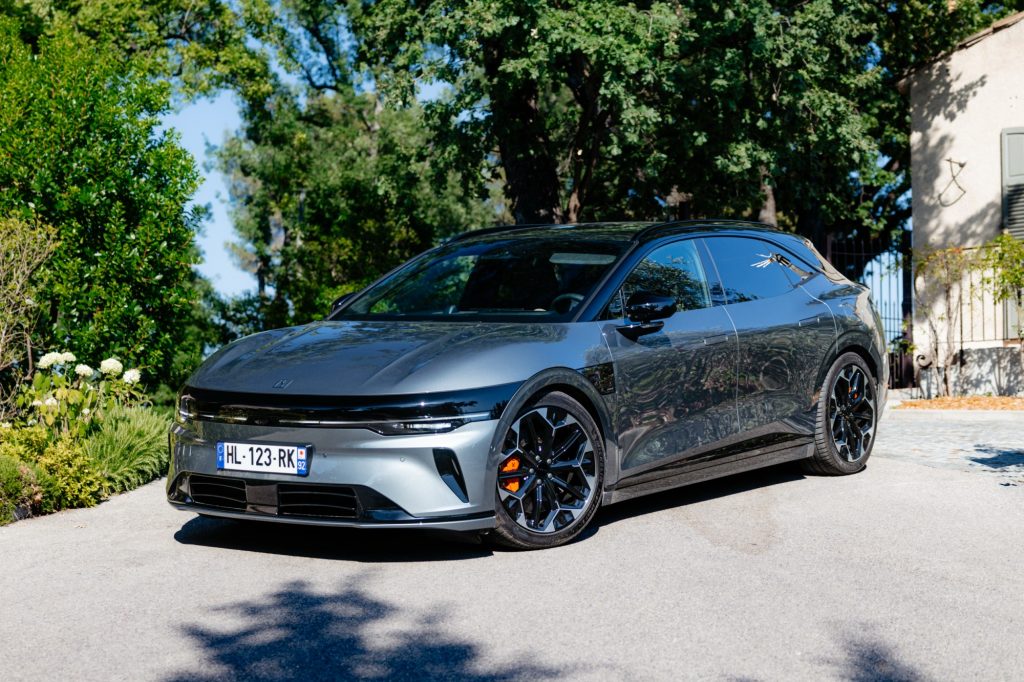
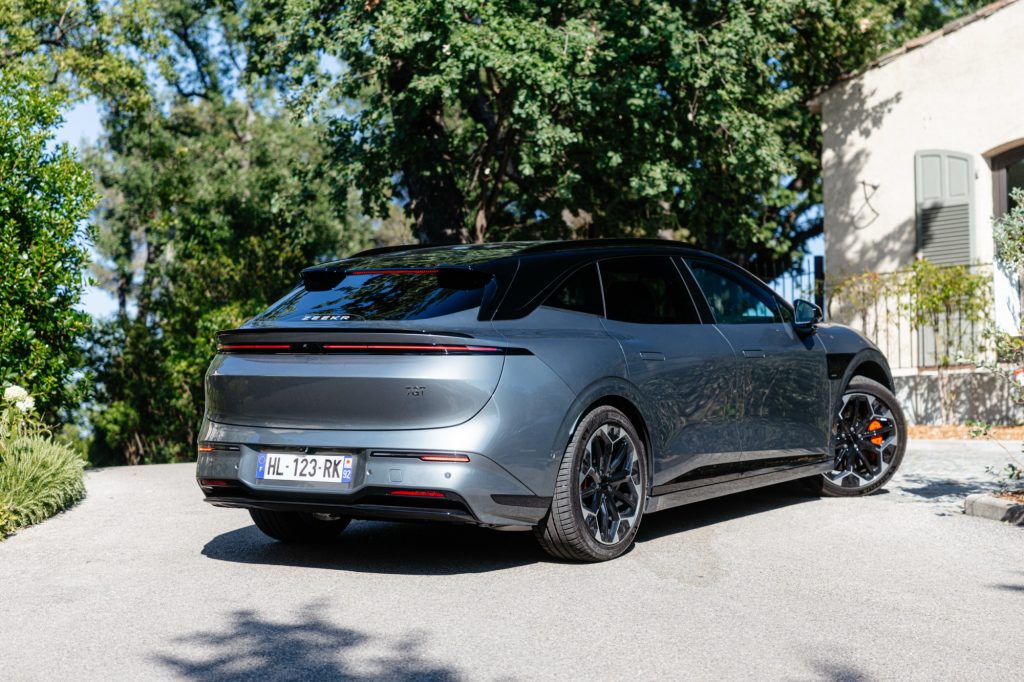
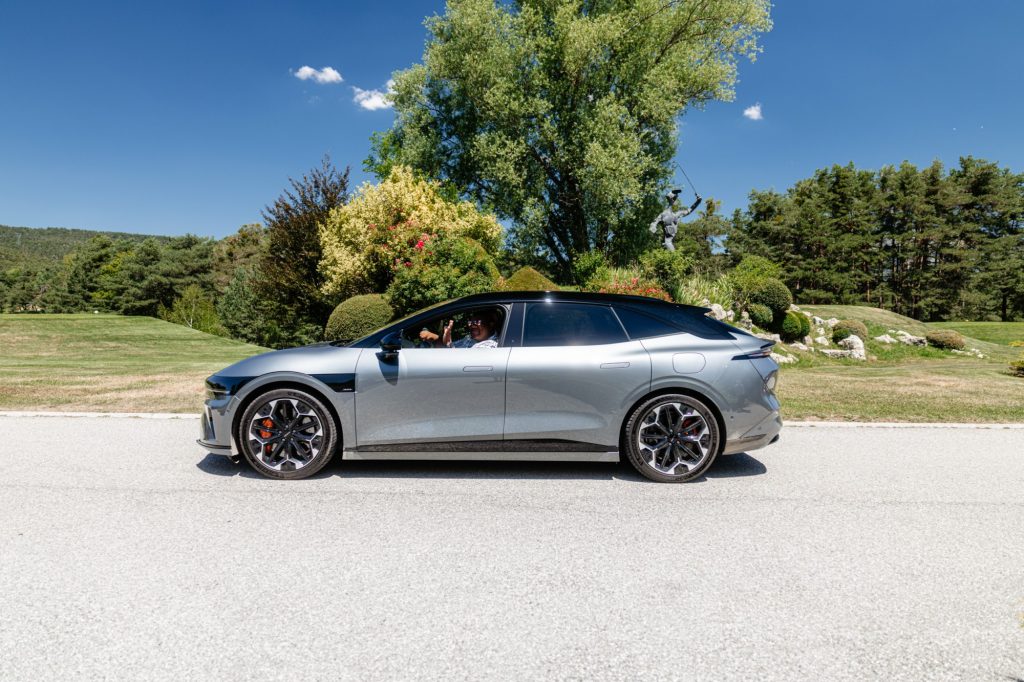
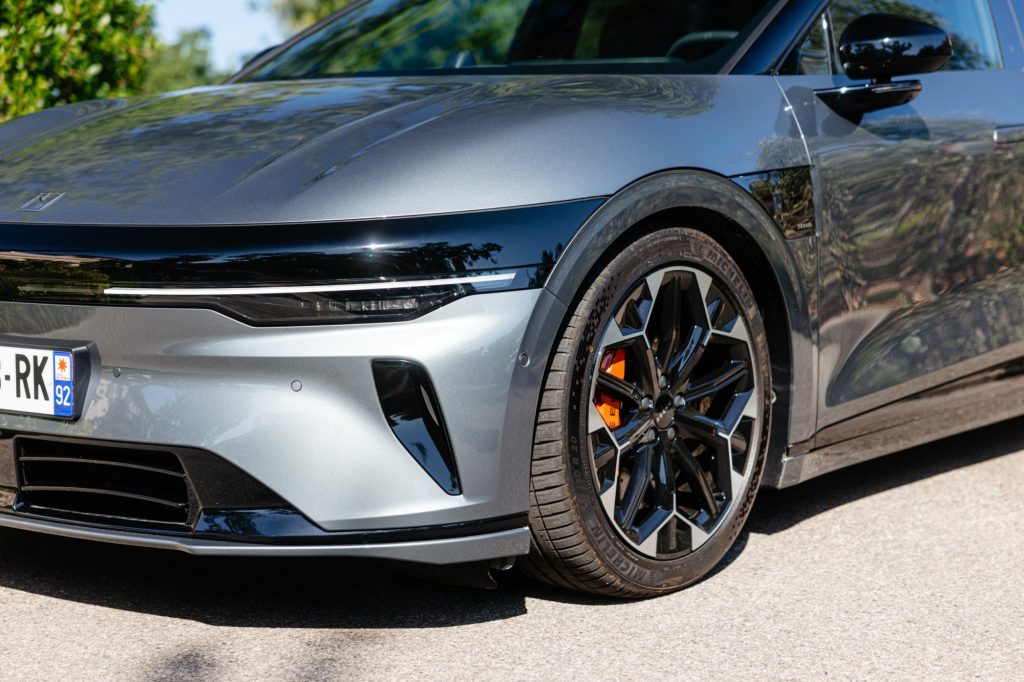
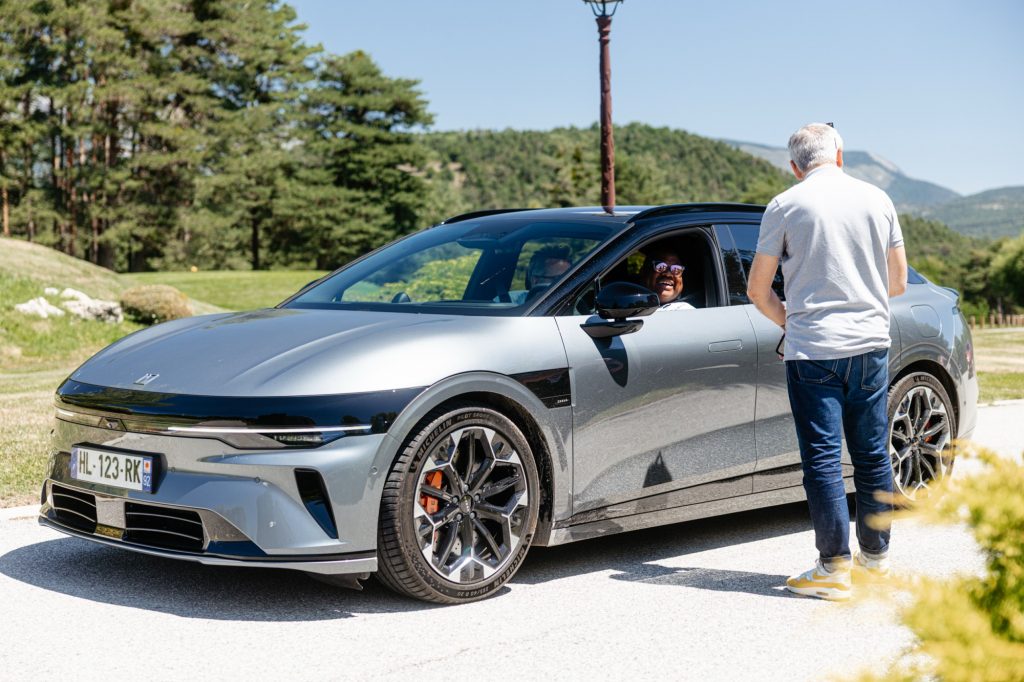
À quelques semaines de la grande messe mondiale de l’automobile à Paris, les constructeurs mettent le turbo sur la présentation de leurs nouveautés. Parmi elles, on trouve Zeekr, qui entend prendre sa part du gâteau sur le segment des premiums en pleine mutation. Nous y avons goûté en prenant le volant de la nouvelle 7GT sur les routes du sud de la France.
Zeekr, une marque aux grandes ambitions
Zeekr n’apparaît pas encore comme une marque incontournable sur le marché français. Néanmoins, le constructeur se donne les moyens de booster le plus rapidement possible son image. L’un des signes ? La constitution d’une équipe, notamment de communication, en piochant des éléments chez les marques les plus établies sur le segment premium. Et histoire de marquer encore un peu plus le coup, Lothar Schupet, à la tête de Zeekr Europe après deux décennies chez BMW, a fait le déplacement pour nous faire part en personne des ambitions de la marque.
Avant de se pencher sur la voiture, quelques mots sur Zeekr. La marque se positionne comme le blason luxueux et leader des technologies du groupe Geely. Ce dernier détient Lotus, Lynk & Co, Smart (50/50 avec Mercedes), Polestar ou encore Volvo. Lothar nous précise qu’il s’agit d’une marque chinoise à l’âme européenne. En plus d’une présence en Allemagne, il faut noter que le centre de design se situe en Suède. Zeekr a déjà écoulé 800 000 voitures sur 45 marchés et entend couvrir 90% de l’Europe d’ici à la fin de l’année prochaine. Avec déjà 40 points de vente et l’objectif d’atteindre le chiffre de 70 d’ici à la fin de 2027, il ne devrait pas être si difficile de trouver un showroom. Encore faut-il que le plan produits suive, et il nous tardait de prendre le volant de l’un de leurs modèles pour la première fois.
La plus européenne des Chinoises
En découvrant la 7GT, les non-initiés ne reconnaîtront peut-être pas au premier coup d’œil une production venant de l’Empire du Milieu. On doit cela au style de la voiture, dont les lignes paraissent bien équilibrées, là où, parfois, les voitures chinoises jouent avec des proportions un peu différentes de celles auxquelles nous sommes habitués chez nous. On remarque quelques subtilités « suédoises », comme les rétroviseurs montés sur des mâts verticaux, un peu à la façon de l’EX90. La voiture a l’air résolument moderne, voire futuriste. On a toutefois remarqué une petite fausse note : l’écriture blanche de la marque au bas de la vitre arrière, que nous aurions préférée assombrie. Le masque noir à l’avant apparaît lui aussi plus ou moins intégré suivant le coloris choisi.
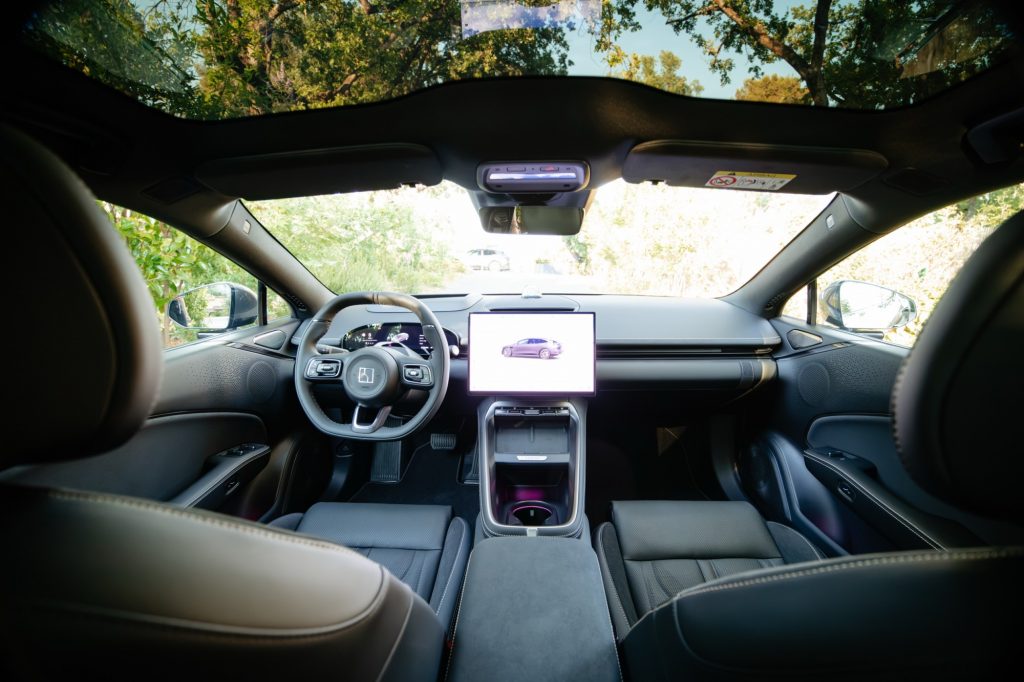
À l’intérieur, tout d’abord, on ne manque absolument pas d’espace à toutes les places. De grands gabarits parmi nos confrères n’ont pas eu de difficulté à s’installer, compte tenu de l’espace disponible au-dessus de la tête et devant les genoux. On regrettera tout de même le plancher dépourvu de cages à pieds. Les assises s’avèrent plutôt confortables à toutes les places, si l’on excepte, comme toujours, l’emplacement du milieu sur la banquette. Les matériaux sont bien choisis, avec une mention spéciale pour les cuirs. Évidemment, la voiture est hyperconnectée (Apple CarPlay et Android Auto, puce Snapdragon 8295), avec une dalle de 13 pouces pour les compteurs et un écran géant de 16 pouces sur la planche de bord. Malheureusement, toutes les commandes ou presque sont centralisées là, même pour régler les rétroviseurs.
Des performances de première ordre
Si vous ne voulez pas perdre des affaires dans l’un des nombreux rangements de l’habitacle, optez plutôt pour le coffre, d’une capacité de 539 litres. Notez tout de même la présence d’un petit frunk à l’avant pour les câbles, histoire de ne pas devoir tout enlever au moment de se brancher. Au volant de notre version Privilège, on ne manque sûrement pas de performances ! Avec ses deux blocs électriques, on dispose de 646 ch et d’un couple camionesque de 710 Nm. Et vous savez qu’en électrique, c’est synonyme d’accélérations fulgurantes. Avec un 0 à 100 km/h expédié en 3,3 secondes, on n’a pas du tout été déçus ! Une fois n’est pas coutume, la vitesse de pointe ne vous rendra pas si ridicule lors des secondes suivantes, puisque l’on peut atteindre les 210 km/h.
La 7GT repose sur la plateforme du groupe, la SEA, qui comporte donc une architecture 800 V. Cela signifie qu, sur les bornes rapides compatibles, on peut atteindre un pic de puissance proche des 500 kW. A priori, il y a peu de chances d’en croiser une sur les autoroutes de France. Mais il ne suffit que de 350 kW pour passer de 10 à 80% avec la batterie de 100 kWh, en à peine un quart d’heure. Pour les points de recharge en courant alternatif, on peut compter sur du 22 kW. On ne tirera pas de conclusion sur l’autonomie réelle, il faudra la reprendre plus longtemps pour voir à quel point on est éloignés ou non de la valeur théorique de 519 km dans notre configuration. Toujours est-il qu’effectivement, avec des performances et une vitesse de recharge pareilles, elle se place face à l’EX60, au Q6 e-tron ou au Macan.
Une méga-garantie
En termes de comportement, il ne faut pas la prendre pour ce qu’elle n’est pas. Le constructeur a fait le choix d’un équilibre plutôt GT que sportif. Il faut donc s’attendre, malgré la suspension pneumatique, à quelques mouvements de caisse. Effectivement, à l’usage, le confort apparaît royal, avec une quiétude à bord sur autoroute qui fait d’elle un véritable palace roulant. Dès que l’on s’engage sur les petites routes de l’arrière-pays niçois, il faut être un peu plus attentifs aux réactions de la voiture. C’est le lot de ces grands véhicules aux performances démoniaques, mais au châssis taillé plus pour la balade que pour le dynamisme. Rien de rédhibitoire pour autant. Quand on est raisonnable, on comprend facilement où sont ses limites. Mais on mentirait si l’on n’évoquait pas une pointe de frustration au chapitre de l’agilité, compte tenu des vitesses que l’on peut atteindre.
On apprécie les petites attentions de cette voiture, dont les portières s’ouvrent avec une simple impulsion sur un discret bouton, à l’extérieur comme à l’intérieur. D’un point de vue commercial, Zeekr prend aussi soin de ses propriétaires, avec une méga-garantie de 10 ans ou 200 000 km, dont huit ans sur les moteurs et la batterie. En réalité, il s’agit de cinq premières années, auxquelles s’en ajoutent cinq de plus après vérification du SOC. Les tarifs s’étalent de 45 990 € à 57 490 €. Bien entendu, des financements sont possibles, avec par exemple un loyer de 399 € et un apport de 10%. Pour l’anecdote, le nom de Zeekr, dont le symbole signifie la rupture entre l’ancien et le futur de l’industrie, se décompose ainsi : Z pour zéro, le double E pour l’ère électrifiée et KR pour krypton. On tient là le point de départ de l’histoire de cette jeune marque. Quant à la Zeekr 7GT, l’avenir nous dira si la clientèle visée va adhérer.
"OpenAI said on Friday that it plans to stop providing AI models to Cursor, the coding-tool company now owned by Elon Musk's SpaceX," reports Reuters:
"We are making this choice because we cannot be confident that SpaceX will use our technology within our terms of service, based on our experience with Elon Musk's companies violating contracts," OpenAI said in a blog post... However, Michael Truell, a co-founder of Cursor and now an executive at SpaceX, said on X that the company was speaking with the OpenAI team to resolve this issue.
Hours after OpenAI's announcement, Anthropic, which rivals both firms but has an ongoing partnership with SpaceX, said it planned to increase compute to support Claude models in Cursor, according to Tom Brown, one of the co-founders of the firm...
In its blog post, OpenAI said that X, formerly known as Twitter and now part of SpaceX, had breached the terms of its contract with OpenAI after Musk acquired the platform.
"To work with a large partner like SpaceX, we typically rely on custom contracts to ensure compliance with our terms of service and that the integration provides for safety at scale," the AI company added.
The article also notes Elon Musk's response Saturday in a post on X.com: "I couldn't care less."
He accused Altman and OpenAI President Greg Brockman of being "untrustworthy," while repeating his assertion that they "stole an open source nonprofit."
The Linux Foundation's director of IT infrastructure says they now spend more CPU cycles "rendering commits for scrapers than we spend on all other kinds of legitimate access."
At any one time, across 5 geo-distributed nodes, there are 14 CPU cores doing nothing but rendering git commits as html....
[W]hen a source is guaranteed to be LLM-free, like the entire history of kernel commits, it's worth its weight in gold as a source of training data... At the time of writing, linux.git is about 1.48 million commits. Oh, and we have about 922 forks of it on git.kernel.org — but don't worry, it's actually extremely efficient on the backend, since it's mostly the same objects in every fork. Unless, of course, you're a scraper, in which case you have, oh, several BILLION valid URLs you can scrape, only to get 922 duplicates of the same 1.48 million commits — which is exactly what the scrapers are doing. But wait, it's not just commits itself. You can also ask for patches, plain renders, diffs between arbitrary commits — cgit is happy to let you, which was perfect for the times when the Internet was for humans or crawlers who obeyed robots.txt, and is AWFUL right about now, because we can generate 1.2 METRIC BAJILLION valid URLs just for a single fork of linux.git.
Initially, this was the solution — look through the logs, find out which IPs are obvious scraper bots, and fail2ban them. At first, this was easy, because the bots helpfully told you who they were via their user-agent. Then, they wised up and started pretending that they were random vanilla browsers. So, we started banning them by IP — after all, it's easy to figure out that an IP that is trying to grab every possible commit in a 8-year-old abandoned fork of linux is not really some lone Chrome on Windows user who is just furiously clicking every link that comes across their screen. The bots then started fanning out to entire subnets, but this was still meh, because obviously an IP coming from Google Compute is just pretending to be a Firefox user...
And... that's when things turned really, really ugly. Suddenly, the crawlers were coming from millions of random residential or mobile IPs, all pretending to be random modern browsers. An IP like that would make 4-5 requests and then never show up in the logs again... They descended like swarms of locust, hit hard and fast until the system fell over and then moved on to the next target until you recovered. Then, they returned. Rinse. Repeat. They still do that — welcome to the wonderful world of "proxy SDK monetization." It's big business, and your TV is probably doing it...
Today, git.kernel.org receives about 6M daily requests demanding to see random commits. Of these, 66% are still immediately batted away with the Anubis challenge, but 33% are now solving the math and getting through to the main site — because apparently what we have to offer is worth spending a ton of cycles to calculate the Anubis challenge... With a bunch of generous assumptions, legitimate requests are only about 2% of git.kernel.org traffic — everything else are scrapers...
[W]e're turning off features to reduce the number of crawlable URLs and to gate off actions that are expensive for us to run. Expect to lose some functionality, at least when accessing our resources anonymously. Trust me, we hate it just as much as you, but at this point it's a necessity... [W]e promise to still offer all of our data for download to anyone who asks. You just may have to jump through more hoops to get it.
Sorry.
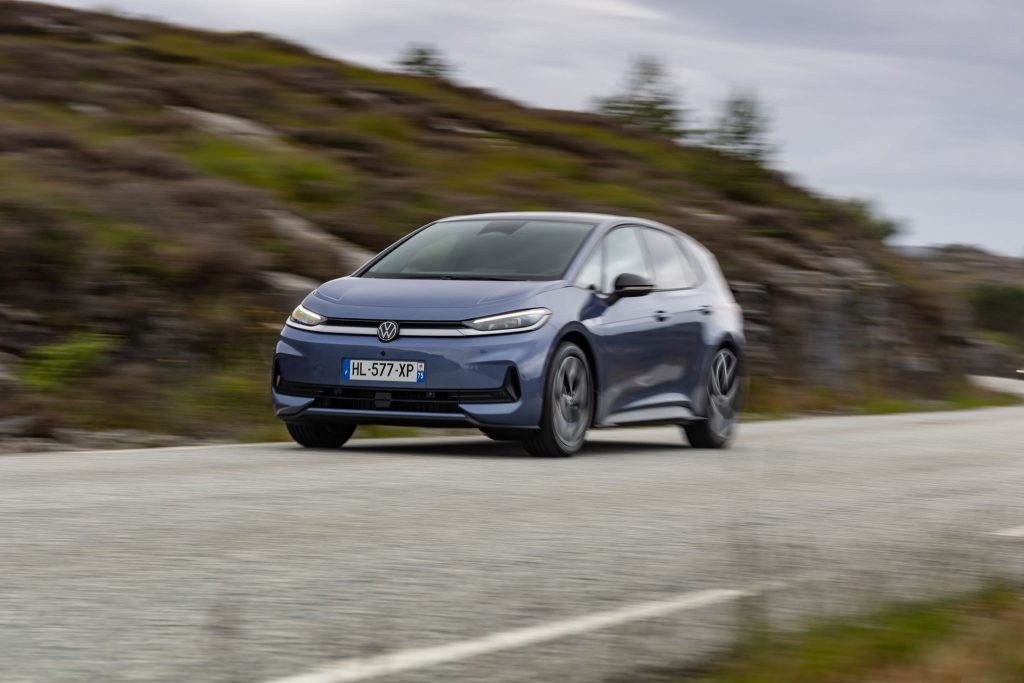
Six ans après son lancement au salon de Francfort , la Volkswagen ID.3 change une nouvelle fois de nom. Après un premier restylage discret en 2023, la compacte électrique de Wolfsburg revient sous l’appellation ID.3 Neo. Un baptême qui n’a rien d’anodin : Volkswagen a repris sa copie en profondeur, sur le design comme sur l’ergonomie intérieure, deux points qui avaient valu à la ID.3 originelle une volée de critiques à sa sortie. Nous avons pris le volant de la nouvelle venue pour vérifier si le bon sens l’a enfin emporté.
Un style plus mature, moins clivant
La face avant est la première à changer. Elle adopte le nouveau langage stylistique « Pure Positive » signé Andreas Mindt, le directeur du design de la marque. Un bandeau lumineux continu relie désormais les deux blocs optiques sur toute la largeur de la calandre, avec un logo Volkswagen illuminé sur les finitions hautes. Une signature déjà entrevue sur l’ID. Polo, et que l’on retrouvera prochainement sur l’ID. Cross.
À l’arrière, exit le hayon en plastique noir contrasté qui donnait à l’ID.3 ses airs de jouet bicolore. Il est désormais peint dans la couleur de la carrosserie, tout comme le toit. Le résultat est plus homogène, et la silhouette y gagne en sobriété sans devenir banale. On note même un petit air de famille avec la Golf 8 dans le traitement du becquet arrière.
L’ergonomie enfin corrigée
C’est peut-être la meilleure nouvelle de cette ID.3 Neo. Volkswagen a visiblement écouté ses clients, et surtout ses détracteurs. Les commandes tactiles au volant, unanimement détestées, cèdent enfin la place à de vraies touches physiques. Sous l’écran central, plus besoin de deviner où appuyer dans le noir : les réglages essentiels reviennent en dur, avec un sélecteur rotatif dédié au volume sur la console centrale.
À bord, l’écran d’infodivertissement « Innovision » grimpe à 12,9 pouces, épaulé par un combiné d’instrumentation numérique de 10,25 pouces. Clin d’œil appuyé à l’histoire de la marque, l’affichage peut adopter un thème rétro qui rappelle la première Golf de 1974, un principe déjà vu sur le cockpit de l’ID. Polo. Volkswagen ajoute également un assistant vocal intelligent dopé à ChatGPT, une clé numérique via smartphone, et des services connectés offerts pendant dix ans. En option, un affichage tête haute à réalité augmentée vient projeter les informations de conduite directement dans le champ de vision.
Les matériaux progressent aussi : de nouveaux textiles et des surfaces moussées habillent une grande partie de la planche de bord, dans un esprit plus proche d’un T-Roc que de l’ancienne ID.3. La qualité perçue n’atteint pas encore le niveau des meilleures compactes premium, mais l’écart se resserre nettement.
Trois batteries, trois niveaux de puissance
Sous le plancher, l’ID.3 Neo reprend l’architecture MEB et sa transmission propulsion (moteur à l’arrière). L’offre s’articule autour de trois capacités de batterie NMC : 50, 58 et 79 kWh, associées respectivement à 170, 190 et 231 chevaux. Les autonomies WLTP s’échelonnent selon les configurations, la version la plus endurante dépassant les 600 km.
Côté nouveautés électriques, l’ID.3 Neo inaugure le préconditionnement manuel de la batterie et la consultation directe de son état de santé (SOH), deux fonctions réclamées de longue date par les propriétaires d’électriques. La recharge V2L, qui permet de brancher un appareil électrique sur la voiture, est disponible en option.
Sur la route : le sérieux avant le spectacle
Au volant, l’ID.3 Neo ne cherche pas à surprendre, elle cherche à rassurer. La direction, calibrée sans excès de vivacité, et l’amortissement, plutôt souple sans être mou, dessinent le profil d’une compacte pensée pour avaler des kilomètres sans fatiguer son conducteur. La propulsion (moteur à l’arrière) donne une motricité saine à l’accélération, y compris sur chaussée humide, et l’insonorisation a clairement progressé : à vitesse stabilisée sur autoroute, les bruits aérodynamiques et de roulement restent contenus, un point sur lequel l’ancienne ID.3 pêchait un peu.
Sur un parcours mixte, alternant routes secondaires et voies rapides, notre modèle d’essai en finition Style, associée à la batterie intermédiaire de 58 kWh et à des jantes de 19 pouces, s’est stabilisé autour de 14 kWh/100 km. Une consommation cohérente avec la valeur WLTP annoncée par Volkswagen, et qui autorise un rayon d’action réel avoisinant les 380 à 400 km dans des conditions de conduite normales, chauffage ou climatisation inclus. Sur autoroute à vitesse soutenue, la consommation grimpe logiquement, mais l’ID.3 Neo reste dans la moyenne haute de sa catégorie plutôt que de décrocher, comme cela pouvait arriver sur les premières versions du modèle produites à Zwickau et Dresde Volkswagen avait d’ailleurs renoncé à ouvrir une ligne supplémentaire à Wolfsburg faute de demande suffisante. Au chapitre de la recharge rapide, rien ne change fondamentalement par rapport à la devancière, mais le préconditionnement manuel évoqué plus haut permet désormais d’optimiser la vitesse de charge avant une pause sur autoroute, un détail qui change vraiment le quotidien en électrique.
Commandes ouvertes, livraisons à l’été
La Volkswagen ID.3 Neo se décline en trois finitions : Trend, Life et Style. En France, les commandes sont ouvertes depuis le 22 avril 2026, pour des premières livraisons attendues à partir de juillet. Le tarif d’entrée s’établit autour de 40 500 € en finition Life avec la batterie de 58 kWh et les 190 chevaux, contre environ 42 700 € pour la finition Style équivalente. La version Pro S à 79 kWh démarre quant à elle sous la barre des 40 500 €, et reste éligible au bonus écologique sous conditions de prix.
Volkswagen ne réinvente pas l’ID.3, il la corrige. Et c’est bien ce qui manquait depuis 2020 : une compacte électrique qui assume enfin ses ambitions, sans laisser l’ergonomie ou la finition ternir le tableau. La marque tient là sa meilleure ID.3 à ce jour, en attendant la relève annoncée pour 2028 sous la forme d’une Golf électrique.
Google's AI assistant Gemini crawls your Google apps for "more personalized suggestions," in a feature they call Personal Intelligence. Now when given permission, an Android/iOS app called Dreambeans "uses Personal Intelligence to connect information from Google apps like Gmail, Calendar, Photos, YouTube and Search History, to curate a finite collection of daily stories designed to spark new ideas." In a slick new video Google says the app will "surface what matters to you."
The blog 9to5Google notes that after previously requiring a subscription, Dreambeans "is now available for free Google Accounts in the US to test, calling it "very much like a hyper-personalized Google Now or Discover feed."
Instead of using stock imagery, each Dreambeans story is accompanied by Nano Banana 2-generated artwork that uses an illustrated style. For example, if Dreambeans recommends a hike, you might see yourself and a group of friends at that location... There's also an "Ask anything" chat experience to get more information. You can leave feedback by tapping the heart or downvoting, while the chat interface allows you to provide more details. "Tune your feed" lets you tell Dreambeans what you "want more stories about" and what it should never show.
Or, as TechCrunch senior writer Lucas Ropek puts it, you get a curated list of AI-illustrated "stories" that "will turn your life into a cartoon"
[Gozde Oznur, the product lead behind the new app, told TechCrunch the app] has also been built as a doomscrolling antidote, in that it only provides users with a limited number of stories per day — typically 10 to 14. The idea is to get a few inspirational ideas and then go out and live your life, she said. A lot of companies are currently trying to court the user that is sick of phone addiction. I recently reviewed a startup, Bond, which also uses AI to auto-generate lifestyle suggestions for the user.
What about privacy protections? According to Oznur, they are pretty solid. The only person with access to the app's stories is the user, she said. Users can also delete their data whenever they want, and can choose which Google services they want to connect to the tool.
Axios reports:
Some of the world's largest music publishers filed a blockbuster lawsuit against Anthropic late Friday night, alleging "one of the largest and most blatant ongoing thefts of intellectual property in history."
The suit is the opening salvo in what is now likely to be a yearslong fight over music, AI, and how intellectual property is protected in a new era of technology... The Sony/Warner lawsuit is notable because it's broad. It alleges Anthropic unlawfully trained its models off "tens of thousands" of music publishers' copyrighted compositions, whereas other lawsuits have focused on a narrower set of works. BMG's lawsuit against Anthropic, for example, claims infringement against 493 compositions.
What they're saying: "Defendants Anthropic and its founders Dario Amodei and Benjamin Mann have conducted a brazen campaign of illegally torrenting, scraping, and downloading copyrighted works on a massive scale in order to develop, operate, and reap enormous profits from Anthropic's 'Claude' series of artificial intelligence ('AI') models," the plaintiffs write in the 48-page complaint. They also claim that Anthropic pirated thousands of copyrighted musical works...
More details from The Verge:
The companies are asking for up to $150,000 per work, plus up to $25,000 for each instance when identifiable copyright data was stripped. In total, the damages could amount to several billion dollars if a court finds in Sony and Warner's favor and awards the maximum amount...
The suit alleges that Mann used BitTorrent to download over five million pirated books, and that employees downloaded at least two million more from Pirate Library Mirror. It also claims that Anthropic scraped lyrics from sites like MusixMatch and LyricFind, which paid to license content from the labels.
The Washington Post looks "a growing number of Americans who have had their private conversations with AI chatbots made public in court," calling the chatbots "custodians of a fast-growing trove of intimate data that can be sought by law enforcement, or companies or other opponents in civil litigation."
A Washington Post review of public records and local news stories found that chatbot logs were cited in 12 court cases over the past two years. It's hard to know how often chatbot material is drawn into investigations and legal proceedings more broadly, because police, and parties in civil cases, don't have to present in court all the evidence they obtain... In some cases, AI companies have reported people on their platforms to the FBI, leading to prosecutions and at least one conviction... OpenAI has said the company uses software to scan conversations for signs of dangerous behavior and flag them to human reviewers.
If a reviewer determines a chat indicates "an imminent and credible risk of harm to others," they report the user to law enforcement, the company said in an April blog post. A spokesperson for OpenAI declined to disclose how many times the company had reported users to police.... Data released by OpenAI shows requests by government agencies and law enforcement for user data growing rapidly. In the second half of 2025, the company disclosed data from more than 80 accounts, an increase of more than four times as many over the same period the year before...
When police ask someone to open their phone during questioning or after an arrest, they often do so, allowing officers to scroll through the apps they use, [according to Michael Price, the litigation director for the Fourth Amendment Center at the National Association of Criminal Defense Lawyers]... In general, the Fourth Amendment, which protects people against unreasonable searches and seizures of their property, provides the right to refuse a search of the contents of their phone unless police have a warrant. "The short answer is that most people consent," Price said. "They shouldn't, but they do..."
OpenAI CEO Sam Altman has argued that conversations with chatbots should receive special legal protections, similar to conversations between clients and their attorneys.
Special legal protections aren't recognized by courts today, the article poitns out. A financial executive who became the subject of a federal criminal investigation for fraud asked Claude about potential defense strategies, then asked a judge to disallow the conversations from the prosecution's case, according to the article. "But the judge said that protections for conversations between clients and their attorneys did not apply: Claude is not a lawyer, and the executive's attorneys did not ask him to talk to the chatbot."
The article includes quotes from three ChatGPT conversations that later turned up in court proceedings:
"I deleted a email a year ago from my yahoo account. Can yahoo still retrieve the email?"
"How f----d am i bro. What if i smahsed the s--- oitta mutlipls cars."
"My dad Said that I'm will get a settlement worth of 1million dollar."
"As AI becomes a bigger part of everyday life, its use as evidence and in trials is likely to become more prevalent," the article points out — especially with the growing popularity of agents that take actions for users.
Phoronix reports on Greg Kroah-Hartman's recent slide from his upcoming talk in Paris at Kernel Recipes 2026 (September 21 to 23):
With the proliferation of AI/LLM models analyzing the Linux kernel's vast codebase, there has been a surge in the number of CVEs per kernel release. After typically being around 500 CVEs fixed per release, we are now approaching 2,000 CVEs fixed per release and perhaps will break that threshold for Linux 7.3... Fortunately, most often they end up being lower priority vulnerabilities and often within old/obscure driver code, so the impact is often minimal.

 Connexion