Vue lecture

A Kathmandu, Nepal photographer’s quiet search for the stories others overlook

Afzal Khan first turned to photography for a sense of calm amid a demanding advertising career, and it has since become a personal connection to his hometown of Kathmandu, Nepal.

Those Labradorite Eyes V1.Afzal Khan

Meet Afzal Khan

Home base: Kathmandu, Nepal

I’m always interested in the way photographers describe their relationship with their camera, and Afzal Khan’s story is a particularly thoughtful example. What began with film rolls and childhood self-portraits evolved into a nearly 16-year photographic journey, influenced by a search for calm amid a demanding advertising career.

From Kathmandu, Nepal, Afzal now uses photography to take it slower and notice the people around him, finding deep stories in their solemn faces, old homes and the majestic landscapes of Nepal. In this edition of ‘What’s in your bag?’, he also talks about his move from a Sony A7R IV to the Hasselblad X1D II.

“Photography has been close to me since childhood. During the film era, I used to buy film rolls and take photographs of myself, usually with the help of friends. It was just something I enjoyed, without really thinking that photography would become such an important part of my life. What started as something I enjoyed as a child has now been with me for nearly 16 years, and I am still continuing the journey.”

Our ‘What’s in your bag?’ community spotlight series features readers sharing their favorite gear and photography, including from past DPReview collaborators. See below for what Lester has to share.

How did you get started as a photographer?

The Night of Shivaratri: A Divine Celebration | A Glimpse of Shivaratri Night in Kathmandu.
“The Night of Shivaratri: A Divine Celebration | A Glimpse of Shivaratri Night in Kathmandu.”

Sony α7R IV | Sony FE 55mm F1.8 ZA @ 55mm | F1.8 | 1/60 sec | ISO 1250
Afzal Khan

“When I started working in advertising in 2004 as a creative, I slowly found myself getting involved with photography from the other side of the camera. As a creative director, I worked with many reputed photographers in Nepal and spent a lot of time observing how they worked and how they saw things through the lens.

Around 2009, I carried a friend’s camera on a trekking trip, and that was probably when I started to feel I might have an eye for photography. Then, around 2010–11, I bought my first camera, a Sony A230, and started taking photography more seriously.

At that time, my advertising career was at its peak, and the work was quite hectic. I needed a break, some peace and a little calmness in my life. Photography gave me exactly that. It became almost like a medicine for me. I could step away from the pressure of work, go somewhere, observe things and just spend time with the camera.”

What’s in Afzal’s bag

Afzal Khan's camera bag
Afzal Khan’s camera bag
Afzal Khan

Favorite cameras(s): Hasselblad X1D II and Sony A7R IV

Favorite lens(s): Sony Zeiss 55mm FE ZA, Sony Zeiss 135mm F1.8 and a Lensbaby Sol 45.

“Just a few months ago, I switched brands. I am currently shooting with a Hasselblad X1D II and Hasselblad XCD 65mm lens. It is a new chapter for me, and I am enjoying the change.”

Must-have accessories: “One accessory I really like is the Peak Design Capture Clip, especially the limited edition made with Carryology. I also like the Peak Design backpack from the Coyote series. Apart from that, I prefer not to carry too many things. For me, the simpler the setup, the easier it is to concentrate on what I am seeing and photographing.

I love writing and reading, too, so my camera bag usually has one or two books in it. I also carry a wired earphone, a pen and a small box of natural solid perfume. They are not really photography essentials, but they are things I like having. My camera bag is not just a camera bag; it carries a few things that are part of my everyday life, too.

I am also looking forward to getting the Chinotech waist-level viewfinder, which is currently on my wishlist.”

What do you like to shoot?

Their shared ground: old age and old home.
“Their shared ground: old age and an old home.”

Sony α7R IV | Sony 135mm F1.8 ZA @ 135mm | F1.8 | 1/2000 sec | ISO 100
Afzal Khan

“I never really believed in dividing photography into genres. A camera doesn’t say, “I only capture landscapes” or “I only capture wildlife.” For me, a camera is simply a tool that allows me to capture what I love to see. I am usually more attracted to things that people tend to ignore, forgotten places, ordinary people and small moments of life that may look insignificant but actually have many stories hidden inside them. There are so many moments happening around us that we hardly notice, and I think I am always looking for those moments.

There are so many moments happening around us that we hardly notice, and I think I am always looking for those moments.

If I had to describe myself as a photographer, I would probably say I am a storyteller. I am always hunting for a story, whether it is in a person’s face, a place, a small detail or a particular moment. I enjoy many kinds of photography, but if I had to pick my favorites, portraits, macro, and more artistic and experimental work are what attract me most. They give me the freedom to look at things a little differently and tell a story in my own way.”

What’s changed since the beginning?

A Quiet Sadness II.
“A Quiet Sadness II.”
Afzal Khan

“I have gone deeper into searching for stories and understanding life and nature. I think most of my improvement came from regular practice. I never really made photography my profession, and I was never behind followers or trying to become popular. I simply kept doing it because I love photography.

That regular practice not only refined my skills of capturing things, but also improved my observation. I became more curious and more of an observer. I started noticing things, moments and stories that I might have ignored before. I think photography has not only made me a better photographer, but it has also made me a better observer and, in some ways, a better human being.”

What places have helped you to better understand your photography?

Colors of Devotion IV | In Hindu and Buddhist worship, ritual powders such as Sindoor, Turmeric, Abir, Gulal, Saffron, Sandalwood paste, and Sacred Ash are repeatedly applied to deities and sacred spaces. Over time, these pigments accumulate, transforming temples and stupas into vibrant, unintentional abstractions. These layered colors stand as quiet traces of devotion, faith, and time.
“Colors of Devotion IV | In Hindu and Buddhist worship, ritual powders such as Sindoor, Turmeric, Abir, Gulal, Saffron, Sandalwood paste, and Sacred Ash are repeatedly applied to deities and sacred spaces. Over time, these pigments accumulate, transforming temples and stupas into vibrant, unintentional abstractions. These layered colors stand as quiet traces of devotion, faith, and time.”
Afzal Khan

“I believe I can find stories in almost every corner, though I am not really a crowded-place or festival-kind-of photographer. I need some breathing space to observe things, understand the surroundings and create or capture some stories. I usually feel more connected to quieter places, where I can slow down and look around.

In recent years, two places that really stayed with me are Lumbini, the birthplace of Buddha, and the Forbidden Kingdom of Mustang. Both places helped me understand my subjects in a different way.

In Mustang, I started to feel stories even in the landscapes. The sand, land and mountains create a kind of magic that makes you look at the landscape differently. Lumbini gave me something completely different. Its spirituality and calm made me look at human life in a quieter way, and that was reflected in the pictures I took there. Both places were not just trips for me; they changed the way I saw and photographed the subjects around me.”

What would you say to other photographers about their work mattering?

Boudhanath Codex VI | “With our thoughts, we make the world.” –Buddha

Sony α7R IV | 1/2500 sec | ISO 100
Afzal Khan

“I feel many photographers today are trying to capture photographs with their brain, thinking they can make everything later on a computer or through an app. But for me, the photograph is actually created at the time of the shoot. So I would say, shoot with your heart, not just with your brain. Cameras already have enough brains these days.

What we need is the heart to understand and feel the subject, to observe before pressing the shutter, to feel the moment, and to hunt for your own kind of light. Getting good light and capturing a photograph is not enough. Look for ‘your’ kind of light, the light that is pleasant to your eye and makes the subject feel more like yours. That, for me, is where photography becomes personal.

What we need is the heart to understand and feel the subject, to observe before pressing the shutter, to feel the moment, and to hunt for your own kind of light.

It may sound a little weird, but I actually talk to my camera sometimes. I might say, “It’s good, let’s capture,” or after taking a photograph, “That’s great, well done.” I think this little friendship between my camera and me actually makes a difference.

Afzal really enjoyed participating in this spotlight article and would love to hear what you think of his photography and to answer any of your questions in the comments below.

You can check out Afzal’s other work at behance.net/afzalkhanvisuals.


Editor’s note: This article continues a series, ‘What’s in your bag?’, highlighting DPReview community members, their photography and the gear they depend on. Would you like your photography to be featured in a future installment? Tell us a bit about yourself by filling out this form.

About the Author: Mathew Anderson is a proud Community Manager for the technology industry and a past visitor to DPReview.com for all his camera needs. He is currently the lead of DPReview’s community and primary communication link between the community and DPReview’s team.

Want to stay up to date on the latest product news and releases? Add DPReview as a preferred source to ensure our independent journalism makes it to the top of your Google search results.

add as a preferred source on google

  •  

From foxes to grizzlies: Our community’s unforgettable wildlife encounters

Nature is incredible. Check out these wildlife encounters from the DPReview community that bring you up close to nature’s raw beauty.

Grand Teton black bearFuhTeng

Close-up wildlife encounters are one of those things you tend not to forget, especially if you’re a photographer and always have your camera at the ready. From massive bison to tiny birds, our community certainly impressed us this week with the encounters they shared for our Question of the Week series.

See below for some of those photos and stories. Even our own team got in on the fun! Click a member’s photo to see more.

Vladimir Nogin

Fox encounterDavid Lal

“I live in a rural English village which is in a national park. We get a lot of animal visitors to the garden. I care for them: feeding in the winter or offering water in our current drought. One winter morning, I was putting out the rubbish bin for collection. On turning round to walk back up the drive to the house, I noticed a young vixen on the drive staring at me. She was cold and wet – and hungry. I spoke gently to her and told her to follow me to the kitchen door. Blimey me, she did!

I keep a camera always ready. I threw her some dog biscuits, then offered her one with my left hand while my right held a Nikon D300 with an 18-35mm lens.”

Krusty79

Golden EagleKrusty79

“My friend and I were driving around some hills on the rural roads around Hollister, CA. We had spotted a golden eagle and had photographed it from a distance. Another golden eagle started following the first one. It must not have noticed us, because it came over a small hill right towards us! It got so close that my camera couldn’t focus on it. If I didn’t have my camera, I might have been close enough to touch a wingtip.”

dgbinpc

Wolf pack in snow.dgbinpc

“My first trip to Yellowstone National Park in winter was amazing. Snow everywhere. Bison covered in snow. Pillows of white piled along the rivers. It was a trip that exceeded all my expectations. We were told we might see wolves, and we did – miles away, through a spotting scope. It was exciting, but hardly intimate.

A few years later, I returned to Yellowstone in winter. As our snowcoach took us into the park from West Yellowstone, our driver pointed out wolf tracks that left the roadway and climbed the hillside beside us. He suggested we drive a little farther down the road. Maybe, if we were lucky, we would see them.

And see them we did. The wolves emerged from the trees several hundred yards behind us and dropped onto the groomed road. Apparently, the road was a pretty good travel route for them, too.”

RichDitch

Eared Trogon in tree.RichDitch

“I had been in Arizona a bit over one year when there was a surprising report of an Eared Trogon seen about 2 hours north of Phoenix along Christopher Creek. Elegant Trogons are sparse nesters in southern AZ; Eared Trogons are very rare vagrants near the border with Mexico.

I had to go to Christopher Creek, hoping to see the reported bird. I waited around with a few other birders for over an hour after they had given up when I heard an unfamiliar call. I looked up in the tree I was standing under, and there it was! This is my best shot of the bird, on Fuji slide film with an N90 (probably) and my manual focus Nikkor 400 F5.6.

The species is now known as the Eared Quetzal. This shot was used as the Cover of the Western Birds Journal.”

CaseyD

Bobcat.FujiRon

“When my girlfriend and I moved from a small town in California to an even smaller town in rural Oregon, we were amazed by the amount of wildlife that came out of the forest and wetlands behind our home. We’ve had Black Bear, Bobcat, Black-tailed Deer, Coyote, Raccoons, too many species of birds to account for, frogs, snakes, newts, and who knows what else goes through at night.

As a cat owner, I particularly enjoyed my backyard encounter with a young Bobcat that stopped to pose for pictures, eventually got bored, and walked back into the forest.”

elliottnewcomb

Group of cicadas.elliottnewcomb

“I stepped out of my front door, exactly when the cicadas came out of the ground, emerged from their shells, and were drying their wings, so I could get within inches of them. I used a Sony Cyber-shot DSC-RX100 M1 – close focus and no macro setting or macro lens.”

fuji_phile_e

Eurasian Wren.fuji_phile_e

“Being an inner-city dweller, we don’t see much other than gulls, sparrows, blackbirds and jackdaws on a regular basis, though I sometimes see various tits, occasional dunnock and robins, and once a dinky Eurasian wren.

I’m sharing some juvenile jackdaw images here. It was waiting for its mam, by the looks of it. I kept out of sight to avoid stressing it, using a window angled obliquely to obscure me, my XF100-400mm on my X-T3 poking under the window.

This first pic is what I call the Marilyn Monroe shot.”

Nigelpitt13

Young cheetah.Nigelpitt13

“While on an early morning walking safari in Southern Africa, I came across four young cheetahs in my path approximately thirty yards from me. I was standing in long grass because there had been heavy rain the previous week. I stopped, raised my camera lens and focused on the Cheetah closest to me. The Cheetah stopped in the open and stood and looked straight at me while I took a few shots. I then focused on the others as they made their way down to the open riverbed and crossed into Botswana.

A beautiful moment in close contact. Luckily, there were no lions, leopards, or hyenas nearby (The cheetah would’ve known). In a matter of minutes, all four cheetahs had moved off. Two things one never does when encountering wild animals: never show fear (they can sense it); two, never ever run (they’ll see you as prey).”

FuhTeng

Grand Teton black bearFuhTeng

“My family and I (wife and two pre-teen boys) had a wonderful road trip to Grand Teton National Park (and then Yellowstone and then Badlands) this summer. We kept hearing from everyone about how they’d seen bears, but we hadn’t seen one yet. We were in the Colter Bay visitor center area and went for a hike, knowing there was a grizzly who’d been around the area. We hoped to see him from a nice, safe distance.

I was grumpy from not seeing a bear, and tired and warm from the hike, so I just wanted to get back to the car. At that moment, I came to a land bridge between the near-island we’d hiked around and the mainland. It’s only a few yards wide, maybe 8 or 9, when THIS appears. I didn’t believe it at first. I remember pausing and going, “That’s not real.” Then instincts took over, and I dropped to my knee and got my long lens up for a couple of shots.

Then I realized – THERE’S NO WHERE TO GO. He’s coming right at us…”

BenGauthier

Sea lions swimming.
Sony Cyber-shot DSC-RX100 | Built-in lens @ 28mm (35mm equiv.) | F2.5 | 1/250 sec | ISO 125
BenGauthier

“I spent the summer in a coastal small town of Britanny, Trébeurden. I like to fish nearly every day. For a couple of years, I have been admiring seals that live on rocks around the location, 1 mile from the coast. It seems that they became used to my small boat. On the first encounter, they were difficult to see from less than 150 feet away. This year, they stay on their rocks even though I can see them from 50 feet away.

Here is a picture taken with a 100 mm equivalent (Sony RX100). One of the seals came close to the boat. These animals are beautiful and sometimes noisy, and their song sounds like a wolf’s.”


There are many other photos that we unfortunately couldn’t fit into this article. They all deserve praise and to be seen, so be sure to visit the forum discussion. Thanks to everyone who took the time to step outside and capture the unique wildlife encounters of your region.

About the Author: Mathew Anderson is a proud Community Manager for the technology industry and a past visitor to DPReview.com for all his camera needs. He is currently the lead of DPReview’s community and primary communication link between the community and DPReview’s team.

Want to stay up to date on the latest product news and releases? Add DPReview as a preferred source to ensure our independent journalism makes it to the top of your Google search results.

add as a preferred source on google

  •  

DPReview mini-challenge begins on September 1 to celebrate Save Your Photos Month

Each day in September, we will announce a new theme for the month’s photo album mini-challenge. Share your photos, and they may be selected for a special spotlight article.

Photo collageGetty Images

We’re celebrating Save Your Photos Month in September with a new type of photo-taking mini-challenge. We’d love for you to participate to show off your photography.

Save Your Photos Month is all about treasuring life’s moments and experiences captured in your photography, whether they are mundane, magical or melancholic. Expect this mini-challenge to support this idea throughout the month as we reveal daily challenge updates.

Here’s how it will work

Every 48-hours this September, we’ll announce a new photo theme. Your challenge: shoot and upload a matching photo to our community album before the period ends. At the end of the month, we’ll feature our favorite photos in a front-page DPReview spotlight.

The photo album we create at the start of the mini-challenge will be the same one you use for submitting each period’s themed photo. As soon as we announce the update for the new period, submissions will no longer be possible. Think of it as an advent calendar of sorts, where we reveal the next period’s theme every 48-hours.

We will reveal the next theme at 8pm PDT / 3 am UTC, 48-hours after the prior one (see schedule below).

Steps to share your photos

  • Stand by for the 48-hour’s announcement here on this post (see the schedule below).
  • Take a photo that supports the theme. It must be taken during that period.
  • Upload that photo to the shared album with at least a one-sentence caption. Feel free to write more if you have a story to tell.
  • Feel free to announce your photo upload and discuss the mini-challenge below (but please only share the actual photo in the album).

Notice: If you are a new forum member, you need TWO normal posts before you can upload photos to the album.

That’s it!

To share your photos outside of the forums and on social media, be sure to use the hashtag #SaveYourPhotosMonth. DPReview has an Instagram channel you can mention as well (thank you).

Daily theme reveals

Watch here daily at 7 pm PDT / 3 am UTC to see the next 48-hour’s theme announced.

We’ve already revealed the opening theme, so you can prepare to upload once the album opens on that morning:

  • September 1: What’s on your dinner plate
  • 3: Something interesting on or around the outside of your home
  • 5: When the light hits just right (indoor photo of an amazing lighting and shadow scene)
  • To continue…

We’re excited to see your photos, so get ready for Tuesday’s mini-challenge kick-off. Have fun!

About the Author: Mathew Anderson is a proud Community Manager for the technology industry and a past visitor to DPReview.com for all his camera needs. He is currently the lead of DPReview’s community and primary communication link between the community and DPReview’s team.

Want to stay up to date on the latest product news and releases? Add DPReview as a preferred source to ensure our independent journalism makes it to the top of your Google search results.

add as a preferred source on google

  •  

WhatCable, a free Mac app, diagnoses your USB-C cable mess (and catches counterfeits)

Plug in any cable and see its real speed, wattage, and certification status in seconds – including whether it’s been mislabeled.

Four USB-C cables with silver connectors are arranged side by side next to a slim laptop keyboard on a light blue surface, positioned near the laptop's ports.

When you use DPReview links to buy products, the site may earn a commission.

We live in the USB era. Almost everything that connects to our computer these days goes through an interface so ubiquitous that the word “universal” appears in its name – the Universal Serial Bus. USB has been a godsend in many ways, replacing all manner of connectors encountered in earlier technologies.

Simple, right? Well, not so much.

The problem with USB-C

Standards are great. Except when they’re not. USB-C, introduced in 2014, is the closest thing we have to “one plug to rule them all.” The problem is that despite supporting a wide range of standards, all USB-C cables look pretty much the same. A cable that supports the latest and greatest technology can look identical to a dumb charging cable. 

And, as if things weren’t complicated enough, ThunderBolt has used the same-shaped connector since ThunderBolt 3, despite being vastly more capable than standard USB.

Which is why I recently found myself staring into the abyss – in this case, a drawer in my office – trying to figure out which of the dozen or so USB-C cables in front of me was the right one to use with an SSD. I doubt I’m alone in this, and I suspect most photographers or content creators have a similar drawer or box full of cables. That’s the exact problem a Mac app called WhatCable is built to solve.

SanDisk portable external SSD with a textured dark surface and rounded edges, connected to a USB-C cable, resting on a dark background.
Most USB-C cables don’t include any visible information about what specs they support, so it’s worth giving credit where it’s due: This Sandisk SSD arrived in our office with a cable that clearly labels its specs (40Gpbs, 240W).
Mitchell Clark

Hoping for the best, I grabbed a cable that looked new, plugged it in, and got on with finding the photos I needed. It seemed to work, so I didn’t stop to check whether I was actually getting the fastest speed the SSD could support. 

Sound familiar?

WhatCable to the rescue

I tried WhatCable on my MacBook Pro and was immediately hooked. While it’s not specifically designed for photographers or content creators, it solves a very real problem for anyone who manages lots of SSDs and card readers: ensuring the cables you use deliver maximum performance. Because if they don’t, you’re going to spend a lot more time waiting around while files transfer.

I tried WhatCable on my MacBook Pro and was immediately hooked.

When you plug a USB device into your Mac, WhatCable will tell you everything you need to know about the cable: the generation of USB the cable supports, the speed the connected device is running at, its power delivery capabilities, and, if available, details like the manufacturer and whether it has an e-marker chip (more on that in a bit).

To my surprise, the cable I’d grabbed for my SSD not only supported its native USB 3.2 Gen 2 (10 Gbps) speed, but was actually a USB4 cable capable of up to 40 Gbps. I’d ordered some of these faster cables, thinking they’d be future-proof for a while, but since there’s no visual way to tell them apart from my older ones, I’d had no idea which was which.

Computer window showing USB 3.2 Gen 2 port details at 10 Gbps speed with an attached Extreme Pro 55AF device; cable properties and connection status are included in the information.
WhatCable reports a cable’s USB generation, connection speed, power delivery capability and manufacturer details when you plug it in.

Analyzing the cable connecting my MacBook Pro to my Dell display is even more revealing, and gives a sense of how much detail WhatCable can report, including specifics about the built-in USB hub. You can see the details in the screenshot below.

Screenshot of the WhatCable app interface displaying a USB-C charger with video functionality, showing 90W power output, video support indicators, USB 3.2 Gen 2 compatibility, multiple USB speeds, diagnostic messages, and detailed cable specifications.
The report for the cable that connects my MacBook Pro to my monitor is particularly detailed, including info about its built-in USB hub.

Elsewhere, the results ran the other way. When I plugged in a Samsung T7 SSD with yet another USB-C cable – short, and similar to the ones that ship in the box with many portable drives – WhatCable informed me that it could only manage USB 2.0 speeds. My guess is that it’s actually a charging cable that came with some other device.

Computer screen showing the WhatCable window with a notification about a slow USB connection or charge-only cable, highlighting that only USB 2.0 (480 Mbps) is active, and listing a connected Samsung PSSD T7 Shield external drive.
WhatCable revealed that a cable I attached to an SSD was only rated as USB 2.0, despite looking just like the short cables that ship with many SSDs. It was probably a charging cable that came with another device.

WhatCable also includes widgets for the macOS desktop, letting you see at a glance what speed all your connected devices are running at; clicking one takes you straight to that device’s report in the app. You can also park WhatCable in the menu bar for one-click access to all your USB info.

A system window displays connected devices: a display with 10G speed, 90W power, and 8 layers, plus two USB devices (one at 10G and one at 5G), each showing one connection.
The app includes a variety of MacOS desktop widgets that allow you to monitor USB info in real-time.

Suspicious cables

USB cables include an e-marker, a microchip embedded in the connector that acts as a kind of ID card and safety controller. It reports information such as how much power the cable can deliver, its data transfer rates, and its video capabilities, which helps your computer negotiate speed and power at levels that are safe for the connected device.

WhatCable checks whether a cable’s e-marker claims are consistent with USB-IF certification data and flags cables whose reported specs look implausible. The company’s product page describes this trust-checking feature in detail, noting that it can help surface mislabeled or counterfeit cables – a real concern when buying inexpensive cables online.

Four USB-C cables—three black and one white—lined up parallel to each other on a light blue background.
Has one of your cables gone rogue? WhatCable flags cables whose reported specs look implausible, which can help surface mislabeled or counterfeit cables.

System requirements and download

WhatCable requires a Mac with Apple Silicon (M1 or later) and running MacOS Sonoma or later. The free version is open source under the MIT license, promises no ads or tracking, and doesn’t report any analytics or telemetry back to the developer. It’s also available in 19 languages, making it broadly accessible. It can be downloaded directly from the developer.

For real nerds, there’s WhatCable Pro, which adds features like the ability to name individual cables and track their performance history, live power metering, display diagnostics, Thunderbolt link analysis, and more. It’s a one-time purchase of £9.99 (about $14) and covers up to two Macs.

So next time you find yourself staring into that abyss, not knowing which cable to grab, you know what to do. One warning: WhatCable is addictive. I found myself testing every USB-C cable in the house, and most of the DPReview staff succumbed to the same temptation after I shared it in our Slack channel. You’ve been warned.

About the Author: Dale Baskin is a professional photographer, writer, and filmmaker based in the Pacific Northwest. He is the Managing Editor of DPReview.com.

Want to stay up to date on the latest product news and releases? Add DPReview as a preferred source to ensure our independent journalism makes it to the top of your Google search results.

add as a preferred source on google

  •  

Novachips CFexpress 4.0 cards survived a Kenya wildlife expedition — here’s what a professional shooter found

Amish Chhagan spent days chasing lions, rhinos and elephants across Kenya, putting Novachips storage to the ultimate test.

Novachips CFexpress 4.0 cards popped out of a cameraAmish Chhagan

Award-winning wildlife and conservation photographer Amish Chhagan spent a recent expedition across Kenya photographing lions, rhinos and elephants, doing it all with Novachips Express CFexpress 4.0 Type B cards in his Nikon body. Novachips, a Seoul-based flash storage company that develops its own custom card firmware, leveraged Chhagan’s Kenya fieldwork as a real-world stress test for cards engineered to hold up in exactly the kind of dusty, high-temperature, remote environment a Kenyan wildlife expedition delivers.

What the expedition demanded

Novachips CFexpress 4.0 cardAmish Chhagan

Wildlife photography in Kenya is unforgiving on gear. Heat, dust and distance from any repair shop mean there is no margin for a card that throttles write speeds mid-burst or corrupts a file. Chhagan, who also works as an official Nikon MEA Creator, was documenting some of Africa’s most iconic and behaviorally unpredictable subjects — the kind of shooting that means sustained bursts of high-resolution frames and high-bitrate video capture.

Chhagan described the demands plainly: “Out in the field, reliability and speed matter more than anything. I ask a lot of my gear when I’m photographing wildlife, often in remote locations where there’s no room for failure. The Novachips CFexpress Type B cards have performed exactly as I need them to throughout the expedition — fast, dependable, and with more than enough capacity for long days of shooting. They’ve become a dependable part of my workflow, simply doing their job without ever getting in the way.”

Built for the harshest conditions

Two lions seen sitting in tall grassAmish Chhagan

Two design decisions in the Express CFexpress 4.0 Type B are directly relevant to safari field use. The first is a sticker-free metal enclosure. Removing the sticker puts metal in direct contact with the camera’s card slot, which Novachips says improves heat transfer away from the NAND during long shooting sessions — a meaningful advantage when ambient temperatures on the Kenyan savanna can climb well above what a studio environment ever produces.

The second is custom firmware developed to maintain stable sustained write speeds during continuous recording. Rather than allowing speeds to drop as the card warms up or the buffer fills — a common failure mode in demanding field conditions — the firmware is designed to keep performance consistent across a long day of shooting. For a photographer tracking a pride of lions or waiting on an elephant herd at a waterhole, a card that slows down mid-sequence is a card that costs you the shot.

CFexpress 4.0 as a standard doubles the interface bandwidth available versus CFexpress 2.0, giving the card more headroom to deliver those sustained speeds without hitting a bus bottleneck. Camera support for the full CFexpress 4.0 specification is still rolling out across the industry, though the cards are backward compatible with CFexpress Type B slots.

For those who want an external benchmark to anchor the performance claims, the Express cards carry VPG 800 certification from the CompactFlash Association on all capacities except the 500GB model. That certification verifies a minimum guaranteed sustained write speed of 800 MB/s — the threshold the CompactFlash Association sets for demanding professional video workflows.

The broader picture

Novachips CFexpress 4.0 card laid next to a binocular and cameraAmish Chhagan

Novachips framed the partnership as more than a marketing exercise. “Professional photographers don’t evaluate equipment in a laboratory — they evaluate it in the field, where conditions are unpredictable and opportunities can disappear in an instant,” a company spokesperson said. “Real-world use like this also gives us valuable insight as we continue developing storage solutions for photographers and filmmakers.”

Pricing and availability

Available in 500GB, 1.0TB, 2.0TB, and 4.0TB sizes, Novachips Express CFexpress 4.0 Type B cards start at $299, and are available from major retailers nationwide including District Camera, B&H, Adorama, and K&M.

  •  

Concrete Burial : le FPS dans lequel vos propres balles vous coûtent la vie

La Gamescom bat son plein, les annonces fusent, avec une farandole de jeux AAA photoréalistes à ne plus savoir qu’en faire, et c’est précisément de cela dont on ne va pas parler aujourd’hui. Vous avez entendu parler de Concrete Burial ?

Capture d'écran nº 0

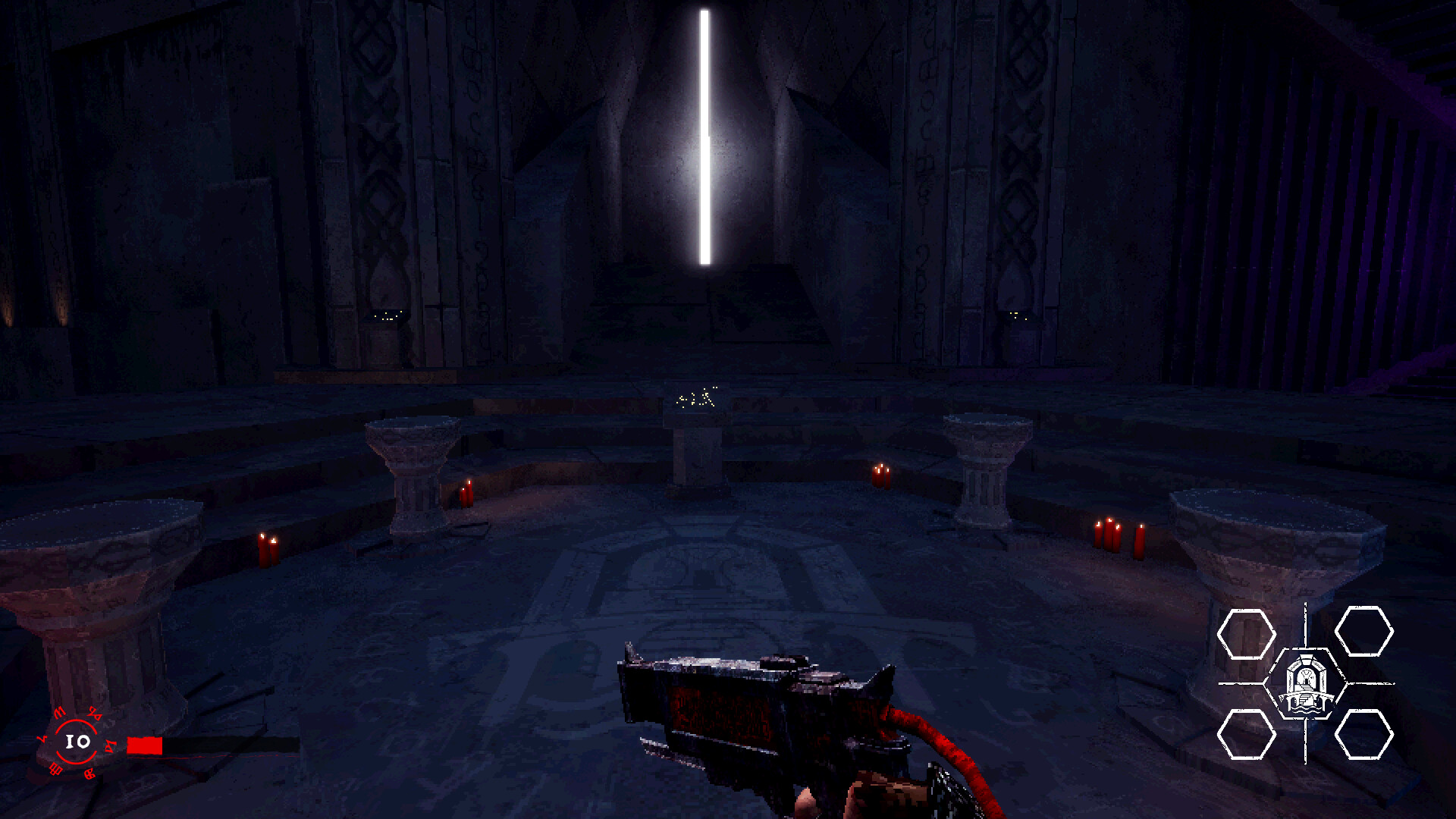
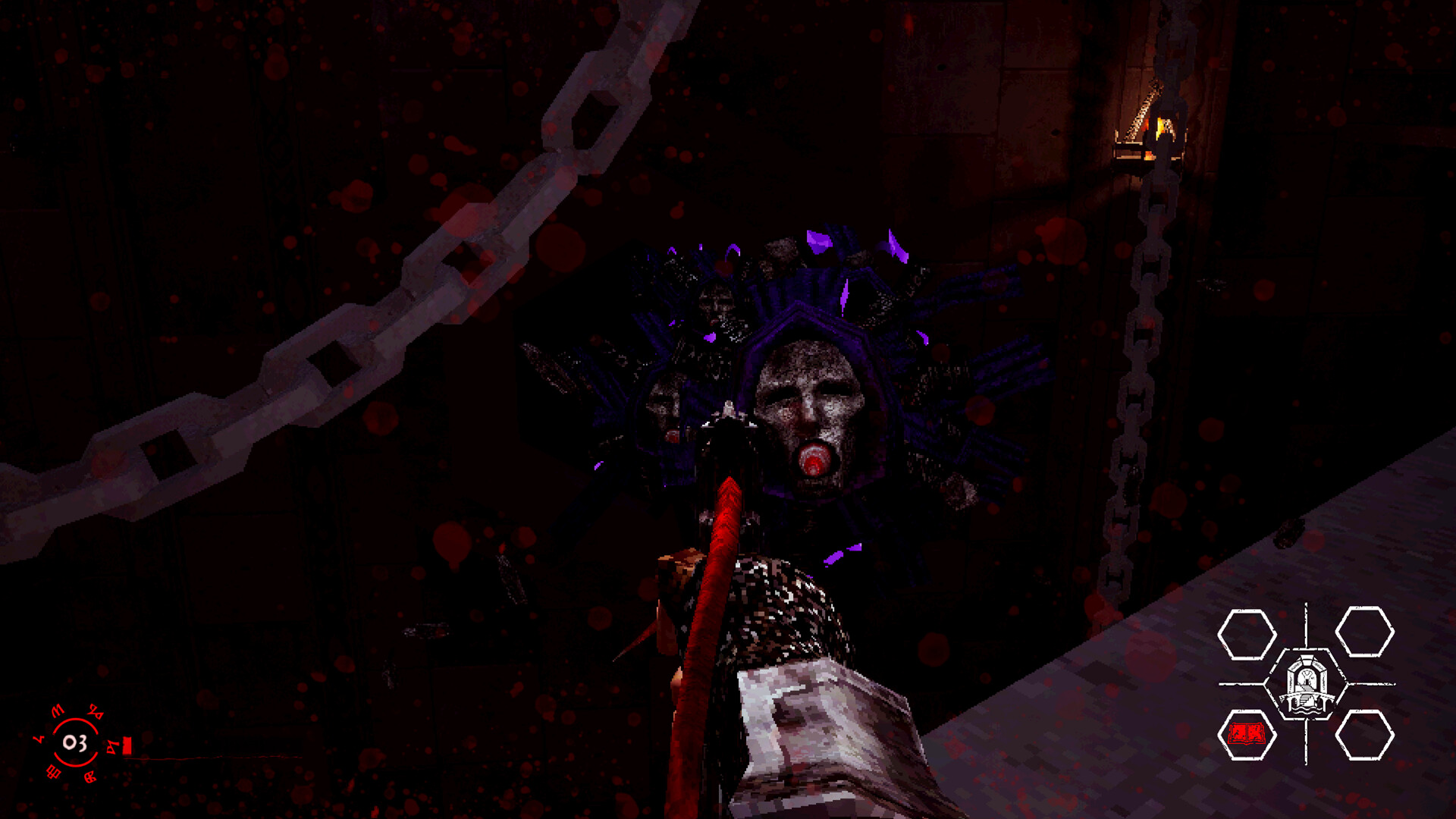
Sur le papier, le concept du titre est peu classique, et son ambiance rétro saura sans doute en séduire plus d’un. Au cours d’une aventure assez courte – environ 2 heures à tout casser – notre héroïne devra traverser une crypte peu accueillante (vous avez déjà vu des catacombes qui donnent envie d’y prendre le café, vous ?) afin de réunir les « 4 artéfacts du désir » dans l’objectif final de se confronter à… Dieu. Oui. Et c’est même pas un Final Fantasy.

Capture d'écran nº 1

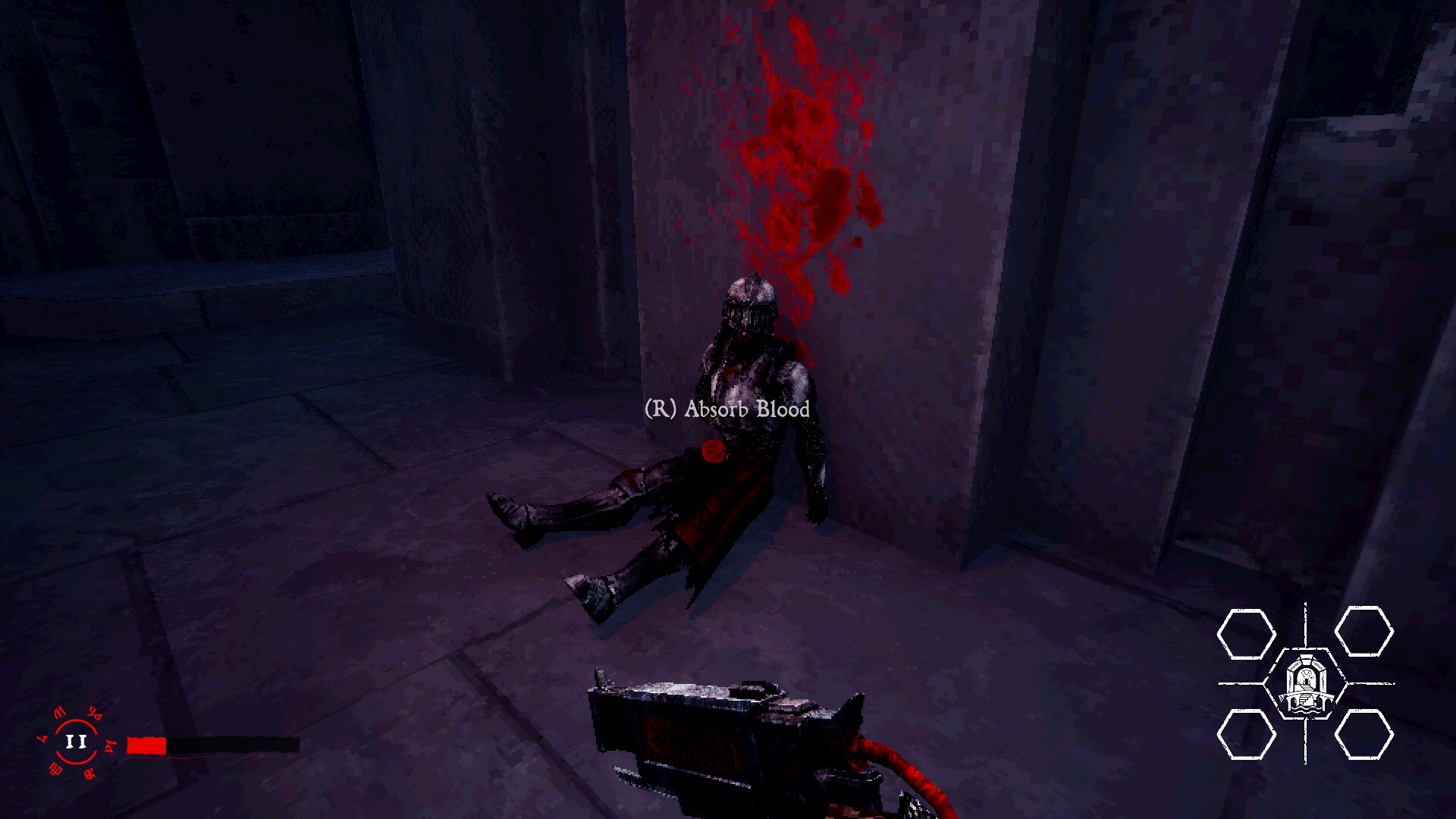
La particularité du soft ne résidera probablement pas dans sa narration mais bel et bien dans son gameplay, puisque nos ressources d’hémoglobine personnelle se substitueront ici à de classiques munitions. Ainsi, pour shooter des fantômes, des démons et tout le tintouin habituel, il faudra ici payer le prix du SANG. Et même si on a pour le moment assez peu d’infos sur la manière dont ce concept influencera concrètement l’expérience, il y a matière à faire quelque chose d’un peu original, peut-être dans la même veine que Crisol: Theater of Idols.

Capture d'écran nº 3

On doit ce projet fort sympathique à une petit équipe de devs qui a déjà à son actif une bonne poignée de jeux souvent atypiques et appréciés (Living Dead OutbreakThe Lacerator ou encore Devil Inside Us : Roots of Evil), ce qui donne bon espoir que ce titre, aussi court soit-il, vaille la peine d’y accorder quelques heures et quelques piécettes. C’est pourquoi on vous donne rendez-vous sur la page Steam de Concrete Burial si jamais vous souhaitez l’ajouter à votre wishlist en attendant sa sortie le 17 septembre prochain.

  •  

Inside a macro photographer’s unusually complete Fujifilm kit built to shoot tiny insects

Community member Lester Lefkowitz is a frequent contributor to the DPReview forums and a prominent technical and scientific photographer.

Caterpillar, available light, tripod.Lester Lefkowitz

Meet Lester Lefkowitz

Home base: New York State, USA

Community member Lester Lefkowitz is a frequent contributor to two notable DPReview forums: Fujifilm X System Talk and Macro & Still Life Photography. Once we told him that his photography and story would be featured, he also provided a really great look at his gear, which you can check out below. His gear bag has one of the most unique spreads of accessories we’ve seen yet in this series.

“A moderator of the Fujifilm X System Talk forum asked me to create a special post about the automatic focus bracketing feature of Fuji cameras, so I was happy to oblige. I enjoy discussing photography and showing my work in the community.”

Our ‘What’s in your bag?’ community spotlight series features readers sharing their favorite gear and photography, including from past DPReview collaborators. See below for what Lester has to share.

How did you get started as a photographer?

Lester’s two macro photography books:
Volume I for beginners and intermediate folks, Volume II for advanced practitioners. Combined total
of almost 700 pages containing 1,700 photographs made specifically for these books. Available at
Amazon, B&H Photo, and ebay (for overseas orders).
Lester’s two macro photography books: Volume I for beginners and intermediate folks, Volume II for advanced practitioners. Combined total of almost 700 pages containing 1,700 photographs made specifically for these books. Available at Amazon, B&H Photo, and eBay (for overseas orders).
Lester Lefkowitz

“I taught myself photography while working on my college yearbook. After graduate school, I ran a technical and scientific photography service at a university with occasional needs for macro photography.

Eventually, I transitioned to teaching at the college level, then became the Director of Education at The International Center of Photography, and eventually went into commercial photography (30 years), specializing in industrial, scientific and medical fields (again with an occasional need for macro work).

Along the way, I was recommended to write a major textbook on macro photography (the bestseller in the Popular Photography Book Club, back in the day). Recently, I decided to make a total rewrite of the macro book, resulting in the recently published two-volume set The Manual of Close-Up and Macro Photography, Volumes I & II, which has become the definitive work in the field.”

What’s in Lester’s bag

Lester Lefkowitz's camera bag
Lester Lefkowitz’s camera bag
Lester Lefkowitz

Favorite cameras(s): Fujifilm X-T4

Favorite lens(s): Fujifilm 80mm macro, 18-55mm, 70-300mm,
Fujifilm 1.4X and 2X teleconverters and a Laowa 65mm 2X macro

Must-have accessories: “I laid out in the photo all of the main accessories I will consider taking with me on a photography trip. There’s quite a bit of stuff, so here’s the list for your perusal:

Not shown in the photo above: ThinkTank backpack (at least 25 years old) and even more miscellaneous items: paper towels, lens wipes, sweatband, sun hat, water bottle and insect repellent.”

Do you recognize these accessories and have them in your gear bag?

What do you like to shoot?

Butterfly, available light, handheld.
“Butterfly, available light, handheld.”

Panasonic Lumix G9 | 1/40 sec | ISO 800
Lester Lefkowitz

“I spent many years with film, and then digital changed everything (I was a very early adopter), especially the ability for immediate feedback. As digital technology progressed, high ISO has become a godsend, as has modern noise reduction and sharpening. Though focus stacking is really the greatest thing to happen to macro photography since the invention of color film.

Macro photography requires patience – lots of it. Another strategy for getting a good photo is to experiment with the same subject, studying it from different angles and magnifications. DPReview folks: if you’re interested, I would be happy to provide examples!”

What draws you to Costa Rica?

Bee in a flower.  Flash, 50-200mm zoom lens with a Raynox 150 close-up filter.
“Bee in a flower. Flash, 50-200mm zoom lens with a Raynox 150 close-up filter.”

Fujifilm X-T2 | Fujifilm XF 55-200mm F3.5-4.8 R LM OIS @ 200mm | F22 | 1/250 sec | ISO 400
Lester Lefkowitz

“Anything small is of interest. As you can see in the photographs I am sharing with you today, I enjoy taking close-up photos of insects and flowers, as well as seashells, minerals and fungi. Nature is amazing and infinitely interesting. But there are lots of things around the house that look pretty cool too when photographed close-up, like food.

There are interesting and unexpected things to photograph all over the world. Some worry that inclement weather will get in the way of their experience, but even then, there are many great subjects I can photograph indoors. When the weather is good, I go to Costa Rica. The variety of flora and fauna is extraordinary there – just be careful exploring around, as there are critters out to get you.”

Take a moment to visualize the scene

Amorous insects
Amorous insects.

Fujifilm X-T4 | Fujifilm XF 80mm F2.8 R LM OIS WR Macro | F18 | 1/250 sec | ISO 160
Lester Lefkowitz

“As I said before, macro photography requires patience – it cannot be done well casually. There is no such thing as a poor macro lens, and old macro lenses are often a bargain. Just start with an inexpensive set of close-up filters to see if you like the endeavor.”

Lester really enjoyed participating in this spotlight article and would love to hear what you think of his photography and to answer any of your questions in the comments below.

You can check out Lester’s other work at macrophotographer.net.


Editor’s note: This article continues a series, ‘What’s in your bag?’, highlighting DPReview community members, their photography and the gear they depend on. Would you like your photography to be featured in a future installment? Tell us a bit about yourself by filling out this form.

About the Author: Mathew Anderson is a proud Community Manager for the technology industry and a past visitor to DPReview.com for all his camera needs. He is currently the lead of DPReview’s community and primary communication link between the community and DPReview’s team.

Want to stay up to date on the latest product news and releases? Add DPReview as a preferred source to ensure our independent journalism makes it to the top of your Google search results.

add as a preferred source on google

  •  

From your doorstep to the wild: Tell us about your animal encounters

For this Question of the week, we ask the community what interesting, and perhaps even unexpected, wildlife they’ve encountered on their photography journey.

Buffalo in Yellowstone National Park during a snowfall.swimmy

For several years, I lived in the western part of Austin, TX. A beautiful area covered with forested rolling hills and a couple of big lakes. It’s close enough to the edge of town that local wildlife sometimes walks right up to your front door.

A beautiful wildlife encounter happened to me a few years ago during a once-in-a-century snowfall across the area. Intending to shovel the walkway to the road, I opened the front door, and right there was an adult doe (a female deer) and two of her fawns, sheltering from the weather. Unfortunately, they bolted as soon as they saw me, so I never had a chance to take a photo.

Yesterday, we published an article about the National History Museum’s Wildlife Photographer of the Year sneak peek of the 100 winning images of this year’s contest. To celebrate the amazing talent in the wildlife photography community, as expressed in places like the history museum mentioned above, we want to see your unique and artistic captures of local fauna.

So, with that said…

What interesting, and perhaps even unexpected, wildlife have you encountered?

Special thanks to community member swimmy for allowing us to use one of his Yellowstone National Park photos as the lead article image. It’s a majestic depiction of a bison, one of the park’s flagship wildlife encounters.

Drop a reply in the comments section below, and if you’ve got a photo to include from your mentioned forum sections, it may be selected for next week’s showcase article on this topic!

About the Author: Mathew Anderson is a proud Community Manager for the technology industry and a past visitor to DPReview.com for all his camera needs. He is currently the lead of DPReview’s community and primary communication link between the community and DPReview’s team.

Want to stay up to date on the latest product news and releases? Add DPReview as a preferred source to ensure our independent journalism makes it to the top of your Google search results.

add as a preferred source on google

  •  

This $200, 99Wh V-mount battery is travel-ready

The NEEWER PS099U combines compact V-mount power, fast recharging, flexible wired and wireless outputs, smart monitoring and safety features in a travel-friendly design.

The NEEWER PS099U combines compact V-mount power, fast recharging, flexible wired and wireless outputs, smart monitoring and safety features in a travel-friendly design

For filmmakers, a reliable V-mount battery can simplify power management across a shooting kit, especially outside the studio or between locations. Instead of juggling separate chargers and small batteries for every device, a compact hub like the NEEWER PS099U can keep cameras, monitors, lights, laptops and phones running from one source. With 99Wh capacity, fast USB-C charging, wireless charging, multiple outputs, real-time monitoring and built-in safety protections, the PS099U supports modern creator workflows without adding unnecessary bulk.

The power you need, consolidated

NEEWER PS099UNEEWER

The NEEWER PS099U delivers a capacity of 14.5V 6800mAh / 99Wh, giving cameras, camcorders, monitors, LED lights, laptops, tablets and phones longer runtime from a single compact power source. Its 99Wh rating keeps it below the common 100Wh air-travel threshold, making it practical for location shoots and mobile production kits. Despite packing so much power, the PS099U remains easy to pack and rig, measuring just 4.2 x 2.9 x 2.4 in (10.7 x 7.4 x 6.1 cm) and weighing only 1.45 lb (0.66 kg). This balance of performance and portability makes it ideally suited to outdoor filming, documentaries, creator setups and backup power needs.

Fast charging for any situation

NEEWER PS099UNEEWER

The NEEWER PS099U’s dual USB-C design supports bidirectional 100W PD 3.1 fast charging for greater flexibility. With a 100W or higher charger, the battery can be recharged in about 2 hours, helping creators get back to work quickly between shoots, during travel days or on small-crew sets where downtime needs to stay minimal.

In addition to BP and D-Tap connections, the PS099U includes DC12V, DC8V, dual USB-C, USB-A and wireless charging outputs, giving filmmakers several ways to power a camera rig, monitor, video light, laptop and smartphone from one compact unit. Wireless charging support includes up to 15W MagSafe-compatible charging and up to 10W Qi charging, which is especially useful for phones and small accessories. By combining fast recharging with a variety of wired and wireless outputs, the PS099U helps reduce cable clutter and simplifies workflows for both shooting and editing.

Easy, practical power management

NEEWER PS099UNEEWER

Using the free NEEWER app and built-in OLED display, users can monitor input, output, remaining battery level and individual port status in real time. This is especially helpful when several devices are connected at once, making it easier to match power delivery to cameras, monitors, lights, mobile devices or accessories without guesswork. The PS099U also includes built-in BMS protection to help guard against short circuit, overheating, overcurrent, overvoltage, overcharge and overdischarge, adding confidence during long shooting days or travel-heavy productions.

For added practicality, the integrated LED light offers High, Low and SOS modes, turning the battery into a useful backup light for low-light setup checks, emergency situations, quick behind-the-scenes clips or locating equipment in a dark bag or workspace. Together, the PS099U’s monitoring, protection, adjustment and lighting features make it more than just a compact V-mount battery; they make it a versatile support tool for modern creator workflows.

Overall, the NEEWER PS099U combines compact V-mount power, fast recharging, flexible wired and wireless outputs, smart monitoring and safety features in a travel-friendly design. For filmmakers and creators who need dependable power without extra bulk, it offers a practical all-in-one solution for shooting, editing and staying powered on the move.

  •  

Tout juste sorti, les joueurs s’éclatent à parkourir VHOLUME

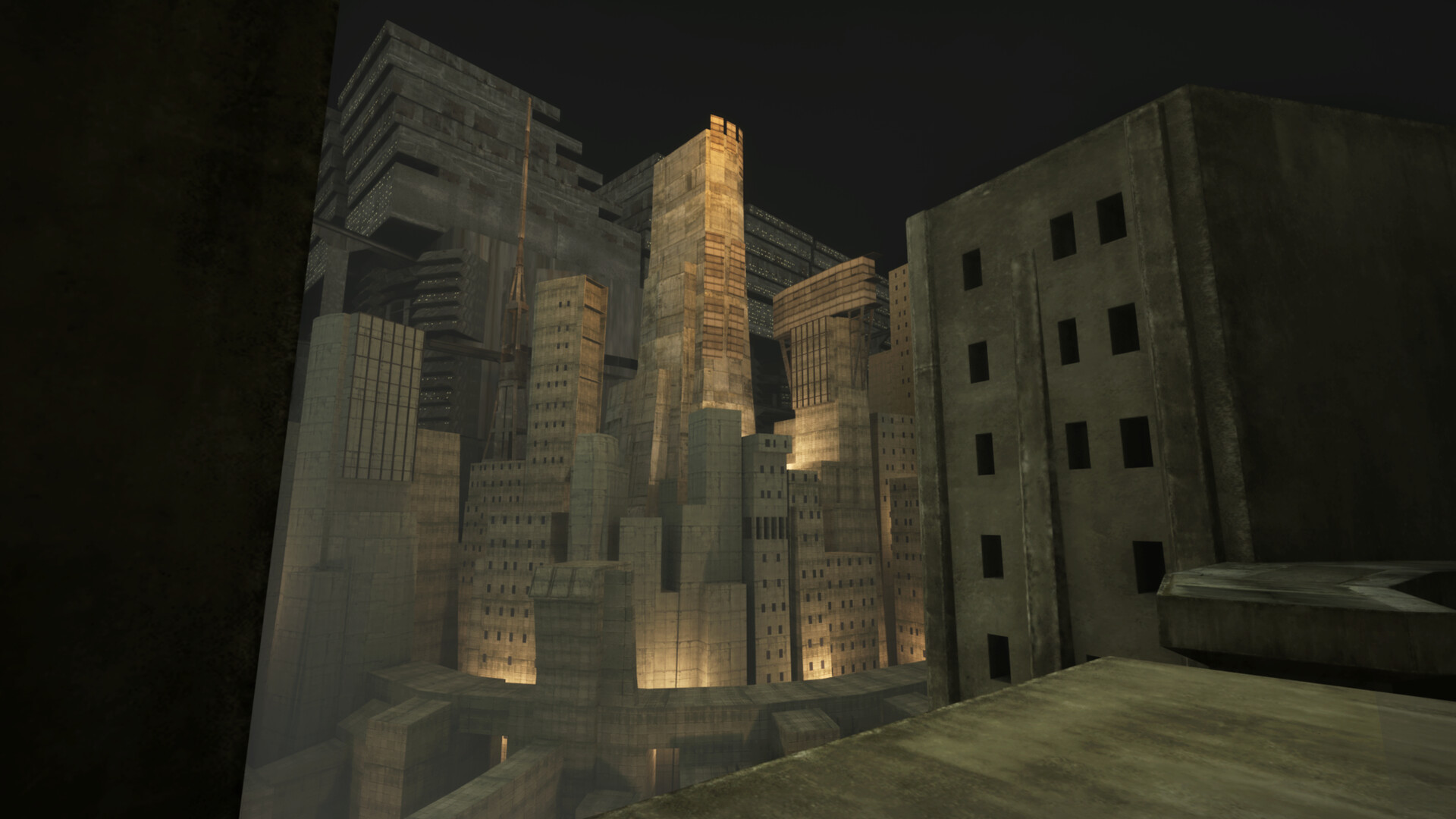
VHOLUME, c’est ce nouveau jeu centré sur le parkour qui nous plonge dans une ambiance dystopique marquée par l’architecture brutaliste de ses environnements, le tout concocté par l’un des devs de BABBDI ou encore Straftat, qui nous avaient bien plu. Eh bien, ça vient de sortir, et surprise, c’est top ! Après vous l’avoir présenté l’an dernier, on avait pu jeter un oeil à la démo lors du Steam Néo Fest, et nos impressions avaient été, dès lors, très positives. À présent, le bon pressentiment se confirme avec les excellents premiers retours des joueurs, qui vantent notamment la satisfaction du gameplay et l’atmosphère unique du soft.

Capture d'écran nº 6

Les développeurs ont donc marqué cette release par un trailer final, et annoncé dans la foulée par un billet de blog Steam que le jeu prenait en charge les niveaux créés par la communauté dès le lancement. Avec son mode multi et les mappeurs qui commencent déjà à faire des merveilles sur le titre, l’aspect communautaire de ce dernier laisse présager de belles choses. VHOLUME, en promo à -10 % jusqu’au 28 août, coûte actuellement un peu plus de 6 €, et la démo est toujours disponible pour ceux qui hésitent encore. Sinon, vous pouvez toujours mettre le jeu dans votre wishlist via sa page Steam s’il attise votre curiosité.

  •  

Vous pouvez vous rendormir, NEO BERLIN 2087 ne sortira pas avant 2028

Ne passons pas par 4 chemins et mettons les pieds dans le plat : Ce trailer existe pour nous rappeler que NEO BERLIN 2087 existe, et qu’il sortira suffisamment tôt pour que les enfants de nos enfants l’aient un jour entre les mains. Si vous avez vu les teasers précédents du jeu, considérez que celui-ci ne vous apprendra rien de plus. On y voit la même chose qu’avant : une métropole cyberpunk somme toute assez classique, mais possédant un rendu graphique – il faut l’admettre – tout à fait remarquable (coucou Unreal Engine 5), théâtre d’un gameplay mixant gunfights, infiltration et exploration. Et si les animations sont parfois plus rigides qu’une baguette de la semaine passée, le ton énigmatique de la narration rend assez curieux d’en découvrir plus sur l’univers du soft.

Capture d'écran nº 0

Rappelons que ces images appartiennent au premier titre d’un studio naissant (nouvellement édité par ByteRocker’s Games), qui plus est, toujours loin du terme de son développement. Il est donc tout à fait logique, à ce stade, de noter quelques imperfections, notamment visuelles. Cela dit, il faut admettre que plus de 3 ans après le premier reveal du projet, on commence à se lasser de voir les mêmes images encore et encore… Et, alors que l’on était tout à fait en droit de s’attendre à une date de sortie prochainement, voilà que le vague « 2028 » vient éteindre toute lueur de hype dans nos yeux de gamers frustrés. Enfin, espérons que d’ici-là, les devs auront retravaillé les ralentis, disons… perfectibles, que l’on peut voir sur ces séquences de gameplay. Entre temps, n’hésitez pas à ajouter NEO BERLIN 2087 à votre wishlist Steam si le jeu vous intrigue.

  •  

This pocket-sized camera zooms to 2000mm and tracks wildlife on its own

The RocXZoom pairs a 50x hybrid zoom with an AI tracking system that recognizes more than 300 bird species. It’s boasts the kind of reach that used to demand a telephoto lens and a tripod, all in a body that fits in a jacket pocket.

man holding RocXZoom camera to take picturesFarseer

Long-range photography has always come with a bit of a packing problem. Getting close to a hawk in the distance or a bear traversing a faraway hillside traditionally means carrying a full-frame body, a telephoto lens the size of your forearm, a tripod to steady it all, and the patience to keep a subject in frame by hand. The Farseer RocXZoom reimagines that kit with a camera that only weighs about 400 grams.

The RocXZoom combines 20x optical zoom with 50x hybrid zoom for a 40 to 2000mm equivalent range, which is the kind of telephoto territory that’s normally reserved for dedicated lens setups. The difference is that this one delivers it without the large traditional lens-and-tripod rig, and in a package that’s light enough to carry on a trail all day.

Automatically follow the action

Farseer RocXZoom Farseer

At the equivalent of 2000mm, a subject can exit the frame with a flick of a wing, which is where the camera’s Physical AI system comes in. The intelligent vision system is designed to identify subjects, track their movement, and keep them framed while zooming, with a powered pan-and-tilt system that physically follows the action. It’s built for the subjects that punish slow hands like birds, wildlife, athletes, and other fast-moving targets.

For birders specifically, there’s a learning layer built in. The AI recognition system can identify more than 300 bird species in real time, so the camera helps users understand what they’ve captured, not just capture it.

Steady at the extremes

Farseer RocXZoom Farseer

Handheld shooting at extreme telephoto lengths usually produces shake. The RocXZoom helps remedy that with dual stabilization, pairing a gimbal with electronic image stabilization to help keep long-range photos and video steady without a tripod. A dedicated mobile app rounds out the control capabilities by letting users operate the camera remotely, adjust framing, and manage shooting from a connected device.

Ready for anything

Farseer RocXZoom Farseer

A camera geared toward capturing wildlife and sports action has to thrive where those subjects live. The RocXZoom’s aluminum body carries an IP54 rating and is designed for demanding outdoor environments, from dusty trails to unpredictable weather on the sidelines.

The RocXZoom has an MSRP of $799, but early backers can get it for $449 on Kickstarter. For anyone who has left the long lens at home one too many times, its lightweight design makes a compelling case for always bringing it along.

And, for those who’d like to pair the RocXZoom with another camera, there’s the RocXZoom pro package, a gimbal bundle that allows you to mount the RocXZoom onto your existing camera via a hot shoe mount. This improves tracking stability, enables object tracking, and supports APP control. The RocXZoom Pro has an MSRP of $2,099, but early backers can get it for $849 on Kickstarter.

  •  

This DPReview member’s minimalist black-and-white photos find intrigue in candid moments

Community member Johan O E, known as Ocoloy on the forums, prefers New Zealand as his base for minimalist black-and-white photography.

Street portraitJohan O E

Meet Johan O E

Home base: Sweden

Community member Johan O E, known as Ocoloy in the forums, has a passion for minimalist black-and-white photography. Many of his photos are portraits of ordinary people going about their daily lives, each with a unique angle that tells a particular part of their story.

“Since as long as I can remember, I´ve been in love with photography. From the album covers I saw as a child in the 80s to the surf and music magazines in the 90s. I´ve been photographing for nearly 30 years, but the last 15 years have been more intense. My dad is a photographer as well, but he has never influenced me in any form when it comes to photography. I was never allowed to use his cameras.”

Our ‘What’s in your bag?’ community spotlight series features readers sharing their favorite gear and photography, including from past DPReview collaborators. See below for what Johan has to share.

What draws you to a minimalist view?

Always ready with my camera for random moments
“Always ready with my camera for random moments.”

Fujifilm X-E1 | Fujifilm XF 18mm F2 R @ 18mm | F8 | 1/500 sec | ISO 320
Johan O E

“I shoot whatever inspires me. Preferably, there needs to be a person in the shot, but some of my best shots are free from people. I tend to go more for a minimalistic black-and-white vibe when I’m out and about. Been photographing all over the world. New Zealand has been my favorite by far. I also love portraits and candid moments.

I am in my third year with one camera, one lens, and a one-year project, OCOLOY. This time it is the Nikon ZF and the Voigtlander 40mm F1.2, and I only shoot in black and white. Accepts 36 images in color. I made a list of 36 things I love, which I will later print in color A4 and save.”

I like rough, wild and different environments. From stormy seas to deep jungles or the backstreets of towns in Europe.”

What’s in Johan’s bag

Johan's camera bag
Johan’s camera bag
Johan O E

Favorite cameras(s): Nikon Zf

Preferred camera bag: “I carry with me the simplest Caselogic bag available on the market. It has just enough space for the camera and barely anything more. I have two different camera bag setups, depending on my mood. My main bag is just my camera, an extra battery, a CPL and a mist filter. If I am out working, I also bring my tablet for editing and an Instax printer for special moments to give away prints.”

Must-have accessories: “I always bring music. I make playlists for different moods and photowalks. In fact, I am recording a song about photography at the moment in my recording studio. I got a crystal from a chandelier and sometimes put it in front of my lens to create different images. I try to carry as little as possible when I am out and about.”

Why is New Zealand on your visit list?

Backstreets of England
“In the backstreets of England, I came across a lone book reader.”

Fujifilm X-T2 | Fujifilm XF 23mm F2 R WR @ 23mm | F4 | 1/35 sec | ISO 200

Johan O E

“I have been on the road for the past 26 years, spending many years in New Zealand, Spain and Sweden. I’ve seen remote places in Asia, done a total of 12 months of van trips throughout Europe, spent 5 months in Sri Lanka, and taken surf trips to Hawaii and the Lofoten Islands. My most memorable photography trip was probably the COVID year, when I was 6 months into my time in New Zealand. I made a bucket list and got most of the shots, which later on boosted my photography career.”

Any strategies you’d pass along to your fellow photographers?

Street portrait
“This gentleman allowed me a quick photo as he stared across the street.”

Fujifilm X-S10 | Fujifilm XF 35mm F1.4 R @ 35mm | F2 | 1/125 sec | ISO 400

Johan O E

“It builds confidence to capture something unique and what I have not seen before. I use my eyes rather than predefined or scripted techniques. I almost always shoot in M mode, mostly with manual lenses, to create exactly what I want. I want a photograph to create emotions and make people look again.”

Photograph what you love and do not photograph purely for likes. Also, a good professional photography lesson will give you way more than any new camera or lens.”

Do you peer into Johan’s photos and see another person’s unique life looking back at you? He enjoyed participating in this spotlight article and would love to hear what you think of his photography in the comments below.

You can check out Johan’s other work at www.stayuntilforever.com,


Editor’s note: This article continues a series, ‘What’s in your bag?’, highlighting DPReview community members, their photography and the gear they depend on. Would you like your photography to be featured in a future installment? Tell us a bit about yourself by filling out this form.

About the Author: Mathew Anderson is a proud Community Manager for the technology industry and a past visitor to DPReview.com for all his camera needs. He is currently the lead of DPReview’s community and primary communication link between the community and DPReview’s team.

Want to stay up to date on the latest product news and releases? Add DPReview as a preferred source to ensure our independent journalism makes it to the top of your Google search results.

add as a preferred source on google

  •  

We tested the Pixel 11’s Magic Capture and Camera Looks – here’s how each performs

Person in a wetsuit on a green surfboard, crouched low while surfing a wave in a fast-moving river with grassy banks in the background.Dale Baskin

Google’s Pixel 11 phones offer two very different angles on computational photography: let AI find the moment, or define your look before you shoot. Here’s how each performed in real-world testing.

Google’s new Pixel 11 smartphones include two headline camera features that represent different approaches to computational photography. Magic Capture aims to take the stress out of capturing the perfect moment by letting AI identify the decisive moment for you, while Camera Looks gives you greater control over your creative output by letting you define a visual style before you ever press the shutter button.

We’ve been testing both features on a Pixel 11 Pro XL to see how they work in practice, and whether the results hold up. The short answer is yes, but not without trade-offs.

What Magic Capture actually does and what the sample photos reveal

Magic Capture replaces the act of pressing a shutter button at the right moment. You roll video instead of shooting stills, and Google’s AI analyzes the footage to identify what it believes are the most compelling frames, then turns them into photos. The feature goes beyond simply extracting a frame from video and saving it as a still image: according to Google, the system analyzes roughly 400 frames in real time, combining on-device processing with Gemini AI technology.

Smartphone camera app interface displaying zoom options (1x, 2, 5, 10), a prominent white shutter button in the center, video and camera mode icons, a blue square icon on the left side, and a settings gear icon located below.
Magic Capture appears as a button to the left of the camera button in the Pixel’s camera app.

After stopping a recording, you can see the phone’s initial frame selections quickly, but they look flat and unfinished. Once the Gemini AI processing completes, which took around a minute or so in our testing for a 15-second clip, the selected frames become noticeably improved, popping with more detail, and with HDR scenes in particular looking significantly better. The final output is a 12MP still image.

The sample images below come from a 14-second Magic Capture clip of a surfer riding a standing wave in a river. Google’s AI did a pretty good job of selecting frames that captured the highlights.

A person in a black wetsuit stands on a bright green surfboard while surfing a river wave, with white water and greenery in the background.
Photo created by Magic Capture.
A person in a black wetsuit stands on a bright green surfboard while surfing a river wave, with white water and greenery in the background.
Photo created by Magic Capture.
A person in a black wetsuit stands on a bright green surfboard while surfing a river wave, with white water and greenery in the background.
Photo created by Magic Capture.

Image quality exceeds what you would typically expect from simply extracting a frame from a 4K video shot on a smartphone; it’s crisper, with better colors, and displays in HDR (when viewed on an HDR display).  It’s not quite up to the quality I’m used to seeing from a standard still photo shot on a modern 12MP smartphone, but it gets the job done, particularly if it’s mostly going to be viewed on other mobile devices.

For the best results, Google recommends enabling Video Boost before using Magic Capture, which ensures the underlying footage is captured in 10-bit 4K. That setting is worth locating before you go out to shoot, not after. Processing time is manageable for a single clip, but if you shoot several Magic Capture sequences back-to-back, the phone queues them for analysis, which can take a few minutes to complete.

Phone camera app interface displaying Magic Capture settings with Video Boost enabled. Zoom controls for 1x, 2, 5, and 10 are shown, along with menu, mute, and share icons on a dark background.
For the best results, Google recommends enabling Video Boost before using Magic Capture, which ensures the underlying footage is captured in 10-bit 4K.

One thing we haven’t fully assessed: how consistently Google’s AI selects the frame a photographer would have chosen. The feature’s premise, that the AI identifies the peak moment better than you can, is a pretty strong claim. Whether it matches a photographer’s instincts for capturing the decisive moment would require more testing to answer.

How Camera Looks works and what the photos look like

Camera Looks gives the Pixel 11 camera a selection of color and tone styles you can apply before you shoot. Google says the goal is to produce images that feel less processed and more like a deliberate photographic choice. The system is built around two layers that work together: base styles and creative presets.

In addition to Original (Google’s standard photo processing pipeline), there are three alternative base styles: Natural, Shadows and Vanilla, which sit at the top of the processing pipeline. They aren’t filters. They change how the camera collects and processes light before an image is generated, affecting how aggressively HDR merges multiple frames, how dark shadows are allowed to stay and how edge sharpening is handled. Think of them as choosing the core processing pipeline the camera runs on.

Smartphone camera app interface displaying editing options with the Default Look menu open and
The Pixel 11 series includes four base looks: Original, Natural, Shadows and Vanilla. They can be combined with creative styles to create a variety of looks.

On top of those base styles, you can apply one of six creative presets: Editorial, Velvet, Classic, Digi, Black Tie and Minimal. These apply LUTs meant to emulate film chemistry, specific eras of digital photography or stylized monochrome profiles. The combination you pick matters: applying Velvet on top of the Original base produces a different output than Velvet layered over Vanilla.

The three alternative base styles can be set as your default shooting mode and can be customized. The six creative presets live in a separate carousel, and the interface can take a moment to get used to. The distinction between the two layers isn’t obvious at first glance, and understanding which choices you can adjust versus those you can simply apply requires some exploration. Once you’re oriented, the workflow makes sense, though.

A yellow lift holds an artist painting a vibrant mural of trees and a mountain sunset on an outdoor wall, with a ladder, traffic cones, and bicycle positioned nearby.
Original base style.
A yellow lift holds an artist painting a vibrant mural of trees and a mountain sunset on an outdoor wall, with a ladder, traffic cones, and bicycle positioned nearby.
Shadows base style.
A yellow lift holds an artist painting a vibrant mural of trees and a mountain sunset on an outdoor wall, with a ladder, traffic cones, and bicycle positioned nearby.
Vanilla base style.
A yellow lift holds an artist painting a vibrant mural of trees and a mountain sunset on an outdoor wall, with a ladder, traffic cones, and bicycle positioned nearby.
Original base style with Editorial preset.
A yellow lift holds an artist painting a vibrant mural of trees and a mountain sunset on an outdoor wall, with a ladder, traffic cones, and bicycle positioned nearby.
Original base style with Velvet preset.
A yellow lift holds an artist painting a vibrant mural of trees and a mountain sunset on an outdoor wall, with a ladder, traffic cones, and bicycle positioned nearby.
Original base style with Classic preset.
A yellow lift holds an artist painting a vibrant mural of trees and a mountain sunset on an outdoor wall, with a ladder, traffic cones, and bicycle positioned nearby.
Original base style with Digi preset.
A yellow lift holds an artist painting a vibrant mural of trees and a mountain sunset on an outdoor wall, with a ladder, traffic cones, and bicycle positioned nearby.
Original base style with Black Tie preset.

Camera Looks fits a trend that’s already well established among both dedicated cameras and smartphones, where manufacturers offer in-camera film simulations, LUTs or custom picture profiles that let photographers customize their own looks. Google is applying the same logic to the Pixel 11 series, which means photographers who already think in terms of a preferred style will find the concept familiar.

Who are these features for?

Magic Capture and Camera Looks take different philosophical approaches to computational photography. Magic Capture removes a decision – when to fire the shutter – and replaces it with an AI judgment call. Camera Looks adds a decision, letting you define a visual style before you shoot rather than correcting for it afterward. One reduces your control while the other expands it.

Magic Capture removes a decision… Camera Looks adds a decision.

Magic Capture makes the most sense for scenarios where keeping up with fast, unpredictable action is genuinely hard: kids, sports, pets, or anything where the peak moment is difficult to catch manually. Or, as Google pitches, it lets you “live in the moment” by just rolling video and not stressing about capturing the decisive moment. If you really care about which exact frame gets selected, though, you’re trading that choice for convenience. Google’s AI selections in our sample photos were solid, but the feature works best when you’re willing to accept its judgment.

Camera Looks, by contrast, gives photographers something to bite into and exert creative control. Setting a default look before you shoot is a reasonable workflow for anyone who knows the aesthetic they want and doesn’t want to recreate it in editing every time.

Both features reflect where Google is taking the Pixel camera: toward a model where AI handles more of the technical and even creative work. Whether that’s a net gain depends on how much of that work you wanted to do yourself.

About the Author: Dale Baskin is a professional photographer, writer, and filmmaker based in the Pacific Northwest. He is the Managing Editor of DPReview.com.

Want to stay up to date on the latest product news and releases? Add DPReview as a preferred source to ensure our independent journalism makes it to the top of your Google search results.

add as a preferred source on google

  •  

Celebrating World Photography Day with captivating landscapes from the DPReview community

We celebrate World Photography Day today with a forum discussion featuring your photos showcasing diverse local landscapes.

A shot of Philadelphia from the Heritage Park Boardwalk in Pennsauken, NJ.CaseyD

We love to celebrate world events and special days as they approach. Last Friday, we asked the community what type of landscapes are near them and to share a photo with the rest of us. A key objective of the ask was to take a fresh photo only after our announcement. We wanted to see what people experience right outside their doors. It’s always fun to see the different places our community calls home.

“The journey of preserving images in time, which began with the invention of the daguerreotype, has evolved to the point where even the fleeting fury of lightning can be captured and immortalized. It bears witness to a powerful response from nature in an age when urban sprawl narrows the sky, and concrete stands in opposition to the natural world. The photograph makes visible the striking encounter between humanity’s desire to reshape nature and nature’s enduring power to remind us of its presence.” – Hicret

Here are some of the photos and comments they shared. Even our own team got in on the fun! Click each photo to see more within the forum conversation.

Vladimir Nogin

Taken Sunday morning 2026-08-16. This is local pond in Xuzhou city, China. It is full of lotus flowers and very beautiful a whole year. I love to came to that place, usually full of people. Nikon Z5 with Nikkor Z 50 F/1.4
This is a local pond in Xuzhou city, China. It is full of lotus flowers and very beautiful a whole year. I love coming to this place, which is usually full of people.

Nikon Z5 with Nikkor Z 50 F1.4
Vladimir Nogin

Ofer Agiv

The photo was taken with a Sony A7R4 in Greenland near the EQI glacier.
The photo was taken with a Sony a7R4 in Greenland near the EQI Glacier.
Ofer Agiv

DNZM

Bike path in coastal west of Netherlends
I grew up in the coastal west of the Netherlands, but I moved north decades ago. For the last decade and a half (give or take), I’ve been living in Leeuwarden. That’s the major city in this area, but there are tons of little, sometimes very little, villages dotting the landscape.

One of the things that always makes me feel at home and that I really associate with “Frisian landscape” is totally flat land (either with crops or with cows on it), never far from a body of water, wide skies with clouds, and wherever you look, you’ll almost always have two, three, sometimes more churches.
DNZM

Slass

More than a hundred cyclists waiting for bridge to be lowered after a boat has passed. Picture is taken at the canals on Amager, Copenhagen.
More than a hundred cyclists are waiting for the bridge to be lowered after a boat has passed. The picture was taken at the canals in Copenhagen, Amager.

Samsung Galaxy S25 | Built-in lens @ 23mm (35mm equiv.) | F1.8 | 1/6839 sec | ISO 80
Slass

gpwitteveen

Not exotic, but the city street lined with mature sycamore trees in the last hour of summer daylight was too good to miss taking a photo: Samsung a15 with the VWFNDR_MBL app for Android to bypass oversharpened, oversaturated, overprocessed photography. Low light, but leaning against a tree to steady the shutter release. ZIP code 49505 (latitude 43 degrees north).
Not exotic, but the city street lined with mature sycamore trees in the last hour of summer daylight was too good to miss taking a photo: Samsung a15 with the VWFNDR_MBL app for Android to bypass oversharpened, oversaturated, overprocessed photography. Low light, but leaning against a tree to steady the shutter release.
gpwitteveen

CaseyD

A shot of Philadelphia from the Heritage Park Boardwalk in Pennsauken, NJ.
CaseyD

keepreal

Near the entrance to Zion National Park, Utah. Taken at sunset in very weak light. Nikon D300 Sigma 12-24mm f4.5-5.6 DG HSM at 12mm.
Near the entrance to Zion National Park, Utah. Taken at sunset in very weak light.

Nikon D300 Sigma 12-24mm F4.5-5.6 DG HSM at 12mm.
keepreal

Joe Explore Photography

Sunset at low tide at Town Beach in Mackay in Central Qld, Australia
Here is a sunset at low tide at Town Beach in Mackay in Central Qld, Australia, that I took yesterday. I was out in the low-tide zone photographing Eastern Curlews and Masked Lapwings when this composition revealed itself.

Canon R6II with RF 24-105mm F4 lens.
Joe Explores Photography

Abby Ferguson

Dense Florida swamp in August
I’m barely squeezing this in since I admittedly forgot to get a photo during my very busy weekend. Because I didn’t have much time today, I just walked down to the creek that runs through our neighborhood and took a photo from the bridge that runs over it. It was midday, during a heat bubble in Florida in August, so while this may look refreshing and nice, I can assure you, it was not. Also, don’t venture down there unless you want to be engulfed in mosquitoes. The light is far from ideal, either, but sometimes you have to embrace bad conditions and just take the photo.

I used the Panasonic S1RII for this shot, with the Lumis S Pro 16-35mm F4, because that’s what I had charged and sitting on my desk when I needed to run out the door. Basically, today was all about convenience just so that I could participate in this challenge. Maybe next World Photography Day, I’ll remember a bit earlier and have time to make something more exciting.
Abby Ferguson

tranceliner

Addolorata Church on Tal-Morr alongside the Three Towers
My photo captures the Sacred and the Profane: the historic Addolorata Church on Tal-Ħorr alongside the Three Towers directly across the road. Taken just a 10-minute walk from my home, this view illustrates the profound transformation of the Maltese landscape over the last two decades. Shot on a Panasonic FZ1000 and processed using DxO and the Nik Collection, as monochrome suits the scene best.

Panasonic Lumix DMC-FZ1000 | Built-in lens @ 289mm (35mm equiv.) | F4 | 1/30 sec | ISO 1600
tranceliner

Gayle159626

Federation Square, Melbourne on a Saturday afternoon in winter. A popular place to meet friends, enjoy the unseasonally lovely weather and watch the passing parade.
Federation Square, Melbourne, on a Saturday afternoon in winter. A popular place to meet friends, enjoy the unseasonally lovely weather and watch the passing parade.
Gayle159626

leunam

Ortenberg castle through the grapes, the city of Offenburg in the distance. Captured 90 minutes before the deadline with a Sony A7 + Pergear 35mm 1.4 at f8
Ortenberg Castle through the grapes, the city of Offenburg in the distance. My favorite spot for sunset photos (30 minutes of pedaling). Captured 90 minutes before the deadline with a Sony A7 + Pergear 35mm 1.4 at f8
leunam

There are so many other photos we couldn’t fit in this article that are shared in the forums. While not all met the requirements for inclusion in this article, they all deserve praise. Thanks to everyone who took the time to step outside and capture the unique landscapes of your region.

Feel free to share your local landscapes to continue to celebrate the day with us. We can’t wait to see more!

About the Author: Mathew Anderson is a proud Community Manager for the technology industry and a past visitor to DPReview.com for all his camera needs. He is currently the lead of DPReview’s community and primary communication link between the community and DPReview’s team.

Want to stay up to date on the latest product news and releases? Add DPReview as a preferred source to ensure our independent journalism makes it to the top of your Google search results.

add as a preferred source on google

  •  

Relaunch update: image handling resolved, in-demand improvements to come

User-requested features being developed, now this fundamental detail is fixed

A computer monitor showing the DPReview.com websiteRichard Butler

It’s been over a month since we launched the new DPReview.com website, and we wanted to give you an update.

We realize that a lot of the work we’ve been doing hasn’t been especially public-facing, so it hasn’t necessarily been obvious that this really is a Beta: we are listening to feedback and we are continuing to improve the site.

As well as fixing some glitches around user logins, we’ve been doing a lot of work to ensure that the site always delivers completely untouched, out-of-camera JPEGs, when you click through or download an image. This isn’t a requirement that the CMS software we’re using is usually expected to maintain, with the consistency that we need. So it’s meant a lot of work behind the scenes to ensure that we can live up to the high standards that we demand and that you can expect.

OOC images and HDR support

As a result of this work, we can now be confident that “Ultra HDR JPEG” files: JPEGs with HDR gain maps embedded, can be viewed correctly when you click through, but also when they appear within articles, if you have a compatible screen and browser.

HDR imagery is only likely to become more accessible and more prevalent in the coming years, so being able to correctly represent these files was important to us: both so that we can show the progress as it’s made and because it ensures we’re delivering all images exactly as they came out of the camera.

This may seem esoteric but it’s fundamental to the way our reviews are conducted: we provide unedited files precisely so you can draw your own conclusions, rather than just take our words for it.

Light mode and improved camera comparisons

With this done, we’re continuing to work on projects that you’ve been requesting and things that will be more obviously visible to readers of the site and members of the community. These include a “light” version of the site for editorial content, for those people who don’t like the site’s original white-on-black appearance.  We’re also working on a more advanced camera comparison tool that makes more extensive use of our camera specs database.

Neither is ready yet, but they’re just two of the more obvious features that we’ve heard the demand for, and are planning to deliver. In the meantime, please bear with us and keep letting us know how we can make the site even better.

About the Author: Richard graduated as a scientist but had a lot more fun writing and shooting for his university magazine. A number of years spent variously as a reporter, writer and editor on science and engineering titles combined his knowledge of science with his interest in images and words. But it was spotting the connections between emission spectra, white balance and all the nonsense he’d taught himself playing around in Photoshop that helped kindle an interest in digital photography. Searching for a camera led to him discovering DPReview and Richard was recruited by Phil Askey in 2007. He’s been combining his love of photography, communication and attention to detail (pedantry?) ever since. He has unusually strong opinions about lenses for the APS-C format.

Want to stay up to date on the latest product news and releases? Add DPReview as a preferred source to ensure our independent journalism makes it to the top of your Google search results.

add as a preferred source on google

  •  

This wireless lav kit packs some serious specs for the price

The NEEWER CM26 MAX provides creators with a portable, affordable solution for capturing better voice audio with less setup and more control.

hands holding the NEEWER CM26 MAX microphone kitNEEWER

For filmmakers and content creators, a lavalier microphone is one of the simplest ways to improve production quality: it keeps dialogue close, clear and consistent while allowing subjects to move naturally on camera. The NEEWER CM26 MAX is an affordable, compact USB-C wireless lavalier microphone kit designed for mobile, desktop, indoor and outdoor recording setups. Its advanced features include AI noise reduction, a high sampling rate and low latency, plus a built-in color display, convenient app control, generous range and long battery life.

Studio-quality audio on location and on set

collage of men and women wearing the NEEWER CM26 MAX wireless lav microphoneNEEWER

The CM26 MAX’s built-in AI chip and noise-reduction algorithm separate speech from background sound using two selectable modes: A1 for indoor spaces, which reduces noise by up to -15dB, and A2 for outdoor environments such as traffic, wind and street noise, which reduces noise by up to -40dB. This makes the kit practical for recording dialogue in rooms, on sidewalks, at events or while moving between locations. For outdoor use, the included windshield helps reduce wind noise, while one-tap mute helps protect privacy during breaks.

Advanced features and hassle-free monitoring

man and woman talking wearing the NEEWER CM26 MAX wireless lav microphone while being filmed on cameraNEEWER

With a 48kHz/24-bit sampling rate, a 20Hz-20kHz frequency response and a high 88dB signal-to-noise ratio, the CM26 MAX captures natural, detailed audio for everything from talking-head videos to sit-down interviews, livestreams and podcasts. Flexible low-cut modes at 75Hz, 150Hz or “off” help reduce rumble, while adaptive gain control and limiter support manage sudden level changes and clipping. The output volume is adjustable from -6dB to +6dB, with the option for mono, stereo or safety track recording. Conveniently, sound can be monitored in real time through the 3.5mm TRS output, so any audio issues can be caught before a take is lost.

Pro-grade connectivity and easy app control

hand plugging in the NEEWER CM26 MAX wireless lav microphone to phoneNEEWER

The NEEWER CM26 MAX supports fast setup across mobile and desktop workflows. Its USB-C receiver connects directly to iPhone models with a USB-C port and Android phones, as well as tablets, PCs, computers and laptops, giving creators a stable plug-and-play connection for recording, livestreaming, video calls and content creation. (For iPhone 14 and earlier models, full compatibility requires an MFi-certified Lightning to USB-C OTG audio cable, purchased separately.)

The free NEEWER MIC App for iOS and Android unlocks even more options. In Control Mode, users can adjust transmitter and receiver settings, enable AI noise cancellation and choose from three vocal enhancement levels for clearer, more balanced sound. In Recorder Mode, the app works as a standalone voice recorder with AI noise processing available even when the microphone is not connected.

Performance that goes the distance

hands holding a camera taking a picture of grass paired with NEEWER CM26 MAX wireless lav microphoneNEEWER

The CM26 MAX kit offers up to 50 hours of total runtime, with a charging case that provides about 1–1.2 full recharges for the transmitters and receiver. That makes it practical for travel, events, interviews and full shooting days. The 2.4GHz system reaches up to 394 ft (120 m) line of sight in open areas, or up to 98 ft (30 m) when obstacles are present. Each transmitter weighs just 0.8 oz (24 g), while the receiver weighs 0.7oz (20 g), keeping the system light enough for clothing or camera rigs

Whether recording interviews, tutorials, vlogs, livestreams or location footage, a compact wireless lavalier system helps reduce reliance on built-in microphones and makes clean voice capture easier in real-world environments. The NEEWER CM26 MAX provides creators with a portable, affordable solution for capturing better voice audio with less setup and more control. Its advanced noise reduction, monitoring and connectivity options provide confidence in the studio and the field, while its generous long battery life and extended range make it a strong option for everyday content creation and longer shooting days.

  •  

When does a photo move from reality to fiction? A legendary street photographer weighs in

A recent podcast interview covers street photographer Richard Bram’s background, his philosophy on chance and intention and the specific moment he believes transforms a captured scene into something that resonates.

Person wearing round glasses, a black shirt, and earbuds smiles while speaking; colorful abstract art and decorative pottery are visible in the background.Eyeshot

American street photographer Richard Bram has spent more than four decades finding small gestures and stories in public spaces. In a recent episode of the Eyeshot 50mm podcast, Bram reflects on his self-taught route into photography and his creative philosophy, resulting in a wide-ranging conversation that offers interesting insights and practical advice for anyone trying to improve their photography, particularly on the street.

One of the things that stood out to me most was Bram’s view on what takes an image from reality to fiction and how important context is. “I think when you click a shutter, it goes from reality to fiction just automatically,” he says. “Reality is four dimensions because there’s time. A rectangle is three dimensions, so it’s frozen, it’s pulled out, it’s completely out of context.” 

I also found it interesting that he points photographers toward painting as a resource for understanding light. Studying how painters from different eras constructed light and shadow, he suggests, can sharpen your ability to read and use available light on the street in ways that photography tutorials rarely cover.

The conversation is aimed at street photographers, but the ideas apply to anyone interested in photography, no matter what the genre. Whether you shoot portraits, landscapes or anything in between, Bram’s perspectives are useful challenges if you’re looking to improve your photography. There are many more fascinating thoughts throughout the conversation that I didn’t cover here, making it well worth listening to.  

About the Author: Abby Ferguson holds an MFA in photography and blends a fine-art background with extensive editorial and commercial experience. She built and led an in-house imaging program for a large vacation rental company and has served as an associate editor at Popular Photography. She also teaches at a local community college and serves on its Photographic Technology Program Advisory Board, sharing her knowledge and enthusiasm for the medium.

Want to stay up to date on the latest product news and releases? Add DPReview as a preferred source to ensure our independent journalism makes it to the top of your Google search results.

add as a preferred source on google

  •  

The ocean revealed: see the finalists for Ocean Photographer of the Year 2026

The Hidden Worlds category makes its debut this year, spotlighting the ocean’s smallest inhabitants.

Close-up of a small white crab grasping an orange object against a dark background, with its detailed textures highlighted by dramatic lighting.Andrea Michelutti

The finalists for Ocean Photographer of the Year 2026 have been announced, featuring images that highlight the complexity and diversity of the world’s oceans. Presented by Oceanographic and Blancpain, the contest is now in its seventh year and showcases work across seven categories.

What sets this year’s iteration apart is a new category: Ocean Unseen: Hidden Worlds, which is dedicated to the ocean’s smallest inhabitants. Other categories include Adventure, Wildlife, Fine Art, Conservation Impact, Conservation Hope and Human Connection. The 2026 shortlist is among the most geographically and thematically varied the competition has fielded.

As the pressures on our ocean grow, so does the importance of the artists who bear witness to them.

Will Harrison, Ocean Photographer of the Year founder and director

Will Harrison, the competition’s founder and director, said: “These photographs don’t just capture what’s beneath the surface; they surface the stories our planet most needs us to hear. As the pressures on our ocean grow, so does the importance of the artists who bear witness to them. This year’s finalists have produced work of extraordinary depth and courage, and we’re proud that Ocean Photographer of the Year continues to be the platform where those stories reach the world.”

Below is a small selection of the finalists. The full set of finalists across all seven categories is available on the Ocean Photographer of the Year winners gallery. Category winners and the overall Ocean Photographer of the Year 2026 will be announced in September 2026.

Ocean Unseen: Hidden Worlds

Translucent deep-sea ribbonfish with elongated, delicate fins and a prominent blue head swimming in a dark, speckled underwater setting.Mitsuna Kawai

Photographer: Mitsuna Kawai

Caption: A ribbonfish rises vertically through the dark waters of Osezaki, Japan. Its long, silver body and delicate fins are adapted for life in the open ocean. This image was captured during a winter blackwater dive. Around the ribbonfish, a swarm of salps – small, jelly-like animals that feed on tiny particles in the ocean – creates a glimpse of life moving through the deep sea.

Technical details: Canon EOS R10 | Canon RF-S 18-150mm F3.5-6.3 IS STM @ 18mm | F9 | 1/160 sec | ISO 200

Ocean Unseen: Hidden Worlds

Close-up of a fish’s eye with detailed textures and veins, featuring an iris with a blue center and reddish-brown outer ring, highlighted by visible reflections.Steven Lopez

Photographer: Steven Lopez

Caption: A close view of a giant black sea bass reveals tiny parasitic copepods clustered around its eye in a Catalina Island kelp forest. Once misidentified on other hosts, these copepods are now known to have a specific relationship with this threatened fish. In the late 1970s and early 1980s, the giant black sea bass was nearly extinct in Southern California but is now recovering through protection efforts. This image highlights how even a giant predator can support a hidden community of much smaller organisms

Technical details: Not available

Wildlife

Southern elephant seal pups explore shallow rock pools on Sea Lion Island in the Falkland Islands, testing their
first movements in the water after being weaned by their mothers. These young seals must quickly learn to
swim and survive independently. As they climb over one another and investigate their surroundings, this scene
captures a key moment in their journey from land-bound pups to ocean explorers.Rafael Fernandez Caballero

Photographer: Matty Smith

Caption: In the Pacific waters of Mexico, this photograph captures the aftermath of a successful orca hunt. Nearly an hour after a pod separated a humpback whale calf from its mother, the orcas resurfaced carrying their prey between them. The event reveals the cooperative hunting strategies of orcas, where multiple individuals work together to isolate and subdue large prey. What the image doesn’t show is that after the kill, other scavengers, including silky sharks, were drawn to the remains, showing how one event can influence an entire marine food web.

Technical details: Nikon Z9 | Nikon AF-S Fisheye 8-15mm F3.5-4.5E ED @ 14mm | F9 |1/320 | ISO 800

Wildlife

Colorful fish in close-up with mouth open, releasing a cloud of tiny bubbles or particles underwater, set against a dark background.Yuta Shigeno

Photographer: Yuta Shigeno

Caption: This photograph captures a male cardinalfish releasing the larvae he has been brooding inside his mouth. Although this species is common in Japanese waters, the image reveals a rarely noticed stage of its life cycle. The male carries and protects the developing eggs for around a week, eating little or nothing during this period. The larvae are released over several events, with the first release containing the largest number.

Technical details: Nikon Z8 | Nikon Nikkor Z MC 105mm F2.8 VR S | F18 | 1/200 sec | ISO 500

Conservation Impact

Sea lion with a visible neck injury looks upward against a blurred blue and beige background.Celia Kujala

Photographer: Celia Kujala

Caption: A California sea lion has plastic netting tightly wrapped around her neck. This is a stark reminder of the lasting impacts of marine plastic pollution. The wound had already cut deep into her skin, yet rescuing her was impossible because of her location within a crowded colony. Images like this reveal the hidden cost of discarded waste and give a face to an often-unseen crisis. The catchlight in her eye creates an intimate connection that is difficult to ignore.

Technical details: Nikon D500 | Nikon AF-S NIKKOR 500mm f/5.6E PF ED VR | F9 | 1/500 sec | ISO 500

Conservation Impact

Shark caught on a fishing line swims underwater with smaller fish nearby; sunlight filters through the water’s surface. Black and white photograph.Daniel Taylor

Photographer: Daniel Taylor

Caption: A silky shark circles helplessly after taking bait from an illegal longline, its fate sealed by a steel hook and heavy line designed to prevent escape. Photographed less than 48 hours after Baja California’s seasonal shark fishing ban ended, the image reveals a hidden reality unfolding far from shore. A small group of pilot fish remains beside the shark, highlighting how the loss of one animal can ripple through an entire ecosystem.

Technical details: Not available

Conservation Hope

Pipette transferring small shrimp-like aquatic organisms in a white, hexagonal lab tray with perforated compartments.Francesca Page

Photographer: Francesca Page

Caption: Thousands of juvenile European lobsters are raised at the National Lobster Hatchery in Padstow, Cornwall, UK, before being released into the wild. By protecting the young lobsters during their most vulnerable stage, the Hatchery greatly improves their chances of survival. Here, these baby lobsters are being transferred into the space-efficient AquaHive system, an innovative hatchery design where each unit holds around 4,000 juveniles, safely separated across individual trays to prevent cannibalism.

Technical details: Sony a7 IV | Sony E 70-180mm F2.8 @ 111mm | F13 | 1/250 sec | ISO 400

Conservation Hope

Large group of surfboards clustered in clear blue ocean water near several boats under a sunny sky, forming a vibrant, celebratory scene.Daniel Edmond Sullivan Jr.

Photographer: Daniel Edmond Sullivan Jr.

Caption: Thirty days after the 2023 Lahaina wildfire claimed 102 lives, thousands gathered off West Maui for a traditional Hawaiian paddle-out ceremony. Surfers and families formed a circle on the ocean, linking hands and releasing leis in memory of those lost. Photographed from above, the image captures a community transforming grief into a shared expression of love, remembrance and connection to the sea.

Technical details: Hasselblad L2D-20c | 24mm equiv | F2.8 | 1/640 sec | ISO 200

Human Connection Award: People and Planet Ocean

A large stranded whale on a sandy beach is being assisted by six people working together in shallow water near the shore under a cloudy sky.Rui Duarte

Photographer: Rui Duarte

Caption: Volunteers, surfers, lifeguards and conservation groups work together to refloat stranded short-finned pilot whales. While many animals initially returned to the sea, the pod stranded again further along the coast, highlighting the complexity of mass strandings. The image captures compassion in action, but it also reflects how wildlife rescue continues to evolve. In the months that followed, international experts trained the local community in safer, science-based stranding response techniques, strengthening future rescue efforts.

Technical details: Canon EOS 5D IV | Canon EF 16-35mm F2.8L III USM @ 26mm | F6.3 | 1/640 sec | ISO 400

Human Connection Award: People and Planet Ocean

Floating fish farms with rows of colorful huts are positioned on the blue sea, with many small white buoys visible in the background.Qingsheng Sun

Photographer: Qingsheng Sun

Caption: Thousands of fish-farming cages stretch across the sea, connected by floating walkways and small wooden huts to form a vast floating community. Extending for kilometers, this carefully organized aquaculture network supports local livelihoods while transforming the coastal landscape.

Technical details: Not available

Adventure

Blurred abstract scene in blue tones featuring a surfer on a wave, with fluid motion emphasizing dynamic movement.Ben Thouard

Photographer: Ben Thouard

Caption: A surfer races through the barrel of Teahupoʻo, French Polynesia, photographed from beneath the wave using a slow shutter speed. Rather than freezing the action, the technique blurs the rushing water while keeping the surfer as the focal point, conveying the incredible speed inside the wave. Teahupoʻo is a busy surf spot, yet the photographer has managed to capture an isolated surfer at this iconic location.

Technical details: Canon EOS R5 | Canon EF 85mm F1.4L IS USM | F12 | 1/10 sec | ISO 50

Adventure

Freediver ascending a rope toward the water’s surface, sunlight shining through a round opening above, with underwater equipment floating in clear blue water.Daan Verhoeven

Photographer: Daan Verhoeven

Caption: Freediver Arnaud Jerald descends into Dean’s Blue Hole in the Bahamas during a successful world record attempt at the Vertical Blue competition. Photographed from more than 30 meters below, the image captures the scale of one of the world’s deepest marine sinkholes. Crystal-clear water, sunlight and drifting sand combined to create a rare view of this remarkable moment.

Technical details: Canon EOS R5 | Canon EF 11-24mm F4L USM @ 11mm | F5/6 1/250 sec | ISO 100

Fine Art

Abstract underwater scene showing distorted dolphin shapes reflected on the water’s surface, with swirling patterns of blue, beige, white, and gold blending together.Chelsea Mayer

Photographer: Chelsea Mayer

Caption: A pod of short-beaked common dolphins swims beneath the bow of a ship off the coast of southern California. Dolphins are known to ride the pressure wave created by moving vessels, using it to travel with little effort in a behavior known as bow riding. Calm seas and exceptional water clarity reveal the dolphins’ markings, while the reflection of the white, yellow and blue paint from the National Geographic Venture creates a psychedelic, abstract image.

Technical details: Not available

Fine Art

Five spotted eagle rays with dark bodies and white spots swim in a line above a textured blue ocean floor.John Kowitz

Photographer: John Kowitz

Caption: Five-spotted eagle rays glide above the sandy seabed, their dark bodies and white markings contrasting against the pale background. These rays often travel together while searching for prey, using electroreceptors to detect hidden mollusks and crustaceans beneath the sand. Photographed during a dive in search of manta rays, this formation appeared during the journey back to shore.

Technical details: Sony a1 | Sony FE 16-35mm F2.8 GM @ 16mm | F5.6 | 1/160 sec | ISO 125

About the Author: Abby Ferguson holds an MFA in photography and blends a fine-art background with extensive editorial and commercial experience. She built and led an in-house imaging program for a large vacation rental company and has served as an associate editor at Popular Photography. She also teaches at a local community college and serves on its Photographic Technology Program Advisory Board, sharing her knowledge and enthusiasm for the medium.

Want to stay up to date on the latest product news and releases? Add DPReview as a preferred source to ensure our independent journalism makes it to the top of your Google search results.

add as a preferred source on google

  •  

Share your landscape photos for World Photography Day

We’re celebrating ahead of World Photography Day by capturing local landscape scenes. Join us and show off your area!

World Photography Day bannerGetty Images

Attention photographers: Wednesday, August 19th, is World Photography Day!

World Photography Day is a global celebration that honors Louis Daguerre‘s invention of the daguerreotype.

In 1884, George Eastman of Rochester, NY, helped advance photography by developing a practical, flexible roll film, building on earlier photographic processes. Rather than relying on heavy glass or metal plates, Eastman’s approach used a light-sensitive gelatin emulsion on a paper backing – an early flexible film, though not yet the transparent film we know today.

Just a few years later, in 1888, Eastman introduced the Kodak camera, helping make photography accessible to a much wider audience.

If you want to learn more about the origins of the World Photography Day, check out our article from last year’s mini-challenge.

Take a landscape photo and celebrate with us

We’ve decided to celebrate World Photography Day by taking pictures, and we’re challenging you to do the same. But this time, have the photo represent your local landscapes.

  • Take a new photo representing your local landscapes sometime after this announcement. Landscapes can mean anything from mountains, an urban park environment, an interesting retention pond, or even something in your backyard.
  • Submit your photo in a comment reply below. Tell us something about it (at least 25 words), along with what camera you used.
  • Photos need to be submitted by 12pm PT / 3pm ET / 7pm UTC on Monday, August 17th, to be considered for inclusion in our honorary photo album.
  • Please only submit 1 or 2 photos

That’s it! We’ll pick our favorites and publish them in an exclusive album on the DPReview homepage next week, along with similar photos taken by DPReview’s staff. The article will also be mentioned in an upcoming newsletter.

You can use any camera or technique, but if you manage to shoot a daguerreotype between now and then, we can pretty much guarantee your submission will be selected.

Bring on the photos!

About the Author: Mathew Anderson is a proud Community Manager for the technology industry and a past visitor to DPReview.com for all his camera needs. He is currently the lead of DPReview’s community and primary communication link between the community and DPReview’s team.

Want to stay up to date on the latest product news and releases? Add DPReview as a preferred source to ensure our independent journalism makes it to the top of your Google search results.

add as a preferred source on google

  •  
❌