Lucid s'associe au groupe Emil Frey pour vendre ses voitures électriques en France, avec une première apparition au Mondial de l'Auto en octobre. Un pari osé pour une marque qui n'écoule quasiment rien en Europe.
Coup de théâtre après l’annonce officielle, ce 24 août 2026, de la construction d’un parc Dragon Ball en France : il semblerait que les ayants droit ne soient tout simplement pas au courant du projet.
Uber is laying off about 3,300 employees, or roughly 10% of its workforce, as part of a restructuring aimed at cutting management layers and redirecting investment toward ridesharing, delivery, and robotaxis. CEO Dara Khosrowshahi announced the changes in an internal email that was also published online.TechCrunch reports: According to the email, the layoffs are part of a restructuring exercise that would shrink the number of managers by 20%, and some personnel in these roles would work as individual contributors going forward.
The ridesharing giant is reducing the number of teams with one or two members by 50%, and letting go staff who are "more than seven layers down from the CEO," per Bloomberg. Khosrowshahi's email said the company is combining its engineering, science, and delivery divisions. The company is also bringing together its delivery operations across restaurants, retail, and direct divisions.
Remote jobs at the company are going away, too, with Uber only allowing less than 1% of its staff to work remotely.
Dell reported record fiscal Q2 results as AI server demand surged, booking $60.9 billion in AI server orders and ending the quarter with a $95 billion backlog. From a report: The company posted record revenue of $47 billion, up 58% year over year. Earnings per share came in at $6.34, up 273% from a year ago. Adjusted earnings rose 203% to $7.04 per share.
"With AI momentum accelerating and our opportunity expanding across the portfolio, we're raising our full-year FY27 revenue outlook by $25 billion to $192 billion, up nearly 70% year over year," said Jeff Clarke, CEO of Dell Technologies, in the company's earnings release.
Dell has seen its orders balloon as enterprise customers adopt artificial intelligence and use AI servers locally to run agentic AI queries. Dell stock is up more than 230% year to date. Peer Hewlett Packard Enterprise (HPE), which also moved up 110% since the start of the year, jumped in after-hours trading.
GoPro plans to expand into AI infrastructure through a $285 million merger with optical-photonics company Starman Optical, whose transceivers will give the action-camera maker a foothold in the fast-growing data center market. GoPro also plans to push into defense, robotics, aerospace, and government markets while continuing its existing camera business. Engadget reports: Starman's optical transceivers are expected to fall under its umbrella, "extending the Company's reach into the large and rapidly growing market for AI infrastructure in optical transceivers," according to a press release. GoPro is also planning a push into the defense, government, robotics and aerospace sectors, bolstered by the combined company's IP, optics and imaging capabilities.
[...] As Reuters notes, GoPro briefly reached a valuation of $4 billion on its first day as a publicly traded company in 2014. Its stock has struggled in recent years, but the share price received a boost on Monday when it was revealed that YouTuber and filmmaker Markiplier (Mark Fischbach) had become GoPro's largest individual shareholder after acquiring an 8.5 percent stake. The move follows a similar pivot made by the struggling shoe retailer Allbirds in April when it announced a pivot to AI compute infrastructure, sending the stock soaring more than 700%.
John Ternus has officially taken over as Apple CEO after 15 years under Tim Cook, stepping up from his role as senior vice president of hardware engineering. A 25-year Apple veteran who helped oversee products including AirPods, Apple Watch, Vision Pro, Apple silicon, and the new MacBook Neo, Ternus now inherits the challenge of pushing Apple forward in AI while Cook stays on as executive chairman. TechCrunch reports: Ternus has worked at Apple for nearly half of his life -- now 51 years old, he has been with the company for 25 years. He joined Apple's product design team in 2001 as only his second job out of college (his first was at a small maker of virtual-reality devices called Virtual Research Systems). By 2013, Ternus was a VP of hardware engineering and was promoted to the SVP role in 2021. [...] Ternus previously reported to Cook, who he considers a mentor, and led all of hardware engineering at Apple. That's a pretty big deal for a company that's known for ubiquitous hardware like the iPhone and the MacBook. [...] Ternus' earliest project at Apple involved scrutinizing parts for the Apple Cinema Display, an early desktop monitor. "At some point in my first year, I found myself at a supplier facility. I was far away from home. Well past midnight, I was using a magnifying glass to count the number of grooves on the head of a screw ... and I was arguing with the supplier because these parts had 35 grooves. They were supposed to have 25," Ternus recalled in his commencement speech. "I distinctly remember stepping back for a minute and thinking, 'What the hell am I doing? Is this normal?'"
As Ternus climbed the corporate ladder, his responsibilities grew. He may no longer spend as much time analyzing screws, but he still seems to take pride in getting the little details right. In a recent interview, when Ternus was asked about his favorite memory of Steve Jobs, he mentioned the former Apple co-founder's attention to craftsmanship. "[Jobs] was moving a piece of furniture, a chest of drawers, and pulled it away from the wall and looked at the back and was just reflecting on, you know, that the carpenter who made it had made it beautiful," Ternus said. "It finished the back as beautifully as the rest of it, even though nobody was going to see it, right? And I think about that all the time because I think that perfectly exemplifies what we do here."
From there, he went on to lead the hardware development behind products across the Apple ecosystem, overseeing launches like AirPods, Apple Watch, and the Vision Pro. He also had a hand in major technical upgrades at Apple, like Apple's transition from Intel chips to its own proprietary Apple silicon. Most recently, Ternus was involved in the production of the MacBook Neo, Apple's new, more affordable laptop model that lowers costs through some clever trade-offs in hardware design, like using an iPhone chip to power the device. "We never want to ship junk. We want to ship great products that have that Apple experience, that Apple quality. To do that with the Neo required building something completely new from the ground up ... leveraging both the technologies we'd been developing like Apple silicon, but also the kind of expertise that we've developed over many, many years of building Macs, and building phones, and building iPads, and all of these things," Ternus told Tom's Guide.
Anthropic has reportedly signed a $35 billion cloud-computing deal with Nvidia-backed Lambda for a roughly 350-megawatt Texas data center being developed by Hut 8. "Lambda will install Nvidia chips at the Hut 8 facility, with the arrangement designed to expand the pool of Nvidia computing resources available to power Anthropic's Claude AI products," reports Quartz. From the report: The arrangement is a further sign of how Nvidia is positioning itself as a facilitator of computing access across the AI industry. It also benefited Lambda, which counts Nvidia as an investor and was able to land a major Anthropic contract without having to independently source or lease the underlying data center space, according to the Journal.
The data center covers roughly 350 megawatts of capacity, according to Bloomberg. Hut 8, which began as a bitcoin mining company before moving into AI data centers, disclosed in July that an investment-grade customer had signed 15-year leases for its Texas campus, with a base contract value of $19.6 billion, without naming the tenant.
The Lambda deal is the latest in a series of large computing agreements Anthropic has pursued. Last week, the company agreed to spend $45 billion to rent capacity from Nscale's West Virginia data center campus. It has also signed deals worth $50 billion with neocloud Fluidstack Ltd. and $45 billion with SpaceX, according to Bloomberg.
An anonymous reader quotes a report from 9to5Mac: Today is Tim Cook's last day as Apple CEO, with John Ternus set to take over tomorrow. To mark his last day in the role, Cook penned an emotional memo to Apple employees today. In the memo sent to employees this morning and obtained by 9to5Mac, Cook reflects on his time at Apple and thanks employees for all of their work. He also says he takes "enormous comfort in handing the helm to someone as brilliant and wonderful and capable" as John Ternus. "Few people understand what it takes to build products that change the world the way John does and I could not be more excited for his leadership," Cook writes. "There is something truly special about Apple," writes Cook. "I am most proud of what an annual report could never capture. This place is proof that culture triumphs over everything. We share a belief that what we build matters, and that we have both the opportunity and the responsibility to leave the world better than we found it. That purpose is part of what makes this place extraordinary. Apple helps nurture it, but I believe it lived within each of you long before you arrived here. It is what brought you to this company and what continues to drive the work you do every day."
He continues: "Together, we have created something far greater than any one of us could have imagined or accomplished alone. And that's the secret to our success. We bring out the best in each other. We lift each other up. We have made it possible to leave our 'dent in the universe,' as Steve once described it, because of who we are and what we believe, because of what we value and how we see the world. How fortunate we are. How fortunate I am..."
Cook also thanked the Apple community in a post on social media, writing: "Sending lots of love to the Apple community on my last day as CEO. My title changes tomorrow, but the love I have for the Apple community never will. Thank you for being a constant source of inspiration. My gratitude is endless, and I'm excited for the next chapter!"
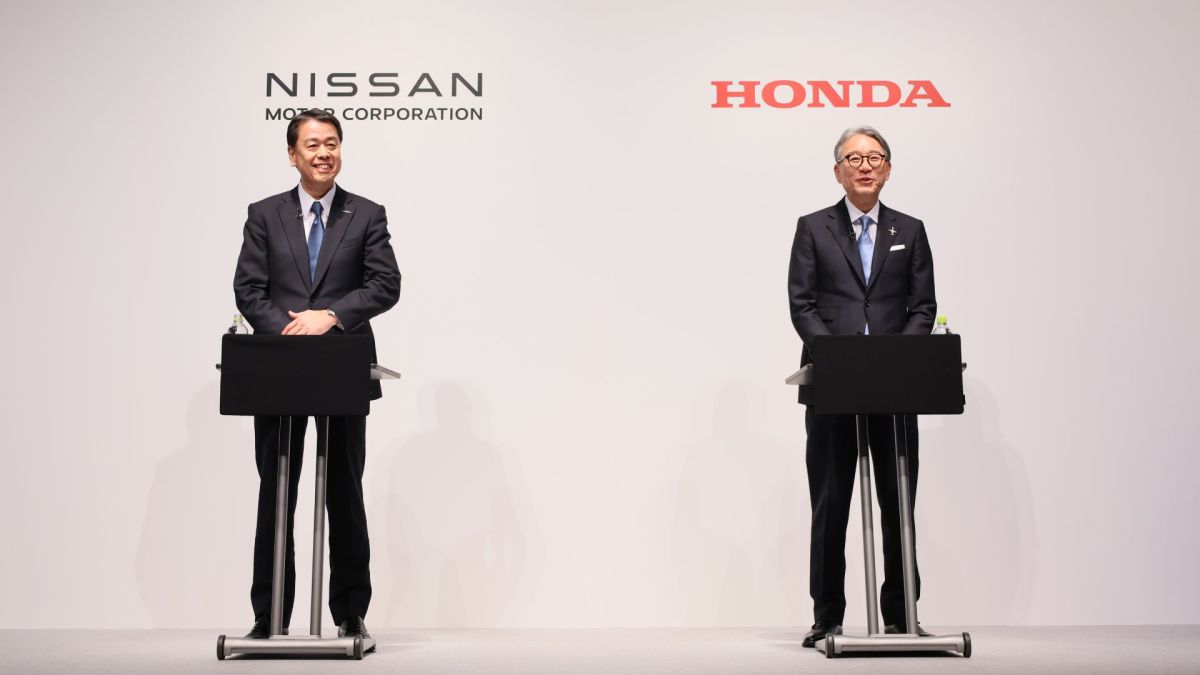
Nissan et Honda vont concevoir ensemble le cerveau logiciel de leurs futures voitures. C'est leur premier vrai chantier commun depuis l'échec de leur fusion, début 2025.
Stripe and private equity firm Advent International have ditched their $53 billion pursuit of PayPal, ending a deal that would have been the largest fintech acquisition ever. "Stripe last week agreed to pay $8 billion for AI model marketplace OpenRouter, but a source said that the OpenRouter and PayPal deals were operating on independent tracks," reports Axios.
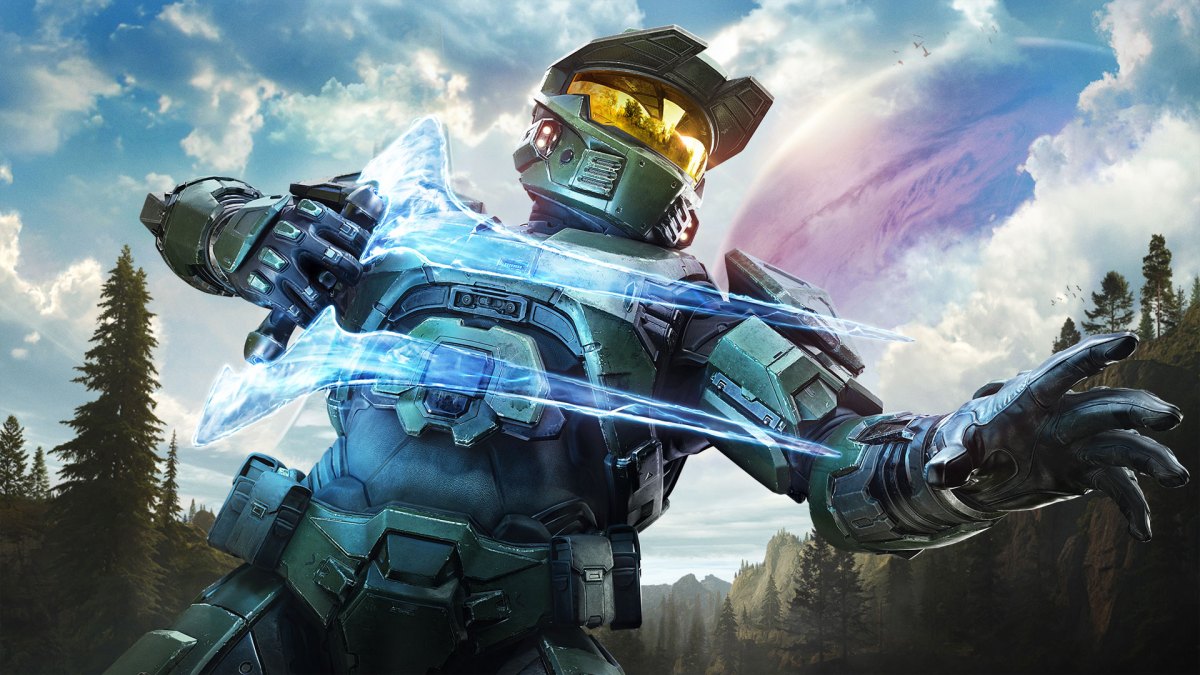
Gears of War, Halo, World of Warcraft, The Elder Scrolls, Diablo... Selon Puck, la division jeu vidéo de Microsoft démarche discrètement les mastodontes du cinéma et du streaming pour leur refourguer les droits d'adaptation de son catalogue dans un seul et même contrat global.
The Information reported on Wednesday that Nvidia has agreed to buy open-source platform Hugging Face for $12.9 billion. "Deal talks began after Hugging Face, an open-source AI platform developers use to collaborate, test and share tools, received acquisition interest from another suitor," reports CNBC, citing the (paywalled) report. Business Insider separately reported the acquisition talks. From CNBC: If completed, the acquisition would put one of the most widely used platforms for sharing and working with open-source AI models under Nvidia's ownership, expanding the chipmaker's reach further into the software and model ecosystem. Siddy Jobe, a fund manager at Eonopolis Exponential Technologies funds, said it made sense for Nvidia to target a company like Hugging Face, as Nvidia has made it clear that it is not looking to discriminate between closed and open-source models.
"I think Nvidia is very much a community, a platform-based company, and in that respect, I think Hugging Face fits perfectly within that. There is this five-layer cake from Nvidia, and foundational models are one of them," Jobe told CNBC's Squawk Box Europe on Thursday. "It is clear that Nvidia wants to be integrated in the entire stack vertically, going from energy to foundational models and also to applications," he added.
Mauvaise nouvelle pour les fans de coop et de zombies nazis, les développeurs allemands de Projekt Z: Beyond Order ont annoncé que leur bébé leur avait finalement glissé des doigts. Peut-être vous souvenez-vous de leur retour d’entre les morts en 2023, lorsque Modus Games avait finalement décidé de soutenir le projet, malgré une précédente campagne Kickstarter ratée. Mais l’actualité récente n’a pas été très heureuse pour l’éditeur suédois, entre-temps renommé Maximum Entertainment, puisqu’il fait face à des difficultés financières qui ont mené à la fermeture de sa branche américaine, sans indemnité de licenciement, d’après nos confrères d’Insider Gaming. Cela nous mène à ce devlog sur Projekt Z – sans doute le dernier –, dans lequel le co-fondateur du studio 314 Arts explique qu’ils ont fait une erreur lorsqu’ils ont signé avec leur éditeur. Ils ont donné tous les droits sur la licence, les dépossédant de leur création. Si ça ne devait pas poser trop de problème au début, les développeurs ont senti que leur projet leur échappait peu à peu, jusqu’à ne plus pouvoir du tout travailler dessus. Il semble néanmoins qu’il leur reste un maigre espoir de récupérer le projet, mais le studio préfère rester prudent pour l’instant.
Comme ils avaient senti le coup venir, ils ont discrètement entamé un nouveau projet au cas où Projekt Z serait définitivement perdu. Il s’agit de NightRunner, un mélange de survie coopérative en mode horde avec de l’extraction shooter, un peu d’exploration et du tower defense, inspiré de Killing Floor et du mode Zombies de Call of Duty.
Vu comme ça, le projet semble un peu ambitieux, surtout si leur éditeur les a lâchés… Mais le studio promet des playtests dès septembre pour nous montrer tout le potentiel du jeu. Vous pouvez d’ailleurs d’ores et déjà demander l’accès depuis sa page Steam toute neuve.
Dans tous les cas, la situation pour 314 Arts semble être un peu tendue. Il est difficile d’imaginer qu’ils aient de quoi survivre très longtemps, s’ils ont signé un contrat aussi défavorable en 2023 et qu’ils ne sont maintenant plus liés à leur éditeur. Certes, on peut penser qu’ils ont été franchement stupides d’accepter ce deal, mais ils étaient peut-être au pied du mur et n’avaient pas d’autre solution pour subsister. Dans tous les cas, c’est aussi un bon rappel que la plupart des éditeurs sont là pour sucer le moindre dollar possible des créateurs en prenant le moins de risque possible, quitte à les déposséder de leurs créations pour faire quelques économies.
En attendant de savoir ce qu’il adviendra de ProjektZ: Beyond Order, vous pouvez toujours jeter un œil à NightRunner en vous rendant sur sa page Steam, et en l’ajoutant à votre liste de souhaits s’il vous intéresse.
Amazon has agreed to acquire DuckLabs, bringing the team behind the popular open-source DuckDB database into AWS. "The deal fits Amazon's broader push to turn S3, its flagship cloud storage service, into a place where customers analyze data rather than just store it," reports GeekWire. "It gives Amazon a team experienced in building fast, lightweight analytics software that runs directly against data sitting in cloud storage." The DuckDB project itself will remain free and open source under the MIT license, overseen by the independent DuckDB Foundation. From the report: Employees of DuckLabs will join Amazon Web Services, including co-founders and DuckDB creators Hannes Muhleisen and Mark Raasveldt, who will continue leading the team and setting the project's technical direction. They will remain based in Amsterdam, where the team will continue developing DuckDB and related projects. [...] Financial terms were not disclosed. Amazon said it has signed a definitive agreement and expects the acquisition to close shortly. DuckLabs said it expects to become part of AWS in early September. Jordan Tigani, the CEO of MotherDuck, which sells a cloud service built on DuckDB, sees Amazon's acquisition as a predictable move to turn DuckDB's growing popularity into an AWS business. "That's Amazon's playbook, after all: wait until an open source project gets big enough, then launch it as a service," he wrote in a blog post, adding that "they're not acquiring Duck Labs just because they love open source."
Tigani also believes the deal could ultimately strengthen DuckDB, since Amazon has an incentive to keep the project open and widely adopted: "If DuckDB becomes the standard, it is going to drive a lot more compute on their infrastructure, which is where they make their money."
Il y a quelques jours, deux nouvelles dans le monde de l’immersive sim sont tombées coup sur coup. La première, c’est l’annonce par Warren Spector de son départ à la retraite. L’un des pères de l’immersive sim, il a notamment travaillé sur System Shock, Thief: The Dark Project, Deus Ex, et très récemment, sur l’éphémèreThick as Thieves. Il ne ferme pas la porte à un hypothétique dernier projet, mais ne semble plus avoir envie de travailler dans une industrie vidéoludique qui ne lui convient plus, préférant s’orienter vers l’écriture, les conférences et le conseil.
De l’autre côté, un autre pilier de l’immersive sim, Harvey Smith (Deus Ex, Dishonored 1 & 2, Prey, Redfall…) a été interviewé chez nos collègues de The Game Business pour parler du studio qu’il a créé sur les cendres d’Arkane Austin après la catastrophe Redfall : Black Pony Immersive. Aux commandes, il y a également Ben Horne, producteur, et Ricardo Bare, lead designer. Tous trois ont travaillé chez Arkane de nombreuses années. Si l’annonce du studio s’est faite il y a quelques jours, la création remonte à l’année dernière. Il est composé de 26 personnes, qui constituent le « noyau dur », et fera travailler des sociétés prestataires plutôt que d’employer davantage de développeurs. Apparemment, la recherche d’investisseurs a été un peu compliquée, mais ils ont fini par trouver un éditeur, dont le nom n’a pas été révélé. Pour l’instant, aucun projet n’a été annoncé, mais l’objectif est de réaliser « des jeux solo, axés sur la narration et à la première personne, dans lesquels on explore et on résout des problèmes de manière créative, à la manière de Deus Ex ou Dishonored ».
Harvey Smith, en janvier 2018 dans une interview pour la chaîne /noclip
Pour montrer d’où vient le studio, Black Pony Immersive a partagé sur Bluesky un petit « arbre généalogique », initialement dessiné par Sinnoware, créateur de contenu spécialisé en immersive sim :
I made this immersive sim studio lineage chart in 2023. It was an ordinary afternoon / evening sitting in a small park in Tokyo. I called it atrocious at the time. The structure was messy, the handwriting was awful. I shouldn’t have drawn it with fingers on my phone. (1/4)
Au cours de l’interview, on apprend également comment l’ultime patch pour Redfall a vu le jour. Alors que tous les développeurs avaient été licenciés, une poignée d’entre eux sont revenus vers Microsoft pour demander s’ils ne pouvaient tout de même pas finir le patch 1.4, sur lequel ils avaient commencé à travailler avant la fermeture du studio. Et à leur grande surprise, la firme de Redmond a autorisé six ou sept anciens membres de l’équipe à revenir dans les locaux pour achever leur projet. Dommage que le jeu ait été merdique, mais cela montre la détermination et la passion des développeurs, à l’opposé des décisions parfois débiles de la direction.
On est donc plutôt impatients de voir les futures annonces de Black Pony Immersive, surtout pendant cette période particulièrement incertaine pour les studios qui font des immersive sim. On pense notamment à Arkane Lyon, actuellement dans une situation délicate, à la suite de la volonté de Microsoft d’arrêter leur projet. Qui sait, peut-être qu’on aura quelque chose à se mettre sous la dent avant d’avoir des nouvelles du prochain titre de Wolfeye Studios, fondé par Raphaël Colantonio ?
Micron says it will spend $10 billion over the next decade on a new research lab in Boise focused on advanced memory technologies, computing systems, and future chip manufacturing. Here are some details, as reported by Reuters:
- Micron Research Labs will bring together customers, academia, government and the broader semiconductor ecosystem to pursue breakthroughs, the company said.
- The latest investment builds on the more than $250 billion that Micron had separately committed to manufacturing and R&D across the United States.
- The lab will be connected to Micron's research and technology footprint across the U.S., Europe, Japan, India, Singapore and Taiwan.
- Growing adoption of AI workloads and infrastructure buildout have boosted demand for high-bandwidth memory, which rapidly feeds data to AI accelerators, making it a critical component of modern computing infrastructure.
- The Trump administration has prioritized domestic chip manufacturing in a bid to reduce foreign dependence, boost the economic output and maintain its lead in the AI race.
- Micron expects to break ground on the facility in 2027, which will be capable of hosting hundreds of researchers and facilitating international conferences and workshops.
Stripe is acquiring AI model marketplace OpenRouter as it pushes beyond payments into the infrastructure behind AI applications. According to The New York Times, the deal is reportedly valued at about $7.5 billion, with $1.5 billion allocated to OpenRouter's founders. Less than three months ago the company was valued at about $1.3 billion. CNBC reports: OpenRouter has become popular with developers seeking to use AI models, particularly those considered non-proprietary and available for free. Many of these so-called open-weight AI models stem from Chinese labs like DeepSeek and Z.ai, which have gained steam among developers for generally being more cost-efficient relative to proprietary AI models from U.S. companies like OpenAI and Anthropic.
In a blog post about the deal, Stripe noted that it's been working with companies to "optimize their token costs and route tokens efficiently," referring to a kind of metric used to measure AI model usage. Stripe said it's difficult to manage AI costs relative to performance because of the rapid "pace at which models are released and repriced." [...]
OpenRouter said in a blog post that combining with Stripe will help with its overall vision of "a healthy AI ecosystem where many models thrive, where AI neurodiversity is a strength, where a lab or an inference provider with a breakthrough can reach millions of developers, and where no single model becomes the default by inertia." "Stripe is building the economic infrastructure for AI, and together with OpenRouter we'll help businesses maximize profitability by routing their requests intelligently and spending their tokens efficiently," Stripe CEO Patrick Collison said in a statement.
Le 3 août dernier, les serveurs de World War 3 ont été débranchés. À vrai dire, on n’avait pas vu passer l’annonce de l’éditeur début juin, parce qu’on avait complètement oublié son existence depuis la dernière fois qu’on vous en avait parlé, en 2023. C’était un Battlefield-like free-to-play qui n’avait pourtant pas su retenir ses joueurs. Depuis octobre 2025, le pic quotidien de joueurs simultanés était tombé sous la barre des 100 ; il était donc assez logique que l’équipe arrête les frais. Si vous voulez revoir des images, le YouTuber BigfryTV en a fait une vidéo il y a quelques jours :
Pour ceux qui auraient oublié, le projet avait initialement été développé par The Farm 51 (Painkiller: Hell & Damnation, Chenobylite…) et lancé en accès anticipé dans la précipitation, dans un état catastrophique, en 2018. Deux ans plus tard, après un changement d’éditeur au profit de MY.GAMES, le jeu avait été retiré de Steam, avant de revenir en free-to-play encore deux ans plus tard, en bêta et dans un état toujours aussi catastrophique. Les quelques mois de patchs n’avaient pas franchement convaincu les joueurs de revenir pour la 1.0, passée complètement inaperçue en décembre 2022. On n’avait pas non plus entendu parler du changement d’équipe de dev début 2025 pour New Generation Games, un studio parfaitement inconnu et dont on n’a trouvé aucune trace nulle part. Mais on suppose que The Farm 51 voulait concentrer toute son expertise sur son dernier fabuleux projet : l’atroce Chernobylite 2: Exclusion Zone.
Bref, ça nous en touche une sans faire bouger l’autre, et il est peu probable que l’arrêt des serveurs ait ému beaucoup d’entre vous.

 Connexion






 Immersive Sim (@sinnoware.bsky.social)