
Vue lecture

Les bons plans NoFrag du week-end font leur rentrée en retard

Cette semaine, c’était la rentrée. Et manque de bol, les bons plans NoFrag du week-end avaient complètement oublié d’acheter leurs fournitures, trop occupés à glander ! Vite, on fonce sur les derniers cahiers qui restent en rayon, on prend un paquet de crayons, quelques gommes et un compas, puis on fourre tout ça dans un beau sac. Quoi ? Les téléphones sont interdits en classe ? Ils n’ont rien dit pour les tablettes, alors pourquoi s’en priver ? Et si on y adjoint un casque à réduction de bruit active, plus besoin de s’emmerder à parler avec de vrais gens pendant les récréations. Ensuite, en cas de petite fringale dans la matinée, il ne faut pas oublier la boîte à goûter et la petite gourde. Voilà, on est prêts pour la rentrée !

Les bons plans Amazon

Comme à son habitude, notre cher Gothax nous a concocté une petite liste bien sympathique :

Et si aucun de ces produits ne vous fait de l’œil, vous pouvez tout de même nous soutenir en ajoutant ?tag=nofrag-21 à la fin de l’URL de n’importe quelle marchandise sur Amazon et ainsi nous permettre de grappiller quelques euros fort utiles.

La pause souris

Ragnock Ergostrike 7 promo NOFRAG

Comme vous étiez nombreux à nous demander quelle était la souris qu’on utilise souvent en stream (la Ragock ErgoStrike 7), on s’est dit qu’on pouvait peut-être contacter le fabricant (chinois) pour savoir si on pouvait avoir une petite réduction. Et ils ont bien voulu nous faire une promo de 12 % avec le code NOFRAG. Les frais de port sont offerts en France métropolitaine, ce qui porte le prix total à un peu moins de 93 €. On précise que ce n’est pas un lien sponsorisé. À noter que le « recul » est vraiment gadget, mais que le reste de la souris (précision, usage à long terme) est très bon. Malgré sa forme atypique, elle se rapproche beaucoup d’une souris ergonomique, ce qui permet d’éviter les tensions dans le poignet. C’est la raison de son utilisation exclusive par l’un des membres de la rédaction. Un test détaillé de l’engin est prévu dans les prochaines semaines.

Gamesplanet S36

Les bons plans Gamesplanet

Cette semaine, notre partenaire Gamesplanet propose l’un des meilleurs FPS en escouade sortis cet été, le très bon (et un peu buggé) Hell Let Loose: Vietnam, qui est à –15 %, soit 34 € pour l’édition classique et 51 € pour l’édition Deluxe. Mais il y a évidemment plein d’autres choses :

Et dans tous les cas, si vous trouvez des choses qui vous intéressent, vous pouvez ajouter ?ref=nofrag à la fin de l’URL pour nous faire gagner quelques centimes. Ça arrivera dans notre porte-monnaie virtuel Gamesplanet et nous permettra de nous payer les clefs que les éditeurs ne nous envoient pas !

On termine cette page de bons plans avec notre boutique ! Si vous avez encore quelques euros à jeter par la fenêtre, on a récemment mis à jour le catalogue Spreadshirt avec les nouveaux logos. Alors pourquoi ne pas craquer pour un body bébé, un magnet, une gourde ou un tapis de souris ?
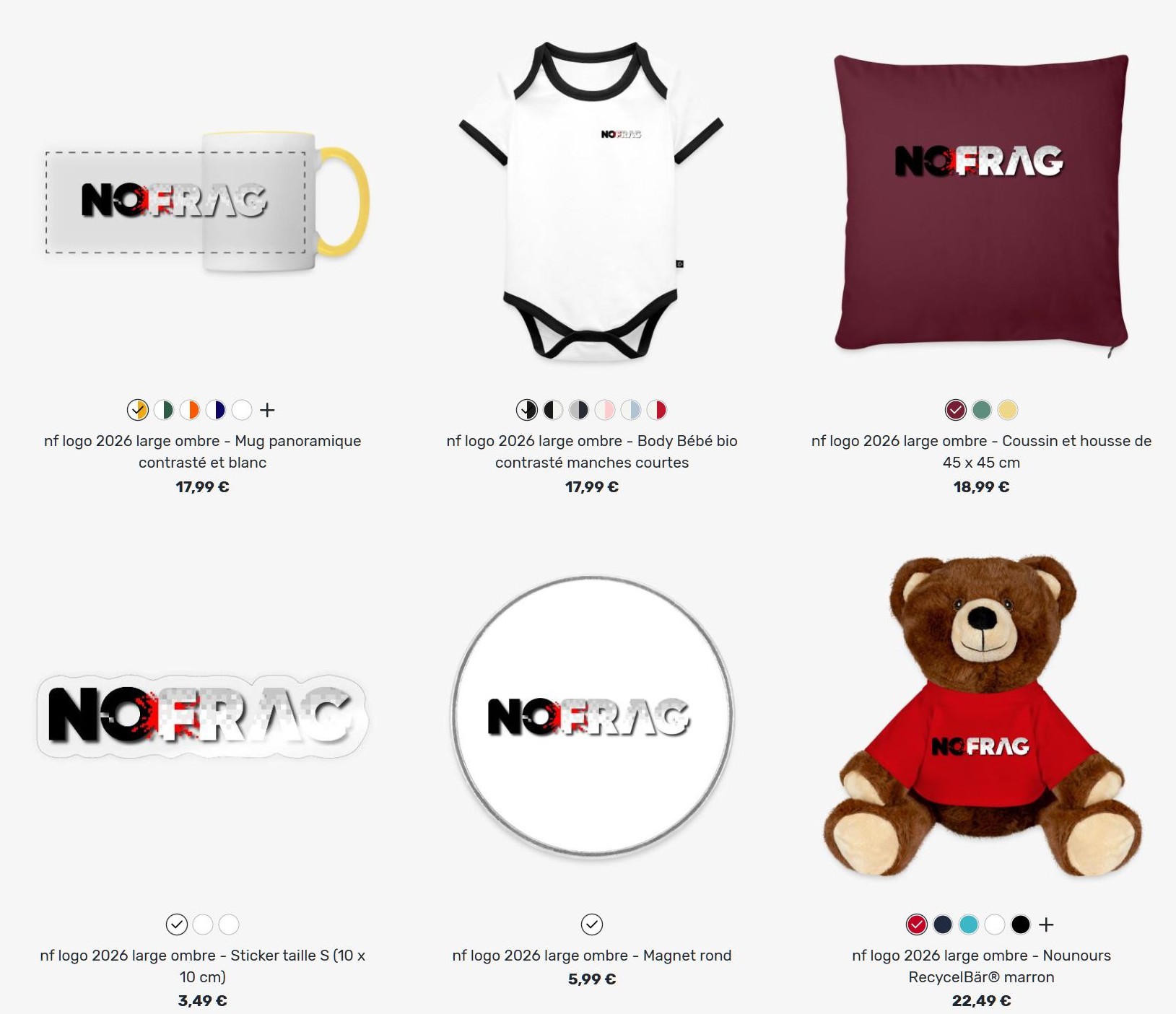
Spreadshirt mai 2026

Merci à tous pour votre soutien !

  •  

This is refreshing: Blackmagic is making some of its cameras over $1000 cheaper

These days, it’s not often you get to write about prices going down, rather than up.

A Blackmagic Cinema Camera 6K in front of a desert landscape.Blackmagic

Here’s a refreshing bit of news: there’s at least one camera company out there whose products are getting appreciably cheaper. Today, cinema company Blackmagic Design announced that it’s slashing the prices of its full-frame Cinema Camera 6K and Pyxis 6K models by over $1000, something it says it can do after “securing better pricing on parts.”

Neither camera is particularly new: the Cinema Camera was announced in 2023, and the Pyxis in 2024. So it’s not surprising that Blackmagic is able to make them for less than it initially was. What I wouldn’t typically expect is the company passing those savings on to its customers, given our age of prices rising due to AI-driven chip scarcity and inflation. 

New PriceOld PriceSavingsLaunch Price
Blackmagic Cinema Camera 6K$1595$2715$1120$2595
Blackmagic PYXIS 6K L$1995$3080$1085$2995
Blackmagic PYXIS 6K EF$1995$3070$1075
Blackmagic PYXIS 6K PL$2195$3265$1070

It’s also not a situation where Blackmagic raised prices due to tariffs in the US, and is lowering them back down now that they’re gone. It did raise prices – the Cinema Camera 6K launched for $2595 – but the new prices are well below what the cameras were originally announced at.

Realistically, I realize most of our audience won’t be interested in dedicated cinema cameras in an age when the best hybrid mirrorless models excel in both video and stills, no matter how inexpensive they are. But I’d like to think this is a sign that things might be changing in the camera world. While it may be too much to hope that we’ll see new models that are cheaper than their predecessors, or similar price reductions for existing cameras – I suspect the bigger, more established companies are already getting parts for as cheaply as they can, and Blackmagic is just moving up towards that level of economy of scale – perhaps we’ll at least see some cameras that aren’t substantially more expensive than their predecessors.

About the Author: Mitchell started taking pictures at 10 and hasn’t stopped since. It’s been a wide-ranging adventure, spanning a wide variety of genres and locales, and occasionally dipping into fascinations with video and filmmaking. They honed their technical knowledge doing documentation, programing and QA, writing for The Verge, and just generally messing around on the computer to see what breaks.

Want to stay up to date on the latest product news and releases? Add DPReview as a preferred source to ensure our independent journalism makes it to the top of your Google search results.

add as a preferred source on google

  •  

GoPro’s CEO says the company isn’t done with cameras despite its merger promises

The company’s announcement earlier this week placed a lot of emphasis on AI and national security.

The three GoPro Mission 1 cameras against a dark black background.GoPro

GoPro’s merger with Starman Optical doesn’t mean the company will stop making action cameras, according to a letter from the action cam company’s CEO, Nick Woodman. Earlier this week he said the company planned to address “important areas of national security related to cameras, optics and AI infrastructure,” but now tells the GoPro community that he expects the merger to “make GoPro a stronger, more capable camera company than ever before.”

If you missed the merger announcement earlier this week, that statement may seem unnecessary; of course GoPro would keep making cameras, that’s the main thing it does. But its consumer-facing business didn’t get much attention in its merger announcement, with the company talking more about expanding into “AI data center, government, defense and aerospace markets.” It did promise to “continue to fully support its existing consumer products and its subscription and cloud platform,” but the word “existing” made some (myself included) wonder how much work it’d put into future consumer cameras.

“we’ll be in a much better position to innovate, invent and advance the future of consumer and professional content creation”

Nick Woodman

In his new letter, Woodman says the company’s “improved financial strength” after the merger, planned for later this year, pending regulatory approval, will put the company in “a much better position to innovate, invent and advance the future of consumer and professional content creation.” He also says that Starman is passionate about the GoPro brand, too.

“We plan to bring you more innovative cameras, smarter accessories, and more powerful software and services designed to make capturing, editing and sharing your experiences easier and more exciting than ever,” he says later in the letter.

Personally, I’m glad to hear this, as I think GoPro is an important competitor in the action camera space, even if it’s struggled to keep up with the pace set by other companies like DJI and Insta360 in recent years. Of course, there’s a storied history of companies and executives making promises about what things will be like post-merger, with the reality ending up very different. But for now, it sounds like GoPro plans to continue working on cameras alongside bringing manufacturing of optics and transceivers to the US and breaking into the defense market.  

About the Author: Mitchell started taking pictures at 10 and hasn’t stopped since. It’s been a wide-ranging adventure, spanning a wide variety of genres and locales, and occasionally dipping into fascinations with video and filmmaking. They honed their technical knowledge doing documentation, programing and QA, writing for The Verge, and just generally messing around on the computer to see what breaks.

Want to stay up to date on the latest product news and releases? Add DPReview as a preferred source to ensure our independent journalism makes it to the top of your Google search results.

add as a preferred source on google

  •  

Télex

Microsoft instaure un plafond d'heures mensuelles pour le Cloud Gaming du Game Pass et facturera le reste à l'heure. Pas de panique, assure le géant : cela ne toucherait que 4 % des joueurs. Bref, si vous rentabilisez un peu trop votre abonnement en jouant beaucoup en Cloud, vous repasserez à la caisse. Remercier les clients fidèles, c'est important. P.
  •  

Lomography’s Fisheye No. 2 Graffiti is a budget gateway to analog fisheye

The new camera features the same 170° optics and fixed F8 lens as the standard Fisheye No. 2, wrapped in a new graphic design.

A colorful, toy-like camera with a large yellow lens and artistic designs is held in a hand against a blurred, vibrant graffiti wall background.Lomography

Lomography recently launched the Fisheye No. 2 Graffiti, a redesigned version of its long-running Fisheye No. 2 camera that pairs a 170° fisheye lens with a graffiti-styled 35mm body. It sits below the brand’s LomoApparat in price, and Lomography says it packs bulb mode, multiple-exposure capability and a built-in flash into a compact, beginner-friendly body.

The Graffiti edition shares its core optics and feature set with the standard Fisheye No. 2 but distinguishes itself with its graphic design. It still is a point-and-shoot camera with a fixed F8 aperture and 1/100 sec shutter speed. There are also no ISO settings. Its bulb mode allows for long exposures, and multiple-exposure support lets photographers play with layered images in camera for unexpected results. 

Red and blue neon signs displaying the word IZAKAYA are illuminated against a dark background, with reflections on nearby surfaces and additional neon symbols and text surrounding them.Lomography

Lomography describes the lens as producing heavy vignetting and spherical distortion, characteristics that the brand frames as exciting features rather than flaws. The camera focuses as close as 10cm, which opens up the opportunity for exaggerated wide-angle close-up shots. The beginner-friendly features and its relatively affordable price make it an ideal option for experimental shooters looking for an easy entry into analog fisheye photography.

This isn’t the most affordable camera Lomography has launched this year, either. The brand recently added a $35 half-frame camera that gives photographers twice the frames on a single roll of film. These build on a broader industry trend of releasing beginner-friendly film cameras, a pattern Kosmo Foto’s Stephen Dowling recently argued is good for the medium.

The Fisheye No. 2 Graffiti is available now for $69 through the Lomography shop.

About the Author: Abby Ferguson holds an MFA in photography and blends a fine-art background with extensive editorial and commercial experience. She built and led an in-house imaging program for a large vacation rental company and has served as an associate editor at Popular Photography. She also teaches at a local community college and serves on its Photographic Technology Program Advisory Board, sharing her knowledge and enthusiasm for the medium.

Want to stay up to date on the latest product news and releases? Add DPReview as a preferred source to ensure our independent journalism makes it to the top of your Google search results.

add as a preferred source on google

  •  

KKK d’école

La Maison-Blanche vient d'atteindre un niveau supplémentaire de cynisme politique (si si, c'est encore possible) en publiant deux jeux rétro sur son site officiel. Le premier, un clone de Snake, vous glisse dans la peau de Tom Homan pour rafler un max d'immigrés le long du Rio Grande et les expulser. Le second, un pastiche de Tetris intitulé « Protégez la frontière », vous demande d'empiler des briques pour bloquer « la horde ». Transformer deux monuments de l'histoire du jeu vidéo en outils de propagande racoleuse et facho, c'est un concept. On attend avec impatience leur prochain titre : un Paperboy où l'on jette des avis d'expulsion. Monde de merde... P.
  •  

Fujifilm rounds out its sports and wildlife trio with a 400mm F4.5

The XF 400mm F4.5 shares nearly the same optical design as the XF 500mm F5.6, but Fujifilm claims it will offer better sharpness.

Large telephoto camera lens with tripod mount, black finish, positioned horizontally against a dark background; glass elements visible at the front reflecting light.Fujifilm

When you use DPReview links to buy products, the site may earn a commission.

Fujifilm has announced the Fujinon XF 400mm F4.5 R LM OIS WR, a new super-telephoto prime lens for its APS-C X-mount system. The company says the lens delivers exceptional sharpness in a relatively compact package aimed at wildlife and sports photographers.

The XF 400mm F4.5 is positioned as a sister lens to the previously released XF 500mm F5.6 R LM OIS WR. Alongside the XF 200mm F2 R LM OIS WR, which Fujifilm sees as a set, the three lenses cover full-frame-equivalent focal lengths from roughly 305mm to 762mm.

Large white Fujinon camera lens with tripod mount shown horizontally on a black background, details and controls clearly visible.Fujifilm

The new 400mm F4.5 provides a 609mm equivalent focal length on X-mount cameras. It is also compatible with Fujifilm’s 1.4x and 2.0x teleconverters, providing equivalent focal lengths of 852mm and 1219mm, respectively. It offers 5.5 stops of optical image stabilization and is weather resistant with 20 sealed points, two must-have features for most wildlife and sports photographers. 

Fujifilm says the 400mm lens shares a nearly identical optical design to the 500mm, with some slight changes to the rear group. It features 21 elements in 14 groups, which include 4 ED and 2 super ED elements. According to Fujifilm, its engineering team in Japan says the 400mm is sharper than the 500mm. It is also slightly lighter than its 500mm sibling, weighing 1245g (2.7 lbs). It measures 239.5mm (9.4′) long with a 104.5mm (4.1′) diameter. The lens is compatible with 95mm filters.

Close-up of a metallic camera lens control panel with engraved labels, featuring switches for focus range, image stabilization (OIS), focus mode options (AF, MF, and preset), and a SET button.Fujifilm

The XF 400mm F4.5 uses a linear motor for autofocus, which Fujifilm says results in silent operation. It can focus as close as 2.7m (9′) and offers a maximum magnification of 0.16. There is a focus limiter switch to prevent it from focusing closer than 5m away, resulting in faster autofocus when photographing distant subjects. Near the front of the barrel, a Focus Control button works in tandem with a Focus Select switch, allowing photographers to choose whether the button activates autofocus, locks AF, or recalls a preset focus distance. 

The XF 400mm F4.5 R LM OIS WR will be available sometime in mid-September for $3200. That’s a $200 premium over the XF 500 mm’s launch price, but that lens now retails for $3599 due to tariff-related price increases.

Sample gallery

Please do not reproduce any of these images on a website or any newsletter/magazine without prior permission (see our copyright page ). We make the originals available for private users to download to their own machines for personal examination or printing (in conjunction with this review); we do so in good faith, so please don’t abuse it.

Loading gallery…

About the Author: Abby Ferguson holds an MFA in photography and blends a fine-art background with extensive editorial and commercial experience. She built and led an in-house imaging program for a large vacation rental company and has served as an associate editor at Popular Photography. She also teaches at a local community college and serves on its Photographic Technology Program Advisory Board, sharing her knowledge and enthusiasm for the medium.

Want to stay up to date on the latest product news and releases? Add DPReview as a preferred source to ensure our independent journalism makes it to the top of your Google search results.

add as a preferred source on google

  •  

Nexon prépare le terran

Selon le quotidien coréen Chosun, Nexon (le studio d'Arc Raiders) serait sur le point de signer avec Blizzard pour développer un nouveau StarCraft. Un « contrat proche d'être finalisé », chuchote un « responsable senior » resté anonyme, comme d'habitude. Vingt-huit ans après sa sortie, StarCraft squatte toujours le top 10 des jeux les plus joués dans les PC bang coréens, ces temples des LAN qui refusent de mourir. De quoi donner des idées à n'importe quel éditeur en manque de licence increvable. Petit bémol qui pique : le boss de Nexon, Junghun Lee, est aussi celui qui a déclaré qu'il fallait « supposer que tout le monde utilise l'IA générative » en développement. Reste à savoir si Blizzard glissera une clause anti-IA dans le contrat, histoire d'éviter l'émeute chez les fans. Pendant ce temps, Blizzard planche discrètement sur son propre spin-off StarCraft, un FPS en monde ouvert dont on pourrait apercevoir un bout à la BlizzCon. Deux StarCraft en 2026, cela n'était pas sur mon bingo. P.
  •  

Leica’s new Summicron 66mm F2 is a tribute to a military lens M shooters have never been able to buy

There will only be 660 of them made, which still makes it far less rare than the original.

Close up of the 66mm designation on the Leica Summicron-M 66 F2's front ring.Leica

When you use DPReview links to buy products, the site may earn a commission.

Leica has announced the Summicron-M 66 F2, which it says is a “reinterpretation” of one of the rarest M-mount lenses ever made: the Elcan 66mm F2, which was specially designed for the US Navy’s use in “covert reconnaissance photography.”

According to Leica’s press release, there were only around 200 copies of the original lens, designed by Dr Walter Mandler of Ernst Leitz Canada in the late 1960s, ever made. Its spy-centered origins also explain the odd focal length; it was designed to balance providing maximum resolution and contrast, without being too big. It’s not hard to imagine why the US Navy and its allies would want that in the midst of the Cold War.

A person holding an M-series camera with the Summicron-M 66mm F2 attached.Leica

The new lens contains several references to its lineage. Leica says the aperture ring turns in the opposite direction from a typical M-lens – you twist it left to stop down, instead of right – and the distance scale is military-spec. It will also be a limited edition; the company is producing 660 of them, which will have their serial number engraved on the front ring. The first lens, 001, will be auctioned.

Optically, the lens has 6 elements in 5 groups, and can focus on subjects as close as 1m (3′ 3″) away. It has a 9-bladed aperture. Leica says that, at F2, it will have “distinctive rendering” with “soft bokeh and high contrast,” while providing “maximum resolution” when stopped down. You can see some samples taken by Mike Chudley and provided by Leica below, though it’s hard to critically examine a lens’s performance based on JPEGs that have gone through an unknown editing process. Thankfully, Leica has also provided MTF charts.

The MTF charts for the Leica Summicron-M 66mm F2 at F2, F2.8 and F5.6
Talking about the Hugo 66mm T2.1, Leitz Cine says of the original Elcan 66mm: “While considered extremely sharp for its time, the images match remarkably well with the strong character of the modern day HUGO lenses.” Strong character indeed.
Leica

The lens weighs 456g (16.1oz), and is around 60mm (2.4″) long. It has a 49mm filter thread and, unlike some other premium Leica lenses, has a screw-on hood, rather than an integrated one.

This isn’t the first reinterpretation of the lens that we’ve seen. Leica’s movie-focused sister company, Leitz Cine, sells the Hugo 66mm T2.1, which is also based on the Elcan. However, that lens is designed for PL and L mount, is much larger and has geared focus and aperture rings designed to make life easier on a movie set.

Leica says the Summicron-M 66 F2 will be available starting September 3 for $10,900. While that’s a hefty sum for an F2 lens, even by Leica standards, it’s a pittance for what you’d pay for one of the originals, assuming you were even able to find one (which is apparently no small task). One went up for auction in 2020, with a starting price of €40,000, though it ended up going unsold. Similarly, every listing of the cine version of the lens that I found had a “Contact Us” button instead of a price, essentially saying that if you have to ask, you can’t afford it. 

Manufacturer Samples

Loading gallery…

Three quarters image of the Summicron-M 66mm F2Leica

Leica Summicron-M 66 F2

Specifications

Quick Specs

Lens Type
Prime lens
Zoom range
N/A
Fisheye
N/A
Perspective control
N/A
Macro
N/A
Mirror
N/A
Max format size
35mm FF
Minimum Focal length (W)
66 mm
Maximum Focal length (T)
66 mm
Max aperture (W)
F2
Min aperture (W)
16
Aperture ring
Yes
No. of diaphragm blades
9
Aperture actuation
Mechanical
No. of elements
6
About the Author: Mitchell started taking pictures at 10 and hasn’t stopped since. It’s been a wide-ranging adventure, spanning a wide variety of genres and locales, and occasionally dipping into fascinations with video and filmmaking. They honed their technical knowledge doing documentation, programing and QA, writing for The Verge, and just generally messing around on the computer to see what breaks.

Want to stay up to date on the latest product news and releases? Add DPReview as a preferred source to ensure our independent journalism makes it to the top of your Google search results.

add as a preferred source on google

  •  

DJI’s new Osmo 360 II is a small step forward for video, and a big one for repairability

DJI will lead with native 8K at 60fps, but the ability to replace a scratched lens without retiring the whole camera is the real star of the show.

Two black DJI action cameras with wide fisheye lenses positioned upright on rocky outdoor ground, with blurred brown rock formations and blue sky in the background.DJI

When you use DPReview links to buy products, the site may earn a commission.

DJI has announced the Osmo 360 II, its second-generation 360-degree action camera. The latest version is an iterative successor rather than a redesign, building on the original model’s dual square-sensor design and 8K panoramic capture, without substantially changing the camera’s core hardware or shooting concept.

M-PI-dji-osmi-360-lens-kit
The Osmo 360 II now features interchangeable lenses, so they can be replaced if damaged.
DJI

One of the most consequential changes is the move to swappable lenses, rather than the fixed ones used by the original Osmo 360. Following in the footsteps of Insta360, DJI now sells a replacement kit for $30, which is substantially more affordable than having to replace the entire camera if you accidentally scratch or crack a protruding lens.

The camera uses two Type 1/1.1 square sensors (one for each lens) with 2.4 μm pixels, matching the sensor specifications of the original Osmo 360. The company says each of its sensors features “an imaging area equivalent to that of a 1-inch CMOS sensor with a 4:3 aspect ratio,” or 123mm² each.

DJI claims 14.5 stops of dynamic range from the camera, which is one additional stop compared to the previous model. As with most dynamic range claims, though, we’d take that number with a grain of salt, and DJI hasn’t specified where that extra stop is coming from. There’s every chance it’s mainly due to noise reduction, although DJI did somewhat quietly switch to a LOFIC sensor in its Osmo Pocket 4P to improve dynamic range.

M-PI-dji-osmi-360-ice-climbing
The Osmo 360 II shoots 8K video at up to 60fps, a step up from the original model’s 8K/50 cap.
DJI

The camera is capable of up to 8K/60 video, up from the original version’s 8K/50. Slow motion video also gets an increase, with up to 4K/240 possible, compared to a max of 4K/100 previously. Panoramic photo resolution remains at 120MP, though it gets the benefit of HDR this time around. DJI also added a ‘Spotlight Follow’ mode that promises to track your subject, keeping them in the center of the frame, with footage up to 4K/30 possible in this mode. 

DJI has also updated how users connect the camera to its Mimo app. It now supports the ability to tap to connect using NFC. The Osmo 360 II keeps the same 105GB of onboard storage and is waterproof to 10m (33′) without a case.

The DJI Osmo 360 II will be available for purchase outside of Asia starting on September 15. As expected, it will not be officially available in the US. In most EU countries, the new camera will cost 589 EUR.

Close-up of a black action camera with a front display screen showing footage of a motorcyclist on a scenic road bordered by orange rock formations and a low sun.DJI

DJI Osmo 360 II

About the Author: Abby Ferguson holds an MFA in photography and blends a fine-art background with extensive editorial and commercial experience. She built and led an in-house imaging program for a large vacation rental company and has served as an associate editor at Popular Photography. She also teaches at a local community college and serves on its Photographic Technology Program Advisory Board, sharing her knowledge and enthusiasm for the medium.

Want to stay up to date on the latest product news and releases? Add DPReview as a preferred source to ensure our independent journalism makes it to the top of your Google search results.

add as a preferred source on google

  •  

Un rachat dans le visage

SteamDB, le site que la moitié de la rédac' rafraîchit plus souvent que ses mails, change de mains. Son créateur solitaire, xPaw, a filé les clés à Nexus Mods, plateforme reine du mod qui promet de garder « le nom, la marque, la communauté ». Traduction : on va monétiser tout ça, mais sans changer la déco trop vite. En cause : « la charge mentale » d'un site géré seul pendant des années, et un bon vieux coup de blues. « Après le Covid et avec la montée de l'IA, l'Internet qu'on aimait a disparu, et ma passion avec », confie le développeur, dans ce qui restera comme le post LinkedIn le plus déprimant de la rentrée. Nexus, lui, lorgne surtout les archives de SteamDB, une quantité incroyable d'informations sur les versions de jeux, les dépôts, les manifestes, les fichiers et l'historique des mises à jour, vitales pour réparer les mods qui claquent à chaque update. Bilan : encore un bout du bon vieux web indé qui passe sous pavillon corporate. P.
  •  

GoPro says its future is “defense, government, robotics and aerospace” after $285 million merger

It still promises to “fully support its existing consumer products and its subscription and cloud platform.”

The GoPro logo on a dark blue backgroundGoPro

GoPro has announced that it’s entered into a “definitive merger agreement” with Starman Optical, a little-known entity described in the press release as a “privately held optical-photonics company.” According to current GoPro CEO Nick Woodman, the company hopes the move will help it “grow across consumer, commercial and defense markets,” and address “important areas of national security related to cameras, optics and AI infrastructure.”

This is, to put it mildly, a bit of a pivot from its current role as an action camera company. A few hints suggest that the action camera business may not be going away, though. For one, GoPro promises it will “continue to fully support its existing consumer products and its subscription and cloud platform.” While that’s good news for anyone who just bought the Mission 1 Pro ILS, released just a week before this news broke, the word “existing” casts a bit of doubt on whether we’ll see new consumer cameras from the company in the future. 

The company will focus on “important areas of national security related to cameras, optics and AI infrastructure.”

There are a few references to the company’s “growth potential” in consumer markets, but there’s much heavier emphasis on US national security and manufacturing. GoPro founder and CEO Nick Woodman says the company plans to address “important areas of national security related to cameras, optics and AI infrastructure.” And Charles Tebele, CEO of Starman Holding, says “The combination of GoPro’s world-class optical expertise and intellectual property with Starman’s advanced transceiver capabilities and U.S. manufacturing platform creates a unique opportunity. Together, we intend to bring production of these critical components back to the United States.”

In the US, national security has long been big business, with lucrative military contracts sustaining many companies, even ones better known for their consumer products. But it’s become an increasingly hot-button topic in recent years, with the US government promising billions to companies making semiconductors within its borders, and placing import restrictions on companies like DJI based on perceived threats to national security. The company also promises to expand into the hot and controversial “AI Data Center” space, though to me that reads more as it filling out its bingo card of phrases you’re required to use in a press release in 2026.

As a camera company, GoPro has some share in the military industrial complex – when we interviewed NASA astronaut and US Air Force Col. Terry Virts in 2019, he said Russia beat the US to the punch by flying GoPros into space (though NASA has since included the cameras on multiple flights, including its recent Artemis II mission) – but it’s not exactly a major player. It’s clear its leadership sees the merger as an opportunity to change that, with intents to “leverage its IP, optics and imaging capabilities across defense, government, robotics and aerospace markets, building on demand for U.S.-made solutions.” Woodman reiterates that point, saying: “We’re excited to combine with the Starman team to capitalize on this opportunity and play an important role in America’s future.”

The GoPro Mission 1 Pro ILS with its lens mount and sensor facing the camera. Beside it is a small Laowa cinema lens.
The brand-new GoPro Mission 1 ILS shakes up GoPro’s formula with an interchangable lens mount and features aimed more towards cinematographers than action camera users.
Mitchell Clark

GoPro has been in dire financial straits for a while, following years of Chinese competitors like DJI and Insta360 introducing action cameras that tempted would-be buyers away with innovative features, new form factors and larger sensors, while the Hero line largely stagnated. This year, the company announced the Mission 1 series that largely caught back up with, and in some respects surpassed, those competitors, but it may have been too late. Earlier this summer, it warned investors that there was “substantial doubt” about its ability to continue in business. At the time, it said it was investigating “opportunities within the defense and aerospace sector.” Those investigations were apparently fruitful.

According to the press release, the merger – which will see $285 million paid to GoPro shareholders – will see the company’s $92 million in debt paid off, “resulting in a clean, substantially debt-free balance sheet.” The company will remain publicly listed, though its unclear whether that listing will be for GoPro alone or the newly combined entity; GoPro’s press release promises “additional information regarding the transaction upon closing.”

Finally, there’s the question of who Starman Optical is, and how it has the money to buy GoPro. As best I can tell, it’s a subsidiary of Starman Holding, a company that owns several sub-brands, including popular phone case and accessory companies like Incase and Incipio. While Starman Holding’s website doesn’t list Starman Optical as one of its companies, it does list Starman New Photonics, and its About Us page names Charlie Tebele as its CEO. The websites for both Starman Holding and Starman New Photonics don’t have a ton of information on them, though that’s not that odd for this kind of company.

GoPro expects the deal to close by the end of the year, assuming it’s approved by regulators and GoPro shareholders. 

About the Author: Mitchell started taking pictures at 10 and hasn’t stopped since. It’s been a wide-ranging adventure, spanning a wide variety of genres and locales, and occasionally dipping into fascinations with video and filmmaking. They honed their technical knowledge doing documentation, programing and QA, writing for The Verge, and just generally messing around on the computer to see what breaks.

Want to stay up to date on the latest product news and releases? Add DPReview as a preferred source to ensure our independent journalism makes it to the top of your Google search results.

add as a preferred source on google

  •  

The Caira AI camera is getting a new trick: generative video editing

Camera Intelligence says this makes it the first mirrorless camera to include the feature.

A man holds a Camera Intelligence Caira attached to an iPhone.Camera Intelligence

Camera Intelligence, the company behind the Caira camera that attaches to the back of your iPhone, is adding even more AI features to the device. The app that powers the camera is getting the ability to edit videos shot on it using generative AI, building on a feature that allowed you to make similar adjustments to your photos.

The company says the feature will support a few types of edits: “relighting” footage (making a video shot at noon look like it was taken at golden hour, for instance), reframing it, emulating a camera motion like a tilt or pan and “set extension,” which the company says lets you “extend the world by 10 seconds beyond what was filmed on location.” The options are presented as templates that you can pick from, though there is a chatbot that you can use to give additional input; for example, you can use it to tell the AI that the “orbit” camera move should be centered around a specific person in the shot.

A screenshot showing the Caira's AI video editing UI.Camera Intelligence

The Caira shoots at up to 4K, though the clips produced by the generative AI are limited to 720 or 1080. The tool can use Google’s Gemini Omni 1.1 Flash model, or Runway’s Aleph 2.0, and gives you the option to select which one you’d like before setting it to work. The company says it takes one to three minutes to produce a finished video.

Camera Intelligence stresses that the tool can only be used to edit existing footage that you took with the camera, not create something entirely new. It’ll keep your original footage, and the generated file will have a Google SynthID watermark. The company says it started work on the feature after surveying 111 Kickstarter backers* and hearing from 77% of them that they’d like the feature. 

In a press release, it says the feature is designed for “solo creators and marketers who may not have the budget to commission this work and who are often overwhelmed by pro editing tools – but who are excited by these technologies and what they make possible.”

Generating video, like generating images, isn’t particularly cheap. The company says the feature will be available “alongside Generative Image Editing and a yet-to-be-announced feature” as part of Caira Studio, which is launching later this year. Pricing hasn’t been announced yet, but the company has made it clear from the start that generative editing features would require a subscription. The Kickstarter page promised that the “Caira Pro” plan would be $7 a month, but that only included stills editing.

Camera Intelligence says the generative video editing feature will only be available in the US and UK.

I understand why the company is pitching this as a prototyping tool

Watching the samples that Camera Intelligence included in its announcement video, I understand why the company is pitching this as a prototyping tool – something you can use to see if a shot will work before actually trying to capture it – rather than something you’d use to produce final footage. While the company says the Omni model is “physics-aware and remembers the scene across an entire clip,” if you look close you can definitely still see some AI artifacting. 

Even if the model produced perfect footage, this still isn’t the kind of tool I’d like to use. But it doesn’t surprise me that the people who initially backed the camera based on the pitch of its AI capabilities are interested in it, and it seems like a natural extension of the work Camera Intelligence was already doing. I’m just not sure this feature will entice anyone else to buy the Caira if they weren’t already sold, or demand that the traditional camera makers start building something similar. 

* Speaking of those backers, the company says it’s “delivered the majority of Kickstarter units” of the Caira and is delivering the outstanding ones on a monthly basis.

About the Author: Mitchell started taking pictures at 10 and hasn’t stopped since. It’s been a wide-ranging adventure, spanning a wide variety of genres and locales, and occasionally dipping into fascinations with video and filmmaking. They honed their technical knowledge doing documentation, programing and QA, writing for The Verge, and just generally messing around on the computer to see what breaks.

Want to stay up to date on the latest product news and releases? Add DPReview as a preferred source to ensure our independent journalism makes it to the top of your Google search results.

add as a preferred source on google

  •  

Télex

Double Fine repasse par Kickstarter avec une promesse : Brütal Legend 2 verra le jour si la cagnotte atteint 100 millions. Un bon troll d'indé fraîchement libéré de Microsoft, vu que le record absolu plafonne à 47M$. Mais qui sait, sur un malentendu... Le metal vaincra. P.
  •  

KEH Camera is now Zeiss’s official US and Canada repair partner – even for decades-old lenses

Every Zeiss photography lens, from current Batis and Otus ML glass to decades-old vintage optics, now has a single factory-authorized repair address, effective September 1.

Three camera lenses of different sizes and a camera body positioned on a white surface, with a black KEH Camera carrying case featuring the brand’s logo and a red KEH cleaning cloth in the background.Zeiss / KEH

Zeiss has named KEH Camera its exclusive authorized repair and service center for photography lenses and equipment in the US and Canada, the two companies announced today. The Atlanta-based used-gear specialist will handle work on everything from postwar Zeiss Jena glass to current Otus ML optics.

KEH will handle both in-warranty and out-of-warranty work for those in the US and Canada. The KEH technicians are trained directly by Zeiss and will use genuine manufacturer parts along with Zeiss-approved calibration tools and procedures, according to the announcement. The companies specify that all repairs will meet Zeiss engineering standards. 

Carl Zeiss Jena Flektogon 4/20 camera lens with visible glass elements and engraved front ring text, positioned on a white background.
US and Canadian customers now have an official service and repair options for Zeiss Jena lenses.
KEH

The most important detail of the announcement is the scope. Coverage extends to “decades-old legacy lenses,” with the companies specifically citing postwar Zeiss Jena optics, the 1960s Contarex system and large-format Zeiss lenses built for Linhof and Graflex, alongside current Batis and Otus ML lines. “Be they new or legacy ZEISS cameras and lenses, we are confident that KEH Camera has the skills necessary to provide value to our loyal optics owners,” said Tony Wisniewski, senior manager for Zeiss Photography Americas.

The coverage of older lenses represents a reversal of Zeiss’s long-stated position: its photography service pages state that legacy Hasselblad, Contax/Yashica, Rollei, Carl Zeiss Jena and Zeiss Ikon gear “can unfortunately no longer be repaired by Zeiss,” directing owners to independent workshops. Now, though, the companies have confirmed that even Yashica and Rollei optics can be serviced by KEH.

For gear that previously fell under Zeiss’s service policy, the new partnership replaces a rather roundabout arrangement. Until now, Zeiss instructed US photo lens owners needing warranty service to contact their dealer or the distributor in the country of purchase, rather than sending equipment to a dedicated Zeiss service center. Under the new agreement, users can initiate repairs through Zeiss’s online service portal, with KEH coordinating shipment. Customers can also drop off equipment at KEH’s retail location in Atlanta. 

KEH already serves as an authorized repair partner for Sony and Sigma, and says it is the only reseller in the camera industry with manufacturer-approved repair facilities. Its track record shows that repair is central to its business. KEH chairman and CEO Glenn Kaufman connected the Zeiss agreement to that mission, explaining that it’s “a natural extension of what KEH has always stood for: keeping great gear in circulation and out of landfills.”

Two black camera lenses with lens hoods, set side by side at an angle on a white background, featuring blue and yellow markings on the barrels.
Zeiss released two prime lenses last year: the Otus ML 50mm F1.4 and Otus ML 85mm F1.4. However, while they feature Zeiss branding, the lenses are manufactured by Cosina in Japan.
Zeiss

Zeiss “decided to kind of hit pause on photo, to wait and see what happens” during the pandemic, Wisniewski told us last year, while continuing to sell the lenses it already made. That pause ran nearly six years, ending with two Otus ML lenses in 2025. This partnership to expand repair options for customers in North America suggests the company’s renewed investment extends past new products.

Disclosure: MPB, a competitor to KEH in the used-gear market, is a DPReview sponsor. This article was produced independently.

About the Author: Abby Ferguson holds an MFA in photography and blends a fine-art background with extensive editorial and commercial experience. She built and led an in-house imaging program for a large vacation rental company and has served as an associate editor at Popular Photography. She also teaches at a local community college and serves on its Photographic Technology Program Advisory Board, sharing her knowledge and enthusiasm for the medium.

Want to stay up to date on the latest product news and releases? Add DPReview as a preferred source to ensure our independent journalism makes it to the top of your Google search results.

add as a preferred source on google

  •  

Finalement, Gunman Contracts Stand Alone n’attendra pas le Steam Frame pour sortir : rendez-vous le 10 septembre

Alors que le mois dernier, le développeur solo ANB_Seth annonçait que Gunman Contracts Stand Alone sortirait en même temps que le Steam Frame, il semble qu’il se soit ravisé. Dans un message sur son serveur Discord publié hier, il explique qu’il imaginait une annonce de Valve à l’occasion des 30 ans du studio. Or, il n’en a rien été, et son éditeur 2080 Games a dû un peu tirer la tronche à l’idée de devoir encore attendre une durée indéterminée, alors que le jeu est manifestement prêt. C’est pourquoi ils ont finalement décidé de sortir l’early access de leur jeu VR inspiré de John Wick dès le 10 septembre prochain.

Pour rappel, ANB_Seth avait initié le projet sous forme d’une total conversion pour Half-Life: Alyx, qui avait rencontré pas mal de succès. Comme, a priori, le bonhomme touche un peu sa bille, il s’est lancé dans la production d’un stand alone à la fois VR et flat screen. Et c’est très alléchant.

Si vous aussi, vous avez hâte d’enfiler votre casque VR et de défoncer votre luminaire en faisant du gunfu sur Gunman Contracts Stand Alone, vous pouvez l’ajouter à votre liste de souhaits sur Steam, en attendant le 10 septembre.

  •  

Oublivion

Ah, la magie de la mémoire patronale. Michał Nowakowski, co-PDG de CD Projekt Red, vient d'offrir une relecture magistrale de l’histoire : si Cyberpunk 2077 est sorti complètement cassé fin 2020, ce n'est pas la faute des patrons, mais parce que « l'équipe voulait le sortir, car elle était fatiguée ». Le directeur oublie juste un détail : le crunch obligatoire de six jours par semaine imposé aux développeurs avant le lancement. Forcément, quand on  vous enchaîne au bureau 70 heures par semaine sous Covid, on a très envie que le jeu sorte, pour pouvoir  revoir le soleil et ses enfants. Résumer la fatigue d'un studio soumis au travail forcé à une simple « envie de passer à autre chose », c'est un pur chef-d'œuvre de com'. La prochaine fois, ils nous expliqueront que les galériens ramaient vite parce qu'ils adoraient le tempo du tambour. P.
  •  

Adobe Camera Raw 18.6 adds a Glow tool with diffusion, bloom and halation – applied to Raw images

Diffusion, bloom and halation arrive in the Effects panel, applied globally or through masks – but not in Lightroom.

Traditional Chinese pavilion with curved roof by a river at dusk, surrounded by illuminated modern skyscrapers; digital settings panel overlay visible in the foreground.Adobe

Adobe recently released the newest version of its Raw processing software, Adobe Camera Raw 18.6. Its headline feature is a native Glow effect tool that gives users three analog-inspired looks – diffusion, bloom and halation – directly within ACR. Other features include a new Metadata Info Panel that shows image data directly in the editing workspace, and photographers and designers who work with composites gain a new Trim tool that makes everything outside a crop transparent, rather than leaving it as hidden pixels. The update also adds support for additional camera and lens profiles.

What Glow does

The new Glow tool lives in Camera Raw’s Effects panel alongside the existing Vignette and Grain sliders. Adobe’s documentation describes three selectable styles. Diffusion applies a hazy, film-like softening effect that spreads across the frame, similar to what a Black Mist or Pro Mist filter attached to your lens would achieve. Bloom produces a softer, more even glow confined to the highlights, which could be useful for misty scenes and waterfalls. Halation adds a colored halo effect around bright edges and light sources, similar to the warm, or red-orange fringing that appears on film when light reflects off the film base back through the emulsion.

Glow works inside Camera Raw’s masking system, so the effect can be dialed up or down on a subject, a luminance range or a selected area, though the Style, Range, Spread and Warmth sub-settings are shared globally – masks control how much something glows, not the kind of glow.

Greg Benz, a digital photo educator (and a member of the DPReview community), posted a helpful video on his YouTube channel illustrating the capabilities of ACR’s new Glow tool, including examples of using masks to achieve localized results. If you’re interested in learning more about it, we highly recommend giving it a watch.

One thing worth calling out: Glow is currently an ACR-only feature and isn’t available in Lightroom. Though given the close relationship between the two applications, we wouldn’t be surprised to see it show up in Lightroom at some point.

Other new features

ACR’s new Metadata Info Panel provides an easy way to see read-only metadata for any photo you’re viewing in Camera Raw. Clicking the small “i” on the right-hand pane of ACR will display the camera model, lens, image dimensions, file size, capture date, copyright information, file name and caption (if present). It will also display any content credentials information embedded in the photo.

A screenshot of Adobe Camera Raw 18.6 showing the new Metadata Info Panel on the right. The photo in the viewer is a modern office building with dark glass windows and geometric reflections, featuring the signs "ROCK POINTE III" and "601 WASHINGTON" on its facade against a blue sky.
The new Metadata Info Panel displays the camera model, lens, image dimensions, file size, capture date, copyright information, file name and caption.
Mitchell Clark

The new Trim tool is located in the Crop & Expand panel. It can be used to trim an image to the exact area you’ve selected, making everything outside the crop transparent rather than retaining it as hidden pixels. This is different than a normal crop in ACR, which is non-destructive, keeping the pixels outside the cropped area but not displaying them. This removes a step for photographers or designers creating composites or those who need transparent backgrounds. 

Trim can also be used in conjunction with Generative Expand: trim to the area you want, then expand the canvas using generative content from Adobe Firefly.

According to Adobe, ACR 18.6 also supports additional cameras and lenses, including the Tamron 12-20mm F2.8 and Reeflex anamorphic and fisheye lenses for iPhone. As of this writing, Adobe hasn’t updated its list of supported camera models since earlier in August; you can check the company’s camera support page for the latest information.

ACR 18.6 is available now through the Creative Cloud desktop app. You can find the full release notes on Adobe’s website with additional details in a post to the Adobe Community site.

About the Author: Dale Baskin is a professional photographer, writer, and filmmaker based in the Pacific Northwest. He is the Managing Editor of DPReview.com.

Want to stay up to date on the latest product news and releases? Add DPReview as a preferred source to ensure our independent journalism makes it to the top of your Google search results.

add as a preferred source on google

  •  

Fujifilm users can now send film simulations to their camera from their iPhone

Two apps make it easier to manage individual recipes, or even sets of them, from your phone

A Fujifilm X-H2 with a phone leaning against it, running the Fuji X Weekly app.Mitchell Clark

Experimenting with “recipes” that build on Fujifilm’s “Film Simulations” to change the look of your JPEGs – subtly or not so much – has long been a tradition among a certain set of the company’s users. However, actually getting the recipes to your camera has historically been a bit of a pain, requiring you to manually adjust several parameters and save them to a custom profile that you can later recall. Recent cameras from Fujifilm have somewhat improved the experience with a dedicated recipe system, but it’s still a lot of manual data entry.

This month, though, two apps have promised to solve that problem. One from a major player in the Fujifilm recipes field, the other from a scrappy upstart. For both, recipe syncing is only available for iOS devices (there currently isn’t even an Android version of the latter), but are signs of exciting things to come.

Fuji X Weekly

Series of screenshots showing the flow of transferring a recipe to a camera using the Fuji X Weekly app.Mitchell Clark

The first is the Fuji X Weekly app, which is an extension of the popular website that hosts many community created recipes. The app has been around for a while, letting you browse and save recipes that you’d then have to manually enter in on your camera. Now, though, it’s able to download recipes, and then sync them to your camera via a standard called Picture Transfer Protocol. You can do this using the hundreds of recipes in the site’s repository, or with custom ones you’ve entered yourself. 

The process is relatively simple, as it is for the rest of the apps we’ll cover today. You put your camera in USB Raw Conv. / Backup Restore mode, then connect it to your phone with a USB cable. From there, the app should be able to send your selected recipe to whichever custom slot you choose, though the first time you go through this process, you may need to give the app system-level permission to talk to an attached camera. Then, you can select the custom setting mode from your camera (which, in my testing, helpfully already had the name of the recipe in the name field) and start shooting.

Screen grab showing several Custom Settings slots on a Fujifilm camera filled with Film Simulations.
Recipes synced from the app are saved as custom settings, letting you easily switch between them.
Mitchell Clark

While the app is free to use, there is a $20/year subscription that unlocks a few extra features. That list now includes the ability to sync sets of recipes to your camera, rather than having to do them one at a time. Say, for example, you have five recipes you use around town every day, and six that you like to have access to while traveling. Paid members could switch between the two with a press of a button.

FujiShare

Two screenshots showing the FujiShare interface.Mitchell Clark

A newcomer to the scene is an app called FujiShare, which Reddit user Rude_Shoulder_2895 posted about on the FujifilmX subreddit. They said they built the app to make it easier to load sets of recipes to their X100V. It also aims to give you more information about the example photos used for a recipe, to make it easier to distinguish how much of the aesthetic is down to the camera settings, the recipe and the scene. The app also has tools built in to let you load a JPEG from a Fujifilm camera and save the recipe that was used to make it, and to apply frame effects to your photo, making it look like it’s matted or on a film reel.

FujiShare is a sleek app with a modern UI, and it’s undeniably nice to scroll through the recipes on offer, though there seem to be far fewer than on Fuji X Weekly. Otherwise, the actual process of syncing your recipes is much the same as it is using the other app, though users can post packs of recipes as well, letting you just save an entire set of recipes at once, before sending it off to your camera. On that note, FujiShare’s ability to send over multiple recipes at once currently isn’t pay-gated.

Screenshots of the FujiShare app, showing the process of transferring a pack of recipes to the camera.
You can use FujiShare to create “packs” of recipes (or find existing ones in the feed), and transfer them to your camera in a single step.
Mitchell

The FujiShare app is currently in public beta, and being distributed through Apple’s TestFlight system, which will take a bit of setup if you haven’t used it before. The beta is free, but it’s unclear what, if any, monetization scheme the app will use when it launches.

Is this new?

Screenshots of the FujiStyle app running on Android, with the option of sending a recipe to the camera.Mitchell Clark

One thing worth noting about these apps is that they don’t appear to be the first to come up with the idea. About a year ago, the team behind the FujiStyle app announced a very similar feature, letting you sync recipes to your camera’s custom settings slots via USB. It works very similarly to the other apps and, perhaps most excitingly, I’ve confirmed it works with Android. (I did, however, have to dive into the phone’s developer settings to get it working; your mileage will vary depending on what version of the OS you have.) Unlike the other apps, it doesn’t appear to support syncing sets of recipes at a time, but I bet I could sync seven recipes using the app faster than I could input one on the camera manually.

The caveats

Since these apps all seem to use a similar system to sync recipes, they share a lot of the same warnings and asterisks. The biggest one is made explicit by Fuji X Weekly. In the blog post announcing the feature, Ritchie Roesch says: “While there’s not a lot that can go wrong with PTP, there is a minor chance of adverse affects, especially if not handled carefully by the developers.” While Roesch says they tested many ways that things could go wrong, and built several safeguards into the app, there is still a risk. 

“Very importantly, connecting your camera to any unofficial, unlicensed, unsupported program may void your camera’s manufacturer warranty,” Roesch says. “Fujifilm confirmed this with me. I tried very hard to obtain a license from Fujifilm so that it wouldn’t risk voiding your warranty, but ultimately that didn’t work out.”

These apps aren’t universally compatible

The app also makes this clear when you first go to use the feature, making it clear that you’re doing so at your own risk. While the other apps don’t make the warning as explicit, they come with similar warnings, so it’s probably a good idea to approach all of them with a sense of caution.

It’s also worth noting that these apps aren’t universally compatible. They should work with cameras newer than the X-T3 and X-T30, but those cameras and anything older don’t support the system that these apps use to transfer recipes. Likewise, if you have an older iPhone with a Lightning port, it may not be as simple as using a Lightning-to-USB-C cable; Fuji X Weekly reports those won’t work, but that adapters may. 

Finally, there’s the fact that the recipe-transfer feature is only available on iOS for Fuji X Weekly, and the FujiShare app currently only exists for iOS. Both developers have said they’re working on version for Android, but the timetables are to be determined. That’s unfortunate for Android users in the short term, as it means they have fewer options. Hopefully that situation will improve soon, but in the meantime, the FujiStyle app is there to serve Android users in the meantime.

Summary

Among the DPReview staff, there were two reactions to the news of these apps. The first was “this is great, why hasn’t Fujifilm built this into its own app yet?” The second was “Please don’t ask them to complicate things, I just want the app to transfer pictures reliably, nothing more.” While that reaction is understandable, I also suspect there’s been some pressure on Fujifilm to integrate this kind of feature into XApp. Recipes are a relatively well-known part of its brand identity, and other companies, like Panasonic and Nikon, have beaten it to the punch, building systems that allow users to download community-created color profiles to their cameras using an app (and Ricoh has made mention of doing something similar, too). 

Perhaps the existence of these third party options could take some of that pressure off, letting Fujifilm focus on reliability and compatibility. Or perhaps it’ll build it into XApp at some point in the future and, to borrow a phrase from the Apple developer community, Sherlock these apps. Either way, at the moment Fujifilm users have options they didn’t before.

About the Author: Mitchell started taking pictures at 10 and hasn’t stopped since. It’s been a wide-ranging adventure, spanning a wide variety of genres and locales, and occasionally dipping into fascinations with video and filmmaking. They honed their technical knowledge doing documentation, programing and QA, writing for The Verge, and just generally messing around on the computer to see what breaks.

Want to stay up to date on the latest product news and releases? Add DPReview as a preferred source to ensure our independent journalism makes it to the top of your Google search results.

add as a preferred source on google

  •  

The ColorChecker, photography’s most important 24 squares, turns 50

Calibrite is marking the anniversary with a virtual museum of the chart’s five decades.

Color calibration chart with 24 colored squares set against a blue background, with gold confetti and ribbons at the top.Calibrite

If you’ve ever held a small card of 24 colored squares up to your subject, you’ve used a piece of imaging history that just hit a milestone birthday. The ColorChecker (also called the Macbeth chart if you’ve been around a while) is turning 50, and Calibrite has marked the occasion with a virtual museum for the little chart that helps photographers keep colors accurate. 

The anniversary hub for the occasion includes a timeline from the founding of the Macbeth Artificial Daylight Company to today, along with fun facts about the card and some of its famous uses. It also breaks down the purpose behind each of the 24 patches and features a quiz to test your knowledge of each color. 

The small chart debuted in a 1976 paper, “A Color-Rendition Chart,” by C.S. McCamy, H. Marcus and J.G. Davidson, written while Macbeth was a division of Kollmorgen. The idea was simple but clever: each patch was locked to a spectral reflectance value instead of a printed ink mix, so the card could be measured, reproduced and trusted across different materials and lighting conditions. 

M-GN-colorchecker_digital_sg
For more demanding work, the Digital SG version offers 140 color squares — including the original 24, a 17-step grayscale ramp and 14 skin-tone targets.
Calibrite

When photography went digital, the ColorChecker came along for the ride. Shoot a Raw file with one in the frame, then feed it into Adobe Lightroom or DxO PhotoLab, and you get a custom camera profile that pulls your colors closer to how the scene actually looked. The ColorChecker Digital SG, though, saw an expansion of color, jumping to 140 squares that include the original 24 colors, a 17-step grayscale for fine tonal control, and 14 dedicated skin-tone patches.

The card has changed hands a few times: Gretag, GretagMacbeth and X-Rite all owned it before Calibrite took over. It’s also changed in size. The original measured roughly 13 by 9 inches, with proportions that closely match a 35mm film frame, and it now comes in a range of sizes, including one barely bigger than a postage stamp for macro subjects. But the patch layout and spectral targets have stayed consistent enough that profiles built around the standard remain interchangeable. Fifty years on, and photographers still reach for this tool for the same reason they always did.

About the Author: Abby Ferguson holds an MFA in photography and blends a fine-art background with extensive editorial and commercial experience. She built and led an in-house imaging program for a large vacation rental company and has served as an associate editor at Popular Photography. She also teaches at a local community college and serves on its Photographic Technology Program Advisory Board, sharing her knowledge and enthusiasm for the medium.

Want to stay up to date on the latest product news and releases? Add DPReview as a preferred source to ensure our independent journalism makes it to the top of your Google search results.

add as a preferred source on google

  •  
❌