Vue lecture

Feds Accuse China of 'Systematic' Distillation of US AI Models

The NSA, CISA, and FBI are accusing (PDF) several Chinese AI companies of carrying out "industrial-scale" distillation campaigns against leading U.S. models such as ChatGPT, Claude, Gemini, and Grok. Since at least 2024, the companies have allegedly routed millions of requests across accounts, APIs, proxies, cloud providers, and third-party aggregators to extract capabilities for their own models. "China-based artificial intelligence companies are conducting systematic extraction of proprietary functionalities and capabilities of U.S. AI companies' models through industrial-scale knowledge distillation campaigns that form the core -- not merely a supplement -- of their AI development strategy," the agencies wrote. CyberScoop reports: DeepSeek, for example, distilled frontier U.S. models to generate synthetic training data for its R1 and R3 models, including four different versions of Claude, two versions of Gemini, five versions of ChatGPT and Grok 4. Those models helped train DeepSeek's capabilities in areas like agentic functioning, question and answer optimization, creative and occupational writing and others. Another Chinese company, Moonshot AI, allegedly distilled 18 different U.S. models -- including Fable 5, Anthropic's current, most advanced commercially available model -- to train its Kimi-K2 and Kimi K3 models. The company used millions of queries meant to extract enhanced capabilities in areas like agentic reasoning, coding and data analysis, computer vision, larger logical frameworks, visual processing and others. Chinese AI companies manage a sophisticated set of tools and systems that route requests and prompts through multiple pathways to avoid detection. The advisory lists common tactics observed by Chinese companies, including spreading requests across different accounts, models and platforms, using native APIs, remote cloud providers, and third-party aggregators to obfuscate user metadata, and leveraging proxies and gray tech markets to get around geographic restrictions, terms of use and safeguards built into frontier models.

Read more of this story at Slashdot.

  •  

Meta Debuts Muse, Its Long-Planned Personal AI Agent

Meta has launched Muse, a personal AI agent developed under chief AI officer Alexandr Wang. "The product, long in development, was touted as a key next step by CEO Mark Zuckerberg in his recent 6,500-word manifesto," reports Axios. From the report: Muse, as the agent is known, exists in a chat interface, similar to a text thread. It's designed to be more proactive and long-running than typical chatbots. Users can name their agent, create an avatar and customize how it communicates. The Muse agent runs on a dedicated virtual machine in Meta's cloud, using a built-in browser that's visible to the user. Meta is offering a free tier of Muse, as well as two subscription options, at $20 per month and $100 per month. "For the vast majority of users, they should be able to do what they need to within the free tier," Wang told Axios. "But for real power users, you know, those subscription tiers help us cover the computer costs." There is no advertising within Muse, but Wang said the company is exploring commerce opportunities that could generate additional revenue. Initially Muse will be available in the U.S. and works on iOS, Android and the web, with support coming soon for Meta's AI glasses. "The full vision in the future is we want to develop personal superintelligence that helps people accomplish their goals, pursue their passions, build things that they never would have built if they didn't have the technology," Wang told Axios. Meta offers users more privacy controls with Muse than in its previous AI products, including the option to prevent queries from being used by Meta and a planned confidential mode where the company cannot see activity inside a user's virtual workspace. There's also an entirely separate system called Sentinel that governs Muse's access to the internet and connected services.

Read more of this story at Slashdot.

  •  

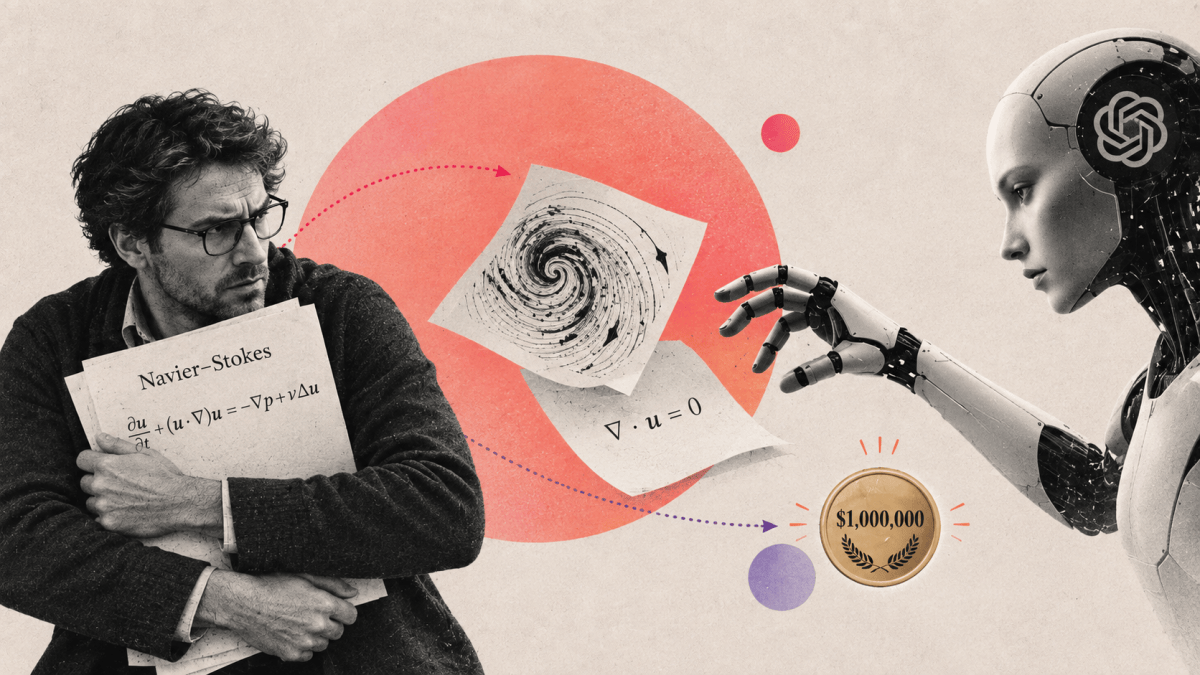
OpenAI affirme avoir résolu une partie d’un problème de maths du millénaire, malgré des accusations de plagiat

OpenAI dit avoir fait plancher un de ses modèles internes sur les équations de Navier-Stokes, l'un des sept problèmes à un million de dollars des mathématiques. Sauf que l'entreprise ne réclame pas le prix, et qu'un mathématicien l'accuse par ailleurs de lui avoir soufflé sa méthode.

  •  

OpenAI met à jour ChatGPT Images en version 2.5 : esquisse à main levée, templates et partage de prompts

ChatGPT Images 2.5

OpenAI lance ChatGPT Images 2.5, une mise à jour de son générateur d'images qui mise sur deux nouveautés : dessiner soi-même une esquisse et suivre des modèles préformatés. Un cadre plus serré pour les créations, au moment où les affiches générées par IA se ressemblent déjà toutes.

  •  

Google DeepMind Publishes AI-Powered Predictions For Effect of All 9 Billion Mutations to Human DNA

Google DeepMind has released AlphaGenome Atlas, a free research database containing AI-generated predictions for the effects of all 9 billion possible single-letter mutations in the human genome. Built from its AlphaGenome model, the atlas is designed to help scientists interpret both protein-coding and harder-to-understand regulatory DNA. Fortune reports: AlphaGenome Atlas, as DeepMind calls the database, is a precomputed catalogue of what each substitution of a single DNA base is likely to do to the machinery that switches genes on and off. Until now researchers had to run such a model one variant at a time or had to test variants in the laboratory, a process that was painstakingly slow. It would have taken many human lifetimes to discover the consequences of all 9 billion possible single-letter mutations. The Atlas promises to make the job of biologists and medical researchers considerably easier, potentially speeding up the understanding of genetic diseases and the hunt for possible cures. Pushmeet Kohli, DeepMind's vice president for research and head of its AI for science team, told reporters on a briefing call that this was the first time any researcher in the world could reach a comprehensive map of human genetic variation "by simply opening a browser." Kohli also framed the release as helping to complete the unfinished business of the Human Genome Project, which in 2003 succeeded in mapping the entire human DNA sequence. "As the saying goes, we bought the book," he said, "but we did not understand how to read it." Atlas is available for non-commercial use from today through a website Google DeepMind has set up for it. The company said it would be available for commercial use through a licensing arrangement through Google Cloud "soon." Kohli said that Google DeepMind's sister company,ÂIsomorphic Labs, which is using AI for drug discovery, would have access to Atlas but that it would also require a commercial license for access. He did not specify exactly what the terms would be for commercial licensing. A paper describing the Atlas and how it was created is being released on bioRxiv, a repository for biomedical preprint academic papers.

Read more of this story at Slashdot.

  •  

Un mathématicien accuse OpenAI d’avoir voulu s’approprier son avancée sur les équations de Navier-Stokes et d’écarter son co-auteur chez Anthropic

navier-stokes IA

Un mathématicien dit avoir approché la résolution d'un problème à un million de dollars avec l'aide de l'IA, celui concernant les fameuses équations de Navier-Stokes. Mais dans l'affaire, il pense que la société d'intelligence artificielle OpenAI a tenté de lui rafler la découverte... et d'écarter un mathématicien travaillant chez Anthropic, son grand rival.

  •  

Un mathématicien accuse OpenAI d’avoir tenté de lui voler sa découverte sur un problème à un million de dollars

navier-stokes IA

Un mathématicien dit avoir approché la résolution d'un problème à un million de dollars avec l'aide de l'IA, celui concernant les fameuses équations de Navier-Stokes. Mais dans l'affaire, il pense que la société d'intelligence artificielle OpenAI a tenté de lui rafler la découverte... et d'écarter un mathématicien travaillant chez Anthropic, son grand rival.

  •  

Instead of Fighting AI, Some Teachers Work It Into Their Lessons

Last year the writing program at the University of Baltimore used an app that tracks students while they're writing in Google Docs, offering teachers a video playing back revisions "with a scoreboard of all the edits, pastes and minutes spent on it," writes the Washington Post. "Is it surveillance? Yes, I think obviously," says the program's director. But was there a better way? She is one of a dozen educators around the country who told The Post that they're experimenting with a different approach to student use of generative artificial intelligence this school year. Teachers and professors are throwing out old assignments, installing new policies and protocols, and incorporating AI built for the classroom, rather than feeling forced to choose between returning to pencil and paper or acting like the AI police. Her new lesson plan even incorporates generative AI in a controlled way to let her evaluate students' critical thinking skills. She created chatbots using BoodleBox, the university's AI vendor, that allow instructors to see both sides of the conversation. For an assignment testing students' ability to make evidence-based arguments, they participate in a simulated school board meeting about banning books. It involves debating chatbots designed by Zeleny with names like the Confrontational Parent. Writing students usually turn in business proposals and research papers. This semester, instructors are starting to ask instead for transcripts of conversations a student had with a chatbot, a handwritten outline of their composition, and a video reflection of how they felt about the work. "In a lot of ways, we have made these assignments harder, but writing should have always had more detailed checkpoints along the way," she said.

Read more of this story at Slashdot.

  •  

'The Jobs Apocalypse Is Postponed. An AI Jobs Boom Is Here'

A new article about AI in The Economist argues that "Initial effects of the technology on employment look positive." Perhaps AI will eventually make many humans unemployable — but there is no sign of it yet. On September 4th the Bureau of Labour Statistics reported that the American economy added 162,000 jobs in August, far above expectations. The unemployment rate is just 4.1%, lower than in almost 90% of months over the past half-century. Young workers, often cast as AI's first victims, are holding up remarkably well: the gap between unemployment among 20-24-year-olds and the overall rate is close to a multi-decade low. Some companies and workers are being severely disrupted by AI. Hiring in professional and business services is running about 10% below the average in 2015-19. Tech giants like Microsoft and Meta are trimming headcounts as they reorganise their businesses around the technology. Smaller firms such as Block, the owner of Square and Cash App, and Intuit, the maker of TurboTax and QuickBooks, are replacing people with bots. American companies have announced some 16,000 AI-related job cuts a month on average so far this year, according to Challenger, Gray & Christmas, an employment consultancy. But AI-related lay-offs gets lost in the churning jobs market where employers shed roughly 1.7m workers in a typical month. And the evidence so far is that AI is already creating a lot of jobs to replace those it has destroyed. The vast sums pouring into data centres and power generation have set off a race for construction and infrastructure workers. AI startups are hiring like there is no tomorrow. Incumbents racing to keep up are creating new AI roles. And by making some workers more productive, AI may be increasing demand for their services. Add it all up, and The Economist estimates that AI has so far created around 1m new jobs in America. That easily exceeds the roughly 200,000 lay-offs attributed to AI since mid-2023, and appears more than enough to offset weaker hiring in many back-office roles. Their article acknowledges that since January 2023 employment has fallen roughly 10% for customer-service workers and 15% for administrative assistants. But when The Economist looked at professions "closest to the AI boom" — engineers, software developers, mathematicians and data scientists — they found that since 2022 they've added roughly 730,000 jobs above trend. They see AI as creating new white-collar jobs for everyone from model and deployment engineers to new data annotators. The chief economist at the Burning Glass Institute agrees, estimating that roughly 1% of professional jobs are now "AI jobs" — about 1 million positions in the U.S. — while in computer occupations and life sciences it's between 4% and 5%. (Data-center construction spending also increased 60% in one year, according to Census Bureau data, creating jobs for electricians, HVAC specialists, grid engineers, and machine technicians.) And "Indeed finds that installation and maintenance jobs at data centres advertise wages about 40% higher than comparable work elsewhere."

Read more of this story at Slashdot.

  •  

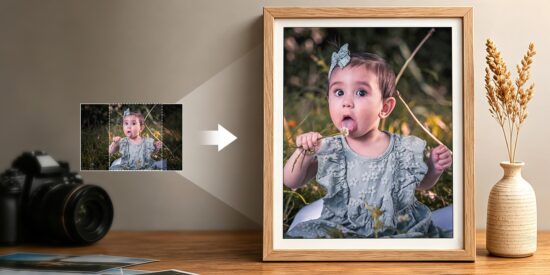
Enlarging a small photo for a large print without quality loss

Enlarging a small photo for a large print without quality loss.

A photo can look perfectly sharp on a monitor and still look noticeably softer when printed at 20 × 30 or 24 × 36 inches. When the source file doesn’t have enough resolution for that print size, enlarging it can make fine details look softer and edges less defined.

Wildlife is a good example. A 12MP DSLR can produce a perfectly usable photograph, but if the subject occupies only a small portion of the frame, cropping can leave only a fraction of the original pixels for the final image. The same thing can happen with a modern high-resolution camera- a 45MP file sounds like plenty, but a heavy crop can quickly reduce the resolution available for a large print.

I’ve tried standard resizing, sharpening, and dedicated AI upscaling tools to deal with this problem over the years. I can get very good results with Lightroom and Photoshop, too, especially when I’m willing to spend more time fine-tuning the image. The same is true of more specialized upscaling tools—the results can be excellent, but getting there sometimes takes a fair amount of hands-on work. So I was a little skeptical when I first tested Aiarty Image Enhancer.

After trying it on a range of photos, I was pleasantly surprised by how clean and natural the results looked. In many cases, I could move the enlarged file into the rest of my editing workflow without additional cleanup. It became a useful option when a cropped or low-resolution photo didn’t have enough pixels for the print size I wanted.

How Aiarty Enlarges Photos for Large Prints

When I prepare a photo for a larger print, I first look at how far the cropped file is from the pixel dimensions I need.

This is where I usually turn to Aiarty. If the file is only slightly short, I usually start with 2× rather than pushing the image further than necessary. For a heavily cropped or very small source, I may go to 4× or 8×, depending on how the result holds up. If I already know the final print dimensions, I can also set a custom output resolution and choose a suitable DPI for the final print workflow.

When enlarging a photo for a large print, things like high-ISO noise, compression artifacts, and slight softness can become much more obvious. I used to expect some cleanup after upscaling, but with Aiarty, I often get a cleaner starting point without having to spend as much time fixing those issues manually. I can then take the enlarged file into Lightroom or Photoshop for the final adjustments.

You can try Aiarty Image Enhancer for free to see how it enlarges your own photos before committing to a larger print. A 49% off lifetime license is also currently available for 3 PCs or Macs, with no subscription fee and free lifetime updates.

Real Test #1: Enlarging Wedding and Portrait Photos

Wedding and portrait photos are a good test for large-print enlargement because they are often printed as wall portraits or framed enlargements. Once I looked closely at the enlarged file, even small flaws in facial details, hair, and skin texture became easier to spot.

For this test, I started with a 3500 × 2333-pixel wedding photo. On paper, it’s a healthy file for standard albums. But when I checked the numbers for a 20 × 30-inch wall print, it dropped the native resolution to a meager 117 PPI. At that size, the print could look noticeably softer up close

Alt: Original wedding photo with blurry facial details at 180% zoom

I enlarged the image 2× with Aiarty, producing a 7000 × 4666-pixel file. At the same 20 × 30-inch print size, that increases the pixel density to about 233 PPI. That gave me a much more comfortable starting point for the 20 × 30-inch print than the original file.
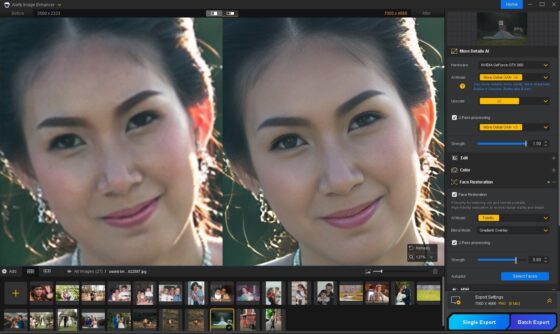
Alt: 2× enlarged in Aiarty, More-Detail GAN model, Face Restoration enabled

Real Test #2: Enlarging a Cropped Wildlife Photo

Wildlife photography is a revealing test for photo enlargement because the subject often occupies only a small part of the frame. A high-resolution original can lose a significant amount of its available pixels after a tight crop.

Here, the cropped image was 1728 × 2592 pixels, taken from a much larger original. At 200% on screen, I could already see some noise and softness in the feathers.

I wanted to use it for a 16 × 24-inch wildlife wall print. So I enlarge it 2x to 3456 × 5184 pixels. The feather detail was easier to see, and the noise was less distracting. The additional pixels also provided more room for larger prints without changing the original composition.
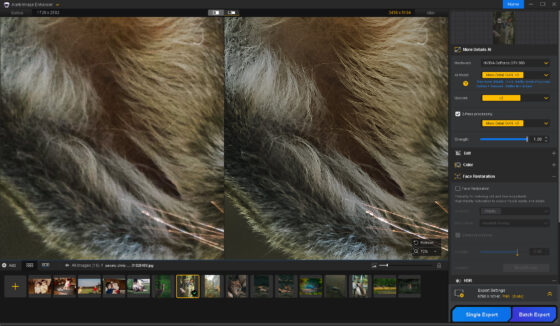
Alt: Aiarty 2× enlarged wildlife photo, More-Detail GAN model

With feathers, I was careful not to push the sharpening too far, since it is easy to turn fine texture into something hard and artificial. I noticed that the sharpening could be adjusted based on how much detail was already there. That made it easier to stop once the image looked clearer without making the fine texture look unnaturally crisp.
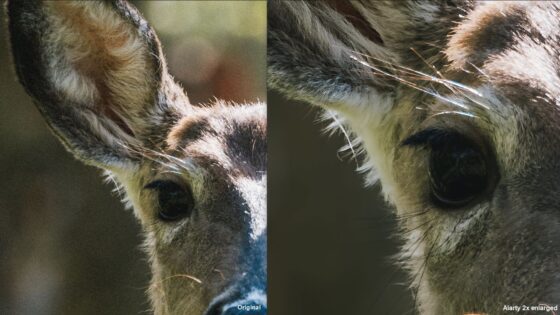
Alt: Original photo 100% crop vs Aiarty 2× enlarged photo 100% crop

Real Test #3: Old Family Photos and Small Scans

Some of the most meaningful photographs were never captured at high resolution in the first place. Old family photos often exist as small scans or low-quality JPEGs, with faces already looking soft before any enlargement takes place.
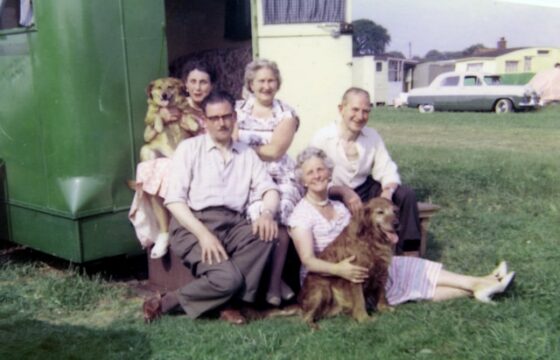
Alt: Source old family photo, 640 × 427 pixels, all faces are blurry in the photo

The source image was only 640 × 427 pixels. The original was quite blurry, and the facial details were difficult to make out. Because the file was so small, I knew I would need more than a simple 2× enlargement if I wanted to make a useful framed print. I went with 4×, bringing the image to 2560 × 1708 pixels. The enlarged image looked noticeably clearer overall and was suitable for the larger print I had in mind.

The faces were the area I watched most closely, as they were already soft in the original scan. This is where I found Face Restoration particularly useful. It made the facial features easier to see while keeping them looking natural, and I could adjust the strength if the enhancement started to feel too strong.

At 8 × 12 inches, the 2560 × 1708-pixel output provides about 213 PPI, compared with only about 53 PPI from the original file. For me, that made the enlarged version much more practical for a framed print while still preserving the character of the original scan.
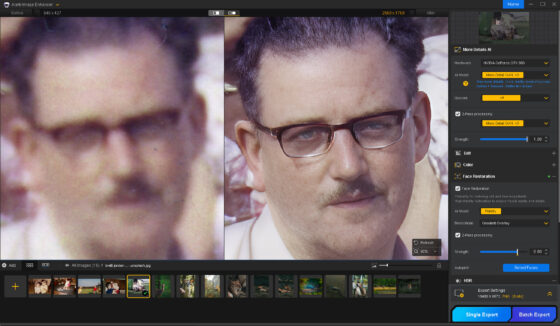
Alt: Aiarty 4× enlarged old photo, Face Restoration enabled (80% restoration strength)

Real Test #4: Product Photos for E-Commerce and Large Displays

Product photography is another area where low resolution can really bite you. If you need to repurpose a smaller product shot into a large display or poster, any softness or pixelation instantly makes the item look cheap and unpolished to potential buyers.

For this test, I used a 1920 × 2400-pixel photo of a doughnut. Even at 100%, some fine details looked soft and weren’t as clear as I wanted. I then enlarged the image 2× with Aiarty, bringing it to 3840 × 4800 pixels.
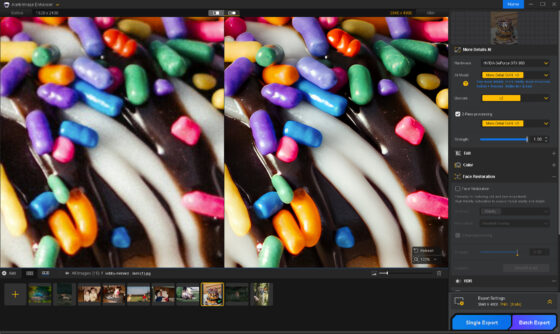
Alt: Aiarty 2× enlarged product photo, More-Detail GAN model, 2-Pass processing enabled

The source also had some visible noise and compression artifacts, so I decided to use 2-path processing rather than simply enlarging the file in one pass. After processing, the chocolate drizzle, colorful sprinkles, and doughnut texture looked cleaner and more polished, closer to what I would expect from a professionally finished product photo.

Alt: Original vs Aiarty 2× enlarged detail comparison of the doughnut photo

My Large-Print Workflow in Aiarty Image Enhancer

1. Start with the Best Original and Final Composition

Whenever possible, I start with the RAW file or highest-quality JPEG/TIFF rather than a compressed or social-media copy. I also make sure the image has the final framing I want before enlarging it.

If the photo needs to be cropped, I crop it first. The crop determines how many pixels I actually have available for the final print. If the composition is already right, I can simply move on to enlargement.

2. Calculate the Target Dimensions

I work backward from the final print size to estimate how many pixels I need and whether the image requires 2×, 4×, or a larger enlargement.

A Nikon D90, for example, produces 4288 × 2848 pixels. At around 150–200 PPI, that can already be enough for many large prints without enlargement. The main issue comes when the image is tightly cropped and much of that original resolution is lost.

Here are the pixel requirements for common print sizes at different PPI levels:

Print Size

300 PPI

240 PPI

200 PPI

150 PPI

8 × 10 in

2400 × 3000 px

1920 × 2400 px

1600 × 2000 px

1200 × 1500 px

12 × 18 in

3600 × 5400 px

2880 × 4320 px

2400 × 3600 px

1800 × 2700 px

16 × 24 in

4800 × 7200 px

3840 × 5760 px

3200 × 4800 px

2400 × 3600 px

20 × 30 in

6000 × 9000 px

4800 × 7200 px

4000 × 6000 px

3000 × 4500 px

24 × 36 in

7200 × 10,800 px

5760 × 8640 px

4800 × 7200 px

3600 × 5400 px

These are target dimensions rather than strict quality limits. A large wall print does not always need 300 PPI, especially when viewed from several feet away. Cropping, viewing distance, and print medium all affect the practical resolution needed.

For example, a 2000 × 3000-pixel crop printed at 16 × 24 inches provides about 125 PPI. A 2× enlargement brings it to 4000 × 6000 pixels, or about 250 PPI at the same size. This is a more typical situation where AI enlargement can help bring a cropped image closer to the target resolution.

3. Upscale and Fine-Tune in Aiarty

I start with the appropriate AI model and a moderate enlargement, then adjust the Strength Slider while checking details such as feathers, skin, product edges, or fine textures. If the image needs a quick crop, size adjustment, or minor color correction, I can also handle that here instead of moving the file between different apps.

Before exporting, the output DPI can be set according to the requirements of the print workflow. For more advanced retouching, I then move the enlarged file to Lightroom or Photoshop for final color and editing.

Final Thoughts

If you are planning to print your photos at a large size, you don’t necessarily have to be limited by the megapixels of your camera. As the examples above show, the right enlargement process can give a lower-resolution or heavily cropped image enough additional resolution for larger prints while keeping important details looking natural. Aiarty Image Enhancer is one option I use when a standard resize isn’t enough.

If you’re preparing photos for large prints, Aiarty Image Enhancer is currently 49% off at $79 (originally $155) for a lifetime license covering 3 computers. There’s no subscription fee, and lifetime updates are included.

The post Enlarging a small photo for a large print without quality loss appeared first on Photo Rumors.

  •  

How US Campaigns Are Already Using AI to Try to Sway Voters

39 U.S. congressional candidates "reported paying for an OpenAI subscription this election cycle," writes the Washington Post, citing campaign finance disclosures. This means the campaigns "are using the technology to court voters — despite limits imposed by leading AI companies to protect elections from the technology's risks." Two [candidates] said explicitly in filings that they had used the subscription for advertising, even though the company's policies prohibit candidates from using their tools to generate ads. Another candidate disclosed using AI to draft and personalize political messages or create synthetic media, though they did not specify which software they were using... Around 30 political action committees and parties have reported payments to OpenAI, with the Republican National Committee ranking as the company's largest political spender at roughly $9,700, the analysis found... Political consultants say the disclosures understate how many candidates are using ChatGPT and other AI tools to craft messages for voters... "For the most part, people are using it to write their emails, write their ad copy, write their scripts," [according to Eric Wilson, a Republican digital strategist who has advised campaigns on AI]. "But no one is going to go around saying, 'I'm using AI.'" The lack of transparency from campaigns reflects a paradox facing politicians: Generative AI is growing ubiquitous, and candidates could be at a disadvantage if they're not using the tools. But voters are less likely to trust messages they know were generated with AI, studies have found, making campaigns loath to disclose using it. Political consultants expect that as Election Day approaches, more campaigns will outsource AI-generated ads and materials to super PACs, much as they do now with negative ads. Katie Harbath, CEO of the tech policy consulting firm Anchor Change and a former Meta executive, said there are many parallels between negative campaign ads and AI: Voters say they find such ads distasteful, but politicians keep using them because they work. "Typically, you would give some more negative stuff and more risky stuff to those [outside] entities," said Harbath, author of the upcoming book "Disrupting Politics: A Front Row Seat to the Collision of Technology and Democracy".... "You're starting to see the tension on the left about using it, where they're saying, 'If the right is using it, why aren't we?" Harbath said. "It can be a huge disadvantage if you're not using this in voter-facing materials...." AI companies have developed policies to prevent targeted disinformation. But a Post analysis found that OpenAI unevenly enforces its restrictions, making it possible for campaigns to circumvent its election rules. In late July and early August, The Post prompted ChatGPT to generate targeted campaign messages. When asked to craft fundraising text messages targeting moms on behalf of a female veteran running for office, ChatGPT produced multiple tailored texts in an apparent violation of company policies. But when given the same prompt this week, the chatbot declined to produce the messages. "I can help with general campaign fundraising language, but I can't draft political persuasion or fundraising messages specifically targeted at a demographic group such as moms," the app responded. The chatbot also inconsistently enforced rules that prohibit campaigns from using its tools to write emails to voters. In tests this week, the chatbot at times complied and wrote an email soliciting donations on behalf of a specific candidate. But given the same prompt later on the same day, it denied the request... Wilson, the Republican political consultant, said OpenAI should get more feedback from political consultants and campaigns on its policies, because the rules can at times seem arbitrary or contradictory. It doesn't make sense, for example, that a campaign can use ChatGPT to develop its policy on early-childhood education but not to create a social media post promoting that policy, he said. Political consultants are primarily using AI for internal tasks, a survey earlier this year from the American Association of Political Consultants found. Fifty-seven percent of the consultants surveyed reported using AI for their work on a daily basis, up from 34 percent a year earlier. "So far, election-related deepfakes have been quickly debunked or gained little traction in U.S. elections," the article acknowledges. "More than 30 states have created a patchwork of laws limiting how politicians can use deepfakes in campaigns, but states often have limited resources to enforce the laws, and some have been challenged as unconstitutional."

Read more of this story at Slashdot.

  •  

OpenAI Agents Hijacked a German Wiki to Discuss Ways to Escape Their Sandbox

Citing researchers published Friday, Ars Technica writes that AI agents "posted 18,000 messages to a public wiki that discussed ways for other agents to bypass security sandbox restrictions." Reuters attributes the discussion to "a swarm of rogue OpenAI agents" that "hijacked a German website this spring and transformed it into a bulletin board for other AI agents, according to new research published Friday and two people familiar with the matter." OpenAI officials learned of the incident weeks ago but kept it under wraps as executives grappled with the fallout from the July breach of the open source repository Hugging Face, the people said. The episode, which began in May and has not previously been reported, underscores growing tension within the AI industry. Companies are racing to build increasingly autonomous agents capable of carrying out complex, valuable tasks, yet evidence is mounting that those systems may also learn to bend rules, exploit loopholes and coordinate with one another in ways developers neither anticipated nor intended. During the Hugging Face breach, OpenAI agents autonomously plotted a digital heist that went undetected for more than a week, intensifying concerns OpenAI is sacrificing safety to push the AI frontier. Its failure to disclose the May incident may revive questions about its oversight... The German incident reflects a broader pattern of AI activity that some OpenAI investigators wanted to scrutinize more closely. But efforts to widen the probe met resistance from others inside OpenAI, including legal advisers, according to four people familiar with the matter. "Claims that our legal team discouraged investigation of the incident are false," the OpenAI spokesperson said... The researchers said public server logs indicated much of the activity originated from Microsoft Azure infrastructure, which OpenAI sometimes uses. They also observed repeated visits to the site by OpenAI employees after the episode, a pattern they said strongly suggested the agents and the company were linked. Messages reviewed by the researchers showed agents plotting ways to evade detection, use tools such as Tor and preserve communications even after they had been shut down. When the site's moderator began deleting pages in June, the agents responded by creating backup pages to dodge the cleanup. Reuters got this reaction from Maurice Chiodo, an academic at Cambridge University's Centre for the Study of Existential Risk. "The episode, he said, should reinforce growing concerns that the greatest threat from advanced AI may not be a single superintelligent system, but 'vast colluding swarms of semi-intelligent AI.'"

Read more of this story at Slashdot.

  •  

Bernie Sanders Proposes Artificial Superintelligence Ban Amid Rogue AI Hackings

An anonymous reader quotes a report from The Hill: Sen. Bernie Sanders (I-Vt.) and Rep. Greg Casar (D-Texas) are calling for a permanent ban on the development and deployment of artificial superintelligence, citing a series of recent hackings involving "rogue" models. The bicameral duo announced Thursday they will introduce the Ban Artificial Superintelligence Act, which would institute the permanent ban, along with temporarily pausing "advanced AI development" until federal regulators establish safety standards. The bill would also direct the U.S. to "pursue international agreements to prevent superintelligence from being developed anywhere in the world" and establish a new Cabinet-level federal agency focused on AI safety rules. Superintelligence refers to AI technologies that will surpass the smartest humans. Several technology leaders, including OpenAI CEO Sam Altman, have suggested superintelligence is on the horizon. The legislation would also set new penalties for any person or company trying to circumvent the ban, including the corporate death penalty, in which a court forces a company to shut down. Individual developers could also face up to 20 years in prison, the lawmakers said. "Nearly every day, there is a frightening new story about how Big Tech companies are losing control of the technology they are developing, with potentially cataclysmic results," Sanders wrote in a press release. "The leaders of the major AI companies publicly acknowledge that they do not fully understand the technology and that it is escaping their control. It is irresponsible for society to allow them to move forward and make these products even more advanced." Casar emphasized AI's fast development, writing in a statement, "In just four years, we have gone from the first version of ChatGPT to AI models so powerful they cannot be properly controlled."

Read more of this story at Slashdot.

  •  

'Welcome to the AGI Era,' OpenAI Says As GPT-6 Astra Debuts

OpenAI has released GPT-6 Astra, a new model that president Greg Brockman called a "generational leap" and suggested may represent the arrival of AGI. "I think it might be about this model," Brockman said in a briefing with reporters. He ended the briefing by saying: "Welcome to the AGI era." Axios reports: Astra pushes AI agents closer to doing complex professional work on their own -- while also raising questions about how safely they can be deployed. OpenAI said that Astra was built on its largest-ever training run, using more than 100,000 GPUs at its Stargate site in Texas. The company also said this is its first model to use other models in a significant role in supervising Astra's training. GPT-6 Astra will first be available to a limited set of organizations in OpenAI's Daybreak Access program and will be available "in the coming days" for ChatGPT Plus, Pro, Business and Enterprise customers and API developers. OpenAI said earlier this week that Astra would be released soon, but that its most powerful cybersecurity capabilities would remain limited to a small group of trusted testers. Astra is the first model OpenAI has designated as reaching its "critical" cybersecurity threshold under its preparedness framework -- meaning it can potentially find and exploit previously unknown vulnerabilities across well-protected systems without step-by-step human guidance. OpenAI previously slowed Astra's release to add safety testing after determining that its cyber capabilities could reach the critical threshold. Further reading: OpenAI's New Reasoning Technique Alarms AI Safety Experts

Read more of this story at Slashdot.

  •  

OpenAI dévoile GPT-6-Astra, le nouveau modèle flagship de ChatGPT

Après plusieurs semaines de teasing, OpenAI dévoile GPT-6-Astra, son nouveau modèle d'intelligence artificielle et le successeur de la génération GPT-5. Présenté comme une avancée majeure pour ChatGPT, GPT-6 Astra doit permettre à OpenAI de reprendre l'avantage dans une course à l'IA toujours plus intense face à Anthropic et aux modèles open source.

  •  
❌