❌

Vue lecture

Microsoft Helps Take Down Massive Automated, AI-Powered Phishing-as-a-Service Platform

Microsoft's security blog describes the fight against a new "AI-powered cybercrime platform" offering phishing-as-a-service, with AI-tailored lures and analyses of compromised inboxes (to identify high-value targets). The site compromised more than 12,000 inboxes in over 10,000 organizations around the world, compromising business accounts "at scale" with automated attacks and prebuilt phishing templates. AI tools could even sift through a victim's mailbox to help engineer better phishing messages. To disrupt EvilTokens Microsoft worked with other organizations, including Cloudflare, Coinbase, OpenAI, Railway, SpyCloud, Shadowserver Foundation, and TRM Labs to Health-ISAC (a non-profit helping health sector organizations share cyber threat information). "Fifty sites seized and 150 domains disabled in a single action is only possible when the hosting providers, the exchanges, the model providers and the data holders all move at the same time," security company SpyCloud told The Hacker News. From Microsoft's security blog: Microsoft also notified affected customers, helped remediate compromised accounts, and shared intelligence to support further defensive and investigative action... Microsoft worked closely with specialist officers from the Metropolitan Police Service's cybercrime team, sharing intelligence that enabled officers to take operational action in the United Kingdom. On September 11, 2026, officers arrested two men, aged 32 and 38, and seized digital devices and other items for examination... While EvilTokens used AI to identify targets and prioritize fraud opportunities, Microsoft investigators used reverse engineering and AI-powered tools to analyze evidence, accelerate the investigation, and identify the infrastructure supporting the service... Campaigns leveraging EvilTokens have impacted organizations in various industries, including wholesale distribution, construction, financial services, real estate, higher education, and healthcare, with the highest concentrations of observed victim activity in the United States, Canada, the United Kingdom, Australia, India, and France. Working with partners, Microsoft's Digital Crimes Unit (DCU) facilitated a coordinated disruption of infrastructure used to operate the EvilTokens service. Sometimes stolen tokens were used to give new devices access to a victim's inbox. (A code authenticating the new device was sent to the targeted user, who unknowingly authorize the threat actor's session and grants access to their account...) But "AI was not simply helping attackers write more convincing messages," says another Microsoft blog post. "It helped them decide who to target, who to impersonate, and how to most effectively exploit the relationship to extract as much money as possible." The significance of EvilTokens extends beyond its rapid growth and global reach. It offers an early warning of what happens when cybercriminals combine stolen access with AI capable of understanding how an organization works... Its AI tools could summarize and translate emails, surface financial conversations, map organizational roles, identify trusted relationships, and recommend potential targets. Preset prompts offered to find wire-transfer discussions, identify the organization's "money movers," locate vendor invoices, and determine the best people to impersonate. Sold through Telegram for a $1,500 initiation fee and a recurring $500 subscription, EvilTokens combined account compromise, mailbox analysis, target selection, and fraud preparation in a single service. Capabilities that once required experience across identity attacks, cloud systems, social engineering, and financial fraud were available through a ready-made interface. Investigators found evidence that large portions of EvilTokens had been "vibe coded," with AI helping its creators build the platform itself. They also determined that EvilTokens drew on capabilities from multiple AI models. The result was more than a collection of attack tools. EvilTokens packaged much of the fraud process into a commercially run service, complete with subscription pricing, customer support, management dashboards, and tools designed to move customers from account access toward financial exploitation.

Read more of this story at Slashdot.

  •  

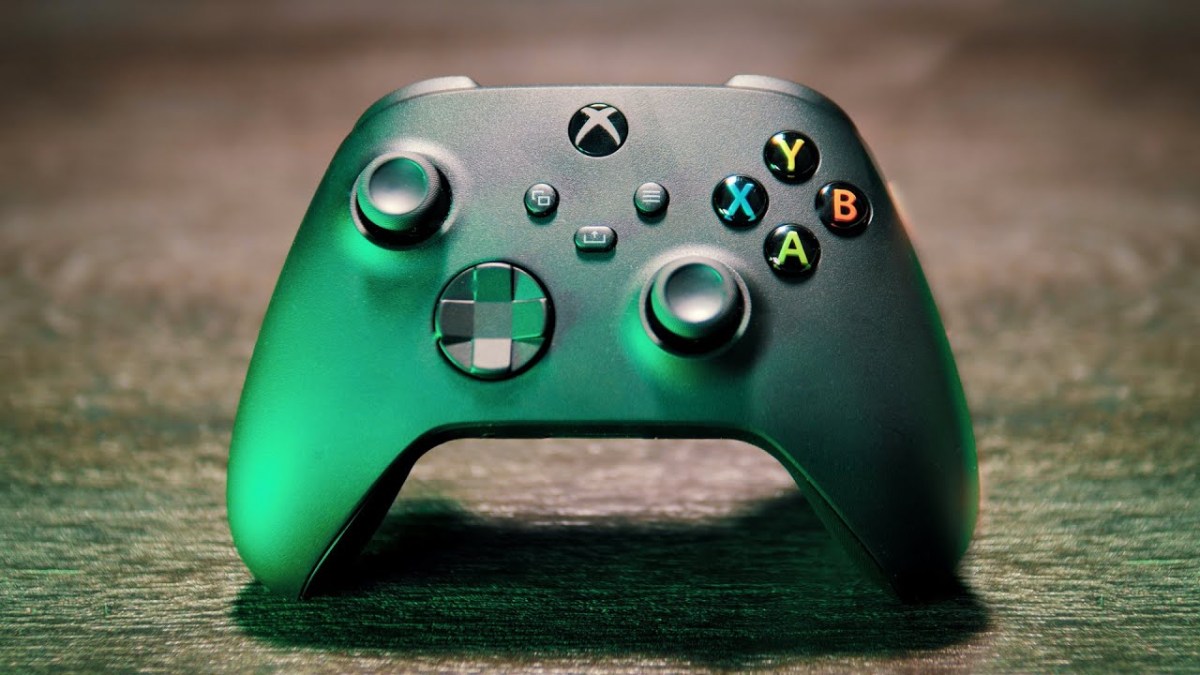
L’excellente manette sans fil Xbox Series, pour jouer sur Xbox et PC, est à – 35 %

[Deal du jour] Jouer avec une bonne manette, c’est quand même mieux que de jouer avec une mauvaise. Une évidence qu’il est toujours bon de rappeler, surtout quand le modèle Xbox Series est en ce moment bradé sur Amazon. De quoi jouer dans les meilleures conditions, aussi bien sur console de salon que sur PC.

  •  

Rust is Now a 'Tier One' Language at Microsoft

The Register reports: When Microsoft's developers and engineers sit down to code, they can now choose to work in Rust, which Redmond has added to its list of canonical languages. "Rust now is a Tier One language at Microsoft, and that just means that it sits among C++, C# and TypeScript as the best supported languages for internal development in the company," explained Victor Ciura, Microsoft principal engineer for the Rust tooling team, during a keynote talk today at this year's annual RustConf, being held this week in Montréal. Ciura said Microsoft has "paved a path" of tools and processes that support local Rust development across the entire software development lifecycle. Rust is no stranger at Microsoft and is already present in over 100 Microsoft project repositories. The company has built Oxidizer, a set of crates to build scalable services in Rust, which have been used to build and refine the Microsoft 365 core services such as Outlook, Word, Excel, OneDrive, and SharePoint. The Copilot tech stack also owes quite a bit to Rust... [C]ompany engineers built rustc_codegen_utc, a custom Rust compiler code-generation backend that wires the rustc compiler directly into the Microsoft Visual C++ internal toolchain for Windows... "The result is a unified code generation platform for Rust and C++ on Windows" [Ciura wrote in a blog post, noting that more than 100 Microsoft project repositories now build with rustc_codegen_utc.] Still, Redmond running towards Rust is a welcome development. In his 2025 RustConf keynote, Microsoft Azure CTO Mark Russinovich noted that ~70 percent of Windows CVEs are memory issues. "One of the things that I realized a long time ago is that no matter how much we really want to make C and C++ better, we can't make it as good as what Rust starts with," he said.

Read more of this story at Slashdot.

  •  

Microsoft et Nvidia en concert RTX Spark le 7 octobre prochain

Un concert qui se déroulera à San Francisco pour chanter sur l’air des Surface et de Windows mais également le bon moment pour mettre en avant les RTX Spark de Nvidia. Entre deux tours de chant, les stars microsoftiennes laisseront donc Jensen Huang, PDG de Nvidia, entonner un petit tour de chant.

Microsoft Surface Laptop Ultra sous RTX Spark

Microsoft Surface Laptop Ultra sous RTX Spark

Microsoft sait se faire attendre entre chaque tournée et ses grands concerts ne sont pas aussi réguliers que ceux d’autres groupes. Si Microsoft remonte sur scène, c’est probablement pour lancer leur nouveau chouchou, le RTX Spark. Le PDG de Microsoft, Satya Nadella sera donc de la partie pour un duo avec Pavan Davuluri responsable de la gamme Surface. Jensen Huang afin de présenter leur nouvel album sous ARM en dévoilant tous les charmes de leur alliance. Après les années Qualcomm et les tournées Snapdragon, c’est au tour du RTX Spark de capter l’attention. Mediatek fera peut-être les chœurs, mais rien n’a été annoncé.

C’est la gamme Surface qui sera mise en avant. Microsoft ayant décidé de pousser la puce de Nvidia dans ses propres productions. Laissant en retrait les autres acteurs du secteur : AMD, Intel et Qualcomm semblent aux abonnés absents de cette tournée.

La puce RTX Spark sera t-elle la star de cette fin d’année ?

Microsoft devrait donc mettre en valeur le duo Windows / RTX Spark avec évidemment les classiques de son répertoire comme le jeu triple A et les usages productifs, mais aussi toutes les nouveautés autour de l’IA. Parmi les annonces les plus attendues du public, on pense évidemment au Microsoft Surface Laptop Ultra dont ni la date de début de tournée internationale ni le ticket d’entrée n’ont fuité pour le moment. 

De manière plus générale, l’annonce indique également des nouveautés apportées au catalogue de Windows. Microsoft devant faire face aux sorties dans les bacs des autres maisons de disque que sont Apple et Google. On peut s’attendre à une réponse aux agents de plus en plus intégrés de ces deux mastodontes. Siri chante pour Apple, Gemini pour Google, il semble donc temps que Copilot fasse une apparition moins timide dans Windows. CoPilot sera donc certainement sous les projecteurs ce soir-là. La star RTX spark apportant son souffle très spécialisé pour qu’il puisse enfin entamer un tour de chant puissant.

Attendez-vous donc à entendre la mélodie de Copilot passer en boucle pendant tout l’automne.

RTX Spark Superchip : la vision de Nvidia au défi Windows 11

Microsoft et Nvidia en concert RTX Spark le 7 octobre prochain © MiniMachines.net. 2026

  •  

Union Contract with Microsoft Ratified by 1,900 Blizzard Developers and Workers

Nearly 1900 Blizzard Entertainment workers "voted to ratify their first union contract with parent company Microsoft after over two years of bargaining," reports Kotaku, "consolidating Blizzard's many smaller unions into three larger bargaining units." The workers now gain new protections "on issues such as generative AI, crediting, remote work, and layoffs." [The contract] acknowledges that AI tools "may be useful in the game development process to support human judgment and creativity and that AI-assisted workflows remain subject to appropriate human control and review for accuracy and quality." But it also stipulates that any implementation of AI technology that would materially impact work performed by union employees must have its impacts bargained over before it can be implemented. Other sections cover issues such as crediting (guaranteeing that current and former employees are credited by name in all games they work on) and remote work (designating certain roles as hybrid in-office and providing procedures for individuals to apply for their roles to be fully remote). It also contains a lengthy section on how layoffs may be conducted, including a required 60-day notice period (or pay in lieu of notice), a guarantee of one week of severance for every six months of employment, and 14 months of recall rights. The contract also guarantees successorship, meaning if Blizzard is ever acquired by another company, the contract would remain intact. "Workers also contractually locked in their current hybrid work schedule," reports the gaming news site Aftermath, "meaning that Blizzard can't suddenly change it, as has been a labor-unfriendly trend in the games industry over the past couple years." Fully remote workers scored a big win as well. "I'm remote, and we grandfathered everyone who is remote to stay remote, so we can't be magically called to an office that we've never worked at before," [said Diablo senior environment artist Mahreen Fatima]. And "The contract also elevated pay floor," reports the Yakima Herald-Republic. "Across the board, workers secured a 1.25% pay increase, but some workers who were paid below $50,000 per year will walk away with pay increases that are as much as 34%."

Read more of this story at Slashdot.

  •  

Xbox Cloud Gaming Switches to Monthly Hour Limits

Microsoft is imposing monthly limits on Xbox Cloud Gaming starting in November, with Game Pass Ultimate, Premium, and Essential subscribers getting 15, 10, and 5 hours respectively before they have to buy additional playtime. "Currently, Game Pass subscribers can stream without these monthly hour limits," notes IGN. From the report: The change means those who use cloud gaming most via Game Pass will end up having to pay more, although Microsoft said this impacts 4% of Game Pass subscribers. Also in November, Microsoft said players will be able to buy cloud playtime hours through the Xbox Store and 'stream eligible games they own on supported devices' without subscribing to Game Pass. In a blog post, Microsoft said it was making the changes because the cost of providing cloud gaming has grown as more people use it and play for longer. The monthly limits, Microsoft continued, will mean it can invest in reliability and performance. But it said it understood that for some players the practical result is a higher cost.

Read more of this story at Slashdot.

  •  

« On dispose d’une fenêtre limitée » : les géants de l’IA distillent leurs conseils cyber sur une menace qu’ils connaissent bien

Plus d'une centaine d'entreprises tech, dont les principaux laboratoires d'IA, viennent de publier une lettre ouverte appelant à une mobilisation mondiale contre les cyberattaques assistées par IA. Une démarche qui tient autant de l'alerte que de l'auto-diagnostic.

  •  

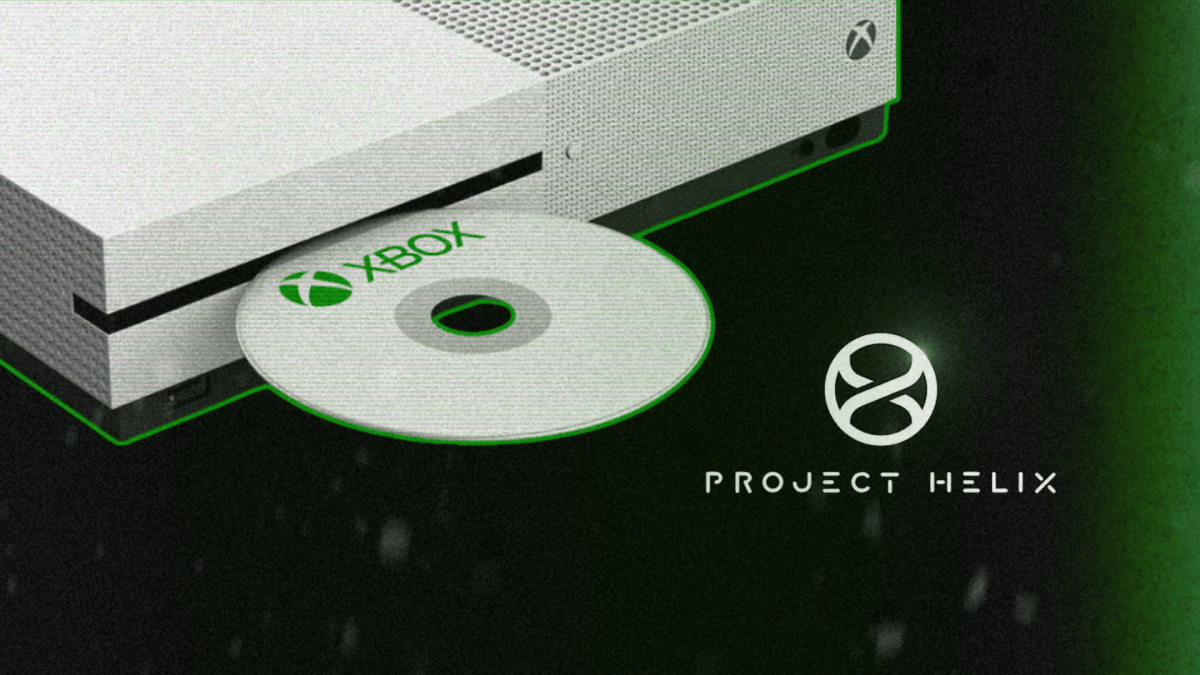
Xbox's New Disc-to-Digital Program Gives Physical Games a Digital Future

An anonymous reader quotes a report from Ars Technica: For decades, console owners have faced a choice between the convenience of digital downloads and the permanence of physical game discs. Soon, Xbox owners will be able to get the best of both worlds for thousands of supported titles as part of a newly announced disc-to-digital program. The program -- announced today ahead of testing for Xbox Insiders starting August 31 -- will let players claim a "digital entitlement" for "most Xbox One and Xbox Series X disc-based games" simply by inserting the disc into a console and launching it. That game will then be playable completely digitally, without the need to ever insert the disc, as long as you (or a member of your family account) is logged in. The digital entitlement will also allow access to features like Xbox Play Anywhere (for play on PC) and Xbox Cloud Gaming, for supported titles. Microsoft says that your physical disc will "continue to work exactly as it always has" after the digital entitlement is claimed. But before you get any ideas, the fine print on the announcement mentions that there is only "one revokable license per game disc," so if you resell that disc or loan it to a friend, that digital entitlement could be transferred to a new account when someone else puts it into their console. A leaked memo obtained by the Verge earlier this month suggests that publishers have to actively opt in to allow their game discs to activate digital entitlements, which could explain why "most" but not all Xbox One and Series X titles are supported. Windows Central separately suggests, based on discussion with unnamed sources, that "some discs may be incompatible due to how they were manufactured at the time," which could explain why original Xbox and Xbox 360 discs are not being discussed for the program. "While not every title will be available at launch, this is an important step toward a future where players can have greater confidence that the games they buy remain with them for years to come," said Xbox Vice President Jason Ronald.

Read more of this story at Slashdot.

  •  

Microsoft Blames Windows Gaming Issues On RGB Lighting Devices

BleepingComputer reports: Microsoft says ongoing issues causing games to crash or fail to launch after installing the August 2026 Windows updates may be caused by peripherals with RGB lighting. As Microsoft explained when it confirmed it's investigating on Wednesday, this known issue affects games like ARC Raiders, MARVEL Tokon: Fighting Souls, and The Finals on systems running Windows 11 24H2 and 25H2... "[Peripherals or internal device components with RGB lighting features] may install drivers or code components with file names similar to inpoutx64. In systems where these drivers are found, the issue is then triggered by launching certain games," it noted. Thanks to Slashdot reader joshuark for sharing the article.

Read more of this story at Slashdot.

  •  
❌