❌

Vue lecture

Microsoft Makes Linux Containers Native On Windows 11

BrianFagioli shares a report from NERDS.xyz: Microsoft has made WSL Containers generally available, giving Windows 11 developers a built-in way to build, run, and deploy Linux containers through Windows Subsystem for Linux. The release includes wslc.exe for managing containers, GPU support, networking improvements, health checks, storage mounts, and integration with Microsoft Defender for Endpoint and Intune. Microsoft also claims up to twice the performance when Linux environments access files stored on Windows. Docker Desktop, Podman Desktop, and Rancher Desktop are not going anywhere, but developers who only need basic container functionality now have another option built around WSL. One notable feature is still missing: Compose support. Microsoft says adding it is now a priority.

Read more of this story at Slashdot.

  •  

After 40 Years, Microsoft Excel Will Add Single-Cell Lists and Arrays

Microsoft's senior product manager for Excel acknowledges that "Throughout Excel's 40-year history, you've only been able to put one value per cell." But that's now changing with arrays in cells (as well as nested arrays) and lists. "You can create a list by selecting Insert > List or pressing Ctrl+J, then typing or pasting items separated by commas or semicolons, depending on your regional settings. Selecting the icon in the cell shows the individual values..." "With lists, you can filter by one or more individual items instead of whole text entries. Referencing a list returns all its values for calculations. For example, =B2 spills those values into separate cells..." "For the first time in Excel, arrays can exist natively in cells as values or as formula results. They can be any size or shape and can even contain other arrays. You can now keep the result of any spilling formula in a single cell by "wrapping" the formula body with braces { }." "Since the introduction of dynamic arrays, array results have spilled across cells — for example ={1;2;3}. Wrapping the original array with braces creates a 1x1 array around it, so instead of spilling to multiple cells, the array stays in a single cell. Braces have long been used to describe arrays in Excel and this extends that behavior by allowing multiple layers of braces. This gives you more flexibility when building spreadsheets. Instead of leaving room for a formula to spill, you can keep the result in one cell." "Arrays can now also 'nest' inside other arrays... Previously, a formula that produced an array of arrays would return a truncated result or #CALC! error. Now, supported formulas return the complete nested result... FLATTEN(array, [pad_value], [levels]) simplifies nested arrays by removing one or more levels of nesting..." Three HAS functions check whether values are in an array: — HAS(array, value) returns TRUE if value appears anywhere in array, and FALSE otherwise. — HASANY(array, values) returns TRUE if any of the values appear anywhere in array, and FALSE otherwise. — HASALL(array, values) returns TRUE if all of the values appear anywhere in array, and FALSE otherwise.

Read more of this story at Slashdot.

  •  

Le nouveau Microsoft Copilot s’attaque à Claude et ChatGPT (en utilisant Claude et ChatGPT)

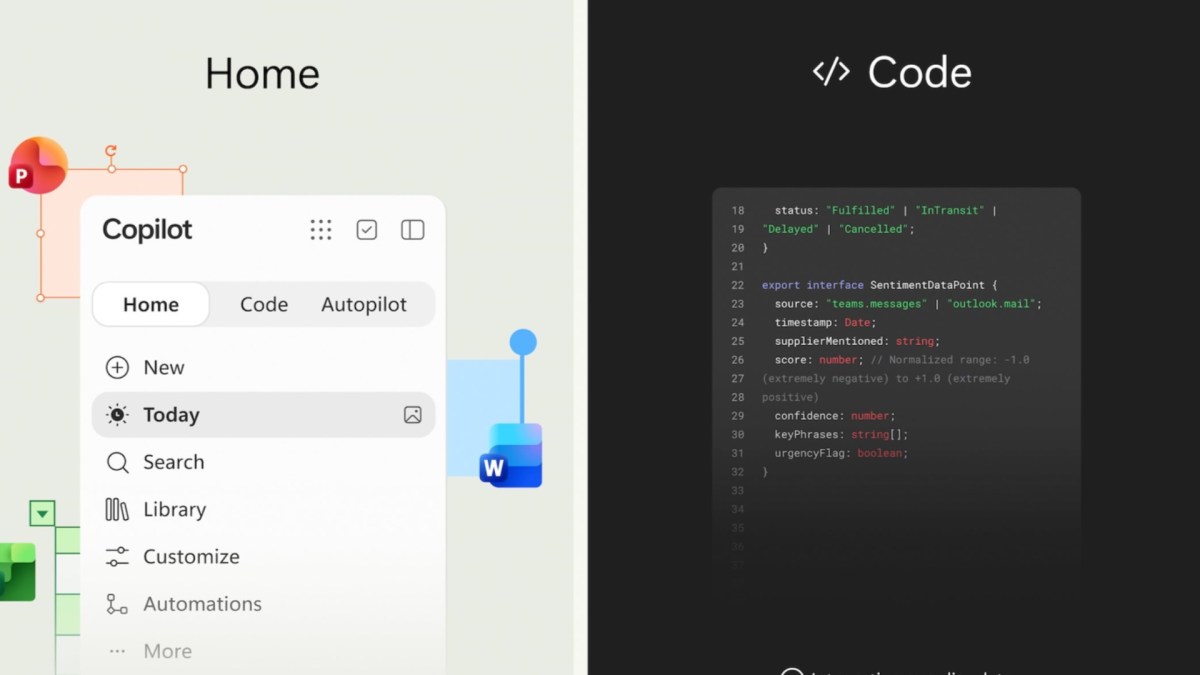
Microsoft annonce une refonte de son application Copilot autour de trois onglets : Home, Code et Autopilot (ex-Scout). L'entreprise rêve d'inventer le Microsoft Office de l'intelligence artificielle en proposant un hub aux utilisateurs de Windows. Son principal problème est que, pour l'instant, elle dépend encore massivement des modèles d'Anthropic, OpenAI ou SpaceXAI.

  •  

Le label Copilot+ de Microsoft disparait des radars

Le label Copilot+ était au cœur de la stratégie de Microsoft en 2024. Son rôle était double alors. Il devait créer un ensemble de règles à suivre pour proposer des fonctions IA en local. Ça, c’était pour la partie la plus visible de la proposition. Mais, en sous-marin, cet ensemble était surtout un excellent moyen d’avantager le duo Microsoft/Qualcomm en présentant les puces Snapdragon comme les seules capables de l’obtenir. Tellement que j’avais dû à l’époque expliquer que le label Copilot+ n’était pas réservé aux puces ARM.

Deux ans après, Microsoft décide d’abandonner cette norme. C’était prévisible, l’éditeur de Windows avait déjà annoncé vouloir plus ou moins abandonner la touche Copilot en mai dernier. Sa dernière campagne autour de Copilot+ date de février et tentait d’expliquer que les PC Copilotés étaient meilleurs pour le gaming. Un calendrier d’une faible sobriété si on considère que ce message de Microsoft conseillait en même temps qu’acheter un PC avec 32 Go de mémoire vive. Alors même que la flambée des tarifs avait déjà commencé depuis le mois de septembre 2025.

Un label Copilot+ "now", des usages "coming soon"

Un label Copilot+ « now », des usages « coming soon »

En septembre 2026 cependant, il ne reste plus grand-chose à conserver du label. Il faut dire à la décharge de Microsoft qu’il a rempli son rôle. L’objectif était de pousser les fabricants de puces et d’ordinateurs à intégrer des NPU – des éléments dédiés aux calculs nécessaires aux IA – dans leurs productions. Qualcomm était le premier a dégainer un NPU proposant les 40 TOPS réclamés par Microsoft pour sa norme. AMD et Intel sont rapidement passés au niveau avec des puces proposant au moins aussi bien. Cela même sans que la majorité des acheteurs ne trouvent finalement le moindre emploi à ces fonctionnalités dans leur vie de tous les jours. Pire, certaines des fonctionnalités avancées par Microsoft ont fait hurler tout le monde. Parmi elles, la fonction Recall qui consistait à laisser l’IA scruter tout ce qui se passait à l’écran en permanence. Une levée de bouclier a non seulement empêché la fonction Recall de sortir mais a en plus associé le label Copilot+ à ce genre de service intrusif dont personne ne veut.

Problème pour Microsoft, ce qui devait être un label vendeur comme « Plug’n Play » ou « DirectX » à leur époque, s’est transformé en repoussoir. Et les constructeurs ont logiquement refusé de le mettre en avant dans leurs campagnes de publicité et sur leurs emballages. Microsoft lui-même s’est mis à abandonner cette norme dans sa communication. Les nouveaux PC Nvidia sous RTX Spark sont très orientés IA mais pas labellisés Copilot+ pour autant.

Le label Copilot+ ? Je ne dirais pas que c’est un échec : ça n’a pas marché

Microsoft a donc raté une marche, mais ne s’est pas planté pour autant. En deux années seulement, le secteur a entièrement basculé et il faut vraiment fouiller longtemps les rayons d’un marchand pour trouver un PC de grande marque qui ne soit pas fourni avec un NPU performant. Si les touches Copilot devraient logiquement disparaitre des claviers à terme, le résultat est bien là. Le marché du neuf est désormais totalement capable d’accueillir des fonctions IA locales portées par des processeurs ayant des capacités dédiées.

Microsoft voulait implanter son système maison Copliot par défaut sur les PC Windows pour que cela devienne un réflexe d’utilisateur. Ajouter une touche avec le logo sur les claviers pour qu’il imprègne le public. La disparition du label ne signifie pas pour autant que Microsoft a totalement échoué. Même si en février nous apprenions que le taux d’abonnements payants à la formule Copilot était de 3.3% seulement. Le temps nous dira si la stratégie de l’éditeur était la bonne, ce chiffre très faible est très certainement lié au fait que des millions et des millions de machines étaient livrées avec cette mise en avant de Copilot et que beaucoup d’utilisateurs ont simplement voulu la tester.

Dans les années qui viennent, il est fort possible que les NPU intégrés servent de plus en plus à des usages IA locaux directement exploités par les logiciels exécutés : retouche d’image, correction de fautes, surveillance de sécurité, tracking d’objet en vidéo. La grande question qui demeure sera celle des assistants : qui l’emportera sur ce secteur ? Microsoft voulait prendre un coup d’avance en imposant son label Copilot mais n’a fait au final que préparer le terrain pour que tous les acteurs puissent s’implanter à bord.

Le marché PC est difficile à manier. On est toujours sur une histoire de charrue et de bœufs. Sans un matériel compatible avec un NPU à bord, impossible d’implanter des outils IA. Sans ces outils, impossible d’expliquer aux clients potentiels l’intérêt de s’offrir un NPU. À vouloir partir trop tôt, Windows a simplement échoué à dévoiler l’application ou l’usage natif qui aurait pu réellement séduire les masses. Mais est-ce que l’éditeur avait vraiment le choix face aux offensives concurrentes ? Celles qui passent par le cloud ou les IA déjà intégrées dans les smartphones…

Le label Copilot+ de Microsoft disparait des radars © MiniMachines.net. 2026

  •  

Microsoft Helps Take Down Massive Automated, AI-Powered Phishing-as-a-Service Platform

Microsoft's security blog describes the fight against a new "AI-powered cybercrime platform" offering phishing-as-a-service, with AI-tailored lures and analyses of compromised inboxes (to identify high-value targets). The site compromised more than 12,000 inboxes in over 10,000 organizations around the world, compromising business accounts "at scale" with automated attacks and prebuilt phishing templates. AI tools could even sift through a victim's mailbox to help engineer better phishing messages. To disrupt EvilTokens Microsoft worked with other organizations, including Cloudflare, Coinbase, OpenAI, Railway, SpyCloud, Shadowserver Foundation, and TRM Labs to Health-ISAC (a non-profit helping health sector organizations share cyber threat information). "Fifty sites seized and 150 domains disabled in a single action is only possible when the hosting providers, the exchanges, the model providers and the data holders all move at the same time," security company SpyCloud told The Hacker News. From Microsoft's security blog: Microsoft also notified affected customers, helped remediate compromised accounts, and shared intelligence to support further defensive and investigative action... Microsoft worked closely with specialist officers from the Metropolitan Police Service's cybercrime team, sharing intelligence that enabled officers to take operational action in the United Kingdom. On September 11, 2026, officers arrested two men, aged 32 and 38, and seized digital devices and other items for examination... While EvilTokens used AI to identify targets and prioritize fraud opportunities, Microsoft investigators used reverse engineering and AI-powered tools to analyze evidence, accelerate the investigation, and identify the infrastructure supporting the service... Campaigns leveraging EvilTokens have impacted organizations in various industries, including wholesale distribution, construction, financial services, real estate, higher education, and healthcare, with the highest concentrations of observed victim activity in the United States, Canada, the United Kingdom, Australia, India, and France. Working with partners, Microsoft's Digital Crimes Unit (DCU) facilitated a coordinated disruption of infrastructure used to operate the EvilTokens service. Sometimes stolen tokens were used to give new devices access to a victim's inbox. (A code authenticating the new device was sent to the targeted user, who unknowingly authorize the threat actor's session and grants access to their account...) But "AI was not simply helping attackers write more convincing messages," says another Microsoft blog post. "It helped them decide who to target, who to impersonate, and how to most effectively exploit the relationship to extract as much money as possible." The significance of EvilTokens extends beyond its rapid growth and global reach. It offers an early warning of what happens when cybercriminals combine stolen access with AI capable of understanding how an organization works... Its AI tools could summarize and translate emails, surface financial conversations, map organizational roles, identify trusted relationships, and recommend potential targets. Preset prompts offered to find wire-transfer discussions, identify the organization's "money movers," locate vendor invoices, and determine the best people to impersonate. Sold through Telegram for a $1,500 initiation fee and a recurring $500 subscription, EvilTokens combined account compromise, mailbox analysis, target selection, and fraud preparation in a single service. Capabilities that once required experience across identity attacks, cloud systems, social engineering, and financial fraud were available through a ready-made interface. Investigators found evidence that large portions of EvilTokens had been "vibe coded," with AI helping its creators build the platform itself. They also determined that EvilTokens drew on capabilities from multiple AI models. The result was more than a collection of attack tools. EvilTokens packaged much of the fraud process into a commercially run service, complete with subscription pricing, customer support, management dashboards, and tools designed to move customers from account access toward financial exploitation.

Read more of this story at Slashdot.

  •  

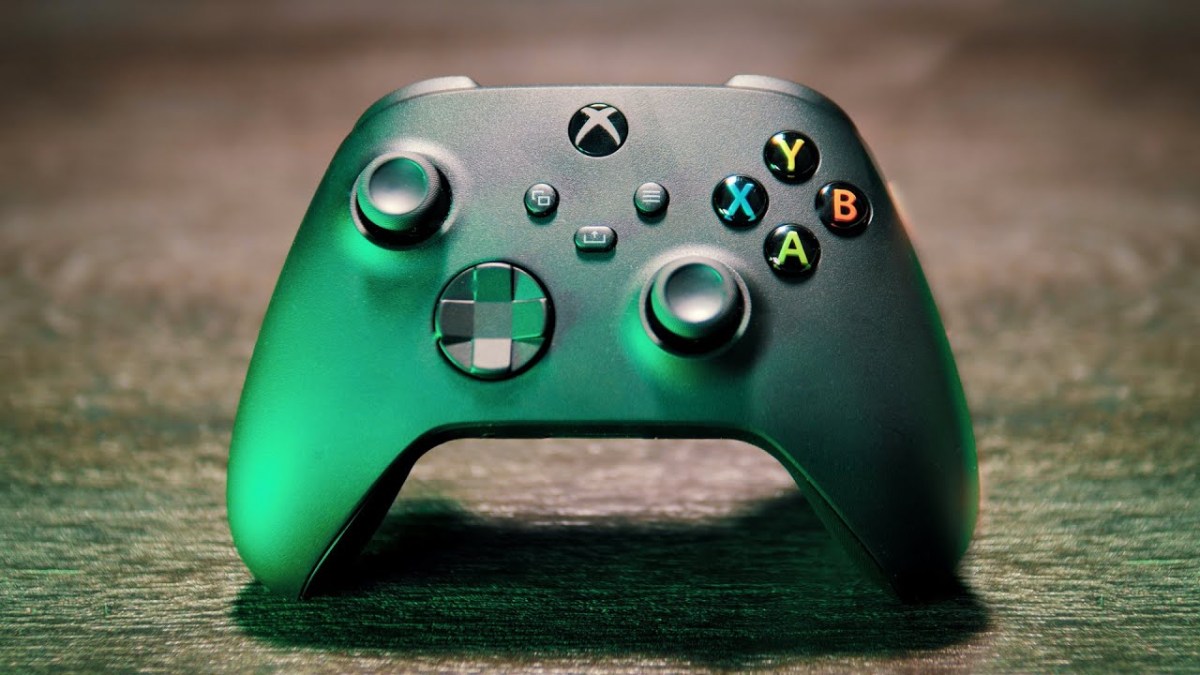
L’excellente manette sans fil Xbox Series, pour jouer sur Xbox et PC, est à – 35 %

[Deal du jour] Jouer avec une bonne manette, c’est quand même mieux que de jouer avec une mauvaise. Une évidence qu’il est toujours bon de rappeler, surtout quand le modèle Xbox Series est en ce moment bradé sur Amazon. De quoi jouer dans les meilleures conditions, aussi bien sur console de salon que sur PC.

  •  

Rust is Now a 'Tier One' Language at Microsoft

The Register reports: When Microsoft's developers and engineers sit down to code, they can now choose to work in Rust, which Redmond has added to its list of canonical languages. "Rust now is a Tier One language at Microsoft, and that just means that it sits among C++, C# and TypeScript as the best supported languages for internal development in the company," explained Victor Ciura, Microsoft principal engineer for the Rust tooling team, during a keynote talk today at this year's annual RustConf, being held this week in Montréal. Ciura said Microsoft has "paved a path" of tools and processes that support local Rust development across the entire software development lifecycle. Rust is no stranger at Microsoft and is already present in over 100 Microsoft project repositories. The company has built Oxidizer, a set of crates to build scalable services in Rust, which have been used to build and refine the Microsoft 365 core services such as Outlook, Word, Excel, OneDrive, and SharePoint. The Copilot tech stack also owes quite a bit to Rust... [C]ompany engineers built rustc_codegen_utc, a custom Rust compiler code-generation backend that wires the rustc compiler directly into the Microsoft Visual C++ internal toolchain for Windows... "The result is a unified code generation platform for Rust and C++ on Windows" [Ciura wrote in a blog post, noting that more than 100 Microsoft project repositories now build with rustc_codegen_utc.] Still, Redmond running towards Rust is a welcome development. In his 2025 RustConf keynote, Microsoft Azure CTO Mark Russinovich noted that ~70 percent of Windows CVEs are memory issues. "One of the things that I realized a long time ago is that no matter how much we really want to make C and C++ better, we can't make it as good as what Rust starts with," he said.

Read more of this story at Slashdot.

  •  

Microsoft et Nvidia en concert RTX Spark le 7 octobre prochain

Un concert qui se déroulera à San Francisco pour chanter sur l’air des Surface et de Windows mais également le bon moment pour mettre en avant les RTX Spark de Nvidia. Entre deux tours de chant, les stars microsoftiennes laisseront donc Jensen Huang, PDG de Nvidia, entonner un petit tour de chant.

Microsoft Surface Laptop Ultra sous RTX Spark

Microsoft Surface Laptop Ultra sous RTX Spark

Microsoft sait se faire attendre entre chaque tournée et ses grands concerts ne sont pas aussi réguliers que ceux d’autres groupes. Si Microsoft remonte sur scène, c’est probablement pour lancer leur nouveau chouchou, le RTX Spark. Le PDG de Microsoft, Satya Nadella sera donc de la partie pour un duo avec Pavan Davuluri responsable de la gamme Surface. Jensen Huang afin de présenter leur nouvel album sous ARM en dévoilant tous les charmes de leur alliance. Après les années Qualcomm et les tournées Snapdragon, c’est au tour du RTX Spark de capter l’attention. Mediatek fera peut-être les chœurs, mais rien n’a été annoncé.

C’est la gamme Surface qui sera mise en avant. Microsoft ayant décidé de pousser la puce de Nvidia dans ses propres productions. Laissant en retrait les autres acteurs du secteur : AMD, Intel et Qualcomm semblent aux abonnés absents de cette tournée.

La puce RTX Spark sera t-elle la star de cette fin d’année ?

Microsoft devrait donc mettre en valeur le duo Windows / RTX Spark avec évidemment les classiques de son répertoire comme le jeu triple A et les usages productifs, mais aussi toutes les nouveautés autour de l’IA. Parmi les annonces les plus attendues du public, on pense évidemment au Microsoft Surface Laptop Ultra dont ni la date de début de tournée internationale ni le ticket d’entrée n’ont fuité pour le moment. 

De manière plus générale, l’annonce indique également des nouveautés apportées au catalogue de Windows. Microsoft devant faire face aux sorties dans les bacs des autres maisons de disque que sont Apple et Google. On peut s’attendre à une réponse aux agents de plus en plus intégrés de ces deux mastodontes. Siri chante pour Apple, Gemini pour Google, il semble donc temps que Copilot fasse une apparition moins timide dans Windows. CoPilot sera donc certainement sous les projecteurs ce soir-là. La star RTX spark apportant son souffle très spécialisé pour qu’il puisse enfin entamer un tour de chant puissant.

Attendez-vous donc à entendre la mélodie de Copilot passer en boucle pendant tout l’automne.

RTX Spark Superchip : la vision de Nvidia au défi Windows 11

Microsoft et Nvidia en concert RTX Spark le 7 octobre prochain © MiniMachines.net. 2026

  •  

Union Contract with Microsoft Ratified by 1,900 Blizzard Developers and Workers

Nearly 1900 Blizzard Entertainment workers "voted to ratify their first union contract with parent company Microsoft after over two years of bargaining," reports Kotaku, "consolidating Blizzard's many smaller unions into three larger bargaining units." The workers now gain new protections "on issues such as generative AI, crediting, remote work, and layoffs." [The contract] acknowledges that AI tools "may be useful in the game development process to support human judgment and creativity and that AI-assisted workflows remain subject to appropriate human control and review for accuracy and quality." But it also stipulates that any implementation of AI technology that would materially impact work performed by union employees must have its impacts bargained over before it can be implemented. Other sections cover issues such as crediting (guaranteeing that current and former employees are credited by name in all games they work on) and remote work (designating certain roles as hybrid in-office and providing procedures for individuals to apply for their roles to be fully remote). It also contains a lengthy section on how layoffs may be conducted, including a required 60-day notice period (or pay in lieu of notice), a guarantee of one week of severance for every six months of employment, and 14 months of recall rights. The contract also guarantees successorship, meaning if Blizzard is ever acquired by another company, the contract would remain intact. "Workers also contractually locked in their current hybrid work schedule," reports the gaming news site Aftermath, "meaning that Blizzard can't suddenly change it, as has been a labor-unfriendly trend in the games industry over the past couple years." Fully remote workers scored a big win as well. "I'm remote, and we grandfathered everyone who is remote to stay remote, so we can't be magically called to an office that we've never worked at before," [said Diablo senior environment artist Mahreen Fatima]. And "The contract also elevated pay floor," reports the Yakima Herald-Republic. "Across the board, workers secured a 1.25% pay increase, but some workers who were paid below $50,000 per year will walk away with pay increases that are as much as 34%."

Read more of this story at Slashdot.

  •  

Xbox Cloud Gaming Switches to Monthly Hour Limits

Microsoft is imposing monthly limits on Xbox Cloud Gaming starting in November, with Game Pass Ultimate, Premium, and Essential subscribers getting 15, 10, and 5 hours respectively before they have to buy additional playtime. "Currently, Game Pass subscribers can stream without these monthly hour limits," notes IGN. From the report: The change means those who use cloud gaming most via Game Pass will end up having to pay more, although Microsoft said this impacts 4% of Game Pass subscribers. Also in November, Microsoft said players will be able to buy cloud playtime hours through the Xbox Store and 'stream eligible games they own on supported devices' without subscribing to Game Pass. In a blog post, Microsoft said it was making the changes because the cost of providing cloud gaming has grown as more people use it and play for longer. The monthly limits, Microsoft continued, will mean it can invest in reliability and performance. But it said it understood that for some players the practical result is a higher cost.

Read more of this story at Slashdot.

  •  
❌