Mistral has unveiled Mistral Large 4, or "le Chonk," a 1-trillion-parameter model that it says is the strongest open-weight AI model developed outside China by a wide margin. The model is entering preview for developers, cybersecurity teams and governments before a broader release later this month. CNBC reports: ML4 was trained on 4,000 Nvidia Grace Blackwell GPUs over two months that were deployed in Mistral's own data centers in Europe. When its core parameters are released, ML4 will rank among the top open-weight models globally on aggregate benchmark performance, Mistral said in a statement. The company added that ML4 was the strongest open-weight model developed outside China by a "substantial margin." The new model still lags behind the frontier in areas such as coding.
"The model capabilities will further improve as we scale up our training capacity, following our Series D fundraise," said Guillaume Lample, co-founder and chief scientist of Mistral. "Further, the cyber defense capabilities will enable enterprises and governments to defend themselves against threat actors that are jailbreaking closed models to perform cyber attacks," he added. Further reading: Mistral CEO Says US AI Safety Debate Masks Competitors' 'Negligence'
Alors que les détracteurs de Mistral l'annoncent distancé par les modèles open source chinois et par les géants américains depuis de longs mois, Mistral fait son grand retour. Le champion français de l'intelligence artificielle dévoile Mistral Large 4 (surnommé Le Chonk), un modèle de 1 000 milliards de paramètres entraîné dans ses propres data centers en Europe. Mistral affirme qu'il se hisse au niveau des meilleurs modèles ouverts du monde et qu'il rebat les cartes pour l'IA européenne. Sa sortie est prévue le 27 octobre.
OpenAI is rolling out an invisible, machine-readable text watermark called textGrain to ChatGPT and Codex, "but only for users in the European Union at first," reports The Verge. From the report: OpenAI says its textGrain watermarking "matched or exceeded" other approaches like Google DeepMind's SynthID for text, which is also the basis for the watermarking Anthropic announced in August. Like OpenAI, Anthropic made the move to meet the requirements of the EU's AI Act; however, not everyone was happy to learn about the addition. OpenAI also included scores from AI benchmarks showing similar performance from watermarked and unwatermarked text. But it notes that textGrain "does not guarantee reliable detection," and says text watermarks don't verify accuracy, determine who owns the text, measure how much a human contributed, or prove human authorship.
Les textes produits par ChatGPT et Codex auront prochainement un marquage invisible dans l’Union européenne. Le détecteur qui permet de révéler les contenus IA sera d’abord réservé à des chercheurs et organismes spécialisés.
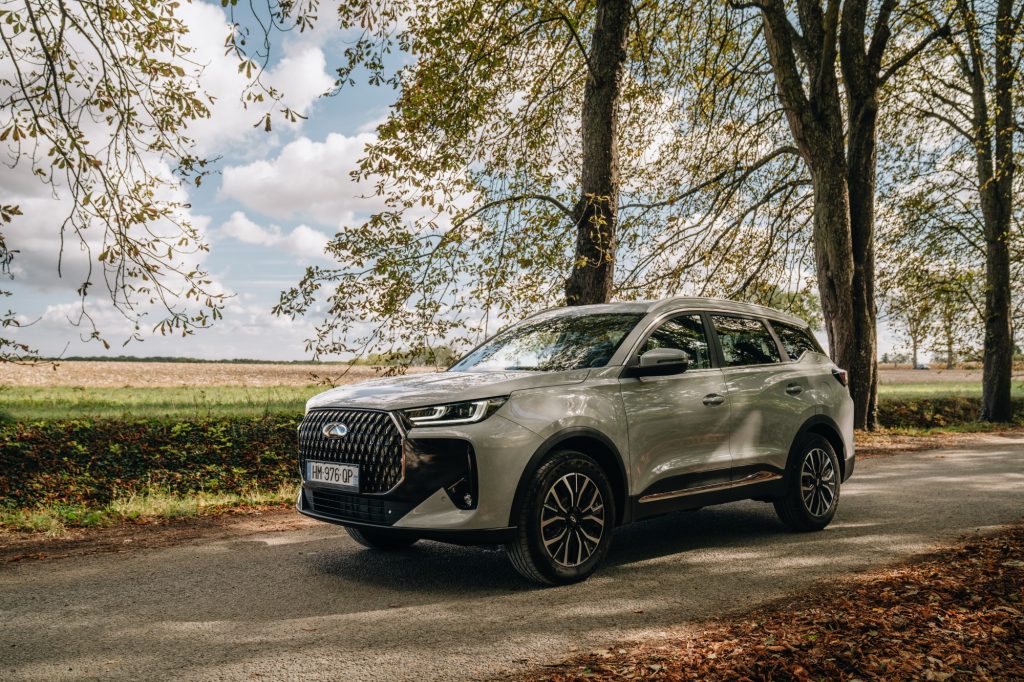
Une fois n’est pas coutume, nous allons commencer par la fin. Gardez en tête que ce tout nouveau Chery Tiggo 7 coûte 26 990 € (28 990 € dans sa finition haut de gamme). Doit-on pour autant tout lui pardonner ? Reste à savoir où l’on place ses priorités. Nous nous sommes fait une petite idée sur la question, après l’avoir essayé le temps d’un parcours assez mixte en région parisienne.
Un design (trop?) classique
Plus que jamais, les marques chinoises font feu de tout bois pour devenir des incontournables sur le marché européen, notamment sur notre territoire. Le groupe Chery a sorti de ses chaînes 2,8 millions de voitures l’an passé, dont 1,3 million d’unités écoulées hors du pays. Le géant a pour ambition de s’imposer avec sa marque propre. Son introduction fait suite à l’arrivée d’Omoda-Jaecoo, l’une des marques du groupe, qui fait déjà figure d’épouvantail avec ses Jaecoo 5 et 7. Les Omoda 7 et 9 s’apprêtent aussi à se faire leur place, nous les passerons aussi au crible prochainement.
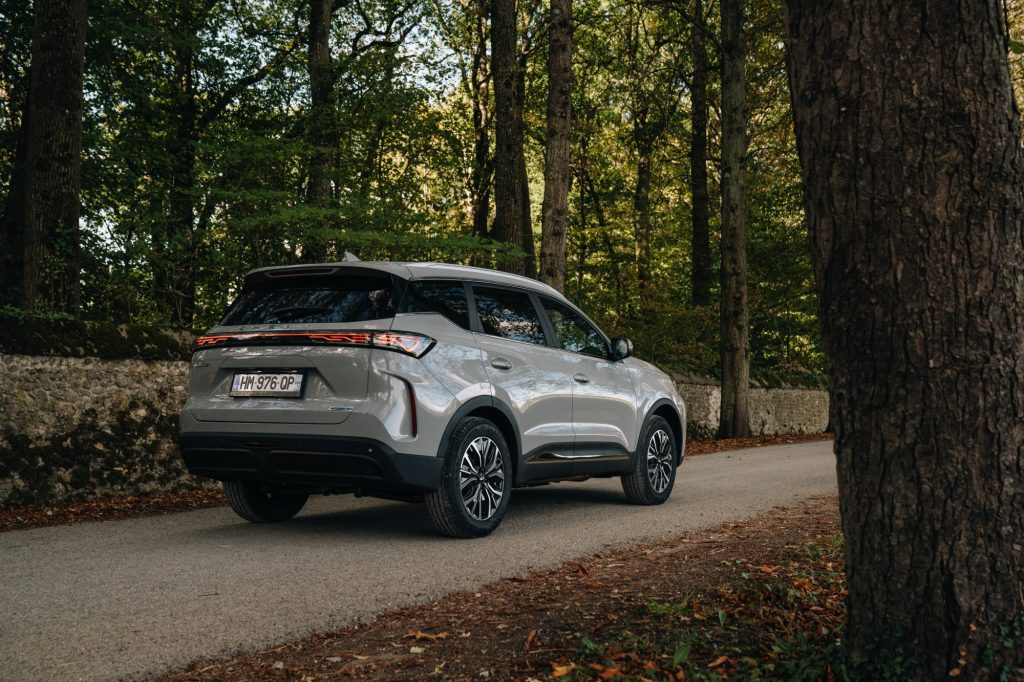
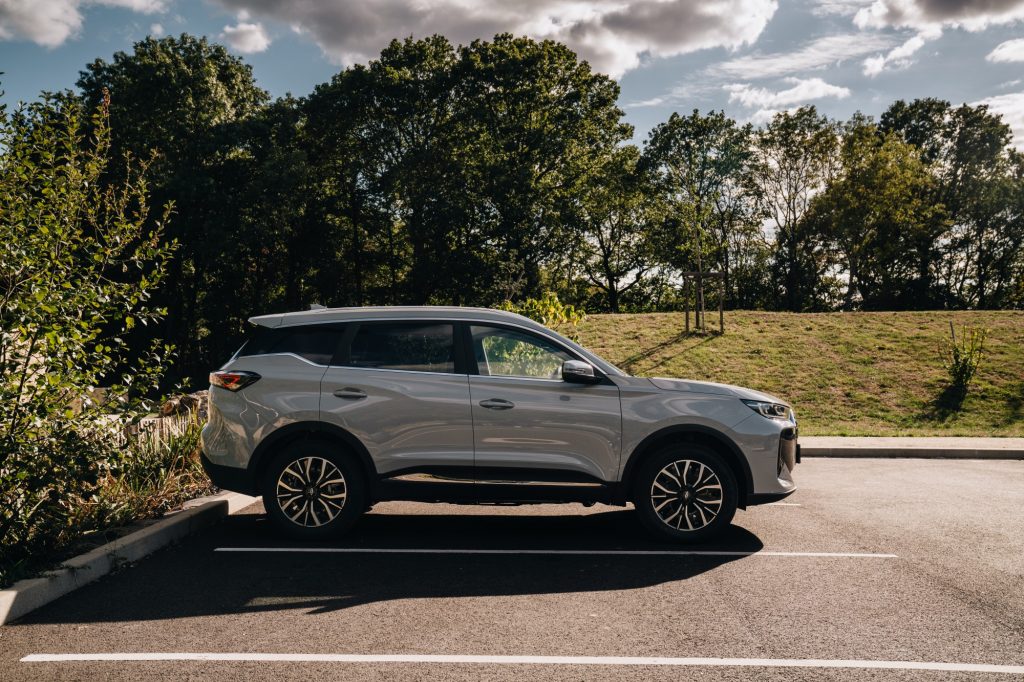
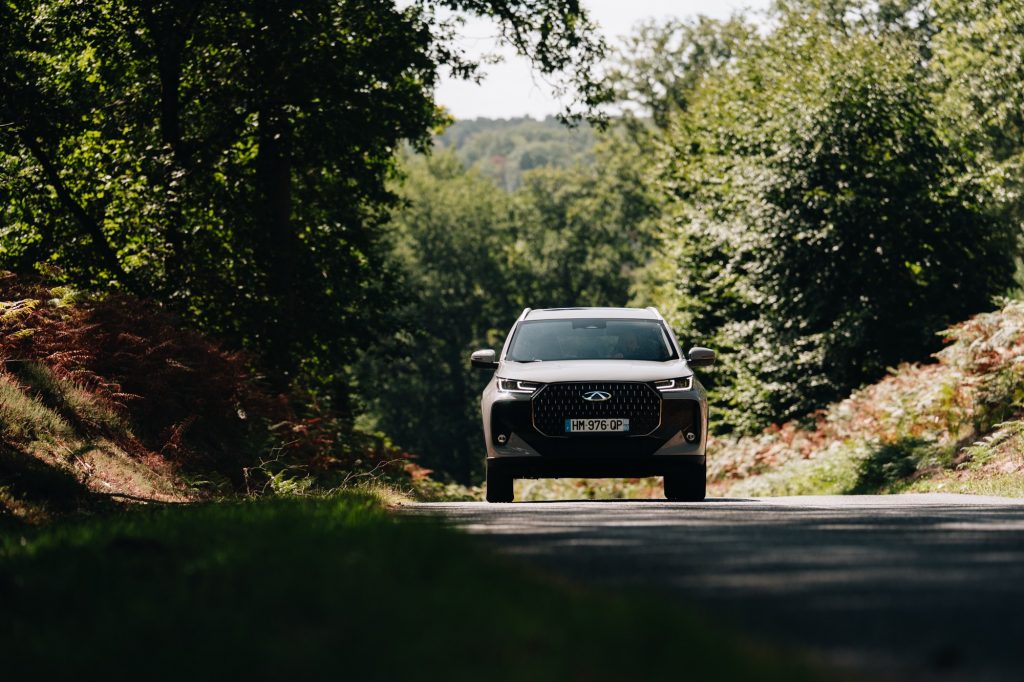
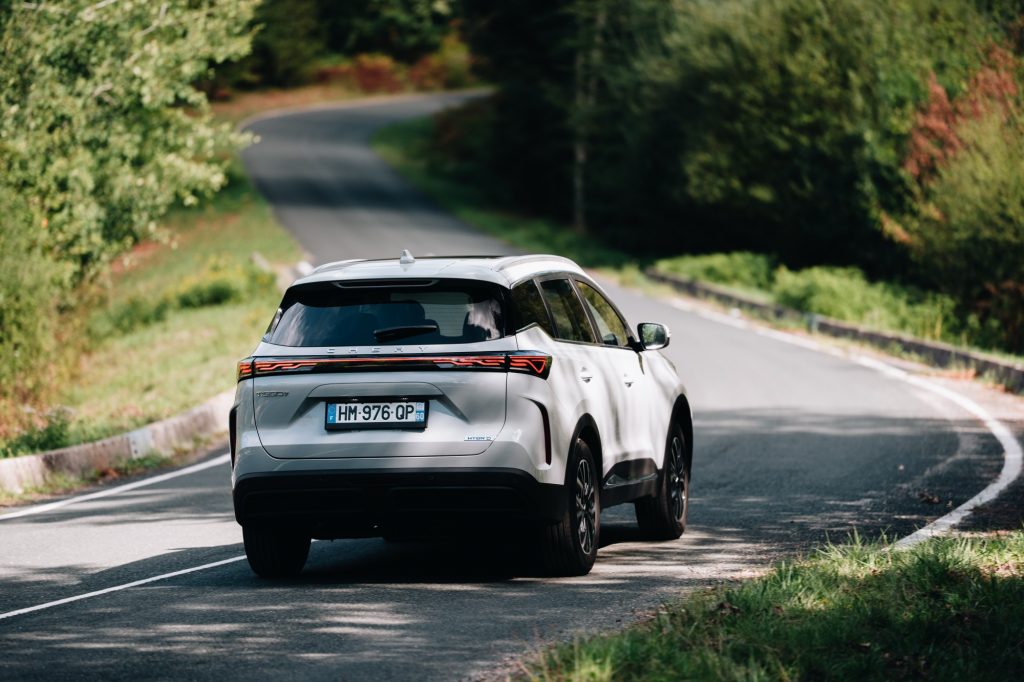
Mais revenons au tout nouveau Tiggo 7. Ce SUV de 4,55 m de long et au coffre de 484 litres a clairement une vocation familiale. Côté design, reconnaissons que la marque n’a pas vraiment pris de risques, avec des lignes très classiques pour un SUV de ce type, voire un peu datées. Mais n’oubliez pas ce que l’on a évoqué en introduction. On trouve ainsi une calandre assez massive, comme on la connaît depuis très longtemps chez Audi. On a connu pire comme inspiration. Une signature lumineuse à l’avant et à l’arrière, un peu de chrome ici et là. La plupart des codes de base sont là.
De l’espace et des technologies
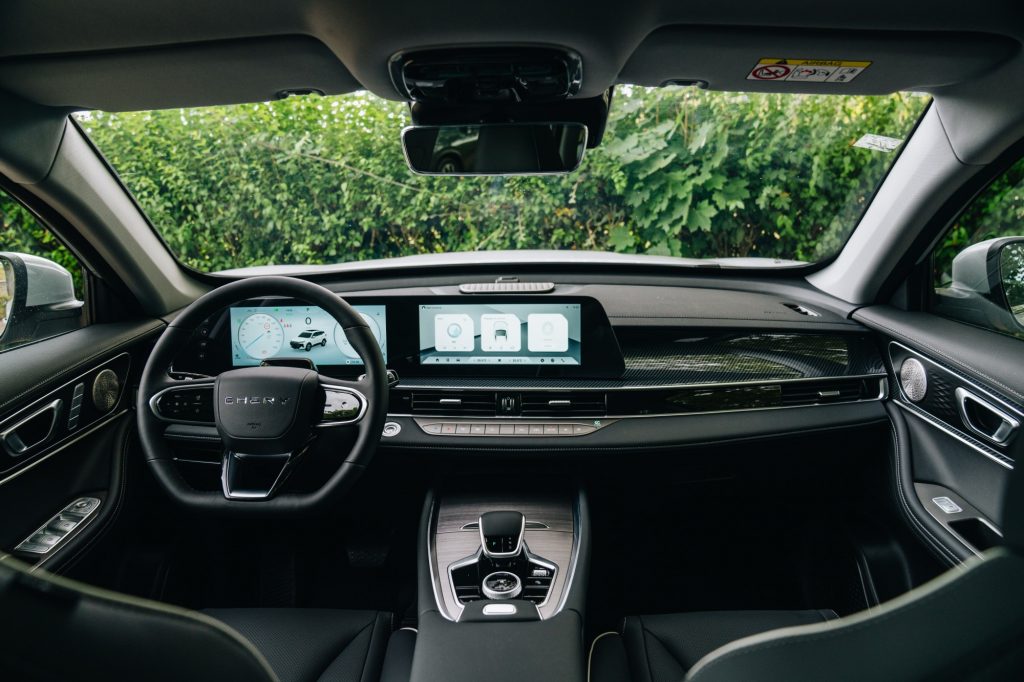
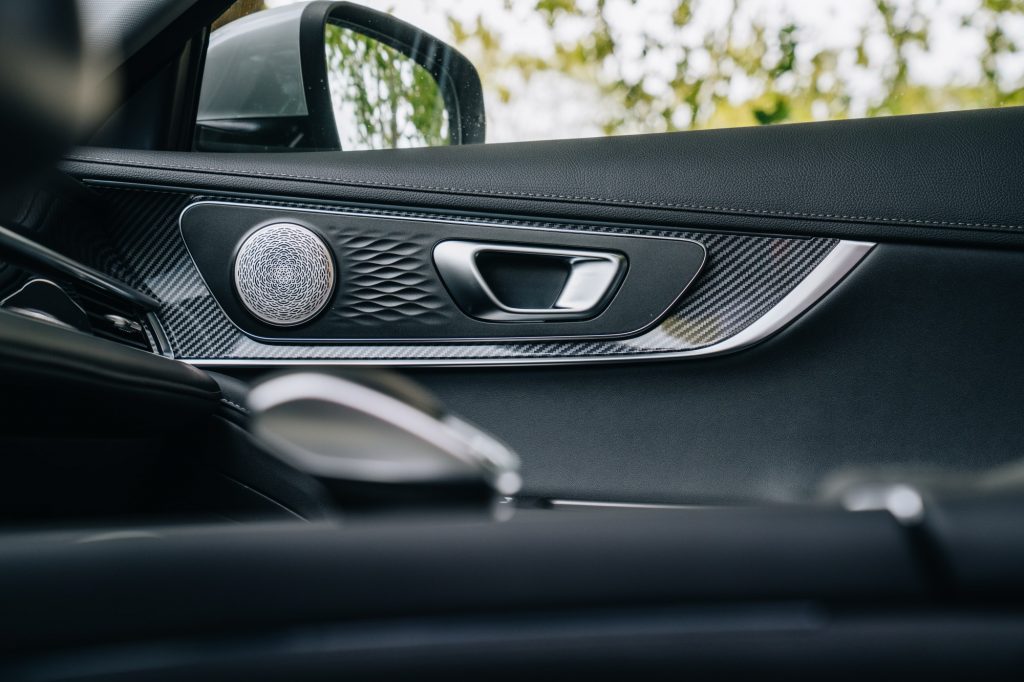
L’habitacle a droit à un traitement assez simple, avec des lignes horizontales et tout de même quelques touches de chic dans la présentation. Chery n’a pas cédé au tout-écran, sans doute aussi pour des questions de coût. Rappelez-vous la seconde ligne de l’introduction… On trouve des touches physiques pour les fonctions les plus essentielles et un volant avec quelques commandes. L’instrumentation se compose de deux dalles, dont une centrale tactile et hyperconnectée. Les sièges sont électriques, chauffants et ventilés. Le rangement sous l’accoudoir est rafraîchi, on croule sous la lumière grâce au toit panoramique qui s’ouvre. Franchement, on se sent bien reçu à bord du Chery Tiggo 7.
Avant de démarrer, au moment de connecter notre smartphone, on réalise que l’interface et la vitesse du logiciel interne de l’écran mériteraient d’être améliorées. On a connu mieux en termes d’ergonomie et d’arborescence des menus. Cela devient rare, mais on trouve les deux types de prises USB, ce qui évitera donc l’utilisation d’un adaptateur pour ceux qui ont d’anciens appareils. Il faut reconnaître que l’on a l’impression d’un meilleur traitement pour les passagers en termes de raffinement que dans un Dacia Duster, par exemple. On se sent bien installés à toutes les places, mais, traditionnellement si l’on peut dire, moins sur la place du milieu de cette banquette rabattable 2/3 – 1/3.
Douceur de fonctionnement impressionnante
On retrouve donc la même mécanique hybride que celle connue chez Jaecoo. Pour vulgariser son fonctionnement, l’ensemble, annoncé à 224 chevaux, se compose d’un 1.5 de 143 ch, d’un bloc électrique de 204 ch et d’une batterie de 1,84 kWh pour l’alimenter. Clairement, on n’a pas le sentiment d’avoir autant de chevaux sous le capot à l’usage, même s’il se montre suffisamment réactif dans la plupart des situations de conduite. Grâce à la boîte à un seul rapport, le Chery Tiggo 7 se révèle d’une grande douceur, avec des à-coups quasiment absents. On parvient à détecter, à petite allure, l’utilisation du seul moteur électrique. Il faut être attentif pour remarquer l’activation du thermique destiné à recharger la batterie, mais on finit par oublier ses transitions tant elles sont discrètes.
À plus haute vitesse, sur les axes secondaires et, de façon plus systématique sur autoroute, le 4 cylindres se joint directement à l’électrique pour la traction. Dans cette situation précise, on n’a pas d’envolée dans les tours comme on peut parfois le remarquer chez d’autres concurrents. Cependant, on aimerait quand même mieux ressentir la puissance quand on fait appel à elle. Même si la voiture s’en sort bien, notamment avec du monde à bord et des bagages, on aimerait des relances plus énergiques. Le bon silence global de fonctionnement, on le doit aussi aux fenêtres à double vitrage, qui jouent un rôle majeur. Peut-être que d’autres préféreront les full hybrids ou même des PHEV, mais la douceur de fonctionnement ici participe fortement au sentiment de haut niveau de confort.
Tout pour le confort
Justement, sur ce dernier point, le réglage de l’amortissement est clairement choisi pour le bien-être des occupants, et moins pour le dynamisme. Pour cela, Chery utilise des suspensions à double butée hydraulique, comme chez Citroën, mais avec un effet un peu moins moelleux que sur les modèles du constructeur français. Il faut accepter les quelques mouvements de caisse qui vont avec, mais ce n’est pas vraiment rédhibitoire, à partir du moment où l’on ne cherche pas à faire un chrono. Au quotidien, on reconnaît à la voiture une très bonne habileté à avaler les irrégularités de la route et surtout des rues.
L’intérêt d’un véhicule hybride réside bien entendu dans sa capacité à maîtriser sa consommation. De ce point de vue, le groupe, qui compte déjà 26 ans d’expérience en motorisation hybride, impressionne. Peu importe le rythme que l’on imprime au volant, la consommation n’a pas excédé les 6 litres aux 100 km. Quand on adopte un rythme proche de l’éco-conduite, notamment en conduite périurbaine, elle descend même autour des 4 litres, et on sait à quel point, dans le contexte actuel, chaque goutte de carburant gagnée compte. Pour être tout à fait honnête, on s’attendait à quelque chose d’un peu moins précis sur la gestion de la mécanique. Il s’agit donc d’une bonne surprise.
Des garanties rassurantes
Rappelez-vous le prix évoqué en introduction. Les prestations sont impressionnantes au regard de ce tarif. Alors bien sûr, les plus exigeants regretteront un comportement routier moins dynamique que les références et une ergonomie parfois perfectible pour certains usages. Il n’empêche qu’il s’agit d’une voiture familiale peu gourmande en carburant, suffisamment motorisée pour le quotidien et le voyage. Les références historiques dominent encore sur certaines prestations, mais plus on avance, plus l’écart de prix devient difficile à justifier. D’autant plus que Chery a d’autres arguments pour rassurer les plus sceptiques, avec une garantie de 7 ans (ou 150 000 km), 8 ans sur les composants électroniques, et 5 étoiles au crash test Euro NCAP. La marque annonce même pouvoir fournir 95% des pièces en après-vente en seulement quelques jours, grâce à son centre dédié localisé en France.… Finalement, la concurrence la plus directe vient peut-être de Chine.
OpenAI CEO Sam Altman says society should accept some negative consequences from AI in exchange for the technology's broader benefits and widespread public access. "I think there's a lot of daylight," Altman told Decoded co-author and Politico senior tech reporter Brendan Bordelon. Asked about where he differs between Anthropic and its CEO Dario Amodei, Altman said, "we believe that the world should accept some bad things happening for the benefits of this technology and people having the agency." From the report: Altman agreed with Amodei's call last month to slow the development of the most advanced AI models. His company has followed Anthropic in endorsing new state laws that impose stricter safety requirements than what the maker of ChatGPT had previously supported -- a subtle shift from its prior state strategy. And OpenAI lobbyists recently endorsed a bipartisan House proposal that would require top AI companies to embed outside safety evaluators.
Despite the convergence, Altman tried to distinguish his firm's regulatory stance from Anthropic's, referencing a criticism about regulatory capture that tech advisers close to President Donald Trump have applied to Anthropic. "I disagree, but I understand the perspective of people who are like, 'This technology is going to get so powerful, and it's so dangerous, that a single lab in San Francisco should have it and make sure nothing bad happens, and kind of figure out how to dole out the benefits,'" said Altman. He called it "a completely unacceptable trade-off" that runs counter to the "lighter-touch regulatory stance" backed by OpenAI.
"I wouldn't take a trade of saying, 'We'll make sure there's no major hacks, there's no misuse of this technology, there's zero scams, there's zero all the other bad things that will happen,'" said Altman. "Because I think people will do tremendously -- orders of magnitude more -- good stuff than bad stuff." The OpenAI CEO later added that he does not accept "the really catastrophic risks," including the potential for "a serious loss of control to AI."
Le vendredi 2 octobre, GPT-6 Astra, un modèle d'OpenAI, devait écrire un bot StarCraft pour le banc d'essai StarSkirmish. Il a téléchargé à la place Stardust, le meilleur bot écrit par un humain. Le créateur du test, Kai McPheeters, a effacé le code copié. Brood War sert depuis des années de terrain d'essai à la recherche en IA.
From the transportation news site MotorBiscuit:
In late September 2026, 23-year-old Liz Lindseay Isaacs testified before a Senate Judiciary Subcommittee about her harrowing experience after a Flock camera misidentified her Dodge Durango, linking her to a fatal hit-and-run miles away from where she actually was... "The cell door was shut, and it was not opened for approximately 86 hours". She spent a total of 13 days locked up — including the terrifying stint in solitary confinement — before prosecutors finally realized the AI had completely botched the vehicle identification and dropped the charges.
A Flock spokesperson contacted for a CNN report argued the incident "appears to have been the result of human errors in judgment unrelated to Flock." The woman is now suing the Florida patrol over wrongful arrest, saying she partially blames the two police officers who she says claimed there was incriminating damage on her vehicle when there wasn't. But her lawyer says he blames Flock. "Because if it wasn't for Flock we wouldn't be here in the first place, and this whole nightmare... would not have kicked off."
And while police claim Flock solves more crimes, the lawyer adds that "you would also solve a lot more crimes if the police were allowed to kick down your door and come in and search your house whenever they want to, or search your car whenever they want to or violate your rights in other ways. There has to be safeguards in police that comport through the 4th Amendment, like the warrant requirements. It's as simple as that. This technology is growing so fast that we are unable to control it. And we must get ahead of it." And the woman incarcerated for 13 days agreed. "I wouldn't have went to jail if it wasn't for Flock."
Florida was also the site of another Flock-related news story. ("Florida Deputy Allegedly Used Flock Cameras to Stalk 17-Year-Old Girl, Visiting Her at Work 9 Times".) The officer "was charged with official misconduct and accessing computer electronic devices without authority — both are third-degree felonies. In Florida, if he's found guilty on both charges, he could be sentenced to up to 10 years in prison."
"Americans have no idea who's looking at that information, or why it has to be collected in the first place," U.S. Senate Democratic Leader Chuck Schumer said Sunday, adding "They deserve to know."
SCHUMER: "This company said the data on its cameras was encrypted and secure. Then hackers took one down and found the key sitting right there," Schumer said. "Most Americans just want to get to work and get home to their families without a private company keeping a file on where they go. The next step here is simple: turn the lens around and zoom in on Flock." Schumer also demanded answers from Flock about how much data from its cameras sits on its servers and whether any federal agency has accessed that data, directly or through local law enforcement.
Schumer's office sent an official letter to Flock's CEO giving them 12 days to respond to its questions about Flock's data retention and security policies. "Americans should not have to sacrifice their right to privacy simply by driving down a public street," Schumer wrote.
And in other news...
Garrett Langley, the CEO of Flock Safety — a company that deploys over 120,000 automated license plate reader cameras across the United States — recently requested that his Atlanta home be blurred out on Google Maps Street View. In swift retaliation, online activists pinpointed the property and officially marked his front lawn as a "Public Toilet" on the mapping app.
Selon Bloomberg, la situation de Siri AI en Europe ne serait pas sur le point de s'améliorer. Pire, Apple utiliserait son intelligence artificielle comme un moyen de pression sur la Commission européenne, ce qui suggère que la marque n'a aucun intérêt à trouver un compromis à court terme. Une situation qui provoque un grand flou : les futures nouveautés d'Apple comme l'écran Home Hub, les nouveaux HomePod/Apple TV, les lunettes ou les AirPods avec une caméra, sortiront-elles dans l'Union européenne ?
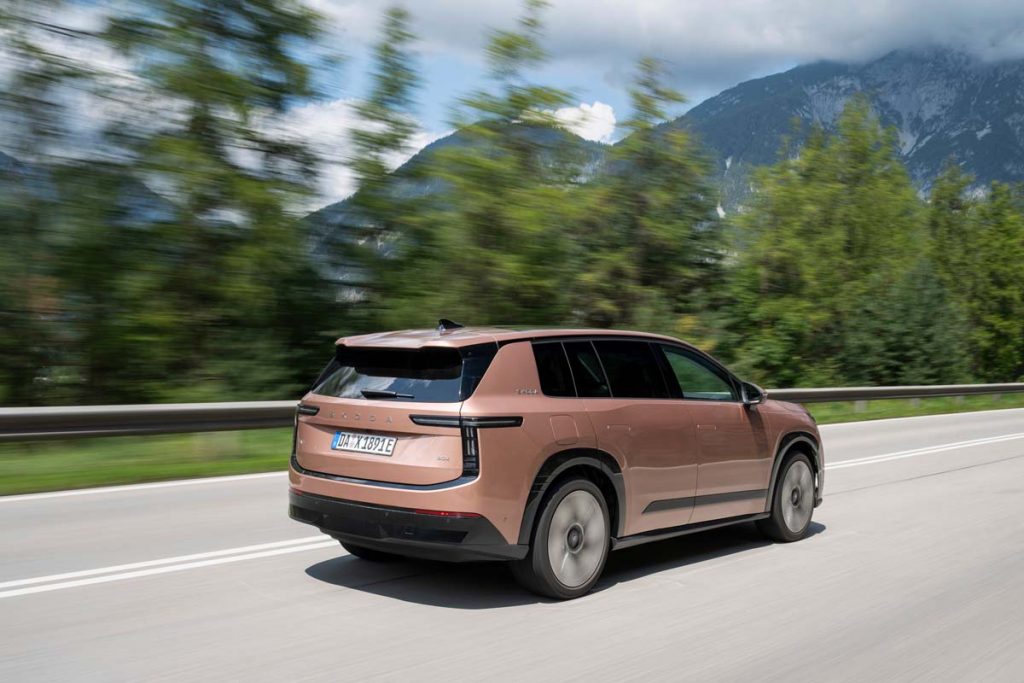
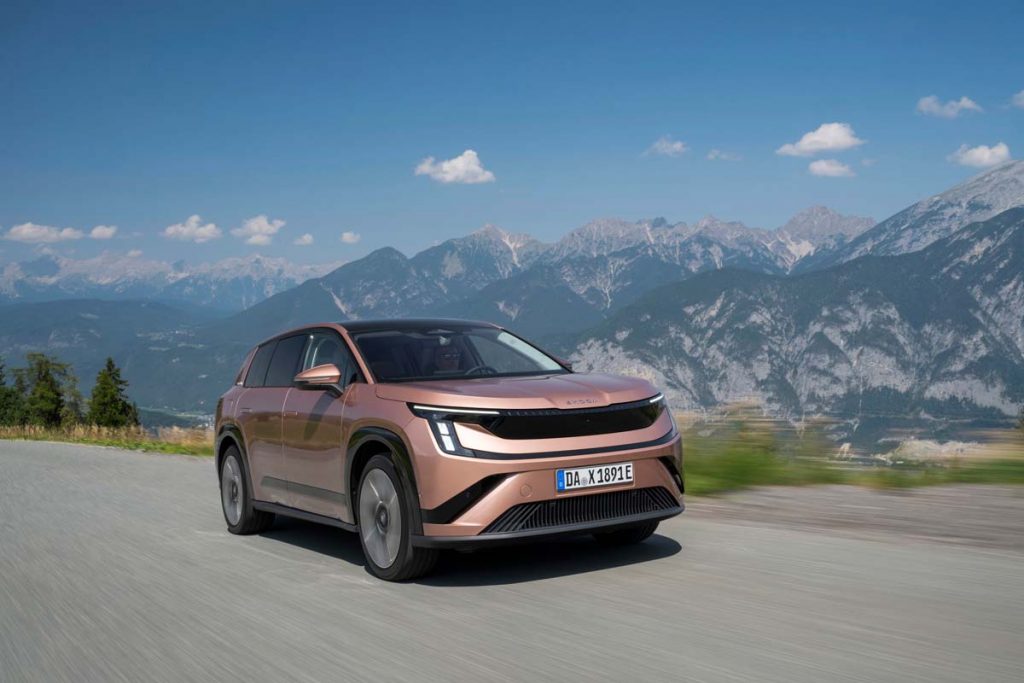
Le Peaq fait entrer Škoda dans le club encore restreint des grands SUV électriques à sept places. Avec ses 4,87 mètres de long, sa batterie de 86 kWh utiles et son autonomie pouvant atteindre 644 km en propulsion, il s’attaque directement au Peugeot E-5008 et vient compléter l’offre du groupe Volkswagen sur le terrain des véhicules familiaux grand format. Nous avons essayé le Peaq 90x Sportline, doté de deux moteurs électriques et de 299 ch.
Un beau bébé
Ce nouveau modèle devient le vaisseau amiral de Škoda. Il ne remplace pas l’Enyaq, plus court et moins familial, mais prend naturellement le dessus dans la gamme. Son cahier des charges est simple à comprendre. Il doit offrir beaucoup d’espace, voyager dans un confort digne d’une voiture haut de gamme et éviter les arrêts à répétition sur les longs trajets. En France, la gamme commence à 56 460 euros avec le Peaq 90 à propulsion. La version 90x Sportline essayée ici est affichée à 62 610 euros. Le gabarit ne passe pas inaperçu. Avec 4,87 mètres de long et un empattement de 2,97 mètres, le Peaq dépasse largement l’Enyaq et se montre même plus imposant qu’un Kodiaq.
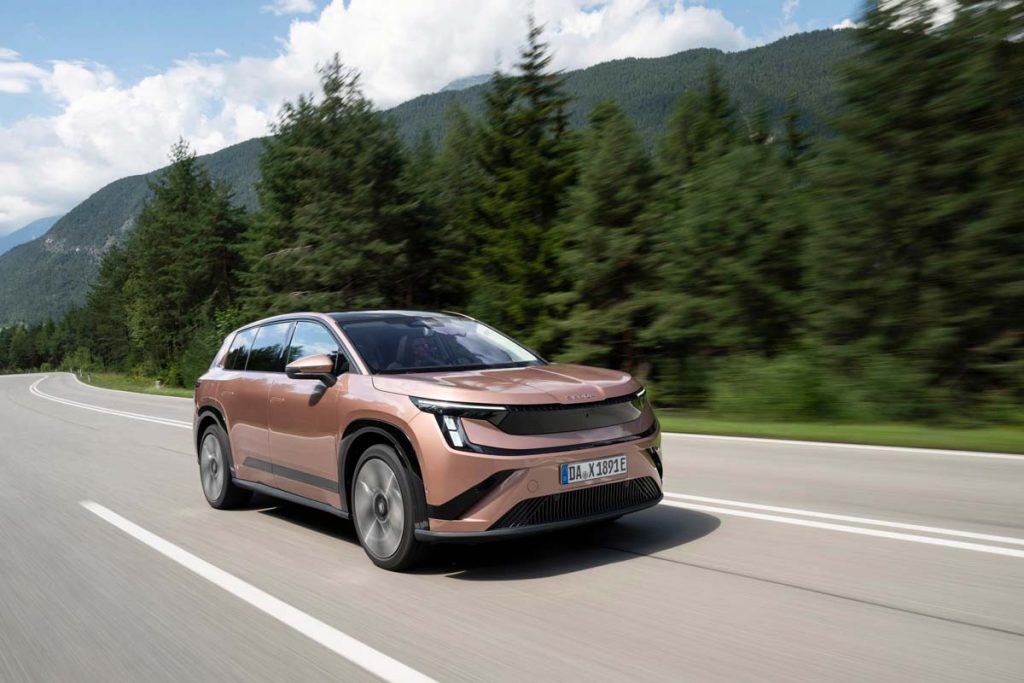
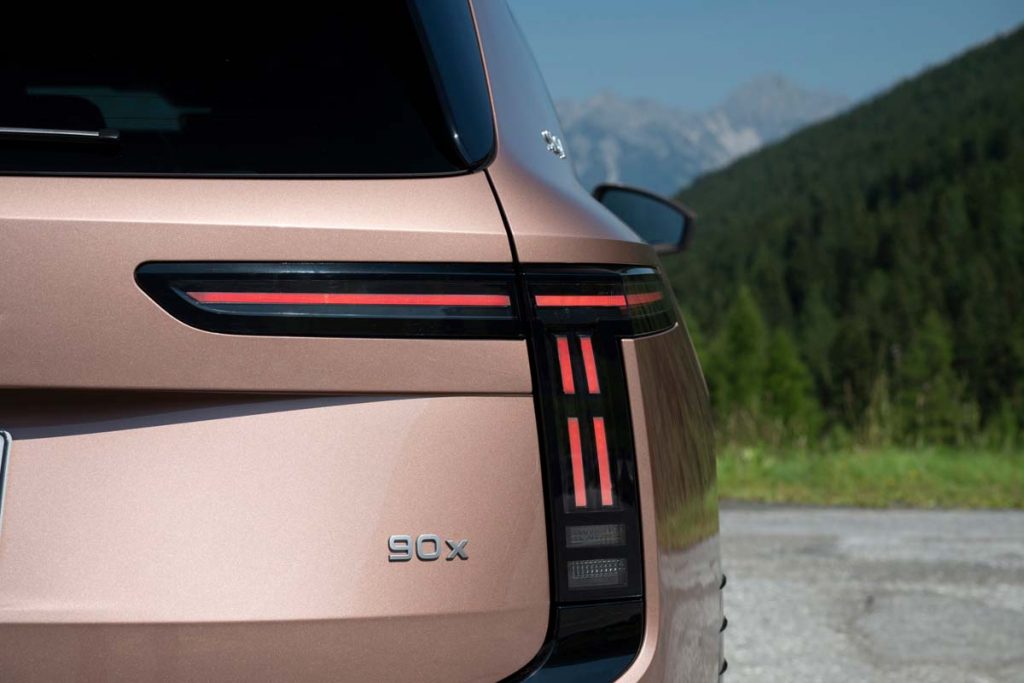
Škoda a pourtant évité de lui donner une allure de gros cube. La face avant reprend les codes du concept Vision 7S, avec ses fins projecteurs en forme de T et son bandeau noir. Le profil se veut plus discret, avec des flancs lisses, des poignées affleurantes et un montant D marqué du lettrage Škoda. Ce dessin n’est pas seulement une affaire de style. Les volets pilotés, les rideaux d’air, le soubassement caréné et l’absence de barres de toit permettent au Peaq d’afficher un cx de 0,249. À vitesse stabilisée, le grand SUV reste d’ailleurs plutôt silencieux. Le toit panoramique électrochrome de 2,1 m² renforce la sensation d’espace, même si son opacification par segments relève davantage du raffinement que d’une véritable nécessité.
Spacieux 7 places
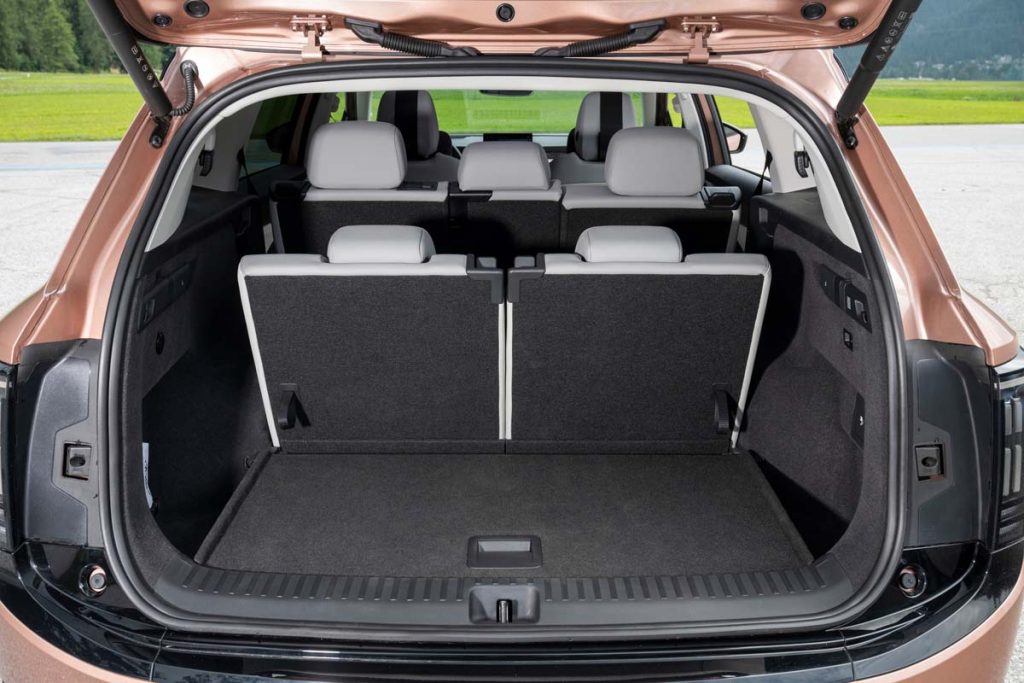
L’habitabilité reste le principal argument du Peaq. En configuration cinq places, le coffre propose 935 litres. Il faut ajouter les 37 litres du frunk, suffisamment vaste pour accueillir le câble de recharge. Lorsque les sept places sont utilisées, le volume derrière la troisième rangée tombe à 299 litres. Cela reste suffisant pour quelques sacs ou de petites valises, mais il faudra voyager léger avec toute la famille. La deuxième rangée coulisse et ses dossiers s’inclinent. Elle permet donc de choisir entre davantage d’espace aux jambes et un coffre plus généreux. La troisième rangée est plus conventionnelle. Elle conviendra sans difficulté à des enfants et pourra dépanner des adultes sur de courtes distances, mais les assises courtes et les dossiers peu rembourrés limitent son intérêt sur un long trajet. Le Peaq est donc davantage un 5+2 qu’un véritable sept-places capable d’accueillir six adultes dans les mêmes conditions.
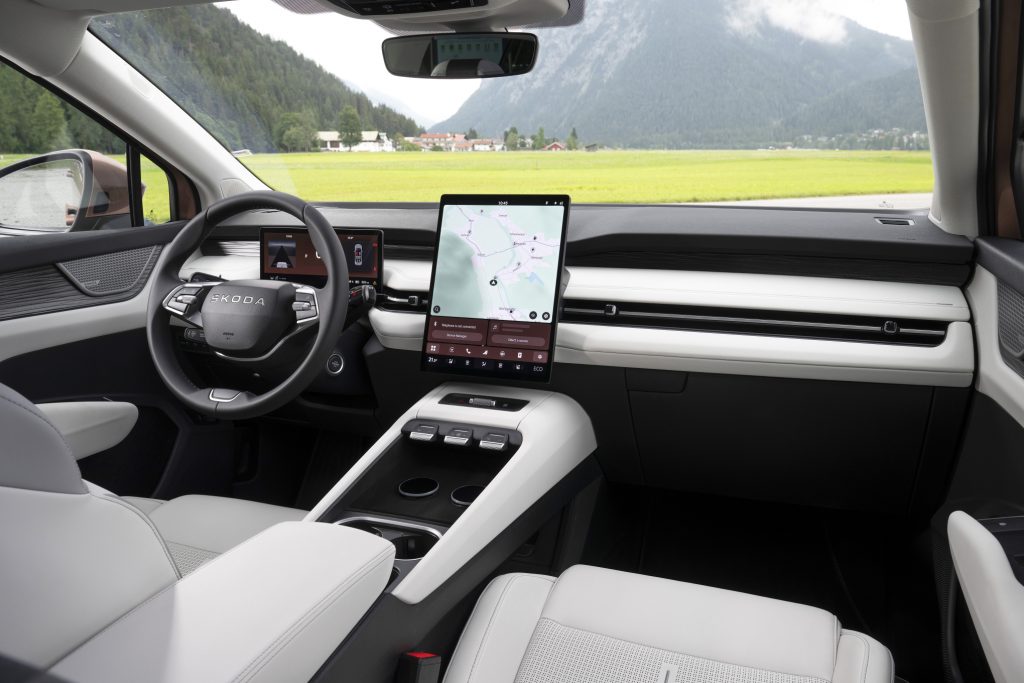
À l’avant, la présentation progresse nettement par rapport à celle de l’Enyaq. Les matériaux sont sérieux, les assemblages correctement réalisés et l’écran central vertical de 13,6 pouces donne une présentation plus moderne. Škoda a conservé quelques commandes physiques pour la température et le volume, mais l’ergonomie reste discutable. Certaines fonctions sont trop profondément enfouies dans les menus, et l’écran demande parfois une attention excessive en roulant. Le pack Relax apporte une touche plus haut de gamme. Les sièges avant certifiés AGR peuvent masser le conducteur et le passager, avec un repose-jambes électrique et des coussins. Le passager avant profite d’un confort remarquable. La chaîne audio Sonos de 755 W complète efficacement l’ambiance, sans transformer pour autant le Peaq en salon de concert roulant.
Taillé pour le voyage
Sur la route, le Peaq assume son rôle de grand voyageur. La suspension pilotée DCC filtre correctement les irrégularités et évite au SUV de se montrer trop pataud. Les 299 ch du 90x ne sont pas de trop pour déplacer les quelque 2,4 tonnes de l’ensemble. Le 0 à 100 km/h est annoncé en 6,8 secondes, ce qui suffit largement pour s’insérer sur une voie rapide ou dépasser avec autorité. Il ne faut toutefois pas prendre ces chiffres pour une invitation à attaquer les petites routes. Le Peaq reste un véhicule confortable avant d’être dynamique. La direction manque de ressenti, le train avant rappelle rapidement le poids du véhicule et le mode Sport alourdit surtout la commande sans métamorphoser le comportement. La transmission intégrale sécurise les relances sur chaussée humide, mais elle n’efface pas l’inertie. Le meilleur compromis consiste à conserver le mode Normal pour l’accélération et à personnaliser la direction.
Le freinage est correctement dosé et rassurant, malgré la masse élevée. La récupération d’énergie se montre suffisamment efficace en position B pour ralentir franchement sans solliciter systématiquement la pédale centrale. Sur autoroute, le Travel Assist contribue également au confort de conduite, à condition de rester attentif aux réactions parfois prudentes du système. La consommation dépend évidemment du parcours et du rythme. Lors d’un essai mêlant route et voies rapides, le Peaq 90x peut tourner autour de 18 à 20 kWh/100 km. Un relevé de 19,3 kWh/100 km donne une autonomie réelle d’environ 450 km avec la batterie de 86 kWh utiles. La version 90 propulsion devrait faire mieux grâce à son moteur unique et peut dépasser 500 km dans des conditions favorables. L’autonomie WLTP atteint jusqu’à 644 km pour cette version, mais le 90x est officiellement limité à environ 611 km selon sa configuration.
Tarifs bien placés, mais attention aux options
Le prix complique cependant le bilan. À 56 460 euros, le Peaq 90 Clever reste correctement placé face au Peugeot E-5008 GT, qui démarre à 58 690 euros selon les tarifs évoqués. Le 90x Sportline essayé atteint déjà 62 610 euros avant l’ajout des équipements optionnels. Avec le pack Relax, le toit panoramique, la suspension DCC et la pompe à chaleur, la facture peut rapidement dépasser 71 000 euros. Le Kia EV9 devient alors une alternative crédible, plus imposante et plus statutaire, même si son tarif de départ est généralement supérieur.
Le Peaq est une réussite cohérente plutôt qu’un coup d’éclat. Il offre un espace remarquable, un confort de premier ordre et une autonomie convaincante en version 90. En revanche, son comportement ne procure aucun plaisir particulier et ses équipements optionnels font rapidement grimper la facture. Le choix le plus rationnel reste donc le Peaq 90 à propulsion, plus efficient et moins cher que le 90x. À condition de rester raisonnable sur la configuration, le grand Škoda mérite sa place parmi les meilleurs SUV électriques familiaux du moment.
Car thefts in San Francisco are down almost 59% for the first eight months of 2026 compared with the same months in 2022, according to analysis of police department statistics by NPR's Planet Money — and car break-ins are down more than 82%.
"San Francisco's law enforcement leaders tell us that greater use of surveillance technology — including a controversial, AI-powered license plate camera system made by Flock Safety — has been crucial to this drop in car crime."
How much credit does Flock actually deserve...? [In July of 2022, San Francisco District Attorney] Jenkins began taking a more aggressive approach to prosecuting people accused of crimes. Meanwhile, the SFPD beefed up its tactics to fight car thefts and break-ins. In 2023, for example, the police increased patrols in tourist areas known for car break-ins and used "bait cars" to catch and build cases against organized car burglars. But, Jenkins says, "one of the most important factors" behind the drop in crime came when the city introduced new crime-fighting technology. In March 2024, San Francisco voters approved Proposition E, which, among other provisions, made it easier for SFPD to use drones and high-tech surveillance cameras. That same month, the SFPD began installing Flock cameras in strategic locations... In a statement to Planet Money, a spokesperson for the SFPD said, "ALPR has been instrumental in driving down crime in San Francisco. These tools enable our officers to identify crime vehicles with precision, and ALPR is assisting in reducing crimes that were previously very challenging to solve, like auto burglaries."
Jenkins described how Flock cameras and drones can work together to catch suspected criminals. In one case the SFPD publicized, the department says Flock cameras spotted a moving vehicle linked to an auto burglary the previous day and alerted officers. Officers deployed a drone, which flew in from above and then began recording suspects in real time as they smashed windows and stole luggage out of a parked SUV. The police then moved in and arrested them. They can do all this, Jenkins says, "without putting innocent people in danger with dangerous police chases." Meanwhile, the surveillance system creates an evidence trail that [Jenkins'] office can use to prosecute suspected criminals... Jenkins also believes high-tech surveillance helps deter crime, although that's harder to prove...
The most ambitious study of Flock's system so far is a recent one by University of South Carolina crime researchers Ian Adams and Scott Mourtgos. They analyzed data from 216 law enforcement agencies that introduced Flock cameras, comparing crime trends with places that had not adopted Flock. They found that deploying Flock cameras was associated with an 11% drop in car thefts in the first year. This is only one study, and it has yet to be peer-reviewed. It's also not a randomized controlled trial, the gold standard for finding the actual causal effect of something. Other factors, beyond Flock, could still help explain the decline.
That study attempted to control for variables, the article points out — like how San Francisco's decline coincided with a broader drop in crime across American cities as America emerged from the pandemic...
But the article also notes another worry shared by "countless citizens" and political leaders. Are these systems handing too much power to law enforcement to "invade our privacy, trace our whereabouts, and stomp on our civil liberties."
404 Media reports:
"We will not add facial recognition to our devices," Flock CEO Garrett Langley said in a recent video. But other, third-party companies are telling cops that they are willing to add facial recognition to data gathered by Flock cameras in order to "close that gap." A company called VIDIZMO is advertising the capability to export footage from FlockOS to its own platforms that do facial recognition, behavior prediction, and racial and gender analysis on live camera feeds. VIDIZMO is a several decades-old video analysis and database company that has started offering facial recognition technology to cops within the last six months. In a May email to Johnson City, Tennessee, deputy police chief Michael Adams, a salesperson from VIDIZMO wrote that the company's product could do facial recognition on both Flock and Axon [body-worn camera] data in "one searchable platform...."
VIDIZMO's CEO, Nadeem Khan, told 404 Media on a video call that the company has not yet started running facial recognition tech on footage from Flock cameras, and that it has not actually built the specific tool that would export data from Flock's system to its own platform (though the company advertises this capability online, and the company already sells other facial recognition products). But Khan said VIDIZMO "would love to do the integration," and that he believes facial recognition "is the way the world is going, the way the world will have to be," and that he thinks Flock should offer the capability itself in a way that "balances privacy, security, and the freedom that we enjoy in this country."
The article notes that VIDIZMO says on its website, "You can identify individuals from seven races: White, Black, Indian, East Asian, Southeast Asian, Middle Eastern, and Latino Hispanic." VIDIZMO adds that stores or cities can also then do "demographic analysis" for marketing purposes by determining the races or ages of people showing up....
"The winner of the Nikon Small World in Motion competition is under investigation," writes the photography news site PetaPixel , "after scientists accused Dr Ning Xu of using AI in his video."
The Nikon competition is about showcasing the beauty, complexity, and artistry of the microscopic world. The entries are abstract, often baffling to laypeople. But when Dr Xu was announced as the winner last month, members of the scientific community began to cry foul. "There are many serious problems with this video," Edward Phelps, associate professor at Florida University, says on LinkedIn. Phelps points out that "purple structures pop in and out of existence" and "green cilia also appear from nowhere and do not match the known size."
Dr Xu's video is supposed to show the movement of cilia, which are hair-like structures that line part of the lungs... However, since Dr Xu won the prize, Nikon Small World updated its LinkedIn post celebrating his triumph with a note that reads: "Regarding questions raised about this year's Small World In Motion winning video, Nikon is carefully re-reviewing the information provided during the initial vetting, along with additional supporting materials from the entrant." Nikon adds that Dr Xu is "respectfully complying and has provided detailed technical documentation outlining the microscopy equipment, imaging methods, and processing techniques used to create the source video."
Worse still, Ian Donovan, an MD/PhD Student at UT Southwestern Medical Center, says he ran the video through Google Gemini, and the result came back with an invisible Google SynthID watermark that indicates at least some of the video is AI-generated. Dr Xu, an optical engineering researcher at the National University of Singapore, reportedly responded to the LinkedIn post. According to Nature, Dr Xu accepted that he had used an AI model to assist with post-processing but denied breaking the rules of the competition, which clearly state that "AI-generated videos are not permitted."
"It was applied afterwards to the reconstructed grayscale data to distinguish and color structures with similar morphology," he wrote. However, Dr Xu's messages on the LinkedIn post can't be found as of today (October 1), and his LinkedIn profile now appears to have been deleted entirely.
Meanwhile, some college students "see a double standard when colleges penalize them for outsourcing academic work to AI but allow similar use by institutional leaders," writes Entrepreneur magazine:
According to a recent report from The New York Times, Dartmouth College students are calling out a top professor for allegedly using AI to help with writing... The school's provost, Santiago Schnell, faced allegations of AI use last week from the college's student-run newspaper, which detected AI in some of his published writing. The college said it was launching an investigation into the written work. Schnell said in a statement to the student-run newspaper, The Dartmouth, that he used AI "for language refinement, copyediting, improving clarity and organization and making writing processes more efficient." The newspaper ran his statement through an AI detector, which said that Schnell had used AI to write it, too.
Researchers from Carnegie Mellon, MIT, NYU, and Stanford have built an AI called Ataraxos that finally cracked Stratego, beating four-time world champion Pim Niemeijer 15 games to one with four draws. Its key advantage was a second neural network that estimates the identities of hidden enemy pieces, letting the system search plausible game states rather than brute-force a massive hidden-information space. Ars Technica reports: Just like [DeepMind's DeepNash, introduced in 2022], Ataraxos learned by playing against itself -- 163 million games in total. In these self-play sessions, moves that led to wins were reinforced and played more often in future matches, while moves that led to losses were played less, which was the same simple training idea. The difference was in how much Ataraxos adjusted after each game, because hidden information tends to send self-play learning algorithms around in circles. The team addressed this by making big, bold changes in strategy early in training and small, careful ones later.
The even bigger innovation was something DeepNash never had: thinking ahead before each move. AIs like AlphaGo refine their general strategy with a search just before acting. DeepMind couldn't make that work in Stratego because the search space was too large, leaving it an open question whether it was worth trying. "This is one of the things that we did figure out how to do," Farina said. The solution was a second neural network, a belief model, trained to guess the opponent's hidden pieces based on how they had been moving. This way, instead of iterating through every possible arrangement, Ataraxos samples plausible ones, plays out candidate moves in each, and picks based on how they turned out. And it shows in its playstyle.
[...] DeepNash was trained for two to three months on 1,024 of Google's specialized chips, a run the Ataraxos team estimates would cost $3 million to $4.5 million at 2025 prices. Ataraxos, in contrast, needed 16 GPUs for a week, plus an additional four GPUs for four days to train the belief model. Farina and lead author Samuel Sokota achieved this efficiency by writing a simulator that runs millions of moves per second on graphics cards. "At the scale that we are in academia, we don't really have access to an entire field of GPUs," Farina said. The algorithm also learned far faster -- it played about 34 times fewer games than DeepNash, and still ended up much stronger. The findings have been published in the journal Nature.
In an op-ed for The Guardian, authors Timnit Gebru and Emily M. Bender argue that policymakers are focusing too heavily on hypothetical "superintelligence" while overlooking the more immediate danger of deploying unreliable AI in high-stakes settings. They point to an as-yet independently unverified CNN report claiming U.S. officials nearly intercepted a Chinese vessel after an AI-assisted intelligence report incorrectly said it was carrying nuclear-weapons components. From the article: While so many of us were focused on fictional superintelligent machines that we were told could hypothetically cause human extinction, however, there was a more serious story being reported. A series of events almost got us to armageddon, not caused by "rogue, superintelligent AI," but by government reliance on error-prone systems that are marketed by their manufacturers as being close to superintelligent.
A CNN report published on September 18, which hasn't been verified by other major outlets, describes how the US "almost started a war" with China, based on an intelligence report that claimed a Chinese ship was transporting components of nuclear weapons. Military personnel made plans to intercept the Chinese vessel, complete with aircraft and soldiers ready to board the ship. A military skirmish of this kind between China and the US could quickly escalate and spiral into world war three.
It was only moments before executing on the plan that American officials further investigated the intelligence report and found that it had been generated with the use of a chatbot and contained erroneous information about the vessel's contents. Unlike the terminator, "rogue AI," scenario, this incident didn't galvanize lawmakers into announcing calls for regulation so as to avoid potential human extinction. Media outlet after media outlet didn't warn the public that we almost triggered a war against a nuclear superpower because of our military's reliance on error-prone chatbots.
En décembre 2025, un mois avant la capture de Nicolás Maduro, Donald Trump a demandé à Grok, le chatbot d'Elon Musk, comment les Vénézuéliens réagiraient, d'après le magazine Time. Le président en serait ressorti convaincu que cette IA était « ingénieuse ».
En décembre 2025, un mois avant la capture de Nicolás Maduro, Donald Trump a demandé à Grok, le chatbot d'Elon Musk, comment les Vénézuéliens réagiraient, d'après le magazine Time. Le président en serait ressorti convaincu que cette IA était « ingénieuse ».
The Federal Trade Commission has opened an investigation into OpenAI, Anthropic and other AI companies over potential consumer and safety risks posed by their products, with the agency reportedly preparing requests for documents and executive testimony. CNBC reports: OpenAI stunned the industry in July when it disclosed that its agents broke out of a testing environment and hacked into open-source platform Hugging Face. [...] Earlier this month, Anthropic CEO Dario Amodei rocked the tech sector by urging AI companies to slow how quickly they improve their most advanced models and calling for stronger government oversight. He published a three-step proposal aimed at tempering the pace of development without "sacrificing commercial advantage or the United States' lead in AI."
CEO Jensen Huang, argued that individual companies should be responsible for ensuring the safety of their products. President Donald Trump convened top executives from Alphabet, Meta, SpaceX, Nvidia, Palantir, Anthropic, OpenAI and other companies on Tuesday to discuss the issue. The group signed a short voluntary, nonbinding accord, which says that "every company is responsible for developing its own technology safely and in a way that builds trust with customers and the public."
Un ingénieur a utilisé GPT-6 Astra pour déchiffrer une lettre de 1809 destinée à un général de Napoléon. Selon lui, environ six heures ont suffi à l’IA pour transcrire les signes manuscrits et reconstituer le message en s’appuyant sur des travaux existants.
C'est officiel : Apple organise le 13 octobre à New York un événement baptisé « Welcome Home » consacré à la maison connectée. La marque devrait y lancer son premier écran pour la maison, une sorte d'iPad sans batterie à poser sur un socle ou à accrocher au mur, avec un nouveau HomePod mini et une nouvelle Apple TV. Des accessoires conçus avec LG et Schneider Electric pourraient suivre.

 Connexion