Vue lecture

Bridge returned error 400! (20682)

Details

Type: ClientException
Code: 400
Message: Invalid parameters value(s): data_source
File: lib/utils.php
Line: 256

Trace

#0 index.php(73): RssBridge->main()
#1 lib/RssBridge.php(39): RssBridge->{closure:RssBridge::main():37}()
#2 lib/RssBridge.php(37): BasicAuthMiddleware->__invoke()
#3 middlewares/BasicAuthMiddleware.php(13): RssBridge->{closure:RssBridge::main():37}()
#4 lib/RssBridge.php(37): CacheMiddleware->__invoke()
#5 middlewares/CacheMiddleware.php(44): RssBridge->{closure:RssBridge::main():37}()
#6 lib/RssBridge.php(37): ExceptionMiddleware->__invoke()
#7 middlewares/ExceptionMiddleware.php(17): RssBridge->{closure:RssBridge::main():37}()
#8 lib/RssBridge.php(37): SecurityMiddleware->__invoke()
#9 middlewares/SecurityMiddleware.php(19): RssBridge->{closure:RssBridge::main():37}()
#10 lib/RssBridge.php(37): MaintenanceMiddleware->__invoke()
#11 middlewares/MaintenanceMiddleware.php(10): RssBridge->{closure:RssBridge::main():37}()
#12 lib/RssBridge.php(37): TokenAuthenticationMiddleware->__invoke()
#13 middlewares/TokenAuthenticationMiddleware.php(10): RssBridge->{closure:RssBridge::main():33}()
#14 lib/RssBridge.php(34): DisplayAction->__invoke()
#15 actions/DisplayAction.php(54): DisplayAction->createResponse()
#16 actions/DisplayAction.php(88): BridgeAbstract->setInput()
#17 lib/BridgeAbstract.php(163): throwClientException()
#18 lib/utils.php(256)

Context

Query: action=display&bridge=BlueskyBridge&data_source=getAuthorFeed&user_id=tristankamin.bsky.social&feed_filter=posts_and_author_threads&include_reposts=on&format=Atom
Version: 2025-08-05 (git.master.cf86742)
OS: Linux
PHP: 8.4.24

Go back

mruac

  •  

Bipartisan 'Uprising' Against Flock Cameras: a Larger Fight Against Big Tech and Surveillance?

Politico notes that over 20 local jurisdictions in America "either stopped using Flock cameras or began the process of doing so in July, according to a tracker maintained by DeFlock, an activist group that has been mapping the company. It's the highest amount in a single month since they began tracking in 2021." Some local officials said the public safety promises weren't worth the cost. The cameras "didn't help us with anything. From a utility aspect, they were just kind of not useful," said Eric Couture, a Democratic first selectman in Killingworth, Connecticut, another city that recently canceled its contract with Flock. "I'd say it was a net negative." And their article adds that it's a bipartisan pushback that "runs parallel to sprawling fights over the future of technology in American life, including the rise of increasingly advanced artificial intelligence tools and the construction of massive data centers needed to power them." Salon even argues Flock's cameras "have become a symbol of growing anger over the efforts by technology oligarchs to impose their dystopian fantasies on the country, replacing liberal democracy with a surveillance state... People are sick of tech billionaires trying to control our lives"" By targeting Flock cameras, activists are building momentum for a larger rebellion against the tech industry — and against political leaders who are complicit in their assault on our freedoms. Flock Safety embodies the dishonesty that has been the prevailing theme of tech corporate communications and marketing for at least the past decade. While the cameras are sold to the public as a banal traffic safety measure, they have prompted an outpouring of stories about how they're being used to violate civil liberties and undermine democracy... According to an exhaustive 10-month analysis by Electronic Foundation Frontier, a nonprofit dedicated to defending civil liberties in our digital age, local police were using the cameras to track protesters, such as those at No Kings rallies, who were then put in a national database to be used across all jurisdictions. Despite claims that the cameras only record license plates, the technology-focused outlet 404 Media found that the database is also being used to collect information on individual people whom cops can then search for using descriptions of clothing, race, gender and body type. The Flock uprising, though, is the stirrings of public understanding that none of this inevitable — and we have the right to fight back... Along with protests against data centers, it's a sign that the public is desperate for a way to fight back against not just AI, but also the anti-democratic forces fueling this latest tech wave. Salon's writer also adds that "what stands out about the burgeoning public rebellion against Flock security cameras is just how fun it all is," citing "a national cat-and-mouse game between vandals and cops that is being merrily followed on social media, mostly by people rooting for the vandals." City council meetings in which citizens swarm to protest paying for the cameras are the new must-see TV. In Huntington, West Virginia, a small city in the heart of Appalachia, one man became an internet folk hero when he stood up at a city council meeting and said, "I'm not gonna waste your time; I'm kinda hungry. But one last thing: Every single Flock camera has about 2-3 pounds of copper and about 1-2 grams of gold. Do with that information what you will." He then walked off in triumph.

Read more of this story at Slashdot.

  •  

Bridge returned error 400! (20682)

Details

Type: ClientException
Code: 400
Message: Invalid parameters value(s): data_source
File: lib/utils.php
Line: 256

Trace

#0 index.php(73): RssBridge->main()
#1 lib/RssBridge.php(39): RssBridge->{closure:RssBridge::main():37}()
#2 lib/RssBridge.php(37): BasicAuthMiddleware->__invoke()
#3 middlewares/BasicAuthMiddleware.php(13): RssBridge->{closure:RssBridge::main():37}()
#4 lib/RssBridge.php(37): CacheMiddleware->__invoke()
#5 middlewares/CacheMiddleware.php(44): RssBridge->{closure:RssBridge::main():37}()
#6 lib/RssBridge.php(37): ExceptionMiddleware->__invoke()
#7 middlewares/ExceptionMiddleware.php(17): RssBridge->{closure:RssBridge::main():37}()
#8 lib/RssBridge.php(37): SecurityMiddleware->__invoke()
#9 middlewares/SecurityMiddleware.php(19): RssBridge->{closure:RssBridge::main():37}()
#10 lib/RssBridge.php(37): MaintenanceMiddleware->__invoke()
#11 middlewares/MaintenanceMiddleware.php(10): RssBridge->{closure:RssBridge::main():37}()
#12 lib/RssBridge.php(37): TokenAuthenticationMiddleware->__invoke()
#13 middlewares/TokenAuthenticationMiddleware.php(10): RssBridge->{closure:RssBridge::main():33}()
#14 lib/RssBridge.php(34): DisplayAction->__invoke()
#15 actions/DisplayAction.php(54): DisplayAction->createResponse()
#16 actions/DisplayAction.php(88): BridgeAbstract->setInput()
#17 lib/BridgeAbstract.php(163): throwClientException()
#18 lib/utils.php(256)

Context

Query: action=display&bridge=BlueskyBridge&data_source=getAuthorFeed&user_id=tristankamin.bsky.social&feed_filter=posts_and_author_threads&include_reposts=on&format=Atom
Version: 2025-08-05 (git.master.cf86742)
OS: Linux
PHP: 8.4.24

Go back

mruac

  •  

Anthropic Criticized For Adding Watermarks to Text that Claude Generates - or Processes

This week Anthropic announced its Claude chatbot will watermark the text it generates, reports the blog Futurism. "It works by making subtle changes in the AI's word choices across the text it generates, which are supposed to be imperceptible to a human but, in aggregate, form a pattern that is detectable with the tool." Anthropic said it was implementing the watermark system in response to the European Union's landmark AI Act passed in 2024, which requires that AI companies mark content that's been generated or edited by their systems. TechCrunch notes that other companies including Google, Meta, Microsoft, OpenAI, and Synthesia have committed to adhering to the EU's code. But "The news about Claude watermarking kicked off a firestorm on X," reports Forbes, "with users panicking that AI-assisted writing will now bear a kind of permanent 'scarlet letter.'" (Forbes wonders if media companies are normalizing AI "while at the same time stigmatizing the output.") But there's another issue. Anthropic said the watermark indicates Claude processed text, Business Insider points out, "not that it was necessarily the original author. The company said marks can remain after Claude proofreads, translates, summarizes, or otherwise edits content... a watermark shows that Claude processed text, not necessarily that it wrote it." In the days since, "Dozens of people have posted on X since Monday that they had canceled their Claude subscriptions, citing the watermark." Vladislav Rajtmajer, a freelance developer in the Czech Republic, told Business Insider he canceled his Claude Max subscription on Tuesday, citing the watermark as the main reason. He said he uses AI for code reviews and translations, and worried an AI label on code shipped to clients could raise questions about authorship or trigger contract penalties... Richard Echols, an AI consultant in Georgia, also said he canceled his Claude Max subscription on Wednesday and that the watermark was a major factor in his decision. He said he uses Claude to create documentation for businesses and worried the mark could appear when he had written the underlying material himself and used the chatbot only for edits. "Even if you edit your own work that you wrote, they add the watermark anyway," Echols said... Anthropic isn't the only AI lab to use watermarks: Google uses its SynthID technology to watermark AI-generated content, and OpenAI uses SynthID for supported images and audio. Elon Musk's social media platform X also adds a "Made with AI" tag on content it determines to be AI-generated or manipulated. Long-time Slashdot reader kmleon (also a tech consultant and RPG researcher) experienced another issue. He'd built some software using their own custom-built AI tool, only asking Claude to do some testing. "Little did I know that Claude would sometimes decide, since it was involved on the edges... to take credit for all of my work, claiming some parts were either "100%" or "Co-Authored/Created" by Claude.Ai / Claude Code!" I'm sure the good folks at Anthropic will eventually tweak Claude enough to, hopefully, not make these mistakes in the future.... I only became aware of it today, because I recently setup scanners to catch Claude incorrectly watermarking any content it touches for various projects I'm working on. I found that it has (apparently as far back as Sonnet 4.6, but as recently as today, August 14th, 2026) sometimes been mistakenly over-zealous in taking credit for 100% creating or co-authoring docs, code, images, videos, etc. I've only, so far, found about a dozen instances spanning the past year, and most of them appear to have been injected in the last few weeks, so it is not a common issue (yet). On the bright side? Maybe watermarks can help AI stop training on AI-generated text. Although Forbes also reports that Google "announced on Friday that it will now let users remove the visible watermark from AI-generated images, videos and music created with several of its models."

Read more of this story at Slashdot.

  •  

Linux 7.2 Released With Faster I/O, New AMD & Intel Driver Improvements

Linus Torvalds just released Linux 7.2 as stable! After a very busy kernel cycle due to the increased patch and reporting churn due to AI/LLM ages, Linux 7.2 managed to make it out today on-schedule for this feature-packed kernel. Linux 7.2 is going on to power Ubuntu 26.10 and other upcoming Linux distribution releases...
  •  

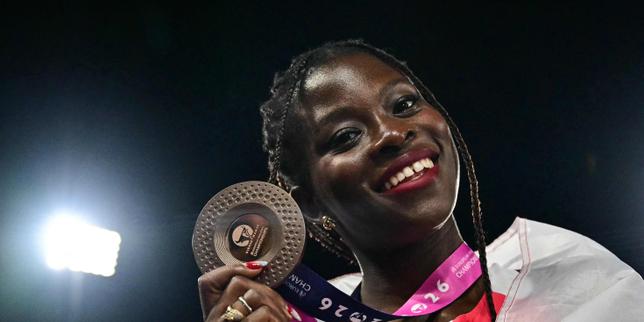
Euro d’athlétisme : la France décroche deux dernières médailles, en bronze, grâce à Hilary Kpatcha et Baptiste Thiery

La délégation tricolore a remporté ses dixième et onzième médailles lors de la compétition continentale, dimanche. Hilary Kpatcha et Baptiste Thiery ont tous deux décroché le bronze, la première en saut en longueur, le second en saut à la perche.

© BEN STANSALL/AFP

Hilary Kpatcha avec sa médaille de bronze remportée lors du concours du saut en longueur des championnats d’Europe d’athlétisme, à Birmingham (Angleterre), le 16 août 2026.
  •  
❌