❌

Vue lecture

Essai Honda Civic S+: un parfum de Prelude
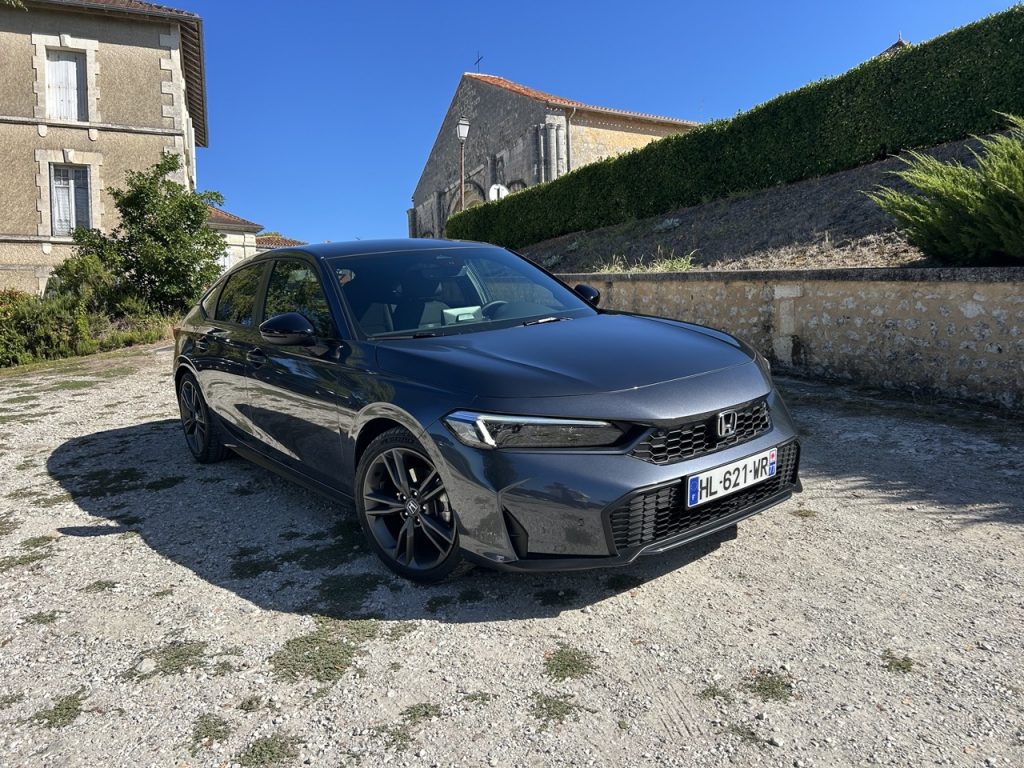
Honda Civic e-HEV

La Civic hybride, que nous avons eu l’occasion d’essayer par le passé, fait l’objet de subtiles évolutions. Au premier rang desquels un mode S+ qui donne à la berline Honda un parfum de Prelude. Direction les routes du sud-Charente pour en prendre le volant.

Une Civic universelle

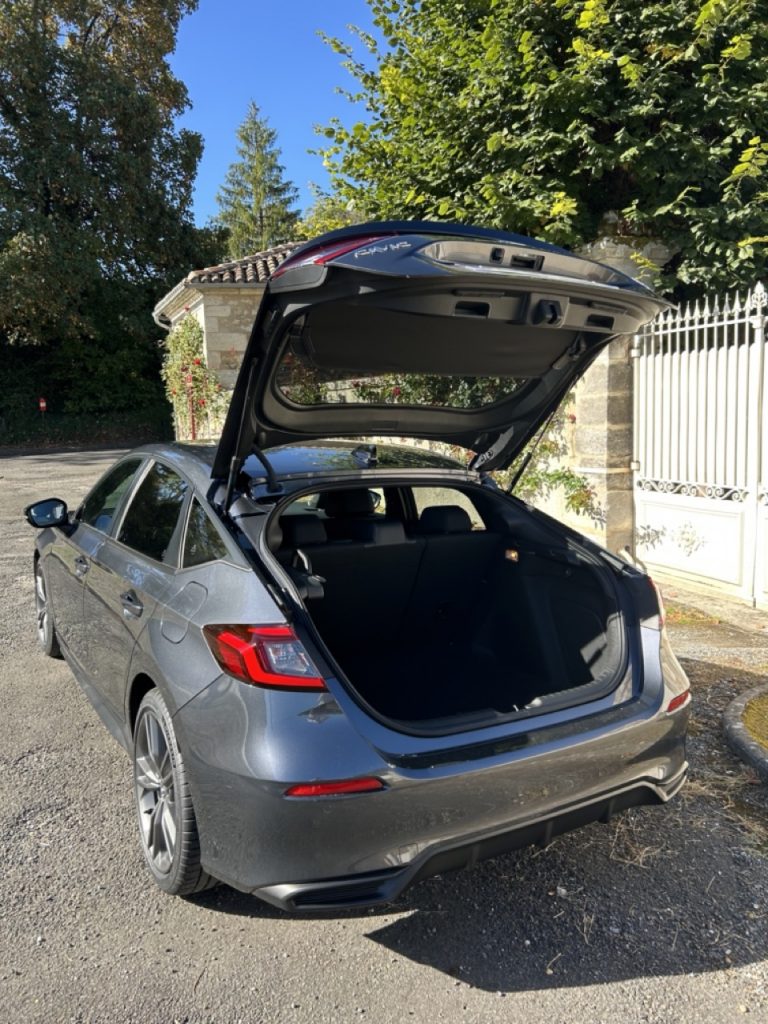
Polyvalente, accueillante et spacieuse, la Civic répond a tous les besoins ou presque. Et ce même si ses dimensions généreuses, 4m56 de long, sont taillées pour les grands espaces. Avec pas moins de 270 000 exemplaires vendus l’an dernier aux États Unis et au Canada, elle est y incontournable. Mais le best seller de Honda n’est plus comparable à une Golf… qui n’est plus vendue aux États Unis!
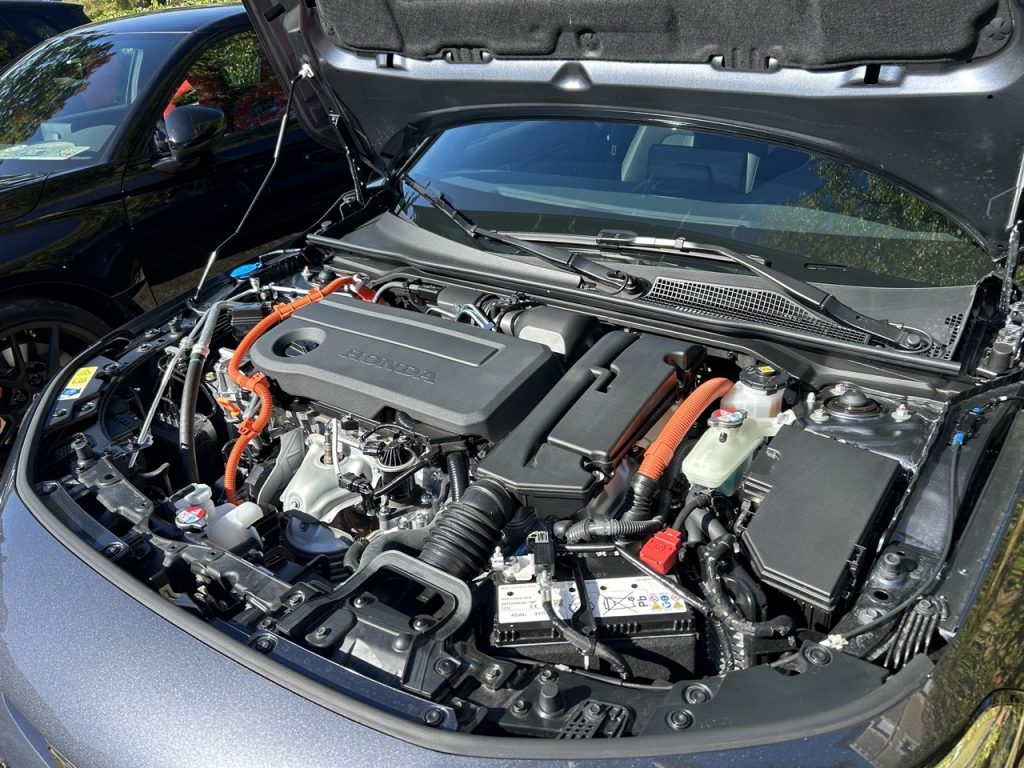
Alors même si on se plait à imaginer la même Civic dans un format plus compact, force est de reconnaitre que cette onzième génération est réussie sur bien des aspects. Pratique et sûre, la berline n’oublie jamais d’être confortable même en voyageant à plusieurs. Spacieuse elle dispose d’un coffre modulaire et ds rangements astucieux. Bien suspendue, elle se joue des mauvaises chaussées et des ralentisseurs d’entrées de ville. Son sens « Civique » se traduit aussi par un appétit d’oiseau, grâce a un système hybride efficace et bien pensé, le e-HEV. Qui se voit enrichi d’un mode S+.
En amélioration continue

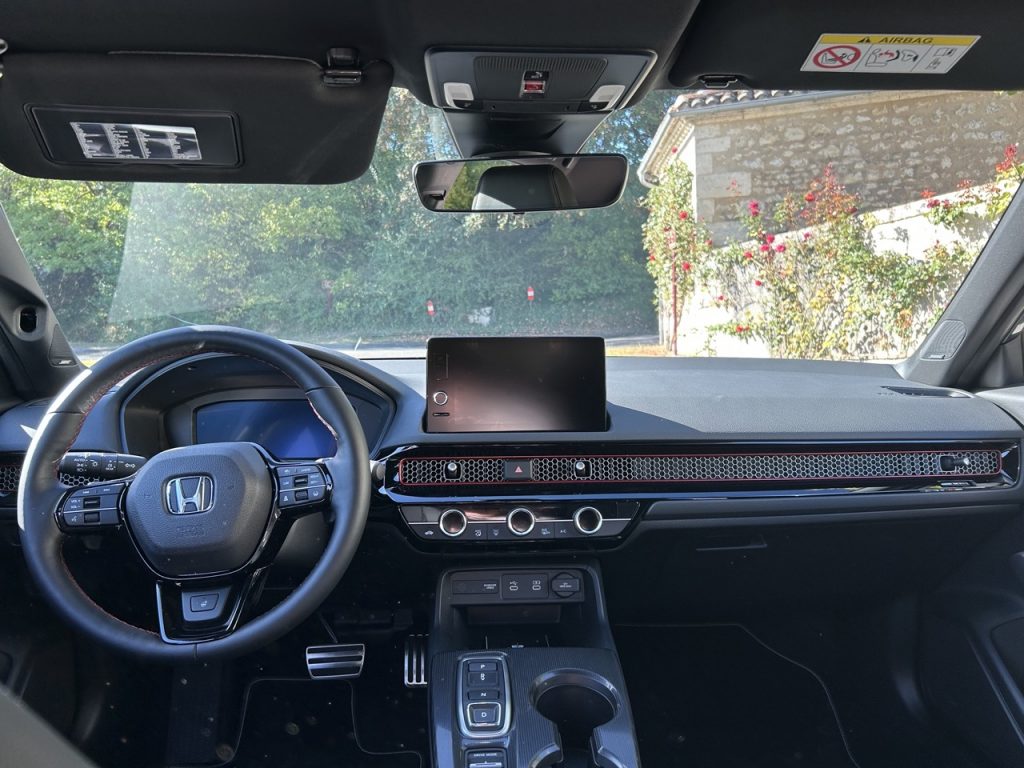
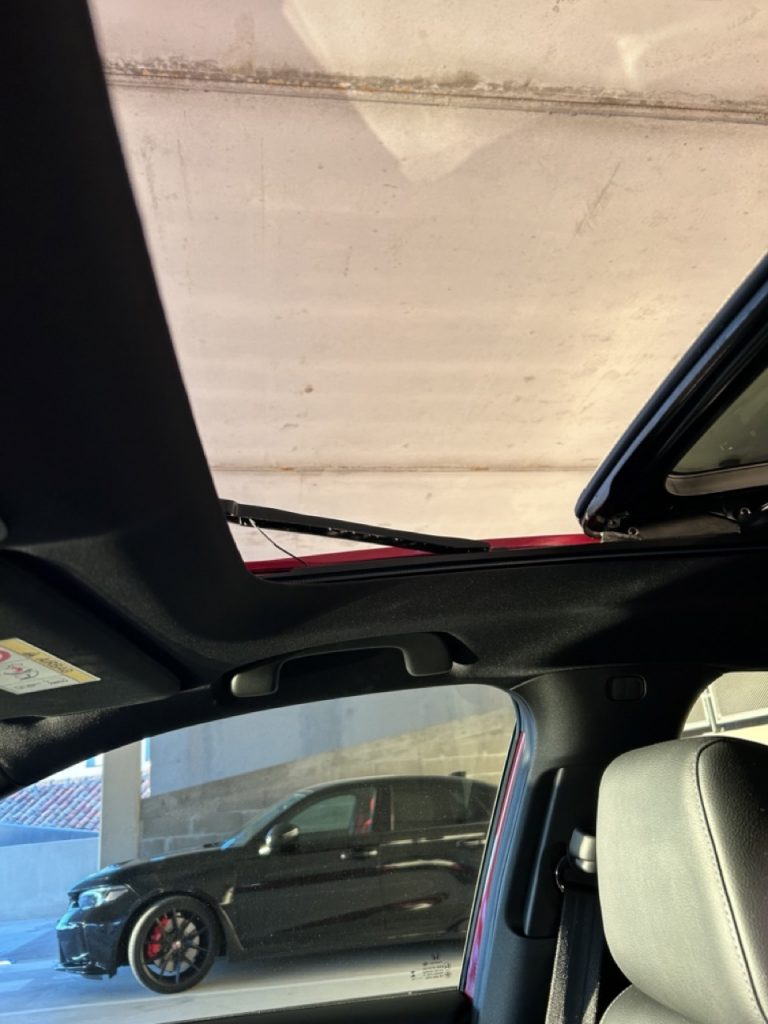
A priori rien ne distingue cette évolution, à part l’arrivée d’un nouveau coloris Gris Météore Métallisé, hérité de la…Prelude. Une invitation discrète à découvrir ce qui change. A l’intérieur, on retrouve la même sobriété, ou l’écran central ne capte pas toute l’attention. Sur les version Sport, des surpiqûres rouges sur la sellerie, les garnitures de portes et le volant font leur apparition. Un liseret rouge entoure dorénavant les grilles d’aération. Pas de bouleversement, donc, mais voilà qui rehausse discrètement l’ambiance. Ce rouge distingue la version Sport du premier modèle de la gamme, l’Exécutive et de la finition haute Advance. Cette dernière, riche d’une sellerie tout cuir et d’un toit ouvrant panoramique partage dorénavant son système audio à 12 haut-parleurs avec la version Sport. Advance et Sport disposent toutes deux du mode S+ qui n’est pas proposé sur l’Exécutive. 
Au parfum de Prelude

Que l’on ne s’y trompe pas. La Civic n’est pas devenue une Prelude à 4 portes. Au cas ou nous l’aurions oublié, Honda nous a confié le volant du coupé durant les essais. Le châssis affuté, la direction ciselée et les freins Brembo restent l’apanage de la Prelude. Tout comme l’ambiance à bord, les excellents sièges ou la position de conduite plus basse.
Mais la Civic sait donner plus de plaisir que par le passé. Au moins pour ceux qui gardent une appétence pour le moteur thermique, ses bruits ou ses changement de rythme. Comme c’était déjà le cas, la direction, les suspensions et la gestion moteur sont orientés vers la performance en mode Sport. En appuyant sur la touche S+, le son du moteur thermique est amplifié et amélioré. En jouant avec les palettes du volant, on simule des passages de rapports à la montée et on augmente la régénération et donc le frein moteur à la descente. On pourra reprocher au système sa virtualité, mais ce n’est qu’en partie vrai. Dans la pratique cela fonctionne plutôt bien et apporte une touche de « fun » à la conduite de la Civic. 
Pour conclure

Les tarifs de la Civic restent inchangés. Notre version Sport proposée à 38 170€ entre en concurrence avec un Golf R-Line Hybrid 170cv vendue 44 900€ ou à une Corolla GR Sport 2.0l 177cv affichée 39 850€. La Prelude réclame elle près de 50 000€, ce qui rend l’alternative Civic d’autant plus séduisante. On peut même retrouver un toit ouvrant en finition Advance, auquel n’a pas droit la Prelude. Un plus pour une berline dynamique à conduire, qui donne un réel plaisir à l’usage. Ce n’est pas si courant d’avoir ce sentiment derrière un volant.

Via Honda
L’article Essai Honda Civic S+: un parfum de Prelude est apparu en premier sur Le Blog Auto.

  •  

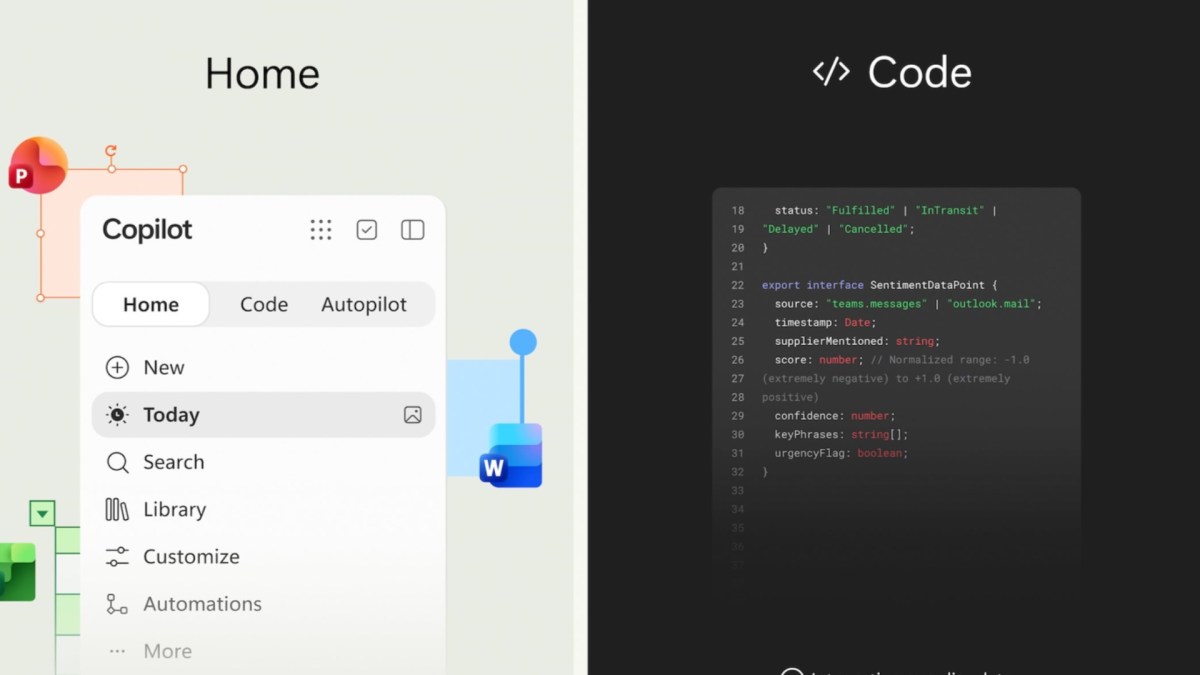
Le nouveau Microsoft Copilot s’attaque à Claude et ChatGPT (en utilisant Claude et ChatGPT)

Microsoft annonce une refonte de son application Copilot autour de trois onglets : Home, Code et Autopilot (ex-Scout). L'entreprise rêve d'inventer le Microsoft Office de l'intelligence artificielle en proposant un hub aux utilisateurs de Windows. Son principal problème est que, pour l'instant, elle dépend encore massivement des modèles d'Anthropic, OpenAI ou SpaceXAI.

  •  

L’IA va-t-elle détruire Hollywood ? La réponse de la légende Katzenberg qui a relancé Disney et Pixar

Ce mercredi 23 septembre 2026, l'ancien patron des studios Disney et cofondateur de DreamWorks a publié un long essai sur X. Jeffrey Katzenberg y demande à Hollywood d'accepter l'IA générative et d'en négocier les conditions, et rappelle à la Silicon Valley qu'elle a besoin des créateurs.

  •  

How Believable is Google's New 'Live Avatar' Capability?

Google has synthesized "expressive face-to-face experiences" for its speech agent Gemini 3.8 Live. They're now offering a Live Avatar "with precise lip-syncing, natural expressions, and fluid turn-taking" for Google Enterprise accounts wanting "engaging customer service" or for offering interactive walkthroughs. (Check out the not-creepy-at-all video in Google's announcement.) "Though Google will offer a library of preset avatars for customers to choose from, it will also allow organizations to create their own," notes The Verge. (See some examples from the YouTube channel "AI with Surya".) But even without the visualization of the avatar, "I was never able to shake the feeling that these conversations with computers never feel like a real conversation," argues the blog Android Police. Conversing with just the Ai-generated audio, "At best, they feel like talking to a phone representative or someone from tech support. We turn to them when we have a problem, and they help us through it..." GPT-Live, and Gemini Live right behind it, skip that whole relay race. Instead of translating your voice to text and back to voice, the model works with raw audio the entire way through (what it hears and what it says) inside the same system, with nothing translated in between. That sounds like a small plumbing detail, but it's the whole story. Cutting out the text step lets these models respond in a fraction of a second instead of the pause we've learned to expect, and it lets them hear things text can never carry: tone, hesitation, whether you're annoyed or joking... I was hoping to be surprised by how natural the conversation felt. Instead, I came out with a deeper appreciation for every human I've ever talked to. Even the boring ones... I spoke, it spoke back. I spoke faster, it answered faster. Then I switched to a different language, and it switched along with me. Even switching between languages several times during the same sentence didn't stump it. The most impressive moment happened when I asked it what "T-O-P-G-3-3-K" spelled out, and it immediately came back with, "You are spelling the word Top Geek, but using a 3 to represent a reversed E...." Although it felt fast and responsive, at no point did it feel like talking to another human being... What Gemini couldn't replicate, because it was never built to replicate it, is human connection.... I'm sure I'm not telling you something you don't already know, but somehow talking naturally to an LLM amplifies the feeling that there is no one on the other side of the line. It might flow like a phone call, but it doesn't feel like one. MrBrklyn (Slashdot reader #4,775) says he discussed "why mainstream media avoids reporting on screen dependency" with Gemini, and eventually convinced Gemini to respond that it's just "another tool built by the same tech giants to make sure you rely on their system to tell you what to think, how to talk, and what is real."

Read more of this story at Slashdot.

  •  

People Training OpenAI's AI Fired For Using AI To Train the AI

404 Media reports "multiple contractors hired to improve OpenAI's models have been fired for using AI to train the AI: That's not great for the models themselves, but there is also obviously a great irony in AI training companies working for OpenAI firing people for using AI when OpenAI's whole thing is to make people use AI at work... OpenAI declined to comment on its contractors being fired for using AI. Their article cites internal documents and three contractors working on OpenAI-related projects which can include more than ten thousand contractors: One contractor said they see people using AI "all the time and people are let go for it all the time, it's pretty much the one thing that will get you kicked off ASAP." The person said, "in a group of thousands there are tons that have been caught...." Two of the sources said people have been fired or offboarded for using AI... One contractor said they used AI while helping to train OpenAI's models and shared what they presented as their termination letter. It said their employer had identified issues with the "authenticity" of their work.... 404 Media spoke to a fourth contractor who has worked on training models for various AI companies. They said they sometimes purposefully chose the worst responses because they wanted to actively sabotage the models' training. "I did feel guilty about doing this kind of work at the start," they said. "I either pay zero attention to the results and choose randomly or purposely choose the [worst] output. I'm not sure how much of a difference it actually makes since there are hundreds of other people also rating prompt results, but it does feel like I'm getting paid to make AI worse." Two of the contractors worked for Mercor, the article reports, a company which last month Nvidia reportedly discussed funding at a $20 billion valuation. Thanks to Slashdot reader joshuark for sharing the article.

Read more of this story at Slashdot.

  •  
❌