❌

Vue lecture

AI-Generated Books Confront Publishing Industry With Big Questions

Romance novelist Coral Hart publishes her own romance novels for the Kindle, and found a kind of superpowere when she realized "the algorithm favours those who can produce a new book at least once a month," reports The Guardian: Hart says she knows of authors who hire more than a dozen ghostwriters to keep pace. By herself, Hart can write 10,000 words a day, but AI could help her produce many more. Since 2025 she has written 370 novels under 21 pen names using AI, earning herself "high six figures". Like any Kindle Unlimited author, she is only paid per pages read: it would make no business sense for her to churn out books that readers quickly abandon... "So, it's not taking the human out of the equation. It's taking the friction and the time and the business blocks out of the way." One study (awaiting peer review), led by Tuhin Chakrabarty of Stony Brook University, estimates that around one fifth of recently self-published books contain at least 25% AI-generated text. Hart now teaches courses on how to use AI to produce books. Unless disclosing the use of AI becomes a legal requirement, she advises other authors not to do so because of the public response. "The minute someone discloses [AI use] they get death threats, they get called names, they're ousted," she says.... In the literary world, many people fear the tech will undercut and replace them. "I think people are very afraid of AI, and people in publishing are delusional in thinking that it's not going to overtake our industry, that their screaming on social media is going to stop it." But the anger comes from another place, too. If large language models can spit out books that people want to read, or produce a convincing pastiche of your favourite writer, that's almost certainly because they were trained on established writers' stolen work.... Many writers oppose AI for both moral and aesthetic reasons. One group of 70 prominent authors wrote an open letter calling on the big five publishers — Penguin Random House, Hachette, HarperCollins, Simon & Schuster and Macmillan — to promise that they will "never release books that were created by a machine". The publishers did not promise. [Tess Callero, a literary agent with Europa Content, says] "...you have to wonder the reason they aren't. Is it because they see a future in which potentially these books could be monetised?"] So where do we go from here? Will big name writers win the argument for keeping AI out of literature, or will our bookshelves and e-readers soon be crammed full of AI-generated stories? And if a reader can't distinguish human from machine writing, does it still matter? The Guardian's author notes this new technology brings new challenges to the book publishing world: Publishers have concerns about US copyright law, "which specifies that a book must be 'human authored' and considers AI-generated text public domain. " The article notes high-profile books being canceled after accusations their writers used AI. But even in those cases, "Another unresolved question is if and when publishers should withdraw books," since if publishers liked it enough to make the deal, shouldn't they stand behind that judgment? And should there be a way for authors who want to experiment with AI to work with top book publishers? (One theory is publishing houses are afraid of alienating a handful of top writers who almost universally oppose AI.) "Right now, to write without the aid of a machine is to swim against a strong cultural tide," concludes the article's author, noting a recurring reaction from friends who "have looked at me with something close to pity when I tell them I would never use AI to write."

Read more of this story at Slashdot.

  •  

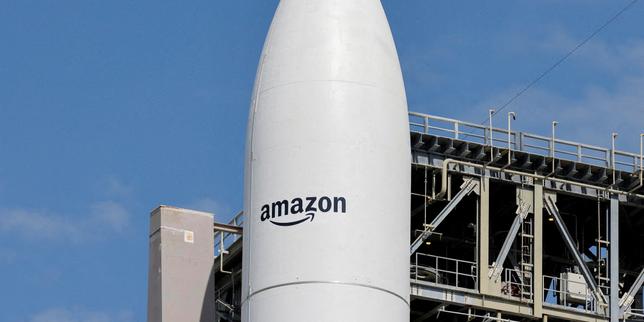
Coup dur pour Amazon avec la perte de 40 satellites due à l’échec de la fusée Vulcan

Le lanceur a subi une anomalie ⁠environ dix minutes après le décollage, perdant les satellites qu’il transportait. Il s’agissait du premier de plusieurs dizaines de vols achetés au groupe United Launch Alliance par la société de Jeff Bezos pour le développement de son réseau Internet.

© JOE SKIPPER/REUTERS

  •  

Israël, République tchèque, Cap-Vert, Yémen, Vulcan : les informations de la nuit

Les principales actualités de ces dernières heures vues par la presse internationale

© Ronen Zvulun / REUTERS

Le Premier ministre israélien Benyamin Nétanyahou, l’ancien chef d’état-major Gadi Eisenkot et d’autres responsables israéliens posent pour une photo de groupe le jour de l’inauguration de la 26e législature israélienne, à la Knesset à Jérusalem, le 10 novembre 2026.
  •  

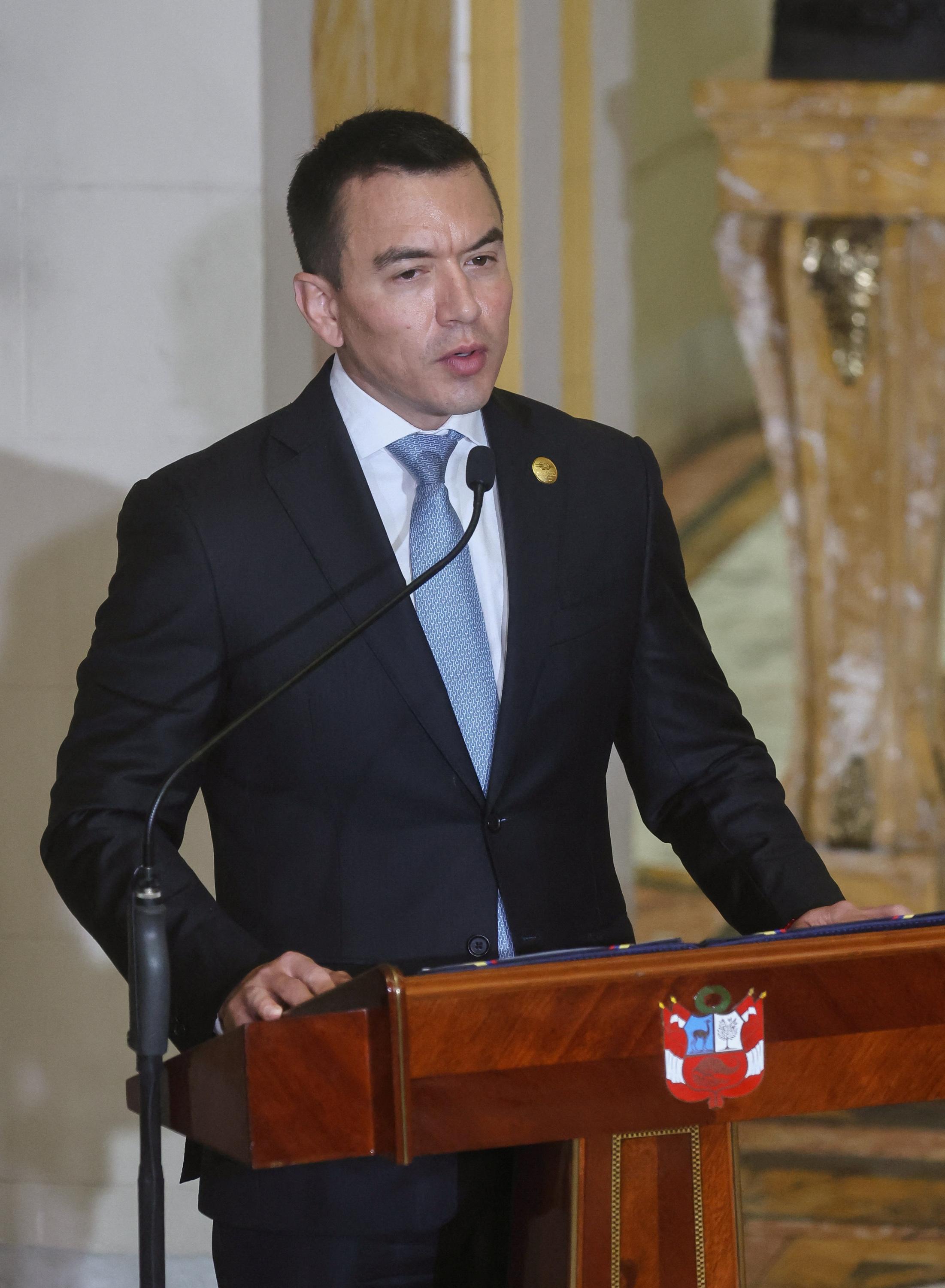
Équateur : Noboa assure que les États-Unis ne disposent pas d'une base militaire dans le pays

Une enquête de l’AFP fait état d’un déploiement inhabituel d’aéronefs américains dans une installation du pays.

© Sebastian Castaneda / REUTERS

Le président équatorien Daniel Noboa lors d’une réunion avec son homologue péruvien Keiko Fujimori lors de sa visite officielle au Pérou, à Lima, Pérou, le 20 octobre 2026.
  •  

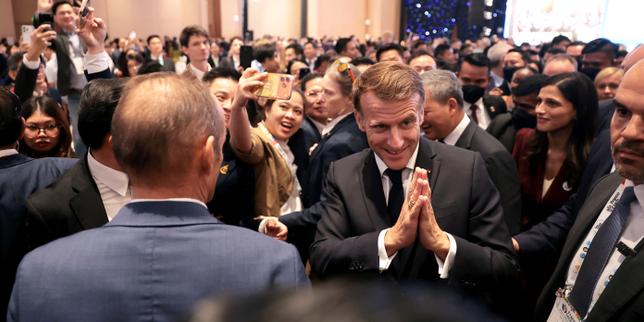
Au Cambodge, pays hôte du sommet de la francophonie, le lent déclin de la langue française

Phnom Penh accueille jusqu’au 16 novembre le XXᵉ sommet de l’Organisation internationale de la francophonie. Mais dans l’ancien protectorat, la langue de Sihanouk recule face à l’anglais et au chinois. Elle ne survit plus que dans quelques filières universitaires, et dans le vocabulaire du quotidien.

© CHALINEE THIRASUPA/REUTERS

Le président français, Emmanuel Macron, salue les participants au XXᵉ Sommet de la Francophonie à Phnom Penh, au Cambodge, le 15 novembre 2026.
  •  

L’Estonie va fermer sa frontière avec la Russie après une tentative de sabotage

Huit résidents de Lettonie ont été interpellés samedi près de Tallinn. Ils sont soupçonnés d’avoir voulu incendier, pour le compte du renseignement militaire russe, les locaux d’un fabricant de drones militaires.

© STR / AFP

Dents de dragon et barbelés à la frontière, sur le pont de Narva, entre l’Estonie et la Russie, le 15 janvier 2026.
  •  

Should Jensen Huang Return as Nvidia's CEO? Supporters and Critics Disagree

"Jensen Huang is considering a comeback as Nvidia's chief executive," reports Reuters, "and has discussed with confidants the possibility of returning, the Financial Times reported on Sunday, citing people familiar with the matter." One Huang ally told the FT they were putting together a "war room" of Silicon Valley executives to lobby for the former Nvidia chief's return and would try to garner support from the White House... The report comes days after the FT reported that Nvidia's board had approached British chipmaker Arm Holdings CEO Rene Haas in its search for a potential successor to Jensen Huang. The Guardian adds that Friday two major Nvidia shareholders "urged the board to keep 'all options' open." In Washington, however, US treasury secretary Scott Bessent argued on Sunday that Nvidia should look "outside" the company for its next chief. "They need a dramatic shake-up," Bessent said on Fox News. Bessent also called on Nvidia to explain whether it knowingly allowed its most advanced AI chips to reach China, saying this was more important than Huang's affair with the alleged spy for Beijing... Bessent said he wanted answers from Nvidia and its internal investigation of Jensen Huang's behaviour within the next 10 days. The Guardian also notes Elon Musk "and a host of other tech executives are among more than 158,000 signatories of an open letter calling for Jensen Huang's reinstatement as Nvidia chief, days after he resigned from the multi-trillion dollar chip company... " The letter demands that the company's board members "bring Jensen back while an independent investigation establishes the facts"... Alongside Musk, the tech heavyweight signatories on the letter calling for Huang's return include Tim Sweeney, founder and CEO of video game publisher Epic Games, and Garry Tan, president of Y Combinator, San Francisco's most renowned business incubator. Another signatory, Uber co-founder Travis Kalanick, wrote that Huang had "erred, yes — to err is to be human — but I do not believe anything he has done rises to the bar of separating him from his company". More than 7,500 signatories identified themselves as Nvidia employees, equivalent to 18% of the company's workforce. But it's difficult to verify the authenticity of signatories, notes The Verge: Business Insider reports that signatures include "Tim Cruise, Hollywood actor" and "Xi Jingping," likely a misspelling of Chinese president Xi Jinping. Not all believe Jensen Huang should be allowed to return to his seat. According to the Financial Times, one ally acknowledged that, "Having an affair with a subordinate is a fireable offense." 23andMe founder Anne Wojcicki told Bloomberg that "Power corrupts, and people start to think they are invincible ... We are all complicit in making these people think they are gods. And people do stupid things when they think they are untouchable." Wojcicki endured a messy public divorce from Google co-founder Sergey Brin, after it was revealed he was having an affair with an employee.

Read more of this story at Slashdot.

  •  
❌