Vue normale

DJI Osmo Pocket 4P camera officially announced, not available in the US

Par : PR admin
9 août 2026 à 18:20


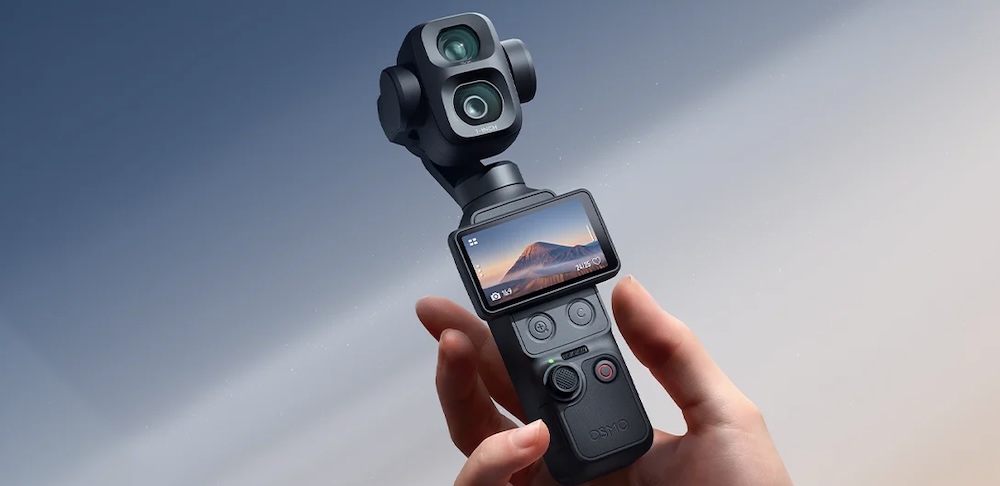
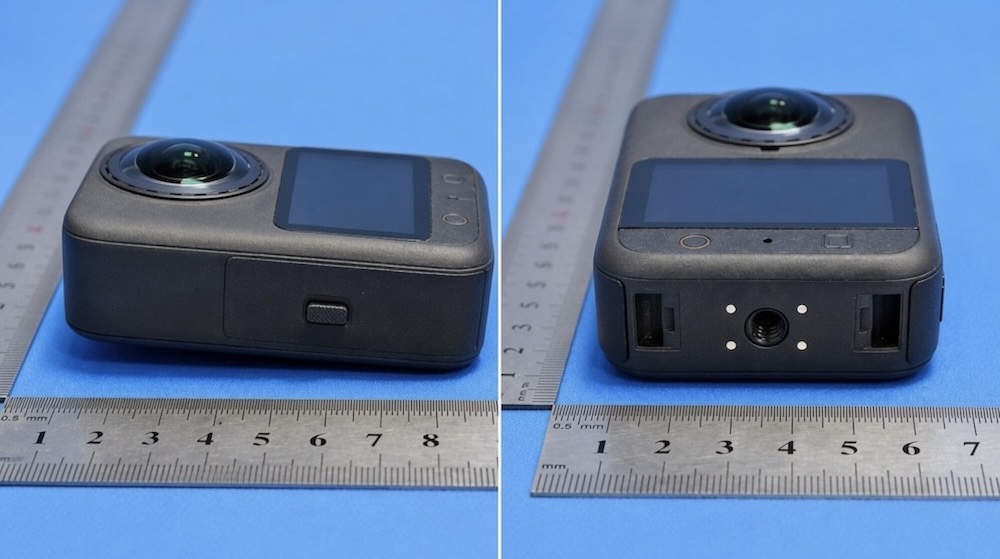
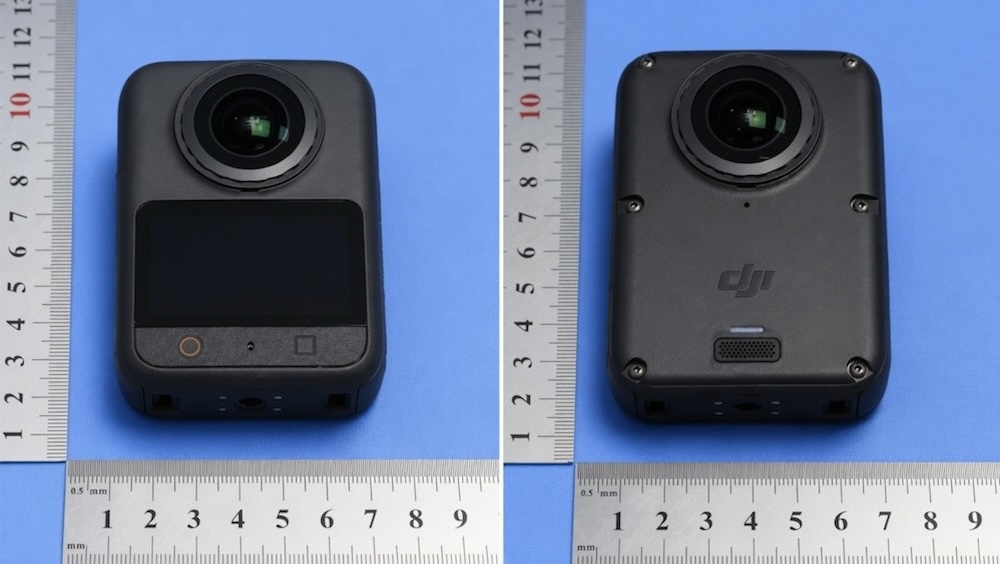
Continuing the weekend with the latest action camera news and rumors – I forgot to report that last week DJI officially announced the previously reported Osmo Pocket 4P camera (WEX Photo | Foto Erhardt). The new model is not officially available in the United States. Regulatory authorization and FCC clearance are still pending, meaning major US retailers do not stock it.

Additional information:

The new DJI Osmo Pocket 4P camera features a Type 1 (116mm²) sensor with a 20mm equivalent lens and, new to the series, a secondary Type 1/1.28 (75mm²) sensor with a 60mm equivalent lens, 3-axis stabilization, ActiveTrack 8.0, and up to 8× ultra HD slow motion, and cinematic 4K:

  • Dual cameras, cinematic shots near & far
  • Enhanced 1-inch CMOS & 17-stop dynamic range
  • Classic focal length for standout portraits
  • New D-Log 2, light & shadow precision
  • 4K/240fps slow motion for every highlight
  • 3-axis stabilisation & ActiveTrack up to 12× zoom

The post DJI Osmo Pocket 4P camera officially announced, not available in the US appeared first on Photo Rumors.

Demystifying fog: a photographer’s guide to shooting in the mist

Photographers are often drawn to crystal-clear scenery in brilliant golden light. Yet some of the most evocative images are created under precisely the opposite conditions.

Misty forest with tall redwood trees, dense green ferns, and a narrow dirt path winding through lush undergrowth.Ben Hattenbach

Fog strips away distraction. It conceals rather than reveals, simplifying a landscape until only its essential forms remain. Ordinary subjects become mysterious, and scenes that would appear cluttered in clear weather become elegant studies of light, shape, and atmosphere. Fog encourages interpretation rather than documentation. Instead of recording every detail, it invites viewers to imagine what lies beyond the veil.

Many photographers see a bank of fog as a signal to pack away their cameras and wait for the weather to improve. Experienced photographers do the opposite, understanding that fog introduces depth, reduces complexity, and creates an emotional atmosphere impossible to duplicate under clear skies.

Like every artistic tool, however, fog is most effective when applied with restraint. Too little may have insufficient effect; too much can obscure the subject that attracted your attention. The challenge, and the opportunity, is finding the balance where difficult weather can be transformed into extraordinary photographs.

Distilling simplicity

Large, rectangular iceberg with flat sides floating in blue ocean beneath a cloudy, misty sky.
Antarctic Waters
Ben Hattenbach

Fog’s greatest artistic contribution is its remarkable ability to simplify. Many landscapes are visually overwhelming. Dense forests contain thousands of branches competing for attention. Mountain vistas often include countless ridges, rocks, and textures. Without a clear visual hierarchy, viewers struggle to determine where to look.

Fog solves this problem naturally. As distant detail gradually disappears, stronger forms begin to emerge. A solitary tree becomes the subject rather than merely one tree among hundreds. The graceful curve of a ridgeline replaces a jumble of competing textures. Negative space begins to carry as much visual weight as the objects themselves.

Depth perception

Sunrise above a frozen Arctic scene featuring floating sea ice and snow-covered chunks on dark water, highlighting a cold, tranquil setting.
Pack Ice, Northern Greenland
Ben Hattenbach

Successful landscape photographs often inspire a viewer’s eye to travel through the scene. Few natural phenomena encourage this more effectively than fog. In fog, distant subjects lose contrast, sharpness, and saturation, while nearby objects retain more of their original character.

Without the need for converging lines or overlapping objects, fog immediately communicates spatial relationships. Trees standing only a few hundred feet apart may suddenly appear separated by enormous distances simply because each successive row fades a little further into the mist. This gradual progression, from crisp foreground to increasingly subdued middle ground to barely visible background, is a signature of successful fog photography.

Scenes containing multiple planes often produce the strongest photographs in fog. Forested hillsides, mountain ridges, and winding rivers all lend themselves naturally to atmospheric layering. In many cases, adding only a single nearby element – a rock, tree, or wildflower – is enough to transform an otherwise flat photograph into one possessing convincing depth.

Negative space

Solitary emperor penguin standing upright in a snowy landscape, partially obscured by blowing snow and mist, with soft, diffused lighting.
Emperor Penguin, Antarctica
Ben Hattenbach

When visibility decreases, the empty portions of one’s image can become as important as the subjects themselves. Fog provides one of the most elegant forms of negative space found in nature.

A lone tree emerging from blank mist. A distant lighthouse suspended in whiteness. Or, as above, the silhouette of a solitary emperor penguin peering out from behind an Antarctic ice storm. The surrounding emptiness isolates the subject, increases its visual importance, and creates an emotional sense of solitude.

Seasoning to taste

Dense forest with tall, straight trees and green undergrowth; mist hangs among the trunks, creating a calm atmosphere.
Redwood National Park, California
Ben Hattenbach

When photographing in fog, moderation is essential. Finding the ideal balance becomes one of the photographer’s principal creative decisions. Although you cannot directly control the fog itself, you can control how much of it appears in your photograph.

Try changing your distance from the subject. Every additional foot of atmosphere between camera and subject slightly increases the fog’s cumulative effect. Move to another altitude where the fog density will be different. Or just wait for the fog to change.

Working the fog’s edges

Golden sunlight shines through dark clouds over a calm body of water and rugged mountains, creating a dramatic and peaceful landscape.
Crepuscular rays, Iceland
Ben Hattenbach

One of the most productive places to photograph is along the boundaries of fog. The transition between clear air and heavy mist often produces precisely the amount of atmosphere needed to simplify a scene without overwhelming it.

The edge of a fog bank is also where light frequently becomes most dramatic. Sunlight filtering across the boundary between clear and foggy air often creates luminous edges, illuminated layers, and glowing shafts that transform otherwise ordinary scenes into cathedrals of light. Exceptional fog photographs are frequently found during the minutes when the atmosphere is actively changing.

Shapes and silhouettes

Large pine tree silhouette next to a smaller tree, both obscured by thick blue fog in a tranquil outdoor setting.
Yosemite National Park
Ben Hattenbach

Fog naturally encourages the eye to focus on form rather than detail. This makes it one of the finest environments for silhouettes. When texture disappears, shape becomes everything. The profile of a mountain ridge. A distant elk. Or as above a mother tree and her child.

Subjects that might appear unremarkable in full daylight suddenly become iconic when reduced to their simplest outlines. Silhouettes depend less on exposure than on recognizable form. The viewer should immediately understand the subject from its outline alone.

Resist the temptation to recover shadow detail during processing. Mystery is part of the photograph’s appeal. Not everything needs to be explained.

Exposure in the digital era

Misty forest with tall, slender trees and sunlight streaming through dense fog; green undergrowth brightly lit in the foreground.
Rhododendron in Del Norte Coast Redwoods, California
Ben Hattenbach

Reflective light meters still assume that the average scene should reproduce as a middle gray. Bright fog violates that assumption, encouraging the camera to underexpose unless compensation is added. Rather than relying on a predetermined exposure adjustment, use your live histogram. For scenes that change rapidly, as foggy landscapes often do, this immediate visual feedback becomes invaluable.

Unless you are seeking a silhouette, you’ll normally want to expose almost as brightly as possible while preserving important highlights. This approach maximizes image quality by recording more tonal information in the brightest portions of the file while avoiding clipped highlights.

Maintaining focus

Tall snow-covered trees in a foggy landscape with the sun faintly visible through the misty sky.
Frozen Spruce, Northern Alaska
Ben Hattenbach

Dense fog presents challenges even for the most sophisticated autofocus systems. Contrast diminishes. Edges disappear. Subjects drift in and out of visibility.

Focus peaking highlights areas the camera detects as sharp, while magnified live view allows precise placement of focus even in remarkably low-contrast conditions. If the composition contains layered subjects, consider focusing slightly closer than instinct suggests. The nearest sharp object frequently serves as the visual anchor that encourages viewers to enter the photograph before exploring its softer, more distant layers.

Remember that absolute sharpness is rarely the defining characteristic of successful fog photography. Atmosphere, not microscopic detail, is usually the subject.

Time and motion

Vivid blue geothermal pool emitting steam beneath a cloudy sky, surrounded by dark rocky ground and distant hills.
Long Exposure of Geothermal Pool, Icelandic Highlands
Ben Hattenbach

Fog is seldom still. It drifts, curls and dissolves with astonishing subtlety. Those movements present creative opportunities every bit as significant as flowing water.

While fast shutter speeds preserve delicate textures within the fog, long exposures transform moving fog into smooth ribbons that emphasize mystery. Neither interpretation is inherently more truthful. Each simply tells a different story.

Lens choice

Vivid blue geothermal pool emitting steam beneath a cloudy sky, surrounded by dark rocky ground and distant hills.
Redwood National Park, California
Ben Hattenbach

Ask landscape photographers which lens belongs on the camera during fog, and most will recommend a wide-angle. The answer is more nuanced.

Wide-angle lenses excel when the atmosphere itself becomes part of the foreground experience. They immerse viewers within the fog, emphasizing nearby textures while allowing distant features gradually to dissolve into the mist.

Telephoto lenses, however, often reveal fog’s greatest strengths. Distance exaggerates atmospheric perspective. Successive ridgelines merge into delicate tonal bands. Isolated subjects appear suspended within enormous volumes of atmosphere.

Rather than asking what lens covers the scene, consider which lens best expresses the atmosphere. That subtle change in thinking often transforms an ordinary photograph into a memorable one.

Forecasting fog

Vivid blue geothermal pool emitting steam beneath a cloudy sky, surrounded by dark rocky ground and distant hills.
Yosemite Valley
Ben Hattenbach

Until recently, finding photogenic fog depended as much on intuition and luck as on planning. Today, real-time tools such as Windy.com have dramatically improved photographers’ ability to predict when and where fog is likely to form. Such resources forecast fog directly on an interactive map, allowing one to see where fog will develop, drift and dissipate.

Before leaving home, spend a few minutes advancing the forecast hour by hour while studying the map. A valley predicted to fill with fog just before sunrise, or a coastal fog bank forecast to drift inland after dawn, may provide the fleeting conditions necessary for outstanding photography.

Final thoughts

Dirt road extending forward, bordered by tall trees on each side; dense fog in the background creates a hazy, atmospheric setting.
Dalton Highway, Alaska
Ben Hattenbach

Many photographers spend their careers searching for incredible landscapes. Fog reminds us that exceptional photographs often require nothing more than extraordinary light falling upon ordinary places. A familiar grove of trees. An empty shoreline. A road leading to the horizon.

Subjects overlooked under blue skies frequently become unforgettable once the atmosphere begins simplifying the world around them. That may be fog’s greatest gift. It teaches us to see less – and in doing so, to see more.

The finest fog photographs are seldom about weather. They are about mood. About suggestion rather than explanation. About allowing mystery to remain mystery.

The next time a forecast calls for dense fog, resist the temptation to postpone your outing until conditions improve. Instead, leave a little earlier. Walk a little farther. Stay a little longer. You may discover that the weather many photographers avoid is the weather that produces your strongest work.

When not photographing remote and foggy landscapes, Ben Hattenbach is a partner at a Los Angeles-based law firm where his practice focuses on the trial of complex intellectual property disputes. More of his images can be seen at www.benhattenbach.com and https://www.instagram.com/benhattenbach/.

Want to stay up to date on the latest product news and releases? Add DPReview as a preferred source to ensure our independent journalism makes it to the top of your Google search results.

add as a preferred source on google

Insta360 Ace Pro 3 camera rumors

Par : PR admin
8 août 2026 à 23:10


Here are the latest Insta360 Ace Pro 3 camera rumors:

Sensor & Image Quality

  • 1-inch 50MP CMOS sensor (Leica-tuned)
  • Improved dynamic range and low-light performance vs Ace Pro 2’s 1/1.3″ sensor
  • 14-bit RAW photos with Leica color profiles
  • Possible 10-bit color support across video modes

Video Recording

  • 8K@30fps with HDR and LOG profiles
  • Possible 8K@50fps (claimed in some July 2026 leaks)
  • 4K@120fps in 10-bit
  • 1080p@240fps slow motion
  • Global shutter support (rumored)

Stabilization

  • FlowState 2.0
  • AI-assisted 360° horizon lock

Lens & Design

  • Standard version: approximately f/2.8 aperture
  • Possible dual-lens “Ultra” version: one action-oriented lens + one brighter f/1.8 low-light lens
  • Similar modular, rugged body design to previous Ace Pro models
  • Flip touchscreen
  • Approximate weight: ~185g

Battery & Charging

  • Up to 200 minutes continuous 4K recording
  • Faster charging support (some claims of very quick top-ups)

Durability & Audio

  • Native waterproofing to 16 meters (up from previous models)
  • Up to 60 meters with dive case
  • Upgraded directional microphones
  • Improved AI wind noise cancellation

AI & Other Features

  • Enhanced AI suite (auto-editing, gesture control, advanced noise reduction, color grading)
  • Greater emphasis on photography and videography features compared to pure action use

Price & Availability

  • Expected retail price: $549–$599
  • Release window: Late 2026 or early-to-mid 2027 (originally expected much earlier; currently delayed)

The post Insta360 Ace Pro 3 camera rumors appeared first on Photo Rumors.

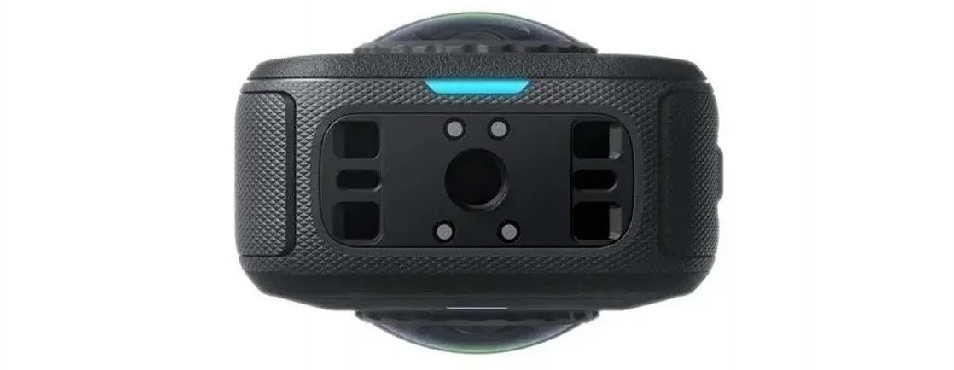
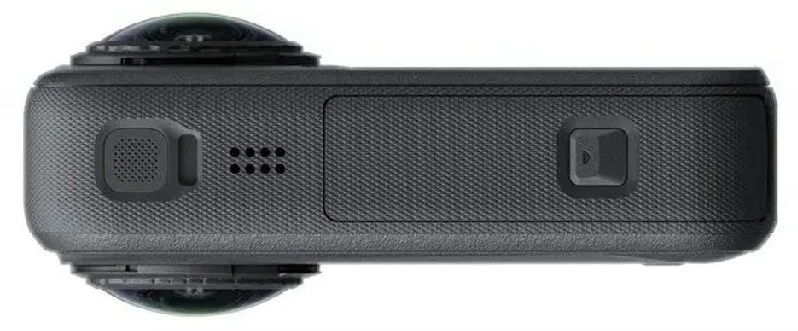
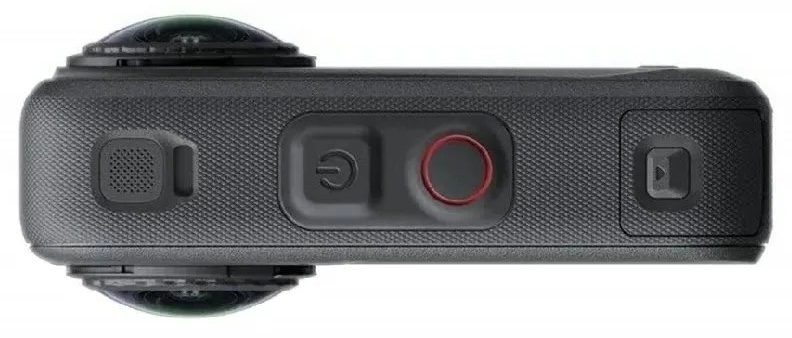
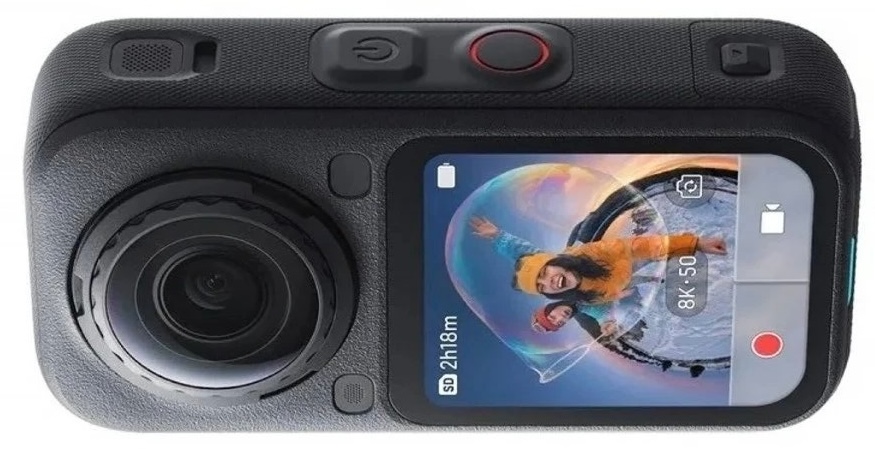
DJI Osmo 360 II camera to be announced next week

Par : PR admin
8 août 2026 à 18:39


The previously rumored DJI Osmo 360 II camera will be announced next week (replacement for the original DJI Osmo 360). Here are the latest leaks and rumors:

  • Official launch expected on August 13, 2026 (reservations/purchase notifications already opened in China)
  • Model number: OQ002.
  • New physical switch on the side.
  • Same overall size and form factor.
  • 2,150 mAh battery (up from 1,950 mAh — roughly +10%).
  • Rumored longer recording times (some claims of 120+ minutes in 8K vs ~90 minutes on the original).
  • 27W USB-C fast charging reported.
  • Possible battery compatibility with the original Osmo 360 (and vice versa).
  • 8K at 60 fps 360 video (up from 8K/50 fps on the original).
  • Expected to keep dual ~1/1.1-inch sensors (same class as the original).
  • 120MP panoramic stills expected to carry over.
  • Possible improvements in thermal management for sustained high-resolution recording.
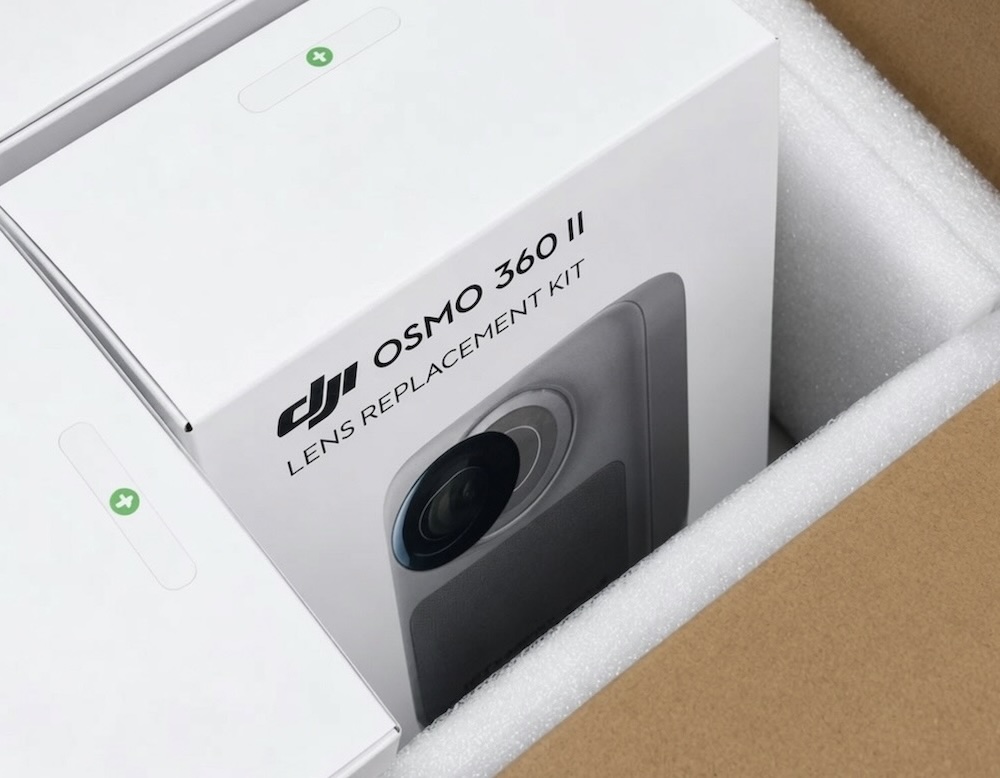
  • User-replaceable lenses/lens covers (biggest practical upgrade).
  • Wi-Fi 6 (802.11ax) dual-band + Bluetooth (same as original).
  • New NFC support for tap-to-pair and easier file transfer with phones.
  • Possible refreshed/improved touchscreen.
  • Same IP68 water/dust resistance expected.
  • Built-in storage and overall feature set largely carried over with refinements.
  • Rumored body-only price: $499-$579, higher kits: $629-$729
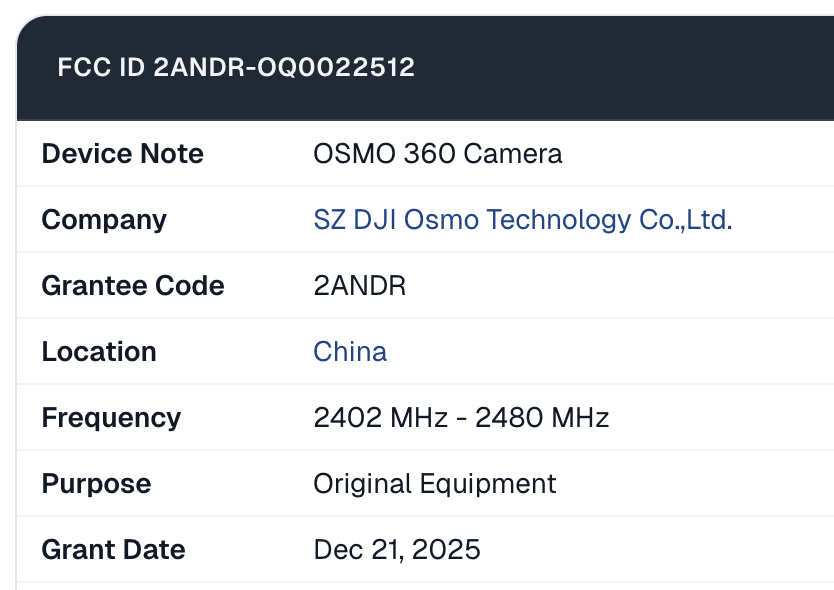
  • U.S. availability remains uncertain due to ongoing DJI regulatory restrictions (though the camera received FCC approval in late 2025 before a key cutoff).
  • Leaked pictures:


Here is the official teaser:


View this post on Instagram


A post shared by DJI (@dji)

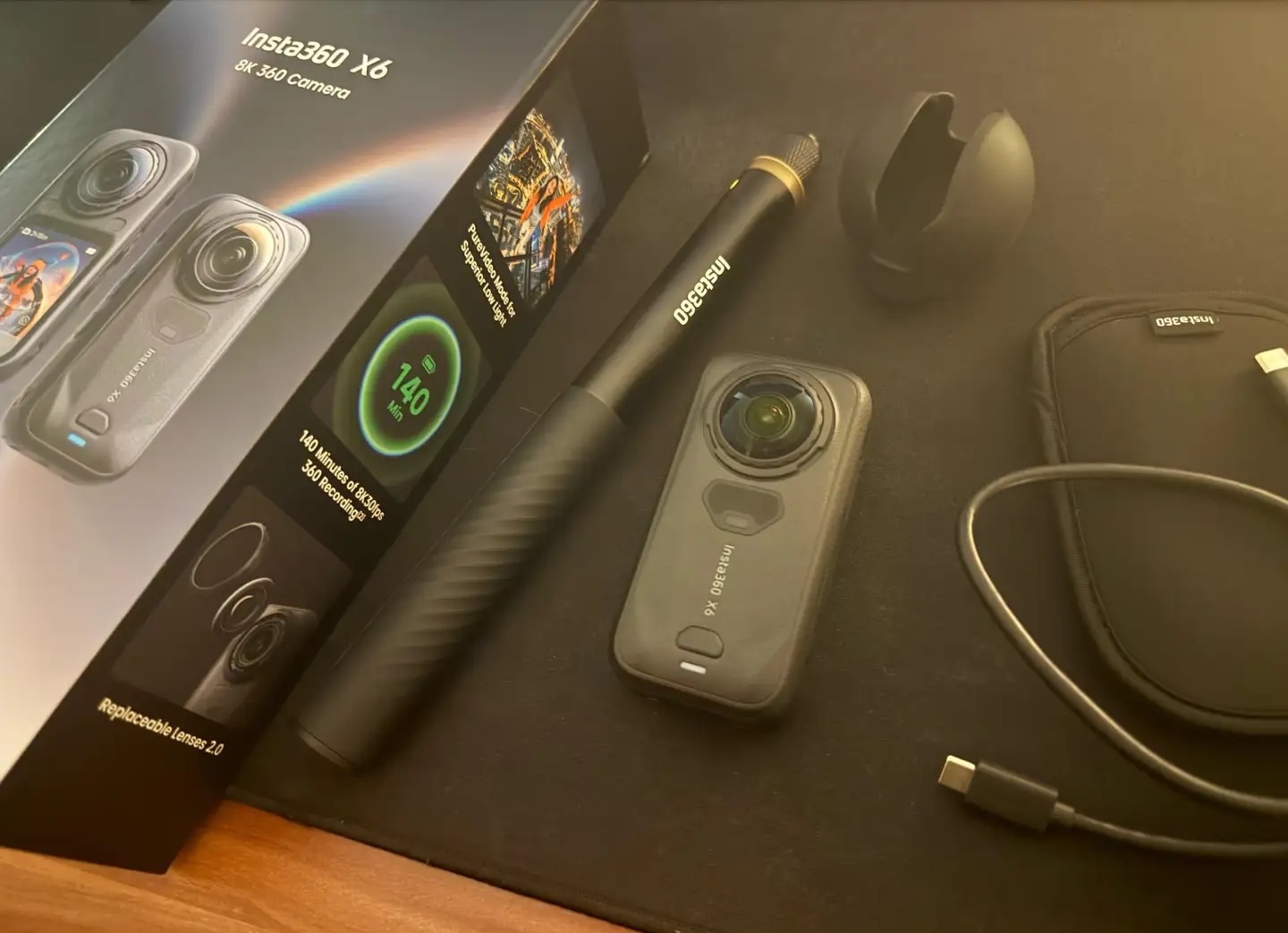
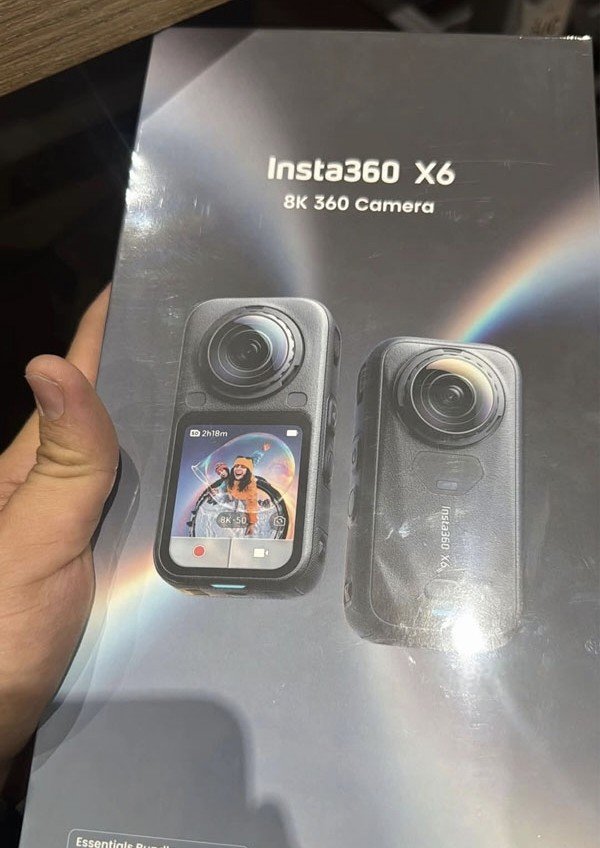
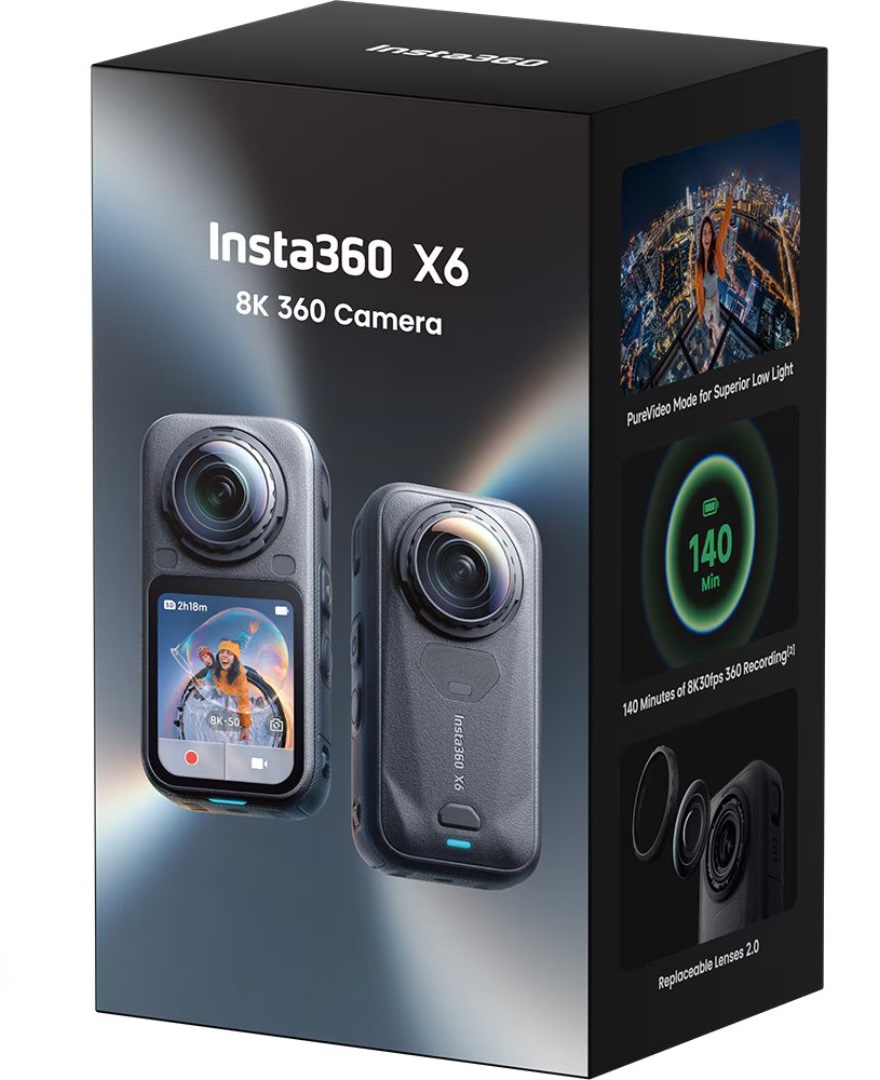
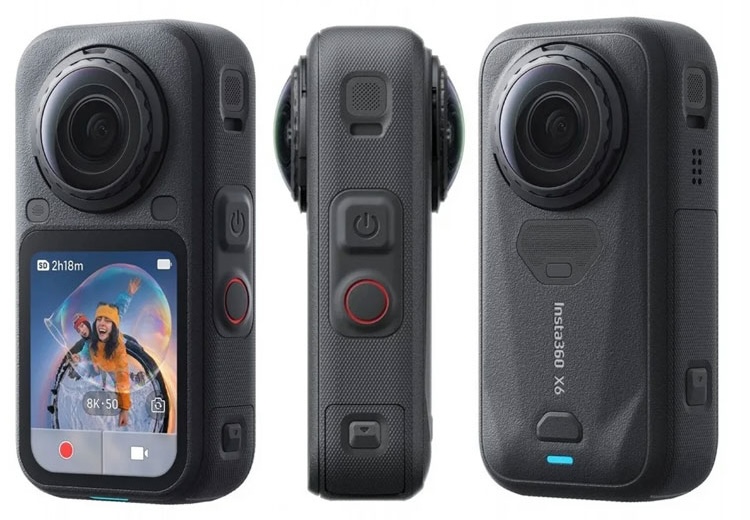
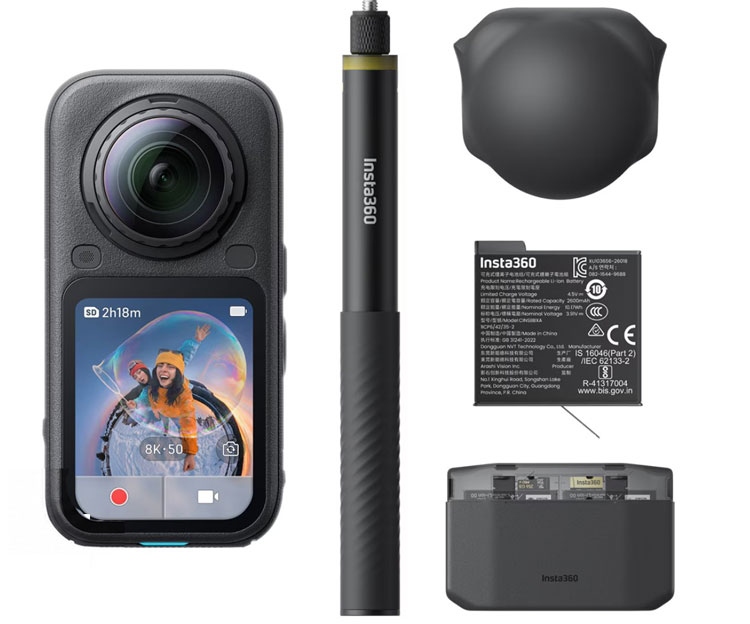
The latest Insta360 X6, Insta360 Luna Pro, and DJI Osmo 360 II camera leaks

The post DJI Osmo 360 II camera to be announced next week appeared first on Photo Rumors.

Sony 100-400mm F5.6-8 OSS sample gallery: what the budget telephoto delivers in the real world

It’s slow, but doesn’t come with the GM price tag or bulk.

Large red flower petals with white accents and a yellow center grow among wide green blades of grass.Mitchell

Earlier this week, Sony announced the FE 100-400mm F5.6-8 OSS, a stabilized, full-frame telephoto zoom that comes in well under $1000. We were able to spend some time shooting with it to see how it performs, and you can see the results in the gallery below.

What the images won’t show is just how easy it is to carry around. It tips the scales at just 654g (23.1oz), which, combined with its length, meant that it and the a7R V I had it attached to fit comfortably into my sling bag, so I didn’t think twice before bringing it along on hikes and other outings.

Close-up of the barrel and zoom lock switch of Sony 100-400mm F5.6-8.0 OSS lens
Unfortunately, Sony hasn’t copied Sigma’s approach of letting you relatively easily overcome the lock if you’re purposefully zooming; on one occasion, I found myself fumbling for the switch after trying to photograph a bird and discovering that the lens wouldn’t budge.
Mitchell Clark

The lens feels nice in the hand given the price, and the zoom ring is easy to use, with a relatively short throw. It’s an extending zoom, so the center of gravity inevitably changes as you adjust your focal length, but that weight means it’s still quite easy to manage. Lens creep, where it will slowly extend as you walk around with it, is an issue, though the lens does have a lock switch to keep it at 100mm. It’s nice to see that Sony has still included that detail, along with the focus limiter and function button, despite the lens’s budget nature.

Sony’s linear focus motors continue to make for a very good AF experience, with the lens able to quickly and accurately go from focusing close up (though not that close; it has a 0.86m (2.8′) minimum focusing distance at the long end) to far away. However, the manual focus ring is less lovely, as its stepped response and lack of precision made it very difficult to focus on a bird that the camera wasn’t able to recognize, or a particular part of a flower. 

While I haven’t subjected the lens to a full battery of tests, I’m pretty happy with the images it produced, again, given its focal range and $850 price tag. However, I’ll add the caveat that the entire state of Washington was covered in wildfire smoke for the entire time I had the lens, and it was especially bad in Spokane, where the gallery was shot. That makes it hard to judge things like sharpness, especially for a telephoto lens. 

Two yellow birds sit on a cage built around a garden.
This photo was taken around 8PM, while there was still plenty of light out, at least to my eye.
Sony a7R V | Sony FE 100-400mm F5.6-8 | 400mm | F8 | 1/500 sec | ISO 10000
Processed with Capture One
Mitchell Clark

Of course, a major limit to the image quality you can get out of this lens will be its light-gathering ability. I found myself having to put it away relatively early in the evening; even before sunset, shooting at 400mm in the shade meant having to raise the ISO up to 10,000, even with the benefits of coordinated in-body and optical stabilization.

Still, I’m sure many people will be willing to make that trade-off, given the lens’s size and price, especially if they mostly shoot in the daylight. Canon has already proven that there’s a market with its very similarly-speced option, and while third-parties like Sigma and Tamron have made budget-oriented telephotos for E-mount, they are about twice the weight due to their more ambitious focal ranges and light-gathering abilities. It’s also nice to see Sony releasing a 100-400mm aimed more towards beginners, after its announcement of the $4300 pro-grade FE 100-400mm F4.5 GM OSS earlier this year.

Thanks to Sony for the loan of an a7R V to shoot this gallery. All images were processed using our standard lens workflow in Capture One, with the manufacturer’s distortion correction applied but no correction of vignetting. The profile fixes an extremely minor amount of barrel distortion at the lens’ wide and long ends, and we don’t consider it to be an essential part of this lens’s design.

About the Author: Mitchell started taking pictures at 10 and hasn’t stopped since. It’s been a wide-ranging adventure, spanning a wide variety of genres and locales, and occasionally dipping into fascinations with video and filmmaking. They honed their technical knowledge doing documentation, programing and QA, writing for The Verge, and just generally messing around on the computer to see what breaks.

Want to stay up to date on the latest product news and releases? Add DPReview as a preferred source to ensure our independent journalism makes it to the top of your Google search results.

add as a preferred source on google

Tamron lays out its plan for four more releases this year

The company’s goal is to hit ten new models for 2026, but that doesn’t necessarily mean four new lenses.

Tamron's wordmark on a blue and gold background.Tamron

Tamron has announced its second quarter financial results for 2026, reiterating its goal of releasing ten new own-branded lens models this year. While the promise isn’t new, the company bringing it back up to investors is a chance to measure its progress towards that goal.

By Tamron’s math, it has released six new models already this year. That decidedly doesn’t mean six new lenses, though: it means two versions of the 35-100mm F2.8 (one for E-mount, one for Z-mount), bringing the 17-70mm F2.8 from 2021 to Canon RF and Nikon Z mount, and releasing the new 12-20mm F2.8 for both Sony and Nikon.

Chart displaying Tamron's releases for 2024, 2025 and 2026, along with descriptions of how many lenses it has for each mount.
This chart shows Tamron’s six model launches to-date for 2026 (not to be confused with it having made six new lenses), as well as how many options it makes for each of its supported systems.
Tamron

While Tamron hitting its goal of releasing 10 models this year theoretically means it has four more models to go, that’s unlikely to mean that we’ll see that many new optical designs. Indeed, the company can hit that goal without any new optical designs, as it still makes plenty of lenses that are currently only available on E-mount that it could bring to other platforms.

Still, it’s clear the company is becoming more ambitious with its releases. The chart in its financial statement says that from 2023 to 2025, its goal was six to seven models launched per year; before that, it was five new models.

tamron 12-20mm f2p8 front element
It’s not impossible that we could still get an actually new lens this year too; Tamron did just introduce a new design language, so perhaps it plans on updating some older models with it.
Mitchell Clark

Part of the strategy to increase releases likely involves a shift away from only releasing new lenses on E-mount. When we interviewed the company at the CP+ trade show earlier this year, Kei Nagai, the section manager of Tamron’s Overseas Sales Department, told us the company was “moving toward simultaneous multi-mount launches.” He also said Tamron would “take a holistic view of the entire market and existing lineups to carefully determine which spec and mounts to prioritize.”

At the same time, the company’s future is more in question now than ever. Last week, Tamron announced that Sony had made an offer to acquire it, and said it had set up a special committee to evaluate that offer. If that deal goes through, it’s unclear how it would affect that strategy, or the company’s goals.

One thing is sure, though: with the promise of more releases and a potential resolution to the Sony story, the next few months are shaping up to be very interesting for Tamron.

About the Author: Mitchell started taking pictures at 10 and hasn’t stopped since. It’s been a wide-ranging adventure, spanning a wide variety of genres and locales, and occasionally dipping into fascinations with video and filmmaking. They honed their technical knowledge doing documentation, programing and QA, writing for The Verge, and just generally messing around on the computer to see what breaks.

Want to stay up to date on the latest product news and releases? Add DPReview as a preferred source to ensure our independent journalism makes it to the top of your Google search results.

add as a preferred source on google

How to safely photograph a solar eclipse (and why you might just watch it instead)

Astronomy expert and photographer Dr. Tyler Nordgren thinks you should “see your first eclipse, photograph your second.” But if you do plan on taking photos, here are a few tips from someone who’s been there.

Star Flyer – the 2013 eclipse as seen from the deck of a four-masted sailing ship racing across the Atlantic. Totality was 42 seconds long and I was on a quickly moving (and rocking) surface.

Photo and caption by Tyler Nordgren

Editor’s note: We originally ran this story in conjunction with the solar eclipse of August 21, 2017 . We’ve updated and republished it ahead of the solar eclipse of August 12, 2026 .

Essentially, it’s the ultimate photo challenge. On April 8th, photographers across the continental United States – and especially photographers within the band of totality stretching from Texas to Maine – will have no more than a few minutes to get the shot of a lifetime when the moon passes in front of the sun, and a large swath of North America will be treated to a total eclipse.

And if you ask anybody who knows anything about astronomy, it is a huge deal. Dr. Tyler Nordgren is such a man. He’s a professor of physics and astronomy, an award-winning photographer and a self-described Night Sky Ambassador. Here’s what he had to say about the solar eclipse of August 21, 2017:

“Half the people that are alive right now weren’t even alive the last time something like this was visible from the continental US. Secondly, there are 12 million people just living in the path of totality that are going to get the chance to see it, so it will be the most-viewed total solar eclipse probably in history. The most seen, most photographed, most shared, most tweeted – potentially the most people in total are going to be able to experience this in one form or another.”

“See your first eclipse, photograph your second.”

But unless you’re a seasoned landscape photographer or astrophotographer, Dr. Nordgren thinks you might be better off not photographing it at all and just enjoying the view. He quotes Warren De la Rue, a pioneer of astrophotography and the first person to photograph a total eclipse. “He wrote in his journal afterward that if he ever got the chance to see another one, he hoped to be able to see it without any equipment at all.”

In short, “See your first eclipse, photograph your second.” But if you’re unconvinced, Dr. Nordgren does have some advice.

Hungary – My first eclipse photo that I took in 1999 superimposed on the stamp I bought there comemorating the eclipse by showing its path across the country.

Photo and caption by Tyler Nordgren

How to prepare to photograph the eclipse

Preparation is key. Time is of the essence. Of course, you’ll want a tripod and a cable release to lock everything down and minimize shake.

“If you really must photograph this, you’re going to want to practice a whole bunch of techniques in the weeks leading up so it’s as second nature as absolutely possible during those precious seconds.”

Don’t forget to take off the filter during totality!

Protecting your eyesight and your gear is equally important. It’s only safe to point your eyes or your camera sensor directly at the sun during totality. Just seconds before or after, and you’re risking serious damage. He suggests a pair of solar eclipse glasses and a filter for your lens. Per NASA, your glasses should meet the ISO 12312-2 international standard.

Be sure to use both during partial phases of the eclipse – you risk damaging your eyesight, not to mention your camera, with just a pair of glasses and an unfiltered lens. Crucially, don’t forget to take off the filter during totality. You’ll be extremely disappointed with the results if you don’t.

For more details, MPB posted a useful article detailing some specific settings to dial in.

What lens to use to photograph the eclipse

What kind of lens should you use? Well, not surprisingly, it all depends on what you’re going for. If you want the sun as your main subject, you’ll obviously want a longer lens. “To really capture big detail in the corona and the object itself, you’ll want a lens with a focal length of around 500mm; between 400 and 600mm at least.”

But don’t forget that a total eclipse also presents a unique landscape photo opportunity. If you’d rather capture the eerie effect on the scene, a wider lens will produce excellent results too. It’s all a matter of personal preference.

No matter what kind of shot you’re going for, you can size things up ahead of time by photographing a full moon.

“Something to keep in mind is that during totality, the sun turns black and is surrounded by this ghostly corona, so the spectacle of the object itself is this black disk with this white glow around it. That black disk is the size of the full moon, so take whatever your camera equipment is, take whatever your lens is and go out and photograph the next full moon. See if whatever size dot that appears. If that’s interesting to you, then great – that’s the lens to use.”

Should you go to the path of the totality?

In a word: yes.

If you’re set on photographing the eclipse and have the safety and gear requirements nailed down, all that’s left to do is get yourself into the path of totality for the big moment. Easy enough, right? Well, unless you’re lucky enough to live there, or you started planning your eclipse vacation years ago, chances are only getting slimmer that you’ll be able to find accommodations. Your best bet is to find what you can within a reasonable driving distance and set out as early as possible.

Ideally, you also want to aim for somewhere that’s less likely to have cloud cover. Dr. Nordgren knows all too well what a cloudy eclipse view looks like.

“If you’re going to do the close-up photograph, you could be almost anywhere, provided you’ve got clear skies. But I’ve also seen some really spectacular photos of totality through wispy clouds that give this dramatic view as well… just as long as you’re within that path of totality and the cloud cover is not so total that you’re utterly blacked out. And I’ve had that happen.”

This is the partial phase just a minute or two before totality in the Faroe Islands. Those clouds totally socked us all in 30 seconds before totality so we saw nothing.

Photo and caption by Tyler Nordgren

If you’re hoping to get a wider shot, then great news: this eclipse will cross much of the continental US. Provided you can get there, you can pretty much take your pick of landscapes. “What do you find compelling?”

Whether or not you can get to the path of totality, and whether or not you choose to photograph the event, you’ll still be treated to an amazing array of photos and videos from photographers across the US. And unless you’re dead set on photographing it, consider leaving the camera at home.

“If you haven’t seen a total solar eclipse, I encourage you, don’t waste your time photographing it.”

“If you haven’t seen a total solar eclipse, I encourage you, don’t waste your time photographing it. Chances are, somebody else will get a better photo. But if you are that kind of expert photographer, practice so that you can set your camera up and let it do its thing with as little input as possible.” In the very best-case scenario, you’ll get a couple of minutes.

“That is not a lot of time to see what I think is the most awe-inspiring, unnatural, natural experience in nature.”

About the Author: Abby Ferguson holds an MFA in photography and blends a fine-art background with extensive editorial and commercial experience. She built and led an in-house imaging program for a large vacation rental company and has served as an associate editor at Popular Photography. She also teaches at a local community college and serves on its Photographic Technology Program Advisory Board, sharing her knowledge and enthusiasm for the medium.

Want to stay up to date on the latest product news and releases? Add DPReview as a preferred source to ensure our independent journalism makes it to the top of your Google search results.

add as a preferred source on google

Why affordable film cameras from Reto and Lomography are good news for film shooters

Cheap, stripped-down point-and-shoots from Lomography and Reto might seem basic, but they show that established brands still see real growth and a new generation of shooters on the horizon.

Two film cameras on a blurred gray background: one red, blue, and black with a rainbow accent; the other yellow with a black back and red button. Both feature viewfinders and built-in flashes.Lomography, Reto

Last month, we saw the release of two new point-and-shoot film cameras, a Lomography half-frame camera and the Kodak EC35, both offering minimal features at wallet-friendly prices. Despite their simplicity, Kosmo Foto’s Stephen Dowling argues in a recent opinion piece that they’re a positive sign for the future of film photography.

Lomography’s Half-frame Simple Use Reloadable Film Camera (a mouthful of a name), came first. As it says on the tin, it produces half-frame images, doubling the photos you get from a single roll in a vertical format that plays well with social media. While it looks and functions like a disposable camera, it’s fully reusable. It comes preloaded with a roll, but once that’s exposed, you can rewind, remove it, and load any 35mm film you like. And even with that roll of film included, it only costs $30 with black and white and $35 with color.

Six Kodak cameras in various bright colors rest on a blue-and-white striped blanket outdoors, with assorted fruit and several Kodak film rolls surrounding them.
The KodakEC35 features a trendy sliding cover to protect the lens, but is otherwise very bare-bones.
Reto

The second camera, the EC35, comes from Kodak licensee Reto. Visually, it’s a bit of a step up, bringing back the sliding cover found on highly sought-after (and expensive) models like the Contax T3 and Olympus Mju-II. Functionally, it’s much the same as Lomography’s: fixed focus, fixed exposure, a plastic lens and a built-in flash. It’s available for $35, though it doesn’t come with a roll of film.

These aren’t the only affordable, basic compact film cameras we’ve seen in recent years, many of which look quite similar, even. That may leave some wondering why Lomography and Reto have thrown more hats into the ring. Dowling walks through what may have led each brand to these cameras, including their desire to reach young photographers drawn to retro aesthetics.

A colorful disposable camera held up to a face, ready to take a photo, with a green wall in the background.
Lomography’s half-frame camera looks like a disposable camera, but is fully reusable.
Lomography

Dowling also notes that while these cameras are clearly geared toward beginners and casual users, and don’t offer anything truly new, they’re still a good sign for film photography as a whole. After all, two well-established brands are confident enough in film demand to launch new cameras. I recently wrote about a similar trend on the film side, where slightly tweaked film stocks have been hitting the market with increasing frequency, which is another encouraging sign that manufacturers still see room for growth in film.

Dowling’s piece delves further into the nuances of these cameras and what may have led to their creation. If you’re interested in the state of film photography right now, especially how brands are thinking about new, younger shooters, it’s well worth a read over at Kosmo Foto.

About the Author: Abby Ferguson holds an MFA in photography and blends a fine-art background with extensive editorial and commercial experience. She built and led an in-house imaging program for a large vacation rental company and has served as an associate editor at Popular Photography. She also teaches at a local community college and serves on its Photographic Technology Program Advisory Board, sharing her knowledge and enthusiasm for the medium.

Want to stay up to date on the latest product news and releases? Add DPReview as a preferred source to ensure our independent journalism makes it to the top of your Google search results.

add as a preferred source on google

Panasonic did what Apple, Sony and Nikon couldn’t: overturn a Red Raw video patent

Japan’s patent court just invalidated one of the patents that stood in the way of Raw video’s adoption

An array of Red Cinema Camera products with the V-Raptor XL 8K at the frontRed

The Japanese Patent Office has declared one of Red’s key Raw video patents as invalid, following a challenge by Panasonic.

The court determined that many of the claims made in the patent, first filed in the US in 2008, would have been obvious to someone skilled in the subject area and familiar with existing developments.

The news, first reported by Thom Hogan, put Nikon’s video subsidiary in the position of trying to defend a patent that Nikon had previously argued was invalid.

The patent itself describes a high-resolution video camera that compresses its Raw data, and appears to correspond to the patent at the center of historic claims against Sony and Apple and the almost inevitable counter-suits from those companies. We reported on many of these challenges, as well as Nikon’s, over the years. 

Nikon famously resolved the dispute by buying the company. Some of Red’s cinema camera and Raw knowledge has subsequently been applied to recent Nikon models.

It’s difficult to know what the impact the rejection of this patent will be, given Canon, Panasonic, Sony and Blackmagic Design all now produce cameras with internal Raw video capture. One possibility the abolition of the license fees reportedly due to Red from users of Apple’s ProRes RAW codec. But given Red went from being privately held to being absorbed into Nikon, it’s difficult to get a sense for how significant these might be. And, of course, we shouldn’t assume even a minor cost reduction would necessarily get passed on to consumers.

About the Author: Richard graduated as a scientist but had a lot more fun writing and shooting for his university magazine. A number of years spent variously as a reporter, writer and editor on science and engineering titles combined his knowledge of science with his interest in images and words. But it was spotting the connections between emission spectra, white balance and all the nonsense he’d taught himself playing around in Photoshop that helped kindle an interest in digital photography. Searching for a camera led to him discovering DPReview and Richard was recruited by Phil Askey in 2007. He’s been combining his love of photography, communication and attention to detail (pedantry?) ever since. He has unusually strong opinions about lenses for the APS-C format.

Want to stay up to date on the latest product news and releases? Add DPReview as a preferred source to ensure our independent journalism makes it to the top of your Google search results.

add as a preferred source on google

Flashback’s “dream job” pays you to live and shoot in Hong Kong for up to 6 months

The film-inspired digicam maker is asking for a one-minute video, some samples of your work and a link to your portfolio – if you have one.

Black vintage-style camera with an orange stripe and "Flashback" label, featuring lens, flash, viewfinder, and slider; set against a light blue background.Flashback

Flashback, the company behind a digital camera built to replicate the disposable film camera experience, is advertising a “dream job” for a lucky content creator or photographer. The winner will spend up to six months in Hong Kong, fully paid, shooting content for the brand.

Flashback makes the One35 V2, a 13MP digital camera engineered to feel like a single-use film camera: it’s screenless, with a mechanical winding dial to advance frames, an optical viewfinder and a Xenon flash. Shots are capped at a 27-frame ‘roll’, after which images transfer to a companion app for ‘developing’ (with an optional 24-hour wait, a nod to dropping film at the lab).

Text graphic displays the words: "Flashback. DREAM JOB. What if you could spend the next three to six months living in Hong Kong, travelling and getting paid to create content with the Flashback team?"
Flashback is offering one lucky photographer or content creator up to six months in Hong Kong, all expenses covered.
Flashback

The company relocated its operations to Hong Kong to stay close to its Shenzhen production facility, so the city isn’t just a backdrop here; it’s central to the brand right now. The winner will be expected to produce photo and video content featuring the city.

Unlike most jobs, there’s no lengthy application process. The company simply asks for a one-minute video introducing yourself and explaining why you want the job, examples of content you’ve created and a link to your portfolio if you have one. Flashback hasn’t disclosed the compensation beyond describing the role as fully paid.

If that pitch sounds familiar, it should. Icelandair ran a similar campaign earlier this year, also built around a 60-second audition video, except it was hunting for the world’s worst photographer, on the theory that Iceland is beautiful enough to survive anyone’s bad photography skills. That one drew 127,642 entries from 178 countries, and the winner, Blanche Mortemard, walked away with a 10-day trip and $50,000.

If you shoot with any retro-inspired compact – Flashback’s or otherwise – love travel and want to get paid to document a city for six months, this could be your chance.

How to apply

Applications can be submitted through Flashback’s online form. The company hasn’t announced a deadline, so it’s probably better to apply sooner rather than later.

About the Author: Dale Baskin is a professional photographer, writer, and filmmaker based in the Pacific Northwest. He is the Managing Editor of DPReview.com.

Want to stay up to date on the latest product news and releases? Add DPReview as a preferred source to ensure our independent journalism makes it to the top of your Google search results.

add as a preferred source on google

Nikon is updating the D6 and D780’s firmware, six years after launch

They’re just minor bug fixes, but the releases are part of the story about Nikon’s commitment to software improvements

The Nikon D780 on an orange and yellow background.Dan Bracaglia

Nikon has released firmware updates for two of its six-year-old DSLRs: the D6 and the D780, as discovered by Nikon Rumors. While the fixes included in them are relatively minor, it’s impressive to see last-generation models getting some love, and it speaks to how Nikon has become an exemplar of improving its cameras through software.

According to the release notes, firmware version 1.71 for the D6 fixes an issue where photos taken with older D-type lenses would “sometimes be underexposed,” as well as one where using the recall shooting feature to quickly change settings could limit your shutter speed if you were also using Auto FP High-Speed Sync. Firmware version 1.21 for the D780, meanwhile, solves an issue where the camera could underexpose images if you were zooming in while shooting a high-speed continuous burst. Both firmware updates are available to download via the company’s website.

These are minor updates, but they’re illustrative of Nikon’s commitment to software updates

Nikon also released a firmware update for a much newer camera, the Z50II, though its changelog makes the updates to the D6 and D780 look like complete overhauls in comparison; it basically just changes the names of some menu items in Chinese.

While all of these are minor updates, they’re illustrative of Nikon’s commitment to software updates. Ask a camera enthusiast about post-release software support, and you’ll probably hear about Fujifilm and Kaizen, but it’s worth realizing that other companies like Nikon and Panasonic have caught on. In recent years, the company has released software updates that substantially improve the capabilities of its cameras be that the addition of bird detection mode to the Z6III, a new film grain mode and support for its Imaging Cloud service to the Zf or the ability to use shutter angle in video on the Z8.

This isn’t to say that Nikon has done things perfectly. It’s easy to find complaints about how some features take longer to come to some cameras than others, when it seems like the models should be on par with each other. And  the company has, on occasion, broken things with its updates. (Its still-unfixed Content Credentials implementation for the Z6III and issues with updating cameras with third-party lenses – even licensed ones – attached come to mind.) And while these issues may stem from the practical realities of software engineering and how many resources Nikon can put into it, that doesn’t change the fact that those issues don’t make for a great user experience.

Still, it’s commendable that Nikon is continuing to support older cameras and improve its existing models. I’m sure most Nikon users would rather it continue along that path with the occasional misstep, rather than it not bother with updates at all. Now we just need that update it promised for the ZR.

About the Author: Mitchell started taking pictures at 10 and hasn’t stopped since. It’s been a wide-ranging adventure, spanning a wide variety of genres and locales, and occasionally dipping into fascinations with video and filmmaking. They honed their technical knowledge doing documentation, programing and QA, writing for The Verge, and just generally messing around on the computer to see what breaks.

Want to stay up to date on the latest product news and releases? Add DPReview as a preferred source to ensure our independent journalism makes it to the top of your Google search results.

add as a preferred source on google

The major new Luminar Prime Fall Upgrade 2026 is now available for pre-order with a 50% off early-bird price

Par : PR admin
6 août 2026 à 17:22


The major new Luminar Prime Fall Upgrade 2026 is now available for pre-order with a 50% off early-bird price. Here’s what’s new:

  • A redesigned experience — Cleaner navigation and a smoother editing workflow. Catalog and Edit are now unified into a single workspace with a redesigned right sidebar, so Presets, Tools, Edits, Info, and Extra tools (including generative AI) are always one click away. No more switching between modes.
  • More realistic Generative AI — Natural textures, believable light, and seamless results. GenErase, GenSwap, and GenExpand now produce more convincing fills, object replacements, and extensions that blend convincingly into the original photo.
  • Up to 25% faster exports — Deliver your finished photos even sooner (some reports note up to ~27% faster on both Windows and macOS).
  • Preset previews up to 4× faster — Discover your perfect look in seconds thanks to significantly quicker preset rendering.
  • Improved performance — Masking now uses up to 33% less RAM for faster, smoother editing, with more efficient resource use during batch work and complex selections.
  • 365 days of Luminar Prime at the best launch price — One year of full access to the new subscription model that replaces the old seasonal Upgrade Passes.
  • Luminar Web: Edit from any browser, wherever inspiration strikes. Yours forever — Browser-based editing (coming Fall 2026) so you can continue work on any computer without installing the app. Included with All Platforms / Max licenses.
  • Fall Upgrade 2026 — Including:
    • Crop 2.0 — AI analyzes the image and suggests multiple finished compositions based on the main subject, balance, leading lines, and visual weight (with helpful overlays such as golden ratio / golden spiral).
    • Atmosphere 2.0 — Much more realistic fog and atmospheric effects that intelligently blend into the scene, responding to light, color, and depth of field for natural spatial integration instead of flat overlays.
    • Enhance 2.0 — A smarter model that reads the photo more precisely, protects highlights better, respects existing colors, and avoids over-processing for more natural results.
    • AI Assistant 2.0 — Describe what you want in everyday language; the assistant recommends the right tools and can apply adjustments for you.
    • Plus other refinements (improved printing options, export with watermarks/frames, etc.).
  • Every new feature: Get every update released during your subscription — yours to keep forever — Features unlocked while your Luminar Prime period is active remain permanently available even if you later cancel.
  • Unlimited AI editing — Restoration, GenErase, GenSwap, GenExpand, and AI Assistant without credits or usage limits for the full 365 days (subject to fair-use policy).
  • Creative Library of Assets — Unlimited access to an ever-growing collection of 2,150+ presets, 500+ LUTs, 400+ overlays, 550+ skies, and 50+ photography courses.


The post The major new Luminar Prime Fall Upgrade 2026 is now available for pre-order with a 50% off early-bird price appeared first on Photo Rumors.

The photographer who swapped bulky camera bags for a grocery bag

With only a single camera and a simple 25-cent produce bag to carry it in case of rainstorms, community member Gordon Pritchard manages to capture some amazing shots.

Deadpool Portrait - Gordon PritchardGordon Pritchard

Meet Gordon Pritchard

Home base: Victoria, British Columbia, Canada

Community member Gordon Pritchard preaches simplisticity quite like no one else we’ve spotlighted before. With only a single camera and a simple bag to carry it in case of rain, and by using a digital darkroom, he’s managed to capture some amazing shots of alien-looking landscapes and beautiful wildlife around the world, while developing a career as a commercial graphic artist.

“I’ve been involved in the arts for as long as I can remember, but my love of photography started in my mid-teens when, as a summer job, I did photo retouching at a commercial printshop. Sixty-two years later, I’m still at it.”

Our ‘What’s in your bag?’ community spotlight series features readers sharing their favorite gear and photography, including from past DPReview collaborators. See below for what Andrew has to share.

How did you get started as a photographer and commercial artist?

View into a tulip
View into a tulip

Nikon COOLPIX P950 | Built-in lens @ 50mm (35mm equiv.) | F3.5 | 1/250 sec | ISO 100
Gordon Pritchard

“When I worked as a commercial artist, I designed the ads and related materials that launched the IKEA brand in North America and did advertising for Peterbilt trucks and Bushnell optics. I also taught design, illustration and photography at the Montreal Museum of Fine Arts school of art and design.”

Based on Gordon’s commercial artist work and related to the lead image in this article, Gordon has spent decades crafting his art, which sometimes merges his photography with other images. Many of the images he’s created are a combination of original photography, a mix of careful composites and various other techniques that give you a unique look that fits his vision for the mood of the scene.

“Starting in 1996, I was the quality in print manager at Creo, the largest graphic arts software and hardware manufacturer at that time. During that time, I was also involved in developing FM screening technology that enables magazines to reproduce images with photographic detail fidelity. The company was then acquired and is now operated by Kodak.”

What’s in Gordon’s bag

Gordon Pritchard's camera bag
Gordon Pritchard’s camera bag.
Gordon Pritchard

My favorite cameras(s): Nikon P950 and Sony SLT-A77 II

“Gear-wise, I like to keep things simple, so I use the all-in-one approach. My Nikon P950 with its built-in 24-2000mm equiv. range or my Sony SLT-A77 II with a Tamron 16-300mm zoom. It has become my favorite all-in-one. It has expanded my range of photo opportunities as well as my post-processing skills.”

My camera “bag”: “My camera bag is a light film grocery bag – the kind used for vegetables – just in case it rains. It’s very lightweight and fits in my pocket. Simplistic, but it works.”

My favorite accessories: “I always have a clear lens filter mounted to protect the front element – never had an image quality issue as a result. In my kit, I also have a +2 close-up lens (to allow for close-ups at distance), a polarizer filter (to deal with reflections or act as a mild ND filter), and a Neutral Density 8 (for blurring motion).”

“I might have a pocket multi-tool and lens wipe cloth with me. I keep a tripod in my car – just in case. Again, I try to keep things as simple as possible so as not to interfere with my photo taking.”

What do you like to shoot?

Portrait of an old friend
Portrait of an old friend.

Sony a77 II | Tamron 16-300mm F3.5-6.3 Di II PZD Macro @ 80mm | F9.5 | 1/250 sec | ISO 400
Gordon Pritchard

“I’m a retired commercial artist, so I’m drawn to any subject that appeals from an artistic or technical point of view, from micro to macro subjects. Currently, I’m focusing on the birds I see during my daily morning neighborhood walks. In the past, I did editorial photography for magazines, advertising, and personal pleasure. I’ve also taught photography part-time at the college level.”

“Because I can fine-tune the light, I use my bathroom as a studio for tabletop subjects like my toy and macro photography. Mostly, though, I photograph outdoors.”

Is photography art?

A dog's collar lights the action
A dog’s collar lights the action.

Sony SLT-A57 | Sony DT 18-250mm F3.5-6.3 @ 22mm | F5.6 | 11 sec | ISO 800
Gordon Pritchard

“I approach photography from an artist’s point of view – so I’m most interested in how light plays with the subject, tonal contrast, composition, and color rather than the subject itself. I played with those elements back in the old analog darkroom days, but the digital darkroom has totally expanded my ability to render images to interpret the subject rather than record it.”

“I was fortunate in that my work has taken me across North America, Europe and Southeast Asia. From a landscape photography point of view, I particularly love the alien-looking rock formations of the U.S. southwest as found in places like Valley of Fire, Nevada.”

Take a moment to visualize the scene

Song Sparrow
Song Sparrow

Nikon COOLPIX P950 | Built-in lens @ 196mm | F5.6 | 1/400 sec | ISO 400
Gordon Pritchard

“I always try to visualize the final image before I take the shot. That might result in returning to a scene at a different time of day or even year. Have an idea in mind as to why you are taking the photo – what made you decide to aim the camera and take a shot? Are you interpreting the scene or recording it?”

Gordon really enjoyed participating in this spotlight article and would love to hear what you think of his photography and to answer any of your questions in the comments below.

You can check out Gordon’s other work on flickr.com.


Editor’s note: This article continues a series, ‘What’s in your bag?’, highlighting DPReview community members, their photography and the gear they depend on. Would you like your photography to be featured in a future installment? Tell us a bit about yourself by filling out this form.

About the Author: Mathew Anderson is a proud Community Manager for the technology industry and a past visitor to DPReview.com for all his camera needs. He is currently the lead of DPReview’s community and primary communication link between the community and DPReview’s team.

Want to stay up to date on the latest product news and releases? Add DPReview as a preferred source to ensure our independent journalism makes it to the top of your Google search results.

add as a preferred source on google

Lightroom’s latest update brings Generative Expand to Mobile and Desktop

Adobe has unveiled Lightroom Classic 15.5, Lightroom Desktop 9.5 and Lightroom Mobile 11.5, bringing long‑requested tools like Generative Expand and improved masking controls to the Lightroom ecosystem.

Blue “Lr” letters in a modern, clean font centered on a dark blue background.Adobe

Adobe has rolled out updates across Lightroom Classic (15.5), Lightroom Desktop (9.5) and Lightroom Mobile (11.5), bringing long‑requested tools like Generative Expand and improved masking controls. The August releases aim to let photographers do more without leaving the Lightroom ecosystem.

Generative Expand and Render to DNG

On Lightroom Desktop and Mobile, the headline feature is Generative Expand, which Adobe first rolled out in Photoshop in mid-2023. The tool uses generative AI to extend a photo beyond its original borders, filling transparent areas created by perspective adjustments or making room for new aspect ratios without leaving blank edges. Generative Expand is still not available in Lightroom Classic, however.

Lightroom Classic 15.5 and Desktop 9.5 also introduce a Render to DNG command in the right‑click menu, which creates a new DNG file with your current edits baked in. It’s important to note that under the hood, it’s closer to a compressed TIFF, so you lose the ability to pull extra highlight or shadow detail from the original sensor data. The feature is mainly aimed at generative workflows and for flattening complex edit stacks. For example, you can refine a crop, render that version to DNG, then use Generative Expand to grow the frame around your new composition, all without sending the image out to Photoshop.

Smarter masking and catalog resilience

Both Lightroom Classic and Desktop also gain long-requested Feather and Edge sliders for AI masks. These sliders give photographers finer control over transition softness and edge precision when using Subject, Background or Object masks. Classic also adds in‑app lrcat‑data repair, allowing the software to detect and fix corruption in the catalog’s AI data store on startup. It’s an unglamorous but important safeguard when catalogs live on synced drives or tethered workflows run hard day after day.

Mobile gets serious AI and video tools

As mentioned, Lightroom Mobile’s August release brings Generative Expand to phones and tablets, but that’s not the only update. It also adds AI Denoise to iOS devices for cleaner high‑ISO files on Apple mobile devices. Plus, Adobe’s Animate feature, which turns a photo into a short video clip, now runs on Google’s Veo 3.1 Lite model, promising faster, more efficient photo‑to‑video clips.

On both iOS and Android devices, Adobe improved handling of masks with edge refinement created on the Desktop, so edits travel more reliably between devices. Mobile also gains natural‑language search, promising to make searching for images faster. On Android devices, justified grid and collapsible segments come to Gallery view, and both platforms pick up additional camera and lens profiles. Overall, these changes nudge the phone and tablet apps closer to full Lightroom clients rather than simple companions.

Quality‑of‑life upgrades for Classic

For Classic users, the August update also allows you to adjust the photo opacity when viewing cropped-out areas, for more precise cropping. Plus, Adobe has expanded GoPro, Laowa and Sigma lens support, improved Canon tether reliability via updated PTP support and added numerous other UI and performance fixes across both Classic and Desktop. Most of these are incremental changes, but the kind that can add up when you’re culling thousands of files or relying on Lightroom as the backbone of a studio catalog.

About the Author: Abby Ferguson holds an MFA in photography and blends a fine-art background with extensive editorial and commercial experience. She built and led an in-house imaging program for a large vacation rental company and has served as an associate editor at Popular Photography. She also teaches at a local community college and serves on its Photographic Technology Program Advisory Board, sharing her knowledge and enthusiasm for the medium.

Want to stay up to date on the latest product news and releases? Add DPReview as a preferred source to ensure our independent journalism makes it to the top of your Google search results.

add as a preferred source on google

❌