Vue normale

Gear of the Year - Dale's choice: Adobe Project Indigo

the kiggins theater in vancouver washington at night with a marquee reading db cooper con 2025

I captured this night photo of the Kiggins Theatre in Vancouver, Washington, during the annual DB Cooper conference. Adobe's Project Indigo app did a great job of rendering the photo in a way I would have expected from a DSLR or mirrorless camera.

Photo: Dale Baskin

Most years, my Gear of the Year shortlist writes itself. There are usually two or three products that clearly stand out, and the hardest part is simply narrowing it down to one.

2025 was different. We've seen some great products come through the DPReview office, and I've enjoyed using many of them, but none really inspired me in the way I expect to make the cut. In fact, I reached a point last month where I considered not even writing a Gear of the Year column this time around.

And then one day, it hit me. I picked up my iPhone to take a photo, opened Adobe's Project Indigo app, and… Shazam! I'd been racking my brain trying to think of what hardware I had enjoyed using most this year, and in a moment of mental clarity I wish I could achieve more often, the answer was staring me in the face. Literally, it was in my face as I held the phone up in front of me: the gear I enjoyed using most this year wasn't a piece of hardware, but an app.

the adobe project indigo banner from the apple app store
Project Indigo is available for free (at least for now) on the iOS App Store. Adobe says it is considering an Android version as well.

We all know that smartphones can't compete with large sensor cameras when it comes to ultimate image quality or tactile experience. But they do have this sneaky ability to tag along with us wherever we go, always at the ready.

a collage of fall leaves on the ground captured by the adobe project indigo app

Autumn leaves cover the forest floor. Captured with Adobe's Project Indigo app.

Photo: Dale Baskin

The thing that always frustrates me about smartphone cameras isn't that they can't compete with large sensor cameras in terms of image quality – I mean, who would ever expect that they could? – but "the look." You know exactly what look I'm talking about: that over-processed, over-sharpened look with shadows pushed to within an inch of their life. It's a signature that screams "smartphone photo."

This is where Adobe's Project Indigo comes into the picture. It's a free product from Adobe Labs that promises "SLR-like" quality from your iPhone. According to Adobe, it accomplishes this using a number of techniques, including underexposing highlights more aggressively and combining more frames (up to 32) than the iPhone's native camera app. In theory, this should result in fewer blown-out highlights and less noise.

Image Comparison Slider
This widget is not optimized for RSS feed readers. Please open this article's permalink in a browser to view this content.
The above comparison shows the same scene captured with the Project Indigo app (left) and the iPhone's native camera app (right). The Project Indigo photo doesn't exhibit the extreme tone-mapping and pushed shadows present in the native app.

In practice, Project Indigo delivers. To my eye, photos taken with the app usually look more like a well-processed image from a mirrorless camera. The aggressive tone mapping is gone, replaced by images where highlights roll off naturally, and shadows actually look like shadows.

To achieve this, the app uses profiles specifically calibrated for each phone and camera module. That specificity is great, though it can also introduce friction; one of my few frustrations was waiting a few weeks for the Project Indigo team to release an update calibrated for the new iPhone 17 Pro Max I've been testing.

"To my eye, photos taken with the app usually look more like a well-processed image from a mirrorless camera."

The main downside to the Project Indigo app is that all this computational processing requires computational power. The app works on iPhone Pro models as far back as the 12 (and regular iPhones back to the 14 series), but it's not a tool for rapid-fire photography, typically taking 1 to 5 seconds to process a single image, depending on the model. It can also generate some serious heat; my older iPhone 14 Pro gets hot to the touch after just a few photos, and I can practically see the battery indicator get shorter as it works.

Image Comparison Slider
This widget is not optimized for RSS feed readers. Please open this article's permalink in a browser to view this content.
In this set of photos, captured shortly after sunset at a lake in western Montana, the Project Indigo photo does a great job of representing the scene I saw in real life. In contrast, the iPhone's native camera app has pushed the shadows to the extreme, added blue to the sky that wasn't there, and has an over-sharpened, crunchy look.

The good news is that the iPhone 17 Pro Max, with its newer processor and better thermal management, barely seems to notice the load. It's frustrating that Project Indigo struggles on older hardware, but I appreciate that this is a proof-of-concept product; Adobe is engineering for the future, not the past.

There are also plenty of tools in the app that I haven't explored yet, including its own Night Mode, multi-frame super-resolution modes when using sensor-cropped "zoom" (such as the 2x and 8x modes on the iPhone 17 Pro), and AI noise reduction derived from Adobe Camera Raw.

green leaves from a bush drip with water on an overcast day

This photo of a snowberry bush looks pretty close to what I would expect from a typical mirrorless camera.

Photo: Dale Baskin

If it sounds like I haven't thoroughly tested Project Indigo, it's because I haven't. I've been using it for several months, not because I planned to review it, but because I genuinely love the natural-looking photos it produces.

It made me enjoy taking photos with my phone again, and that alone is enough to earn it my Gear of the Year.

Adobe says it's exploring future directions for Project Indigo, including an Android version, a high-quality portrait mode with more control and higher quality than native apps, and even video recording with computational video features. I'm excited to see where Adobe goes with this, but even if it just stays as it is – a tool that lets me take nicer, more natural photos on the device I already have in my pocket – I'm a fan.

Martin Parr, acclaimed documentary photographer and mentor, dies at 73

GettyImages-515721924
Photo: Tristan Fewings / Stringer / Getty Images Entertainment via Getty Images

Martin Parr, a highly acclaimed British documentary photographer, passed away at the age of 73 on December 6. Parr was best known for his images that captured British life over a career spanning more than 50 years.

The Martin Parr Foundation posted a statement on its website on Sunday that he died at his home in Bristol, England. "He is survived by his wife Susie, his daughter Ellen, his sister Vivien and his grandson George. The family asks for privacy at this time," the statement added.

"I make serious photographs disguised as entertainment"

Parr, born in 1952 in Epsom, Surrey, England, was a member of Magnum Photos, an international cooperative of photojournalists. While his work was often filled with playfulness and satire, it also carried an underlying critique of contemporary life. "I make serious photographs disguised as entertainment," Parr told Architectural Review in 2020. He was known for using strong, highly saturated color, often with direct flash to exaggerate everyday scenes. His work captured ordinary people and objects, including British seaside resorts, shopping, parties, fairs and family outings.

A prolific photographer, Parr published more than 100 photobooks during his lifetime. Parr also edited 30 photobooks, including The Photobook: A History (2004–2014), a three-volume series that offered an in-depth examination of the photobook itself. His work has been featured in countless exhibitions, and he has been the recipient of numerous awards, including the Sony World Photography Award for Outstanding Contribution to Photography in 2017. In 2024, he was recognized as an inductee of The International Photography Hall of Fame.

"His humour, his clarity, and his vision shaped many discussions across the agency and within the wider photographic world."

He was also an educator and mentor, serving as Professor of Photography at The University of Wales Newport campus from 2004 to 2012. In a statement to Magnum photographers, staff and estates on Sunday, Magnum co-president, Lorenzo Meloni, wrote, "Martin played a significant role within Magnum and in our wider community. He supported younger photographers, he pushed conversations forward, and he stepped up when leadership was needed. His humour, his clarity, and his vision shaped many discussions across the agency and within the wider photographic world."

Tributes to Parr have been pouring in, with photographers of all levels sharing stories about his impact on the photographic community. On Instagram, photographer Joel Meyerowitz described Parr, his friend of 50 years, as a "legend in the world of photography," adding that "his wisdom and visual humor will be greatly missed."

Your best photos of 2025: Our year-end photo challenge is open for submissions

mt jefferson illumated by the glow of sunset in the central cascades mountains of oregon

Mt. Jefferson, a volcano in the Cascade Mountains, is illuminated at sunset near Sisters, Oregon, on November 18, 2025. I had my Olympus OM-1 with me when the sunset suddenly became very intense, and I managed to snap this photo in the brief time before the light faded away.

Photo: Dale Baskin

Our year-end photo contest, "Your best photo of 2025," is now open for submissions.

What was your top shot this year? Share one image you captured in 2025 and tell us about it. Make sure to tell us the story behind the photo in the caption and why you chose it as your photo of the year. Pick carefully – you can only submit one photo!

Click here to read the full rules and submit your top photo from 2025.

Submissions will open on Monday, December 8th, and you have until Sunday, December 14 (GMT) to submit entries. You can read the full rules on the 'Your best photo of 2025' challenge page.

Essential details: All entries must include a title and a caption that tells us the story behind the picture and why you chose it (minimum of 25 words). Please read the full rules before submitting your photo.

DPReview editors will review every photo you submit, and we'll publish our favorites in a slideshow on the DPReview homepage.

Enter the "Your best photo of 2025" challenge

Rumors: Pentax to release a new Pentax ESPIO 140 film camera

Par : PR admin
8 décembre 2025 à 00:14


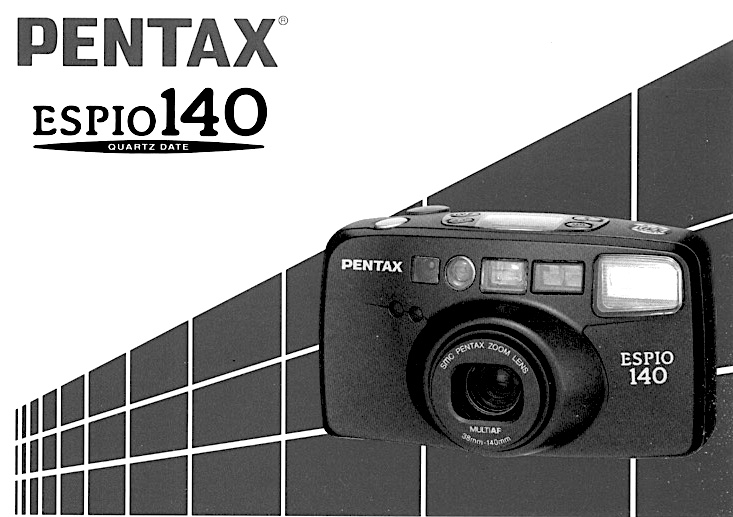
PentaxRumors received a tip speculating that a new Pentax ESPIO 140 compact film camera could be the next addition to Pentax’s film lineup. This rumor arrives amid Pentax’s ongoing revival of analog photography, following their original Ricoh plan from 2022 for three new Pentax film cameras:

  • First, they will develop a compact film camera (already released: Pentax 17)
  • The second camera will be a high-end film model
  • The third camera will be a single-lens reflex (SLR)

Here are the details on the original and very well-regarded Pentax Espio 140 point-and-shoot film camera (also sold as the IQZoom 140 in some markets), introduced in 1997:

  • Lens: 38–140mm f/4.8–12.5 power zoom (8 elements in 7 groups)
  • Zoom range: Roughly 4x optical zoom, one of the longest zooms on a compact at the time
  • Autofocus: Active infrared autofocus (works well even in low light)
  • Exposure: Fully automatic program AE, with slow-shutter warning
  • Flash: Built-in pop-up flash with modes (auto, on, off, red-eye reduction, night portrait/slow-sync)
  • Macro: Can focus down to 0.6 m (about 2 ft) at any focal length
  • Self-timer: Yes (10 sec)
  • DX coding: ISO 25–3200
  • Power: One CR123A battery
  • Other quirks: Panorama switch (crops top/bottom for wide prints), remote control compatible (with optional Pentax remote), date/time imprint option on some versions

Is this the next upcoming Pentax film camera: Pentax ESPIO 140?

Via PentaxRumors

The post Rumors: Pentax to release a new Pentax ESPIO 140 film camera appeared first on Photo Rumors.

❌