
Vue normale

Dale's photo of the year: Everglades adventures

an anhinga spreads its wings in a tree to dry just before sunset in everglades national park in florida

An anhinga spreads its wings in a tree to dry at sunset in Everglades National Park in Florida. Unlike many birds in aquatic environments, anhingas don't have waterproof oil on their feathers, so they spend a lot of time with their wings spread to dry out. (Processed from Raw using DxO Photolab)

Photo: Dale Baskin

If there's one common thread that weaves through my photography this year, it's that I didn't do very much of it – at least not as much as I would have liked.

That may sound odd coming from a DPReview editor. After all, a big part of my job is testing cameras and shooting sample galleries. However, 2025 was an unusual year. Instead of running around with gear, I spent much of my time on infrastructure projects that will help lay the foundation for the site's future, including our new forum system and some other things you'll see in 2026. (Teaser!)

Add some unexpected events in my personal life, and I found precious little time for taking photos. A glance at my Lightroom library for 2025 is like looking at an empty cupboard. But one image that's special to me is the one at the top of this article: an anhinga spreading its wings to dry at sunset, captured during a trip to the opposite corner of the country.

For context, I'm a huge fan of national parks, not just in the US, but everywhere, and I've visited them all over the world. This year, I finally had the chance to visit one that's been on my list for a long time: Everglades National Park in Florida.*

I honestly wasn't sure what to expect from the Everglades. Living in the western US, national parks usually evoke visions of rugged mountains or grand vistas: Yellowstone. Yosemite. Mt. Rainier. In contrast, the highest point in the Everglades is about 3m (10ft) above sea level.

an aligator stares at the photographer through a break in the trees in everglades national park

An American alligator lurks in the shallow waters of Everglades National Park. (Processed from Raw using DxO Photolab)

Photo: Dale Baskin

Contrary to popular belief, the Everglades isn't just a giant swamp. It is a slow-moving slough running from Lake Okeechobee to the Gulf of Mexico/America (circle your preference). This unique ecology makes it a fantastic environment for wildlife and wildlife photography. Unlike other regions where you often have to work incredibly hard to get close to subjects, here, the birds and aquatic species often walk right past you.

As with most wildlife photography, however, the hard part is still waiting. Waiting for your subject to be in just the right spot. Or, if shooting from a boat, waiting until you're in just the right spot. You still have to wait for just the right moment when your subject looks in your direction or starts moving in an interesting way.

"As with most wildlife photography, however, the hard part is still waiting."

During the time I was in the Everglades, I was testing the Panasonic GH7 for our review, paired with the Olympus 40-150mm F2.8 PRO lens, which provides an 80-300mm equivalent focal length and is one of my favorite lenses for the Micro Four Thirds format.

And that's the gear I used to capture the photo above of the anhinga, spreading its wings against the sky just as the sun was setting. Unlike many birds, Anhingas don't have waterproof oil on their feathers, so they spend a lot of time with their wings spread out to dry.

Hopefully, 2026 will be the year I get back out in the field more often, testing gear and shooting galleries. And I'm definitely planning to go back to the Everglades as soon as I can.

In the gallery below, you'll find a few more of my favorite wildlife shots from my Everglades adventure.

Sample gallery
This widget is not optimized for RSS feed readers. Click here to open it in a new browser window / tab.

*The photos in this article were actually taken during the last couple of days of 2024, but since I shot them after writing my 2024 photo of the year article, I'm considering them to be 2025 photos.

Canon EOS R6 III sample photos and videos: quietly competent

When you use DPReview links to buy products, the site may earn a commission.
Sample gallery
This widget is not optimized for RSS feed readers. Click here to open it in a new browser window / tab.

This week, we released our review of Canon's EOS R6 III. As is usually the case, in the process of testing it for the review, we took hundreds of pictures with a production model in a variety of situations. We've collected the best examples, shot with a variety of lenses and settings, into a sample gallery so you can judge how the camera performs for yourself.

Given that the Canon EOS R6 III is also a very capable video camera, we've also put together a sample reel of clips shot with it. If you want to see longer-form videos shot with it, you can also watch our videos about the Fujifilm X-T30 III, Sony a7 V and the Canon EOS R6 III, as they were filmed using it.

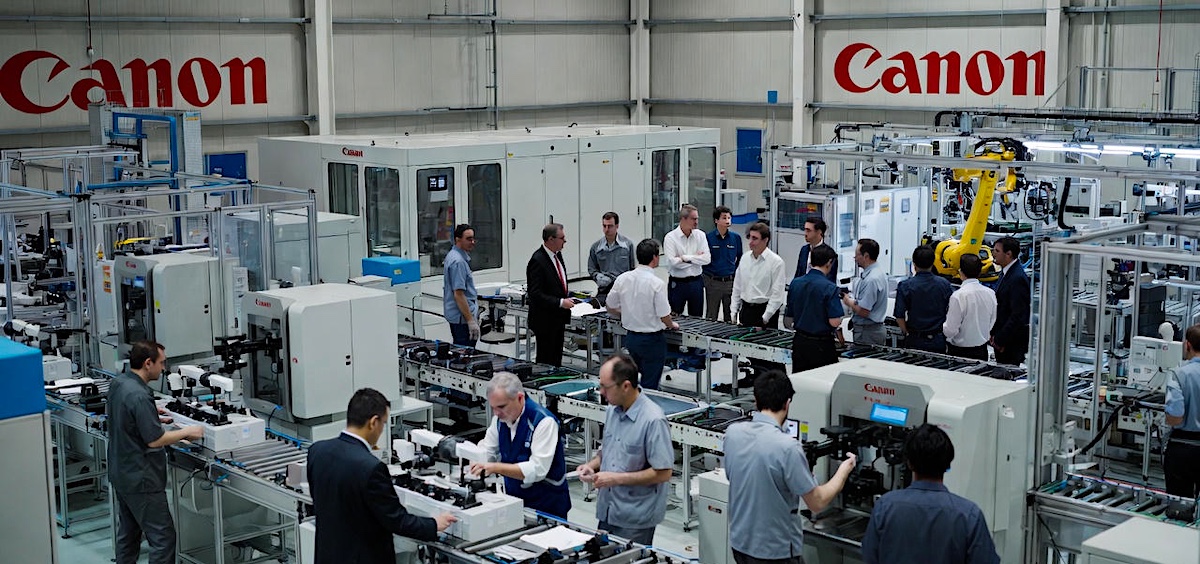
Canon is considering outsourcing the production of lower-end (entry-level) products to external partners

Par : PR admin
21 décembre 2025 à 00:30


In a recent interview with Nikkei, Canon’s Chief Financial Officer stated that the company is considering outsourcing the production of lower-end (entry-level) product models to external partners. Cameras and printers could be among the products affected. This is part of a broader review of manufacturing and sales structures aimed at improving efficiency and profitability. The ultimate goal is to raise the company’s Return on Equity (ROE) to 12%. This represents a notable shift from Canon’s traditional emphasis on in-house production in Japan. As of late 2025, it’s still in the consideration phase, with no specific partners, timelines, or affected models announced.

Further reports, primarily stemming from a January 2025 Nikkei Asia interview with Canon Chairman and CEO Fujio Mitarai, provide more context and confirm this strategic shift:

  • Scope of Outsourcing – Canon is considering a “fabless” model (design in-house, manufacturing outsourced) specifically for lower-end digital cameras (e.g., compact/point-and-shoot models) and printers produced in Asia. This includes potentially outsourcing assembly processes to third-party manufacturers in other Asian countries.
  • Reasons:
    • Become more “asset-light” by avoiding fixed costs of maintaining own factories.
    • Better respond to fluctuating demand (e.g., recent rebound in compact camera popularity driven by social media trends and younger users).
    • Reduce geopolitical risks and supply chain disruptions.
    • Cut overall costs amid declining demand for traditional office equipment and entry-level cameras, impacted by smartphones.
  • Background – Canon closed its Zhuhai, China factory in 2022, which produced compact cameras, limiting its ability to ramp up production for the recent compact camera surge quickly. Outsourcing would allow flexibility without reopening or building new facilities.
  • What Remains In-House – High-end/flagship products, key components, design, development, and core technologies will stay in Japan (using Japanese factories as “mother factories”). Lenses and advanced sensors are unlikely to be outsourced.
  • Potential Impact – This could enable Canon to increase production/sales of compact cameras (e.g., PowerShot series) and possibly introduce new affordable models. It aligns with industry trends where competitors already outsource more extensively.
  • Financial Tie-In – The strategy supports broader goals of improving profitability and ROE, building on the CFO’s comments.


The post Canon is considering outsourcing the production of lower-end (entry-level) products to external partners appeared first on Photo Rumors.

Getting closer to the DJI drone ban in the US

Par : PR admin
21 décembre 2025 à 00:11


The United States is just days away from a DJI drone ban, driven by a provision in the Fiscal Year 2025 National Defense Authorization Act (NDAA). Section 1709 mandates that the US National Security Agency conduct a formal risk assessment of DJI (and Autel Robotics) by December 23, 2025. Despite DJI’s repeated requests for the audit, including formal letters to multiple agencies since early 2025, no agency has initiated or completed the review. If the deadline passes without action, DJI will automatically be added to the FCC’s “Covered List,” effectively blocking FCC authorization for new DJI products and halting their import and sale in the U.S.

This could be your last chance to get a DJI drone in the US:  check Amazon and B&H Photo for their current availability and pricing.

Existing DJI drones already in the U.S. will remain legal to own, fly, and use, with no immediate grounding. However, future access to new models, official parts, repairs, and firmware updates could become limited or unavailable.

This outcome stems from national security concerns over DJI’s Chinese origins, including fears of data transmission risks or ties to the Chinese government, allegations DJI has long denied, pointing to independent audits showing no backdoors and features like offline data modes. DJI dominates over 70% of the U.S. drone market, powering critical operations for public safety agencies (over 80% of law enforcement drone programs), farmers, filmmakers, and hobbyists. Critics warn that an automatic ban, driven by legislative inaction rather than evidence, could disrupt these users without affordable American alternatives ready to fill the gap.

DJI drones will be banned in the US next month – here is your last chance to get one (DJI Black Friday deals)

The latest DJI rumors


The post Getting closer to the DJI drone ban in the US appeared first on Photo Rumors.

❌