WANDRD launched two brand-new camera backpacks: PRVKE Zip and PRVKE Pocket. Both models are available in 21L & 31L and are available in Black & Wasatch Green:
The PRVKE Pocket is built around a simple idea: trusted materials, intentional design, and carry that just makes sense.
Zip-top opening for fast, secure access
Thoughtfully designed internal layout to keep gear organized
Dedicated front organization pocket for everyday essentials — the items you reach for most, right where you need them
It’s streamlined, functional, and designed for real-world use.
Two Sizes, Two Colors: 21L or 31L, Black or Wasatch Green
PRVKE Zip
The PRVKE Zip pairs a clean, zip-top opening with a purpose-driven interior that keeps your gear protected and organized – whether you’re carrying camera equipment, travel essentials, or everyday carry.
Quick access when you need it
Secure storage when you don’t
The iconic PRVKE front pocket for a minimal, timeless look
Smart internal organization with protective materials throughout
Everything has a purpose — and it’s ready to perform from day one.
Two Sizes, Two Colors: 21L or 31L, Black or Wasatch Green
Elsa's gear list for the Olympics includes four Canon R1 bodies with a wide selection of lenses and additional accessories.
Image: Elsa Garrison
The Milan Cortina 2026 Winter Olympic Games have been underway for over a week now, and Getty Images photographer Elsa Garrison has been logging long hours on the ice to capture the action. We previously spoke with Elsa about her experiences as a sports photographer and the first woman staff photographer at Getty Images. Now she's sharing some behind-the-scenes looks at the gear she has on hand and how she's approaching photographing these Winter Games.
Elsa is currently in Milan to capture the ice events such as women's and men's ice hockey, all of the various figure skating competitions, speed skating and short track speed skating. "As a Minnesotan, I am most familiar with covering ice hockey," Elsa revealed. "It was one of the first sports I learned to cover when I began my sport photographic journey at age 15, so this sport feels like home to me." She also loves short track speed skating because it is so fast and chaotic.
"For the Opening Ceremony, I [was] one of two Getty Images photographers on the field of play to capture event-level images"
Elsa also had the opportunity to be at the Opening Ceremony, a first for her. "For the Opening Ceremony, I [was] one of two Getty Images photographers on the field of play to capture event-level images of athletes and performances," she said. "I have never worked an opening from the field of play before, and I am very excited for this opportunity to capture this aspect of the games."
As you likely expect (and can see in the image at the top of the article), the gear needed for such an event is extensive. Elsa's kit includes four Canon R1s, one R3, and nine lenses, such as the Canon RF 10-20mm F4 L IS STM, RF 24-70mm F2.8 L IS USM, RF 50mm F1.4 L VCM and RF 100-300mm F2.8 L IS USM. She also has a 1.4x teleconverter on hand for extra reach when needed, plus two battery chargers for the cameras (see a full list of her gear at the end of the article).
Elsa's setup also includes the ability to take images remotely. She uses a Magic Arm with a clamp and a mini tripod to hold the cameras, and two Pocket Wizard Remote Camera triggers with cables for triggering. She also needs to get images back to Getty Images quickly, so her kit also includes a larger router for the tech team.
Elsa made sure to pack clothes to keep her warm during the Winter Olympics.
Image: Elsa Garrison
Beyond the camera gear, there are also considerations for the cold weather. However, that's not phasing Elsa. "I grew up in Northern Minnesota, and I am very familiar with cold weather," she explained. "The joke with Minnesotans and cold weather is that if we hear someone complain about the cold, we chime in with, 'Cold? This isn’t cold!' and then we bring up the blizzard of 1991 or some other arctic blast."
"The trick is to layer and also keep your spare camera batteries in a warm pocket"
While most of the events she has been covering are indoors, the Opening Ceremony was held outdoors, so she focused on appropriate winter gear for working outside for a long period. "The trick is to layer and also keep your spare camera batteries in a warm pocket," she said. "The cold drains the camera batteries quickly, so it takes a little bit of planning and extra equipment to get through a cold-weather assignment."
Although the 2026 Olympics are beginning to wind down, there's still plenty of excitement left. "There is so much to be excited about when covering an Olympic Games," she added. "Every day is a new adventure and I get to document these Olympians as they make sport history. Sure the days are long and grueling at times, but the competition and the performances are easy to get wrapped up in and you forget that you maybe haven’t slept much!"
Elsa's Milan Cortina 2026 gear list:
Cameras:
4 Canon EOS R1 camera bodies (two will be brought from the United States, and two will be borrowed from Canon in Milan)
1 Canon EOS R3 camera body
Lenses:
RF 10-20mm F4 L IS STM
RF 24-70mm F2.8 L IS USM
RF 28-70mm F2 L USM
RF 50mm F1.4 L VCM
RF 70-200mm F2.8 L IS USM
RF 85mm F1.2 L USM
RF 135mm F1.8 L IS USM
RF 100-300mm F2.8 L IS USM
RF 400mm F2.8 L IS USM
Additional gear:
1.4x teleconverter
2 battery chargers for cameras
2 Pocket Wizard Remote Camera Triggers with cables
1 large router for our tech team
1 magic arm and super clamp for remote camera
1 mini tripod for a remote camera
Winter clothing:
Getty Images team winter shell and lining jacket in black
Black fleece base layer pant
Black outer snow pants
Black base layer shirt
Black Sorel waterproof boots
Over boot snow traction cleat/cramp on
Wool socks of varying thicknesses
Black Getty Images-branded hat, plain black hat, teal hat that I knitted for the occasion
Various gloves and mittens (fingerless mitts, tight-fitting gloves and a pair of mitten/lone finger gloves that a friend of mine hand-knit for me – the left hand is a regular mitten, and the right hand has a one finger is for the shutter button on a camera, and the rest is a mitten shape. It is a design idea I am testing out. The hand holding the camera almost looks like a lobster claw!)
For last week's Question of the Week, the conversation shifted from camera disasters to something most are far more proud to display: the cameras you’ve chosen to keep. We noticed many of you stuck with the same brand or even era of camera, but many more had a surprisingly wide array of brands, lens types and some interesting nostalgic objects. Each collection felt less like a lineup of gear and more like a historic timeline of your unique photographic life.
Read on and view the wide array of cameras collected over the years by our readers.
Your impressive camera collections
Just one part of my collection.
Photo: vigi
icexe: The Nikkormat FTn was my very first "real" camera, bought during my college days back in the late 80s-early 90s. This thing is bullet-proof, surviving being tossed around in my backpack on various road and camping trips, punk rock concerts in seedy little nightclubs, drinks being spilled on it, and mud being splattered all over it. One time, it was stolen from my apartment in a break-in, but I later found it on the ground behind the apartment; the thieves probably dropped it in their hurry to flee with my stereo and TV. I never once took it in for a CLA, yet as far as I can tell, it still works perfectly fine for a nearly 60-year-old camera.
xpatUSA2: For the pocket: Panasonic DMC-LX1. For Foveon shots: Sigma SD10 house-brick. For my shaky hands: Panasonic DC-G9 (IBS plus lens Power IS). For IR: Modified Panasonic DMC-G1. Apart from proprietary, a good few M42-mount lenses: Asahi Lens Co, Helios, Jena Zeiss.
Ken Sky: I've owned cameras since I was 8 and I'm 87. I'll only show the cameras in my office showcase. Right now, I alternate between a Sony A6000 and A7R4 with multiple lenses. Ironically, photos for this week's discussion were taken with my iPhone 17 Pro Max.
Not counting the broken ones…
Photo: Krummj
ZorSy: My cameras are in full cases (even Ikonta has its leather holster with the strap). Everyone has a story behind them; they were not flea market finds and had been taking family photos for decades. Oh, and a drawer full of digital compacts, bridge cams like Fuji S602, S9500 and DSLRs, which are all counted as disposables.
Swerky: I finally decided to move entirely to APS-C when I acquired my trusty G1X Mark III and DXO with its great denoising engine. But I wasn’t able to sell those Voigtlander lenses, since a 20mm on a crop sensor wouldn’t be of much use as a 32mm. Since I was kinda reluctant to sell those because I liked their qualities, I bought and RP and adapted them to it. Then I finally added an R100 with which I used a very good EF-S 55-250 IS STM.
Michaelgc: I've had a lot of cameras over the years, but the only one I kept was this Nikon FTn. I was an Army combat photographer in Vietnam and took this one into Cambodia in the spring of 1970.
I was an Army combat photographer in Vietnam and took this one into Cambodia in 1970.
Photo: Michaelgc
thielges: I have dozens of cameras, and the whole collection weighs over 50kg. I bought most of them at the San Jose and Capitol flea markets in California for rather low prices. The pre-WWII cameras are usually exquisite examples of mechanical design. Like Swiss clockwork. The post-WWII cameras gradually devolved into cheap plastic junk by the time they became obsolete at the dawn of the home video camera era.
sx-70: My GAS had originally started with my obsession for cheap film cameras I would see in opportunity shops (thrift shops), and then made its way into digital. By far my favourite of the film cameras I own is the Nikon S2. I have taken it out for some shooting recently, and if anything, it has pointed out many flaws in my photography, especially when it comes to how heavily reliant I can be on modern tech that makes life easy.
RaleighTiger99: I've acquired a few cameras. Some I once shot with, some were used to shoot photos/movies of me as a child, and some were given to me by friends. They all have a story, and most are in working order. They reside in different areas of my house, but the largest collection lives over the bar. I often ask folks if they can spot the only two digital cameras on display.
Can you find the only two digital cameras in this collection?
Photo: RaleighTiger99
webcastedude: A Sony A7Cr and Fujifilm X-E5 comprise my camera collection – one full frame and one APS-C. Lenses, however, are my weakness. I have a collection of Helios (vintage Russian) lenses and others of similar age. Compared to new, modern lenses, vintage lenses are cheap, and they offer a wide variety of optical features. Go on, try one on eBay. They are like candy; you can't have just one.
RetCapt: In 1984, Nikon introduced their Nikonos 5. It seemed ideal for the often-hazardous environments in which I found myself. I am not a diver (that is where the great whites dwell, and I have seen what they can do to a human body). I bought the three above-water lenses, 28mm, 35mm and 80mm, and I was set. There are some eccentricities to using this camera, but nothing an experienced film photographer couldn't handle.
Alan Sh: My collection – all Fuji apart from a Canon 300 film camera. The photo collection in my forum post is 5 cameras, 21 lenses, 4 flashguns, plus a host of accessories and tripods. It doesn't include all my bags, most of which are up in the loft.
So many other stories we couldn't fit in this article are shared in the forums. Here is a photo gallery of most of the collections shared:
Sample gallery
This widget is not optimized for RSS feed readers. Click here to open it in a new browser window / tab.
Thanks to everyone who took the time to write up an account of your camera collections.
Keep watch for the next Question of the week every other Wednesday to participate in this series. New questions are posted here on the homepage and in the forums. We can't wait to read and share your stories!
Google has announced the Pixel 10a, the latest entry in the tech giant's smartphone lineup. The last iteration of the entry-level phone marked a move away from the Pixel's iconic camera bar, and now Google is taking things a step further with acamera array that's completely flush with the rest of the phone's back. Aside from the redesign, the 10a will be very familiar, as it shares most specs and features with the previous generation.
The smoothed-out design will be a big benefit to those who don't like using a case. The phone will now sit flat on surfaces; gone are the days of rocking when you set it down. And it won't get caught when you take it in or out of your pockets.
Image: Google
While Google flattened the camera array, the phone's body didn't get any thicker than the 9a. There also hasn't been a camera downgrade. Like the previous model, the 10a features a 48MP main camera with a Type 1/2 (6.4 x 4.8 mm) sensor and a 13MP ultra wide camera with a Type 1/3.1 (5.0 x 3.7mm) sensor. When asked how they achieved this, Google simply said that the team has the best engineers and wouldn't provide any additional details.
The other changes in the latest budget offering are rather small. It gains some features found on the 10-series of phones, especially AI-related ones. That includes Auto Best Take, which uses Google AI to automatically merge group photos to get the best take for everyone, and Camera Coach, which uses Gemini models to help users with composition and framing. The 10a also now offers Satellite SOS, which aims to connect the phone to emergency services even if you're out of Wi-Fi or mobile network range.
The color options are similar to last year's 9a, though with slightly more vibrance in the blue (called Lavender) and red (Berry) models. Image: Google
The 10a promises a slight durability boost with a Corning Gorilla Glass 7i cover glass, and Google says the Actua display is 11% brighter than the 9a. Battery life in Extreme Battery Saver mode gets a bump from 100 to 120 hours, while normal mode remains at a promised 30 hours. Like the 9a, the Pixel 10a uses the Tensor G4 chipset, which Google says was kept to keep the phone's price down. It retains the IP68 rating as well.
The Pixel 10a is available starting March 5 for $500, the same price as the previous generation. It comes in Obsidian (black) and Fog (white), along with Lavender (blue) and Berry (red), which are slightly more vibrant variations of the 9a's colors.
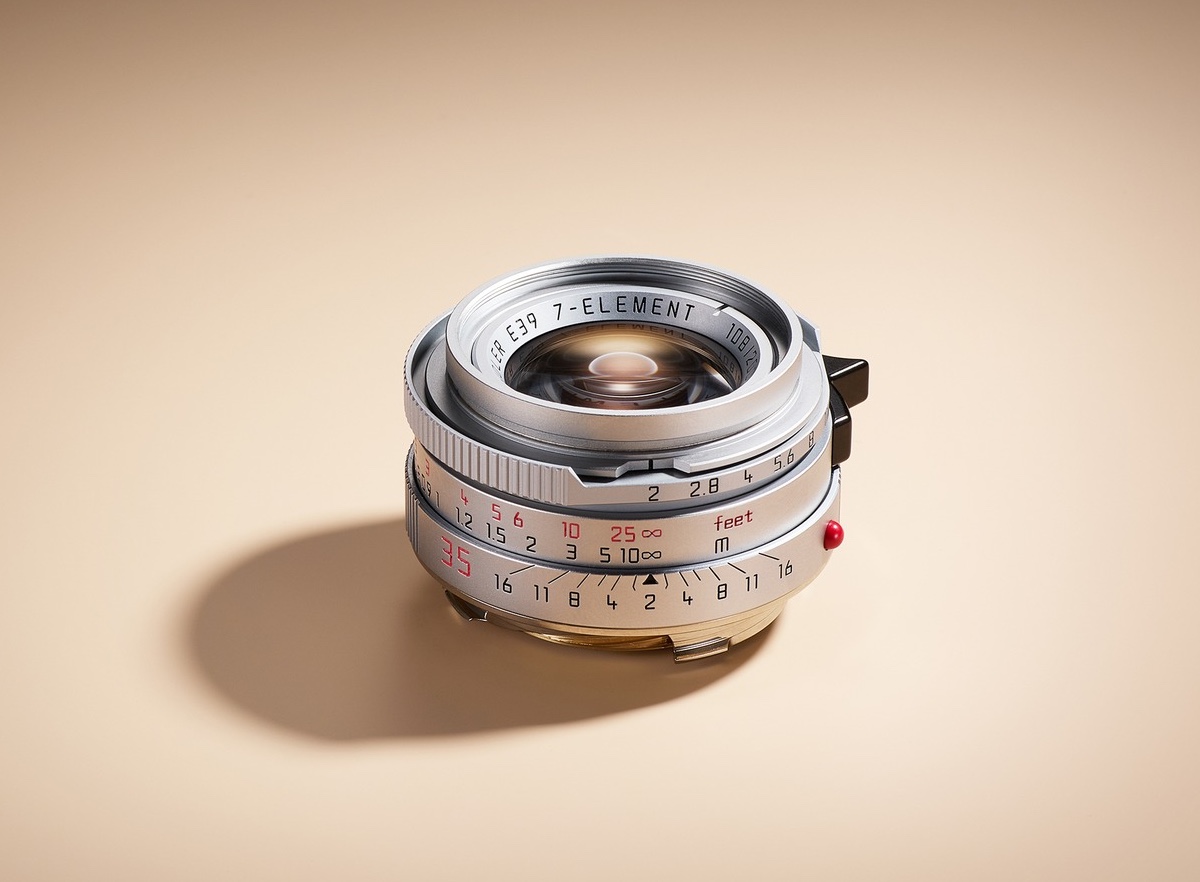
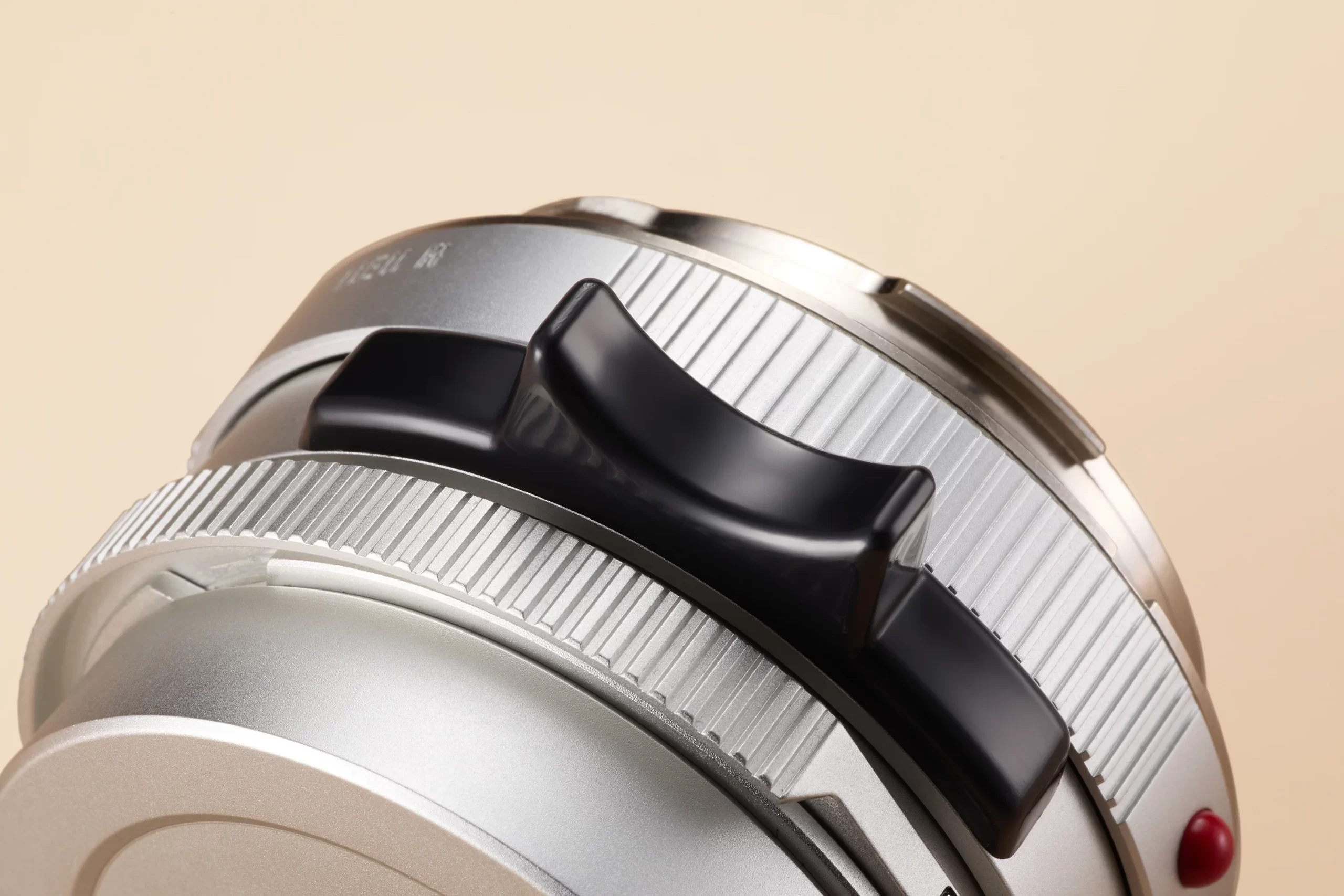
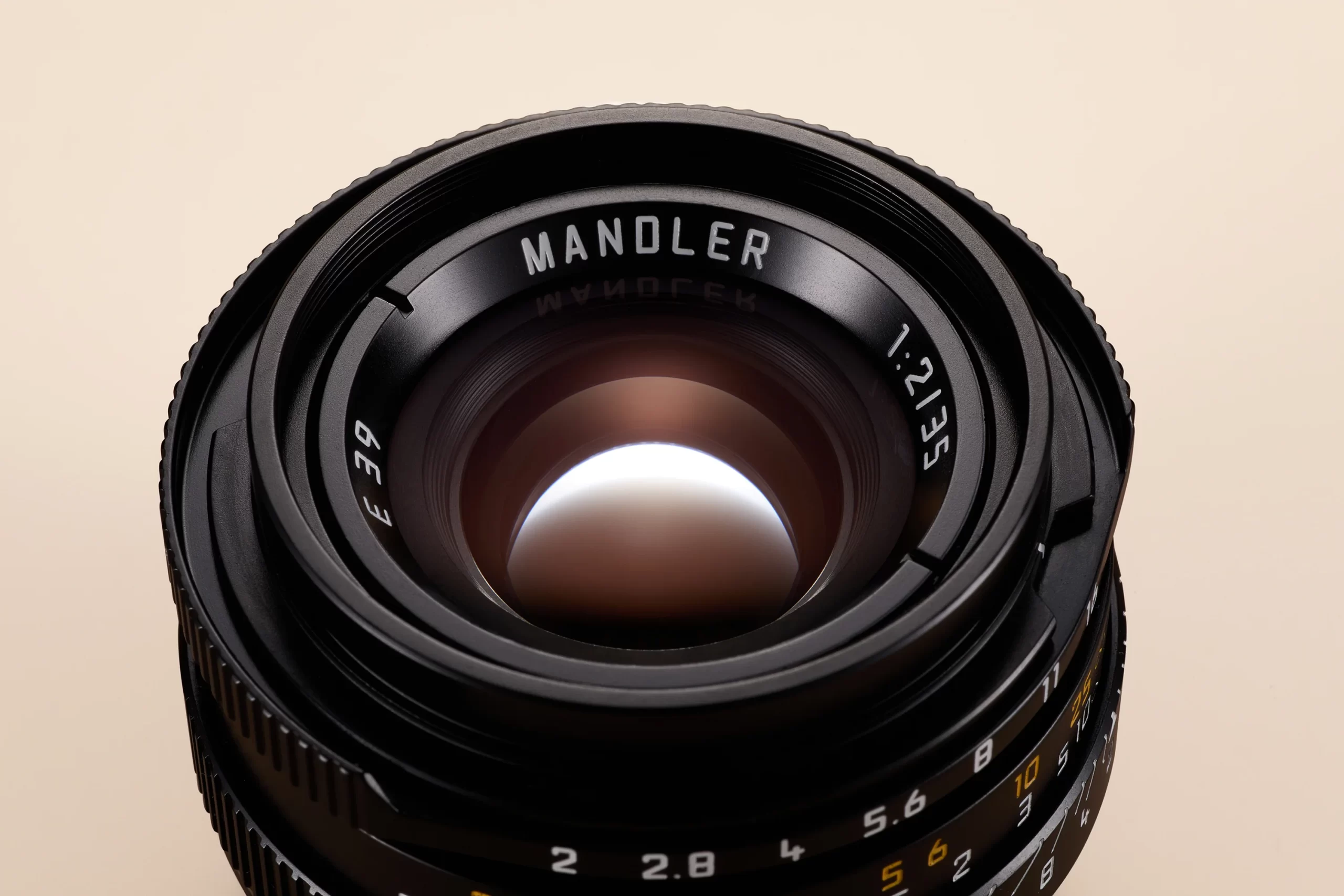
The Mandler 35mm f/2 lens for Leica M-mount is a replica and a complete reproduction of the optical formula of the original Leica Summicron 35mm f/2 seven-element lens. The name “Mandler” is a tribute to Walter Mandler, who designed many legendary Leica lenses.
Mandler is expected to launch another new lens in July. In the future, they are planning to release 3-4 new lenses per year.

 Connexion