Vue normale

Major upgrades to Topaz Photo and Astra are now live
Par : PR admin
4 mars 2026 à 21:48


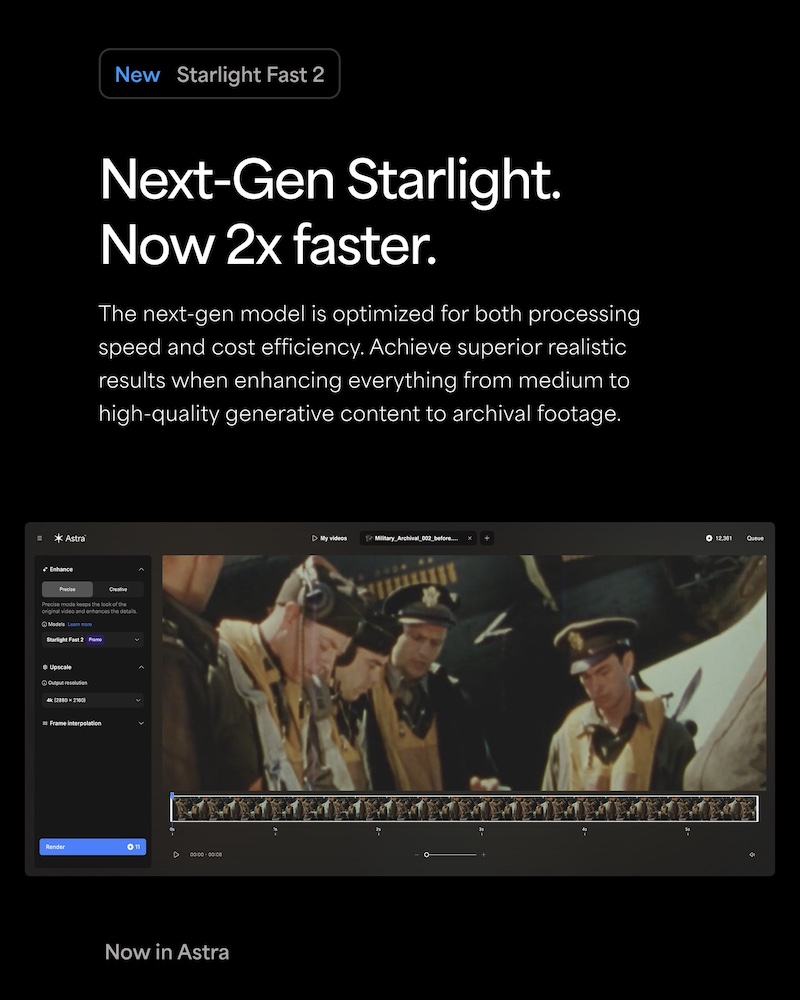
Topaz Labs released major upgrades to Topaz Photo and Astra: Wonder 2 is now local, plus Starlight Fast 2 and Scene Controls are now in Astra. Here’s what’s new:


Topaz Wonder 2 (now runs locally in Topaz Photo): Wonder 2 is our newest image enhancement model that denoises, sharpens, and upscales in a single step, with no sliders or tuning required. It is a giant, powerful model that now runs locally thanks to our proprietary NeuroStream technology, which dramatically reduces VRAM usage and allows powerful AI to run on standard creator hardware.


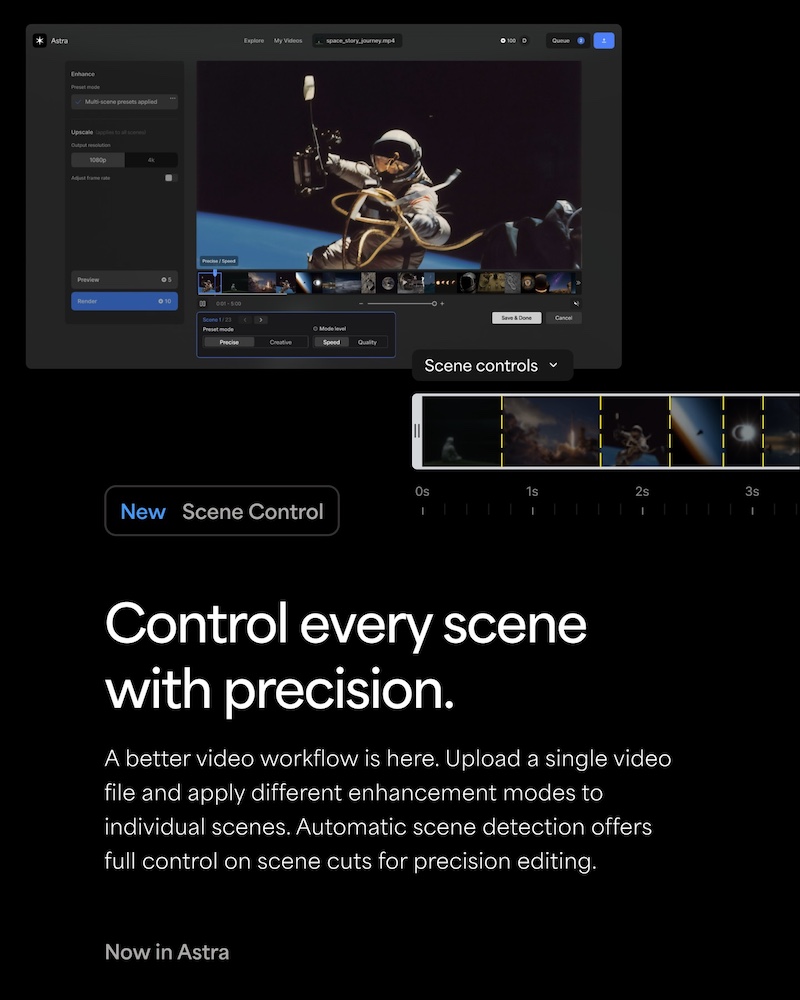
Topaz Astra updateAstra now includes Starlight Fast 2, along with new scene detection and batch rendering. These updates allow creators to enhance videos faster and process multiple files more efficiently, making Astra more powerful for real-world workflows.

Additional information:

Topaz Labs Introduces Topaz NeuroStream–Breakthrough Tech for Running Large AI Models Locally

DALLAS, March 3, 2026 – Topaz Labs, the leader in AI-powered image and video enhancement, today announced Topaz NeuroStream, a proprietary VRAM optimization that allows complex AI models to be run on consumer hardware. This announcement comes alongside a new local image enhancement model, Wonder 2 (Local), that would not be possible without NeuroStream optimization.

Designed as foundational technology, NeuroStream will not be limited to only Topaz Labs models in the future, and has the power to change local AI model use across the entire image and video industry.

“We envision a world where AI models are simply on your device—no cloud needed, no additional usage costs, no specialized hardware, and no security gaps” says Topaz Labs CEO Eric Yang. “Our pro customers have been asking for this since we launched our first large, generative model. And now, we’re very excited to make it a reality.” Without rendering costs, NeuroStream democratizes the use of large AI models. “Creators shouldn’t need specialized hardware or complex workflows to achieve professional results.”

Optimized for NVIDIA Hardware

With a focus on local processing, Topaz Labs has collaborated with NVIDIA to optimize NeuroStream. Very few consumer systems can run a large video model, but with NeuroStream implemented, that same model can be used on every NVIDIA GeForce RTX and RTX PRO GPU.

“As the demand for local processing on RTX GPUs continues to grow, NeuroStream provides an opportunity to run complex AI models on nearly all hardware,” said Gerardo Delgado Cabrera, director of product for AI PCs at NVIDIA. “This latest collaboration with Topaz Labs is part of ongoing efforts to help develop technology optimized for use with NVIDIA-powered devices.”

About NeuroStream: Industry-First VRAM Optimization

NeuroStream is a proprietary technology that reduces VRAM usage by up to 95%, enabling large, complex AI models to run locally on consumer-grade GPUs without sacrificing performance, speed, or output quality. This breakthrough dramatically expands hardware compatibility, democratizing advanced image and video enhancement models previously limited to high-end systems or cloud-only usage.

About Wonder 2 Local: Denoise, Sharpen & Upscale Instantly

Announced in January 2026, the Wonder 2 model represents a fundamental shift in AI image enhancement. It is the first model to denoise, sharpen, and upscale an image simultaneously, eliminating the need for multiple tools, sequential processing, or parameter tuning. Wonder 2 (Local) is now available in Topaz Photo.

The post Major upgrades to Topaz Photo and Astra are now live appeared first on Photo Rumors.
DPReview readers share their favorite camera brands

capanikon-nikon-camera-on-desk-by-bag-lens

Photo: capanikon

For last week's Question of the week, we’re turning the spotlight on something photographers love to debate: what’s your favorite camera brand? Some of you swear by one trusted name and have used it for decades, while others have explored multiple brands before finding 'the one'. There were quite a few of you who also talked about your experience in switching from one camera brand to another – a brave decision.

What I personally found interesting was how many of the responses talked about camera and lens brands that aren't often discussed on our forums. The Mamiya, Bronica, Siruis or TTArtisans of the world.

Keep reading to see which camera brands our readers chose as their favorites.

Your favorite camera brand

Skinma: OM System / Olympus. Nothing else comes close. I love the size of the cameras, as I can take a body and two lenses, a water bottle, food, and a flash all in my Lowepro sling bag. Performance is also great. I still have my original Olympus E-M5 as a backup body, and its image quality is fantastic compared to that of more modern cameras.

capanikon: A friend showed me his Nikon F3. I was impressed with the industrial rawness of it, the metal and hardness. The haptic shutter speed dial, buttons and switches. It felt like a real machine. I like the style of the F-mount lenses with their clicky aperture rings and bunny ears, helicoid focus, and rubber focusing rings. So, I sold my EOS and switched to Nikon. First, a used N8008; later, an F4s and an F3hp.

Satyaa: None! Every time I started to like a brand, they lagged in something I needed, and I had to switch. I like different bodies and lenses for different reasons, but no favorite brand right now. I am speaking as a hobbyist on a budget. If money is no constraint, I guess one could get anything in any brand. Leica might be my favorite brand at that point.

maoby-kodak-camera-mirror
Photo: maoby

Kipplemaster: I have used a lot of different stuff and am definitely not a brand loyalist. Currently have a selection of Sonys as well as a couple of Nikon 1s. Out of ‘millions’ of lenses I've owned, that one is surprisingly easy to call. Probably my ‘sweet spot’ for loving my camera kit was the original Canon 5D and associated L lenses. My second-favourite lens is the Canon 200mm F2.8L.

I like trying weird stuff like the original Lytro and the Nokia 808 PureView, a 40MP camera on a weird Nokia phone in the days when 40MP wasn't even available on any DSLR. Most of them have been fun. All of which is a long-winded way of saying I don't really have a favorite brand. I almost forgot to mention that some of my other favourite lenses have been Sigmas.

greycell: I've followed DPReview for at least 15 years, and weirdly never felt compelled to comment before. I even hesitate to say Olympus (slash OM System) is ‘my favorite’, but it's what I'm used to and work with within my own means and limitations. I chose it originally because it's what my dad used, and I inherited all his classic manual lenses from the OM-1 era onward. I know it's not even the best for the low-light concert photography I like to do, but it feels good enough with modern processing tools.

SimonV: Having tried and owned almost all brands, there's only one that stands out and doesn't feel like it does things the same as others, and that's Fujifilm. I wouldn't call myself a fanboy in any regard since many of their models are a bit too fiddly for me and seem built for smaller hands and fingers, but they're the only company I've found that is both capable (albeit not at the top of any category) and, most importantly, Fun to shoot with.

If I were a pro, I'm sure it would be different, but I'm a hobbyist, and the most fun I've had has been with Fujifilm. Especially their later models like the X100VI and GFX100RF, which provide both fun and excellent image quality.

dimpsey-camera-collection-black-white
Photo: dimpsey

sportyaccordy: I shoot Sony because I'm just super picky about lenses and will compromise everything else for that. I really loved shooting with Canon. On paper, yes, sometimes Canon isn't the best, but the shooting experience/build quality, etc., make up for that. And now on the body side, at least I think they are basically back on top. Lenses are getting better, but still not where I want them (and even if/when they get there, I'm not switching again).

LLW902: I've got a Sony a7c II with a 24-70mm F2.8 and a Fujifilm X-E5 with a 23mm pancake lens, both sitting on my desk right now. Both are great cameras, but I'd reach for the Fujifilm first for almost anything, except a professional opportunity where it was absolutely critical I not miss focus on the first try. I guess that's a rather roundabout way of saying that Fujifilm is my favorite, even though, on the merits, it is a less accomplished device.

Tony5D: Currently using Nikon Z7II, but decided to change from Fujifilm (XE2, XT2, then XH1) mainly because my main subjects are landscape and architecture. The Nikon offers full-frame and 42MP, and is not much bigger than the X-H1. I have also used just about everything else because I was in the industry. Old favorites? Minolta CLE is easy to pack for flights, and the Canon G5 X Mark II, which I carry at all times, is a backup.

dizzeeK: Let's be honest, for someone shooting stills that aren't birds or sports, anything will work. I can only speak for me personally, though. I have to say, Canon. I have been through many cameras/systems since the film days, and I am most happy with Canon, despite the RF system not being the ‘best’ on paper. It is a joy to use, and the results are great. Who else has a 70-200mm F4 that is that compact and well featured?

So many other stories we couldn't fit in this article are shared in the forums. Thanks to everyone who took the time to explain why your favorite camera brand stands out to you.

Keep watch for the next Question of the week every other Wednesday to participate in this series. New questions are posted here on the homepage and in the forums. We can't wait to read and share your stories!

Share your favorite camera brand and see what other community members think!

Not again: Tecno modular magnetic camera-phone concept

Par : PR admin
4 mars 2026 à 16:22


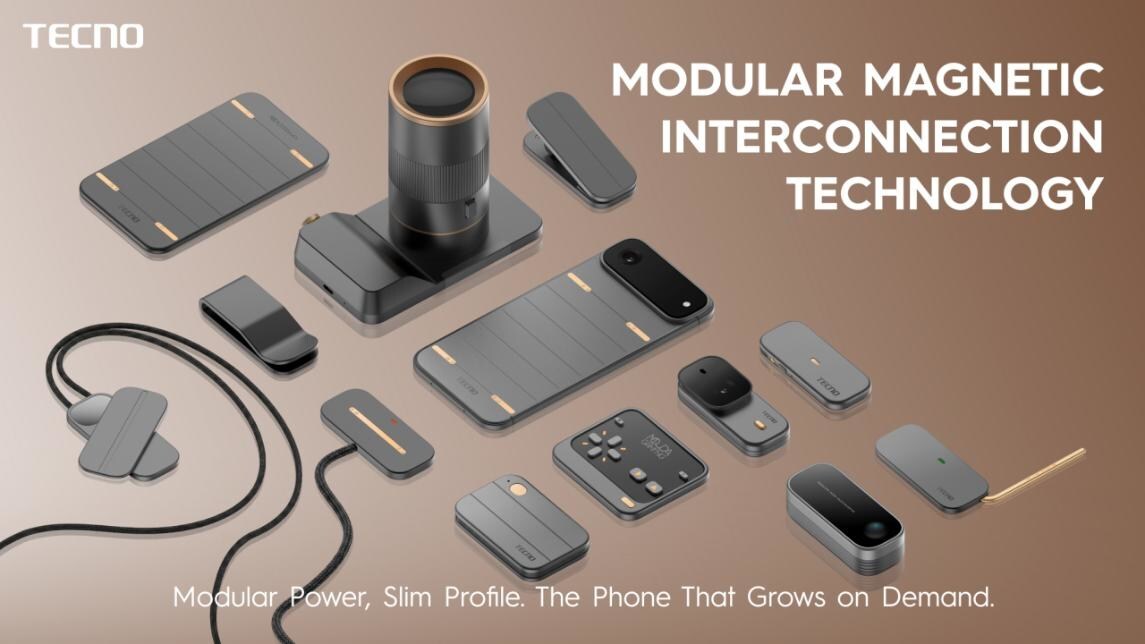
At the 2026 Mobile World Congress (MWC), the Hong Kong-based company Tecno showcased its new “Modular Magnetic Interconnection Technology,” a concept designed to transform a standard smartphone into a photography tool. The system relies on a remarkably slim base device that magnetically snaps onto various hardware modules to expand its capabilities:

Core Concept: “The Phone That Grows on Demand”

  • Ultra-Thin Base: The main smartphone is just 4.9mm thick, featuring a matte glass back divided into eight modular zones to guide accessory alignment.
  • Hybrid Connection: It uses a rectangular magnetic array for physical attachment, pogo-pins for power delivery, and a combination of Wi-Fi, Bluetooth, and mmWave for high-bandwidth, low-latency wireless data transfer.
  • Dual Aesthetics: Two design variants were presented: the Atom Edition (clean, silver-aluminum with red accents) and the Moda Edition (a bolder, “geek-inspired” look).

Key modular attachments:

  • Telephoto Lens: Acts as a standalone imaging system with its own sensor, using the phone’s display as a live viewfinder for professional-grade photography.
  • Action Camera: A module designed for rugged, versatile shooting angles that can even function independently from the phone.
  • Power Bank: At 4.5mm thick, these 3,000mAh packs are stackable, allowing users to combine multiple units to significantly increase battery life without excessive bulk.
  • Gaming & Utility: Other modules include a dedicated game controller, a high-performance microphone (with an attachable “dead cat” for wind noise), storage expansion, and a Wi-Fi router extension.

Press release:

HONG KONG, Feb. 25, 2026 – AI-driven innovative technology brand TECNO is set to unveil its groundbreaking Modular Magnetic Interconnection Technology at MWC 2026. This concept, embodied by TECNO Modular Phone, represents TECNO’s pioneering exploration of the next-generation form of smartphones, where hardware expansion is instantaneous through magnetic attachment and intelligent connectivity. Designed to bridge the gap between escalating AI computing demands and the spatial constraints of modern smartphones, the platform will allow users to transform their devices into modular powerhouses. Attendees will witness a customizable modular suite, enabling the seamless attachment and removal of slim, high-performance modules tailored to individual needs.

Unlike traditional smartphones locked into fixed feature sets, TECNO’s modular system offers ultra-thin, flexible modules that empower creators and professionals to tailor their devices to any scenario. This reconfigurable vision is embodied in two distinct design interpretations of the Modular Phone. The ATOM edition of TECNO Modular Phone follows the philosophy of “Rational Order with Personal Expression,” featuring a clean silver-aluminum body and signature red accents. The MODA edition of TECNO Modular Phone offers a bold, geek-inspired aesthetic. Both models frame modularity as a platform for lasting personal choice, embodying TECNO’s commitment to technology that grows with its users.

“We believe the ultimate goal of technology is not to create a static masterpiece, but to offer an extension of human freedom. By pioneering this modular architecture, we are breaking the constraints of fixed hardware and returning the power of choice to the user,” said Leo Li, TECNO Product Head of Modular Magnetic Interconnection Technology. “This is more than a leap in connectivity; it is an experiment in mobile liberation, where the device is no longer defined by its factory form, but by the user’s intent in every moment.”

A Moment-To-Moment Modular Ecosystem

Built on TECNO’s Modular Magnetic Interconnection Technology, the ecosystem currently features around ten high-performance modules, designed to meet users wherever they are in life and evolve alongside their shifting needs and surroundings. Whether capturing professional photography, gaming, communicating off-grid, or extending battery life, the modular system offers unmatched freedom to configure a personalized stack.

The ultra-thin POWER BANK effectively doubles usable power, supplying energy seamlessly to both the smartphone and attached accessories. Complementing this is the ACTION CAMERA, which unlocks new creative workflows and shooting angles without compromising the phone’s lightness. For professional imaging demands, TECNO’s TELEPHOTO LENS acts as a standalone system using the phone’s display as a viewfinder, providing low-latency live previews and instant captures. This Customizable Modular Suite is not just a collection of accessories, but a dynamic toolkit, allowing users to carry only what they need, when they need it.

Innovative Design and Effortless Connectivity

Central to TECNO’s modular concept is a breakthrough in ultra-thin industrial design that redefines how expandable hardware feels in daily use. The base smartphone measures just 4.9mm thick, with the POWER BANK at an ultra-slim 4.5mm. Even when combined, the total thickness remains comparable to typical smartphones, ensuring modular expansion feels natural, preserving portability and simplicity.

The smartphone features a high-quality glass back panel with a laminated anti-glare treatment, creating a soft, matte finish, while a polished metal frame adds durability and refined visual contrast. Subtle lines across the phone’s back divide it into eight modular zones, guiding accessory placement and alignment without sacrificing the clean aesthetic.

A hybrid connection architecture supports this design, featuring a precision-engineered rectangular magnetic array for secure, intuitive module attachment, paired with physical pogo-pin connectors for efficient, low-heat power delivery. Data transmission seamlessly switches among Wi-Fi, Bluetooth, and millimeter-wave (mmWave) communication, enabling higher bandwidth and lower-latency interaction. This invisible, automatic process allows users to enjoy instant pairing, freeing them from technical complexity to focus on their experience.

Building a Modular Platform for the Future

TECNO’s Modular Magnetic Interconnection Technology is designed as a scalable platform built to evolve with future innovations. By establishing a consistent physical and connectivity foundation, TECNO opens possibilities for expanded modular experiences across AI-powered tools, storage expansion, lifestyle-focused accessories, and beyond. While the interface is proprietary, TECNO envisions the potential for future solutions that extend beyond its ecosystem, enabling broader compatibility and utility across use cases.

Presented as a concept platform at MWC 2026, the modular ecosystem demonstrates TECNO’s long-term design thinking and commitment to technology that is adaptable, personal, and responsive to real-world needs, as technologies, materials, and ecosystems continue to mature.

The post Not again: Tecno modular magnetic camera-phone concept appeared first on Photo Rumors.

Apple's latest MacBook Pros are more powerful than ever

Apple-MacBook-Pro-M5-Pro-and-M5-Max-lifestyle-01-260303 big.jpg.large 2x
The latest MacBook Pros are familiar on the outside, but have some interesting changes on the inside.
Image: Apple

This week, Apple announced its latest generation of MacBook Pros, which also marks the debut of its high-end M5 Pro and M5 Max chips. The company says the new processors are up to 30% faster in "pro workflows" than its previous CPUs, which is good, since the laptops' starting prices are a bit higher than their predecessors'.

Part of that uplift likely comes from the M5 Pro and Max simply having more CPU cores. The Pro starts with 15, upgradable to 18, while all Max models have 18. These represent an addition of three and four cores, respectively.

It's not just a matter of adding more slightly upgraded cores, though. Previous generations of M chips, and the standard M5 that's been around for a while, have had a mix of what Apple calls Power and Efficiency cores. The M5 Pro and M5 Max follow a similar paradigm, but rather than using the same types of efficiency cores as the standard M5, as previous Pro and Max chips did, they use "all-new performance cores." They're fulfilling the same role as the Efficiency cores in the standard chip, but presumably have a bit more horsepower.

So what about the maximum-strength cores that the company used to call "Performance"? Apple has rebranded those as "Super" cores across its lineup; the M5 has a mix of Super cores and Efficiency cores, while the M5 Pro and Max have Super cores and Performance cores. The new branding is a little hard to keep track of*, especially since it's not necessarily clear how the new "Performance" cores stack up to the Super or Efficiency ones. However, it is worth noting that, unlike with previous generations, the lower-power cores now outnumber the higher-power ones, even in the Pro and Max chips.

M4 Pro M5 Pro M4 Max M5 Max M5
12 cores
8 Performance
4 Efficiency
GPU
16 core

15 cores
5 Super
10 performance
GPU
16 core

14 cores
10 Performance
4 Efficiency
GPU
32 core
18 cores
6 Super
12 Performance
GPU
32 / 40 core
10 cores
4 Super
6 Efficiency
GPU
10 core
14 cores
10 Performance
4 Efficiency
GPU
20 core
18 cores
6 Super
12 Performance
GPU
20 core
16 cores
12 Performance
4 efficiency
GPU
40 core

While GPU core counts have remained largely the same, the company says they have a "next-generation architecture," higher memory bandwidth, and higher performance in AI tasks (in fact, the press release mentions "AI" around 25 times). The company also promises that its latest GPUs have greater performance in compute and ray-tracing.

Apple-M5-Pro-M5-Max-chips-260303 big.jpg.large 2x
For those interested in the intricacies of chip design, Apple says the M5 Pro and Max feature a new "Fusion Architecture" that combines two 3nm-class dies. It's reminiscent of the chiplet design that's served AMD's Ryzen series so well, and it could make it possible for Apple to more easily offer a bit more freedom when it comes to configuring your mix of CPU and GPU cores in the future.
Image: Apple

Beyond the new processors, the laptops are relatively similar to their predecessors, with the same displays, three Thunderbolt 5 ports, SDXC card slot, and dedicated coprocessors for encoding and decoding codecs like H.264, HEVC, ProRes and ProRes RAW. However, there are some other small upgrades: the 2026 MacBook Pros have Apple's N1 wireless chip, providing an upgrade to Wi-Fi 7 from the Wi-Fi 6E found in the previous generation. The chip also includes Bluetooth 6, updated from Bluetooth 5.3.

Apple has also tweaked the default storage and memory configurations. The M5 Pro laptops all now start with 1TB of storage (the 16" version used to start with 512GB), and the M5 Max ones start with 2TB. The company also promises that the computers' SSDs will run up to two times faster than those of their predecessors.

The M5 Pro laptops can also now be optioned with 64GB of memory, up from 48GB, though doing so will cost a pretty penny; you have to spend $200 to get the higher-end Pro chip, then add on $600 to upgrade from the base 24GB of memory (though, given what's happening with the rest of the industry, those prices seem less egregious than they once did).

Apple-MacBook-Pro-M5-Pro-and-M5-Max-Capture-One-260303 big.jpg.large 2x
You certainly don't need a Pro or a Max chip to edit photos... but it doesn't hurt.
Image: Apple

For most photographers, the standard M5 MacBook Pro will be plenty powerful, as will the cheaper M5 MacBook Air (though it misses out on the SD card reader and HDR-capable screen). But those doing heavy edits on high-resolution files, or who want to configure their machines with ludicrous amounts of memory or storage, will appreciate these higher-end options. The extra horsepower may also be useful to anyone who edits video; the standard M5 is no slouch, but the extra CPU cores, GPU power and SSD speed will make the process that much smoother.

The M5 Pro MacBook Pros start at $2199 for the 14" model, and $2699 for the 16" one: a $200 premium over the starting prices of their corresponding M4 models. Upgrading to the Max chip will add $1400 to the price. Preorders open on March 4th, and the laptops will be available starting on the 11th.

* As is tradition. I'm sure there are even folks at Apple who have a hard time keeping the relationships between Studio, Ultra, Pro, and Max products straight.

Samyang announced a new AF 35mm f/1.8 P FE lens

Par : PR admin
4 mars 2026 à 00:35


At the 2026 CP+ show, Samyang announced a new AF 35mm f/1.8 P FE full-frame lens with an ultra-compact design, almost identical to the existing AF 85mm f/1.8 P FE and AF 16mm f/2.8 P FE lenses from the Prima series. Here are the key new/updated features from Phototrend:

  • Larger, textured manual-focus ring
  • USB-C port for firmware updates
  • Dedicated AF/MF switch
  • More robust build with improved weather sealing
  • Quieter and optimised autofocus motor
  • Check for pre-orders

In the US, some LK Samyang lenses are also sold under the Rokinon brand. In Europe, Smyang lenses are sold at Foto Erhardt and WEX Photo.

LK Samyang to release a new line of “Prima Series” lenses

Via Phototrend

The post Samyang announced a new AF 35mm f/1.8 P FE lens appeared first on Photo Rumors.

❌