The previously rumored DJI Lito X1 & Lito 1 entry-level drones are now officially announced, but not in the US. In Europe, the new drones can be purchased at Foto Erhard and WEX Photo. Here are the details:
DJI Lito X1
DJI’s Lito X1 is an ultra-light drone designed to capture incredible footage without any baggage. It is equipped with a 1/1.3-inch sensor and 42GB of internal storage. This is accompanied by 4K/60p video, 100fps slow motion, 2.7K vertical shooting, 48MP stills up to 8K detail, and 10-bit D-Log M. With its omnidirectional obstacle sensing, forward LiDAR and ActiveTrack, you can fly with more confidence and keep your subjects locked in the frame. Add on a 36-minute flight time, and you have plenty of room to experiment and refine your shots.
Ultra-light 249g folding body
4K/60p video footage
1/1.3-inch sensor
2.7K vertical shooting
48MP stills up to 8K detail
10-bit D-Log M
DJI Lito 1
DJI also released the Lito 1! This version differs from the Lito X1 in that it’s designed for those who want a simple yet capable aerial camera for everyday shooting. Like the X1, it can shoot 4K/60p video, 100fps slow motion, 2.7K vertical shooting, 48MP stills up to 8K detail, and features omnidirectional obstacle sensing, forward LiDAR and ActiveTrack. The Lito 1 is the perfect entry to drone photography and filmmaking.
Fujifilm GFX100S w/ Fujinon GF63mm f/2.8 R WR | F10.0 | 1/20 sec | ISO 500 Photo: Scott Pilla
Scott Pilla (known as spilla in the forums) has a love of the night. His photography journey began with a peaceful walk around his university. Over the years that followed, he came to appreciate how that time of day can make a difference in one's photography.
"I started photography in undergrad at Cornell University, where I was interested in film photography. I spent years photographing landscapes and nature with a variety of gear. However, I didn't really find my own style until I got older and became a dad. I had no time during the day or to travel, and this is when night photography and I found each other."
"It was an escape, a time when I could be calm and unhurried. Gradually, it became the basis of most of my work. I also enjoy the technical challenge of capturing very high dynamic range night scenes, and editing them so they feel natural and tactile."
This story is part of our What's in your bag? community spotlight series. The series showcases the diverse gear and photography of our community, and shares their stories of how that gear helped them to capture the perfect shot.
Fujifilm GFX100S w/ Fujinon GF45mm f/2.8 R WR | F7.1 | 1/15 sec | ISO 500 Photo: Scott Pilla
Meet Scott Pilla (spilla)
Home base: Baltimore, USA
Favorite camera and lens: Scott Pilla’s go-to setup includes the Fujifilm GFX100S camera, praised for its incredible detail and dynamic range, especially in low light. He pairs it with the Fujifilm GF45/2.8 lens, which delivers sharp, natural rendering and resists flare, making it ideal for his night photography and atmospheric shots.
Support gear: Scott uses an FLM CP30-L4 tripod with a RRS BH-55 head for most shots, though he often shoots handheld, even in low-light conditions. He’s also equipped with a range of accessories for fine-tuning composition and stability.
Camera bags: He finds the Think Tank Mindshift Photocross backpack especially useful for its comfort and side-access design, which makes it easy to grab gear quickly when shooting in dynamic conditions.
Scott's camera bag
Photo: Scott Pilla
If you had to pick one favorite item from your gear, what is it and why?
"I love my Fuji GF45/2.8 lens. It renders beautifully and cleanly and is good at resisting flares, making it the perfect night lens."
"I also always carry a tripod (FLM CP30-L4, RRS BH-55 head), but often shoot hand-held. Since I'm often out in the weather, a few microfiber cloths are a must to keep the lens dry. That, and a good pair of gloves. I use the Think Tank Mindshift Photocross backpack. It's comfortable, and I like the side access; it's helpful when you need to get the gear quickly."
The Nautilus diner in Timonium, MD, USA
Fujifilm GFX100S w/ Fujinon GF45mm f/2.8 R WR | F3.2 | 1/6 sec | ISO 500 Photo: Scott Pilla
What interesting environments and scenes do you shoot in?
"I mostly photograph the area in and around Baltimore, MD. I maintain a list of potential subjects and hit them up when the conditions are right. I also have a series of photographs from central Pennsylvania, near where my wife grew up. We often travel there to visit my wife's parents, and I am exploring that area as well. For example, I have a series from Fantasy Island, the abandoned strip club in Duncannon, PA."
"I find inspiration in mundane things, slices of life that are transformed into something unexpected. I am often out shooting in the weather – fog, snow, rain. My family knows that if it's a foggy night, I'll be home late for breakfast (but I'll bring donuts from Fenwick Bakery). I'm always looking for interesting interactions between natural atmosphere and artificial light."
National Auto
Fujifilm GFX100S w/ Fujinon GF45mm f/2.8 R WR | F8.0 | 1/10 sec | ISO 500 Photo: Scott Pilla
What's a great night scene that seems almost too simple but jumps out once it's captured on camera?
"I took a photograph of National Auto at the start of a snowstorm. The structure's color caught my eye, and then I was drawn in by the details – the empty chairs in the window, the neon sign partway through construction, the cone and chain buried in the snow. This was a business transitioning from one thing to another, getting covered up by the natural world. I went for a straight-on composition, simplifying the scene. I took the shot handheld at 1/10s to capture the falling snow through the street lights like little pen flourishes, adding texture."
For eager photographers to capture it all, what would you suggest?
"In editing, I intentionally chose not to perfectly correct the perspective, leaving the building just a little wonky, which, to me, was part of its charm. I do my main editing in Lightroom, then apply film simulations using Dehancer to emulate some of the color and feel of film photography."
World Ends Today
Fujifilm GFX100S w/ Fujinon GF45mm f/2.8 R WR | F5.0 | 1/13 sec | ISO 500 Photo: Scott Pilla
If you'd like to share your photography, tell us about your main camera, lens choices, key settings and strategies. Your photos and story could be featured in the next article!
Editor's note: This article continues a series, 'What's in your bag?', highlighting DPReview community members, their photography and the gear they depend on. Would you like to be featured in a future installment? Tell us a bit about yourself and your photography by filling out this form. If you're selected for a feature, we'll be in touch with next steps.
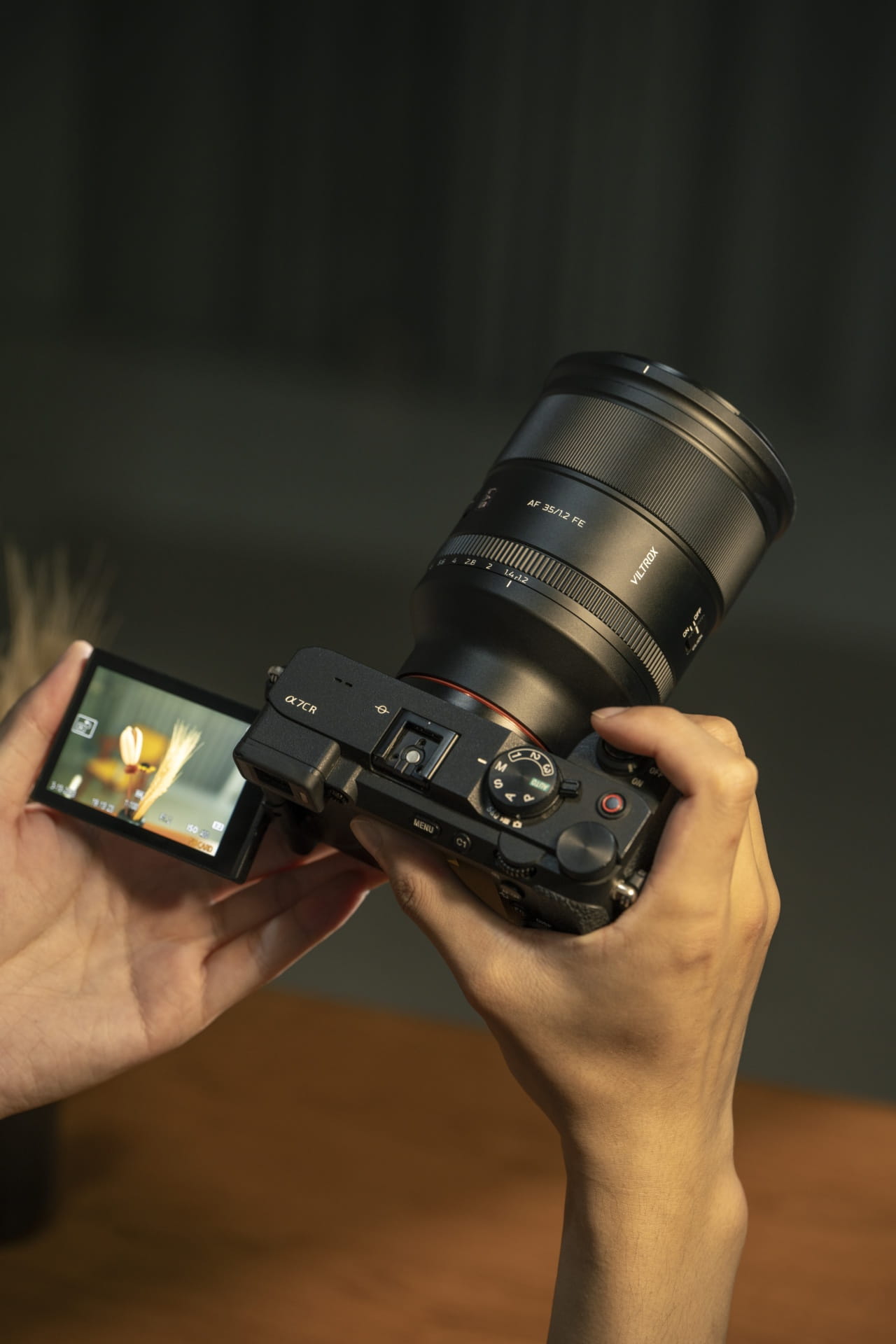
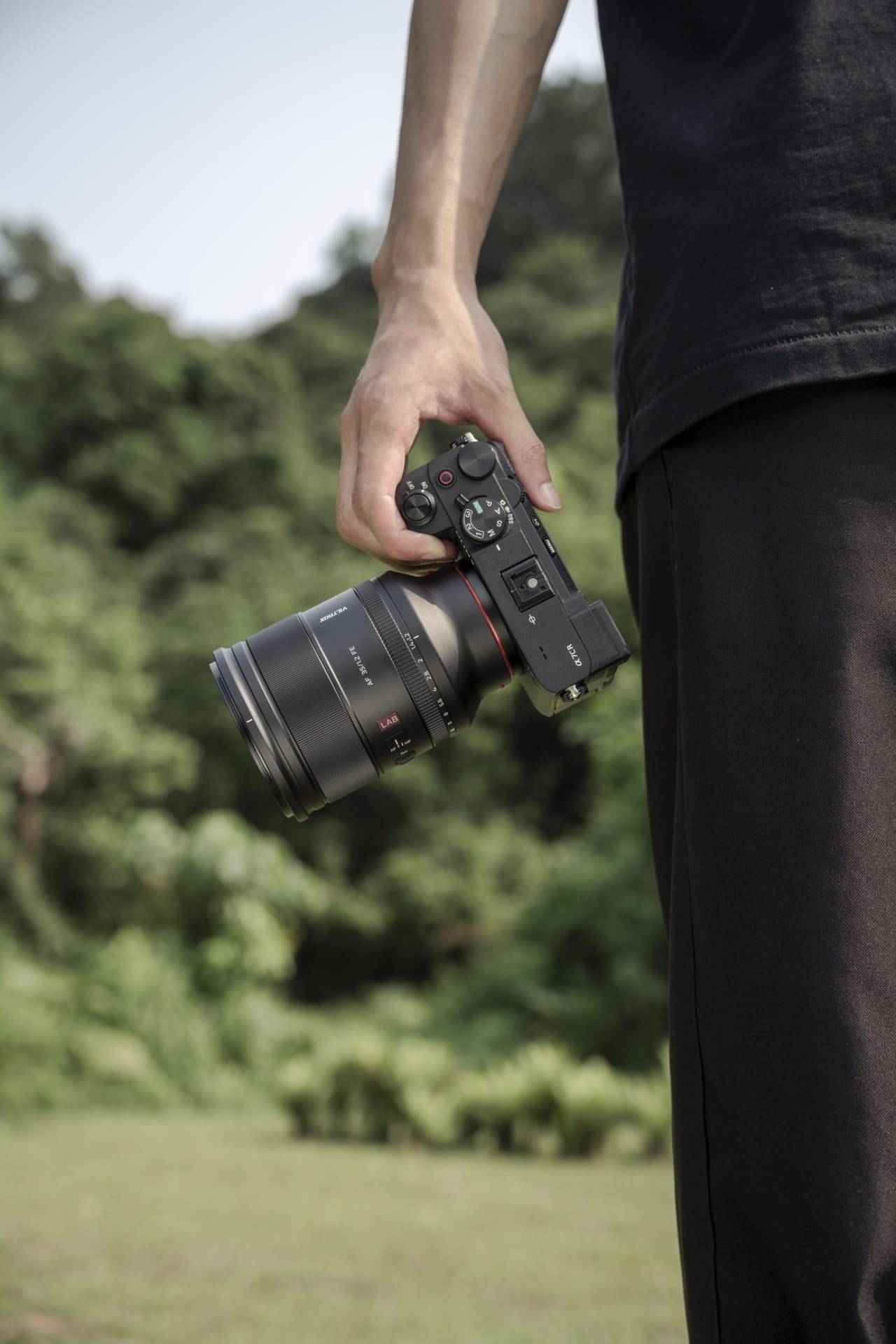
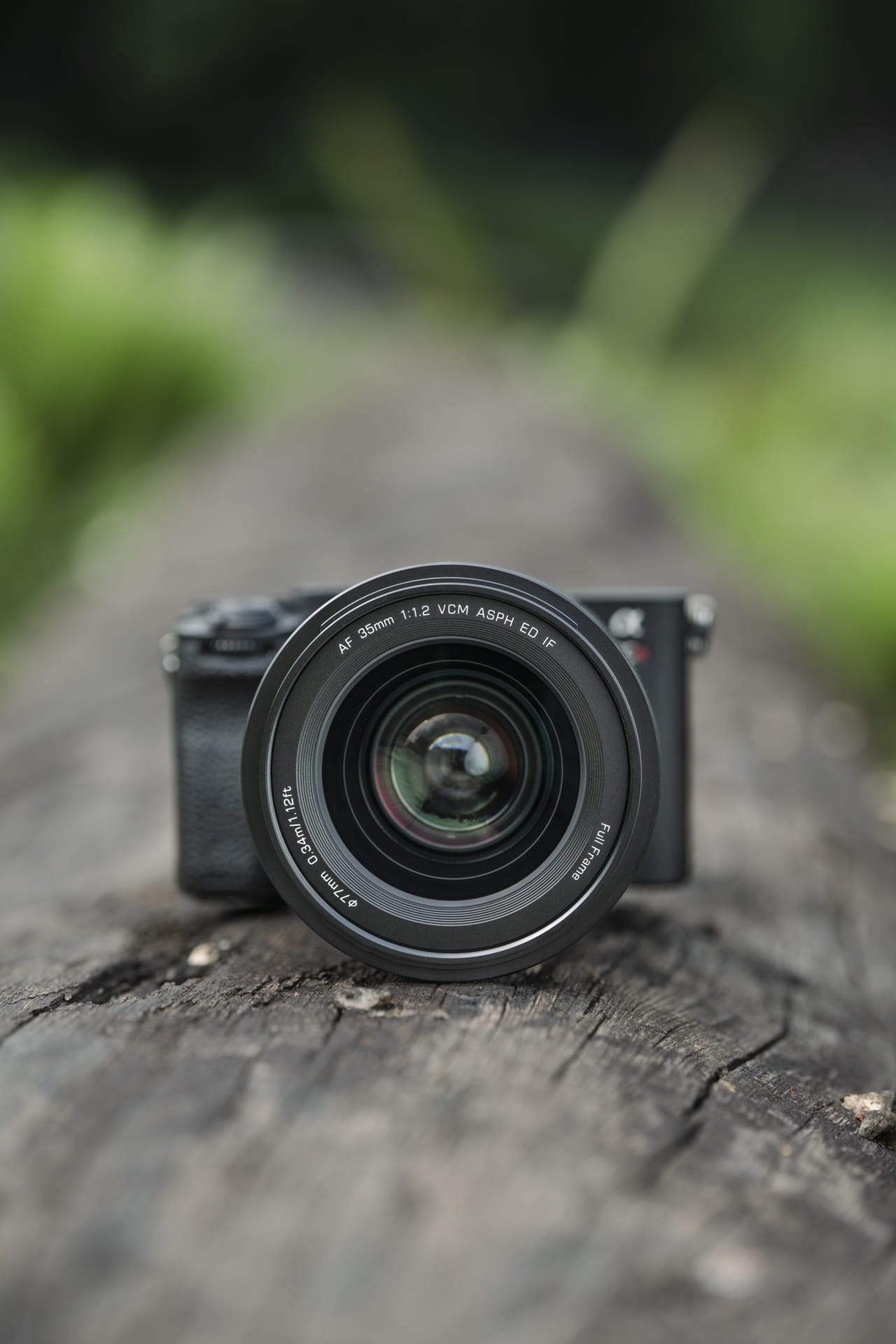
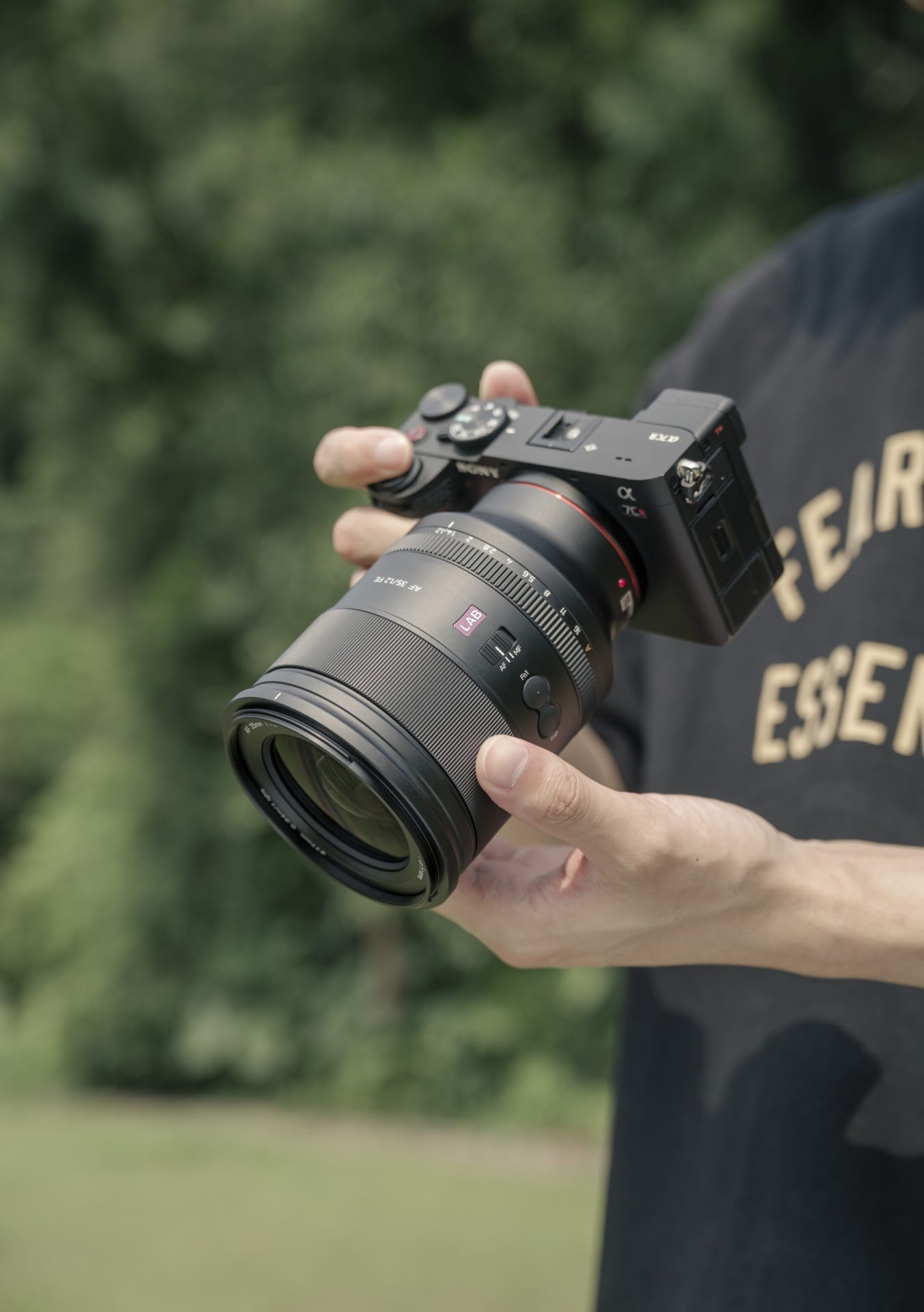
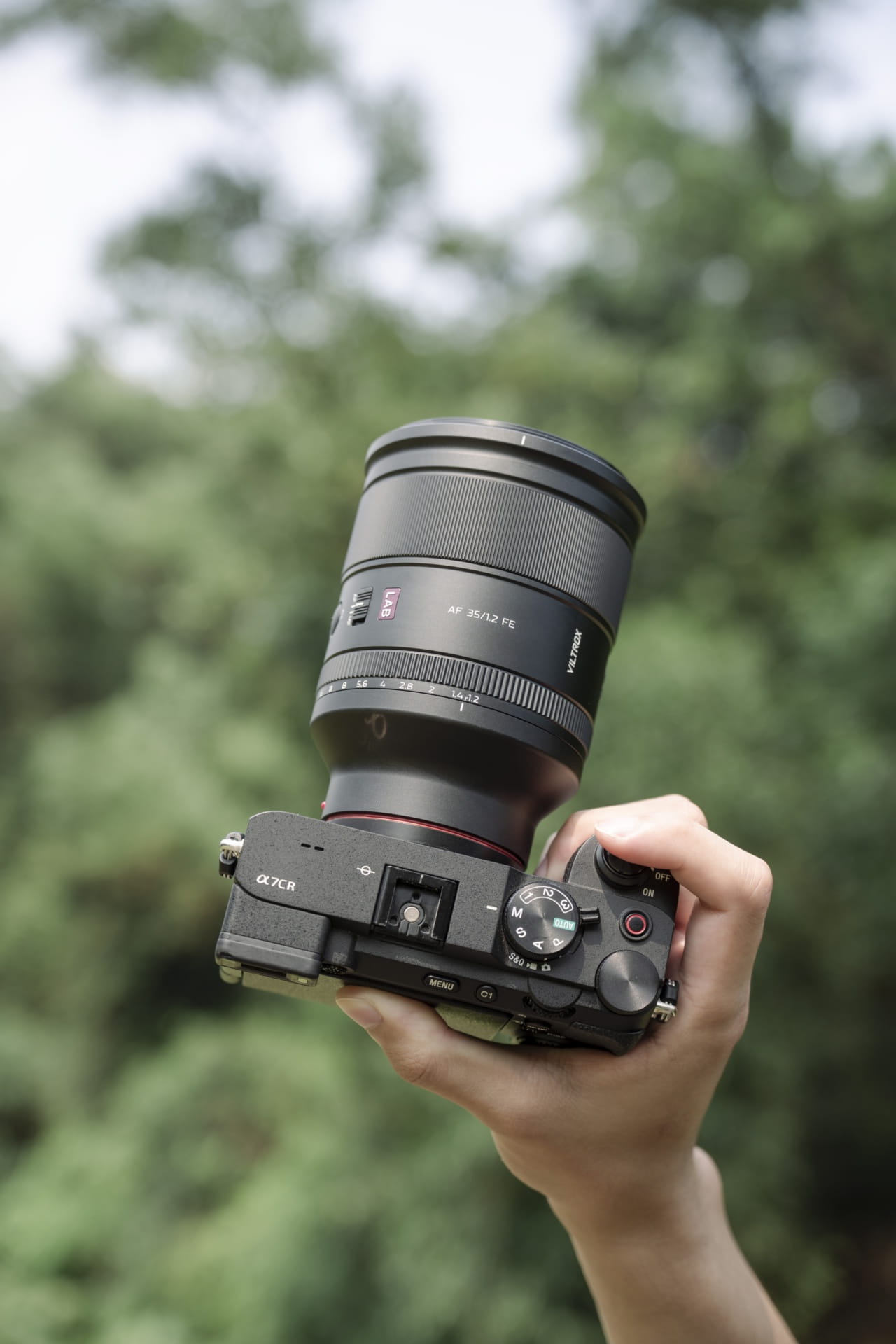
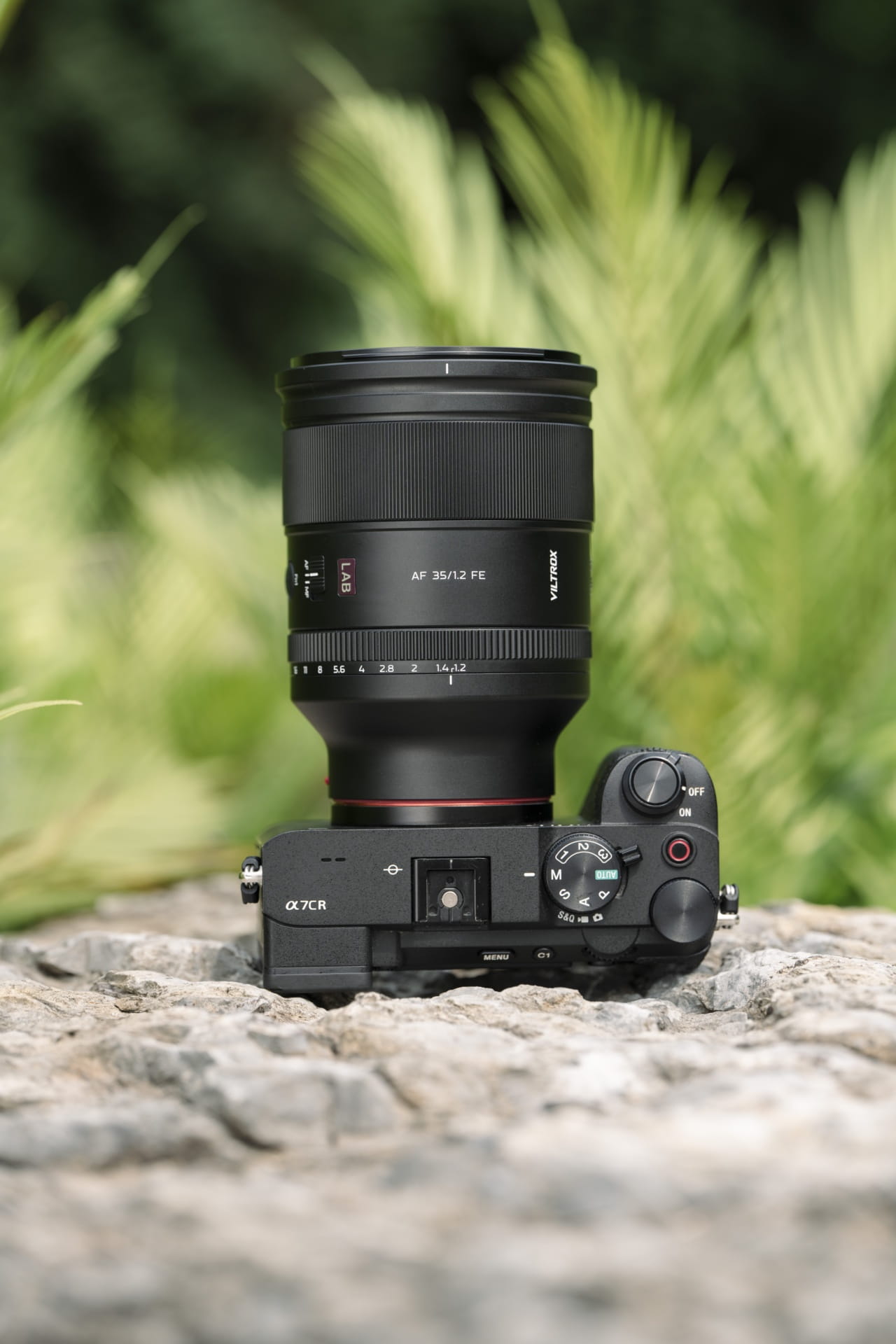
Viltrox has announced a new version of its AF 35mm F1.2 Lab lens for Sony E-mount. The AF 35mm F1.2 Lab N FE remains the same as the first-generation model, with the exception of one omission: the display.
The first iteration of the 35mm Lab lens, featured a somewhat chunky rectangular display on the top of the lens. Viltrox has used this type of display on a handful of lenses, which stick out slightly and break up the smooth lines of the lens. Ditching the display results in a cleaner, more streamlined design.
Image: viltrox
Nikon made a similar move with two of its lenses. The Nikon 24-70mm F2.8 and 70-200mm F2.8 both featured a display on the first generation, but Nikon ditched it in the second-gen versions. Nikon also made those models substantially lighter, but that isn't the case with the VIltrox lens. Viltrox shaved off roughly 10 grams (0.3 oz) by removing the screen, but that's it.
Beyond lacking a display, the lens remains exactly the same as the first version. It offers an aperture ring that can be clicked and de-clicked, AF/MF switch, and two customizable buttons. Optically, it is the same lens as the one we tested out earlier this year. If you want to get an idea of how it performs, or just want to see some cool pictures form Japan, check out this article.
The screenless AF 35mm F1.2 Lab N FE will be available alongside the original, so you can choose if you want the screen or not. It keeps the same $999 price as well, and it is available for purchase now.
Viltrox Introduces AF 35mm F1.2 LAB N FE: Flagship Performance with a Refined Control Experience
Flagship, Redefined: Full-Frame, Ultra-Large Aperture Lens with Optical and Autofocus Excellence and Enhanced Handling for Sony Cameras
Shenzhen, China — April 23, 2026 — Viltrox today announces the launch of its AF 35mm F1.2 LAB N FE, a full-frame ultra-large-aperture autofocus prime lens for Sony FE mount cameras. Designed to coexist alongside the original AF 35mm F1.2 LAB, the new version builds on its proven performance while introducing a more streamlined appearance without a display. It’s paired with a traditional aperture ring featuring marked stops that provide precise, tactile control preferred by many photographers.
Flagship Lenses & Sophisticated Optical Structure
The flagship 15-element, 10-group optical structure (including 3 HR, 5 ED, and 2 UA elements) delivers exceptional edge-to-edge sharpness, preserving fine detail even under heavy cropping, while effectively controlling chromatic aberration in high-contrast or backlit scenes.
Significantly Faster Autofocus with Quad HyperVCM
Powered by Viltrox’s Quad HyperVCM motor system, the lens delivers significantly faster autofocus performance compared to traditional STM systems. With micron-level precision, fast focus transitions, and support for face and eye detection, it ensures reliable subject tracking, which combined with its quiet operation and smooth focus transitions make it well suited for video production.
F1.2 Ultra-Large Aperture
The F1.2 aperture affords increased light intake for cleaner low-light imaging and a shallow depth of field, while the 11-blade diaphragm delivers a smooth, rounded bokeh with a natural and pleasing rendering.
Professional Handling and Workflow Efficiency
Designed for intuitive control, the aperture ring supports click and de-click switching for both photo and video use, while the AF/MF switch enables quick mode changes. Two customizable buttons provide direct access to frequently used functions, improving responsiveness during shooting.
Engineered for Durability in Demanding Environments
The lens incorporates a sealed structure to resist dust and moisture, ensuring reliable performance in challenging outdoor conditions. A water- and smudge-resistant front coating enhances usability, while the full-metal housing and precision-plated brass mount provide long-term structural strength.
Close-Up Precision and Consistent Focal Sharpness
A minimum focusing distance of 0.34m enables detailed close-up shooting, while the dual floating focus design maintains consistent sharpness and resolution across the focusing range, from close-up to infinity.
Availability
The AF 35mm F1.2 LAB N FE will be available alongside the original AF 35mm F1.2 LAB, offering photographers and filmmakers the flexibility to choose the control style that best suits their workflow.
More details and how to buy
For more information, please visit: https://viltrox.com/products/af-35mm-f1-2-fe
Amazon Store:
The US site: https://www.amazon.com/dp/B0GWJ4RP2B
The European site: https://www.amazon.de/dp/B0GWJ4RP2B
Photographing rocket launches presents distinct challenges; you get one shot at a seconds-long window, the environment is extreme and the flexibility for creativity is limited. Photographer Jared Sanders has made this his specialty, and for Artemis II, the first crewed Moon mission since Apollo 17 in 1972, the pressure was unlike anything he had experienced before.
Despite that pressure, Sanders came home with some striking images and videos of the launch, including an unplanned moment of a newly engaged couple celebrating in front of his lens. To learn about what it takes to create images worthy of the moment, we sat down with Sanders to talk about his background, gear, logistics and more.
From visual effects to the launch pad
Sanders didn't start his career photographing rockets or even using a camera at all. Instead, he went to school for visual effects in 2008 and went straight to California after graduating to work for VFX studios, where he was far from any camera work or filming. That changed when he started working for a rare end-to-end studio – one that pitched, produced and delivered its own projects – and became a visual effects supervisor.
For the first time, he was on set alongside directors and camera operators. "There was no pressure on me to be part of the production in that capacity, but I was still able to absorb all of that knowledge," he said. "Instantly, I was hooked."
"It turned out all the knowledge that I had learned over the years actually was useful"
In 2017, Sanders wanted something different and co-founded a creative marketing agency with a friend. With just two employees and clients to serve, there was no budget to hire a photographer, so Sanders handled the visuals himself. "It turned out all the knowledge that I had learned over the years actually was useful," he told me. "The skill set that I had from working in the studio of how to light things and properly pitch, how to write and direct a project, all that started coming together."
During the pandemic, a second child, a parting of ways with his business partner and a desire to get out of Los Angeles sent him back to the Florida Space Coast, where he had grown up. Starting from scratch, he looked around for what he could capture consistently without traveling far. "I grew up here, I knew about rocket launches, and during this whole time, it had started ramping up with SpaceX, especially," he said. "I was like, I really want to start shooting rocket launches."
Getting access, getting it wrong
Getting to the press site involves some logistics, including buses and a security check of gear.
Photo: Jared Sanders
With that goal in mind, Sanders reached out to local photographers to ask about getting access to NASA and how they take their shots. Those photographers pointed him toward Space Explored, a space-focused publication in the 9to5Mac network that was looking for photographers and videographers. He pitched himself, got the green light, and went through NASA's formal media credentialing process.
Access is one thing, but the harder part is getting the shots. His earliest attempts were off-site long-exposure shots from the beach, trying to capture the rocket's arc across a four-minute exposure. Keeping the camera perfectly still for that long, firing at the right moment and waiting while the screen blacks out during exposure and processing made for a steep introduction. "The rocket's gone, and you're like, did I get it?" he said. Frequently, the answer was no.
Photographing launches at night is especially difficult due to the extreme contrast, as shown in this image of the Artemis I launch.
Photo: Jared Sanders
Sanders told me that rocket photography has a few big challenges: the short duration of the event and the intensity of the plume. "Even as an experienced photographer, the thing that is really tricky with rockets that I have I've never experienced with anything else... is the speed because you only get one shot at it per attempt," he said. "You get this 30-second arc, and then it's sort of out of sight."
"It's so bright. At nighttime, especially, you're literally exposing for night and the sun at the same time."
The engine plume also complicates things. "It's so bright. At nighttime, especially, you're literally exposing for night and the sun at the same time. So you have to pick and choose your battle," he explained. "Obviously, camera technology has gotten a lot better. So you can sort of fix some of that with modern technology. But at the same time, you're going to lose something in that battle. You're going to lose either your highlights or you're going to lose your shadows. It's just what are you gonna pick?"
For photographers shooting from public sites rather than the press site, location is most of the creative work. From the press lawn, though, everyone is pointing in roughly the same direction across the same arc, three and a half miles from the pad. "It's so hard to make your stuff look different from any other photographer out there," he said. "You either get lucky and pick a spot no one else has, or you figure out a way to treat your footage and photos so they look just a little bit different."
Sanders also photographed the astronauts walking out to the rocket, using his Super 8 camera.
Photos: Jared Sanders
Most photographers at the press sites are there capturing typical news shots, which means very minimal color correction and editing. It's what press wires need, but he had the flexibility to try something else. "I edit my rocket photos the way I would edit my normal photography," he said. "The coloring just looks a little bit different. It may lean a little more toward the normal color palette I'd use for my landscape photos or whatever other photos I'd be taking in that series."
Sanders has also brought film to launches to create something different. For Artemis II, he said he was the only person at the press site recording video with Super 8 film. He put a roll of Kodak 500T through the camera, which he recently sent off and is waiting to see if it worked out. "Those are the kind of things that I try to do differently, to set myself a little bit apart from the other photographers."
Remote cameras and technical details
Sanders didn't have remote cameras for Artemis II, but he did have remote setups for the first Artemis launch.
Photos: Jared Sanders
Remote cameras come with their own logistical challenges. NASA buses credentialed photographers out to preset zones about a half mile from the pad, where cameras are left unattended until after the launch. Sanders explained that focus is locked manually, and most photographers use sound-activated triggers (Sanders and many others use Miops), which fire the camera the moment the rocket's acoustics reach them.
For a mission like Artemis, installing remote cameras means journeying to the Cape multiple days before launch. "You have to go through a whole security check with your camera gear," he told me. "Then you get on the bus. So it's like a whole day event to get out there and set the cameras up." If the mission gets scrubbed, you'll have to go back out to pick up your gear and set it up all over again at a different date.
"You're still within a half mile of the rocket. I've seen a lot of pitted lenses from like fuel or just debris."
Protecting the camera is also critical. Sanders said you have to bag the camera or have it in a box so that it doesn't get rained on, and he also uses hand warmers to keep the intense Florida humidity out. There's also a physical risk to the gear from the launch itself. "You're definitely putting your gear at risk," Sanders said. "You're still within a half mile of the rocket. I've seen a lot of pitted lenses from like fuel or just debris."
Sanders knew he would lose highlight detail on the plume, but was more concerned with balancing the exposure of the clouds and rocket.
Photo: Jared Sanders
In terms of camera settings, Sanders explained that some photographers use aperture priority and let the camera adapt to rapidly changing light. He, however, shoots full manual, preferring greater control and a more consistent sequence of exposures that he can cut together almost like a time-lapse. Choosing the exact settings comes down to the priorities of each shot. For the remote cameras, "that's where you're like, 'Okay, I really want to see detail in the engines and the flames,'" Sanders explained.
The shots from the press sites, which are farther from the launch, serve different purposes. "When you're far away, to me it's more about the story you're telling with the scenery and where you are," he said. That might mean letting the brightest parts of the engines and plume lose detail. "Even from my still shots, I think that the exhaust and the engines were a little bit blown out... The clouds were really nice that day, and I wanted to make sure you could see the clouds and the rocket contrast against the sky."
The setup for Artemis II
Sanders went into the Artemis II launch with a specific plan and an extensive kit in tow to execute. He arrived at the press site with six cameras: a Red Komodo X for a landscape-oriented video, a Nikon ZR for a portrait-oriented video, a Fujifilm GFX 100 II with a 500mm lens for stills, a 360° camera and Insta360 Ace Pro 2 for behind-the-scenes footage and the Super 8 setup on a tripod (which differed slightly from his plan laid out in the video above).
Sanders also packed two lenses for his video cameras: a 1995 parfocal broadcast lens and a Tamron 35-150mm F2-2.8 Di III VXD. He put the Tamron on his Komodo and planned to use the broadcast lens on the ZR. However, when he arrived on site, he discovered that Nikon had a tent with gear available for anyone to borrow for the launch.
He walked over just to check it out, without any intention of borrowing anything, since he already had so much gear with him. But the Nikon representative mentioned he had the 600mm F4 with him. "It's like a $16,000 lens, and I was like, well, I gotta use it because I'm not gonna buy this lens ever, and I'm not going to rent it. So, I'm going to use it," he said.
That 600mm ended up being the key to getting a clip that stood out from the rest, which you can see above (it was also what got my attention and sparked this interview). He knew he had a wide view covered with the Komodo, so he wanted something different from the ZR with the 600mm lens. "I have this prime lens. It's going to have tons of compression. I can at least get some people in the foreground," he explained. "It would be cool to see some scale of the rocket. And that was my main intention." So he set up the camera at a distance from one of the angles that people usually shoot from and chose a low-angle shot looking up.
The rest of the shot was pure serendipity. "I pointed it up, and these people walked in front, and I had no idea anybody was going to be there just yet. But when these people walk in front, they start hugging, and the rocket's right in between them," Sanders recounted. "I'm like, 'Oh, oh my gosh.' If they're there hugging when this thing goes off, that's going to be pretty cool."
Sanders has shot enough previous launches to know that people always react to the wall of sound, and said that the first Artemis launch was especially crazy. So he had high hopes for a cool reaction if they stayed in front of his camera, but it was still a wait-and-see situation. "The press site's really big, so I'm probably like a football field away from the camera where I'm actually shooting," he told me. "I run over at like six minutes to go, and I hit record, hoping I have a full battery. And I was recording at 6K Raw, so I was like 'oh my gosh, I hope it doesn't run out of memory.'"
He went back to his main spot and captured the launch with the other cameras, taking only a brief moment to look through the viewfinder to revel in the view without taking photos. When he went back to the ZR and reviewed the footage, he saw that the couple who had been hugging before the launch were jumping and cheering during the launch right in front of his camera.
"It ended up being a story within a story."
While everyone else rushed to get their clips and photos up as soon as possible, Sanders opted to go home, spend time with his family and then color grade, finally getting the video up around midnight. He assumed he missed the magical window, but the video blew up on Instagram. At some point, the woman in the video was tagged. She reached out and told him that she and her fiancé are both in the space program, and that they had just gotten engaged at the Artemis II rollout. She even asked if she could use the footage in their wedding video (to which he said yes). "It ended up being a story within a story," he said.
There's also more of that clip that he hasn't released yet: after the rocket clears the frame, the two of them standing still, hands together, staring up at the dissipating plume. "They're like two kids seeing Disney for the first time," he said. He plans to put a reel together around it eventually. For now, it's sitting on a hard drive; it's the kind of footage, he said, that makes you want to back it up in fifteen places.
Sample gallery
This widget is not optimized for RSS feed readers. Click here to open it in a new browser window / tab.

 Connexion