
 Connexion
Canon is considering outsourcing the production of lower-end (entry-level) products to external partners
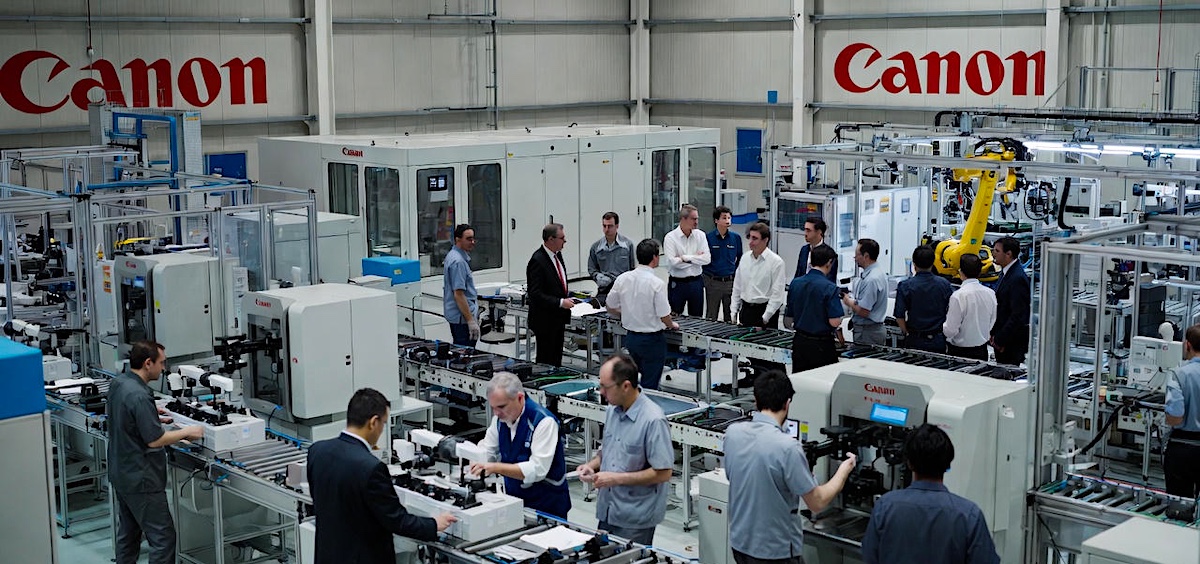
In a recent interview with Nikkei, Canon’s Chief Financial Officer stated that the company is considering outsourcing the production of lower-end (entry-level) product models to external partners. Cameras and printers could be among the products affected. This is part of a broader review of manufacturing and sales structures aimed at improving efficiency and profitability. The ultimate goal is to raise the company’s Return on Equity (ROE) to 12%. This represents a notable shift from Canon’s traditional emphasis on in-house production in Japan. As of late 2025, it’s still in the consideration phase, with no specific partners, timelines, or affected models announced.
Further reports, primarily stemming from a January 2025 Nikkei Asia interview with Canon Chairman and CEO Fujio Mitarai, provide more context and confirm this strategic shift:
- Scope of Outsourcing – Canon is considering a “fabless” model (design in-house, manufacturing outsourced) specifically for lower-end digital cameras (e.g., compact/point-and-shoot models) and printers produced in Asia. This includes potentially outsourcing assembly processes to third-party manufacturers in other Asian countries.
- Reasons:
- Become more “asset-light” by avoiding fixed costs of maintaining own factories.
- Better respond to fluctuating demand (e.g., recent rebound in compact camera popularity driven by social media trends and younger users).
- Reduce geopolitical risks and supply chain disruptions.
- Cut overall costs amid declining demand for traditional office equipment and entry-level cameras, impacted by smartphones.
- Background – Canon closed its Zhuhai, China factory in 2022, which produced compact cameras, limiting its ability to ramp up production for the recent compact camera surge quickly. Outsourcing would allow flexibility without reopening or building new facilities.
- What Remains In-House – High-end/flagship products, key components, design, development, and core technologies will stay in Japan (using Japanese factories as “mother factories”). Lenses and advanced sensors are unlikely to be outsourced.
- Potential Impact – This could enable Canon to increase production/sales of compact cameras (e.g., PowerShot series) and possibly introduce new affordable models. It aligns with industry trends where competitors already outsource more extensively.
- Financial Tie-In – The strategy supports broader goals of improving profitability and ROE, building on the CFO’s comments.

The post Canon is considering outsourcing the production of lower-end (entry-level) products to external partners appeared first on Photo Rumors.

