CP+ has wrapped up for the year, with over 23,000 attendees visiting the show in the first two days. We've been hard at work covering it, so some of the members sat down to discuss the event, the news that was released during it, and some of the things we learned from our discussions with camera manufacturers.
As an added bonus, here are some stats provided by CP+, which help speak to some of the trends we discuss in the show:
45 of the show's 149 exhibiters were there for the first time
The first two days saw over 1100 more attendees than the first two days of the show in 2025
An Olympus M-1 and its proud new owner.
Another fun fact: while Abby didn't end up buying an OM-1 after the discussion, she did buy an Olympus M-1, the predecessor to the OM-1.
When you use DPReview links to buy products, the site may earn a commission.
Updated February 25, 2026
Travel can expose you to once-in-a-lifetime sights and experiences, and a good camera can be the perfect way to preserve those memories. We've looked at a range of models that offer great image quality, good autofocus and excellent video, so you'll be prepared to capture whatever you run into.
We've also tried to select relatively small cameras so they don't interfere with your trip, though it's worth touching briefly on lens size. If you choose a system with a Four Thirds or APS-C sensor, you'll be able to use lenses that are lighter and more compact than their full-frame counterparts. Full-frame sensors, however, offer the potential for even better image quality, so it's worth considering whether portability or image quality matters more to you and doing some research on what types of lenses you'd like to use and how big the full-frame versions are.
The Sony a7CR is a relatively compact full-frame camera with an image-stabilized 61MP CMOS sensor. You sacrifice the convenience of an AF joystick and get a pretty small and basic viewfinder to keep the camera's size down, but there's little else that delivers this much image quality in such a compact package.
You'll need to pick your lenses carefully to keep the camera portable but the a7CR's autofocus means it can respond rapidly to just about anything you encounter on your travels.
The a7CR is impressively small for a full-frame camera. The addition of a front control dial improves handling significantly. Notably, there’s no joystick for positioning the AF point, and the viewfinder is small and very low resolution for a camera costing this much.
Autofocus performance on the a7CR is very good and is helped by a dedicated processor for crunching complex machine learning-trained algorithms. Subject recognition is quick, and the AF system tracks subjects tenaciously around the frame in either stills or video. 8 fps burst shooting with continuous AF results in a dependably high hit rate.
"If you're looking for maximum resolution in a travel-sized body, the a7RC is tough to beat."
The a7CR captures 4K video at up to 60 fps. The most detailed, oversampled footage results from a 1.2x crop of the sensor, which makes it challenging to maintain wider focal lengths. Auto Framing mode uses AI algorithms to mimic the way a camera operator might punch in on subjects, keeping them framed and in focus.
The a7CR's 61MP sensor can capture a lot of detail, putting it ahead of most full-frame rivals; though it is a little noisier in low light. JPEG colors are pleasing, and excellent sharpening makes the most out of the 61MP sensor. Raw files provide plenty of latitude to pull up shadows at base ISO.
The a7CR delivers impressive results for its size. It essentially provides the same level of image quality, and most of the same features, as Sony's a7R V, but in a smaller package. In exchange for the small size, you make a few compromises, like no AF joystick, but if you're looking for maximum resolution in a travel-sized body, the a7CR is tough to beat.
The Sony a6700 is built around a 26MP APS-C-sized sensor. Its excellent autofocus performance means it excels at both stills and video capture. There's a good choice of relatively compact lenses available, too. We'd suggest avoiding the really small 16-50mm F3.5-5.6 though: it's not the lens to get the most out of this camera.
The a6700 has a thumb-and-forefinger dial interface missing from Sony's less expensive models. It’s just slightly larger than previous models in the line, but in exchange, you also get a fully articulating display. However, it lacks the AF joystick found on many cameras in its class.
Fast, dependable autofocus with a selection of subject recognition modes means the a6700 will help maximize your chances of capturing the unexpected moments on a trip.
"Excellent photo and video quality with best-in-class AF in stills and video make it an excellent choice for enthusiasts."
The camera produces very detailed 4K video up to 60p with 10-bit color, with good rolling shutter performance. There’s also a 4K/120p mode, albeit with a 1.58x crop. Autofocus performance is top-notch, with a well-designed touch interface. It's a strong option both for videographers and vloggers.
Excellent photo and video quality, best-in-class AF in stills and video, and a deep set of features to support both make it an excellent choice for enthusiasts. Sony's E-mount also includes a good range of available lenses.
The Fujifilm X-T50 is a 40MP, APS-C image-stabilized mirrorless camera aimed at beginners.
The X-T50 can be purchased with Fujifilm's excellent 16-50mm F2.8-4.8 kit lens, which provides a versatile focal length for travel and should be able to keep up in darker environments. Fujifilm also sells a wide variety of relatively fast, compact primes.
The X-T50 has dials for important exposure settings, and a small but useful grip. Its rear screen can tilt up or down. Its joystick and some buttons can be awkward to use, but the film simulation dial encourages the use of one of the camera's key features.
Its autofocus can recognize and accurately track several subject types, but its general tracking isn't the most reliable. Its 8fps mode isn't particularly fast.
The X-T50's controls and auto mode make it great for beginners, who can expect it to keep up with them as they grow. More experienced shooters will appreciate Fujifilm's robust lens selection.
This widget is not optimized for RSS feed readers. Please open this article's permalink in a browser to view this content.
The other APS-C options
If you're looking for an APS-C camera that's even smaller than the X-T50, the Fujifilm X-M5 may be worth considering. It's substantially cheaper, though it's easy to see where the company has saved money: it uses a lower-resolution 26MP sensor, which isn't stabilized, and there's no EVF. It does have the same film simulation dial and autofocus subject recognition modes, though, so those tradeoffs may be worth it if size or price are your top priority.
The Nikon Z50II is also a strong all-around contender, but its lens selection isn't as strong as Sony or Fujifilm's, nor does it have a stabilized sensor. However, it does have solid autofocus performance, a viewfinder, and a sub-$1000 price point.
The OM System OM-3 is a 20MP Micro Four Thirds camera with a Stacked sensor capable of shooting up to 50fps with continuous autofocus.
The OM-3 is well-suited to traveling, as the Micro Four Thirds system lets you use especially compact lenses, and its Stacked sensor gives it fast autofocus, incredible burst rates for shooting even the fastest subjects, and the ability to use computational modes to adapt to a wide variety of situations. It also sports an IP53 rating for dust and water resistance, so you won't have to worry if it starts raining.
It has plenty of customizable buttons, though no AF joystick or grip. Its color dial and computational photography button put key features front-and-center.
The subject recognition and tracking autofocus modes work well, though it can struggle to predict a subject's movement. It supports pre-capture, has very little rolling shutter, and can shoot up to 50fps with continuous autofocus when paired with specific lenses.
The OM-3 is a great little camera that packs a lot of technology and features into a classic-looking body.
It can shoot full-width 4K footage at 60fps, though its 8-bit modes have less detail than the 10-bit Log or HLG modes. It has very little rolling shutter, and microphone and headphone jacks.
The OM-3 is a stylish camera that can go anywhere, and is fast enough to shoot almost any subject. Its autofocus is reliable, though not class-leading, and its viewfinder is on the small side, but its compact design and lenses make it appealing for travel.
This widget is not optimized for RSS feed readers. Please open this article's permalink in a browser to view this content.
The other Micro Four Thirds options
OM System's OM-5 is substantially cheaper than the OM-3, though you give up the speed, USB-C port and advanced subject recognition autofocus, as well as a few of the computational modes. It is, however, slightly more compact if space is at a premium in your pack.
The Panasonic Lumix G9 II has similar capabilities as the OM-3, but in a significantly larger body. That bulk does come with dual card slots and more video features, but the weather sealing likely won't be as good as OM System's.
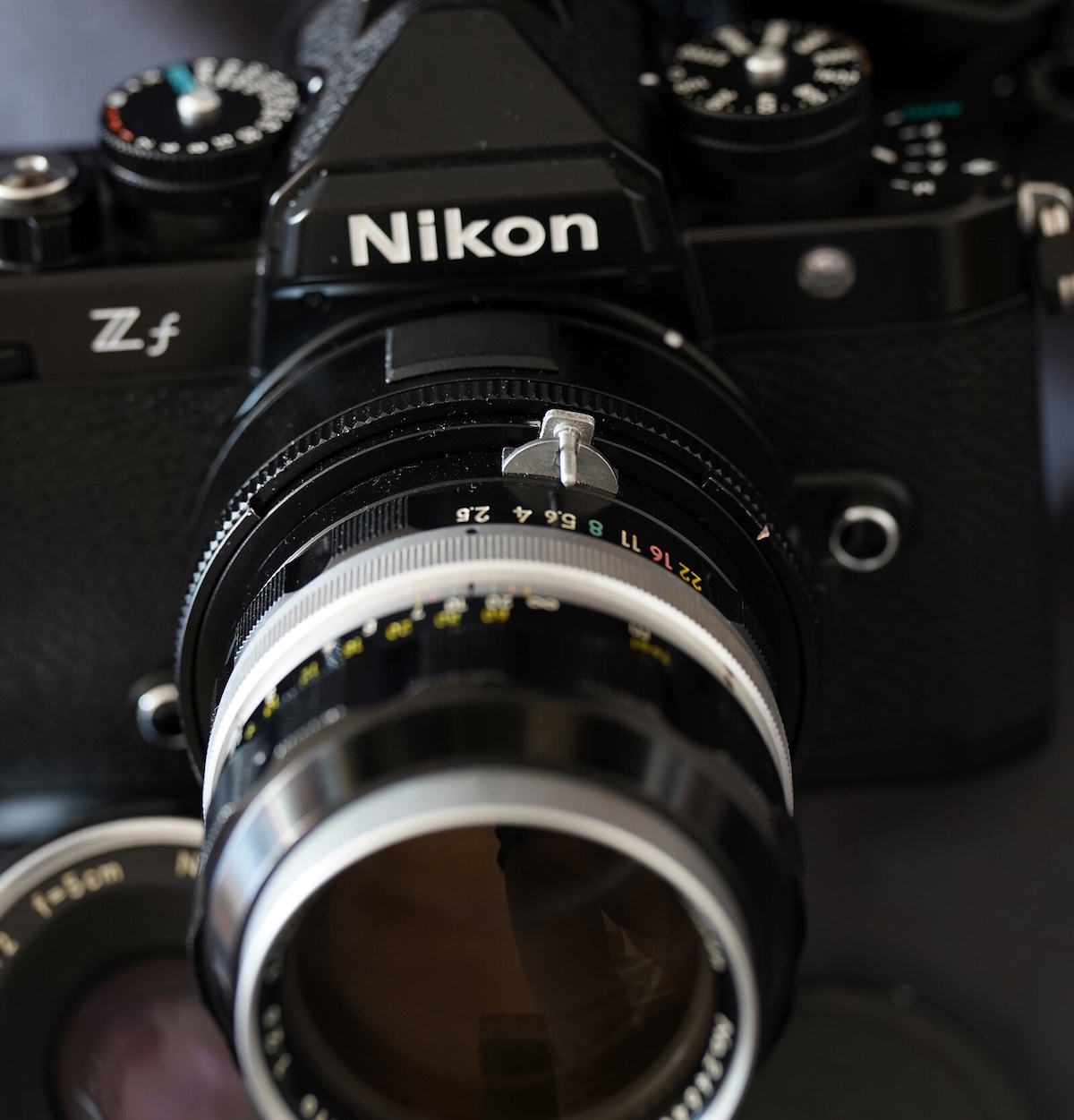
The Nikon Zf is a classically styled full-frame camera built around a 24MP full-frame sensor that's used by many of its peers. The angular 80s-style body isn't the most comfortable to hold in your hand for extended periods, but the lack of stick-out grip makes it smaller than many of its rivals, making it a tempting travel companion. However, like with the a7CR, many of the full-frame lenses available for it will greatly increase its size and weight.
At least in its all-black form, there's a chance of it being mistaken for a film camera, which may help avoid the wrong kind of attention when you're out and about in an unfamiliar setting.
The Zf gives the choice of using the dedicated control dials or customizable command dials. In most respects it copies its well-polished control system from other recent Nikons. Not everyone will enjoy the angular early 80's handling but it handles just as well as the cameras it resembles.
The Zf's autofocus is impressive, with both subject recognition and AF tracking both working well. It's perhaps not quite as confidence-inspiring as the latest Sony cameras, but it's not far off. It'd be nice to have an AF joystick but the rear control pad does a decent job.
"The Zf's looks may date from 1981, but its performance is completely contemporary"
The Zf has a very solid video feature set. Oversampled 4K/30 and cropped 4K/60 is standard for this sensor, but the Zf also adds a waveform display that's especially useful for exposing its 10-bit Log footage.
The Zf uses a very familiar 24MP BSI sensor that has underpinned numerous cameras in recent years, and the results are predictably good. There's plenty of dynamic range and enough detail capture for all but the most demanding applications.
The Nikon Zf's performance lives up to its looks. It's not as comfortable to hold for long periods as more modern designs, but it's also distinctive and engaging in a way they're arguably not. We're still completing our testing, but it hasn't disappointed yet.
The Ricoh GR IV is the latest entry in the company's series of classic compact cameras with large APS-C sensors and a 28mm equivalent lens. It's not the most flexible camera, but it has engaging controls and is one of the most pocketable models with a large sensor, which is probably why the GR series has built up a dedicated following of photographers who find it a joy to shoot with.
The GR IV has well-considered controls, letting you easily change the most important settings with one hand. It's also very customizable.
It's at its best in its single-focus modes, which are generally responsive in most situations, and its Snap Focus modes for zone focusing. Continuous and tracking autofocus aren't up to par with most modern cameras, which isn't helped by the relatively slow unit focus.
The user interface, both hardware and software, is pitch-perfect for the type of shooting you're likely to do with the GR IV.
The GR IV packs a lot into a camera that you can fit in a pocket and carry around with you. It's not perfect, but it nails the basics and is the only camera left that offers this level of image quality and portability.
Our one concern with using the GR IV for travel is that some users of the previous generation model reported dust getting into the lens. Ricoh has said it's made a few changes that should help prevent that, but still doesn't make any claims of weather sealing, so it may be worth keeping it in protective bag and putting it away in particularly unpleasant weather.
There's also the GR IIIx, which has the previous generation sensor and processor, but with a longer, 40mm equivalent lens. This may be a little tight for documenting your travels, but it's historically a popular focal length. Ricoh also sells a GR IV Monochrome, though a camera that only shoots black and white probably wouldn't be our first pick for travel photograph.
This widget is not optimized for RSS feed readers. Please open this article's permalink in a browser to view this content.
Other compacts
Canon has recently announced that it plans to increase its production of compact cameras, citing an increasing number of orders for the PowerShot G7 X III, which has a 24 – 100mm (equiv.) zoom lens, providing a solid range for travel photography. Its autofocus isn't
The Leica D-Lux 8 features a larger sensor than the G7 X III – it uses up to up to 83% of the area of a Four Thirds (17.3 x 13 mm) sensor, while the G7 X III has a Type-1 (13.2 x 8.8 mm) sensor – and has a photo-focued interface that we particularly like. However, its slow zoom, only decent image quality and substantial price tag make it hard to recommend to all but the most Leica-faithful.
Like the Fujifilm X100V before it, the Fujifilm X100VI is a classically styled fixed lens camera with a 35mm equivalent F2 lens. Updated with in-body image stabilization rated at up to 6EV of correction and a 40MP BSI CMOS APS-C X-Trans sensor, the X100VI is a significant upgrade over its predecessor despite looking virtually identical. And those improvements in part explain the X100VI's $200 increase in list price to $1,600.
It's not smallest or most inconspicuous camera, but its fixed focal length means you develop an 'eye' for the photos it'll take, essentially making it a better quality, more engaging alternative to snapping away with your phone.
The addition of subject-detection autofocus has given the X100VI the ability to recognize animals, birds, automobiles, motorcycles and bikes, airplanes, and trains though human (face/eye) detection is a separate mode. However, the lens the X100VI shares with the X100V is not the fastest to autofocus, prioritizing sharpness over speed.
The X100VI brings a level of polish you would expect from a sixth iteration of a camera. Fujifilm has done a great job keeping the X100-series up to date without messing with the formula that's made it so popular. No surprise, this is the best X100 yet.
Unfortunately, despite ramped-up production, demand for the X100VI seems to have outstripped supply with the camera already on backorder at virtually all dealers.
DJI’s Osmo Pocket 3 is a stabilized handheld vlogging camera, designed for on-the-move vlogging. It’s built around a type 1 (13.2 x 8.8mm) sensor mounted on a tiny gimbal, meaning it can deliver stabilized footage with smoother motion than any conventional camera or phone.
When you're traveling in an unfamiliar place, there are a million things to focus on; the Pocket 3 lets you capture it all, without requiring much effort on your part. It can also natively film in horizontal or vertical, which can be useful if you're looking to share footage from your travels on social media.
Its small sensor means the Pocket 3 works better in well-lit situations, though a reasonably bright F2.0 lens means it’s usable indoors, too.
It can shoot 4K 16:9 video or, by rotating the screen into the upright position, 3K vertical 9:16 footage. A small joystick lets you control the camera’s movement, and tapping the joystick button flips between the camera pointing toward you or away from you.
Its reliance on contrast-detection autofocus means its focus can be prone to hunting, though its face-detection mode works well enough that this is rarely a problem when talking to the camera.
The video quality isn’t always the highest, and the autofocus can occasionally lead to frustration, but overall the quality and convenience of the Pocket 3 as a package is really hard to beat.
This buying guide is based on cameras used and tested by DPReview's editorial team. We don't select a camera until we've used it enough to be confident in recommending it, usually after our extensive review process. The selections are purely a reflection of which cameras we believe to be best: there are no financial incentives for us to select one model or brand over another.
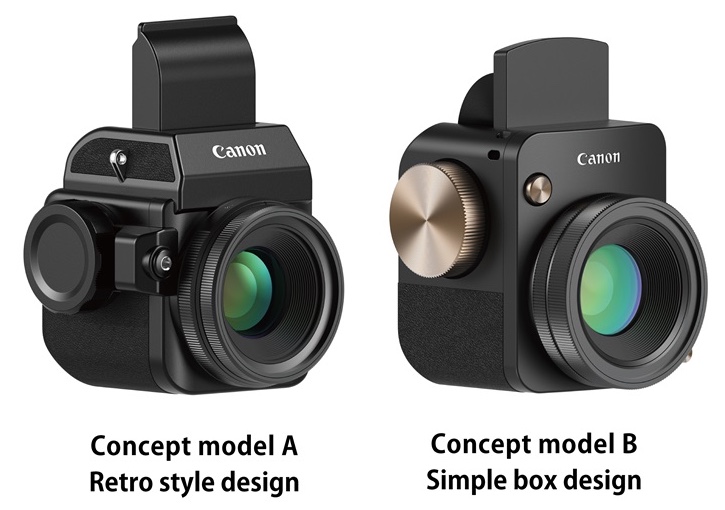
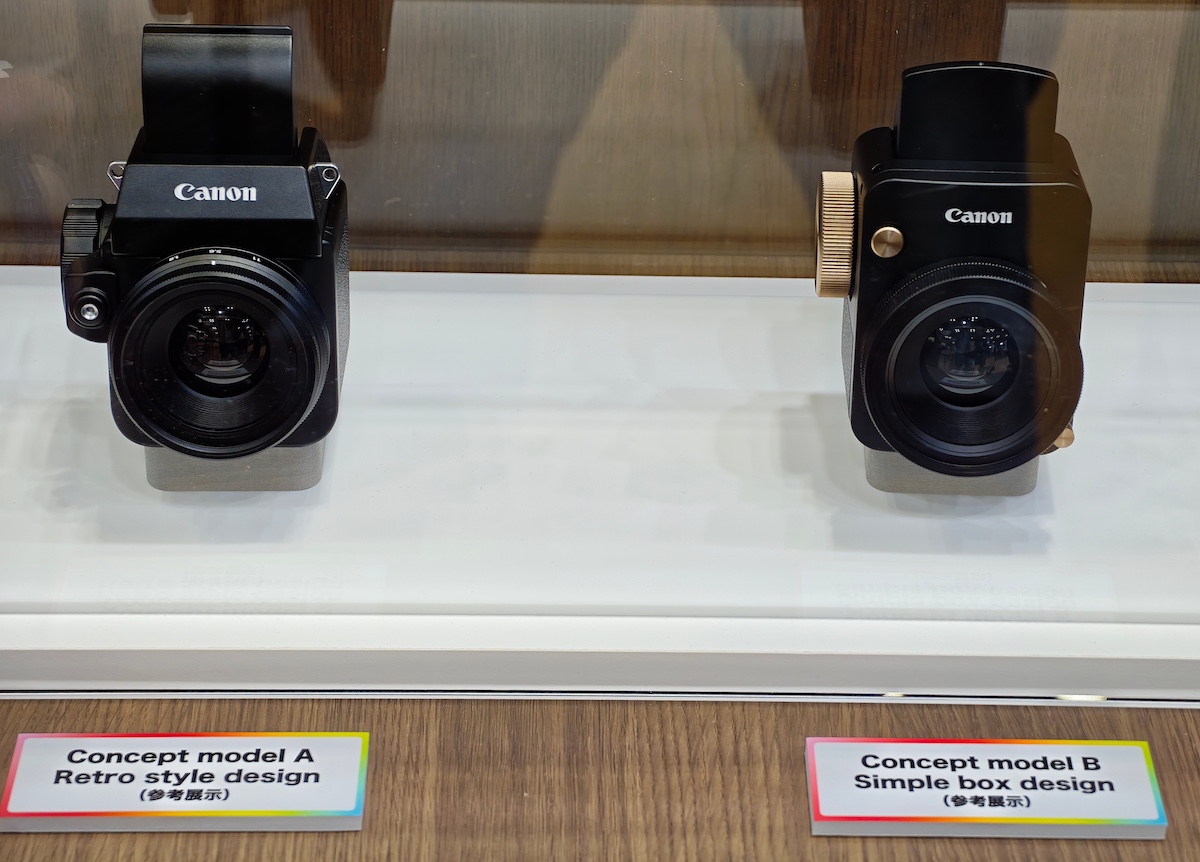
Which design do you prefer? Photos: Mitchell Clark
Last year, Fujifilm released the X half – a quirky camera that leans heavily on retro styling, and that emulates a more analog shooting process, especially in its film camera mode. It'd be a stretch to say that it's the type of thing we expect from the company, but it didn't completely shock us like it would've had it come from another company with less of a history in mimicking film cameras.
Perhaps we should start getting used to the idea.
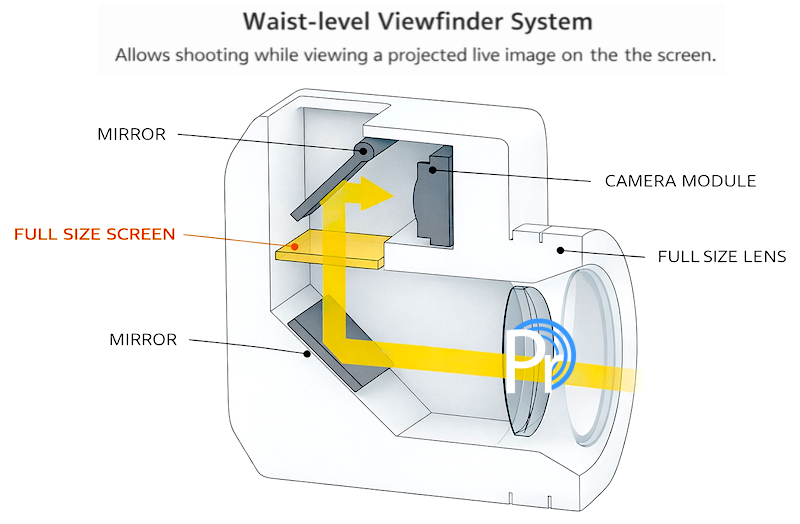
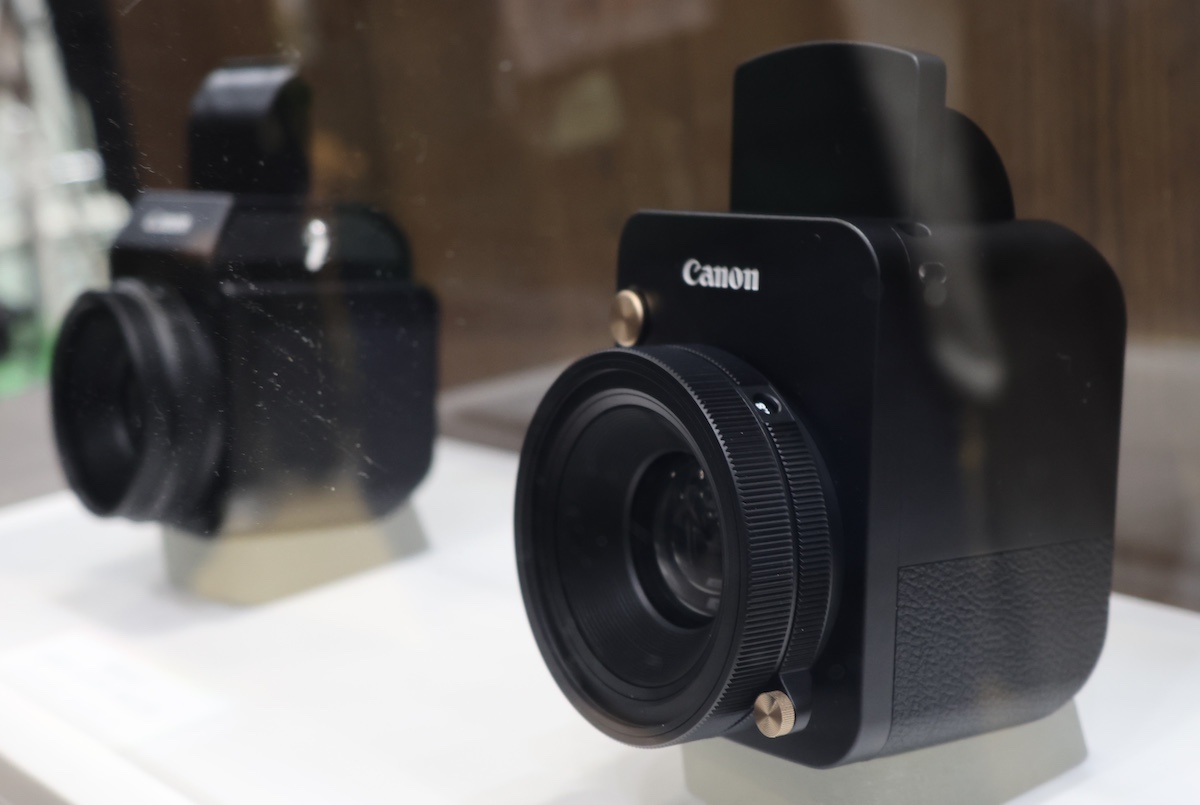
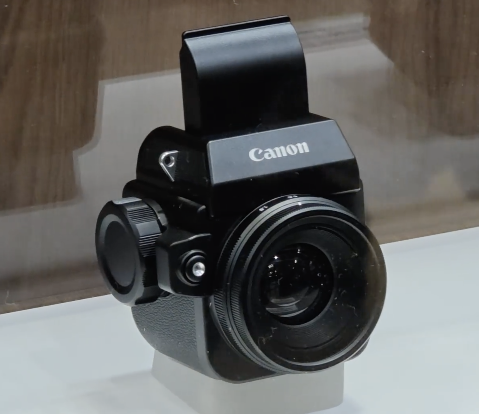
Canon is showing off a concept at its booth at CP+ that takes the metaphor even further. Design-wise, it looks like an old camera with a waist-level viewfinder, but rather than using film, it has a Type 1 (117mm²) sensor. According to a diagram displayed alongside it, light from the lens (a manual focus-only 50mm equiv. F1.8) bounces off a mirror, and up into the viewfinder. But flip a lever on the side, and another mirror directs it to the sensor.
The prototype attendees got to handle was much less polished than the ones under glass.
To be clear, we're a long way from this – or even anything similar – being an actual product, if that ever happens at all. The one I got to play with seemed like it was at least partially 3D printed, and had a display that didn't do anything; the live view was shown on a TV, with a signal passed along a cable plugged into the side of its body. I'm not sure it could even actually take a picture, and the buttons on the back didn't seem to do much beyond making the camera switch into modes that didn't actually work.
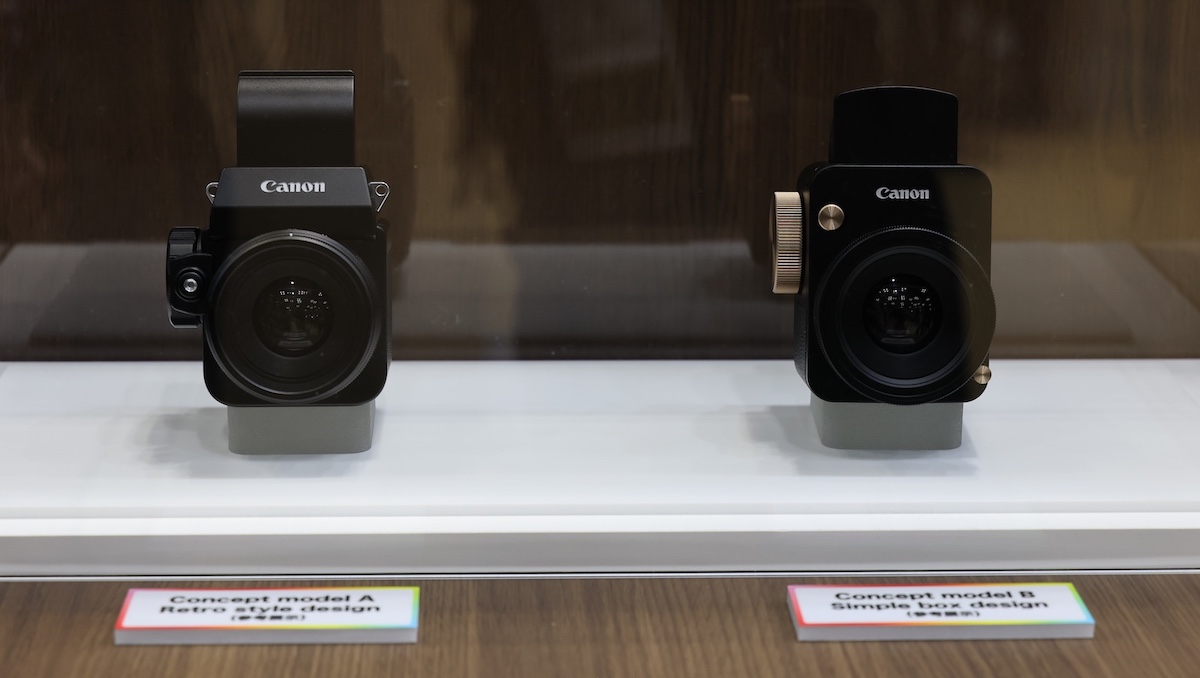
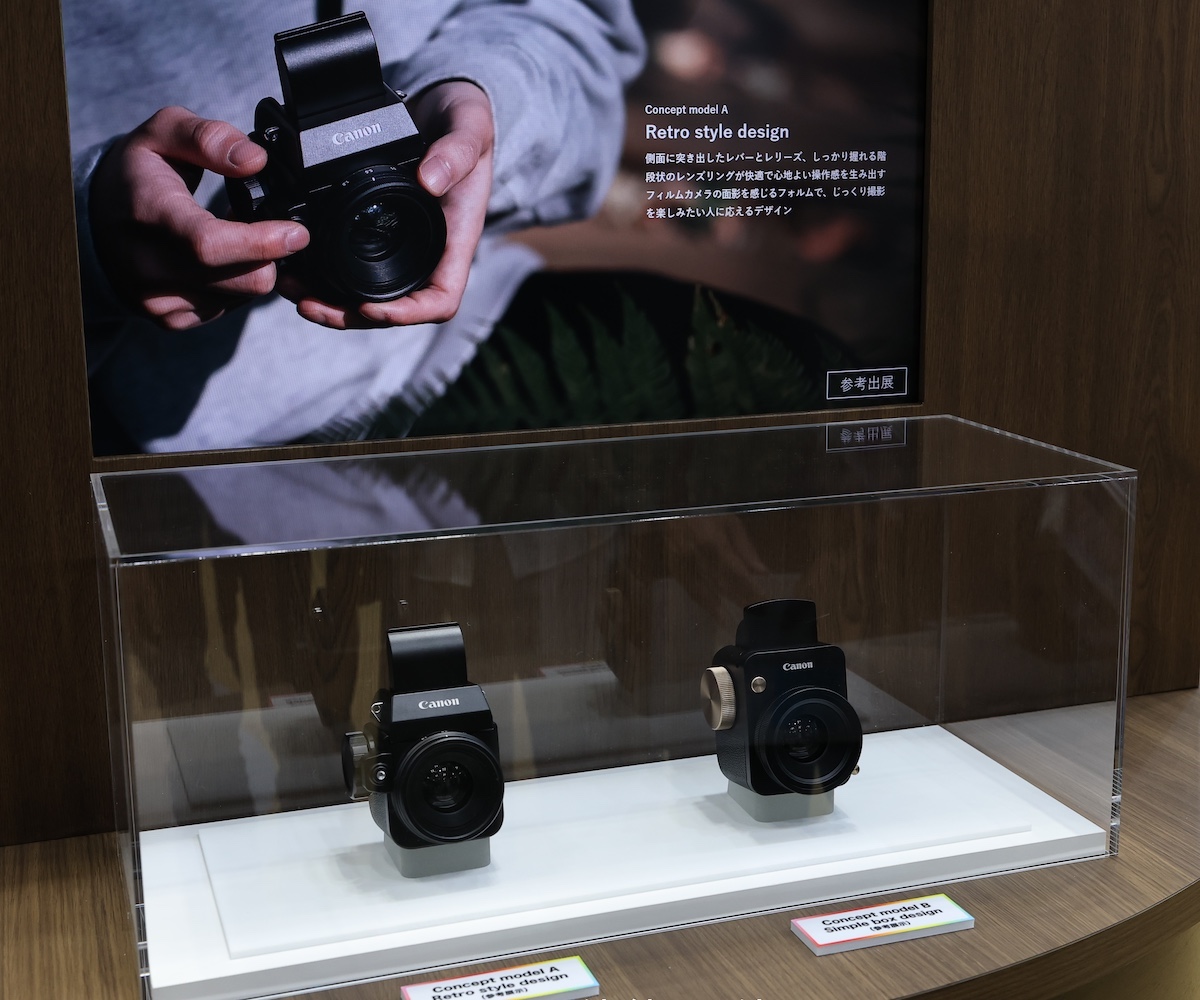
However, it's interesting to see Canon even displaying it, and asking attendees to vote on which of two potential designs they like best. The mock-ups on display are more refined, seeming to feature actual shutter buttons and a large knob on the side, though its purpose is unclear. The survey also asks questions about what you'd look for in this kind of camera and how much you'd be willing to pay for one, were it to actually make it to market in some form. To me, that indicates that it's not just a fun toy the company's engineers cooked up solely to give people something to play with at its booth.
The booth drew a lot of attention; we'd be surprised if Canon didn't take notice of how many people wanted to play with it.
Canon has said before that it sees itself as a company that's always looking forward, despite a somewhat traditional approach to product designs. Some have used that perception to dismiss the idea it would ever release a throwback camera like the Nikon Zf or Pentax 17. But this camera shows a more playful side of the company, and even if we never see this particular model again, it makes us wonder if the X half was just the start of something, rather than an odd one-off.
Sample gallery
This widget is not optimized for RSS feed readers. Click here to open it in a new browser window / tab.
Here is some additional information on the new Canon concept camera displayed at the 2026 CP+ show in Japan- I seriously doubt this concept will ever see the light of day, it’s just a marketing move to show relevancy (Canon likes to do this at trade shows):
The Canon concept camera, unveiled at the 2026 CP+ show in Japan, is a prototype inspired by vintage medium-format designs like Hasselblad, emphasizing a manual, analog-like shooting experience. It features two design variants: a retro angular style and a modern boxy one. Light enters via a fixed lens and is redirected by two mirrors—the first bounces it upward, the second projects it onto a special screen in the waist-level viewfinder, mimicking ground glass for a film-like texture with visible blur and bokeh. This screen-mediated system allows direct observation from above, with manual focus only. To shoot, operate a side lever: it switches the mirrors, redirecting light so the sensor captures the projected screen image (not the subject directly), producing a “clack” sound and achieving diffusion for a realistic, film-emulating result. The prototype uses a 1-inch, 6MP sensor; images are reviewed on a rear flip-up LCD. No autofocus or interchangeability; includes basic controls and USB-C. This is all we know so far
Canon's PowerShot G7 X III may be almost seven years old, and lacking the autofocus and processing capabilities found in the company's more recent cameras, but that hasn't stopped it from flying off the shelf. It seems that tech isn't a big selling point for the type of person buying it, but in an interview with Canon executives at the CP+ show, we were told that the company's next compact may focus on it.
"The current customers of compact cameras are not really our past customers. These are totally new customers," said Go Tokura, Executive Vice President, Head of Imaging Group, Chief Executive and Chief Executive of Imaging Business Operations. "So it is going to be the role of the next camera we release that can offer new technologies or a new use case. That's the new role of the next compact camera."
It's exciting news to hear that the company is working on a new compact camera and that it will potentially be more up-to-date than the ones the company currently offers. Of course, there are no promises that it will be aimed at enthusiasts looking for a small option to carry around with them. Last year, the company released the PowerShot V1, which, while using much of Canon's current technology, is much better-suited to shooting video than stills.
We're looking forward to sharing more of the interview in the near future, covering more of the company's compact plans, the state of the camera market and its approach to making lenses and cameras.
Photo hosting community Flickr has announced Mode by Flickr, an in-person "photo festival" taking place in Minneapolis, Minnesota, in late September 2026. The company says its goal is to bring the spirt of online photo sharing "away from devices" so photographers can connect "in the real world."
The three-day event will include keynote speeches from guest photographers, such as Chris Burkard and Penny De Los Santos, along with activities including workshops, editing tutorials, film screenings and photowalks. Flickr's COO Ben MacAskill describes it as "a festival built for creativity and the future of photography and visual arts."
The festival is structured around seven themes, covering a broad range of photography topics, from art and technique to technology and gear, and the business of making a business out of your work. The themes are described by the company as follows:
Change: spotlighting world-shifting storytelling
Next: focused on emerging tools and technology
Money: exploring the business of photography
Motion: celebrating video and moving images
Culture: capturing the music, fashion, food, and moments that shape us;
IRL: honoring analog processes
Earth: dedicated to the intersection of the environment, sustainability, and art
Flickr, which has been owned by photo hosting company SmugMug since it was sold by Yahoo! in 2018, is now in its 22nd year, having launched in 2004.
Three-day passes start at $330, with a $30 discount for Flickr Pro subscribers, though the cheapest tickets only get you access to "select events."
Press release:
Flickr Announces MODE Festival: Leading Photographers, Chris Burkard, Brooke Shaden, Penny De Los Santos, and Jimmy Steinfeldt Headline Minneapolis' New Three-Day Experience
The citywide celebration blends culture, creator-led programming and photography events across downtown Minneapolis this September
SAN FRANCISCO, Feb. 26, 2026 /PRNewswire/ -- Today, Flickr announced the launch of MODE by Flickr, an immersive three-day photography festival taking place September 18-20, 2026, in the heart of Minneapolis. The inaugural lineup includes keynotes from Chris Burkard, Keith Ladzinski, Minneapolis native Jimmy Steinfeldt, and Brooke Shaden as MODE's Artist-in-Residence, alongside special programming in partnership with Black Women Photographer's Polly Irungu and Inside Out Project, with sponsorship support from Fujifilm, HOVERAir, and additional partners. The festival will also feature leading photographers including Sandro Miller, Art Streiber, Penny De Los Santos, Rob Grimm, David Johnson, and more. Designed as a first-of-its-kind photography festival, MODE will bring together craft, community, and visual storytelling like never before.
"MODE is photography in motion – alive, interactive, and deeply rooted in community," said Ben MacAskill, President, COO at SmugMug & Flickr. "For more than 20 years, Flickr has brought the world's photographers together online. Now, we're bringing that spirit away from devices and connecting in the real world with a festival built for creativity and the future of photography and visual arts."
From workshops led by industry legends to hands-on demos with emerging tools and gear and immersive exhibitions, MODE will create spaces for learning, exchange, and shared creative energy, anchored in community and underscoring the belief that photography thrives in culture, not in isolation.
MODE brings the full spectrum of photography to life through its seven thematic pillars – Change, spotlighting world-shifting storytelling; Next, focused on emerging tools and technology; Money, exploring the business of photography; Motion, celebrating video and moving images; Culture, capturing the music, fashion, food, and moments that shape us; IRL, honoring analog processes; and Earth, dedicated to the intersection of the environment, sustainability, and art. Across these tracks, attendees will experience hands-on workshops, live portrait shoots, tech demos, editing workshops, photojournalism panels, film screenings, gear demos, darkrooms, instant-film activations, photo walks, and climate-focused conversations.
Passes are available now, starting at $300.00 for Flickr Pro Members and $330.00 - $660.00 for general admission and VIP passes. For ticketing information, visit http://modefestival.com/. Additional speakers and workshops will be announced throughout the year.
"Minneapolis is proud to host the inaugural MODE Festival," said Mayor Jacob Frey. "This is a city that believes in artists and backs them up. From downtown to neighborhoods across Minneapolis, MODE will showcase the creativity, small businesses, communities, and public spaces that make our city special. We're excited to welcome creators from around the world and show them what Minneapolis is all about."
MODE was created to celebrate creativity and community while prioritizing accessibility, inclusion, and safety. The festival features accessible venues, diverse and thoughtfully curated programming, and a talent selection process rooted in artistic quality and representation. Sustainability measures, from recycling to reduced single-use materials, are built into every layer of planning, alongside comprehensive safety and emergency protocols to ensure a smooth, secure experience for all attendees.
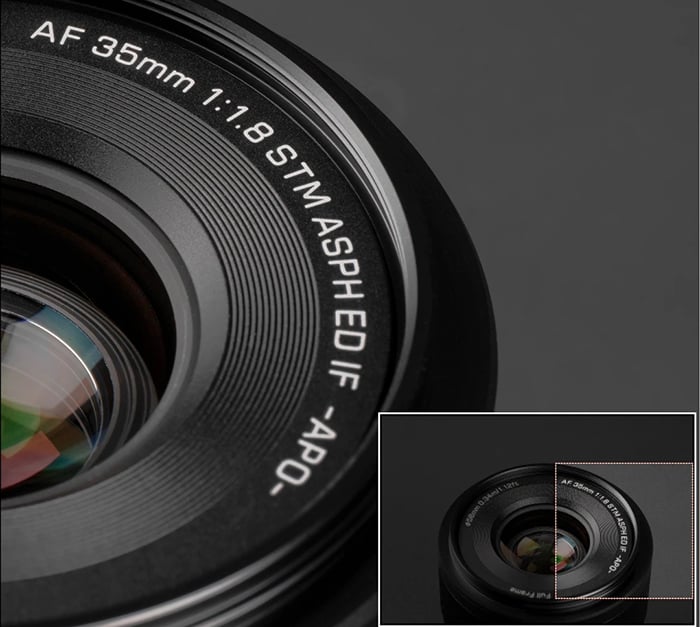
The upcoming Viltrox 35mm f/1.8 EVO and Viltrox 55mm f/1.8 EVO full-frame lenses will both be APO designs. An apochromatic lens (APO) has better correction of chromatic and spherical aberration than the much more common achromat lenses. The lenses will have a 58mm filter thread, close-focusing distances of 0.34m and 0.43m, respectively, and will be available for Sony E, Nikon Z, and Leica L mounts.
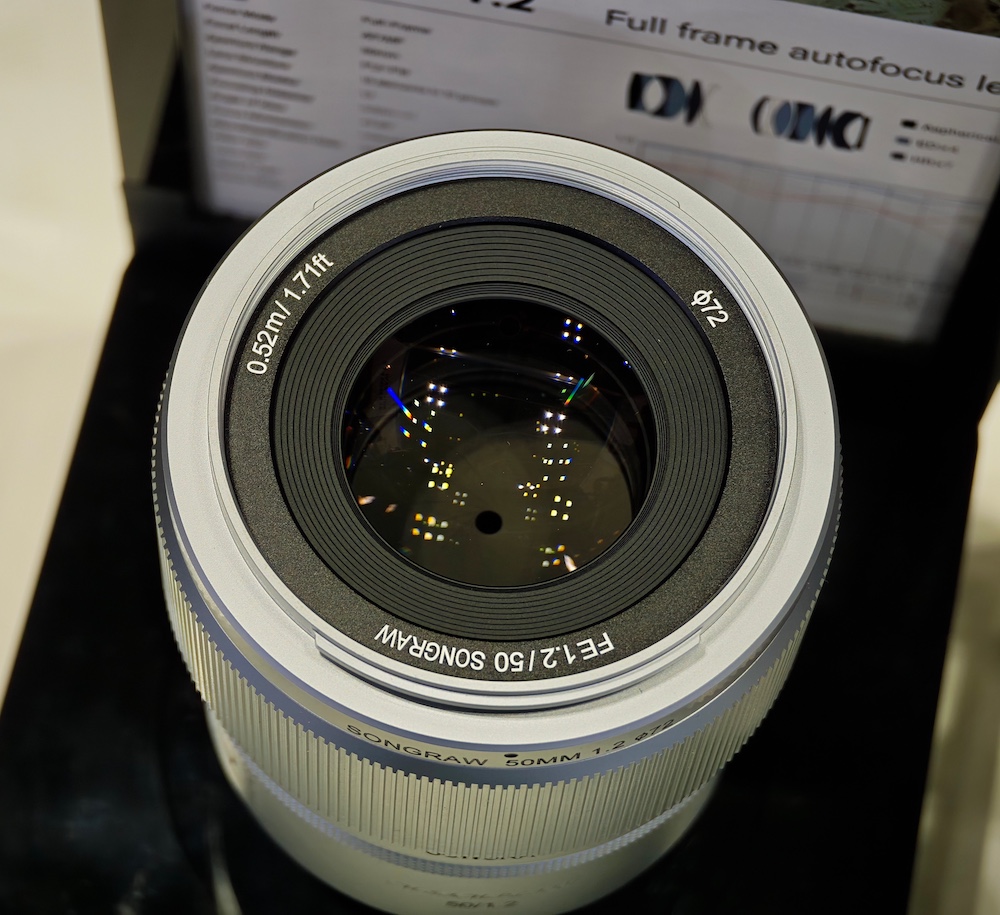
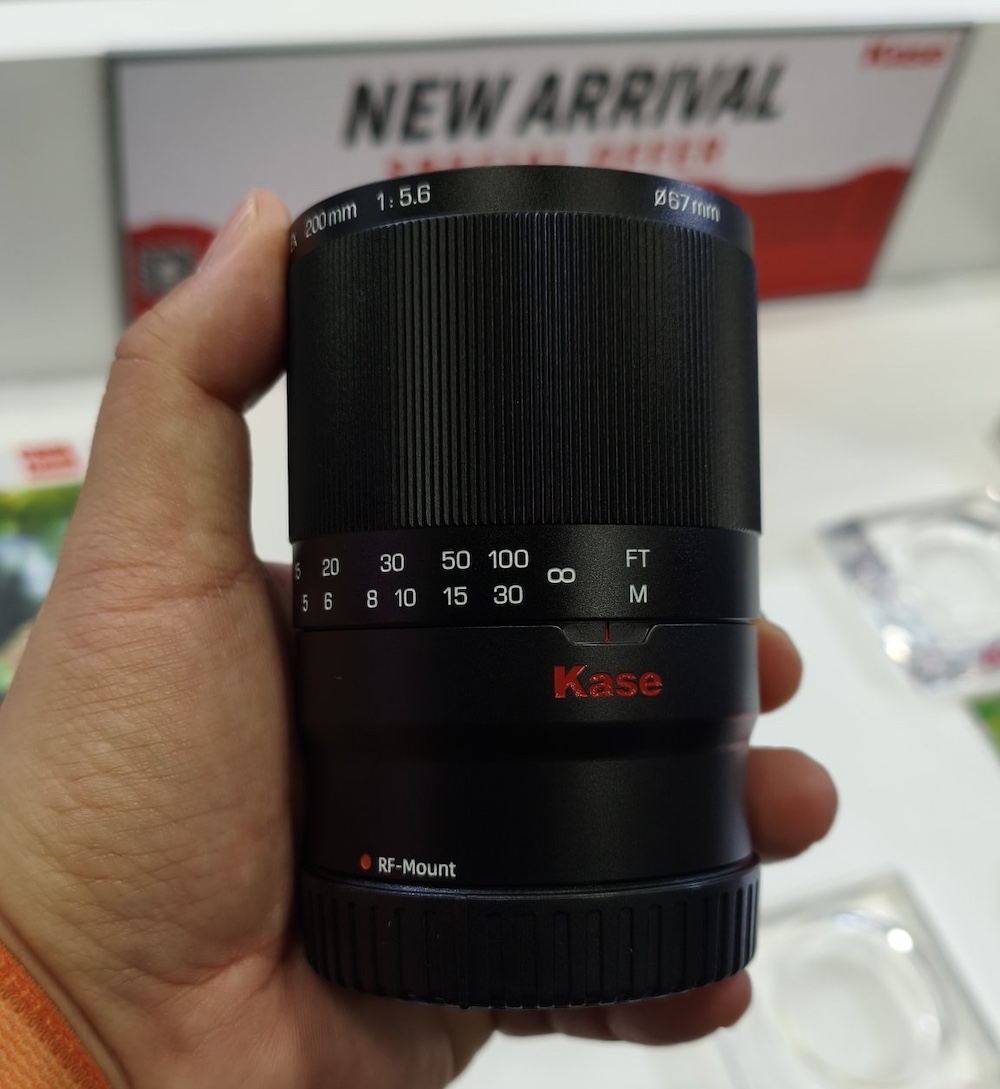
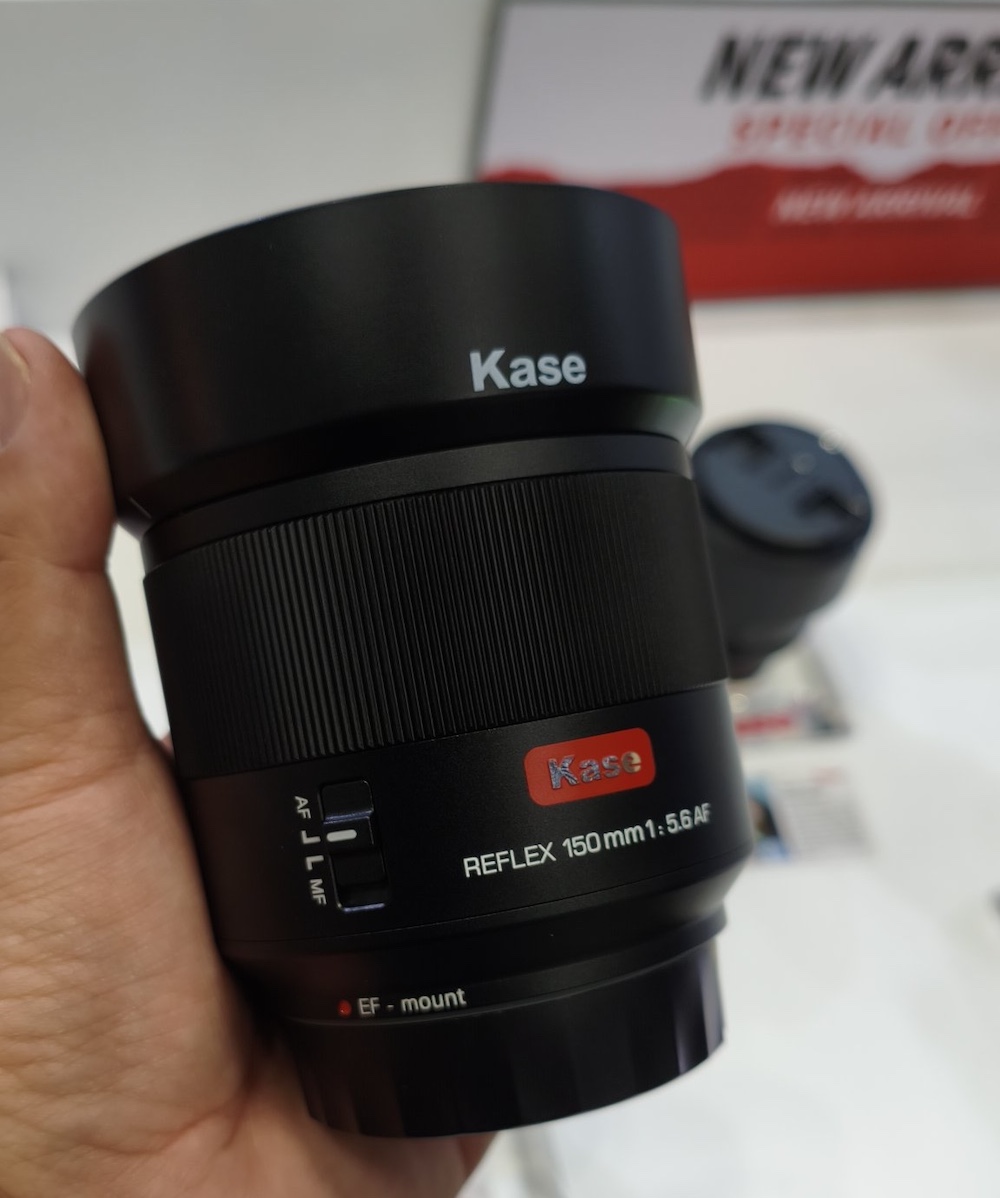
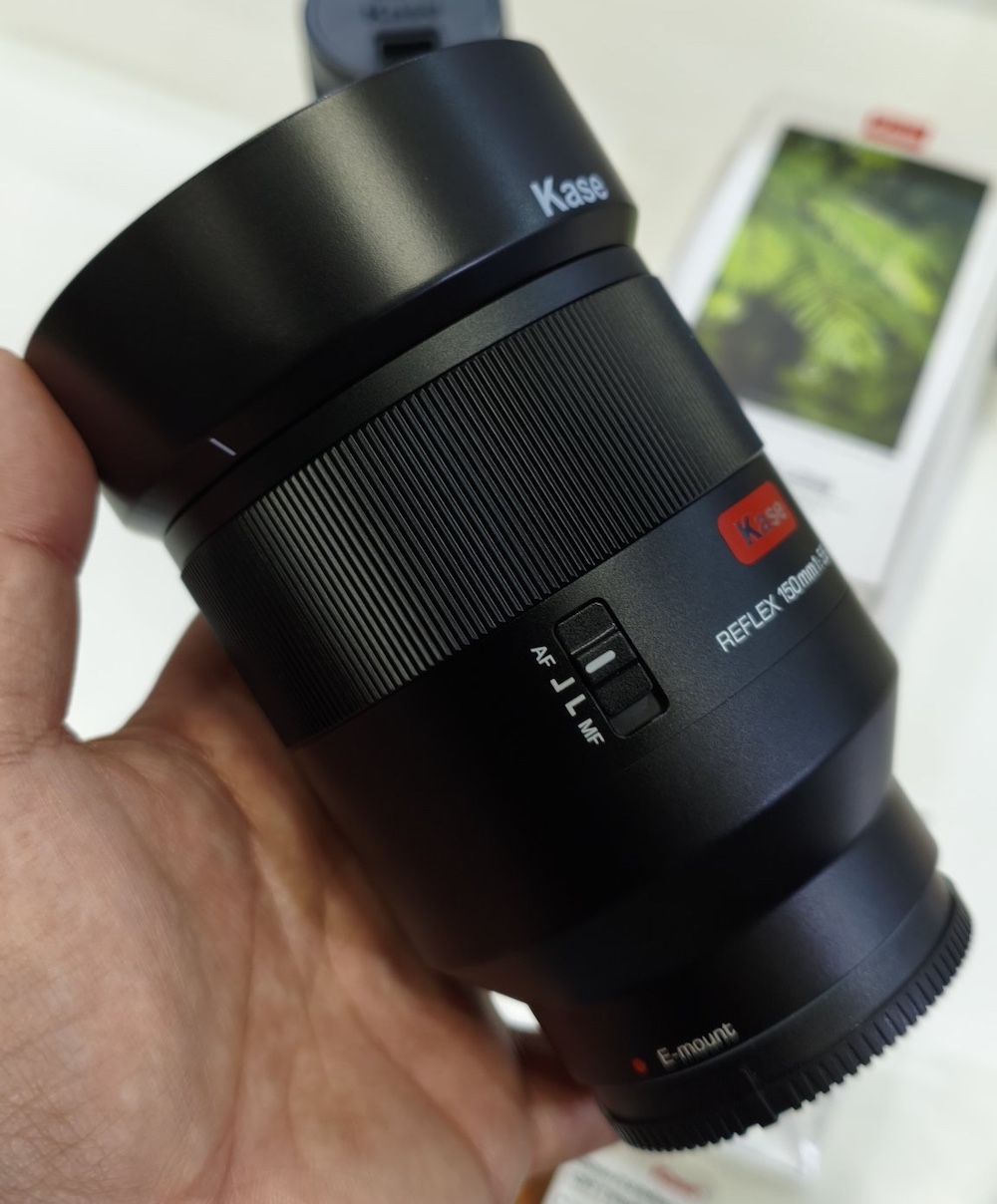
The first day of CP+ has come to a close. During it, we got the chance to see some of the lenses announced during the show in-person, so here’s a closer look. If you have any questions about them, be sure to leave them in the comments below!
DPReview community member Ciaccio (Mario Ciaccia) has a fascinating photography career based in Milan, Italy. He has been a professional photographer since 1998, working for Tutto Mountain Bike and other companies, including the motorcycle magazine Motociclismo. He now runs his own site while balancing commissioned work with a personal need to capture everyday moments through his camera.
Favorite camera and lens: Fujifilm X100V with its 35mm equivalent lens, or Sony a7C with the 14mm F1.8 or 135mm F1.8.
Typical photo scenes: Motorcycle travel and events, vast landscapes from Patagonia to the Himalaya, the quiet moods of the River Po, and spontaneous family life.
Although inspired by classic Leica photojournalists and the black-and-white work of Don McCullin, Ciaccio admits he sees only in color. He also says he forced himself to use the Fujifilm X100V to train his eye for 35mm, despite his natural pull toward extremes.
"I see beautiful black and white photos taken with 35mm, but then, when it's my turn to take them, I'm more inspired to use a 14mm and color."
Ciaccio edits in Lightroom and Photoshop, keeps accessories minimal, and carries only what helps him get that great shot.
Sunrise on Monte Jafferau, in the Western Alps, Italy, September 2014. We climbed a hill and were greeted by a pair of formidable French mountains, Barre des Écrins and Pelvoux.
Sony NEX-6 | 210mm (315mm equiv) | F6.3 Photo: Ciaccio
"I carry very few pieces of gear, precisely because I have to seize the moment. I always carry a tiny Manfrotto tripod and, when I am working alone, a normal tripod. The a7C batteries last so long that I no longer need to carry many extras."
"In my bag there are also practical things: wet wipes, rain gear, a sweatshirt, thin gloves in winter, a headlamp for night photos and even a small screwdriver because sometimes the memory card door on my cameras gets stuck. If I have to wait hours at an event, I bring a folding chair so my back survives.”
“For years I have been obsessed with finding a light, fast system that lets me react immediately,” says Ciaccio. His Rotation 34 backpack uses a rotating waist pack that gives instant access to three cameras, even while seated on a motorcycle. The pairing of ultra-wide 14mm and 135mm telephoto reflects his visual instincts: dramatic perspectives or tight subject isolation with strong bokeh.
Rothang La, Himalayan pass 3,980 meters above sea level. I wanted to convey the vertigo I felt every time I encountered a truck or bus, and they didn't even slow down, despite the high risk of hitting me and sending me over the edge. After all, Rothang means ‘pile of corpses’.
Sony NEX-6 | 10mm (15mm equiv) | F4 Photo: Ciaccio
What stands out with the Fujifilm X100V and Sony a7C?
"If someone told me I could only keep one camera for the rest of my life, I would choose the Fujifilm X100V. With a 35mm lens, you can tell any story."
"For my Sony a7C, the high quality of the full-frame sensor allows me to have narrower focal lengths with little cropping. The 135mm seems like a weak telephoto lens, but the bokeh effect is such that I don't miss a 200mm or 300mm."
"I tried to do the same with the Sony a7 III, but it's too big: I'm one of the rare cases where the a7c is indispensable. If I wanted the same things but in an even smaller size, I could switch to APS-C: Sony a6700 with Sony 11 mm F1.8 (tiny!) and an 85 mm F1.8, which could be Sony or Viltrox."
“If someone told me I could only keep one camera for the rest of my life, I would choose the Fujifilm X100V.”
In October 2025, we challenged the steam train that runs from Novara to Varallo Sesia, in Piedmont, Italy. The challenge was to photograph it with the motorcycles at 13 different points.
Sony a7C w/ FE14mm F1.8 GM | F1.8 | 1/4000 sec | ISO 250 Photo: Ciaccio
How do you adapt your setup to different situations?
“It depends on the season and on what I am doing. If I travel alone like an explorer, I reduce everything to the minimum. If I have to photograph an organized event and stay in one place for three or four hours, I bring what makes the wait comfortable."
"My strength is that I always have the right focal length ready. The cameras are set in manual mode, usually with the aperture wide open. If necessary, I close it, but I like to isolate the subject and react quickly.”
Murzuq Desert in Libya, November 2008. I wanted to convey the feeling of being in the presence of immense chocolate flows.
Canon EOS 40D | 70mm (113mm equiv) | F8 | 1/640 sec | ISO 100 Photo: Ciaccio
Ciaccio's advice for other photographers
“Since I started in digital in 2004, technology has improved enormously. Today, we have more than enough performance. Ten frames per second is already a lot. Twenty-four megapixels are already excellent. At a certain point, it is not the equipment that changes your photography."
"Travel, look around you, and shoot. I have photographed Patagonia, the Himalayas and the Libyan desert, but I have also learned that beauty is behind my house. The important thing is to be ready when the moment arrives.”
If you’d like to share your photography setup, tell us about your main camera, lens choices, key settings and photography strategies. You could be featured next!
Editor's note: This article continues a series, 'What's in your bag?', highlighting DPReview community members, their photography and the gear they depend on. Would you like to be featured in a future installment? Tell us a bit about yourself and your photography by filling out this form. If you're selected for a feature, we'll be in touch with next steps.
Today marked the beginning of the 2026 CP+ show. While we're typically fond of seeking out cameras and lenses that have been cut in half, we found that particular trend had (mostly) fallen by the wayside this year. Instead, many of the manufacturer's booths featured diaromas large and small, often complete with tons of foliage.
When you use DPReview links to buy products, the site may earn a commission.
Photo: Mitchell Clark
7Artisans showed off several new lenses at its booth at CP+, introducing two new autofocus models that are, in some ways, polar opposites. Both are for full-frame, but one aims to be as small and light as possible, while the other is for those who aren't afraid of a little heft.
The first is the AF 40mm F2.5, which the company says is part of its "Lite" series, alongside the set of three F1.8 primes it announced earlier this year. While those lenses barely tipped the scales, this new offering is even smaller and lighter, coming in at just 90 grams.
This is one of the clickiest function buttons I've ever experienced. Photo: Mitchell Clark
Despite the focus on size, the lens has a fair number of features, including a clicked aperture ring, autofocus / manual focus switch and even a programable function button (though it's much smaller than is typical, feeling more akin to the reset switch you'd find on the bottom of some electronic device).
The lens has seven elements in six groups, with three high-refraction elements and one aspheric, and can focus as close as 0.4m (15.7"). It uses a stepper motor for autofocus, and has a nine-blade aperture, which the company says will provide a "bubble bokeh" effect.
The AF 40mm F2.5 is available now from the 7Artisans website for $159. Initially, it'll be available for E mount, though a representative said it will later come to L-mount and Nikon's Z-mount.
Photo: Abby Ferguson
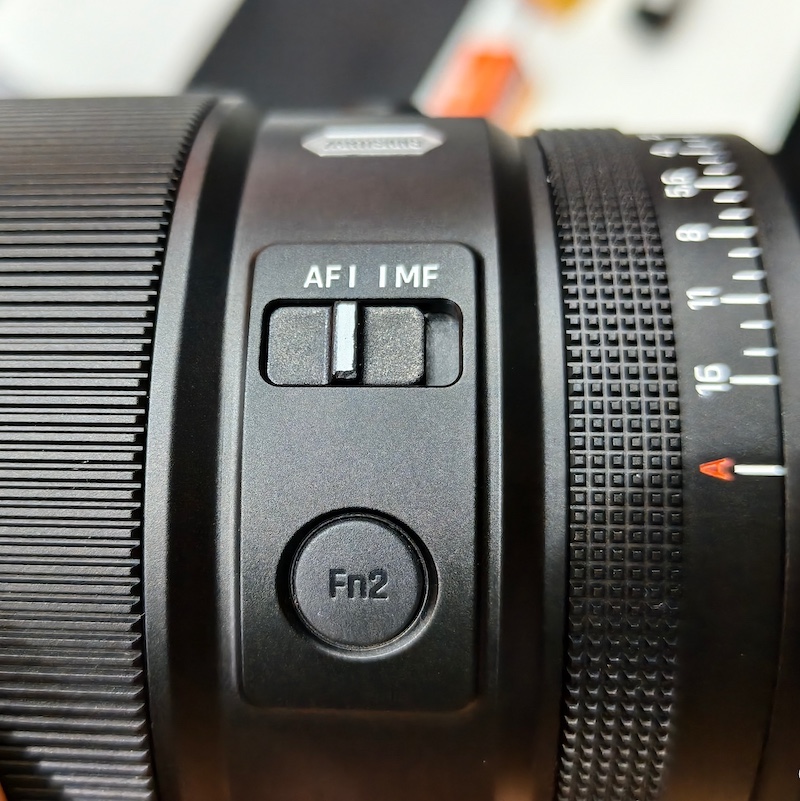
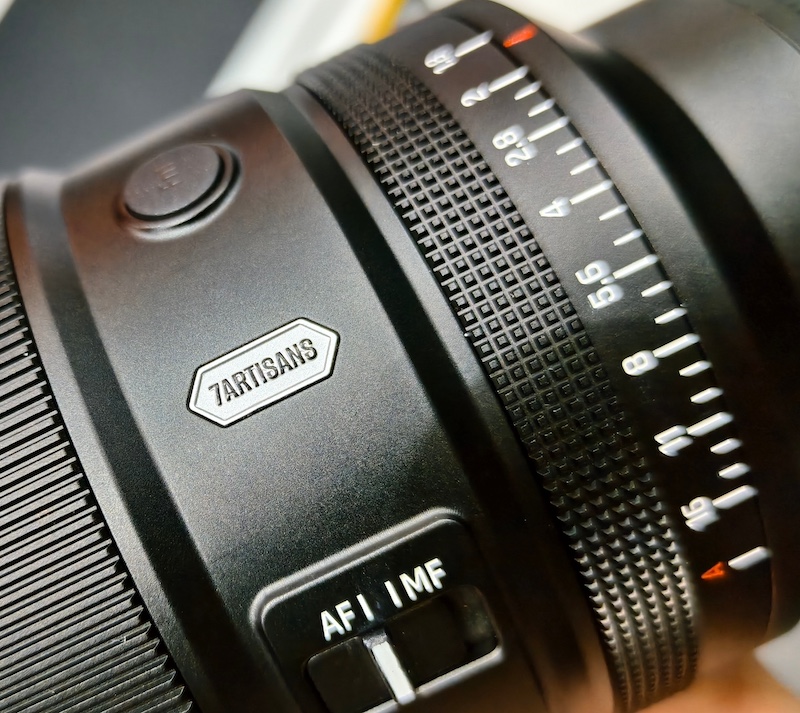
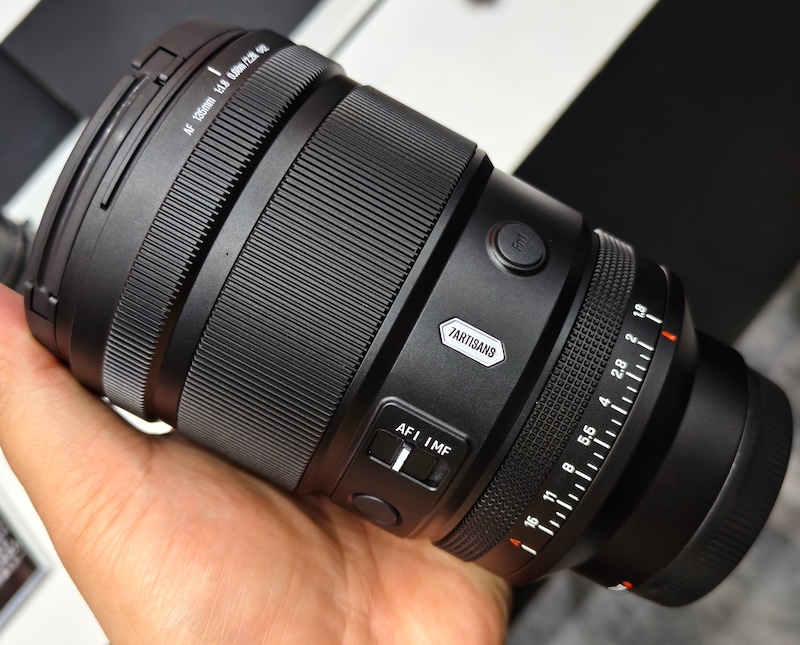
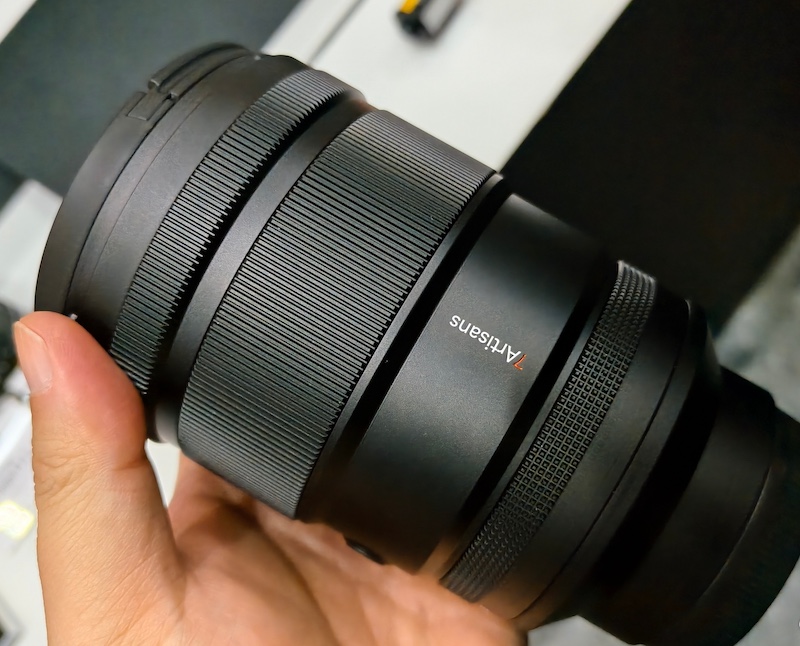
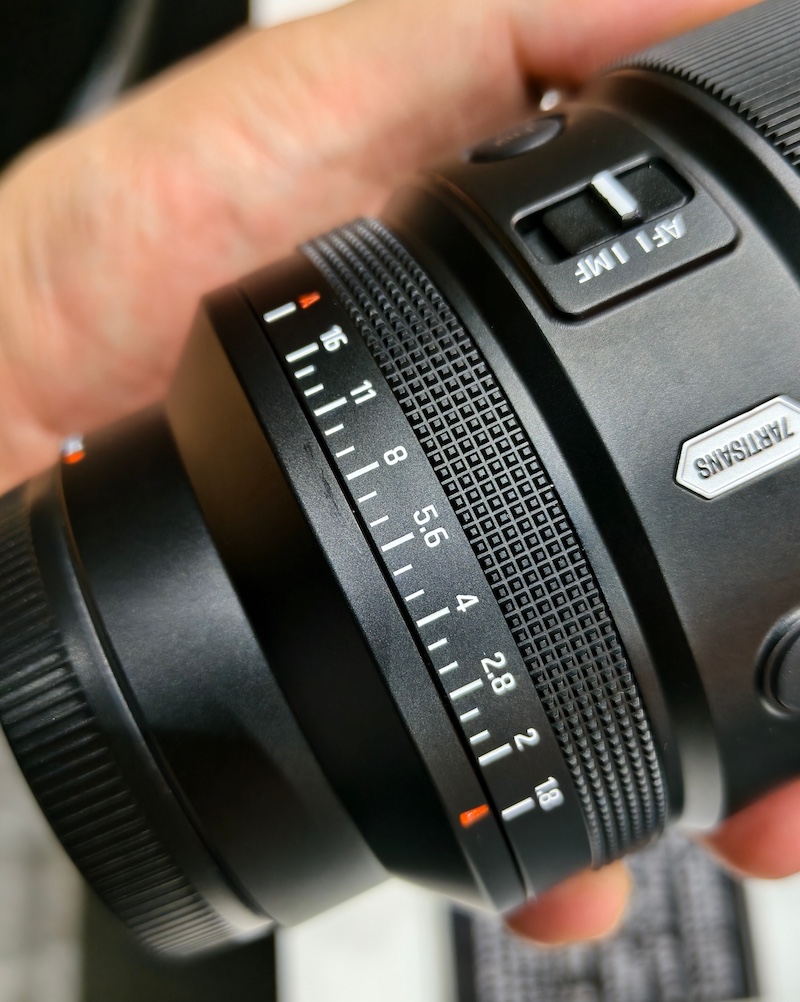
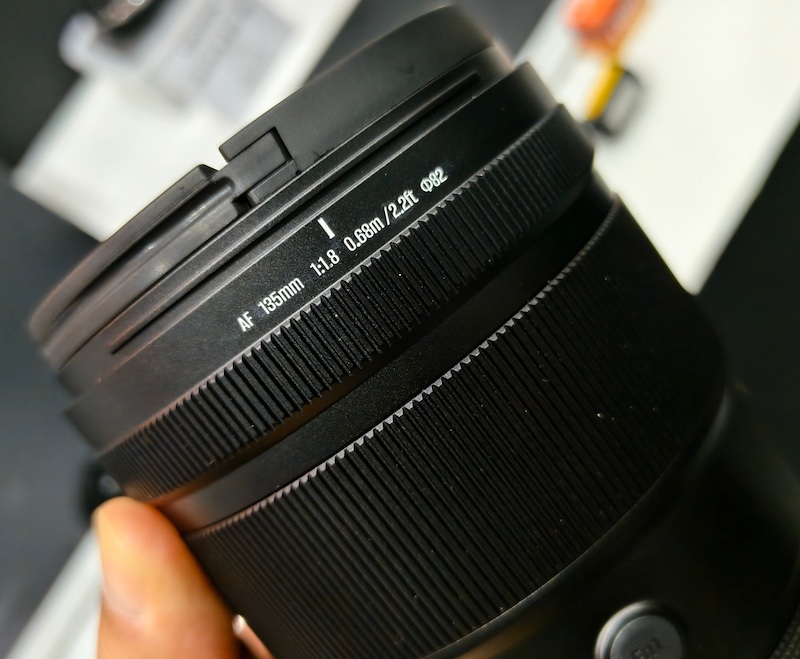
The company also showed off an upcoming lens: the AF 135mm F1.8. Unlike the 40mm, it's not particularly light or compact; while there aren't official specs available for it yet, I was allowed to hold it and it's a substantial piece of glass (though it's still noticeably smaller and lighter than Sigma's 135mm F1.4).
The lens will be available for Z mount, L mount and E mount, and features two function buttons and an aperture ring (or a programable control ring on the version for Nikon). The company plans to release it in the second half of the year. A placard said it will retail for around ¥120,000 including tax, which is around $770 at today's exchange rates, and says it'll have a minimum focusing distance of 0.68m (26.8"). It seems like a relatively ambitious lens, so it'll be interesting to see if it delivers on image quality and user experience.
Photo: Abby Ferguson
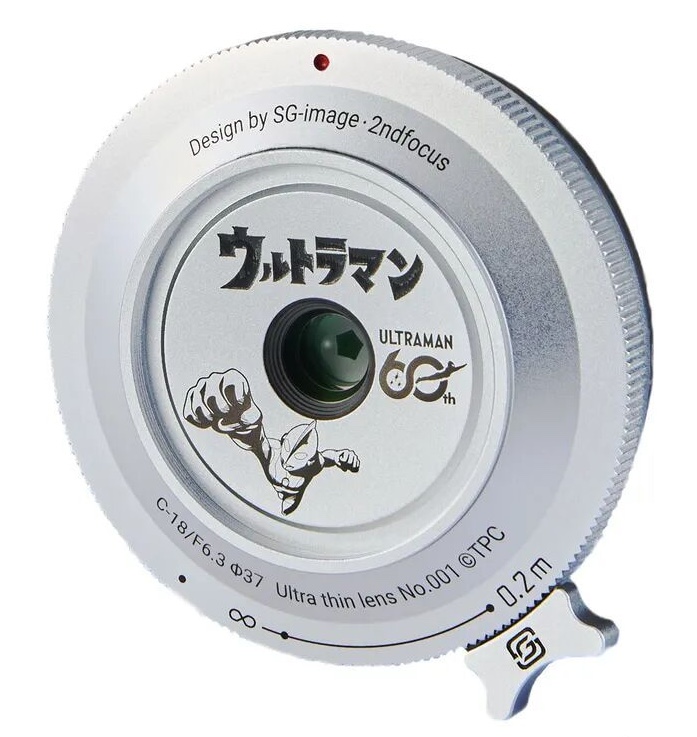
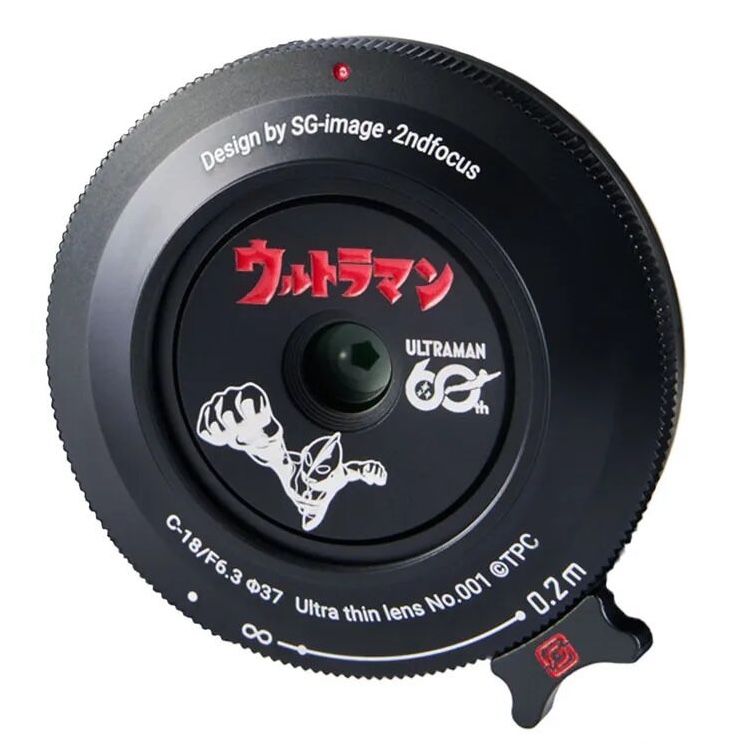
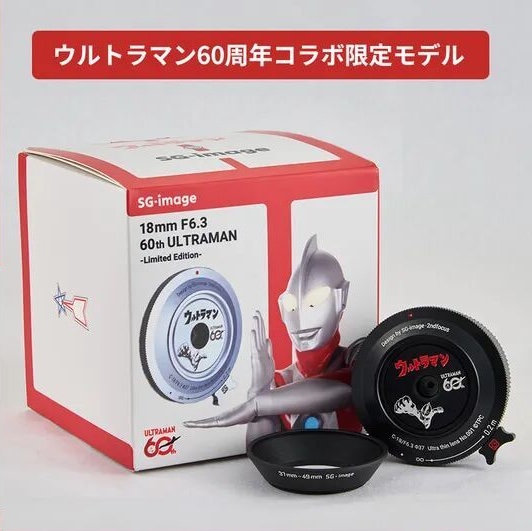
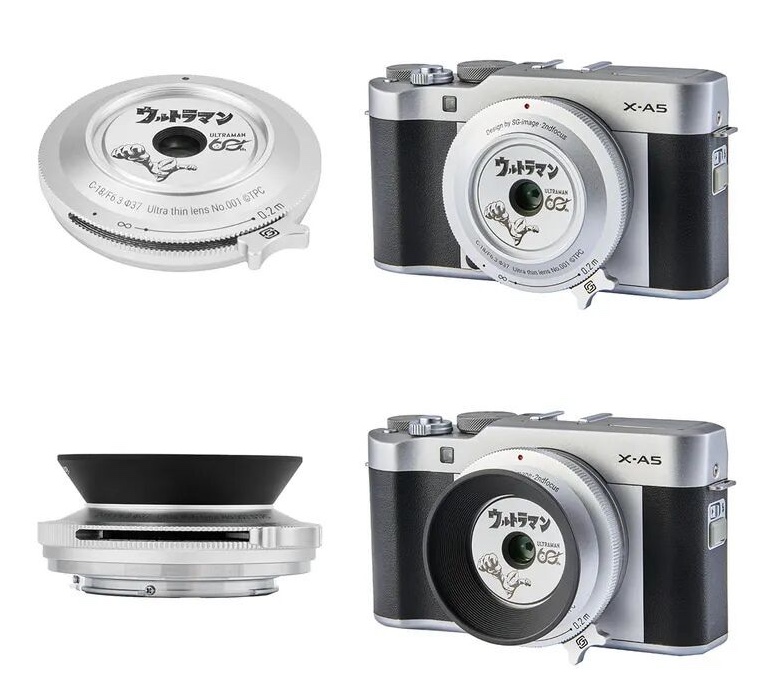
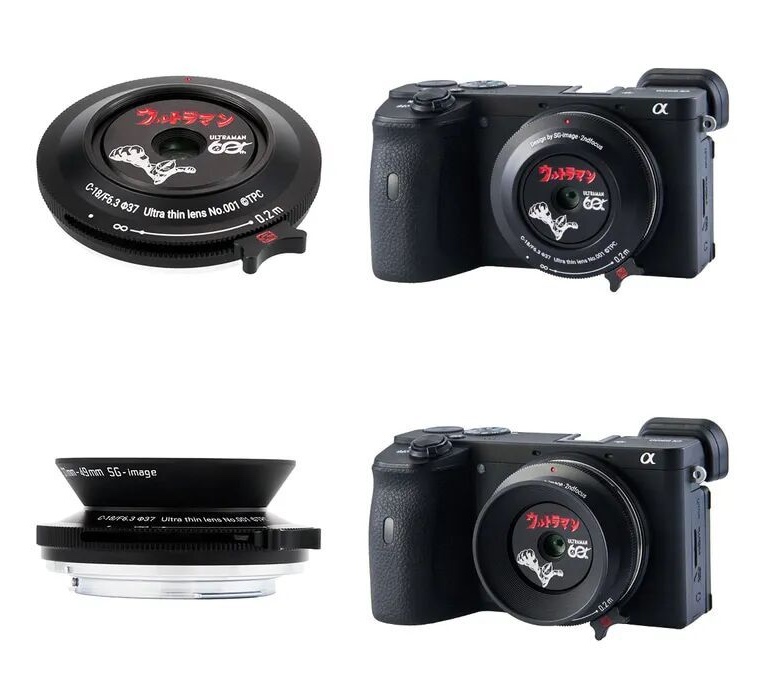
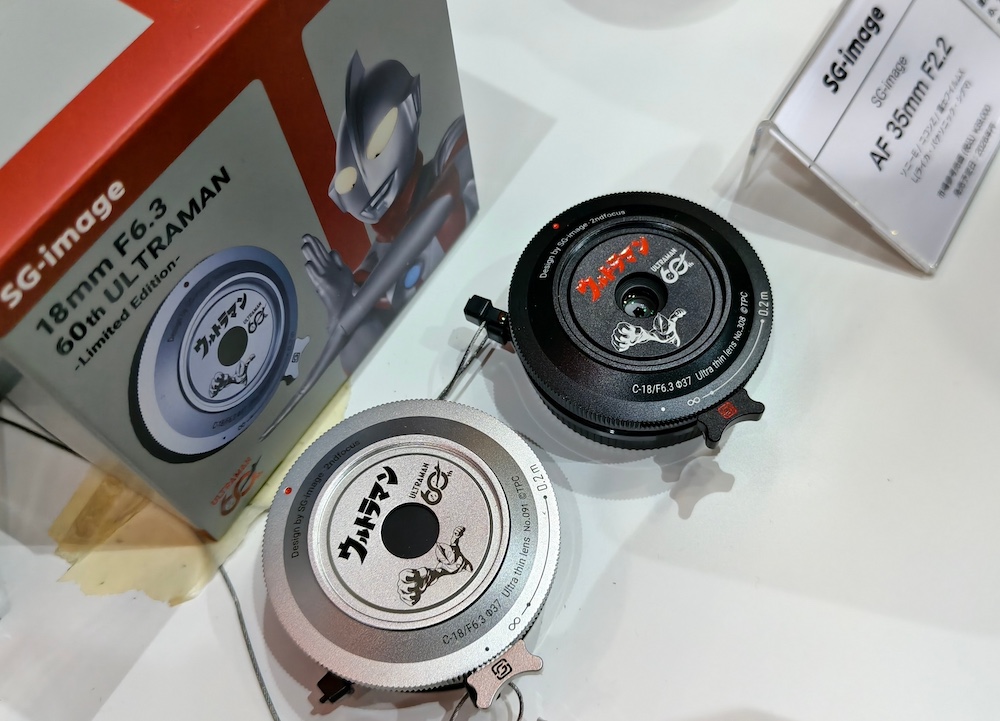
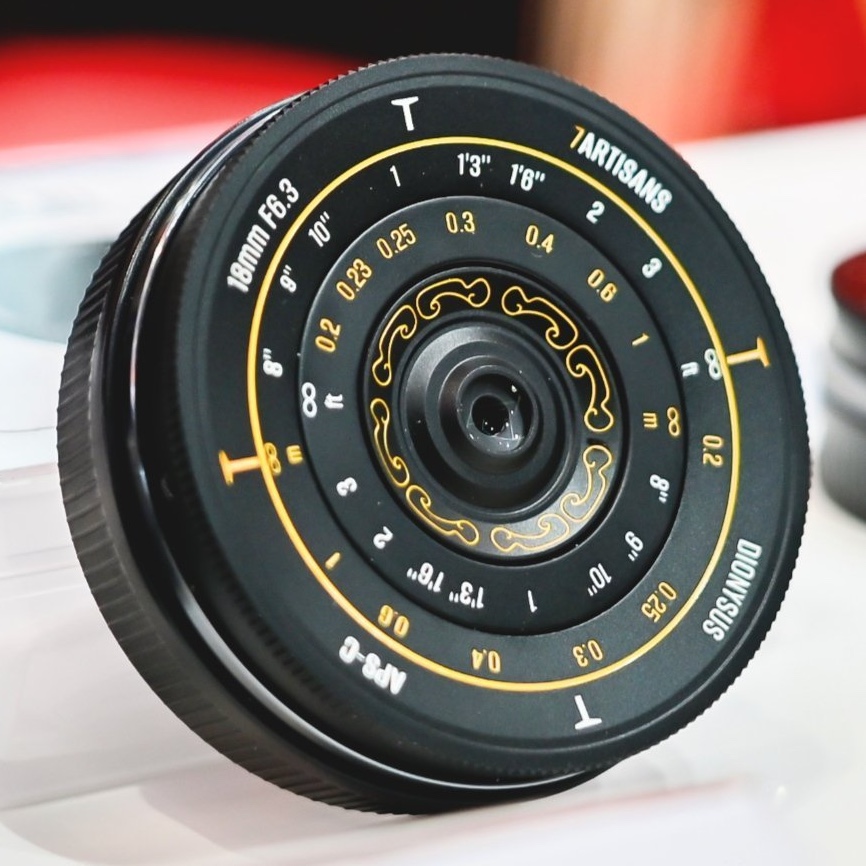
In addition to the two autofocus lenses, the company showed us an interesting manual focus lens called the Dionysus. It's an 18mm F6.3 lens for APS-C, and is, essentially, a decorative lens cap that you can use to shoot a picture with if you're in a pinch or are looking to achieve a certain aesthetic. To that end, it's available with red or yellow engravings, though the company says it may add more colors in the future. The representative showing it off also said it doubles as a fidget toy; when you turn the focus ring it clicks, providing haptic feedback, and when you let go it springs back to its starting position.
When you use DPReview links to buy products, the site may earn a commission.
A Sony RX1R III cut in half in a display case at CP+. The lens sits almost directly on top of the sensor, requiring precise, micron-level adjustments for each unit to ensure sharp image quality.
Photo: Dale Baskin
We've long known that compact cameras like the Sony RX1R require immense levels of precision manufacturing, but in an interview with DPReview at CP+, a Sony executive shared a detail that illustrates it perfectly.
Speaking about the different considerations when making a compact and an interchangeable lens camera, Yasufumi Machitani, General Manager of the Camera Business Department of Sony's Imaging Entertainment unit, said: "Each lens and image sensor position is precisely adjusted with micron-level precision. That's why the RX1R series is very sharp, even in this very small form factor."
It's no surprise that micro-adjustments are required on a camera-by-camera basis to ensure that each sensor and lens pair is achieving maximum possible image quality. At the launch for a previous generation of the RX1R, we were told that the rear element of the lens is so close to the sensor that you might have difficulty fitting a single sheet of paper in between the two.
We'll be conducting more interviews with manufacturers throughout the week, so stay tuned. We're also looking forward to publishing our full interview with Sony, covering a wide range of topics about the company's cameras, lenses and the camera market as a whole.
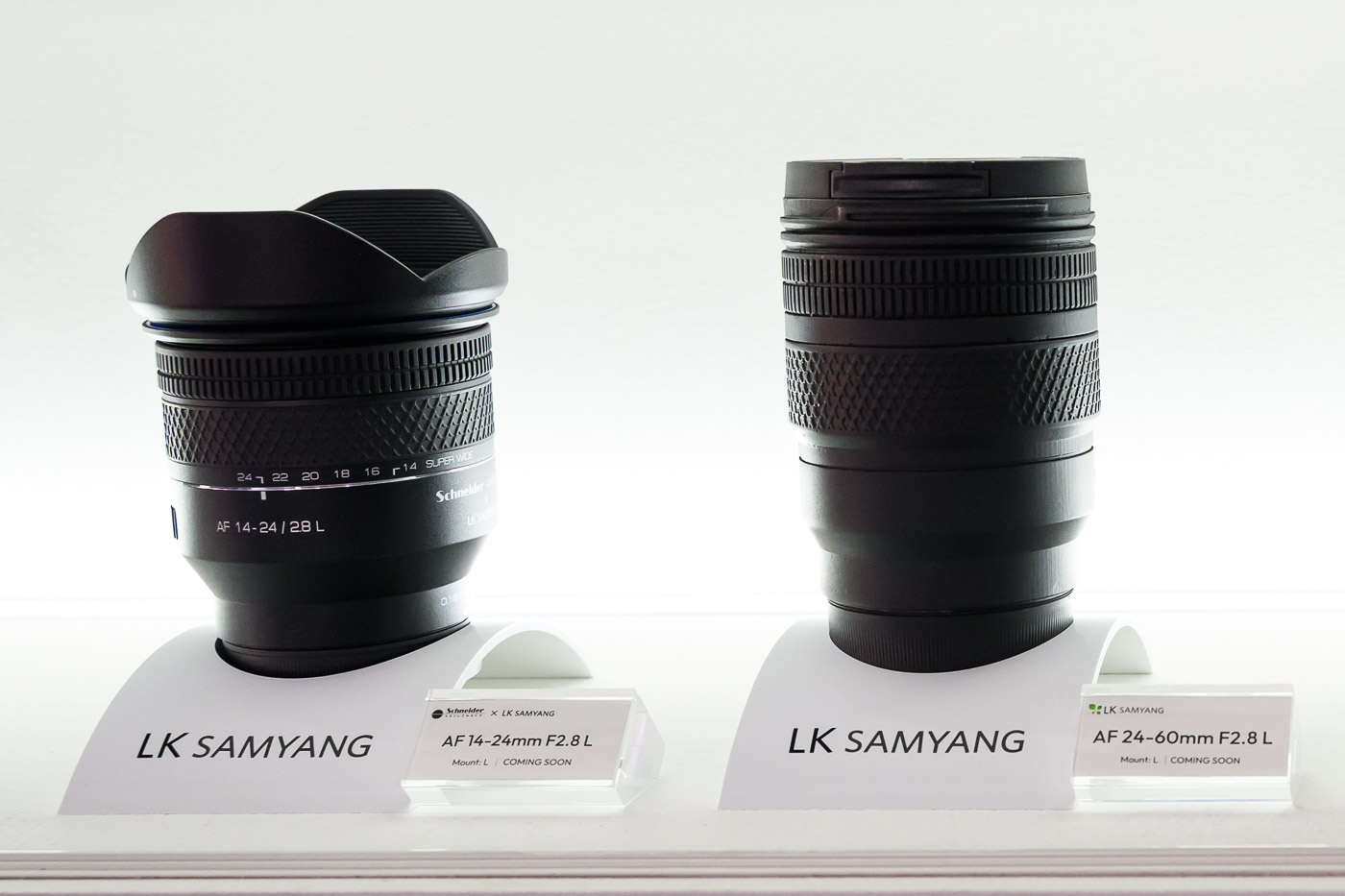
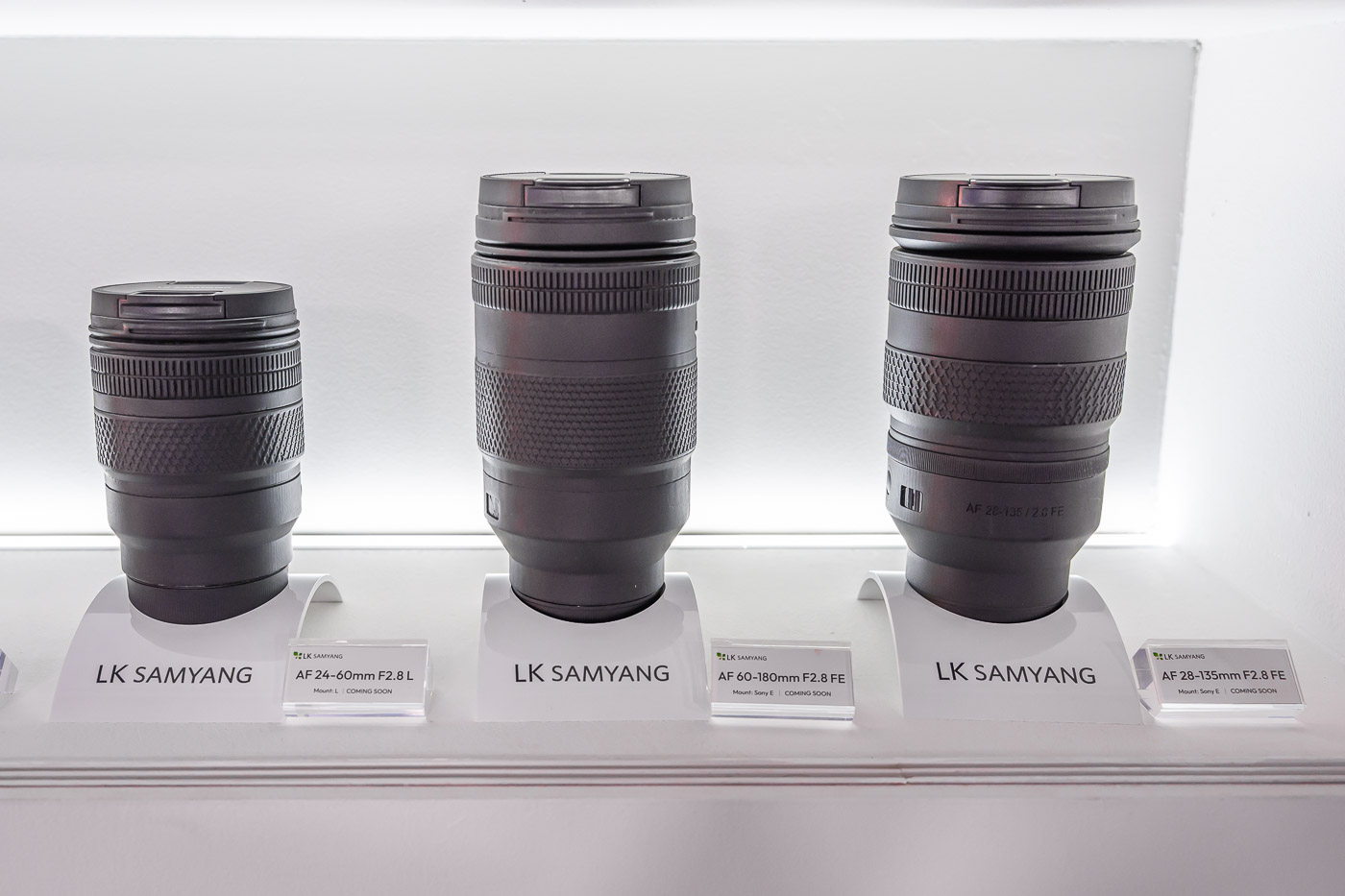
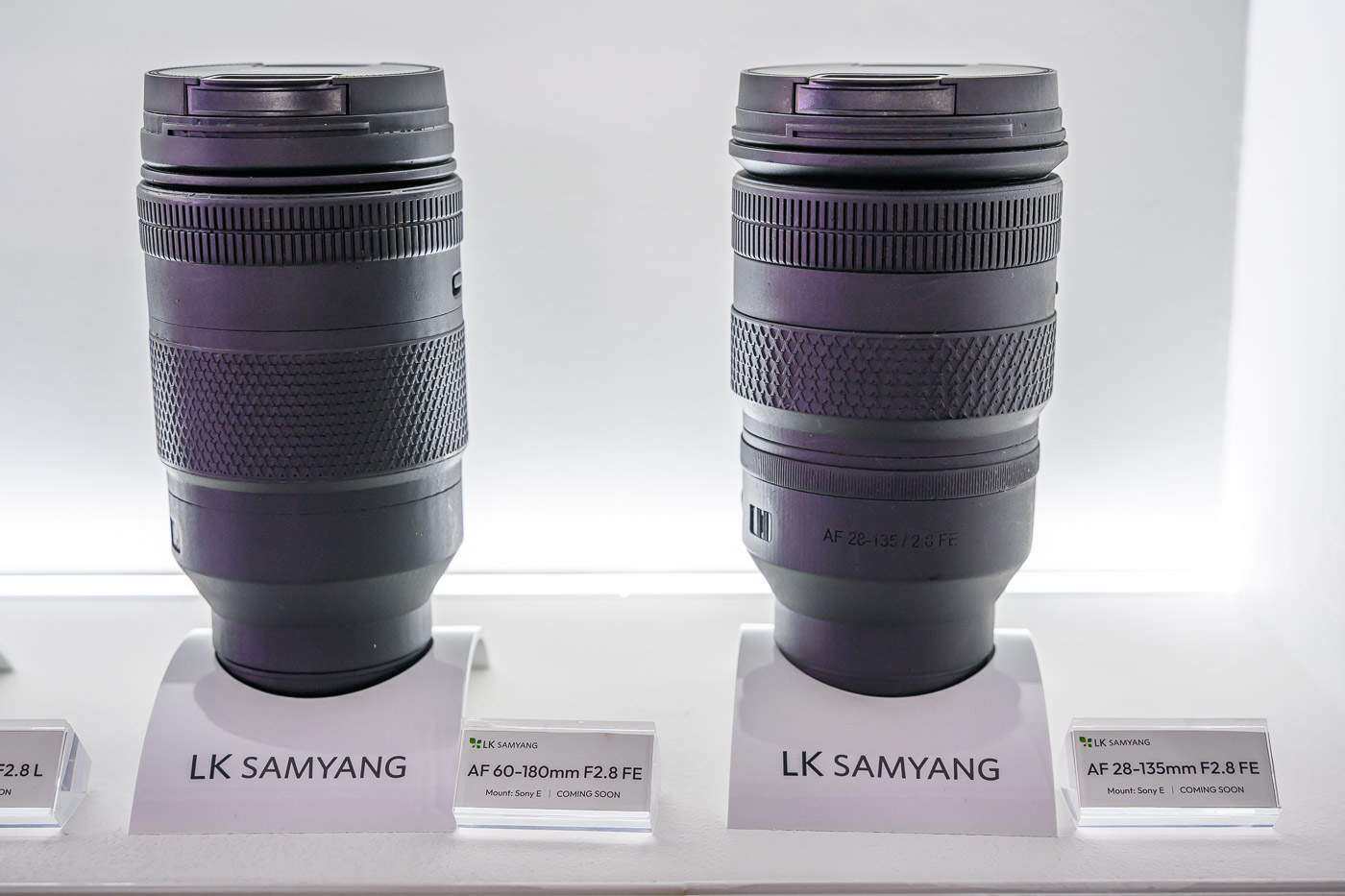
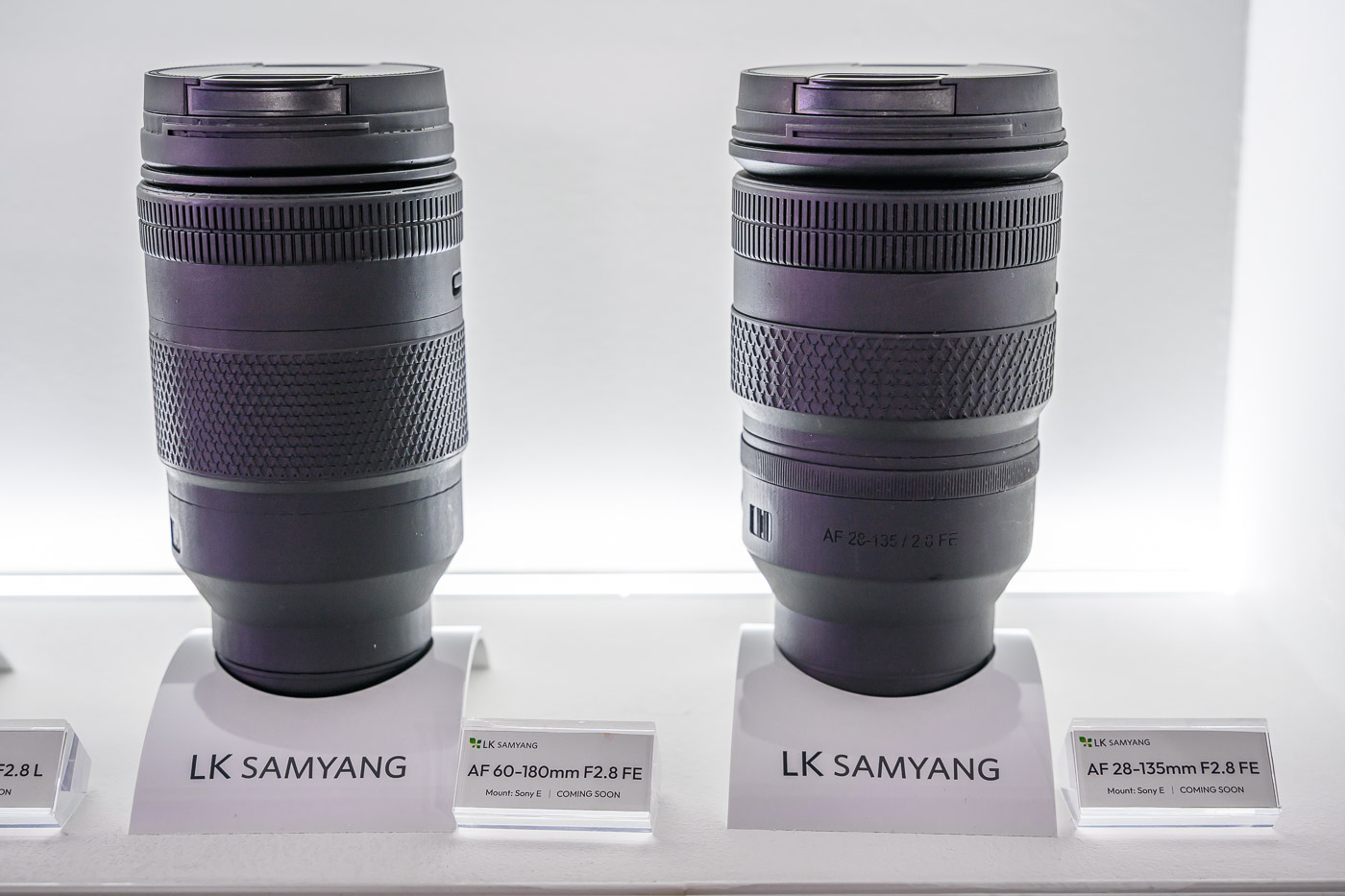
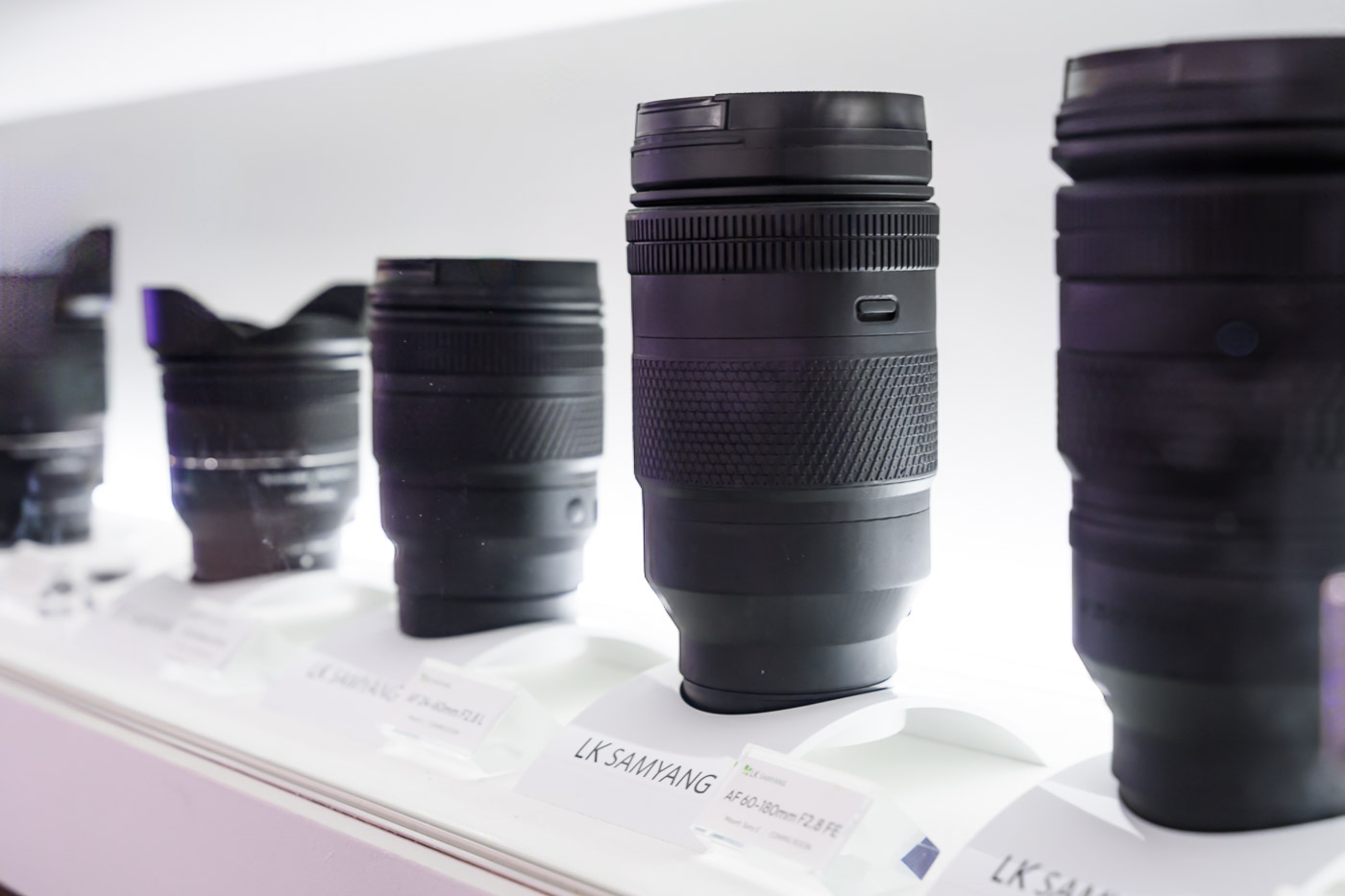
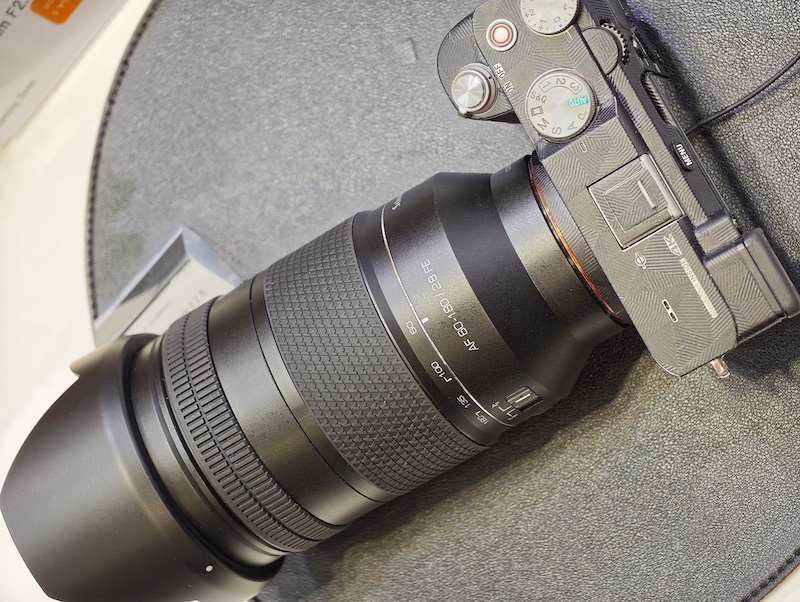
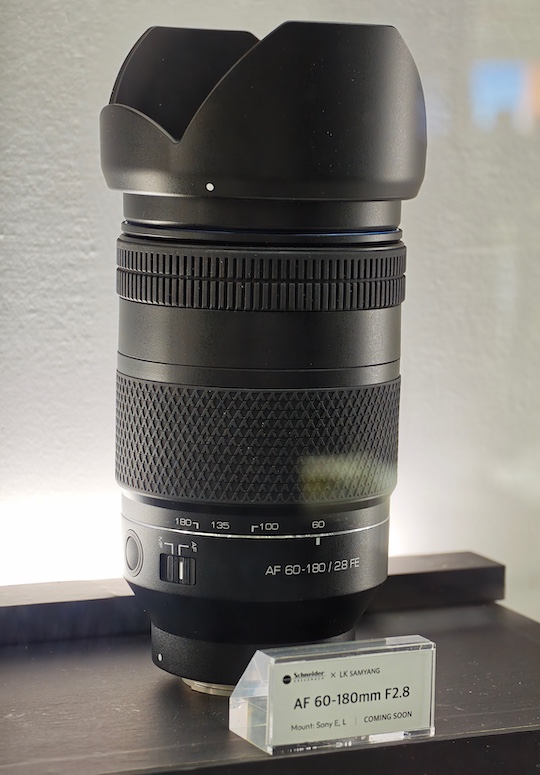
CP+ is officially underway, and LK Samyang has unveiled the AF 60-180 F2.8, its next lens made in collaboration with Schneider Kreuznach. The company also mentioned that an L-mount version of its AF 14-24mm F2.8 would be coming soon.
Details on the Schneider Kreuznach x LK Samyang AF 60-180 F2.8 are slim for now, but we were able to get hands-on with the lens. It features an AF/MF switch, a customizable Fn button and a zoom lock switch. It's relatively compact and lightweight, balancing well on the Sony a7C that was used in the display. A representative at the booth said that it will be available for E and L-mounts sometime in the second half of the year, likely between June and August.
Image: Mitchell Clark
The AF 14-24mm F2.8 FE was the first collaboration lens between LK Samyang and Schneider Kreuznach. It was announced at CP+ last year. Now, the company is using the event to unveil the L-mount version of the lens. It will be coming sometime in late May.
In addition to chatting with us about the upcoming lenses, a representative mentioned that LK Samyang is looking to expand its lens mount offerings. E-mount models will continue, but it hopes to provide additional mounts in the future, as much as they are able. It could also mean that the company is considering making L-mount versions of the lenses currently only available on E-mount.
Canon showcased a new retro concept camera at the 2026 CP+ show – it features a retro optical viewfinder and a shutter button on the right side of the camera. The current demo model has a 6MP sensor (not the final version). Two different variations were on display:
Additional pictures:
Watch a video of the new Canon camera concept on Weibo.
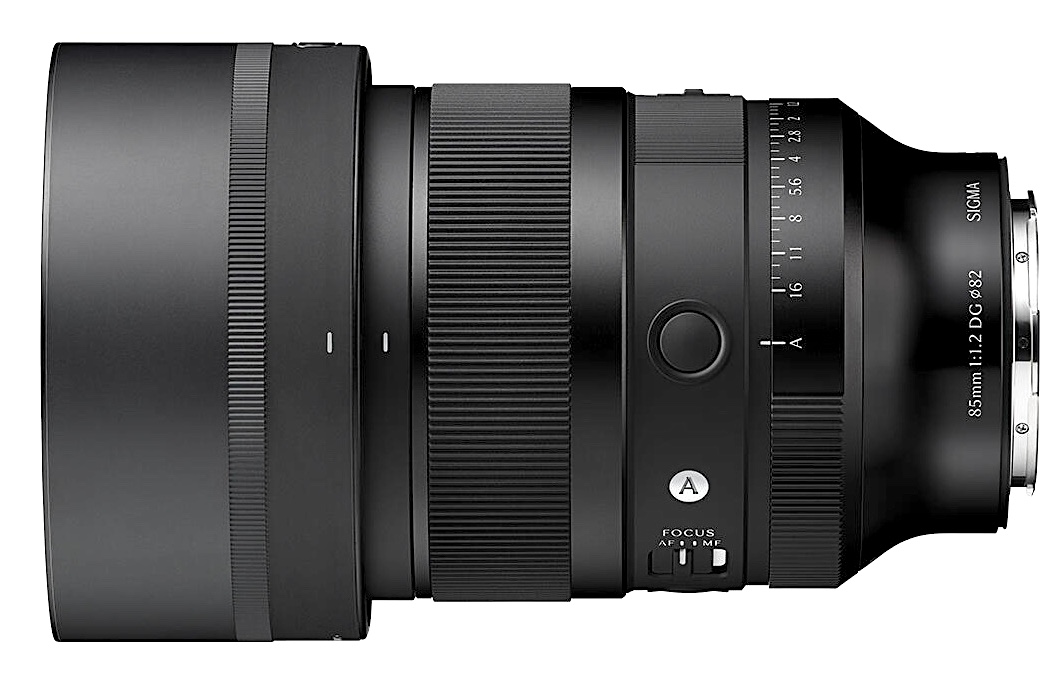
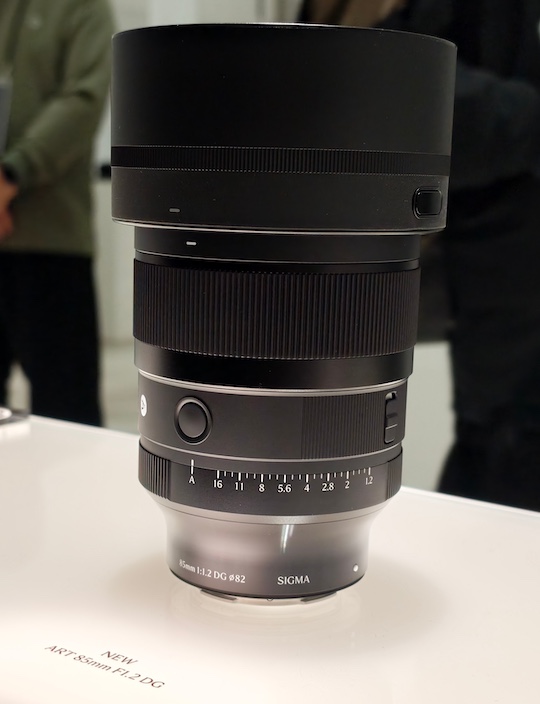
Another rumored lens got officially announced today for the 2026 CP+ show: the Sigma 85mm f/1.2 DG | Art lens for Sony E and Leica L mounts (previously reported here). This is just a development announcement – the lens will be officially released in September:
“The Sigma 85mm F1.2 DG | Art is a large-aperture medium-telephoto lens designed for full-frame mirrorless cameras. With the latest optical design, the lens delivers exceptional resolution even at maximum aperture, enabling striking portrait photography with the distinctive depth of field unique to F1.2. Featuring a compact, lightweight design and fast, precise autofocus driven by dual HLA (High-response Linear Actuator) system, the lens offers reliable performance for professional applications. With the addition of this lens, Sigma’s lineup of F1.2 prime lenses is now complete, joining the Sigma 35mm F1.2 DG II | Art and Sigma 50mm F1.2 DG DN | Art. The new Sigma 85mm F1.2 DG | Art will be exhibited at the Sigma booth at CP+ 2026, held from February 26 to March 1, 2026.”
Additional pictures:
Additional information:
Sigma Announces Development of 85mm F1.2 DG | Art Lens for Full-Frame Mirrorless Cameras
Ronkonkoma, NY, February 25, 2026 – Sigma Corporation of America, the US subsidiary of Sigma Corporation (CEO: Kazuto Yamaki. Headquarters: Asao-ku, Kawasaki-shi, Kanagawa, Japan), is pleased to announce the development of the Sigma 85mm F1.2 DG | Art, a large-aperture medium-telephoto lens designed for full-frame mirrorless cameras.
The lens will be exhibited at the Sigma booth during CP+ 2026, which will be held from February 26 to March 1, 2026 in Yokohama, Japan.
The Sigma 85mm F1.2 DG | Art is a large-aperture medium-telephoto lens designed for full-frame mirrorless cameras. With the latest optical design, the lens delivers exceptional resolution even at maximum aperture, enabling striking portrait photography with the distinctive depth of field unique to F1.2.
Featuring a compact, lightweight design and fast, precise autofocus driven by dual HLA (High-response Linear Actuator) system, the lens offers reliable performance for professional applications.
With the addition of this lens, Sigma’s lineup of F1.2 prime lenses is now complete, joining the Sigma 35mm F1.2 DG II | Art and Sigma 50mm F1.2 DG DN | Art.
Available mounts: L-Mount, Sony E-mount
Launch: September 2026
As the CP+ show opens in Yokohama, Japan, Sigma has announced it's working on an 85mm F1.2, which it says will complete its trio of 35, 50 and 85mm super-fast primes.
The Sigma 85mm F1.2 DG Art will be available for both Sony E and the Leica, Panasonic, Sigma L mounts. This means that all four major full-frame mirrorless lens mounts will have an 85mm F1.2 option available, as both Canon and Nikon currently offer their own comparable optics.
The company hasn't revealed much detail, beyond the basic concept of the lens, its use of a linear motor and the fact that it will complete a trio of F1.2 lenses. The company says the new lens will go on sale in September 2026.
Sigma Announces Development of 85mm F1.2 DG | Art Lens for Full-Frame Mirrorless Cameras
Ronkonkoma, NY, February 25, 2026 – Sigma Corporation of America, the US subsidiary of Sigma Corporation (CEO: Kazuto Yamaki. Headquarters: Asao-ku, Kawasaki-shi, Kanagawa, Japan), is pleased to announce the development of the Sigma 85mm F1.2 DG | Art, a large-aperture medium-telephoto lens designed for full-frame mirrorless cameras.
The lens will be exhibited at the Sigma booth during CP+ 2026, which will be held from February 26 to March 1, 2026 in Yokohama, Japan.
The Sigma 85mm F1.2 DG | Art is a large-aperture medium-telephoto lens designed for full-frame mirrorless cameras. With the latest optical design, the lens delivers exceptional resolution even at maximum aperture, enabling striking portrait photography with the distinctive depth of field unique to F1.2.
Featuring a compact, lightweight design and fast, precise autofocus driven by dual HLA (High-response Linear Actuator) system, the lens offers reliable performance for professional applications.
With the addition of this lens, Sigma's lineup of F1.2 prime lenses is now complete, joining the Sigma 35mm F1.2 DG II | Art and Sigma 50mm F1.2 DG DN | Art.
Available mounts: L-Mount, Sony E-mount Launch: September 2026

 Connexion