One of Abby's resolutions is to revive an old series focused on photographing artists while they work. This image was from one of those sessions. Photo: Abby Ferguson
Happy New Year, DPReview community! For many, the start of a new year is a time to set goals (or refresh old ones), from big, bold resolutions to smaller incremental changes. So, as we kick off 2026, the DPReview team is taking time to reflect on how we did with last year's resolutions, along with what we want to accomplish this coming year.
Dale
The video clip above is some b-roll for a documentary film I started shooting several years ago in and around Iquitos, Peru. One of my resolutions for 2026 is to finish the film, despite missing some key assets. (I originally shared this clip in an article about a DJI gimbal, which explains the lower thirds title.) Video: Dale Baskin
I'm pleasantly surprised by my 2025 results. I pledged to give away gear to beginners, use my phone more as a camera, and print more photos. As the great philosopher Meat Loaf opined, "Two out of three ain't bad." (I didn't quite get to the printing)
For 2026, I simply want to take more photos. After a year focused on behind-the-scenes infrastructure projects, I'm chomping at the bit to get back into the field. Beyond that, I have three resolutions:
First, I need to return some sanity to my digital assets. I'm currently failing my own "digital shoebox" challenge, and the clutter is catching up with me. Second, I plan to use a wider variety of photo processing software. Adobe products do a great job for me, but I want to broaden my horizons. I recently started using DxO Photolab for a couple of projects, and I'm really enjoying the change of pace.
Finally, I plan to finish a documentary film project I started years ago in the Peruvian Amazon. I'm still missing some key assets I wanted to include, but like all filmmakers, I've reached the point where I just need to make it work and get it out there!
Mitchell
I'm happy I got this portrait, but it would've been nice to use a flash (and ND) to make the lighting a little more dramatic.
Fujifilm X-E5 | Fujifilm XF 33mm F1.4 | F1.4 | 1/1000 sec | ISO 160 Photo: Mitchell Clark
As is often the case with resolutions, my report card for this year is a bit shaky. I absolutely took more portraits, and think my sample galleries have been more well-rounded for it. However, I took about as many pictures with my phone this year as I did last year, and I'm not sure if I picked up a flash even once.
So, as is tradition, my resolution this year is to actually do what I said I would last year, and start practicing flash photography. But as CGP Grey once said, wishing on a star that you were better than you are is a bad strategy for improvement. Thankfully, I have some help in the form of Godox's new iT32 flash, which can easily and, more importantly, cheaply, be adapted to any camera system, which eliminates the main barrier that I had to actually using flashes. (Look, it's hard when you're a camera reviewer who's constantly changing which brand you're shooting with.) Once I get my hands on one, I'll have a great excuse to actually start using flash.
And because I'd feel bad just re-using one of my resolutions from last year, I'll also say that I spent far less time outside than I wanted to in 2025, with or without a camera. So my goal for 2026 is to get out more often to climb, hike, camp and, yes, shoot some landscapes.
Mathew
Photo: Mathew Anderson
I joined DPReview in mid-2025 with the directive to revitalize the community by first helping to update the forum system. We accomplished a key forum migration milestone just a few weeks ago (although style and other improvements are still to be made), but it took up so much of my time that I didn't have a chance to share many of my actual photo-taking experiences.
2026 is going to be the year when I am much more involved in sharing my digital photography experiences with you all! I hope you will ask many questions, show curiosity about the scenes, and hopefully teach me a thing or two about what it takes to become a veteran digital photographer. I am looking forward to it!
Abby
I'd like to take more portraits in general in 2025, but especially ones of artists in their element. Photo: Abby Ferguson
Last year was a bit of an oddity for me, as I didn't set any resolutions for myself as I normally do. I started working here at DPReview right after the new year, so getting my feet under me at the new job was my primary focus at the time. Leading up to 2026, though, I've been thinking about resolutions a fair amount. The past handful of years, but especially 2025, were challenging photography-wise. I'm not going to be so bold as to say I will magically solve my photography dilemma, but there are still some things I'd like to work towards in 2026 that I've been missing lately.
One of my resolutions is to apply to more shows this year. I'd love to get my photography in front of more people beyond just social media and DPReview, and the only way that will happen is if I put in the effort. So, I'll be keeping an eye open for calls for work and putting my photographs out there to the applicable ones.
I am also setting the goal of reviving a project I worked on when I lived in Hawai'i, but put on hold when I moved a few years ago. That series was dedicated to photographing artists in their studios, documenting the details of their workspaces and also the process behind their art. Starting that project back up would allow me to take more candid portraits again, something I've been missing lately. Plus, it was a fun project that introduced me to some wonderful people, and I'd love to make time for it once again.
Happy New Year to everyone who reads PhotoRumors – whether you’re just checking in for the latest scoops, or tipping us off with rumors! Huge thanks to all of you for being part of this little community.
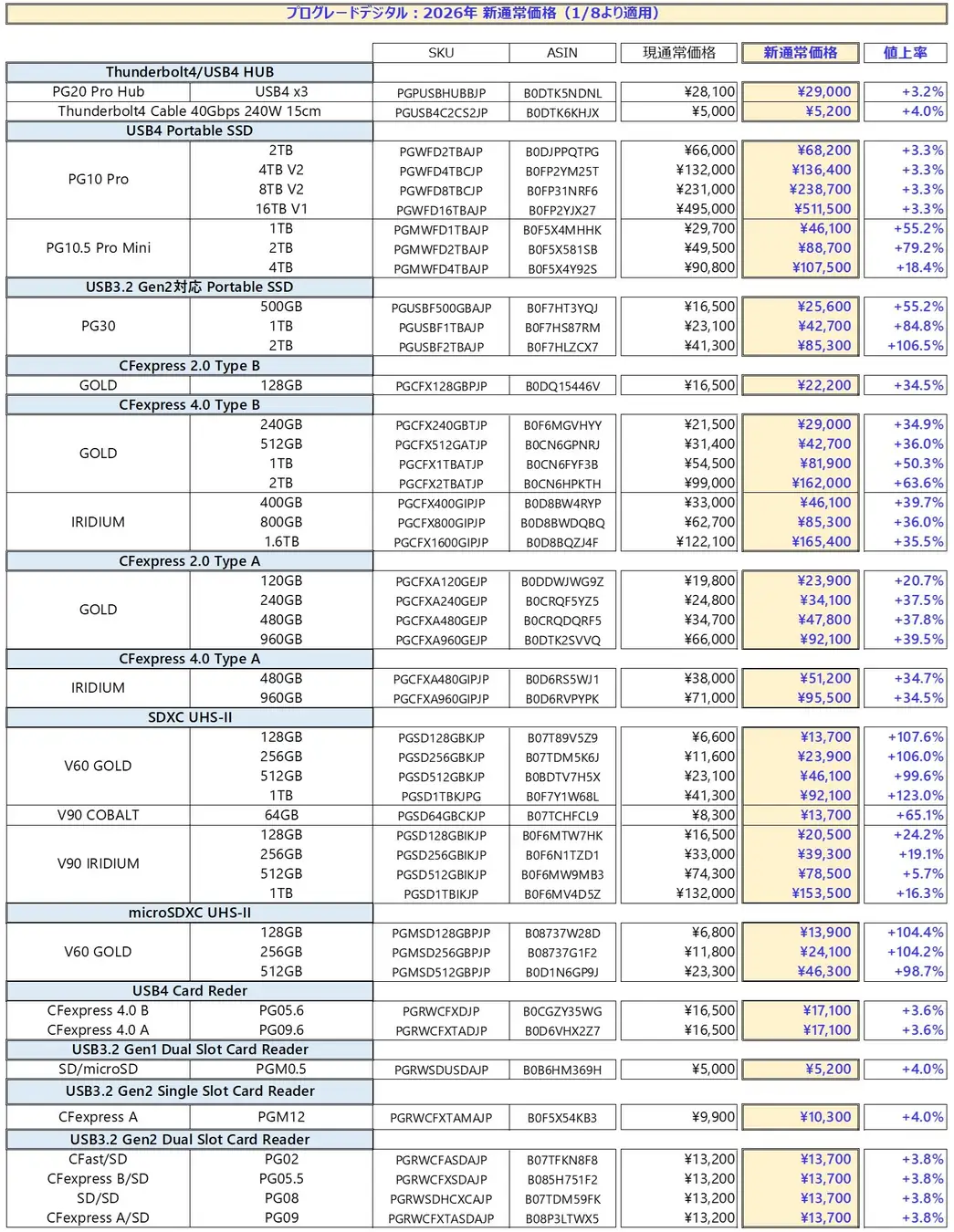
ProGrade will have a significant price increase for memory cards in Japan on January 8th, “due to the surge in demand associated with the construction of AI infrastructure.” The ProGrade SDXC UHS-II V60 GOLD 1TB memory card, for example, will go up by 123% – here is the full list of price increases:
Effective from January 8, 2026 Notice of regular price increase
Responding to the significant price increase of flash memory due to the surge in demand associated with the construction of AI infrastructure
Due to the rapid increase in demand for semiconductor memory associated with the construction of AI infrastructure, and the resulting significant increase in flash memory prices, ProGrade Digital Inc. will raise the regular prices on the Amazon.co.jp ProGrade Digital Inc. store on January 8, 2026. At the same time, the exchange rate, currently $1 = 150 yen, will be changed to $1 = 155 yen to reflect the current exchange rate. Please refer to the price list for the new regular prices.
Although supply uncertainty and price fluctuations are expected to continue in the semiconductor memory market in 2026, we will make every effort to maintain as stable a product supply as possible.
Welcome back to our Question of the Week series! This reader-focused series aims to get our photographic community to share thoughts on all sorts of photography-related topics in our forums. We pose questions about gear, favorite camera stores, advice, problem-solving and more, and you share your thoughts and opinions.
This week, we’re leaning into the holiday spirit! The season of giving (and occasionally re-gifting) is upon us, and that means it’s time to unwrap some memories – both heartwarming and hilarious.
What are the best (and worst) photography-related gifts you've received?
What’s the best photography-related gift you’ve ever received? Maybe it was a dream lens that caused you to take on an adventure deep in the mountains, or a handmade camera strap that’s now an essential part of your kit. And what about the worst? Perhaps someone thought you needed yet another "World’s Best Photographer" mug, or that odd lens filter set that turned every photo a shade of green.
In this edition of our Question of the Week series, we want to hear your gift stories: the memorable, the useful and the truly baffling. Share your favorites (and flops) in the forum link below. Photos of the gifts (or what you created with them) are also more than welcome! We'll highlight some of your most entertaining and heartfelt responses in next week's roundup.
Our (not so) trusty crystal ball, soon to be obsoleted by 2025's most bubbly tech. Image: Dina Belenko Photography via Getty Images
When we set out to make predictions for the year ahead this time last year, we discovered that our crystal ball wasn't working. And unfortunately, despite several attempts to recalibrate it, we still haven't managed to get it working.
Instead, we decided to get with 2025's hottest trend* and train an AI model to do our predicting for us. After all, we figured, we have probably the most comprehensive camera database in the world that we can use as a dataset.
Turns out 2026 will still be hard to predict. Most of the major camera makers have updated their core lineups such that, with a few exceptions, it's not obvious which of the remaining models are going to receive updates and which have already been quietly abandoned.
Camera makers seem to be trying all sorts of novel ideas in an attempt to attract new audiences, and the more data we gave our AI model about 2025's cameras, the madder its suggestions became. So, like the rest of the content on DPReview, we're going to have to make do without the help of machine learning or large language models and rely on a group of camera enthusiasts making semi-informed guesses.
As always, this article does not include any information from manufacturers nor any speculation from rumor sites.
*By which we're referring to the cooling costs of all these AI tools that none of us asked for and which have definitely made the internet better.
Sony - What we expect to see
The cameras under the a6700 in Sony's APS-C lineup are looking very long in the tooth now, and it seems possible we could see an update to them. As for whether we'll get another camera like the a6100, which is aimed at as broad an audience as possible with an ultra-affordable price tag to match, though, it's hard to tell. It's possible that going after vloggers is more profitable than courting beginner photographers nowadays, so we wouldn't be shocked if we instead see a more entry-level APS-C ZV camera.
It also feels like we're about due for the a7R VI, though it'll be interesting to see which way Sony takes it. We could see arguments for either speeding up its current 61MP sensor with partially stacked readout tech, and gaining improved dynamic range performance in the process, or going even higher resolution. It's always possible that Sony could do both, but perhaps we ask for too much.
If we had to place bets, our money's on an FX3 II coming out before we see another a7S, perhaps with the tilting EVF and mechanical shutter like the recently announced FX2. Sony launched the FX3 shortly after the a7S III, which was probably a bit disappointing to early adopters who likely would've been better served by the more cinema-focused body. We'd like to think Sony wouldn't make that mistake twice.
Sony - What we'd like to see
You all knew this one was coming: we really wish Sony would make a new RX100. If we're really picky, we'd also ask that it have the 24-70mm equiv. F1.8-2.8 lens from the Mark V, and a sensor that didn't make it cost $1200 ... wait, are you serious? Sheesh. Okay, make that $1700, as the current VII does. At this point, though, we'd just be happy to see a new compact from Sony that has any signs of modernity, like USB-C instead of microUSB, and tolerable menus.
Sigma - What we expect
We think the only thing that's easy to predict from Sigma is updated firmware for the BF, mainly because we were told it was a project that would continue to develop once it was out in the wild. Beyond that, I don't think it's possible to second-guess what the company might do next.
We'd love to see aperture or control rings and weather sealing added to refreshed versions of the DC DN primes, and their appearance on this year's 12mm F1.4 DC and 17-40mm F1.8 DC gives us some hope in that regard. Sadly, given the status updates that have been given, we aren't predicting that the promised full-frame Foveon camera will arrive in 2026, but we want to believe it's still possible, so we don't want to relegate it to the wishful-thinking list.
Sigma - What we'd like to see
In terms of a wishlist, we'd love to see the downsizing approach Sigma took with the 35mm F1.2 II applied as broadly as possible (we're going to assume it's easier said than done). And, because Richard was involved in the discussions leading to this article, we're going to say yet again that we'd love to see a modern version of the 50-150mm II EX DC HSM: because 70-200mm equivalents for APS-C can be a brilliant thing if they're usefully smaller, lighter and less expensive than camera maker's 70-200mm F2.8 lenses, and Sigma has a proven record of delivering on those fronts.
Fujifilm - What we expect
Surely it's time for a new X-Pro? Fujifilm has made clear that it intends to make one, so 2026 must surely be the year. As perhaps the most photo-focused camera in the lineup, it needn't necessarily wait for a fancy new sensor, though building a flagship model around a sensor or processor that then gets superseded too soon would risk taking the shine off the experience for owners.
Beyond that, the oldest cameras in Fujifilm's lineup are the X-H2 and X-H2S twins. Could a sensor with faster readout (a partially stacked variant of the 40MP chip, perhaps?) allow the two lines to converge again, offering a single hybrid model that excels at both stills and video, rather than forcing buyers to pick which is more important to them?
Fujifilm - What we'd like to see
2025 was a quiet year in terms of lens launches for Fujifilm, so we'd expect to see some action on that front. Both its X and GF lens ranges are looking complete enough that it's hard to point to any obvious gaps that still need filling, so we're into the realms of what we'd like to see replaced or upgraded.
An updated version of the 50-140mm F2.8 with any excess of the downsizing pixie dust used on the 16-50mm F2.8 II sprinkled in its direction would be nice. There are also a couple of primes that might benefit from a refresh and the application of the latest focus motor know-how, but everyone seems to have a different opinion about where this should start.
Leica - What we expect
The most confident prediction we can make is that we'll see a variety of special edition models from Leica this year. We haven't a clue which brands the German perfectionists will choose to gang up with (and wouldn't rule out having to go straight to Wikipedia to work out who they are, once announced), but there'll definitely be some.
We also think it might be time for an M12. We've seen just about every possible variation of the M11, including one that isn't even a rangefinder, so the time is surely getting close. If nothing else, the company's pioneering commitment to the Content Credentials concept suggests it's time for the principal M model to gain the requisite hardware. But, as with so many of our guesses predictions, it depends a lot on whether someone has anything better than the current 61MP sensor about to take to the stage. That is likely to be the catalyst for much of what does or doesn't happen in 2026.
Leica - What we'd like to see
Leica operates in such rarefied fields and such obscure niches, it's hard to even know what to wish for (other than the lottery win that should probably happen before any of us try to get too committed). Perhaps we'll see Leica become the next company to adopt a true HDR workflow, with a bright monitor and default use of an HDR delivery format. The company's creation of mono variants of some of its cameras suggests it's comfortable playing to specialized niches, but there's a difference between embracing a style of photography with a long and storied history, versus leaping into a technology that is inherently near-incompatible with prints.
Whatever else, we'd love a Q3 43 Mono.
Panasonic - What we expect to see
Given how well the S1II's sensor performs for video, it feels inevitable that Panasonic will release some sort of video camera based around it. That could take the form of a Nikon ZR or Sony ZV-E1 competitor, focused on vlogging and ease of use, or it could be something more akin to the Canon EOS C50 or Sony FX3, with a cinema-style body that has even more cooling and is covered in attachment points.
Beyond that, it's hard to predict what Panasonic might do next, given that it just updated pretty much all of its high-end, full frame cameras. It still seems a bit early to expect an update to the S5 series... if indeed the company plans on continuing that line at all, instead of replacing it with the S1IIE. Panasonic is another one where the only thing we really expect is the unexpected, be that a new camera or a feature-packed firmware update.
Panasonic - What we'd like to see
We said it last year, and we'll say it again: we'd love to see a new enthusiast compact from Panasonic, potentially as a continuation of the LX100 series. Though, like with Canon and Sony, it seems like companies have a lot of momentum in just letting the compact market ride.
Similarly, we'd also be excited if Panasonic were to come out with a new GM or GX camera; the market is sorely missing a truly compact Micro Four Thirds option that plays into the mount's greatest strength: its collection of solid, compact lenses. Is Panasonic invested enough in the system to do that? We're not sure, and the fact that they repurposed a full frame body for the G9 II gives us extra pause, but that doesn't keep us from hoping.
To be continued...
This article would be unbelievably long if we tried to cover every major brand here, so we've split it into two.
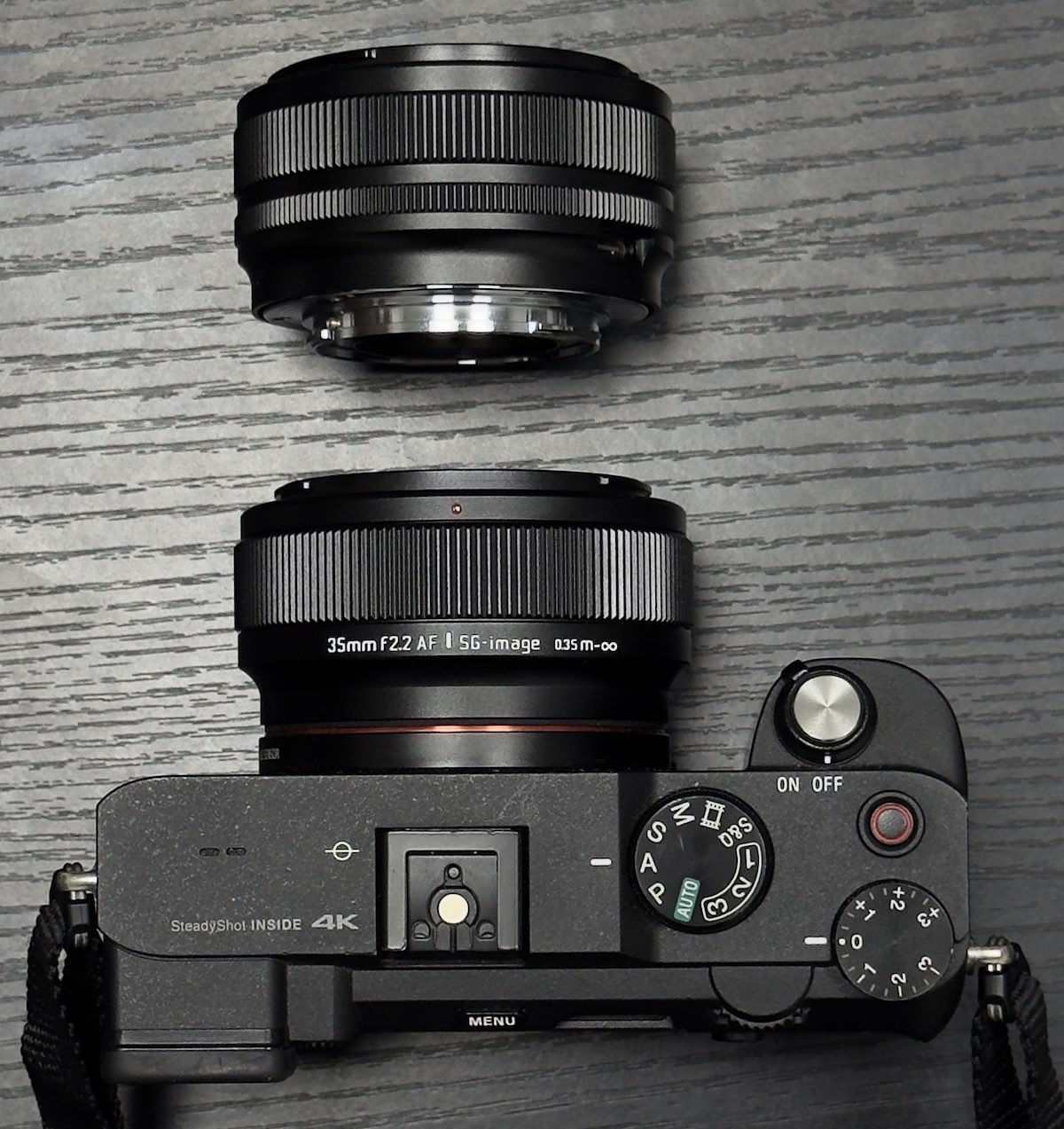
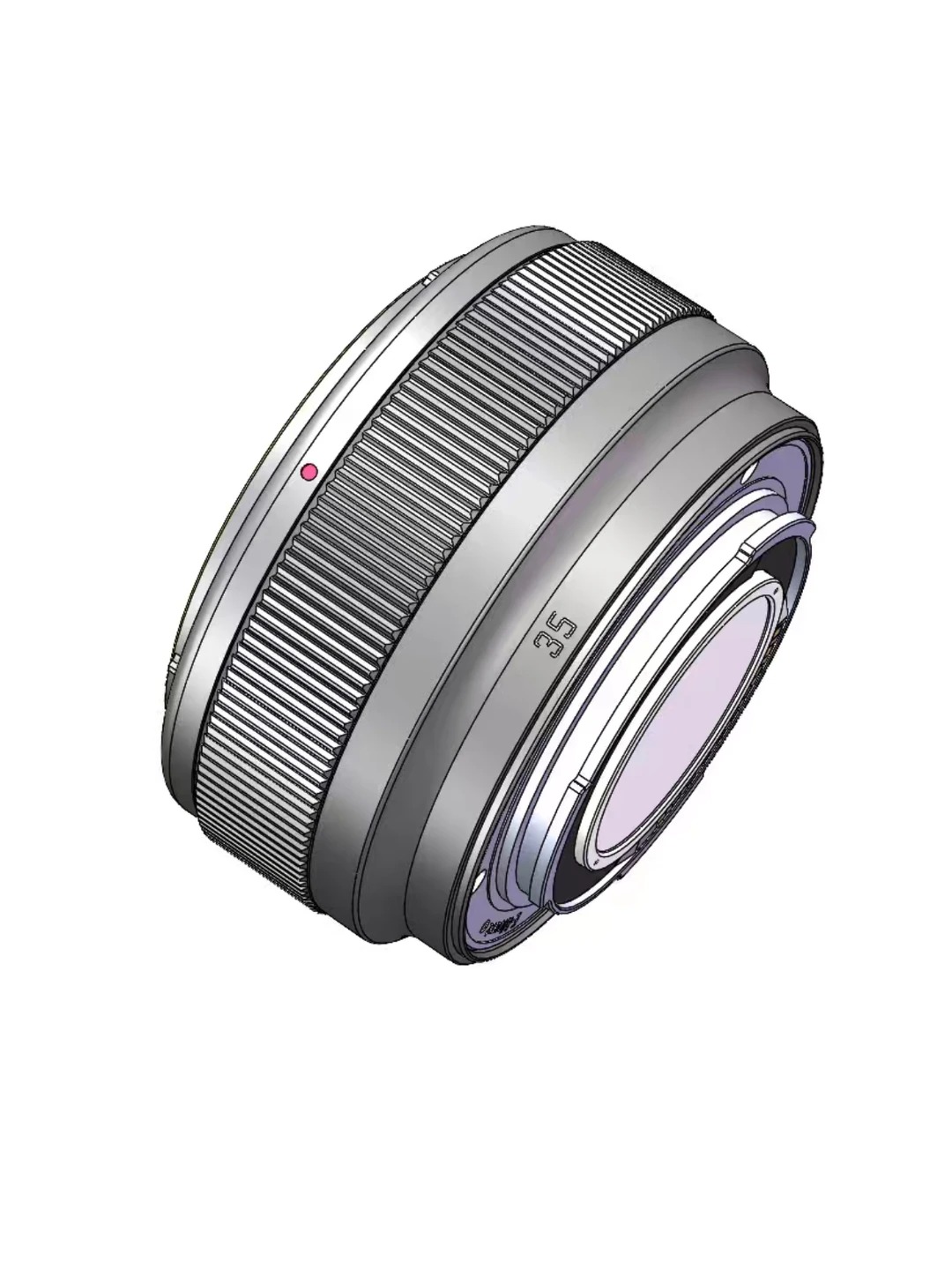
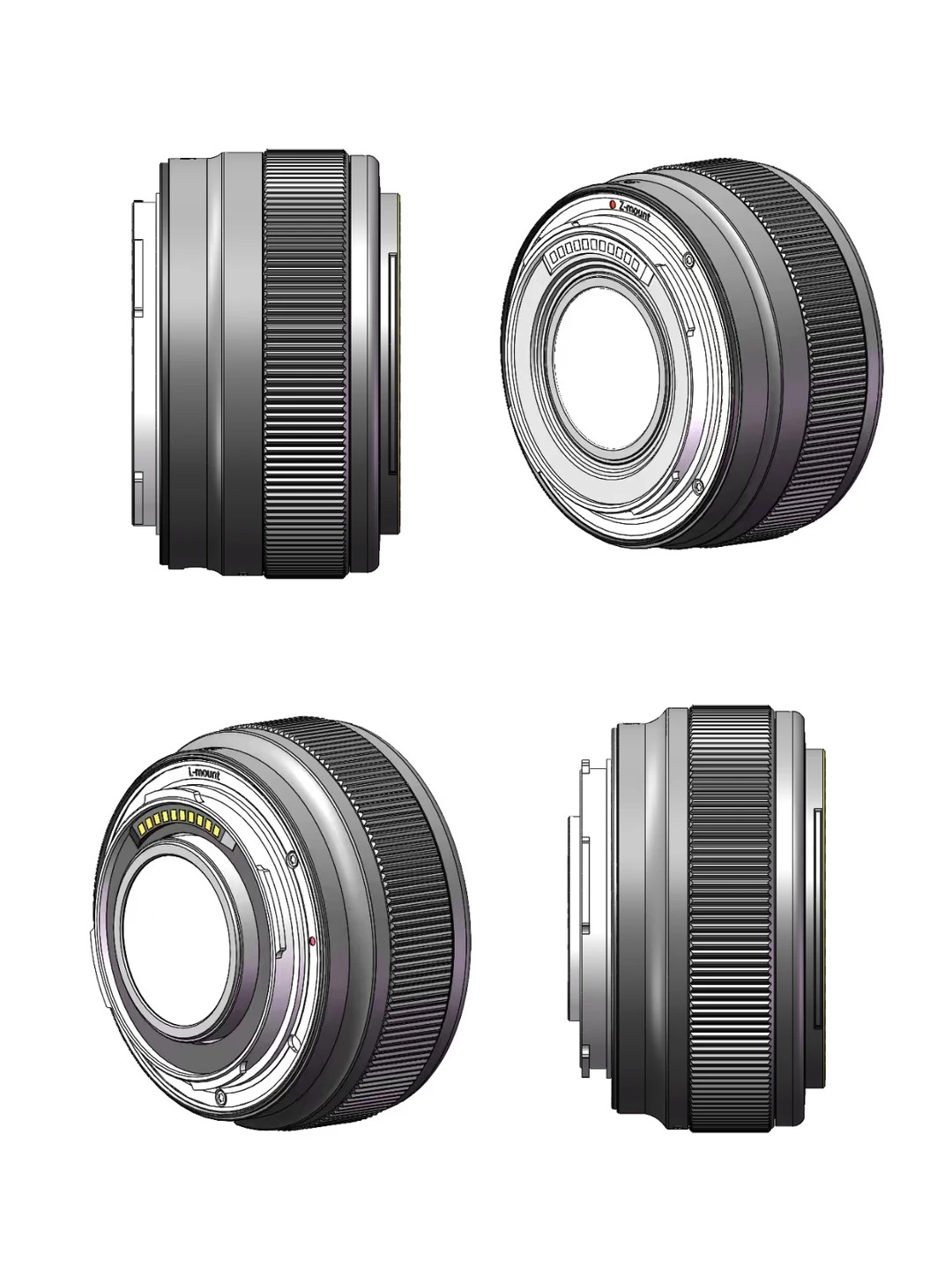
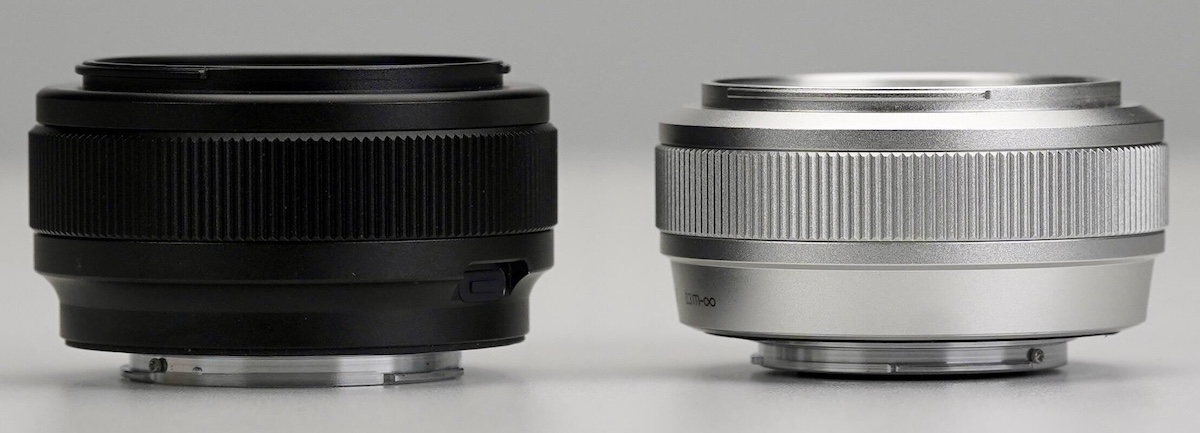
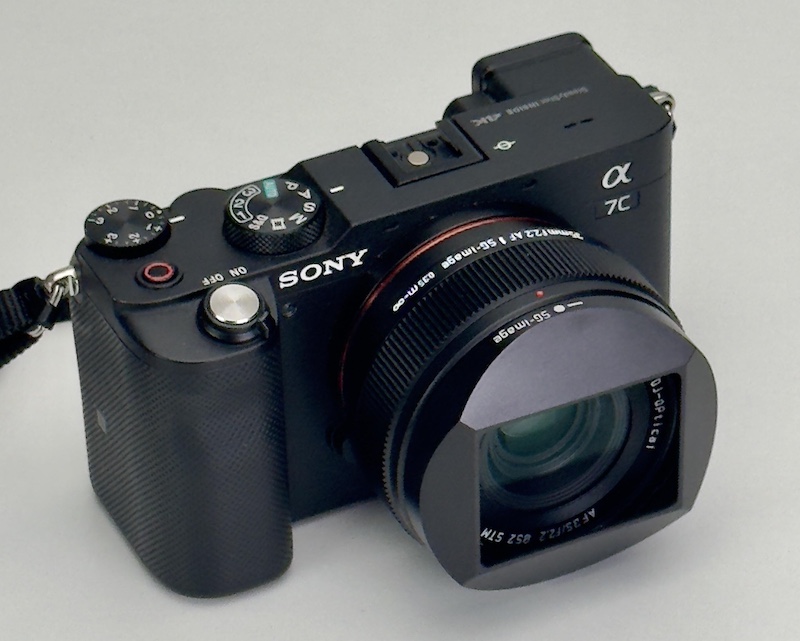
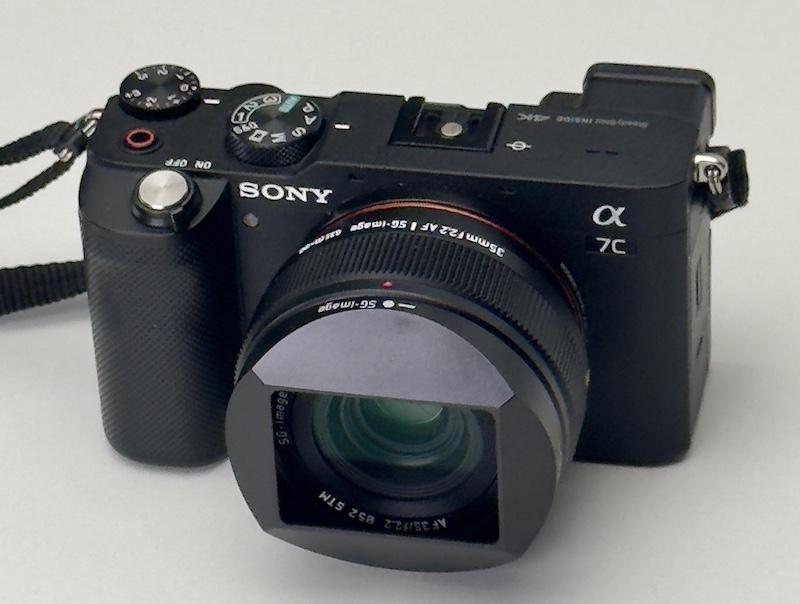
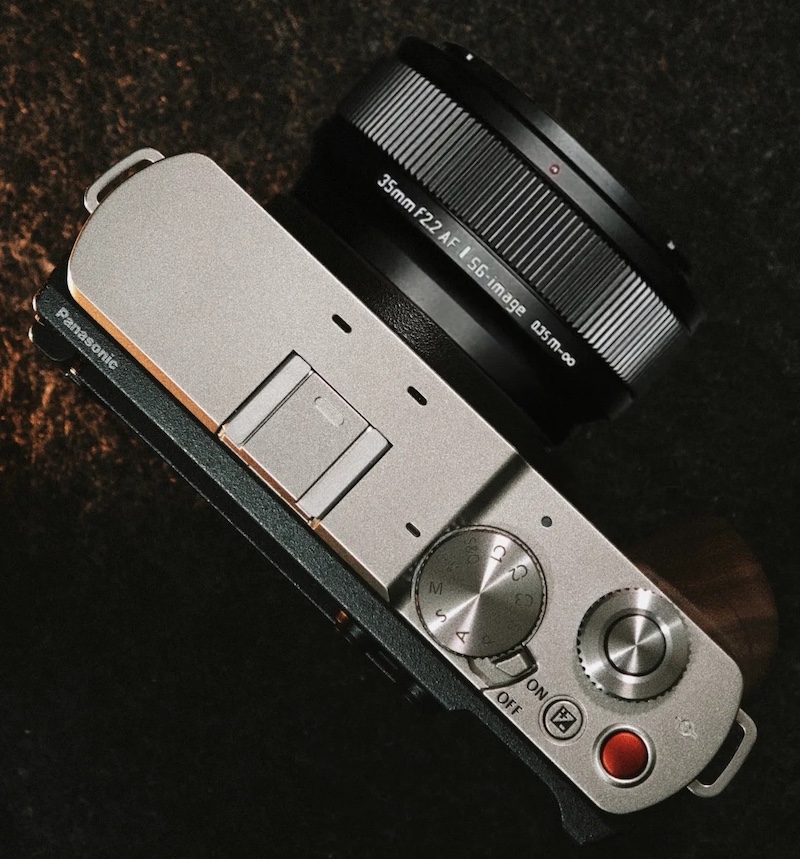
SG-Image is developing a new AF 35mm f/2.2 pancake lens for E/Z/L mount – here are some pictures of the final prototype (SG-Image lenses are sold on Amazon, eBay, and AliExpress):
We've seen interesting updates to bread-and-butter lenses, wildly ambitious primes and zooms, and things that we may never have thought to ask for, but are glad they exist. And, unsurprisingly, the innovations haven't all been happening at the major camera companies; you'll see Sigma, Viltrox, Laowa and others pop up just as often as we cover what's made this year such an interesting one for lenses.
The ground-breaking normal
Nikon's new standard zoom this year still managed to break the mold. Photo: Nikon
While it's always fun to talk about exotic and specialist lenses, they're not what most photographers will end up buying and using. Thankfully, there have been several lenses that cover standard focal lengths and use cases, but that come with some eye-catching feature or innovation.
The quintessential example of this is probably Nikon's 24-70 F2.8 S II; it's a workhorse full-frame standard zoom, refreshing an option that, honestly, wasn't all that old. But with it, Nikon managed to do something that we hadn't seen before: make an F2.8 standard zoom with a fully internal zooming design, making it easier to handle and more weather resistant.
Speaking of standard zooms, how about a medium format one? Hasselblad's XCD 35-100mm F2.8-4 E is a 28-76mm F2.2-3.2 equiv., with a size and weight that's strikingly similar to its full frame counterparts. Paired with the company's new X2D II, it provided a walkaround photography experience that was so normal, you could be forgiven for forgetting you were using a camera packing a 100MP sensor.
Photo: Abby Ferguson
Going the other direction, we also saw two great APS-C standard zooms this year. We're delighted that the Nikon Z DX 16-50mm F2.8 VR exists, though, arguably, it's mostly exciting because the company hasn't allowed anyone else to make that kind of lens for its Z mount cameras. What really impressed us was Sigma's 17-40mm F1.8 DC Art; it follows up on a legendary lens from the DSLR era, but now there are cameras that can actually focus it. Its price, size and weight are all really impressive given its fast aperture, and it's the kind of thing you'd only see from a company committed to driving APS-C systems forward.
Sigma also released the 35mm F1.2 DG Art II this year, which is smaller and lighter than its predecessor, making it an F1.2 prime you could conceivably walk around with. It's also somewhat affordable, at a fraction over half the price of the 35mm F1.2 Nikon put out this year. However, if you're looking for less expensive fast primes, it's hard to ignore what Viltrox has been doing with its Lab and Pro series this year, entries in which have garnered positive reviews, even when compared to more expensive options from more established brands.
We hope the 45mm F1.2 is just the beginning of a line of compelling budget options from Canon
And while we're talking about primes, it's also worth calling out Canon's latest 45mm F1.2, since its $470 price tag makes it the cheapest autofocus F1.2 lens we've ever seen. It's only 1/3EV faster than the F1.4 lenses Nikon's been releasing (which are faster focusing and a bit stronger when it comes to IQ), but we hope it represents just the beginning of Canon providing a line of compelling budget options to its mirrorless lineup.
Off the beaten path
The Sigma 135mm F1.4 isn't a compact lens by any means, but it's certainly a looker. Image: Sigma
Of course, if companies had just come out with good versions of lenses we'd usually expect, this year would hardly be winning any superlatives. Thankfully, we've also seen a slew of lenses that did something completely new or provided an option that we haven't had for a long time.
Sigma was one of the leaders in this space, with several of its press releases starting by declaring a lens as a first at something; the first 200mm F2 for full-frame mirrorless systems, the first full-frame autofocus 135mm F1.4, the first lens for mirrorless with a 18.8x zoom ratio, etc. The company put out so many lenses that made us go "hold on, now, that's an interesting idea," that we potentially could've written this article based on its work alone.
Thankfully, we saw other brands trying new things, too. Perhaps the most notable is Sony's 50-150mm F2 GM. While we've seen other F2 zooms before, getting a telephoto option opens up a whole new world; it's a versatile lens that lets you achieve a large degree of subject separation, and that isn't an absolute beast to carry around with you.
This year also saw Nikon release its first full-frame power zoom lens, focused on video, Panasonic making a full-frame ultra-telephoto zoom lens that doesn't break the bank and takes teleconverters (partially made possible by a clever spring mechanism) and OM System coming out with its long-awaited 50-200mm F2.8.
Wait, weren't these supposed to be boring?
Fujifilm's latest kit lens, paired with the X-T30 III, seems perfectly suited for the audience the camera's aimed at. Photo: Richard Butler
Even the kinds of lenses that would usually be completely unremarkable have something that make them interesting, this year. Sigma and Tamron both released all-in-one zooms – the 20-200mm F3.5-6.3 and 25-200mm F2.8-5.6, respectively – which offer reasonable image quality for their range despite being shockingly small and light for full-frame lenses. Meanwhile, Fujifilm and Canon put out entry-level APS-C kit lenses that go surprisingly wide in a way that might appeal to people who are mostly used to shooting with their phones. The Fujifilm 13-30mm collapses, making it absolutely tiny when paired with a camera like the X-M5 or X-T30 III, and the Canon is a powerzoom with a remarkably quiet motor that you won't hear in your video.
Why is this happening?
While we've (perhaps over-thoroughly) covered what made this such an interesting year for lens releases, that does raise the question: what made everyone suddenly start throwing a bunch of surprisingly good ideas at the wall?
The basics have been taken care of, it's time to get creative
While it's hard to say for sure, it's probably a similar story as it is with cameras; for most mounts, the basics have been taken care of, and there aren't any obvious holes in the lineup. There are some exceptions, sure (especially in APS-C land), but most photographers will be able to get most of the lenses they need. That leaves engineers free to work on less conventional ideas and to focus on things that they think might give their system a competitive edge.
Speaking of competition, customers have more and more options when it comes to standard lenses. If you're looking for a fast, autofocus prime on E or Z mount, you have not only the one or two options from Sony or Nikon, but upwards of half a dozen offerings from third parties like Sigma, Viltrox, Meike, 7artisans, TTartisan, the list goes on. It's possible the bigger brands are releasing lenses that they think won't be so easy to replicate in the near-term.
Whatever reasons the manufacturers have, it's a win for the rest of us. We here at DPReview appreciate having interesting things to test and write about, and consumers benefit from having even more options, including ones that may allow them to try out niche things they couldn't before. So here's to the year that came before, and to an even weirder 2026.
When you use DPReview links to buy products, the site may earn a commission.
People have been asking for a medium format X100 for years, and the GFX100RF isn't one. Then again, people have been asking for a full-frame X100 for years, and they don't seem happy about Sony's attempt.
Photo: Richard Butler
The camera industry isn't what it once was, I think we can all agree. The 6.5 million interchangeable lens cameras shipped by CIPA members last year represented a 50% fall in sales volume since the high, back in 2010, while the 1.9 million fixed lens cameras represented a fall of 98%.
Despite this, most of the companies competing in the industry back in 2010 are still present, and those we've spoken to this year sound more upbeat than they have in a while. Because, while the base is much smaller, ILC shipment volumes in the first ten months of 2025 are 11% up, compared with last year and fixed lens camera sales are up by around 26% over 2024.
Which is to say that there still appears to be a market for cameras, but it's a very different world to the one of fifteen years ago, when a majority of people bought cameras. Now the industry caters to a smaller audience: photographers, vloggers and people who specifically want a dedicated camera, because most people have a perfectly capable phone when they want to take pictures.
I don't remember the last time we saw so much invention, experimentation or niche-tickling lunacy as we've seen in 2025
I'm going to argue that the result has been perhaps the most interesting year for cameras in the eighteen years I've been covering the industry. There have been countless excellent cameras in that time, and a whole host of interesting ones, but I don't remember the last time we saw so much invention, experimentation and niche-tickling lunacy as we've seen these past 12 months.
The Ricoh GR IV isn't included in this article, despite being a knowingly niche product, because it's a niche that's been proven to exist.
Photo: Richard Butler
We've had the sensible cameras, of course, with all the biggest players refresh their mid-priced do-everything cameras with devices that can go toe-to-toe with the pro sports models of just a few years ago, while simultaneously producing higher-than-broadcast video footage, at least for short periods. But while the Panasonic S1 II, Canon EOS R6 III and Sony a7 V bring almost unimaginable levels of performance and capability to a comparatively affordable price point, there have also been a wealth of weird cameras that aren't trying to be do-it-all multi-tools.
Look at some of this year's releases through a pragmatic lens of whether they're the best tool for the job, and the conclusion you'd typically draw is "no." These aren't cameras trying to be the best, the most flexible or the most practical. They're intentionally, knowingly niche cameras, and if they don't appeal to you, that might not be by accidental. Not all of them succeed in their ambitions, but just because they don't make sense to you, don't assume they're a mistake.
Sony RX1R III
The RX1R III was castigated for being a lazy update, despite addressing the biggest problem with its predecessor (albeit very belatedly). When I was using it, or looking at the photos it took, I didn't cross-examine myself about whether my expected level of developmental diligence had been met.
The Sony RX1R III doesn't seem too unusual on the face of things: it's the fourth in a series of high-end photographers' compacts, previous versions of which built up a strong following. And yet the belated update to the series was met with derision, bordering on anger. A wince-inducing price tag and technology shared with much lower priced models didn't help, along with the re-use of a lens that doesn't necessarily make full use of its new, higher resolution sensor or, at least, not at close focus distances and wide apertures. It's so lazy, critics howled.
And yet, in use, it's excellent. It's the smallest fixed-lens full-frame camera you can buy, it's so single-minded in its purpose (photos shot at 35mm focal length) that it's much nicer to use than the likes of the a7CR, with which it shares so many components. It's small, fun to use and the pictures look great, because it turns out that biting sharpness isn't always what you want from a lens. It also turns out that the amount of perceived effort put into a camera has nothing to do with how good it is. It is really, really expensive, but if you're the kind of person it's aimed at (and I am), it's really, really good.
Leica Q3 Mono
It has an excellent sensor, great lens and is superbly built, but I still wonder whether the total audience for a $7800 fixed-lens full-frame compact that can't comprehend chrominance could all fit on a double-decker bus.
Then we have the Leica Q3 Monochrom, which is essentially Ginger Rogers to the Sony's Fred Astaire, in that it does everything the RX1R III does, but more expensively and in mono. Has there ever been a camera aimed at a smaller audience than a $7800 fixed-lens full-frame camera that can't perceive color? I joked that Leica probably already knows the names of the people who'll buy it. But those buyers will get a fabulous camera that's fast, focused and fascinating to shoot with and yes, that stabilized lens is sharper than the Sony's. It's not for me, but again, I'm delighted it exists.
Fujifilm GFX100RF
Likewise the Fujifilm GFX100RF. People have been asking for a "medium format X100" for years, and this year Fujifilm didn't make them one. Instead it introduced a camera with a wider-angle lens, without the X100 series' hybrid viewfinder and with styling seemingly borrowed from its Instax range. The lens is comparable, in equivalent terms, to the X100's and there's no image stabilization, so it's potentially less capable in the dark, but in good light it'll deliver better image quality than anything else this portable. There's an aspect ratio dial with settings so complex that you can't actually see all of the etching. In principle it's a less practical option than Leica's Q3 (and how often is Leica the practical choice?). But it adds an option that's never existed before.
Fujifilm X half
Better to be a heroic failure than to not try. Which has been the rest of the industry's response to youthful demand, so far. And no, adding Raw wouldn't have made it better.
Photo: Richard Butler
On which note: the Fujifilm X half, another contender for the title of the DPReview commenters' least favorite cameras of 2025. And I understand why: it looks like it's almost the sort of camera many of us have been asking for: a small, pretty, enthusiast compact. But that not what it is at all. Instead, it's a decidedly un-self-serious attempt to make a camera for young people who'd otherwise be buying an old compact on eBay. It's fun, it's silly, it's nostalgic for a confused idea of a past that never existed. Unfortunately it's also (and this was 2025's other prevailing trend) really quite expensive. In practice, I was disappointed by its lack of responsiveness and its disappointing IQ, given how large a sensor it has, but isn't it better to heroically fail than to not even try?
Sigma BF
The Sigma BF is an utterly original take on what a picture-taking device should look like and how it should operate. Just in case there's someone that doesn't want a black lump that looks like it wants to be a late 80's SLR when it grows up.
Photo: Richard Butler
And yet, it's perhaps not the least 'serious' camera launched this year. That title probably goes to the Sigma BF, a profoundly original attempt to make a desirable photo-taking device for people who wouldn't otherwise buy a camera. It's undeniably stylized, almost to the point of impracticality, it's also built with a sensor that doesn't naturally lend itself to use without a shutter mechanism, which essentially rules out the chance of using flash. But it's also designed – rather well, I'd argue – to be operated with a single dial and without a viewfinder, which seems to have agitated the kind of people who are presumably dissatisfied with the many, many multi-dial, viewfindered cameras that remain available.
It's a response I don't really understand. Yes, SLR-shaped cameras with multiple dials will probably excel in a wider range of situations than this oddball bunch. But this off-beat gang are being offered in addition to the sensible, pragmatic, do-everything cameras. In many instances, I suspect some of these stranger models will live alongside those quotidian powerhouses for many photographers.
We've seen some incredibly capable cameras this year, to the point we found it almost impossible to choose a camera of the year. I don't think anyone's saying these are better than those options, or that the likes of the Sigma BF is going to usurp them. But, having spent years reading comments asking why camera makers don't make cameras for photographers, it seems inexplicable to complain when they try to do something interesting and different. And I'd argue that, collectively, these cameras shows a spirit of invention and experimentation we've not consistently seen since the very early days of digital photography. In their own, sometimes peculiar, ways these might be the photographer-focused cameras we've all been hoping for, even if that specific photographer isn't always us.
For the past few weeks, our readers have been voting on their favorite cameras and lenses released in 2025, and this year we've seen some of the closest races in recent memory. Now that the first round of voting is over, it's time to reveal the winners.
Remember, though, it isn't over just yet! Now it's time to pick an overall winner. Make sure to cast your ballot for the 2025 Reader's Choice Product of the Year – this one's for all the bragging rights.
Best prime lens runner-up: Canon RF 45mm F1.2 STM
First up is our runner-up for Best Prime Lens of 2025: the Canon RF 45mm F1.2 STM, a fast, normal prime lens that makes fast aperture photography a possibility for just about any Canon RF user. While it may not be as critically sharp or optically perfect as the other F1.2 primes in Canon's RF lens lineup, it offers a more accessible price point that won't break the bank, providing many Canon shooters with the creative opportunities that such a fast lens can offer.
It's also worth pointing out that while the RF 45mm F1.2 STM was the runner-up in our poll, this category was a horse race with a photo finish, with the winner nosing its way to victory by a mere 0.1% margin.
The 2025 Readers' Choice Award for Best Prime Lens goes to the Sigma 135mm F1.4 DG Art, a fast prime that practically begs to be used for portrait work. Sigma has a history of creating unique lenses, and this one is no exception; while there are similarly fast manual focus 135mm lenses, and several 135mm F1.8 lenses with autofocus, this is the first such lens to feature both a fast F1.4 aperture and autofocus in the same lens.
It's easy to understand why the Sigma 135mm F1.4 DG Art garnered so much attention from our readers this year. If you plan to shoot it, though, you'll want to make sure your arm is ready: this lens weighs 1420g (50.1oz) and sports a 105mm filter thread. However, the results are marvelous, and the workout will likely be worth the effort when you see the results.
Best zoom lens runner-up: Nikon Nikkor Z 24-70mm F2.8 S II
Our Readers' Choice runner-up for Best Zoom Lens of 2025, the Nikon Z 24-70mm F2.8 S II, proves that lenses don't have to be unique to win respect. Sometimes, making a solid workhorse even better is all the magic that's required.
Nikon's second-generation 24-70mm F2.8 zoom lens for Z-mount builds upon the original with an internal zoom design, offering enhanced weather sealing and increased utility for use with gimbals and video rigs. And at 675g (23.8oz), it's 16% lighter than the original while gaining a faster voice-coil autofocus motor. Considering how popular the 24-70mm F2.8 category is with enthusiast and pro photographers, it's no surprise to see this lens gain such well-deserved recognition.
The 2025 Readers' Choice Award for Best Zoom Lens goes to the Sony FE 50-150mm F2 GM, which secured a clean sweep across zoom lens awards this year; this same lens also won the Best Zoom category in our 2025 DPReview Annual Awards.
The Sony FE 50-150mm F2 GM was one of the most interesting lenses of 2025, providing a versatile zoom range, fast aperture and outstanding image quality that delivers sharp images while also allowing for impressive levels of background separation, and it does it all in a design that's actually manageable to carry around. This is a well-deserved win for a lens that will undoubtedly remain popular for years to come.
Grabbing the runner-up position from our readers for Best Camera of 2025 is the Sony a7 V, a model that almost didn't make it into our poll this year, thanks to the fact that Sony announced it just days before the poll went live.
However, it appears that Sony has delivered a gem, significantly improving upon its predecessor and winning the confidence of readers. The a7 V arrives with an updated 33MP 'partially stacked' sensor that supports 30fps shooting with full 14-bit readout, features the most up-to-date AF system in the a7 line, pre-burst capture and 4K/60p video derived from 7K capture. It also manages to deliver impressive dynamic range thanks to its ability to simultaneously utilize data from the sensor's low-gain and high-gain modes.
The a7 V will likely be Sony's workhorse camera for enthusiast photographers for the next several years, and judging by your votes, it looks like Sony has a winner.
Our 2025 Readers' Choice Award for Best Camera goes to the Nikon Z5II. This is quite an accomplishment considering the variety of interesting and impressive cameras released this year, but it likely speaks to the fact that the Z5II has everything it needs to get the job done, even if it's missing a few bells and whistles.
The Z5II isn't the fastest camera released this year, nor does it have the most impressive specs. However, it can deliver great stills and video, includes in-body image stabilization, Nikon's latest AF system, and has the great ergonomics users have come to expect from a Nikon camera. It's a great all-around camera that does most of the things most photographers need, and at a price that makes you wonder if there's a catch. (There isn't.) In our review, we concluded that few of us really need anything more, and it looks like our readers agree with that assessment, awarding this camera the top spot for 2025.
Vote now for the Readers' Choice Product of the Year!
You helped determine the winners in the individual categories, so now's the time to cast your vote in one last poll! Choose your favorite product from this list of winners and runners-up between now and Thursday, January 8th. Watch for an announcement of the winning products shortly after the poll closes.
As always, thanks for casting your votes and being a part of our community throughout the year.
Poll widget
This widget is not optimized for RSS feed readers. Please open this article's permalink in a browser to view this content.
For the best experience, we recommend voting on our desktop site.
Poll Rules:
This poll is meant to be a bit of fun. It's not sponsored, promoted, or paid for in any way, and DPReview doesn't care how you vote. Our readers' polls are run on the basis of trust. As such, we ask that you only vote once from a single account.
We're quickly nearing the end of the year, and that means you may have seen a slate of articles from the DPReview staff discussing some of the equipment we enjoyed using most this year as part of our Gear of the Year series.
We're taking a moment to recognize the column, as we started writing it in 2015, which means we've officially been doing it for ten years.* Not every format we try out ends up working, and many that survive will evolve into something else over time, so it's worth celebrating the ones that have stuck around largely the same as when they debuted.
It's a format we enjoy writing, as it lets us focus on the gear that we emotionally connected with, instead of what was technically best (not that those are always entirely separate categories). It also allows us to give our thoughts on products beyond just cameras and lenses. Batteries, cloud photo management services and camera bags have all been chosen by various staff members throughout the years.
To mark the anniversary, editor Richard Butler has very kindly gone back through the archives, finding each Gear of the Year article and tagging them as such. That means you can now find them all in one place if you want to, for example, see what the DPReview staff's favorite gadgets were in 2018. We can't promise that every pick stands the test of time, but they were genuinely felt reflections when they were written. We look forward to discussing our favorite gear with you for another decade.
* Technically 2015 to 2025 inclusive is 11 years, but we skipped Gear of the Year in 2022.
We've put all of the Gear of the Year articles below, so feel free to peruse them.
Managing Editor Dale Baskin picked the Canon EOS R5 II as his Gear of the Year, but it wasn't an easy choice. Find out why he chose it and what the competition was.
You can't be a photographer without taking photos, but after the birth of his son, DPReview's newest editor, Eric Limer, gives much more thought to sharing them. And that, he explains, is why Google Photos is his choice for Gear of the Year.
The Leica Q3 is expensive, has a fixed lens and struggles with some ergonomic issues, but it's also the most fun Senior Editor Shaminder Dulai had with any camera all year. He explains why this rangefinder-style camera is his personal gear of the year.
The Sigma 14mm F1.4 Art was impressive enough to win our Best Prime Lens award for 2023. Managing Editor Dale Baskin explains why he chose it as his personal gear of the year as well, taking it to the subarctic for some aurora borealis photography.
We've already given the Nikon Z8 a Gold award and selected it as our Product of the Year, but it's the events surrounding the way we covered it that made it stand out for our Technical Editor, Richard Butler.
Chris and Jordan recently spent a delightful afternoon sharing their list of the year's best and worst camera gear. Now that their hangovers have worn off, they've prepared a more sober reflection on their choices.
It's that magical time of the year when Chris and Jordan look back on the year's best and worst releases of photo and video gear. Tradition dictates a drinking game, and this year it's a doozy...
Chris Niccolls, the host of DPReviewTV, reviews a different lens or camera every week. Look closely though, and you'll see the same piece of gear make an appearance in almost every episode. It's the Wotancraft Pilot 10L shoulder bag, and it's Chris' pick for Gear of the Year, 2021.
Senior Editor Barnaby Britton is a fan of extreme low-light imaging - something that the Nikon Z9 makes easy. Click through to learn more about why the Z9 is his favorite camera of 2021.
Of all the gear released in 2021, it was Kolari's EF-RF Variable ND Mount Adapter that proved to be News Editor Gannon Burgett's favorite piece of equipment.
Editor Dale Baskin picked the Sony 14mm F1.8 GM as his favorite gear of 2021 after using it for a week in Arches National Park. Find out why he thinks it's the Goldilocks of wide angle lenses, and see some great photos of the American southwest along the way.
Attempting a road trip in the middle of a pandemic offers plenty of opportunities for things to go awry. Good thing the Sony a9 II proved to be about as reliable as the vehicle it was traveling in.
Tamron's 70-180mm F2.8 is a high-quality telephoto lens for Sony E-mount that won't break your back or the bank. Read about why it's been one of Dan's personal favorites this year.
Dale's favorite camera this year is one of the most interesting and distinctive mirrorless ILCs on the market - the ultra-traditional, rangefinder-styled Fujifilm X-Pro 3.
Technical Editor Richard Butler's pick was the unusual lens that gave him the opportunity to try something new. The Canon RF 800mm F11's unique combination of telephoto reach, affordability and light weight will likely enable even more people to do the same.
In a year when social distancing became a way of life overnight, Senior Editor Barney Britton maintained a small sense of connection via the Fujifilm X100V.
Editor Dale Baskin chose the wide angle Laowa 15mm F2 Zero-D lens as his favorite gear of the year. In his opinion, it provides a great balance of size, price and optical performance. He's still on the hunt for the perfect photo of the northern lights.
A bring-everywhere flying smartphone camera is the best $400 you can spend on a piece of gear this year, says editor Dan Bracaglia. Which is why he's picked the DJI Mavic Mini as his gear of the year.
The compact form factor, fast and versatile lens, and pop-up viewfinder made Canon's PowerShot G5 X II an easy pick for DPReview editor Jeff Keller's favorite camera of the year.
The arrival of an EF-M version has given Technical Editor Richard Butler even more opportunities to shoot with the Sigma 56mm F1.4 DC DN. It's the fifth time he's picked an APS-C product.
After nearly a decade of using Apple phones, Managing Editor Allison Johnson jumped ship and became the happy owner of a Pixel device. But the iPhone 11 might just tempt her back.
Over months of using Sigma's 45mm F2.8 Contemporary lens, Reviews Editor Carey Rose rediscovers that there's so much more to a lens than speed and sharpness.
Senior Editor Barney Britton's first choice for Gear of the Year is a camera that he has carried with him more than any other in 2019 (not including his phone) – the Ricoh GR III.
The DJI Ronin-S may not be as instantly recognizable as some other products from 2018, but Editor Dale Baskin explains why he picked this production tool as his 2018 Gear of the Year – and why he chose it to shoot a documentary film.
DPR's Managing Editor Allison Johnson captured a trip to San Francisco the way most millennials do: on her phone. The surprising ease with which she was able to share her photos across platforms using Google Photos makes it her pick.
The Panasonic GX9 isn't the best or least expensive camera that Reviews Editor Carey Rose tested this year. But its combination of features, form factor and image quality make it an enjoyable camera to use – and his pick for this year.
Editor Dan Bracaglia's pick is the lens that he's recommended more than any other in 2018 – and the one he feels Sony's mirrorless system desperately needed.
Technical Editor Richard Butler's pick helped him capture his favorite images of the past 12 months: all 17,100 of them. Specifically, two series of 8MP images. Shot at a rate of 23.97 frames per second.
Whether it's a trip to the beach for some snorkeling or scrambling up a 10,000 ft volcano, the Olympus Tough TG-5 proved to be a great travel companion for Jeff. That's why it's his 2017 Gear of the Year.
2017 has been a pretty good year for lenses, but the one that had the biggest impact for editor Dale Baskin was the Sigma 14mm F1.8 prime, a lens that lets him capture big sky and magic light.
Even though (or perhaps because) 2017 has seen the release of some of the most impressive cameras he's ever used, Richard has ducked the difficult decisions and made an unexpected choice for his Gear of the Year. But, as always, he's going to argue his point.
Lightweight, great optics, affordable – with Sony's FE 85mm F1.8, you don't have to just pick two of those features. For Carey Rose, who's already an 85mm fan, it strikes a perfect balance.
In the first part of Barney's Gear of the Year article, he wrote about the camera he's used most in 2017 – the Leica M10. In Part 2, he's writing about a camera that he's barely even touched. Read on to find out why the D850 made his list for best gear of 2017 regardless.
They say seeing is believing, and that's exactly what happened when one DPR staffer took the Google Pixel 2 out for an afternoon shooting under challenging conditions.
As 2017 winds down (yeah, we're shocked too) it's a great time to reflect on the past year. Over the coming week's we'll revisit some personal favorite cameras and lenses that we encountered this year, and what made them stand out.
After talking herself out of buying one for years, DPR homepage editor Allison Johnson finally picked up a Fujifilm Instax mini Neo 90 this year – and it hasn't left her side since. Read more
This lens was just too good to pass up as a Gear of the Year nominee, so our resident landscape shooter Chris decided to add the Canon 16-35mm F2.8L III to his list of picks. Read more
A childhood of flying $20 RC helicopters didn't prepare DPR staffer Dan Bracaglia for the challenges of flying a drone, but that's part of the reason why the DJI Mavic Pro is his gear of the year pick. Read more
The Nikon D500 has been one of our favorite cameras since it was released earlier this year. Find out why after a challenging video shoot, the D500 made Barney's pick for Gear of the Year. Read more
The release of some supremely capable cameras left reviews editor Richard with some tough choices to make for his Gear of the Year pick. Against stiff competition, he's gone for the Fujifilm X-T2, the camera that most surprised him this year. Read more
There were plenty of amazing cameras and lenses to choose from this year, but DPR staffer Chris Williams chose the F-stop Tilopa as his gear of the year. Read more
Continuing our 'Gear of the Year' series, staffer Sam Spencer discusses a lens that has made a significant visual contribution to the site this year – the latest Tamron 90mm F2.8 Macro. Read more
DPR staffer Carey Rose didn't take to the Canon G9 X right away, but after some time using it he's learned to embrace the minimalist controls and loves the portability of Canon's handy little 1" compact. Read more
Wenmei's Gear of the Year is a lens that forces her to step outside of her comfort zone and focus (softly or not) on the creative aspect of her photography. When she's capturing a quiet moment or special connection, she finds herself reaching for the Lensbaby 56mm f/1.6 portrait lens. Read more
Allison's Gear of the Year is a camera that's been able to accompany her almost everywhere she's travelled this year, whether floating down rivers or just putting up with the rough-and-tumble of Florida's theme parks. Whether or not it's 'the best,' the Olympus Tough TG-4 ended up being the camera she had with her. Read more
Richard Butler's choice of Gear of the Year isn't a product launched this year (our choices of best products of the year were recognized in the DPReview.com Awards), instead it's the one that's prompted him to work on his photography. So what's so special about the Fujifilm 56mm F1.2 APD?
A sucker for 35mm, DPR Editor Barney Britton found himself drawn to 2013's Sony RX1 and R for all of the obvious reasons, but shooting with them left him cold. But just when he was about to give up hope on seeing an improved replacement, the RX1R II arrived. Find out why it's pick for Gear of the Year. Read more
Historically an SLR shooter who has used his fair share of mirrorless cameras, DPR editor Dale Baskin found the NX1 to be most impressive when he reviewed it. The camera may have looked like a moon at first, but over the course of his time with it the NX1 proved to indeed be a space station. Find out why it's his Gear of the Year pick, despite a recent disturbance in The Force. Read more
Continuing our 2015 series of articles highlighting staff favorites of the past year, DPR studio manager Samuel Spencer takes a look back, yet simultaneously forward, at instant photography and the Fujifilm Instax Share SP-1 instant printer, and the experiences he had with it while shooting his sister's wedding last March. Read more
DPReview's newest staff member finds surprise and delight in the Fujifilm X-A2, the least expensive model in Fuji's interchangeable-lens camera lineup. While its build quality can't compete with his X100's, the X-A2 proves itself with a large sensor, sharp kit lens and features that elevate it beyond its entry-level class. Read more
Kicking off our 2015 series of articles highlighting some staff favorites of the past year, DPR editor Dan Bracaglia writes about his experience with the Nikon D750. But this is less a story about his favorite piece of gear from the last 365 days, and more about a photographer and system owner holding out several years for the perfect camera. Read more
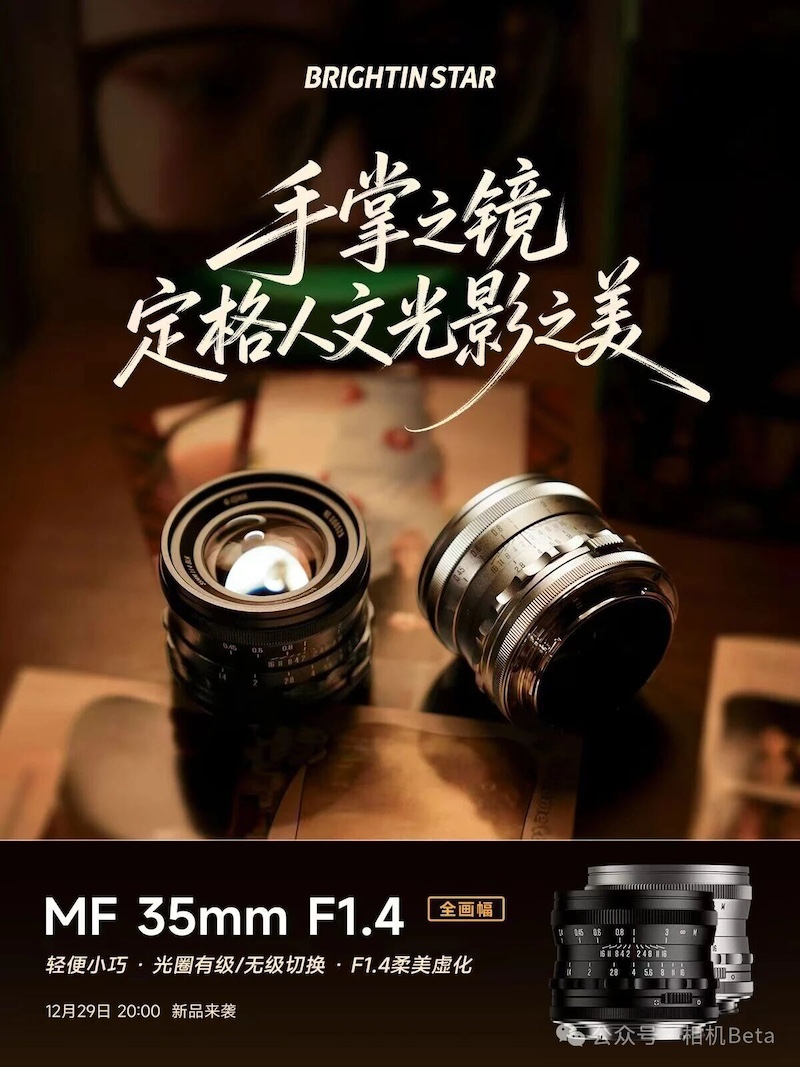
Brightin Star will announce a new 35mm f/1.4 full-frame manual-focus lens next week, featuring a retro-designed, all-metal body available in black and silver, with stepped and stepless aperture control, and a lightweight design.
Here are the details on the previously reported 7Artisans’ new line of LITE APS-C autofocus lenses
7Artisans AF 25mm f/1.8 LITE
7Artisans AF 35mm f/1.8 LITE
7Artisans AF 50mm f/1.8 LITE
The lenses will be available for Sony E and Fuji X mounts. Orders will open next week (around December 30th). Check the 7artisans website for additional information.
Season's greetings! As we approach the end of 2025, it's our tradition to wish you all a Merry Christmas, Happy Hanukkah, Happy Boxing Day, Happy Kwanzaa, Joyous Festivus, and Happy Holiday to all. As always, we're grateful that you stuck with us for another trip around the sun.
If there's one thread that weaves through everything we've done here at DPReview in 2025, it's a focus on investing in the future of the site.
Earlier this year, we expanded our editorial roster by bringing on Abby Ferguson as our full-time News Editor, providing us with more resources to cover industry news and create educational content. In addition to her writing, Abby is an artist who teaches photography at the college level. In 2026, we're going to find more ways to showcase her photography and share her unique perspectives with you.
"If there's one thread that weaves through everything we've done here at DPReview in 2025, it's a focus on investing in the future of the site."
We also made significant investments to ensure the future of our forums, some of which required tough choices. Our forums are a treasure trove of information dating back to the earliest days of digital photography, crowd-sourced by experts for over 25 years. More often than not, when I search for my own photography questions online, the answers are right here in our own forums.
To say the forums are a huge part of DPReview is a dramatic understatement. They're at the core of what we do: a place to share knowledge and make connections. To support this mission, we welcomed Mathew Anderson in July as our first-ever Community Manager. This is the first time in DPReview's history that we've had a full-time member of the editorial team dedicated to supporting our forum users, and it's long overdue.
Another critical investment was migrating our forums to a new software platform. Our previous system was a quarter-century old, and while it appeared stable on the surface, behind the scenes, it was being held together by duct tape and glue. We reached a point where it was no longer sustainable, leaving us with a tough decision: consider a future where we could no longer support the forums, or migrate them to a modern platform that would ensure their long-term viability.
"This is the first time in DPReview's history that we've had a full-time member of the editorial team dedicated to supporting our forum users."
We chose the latter solution, even if imperfect, because the alternative was unthinkable. We sincerely appreciate your patience throughout this process. The job isn't done, and we'll be making improvements in the weeks and months ahead based on your feedback..
Finally, we experimented with new media formats, such as our YouTube team discussions, as well as community-focused content like our Question of the Week series and our first full year of Editors' photo challenges. We plan to introduce even more in 2026, including feature articles about our community members and their photography.
Whether you're a regular reader, commenter, lurker or troll, thank you for being a part of the DPReview community. We're looking forward to another great year in 2026.
ON1 Photo RAW 2026.2 is now available as a free update for all Photo RAW 2026 owners with improvements that focus on workflow speed, smarter AI results, and a smoother user experience across the board. Here are the details:
Improved Face Restoration — Sharper Details, Better Accuracy
The upgraded AI Face Restoration model inside Resize AI delivers noticeably better results for:
Teeth, eyes, and glasses
Smaller or distant faces
Preserving natural texture and detail
Portrait photographers will see higher-quality outputs with fewer artifacts, especially when enhancing older images or low-resolution portraits.
New Module Tips for Faster Learning
2026.2 introduces Module Tips, short onboarding dialogs that guide first-time users through each module. This makes ON1 Photo RAW easier to get up to speed for beginners while helping experienced users discover overlooked tools that speed up editing workflows.
Faster Exports + Easier Export Presets
Exporting is now faster and more responsive, especially for large raw files or batch jobs. Export presets have also been redesigned to be easier to create, organize, and apply—saving pros and high-volume shooters valuable time.
New Camera Support
ON1 Photo RAW 2026.2 adds RAW support for:
Leica M EV1
Sony FX 30
New Lens Profiles Added
Optical corrections are now available for the following lenses:
Canon:
EF 20–35mm f/3.5–4.5 USM
RF 10–20mm f/4L IS STM
Fujifilm:
XF 16–50mm F2.8–4.8 R LM WR
Mamiya/Sekor:
SX 55mm f/1.8
Minolta:
MD 24mm f/2.8
MD 45mm f/2
Nikon:
Z 70–180mm f/2.8
AF-S DX 55–200mm f/4–5.6G ED VR II
OM System:
OM 12–100mm F4.0
Pentax:
Super-Multi-Coated Takumar 400mm f/5.6
smc Pentax-M 28mm f/2.8
HD PENTAX-D FA 21mm F2.4 ED Limited DC WR
Other brands:
Auto Petri 55mm f/1.8
TTArtisan E 23mm f/1.8
Tamron AF 18–400mm f/3.5–6.3 Di II VC HLD
Viltrox 15mm f/1.7 E
Yashica ML 55mm f/4 Macro
Carl Zeiss Sonnar T* 180mm f/2.8 MMJ
Stability Improvements and General Refinements
This release continues ON1’s commitment to quality with better stability, UI polish, and bug fixes across the app. These refinements improve responsiveness and deliver a smoother experience day-to-day.

 Connexion