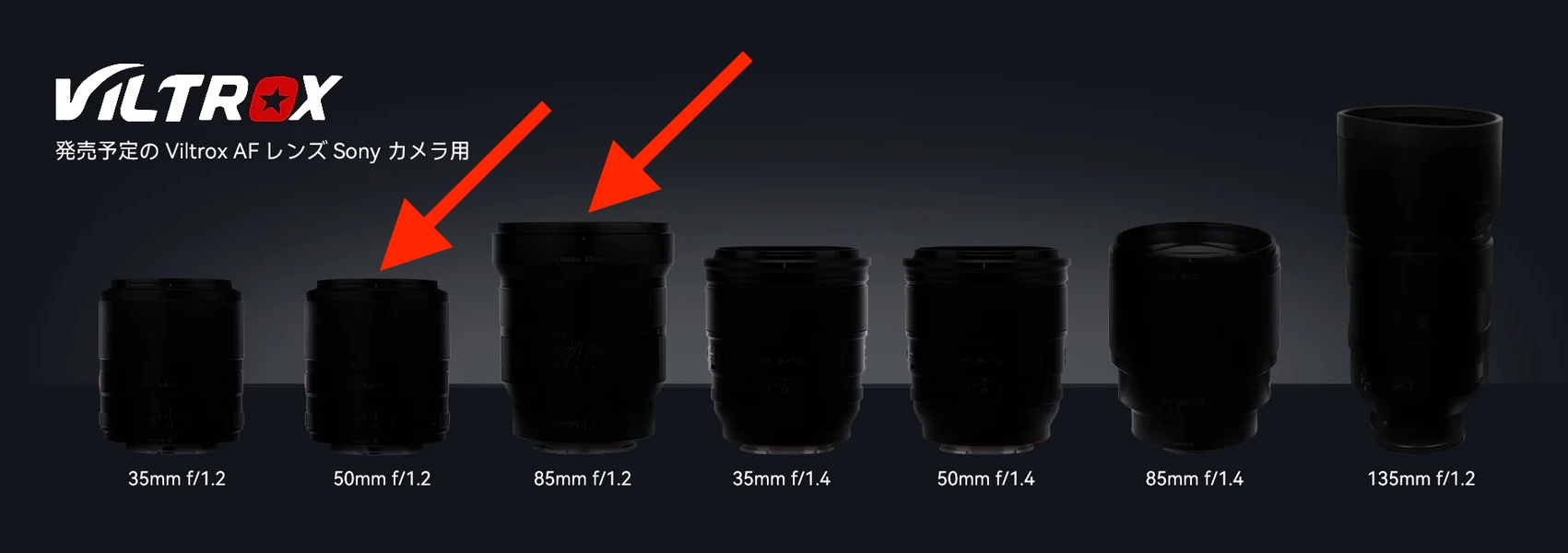
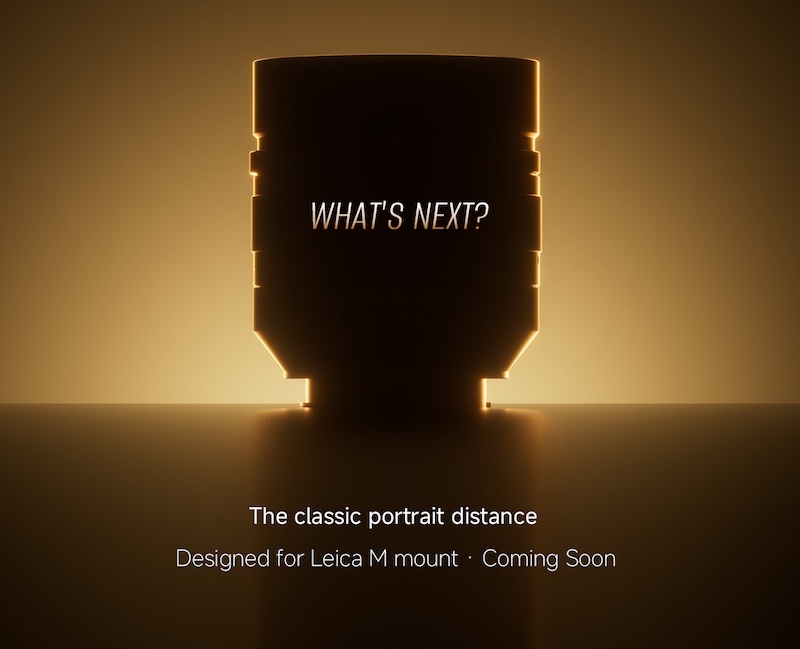
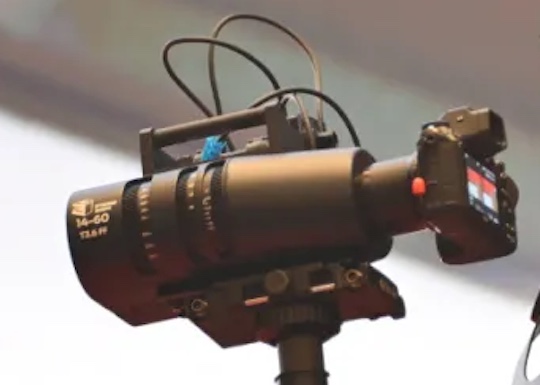
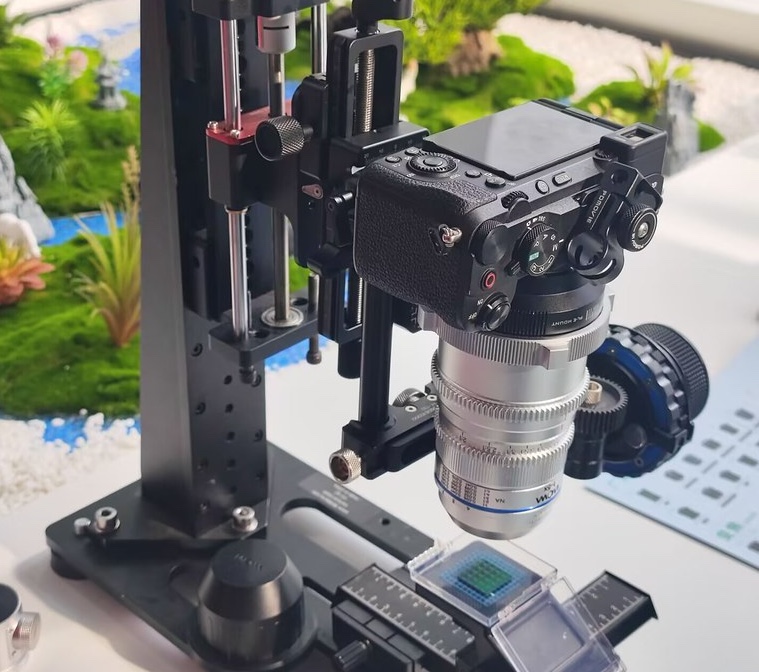
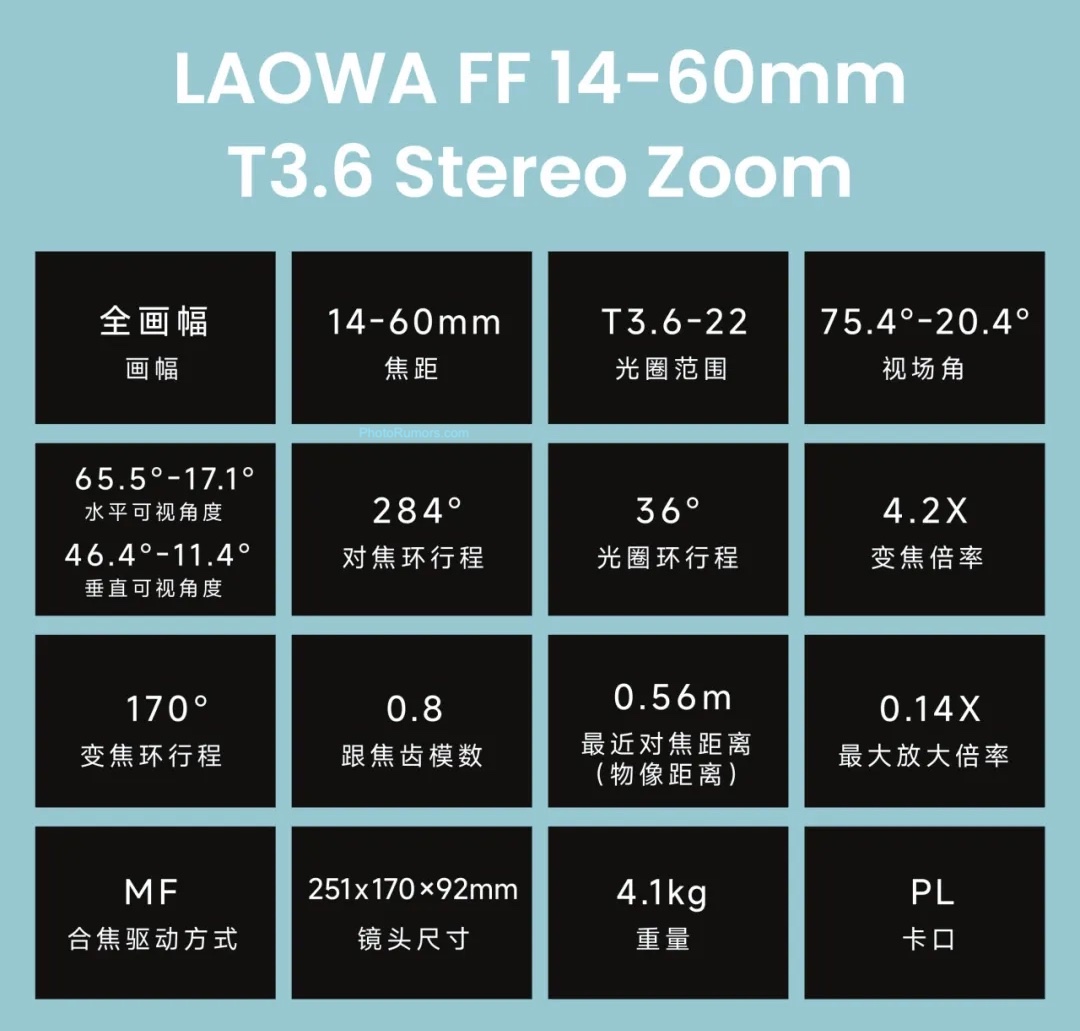
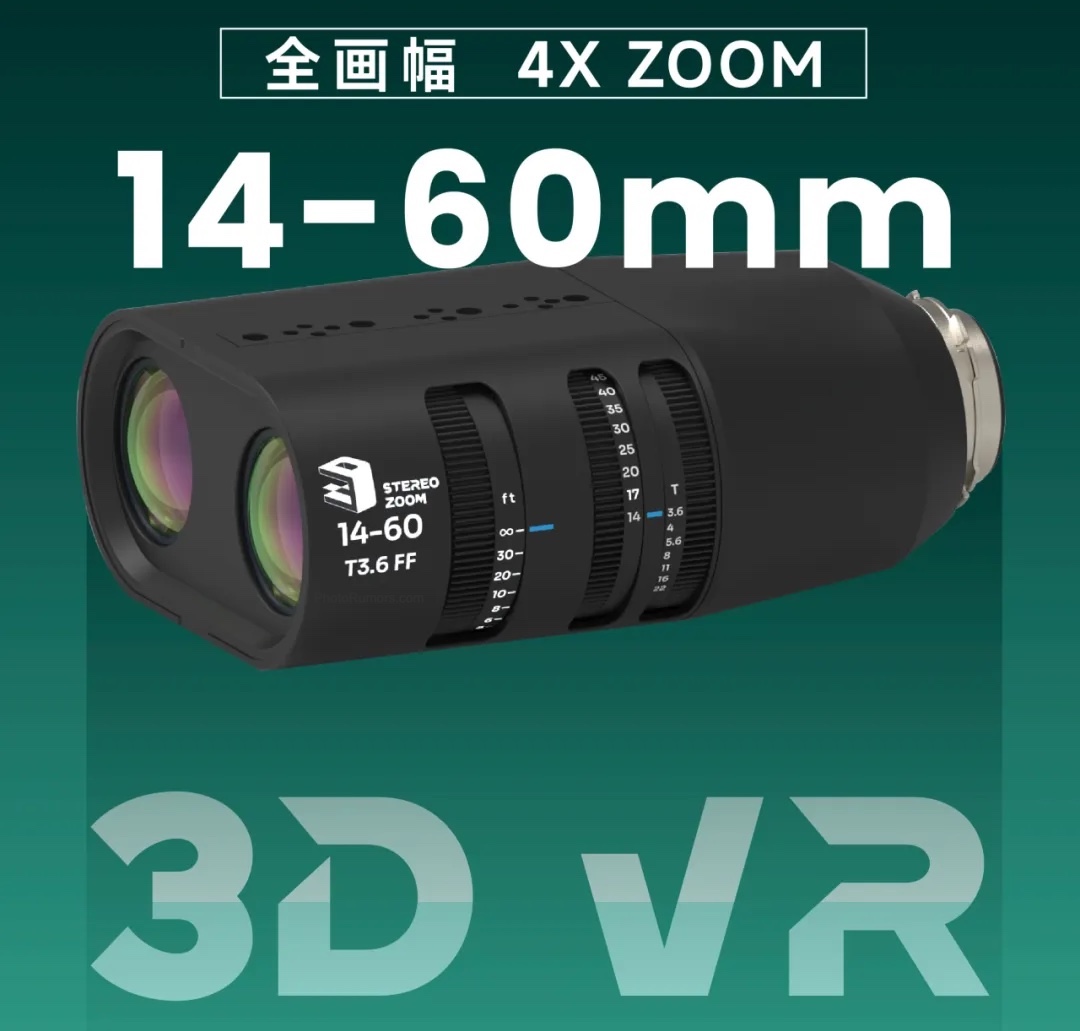
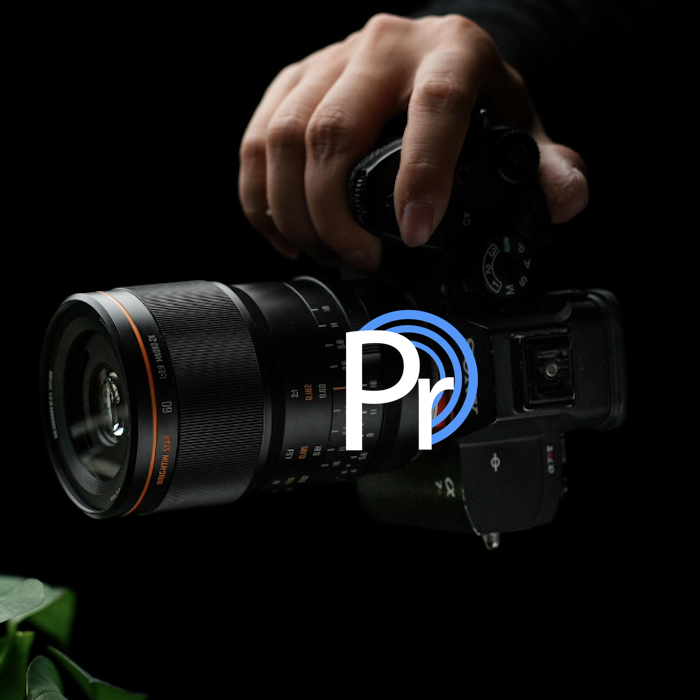
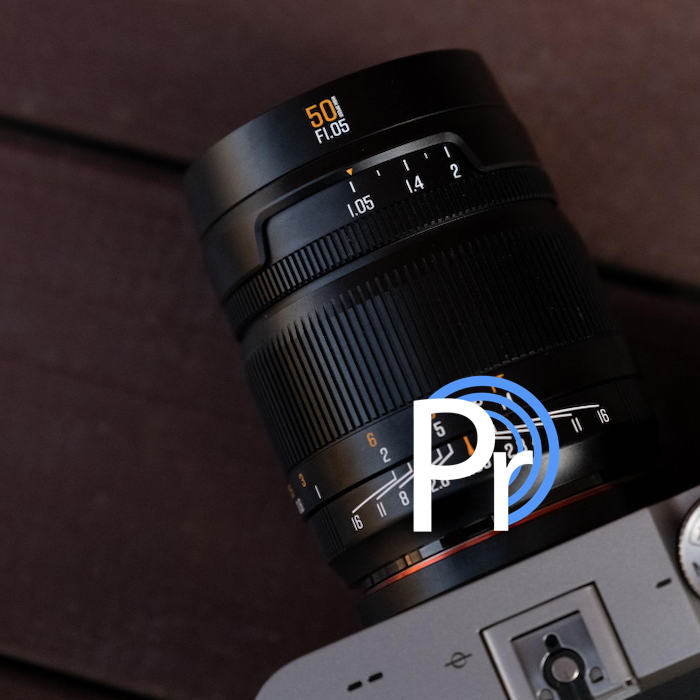
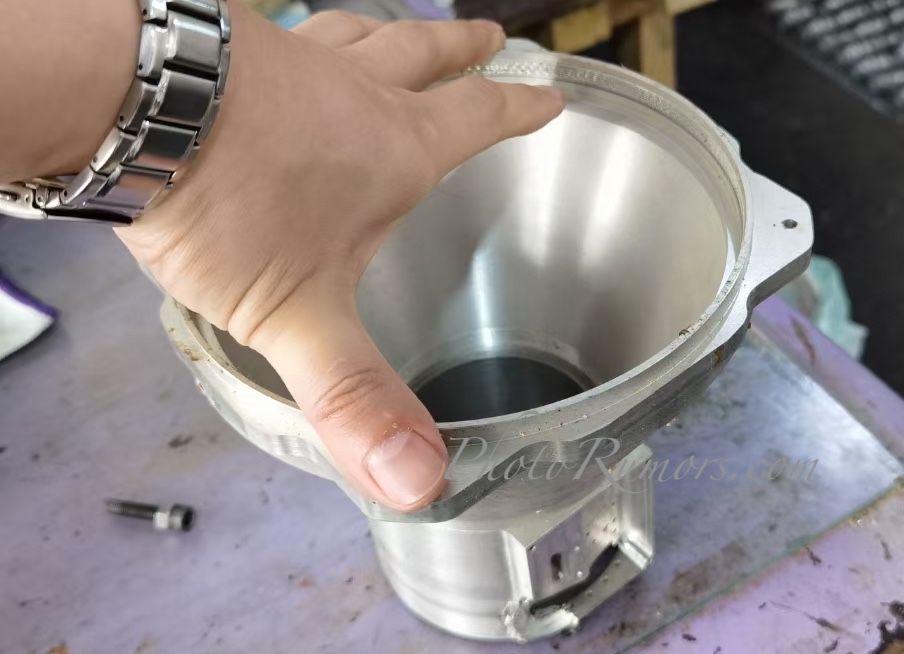
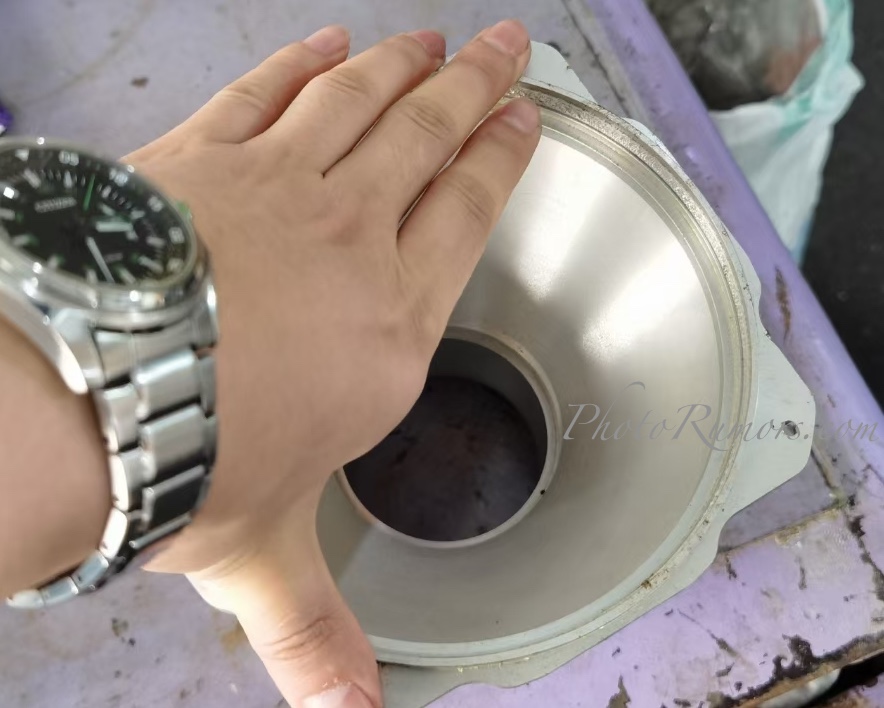
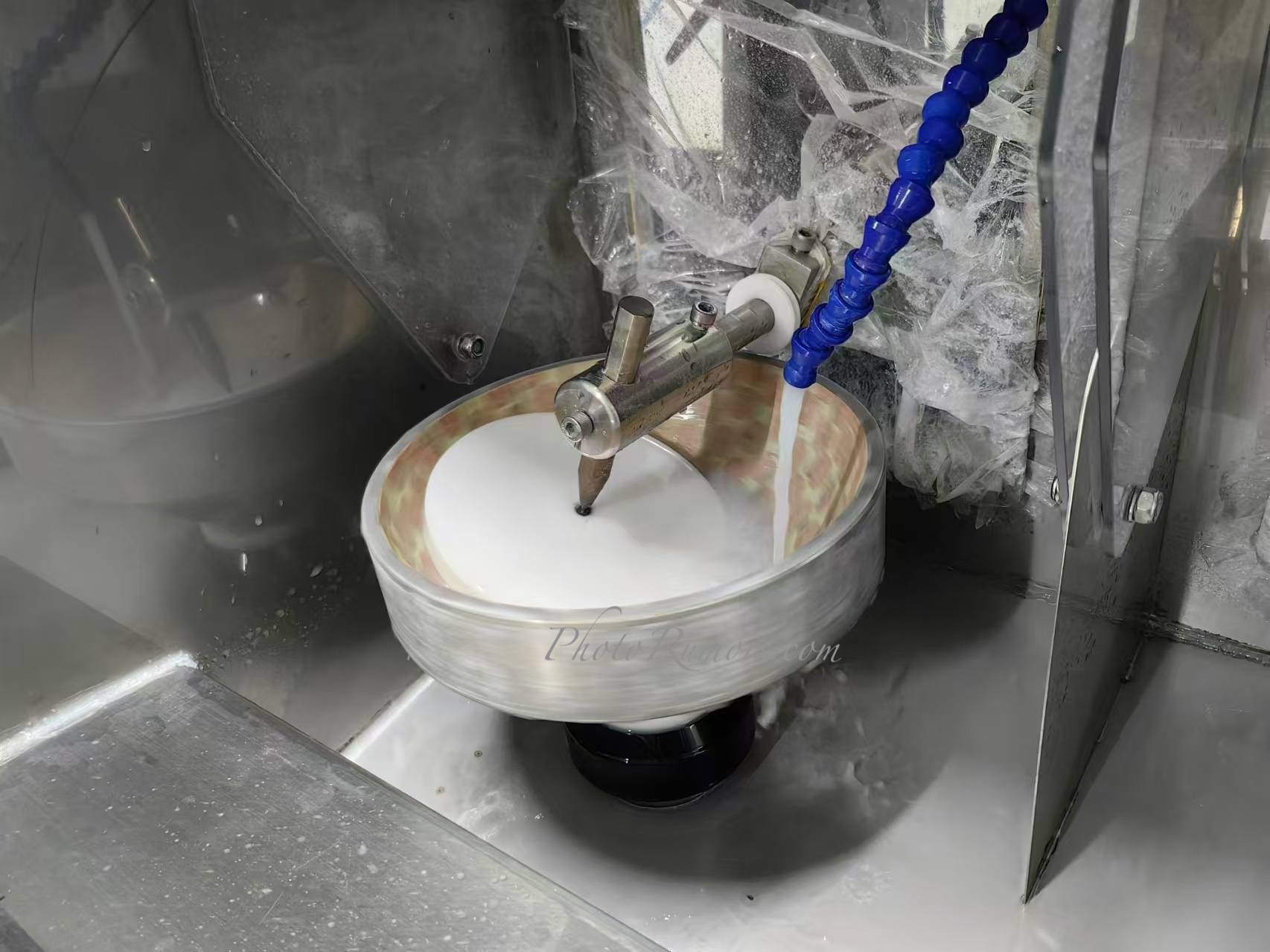
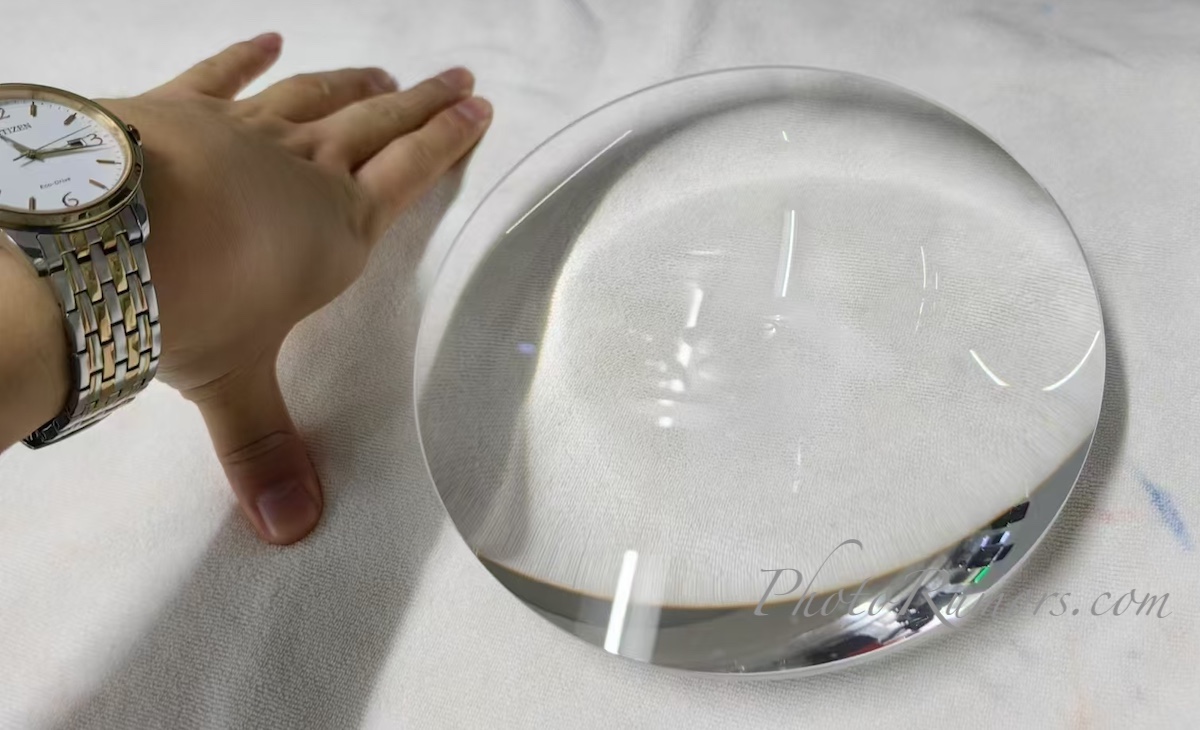
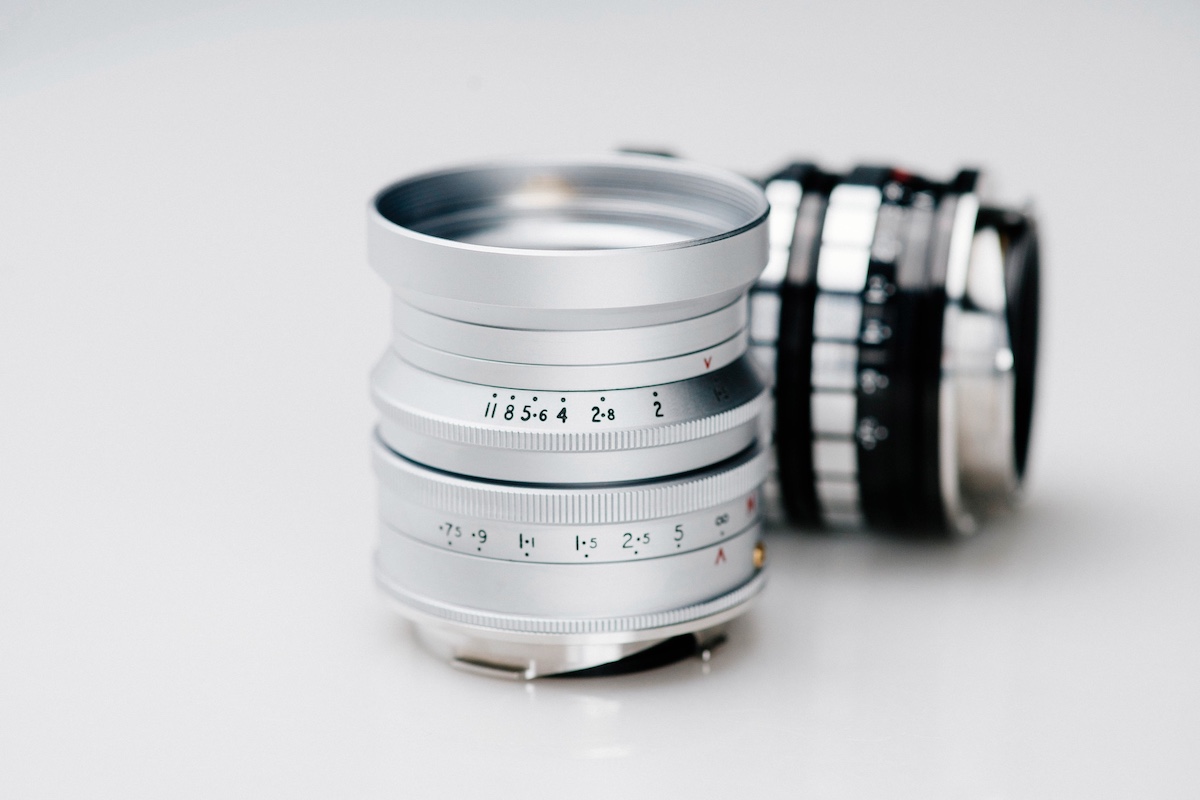
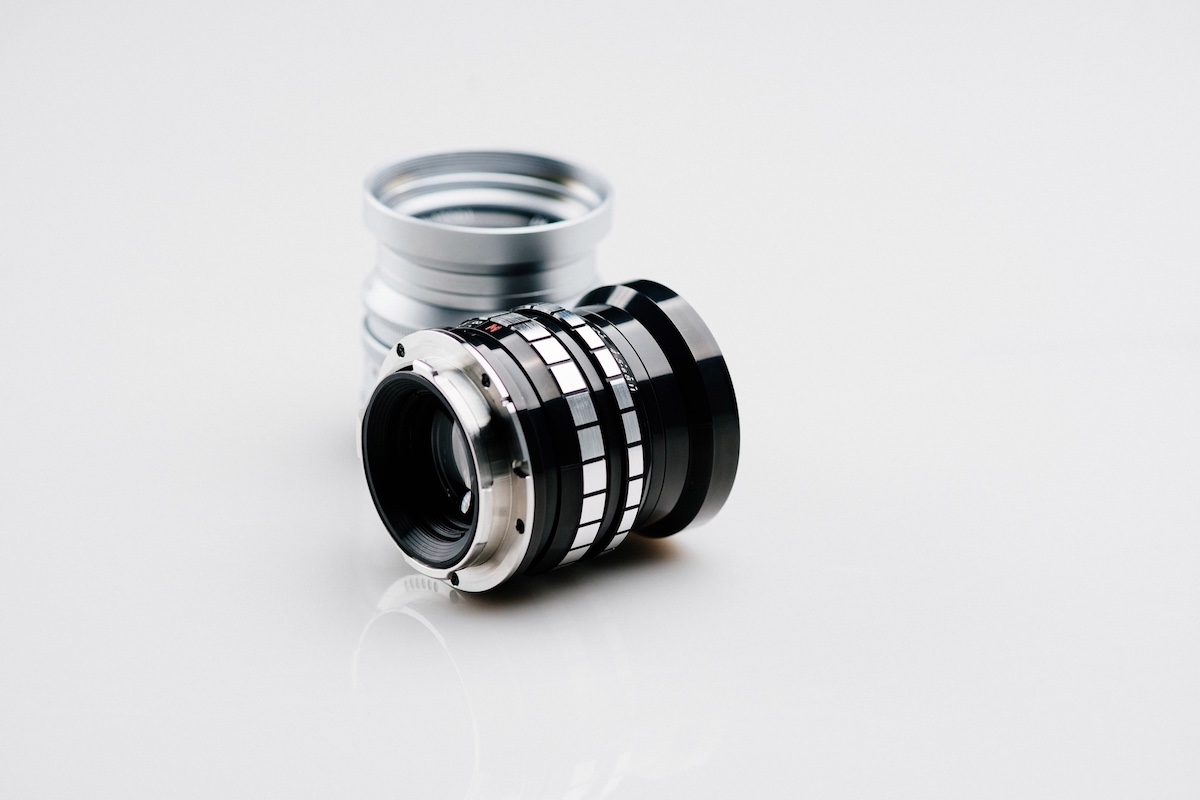
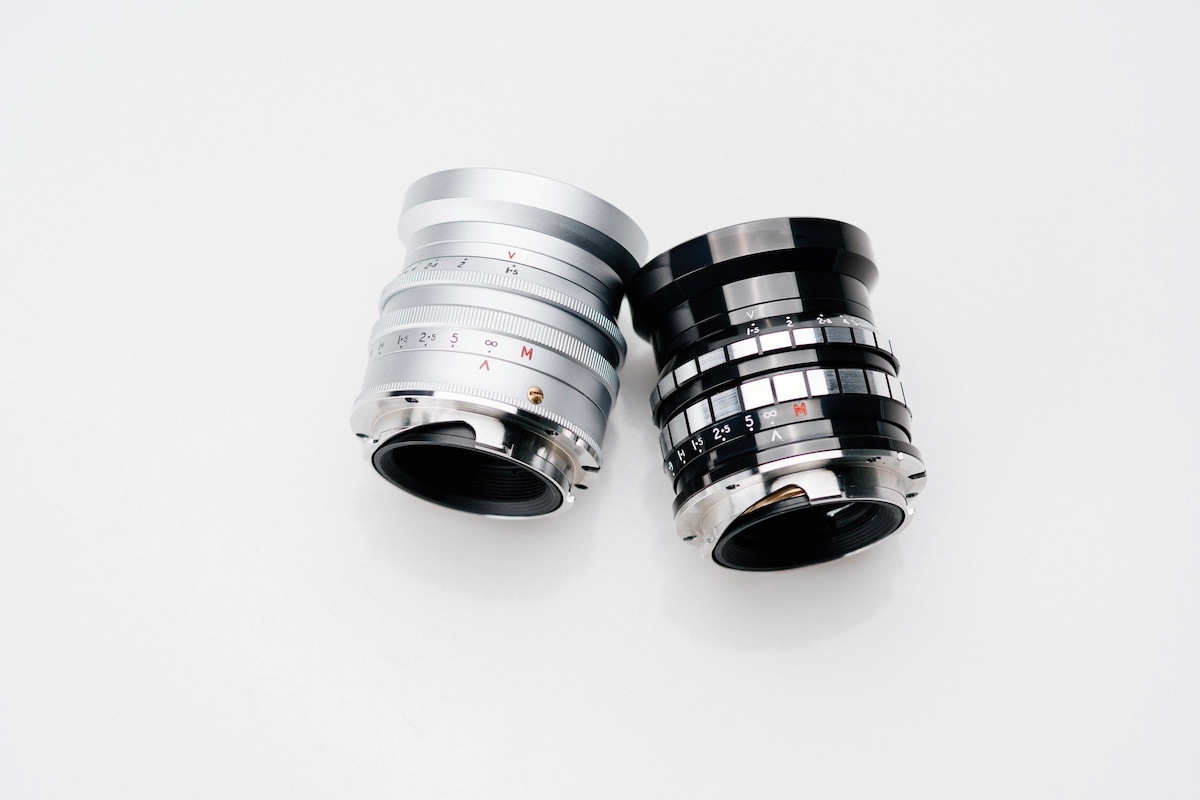
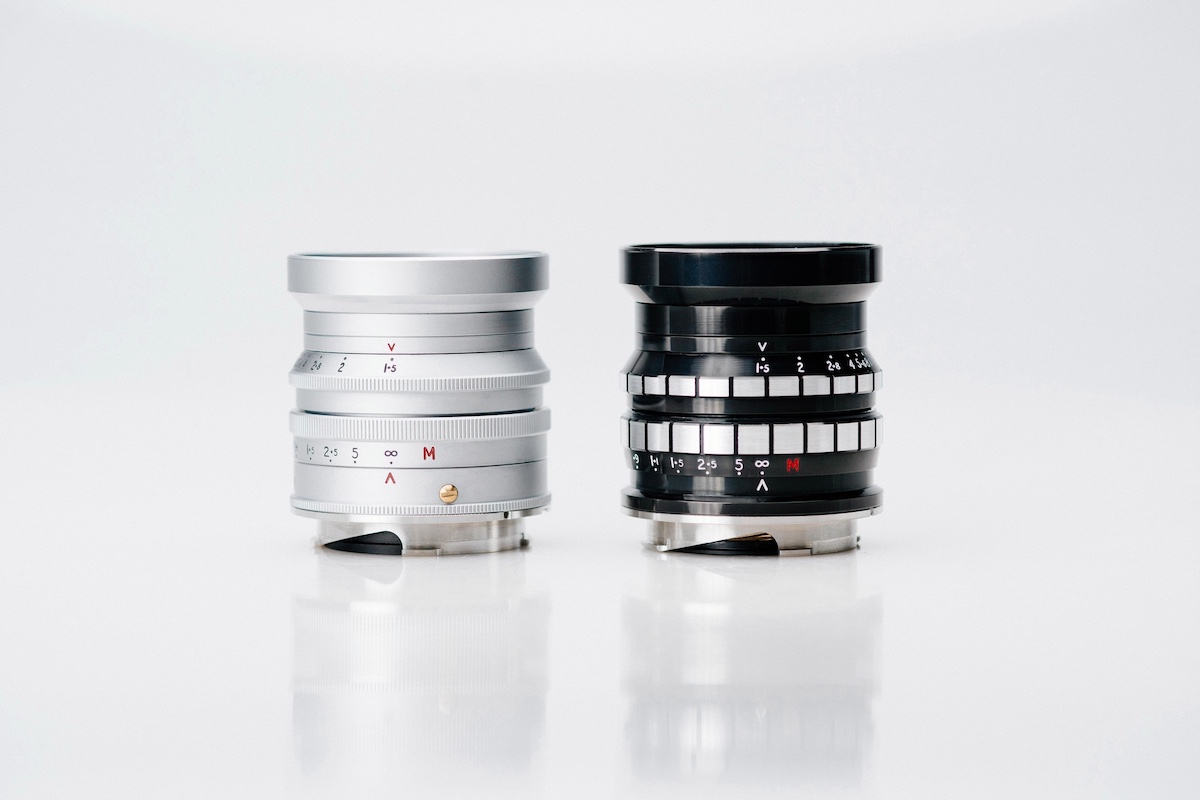
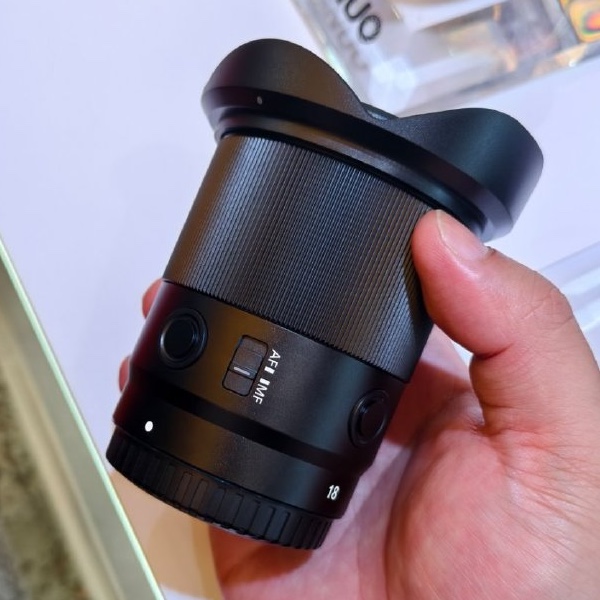
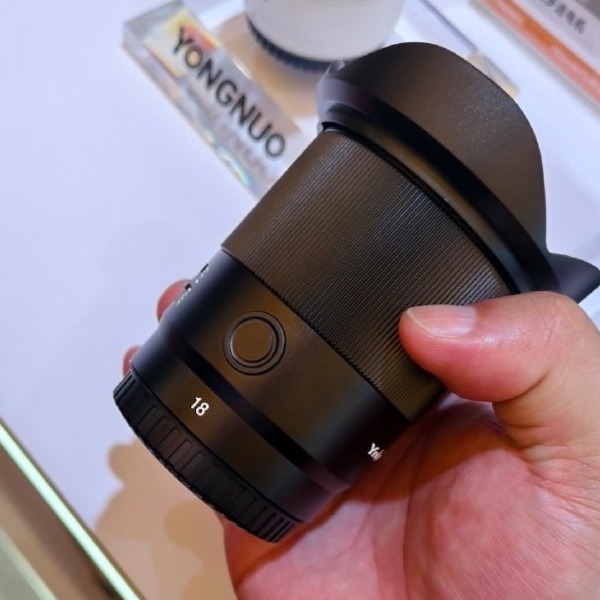
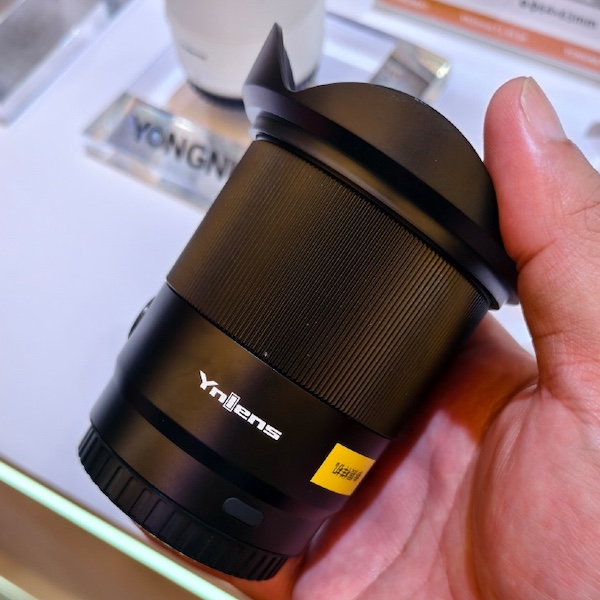
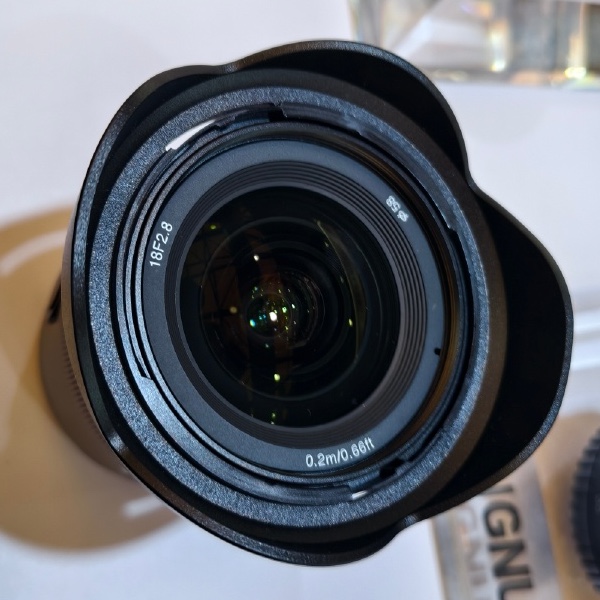
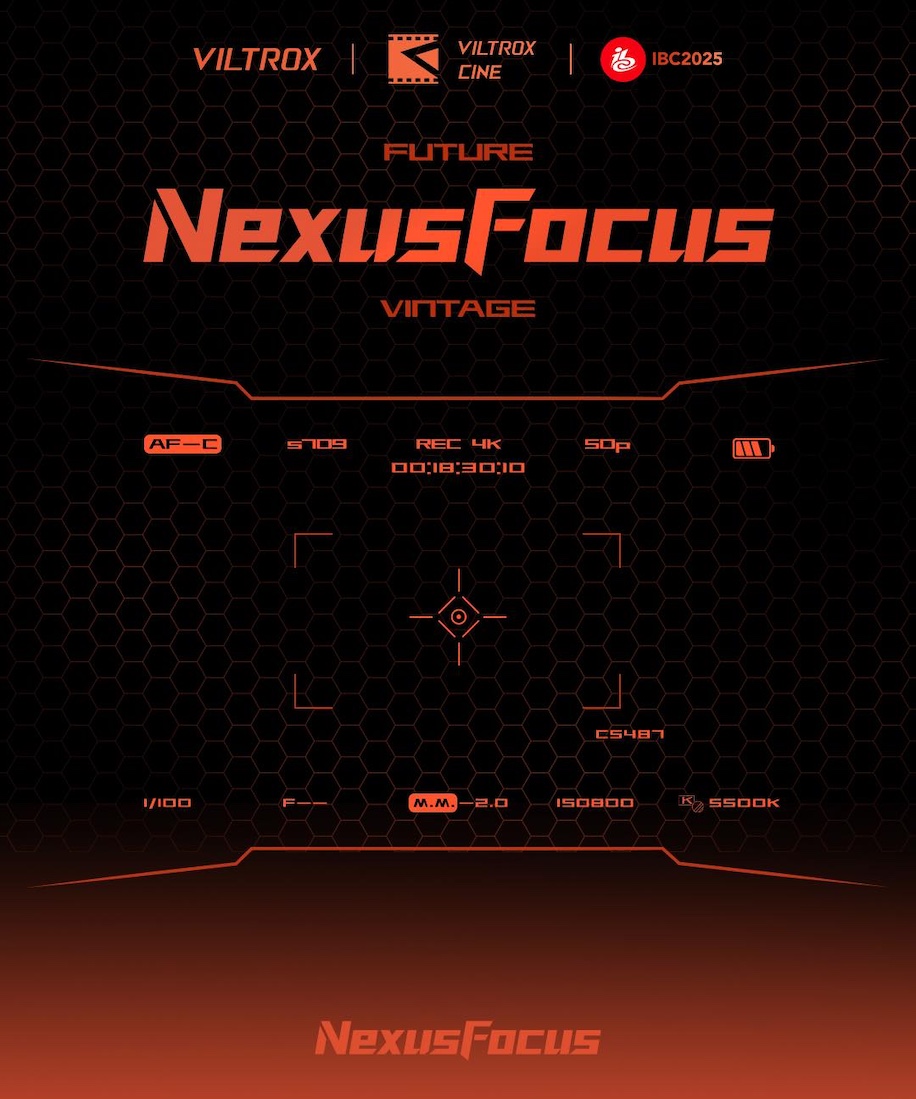
Viltrox Nexus PL to E Pro cinema adapter with full AF capabilities coming to Kickstarter on January 15 (will provide autofocus to manual focus lenses – will turn PL cinema lenses into Sony E-mount with autofocus)
Eric Fossum, the inventor of the modern CMOS image sensor and a longtime friend of DPReview, was recently awarded the 2026 Charles Stark Draper Prize for Engineering. The award, which is granted every two years by the National Academy of Engineering (NAE), is one of the most prestigious honors for engineering achievement.
Fossum, a John H. Krehbiel Sr. Professor for Emerging Technologies at Dartmouth, also serves as vice provost for entrepreneurship and technology transfer. The NAE recognizes him "for innovation, development, and commercialization of the complementary metal-oxide semiconductor active pixel image sensor," which remains central to the vast array of cameras we use today. "Eric Fossum is a pioneering semiconductor device physicist and engineer whose invention of the CMOS active pixel image sensor, or 'camera on a chip,' has transformed imaging across everyday life, industry, and scientific discovery," the NAE said in announcing the prize.
"Eric Fossum’s inventions have revolutionized digital imaging across industries"
This is far from the first award for Fossum. It's the latest in a list of well-deserved accolades, including the Queen Elizabeth Prize for Engineering, the National Medal for Technology and Innovation, awarded at a White House ceremony last year, a Technical Emmy Award, the NASA Exceptional Achievement Medal, induction into the US Space Foundation Technology Hall of Fame in 1999, Edwin H. Land Medal recipient and more. His inventions and research have had a revolutionary impact on imaging across many industries, including our own.
"We’re working on sensors that can count photons, one at a time"
An article on the Dartmouth website details the history of Fossum's development of the CMOS sensor, including how it originated as a project to create smaller, energy-efficient cameras for NASA spacecraft. It also discusses Fossum's recent invention, the quanta image sensor, which enables high-resolution imaging in extremely low-light conditions. "We’re working on sensors that can count photons, one at a time," he says."Imagine being able to take a photo in almost complete darkness or measuring extremely faint signals in biology. It’s like turning the lights on in a place that was previously invisible to us."
Fossum has been an active participant in the DPReview forums for many years and has consistently been very helpful to community members. We are honored to have him as part of our community, and wish him a hearty congratulations on his latest award.
Press release:
2026 Draper Prize for Engineering Recognizes the "Camera-on-a-Chip" Inventor
January 06, 2026
CAMBRIDGE, Mass. Jan. 6, 2026 – Eric R. Fossum, Ph.D., a pioneering semiconductor device physicist and engineer, is the recipient of the 2026 Charles Stark Draper Prize for Engineering. The prize, endowed by Draper and awarded every two years by the National Academy of Engineering (NAE), is one of the world’s preeminent awards for engineering achievement.
The NAE recognized Fossum "for innovation, development, and commercialization of the complementary metal-oxide semiconductor (CMOS) active pixel image sensor ‘camera-on-a-chip.’" Originally developed to miniaturize cameras for NASA spacecraft, the technology makes high-quality imaging smaller, faster, and more energy efficient. It now powers billions of smartphone cameras and enables applications ranging from video communication and social media to medical tools, automotive safety systems, industrial vision, and space exploration.
"The innovative work led by Dr. Fossum produced dramatic improvements in what active pixel sensors can deliver and brought digital imaging to the masses," said Jerry M. Wohletz, Ph.D., president and CEO at Draper. "The wide range of applications for this technology and its impact on society are profound and clearly worthy of the Draper Prize."
Fossum was part of the research team at the NASA Jet Propulsion Laboratory that developed the breakthrough CMOS sensor. Further refinements with pinned photodiode (PPD) technology led to CMOS sensors that eventually exceeded the performance of charge-coupled device (CCD) sensors. CMOS sensors are generally less expensive and use less power than CCD sensors, making them ideal for use in battery powered devices. More recently, Fossum invented the Quanta Image Sensor, a CMOS-based photon-counting image sensor that enables high-resolution imaging in extremely low light conditions.
Fossum is the John H. Krehbiel Senior Professor for Emerging Technologies at the Thayer School of Engineering at Dartmouth, where he teaches, directs the Ph.D. Innovation Program, and conducts research in image sensors. He also serves as Dartmouth’s Vice Provost for Entrepreneurship and Technology Transfer. His professional recognition includes induction into the National Inventors Hall of Fame (NIHF), election to the National Academy of Engineering, the Queen Elizabeth Prize for Engineering, the National Medal for Technology and Innovation, a Technical Emmy Award, and the Edwin Land Medal.
Fossum received his Bachelor of Science degree in physics and engineering from Trinity College in Connecticut, and his Ph.D. in engineering and applied science from Yale University. He has published over 300 technical papers and holds 185 U.S. patents.
The Charles Stark Draper Prize for Engineering was established and endowed in 1988 at the request of Draper to honor the memory of "Doc" Draper, the father of inertial navigation, and to increase public understanding of the contributions of engineering and technology. The biennial prize honors an engineer whose accomplishments have significantly impacted society by improving quality of life, providing the ability to live freely and comfortably, and/or permitting access to information. Recipients receive a $500,000 cash award.
Apple has announced a new app bundle for creatives dubbed Apple Creator Studio. The subscription serves as somewhat of an alternative to Adobe's Creative Cloud, as it includes apps for photo, video and music editing, plus Apple's general productivity apps. Along with the bundle, Apple announced new features for the included apps, including Final Cut Pro, Pixelmator Pro and Logic Pro.
The Apple Creator Studio is a subscription-based bundle designed for video editors, designers, music producers and other creatives. It includes Final Cut Pro, Logic Pro and Pixelmator Pro on Mac and iPad; Motion, Compressor and MainStage on Mac; and Keynote, Pages, Numbers and Freeform for iPhone, iPad and Mac. All of these apps are combined into one subscription, eliminating the need to pay for each app separately.
Final Cut Pro and Logic Pro for Mac were, and still are, available as one-time purchases, but the iPad versions have always been subscription-based. The Creator Studio may not be much of a shift for some users, then. Additionally, while all of the apps are still available for purchase (or free, in the case of Keynote, Pages, Numbers and Freeform) separately, the Creator Studio bundle unlocks AI capabilities and other features not available in the standalone apps, such as premium content in Keynote, Pages, Numbers and Freeform.
Pixelmator Pro is now available on the iPad. Image: Apple
In Pixelmator Pro, Creator Studio subscribers will have access to a new Warp tool, allowing users to twist and share payers however they like. Apple says subscribers will also have access to a collection of Warp-powered product mockups. Additionally, Pixelmator Pro is now available for iPad for the first time (including outside of the subscription), offering a new touch- and Apple Pencil-optimized interface. Users can also switch between the iPad and Mac for a more flexible editing experience.
Apple added new search options in Final Cut, making it easier to find specific clips. Image: Apple
Final Cut Pro also gets multiple new features. Transcript Search and Visual Search make it easier for editors to find specific clips, either based on specific soundbites or by searching for an object or action. Beat Detection makes editing to the rhythm of a song easier, thanks to an AI model from Logic Pro. Montage Maker in Final Cut Pro for iPad utilizes AI to automatically analyze and edit a video, making it faster to start an edit or rough cut.
Creator Studio subscribers will also get full access to Motion, a tool for creating 2D and 3D effects. Plus, Apple has added the AI-powered Magnetic Mask tool to Motion, giving graphics creators AI-based masking and tracking without a green screen. The subscription also includes access to Compressor, which fully integrates with Final Cut Pro and Motion.
Logic Pro now offers a tool for turning recordings into chord progressions. Image: Apple
Logic Pro also comes with a host of new features, including a Synth Player in the AI Session Player lineup and Chord ID, which turns recordings into chord progressions. There's also a new Sound Library in Logic Pro, and its Quick Swipe Comping feature is now available on iPad. Finally, Keynote, Pages, Numbers and Freeform will remain free for all users, but Creator Studio subscribers will have access to new "intelligence features."
The Apple Creator Studio will be available on January 28 for $13 per month or $129 per year with a free one-month trial. College students and educators can subscribe for $3 per month or $30 per year.
For those looking for an Adobe alternative, those prices could be quite enticing. After all, Adobe's All Apps plan for individuals costs $70 per month. Adobe's discounted student and educator plan is $25 per month, which isn't much less than the annual cost of Apple's Creator Studio. Plus, you can still access one-time-purchase versions of these apps if you don't want to deal with yet another subscription, something that isn't an option with Adobe.
Press release:
Apple introduces Apple Creator Studio, an inspiring collection of the most powerful creative apps
Final Cut Pro, Logic Pro, Pixelmator Pro, Motion, Compressor, and MainStage — plus new AI features and premium content in Keynote, Pages, and Numbers — come together in a single subscription
CUPERTINO, CALIFORNIA Apple today unveiled Apple Creator Studio, a groundbreaking collection of powerful creative apps designed to put studio-grade power into the hands of everyone, building on the essential role Mac, iPad, and iPhone play in the lives of millions of creators around the world. The apps included with Apple Creator Studio for video editing, music making, creative imaging, and visual productivity give modern creators the features and capabilities they need to experience the joy of editing and tailoring their content while realizing their artistic vision. Exciting new intelligent features and premium content build on familiar experiences of Final Cut Pro, Logic Pro, Pixelmator Pro, Keynote, Pages, Numbers, and later Freeform to make Apple Creator Studio an exciting subscription suite to empower creators of all disciplines while protecting their privacy.
Final Cut Pro introduces exceptional new video editing tools and intelligent features for Mac and iPad to improve the efficiency of even the most complex workflows.1 For the first time, Pixelmator Pro is coming to iPad with a uniquely crafted experience that is optimized for touch and Apple Pencil.2 Music creation with Logic Pro for Mac and iPad introduces even more intelligent features like Synth Player and Chord ID to inspire anyone to write, produce, and mix a range of popular music.3 And with Keynote, Pages, Numbers, and Freeform, Apple Creator Studio subscribers can be more expressive and productive with new premium content and intelligent features across Mac, iPad, and iPhone.4
Apple Creator Studio will be available on the App Store beginning Wednesday, January 28, for $12.99 per month or $129 per year, with a one-month free trial, and includes access to Final Cut Pro, Logic Pro, and Pixelmator Pro on Mac and iPad; Motion, Compressor, and MainStage on Mac; and intelligent features and premium content for Keynote, Pages, Numbers, and later Freeform for iPhone, iPad, and Mac. College students and educators can subscribe for $2.99 per month or $29.99 per year. Alternatively, users can also choose to purchase the Mac versions of Final Cut Pro, Pixelmator Pro, Logic Pro, Motion, Compressor, and MainStage individually as a one-time purchase on the Mac App Store.5
"Apple Creator Studio is a great value that enables creators of all types to pursue their craft and grow their skills by providing easy access to the most powerful and intuitive tools for video editing, music making, creative imaging, and visual productivity — all leveled up with advanced intelligent tools to augment and accelerate workflows," said Eddy Cue, Apple’s senior vice president of Internet Software and Services. "There’s never been a more flexible and accessible way to get started with such a powerful collection of creative apps for professionals, emerging artists, entrepreneurs, students, and educators to do their best work and explore their creative interests from start to finish."
Video Creation Gets Smarter and Faster
Final Cut Pro for Mac and iPad empowers content creators, video editors, and filmmakers to elevate their projects with intuitive features. One-time-purchase Mac users and Apple Creator Studio subscribers can experience blazing-fast performance with Apple silicon for the most demanding workflows, and get into the creative flow faster than ever with new on-device intelligent features that make video creation effortless and easy.
With Transcript Search on Mac and iPad, users can now easily find the perfect soundbite in hours of footage by simply typing phrases into the search bar to see exact or related results.6 Video podcasts and interviews can be assembled quickly, eliminating extensive time spent skimming through footage. Looking for a specific video clip also gets an intelligence assist with Visual Search.7 Now, users can quickly pinpoint exact moments across all footage by searching for an object or action, and then add that visual to their timeline in seconds.
Final Cut Pro for Mac and iPad also makes editing video to the rhythm of music fast and fun with Beat Detection, an amazing new way to see musical beats, bars, and song parts right in the project timeline. Beat Detection uses an AI model from Logic Pro to instantly analyze any music track and display the Beat Grid, so users creating fast-paced videos can quickly and visually align their cuts to the music. Re-editing music tracks to different lengths is also easier than ever.
The new Montage Maker in Final Cut Pro for iPad lets users kick-start their edit in just seconds. Using the power of AI, Montage Maker will analyze and edit together a dynamic video based on the best visual moments within the footage, with the ability to change the pacing, cut to a music track, and intelligently reframe horizontal videos to vertical with Auto Crop to simplify sharing across social platforms.
Apple Creator Studio also unlocks full access to Motion, a powerful motion graphics tool for creating cinematic 2D and 3D effects with intelligent features like Magnetic Mask, which effortlessly isolates and tracks people and objects without a green screen. It also includes Compressor, which integrates with Final Cut Pro and Motion to seamlessly customize output settings for distribution.
Taking Music Creation to the Next Level
A new lineup of features for Logic Pro for Mac and iPad supports musical artists and helps creators deliver original music for their video content as an Apple Creator Studio subscriber or one-time-purchase Mac user. The new tools are sophisticated, intuitive, and intelligent to inspire beat making, songwriting, remixing, and more.
Synth Player joins the AI Session Player lineup,8 delivering incredible electronic music performances with a diverse range of chordal and synth bass parts — all powered by AI and the advanced software instrument technology of Logic Pro. Using Synth Player is like having access to a skilled synthesist that can instantly take a musical idea in new directions when needed. Developed in-house using Apple’s own team of expert sound designers, Synth Player delivers incredible realism and fidelity fueled by the vast array of software synthesizers and samplers in Logic Pro. And like every AI Session Player, creators can direct Synth Player using intuitive controls for complexity and intensity, while additional parameters unlock access to advanced performance capabilities. Synth Player can also access any third-party plug-in Audio Units, or even control an external hardware synthesizer.
Tapping into the power of AI, Chord ID becomes a personal music theory expert by turning any audio or MIDI recording into a ready-to-use chord progression, eliminating tedious manual transcription and bringing demo ideas to life even faster. Designed to help everyone get the most out of the Session Player experience, Chord ID can analyze complex harmonic content from nearly any recording to automatically populate the chord track in Logic Pro. And since the chord track drives the performances of any AI Session Player, users can quickly audition different players, styles, and genres, allowing them creative freedom to experiment and dial in their favorite vibe.
The new Sound Library in Logic Pro for Mac delivers Apple-designed packs and Producer Packs with hundreds of royalty-free loops, samples, instrument patches, drum sounds, and more. Additionally, Logic Pro for iPad users will now have access to the industry-leading Quick Swipe Comping feature from Logic Pro for Mac, an indispensable tool for vocalists and producers who want to create seamless performances inside or outside the studio.
Logic Pro for iPad also presents Music Understanding features with natural language search in the Sound Browser to help users describe a loop or find similar loops — no tags, guesses, or filters required. AI-based awareness of the massive collection of loops in Logic Pro makes it easy to search either through natural language or a recording to find a similar or complementary loop or sound.
Apple Creator Studio also unlocks access to MainStage, which turns Mac into an instrument, voice processor, or guitar rig. Now, the sound users love in their recording can be the sound their audience hears. Setup is fast, teardown is faster, and everything in between is more reliable.
Creative Imaging Designed for iPad
Pixelmator Pro, the award-winning image editor for Mac, comes with the all-new Apple Creator Studio, bringing an approachable and professional editing experience to even more creators. Pixelmator Pro is packed with powerful image editing tools, empowering Apple Creator Studio subscribers and one-time-purchase Mac users to design, draw, paint, and refine their creative vision, and so much more. For the first time, Pixelmator Pro is coming to iPad, bringing an all-new touch-optimized workspace, full Apple Pencil support, the ability to work between iPad and Mac, and all of the powerful editing tools users have come to appreciate on Mac. Pixelmator Pro for iPad offers fast and efficient image editing, leveraging the blazing performance of Apple silicon and built from scratch for the latest iPadOS.
Intuitive touch controls make it even easier to create desktop-class designs wherever users take their iPad. The full-featured Layers sidebar allows creators to build designs using a range of unique elements like images, shapes, text, and even video. Smart selection tools help users isolate and edit specific parts of images effortlessly, and with advanced bitmap and vector masks, users can hide or reveal discrete portions of their designs. The deep integration of hardware, software, and Apple silicon unlocks features like Super Resolution for intelligently upscaling photos, Deband for removing compression artifacts, and automatic composition suggestions with Auto Crop. With full support for Apple Pencil, digital artists can enjoy painting in the most natural way with a beautiful collection of pressure-sensitive brushes. And unmatched Apple Pencil precision — combined with features like hover,9 squeeze,10 and double-tap11 — gives creators the ability to craft pixel-perfect designs.
Additionally, for Apple Creator Studio subscribers, both Pixelmator Pro for Mac and iPad bring a powerful new Warp tool for twisting and shaping layers any way creatives can imagine, alongside a beautiful collection of Warp-powered product mockups.
Supercharging Visual Productivity
For more than 20 years, Apple’s visual productivity apps have empowered users to express themselves with beautiful presentations, documents, and spreadsheets using Keynote, Pages, and Numbers. And Freeform has brought endless possibilities for creative brainstorming and visual collaboration.
With Apple Creator Studio, productivity gets supercharged with all-new features that bring more intelligence and premium content to creators’ fingertips so they can take their projects to the next level. The Content Hub is a new space where users can find curated, high-quality photos, graphics, and illustrations. A subscription also unlocks new premium templates and themes in Keynote, Pages, and Numbers.
In addition to Image Playground, advanced image creation and editing tools let users create high-quality images from text, or transform existing images, using generative models from OpenAI.12 On-device AI models enable Super Resolution to upscale images while keeping them sharp and detailed, and Auto Crop provides intelligent crop suggestions, helping users find eye-catching compositions for photos.
To help users prepare presentations even more quickly in Keynote, Apple Creator Studio includes access to features in beta, such as the ability to generate a first draft of a presentation from a text outline, or create presenter notes from existing slides. Subscribers can also quickly clean up slides to fix layout and object placement. And in Numbers, subscribers can generate formulas and fill in tables based on pattern recognition with Magic Fill.
Keynote, Pages, Numbers, and Freeform will remain free for all users to create, edit, and collaborate with others, including Apple Creator Studio subscribers. These apps will continue receiving updates, with the latest versions adopting the beautiful new visual design language with Liquid Glass on all platforms, and supporting the new windowing and menu bar improvements in iPadOS 26.
Pricing and Availability
Apple Creator Studio will be available beginning Wednesday, January 28, for $12.99 (U.S.) per month or $129 (U.S.) per year. All new subscribers will enjoy a one-month free trial of Apple Creator Studio, and with the purchase of a new Mac or qualifying iPad,13 customers can receive three months of Apple Creator Studio for free.14
Education savings are available for college students and educators15 for $2.99 (U.S.) per month or $29.99 (U.S.) per year.
Apple Creator Studio is available to download on the App Store as a universal purchase.
Up to six family members can share all of the apps and content included in Apple Creator Studio with Family Sharing.
One-time-purchase versions of Final Cut Pro ($299.99 U.S.), Logic Pro ($199.99 U.S.), Pixelmator Pro ($49.99 U.S.), Motion ($49.99 U.S.), Compressor ($49.99 U.S.), and MainStage ($29.99 U.S.) are available on the Mac App Store.
Free versions of Keynote, Pages, Numbers, and Freeform continue to be available and are included with every new iPhone, Mac, and iPad.
1 The Apple Creator Studio version of Final Cut Pro for Mac will be compatible with Mac models with Intel or Apple silicon chips running macOS 15.6 or later. Some features require Apple silicon. Final Cut Pro for iPad will be compatible with iPad models with the A16, A17 Pro, or M1 chip or later running iPadOS 18.6 or later.
2 Pixelmator Pro for iPad is compatible with iPad models with the A16, A17 Pro, or M1 chip or later running iPadOS 26 or later. The Apple Creator Studio version of Pixelmator Pro requires macOS 26.
3 The Apple Creator Studio version of Logic Pro for Mac requires macOS 15.6 or later and a Mac with Apple silicon. Logic Pro for iPad requires iPadOS 26 or later and an iPad with the Apple A12 Bionic chip or later. Some features require the Apple A17 Pro chip or later.
4 Apple Creator Studio versions of Keynote, Pages, and Numbers will require iOS 18.0 or later, iPadOS 18.0 or later, or macOS Sequoia 15.6 or later. Some intelligent features including image generation will require iOS 26, iPadOS 26, or macOS Tahoe. Premium content and features in Freeform are not currently available and are expected to be included in the Apple Creator Studio subscription later this year.
5 The one-time-purchase versions of Final Cut Pro requires macOS 15.6 or later, Logic Pro requires macOS 15.6 or later, and Pixelmator Pro requires macOS 12.0 or later. MainStage is available for any Mac supported by macOS 15.6 or later. Motion requires macOS 15.6 or later. Compressor requires macOS 15.6 or later and some features require a Mac with Apple silicon.
6 Transcript Search in Final Cut Pro requires a Mac with Apple silicon and macOS 15.6 or later, or an iPad with the Apple M1 chip or later, iPad (A16), or iPad mini (A17 Pro) and iPadOS 26 or later. Available only in U.S. English.
7 Visual Search requires a Mac with Apple silicon and macOS 15.6 or later, or an iPad with the Apple M1 chip or later, iPad (A16), or iPad mini (A17 Pro) and iPadOS 26 or later. Available only in U.S. English.
8 Session Players require iPad with the Apple M1 chip or later or Mac with Apple silicon is recommended.
9 Apple Pencil hover works with iPad Pro 13-inch (M4), iPad Pro 12.9‑inch (6th generation), iPad Pro 11-inch (M4), iPad Pro 11‑inch (4th generation), iPad Air 13-inch (M2), and iPad Air 11-inch (M2).
10 Apple Pencil squeeze is only available when using Apple Pencil Pro with iPad Pro 13- and 11-inch (M4 and M5), iPad Air 13- and 11-inch (M2 and M3), and iPad mini (A17 Pro).
11 Apple Pencil double-tap works with Apple Pencil (2nd generation) with iPad mini (6th generation), iPad Air (4th and 5th generations), iPad Pro 11-inch (1st, 2nd, 3rd, and 4th generations), and iPad Pro 12.9-inch (3rd, 4th, 5th, and 6th generations); and with Apple Pencil Pro with iPad mini (A17 Pro), iPad Air 11-inch and 13-inch (M2 and M3), and iPad Pro 11-inch and 13-inch (M4 and M5).
12 Some features of Apple Creator Studio require an Apple Intelligence-capable device. For a list of Apple Intelligence availability and technical requirements, see support.apple.com/121115. Some artificial intelligence features of Apple Creator Studio utilize third-party models and may have usage limits and restrictions.
13 A new Mac or iPad purchased from Apple or an Apple Authorized Reseller. iPad must have at least 6 GB memory and an A16, A17 Pro, or M-series chip or later.
14 New and qualified returning subscribers only. Plan renews at $12.99 per month or $129 per year based on plan selected. Only one offer per Apple Account and only one offer per family if they’re part of a Family Sharing group, regardless of the number of devices that they or their family purchase. This offer is not available if the account holder or their Family have previously accepted an Apple Creator Studio subscription three months free offer. Offer good for the latter of (i) three months after eligible device activation or (ii) three months after first availability for subscription to Apple Creator Studio. Plan automatically renews until cancelled. Restrictions and other terms apply.
15 New subscribers only. Education Savings Plan automatically renews at $2.99 per month or $29.99 per year based on plan selected until cancelled. Offer good for college students and educators only and does not extend to a Family Sharing group. Verification required. Terms apply. Limited-time offer; offer may end at any time.
With no sign of faster SD cards, the CFexpress format is currently coming out on top.
Photo: Richard Butler
This year's CES trade show came and went with no apparent progress for the SD memory card format, despite higher speeds and capacities supposedly being in the pipeline. And we believe the camera industry is playing its part in that, having seemingly decided that SD will remain a slower, lesser format.
It's been nearly 18 months since Western Digital said it was planning to launch SDUC cards in 2025, but they're still yet to arrive.
SDUC (Ultra Capacity) cards, which allow capacities to expand beyond the 2TB limit of SDXC cards, up to a maximum of 128TB, should you wish to capture just about every photo you'll ever take on a single card. However, the SDUC standard only pertains to capacity: in theory, SDUC cards can use the original (pre-UHS) interface that ran at a maximum of 25MB/s, and much slower in practice.
More critically, there's also been no sign of any UHS-III cards, the faster standard announced back in 2017, nor any cameras adopting the SD Express interface from 2018, leaving us with an inviting combination of vast capacities and significant lag, while we wait for faster cards.
An inviting combination of vast capacities and significant lag, while we wait for faster cards
Instead, it appears camera makers have decided that high-speed cameras should use the CFexpress format, with SD stalled at the UHS-II interface originally announced 15 years ago.
The challenge is that one of SD's key selling points was backward compatibility: UHS-II slots could still use all previous SD cards at their full speeds. However, the SD Express format adopts the same NVMe protocol used by the CFexpress format, maintaining only 2009 UHS-I speeds when used with existing cards (and vice versa: even the most expensive SD Express card will run as UHS-I speeds if you try to use it in any current camera).
The 2009 UHS-I standard promises up to 104MB/s transfers but none are rated as being able to deliver more than 30MB/s read/write in a sustained manner.
We don't know whether camera makers' reticence to adopt SD Express stems from the potential confusion this limited backward compatibility would risk, or because, once you've included the hardware for NVMe compatibility, you may as well use the well-established, more robust CFexpress format, but we've still yet to see any cameras that use SD express, eight years after it was announced.
Micro SD Express cards exist, but the only major device to use them, so far, is Nintendo's Switch 2 portable console.
Image: Samsung
For reference, there was a three-year lag between the SD Association announcing the UHS-II standard and it first being adopted in a camera (the Fujifilm X-T1), meaning the SD Express format appears to currently be running around five years behind schedule.
So, just as we predicted a few years ago, it seems CFexpress looks set to dominate the high-speed, pro-grade end of the market with SD remaining as the more affordable, lower performance option. With unfortunate consequences for mid-range cameras that use a mixture of the two.
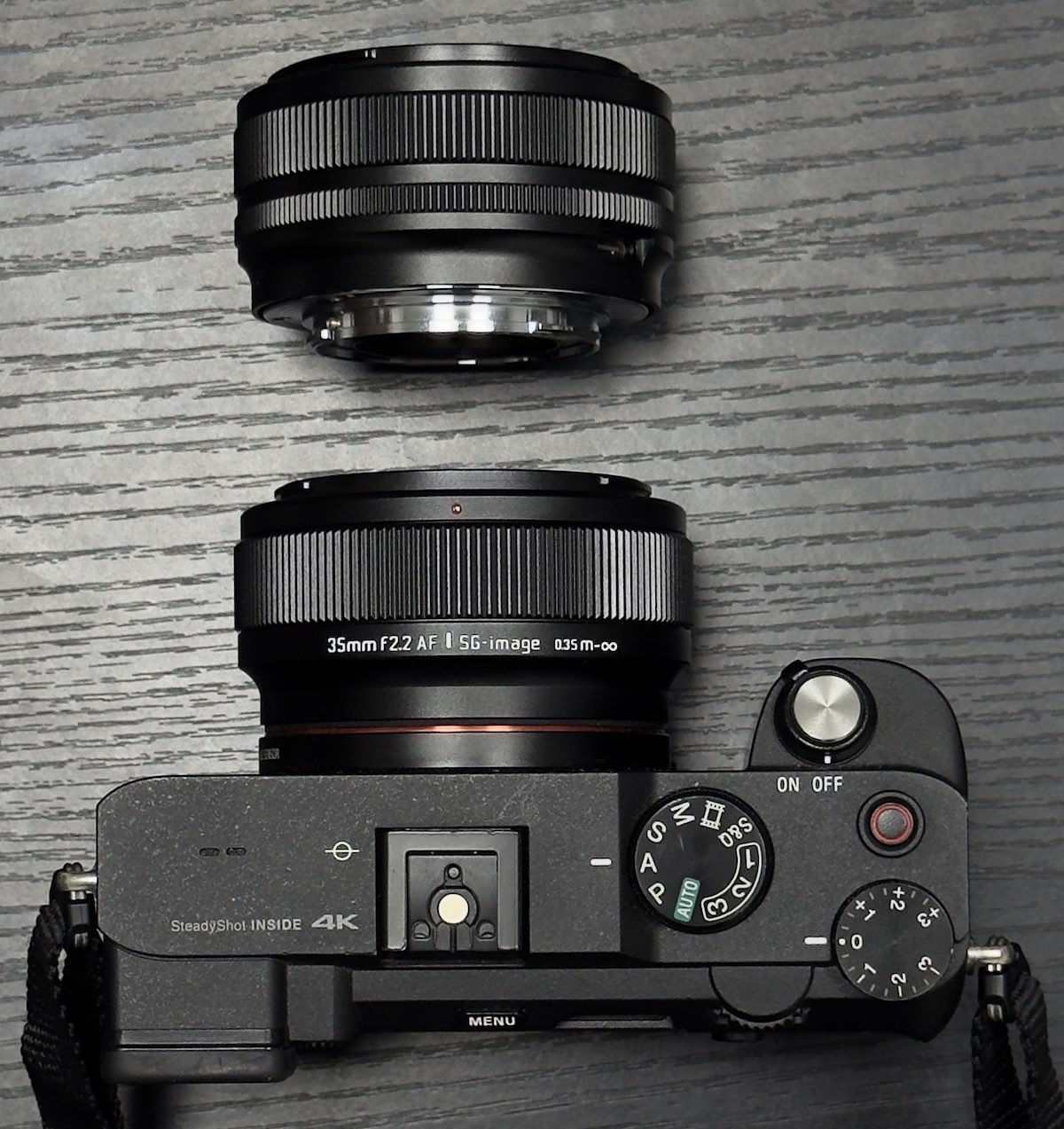
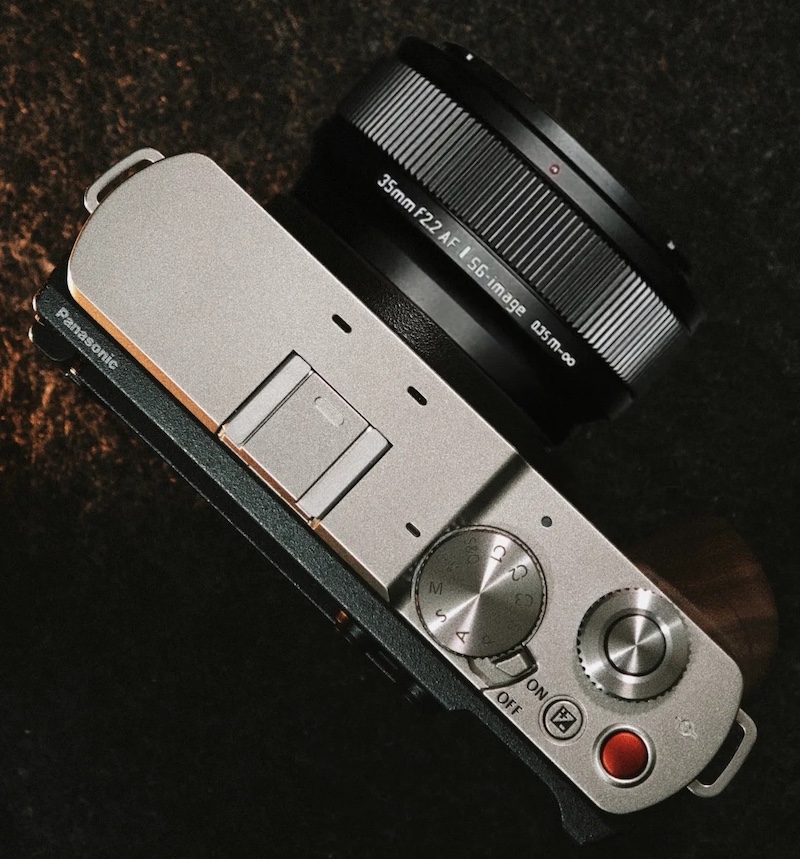
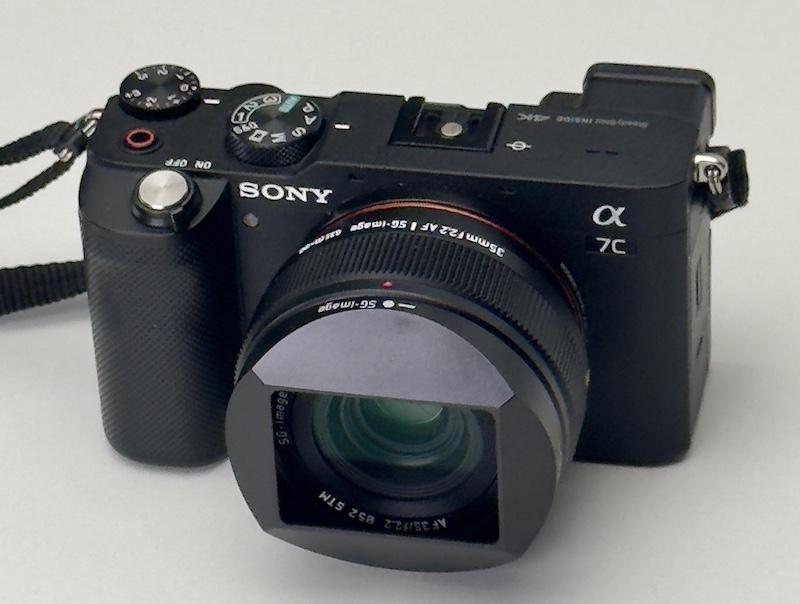
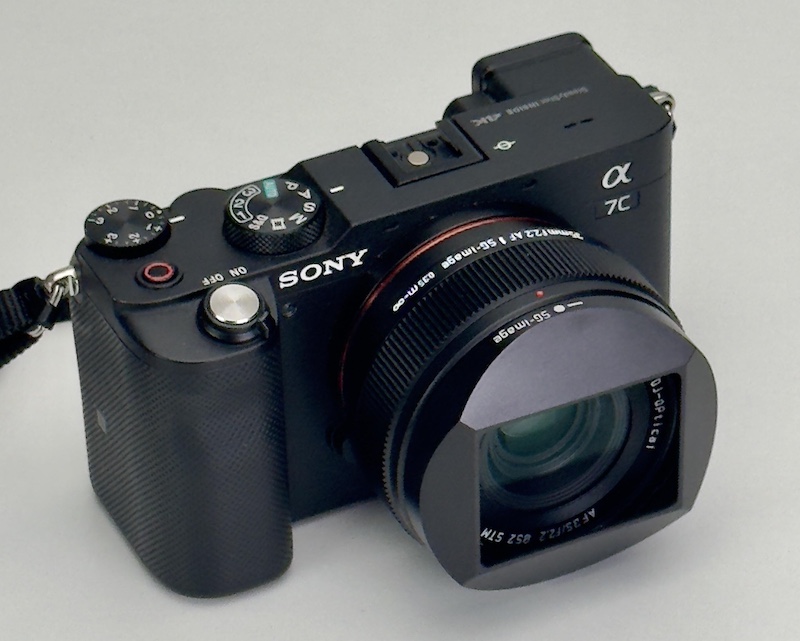
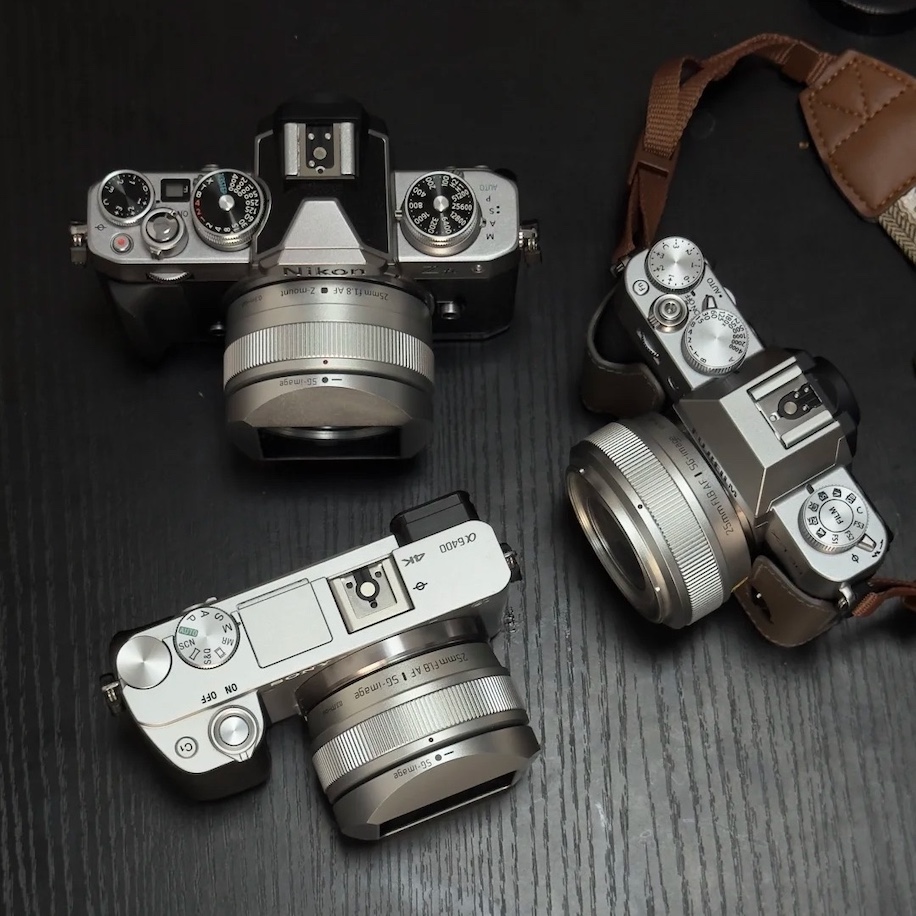
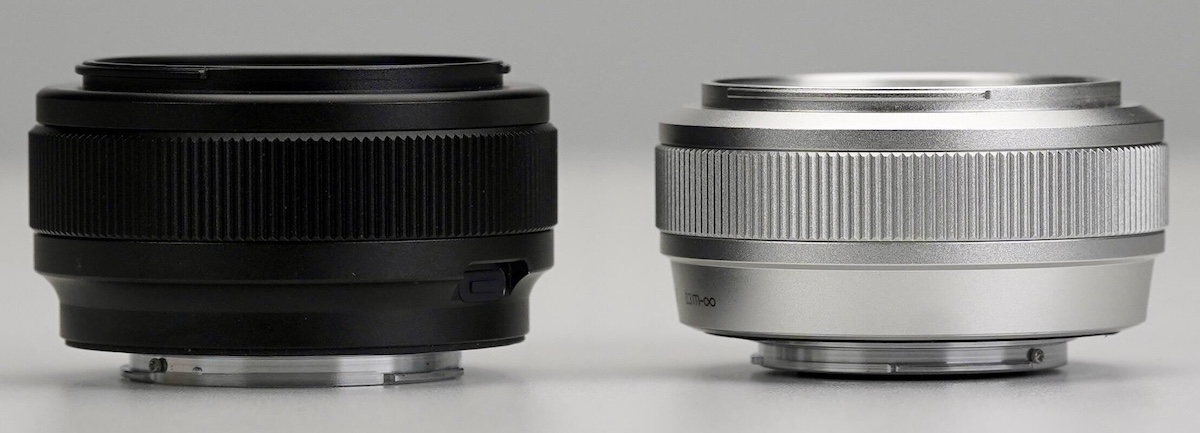
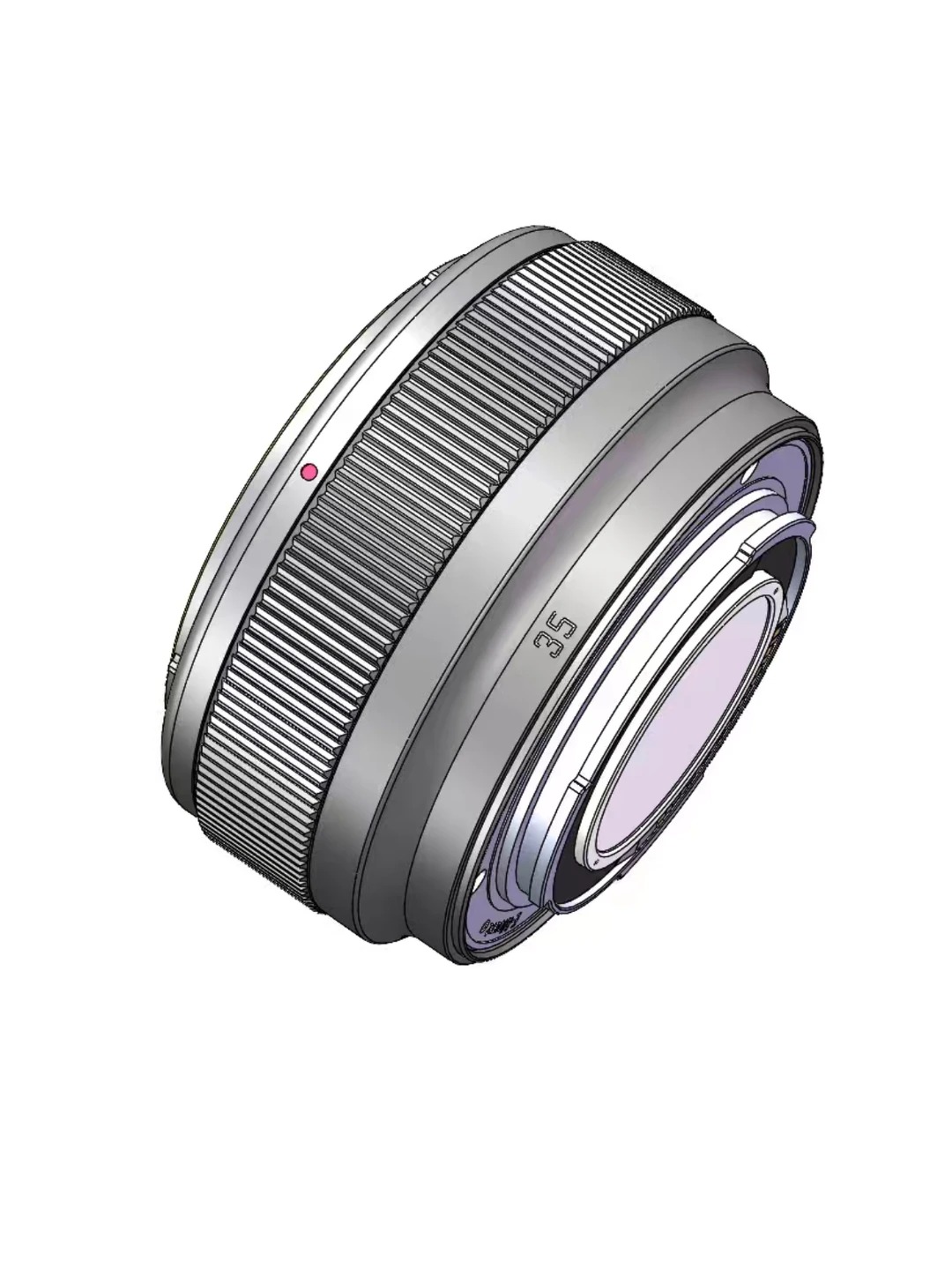
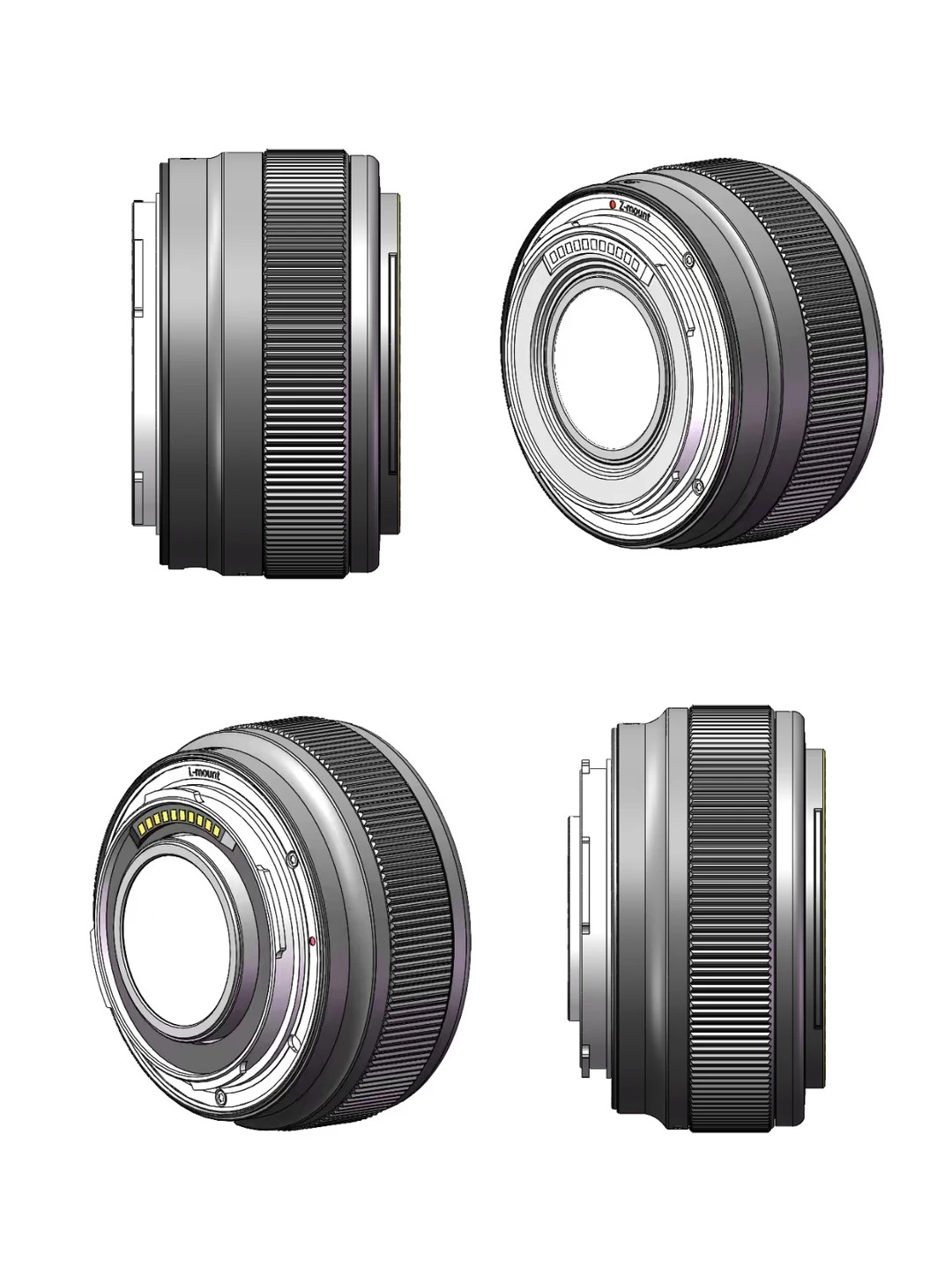
Here is some additional information on the previously reported SG-Image AF 35mm f/2.2 pancake lens for E/Z/L mount (SG-Image lenses are sold on Amazon, eBay, and AliExpress):
Focal length: 35mm
Maximum aperture: f/2.2
Autofocus: Yes
Metal square lens hood included
Foor E/Z/L mount
The Sony E & Nikon Z versions will be released in late January, and the L-mount will probably come in February/March
The visual design of the final version may change (the lens top displayed should only show “xxmm Fx.x”)
The British Journal of Photography has announced the winners of Portrait of Britain Vol. 8. The contest, which began in 2016, aims to celebrate the diverse mosaic of individuals who make up Great Britain by showcasing portraiture from across the country. This year's edition features 100 winning images, selected from a shortlist of 200 and thousands of overall submissions.
The selected portraits spotlight individuals who were born and raised in the UK, those who have moved there, and those simply passing through, telling the stories of veterans, scientists, fishmongers, ballerinas, farmers, and more. The British Journal of Photography explains that the collection serves as "a reminder that the most compelling stories of Britain do not emerge from geography or ideology but from the extraordinary variety of people who inhabit it."
In addition to the online showcase, Portrait of Britain is committed to bringing photography into public spaces. To that end, the 100 winning images will be displayed on JCDecaux UK’s digital screens across the country from January 12 through February 8. The 200 shortlisted images will also be featured in the Portrait of Britain Vol. 8 photobook, published by Bluecoat Press and sponsored by WePresent, WeTransfer’s arts platform. The book is available for pre-order now.
You can see all the winning and shortlisted images and learn more about the contest on the Portrait of Britain website.
Caption: Portrait of Giles Duley, photographer, writer, chef, presenter and CEO: "Photography is relatively simple. You point a camera in the right direction and press a button. But it has taken me 40 years to determine which direction to point the camera. I realised then with photography, I was not going to be noticed because I wasn’t the best photographer. I was doing nothing particularly unique, and I would have to find a way to ensure my work was seen."
Caption: A photograph inspired by the paintings of queer British painter and sculptor, Glyn Philpot. Particularly through his works and portraits of Henry Thomas, circa 1934-35.
Caption: As Emerson emerged from the mist on Margate Beach, his vibrant winter clothing and bicycle created a striking contrast against the soft, foggy backdrop. This scene felt like something straight out of a children’s adventure book, full of mystery and possibility. The coastal atmosphere, combined with the burst of color from Emerson’s attire, made for a uniquely enchanting moment, which also felt singular and rare for my seaside project.
Caption: Tangled together by kinks, coils and care. The importance of Black siblinghood and Black hair and how it is a rich, layered theme that beautifully weaves together identity, heritage, and connection. We are our own protectors of us and our culture. We must stand united. Be proud.
Caption: Kae Tempest backstage at Victoria Warehouse during the BBC Radio 6 Music Festival in March 2025. This shot was taken shortly after Kae came off stage, where he performed new material from the album Self Titled for the first time. It was a personal and emotional moment which I felt incredibly privileged to be present for.
Dr. Marco Schioppo (back) and Adam Parke (front) monitoring the ultrastable laser at the National Physical Laboratory (NPL), Teddington, London
Photographer: David Severn
Image title: Dr. Marco Schioppo (back) and Adam Parke (front) monitoring the ultrastable laser at the National Physical Laboratory (NPL), Teddington, London
Location: Teddington, London
Caption: National Physical Laboratory (NPL) in Teddington operates the UK’s national time scale UTC (NPL) and the UK primary frequency standards, and uses these to contribute to global atomic timekeeping. Atomic timekeeping underpins technologies that are part of our daily lives, such as telecommunications, the internet and global navigation systems. NPL is developing and characterizing a new generation of atomic clocks which are based on laser-cooled trapped ions and atoms with ultra-narrow optical transitions. These optical atomic clocks outperform existing caesium-based atomic clocks in terms of accuracy and stability, with the potential to deliver time and frequency uncertainties 100 times better. The laboratory participates in European collaborations to verify the international consistency of the new optical atomic clocks, and it is expected that this work will lead to a redefinition of the SI unit of time, the second. Such unprecedented measurement precision would unlock new timing applications, enhanced Earth- and space-based navigation, and new tests of physics beyond the Standard Model.
This portrait shows Marco Schioppo (back) and Adam Parke (front) monitoring one of the ultrastable lasers developed by them at NPL. These systems generate the most stable frequency of light in the UK, which contributes to enabling state-of-the-art measurement precision of the optical atomic clocks at NPL.
Caption: "I came to the UK in 2012 to join my daughters, who were already living here. I have no other children, and it was important for me to be close to them. Leaving Iran wasn’t easy. What I found most difficult was missing my sisters. When I first arrived, it was okay – my children took care of me, and that made all the difference. Still, there are things I miss about home: the food, and the weather in particular.
"Not speaking the language has been my biggest challenge. But being surrounded by family has brought me the greatest joy. Their presence has made this place feel like home. If someone I knew was planning to come to the UK, I’d tell them to expect bad weather. But beyond that, I would hope they’re met with kindness.
"What I wish most now is to live the rest of my life in comfort. I would also like the native people to show more understanding towards migrants. That would mean a lot."
Effat Saadat was born on November 14th, 1935, in Iran and arrived in the UK in 2012. I photographed her as part of the 100 Years 100 Migrants project, which features 100 people from 100 different countries and across 100 different ages living in London.
Caption: The Kirati Rai are an ancient indigenous group from Nepal. This work explores the Kirati Rai diaspora in the UK, highlighting how their cultural heritage has endured and evolved through celebrations, memories, and migration. The influence of British culture, informed by centuries of Gurkha involvement in the British Army, is quietly evident in their dress and jewellery, the two interwoven cultures creating something entirely unique to this group.
Caption: Drag artist, author and singer-songwriter, Bollyvvitch is preparing to release her debut album that showcases her creative expression, as a practicing witch and her lived experiences as a South Asian trans woman.
Caption: Elvira owned an independent shop on Clapham High Street. Anyone who has walked along that road would recognise her impeccable dress sense and infectious smile. Unfortunately, like many independent shops, it has now closed and is another vacant storefront on a high street.
Caption: Go Back to Where? explores identity and belonging through the lens of second-generation immigrants. The subject, half-Moroccan and half-French, was born and raised in the UK, yet his identity is often questioned.
Shot against the vast British moors, a landscape deeply tied to national identity, he wears a Gandoura, a traditional Moroccan garment. This contrast visually represents the duality of his experience, balancing heritage with the reality of growing up in Britain. His layered styling, blending tradition with contemporary streetwear, reflects the fluidity of identity.
The title challenges the all-too-common demand for immigrants and their descendants to "go back", a phrase that disregards their lived reality. But where is "back" when you are from multiple places at once? This portrait invites the viewer to reconsider what it truly means to belong.
Caption: I met Judy at a party, and was instantly drawn to her sincere and whimsical character. She invited me to visit her home, and I knew such an interesting woman would have a house to match. Her eccentric property seemingly stretched on forever, full to the brim of antiques and artifacts she had collected for over 50 years. It was her "secret" garden that caught my eye the most. Like her, it was bursting with colour and character.
Caption: The Foresters of Carlton in Coverdale. In the misty light of the Yorkshire Dales, three generations stand shoulder to shoulder. The keepers of a quiet tradition that spans centuries. They are members of the Foresters, part of the rich but fading tapestry of Friendly societies in the UK. Dressed in ceremonial sashes and heritage green, they mark not just a ritual, but a way of belonging.
Once widespread across Britain, friendly societies offered mutual aid, solidarity, and community in times before the welfare state. Though their numbers have dwindled, echoes remain, gathered in villages like Carlton, where custom and care still bind neighbors together. The young boy in the center, horn slung across his body, represents the future of this tradition. His father and brother beside him, steady and proud, hold ceremonial staffs signifying protection, unity, and leadership. Their presence is more than costume; it is continuity. This is a testament to the resilience of rural identity and the deep social roots that run through these hills. In a country often rushing forward, the Foresters remind us of what endures when communities come together. Not in competition, but in care.
Caption: Almost Synchro is a collective of twenty Bristol-based swimmers, bound by a shared passion for outdoor swimming and the art of moving together in water. The group first formed in 2019 for a mass synchronised performance marking the centenary of Bristol’s Henleaze Swimming Lake. In the years that followed, through the quiet persistence of a smaller core, Almost Synchro emerged as a dedicated ensemble. Their performances, staged both in open water and on dry land, combine playfulness with purpose. While they celebrate the beauty of collective movement, they also use their work to draw attention to urgent issues – from the fight against water pollution to the campaign for safe and accessible bathing spaces for all. This project was originally commissioned by The Simple Things magazine as part of their series on Modern Eccentrics.
Caption: You have to be tough to compete as a cyclist. It’s even harder to progress if you are a woman. Beth cycles for a Scottish development cycling team. She dedicates time, effort and focus over months in order to achieve at a competition. I wanted to capture the emotion after the race, when all the training, the excitement and the effort is over. The portrait is in that moment of exhaustion and vulnerability. Beth works as hard as the male cyclists and deserves the same opportunities.
Caption: Lisa was working on one of the machines behind when I asked to take her photograph. She seemed surprised, but I loved the way she held herself, her look felt timeless in the old factory, one of the few workers wearing the traditional machinist jackets and doing so with an ease that felt so natural.
Caption: In the run up to their wedding this year, I wanted to capture the couple at home. An exciting moment of change. The gentleness of their touch and the symmetry in their body language really showed the intertwining moment between them.
Caption: My niece Florence, photographed as part of an ongoing series, Is There Instagram on Mars? A reactionary project about our obsession with social media, in the same way I was obsessed with aliens and UFO’s as a child. Neither make sense but both bring an idea of a different life.
Caption: Green Grass’ is a series of medium format portraits, capturing people who inspire me in my hometown. Everyone has heard the phrase ‘the grass is greener on the other side'. I grew up believing in this statement, which resulted in never feeling peaceful within myself or content within my life.
Through this ongoing work in progress personal project, I’ve decided to challenge the original concept and rather ‘water my own grass’ by paying attention to where I am and focusing on finding inspiration in the place I’ve spent most of my life so far, a place so ordinary to me. Meeting interesting individuals who have given me a fresh perspective - one which is more positive. I am beginning to find that inner peace and contentment I’ve been seeking elsewhere for so many years.
Thank you to everyone who has been a part of my project so far and has helped shift my mindset into a much more hopeful and enlightened one. I hope this project can be a reminder to others that ‘the grass is greener where you water it’.
Caption: I have been photographing fashion, art and music icon Princess Julia for almost twenty years. We often shoot together, just the two of us, in locations around Julia's East London flat, no stylist, no hair or makeup, just the two of us collaborating. Julia first found fame as one of the faces of the New Romantic movement, and her outfit in this image, at Fellow Court in Hoxton, harks back to that era of fashion.
Caption: Portrait of Alaa, a member of the Muslim Women's Association of Edinburgh. This image is from my documentary project 'Faith', which examines the diversity of religious experience and identity in Edinburgh. This work seeks to foster a deeper understanding of how spirituality shapes daily life, culture, and community. It highlights the unique expressions of religion across different communities, exploring the intersection of faith and personal.
Caption: This is Adam, a tattoo artist from Norwich, and his Nan, Janet. I met them both in the city center after they'd just had tea together at a local department store. I was on my lunch break and happened to cross paths with them. With my camera in hand, I approached, focusing on Adam: tall, handsome, and heavily tattooed. Janet, on the other hand, was small, neat and compared with Adam, conservative looking. A fine pair indeed. They agreed to a street-style portrait, which I later sent to Adam to share with his family. They were thrilled with the photo. I eventually plucked up the courage to ask if I could photograph them again, explaining that I thought they would be perfect subjects for the Portrait of Britain exhibition.
They kindly agreed, and months later, we met at Nan's house. We drank tea, ate biscuits, and spent time getting to know one another while making some simple photos. I asked Adam to show his Nan some of his other tattoos, and we all agreed that they added something special to the portraits. Adam's Nan, clearly fond of the tattoos, remarked, "I'd have a tattoo if I wasn't so old." Their closeness and ease with each other was a true cure to the modern anxieties we all face, offering a beautiful example of the family bond.
Emmanuelle and her dog Alix, at the Brighton beach
Photographer: Rona Bar and Ofek Avshalom
Image title: Emmanuelle and her dog Alix, at the Brighton beach
Location: Brighton, United Kingdom
Caption: Emmanuelle is a model with a disability, living in Brighton, UK, photographed with her dog Alix, at the beach in Brighton, wearing a design by one of her favorite fashion designers. Emmanuelle works as a model and a fashion figure and influencer, she's represented by Zebedee Talent Agency, a modeling agency in the UK that represents people with disabilities and visual differences.
Location: Kings Park Secondary School, Glasgow, Scotland
Caption: From the project: Kings Park: a portrait of diversity. Working alongside teachers and pupils called "Diversity Ambassadors", we created a project celebrating diversity in an urban Glasgow school.
Image title: Before We Were Proud – Peter and David
Location: London
Caption: Part of an ongoing series featuring older members of the LGBTQ community. David and Peter have been together for over 30 years. "We may have met in a sleazy leather bar, but we have so much in common. We both love gardening, classical music, and theatre. We’re so compatible."
"Neither of us was looking for love. The relationship just developed beautifully. And we’re very happy together."
Caption: Jacob Amwa, 23, is completing his final year in marine biology in 2025. With roots in Ghana, Nigeria and England, and having grown up in Switzerland, his background is as diverse as his interests. He is passionate about ocean conservation, especially protecting sharks and rays in the Mediterranean. "I want to work somewhere like Spain or Italy, close to the sea and making a difference," he says. Plymouth stood out to him for its strong academic support and coastal environment. "The lecturers care about what they teach. That made me care too." Music is a big part of his life. He finds comfort in artists like Frank Ocean and Daniel Caesar. "I sing by myself in the shower," he says with a smile.
Through photography, I seek to explore identity not only as a personal experience but as something rooted in place, heritage and belonging. A project like this is a form of cultural preservation. In capturing people like Jacob in their present moment, we create a human archive that reflects the richness and diversity of our time. In the future, when we look back at the people who lived in the early twenty-first century, I hope this portrait serve as a reminder of the beauty of difference, the complexity of identity and the shared humanity that connects us all.
When you use DPReview links to buy products, the site may earn a commission.
Product of the Year 2025: the results
The final round of voting has closed, and it's time to reveal the winners of our 2025 Readers' Choice Awards! Beginning in December, DPReview readers picked their favorite cameras, zoom lenses and prime lenses released in 2025. The winners of the first round of voting were then pitted against each other for the title of Product of the Year. Take a look and see which products came out on top.
Second runner-up: Sony FE 50-150mm F2 GM
The Sony FE 50-150mm F2 GM won our Readers' Choice Award for Best Zoom Lens of 2025, so it's not surprising to see it land in one of the top three positions in the Product of the Year competition. It pulled in 13.8% of the vote total, just edging out the Canon RF 45mm F1.2 STM for the second runner-up position.
To be sure, the Sony FE 50-150mm F2 GM was one of the most interesting lenses of 2025, offering a combination of fast aperture, a versatile zoom range, and top-notch image quality that can deliver impressive levels of background separation. Even better, its relatively compact size makes it manageable to carry around. We have no doubt this will be one of Sony's most popular lenses for the foreseeable future.
First runner-up: Sony a7 V
The Sony a7 V secured the first runner-up position in our Readers' Choice Product of the Year vote, pulling in 19.5% of the votes cast. That's a solid performance for a camera announced so late in 2025 that it came within a couple of days of missing the deadline for this year's award voting.
We're not surprised it did so well, though. It significantly improves upon its predecessor, the a7 V, arriving with an updated 33MP "partially stacked" sensor that supports 14-bit readout even when shooting at bursts of 30fps. It also features the most up-to-date AF system in Sony's a7 series, pre-burst capture, and much improved video specs, including 4K/60p video derived from 7K capture. And even with its partially stacked sensor, it still manages to deliver impressive dynamic range. We expect this to be Sony's workhorse enthusiast camera for the next several years, and based on your votes, it looks like the a7 V delivers where it counts.
And the winner of our 2025 Readers' Choice Product of the Year Award is the Nikon Z5II, marking Nikon's third consecutive win, following the Nikon Z8 in 2023 and theNikon Z6III in 2024. That's an impressive run by any measure. Clearly, Nikon is doing something right.
More notably, the Z5II made a clean sweep of all our awards this year. A few weeks ago, we named it the Best Enthusiast Camera of 2025 in our DPReview Annual Awards, as well as our DPReview Product of the Year for 2025. It also won Best Camera in our 2025 Readers' Choice awards, before you chose it as your Product of the Year.
Wow. Just wow.
However, the most impressive part might just be that the Z5II wasn't the most impressive camera introduced this year by any measure, except possibly one: value. It delivers excellent still and video quality, includes in-body image stabilization, Nikon's latest autofocus system, and the fantastic ergonomics we've come to expect from Nikon. And, as we said in an earlier write-up, it comes at a price that's low enough to make you wonder if there's a catch. (There isn't.) To sum up our own Nikon Z5II review, "Very few of us truly need anything more."
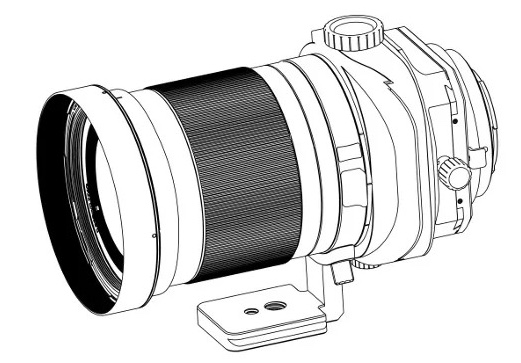
The previously reportedViltrox Nexus PL to E Pro cinema AI adapter with full AF capabilities is coming to Kickstarter on January 15th. Last year Viltrox was teasing a new adapter with AI autofocus support called Nexus Focus: “Where AI autofocus meets the art of cinema“. The new adapter will provide manual-focus lenses with autofocus capability and will support the native phase-detection AF, AI subject recognition, eye + face detection, and more:
The Viltrox NexusFocus PL-E Adapter (also referred to as the Nexus PL to E Pro) is an innovative cinema lens adapter designed to bring full autofocus capabilities to manual PL-mount cine lenses when used on Sony E-mount cameras. Announced as a prototype at IBC 2025 in September, it essentially transforms vintage, anamorphic, or modern manual cinema primes into AI-driven autofocus lenses by leveraging the camera’s native phase-detection AF system.
Key Features
Autofocus Integration: It taps directly into Sony’s autofocus protocols, enabling features like eye AF, face recognition, subject tracking, and tap-to-focus on the camera’s LCD. No additional sensors (like LiDAR) or wireless follow-focus systems are needed—the adapter uses external motors to drive focus based on real-time data from the camera sensor.
Iris and Zoom Control: Beyond focus, it supports camera-controlled aperture (iris) adjustments, and with additional motors, it could handle zoom on compatible lenses.
Lens Profiles: Comes with pre-installed profiles for various PL lenses, allowing quick calibration, saving configurations, and easy swapping without recalibration.
Power and Design: Powered by a small battery that lasts for days of use. The prototype includes refinements planned for housing, cable management, and motor strength.
Compatibility
Primarily for Sony E-mount cameras with built-in AF, such as the FX3, FX6, A7 series, and NEX series.
Limited testing has shown partial functionality on other mounts like L-mount, Nikon Z, and Fuji GFX, with potential for expanded support in future versions.
How It Works
The adapter mounts between the PL lens and E-mount body, then connects to external motors on the lens. It receives AF commands from the camera (e.g., when you tap the screen or use subject detection) and translates them into precise motor movements for focus and iris – making manual lenses behave like native Sony AF glass.
An image from my third 365 project, taken in 2012. Photo: Abby Ferguson
Every photographer inevitably goes through periods where they hit a wall. That wall can come from all kinds of things, including a lack of inspiration, growth stagnation or both. But either way, it often leads to not wanting to pick up a camera. While just like exercise, there are times when rest is best (pardon the rhyme), there are also times you're better off pushing through those feelings of apathy.
While I've yet to find a consistent one-size-fits-all fix for the countless times I've been in a creative drought, there's one method I frequently fall back on: tackling various types of photography projects. For me, those projects have taken the form of five separate 365 projects (a photo a day for a year) and three 52-week projects (a photo a week for a year).
Why specific projects help with stagnation
My first 365 (from 2010/2011) challenged me to take photos I wouldn't have otherwise thought of or tried. Photo: Abby Ferguson
No matter the structure, these projects all have the same goal: to give me a reason to pick up my camera when I least feel like it. If I feel like I've plateaued in terms of my skills, leaving the camera on the shelf isn't going to help me move past that. Instead, I'm better off finding ways to challenge myself with my camera. Likewise, if I find I'm lacking inspiration, ignoring my camera often isn’t the way to go. Sometimes forcing myself to pay more attention to what's around me on a daily basis can be just what I need to find that inspiration and feel like myself as a photographer again.
Designing a sustainable project
If the goal is to pick up your camera with some consistency, it's important to plan a project that you think will be sustainable for you and your life. Just like going to the gym, you won't be much better off if you only stick to your plan for a few months and then revert to your old habits.
Luckily, there are essentially endless ways to structure a project so that it's more likely you'll be able to stick to it. But putting some thought into it ahead of time is useful, so you aren't completely winging it during the project (which I've also done). That's not to say rules and guidelines can't shift over time, but having some expectations and guardrails in place will help in getting more out of the project.
Time span and cadence
First, you'll want to decide on how long the project should be and how often you'll want to take pictures. You could decide on a year-long project, such as a 365, 52-week project, or 12-month structure. Or maybe something shorter, like a photo every day for a month, is better for you.
"I won't sugarcoat it: year-long projects, especially 365s, are hard."
I won't sugarcoat it: year-long projects, especially 365s, are hard. That can be even more true if you opt for specific rules, such as requiring the use of your dedicated camera and editing the images on the same day. Such projects can involve a lot of time. Real life doesn't stop when tackling a project like this, and it can feel like a grind at times. Be as realistic as possible (a lot can change in a year) when deciding how long you want the project to last and how often you want to create images.
Open-ended or themed
This image is from a 52-week project I completed in 2010, which was entirely dedicated to taking a self-portrait once a week for a year. Photo: Abby Ferguson
You also have options when it comes to the theme or topic of your project. My 365s have been completely open-ended with no topics or themes to stick to, whereas my 52-week projects always have more structure, such as a self-portrait once a week or a weekly hike with a video and photos for each one.
A more structured project could be beneficial if you have specific skills you want to work on. For example, if you want to improve your lighting, maybe a project that's focused on using artificial light for every image would be best. Or, if you want to improve your portraiture, taking a portrait every day for a year could be a good challenge. The structure could also relate to an area of your portfolio you want to develop more, if you’re trying to find work in a certain niche or genre. The key, as with any goal, is to find something that challenges you, but is still attainable.
Additional boundaries to consider
My last project, completed last year, started as a hiking project to get outside with my dog more, but ended up being a photography and videography project as well, as I set a requirement of creating a Reel for Instagram for every hike. Photo: Abby Ferguson
There are countless boundaries you can put in place to add more challenge or make it easier. For my most recent 365 project, completed in 2020, I allowed myself to use my phone for photos, rather than requiring polished images taken with my dedicated camera every day. Additionally, you could decide to use only unedited images to save yourself some time and effort.
Considering where or how you will share the project is also worthwhile. It may be something just for you, and you might not want to share the photos or videos anywhere. You could plan on combining all of the images into a book when you are done. Or maybe you want to start a blog or share on social media to help keep yourself accountable. There are also many groups specific to these types of projects (including in our forums), and joining one could be a good way to stay motivated, find inspiration, and hold yourself accountable.
Getting through mid‑project slumps
When I was in a slump during my 365s, I would sometimes try a new technique or process to spark some creativity. In this case, I had a single giraffe that I took many individual shots of and then edited together. This was taken during my third 365 in 2012. Photo: Abby Ferguson
For each of the eight year-long projects I've tackled, there have inevitably been mid-project slumps. During every single one, I've debated quitting or found myself off track for various reasons. Whether due to a vacation mid-project, life struggles or just busy times at work, I've inevitably missed days here and there. It may seem counterproductive to have feelings of apathy about a project aimed at addressing apathy, but it's all part of the process in my experience.
As a result, it's important to just keep going. Getting off track for a day or two doesn't mean you need to abandon the whole project and give up. This is where those boundaries you set up (or establish mid-project) can come in handy. Maybe you decide that editing a photo from another day that you hadn't touched yet counts. Or, just move forward, and the project will take a little longer than you originally planned. The important thing is to keep working at it and not let a few missteps derail the entire thing.
Looking back: what a project can change
I recently started a project with a friend, based on prompts that we alternate in choosing to try to overcome my most recent creative slump. This was for a black and white week. Photo: Abby Ferguson
To be honest, tackling a specific project is unlikely to be a dramatic, life-changing experience that will prevent you from ever struggling with your photography. However, it can be a driver of growth and help you learn a great deal about yourself and your photography.
Each of my projects helped me understand more about what inspires me, which is useful even when I'm not tackling a long-term project. Picking up my camera on a regular basis also inevitably improved my skills. And while far from every photograph from these projects was excellent (or even good, for that matter), I did produce a lot of images that I'm very proud of. Plus, they helped me identify subjects and genres I enjoy, guiding my photography over the years. At the risk of being cheesy and motivational, growth is growth, no matter how small.
I came across this sign in a park in St. Petersburg, Russia, many years ago. It says, "Attention! Keep an eye on your things." While the message is serious and a good reminder to tourists, I always thought the illustration was creative and amusing.
This month, we're celebrating the silly and strange world of signage that tells an interesting story. Whether you're traveling across the country or just around the corner, show us a photo of a sign with a unique story to tell. It could be a massive billboard along a highway or a quirky notice in your local pub. We can't wait to see what you discover!
Photos can be submitted between Sunday, January 18, and Saturday, January 24 (GMT). The challenge is open to photos captured at any time.
Important: Images MUST include a title and a description of at least 25 words to be eligible. We need to be able to share the story behind your photo. We will consider both photos and captions when selecting our winners, so make sure to tell us that story!
Visit the challenge page to read the full rules and to submit your photos for consideration as soon as the challenge opens.
The Khongor Sand Dunes in Mongolia, partially covered by snow and ice.
DJI Mavic 2 Pro | ISO 100 | 1/200 sec | F8 Photo: Erez Marom
Today, I'd like to talk about my experience shooting landscapes and wildlife in Mongolia. Known for its remote location and as the world's least densely populated country, Mongolia encompasses some very interesting landscapes and wildlife. While hot in summer, in winter it goes into a deep freeze. Temperatures plummet, and as a result, both landscapes and wildlife change dramatically. It's definitely a whole different place in winter when it comes to photography.
My first visit to wintery Mongolia was in early 2020. A friend and I set out to spend a couple of weeks shooting both the Khongor dunes and the frozen Khuvsgul Lake, but after a week, we had to flee the country since Covid had just begun spreading uncontrollably. As our guides put it, it was either get on the next flight or settle in, set up a ger tent and find a nice Mongolian wife. The second visit, which took place in January 2025, was far better and more fruitful. I will share my images from both these trips in this article and the next.
The first location I visited in Mongolia was the Khongor Sand Dunes. Known as the "Singing Sands," It lies within the Gobi Gurvansaikhan National Park, extending up to the foot of the high Altai Mountain range. The dunes "sing" (produce a humming sound upon the movement of the sand) mainly in summer. In winter, the dunes are saturated with moisture from falling snow and become something else entirely.
Other than a few snowy patches, I had to settle for ordinary-looking dune shots, without any winter characteristics.
Canon 5D IV | Canon 70-300mm Focus stack from 2 shots taken at 182mm | ISO 100 | F16
Another aerial image of the dunes.
DJI Mavic 2 Pro | ISO 100 | 1/240 sec | F9
Photos: Erez Marom
Our goal was to shoot the dunes with snow and ice, which proved difficult. There isn't much precipitation in the area, so it's a big gamble, which we didn't really win. There were patches of snow, but it was mainly just dunes. The positive part was that the dunes had gigantic snowy mountains behind them, which is something that you rarely see. This combination really said "Mongolia," which is something I wanted to achieve.
Snowy dunes at the foot of snowy mountains – quite a unique sight.
Canon 5D Mark IV | Canon EF 70-300mm f/4-5.6 IS II USM | ISO 100 | 1/250 sec | F9
The next location was one I was supposed to visit back in 2020 but couldn't: Khuvsgul Lake. Khuvsgul is an ancient lake (more than 2 million years old) in northern Mongolia, located near the Russian border and adjacent to the similarly ancient Baikal Lake. As it is with Baikal, Khuvsgul's surface freezes in winter, forming an ice layer thick enough to drive a car on most of its surface. The wind's drag (and to a lesser degree the currents underneath) push parts of the frozen surface against each other, creating a myriad of cracks and shapes which are beautifully visible and shootable using a drone.
These cracks were so nice and symmetrical that they basically dictated the composition, leaving me with very little thinking work.
DJI Mavic 3 Classic | ISO 100 | 1/240 sec | F6.3
The lake has several rocky islands, and the movement of the surface pushes ice toward the banks, where it shatters and creates piles of icy debris, perfect for both near-far landscape compositions and abstract photography.
Ice slabs, pushed into a vertical position, created a natural foreground for this shot.
Canon R5 Mark II | Canon RF 24-105mm F4 L IS USM | ISO 200 | 1/320 sec | F14
An abstract of shapes and light.
Canon EOS R5 Mark II | Canon RF 24-105mm F4 L IS USM | ISO 100 | 1/100 sec | F11
Large pieces of ice get pushed up onto the lake's banks, adding color and interest to the foreground.
Canon R5 Mark II | Canon RF 24-105mm F4 L IS USM | ISO 100 | 1/125 sec | F14
I particularly enjoyed shooting aerial abstracts of the lake's surface. The options are endless, plus the ice changes every winter, turning Khuvsgul into a truly infinite source of compositions.
These cracks shot top-down looked like a neural network!
DJI Mavic 3 Classic | ISO 100 | 1/100 sec | F6.3
This composition is nice because it shows the huge ice slabs with large cracks between them, the snowy patches dotting the surface, and the smaller cracks filling the ice. Can you spot our car?
DJI Mavic 3 Classic | ISO 100 | 1/200 sec | F6.3
I know it doesn't seem like it, but this is 100% natural. As is often the case with abstract photography, it's a bit challenging to perceive the scale of things. Is this a frozen lake or a petri dish? I like the combination of rough surface ice with large cracks, opposed by clear ice with smaller, finer cracks.
DJI Mavic 3 Classic | ISO 100 | 1/80 sec | F6.3
These cracks looked just like man-made roads. I was fascinated by the shapes and textures in the ice.
DJI Mavic 3 Classic | ISO 100 | 1/100 sec | F6.3
Photos: Erez Marom
Different parts of the lake have different depths and thus different colors. When shooting close to the banks, where the water is shallow, the ice has a more turquoise color. When shooting at the center, where it's deeper, the color is a deep shade of blue.
The larger and smaller cracks combined to create both the foreground and texture of this image. The contour of the bank and the mountains in the background completed the composition.
DJI Mavic 3 Classic | ISO 100 | 1/160 sec | F7.1
In the second part of this article, I will talk about shooting landscape in the Jargant River and wildlife in the vast Mongolian Steppe.
Erez Marom is a professional nature photographer, guide and traveller. You can follow Erez's work on Instagram and Facebook, and subscribe to his mailing list for updates.
Erez has recently published his first e-book, Solving the Puzzle, thoroughly explaining his views about composition in landscape photography and beyond.
When you use DPReview links to buy products, the site may earn a commission.
More practically, the camera is also $200 off at most retailers, too. Photo: Richard Butler
UPDATE Jan. 12: This deal no longer appears to be active on Adorama's website.
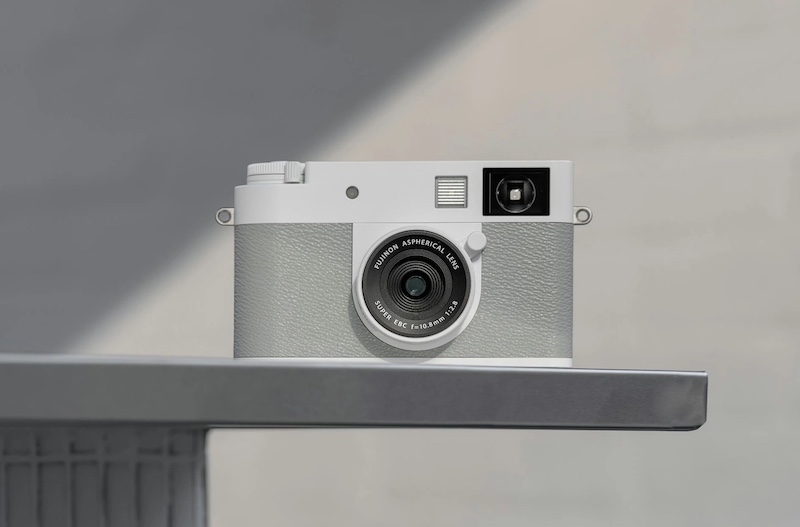
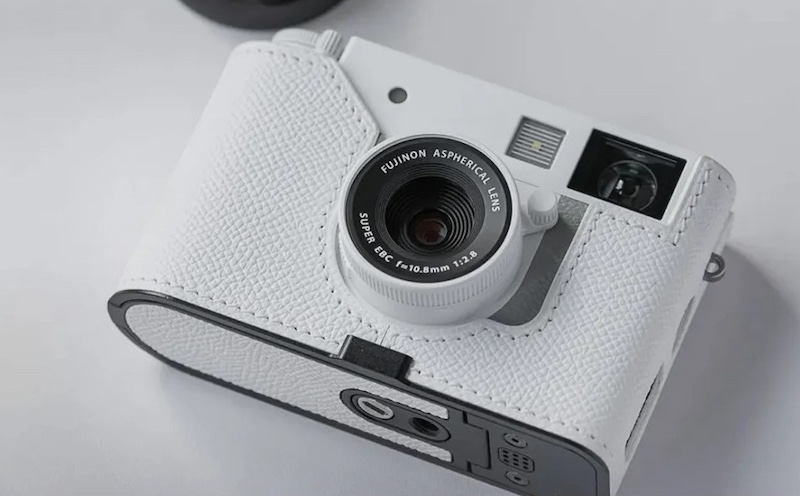
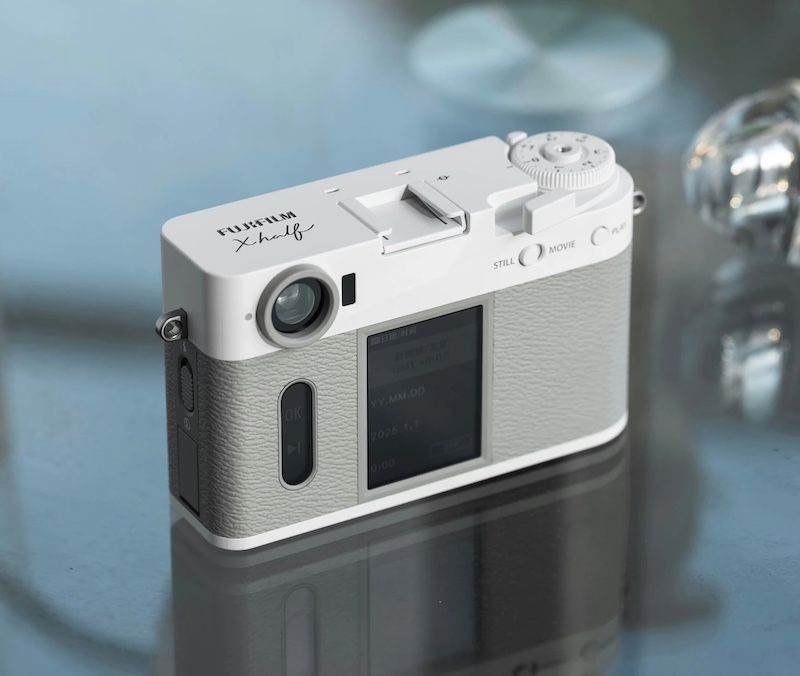
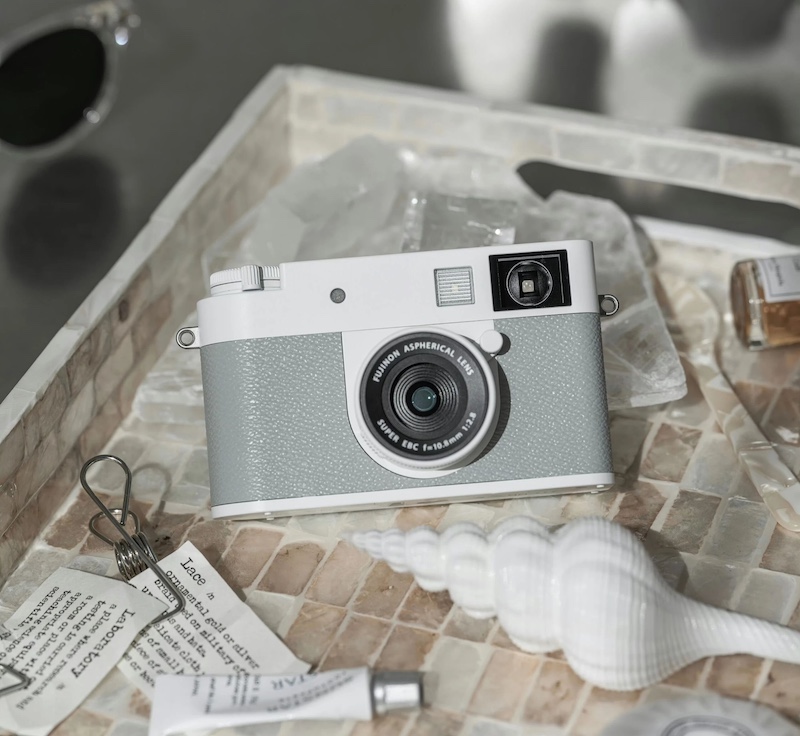
Sometimes, sales don't make a ton of sense, but are all the more intriguing for it. That's certainly the case with one Adorama is running right now: if you buy a Fujifilm X-T5 with a 16-80mm F4 lens, you'll not only get $100 off the normal price of the kit, but you'll also receive... a free X half?
Seriously. If you go to the US retailer's page for the X-T5, select that kit lens and set the kit style to "base," you'll see a pop-up saying it comes with a "free gift" valued at $649; a black X half camera. Add it to your cart, and they both show up.
While I haven't fully gone through the checkout process, as far as I can tell this deal is real.
Currently, this deal seems relegated to Adorama. While the X-T5 is on sale at other retailers for the same price, no other stores that we found were throwing in an X half with it.
If we're being honest, it seems like a bit of an odd pairing to us. When we reviewed the X half, we found that it was a fun camera as long as you didn't try to treat it like a serious photography tool. While that might make it seem like a good complement to the X-T5, which is a serious piece of equipment, it's also easy to imagine that the type of person looking to buy an X-T camera might quickly get annoyed by the X half.*
Still, there's probably enough overlap between the two markets that at least a few of our readers will be excited by this news. Adorama doesn't say how long the offer will last, or whether supplies or limited, so if you're in the market for a X-T5 and were curious about the X half, it may be better to act sooner, rather than later.
Also worth noting: the X half has been selling for less than its original MSRP of $850, with several retailers offering it for $649.
* - Though, to overanalyze it further, would that kind of buyer really go for the 16-80mm F4?
Today marks the end of the Consumer Electronics Show (CES), the annual trade show that showcases innovative technology and devices. While photography once played a more prominent role at the event, many major camera companies no longer participate, and headlines now tend to focus on flashy TVs and odd gadgets instead. That doesn't mean there wasn't anything for photographers and videographers, though. We’ve rounded up some of the most interesting photography and videography-related gear unveiled this week so you can see what's new.
Storage
Computers are a core component of CES, so it makes sense that new storage devices are also fairly common throughout the show. This year was no different, with multiple brands unveiling new products.
Other World Computing (OWC)
Image: OWC
OWC made a few announcements at CES this year. First, the ThunderBlade X12 RAID SSD, which was announced last year, is now available with a capacity of 192TB. That's double the capacity of the original device. For video professionals, that much storage isn't out of the realm of reasonable, as Raw video files can be exceptionally large.
The drive is also fast, with promised speeds of up to 6600MB/s peak and 5990MB/s sustained write speeds thanks to its Thunderbolt 5 technology. OWC says it is the first and only Thunderbolt 5 RAID shuttle drive with this capacity in a compact form factor. The drive won't be available until "mid-2026" and no pricing information is available yet. However, the 96TB model costs $16,800, so be prepared for an eye-watering price to match the eye-watering amount of storage.
Image: OWC
OWC also announced a slightly more consumer-friendly product as an extension of its Envoy Ultra Thunderbolt 5 SSD lineup. The company's portable SSD is now available in an 8TB capacity, joining the existing 2TB and 4TB options. OWC says it is the first Thunderbolt 5 bus-powered 8TB drive. It promises speeds of over 6000MB/s with a large amount of storage for professionals on the go. It's also crushproof, dustproof and waterproof, with an IP67 rating. It's still not cheap by any means, with a $1700 price tag, but it is available for purchase now.
Lexar
Image: Lexar
This year marks Lexar's 30th anniversary of being in business, and the brand is celebrating at CES with a range of new flagship products. That includes the Lexar Professional Silver Plus microSDXC UHS-I card, with capacity up to 2TB. Lexar promises 255MB/s read and 180MB/s write speeds, but the V30 rating only guarantees the ability to sustain 30MB/s read/write.
Images: Lexar
The company also showed off the Lexar Air Portable SSD. It's a highly compact SSD that weighs just 17g (0.6oz) and features a carabiner loop, making it easier to keep on hand. It comes in light blue or black, so you can pick one that fits your vibe. Lexar promises speeds up to 400MB/s, and says it offers two-meter drop protection. It's available in 512GB, 1TB and 2TB capacities.
Another SSD on display was the TouchLock Portable SSD. It offers a dual-encryption system with an integrated NFC chip and 128-bit AES hardware encryption. Each drive has a unique ID, allowing access only through a registered smartphone that you tap to unlock. It's highly compact (only 7mm thick and 40g) and magnetic, so it can attach to the back of your iPhone. Like the Air mentioned above, it's available in 512GB, 1TB and 2TB capacities.
Lexar didn't provide pricing or availability information for the new products, so we'll have to wait to see how those shake out.
Hohem
Image: Hohem
Hohem is best known for its budget-friendly gimbals and mics, but now, it's entering a new market: SSDs. The company announced its first SSD, aptly named the SSD-01. It's a smartphone-focused drive with a tiny form factor and a flip-up USB-C plug so you can more easily attach it to your phone for ProRes Raw and Open Gate recording on supported iPhones.
The drive comes in 1TB and 2TB capacities, and Hohem promises 2000MB/s read and 1800MB/s write speeds. It also offers two extra USB-C ports so you can charge devices or plug in accessories like mics. Hohem hasn't said when it will be available, but the 1TB will cost $219 and the 2TB drive will be $339.
Audio
There were also some new microphones on display at CES this week, aimed at creators using either phones or dedicated cameras.
Shure
The updated MV88 now features a USB-C connector for Android phones and modern iPhones. Image: Shure
This year, Shure is updating the MV88, a small, stereo microphone made to plug in to the bottom of your phone via USB-C as an upgrade to your phone's internal microphones. It features an all-metal construction, and has the ability to both swivel and rotate, making it easier to point it at the audio source, no matter which way you're holding your phone.
As with most gadgets these days, there's a corresponding app to give you access to features like auto-leveling, denoising, and the ability to switch the microphone's pickup pattern.
The MV88 works with Android, iOS and most computer operating systems, and will be available later this month for $159.
SmallRig is continuing to push into the wireless microphone space with its new S70 system, which includes two transmitters with built-in lavaliere mics, a receiver made to mount on a camera's hotshoe and plug in via a 3.5mm cable, a receiver designed to plug into a USB-C device and a charging case to keep it all running and in once place.
While the set may not have every feature under the sun – it doesn't support 32-bit float backup recording like the DJI Mic 3 – it's also only $90. The company says it starts to shipping orders to the US on January 12th, and to other regions three days later.
While there were plenty of robots with cameras and security camera-type devices at CES, there weren't any major camera releases from familiar brands. However, we did see an action camera from a company best known for its robot vacuums: Dreame.
The Dreame Leaptic Cube looks remarkably like the DJI Osmo Nano, which itself is very similar to the Insta360 Go series. Like those, it's a modular camera that can magnetically attach to a pod with a screen, or be worn on its own. However, the Leaptic Cube offers 8K video in 10-bit with 50MP photo resolution and a Type 1/1.3 sensor. Dreame also says the camera offers gyro AI image stabilization and 13.5 stops of dynamic range. It promises 200 minutes of runtime with the pod, pre-recording, wireless control from the pod and gesture control.
There are also other AI features built in, including AI Scene Optimization, which Dream says will recognize scenes such as city nights and fireworks and then enhance vibrance, clarity and depth depending on the scene. It can also automatically edit portraits to "enhance your beauty" while leaving the background untouched.
It certainly looks promising for such a tiny camera. Pricing and availability still haven't been announced, but you can find out more at the Leaptic website.
Gimbals
Hohem
The Hohem iSteady M3 gimbals have built-in cameras for tracking subjects. Image: Hohem
Hohem also introduced two new additions to its gimbal lineup, the iSteady MT3 and MT3 Pro. Both are designed to be used with mirrorless systems with 1.4kg (3.1lbs) and 2.5kg (5.5lbs) payload capacities, respectively, and feature an integrated fill light, but their big trick comes from their built-in cameras. They're not used to capture footage; rather, they allow the gimbal to track a selected subject, letting you focus on just moving the camera, rather than also having to control where the camera is pointed.
The iSteady MT3 can track humans, while the MT3 Pro is also capable of automatically moving the camera to follow pets, vehicles and arbitrary objects as well. The Pro also comes with a detachable remote that wirelessly shows you (or a camera operator) a live feed, while also allowing you to control the gimbal's settings and movements, if you'd rather not leave it up to AI.
Both models include a quick release plate and base, which lets you easily change your camera's orientation from horizontal to vertical, depending on what platform you're shooting video for. They'll be available for pre-order in the US starting on January 20th, with the standard iSteady MT3 going for $329 and the Pro model running $449.

 Connexion