WANDRD launched two brand-new camera backpacks: PRVKE Zip and PRVKE Pocket. Both models are available in 21L & 31L and are available in Black & Wasatch Green:
The PRVKE Pocket is built around a simple idea: trusted materials, intentional design, and carry that just makes sense.
Zip-top opening for fast, secure access
Thoughtfully designed internal layout to keep gear organized
Dedicated front organization pocket for everyday essentials — the items you reach for most, right where you need them
It’s streamlined, functional, and designed for real-world use.
Two Sizes, Two Colors: 21L or 31L, Black or Wasatch Green
PRVKE Zip
The PRVKE Zip pairs a clean, zip-top opening with a purpose-driven interior that keeps your gear protected and organized – whether you’re carrying camera equipment, travel essentials, or everyday carry.
Quick access when you need it
Secure storage when you don’t
The iconic PRVKE front pocket for a minimal, timeless look
Smart internal organization with protective materials throughout
Everything has a purpose — and it’s ready to perform from day one.
Two Sizes, Two Colors: 21L or 31L, Black or Wasatch Green
Elsa's gear list for the Olympics includes four Canon R1 bodies with a wide selection of lenses and additional accessories.
Image: Elsa Garrison
The Milan Cortina 2026 Winter Olympic Games have been underway for over a week now, and Getty Images photographer Elsa Garrison has been logging long hours on the ice to capture the action. We previously spoke with Elsa about her experiences as a sports photographer and the first woman staff photographer at Getty Images. Now she's sharing some behind-the-scenes looks at the gear she has on hand and how she's approaching photographing these Winter Games.
Elsa is currently in Milan to capture the ice events such as women's and men's ice hockey, all of the various figure skating competitions, speed skating and short track speed skating. "As a Minnesotan, I am most familiar with covering ice hockey," Elsa revealed. "It was one of the first sports I learned to cover when I began my sport photographic journey at age 15, so this sport feels like home to me." She also loves short track speed skating because it is so fast and chaotic.
"For the Opening Ceremony, I [was] one of two Getty Images photographers on the field of play to capture event-level images"
Elsa also had the opportunity to be at the Opening Ceremony, a first for her. "For the Opening Ceremony, I [was] one of two Getty Images photographers on the field of play to capture event-level images of athletes and performances," she said. "I have never worked an opening from the field of play before, and I am very excited for this opportunity to capture this aspect of the games."
As you likely expect (and can see in the image at the top of the article), the gear needed for such an event is extensive. Elsa's kit includes four Canon R1s, one R3, and nine lenses, such as the Canon RF 10-20mm F4 L IS STM, RF 24-70mm F2.8 L IS USM, RF 50mm F1.4 L VCM and RF 100-300mm F2.8 L IS USM. She also has a 1.4x teleconverter on hand for extra reach when needed, plus two battery chargers for the cameras (see a full list of her gear at the end of the article).
Elsa's setup also includes the ability to take images remotely. She uses a Magic Arm with a clamp and a mini tripod to hold the cameras, and two Pocket Wizard Remote Camera triggers with cables for triggering. She also needs to get images back to Getty Images quickly, so her kit also includes a larger router for the tech team.
Elsa made sure to pack clothes to keep her warm during the Winter Olympics.
Image: Elsa Garrison
Beyond the camera gear, there are also considerations for the cold weather. However, that's not phasing Elsa. "I grew up in Northern Minnesota, and I am very familiar with cold weather," she explained. "The joke with Minnesotans and cold weather is that if we hear someone complain about the cold, we chime in with, 'Cold? This isn’t cold!' and then we bring up the blizzard of 1991 or some other arctic blast."
"The trick is to layer and also keep your spare camera batteries in a warm pocket"
While most of the events she has been covering are indoors, the Opening Ceremony was held outdoors, so she focused on appropriate winter gear for working outside for a long period. "The trick is to layer and also keep your spare camera batteries in a warm pocket," she said. "The cold drains the camera batteries quickly, so it takes a little bit of planning and extra equipment to get through a cold-weather assignment."
Although the 2026 Olympics are beginning to wind down, there's still plenty of excitement left. "There is so much to be excited about when covering an Olympic Games," she added. "Every day is a new adventure and I get to document these Olympians as they make sport history. Sure the days are long and grueling at times, but the competition and the performances are easy to get wrapped up in and you forget that you maybe haven’t slept much!"
Elsa's Milan Cortina 2026 gear list:
Cameras:
4 Canon EOS R1 camera bodies (two will be brought from the United States, and two will be borrowed from Canon in Milan)
1 Canon EOS R3 camera body
Lenses:
RF 10-20mm F4 L IS STM
RF 24-70mm F2.8 L IS USM
RF 28-70mm F2 L USM
RF 50mm F1.4 L VCM
RF 70-200mm F2.8 L IS USM
RF 85mm F1.2 L USM
RF 135mm F1.8 L IS USM
RF 100-300mm F2.8 L IS USM
RF 400mm F2.8 L IS USM
Additional gear:
1.4x teleconverter
2 battery chargers for cameras
2 Pocket Wizard Remote Camera Triggers with cables
1 large router for our tech team
1 magic arm and super clamp for remote camera
1 mini tripod for a remote camera
Winter clothing:
Getty Images team winter shell and lining jacket in black
Black fleece base layer pant
Black outer snow pants
Black base layer shirt
Black Sorel waterproof boots
Over boot snow traction cleat/cramp on
Wool socks of varying thicknesses
Black Getty Images-branded hat, plain black hat, teal hat that I knitted for the occasion
Various gloves and mittens (fingerless mitts, tight-fitting gloves and a pair of mitten/lone finger gloves that a friend of mine hand-knit for me – the left hand is a regular mitten, and the right hand has a one finger is for the shutter button on a camera, and the rest is a mitten shape. It is a design idea I am testing out. The hand holding the camera almost looks like a lobster claw!)
For last week's Question of the Week, the conversation shifted from camera disasters to something most are far more proud to display: the cameras you’ve chosen to keep. We noticed many of you stuck with the same brand or even era of camera, but many more had a surprisingly wide array of brands, lens types and some interesting nostalgic objects. Each collection felt less like a lineup of gear and more like a historic timeline of your unique photographic life.
Read on and view the wide array of cameras collected over the years by our readers.
Your impressive camera collections
Just one part of my collection.
Photo: vigi
icexe: The Nikkormat FTn was my very first "real" camera, bought during my college days back in the late 80s-early 90s. This thing is bullet-proof, surviving being tossed around in my backpack on various road and camping trips, punk rock concerts in seedy little nightclubs, drinks being spilled on it, and mud being splattered all over it. One time, it was stolen from my apartment in a break-in, but I later found it on the ground behind the apartment; the thieves probably dropped it in their hurry to flee with my stereo and TV. I never once took it in for a CLA, yet as far as I can tell, it still works perfectly fine for a nearly 60-year-old camera.
xpatUSA2: For the pocket: Panasonic DMC-LX1. For Foveon shots: Sigma SD10 house-brick. For my shaky hands: Panasonic DC-G9 (IBS plus lens Power IS). For IR: Modified Panasonic DMC-G1. Apart from proprietary, a good few M42-mount lenses: Asahi Lens Co, Helios, Jena Zeiss.
Ken Sky: I've owned cameras since I was 8 and I'm 87. I'll only show the cameras in my office showcase. Right now, I alternate between a Sony A6000 and A7R4 with multiple lenses. Ironically, photos for this week's discussion were taken with my iPhone 17 Pro Max.
Not counting the broken ones…
Photo: Krummj
ZorSy: My cameras are in full cases (even Ikonta has its leather holster with the strap). Everyone has a story behind them; they were not flea market finds and had been taking family photos for decades. Oh, and a drawer full of digital compacts, bridge cams like Fuji S602, S9500 and DSLRs, which are all counted as disposables.
Swerky: I finally decided to move entirely to APS-C when I acquired my trusty G1X Mark III and DXO with its great denoising engine. But I wasn’t able to sell those Voigtlander lenses, since a 20mm on a crop sensor wouldn’t be of much use as a 32mm. Since I was kinda reluctant to sell those because I liked their qualities, I bought and RP and adapted them to it. Then I finally added an R100 with which I used a very good EF-S 55-250 IS STM.
Michaelgc: I've had a lot of cameras over the years, but the only one I kept was this Nikon FTn. I was an Army combat photographer in Vietnam and took this one into Cambodia in the spring of 1970.
I was an Army combat photographer in Vietnam and took this one into Cambodia in 1970.
Photo: Michaelgc
thielges: I have dozens of cameras, and the whole collection weighs over 50kg. I bought most of them at the San Jose and Capitol flea markets in California for rather low prices. The pre-WWII cameras are usually exquisite examples of mechanical design. Like Swiss clockwork. The post-WWII cameras gradually devolved into cheap plastic junk by the time they became obsolete at the dawn of the home video camera era.
sx-70: My GAS had originally started with my obsession for cheap film cameras I would see in opportunity shops (thrift shops), and then made its way into digital. By far my favourite of the film cameras I own is the Nikon S2. I have taken it out for some shooting recently, and if anything, it has pointed out many flaws in my photography, especially when it comes to how heavily reliant I can be on modern tech that makes life easy.
RaleighTiger99: I've acquired a few cameras. Some I once shot with, some were used to shoot photos/movies of me as a child, and some were given to me by friends. They all have a story, and most are in working order. They reside in different areas of my house, but the largest collection lives over the bar. I often ask folks if they can spot the only two digital cameras on display.
Can you find the only two digital cameras in this collection?
Photo: RaleighTiger99
webcastedude: A Sony A7Cr and Fujifilm X-E5 comprise my camera collection – one full frame and one APS-C. Lenses, however, are my weakness. I have a collection of Helios (vintage Russian) lenses and others of similar age. Compared to new, modern lenses, vintage lenses are cheap, and they offer a wide variety of optical features. Go on, try one on eBay. They are like candy; you can't have just one.
RetCapt: In 1984, Nikon introduced their Nikonos 5. It seemed ideal for the often-hazardous environments in which I found myself. I am not a diver (that is where the great whites dwell, and I have seen what they can do to a human body). I bought the three above-water lenses, 28mm, 35mm and 80mm, and I was set. There are some eccentricities to using this camera, but nothing an experienced film photographer couldn't handle.
Alan Sh: My collection – all Fuji apart from a Canon 300 film camera. The photo collection in my forum post is 5 cameras, 21 lenses, 4 flashguns, plus a host of accessories and tripods. It doesn't include all my bags, most of which are up in the loft.
So many other stories we couldn't fit in this article are shared in the forums. Here is a photo gallery of most of the collections shared:
Sample gallery
This widget is not optimized for RSS feed readers. Click here to open it in a new browser window / tab.
Thanks to everyone who took the time to write up an account of your camera collections.
Keep watch for the next Question of the week every other Wednesday to participate in this series. New questions are posted here on the homepage and in the forums. We can't wait to read and share your stories!
Google has announced the Pixel 10a, the latest entry in the tech giant's smartphone lineup. The last iteration of the entry-level phone marked a move away from the Pixel's iconic camera bar, and now Google is taking things a step further with acamera array that's completely flush with the rest of the phone's back. Aside from the redesign, the 10a will be very familiar, as it shares most specs and features with the previous generation.
The smoothed-out design will be a big benefit to those who don't like using a case. The phone will now sit flat on surfaces; gone are the days of rocking when you set it down. And it won't get caught when you take it in or out of your pockets.
Image: Google
While Google flattened the camera array, the phone's body didn't get any thicker than the 9a. There also hasn't been a camera downgrade. Like the previous model, the 10a features a 48MP main camera with a Type 1/2 (6.4 x 4.8 mm) sensor and a 13MP ultra wide camera with a Type 1/3.1 (5.0 x 3.7mm) sensor. When asked how they achieved this, Google simply said that the team has the best engineers and wouldn't provide any additional details.
The other changes in the latest budget offering are rather small. It gains some features found on the 10-series of phones, especially AI-related ones. That includes Auto Best Take, which uses Google AI to automatically merge group photos to get the best take for everyone, and Camera Coach, which uses Gemini models to help users with composition and framing. The 10a also now offers Satellite SOS, which aims to connect the phone to emergency services even if you're out of Wi-Fi or mobile network range.
The color options are similar to last year's 9a, though with slightly more vibrance in the blue (called Lavender) and red (Berry) models. Image: Google
The 10a promises a slight durability boost with a Corning Gorilla Glass 7i cover glass, and Google says the Actua display is 11% brighter than the 9a. Battery life in Extreme Battery Saver mode gets a bump from 100 to 120 hours, while normal mode remains at a promised 30 hours. Like the 9a, the Pixel 10a uses the Tensor G4 chipset, which Google says was kept to keep the phone's price down. It retains the IP68 rating as well.
The Pixel 10a is available starting March 5 for $500, the same price as the previous generation. It comes in Obsidian (black) and Fog (white), along with Lavender (blue) and Berry (red), which are slightly more vibrant variations of the 9a's colors.
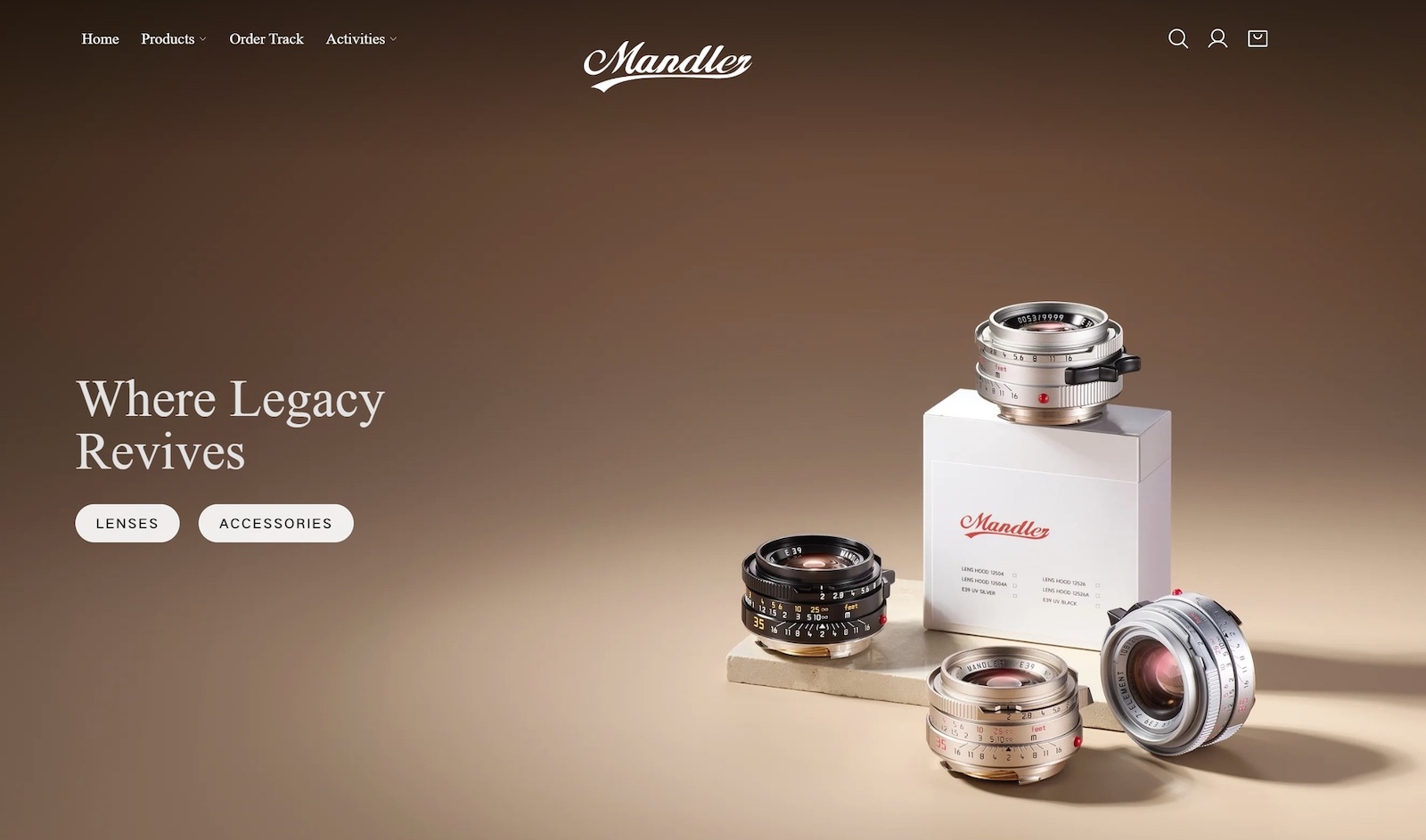
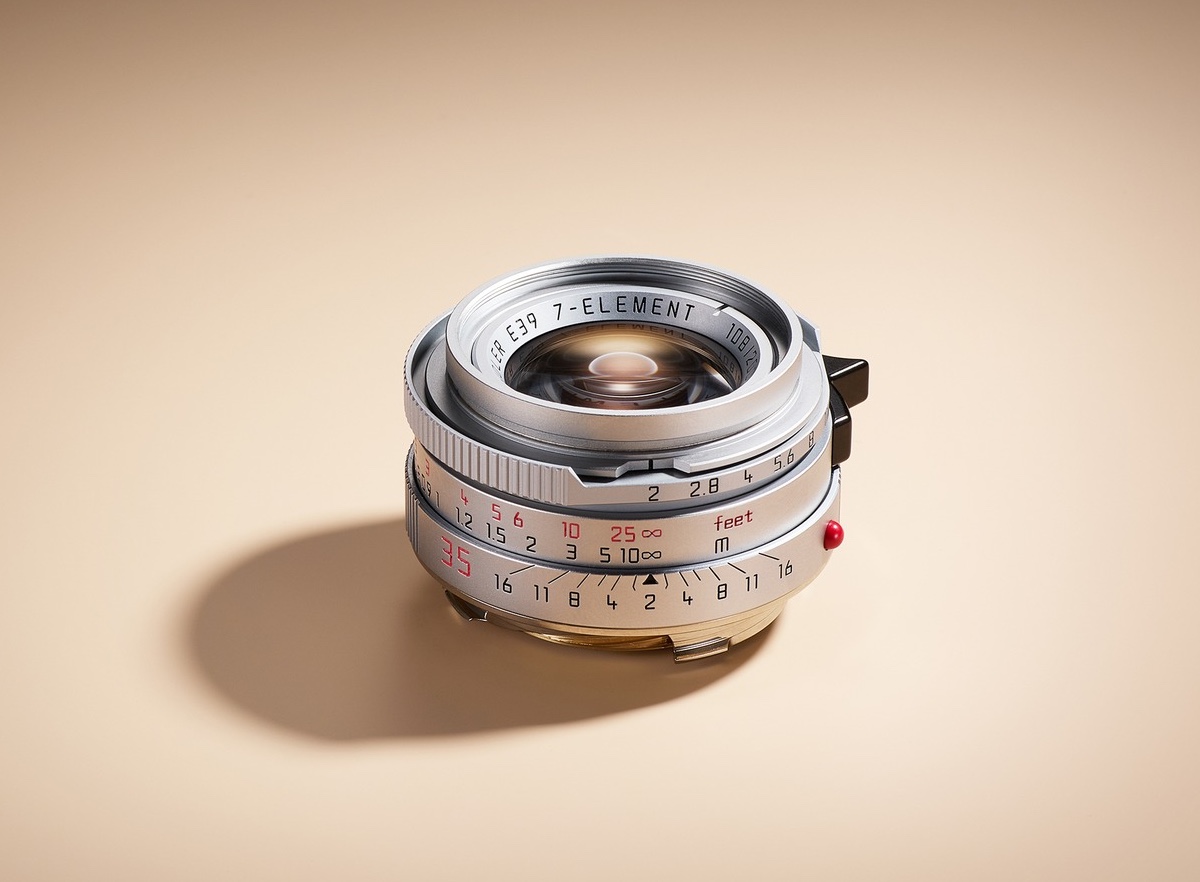
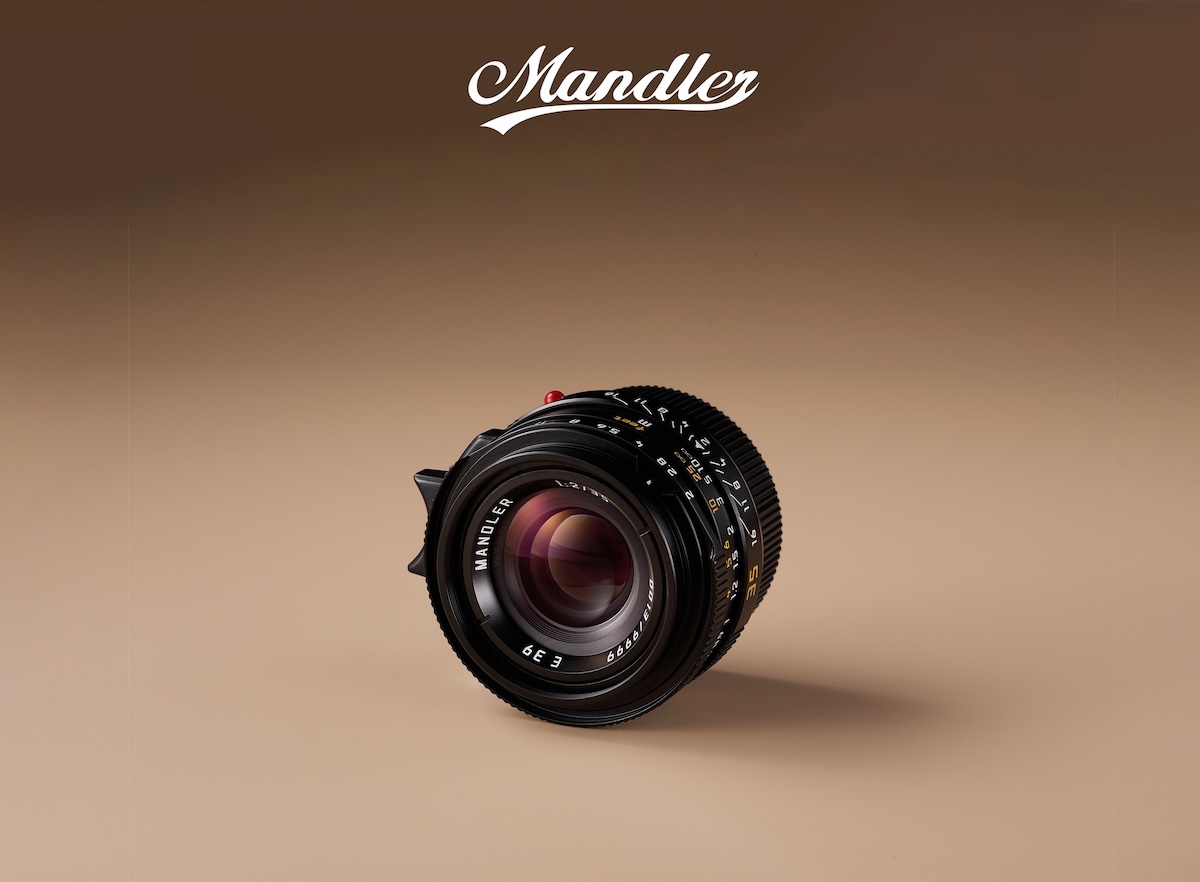
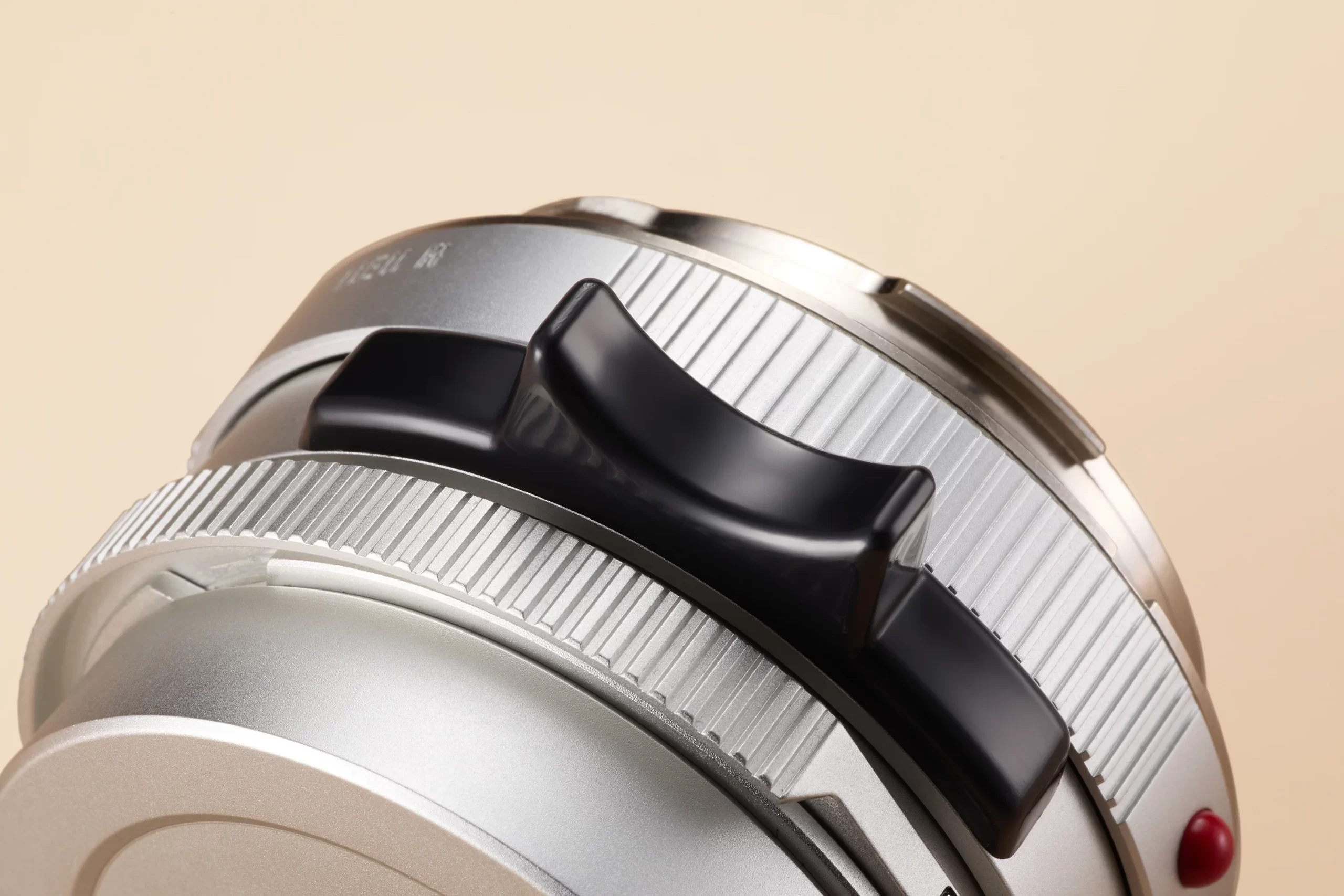
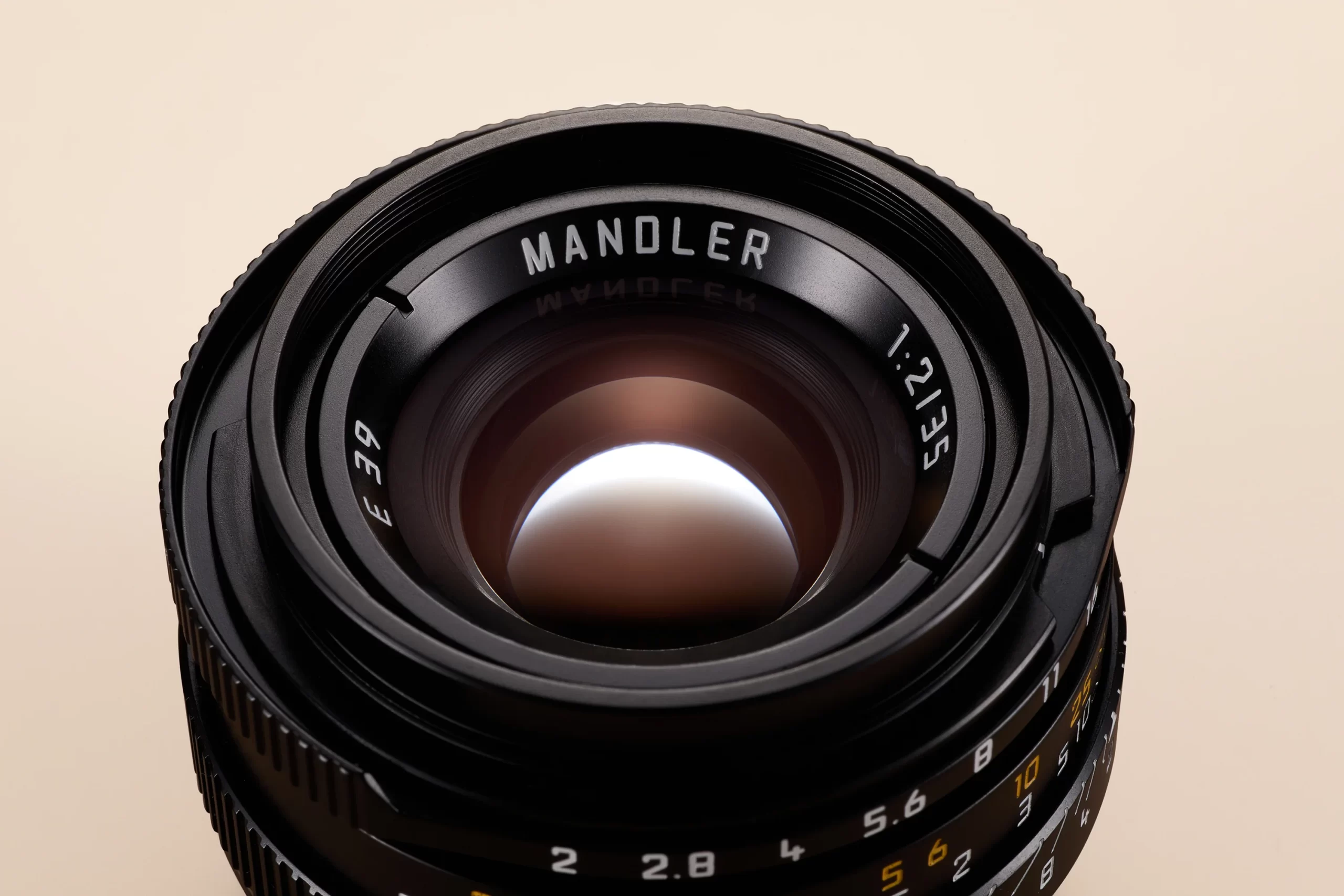
The Mandler 35mm f/2 lens for Leica M-mount is a replica and a complete reproduction of the optical formula of the original Leica Summicron 35mm f/2 seven-element lens. The name “Mandler” is a tribute to Walter Mandler, who designed many legendary Leica lenses.
Mandler is expected to launch another new lens in July. In the future, they are planning to release 3-4 new lenses per year.
The Sony World Photography Awards has announced the 10 category winners and 120 shortlisted photographers of its 2026 Open Competition. The contest, which is in its 19th year, aims to recognize the best single images taken in the past year. The 2026 edition received over 430,000 images from more than 200 countries and territories. The entries showcase a diverse range of imagery, including dramatic landscapes, humorous portraits and more.
The Open Photographer of the Year will be announced at the awards ceremony in London on April 16. The winner will receive a $5000 cash prize along with Sony imaging equipment. A selection of winning and shortlisted images will be on display as part of the Sony World Photography Awards exhibition at Somerset House from April 17 to May 4, 2026.
Description: Taken on a dark night, this view of the paper mill in Obbola, Sweden, reveals layers of shadows, concrete, clouds and sky.
Technical details: Fujifilm GFX100s II | GF110mm F2 LM WR | F2.8 | 1/18 sec | ISO 3200
Copyright: Markus Naarttijärvi, Sweden, Winner, Open Competition, Architecture, Sony World Photography Awards 2026
Creative
Photographer: Siavosh Ejlali
Image name: Lost Hope
Description: In this image the photographer describes how the black plastic covering most of the woman’s face is a sign of ‘dark thoughts and the imposition of beliefs’, while the red balloon falling to the ground could be ‘her lost hope’. The background evokes Iranian urban society, which has been the setting for the recent demonstrations involving Iranian women, noting that 'the red clothes and lips are the bloody price that women have paid.’
Copyright: Siavosh Ejlali, Iran, Islamic Republic Of, Winner, Open Competition, Creative, Sony World Photography Awards 2026
Landscape
Photographer: J Fritz Rumpf
Image name: Shapes and Patterns of the Desert
Description: An early morning glow brings out the rich pastel colours of the Sossusvlei dunes in Namibia. The contrast of the green and delicate peach colours almost overwhelms the senses; the patterns and textures emerging from the shadows give the landscape a distinctive, painterly look.
Technical details: Nikon Z8 | Nikkor Z 180-600mm F5.6-6.3 VR | F13 | 1/400 sec | ISO 200
Copyright: J Fritz Rumpf, United States, Winner, Open Competition, Landscape, Sony World Photography Awards 2026
Lifestyle
Photographer: Vanta Coda III
Image name: Charlotte and Dolly
Description: Charlotte lies with her cow Dolly, keeping cool in the cow barn between events at the 100th State Fair of West Virginia in Lewisburg. Outside, the temperature is upwards of 32°C.
Technical details: Canon EOS R3 | RF 24-70mm F2.8 L IS USM | F2.8 | 1/320 sec | ISO 500
Copyright: Vanta Coda III, United States, Winner, Open Competition, Lifestyle, Sony World Photography Awards 2026
Motion
Photographer: Franklin Littlefield
Image name: Sailboat
Description: A punk show in Providence, Rhode Island, featuring the band Sailboat.
Technical details: Fujifilm X-S20 | XF 16mm F2.8 R WR | F2.8 | 1/2 sec | ISO 200
Copyright: Franklin Littlefield, United States, Winner, Open Competition, Motion, Sony World Photography Awards 2026
Natural World & Wildlife
Photographer: Klaus Hellmich
Image name: Arctic Fox in Blizzard
Description: A blue arctic fox in a blizzard, photographed on the Varanger Peninsula, Norway.
Technical details: Nikon Z8 | Nikkor Z 400mm F2.8 TC VR S | F2.8 | 1/50 sec | ISO 1000
Copyright: Klaus Hellmich, Germany, Winner, Open Competition, Natural World & Wildlife, Sony World Photography Awards 2026
Object
Photographer: Robby Ogilvie
Image name: Colour Divides
Description: Taken in the Bo-Kaap neighbourhood of Cape Town, South Africa, this image centres on a parked car set against a sharply divided colourful facade. The composition balances geometry and saturation; everyday architecture becomes graphic and deliberate, reflecting how colour and place shape urban identity.
Copyright: Robby Ogilvie, United Kingdom, Winner, Open Competition, Object, Sony World Photography Awards 2026
Portraiture
Photographer: Elle Leontiev
Image name: The Barefoot Volcanologist
Description: On the ash plains of Mount Yasur, on the island of Tanna, Vanuatu, Phillip, an internationally recognised, self-taught volcanologist, stands barefoot atop a volcanic rock bomb. Wearing a lava-protection suit gifted to him by some visiting researchers, the volcano smoulders behind him, sending a plume of gas and sulphur into the sky. Phillip grew up beneath the active volcano, and this portrait captures him in his element.
Technical details: Sony a7 III | FE 24mm F1.4 GM | F16 | 1/250 sec | ISO 320
Copyright: Elle Leontiev, Australia, Winner, Open Competition, Portraiture, Sony World Photography Awards 2026
Street Photography
Photographer: Giulia Pissagroia
Image name: Between the Lines
Description: A family marvels at the view from Ørnevegen (Eagle Road), Norway, in this candid shot.
Technical details: Sony a7 IV | FE 24-105mm F4 G OSS | F22 | 1/200 sec | ISO 1250
Copyright: Giulia Pissagroia, Italy, Winner, Open Competition, Street Photography, Sony World Photography Awards 2026
Travel
Photographer: Megumi Murakami
Image name: Untitled
Description: The Abare Festival has been passed down for 350 years in Japan's Noto region. This image captures the festival’s finale, as men leap into the river amidst fiercely burning torches that send sparks flying everywhere. They rampage wildly, believing the more they rage, the more the deity rejoices.
Copyright: Megumi Murakami, Japan, Winner, Open Competition, Travel, Sony World Photography Awards 2026
DPReview has been selected as a Global Partner for CP+.
Each year in February, the camera industry gathers in Yokohama, Japan, for CP+ Expo, the industry's official trade show sponsored by the Camera & Imaging Products Association (CIPA). What's more, DPReview has been selected as one of the founding Global Partners for CIPA's CP+ partnership program, bringing you exclusive news, insights, and hands-on access to the event.
CP+2026 runs from February 26th to March 1st. We've created a dedicated CP+ show page to help you track all the news from CP+ in one place. This is where you'll find our latest updates – including content that may not appear on our homepage – ranging from breaking news and hands-on impressions to behind-the-scenes looks at the event and more.
Let us know if there's anything specific you want us to watch for, and we'll keep our eye out!
When you use DPReview links to buy products, the site may earn a commission.
Photo: Mitchell Clark
Earlier this year, Nikon announced the Nikkor 24-105mm F4-7.1, a new, budget full-frame zoom lens designed to be kitted with its entry-level full-frame offering, the Z5II. We've put in some time with it to see how it performs.
As a note, while we've spent some time with the lens on a Z5II, our sample gallery was produced using the higher-resolution Z8; it's probably not a pairing you'll see often out in the wild, but we want to show the lens's image quality in as much detail as possible.
Speaking of, I'll admit that I had certain expectations coming into shooting with this lens. If you've ever used an inexpensive lens with a wide focal range and a relatively slow, variable aperture, you're probably aware that it's not a formula for great image quality. Despite that, I found the 24-105mm to be decently sharp for most of the frame, even wide open. Vignetting was also quite a bit better than I'd have guessed; it's there at F4, and doesn't fully go away until F8, but even wide open it's not too noticeable unless you're specifically taking comparison shots.
The shooting experience
In good light, the 24-105mm F4-7.1 produces impressive image quality for its price throughout its focal range.
Nikon used a stepper motor to power this lens' autofocus, which is what we'd expect for this price range. It performs well; the lens is quick to focus, even when you're going from close up to near infinity. While it's not lightning fast, it'll get the job done for most types of shooting.
The 24-105mm extends quite a way out when you're zooming in, but despite this, its center of gravity doesn't change that much. It's a small thing, but it's nice not having to adjust your grip as you change focal lengths. I also didn't find that the lens forced me to hold it in a way that made me accidentally activate the customizable control ring.
It's not all sunshine, though. Even with modern cameras with stabilized sensors and decent high ISO performance, F7.1 is still quite slow. You don't get down to it until you're almost entirely zoomed in – even at 85mm, the lens can still maintain F6.3 – but it will limit what you can do with it. You won't want to shoot fast-moving subjects unless they're in bright sunlight, and while its longer focal lengths are theoretically decent for portraiture, you may not be able to get as much subject separation as you'd want.
Still, if you prefer the wide-end, it's worth noting that the maximum aperture stays relatively fast for a while. At 35mm it's F4.2, and it stays at or under F5.6 until around 62mm.
Summary
While these kinds of lenses are rarely the most exciting, Nikon has built a decent selection of kit zooms for its Z mount cameras. Retailing for $550 on its own and adding $350 to the retail price of the Z5II, this is the company's least expensive full-frame offering in that category by a fair margin. The 24-200mm F4-6.3 VR retails for $400 more, and adds an additional $450 onto the price of the Z5II. And while that lens is well-regarded, has stabilization and is faster at its long(er) end, it's also a fair bit heavier and a bit larger, though the size gap between them isn't as big as you might think given its extra reach.
While the 24-105mm isn't the kind of lens that most photographers will keep around forever, it seems like it offers a decent place to start for those who aren't sure yet where their photography journey will take them.
Sample Gallery
Please do not reproduce any of these images on a website or any newsletter/magazine without prior permission (see our copyright page). We make the originals available for private users to download to their own machines for personal examination or printing; we do so in good faith, so please don't abuse it.
Sample gallery
This widget is not optimized for RSS feed readers. Click here to open it in a new browser window / tab.
Mastering your autofocus settings lets you capture almost anything.
Nikkor Z 70-200mm F2.8 @ 77mm | F2.8 | 1/1250 | ISO 110
Photo: Richard Butler
If you've recently picked up your first camera and find yourself frequently getting out of focus images, it may be a sign that you need to tweak your focus settings. While autofocus seems like it should be simple and straightforward, camera manufacturers offer a long list of settings to adjust autofocus performance for different situations. All of those options can be incredibly confusing, especially if you’re new to photography. In this guide, we'll break down the most basic focus terms and settings to help you identify which are best for you and the subjects you photograph most often.
Focus modes
Some cameras have a physical control for autofocus mode, but most will handle it through their on-screen menus.
The first autofocus setting to consider is your camera's autofocus mode, which changes how the camera behaves once it starts focusing. Most cameras offer Continuous Autofocus (often referred to as AF-C or AI Servo on Canon) and Single Autofocus (AF-S on many brands, and One Shot on Canon). Many cameras also offer Automatic or Hybrid Autofocus (often called AF-A or AI Focus on Canon).
Single AF
AF-S focuses once, and then locks focus at that distance as long as you keep the button half-pressed. It's an ideal option when your subject is still, such as landscapes or product photography. This mode lets you focus and recompose if needed, knowing the focus won't change until you lift your finger.
Continuous AF
AF-C keeps updating focus as long as you hold the button, hence the continuous in the name. It adjusts in real time to moving subjects. As a result, you'll want to choose AF-C for any moving subjects, such as sports, wildlife, street photography, candid portraiture and more, as the camera will attempt to maintain sharp focus even as the subject changes position. Additionally, most modern cameras are very good at handling AF-C, so is the option we'd suggest most people stick to.
Auto AF
Lastly, Hybrid/auto AF lets the camera decide if AF-C or AF-S is best for a given situation. It's meant for times when you're not sure if things will stay stationary or start moving. It doesn't always do a great job of deciding when to switch, though, and leaving it set to this may limit other autofocus features you can use on certain cameras.
Focus area
Cameras give you multiple options regarding where in the frame it focuses.
The next consideration is the focus area setting. Focus areas indicate where the camera should focus within the frame. Each manufacturer provides slightly different options, but broadly speaking, these options vary from the camera detecting what it thinks should be in focus across the entire frame to ones that let you choose a precise spot.
Wide / Auto
The first option that many cameras offer is a Wide focus area. Many brands use some variation of Wide in the name, while others may call it something similar to Auto-area. This setting hands over control to the camera so it can select where to focus automatically across the frame. It's a convenient option for casual use, but it doesn't give you any input into what the camera will focus on. Because of this, you may end up disappointed by the results, especially if your subject isn't obvious or is partially blocked by something in the foreground.
Zone
Many cameras feature preset zone sizes, alongside customizable ones.
Zone, sometimes called Group area, gives you a step more control than wide/auto. It uses a group or block of AF points that you can move to different areas of the frame. The camera then decides where within that block it should prioritize focus. Like with wide/auto, it favors the closest subject or detected faces, making it good for group shots or sports where you know the player's general position.
Expanded point
The expanded point option starts from a chosen point, just like single-point AF, but adds a small cluster of surrounding points if the subject drifts off your main selection. It's an ideal everyday choice for moving subjects such as kids and pets, because it balances control with some camera assistance. It goes by many names depending on your brand, including Expand AF (Canon), Dynamic-area AF (Nikon), Expand Flexible Spot (Sony), Zone (Fujifilm), 1-Area+ (Panasonic) or Group Target (OM System).
Single-point
Canon calls its single-point focus area "1-point AF."
Single‑point is the most precise option and gives you the most control, but it’s best for still or slow-moving subjects. It lets you pick one focus point and place it exactly where you want sharpness, such as an eye in a portrait. Each brand has its own name for this, but most are something similar to Single-point AF or 1-point AF. Sony, however, calls it Flexible Spot. Some brands will also provide size options for that spot to give you more flexibility.
Tracking areas
Some cameras only give you one size of tracking box, while others let you choose from a few options.
Most modern cameras now offer some form of tracking AF. In this mode, you set your focus point on a subject, and the camera then moves the active point(s) around the frame to keep that subject in focus as you recompose or as the subject moves. It's an ideal option for erratic motion, such as sports, birds, pets or kids, especially when you combine it with continuous or auto AF and subject detection.
Each camera manufacturer handles tracking areas slightly differently, but there are generally three methods. Some brands allow you to choose any AF area mode and simply toggle tracking on or off. Others create tracking-specific duplicates of each area mode, though only when in AF-C. Lastly, some simply have one Tracking AF area mode (which Nikon calls 3D Tracking).
Subject detection and tracking
Canon's subject selection screen.
While tracking is a focus area setting, modern cameras also offer additional subject detection and tracking controls in separate menus. These settings are typically layered on top of whatever focus area you choose, meaning you can use your chosen method for selecting a subject while knowing the camera will better track a subject if it's one it recognizes.
Depending on your camera, you may have access to various subject types, including human, animal, birds and vehicles. With these modes, the camera will search for that specific subject and prioritize it if it's near your AF point. Additionally, most recent mirrorless cameras support some level of face/eye detection, which means the camera attempts to find faces or eyes within your chosen focus area and prioritizes them.
With each of these, your camera still primarily targets your AF point. That means that if something like a face shows up in the frame that isn't near your AF point, your camera won't suddenly ignore where you've specified it should focus. As a result, you can generally leave subject detection modes on without worrying that your camera will go rogue trying find faces or trains.
Each brand has its quirks
The above items are a general overview of basic autofocus terms. It's important to keep in mind, though, that each brand has its own naming conventions as well as quirks associated with all of the different features. In a later article, we'll provide a more in-depth look at brand-specific quirks so you can confidently set your autofocus for more consistently focused images.
I photographed this pup during an event called "Barktoberfest," where people dressed their pets for Halloween and brought them to work. He was fascinated by my camera, and followed me around peering into the lens, just begging me to take his photo. Some dogs just love being in front of the camera.
This month, our Editor's challenge has gone to the dogs. Literally. We want to see your most impressive dog photography. Whether you've captured a soulful portrait, an action shot of a pup in flight, or your furry sidekick in an embarrassingly bad Halloween costume, we want to see it. Our favorites will be featured in an article on the DPReview homepage.
Photos can be submitted between Sunday, February 15, and Saturday, February 21 (GMT). The challenge is open to photos captured at any time.
Important: Images MUST include a title and a caption of at least 25 words to be eligible. We need to be able to share the story behind your photo. We will consider both photos and captions when selecting our winners, so make sure to tell us that story!
Visit the challenge page to read the full rules and to submit your photos for consideration as soon as the challenge opens.
A gigantic fin whale gently breaking the water's surface. What do you feel about the top-down shooting angle in this image? How does it compare to other top-down shots you've seen? (Disko Bay, Greenland)
DJI Mavic 3 Classic | ISO 100 | 1/400 sec | F4
Aerial photography has always offered a unique perspective, and recent technological advances have made this genre of photography more accessible than ever. But what are the implications for the wildlife we're trying to capture?
In this article, I'd like to share my thoughts about wildlife photography from the air, namely, using a manned aircraft (helicopter or light plane) or a drone. Photographing animals from the air is a somewhat controversial subject, both in terms of how the images look and the moral implications.
"A photographer shouldn't shoot wildlife from the air if doing so causes any serious distress or harm to the animals."
Let's address the second controversy first, since people tend to have strong feelings about it.
A photographer shouldn't shoot wildlife from the air if doing so causes any serious distress or harm to the animals. This means, for example, that if a bear is hunting, disturbing it with a buzzing drone and ruining the chase – and potentially depriving it of its prey – is wrong and shouldn't be done.
However, this does not mean that all aerial wildlife photography is wrong. Some animals simply aren't bothered by aircraft at a distance, so if photography is done responsibly and the animal's well-being is taken into account, there's no problem with shooting it from the air.
A family of walruses having a sleepover on a flat iceberg in Svalbard. These lazy blobs couldn't care less about my drone hovering above them. To make sure of that, my guide was monitoring their responses at all times using binoculars. (Magdalenefjord, Svalbard)
Shooting from far away allowed me to show the shapes a flock of flamingos creates in flight. I was so far away that there's no way they would have been disturbed. (Sandwich Harbor, Namibia)
Canon EOS 5D Mark IV | Canon EF 70-300mm F4-5.6 IS II USM | ISO 400 | 1/1000 sec | F8
Now that we have this out of the way, let's talk about the actual photography. Aerial wildlife photography is awesome. Aircraft can fly to places the photographer can't reach by other means. It can offer a different perspective, for better or worse, and generally opens up options, which is what we want, assuming we are interested in creating original, interesting art.
That's the good part, but there is a bad part. Using an aircraft means that we almost surely cannot shoot the animal at eye level. This is detrimental in the sense that the photographer is very limited in the kind of connection they can create between the viewer and the subject.
"Wildlife photography is all about bringing the beauty of animals to life and immersing viewers in their habitats."
Wildlife photography is all about bringing the beauty of animals to life and immersing viewers in their habitats. Shooting from the air limits how close you can get and the shooting angle, which is a very serious disadvantage.
The way to overcome this disadvantage is to create a connection to the wildlife by other means. Namely, use the aircraft to create an interesting composition that shows the animal in its natural habitat in a visually appealing way.
Take, for example, the image below. This is a good example of an animal-in-landscape type of shot, which means a landscape image with a wildlife element. Here, the compositional 'punch' comes from the shapes of the broken sea ice. The pair of walruses is just the cherry on top – the element that breaks the pattern and injects interest into the flat, somewhat repetitive landscape.
A pair of walruses chilling on sea ice. While the wildlife is the main subject, the broader context of the animals in their habitat and the way I composed the landscape are what make this image work. To achieve this composition, I had to use a drone. (Yoldiabukta, Svalbard)
I have a bit of a problem with top-down aerial photography, but there are instances where it just works.
Last summer, I shot lunge-feeding fin whales during my Greenland photo workshop, and the drone proved to be the perfect tool for this. Not only did it allow me to get a good view of the whale, free of reflections and close enough to show detail, but since the whales often swim turned to their sides, the drone allowed me to capture the full view of the animals' bodies and behaviors.
Fin whales lunge-feeding in Disko Bay, Greenland. The whales feed by driving krill to the surface, then taking huge gulps and filtering the tiny crustaceans with their baleen. (Disko Bay, Greenland)
Since the whale is on its side, this high angle was actually perfect to show all the desired detail. See the tiny krill? Am I the only one who thought of Shai Hulud (the sand worm from Dune)? (Disko Bay, Greenland
The fact that the whales feed turned to the side is exactly why I could shoot top-down (more or less) and still get the interesting parts of my subjects to show in the images.
Erez Marom is a professional nature photographer, guide and traveller. You can follow Erez's work on Instagram and Facebook, and subscribe to his mailing list for updates.
If you'd like to experience and shoot some of the world's most fascinating landscapes and wildlife with Erez as your guide, take a look at his unique photography workshops in Zambia, China, Colombia, Vietnam, Madagascar and more.
Erez has recently published his first e-book, Solving the Puzzle, thoroughly explaining his views about composition in landscape photography and beyond.
When you use DPReview links to buy products, the site may earn a commission.
Updated: March 4, 2026
These days, midrange cameras go for around $2500-3000, though in the US tariffs have made great deals in this price range a little harder to come by. For that money, you get something that's incredibly capable; our picks are high-spec options that are excellent for stills and video, and many have autofocus systems that come close to the performance of professional sports cameras.
Choosing a camera means committing to the ecosystem of lenses that are available for it, so we advise looking into the price and availability of your preferred kit. It's also worth noting that some camera manufacturers are more restrictive of what options third-party lens makers can provide, so be sure to consider that during your lens research.
Speaking of lenses, it's also worth considering that the latest lens designs for mirrorless cameras regularly outperform their older DSLR counterparts. If you have any lenses already, you may want to think about whether it's worth adapting them, or if you'd be better off selling them to help you buy modern equivalents of your most-used lenses. This option also gives you a path to switching brands, if you feel there's a compelling reason to do so.
Full suite of video recording modes and assist features
What we don't:
Overheating in ambitious video modes
Dynamic range isn't as strong as its best competitors'
Hitting buffer's limit slows camera down
The Canon EOS R6 III is a full frame enthusiast camera, with a 33MP sensor.
It earns top place on this list because it's such a complete package, with image quality, burst rates and autofocus capable of helping you tackle pretty much any subject. It's also a very capable video camera; no matter what your needs, it's hard to imagine you'll find that the EOS R6 III holds you back.
It has plenty of customizable buttons and a decent range of settings for them. It's comfortable to hold, but its viewfinder and display aren't the nicest around.
The EOS R6 III has very dependable autofocus across its selection of tracking and subject recognition modes. It can shoot at bursts up to 40fps (though with reduced dynamic range), and supports pre-capture for up to 0.5 sec before you press the shutter.
Rather than "jack of all trades, master of none." It's a master of most.
Images from the EOS R6 III have very good levels of detail and pleasing colors. The camera's peak dynamic range can't match the best of its competitors, and it'll struggle a bit more in e-shutter mode, but it's good enough for most use cases.
The video quality from the camera's open gate, Raw and oversampled 4K modes is quite good at 24p, though its higher-framerate and subsampled modes suffer a bit. Its rolling shutter performance is great, and it's quite nice to use for shooting video. However, its overheating performance could limit its most ambitious modes in hot shooting environments.
The EOS R6 III is an abundantly capable camera for most kinds of stills and video shooting. It pairs great performance with excellent ergonomics and a refined user experience.
The Sony a7 V is a full-frame enthusiast camera, with a 33MP 'partially stacked' sensor.
It earns its place on this list by being an extremely capable camera. If you're already a Sony shooter, it's the obvious pick, as the other cameras in this list offer precious little to warrant a switch. However, if you're not currently tied down by lenses, we feel the EOS R6 III's ergonomics and usability give it the edge, even though they come at the cost of a more tightly controlled mount.
It has excellent image quality in terms of detail capture, and impressive dynamic range when shooting with its mechanical second shutter. This drops in the e-shutter modes used for fast shooting, but only to the same level as most of its peers.
The a7 V's autofocus system is very effective and its subject recognition system works well with the user interface. It can be fine-tuned but is tenacious at tracking subjects and focusing on eyes, even at default settings. It can shoot at up to 30ps in e-shutter mode, and can pre-capture for up to 30 frames.
The a7 V is more camera than most of us will ever need, and it'll support you almost regardless of what you ask it to do.
It has plenty of customizable dials and buttons to fit however you shoot. We're not the biggest fans of the grip, nor do we love the complex menu system, which is arguably overwhelmed by the camera's level of features and customization.
The a7 V produces very detailed 4K footage, derived from 7K capture. It can, at a push, shooting full-width, oversampled 4K/60. While it doesn't offer features like Raw or open gate capture, it can record for quite a long time before overheating.
The a7 V is perhaps the best all-round camera Sony has yet made, outside its pro-grade (and priced) models, excelling at both stills and video capture. Sony's interface still isn't our favorite, but familiarity and customization can help. E-mount offers an extensive choice of lenses.
This widget is not optimized for RSS feed readers. Please open this article's permalink in a browser to view this content.
The premium video shooter
The Panasonic S1II is also a very capable option, though its $3200 price tag technically puts it out of the price range of this buying guide, and means you'll have to consider whether it's worth the extra over our top picks. Its autofocus isn't quite as good as Canon or Sony's, but for video shooters, the S1II is the best in class: it offers all the features that the EOS R6 III does, but with longer record times thanks to its built-in fan. We also appreciate the lens options available on L-mount.
The Nikon Z6III is Nikon's third-generation full-frame enthusiast mirrorless camera, with a 'partially stacked' 25MP CMOS sensor.
At its MSRP, we feel the Z6III struggles to keep up with the competition because of its lower dynamic range in stills and (especially) video and lack of Raw pre-capture. However, it's often on sale for hundreds off, making those issues easier to overlook for the price-conscious buyer (though anyone looking to make long-term investments into lenses should note that Nikon, like Canon, exercises tight control over its mount). And despite those quibbles, which some shooters may never even encounter, it's a very solid camera when it comes to ergonomics and autofocus.
The Z6III has an ample grip and easy-to-use control scheme. Nikon's menus and touchscreen layout are also well-refined, but the camera lacks the company's traditional AF mode button or front-corner switch.
Autofocus is generally reliable, and the camera includes Nikon's 3D-tracking system and plenty of subject recognition modes. It can shoot 20 raws per second, or 60fps in JPEG mode.
The Z6III is a genuine do-anything camera with excellent video and photo capabilities.
Image quality is very good, with lots of detail and acceptable amounts of noise. There is a recognizable dynamic range tradeoff for that speed, but it's only noticeable in extreme situations.
The Z6III shoots many video formats, including Raw, and has dependable subject-tracking autofocus and a waveform display. Its 4K and 5.4K modes produce excellent detail, even in 60p, and its rolling shutter performance is outstanding.
The Z6III is a significant step-up from its predecessor and is to-date the most all-round capable camera in its class. It excels in both stills and video.
The Sony a7C II is a compact, full-frame mirrorless camera with a 33MP BSI CMOS sensor.
The a7C II's viewfinder is a little small and rather low resolution for this price, but it's part of what helps the camera stay so compact. Modern full-frame lenses are often so large as to make the difference in camera size fairly trivial but Sony's E-mount has the widest range of lenses available, so there are some relatively compact options.
The a7C II is impressively small for a full-frame camera. The addition of a front control dial improves handling significantly and brings it closer to its peers. A fully articulating screen anchors the back and features an extremely responsive touch interface. Unlike many cameras at this price, there’s no joystick control.
Autofocus performance on the a7C II is fantastic and is helped by having a processor dedicated to handling machine learning-derived algorithms. Subject recognition is quick, and the AF system tracks subjects tenaciously around the frame in both stills or video. 10 fps burst shooting with continuous AF results in a dependably high hit rate.
“The a7C II is a surprisingly capable camera for its size.”
The a7C II's 4K/30p video is downsampled from 7K, but with fairly high rolling shutter. There's also 4K/60p from an APS-C crop, all in 10-bit color. S-Log3 and S-Cinetone profiles provide flexibility in post, and the camera supports internal LUTs. Auto Framing mode punches in on subjects, keeping them framed and in focus. The camera includes mic and headphone jacks.
The a7C II is a surprisingly capable camera for its size. It essentially provides the same level of image quality, video capabilities, and AF performance as Sony’s a7 IV, but in a smaller package. In exchange for the small size, you make a few tradeoffs, like no AF joystick, but if compact size is a priority the a7C II will get you there with few compromises.
This widget is not optimized for RSS feed readers. Please open this article's permalink in a browser to view this content.
Should I buy the Sony a7 IV, a7 III or a7C?
The Sony a7 IV is tough to wholeheartedly recommend in 2025. Its viewfinder, ergonomics, and full mechanical shutter are improvements over the a7C II, but it's also larger, heavier and offers less effective image stabilization. If you're you don't care about compactness, it might be worth paying a little extra for the a7 IV's larger, higher-resolution viewfinder, but only if the price difference is small.
It's a similar story with the a7 III and a7C. These are from an older generation of products with less sophisticated autofocus, video and image stabilization. They also use an older, more awkward-to-navigate menu system, which we'd happily pay to avoid ever having to use again. The a7C lacks the version II's front control dial and features an even smaller viewfinder, so we'd strongly recommend saving up for one of the newer models.
What about APS-C?
We make most of our APS-C recommendations in our best cameras under $2000 buying guide, which covers cameras like the Fujifilm X-T5, Canon EOS R7 and Sony a6700. The latter two are the highest-end crop sensor cameras from their respective brands, but Fujifilm makes the X-H2S, which is historically one of the better video cameras on the market. However, cameras like the Z6III have arguably caught up in capabilities and framerate options, and while the X-H2S' global price is more competitive, in the US it's around the same price as the EOS R6 III and a7 V.
The wildlife option with reach: OM System OM-1 II
20MP Four Thirds Stacked sensor | 50fps continuous shooting w/AF, 120fps AF/AE locked | IBIS rated to 8.5EV
The OM System OM-1 Mark II is a high-speed Micro Four Thirds camera based around a 20MP Stacked CMOS sensor.
It's well-suited to wildlife photography, as the Micro Four Thirds system has several lenses that give you plenty of reach without being back (or pack) breakingly large, and its Stacked sensor gives it fast autofocus and incredible burst rates for shooting even the fastest subjects. It also has several computational modes that let it adapt to a wide variety of situations, and sports an IP53 rating for dust and water resistance, so you won't have to worry if it starts raining.
The body is quite rugged-feeling (while still being smaller than full-frame counterparts), with dials designed to be used with or without gloves, and has plenty of customizable control points. The viewfinder is relatively large and bright.
While we haven't put the OM-1 II through our full review process, we do have extensive experience with it and with the OM-3, which uses the same processor and sensor. We've found the autofocus to be reliable, though not class-leading, and it's a bit of a shame that continuous autofocus in its 50fps is limited to certain lenses. There's an image quality price to be paid for the smaller sensor, but, for Four Thirds, the OM-1 II's sensor provides good amounts of detail, and the multi-shot modes can compensate for this in some circumstances.
While there are more all-round capable cameras at this price point, the OM-1 II fits into its niche quite well and is still quite solid for other kinds of photography. Its video capabilities aren't at the level that other companies provide, but if you simply want to record something, it's certainly up to the task.
This widget is not optimized for RSS feed readers. Please open this article's permalink in a browser to view this content.
Other Four Thirds cameras
The OM-1 II shares most of its DNA with the OM System OM-3, a smaller, more stylish and less expensive option that uses a smaller viewfinder to achieve its classic styling. Both are similar to the Panasonic G9II, though that's substantially larger, sharing its body with the full-frame S5II. All are Micro Four Thirds, which offers smaller camera/lens combinations at the cost of ultimate image quality. However, they can well worth considering if your photography requires the most compact kit available.
Best for vlogging: Nikon ZR
24.5MP full-frame 'partially Stacked' sensor | 7.5EV IBIS | R3D (NE) Raw video codec
The Nikon ZR is a video-focused mirrorless camera with a 24.5MP full-frame 'partially Stacked' sensor.
While its Red co-branding and three flavors of Raw shooting show its ambitions as a video production camera, the ZR has a lot of features that make it a great tool for vlogging, too. It has IBIS, Nikon's fairly effective autofocus system, and a 4", 3.07M dot display that can go up to 1000 nits, which should make previewing your image relatively easy, even if the camera is a bit far away from you.
It's also the first mirrorless camera with support for 32-bit float audio recording built-in, even on the 3.5mm input, which means you won't have to worry nearly as much about your audio gain levels when trying to capture the moment.
It can shoot compressed video at up to 5.4K/60, and is capable of 4K/120 for proper slow-motion, though going above 4K/60 will come with a 1.5x crop. In Raw, the ZR can record full-width 6K/60.
We'll be putting the ZR through its paces more in the coming weeks, but it's essentially a Z6III at heart, with a few more video features that should make it a very capable option if you want to go from vlogging to full-on production.
Why you should trust us
This buying guide is based on cameras used and tested by DPReview's editorial team. We don't select a camera until we've used it enough to be confident in recommending it, usually after our extensive review process. The selections are purely a reflection of which cameras we believe to be best: there are no financial incentives for us to select one model or brand over another.

 Connexion