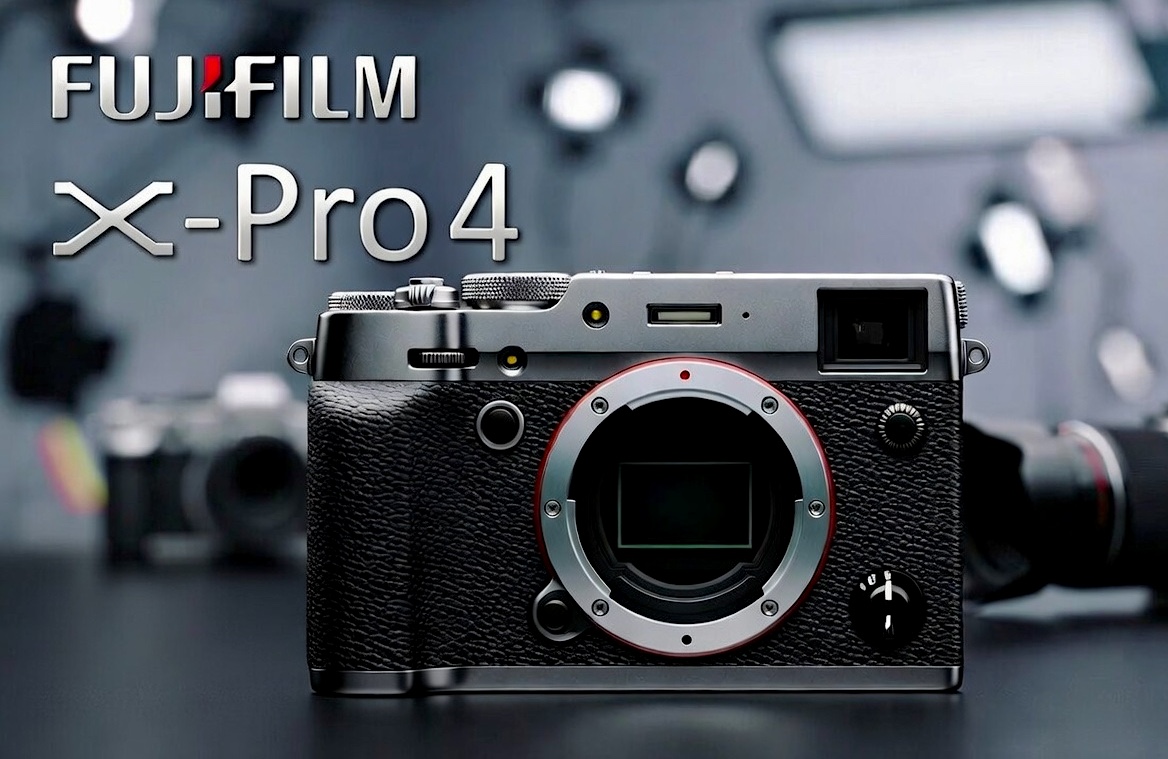
Moment is running a closeout sale this weekend – use code EXTRA10 at checkout for 10% off (mainly Fuji gear). This offer ends on February 22nd at midnight.
With this month’s update, DxO expands its industry-leading library of DxO Camera and Lens Modules to 111,475 supported camera and lens combinations, adding 1,245 new Modules tested and optimized in DxO’s laboratories.
February’s release brings full DxO Modules support for Sony’s highly anticipated A7 V, enabling photographers to take full advantage of the camera’s latest sensor and imaging pipeline with precise optical corrections applied directly at the RAW level.
This update also delivers optimized performance for a selection of standout lenses from Sigma, Viltrox, and Samyang. Highlights include Sigma’s fast primes and versatile zooms, such as the Sigma 135mm F1.4 DG A, renowned for its exceptional sharpness, and the Sigma 35mm F1.2 DG II A, prized for its impressive light-gathering power and distinctive rendering. Also included is the Sigma 20–200mm F3.5–6.3 DG C, a compact all-in-one zoom designed for everyday flexibility.
Photographers using third-party autofocus lenses will also benefit from bespoke DxO corrections for the Viltrox AF 35mm F1.2 LAB FE, a high-resolution fast prime built for Sony full-frame cameras and designed to deliver striking subject separation.
As always, every DxO Module is created using DxO’s exclusive laboratory-based measurement process, correcting distortion, vignetting, softness, and chromatic aberrations with unrivaled precision. With each monthly update, DxO continues to ensure photographers get the very best image quality from both the latest releases and their existing gear.
Few photographers are as synonymous with richly saturated color as William Eggleston, but the complexity behind making his prints is often underappreciated. In this behind-the-scenes look, longtime collaborators and master printers Guy Stricherz and Irene Malli walk through every stage of his dye-transfer process, revealing just how much work goes into each print.
Eggleston discovered the dye-transfer process in the 1970s, a crucial step that enabled him to move from black-and-white to color photography. Stricherz and Malli have been printing his photographs for the last 25 years, and the video reveals their meticulous workflow that turns a single transparency into three color-separation negatives and, ultimately, one luminous final print.
Over the course of the video, you see how laboratory immersion oil, spotless glass, and carefully controlled enlarger exposures give way to Kodak Matrix film, darkroom processing, and delicate gelatin reliefs that hold each dye. From there, Stricherz and Malli move into inking, rinsing, and rolling the magenta, cyan, and yellow layers in sequence, relying on timing and chemistry adjustments to fine-tune density, contrast, and color balance. The result is a fascinating view into the analog process that powered Eggleston’s shift into the deeply saturated color work that helped redefine art photography.
For the 2026 CP+ show in Japan, 7Artisans will soon announce a new AF 135mm f/1.8 lens for Nikon Z, Sony E, and Leica L mount:
Here is the translation:
The 7Artisans 135mm F1.8 AF is a large-aperture prime lens compatible with full-frame sensors. Planned mounts include Sony E, Nikon Z, and L, making it compatible with mirrorless cameras of all these systems. The combination of a 135mm focal length and an F1.8 aperture maximizes the subject’s focus with a shallow depth of field and a compression effect that accentuates the subject. It’s ideal for portraits and other scenes where you want to highlight the subject. The minimum focusing distance of 0.68m, relatively short for a 135mm lens, allows for close-up shots. The aperture ring allows for intuitive aperture control. The AF/MF switch allows for smooth focus control depending on the shooting situation. Furthermore, the camera’s function button can be assigned to various functions, allowing for customization to suit your shooting style. This lens combines the expressive power of a large-aperture prime lens with a practical operation system.
M16 – the so-called Eagle Nebula with the 3 Pillars of Creation in its center – is one of the most iconic images we know from the Hubble Space Telescope.
Photo: Michael S.
From photographing high‑energy sports events to hours focused under the stars, DPReview community member Michael S. (Astro Tafelberg) has spent more than 30 years chasing moments that combine precision, light and timing. Based in Austria’s Burgenland region, he now devotes most of his nights to astrophotography, revealing distant worlds few ever see through their own eyes.
Michael's camera bag with camera, lenses and other accessories.
Photo: Michael S.
"For daytime nature work, I rely on my Leica SL3 and a mix of Leica glass 24–90 mm, 90–280 mm, 50 mm F1.4, and 90 mm F2, plus a Sigma 150–600 mm L‑mount with a 1.4× teleconverter. My trusty Leica Digilux 8 serves as a compact backup. For astrophotography, I use the Nikon D810a and specialized cameras from ZWO and Player One Astronomy mounted on a 14‑inch telescope inside my backyard observatory."
Why is the Leica SL3 your preferred camera?
"For daylight photography, I prefer my Leica SL3 with a 24-90mm, 90-280mm, 50mm F1.4, 90mm F2.0 and the Sigma L mount 150-600mm lens. And if the weather allows it, I'm sitting for hours in my 2.7m diameter observatory and use lucky imaging for the Moon, Mars, Jupiter or Saturn."
"For daylight photography, I prefer my Leica SL3 with a 24-90mm, 90-280mm, 50mm F1.4, 90mm F2.0 and the Sigma L mount 150-600mm lens."
Why is the 14‑inch telescope and Nikon D810a your preferred pairing?
"Using 'lucky imaging,' I capture hundreds of frames of planets like Mars, Jupiter, or Saturn, then stack only the sharpest. On moonless nights, I switch to deep‑sky mode with a 0.7× reducer, bringing my setup to F7.7 for longer, more detailed exposures."
Jupiter – a detailed image of the gas giant with the famous Great Red Spot – again imaged with the planetary setup, high-speed camera with color sensor, and the best images, most stable ones out of a 2-minute video recorded and stacked.
Photo: Michael S.
What other gear makes a difference for you?
A sturdy Manfrotto tripod is essential. I also use neutral‑density filters for smooth water shots on hikes, and always carry a bottle of still water because imaging sessions can run for hours.
How do you adapt your setup to different situations?
If the skies are clear, I spend the night at the observatory capturing the cosmos. When the weather turns cloudy, I hike in nearby parks to spot wildlife. My goal remains the same: to capture scenes as authentically as possible.
M33 – one of our neighbor galaxies, about 2.8 million light-years away. Imaged using my 14-inch telescope + Nikon D810a.
Photo: Michael S.
Michael's advice for other photographers
Michael believes that mastering the fundamentals, such as equipment stability, precise focus and patience, is what separates a good shot from a great one, whether you’re freezing a fast‑moving athlete or stacking photons from a galaxy.
If you’d like to share your photography setup, tell us about your main camera, lens choices, key settings and photography strategies. You could be featured next!
Editor's note: This article continues a series, 'What's in your bag?', highlighting DPReview community members, their photography and the gear they depend on. Would you like to be featured in a future installment? Tell us a bit about yourself and your photography by filling out this form. If you're selected for a feature, we'll be in touch with next steps.
The winners of the Female in Focus 2025 competition have been announced, showcasing exceptional work on this year's theme, On the Cusp. The contest, which is hosted by the British Journal of Photography in partnership with Nikon, aims to amplify the voices of women and non-binary photographers worldwide.
This year's edition awarded two projects and 21 single images that explore concepts of transition, whether personal, cultural, environmental or technological. The winning images were selected from thousands of submissions. They will be exhibited at the 10 14 Gallery in London from April 24 to May 29, followed by the International Centre for the Image in Dublin from September 10 to October 25.
"We’re thrilled to celebrate this year’s Female in Focus winners, whose work brilliantly captures the spirit of being 'On the Cusp,'" said Ruby Nicholson, Senior Communications Manager, Nikon Northern Europe. "I’ve been particularly struck by the playful rebelliousness threaded through so many of the images, each one offering a bold and thoughtful perspective on liminality. It’s a privilege for Nikon to support an award that spotlights the extraordinary talent of female and non-binary photographers, and we’re incredibly proud to help amplify their voices on a global stage."
You can see the entirety of the winning series, along with all of the winning images at the contest website.
Winning series: New Scramble by Giya Makondo-Wills
Photographer: Giya Makondo-Wills
Series title:New Scramble
Project details: In 2017, data overtook oil as the world’s most valuable commodity. The work sits in the void between departure of information and arrival in a server. The space between night and dawn, the air that falls between the lips of the storyteller and ear of the receiver, the abyss that we must cross when the old world is dying and the new one is not yet born.
South Africa’s tech industry is booming. New Scramble documents the proliferation of data centres by global giants, including Microsoft and Google. Partly set in Gauteng, it documents how these centres, symbols of the Fourth Industrial Revolution, strain local infrastructure and natural resources, provoking ecological and ethical crises. Every day, 6-8 million people go without electricity, and 14 million have no safe drinking water. One data centre can consume as much daily water as 3,000-6,000 people and the equivalent energy of 400,000 people. Water to entire neighbourhoods stops at 7 pm, including those where my family lives. A data centre is cooled. Hundreds go without power. Centres keep running.
Extraction also grabs the intangible – thoughts, feelings, likes, dislikes, habits – as we search, scroll. Once, stories helped us make sense of mystery and disaster. Today they're stored, commodified. In this work, I reference ancestral practices, folklore, and creation stories, consider how narratives transform in fibre optic sub-sea cables and over-heating servers - travelling from the intangible to the physical and back.
It spotlights data mining as fuel for modern capitalism, replicating historic colonial appropriation, extracting value, erasing origins. It shows that data sovereignty and ownership are critical. How we communicate is changing - if we don’t own the channels we use to communicate, we don’t own the stories, language, identity, culture. What are the implications of this in 100 or 200 years? Could it erase our history, culture? The work is narrated by a letter to my Gogo (grandmother) where I share these concerns.
Winning series: The Other Battlefields by Laetitia Vançon
Photographer: Laetitia Vançon
Series title: The Other Battlefields
Project details: "The Other Battlefields" explores the profound imprint of war on Ukrainian youth, offering a glimpse into what it means to grow up and live in a country at war, more than three years after the Russian invasion.
The years of youth are normally synonymous with widening horizons, the weaving of friendships, and the promise of adventure. But for many young Ukrainians, those expectations have been shattered, replaced by fear, loss, depression, and exile.
This visual narrative unveils fractured lives and dimmed dreams, yet also a fierce resilience that pushes back against the surrounding darkness. Each image is a fragment, part of the many individual stories I have been following over the long term. These stories themselves are part of a broader mosaic, reflecting the hopes and realities of a wounded nation.
It was in June 2022, in Odesa, that I fully realized the importance of documenting this sacrificed generation. Young graduates, deprived of their commencement ceremony for obvious security reasons, transformed their frustration into a spontaneous art performance, later sharing it on social media to show the world what they had lost and what they were enduring. That poignant moment revealed the urgency of bearing witness and preserving their stories.
The visible scars are only part of the narrative. Beneath the surface lie other wounds, invisible yet profound, that testify to a war also fought within the soul. These battles, whether close to or far from the frontlines, are those of freedom, dignity, reconstruction, and hope. Together, they draw the many contours of a conflict that is irreversibly shaping Ukrainian youth and its future.
Caption: This image is part of Paterfamilias series. Paterfamilias is an autobiographical project, exploring the theme of oppression in the domestic sphere, bringing to light the consequences of deteriorated relationships in male-dominated families. The project narrative stirs memories by virtue of its rawness. Feelings and resentments, as the fruit of this experience, work to raise awareness of a deviant cultural aspect that continues to demean the dignity of women. The images are wrapped in a form of surrealism that elevates and makes tangible the sense of conflict, frustration and tension of an unsafe refuge. The project aims to capture manifestations of female sentiments such as resilience, awareness and the desire to emerge, commenting on silent social phenomenon yet one of destructive and disruptive forcefulness.
Image title: Claudia, Darleine, Marthe, Victorie and Maryline
Caption: This image is from my series called "Je te connais de demain" (I know you from yesterday). I photographed Claudia, Darleine, Victoire, Marthe, and Maryline during my recent trip to Togo in May. It was a special moment; these women are part of the community that my dearest friend and photographer Delali Ayivi supports through her work, and being welcomed into her world, her homeland, was a rare and meaningful experience.
This series is an exploration of intimacy: of the profound love, care, and empowerment found within female relationships. It speaks to the spaces where vulnerability is shared freely, and where collective care becomes a force for survival and transformation. It is a tribute to those bonds, nurturing spaces we build for one another, and the quiet gestures and rituals that sustain us and lay the groundwork for growth. Love, in this context, is an act of deep presence and mutual recognition. It’s about holding space for one another’s full selves, for pain and healing, confusion and clarity alike. This series highlights the quiet strength of care, the depth of companionship, and the resilience that emerges in safe spaces. It sees love as something active and lived, not abstract or idealised, but present in the smallest details of our connections. The title evokes a sense of timeless, intuitive connection. It speaks to recognition beyond time, a connection so strong it feels predestined. In this context, it reflects how deep friendships or sisterhoods feel both familiar and forward-carrying, as if we’ve always known each other, and will continue to.
This image represents the care we offer one another, the small moments of love, support, and shared growth. We’re all in transition, moving from one version of ourselves to the next. As friends, as women, as chosen sisters, our evolution is shared. The space we hold for each other is a gift. It allows us to question, unlearn and heal.
Caption: Crush is the second chapter in a larger body of work composed of staged images of couples kissing. The series adopts a pseudo-documentary approach, blurring the boundaries between reality and construction. Through stylized compositions and character-driven narratives, Crush explores the intersections of intimacy, identity, and performance, drawing inspiration from fantasy, fleeting encounters, and desire.
Caption: My mother, a couple of months after her stem cell transplantation procedure. She suffers from PPMS. After trying numerous other treatments, her last hope to hold off the deterioration of the nerve cells for as long as possible was to undergo an autologous stem cell transplantation. And as spring hit, I thought it was the perfect time to celebrate her new birth with a portrait shoot to celebrate her bravery, perseverance and will to fight.
Caption: Annika, a Swedish singer and dancer, has constructed an entire career around inhabiting Cher–transforming her voice, body, and identity into one of pop culture's most enduring icons. In this frame from DEEPFAKE, we encounter her on all fours outside a suburban Las Vegas house, a position of vulnerability that strips away the goddess-like power Cher embodies. The image confronts us with uncomfortable questions: Who is performing for whom? What psychological space does Annika occupy when she's neither fully herself nor fully Cher?
This moment captures the profound displacement at the heart of celebrity impersonation. Annika has dedicated her life to perfecting another woman's voice, mannerisms, and image–a cultural labor that simultaneously erases and elevates her own identity. The suburban setting amplifies this dissonance; Cher exists in our imagination as glamorous, untouchable, yet here she kneels on ordinary pavement in anonymous American sprawl.
DEEPFAKE interrogates how identity becomes transferable currency in late capitalism. Annika's body is both canvas and commodity–she has monetized her ability to disappear into someone else. The work asks: what remains of the self when your livelihood depends on its erasure? In documenting these performers, DEEPFAKE reveals the psychological cost of living as perpetual simulacrum, where authenticity becomes increasingly elusive.
Caption: In Burundi, many women keep their hair naturally curly, not because it is fashionable,but out of necessity, simplicity, and loyalty to who they are. They tell me that all they have to do is wake up, comb their hair, put on a little pomade, and the day can begin. Whether they go to the market, home, or the fields, their hair accompanies them like an extension of themselves, without artifice.
In a country where poverty affects the majority of the population, maintaining natural hair becomes a way of living within one's means. Hair relaxers, wigs, and salons are often too expensive or inaccessible. But it's not just a question of money: it's also a way of staying close to traditions, showing simplicity, and honoring beauty in its truest form.
Caption: The project Cornish Maids is an ongoing photographic series by photographer Fran Rowse. Offering a window into the lives and dreams of women and girls in the Southwest, her work confronts social constraints, feminism, and new contemporary ideas of Cornish culture. Rooted in both documentary and dress-up, she begins conversations about female ambition and empowerment in a county that quietly suffers from poverty, financial crisis, and marginalised rural communities.
"Cornish Maids" – a local phrase for women and girls – presents a series of intimate portraits. Rowse explores her own sense of lost girlhood, growing up in a fishing and farming family typical of Cornish communities. The ball gowns and tiaras create a striking contrast against the stark Cornish backdrop, revealing the tension between aspiration and reality for Cornish women.
By combining visual glamour with social realism, Cornish Maids reimagines contemporary Cornish womanhood. It challenges stereotypes of rural life, offering a powerful narrative of empowerment, pride, and belonging – deeply rooted in female experience and forging a sense of sisterhood in a historically male-dominated county.
Caption: This work is part of my ongoing research into how young people navigate a world where the boundaries between online and offline are constantly blurring, and explores how young people navigate a new social reality shaped by visibility, performance, and platform logic. Communication today is no longer just about connection, it's deeply influenced by revenue-driven platforms and the commodification of self-expression.
A group of teenage girls lie side by side in a large bed, each wearing headphones. While they share the same space, each seems absorbed in her own world – caught between closeness and distance, self and others. The scene reflects the paradox of our time: constant connection paired with quiet isolation.
Rather than critique, the work seeks to understand. It drifts through this emotional in-betweenness, observing how intimacy and solitude coexist in a generation that lives through images, sound and commerce. The soft gestures and muted tones create an atmosphere that feels familiar yet slightly detached – a reflection of how it feels to live in a world that is always visible, always performing, and still searching for something real.
Caption: In the Xochimilco wetlands, Damián floats on the water in a moment of calm. He lives among the chinampas, where daily life blends with the rhythm of the lake. As his reflection envelops him, his body seems to become part of the landscape. The image seeks to portray the connection between childhood and nature, and the stillness that exists in territories where water remains a symbol of memory.
Caption: Mariscadoras – mostly women over 40 who work as shellfish gatherers, carrying forward one of Spain’s oldest coastal traditions. For decades, they have harvested clams and cockles from the Galician estuaries (North of Spain), their rhythm bound to the sea’s ebb and flow. But the tides are shifting. Rising water temperatures, disrupted salinity, and invasive species brought by climate change are altering the balance of life in the estuaries. What once nourished their communities now demands painful adaptation and resilience.
The Mariscadoras find themselves on the cusp of transformation. Some stays and keep working at the sea, some have left the profession, unable to sustain the growing hardships, another part of them created the collective Amar Carril and became "silent activists," turning their daily labor into acts of resistance and education. Through their work, they fight not only for survival but for recognition – of their craft, their knowledge, and the fragile ecosystems they protect.
Caption: Ukraine, Kharkiv, 20 km from the frontline. Alla lives in a hospice for displaced people from occupied or dangerous areas. She is already struggling to stay oriented in reality, but she loves to talk about her family.
Caption: Ahmed, Aseel, Samar and Joudi, four siblings from Gaza City, have found refuge in Cairo. Since the outbreak of the Gaza war, more than 100,000 Palestinians have fled to Egypt. However, without residency status, the siblings cannot attend school or work. As they try to cope with this new situation and learn online, their thoughts are often with those left behind in Gaza. They miss their home and have lost loved ones due to attacks from the Israeli military. More than 70.000 people have been killed in Gaza since October 7th 2023, according to the Gaza Health Ministry. It is estimated that 80% of them are civilians.
Caption: Even though Anna can't speak, you can tell when she's relaxed. My niece Anna loves to be bathed. In this photo, she is four years old, but she will always need round-the-clock care, more than a baby would. Six weeks after her birth, an infection damaged large parts of her brain, meaning she will never be able to see, hear, eat, talk or walk like other children. My sister and her family integrate her into every part of their lives, which is often a difficult journey requiring all their dedication, and sometimes isolating them from society. Any illness can be life-threatening for Anna, so they try to protect her while also taking care of their other two children's needs. Anna's story reminds us daily of the fragility of life. Above all, however, it demonstrates the power of unconditional love and how it can make life worth living, even when it is very different from what we might expect.
Caption: This photo was taken from my project "Ilhan", in which I portray Ilhan, a non-binary Muslim person in Buenos Aires, who kindly and respectfully allowed me to photograph them wearing their mother’s wedding dress and their trans hijab on an autumn day. I feel a deep affection for this project because it allowed me to connect and see another way of looking at the world.
Caption: This photograph is part of my hybrid memoir, "Longing for belonging," which reflects my evolving relationship with my father. His long absence during my childhood left me grieving a presence I feared losing altogether, shaping a distance between us. Today, we're learning to rebuild as two adults. His traditional Egyptian thawb contrasts with my jeans and white t-shirt, embodying generational divides: between tradition and modernity, presence and absence, and the complex ways love is understood
Caption: This whale died in the fjord of Oslo and floated up to the surface just at the same time as the ice trapped it. It stayed in that position for months. In pre-industrial times, whales in the fjord were normal and a big source of food for humans, but these days it´s almost a death sentence when big animals enter the fjord because the fjord itself is slowly dying, so there is less and less food there for the animals to eat, and more and more pollution, noise and ships.
Caption: There is tension, there is ease, there are these moments in between where time is lost and the word masculinity and femininity don’t easily exist, there is only gentility and care moments where we feel bare and full all at the same time! When it’s all said and done we just screaming and reaching to be felt, reaching for some sense of our unbiased selves, pure and enthralled in love
Caption: The image is part of an ongoing series about memories, personal history and grief. My mom died a year ago and the series was born as a way to process the loss and grief, while celebrating our shared history by constructing characters using familiar objects.
Caption: In their tent in the informal settlement of Amsha camp, Bushra takes trash from her son, who helps her prepare lunch for the family. The shelter was built by Bushra and her husband, with help from other camp residents. Bushra had worked for the past 12 years at a local refugee educational centre, a job that allowed her to provide for her family. But as Syrians are now being encouraged to return and the centre has shut down, she has lost her income. With rising challenges to pay for food, rent, and other essentials, the family is preparing to return to Syria soon.
Image title: Untitled (tillsammans och isär/together and apart)
Caption: A portrait of my mother and me. Together and apart, obscured by the paper that we are also breaking through, a small gesture to the hidden and the visible.
From my ongoing body of work, Tillsammans och Isär (together and apart), which contemplates the nature of home and how our cultural inheritances shape the ways we navigate what it means to belong. Responding to my own mixed Swedish heritage, the work negotiates between memory and fabulation. It seeks to address the intimate strangeness of being both at home and removed from it.
The Tamron Link is a tiny accessory that attaches to your lens and lets you connect to it wirelessly. It only adds 2g to your setup's weight. Image: Tamron
Tamron has announced an update to its Lens Utility app, along with a new accessory that will give users of its lenses more ways to customize their lenses with less hassle. The update adds new features and brings the app to iOS; previously, it was only available for desktop operating systems and Android.
The new accessory is called the Tamron Link, and it connects to the USB-C port on supported lenses to let you communicate with them wirelessly via Bluetooth, rather than having to use a cable. From there, you can customize the lens with the Tamron Lens Utility on your phone. The company says it can currently only be used in Japan, the United States, Canada, the European Union, the United Kingdom and China.
The Tamron Lens Utility app can give you advanced control over your lens' focus, as well as access to customization settings. Image: Tamron
As for what you can do when you're connected, the Tamron Lens Utility has previously allowed you to change settings like what the custom switch and focus set button do, and to fine-tune how the focus ring works, changing between linear and non-linear control in manual focus mode. You can also use it as a "Digital Follow Focus," telling the lens to focus to pre-set distances at customizable speeds.
With the 5.0 update, the utility gains several new features. The Digital Follow Focus feature also lets you control your aperture setting as well as your focus, and gains a virtual stopper so you can't over- or under-adjust from your selected focus point. You can also set the rotation angle for the focus and aperture rings, so you can customize how much you have to turn them, depending on whether you're prioritizing smooth transitions or fast, one-handed control. The app also supports a virtual astro-focus lock and lets you shift the lens's focus during interval shooting.
The new iOS version of the app only supports connecting to lenses wirelessly via the Tamron Link
The new iOS version of the app only supports connecting to lenses wirelessly via the Tamron Link, despite newer iOS devices having built-in USB-C ports. The Android version can connect either with Tamron Link or with a Tamron Connection Cable.
The new version of the Tamron Lens Utility is available to download for free on iOS and Android, starting February 19th. Tamron Link will launch the same day and will retail for $50. The company warns that it won't work with every Tamron Lens Utility-compatible lens at launch; the Z-mount 28-75mm F2.8 Di III VXD G2 and E-mount 35-150mm F/2-2.8 Di III VXD will need firmware updates, coming this spring, before they can be used with the accessory. Since the Tamron Link only works with the mobile apps, which don't support firmware updates, those lenses will have to be updated with a desktop computer when the times comes.
Press release:
Introducing TAMRON-LINK™: The Wireless Accessory for TAMRON Lens Utility™ Mobile Version, Now Compatible with iOS
February 19, 2026, Commack, NY – TAMRON announces the launch of the TAMRON-LINK™ (Model TL-01), an accessory that enables wireless communication control of the TAMRON Lens Utility™ Mobile version, TAMRON's proprietary application supporting video and still photography. The TAMRON-LINK is scheduled for release on February 19, 2026 at a retail price of $50.00 USD / $69.99 CAD.
In conjunction with the launch of TAMRON-LINK, TAMRON Lens Utility will now support iOS devices.
Overview
By connecting the TAMRON-LINK to a compatible TAMRON lens, users gain the ability to wirelessly operate various lens functions from a smartphone via Bluetooth. This innovation eliminates the limitations associated with cable connections to enhance operational efficiency on location and provide users with a more flexible and streamlined shooting experience.
The use of TAMRON-LINK also extends operational support to iOS devices, in addition to existing Android device compatibility. This expansion of compatible platforms allows a greater number of users to benefit from the functionality offered by TAMRON Lens Utility.
Depth 0.28” (7.1mm) x Width 1” (25.3mm) x Height 0.26” (6.6mm) (Excluding connector)
Weight
Approx. 0.07oz. (2g)
Operating Temperature
32-104° F (0-40° C)
Operating Humidity
85% or less (Note: if condensation occurs, it may not function properly)
Specifications, appearance, functionality, etc. are subject to change without prior notice.
Notes on Using TAMRON-LINK
To ensure stable and optimal performance of this product, please observe the following points:
1. Operating Environment
This product does not guarantee operation with all Bluetooth-enabled devices.
This product does not guarantee operation with all Bluetooth-enabled devices.
Operation may become unstable, or communication may be subject to delays or interruptions depending on radio wave conditions, physical obstructions, and the status of connected devices in the surrounding environment.
Communication may be interrupted or its speed reduced when used near equipment operating on the same 2.4 GHz band, such as microwave ovens or Wi-Fi devices.
The wireless communication range and speed are approximate figures and may vary depending on the specific operating environment.
2. Connection and Firmware
TAMRON-LINK can only be used in Japan, USA, Canada, EU, UK, and China (including Hong Kong and Macau). (As of February 2026.)
TAMRON-LINK can only be used in Japan, USA, Canada, EU, UK, and China (including Hong Kong and Macau). (As of February 2026.)
Please note that the Mobile version does not support lens firmware updates; the PC version must be used.
To utilize TAMRON Lens Utility and TAMRON-LINK, it is necessary to update the compatible lens firmware to the latest version. Information regarding lens firmware updates will be posted on support page at https://www.tamron.com/global/consumer/support/ .
Please note that TAMRON-LINK is currently unavailable for the following lenses. The necessary lens firmware required to use TAMRON-LINK is scheduled for release in Spring 2026.
28-75mm F/2.8 Di III VXD G2 (Model A063) for Nikon Z mount
35-150mm F/2-2.8 Di III VXD (Model A058) for Sony E-mount
The "Compatible Lens List" is available at https://tamron-americas.com/photo-lenses/tamron-lens-utility-chart/
3. Others
Battery consumption on the camera and connected device may accelerate during a Bluetooth connection.
Registration with the connected device is required for the initial use. Detailed instructions for this procedure can be found here: https://www.tamron.com/global/consumer/accessories/tamron_link/tl-01/
This product must not be used in environments where it may pose a risk of interfering with medical equipment or the safe operation of aircraft.
TAMRON is not responsible for any direct or indirect damages resulting from the use of this product.
Press release:
TAMRON Lens Utility™ Update Announcement New Version 5.0 Now Available
February 19, 2026, Commack, NY – TAMRON announces an update to its proprietary application TAMRON Lens Utility™ (Mobile/PC version) that supports video and still photography.
This update introduces a variety of new functions and enhances existing features to support a more comfortable and creative shooting experience.
The software version will be updated from the current Ver. 4.0 to Ver. 5.0 and will be available for download starting February 19, 2026.
Application Name
Tamron Lens Utility
Download Start Date
Compatible OS for Mobile Version
Compatible OS for PC Version
February 19, 2026
iOS 16-18, 26 Android OS 6.0-16
macOS 13-15, 26 Windows 11 64-bit
New Functions Added to TAMRON Lens Utility Ver. 5.0 for Mobile Version
Focus (FC)/Iris Marker Link In addition to the conventional Focus Marker, markers can now be set on both the focus ring and the aperture ring. With the DFF (Digital Follow Focus) screen, you can shift them instantly to the preset positions with a single tap.
Ring Stopper This function lets you set an electronically controlled stopper for the focus and aperture rings, which helps prevent unintended over- or under-adjustment when operating them. With the DFF screen, you can manually control both rings at the same time with smooth, accurate operation.
Selecting Focus and Aperture Rotation Angle This function lets you set the rotation angle of the focus and aperture rings. You can select the rotation angle according to the scene you are shooting in manual mode, allowing for operation that matches your creative intentions.
Focus Time Lapse This function works with the camera’s interval shooting, letting you create time-lapse videos while gradually shifting the focus position with ease.
Astro Focus Lock (Astro FC-L) [Fine Adjustment] This function helps reduce the hassle of focusing when shooting the night sky. You can fine-tune and save focus positions to match your shooting environment and intentions.
Night Mode The entire screen turns red and dims, reducing eye strain in low-light conditions and minimizing disturbance to other photographers around you.
When using iOS devices: TAMRON-LINK (Model TL-01) is required.
When using Android OS devices: TAMRON-LINK or a TAMRON Connection Cable USB Type-C to Type-C (Model CC-350) is required.
When using a PC (Windows/macOS): TAMRON Connection Cable USB Type-A to Type-C (Model CC-150) or USB Type-C to Type-C (Model CC-350) is required.
TAMRON-LINK and TAMRON Connection Cables are sold separately.
The operation of this application is not guaranteed on all devices.
2. Firmware Updates
The Mobile version does not support lens firmware updates; the PC version must be used.
To utilize TAMRON Lens Utility and TAMRON-LINK, it is necessary to update the compatible lens firmware to the latest version. Information regarding lens firmware updates will be posted on the support page (https://www.tamron.com/global/consumer/support/).
3. Compatible Lenses
The "Compatible Lens List" is available at https://tamron-americas.com/photo-lenses/tamron-lens-utility-chart/
Lens firmware to support TAMRON Lens Utility Ver. 5.0 for the following products is scheduled for release in Spring 2026:
28-75mm F/2.8 Di III VXD G2 (Model A063) for Nikon Z mount
35-150mm F/2-2.8 Di III VXD (Model A058) for Sony E-mount
If the above product is connected to the Ver. 5.0 application before the corresponding firmware is released, only the functions available up to Ver. 4.0 will be accessible. Additionally, for some functions, there may be discrepancies between the function display on the application screen and the content in the help screen.
When you use DPReview links to buy products, the site may earn a commission.
Image: Tamron
Tamron has announced the 35-100mm F2.8 Di III VXD, a full-frame zoom lens for Sony E-mount and Nikon Z-mount cameras. As is tradition for the company, it's an unusual focal range – its run at a 35-105mm F2.8 in the 90s didn't spawn a wave of copycats – that's nonetheless intriguing.
The biggest selling point for the lens is its size and weight, with Tamron promising "the beauty of F2.8, in the palm of your hand." (Reference acknowledged, whether it was intentional or not.) The E-mount version of the lens is 565g (19.9oz), and 119mm (4.7") long, with the Z-mount version being a touch longer and heavier. As a reference, Sigma's 28-105mm F2.8 DG DN Art weighs 990g (34.9oz) and is 160mm (6.3") long. Obviously, that lens goes noticeably wider and a touch further, but if you don't find yourself wanting to go wider than 35mm that often, it may well be worth the weight savings.
Tamron also compares the lens to its 35-150mm F2-2.8 lens, which is both faster at the short end (though it drops to F2.8 quite quickly) and has more reach. However, that lens is a beefy 1165g (41.1oz), so you'll once again have to weigh what's more important to you.
Image: Tamron
The 35-100mm F2.8's optical formula includes 15 elements in 13 groups, with two aspheric elements, one low-dispersion aspheric element, one low-dispersion element and an extra low-dispersion element.
Autofocus is handled by Tamron's "VXD" voice coil motors, and the company says that at 35mm, it can focus as close as 0.22m (8.7"), and 0.65m (25.6") at the long end. The lens has a customizable button and can accept 67mm filters: the same size used by Tamron's "G2 trinity" zooms. It has a fluorine coating on the front element to protect from oils and water, and is moisture-resistant.
Tamron says the lens will be available on March 26th, and will retail for $899 for the E-mount version and $929 for the Z-mount version. It's a relatively aggressive price for this kind of lens, so we're looking forward to getting our hands on it to see what it can do.
The Beauty of F2.8, in the Palm of Your Hand 35-100mm F/2.8 Di III VXD (Model A078) For Sony E-mount and Nikon Z mount Full-Frame Mirrorless
February 19, 2026, Commack, NY – TAMRON announces the launch of the 35-100mm F/2.8 Di III VXD (Model A078), a fast-aperture standard zoom lens, compatible with Sony E-mount and Nikon Z mount full-frame mirrorless cameras, on March 26, 2026 at a USD retail price of $899 for Sony E and $929 for Nikon Z (CAD: $1,249 for Sony E and $1,299 for Nikon Z).
The 35-150mm F/2-2.8 Di III VXD (Model A058), launched in 2021, has earned strong praise as a high-end portrait zoom. While highly acclaimed for its imaging performance, some users have wished for a lighter, more compact option. Developed in response to user demand, the 35-100mm F/2.8 Di III VXD (Model A078) focuses on the most essential portrait focal lengths.
Despite its fast F2.8 aperture, the lens is remarkably compact and lightweight at just 4.7” (119.2mm) and 19.9oz. (565g).1 Delivering high image quality and soft bokeh, it’s perfect for candid portraits and travel photography. The VXD (Voice-coil eXtreme-torque Drive) linear motor focus mechanism provides fast, precise AF to capture natural expressions, and the 8.7” (0.22m) MOD (Minimum Object Distance) at the wide end is ideal for tabletop shots. TAMRON Lens Utility™ lets users assign functions for video and stills, while the refined design ensures comfortable handling for everyday and special moments.
Product features
35-100mm zoom range ― bringing out the beauty of your subject
Overwhelmingly lightweight and compact lens that fits right in the palm of your hand ― ideal for travel photography
Features the most popular portrait focal lengths ― 35mm, 50mm, 85mm, 100mm ― combined with constant F2.8 fast aperture
High resolution and rich bokeh ― rendering skin texture with clarity
High-speed, high-precision VXD AF to reliably capture natural expressions
Close-up creativity ― ideal for indoor photography
Compatible with TAMRON Lens Utility™ application ― now wireless and compatible with iOS devices
Comfortable ergonomic design for ease of use - Enhanced exterior surface - Smooth, precise operation for comfortable shooting
Unified 67mm filter size
Protective features (moisture-resistant construction and fluorine coating)
WANDRD launched two brand-new camera backpacks: PRVKE Zip and PRVKE Pocket. Both models are available in 21L & 31L and are available in Black & Wasatch Green:
The PRVKE Pocket is built around a simple idea: trusted materials, intentional design, and carry that just makes sense.
Zip-top opening for fast, secure access
Thoughtfully designed internal layout to keep gear organized
Dedicated front organization pocket for everyday essentials — the items you reach for most, right where you need them
It’s streamlined, functional, and designed for real-world use.
Two Sizes, Two Colors: 21L or 31L, Black or Wasatch Green
PRVKE Zip
The PRVKE Zip pairs a clean, zip-top opening with a purpose-driven interior that keeps your gear protected and organized – whether you’re carrying camera equipment, travel essentials, or everyday carry.
Quick access when you need it
Secure storage when you don’t
The iconic PRVKE front pocket for a minimal, timeless look
Smart internal organization with protective materials throughout
Everything has a purpose — and it’s ready to perform from day one.
Two Sizes, Two Colors: 21L or 31L, Black or Wasatch Green
Elsa's gear list for the Olympics includes four Canon R1 bodies with a wide selection of lenses and additional accessories.
Image: Elsa Garrison
The Milan Cortina 2026 Winter Olympic Games have been underway for over a week now, and Getty Images photographer Elsa Garrison has been logging long hours on the ice to capture the action. We previously spoke with Elsa about her experiences as a sports photographer and the first woman staff photographer at Getty Images. Now she's sharing some behind-the-scenes looks at the gear she has on hand and how she's approaching photographing these Winter Games.
Elsa is currently in Milan to capture the ice events such as women's and men's ice hockey, all of the various figure skating competitions, speed skating and short track speed skating. "As a Minnesotan, I am most familiar with covering ice hockey," Elsa revealed. "It was one of the first sports I learned to cover when I began my sport photographic journey at age 15, so this sport feels like home to me." She also loves short track speed skating because it is so fast and chaotic.
"For the Opening Ceremony, I [was] one of two Getty Images photographers on the field of play to capture event-level images"
Elsa also had the opportunity to be at the Opening Ceremony, a first for her. "For the Opening Ceremony, I [was] one of two Getty Images photographers on the field of play to capture event-level images of athletes and performances," she said. "I have never worked an opening from the field of play before, and I am very excited for this opportunity to capture this aspect of the games."
As you likely expect (and can see in the image at the top of the article), the gear needed for such an event is extensive. Elsa's kit includes four Canon R1s, one R3, and nine lenses, such as the Canon RF 10-20mm F4 L IS STM, RF 24-70mm F2.8 L IS USM, RF 50mm F1.4 L VCM and RF 100-300mm F2.8 L IS USM. She also has a 1.4x teleconverter on hand for extra reach when needed, plus two battery chargers for the cameras (see a full list of her gear at the end of the article).
Elsa's setup also includes the ability to take images remotely. She uses a Magic Arm with a clamp and a mini tripod to hold the cameras, and two Pocket Wizard Remote Camera triggers with cables for triggering. She also needs to get images back to Getty Images quickly, so her kit also includes a larger router for the tech team.
Elsa made sure to pack clothes to keep her warm during the Winter Olympics.
Image: Elsa Garrison
Beyond the camera gear, there are also considerations for the cold weather. However, that's not phasing Elsa. "I grew up in Northern Minnesota, and I am very familiar with cold weather," she explained. "The joke with Minnesotans and cold weather is that if we hear someone complain about the cold, we chime in with, 'Cold? This isn’t cold!' and then we bring up the blizzard of 1991 or some other arctic blast."
"The trick is to layer and also keep your spare camera batteries in a warm pocket"
While most of the events she has been covering are indoors, the Opening Ceremony was held outdoors, so she focused on appropriate winter gear for working outside for a long period. "The trick is to layer and also keep your spare camera batteries in a warm pocket," she said. "The cold drains the camera batteries quickly, so it takes a little bit of planning and extra equipment to get through a cold-weather assignment."
Although the 2026 Olympics are beginning to wind down, there's still plenty of excitement left. "There is so much to be excited about when covering an Olympic Games," she added. "Every day is a new adventure and I get to document these Olympians as they make sport history. Sure the days are long and grueling at times, but the competition and the performances are easy to get wrapped up in and you forget that you maybe haven’t slept much!"
Elsa's Milan Cortina 2026 gear list:
Cameras:
4 Canon EOS R1 camera bodies (two will be brought from the United States, and two will be borrowed from Canon in Milan)
1 Canon EOS R3 camera body
Lenses:
RF 10-20mm F4 L IS STM
RF 24-70mm F2.8 L IS USM
RF 28-70mm F2 L USM
RF 50mm F1.4 L VCM
RF 70-200mm F2.8 L IS USM
RF 85mm F1.2 L USM
RF 135mm F1.8 L IS USM
RF 100-300mm F2.8 L IS USM
RF 400mm F2.8 L IS USM
Additional gear:
1.4x teleconverter
2 battery chargers for cameras
2 Pocket Wizard Remote Camera Triggers with cables
1 large router for our tech team
1 magic arm and super clamp for remote camera
1 mini tripod for a remote camera
Winter clothing:
Getty Images team winter shell and lining jacket in black
Black fleece base layer pant
Black outer snow pants
Black base layer shirt
Black Sorel waterproof boots
Over boot snow traction cleat/cramp on
Wool socks of varying thicknesses
Black Getty Images-branded hat, plain black hat, teal hat that I knitted for the occasion
Various gloves and mittens (fingerless mitts, tight-fitting gloves and a pair of mitten/lone finger gloves that a friend of mine hand-knit for me – the left hand is a regular mitten, and the right hand has a one finger is for the shutter button on a camera, and the rest is a mitten shape. It is a design idea I am testing out. The hand holding the camera almost looks like a lobster claw!)
For last week's Question of the Week, the conversation shifted from camera disasters to something most are far more proud to display: the cameras you’ve chosen to keep. We noticed many of you stuck with the same brand or even era of camera, but many more had a surprisingly wide array of brands, lens types and some interesting nostalgic objects. Each collection felt less like a lineup of gear and more like a historic timeline of your unique photographic life.
Read on and view the wide array of cameras collected over the years by our readers.
Your impressive camera collections
Just one part of my collection.
Photo: vigi
icexe: The Nikkormat FTn was my very first "real" camera, bought during my college days back in the late 80s-early 90s. This thing is bullet-proof, surviving being tossed around in my backpack on various road and camping trips, punk rock concerts in seedy little nightclubs, drinks being spilled on it, and mud being splattered all over it. One time, it was stolen from my apartment in a break-in, but I later found it on the ground behind the apartment; the thieves probably dropped it in their hurry to flee with my stereo and TV. I never once took it in for a CLA, yet as far as I can tell, it still works perfectly fine for a nearly 60-year-old camera.
xpatUSA2: For the pocket: Panasonic DMC-LX1. For Foveon shots: Sigma SD10 house-brick. For my shaky hands: Panasonic DC-G9 (IBS plus lens Power IS). For IR: Modified Panasonic DMC-G1. Apart from proprietary, a good few M42-mount lenses: Asahi Lens Co, Helios, Jena Zeiss.
Ken Sky: I've owned cameras since I was 8 and I'm 87. I'll only show the cameras in my office showcase. Right now, I alternate between a Sony A6000 and A7R4 with multiple lenses. Ironically, photos for this week's discussion were taken with my iPhone 17 Pro Max.
Not counting the broken ones…
Photo: Krummj
ZorSy: My cameras are in full cases (even Ikonta has its leather holster with the strap). Everyone has a story behind them; they were not flea market finds and had been taking family photos for decades. Oh, and a drawer full of digital compacts, bridge cams like Fuji S602, S9500 and DSLRs, which are all counted as disposables.
Swerky: I finally decided to move entirely to APS-C when I acquired my trusty G1X Mark III and DXO with its great denoising engine. But I wasn’t able to sell those Voigtlander lenses, since a 20mm on a crop sensor wouldn’t be of much use as a 32mm. Since I was kinda reluctant to sell those because I liked their qualities, I bought and RP and adapted them to it. Then I finally added an R100 with which I used a very good EF-S 55-250 IS STM.
Michaelgc: I've had a lot of cameras over the years, but the only one I kept was this Nikon FTn. I was an Army combat photographer in Vietnam and took this one into Cambodia in the spring of 1970.
I was an Army combat photographer in Vietnam and took this one into Cambodia in 1970.
Photo: Michaelgc
thielges: I have dozens of cameras, and the whole collection weighs over 50kg. I bought most of them at the San Jose and Capitol flea markets in California for rather low prices. The pre-WWII cameras are usually exquisite examples of mechanical design. Like Swiss clockwork. The post-WWII cameras gradually devolved into cheap plastic junk by the time they became obsolete at the dawn of the home video camera era.
sx-70: My GAS had originally started with my obsession for cheap film cameras I would see in opportunity shops (thrift shops), and then made its way into digital. By far my favourite of the film cameras I own is the Nikon S2. I have taken it out for some shooting recently, and if anything, it has pointed out many flaws in my photography, especially when it comes to how heavily reliant I can be on modern tech that makes life easy.
RaleighTiger99: I've acquired a few cameras. Some I once shot with, some were used to shoot photos/movies of me as a child, and some were given to me by friends. They all have a story, and most are in working order. They reside in different areas of my house, but the largest collection lives over the bar. I often ask folks if they can spot the only two digital cameras on display.
Can you find the only two digital cameras in this collection?
Photo: RaleighTiger99
webcastedude: A Sony A7Cr and Fujifilm X-E5 comprise my camera collection – one full frame and one APS-C. Lenses, however, are my weakness. I have a collection of Helios (vintage Russian) lenses and others of similar age. Compared to new, modern lenses, vintage lenses are cheap, and they offer a wide variety of optical features. Go on, try one on eBay. They are like candy; you can't have just one.
RetCapt: In 1984, Nikon introduced their Nikonos 5. It seemed ideal for the often-hazardous environments in which I found myself. I am not a diver (that is where the great whites dwell, and I have seen what they can do to a human body). I bought the three above-water lenses, 28mm, 35mm and 80mm, and I was set. There are some eccentricities to using this camera, but nothing an experienced film photographer couldn't handle.
Alan Sh: My collection – all Fuji apart from a Canon 300 film camera. The photo collection in my forum post is 5 cameras, 21 lenses, 4 flashguns, plus a host of accessories and tripods. It doesn't include all my bags, most of which are up in the loft.
So many other stories we couldn't fit in this article are shared in the forums. Here is a photo gallery of most of the collections shared:
Sample gallery
This widget is not optimized for RSS feed readers. Click here to open it in a new browser window / tab.
Thanks to everyone who took the time to write up an account of your camera collections.
Keep watch for the next Question of the week every other Wednesday to participate in this series. New questions are posted here on the homepage and in the forums. We can't wait to read and share your stories!
Google has announced the Pixel 10a, the latest entry in the tech giant's smartphone lineup. The last iteration of the entry-level phone marked a move away from the Pixel's iconic camera bar, and now Google is taking things a step further with acamera array that's completely flush with the rest of the phone's back. Aside from the redesign, the 10a will be very familiar, as it shares most specs and features with the previous generation.
The smoothed-out design will be a big benefit to those who don't like using a case. The phone will now sit flat on surfaces; gone are the days of rocking when you set it down. And it won't get caught when you take it in or out of your pockets.
Image: Google
While Google flattened the camera array, the phone's body didn't get any thicker than the 9a. There also hasn't been a camera downgrade. Like the previous model, the 10a features a 48MP main camera with a Type 1/2 (6.4 x 4.8 mm) sensor and a 13MP ultra wide camera with a Type 1/3.1 (5.0 x 3.7mm) sensor. When asked how they achieved this, Google simply said that the team has the best engineers and wouldn't provide any additional details.
The other changes in the latest budget offering are rather small. It gains some features found on the 10-series of phones, especially AI-related ones. That includes Auto Best Take, which uses Google AI to automatically merge group photos to get the best take for everyone, and Camera Coach, which uses Gemini models to help users with composition and framing. The 10a also now offers Satellite SOS, which aims to connect the phone to emergency services even if you're out of Wi-Fi or mobile network range.
The color options are similar to last year's 9a, though with slightly more vibrance in the blue (called Lavender) and red (Berry) models. Image: Google
The 10a promises a slight durability boost with a Corning Gorilla Glass 7i cover glass, and Google says the Actua display is 11% brighter than the 9a. Battery life in Extreme Battery Saver mode gets a bump from 100 to 120 hours, while normal mode remains at a promised 30 hours. Like the 9a, the Pixel 10a uses the Tensor G4 chipset, which Google says was kept to keep the phone's price down. It retains the IP68 rating as well.
The Pixel 10a is available starting March 5 for $500, the same price as the previous generation. It comes in Obsidian (black) and Fog (white), along with Lavender (blue) and Berry (red), which are slightly more vibrant variations of the 9a's colors.
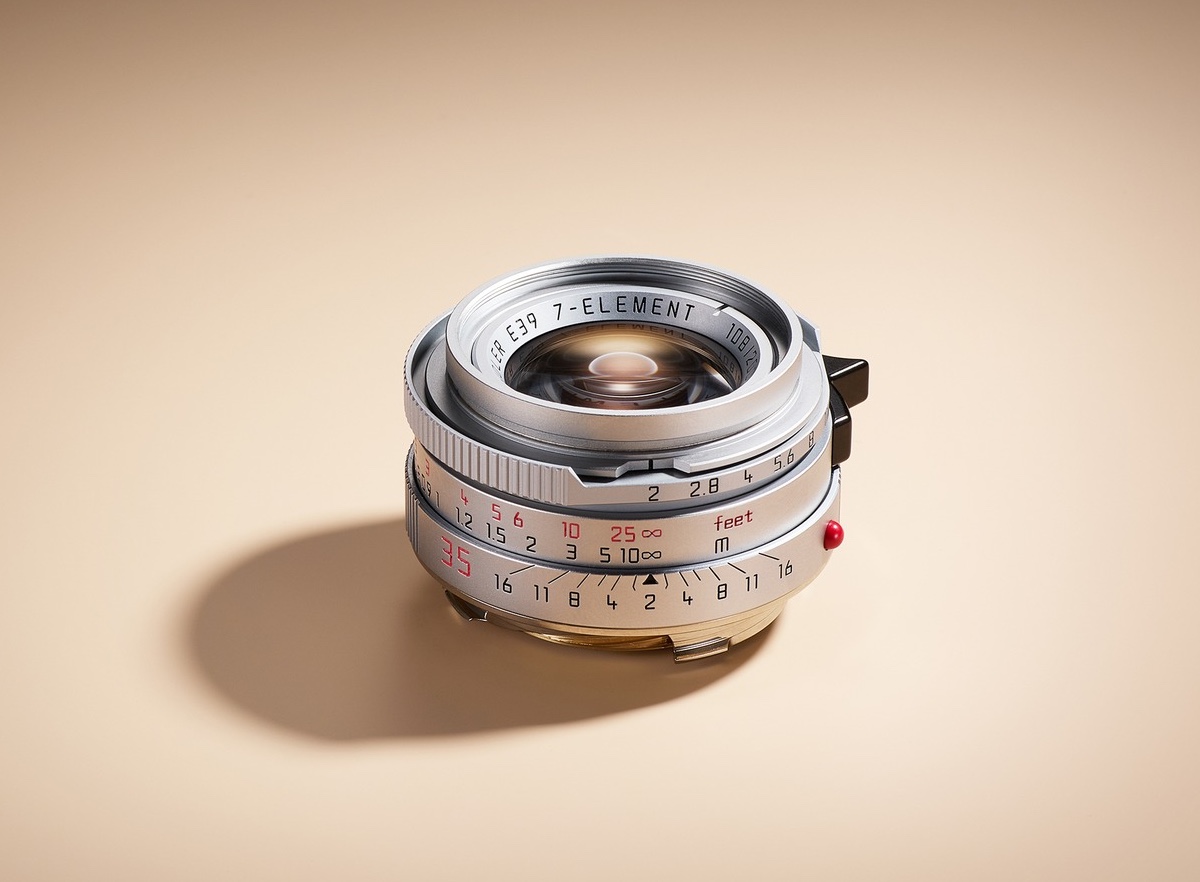
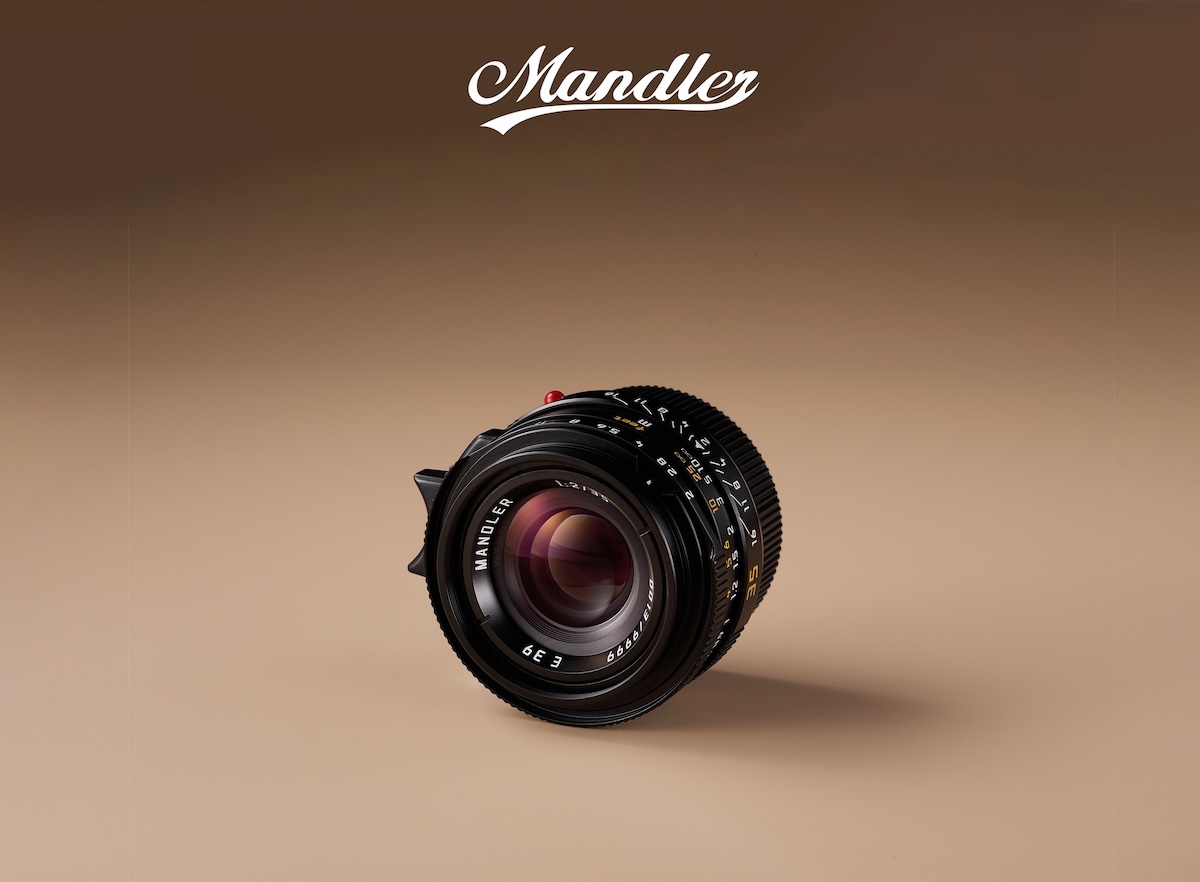
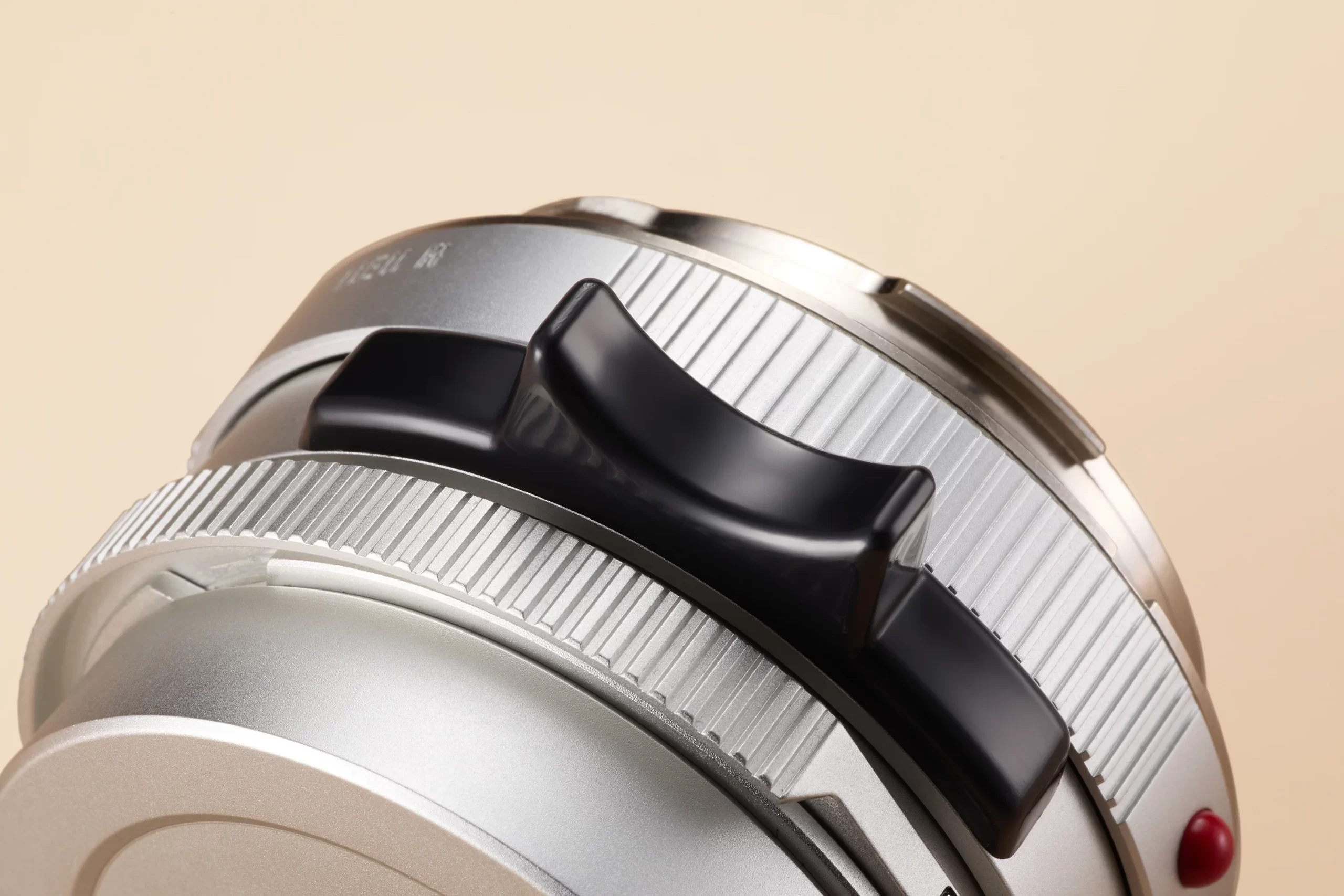
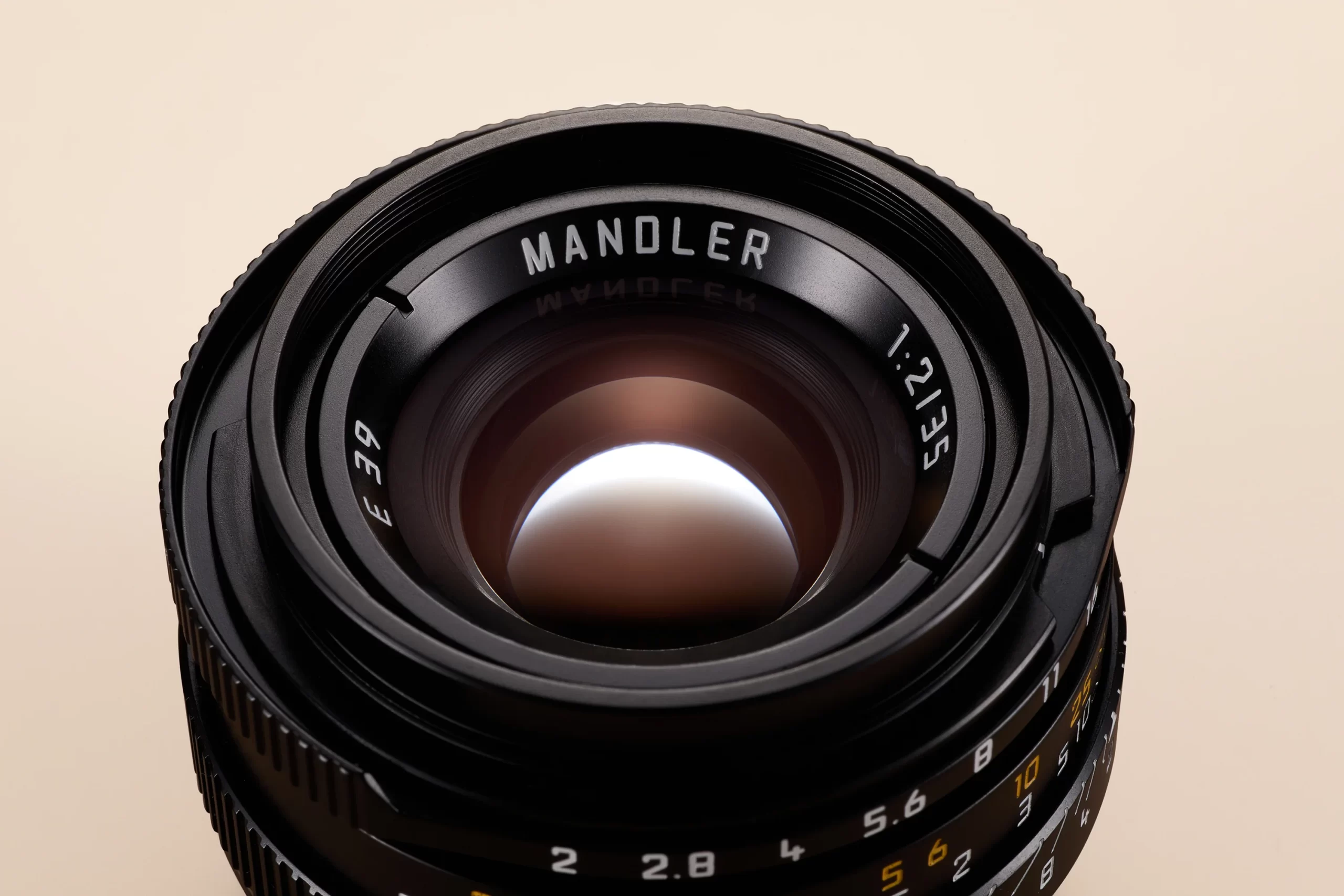
The Mandler 35mm f/2 lens for Leica M-mount is a replica and a complete reproduction of the optical formula of the original Leica Summicron 35mm f/2 seven-element lens. The name “Mandler” is a tribute to Walter Mandler, who designed many legendary Leica lenses.
Mandler is expected to launch another new lens in July. In the future, they are planning to release 3-4 new lenses per year.
The Sony World Photography Awards has announced the 10 category winners and 120 shortlisted photographers of its 2026 Open Competition. The contest, which is in its 19th year, aims to recognize the best single images taken in the past year. The 2026 edition received over 430,000 images from more than 200 countries and territories. The entries showcase a diverse range of imagery, including dramatic landscapes, humorous portraits and more.
The Open Photographer of the Year will be announced at the awards ceremony in London on April 16. The winner will receive a $5000 cash prize along with Sony imaging equipment. A selection of winning and shortlisted images will be on display as part of the Sony World Photography Awards exhibition at Somerset House from April 17 to May 4, 2026.
Description: Taken on a dark night, this view of the paper mill in Obbola, Sweden, reveals layers of shadows, concrete, clouds and sky.
Technical details: Fujifilm GFX100s II | GF110mm F2 LM WR | F2.8 | 1/18 sec | ISO 3200
Copyright: Markus Naarttijärvi, Sweden, Winner, Open Competition, Architecture, Sony World Photography Awards 2026
Creative
Photographer: Siavosh Ejlali
Image name: Lost Hope
Description: In this image the photographer describes how the black plastic covering most of the woman’s face is a sign of ‘dark thoughts and the imposition of beliefs’, while the red balloon falling to the ground could be ‘her lost hope’. The background evokes Iranian urban society, which has been the setting for the recent demonstrations involving Iranian women, noting that 'the red clothes and lips are the bloody price that women have paid.’
Copyright: Siavosh Ejlali, Iran, Islamic Republic Of, Winner, Open Competition, Creative, Sony World Photography Awards 2026
Landscape
Photographer: J Fritz Rumpf
Image name: Shapes and Patterns of the Desert
Description: An early morning glow brings out the rich pastel colours of the Sossusvlei dunes in Namibia. The contrast of the green and delicate peach colours almost overwhelms the senses; the patterns and textures emerging from the shadows give the landscape a distinctive, painterly look.
Technical details: Nikon Z8 | Nikkor Z 180-600mm F5.6-6.3 VR | F13 | 1/400 sec | ISO 200
Copyright: J Fritz Rumpf, United States, Winner, Open Competition, Landscape, Sony World Photography Awards 2026
Lifestyle
Photographer: Vanta Coda III
Image name: Charlotte and Dolly
Description: Charlotte lies with her cow Dolly, keeping cool in the cow barn between events at the 100th State Fair of West Virginia in Lewisburg. Outside, the temperature is upwards of 32°C.
Technical details: Canon EOS R3 | RF 24-70mm F2.8 L IS USM | F2.8 | 1/320 sec | ISO 500
Copyright: Vanta Coda III, United States, Winner, Open Competition, Lifestyle, Sony World Photography Awards 2026
Motion
Photographer: Franklin Littlefield
Image name: Sailboat
Description: A punk show in Providence, Rhode Island, featuring the band Sailboat.
Technical details: Fujifilm X-S20 | XF 16mm F2.8 R WR | F2.8 | 1/2 sec | ISO 200
Copyright: Franklin Littlefield, United States, Winner, Open Competition, Motion, Sony World Photography Awards 2026
Natural World & Wildlife
Photographer: Klaus Hellmich
Image name: Arctic Fox in Blizzard
Description: A blue arctic fox in a blizzard, photographed on the Varanger Peninsula, Norway.
Technical details: Nikon Z8 | Nikkor Z 400mm F2.8 TC VR S | F2.8 | 1/50 sec | ISO 1000
Copyright: Klaus Hellmich, Germany, Winner, Open Competition, Natural World & Wildlife, Sony World Photography Awards 2026
Object
Photographer: Robby Ogilvie
Image name: Colour Divides
Description: Taken in the Bo-Kaap neighbourhood of Cape Town, South Africa, this image centres on a parked car set against a sharply divided colourful facade. The composition balances geometry and saturation; everyday architecture becomes graphic and deliberate, reflecting how colour and place shape urban identity.
Copyright: Robby Ogilvie, United Kingdom, Winner, Open Competition, Object, Sony World Photography Awards 2026
Portraiture
Photographer: Elle Leontiev
Image name: The Barefoot Volcanologist
Description: On the ash plains of Mount Yasur, on the island of Tanna, Vanuatu, Phillip, an internationally recognised, self-taught volcanologist, stands barefoot atop a volcanic rock bomb. Wearing a lava-protection suit gifted to him by some visiting researchers, the volcano smoulders behind him, sending a plume of gas and sulphur into the sky. Phillip grew up beneath the active volcano, and this portrait captures him in his element.
Technical details: Sony a7 III | FE 24mm F1.4 GM | F16 | 1/250 sec | ISO 320
Copyright: Elle Leontiev, Australia, Winner, Open Competition, Portraiture, Sony World Photography Awards 2026
Street Photography
Photographer: Giulia Pissagroia
Image name: Between the Lines
Description: A family marvels at the view from Ørnevegen (Eagle Road), Norway, in this candid shot.
Technical details: Sony a7 IV | FE 24-105mm F4 G OSS | F22 | 1/200 sec | ISO 1250
Copyright: Giulia Pissagroia, Italy, Winner, Open Competition, Street Photography, Sony World Photography Awards 2026
Travel
Photographer: Megumi Murakami
Image name: Untitled
Description: The Abare Festival has been passed down for 350 years in Japan's Noto region. This image captures the festival’s finale, as men leap into the river amidst fiercely burning torches that send sparks flying everywhere. They rampage wildly, believing the more they rage, the more the deity rejoices.
Copyright: Megumi Murakami, Japan, Winner, Open Competition, Travel, Sony World Photography Awards 2026
DPReview has been selected as a Global Partner for CP+.
Each year in February, the camera industry gathers in Yokohama, Japan, for CP+ Expo, the industry's official trade show sponsored by the Camera & Imaging Products Association (CIPA). What's more, DPReview has been selected as one of the founding Global Partners for CIPA's CP+ partnership program, bringing you exclusive news, insights, and hands-on access to the event.
CP+2026 runs from February 26th to March 1st. We've created a dedicated CP+ show page to help you track all the news from CP+ in one place. This is where you'll find our latest updates – including content that may not appear on our homepage – ranging from breaking news and hands-on impressions to behind-the-scenes looks at the event and more.
Let us know if there's anything specific you want us to watch for, and we'll keep our eye out!

 Connexion