The first day of CP+ has come to a close. During it, we got the chance to see some of the lenses announced during the show in-person, so here’s a closer look. If you have any questions about them, be sure to leave them in the comments below!
DPReview community member Ciaccio (Mario Ciaccia) has a fascinating photography career based in Milan, Italy. He has been a professional photographer since 1998, working for Tutto Mountain Bike and other companies, including the motorcycle magazine Motociclismo. He now runs his own site while balancing commissioned work with a personal need to capture everyday moments through his camera.
Favorite camera and lens: Fujifilm X100V with its 35mm equivalent lens, or Sony a7C with the 14mm F1.8 or 135mm F1.8.
Typical photo scenes: Motorcycle travel and events, vast landscapes from Patagonia to the Himalaya, the quiet moods of the River Po, and spontaneous family life.
Although inspired by classic Leica photojournalists and the black-and-white work of Don McCullin, Ciaccio admits he sees only in color. He also says he forced himself to use the Fujifilm X100V to train his eye for 35mm, despite his natural pull toward extremes.
"I see beautiful black and white photos taken with 35mm, but then, when it's my turn to take them, I'm more inspired to use a 14mm and color."
Ciaccio edits in Lightroom and Photoshop, keeps accessories minimal, and carries only what helps him get that great shot.
Sunrise on Monte Jafferau, in the Western Alps, Italy, September 2014. We climbed a hill and were greeted by a pair of formidable French mountains, Barre des Écrins and Pelvoux.
Sony NEX-6 | 210mm (315mm equiv) | F6.3 Photo: Ciaccio
"I carry very few pieces of gear, precisely because I have to seize the moment. I always carry a tiny Manfrotto tripod and, when I am working alone, a normal tripod. The a7C batteries last so long that I no longer need to carry many extras."
"In my bag there are also practical things: wet wipes, rain gear, a sweatshirt, thin gloves in winter, a headlamp for night photos and even a small screwdriver because sometimes the memory card door on my cameras gets stuck. If I have to wait hours at an event, I bring a folding chair so my back survives.”
“For years I have been obsessed with finding a light, fast system that lets me react immediately,” says Ciaccio. His Rotation 34 backpack uses a rotating waist pack that gives instant access to three cameras, even while seated on a motorcycle. The pairing of ultra-wide 14mm and 135mm telephoto reflects his visual instincts: dramatic perspectives or tight subject isolation with strong bokeh.
Rothang La, Himalayan pass 3,980 meters above sea level. I wanted to convey the vertigo I felt every time I encountered a truck or bus, and they didn't even slow down, despite the high risk of hitting me and sending me over the edge. After all, Rothang means ‘pile of corpses’.
Sony NEX-6 | 10mm (15mm equiv) | F4 Photo: Ciaccio
What stands out with the Fujifilm X100V and Sony a7C?
"If someone told me I could only keep one camera for the rest of my life, I would choose the Fujifilm X100V. With a 35mm lens, you can tell any story."
"For my Sony a7C, the high quality of the full-frame sensor allows me to have narrower focal lengths with little cropping. The 135mm seems like a weak telephoto lens, but the bokeh effect is such that I don't miss a 200mm or 300mm."
"I tried to do the same with the Sony a7 III, but it's too big: I'm one of the rare cases where the a7c is indispensable. If I wanted the same things but in an even smaller size, I could switch to APS-C: Sony a6700 with Sony 11 mm F1.8 (tiny!) and an 85 mm F1.8, which could be Sony or Viltrox."
“If someone told me I could only keep one camera for the rest of my life, I would choose the Fujifilm X100V.”
In October 2025, we challenged the steam train that runs from Novara to Varallo Sesia, in Piedmont, Italy. The challenge was to photograph it with the motorcycles at 13 different points.
Sony a7C w/ FE14mm F1.8 GM | F1.8 | 1/4000 sec | ISO 250 Photo: Ciaccio
How do you adapt your setup to different situations?
“It depends on the season and on what I am doing. If I travel alone like an explorer, I reduce everything to the minimum. If I have to photograph an organized event and stay in one place for three or four hours, I bring what makes the wait comfortable."
"My strength is that I always have the right focal length ready. The cameras are set in manual mode, usually with the aperture wide open. If necessary, I close it, but I like to isolate the subject and react quickly.”
Murzuq Desert in Libya, November 2008. I wanted to convey the feeling of being in the presence of immense chocolate flows.
Canon EOS 40D | 70mm (113mm equiv) | F8 | 1/640 sec | ISO 100 Photo: Ciaccio
Ciaccio's advice for other photographers
“Since I started in digital in 2004, technology has improved enormously. Today, we have more than enough performance. Ten frames per second is already a lot. Twenty-four megapixels are already excellent. At a certain point, it is not the equipment that changes your photography."
"Travel, look around you, and shoot. I have photographed Patagonia, the Himalayas and the Libyan desert, but I have also learned that beauty is behind my house. The important thing is to be ready when the moment arrives.”
If you’d like to share your photography setup, tell us about your main camera, lens choices, key settings and photography strategies. You could be featured next!
Editor's note: This article continues a series, 'What's in your bag?', highlighting DPReview community members, their photography and the gear they depend on. Would you like to be featured in a future installment? Tell us a bit about yourself and your photography by filling out this form. If you're selected for a feature, we'll be in touch with next steps.
Today marked the beginning of the 2026 CP+ show. While we're typically fond of seeking out cameras and lenses that have been cut in half, we found that particular trend had (mostly) fallen by the wayside this year. Instead, many of the manufacturer's booths featured diaromas large and small, often complete with tons of foliage.
When you use DPReview links to buy products, the site may earn a commission.
Photo: Mitchell Clark
7Artisans showed off several new lenses at its booth at CP+, introducing two new autofocus models that are, in some ways, polar opposites. Both are for full-frame, but one aims to be as small and light as possible, while the other is for those who aren't afraid of a little heft.
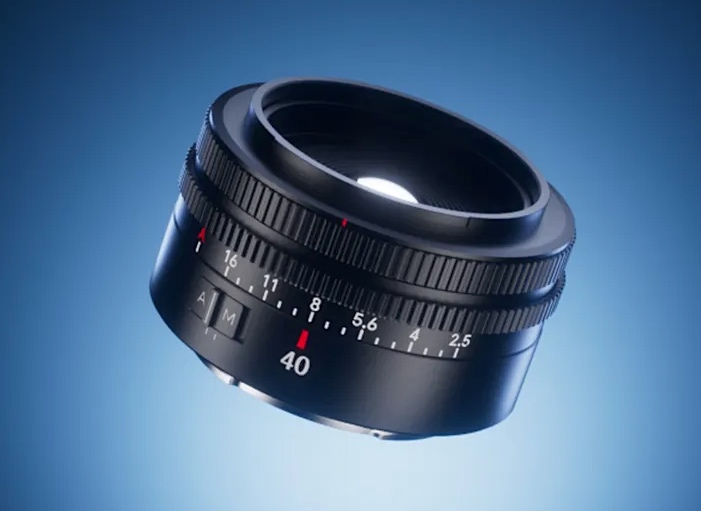
The first is the AF 40mm F2.5, which the company says is part of its "Lite" series, alongside the set of three F1.8 primes it announced earlier this year. While those lenses barely tipped the scales, this new offering is even smaller and lighter, coming in at just 90 grams.
This is one of the clickiest function buttons I've ever experienced. Photo: Mitchell Clark
Despite the focus on size, the lens has a fair number of features, including a clicked aperture ring, autofocus / manual focus switch and even a programable function button (though it's much smaller than is typical, feeling more akin to the reset switch you'd find on the bottom of some electronic device).
The lens has seven elements in six groups, with three high-refraction elements and one aspheric, and can focus as close as 0.4m (15.7"). It uses a stepper motor for autofocus, and has a nine-blade aperture, which the company says will provide a "bubble bokeh" effect.
The AF 40mm F2.5 is available now from the 7Artisans website for $159. Initially, it'll be available for E mount, though a representative said it will later come to L-mount and Nikon's Z-mount.
Photo: Abby Ferguson
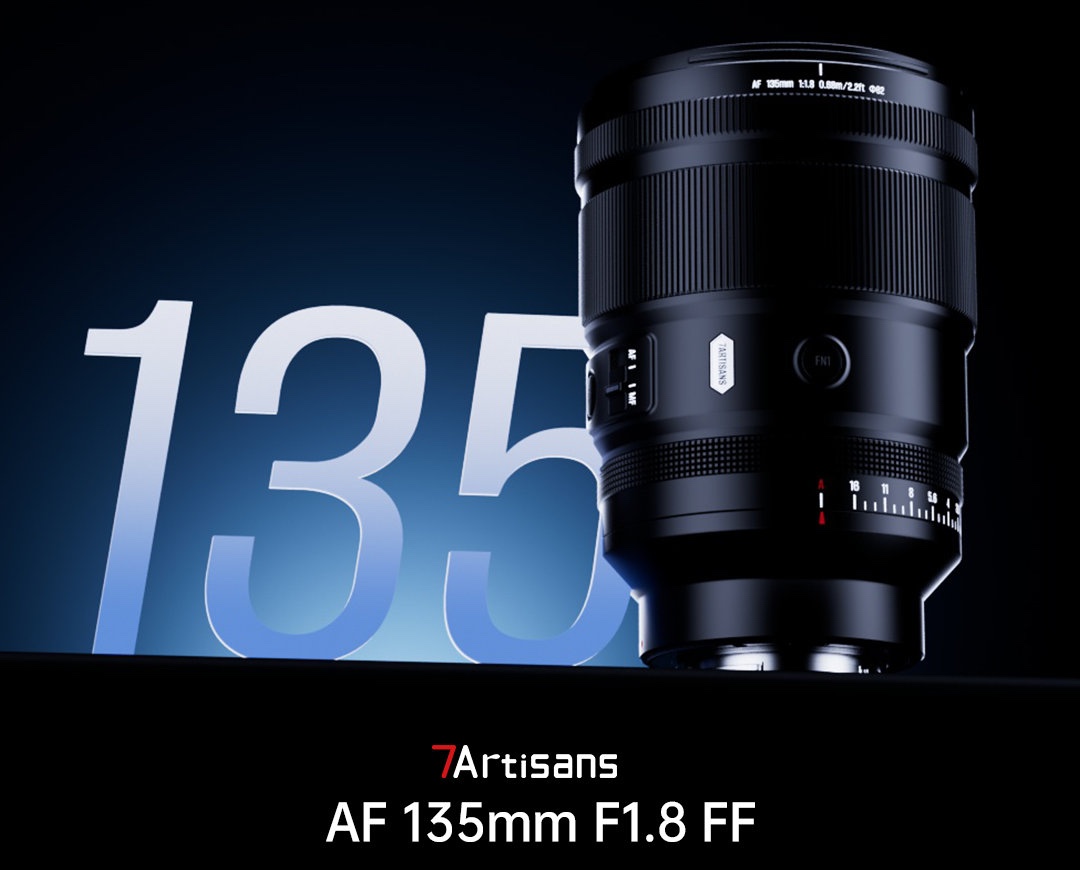
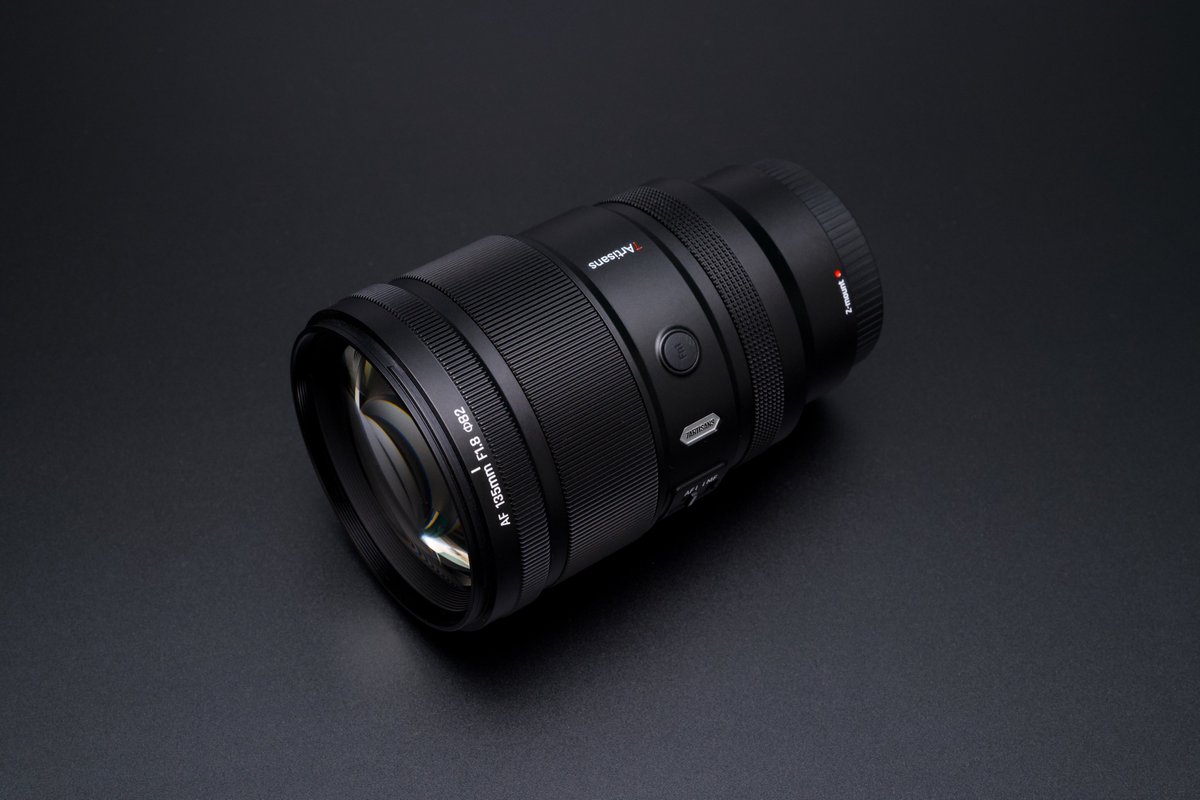
The company also showed off an upcoming lens: the AF 135mm F1.8. Unlike the 40mm, it's not particularly light or compact; while there aren't official specs available for it yet, I was allowed to hold it and it's a substantial piece of glass (though it's still noticeably smaller and lighter than Sigma's 135mm F1.4).
The lens will be available for Z mount, L mount and E mount, and features two function buttons and an aperture ring (or a programable control ring on the version for Nikon). The company plans to release it in the second half of the year. A placard said it will retail for around ¥120,000 including tax, which is around $770 at today's exchange rates, and says it'll have a minimum focusing distance of 0.68m (26.8"). It seems like a relatively ambitious lens, so it'll be interesting to see if it delivers on image quality and user experience.
Photo: Abby Ferguson
In addition to the two autofocus lenses, the company showed us an interesting manual focus lens called the Dionysus. It's an 18mm F6.3 lens for APS-C, and is, essentially, a decorative lens cap that you can use to shoot a picture with if you're in a pinch or are looking to achieve a certain aesthetic. To that end, it's available with red or yellow engravings, though the company says it may add more colors in the future. The representative showing it off also said it doubles as a fidget toy; when you turn the focus ring it clicks, providing haptic feedback, and when you let go it springs back to its starting position.
When you use DPReview links to buy products, the site may earn a commission.
A Sony RX1R III cut in half in a display case at CP+. The lens sits almost directly on top of the sensor, requiring precise, micron-level adjustments for each unit to ensure sharp image quality.
Photo: Dale Baskin
We've long known that compact cameras like the Sony RX1R require immense levels of precision manufacturing, but in an interview with DPReview at CP+, a Sony executive shared a detail that illustrates it perfectly.
Speaking about the different considerations when making a compact and an interchangeable lens camera, Yasufumi Machitani, General Manager of the Camera Business Department of Sony's Imaging Entertainment unit, said: "Each lens and image sensor position is precisely adjusted with micron-level precision. That's why the RX1R series is very sharp, even in this very small form factor."
It's no surprise that micro-adjustments are required on a camera-by-camera basis to ensure that each sensor and lens pair is achieving maximum possible image quality. At the launch for a previous generation of the RX1R, we were told that the rear element of the lens is so close to the sensor that you might have difficulty fitting a single sheet of paper in between the two.
We'll be conducting more interviews with manufacturers throughout the week, so stay tuned. We're also looking forward to publishing our full interview with Sony, covering a wide range of topics about the company's cameras, lenses and the camera market as a whole.
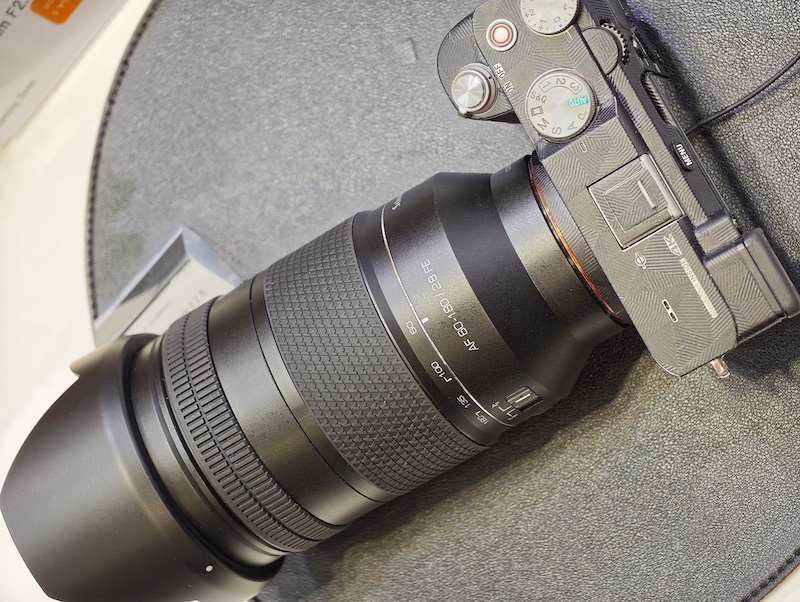
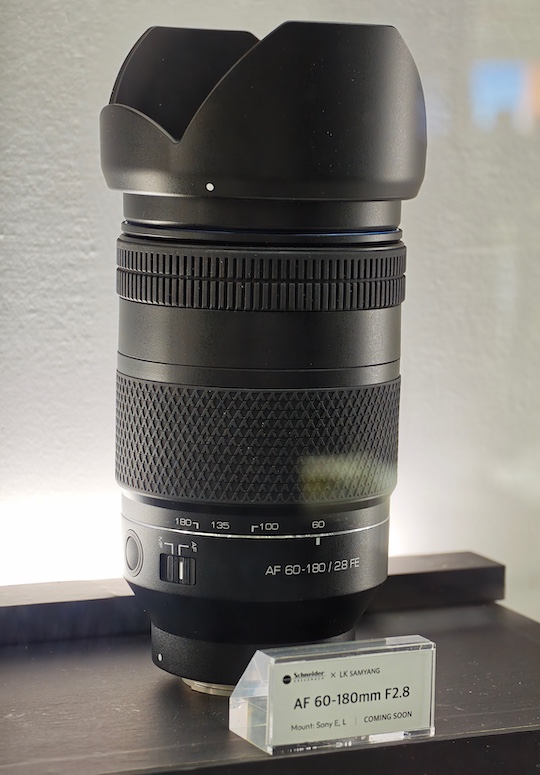
CP+ is officially underway, and LK Samyang has unveiled the AF 60-180 F2.8, its next lens made in collaboration with Schneider Kreuznach. The company also mentioned that an L-mount version of its AF 14-24mm F2.8 would be coming soon.
Details on the Schneider Kreuznach x LK Samyang AF 60-180 F2.8 are slim for now, but we were able to get hands-on with the lens. It features an AF/MF switch, a customizable Fn button and a zoom lock switch. It's relatively compact and lightweight, balancing well on the Sony a7C that was used in the display. A representative at the booth said that it will be available for E and L-mounts sometime in the second half of the year, likely between June and August.
Image: Mitchell Clark
The AF 14-24mm F2.8 FE was the first collaboration lens between LK Samyang and Schneider Kreuznach. It was announced at CP+ last year. Now, the company is using the event to unveil the L-mount version of the lens. It will be coming sometime in late May.
In addition to chatting with us about the upcoming lenses, a representative mentioned that LK Samyang is looking to expand its lens mount offerings. E-mount models will continue, but it hopes to provide additional mounts in the future, as much as they are able. It could also mean that the company is considering making L-mount versions of the lenses currently only available on E-mount.
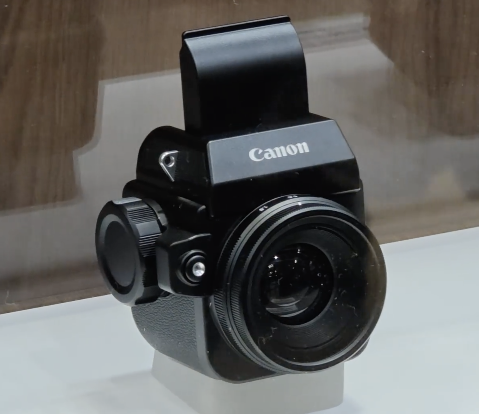
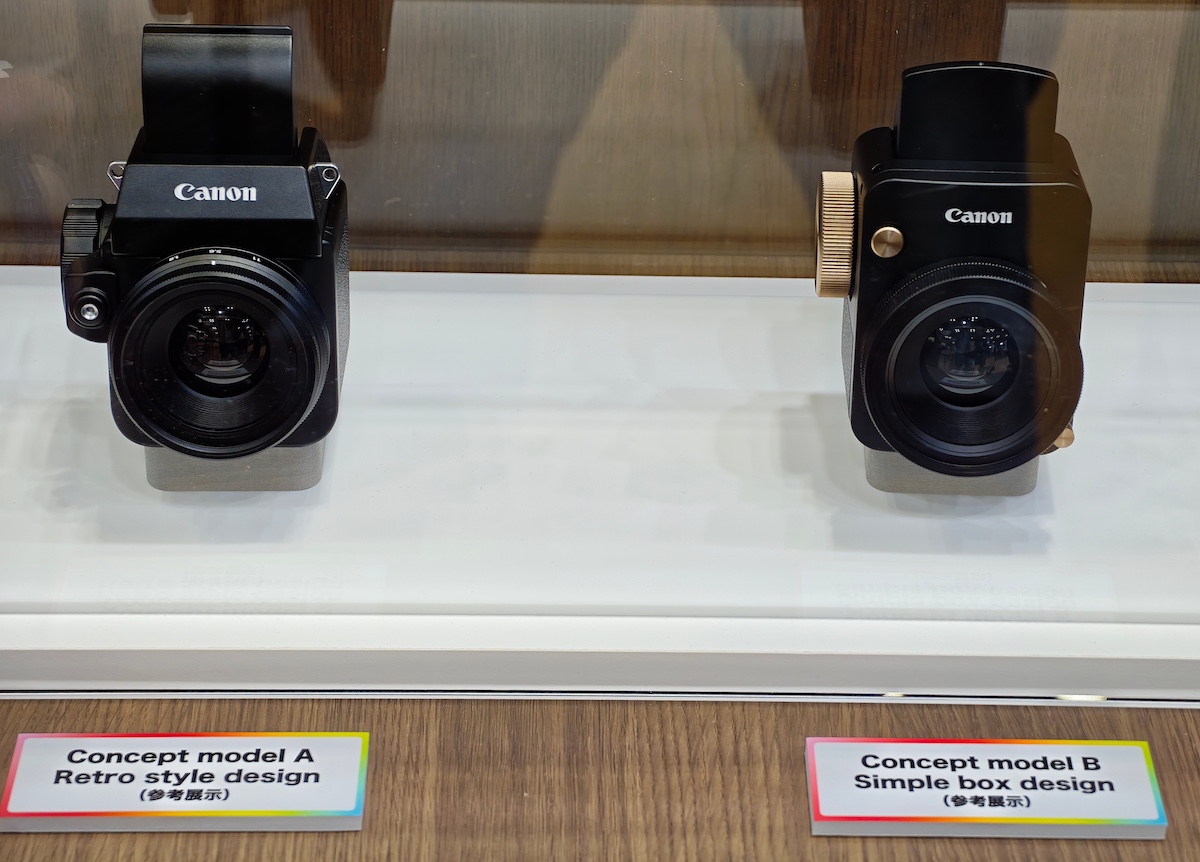
Canon showcased a new retro concept camera at the 2026 CP+ show – it features a retro optical viewfinder and a shutter button on the right side of the camera. The current demo model has a 6MP sensor (not the final version). Two different variations were on display:
Additional pictures:
Watch a video of the new Canon camera concept on Weibo.
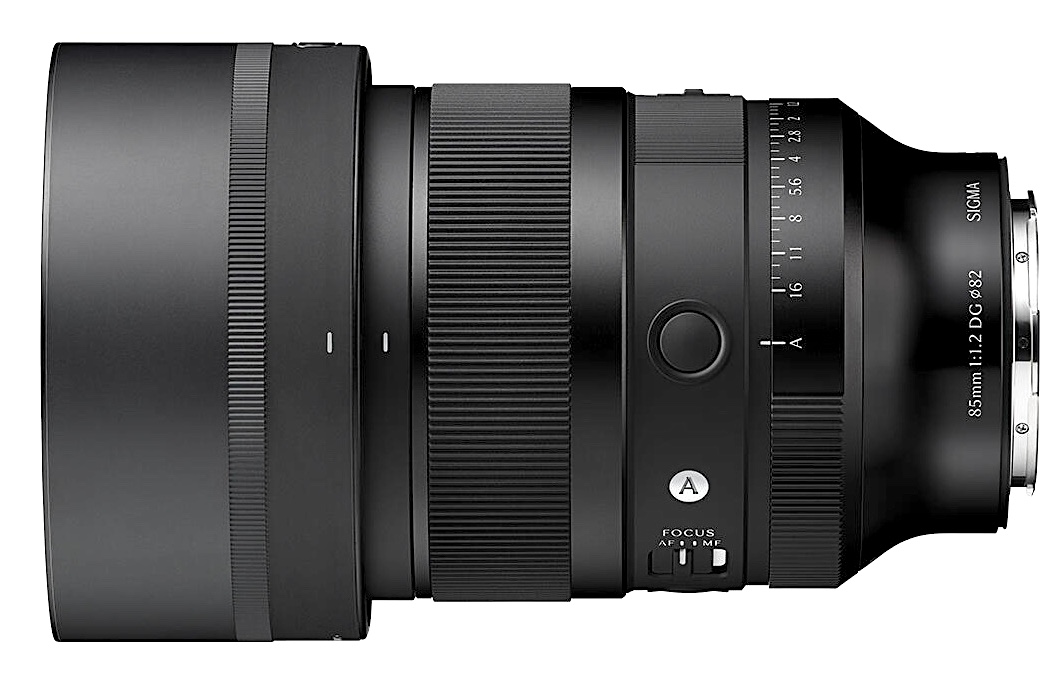
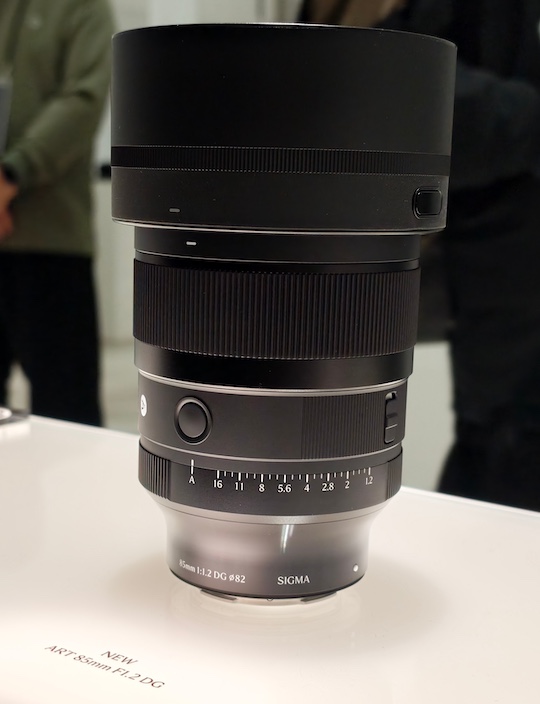
Another rumored lens got officially announced today for the 2026 CP+ show: the Sigma 85mm f/1.2 DG | Art lens for Sony E and Leica L mounts (previously reported here). This is just a development announcement – the lens will be officially released in September:
“The Sigma 85mm F1.2 DG | Art is a large-aperture medium-telephoto lens designed for full-frame mirrorless cameras. With the latest optical design, the lens delivers exceptional resolution even at maximum aperture, enabling striking portrait photography with the distinctive depth of field unique to F1.2. Featuring a compact, lightweight design and fast, precise autofocus driven by dual HLA (High-response Linear Actuator) system, the lens offers reliable performance for professional applications. With the addition of this lens, Sigma’s lineup of F1.2 prime lenses is now complete, joining the Sigma 35mm F1.2 DG II | Art and Sigma 50mm F1.2 DG DN | Art. The new Sigma 85mm F1.2 DG | Art will be exhibited at the Sigma booth at CP+ 2026, held from February 26 to March 1, 2026.”
Additional pictures:
Additional information:
Sigma Announces Development of 85mm F1.2 DG | Art Lens for Full-Frame Mirrorless Cameras
Ronkonkoma, NY, February 25, 2026 – Sigma Corporation of America, the US subsidiary of Sigma Corporation (CEO: Kazuto Yamaki. Headquarters: Asao-ku, Kawasaki-shi, Kanagawa, Japan), is pleased to announce the development of the Sigma 85mm F1.2 DG | Art, a large-aperture medium-telephoto lens designed for full-frame mirrorless cameras.
The lens will be exhibited at the Sigma booth during CP+ 2026, which will be held from February 26 to March 1, 2026 in Yokohama, Japan.
The Sigma 85mm F1.2 DG | Art is a large-aperture medium-telephoto lens designed for full-frame mirrorless cameras. With the latest optical design, the lens delivers exceptional resolution even at maximum aperture, enabling striking portrait photography with the distinctive depth of field unique to F1.2.
Featuring a compact, lightweight design and fast, precise autofocus driven by dual HLA (High-response Linear Actuator) system, the lens offers reliable performance for professional applications.
With the addition of this lens, Sigma’s lineup of F1.2 prime lenses is now complete, joining the Sigma 35mm F1.2 DG II | Art and Sigma 50mm F1.2 DG DN | Art.
Available mounts: L-Mount, Sony E-mount
Launch: September 2026
As the CP+ show opens in Yokohama, Japan, Sigma has announced it's working on an 85mm F1.2, which it says will complete its trio of 35, 50 and 85mm super-fast primes.
The Sigma 85mm F1.2 DG Art will be available for both Sony E and the Leica, Panasonic, Sigma L mounts. This means that all four major full-frame mirrorless lens mounts will have an 85mm F1.2 option available, as both Canon and Nikon currently offer their own comparable optics.
The company hasn't revealed much detail, beyond the basic concept of the lens, its use of a linear motor and the fact that it will complete a trio of F1.2 lenses. The company says the new lens will go on sale in September 2026.
Sigma Announces Development of 85mm F1.2 DG | Art Lens for Full-Frame Mirrorless Cameras
Ronkonkoma, NY, February 25, 2026 – Sigma Corporation of America, the US subsidiary of Sigma Corporation (CEO: Kazuto Yamaki. Headquarters: Asao-ku, Kawasaki-shi, Kanagawa, Japan), is pleased to announce the development of the Sigma 85mm F1.2 DG | Art, a large-aperture medium-telephoto lens designed for full-frame mirrorless cameras.
The lens will be exhibited at the Sigma booth during CP+ 2026, which will be held from February 26 to March 1, 2026 in Yokohama, Japan.
The Sigma 85mm F1.2 DG | Art is a large-aperture medium-telephoto lens designed for full-frame mirrorless cameras. With the latest optical design, the lens delivers exceptional resolution even at maximum aperture, enabling striking portrait photography with the distinctive depth of field unique to F1.2.
Featuring a compact, lightweight design and fast, precise autofocus driven by dual HLA (High-response Linear Actuator) system, the lens offers reliable performance for professional applications.
With the addition of this lens, Sigma's lineup of F1.2 prime lenses is now complete, joining the Sigma 35mm F1.2 DG II | Art and Sigma 50mm F1.2 DG DN | Art.
Available mounts: L-Mount, Sony E-mount Launch: September 2026
Welcome back to our Question of the Week series! This reader-focused series aims to get our photographic community to share thoughts on all sorts of photography-related topics in our forums. We pose questions about gear, favorite camera stores, advice, problem-solving and more, and you share your thoughts and opinions.
This week, we’re leaning into the holiday spirit! The season of giving (and occasionally re-gifting) is upon us, and that means it’s time to unwrap some memories – both heartwarming and hilarious.
What are the best (and worst) photography-related gifts you've received?
What’s the best photography-related gift you’ve ever received? Maybe it was a dream lens that caused you to take on an adventure deep in the mountains, or a handmade camera strap that’s now an essential part of your kit. And what about the worst? Perhaps someone thought you needed yet another "World’s Best Photographer" mug, or that odd lens filter set that turned every photo a shade of green.
In this edition of our Question of the Week series, we want to hear your gift stories: the memorable, the useful and the truly baffling. Share your favorites (and flops) in the forum link below. Photos of the gifts (or what you created with them) are also more than welcome! We'll highlight some of your most entertaining and heartfelt responses in next week's roundup.
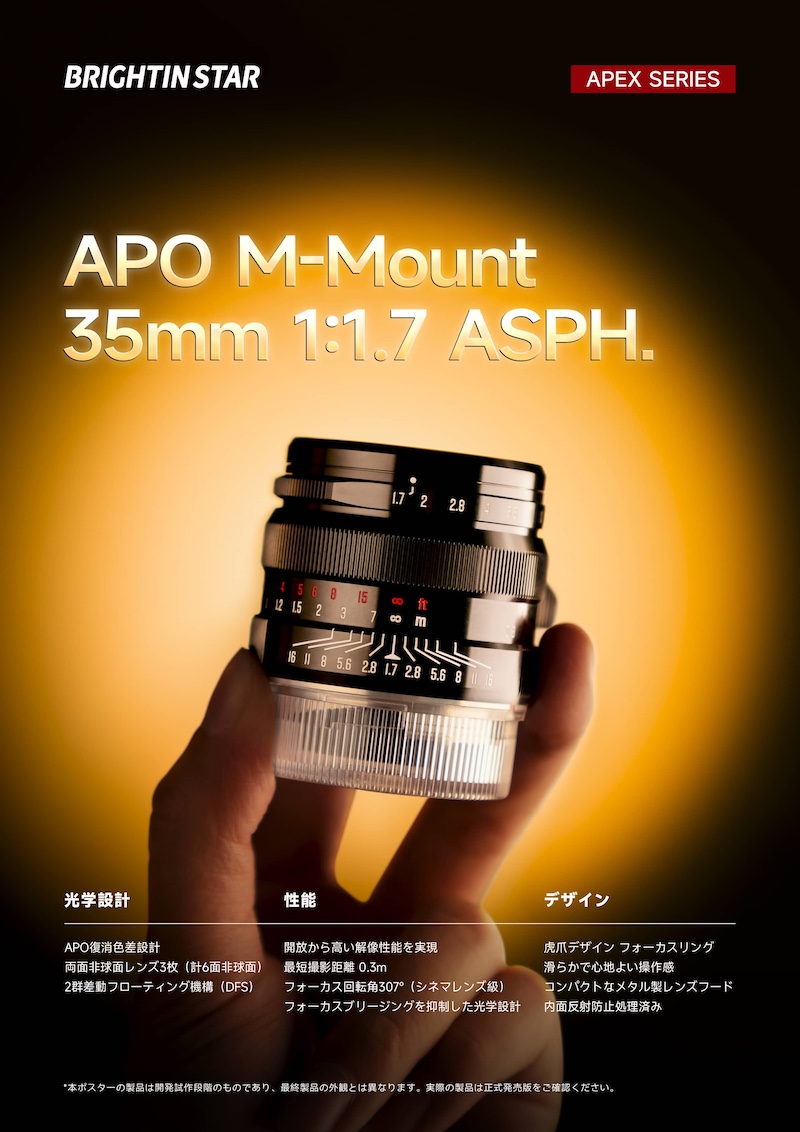
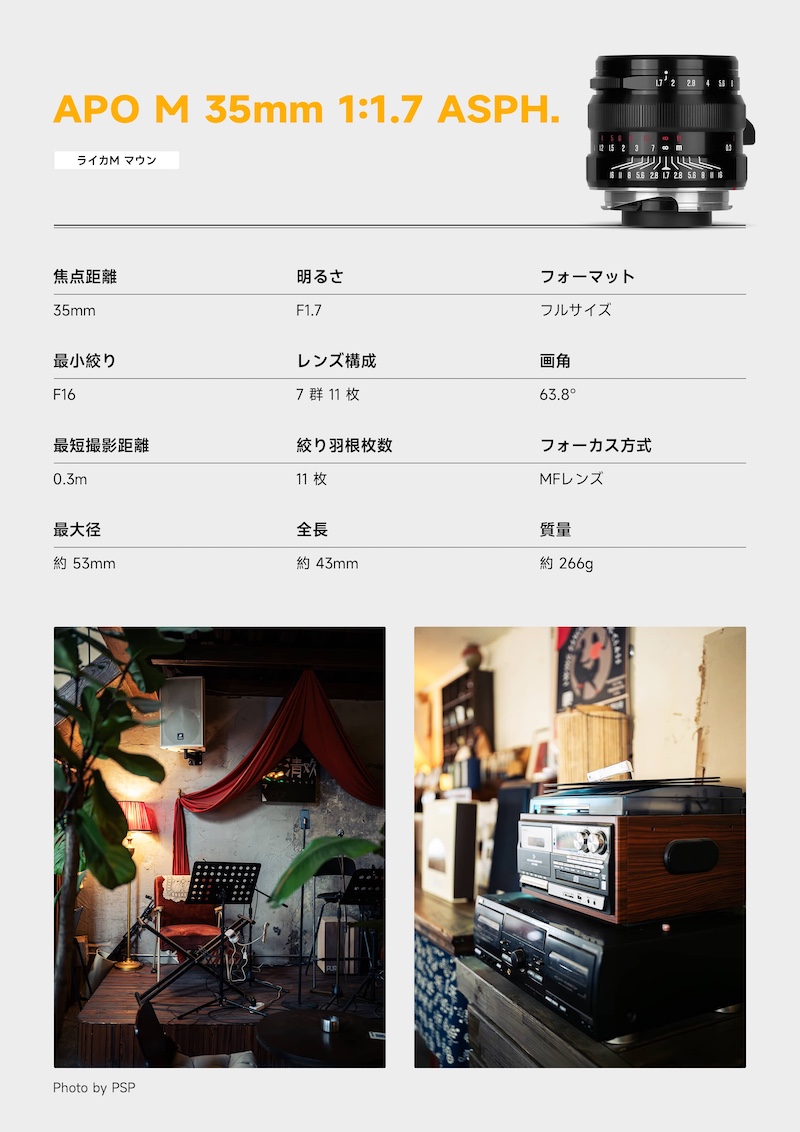
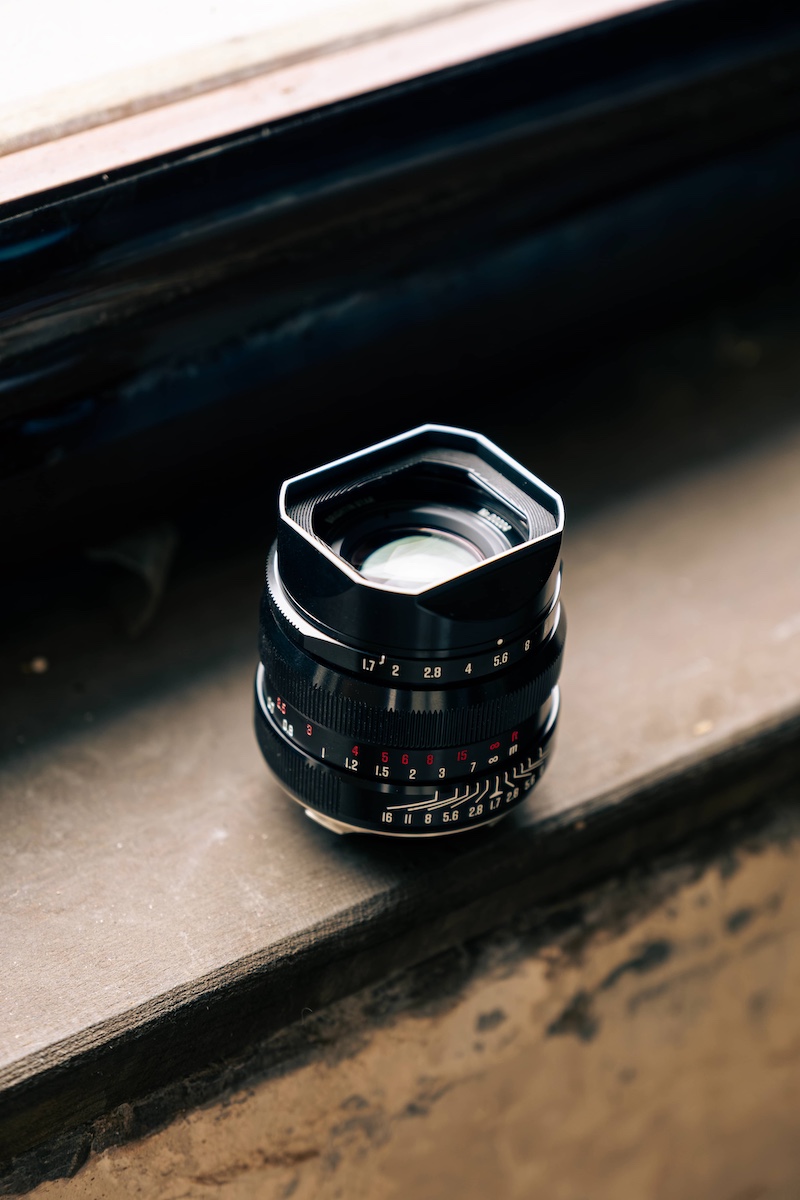
Designed for M-mount systems, this lens incorporates an advanced apochromatic (APO) optical structure combined with aspherical elements to deliver outstanding sharpness, precise color reproduction, and effectively minimized chromatic aberration. It is crafted for photographers who demand both high resolution and refined image character.
Key features:
Advanced Optical Design: APO apochromatic correction with 3 high-precision double-sided aspherical elements and dual floating groups, delivering exceptional sharpness even wide open.
Outstanding Performance: Minimum focusing distance of 0.3m and an ultra-long 307° focus throw (cinema-level precision) for accurate manual control and high-resolution results from wide aperture.
Ergonomic Design: Classic tiger-claw focus ring for smooth handling, paired with a compact metal lens hood to effectively reduce flare.
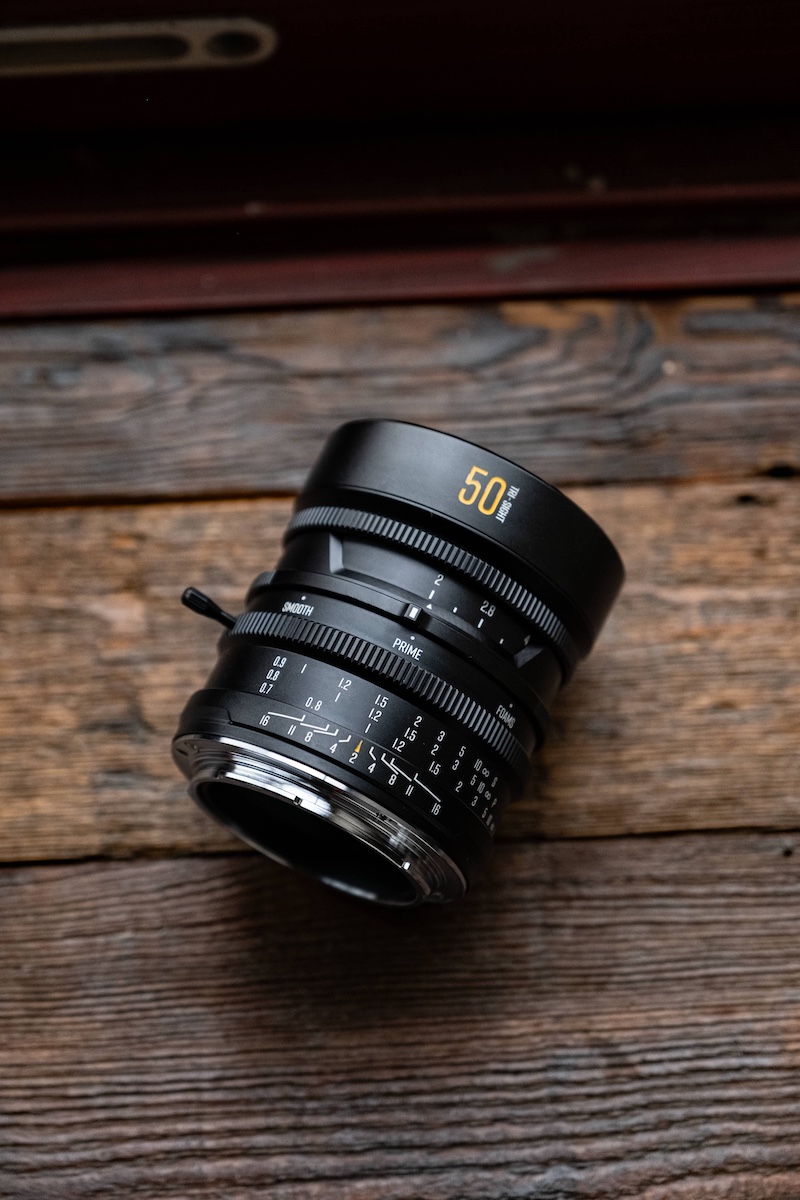
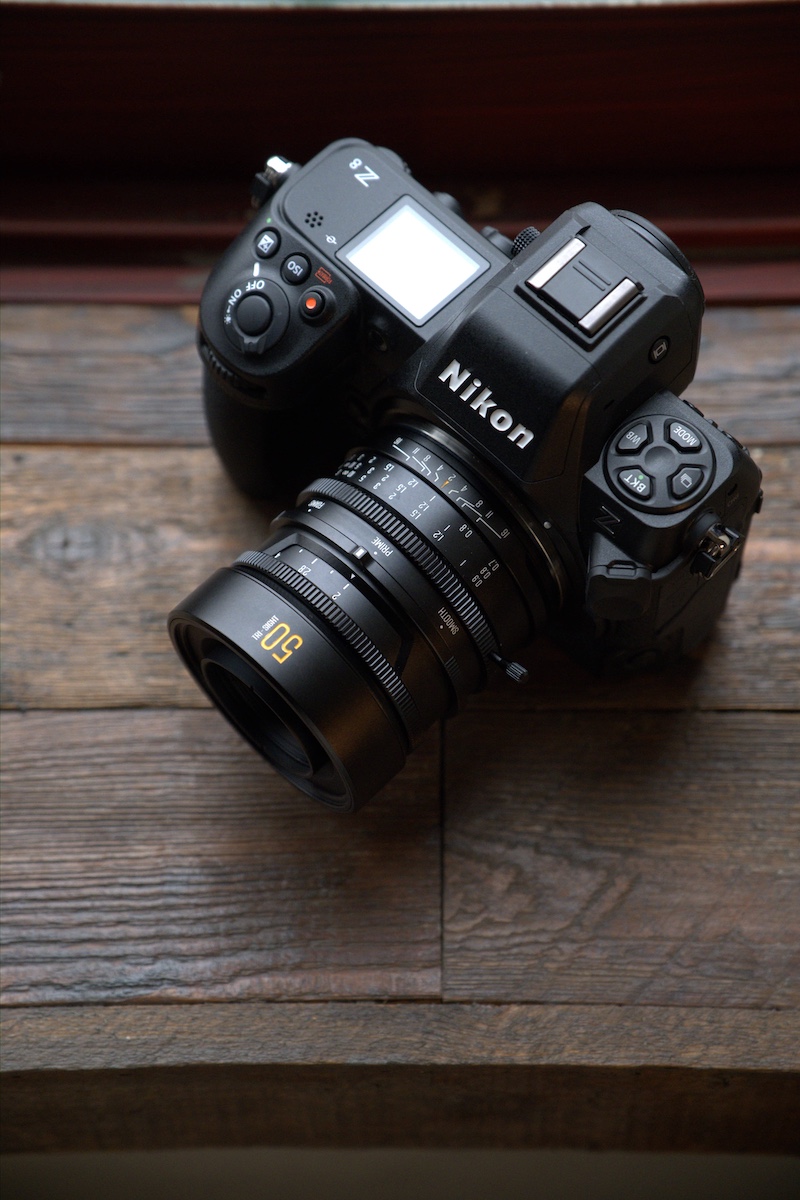
Brightin Star 50mm f/2 TRI-SIGHT lens
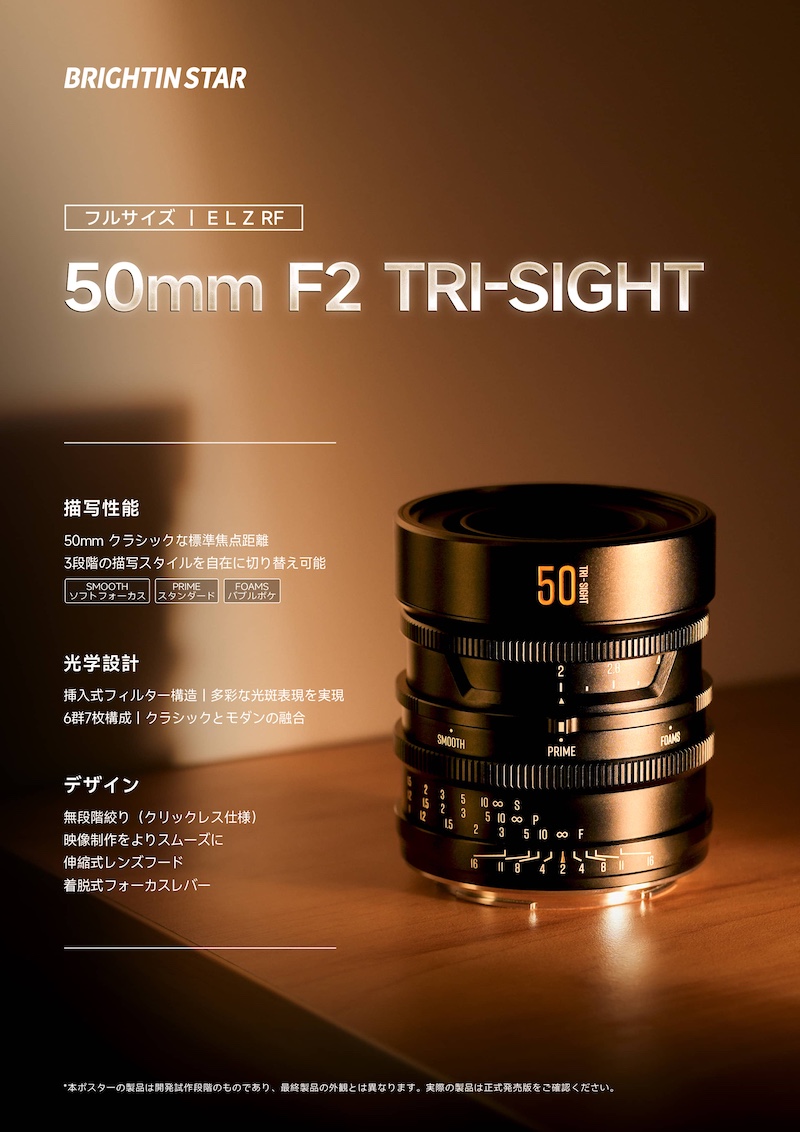
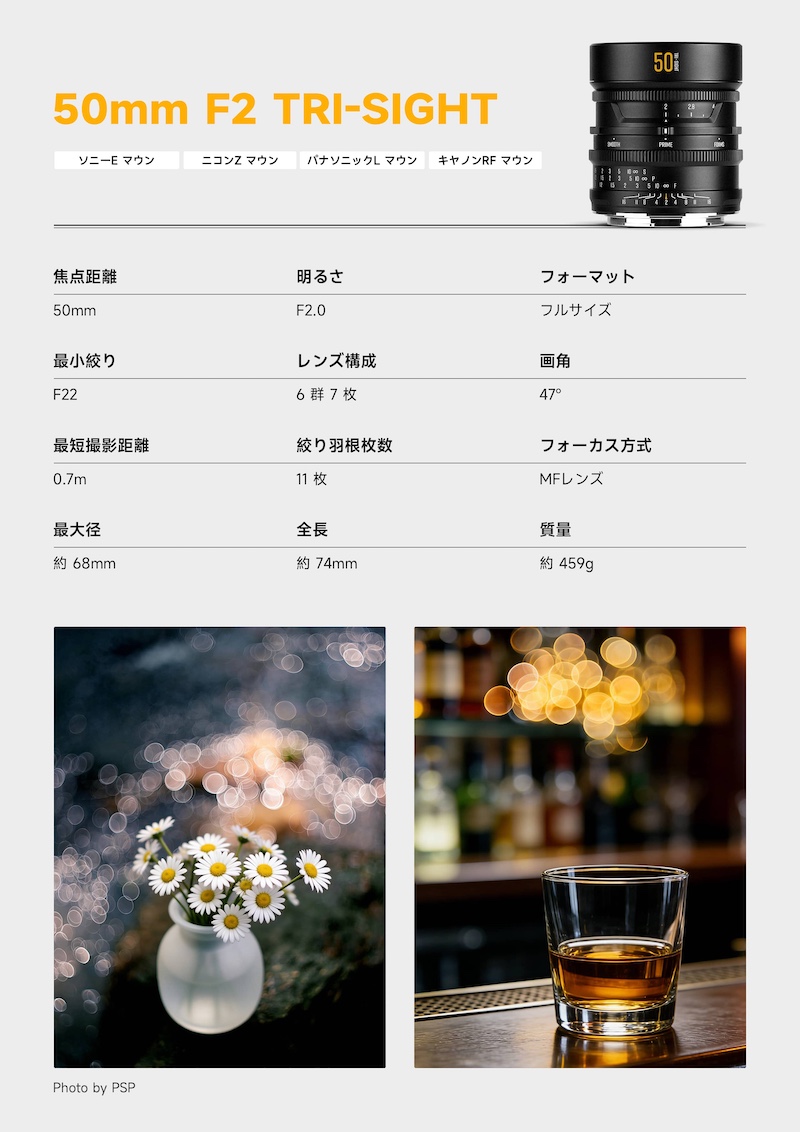
The 50mm F2 TRI-SIGHT Lens stands out with its switchable triple rendering modes, allowing photographers to adapt their visual style instantly. With a simple switching mechanism, users can seamlessly transition between these three distinct optical styles within a single lens, offering exceptional creative flexibility without changing equipment:
SMOOTH – Soft-focus effect for a gentle, dreamy atmosphere
PRIME – Standard rendering for natural, balanced image quality
FOAMS – Bubble bokeh effect for expressive and artistic backgrounds
Key features:
Classic 50mm focal length with three switchable focus styles: SMOOTH (soft-focus effect), PRIME (standard rendering), and FOAMS (bubble bokeh effect).
Drop-in filter system for creating distinctive and creative light spots.
Stepless aperture design with a retractable lens hood and detachable focus lever for smoother, more convenient operation.
While Abby, Dale and Mitchell are in Japan to cover CP+, it also provides an excellent opportunity to get out and test some photo gear. The evening before the show, the crew hit the streets of Yokohama's Chinatown to get some shots of the neon lights and reflections.
You're sure to see more images from the photowalk in our full sample galleries for the Viltrox 16mm F1.8 for L mount, Sigma 15mm F1.4 DC DN and Viltrox 35mm F1.2 Lab for Z mount, but for today, here are some of our favorite photos we took while out on the town.
Sample gallery
This widget is not optimized for RSS feed readers. Click here to open it in a new browser window / tab.
During our hunt to find Abby Ferguson a film camera in the used camera stores of the Shinjuku district in Tokyo, we ended up at Five Star Camera where Dale Baskin also found something worth taking home.
Panasonic has announced the DMW-DMS1, a microphone designed to attach to the digital hotshoe on recent Lumix cameras. It features support for 32-bit float recording on certain cameras and has a four-microphone array, allowing for multiple computational pickup patterns.
The microphone is small, measuring 45 x 64 x 74mm (1.8 x 2.5 x 2.9"), and weighing just 100g (3.5oz) without the included windscreen. It plugs directly into the hotshoe, without the need to run a separate cable down to the camera's microphone input jack. It has physical switches for wind reduction, noise reduction and gain, as well as a gain dial.
Image: Panasonic
On the back are six backlit buttons that control the pickup pattern. The buttons' brightness can be adjusted for indoor or outdoor working. The microphone has different modes for capturing sounds and subjects in front of and/or behind the camera, while suppressing noises from other directions.
The capsules are 10mm, which Panasonic says strikes a balance between cost, quality and dynamic range.
The company says this is possible thanks to "beamforming technology," which we suspect is similar to how other companies implement similar features on cameras with built-in multi-capsule microphones. The capsules themselves are 10mm, which Panasonic says it chose to strike a balance between cost, quality and dynamic range.
The microphone combines dual analog-to-digital converters with 32-bit float recording, which come together to capture both loud and quiet sounds separately with plenty of latitude to prevent clipping. While the microphone capsules themselves can still clip – Panasonic says this happens above 120dB, which is around the loudness of an emergency vehicle's siren – anything the microphones are physically capable of picking up can be recorded. Of course, it can also record in a more traditional 24-bit mode, too, which is where the gain dials come into play.
It also includes a wind noise canceler, which Panasonic says uses a new method that's better at isolating the wind, without adjusting or muffling the sounds you're actually trying to record. Of course, as a software solution, it can only do so much, but thankfully, the company includes a fluffy windscreen with it.
The microphone supports four-channel recording, and can use two of the channels as a backup track.
The microphone supports four-channel recording, with the option to use two of the channels as a backup track. These are primarily designed for use in 24-bit mode, and give the options to either record the results of omnidirectional pickup to two channels, one at reduced volume, or to mimic the main recording but 20dB quieter, to protect from clipping.
The microphone itself doesn't have any built-in memory, so the recordings are done in-camera. The settings for 32-bit float and backup recording are managed in-camera, a decision Panasonic says was made after consulting with audio professionals.
The capsule itself is vibration-damped as it goes into the body of the microphone, rather than the damping happening where the unit itself connects to the camera. In theory, this makes it less likely for it to pick up handling sounds if you flip a switch or press a button on the microphone.
Image: Panasonic
When it launches, the microphone will be compatible with the Panasonic S1II, S1RII, S1IIE, S5II and S5IIX, though the latter two don't support 32-bit float recording or the backup function. The cameras will require a firmware update to use it, which will be available on March 9th. Panasonic says the GH7 and G9II will gain support for the microphone at an unspecified point in the future, and told us that it'd be safe to assume that the former will have support for 32-bit float.
The DMW-DMS1 will be available in March and will retail for $399.
Press release:
Panasonic Introduces New Digital Shotgun Microphone: DMW-DMS1
Newark, N.J. (February 24, 2026) – Panasonic is pleased to introduce the new LUMIX DMW-DMS1, an all in-one microphone for any shooting scenario. The DMW DMS1 is designed for creators and professionals who want uncompromising audio quality without complexity. Whether you’re filming a travel vlog in a busy city, recording an interview in a quiet studio, or capturing the excitement of a live event, this microphone adapts to your needs so you can focus on your story. As of February 2026, the DMW-DMS1 is compatible with LUMIX S1II, S1RII, S1IIE, S5II and S5IIX. *1 Compatibility with GH7 and G9II is planned in the future.
The DMW-DMS1 features a newly developed large-diameter 10mm microphone array that delivers crisp, focused audio even in challenging environments. For run-and-gun workflows, an internal floating shock-mount minimizes vibration noise from movement, while the included windscreen reduces wind interference. The new wind noise cancellation system leverages float-recording technology, suppressing wind without compressing the intended signal, maintaining an open, natural vocal tone even in adverse weather.
To accommodate a wide range of recording situations, the DMW-DMS1 offers six directional modes, reducing the need for additional accessories and setup. It supports 32-bit float recording*2 to capture audio without distortion at sound pressure levels up to approximately 120 dB, comparable to a front-row concert or close proximity to an emergency siren — conditions that can challenge conventional microphones.
To prevent any missed takes due to accidental setting errors, or to capture ambient sound, the device offers two backup recording modes*2. When recording in 4-channel mode, channels 3 and 4 can be used as backups to reliably capture important audio.
Lightweight at approximately 100g, the compact form factor draws power and transmits digital audio via the hot shoe, eliminating cable management. Physical switches are intuitive, and directional mode buttons feature adjustable brightness for low-light environments. A dedicated pouch provides convenient storage and transport with the windscreen attached.
Main Features
1. High Sound Quality
High-precision sound captured with large-diameter 10mm mic array
Minimizes vibration noise thanks to an internal shock-mount mechanism
Minimizes wind noise using a windscreen
2. Flexible Directionality and Professional Reliability
Six directional modes for any recording situation (Forward Directionality Cardioid/ Stereo/Wide Stereo/ Forward Directionality Supercardioid/ Rearward Directionality Supercardioid/ Bidirectional Supercardioid)
32-bit float recording and backup recording mode*2
3. Easy-to-use Design
Cable-free hot shoe connection
Intuitive physical switches
Pocket-sized design (approx. 73.7 x 45 x 63.7mm, approx.100g)
*1 Firmware must be updated to the latest version which will be released on March 10th, 2026.
*2 Compatible cameras for this feature (as of February 2026): DC-S1M2, S1M2ES, and S1RM2. Firmware must be updated to the latest version.

 Connexion