Yikes! Image: @gupigupigupigupigupigupigupi on Instagram
Sometimes, Instagram can be a source for creative ideas to put your own spin on. Other times, it can give you examples of what not to do. One of the videos that crossed our feed today was the latter: captioned "every photographer's worst nightmare happened to me," it shows a lighting stand with a flash attached crashing to the ground, ruining the photographer's laptop.
Despite the apparent misfortune, the clip actually shows someone getting extremely lucky, as the heavy rig could've easily come down on the photographer or the model they were shooting, which could've resulted in a serious injury or worse. So how do you avoid making the same mistake?
If you look in the comments (and at the photographer's post itself), you'll see a ton of people suggesting the same thing: sandbags or something similar to weigh the stand down. And indeed, that's an excellent place to start. With an overhead lighting setup, I'd probably look to use at least two: one on the leg that's in line with the load and another on a second leg. If the load were super heavy or very far away from the center of the stand, I'd even consider using three, though I'd check my stand's weight limit first.
It also appears that the wheels may not have been locked, given how the stand kicked out when it started falling. If that's the case, they definitely should've been, especially with an overhanging load.
If the weight is sticking out from the stand without a leg under it, it can tip much more easily
There are a few things the photographer in the clip did right, even if they ultimately weren't enough to save the laptop. Ironically, there is, in fact, a sandbag in the video: it's hanging as a counter-balance on the end of the rod. The photographer also appears to have roughly aligned one of the legs and the arm, which is an important step. If the weight is sticking out from the stand without a leg directly under it, it can tip much more easily. Of course, none of that matters if you don't first secure the base of the stand with, say it with me, everyone: sandbags.
Some more sandbag pro tips: if the bag is touching the ground, it's going to be less effective, since some of its weight won't be transferring down through the stand's legs. And if you're using a stand with unequally sized legs, like a C-stand, the biggest, sturdiest and tallest one should be the one sandbagged first, and the one facing the load.
That also generally makes it the one facing the most important thing on the set: the people. That way, if it falls, it falls away from them In the case with the video, though, the photographer should've consulted the stands' manual to see where the manufacturer recommended hanging sandbags from. If there isn't a safe place to do so, they should've used a different stand for an overhead setup.
Have any light stand horror stories (or tips on how to avoid them) of your own? Feel free to share them in the comments or over on our forums. Stay safe out there.
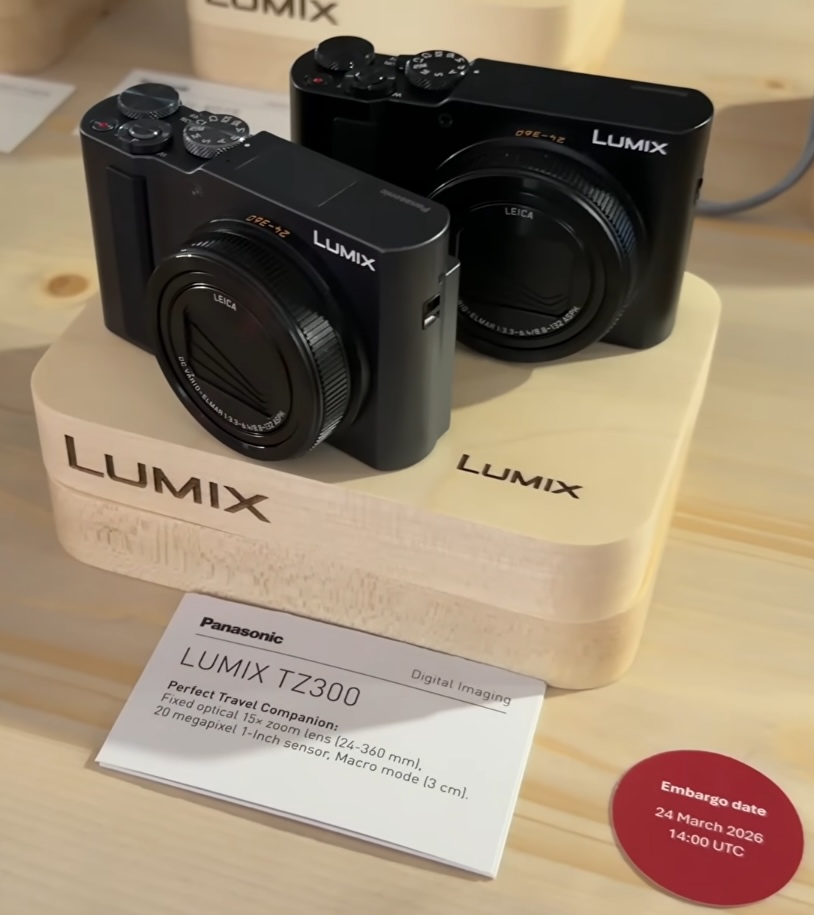
Panasonic will announce a new Lumix TZ300 compact camera on March 24th (see leaked picture above). Here are the details:
20 MP 1″ sensor
Leica DC Vario-Elmar 24-360mm equivalent f/3.3-6.4 lens (15x optical zoom)
Macro mode (3cm)
Improved video recording geared toward vloggers, potentially including better stabilization, 4K support, and user-friendly features like a flip-out screen
When you use DPReview links to buy products, the site may earn a commission.
Lake Kuttara is a lake in the caldera of a volcano in Shikotsu-Tōya National Park on the island of Hokkaido in Japan.
Photo: Dale Baskin
Sometimes, you have to go to Hell and back to get the story, and I did just that with the Sigma 15mm F1.4 DC Contemporary lens. Specifically, I went to Noboribetsu Jigokudani (Hell Valley) in Shikotsu-Tōya National Park on the island of Hokkaido, Japan, a geothermally active volcanic area where sulfur-scented steam clouds seep from the ground.
The Sigma 15mm F1.4 DC Contemporary is a fast, wide lens designed specifically for APS-C cameras. Since we had the RF mount version, I shot it on the Canon EOS R7, resulting in a 24mm full-frame equivalent field of view on Canon's APS-C format.
In addition to taking the lens to Hokkaido, I also shot it around Tokyo and Yokohama, sometimes in very rainy conditions. It's worth noting that I had this lens (and the R7) around my neck in the rain for a couple of hours straight at one point, almost dripping with water, and neither missed a beat, suggesting the weather sealing on both is pretty effective.
"Sometimes, you have to go to Hell and back to get the story"
While the X-mount and E-mount versions of this lens include an aperture ring, the RF-mount version has a control ring. It's clicked, but I've never found a generic control ring to be a great substitute for a clicked aperture ring, particularly since it's very easy to rotate inadvertently. It also offers the flexibility to assign different settings to the ring. From that perspective, it's neither a pro nor a con, but something to be aware of if you're considering the Canon version.
Please do not reproduce any of these images on a website or any newsletter/magazine without prior permission (see our copyright page). We make the originals available for private users to download to their own machines for personal examination or printing; we do so in good faith, so please don't abuse it.
Sample gallery
This widget is not optimized for RSS feed readers. Click here to open it in a new browser window / tab.
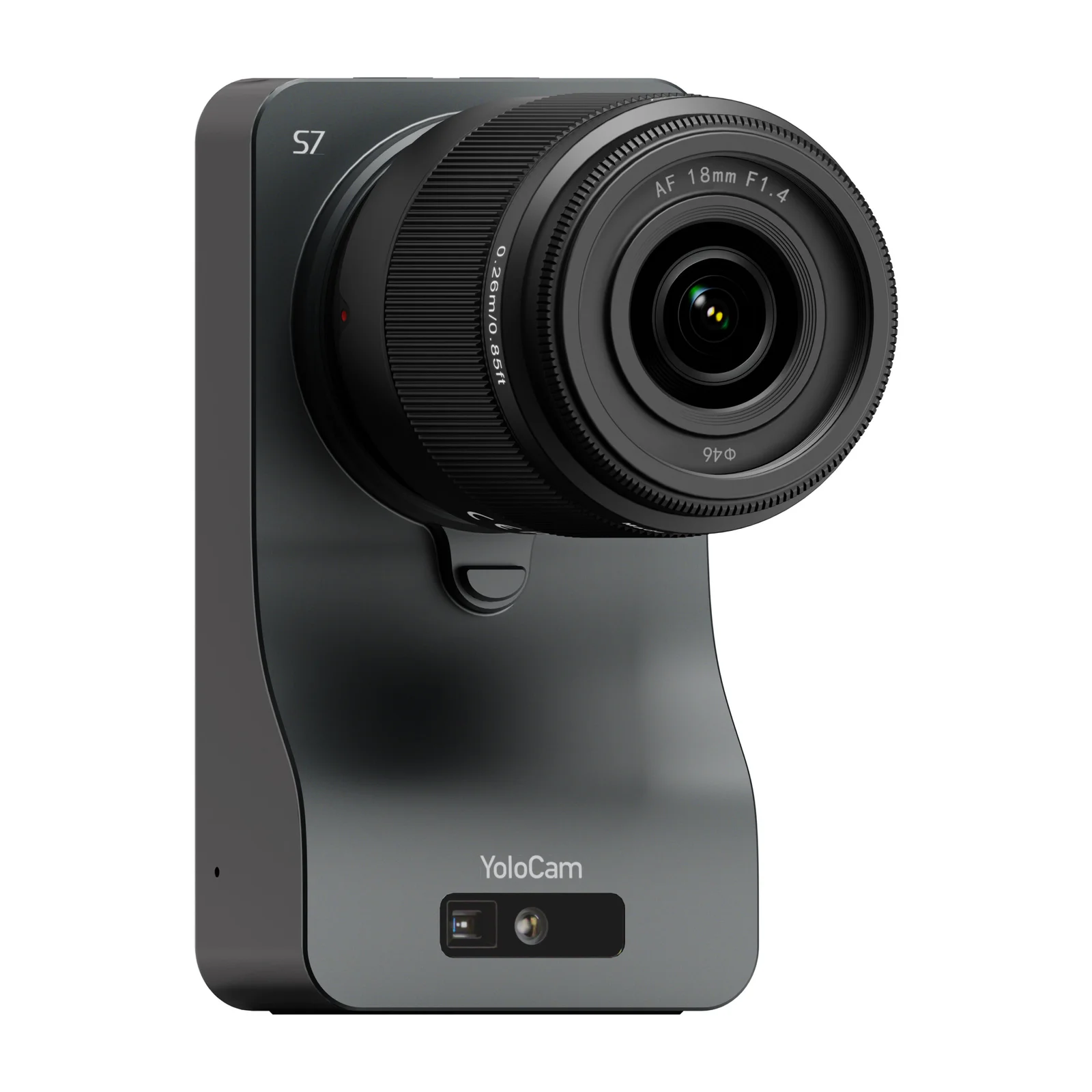
After the S7 camera, the Chinese manufacturer YoloLiv announced a new YoloLiv 18mm f/1.4 lens for Micro Four Thirds cameras. Here are the details on the new lens:
Price: $299 (approximately €259 in Europe)
Release date: expected to ship in late March or early April 2026
Stepper motor autofocus system with full-time manual focus override, optimized for smooth and accurate video focusing
Nano multi-layer coating to reduce flare, ghosting, and improve overall image quality
Metal lens mount with gold-plated contacts for EXIF data transmission to the camera
Compact and lightweight design
Specifications:
Specification
Details
Focal Length
18mm (36mm equivalent on full-frame)
Maximum Aperture
f/1.4
Minimum Aperture
f/22
Optical Construction
7 elements in 7 groups (including 4 aspherical and 3 low-dispersion elements)
Aperture Blades
7
Minimum Focus Distance
0.19m (7.5 inches)
Maximum Magnification
0.1x
Filter Thread
46mm (P=0.75)
Dimensions
Approximately 63mm diameter × 73.7mm length
Mount
Micro Four Thirds (MFT)
Compatibility
Primarily YoloCam S7; may work with other MFT bodies (untested)
Operating Temperature
-10°C to +50°C
In the Box
YoloLiv 18mm f/1.4 Lens (no additional accessories specified)
I found this ceremonial gate and pavilion of lanterns in Chinatown in Yokohama, Japan. It's one of my favorite places to shoot at night in Yokohama, thanks to all the illuminated signs and decorations. It's particularly fun in the rain when the lights reflect off the wet pavement.
This month, we want to see your most brilliant photos of artificial lights that light up the night. There's a myriad of possibilities, ranging from city lights and fireworks to carnivals and neon signs. The creative possibilities are endless. Our favorites will be featured in an article on the DPReview homepage.
Photos can be submitted between Sunday, March 15, and Saturday, March 21 (GMT). The challenge is open to photos captured at any time.
Important: Images MUST include a title and a caption of at least 25 words to be eligible. We need to be able to share the story behind your photo. We will consider both photos and captions when selecting our winners, so make sure to tell us that story!
Visit the challenge page to read the full rules and to submit your photos for consideration as soon as the challenge opens.
Sigma 35mm F1.4 DG II Art | F5.6 | 1/400 sec | IS0 80 Photo: Richard Butler
As the numerals suggest, the Sigma 35mm F1.4 DG II is the company's second-generation 35mm F1.4 for mirrorless cameras. It's also a successor to the 35mm F1.4 DG HSM Art: the lens that launched the 'Art' series as part of Sigma's Global Vision rebrand, all the way back in 2012.
At a time when a lot of manufacturers have been focusing on attention-grabbing, often neck-aching and typically wallet-worrying F1.2 lenses, it's refreshing to see an updated 35mm F1.4.
2025 saw Sigma significantly rework its 35mm F1.2, shaving 30% off the weight and a similar amount off its volume, making it a much more practical lens. Now it's done something similar to its (slightly) more modest 35mm F1.4.
The new 35mm F1.4 is 18% lighter than its predecessor (530g / 18.7oz in L-mount form) and both shorter and narrower, helping to reduce the volume by around 20%, too. This size and weight reduction leaves it 30% smaller and 30% lighter than the F1.2, and costing around 30% less. The 1/3EV difference between the two lenses should mean around a 20% reduction in peak light gathering capability.
F1.2 lenses can be excellent: I thoroughly enjoyed using Nikon's 35mm F1.2 when it was launched last year, and I really like the idea that Sigma's version is smaller and lighter, but I've been traveling this last week and have to say that I really appreciate the further size and weight reduction that comes with the move back to F1.4.
It's easy to look at the numbers in isolation and think "225g grams difference, that's something like the weight of four chocolate bars, how could that matter?," but if you have to fit it in your luggage and have it compete for space in a bag you're constantly carrying, the difference makes itself apparent.
The coatings appear to do a good job of maintaining contrast and limiting ghosting
I tried to shoot a selection of images so that you can judge properties such as sharpness, fall-off and bokeh for yourself. To my eye the bokeh looks very, very slightly bright-edged, resulting in a slightly busy appearance in some circumstances, but with a somewhat swirly character that I suspect some people will really like.
I also found the lens to be somewhat prone to flare if used without its (supplied) hood. This just seems to be the result of the large front element catching the light: the coatings appear to do a good job of maintaining contrast and limiting ghosting, even when flare creeps in.
Overall, I rather like the F1.4. 35mm is probably the focal length where, personally, I'd be most tempted to spend the extra to get an F1.2, but carrying the F1.4 around this week has made me appreciate having the option of getting most of the light in something a fair bit lighter.
Sigma 35mm F1.4 DG II Art sample gallery
Please do not reproduce any of these images on a website or any newsletter/magazine without prior permission (see our copyright page). We make the originals available for private users to download to their own machines for personal examination or printing; we do so in good faith, so please don't abuse it.
Sample gallery
This widget is not optimized for RSS feed readers. Click here to open it in a new browser window / tab.
Thank you to Panasonic for the loan of a Panasonic Lumix S1RII to capture this gallery. All images were processed using our standard lens workflow in Capture One, with the manufacturer's distortion correction applied but no correction of vignetting. There is extremely minor pincushion distortion before the correction is applied: we do not consider it to be an essential part of the lens design, if you prefer not to use it or your preferred software does not support lens corrections.
When you use DPReview links to buy products, the site may earn a commission.
Photo: SetWillFree
Most of us have a few ideas of what we'd do with the gear of our dreams if we ever get our hands on it; a bucket list of shots we'd try to get, or locations we'd take it to. For Will Freeark, who posts to YouTube on the channel SetWillFree, the vision was simple: he can see mountains from his backyard, but could he see his backyard from the mountains with the right lens?
Once he found a rental house that stocked the Canon RF 1200mm F8 L IS USM (and after putting a $20,000 hold on his credit card), he was ready to find out, a process he documented in a recent video.
While it's entertaining to watch him and his friends search for his house, battling atmospheric haze along the way, it's also interesting to see what else he does with the lens, a list that includes shooting a music video and commercial, as well as a spot of astrophotography.
The video is well worth a watch (though if you're at work be warned that there's a fair amount of swearing), as it's fun to see how different people use some of the gear that most us will never get to. It also gives me an idea for my next trip up to Mt. Spokane, I just need this lens, a teleconverter and an APS-C camera for unbelievable amounts of reach.
This time I'd like to tell you about a trip I've been planning for over five years, and only managed to realize early this year. Every time I had planned to go, something went wrong, to the point that I was sure the universe was trying to prevent me from going, and this time was no exception. But this time, I didn't let anything stop me. I traveled to Sichuan and Yunnan provinces in the beautiful land of China.
This was my first visit to China, and I was overcome by the beauty of the land, its landscapes and wildlife. Apart from a terrible jet lag that I just couldn't shake throughout the trip, the visit went really well, and most importantly, the wildlife was even better than I expected. I'd like to take this opportunity to show you some of the images I captured during my two-week visit and share my experience.
The first stop on my visit was Yunnan province, where I spent four nights in a beautiful, tiny mountain town, nestled on a river between huge forest-covered peaks. A fitting setting for the highest-dwelling primate on Earth: the Yunnan snub-nosed monkey.
A family of Yunnan snub-nosed monkeys in the forest.
Canon EOS R5 Mark II | Canon RF 100-500mm F4.5-7.1 L IS USM + EXTENDER RF1.4x | ISO 3200 | 1/640 sec | F10
A young Yunnan snub-nosed monkey.
Canon EOS R5 Mark II | Canon RF 100-500mm F4.5-7.1 L IS USM | ISO 800 | 1/1250 sec | F7.1
Photos: Erez Marom
The black-and-white snub-nosed monkey, also known as the Yunnan snub-nosed monkey, is a large black and white primate that lives only in the southern Chinese province of Yunnan. Coniferous and deciduous forests in the mountainous regions of Yunnan are the ideal terrain for these primates. It is threatened by habitat loss and is an endangered species, rarer than even the giant panda. It was almost completely unknown until the 1990's(!), and remains relatively mysterious and enigmatic even today.
A baby in its mother's arms, in the safety of a tall tree. I used the leaves of a bush to enhance the interest by adding colorful elements and framing the subjects.
Canon EOS R5 Mark II | Canon RF 100-500mm F4.5-7.1 L IS USM | ISO 800 | 1/1600 sec | F6.3
The huge trees that make this monkey's habitat also offer some fantastic settings and backgrounds, and show the size and beauty of its natural habitat.
Canon EOS R5 Mark II | Canon RF 100-500mm F4.5-7.1 L IS USM | ISO 400 | 1/320 sec | F8
Pretend-fighting among toddlers prepares them for the real deal later in life, when they will have to fend for themselves and fight for their feeding and mating rights.
Canon EOS R5 Mark II | Canon RF 100-500mm F4.5-7.1 L IS USM + EXTENDER RF1.4x | ISO 3200 | 1/640 sec | F10
There is never-ending action with the snub-nosed monkeys – there is always some interaction going on. In this photo, I liked the expression on both the worried-looking youngling on top and the threatening adult on the right.
Canon EOS R5 Mark II | Canon RF 100-500mm F4.5-7.1 L IS USM | ISO 800 | 1/2500 sec | F5.6
Photos: Erez Marom
With their unique adaptations to their environment, these monkeys thrive at extreme altitudes despite the below-freezing temperatures and thin air. They live at the highest altitude of any known non-human primate, up to 4700m (15,400ft) above sea level. Surviving in such extreme conditions is only possible because of a mutation in the primate's genomic DNA that confers increased resistance to oxygen deprivation (hypoxia).
What an incredible creature. The winter coat is longer, which can be seen on the scruffy tail. The behavioral aspect of this shot is also quite nice – I loved how it shows its teeth while manipulating the cut-off branch. How do you like the back-lighting and the composition?
Canon EOS R5 Mark II | Canon RF 100-500mm F4.5-7.1 L IS USM | ISO 800 | 1/2500 sec | F6.3
A back-lit subadult finds shelter in the large coniferous trees.
Canon EOS R5 Mark II | Canon RF 100-500mm F4.5-7.1 L IS USM | ISO 200 | 1/400 sec | F7.1
Photos: Erez Marom
This primate's diet is mainly made up of large amounts of lichens available in its region. Lichens are toxic to most animals, but the black-and-white snub-nosed monkey has specialized digestive enzymes similar to those of a cow that remove the harmful bacteria.
As part of the conservation program, park rangers collect the lichen from trees in the area and feed the monkeys. The rangers change the feeding locations often to preserve the forest habitat while supporting the monkey population and encouraging its growth and health. This means the monkeys congregate close to the feeding areas, making it possible to photograph them. Adult males and females, subadults, and babies swarm the trees and descend to the ground. Beautiful back-light, direct light and diffused light, I saw interesting and amusing behaviors without end.
An interesting pose I captured while the monkey was reaching out to the lichen. It always fascinates me when monkeys stand up like humans.
Canon EOS R5 Mark II | Canon RF 100-500mm F4.5-7.1 L IS USM | ISO 800 | 1/1000 sec | F7.1
The monkeys eat mostly, but not only, lichen. Wild berries also enrich their nutrition.
Canon EOS R5 Mark II | Canon RF 100-500mm F4.5-7.1 L IS USM + EXTENDER RF1.4x | ISO 800 | 1/640 sec | F10
Photos: Erez Marom
Many factors make this monkey an incredible photographic subject. Take the fur – one of the densest among all monkey species (to help it withstand freezing temperatures at high altitudes). Another distinctive feature, shared by both adults and babies, is their hairless and vibrant pink lips (some call them "botox-lips").
These primates get the "snub-nosed" part of their name, their most distinctive feature, from the absence of nasal bones. I particularly loved their mohawk hairstyle, a feature that completed their incredibly unique physical appearance. I usually try not to shoot close portraits of animals, but the look of these monkeys was so unique that I think such portraits are justified.
The snub nose, thick fur, red botox-lips and mohawk hairstyle make the Yunnan snub-nosed monkey an absolutely amazing photographic subject. This image feels to me like a Renaissance painting.
Canon EOS R5 Mark II | Canon RF 100-500mm F4.5-7.1 L IS USM | ISO 3200 | 1/500 sec | F7.1
Delicate and tender, with dreamy eyes set to the distance. In this image, I chose a wider framing to show the animal's full body in its forest habitat. Again, I used foreground leaves for extra interest and color diversity, and to better frame the subject.
Canon EOS R5 Mark II | Canon RF 100-500mm F4.5-7.1 L IS USM | ISO 800 | 1/1250 sec | F7.1
A young individual has yet to display the adult fur coloration, but it does show a budding mohawk hairstyle!
Canon EOS R5 Mark II | Canon RF 100-500mm F4.5-7.1 L IS USM | ISO 3200 | 1/320 sec | F7.1
Photos: Erez Marom
I spent 4 days in the Yunnan Snub-Nosed Monkey National Park, and had an absolute blast. Yunnan is a gorgeous area in general, home to marvellous nature and the beautiful town of Shangri-La, which is worth a visit on its own. If you ever get to visit Yunnan, the snub-nosed monkey national park is not to be missed.
Erez Marom is a professional nature photographer, guide and traveller. You can follow Erez's work on Instagram and Facebook, and subscribe to his mailing list for updates.
If you'd like to experience and shoot some of the world's most fascinating landscapes and wildlife with Erez as your guide, take a look at his unique photography workshops in Zambia, China, Colombia, Vietnam, Madagascar and more.
Erez has recently published his first e-book, Solving the Puzzle, thoroughly explaining his views about composition in landscape photography and beyond.
Canon is ramping up its compact camera efforts amid rising demand, with shipments reaching about 2.4 million units in 2025. Vice President Tsuyoshi Tokura recently noted the appeal to younger users for a unique shooting experience and predicted a return to premium compacts selling well. To meet this, Canon plans a 50% increase in production in 2026, outsourcing components while handling assembly in-house.
Rumors point to new Canon compact cameras, such as a PowerShot G7 X Mark IV with an upgraded sensor, 4K/60p video, and stabilization. Other expected releases include PowerShot V3 for stills, SX80 HS superzoom, and V-Series expansions (for video). Canon has registered three new cameras that are expected to be released in the coming months. Here’s a quick rundown of the most talked-about upcoming compacts based on rumors:
Model
Expected Release
Key Rumored Features
Target Audience
PowerShot G7 X Mark IV
2026
Upgraded sensor, better video (4K/60p), enhanced stabilization, creator tools
Vloggers, travel photographers
PowerShot V3
2026
Photography-focused with improved stills capabilities, larger sensor option
Fujifilm X-T5 w/ XF14mmF2.8 R | F2.8 R | 1/25 sec | ISO 125 Photo: Paulo Bizarro
DPReview reader, Paulo Bizarro, known as biza43 in the forums, has taken up the challenge of writing about what he carries in his camera bag on photography journeys for our What's in your bag? spotlight series. The series showcases the interesting gear and photography of our community members, and shares their stories of how that gear helped them to capture the perfect shot.
Check out Paulo's gear and nature photography experiences below, all of which have built on his photography, which dates back to the early 1990s.
Favorite camera and lens: Fujifilm X-E5 with the Voigtlander 27mm F2 – a small, manual-focus combo that Paulo enjoys carrying everywhere, from family outings to long hikes.
Typical photo scenes: Landscapes and travel photography, especially coastal scenery, mountains and desert environments.
“I’ve been photographing since my university days in the 1980s. It started while documenting geology field trips, and it never really stopped.”
Paulo describes himself as a patient landscape photographer who prefers quiet places and often shoots alone. Originally from Portugal, he spent many years exploring the country’s varied scenery, from the mountains in the north to the rugged southwest coast. Hiking trips along the coast were often the perfect excuse to bring a camera along.
His career as a petroleum geologist also gave him opportunities to travel all over the world. Since moving to Oman in the early 2000s, he has continued documenting nearby landscapes, from mountain wadis to as far as the vast dunes of the Empty Quarter. One of his most memorable photographic experiences was visiting that desert for the first time, where the immense red dunes made him feel as if he had arrived on another planet.
Tripod: A lightweight travel tripod that has been with him for more than 20 years and still accompanies him on many landscape outings.
Filters and accessories: Spare batteries, a charger and a Lee Big Stopper filter, which he uses along the coast to smooth water and create long-exposure effects.
Camera bags: For hiking, he prefers a simple Decathlon backpack rather than a dedicated photo pack. When traveling by air with his full kit, he uses a MindShift BackLight backpack. He also keeps a couple of shoulder bags on hand, including a classic Billingham Hadley and a Think Tank Mirrorless Mover for lighter outings.
Paulo's MindShift BackLight camera bag.
Photo: Paulo Bizarro
What other gear makes a difference?
“A few small things always make a big difference. I usually carry spare batteries and a charger, and I still use a lightweight travel tripod that I bought more than 20 years ago. It has been with me on many trips and hikes and is especially useful for landscapes in low light. Along the coast, I often bring a Lee Big Stopper filter, which helps smooth the water and create long-exposure images.”
Fujifilm X-Pro2 w/ XF16mmF1.4 R WR | F16 | 1/26 sec | ISO 160 Photo: Paulo Bizarro
How do you adapt your setup to outdoor challenges?
For long hikes or casual walks, he prefers to travel light. Paulo will often bring just a small camera and a single lens. When heading out specifically for landscapes, he will add his wider lens, telephoto zoom and tripod so he can be prepared for changing light or distant details in the scene.
“Most of the time I’m hiking or walking long distances. Depending on where I’m going, keeping things simple helps me focus on the scene rather than the equipment. Weather and light can change quickly outdoors, so being prepared, arriving early and taking time to observe the landscape often makes the biggest difference.”
Fujifilm X-Pro2 w/ XF50-140mmF2.8 R LM OIS WR @ 140mm | F5.6 | 1/3 sec | ISO 200 Photo: Paulo Bizarro
Paulo's advice for other photographers
One lesson that keeps Paulo coming back to familiar locations is that there’s always something new to discover. It's often a different lighting scene or a small detail previously overlooked. For Paulo, staying curious and attentive to your surroundings is what keeps photography rewarding.
Discuss with Paulo his photography and gear in the forums.
If you’d like to share your photography setup, tell us about your main camera, lens choices, key settings and strategies. Your photos and story could be featured in the next article!
Editor's note: This article continues a series, 'What's in your bag?', highlighting DPReview community members, their photography and the gear they depend on. Would you like to be featured in a future installment? Tell us a bit about yourself and your photography by filling out this form. If you're selected for a feature, we'll be in touch with next steps.
Samsung recently announced its latest lineup of Galaxy phones at its annual Samsung Unpacked event, unveiling the S26, S26+ and S26 Ultra. The company focused heavily on AI during the event, glossing over some camera hardware upgrades in the S26 Ultra. Those updates are worth looking at more closely, though. Thankfully, YouTuber JerryRigEverything took the time to break down the new flagship to see what's actually going on with the cameras.
In the video, JerryRigEverything meticulously takes apart the phone, looking at just about every component along the way, so it's worth watching all the way through if you are generally interested in the inner workings of smartphones. That said, the camera talk begins at 6:50 if you'd like to skip to that.
The S26 Ultra's 5x telephoto camera sees a notable aperture upgrade, going from F3.4 on the S25 Ultra to F2.9 on this year's model. JerryRigEverything also points out that Samsung has made the telephoto module 22% thinner. To do all of this, Samsung used its "All Lenses on Prism" (ALoP) design, which moves the entire lens group onto the periscope prism surface instead of between the prism and the sensor. The video shows the S25 Ultra's 5x telephoto camera module for comparison, so you can see the difference between the two designs.
The video compares the two 5x telephoto camera modules. Images: JerryRigEverything
The main camera and ultrawide also saw boosts in aperture from the previous generation. The main camera now features an F1.4 aperture, up from last year's F1.7, and the ultrawide now sits at F1.9 compared to the S25 Ultra's F2.2. The 3x telephoto camera is the only one that doesn't get the benefit of a brighter aperture; it keeps the F2.4 of its predecessor.
Sensor
Aperture
Equivalent focal length
Main camera
Type 1/1.3 (∼72mm²)
F1.4
23mm
Ultra wide
Type 1/2.5 (∼24mm²)
F1.9
13mm
3x telephoto
Type 1/3.94 (∼10mm²)
F2.4
67mm
5x telephoto
Type 1/2.52 (∼24mm²)
F2.9
111mm
Other than aperture improvements, three of the phone's cameras retain the same sensors as last year. The 200MP main camera uses a Type 1/1.3 (∼72mm²) sensor, while the 50MP ultrawide uses a Type 1/2.5 (∼24mm²) sensor. The S26 Ultra features two telephoto cameras, including the aforementioned 5x telephoto module with a 50MP Type 1/2.52 (∼24mm²) sensor. The 10MP 3x telephoto camera, however, sees a very slight downgrade in terms of sensor size. It now has a Type 1/3.94 (∼10mm²) sensor compared to the S25 Ultra's Type 1/3.52 (∼12.54mm²).
Beyond cameras, the main upgrade for Samsung's new flagship phone is the latest Snapdragon chip, the Snapdragon 8 Elite Gen 5. It also offers faster charging: wired up to 60W and wireless up to 25W. Otherwise, the phone leans on AI-related software features rather than big hardware upgrades.
The latest Samsung Galaxy S lineup is available for purchase now, with the S26 Ultra priced at $1299, the same as last year's model.
[This story was originally published on March 12 2026, it has been updated with additional detail after the Kickstarter project launched]
I'm Back, the crowd-funded startup that has spent years trying to deliver on the promise of a digital module for film cameras has taken a step closer to doing so, via a new Kickstarter project.
The Kickstarter is now open and has received over $450,000 worth of funding from nearly 1000 backers. The project says it is targeting the delivery of units to backers by December 2027.
The company says working prototypes exist but that the electronics are not finalized. Development of elements such as printed circuit board assembly, film shaped battery and steps including APS-C sensor integration will be funded from the money raised via Kickstarter.
AI-generated image of how the Bluetooth trigger may look
Image: I'm Back
Further details include that there will be modules with between 64 and 256GB of storage. A version designed for Leica M cameras, including a rear door is also offered. No details are given about battery life, other than that it'll be limited. The bluetooth trigger that activates the digital sensor prior to using the camera's shutter to take an exposure has not yet been developed and the mockup shown is noted as being AI-generated.
The company says it it working on an optional external pack that boosts battery life and adds mic input and HDMI out.
The long-held dream of digital modules for film cameras
The concept of a digital module the shape of a roll of 135 film has existed almost as long as digital photography, with DPReview's founder Phil Askey following the story and failure of the Silicon Film project between 1999 to 2001.
Kickstarter-funded project I'm Back has been promising something similar in recent years, and has developed a series of interesting attempts.
These have included a version that required you to remove the rear plate of your film camera and add a large box with a compact camera sensor that took photos of a translucent screen set into the film plane. And, more recently, an insert built around a Four Thirds sensor that slotted into the film bay, but required a large external box for batteries, storage and control.
Like Silicon Film's final attempt, the last-gen I'm Back Film connected to an external box that was home to batteries, processing and controls.
And yet, true to the company name, I'm Back has returned, teasing another attempt at the elusive dream of simple film-to-digital conversion, a quarter of a century on.
Details of the I'm Back Roll are relatively sparse, beyond that it'll be built around an APS-C sensor and won't require any external parts. The implication appears to be that, like film, you won't be able to change settings such as ISO, or preview your image until after you've finished shooting and opened the camera up.
The company subsequently confirmed that it will be using the familiar IMX571 sensor from Sony Semiconductor, a 26MP BSI CMOS sensor that appears in a number of popular cameras.
The company's talk of a "more human way of photographing" immediately makes us wonder why a vastly complex mechanical or electro-mechanical film camera, designed around pretty sophisticated chemistry, should be considered more "human" than a digital device, but it'll be interesting to see what they come up with, this time.
As always, our decision to report on a Kickstarter project should not be seen as an endorsement of the project. I'm Back has a history of successfully completing its projects, but opting to support a project does not guarantee that it will result in a delivered product.
This story was originally published on March 12 2026, it has been updated with additional detail after the Kickstarter project launched
I'm Back email:
Hello,
For years, we have been working on a simple idea:
What if your favorite 35mm film camera could become digital, just by loading a roll?
Now, we are almost ready to reveal it.
Introducing
I’m Back Roll APS-C
One Roll. No Screen. Pure Shooting.
This is our new digital module designed to fit inside 35mm film cameras, so you can keep the feeling, rhythm and imperfections of analog photography while shooting digital.
If you knew the previous I’m Back Film project, you already know where this story began.
This time, we removed the external parts. Everything is now inside.
And if this is your first time discovering us, the idea is simple: to bring back a more human way of photographing. No AI. No instant corrections. No tricks. Just real images, real mistakes, real feeling.
We are preparing the official Kickstarter launch.
The campaign page is already live as a waiting room.
Join now to be notified the moment we launch, receive updates on the exact launch date, and get access to the early bird price.
Be Ryder may not have been at home in the water when she was young, but that certainly is the case now.
Photo: Serena Lutton
Beatriz (Be) Ryder has built a career in one of photography's most unforgiving spaces: swimming a heavy camera rig into tumultuous surf while trying to capture photographs of the action. From Championship Tour stops with the World Surf League to a silver‑winning frame at the World Sports Photography Awards, her images favor quiet, in‑between moments over the typical hero shots.
Along the way, Ryder has made herself known in a space that's long been dominated by men and become a model for others who want to follow her into the water. I recently had an opportunity to sit down with her over video chat to talk about her path into photography, how she works in the water, and what keeps her swimming back out.
Finding the ocean and photography, slowly
Photo: Be Ryder
Given how comfortable Ryder is in the water, you may never guess that she hasn't been spending time in the ocean since she was young. She grew up in Portugal, where the ocean is really strong and cold, so being in the water wasn't a priority. Photography is somewhat of a different story, though. Ryder's dad was a photographer, and the medium was always a part of her life because of him.
"We used to go on little walks and take photos of things and then go back home, edit the photos and even upload to this website where other photographers would give you feedback on your photos and things," she explained. However, as many of us do as teenagers, she drifted away from the medium.
Things changed when she met her partner, who is a surfer. While at the beach watching him surf, she fell in love with the ocean. Eventually, her partner suggested she pick up a camera while hanging out. "Later on, he was like, 'Instead of sitting at the beach, why don't you try and take photos?'" she recalled. "And I'm like, 'Oh, I guess that's better than sitting there.' So I kind of picked up a camera again then."
She says it was during this time that she fell in love with photography again. Eventually, he gave her a camera, and later on, also gave her a waterproof housing. However, she still wasn't spending much time in the water at that point, so the housing sat on her shelf for over a year.
This image was from Ryder's first-ever shoot in the water, when she finally decided to take out the underwater housing.
Canon 600D | EF-S 18-55mm f/3.5-5.6 IS II | F5.6 | 1/500 sec | ISO 100 Photo: Be Ryder
A trip down the coast in 2018 changed things, and Ryder finally took the step to try out getting in the water with her camera. "I was like, you know what, maybe I'll just take the housing and try it out. So I did, and to this day, my favorite photo that I ever took was in that session. I completely loved it," Ryder explained. "It was a glassy day, the ocean texture was just beautiful, and everything about it was magical. The water was actually warm, and the sun was out. It was sunset. It was just beautiful."
That moment marked the beginning of Ryder's surf photography path. "That kind of started things. I was like, 'Wow, well, if I can do this, then maybe I can do something else,'" she said.
Learning the ropes
For competitions, Ryder mostly uses a 70-200mm lens with her Nikon Z9. Photo: Matt Dunbar
After finishing school, Ryder decided to focus on her surf photography career and moved from Portugal to Australia. She may make shooting from the lineup (the zone where surfers wait for incoming waves) look effortless now, but learning to work in the ocean was a long, self‑directed process. When she first started taking it seriously, she was living in a caravan park at The Pass in Byron Bay, working in a cafe and surf shops and jumping into the water before and after every shift to figure things out. She didn't have mentors or formal training to lean on, so she treated each session as an experiment.
Early on, even the gear made things harder. Her first housing didn't allow her to adjust many settings in the water, so Ryder had to decide everything in advance. "I would just really have to think, okay, so this time I will try this, this time I'll try that," she explained. "And so it was basically like trial and error the whole time for maybe two years." Eventually, she started getting little jobs and meeting other creatives to learn from them. She was also watching heaps of YouTube videos and finding people on Instagram, all with the goal of learning as much as she could and getting information from everywhere.
Photo: Be Ryder
At the same time, Ryder was learning how to exist in the ocean itself. She had to get used to currents, sets and wipeouts, all while holding a camera. She credits living right by the beach with helping her build confidence in the water, since she prioritized getting in the water every single day. "It definitely helped so much moving here and living at the beach because it's literally a matter of the more times you go in the water, the more comfortable you'll feel," she said.
"Literally every time you shoot in the water, you feel vulnerable"
Over time, repetition built confidence, at least at home. But any new break means starting again. "It's like starting not from zero, but learning that spot in specific," she explained. "Literally every time you shoot in the water, you feel vulnerable, and you don't know what to expect, because it's such an unpredictable environment." She's had to get used to feeling like a beginner over and over as her career expanded, but with repetition, her confidence – and skills – grew.
Nikon Z9 | Nikon AF-S Nikkor 70-200mm F2.8E FL ED VR | F5.0 | 1/1600 | ISO 500 Photo: Be Ryder
There are still challenges every time, though. For competitions, Ryder is using a Nikon Z9 with a 70-200mm lens in underwater housing. The setup weighs nearly 5 kilos (11 lbs), which makes maneuvering in the waves to capture the action even more challenging. "You basically need to be kicking vertically so that you're out of the water, not shaking too much because otherwise the photo won't be clear enough, and make sure you're not in [the surfer's] way. It's a lot," she explained.
"It is a lot of pressure because it's a live situation that's happening in front of you. People's careers are at stake."
At competitions, there's also a careful balance of being close enough to get the action without getting in the way of the surfer. "It is a lot of pressure because it's a live situation that's happening in front of you. People's careers are at stake, and you're in their field. It's like a tennis player having someone on the court," she explained. "We are very lucky because it's a unique angle and it's a privilege to be able to be in their field and capture that, but at the same time, with that comes heaps of responsibility."
Seeing surfing differently
Ryder took the silver-winning image from the World Sports Photography Awards on a day when conditions weren't great for many reasons, but they decided to play around with some duck dive shots (when you dive under the wave with your board) just to get something. When she looked at the back of the camera after taking this, she knew it was something special.
Nikon Z9 | Nikkor Z 24-70mm F2.8 S | F3.2 | 1/5000 sec | ISO 250 Photo: Be Ryder
From the start, Ryder was focused on finding a way to stand out and capture her own vision. She's been less interested in documenting peak action just as everyone else is, and more interested in everything that happens around that moment. "I always try to capture the things that people usually don't look at, like the style or the emotion... the in-between moments," she told me. She knew her work would just blend in if she stuck to the status quo. "We get tired of seeing the exact same things, like always an action moment of the surfer in the center of the image, the color really blue and contrasty. You've seen that, so I'm not going to stand out," Ryder said.
Representation is part of that shift as well. Ryder feels that "women surfing we never see enough," so she's intentional about centering women in her work and making pictures that show a different side of the sport. That's a big reason the quiet duck‑dive image that she created in March of 2025, which later won silver at the World Sports Photography Awards, resonated for her: under the wave, it's not the loud, explosive surf photo audiences expect, but a calm, almost introspective moment that fits exactly with what she's been chasing.
Making space for women in the lineup
Nikon Z9 |Nikkor Z 24-70mm F2.8 S | F5.0 | 1/2500 sec | ISO 320 Photo: Be Ryder
When Ryder joined the World Surf League's (WSL) Championship Tour photo team in 2022, she walked into a space still dominated by older men who had been shooting surf professionally for decades. Because she'd been trained directly by the WSL's photography manager in Australia, she suddenly found herself as the person explaining updated workflows to veterans.
"Imagine a 26-year-old, 1.6m super tiny girl coming in and saying, 'I know you've been doing this for 20 years, but actually, that's not how they want you to do this, and they asked me to teach you,'" she told me. Earning respect in that first year was difficult as a result. Some of her colleagues repeatedly asked, "How did you get here?" and "Where did you come from?" But once they saw her work and spent a season alongside her, then it was okay.
Change has been happening in front of the lens, too. Ryder points to 2022 as the first year the tour offered equal prize money and sent men and women to the same stops, including a historic return of women's competition to Tahiti after more than a decade. Behind the scenes, 2025 quietly delivered another milestone: for the first time, a WSL event was covered by an all‑women photo team – Ryder and another female photographer. This happened as a result of a small scheduling twist that underscored how unusual it still is to see more than one woman holding a camera in the lineup.
Breathing through fear in Tahiti
Ryder's most high‑pressure assignment to date has been preparing to shoot the Olympic surfing events in Teahupo'o, Tahiti, a location that produces waves that intimidate even seasoned pros. Knowing she couldn't rely on instinct alone, she committed to breathwork and underwater training ahead of the trip. Her focus was working specifically on staying calm when held down so she could keep making pictures instead of panicking.
That preparation became the backbone of Breathe, a six‑minute short film created with Morgan Maassen and Dan Scott that follows her as she confronts her fear, learns to trust herself in heavy water, and tries to become the kind of woman in the lineup she never saw growing up. In the film, Ryder says, "Every single step outside of my comfort zone really opened a new door or created a new opportunity." That quote is a fantastic reminder to all photographers, and extends well beyond photography, too.
Belonging, burnout, and what's next
Nikon Z9 | Nikon AF-S Nikkor 70-200mm F2.8E FL ED VR | F4.0 | 1/3200 | ISO 200 Photo: Be Ryder
For all the travel and big‑stage moments, Ryder's career hasn't been a straight upward line. To secure some stability, she took a full‑time creative job with McTavish Surfboards in Australia, but the workload eventually left her burned out and questioning how much she could give. She's since stepped back to part‑time, but still enjoys working for the team. "It's really grounding because I have the same team. They're always there, you know? I can travel the world and feel like I'm from everywhere and from nowhere at the same time, but going there kind of makes me feel good, and like I belong somewhere," she explained.
Looking ahead, Ryder wants to keep balancing commercial gigs and WSL work. She also wants to focus on projects that feel personal, folding as much of her own voice as possible into client shoots when she doesn't have the energy for separate passion projects. Workshops, especially women‑focused ones like a recent retreat in Tahiti, are also becoming part of that future. Even if she's hesitant to call herself a mentor, she loves simply sharing what she's learned.
Whatever comes next, her plan is uncomplicated: keep working hard, stay humble and continue opening the door a little wider for the women who will paddle out after her.
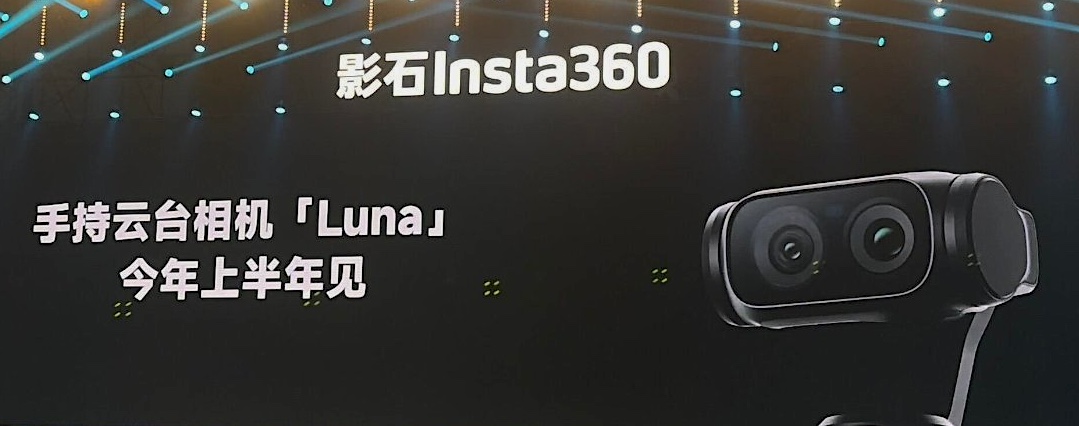
During the company’s annual meeting in February 2026, Insta360 CEO Liu Jingkang officially unveiled the upcoming Insta360 Luna pocket handheld gimbal camera, confirming its release in the first half of 2026. This marks Insta360‘s entry into the handheld gimbal camera market, positioning it as a direct competitor to DJI’s Osmo Pocket series. Here are the rumored Insta360 Luna specifications:
Dual-Lens System: Rumored to include a wide-angle primary lens paired with a dedicated telephoto lens (around 70mm equivalent) for true 3x optical zoom, enabling natural bokeh effects and better subject separation without digital cropping.
Video Recording: Expected to support 4K video at up to 240fps for high-quality slow-motion, along with 10-bit color depth for enhanced dynamic range.
Stabilization: Features 3-axis gimbal stabilization enhanced by AI for smoother footage, with potential improvements in low-light performance and noise reduction.
Modular Design: Includes a “Twist” system for easy disassembly, potentially allowing lens swaps or use as a standalone camera module.
Display: Rotating touchscreen for flexible shooting angles and vlogging convenience.
Battery: Approximately 1500 mAh capacity, offering around 150-180 minutes of shooting time.
Other Features: AI-driven image processing, real-time portrait modes, and potential for improved depth sensing and subject tracking due to the dual-camera setup.
Price Range: Rumored to be priced between $499 and $699, positioning it competitively against rivals like the DJI Osmo Pocket series.
Leaked picture and video of the Insta360 Luna camera:
But that wasn’t enough for me, so I found a video of it being tested. Well, I still have mixed feelings about the design Insta360 Luna. pic.twitter.com/I43p33KYOM
Welcome back to our Question of the Week series! This reader-focused series aims to get our photographic community to share thoughts on all sorts of photography-related topics in our forums. We pose questions about gear, favorite camera stores, advice, problem-solving and more, and you share your thoughts and opinions.
This week, we’re leaning into the holiday spirit! The season of giving (and occasionally re-gifting) is upon us, and that means it’s time to unwrap some memories – both heartwarming and hilarious.
What are the best (and worst) photography-related gifts you've received?
What’s the best photography-related gift you’ve ever received? Maybe it was a dream lens that caused you to take on an adventure deep in the mountains, or a handmade camera strap that’s now an essential part of your kit. And what about the worst? Perhaps someone thought you needed yet another "World’s Best Photographer" mug, or that odd lens filter set that turned every photo a shade of green.
In this edition of our Question of the Week series, we want to hear your gift stories: the memorable, the useful and the truly baffling. Share your favorites (and flops) in the forum link below. Photos of the gifts (or what you created with them) are also more than welcome! We'll highlight some of your most entertaining and heartfelt responses in next week's roundup.

 Connexion