Vue normale

LK Samyang announced a new AF 35mm f/1.8 P FE lens from the Prima series

Par : PR admin
26 mars 2026 à 20:31


The previously reported LK Samyang AF 35mm f/1.8 P FE Prima lens is now officially announced.

In the US, some LK Samyang lenses are also sold under the Rokinon brand. In Europe, Smyang lenses are sold at Foto Erhardt and WEX Photo.

Additional information on the new lens:

LK SAMYANG Expands Prima Series with the New AF 35mm F1.8 P FE: A Compact Everyday Prime Expanding the Prima Series

  • A compact(71.5mm) and lightweight(216g) 35mm F1.8 prime lens designed for everyday photography and hybrid content creation 
  • Upgraded optical performance with new XHR optical elements, UMC II coating, and Linear STM II autofocus motor 
  • Enhanced usability with weather sealing and a USB-C port for direct firmware updates
March 26, 2026 – Republic of Korea – LK SAMYANG, a global optical solutions company with more than 50 years of expertise in optical technology and innovation, today announces the launch of the AF 35mm F1.8 P FE, a new addition to the Prima Series designed for hybrid creators and everyday photographers.
The new lens expands the Prima Series lineup following the introduction of the AF 35mm F1.4 P FE in 2024, and the AF 16mm F2.8 P FE and AF 85mm F1.8 P FE in 2025. Built on the philosophy of portability, practicality, and usability, the Prima Series offers creators compact and lightweight prime lenses capable of delivering reliable optical performance for both photography and video creation.
The AF 35mm F1.8 P FE continues this vision by providing a versatile everyday lens that balances image quality, portability, and creative flexibility.
A Versatile 35mm Lens for Everyday Creativity. The 35mm focal length has long been regarded as one of the most versatile perspectives in photography. Its natural angle of view allows creators to capture a wide variety of subjects including street scenes, travel moments, portraits, and cinematic storytelling.
The AF 35mm F1.8 P FE is designed as a practical everyday lens that combines a bright aperture with a compact form factor and dependable autofocus performance. While the AF 35mm F1.4 P FE focuses on maximum brightness and high-end optical performance, the AF 35mm F1.8 P FE offers a lighter and more compact alternative optimized for everyday shooting, making it an ideal companion for photographers and content creators who prioritize portability without compromising image quality.

Key Features
· Compact and Lightweight Design : Made for Everyday Carry
The AF 35mm F1.8 P FE continues the Prima Series philosophy of compact and portable lens design.
With a maximum diameter of Φ69.8mm and a standard 62mm filter size, the lens integrates seamlessly into lightweight shooting setups and is easy to carry throughout the day.
Its compact form pairs particularly well with lightweight full-frame cameras such as the Sony α7C series and ZV-E models, making it an ideal everyday lens for travel, street photography, and hybrid content creation.
· Bright F1.8 Aperture with Natural Bokeh : Balanced Performance for Photo and Video
The bright F1.8 aperture provides excellent flexibility across a wide range of lighting conditions, allowing creators to shoot confidently in both bright daylight and low-light environments.
A 9-blade rounded aperture produces smooth and natural background blur, enabling expressive subject separation for portraits, lifestyle photography, and cinematic video production.
This balance of brightness and portability makes the AF 35mm F1.8 P FE a practical lens for everyday creative work.
· Next-Generation Optical Technology : XHR Element for Higher Performance
The AF 35mm F1.8 P FE features an advanced optical construction of 10 elements in 8 groups, including 2 ASP (Aspherical) elements and 2 newly developed XHR elements. The XHR (Extra High Refractive) lens element is manufactured with higher precision compared to conventional high-refractive index elements, allowing for a more compact optical structure while effectively reducing optical aberrations. By incorporating XHR elements, the lens achieves improved optical performance while maintaining a thinner and lighter design, delivering sharp resolution and consistent image quality across the entire frame.
· Next-Generation Coating Technology : UMC II for Improved Image Clarity
The AF 35mm F1.8 P FE incorporates UMC II (Ultra Multi Coating II), the next generation of LK SAMYANG’s coating technology. Compared to the previous coating system, UMC II further suppresses flare and ghosting, ensuring improved contrast and clarity even in challenging lighting environments such as strong backlight or night scenes. This upgraded coating technology helps deliver cleaner and more vibrant images in real-world shooting conditions.
· Fast and Quiet Autofocus : Linear STM II for Hybrid Creators
The AF 35mm F1.8 P FE is equipped with the next-generation Linear STM II autofocus motor. Combined with continuously refined firmware algorithms, the Linear STM II system delivers faster, more accurate, and quieter autofocus performance, ensuring smooth focusing transitions for both still photography and video recording. This improved autofocus system allows creators to capture dynamic scenes with greater precision and stability.
· Enhanced Usability for Real-World Shooting : Weather Sealing and USB-C Connectivity
The AF 35mm F1.8 P FE is designed to perform reliably in real-world shooting environments. The lens features weather sealing, helping protect it from light rain, dust, and outdoor shooting conditions. It also includes a USB-C port, enabling users to easily update firmware and customize lens settings directly without the need for a separate lens station. This convenient connectivity ensures that users can keep their lens up to date while maintaining optimal performance.
LK SAMYANG representative commented:
“The Prima Series was created to offer lenses that creators reach for first. The AF 35mm F1.8 P FE reflects that philosophy by delivering a balanced combination of portability, optical performance, and everyday usability, making it an ideal lens for both photography and video creation.”
Availability
The LK SAMYANG AF 35mm F1.8 P FE will be available for purchase starting late March 2026, with sales gradually launching across global markets through LK SAMYANG’s distribution network and authorized retailers.

Samyang announced a new AF 35mm f/1.8 P FE lens

LK Samyang to release a new line of “Prima Series” lenses

The post LK Samyang announced a new AF 35mm f/1.8 P FE lens from the Prima series appeared first on Photo Rumors.

DJI Avata 360 drone is now officially announced

Par : PR admin
26 mars 2026 à 20:00


The previously reported DJI Avata 360  drone is now officially announced:

B&H Photo | WEX Photo | Foto Erhardt

Additional information:

DJI Avata 360 Sets New Standards for Immersive 360 FPV Flying

Equipped with DJI’s flagship 1-inch imaging, O4+ video transmission, and omnidirectional obstacle sensing, creators can now film 360 footage in 8K with ease

SHENZHEN, ChinaMarch 26, 2026 – DJI, the global leader in civilian drones and creative camera technology, today launches Avata 360. Designed to unlock endless creativity in one take[1], DJI’s new 8K 360° flagship drone delivers 360° imaging with 1-inch-equivalent sensors[1] for filming in 8K/60fps HDR video. Meanwhile, DJI’s powerful O4+ video transmission system and obstacle sensing[1] enable creators to see farther with a more stable, safer, and more immersive flight experience. Paired with DJI goggles and motion controllers, the latest addition to the popular Avata series delivers an immersive 360° flight experience for FPV thrills. Creators can also use DJI remote controllers to capture a full 360° view in a single flight that can be reframed from any perspective, transforming a single take into multiple creative possibilities.

Brilliant Imaging, Boundless Creativity

Avata 360 offers two different lenses that can be seamlessly switched. The 360° lens uses 1-inch-equivalent sensors[1] that can capture 360° images in rich detail for 8K/60fps HDR videos[1] and 120 MP photos. With the large 2.4 μm pixels and high dynamic range, light and shadow are also captured with exquisite clarity. Both video and photos can be exported directly or reframed in post-production. Meanwhile, the Single Lens mode allows creators to use the classic Avata-style filming in 4K/60fps[1].

Powerful Video Transmission, Immersive Flight

Avata 360 leverages DJI’s flagship O4+ video transmission system to deliver stable and clear live feeds for smoother, more immersive flights. Its strong anti-interference capabilities enable high-definition, high-frame-rate transmission at 1080p/60fps and support a range of up to 20 km[1].

Fly With Confidence, Create With Ease

Avata 360 offers up to 23 minutes of flight time[1] and includes several standard safety features, including nightscape omnidirectional obstacle sensing[1] and integrated propeller guards. If damaged, the camera lens can be easily replaced with the DJI Avata 360 replacement lens kit with tools (sold separately). It also brings an exceptional experience to aerial content creation, where a single shot with the drone’s 360° imaging can be transformed into multiple, masterful creations through post production using the DJI Fly and DJI Studio apps, including:

  • Spotlight Free – Locks onto a moving subject and assists with camera movement, replicating the sophisticated camera language like a pro with Inspire 3. By comparison, Spotlight locks onto your subject’s face to effortlessly capture Circle or Dronie shots without manual adjustments.
  • ActiveTrack 360°[1] – Automatically selects the optimal tracking mode. For example, Standard mode maintains a steady distance and altitude relative to the subject. Meanwhile, Cycling mode reacts faster to turns and keeps the subject in frame even in complex environments.
  • FPV mode – Enables even novice pilots to adds a natural roll effect to Spotlight Free, ActiveTrack 360°, and manual flights to create dynamic, high-speed FPV-style footage. This mode can be applied in post-production.
  • Intelligent Tracking – Powered by advanced algorithms, DJI Fly and DJI Studio apps make it effortless to lock onto and smoothly track people, vehicles, pets, and more, even in 360° footage.
  • New One-Tap In-App Editing – With GyroFrame, 360° footage can be adjusted to an ideal angle and exported in the DJI Fly app. Both DJI Fly and DJI Studio allow camera movement effects to be added.
  • Virtual Gimbal[1] – Uses a 360° view to enable infinite rotation and tilt for dynamic camera moves. Even when flying in one direction, horizons can be rotated, and perspectives can be shifted to look back or perform a flip.
  • Replaceable Front Lens Element – The front element features a replaceable design. Purchase a replacement lens kit with tools[1], and you can easily replace the old lens yourself—no need to send it in for repair.
  • 42GB Internal Storage and High-Speed Transfers – With 42GB of internal storage, 30 minutes of 360° video in 8K without a microSD card. Using Wi-Fi 6 High-Speed Transfer, 1 GB of footage can be transferred to the DJI Fly app in 10 seconds at up to 100 MB/s[1].

FPV Flights and Aerial Filming in One Drone

Avata 360 combines the creative freedom of a 360 camera with the thrill of FPV flying like never before. It can be flown with DJI remote controllers (RC 2, RC-N2, RC-N3) for precise camera movement, allowing creators to unlock new ways to create stunning aerial shots. Meanwhile, DJI goggles and motion controllers offer a more immersive flight experience with 360° imaging at 1080p/60fps. Like the Avata 2, aerial acrobatics like drifting can be performed – even by beginners – with the DJI RC Motion 3.

[1] Only supported by certain camera modes or with specific accessories. All data was measured using a production model of DJI Avata 360 in a controlled environment; actual experience may vary.

The post DJI Avata 360 drone is now officially announced appeared first on Photo Rumors.

SG-Image officially announced the AF 35mm f/2.2 lens

Par : PR admin
26 mars 2026 à 18:05


The previously reported SG-Image AF 35mm f/2.2 is now officially announced. SG-Image lenses are sold at:

Additional information:

SHENZHEN, CN / March 25, 2026 / SG-image Technology Co., Ltd. is proud to announce the official launch of the AF 35mm F2.2, a portable autofocus prime lens designed specifically for full-frame mirrorless systems.

As part of SG-image EZICARI Series, The AF 35mm F2.2 redefines the “everyday carry” experience for modern creators. Weighing a mere 163g and measuring only 36mm in length, it is one of the most portable full-frame lenses in its class. Whether for street photography, travel documentation, or environmental portraiture, this lens empowers photographers to capture high-resolution imagery without the physical burden of traditional professional gear.

Despite its featherweight profile, the AF 35mm F2.2 features a robust, all-metal lens barrel that provides a premium tactile experience and long-term durability. Under the hood, a responsive autofocus system ensures silent and accurate tracking for photo shooting. The F2.2 aperture delivers a soft, natural background fall-off, which, when paired with the classic 35mm “storyteller” focal length, enhances the narrative quality of every frame.

Key Technical Highlights:

  • Ultra-Compact Profile: At just 36mm long and 163g, it is exceptionally portable for easy carry and all-day shooting.
  • Natural Bokeh (F2.2): Provides gentle, pleasing subject isolation for portraits and still-life photography.
  • Classic 35mm Perspective: Offers a natural field of view (approx. 66°) favored by documentary and street photographers.
  • Precision Metal Construction: A durable, high-quality build that reflects professional standards.
  • Responsive AF System: Optimized for quick and reliable focus in dynamic environments.
  • Unbeatable Value: Delivers excellent optical performance at a highly accessible price point.

Pricing and Compatibility The SG-image AF 35mm F2.2 will be available for Sony E, Nikon Z, and L-mount (Panasonic/Sigma/Leica) systems.

  • AF 35mm F2.2 Standard Edition: $149 USD
  • AF 35mm F2.2 with Lens Hood Bundle: $159 USD

Official Launch Date: March 25, 2026. Visit www.sg-image.com for additional information.

Additional information on the upcoming SG-Image AF 35mm f/2.2 pancake lens (E/Z/L)

SG-Image to announce a new AF 35mm f/2.2 full-frame pancake lens (E/Z/L)

The post SG-Image officially announced the AF 35mm f/2.2 lens appeared first on Photo Rumors.

Never say never: OM System reopens the door to compact cameras

two men in suits holding cameras stand in front of a black wall with white text

OM System's Director of Marketing Communications, Nobuaki Tanaka, and SVP of Global Brand & Marketing Strategy, Kazuhiro Togashi, at CP+ 2026.

Photo: Abby Ferguson

The interchangeable-lens camera market may be holding steady, but OM System executives say the ground beneath it is shifting. In a recent interview at CP+, they pointed to smartphones, rising prices and changing expectations surrounding computational photography as forces reshaping where they compete and what they focus on.

At this year’s CP+ show in Yokohama, we sat down with OM System's Kazuhiro Togashi, Senior Vice President of Global Brand & Marketing Strategy and Nobuaki Tanaka, Director of Marketing Communications, to talk through those questions from their perspective. In a wide‑ranging conversation, we discussed everything from compact cameras and the future of Pen to lenses, OM System's outdoor positioning and how far they’re willing to go with AI.

Changed opinions on compact cameras

a black om system tough compact camera is on a white background

For now, the Tough series is OM System's most current compact camera, with the TG-7 coming out in 2023.

Image: OM System

Last year at CP+, Togashi made it clear that OM System had no plans to develop a compact camera beyond the TG series. Instead, he told us, "We feel that this is a temporary trend," in terms of enthusiast compacts. He also added that high-end compacts would require too much investment in "research and development [and] also in reestablishing a high-end compact brand image" to allow for a profitable product.

"We are closely monitoring and analyzing this trend"

Now, though, Togashi seems to have changed his mind. "We are closely monitoring and analyzing this trend," he tells us. "The situation is very clear," he says, adding that "the compact camera segment has shown signs of growth over the past two to three years." As Togashi sees it, "some users who originally intended to purchase an ILC but were unable to do so due to higher prices are increasingly considering premium compact cameras as an alternative."

While this apparent change in stance doesn't necessarily mean we should expect an OM System compact this year (or at all, for that matter), it could leave the door open for hope among compact fans looking for a truly new option.

A new Pen is underway

a black and silver olympus pen camera is on a white background

The last Pen came out under the Olympus brand. OM System made it clear that a new model is in the works, though.

Image: Olympus

Togashi also told us last year that it was too soon to expect a new Pen. "We think the camera's design must realize the concept of the product, so we don't start to decide the camera design before deciding the camera's concept," he said at the time, adding that, "we haven't decided on the product concept" for the Pen.

"The new Pen’s concept progress is on schedule"

It appears that process has progressed, though. "The new Pen’s concept progress is on schedule," he says. "We already started creating the design concept. So we already started some kind of Pen camera project. Progress is good." While that was the extent of the detail he is able to share, Togashi adds that the "new Pen will satisfy many, many younger generations in the future." It certainly is an exciting-sounding teaser, at the very least.

"The new Pen will satisfy many, many younger generations in the future."

"The Pen series is very important for us," Togashi says. But he also has a clear understanding that, given how long it's been since the last Pen (2021 for the Pen E-P7), some reeducation will be necessary to help people understand the legacy of that line. "We will explain about the Pen again to the market," he says. "Because you are specialists, right? You know a lot of insight for the camera industry and manufacturing history, but maybe younger generations, they don't know what 'Pen' is."

AI and computational photography

OM-3-CP-button-and-evf

OM System's latest cameras, the OM-3 and OM-5 II, have a new button that lets you directly access their computational photography features.

Photo: Mitchell Clark

While the Pen is centered around nostalgia, OM System is also focused on advancing technology to offer photographers something new in camera bodies. Togashi says this comes in the form of three key points: updated hardware (such as image processing engines, new sensors or AI chips), enhanced computational photography and AI features.

AI, in that framework, is something Togashi describes as having "two faces." On the positive side are things OM shooters already rely on, like subject detection, AF and noise reduction that can squeeze more usable files out of smaller sensors. "AI subject detection AF will continue to be advanced by AI technology advancement, and noise reduction functions can also be improved by AI," Togashi says.

"There is potential to provide generative AI in the camera body,"

There is a concerning side, too, however. "Generative AI can easily make fake images," Togashi acknowledges. "Therefore, we also need to take into consideration this concern." Even so, he isn't closed off to the idea of generative AI in a camera. He tells us that there is "potential to provide generative AI in the camera body," but frames it as an option on the table rather than something inevitable.

Despite seeing potential, Togashi and his colleagues stress that they feel a responsibility to protect "the real shooting experience." Tanaka put it bluntly: "Is it real photography or not? It’s a very important key for us."

"We shouldn't hide from new technologies in our cameras"

Still, Tanaka is remaining open to the idea. "In my personal opinion, we shouldn't hide from new technologies in our cameras," he says. No matter what, the team makes it clear that it is interested in providing options for users, giving them the power to decide whether to use generative AI or not.

The importance of OM System's lenses

a hand holds a camera with a large white telephoto lens attached in front of a blurred green forest and white sky

OM System has been mostly focused on telephoto lenses in recent years, but Togashi says there are plans for more wide angle and prime lenses in the future.

Photo: OM System

Some users have questioned whether lens development at OM System has stalled because of a thin lens roadmap compared to the past, but Togashi assures us that is far from the case. "For our lens lineup, we'd like to expand more and more," he says. Lately, that expansion has largely been focused on longer telephoto lenses, "but we also have a plan to expand small wide-angle lenses and prime lenses in the future," he adds.

"We also have a plan to expand small wide-angle lenses and prime lenses in the future"

Togashi emphasized that lens size is a focus for the team moving forward. After all, the Micro Four Thirds format allows for more compact lenses compared to APS-C and full-frame. "The other systems are compact – maybe other competitors have smaller camera bodies, but not lenses," explains Togashi. "Our lenses are very small and compact in the right way. This is a clear differentiation from our competitors."

Compact lenses are especially important following the launch of the OM-3. "I think we need appropriately designed brand‑new lenses for OM‑3, as many of the existing lenses are relatively large for this type of camera," Togashi says.

Aiding the promise of OM System's lens lineup is the company's financial situation. Togashi tells us that the company is generating operating profit continuously. "Our fundamental financial situation is very stable and stronger than it was before," he informs us. "We can invest in human resources or new technologies, not only for camera bodies but also for lenses. Therefore, we will develop new lenses in the future."


This article is based on an interview by Dale Baskin and Abby Ferguson at CP+ 2026. It has been edited for clarity and flow.

From Antarctica to Africa with DPReview reader, Shun Cheung

WesternGrebeRushing 8876 - Shun Cheung
Western Grebe rushing on a lake in San Jose, California. It is their mating ritual.

Nikon Z9 w/ Nikkor Z 400mm F4.5 S | F5.6 | 1/2500 sec | ISO 800
Photo: Shun Cheung

DPReview community member Shun Cheung, known as shuncheung in the forums, has taken up the challenge of writing about what he carries in his camera bag on photography journeys for our What's in your bag? spotlight series. The series showcases the diverse gear and photography of our community, and shares their stories of how that gear helped them to capture the perfect shot.

Check out Shun’s gear and fascinating nature photography experiences below. His remarkable journey began in the early 1970s and has evolved through the film, DSLR and mirrorless eras, so he has quite a wide range of photography from it all.

Submit your photos and story to be featured in 'What's in your bag?'

Meet Shung Cheung (shuncheung)

Home base: San Francisco, CA USA

Favorite camera and lens: Nikon Z8 paired with the Nikon 600mm F4. Shun favors this combination for wildlife photography because the latest version of the 600mm is significantly lighter than earlier models and includes a built-in 1.4x teleconverter, allowing him to switch between 600mm and 840mm when photographing birds and animals.

Typical photo scenes: Wildlife and nature photography, especially birds and coastal habitats around the San Francisco Bay Area. Shun also photographs landscapes and travels internationally to destinations such as Antarctica, Africa and the Galapagos Islands for wildlife and nature photography.

“I’ve been photographing since the early 1970s, when one of my high school teachers took a group of us hiking and introduced us to photography using a Minolta SRT-101. Several of us bought the same camera so we could share lenses, and I’ve been hooked ever since.”

SallyLightfootCrab 3532 - Shun Cheung
Sally Light Foot crabs in the Galapagos Islands in Ecuador.

Nikon D7000 w/ AF-S Nikkor 200-400mm F4 ED VR @ 250mm | F5.6 | 1/200 sec | ISO 200
Photo: Shun Cheung

What's in Shun's bag

  • Primary cameras: Nikon Z8 and Nikon Z9 for stills, and a Nikon Zr for video.
  • Lenses: Nikon 600mm F4, 400mm F4.5, 100–400mm, 70–200mm F2.8, and 24–120mm F4. The 600mm F4 is a favorite because the new version is much lighter than earlier models and has a built-in 1.4× teleconverter for quick reach between 600mm and 840mm.
  • Tripod: A sturdy Gitzo tripod, often accompanied by hex wrenches and a Leatherman tool for adjustments in the field.
  • Filters and accessories: Spare batteries, charger, external microphone for video, and sunscreen. Shun also highly suggests to always carry insect repellent...
  • Camera bags: MindShift BackLight 26L and 36L, as well as the Gura Gear Kiboko 30L. These carry two or three camera bodies and several lenses, with the Kiboko being especially useful for two long telephoto lenses.
MyGear - Shun Cheung
Shun's camera bag

Photo: Shun Cheung

What are your favorite destinations?

Shun describes himself as a nature and wildlife photographer who loves to explore exotic destinations like Antarctica, but also appreciates the appeal in returning to familiar locations to capture the best seasonal activity. Living in the San Francisco Bay Area gives him easy access to parks, wildlife refuges and coastal habitats, where he often photographs a variety of domestic birds.

"My favorite destinations for nature photography are Antarctica, Africa, and South America, especially the Galapagos Islands. I was fortunate to have visited all three, for the first time, in the 1990's. Since then, I have been back to each one several times."

KingPenguinsSouthGeorgia 9029 - Shun Cheung
King Penguins in St. Andrews Bay on South Georgia Island

Nikon D700 w/ AF-S Nikkor 28-70mm F2.8 @ 70mm | F8 | 1/1250 sec | ISO 200
Photo: Shun Cheung

Any of those destinations uniquely memorable?

"My most memorable experiences include visiting the king penguin colony on St. Andrew's Bay on South Georgia Island, where thousands of noisy penguins are calling nonstop. Also just as memorable was the wildebeest migration crossing the Mara River in Tanzania. For those international destinations, I tend to travel with a photo group with a dozen or so photographers."

WildebeestCrossing 3012 - Shun Cheung
Wildebeest migrating across the Mara River in the Serengeti, Tanzania

Nikon Z9 w/ Nikkor Z 400mm F4.5 S | F5.6 | 1/1250 sec | ISO 400
Photo: Shun Cheung

What's special about local scenes vs international ones?

"While I visit international "exotic" locations once or twice a year, I capture many of my best images locally. I tend to revisit those locations over and over, so I understand them thoroughly and can visit only when the weather and lighting are favorable. I am fortunate to live in San Francisco, with many local parks and seashores."

"For example, the pride of Madeira flowers tends to bloom from late March to mid-April every year along the San Francisco Bay, and the Anna's hummingbirds will have a feeding frenzy on those flowers. During that time of the year, I may visit the flower hot spots two to three mornings a week between 7 a.m. and 9 a.m., capturing several hundred images a morning. Digital photography is, of course, the norm now, but 20 years ago, I told myself I could never have done that with film. Film and processing costs would have been prohibitive to use five rolls of film a day, three times a week."

AnnasHummingbird 9763 - Shun Cheung
Anna's hummingbird feeding on Pride of Madeira flowers.

Nikon Z9 w/ Nikkor Z 400mm F4.5 S | F4.5 | 1/2000 sec | ISO 1250
Photo: Shun Cheung

Shun really enjoyed writing the content for this spotlight article, and would be grateful for you to join him in discussion in the forums. Thanks, Shun, for being featured!

If you’d like to share your photography setup, tell us about your main camera, lens choices, key settings and strategies. Your photos and story could be featured in the next article!


Editor's note: This article continues a series, 'What's in your bag?', highlighting DPReview community members, their photography and the gear they depend on. Would you like to be featured in a future installment? Tell us a bit about yourself and your photography by filling out this form. If you're selected for a feature, we'll be in touch with next steps.

Submit your photos and story to be featured in 'What's in your bag?'

DJI's Avata 360 drone takes on Insta360 with 8K immersive FPV footage

a gray drone floats in front of a cirular opening in a white ceiling
Image: DJI

DJI has announced the Avata 360, a compact 360-degree drone meant for immersive FPV footage. The new drone, which takes on Insta360's Antigravity A1, promises 8K 360° video and 120MP stills. It also offers a list of features expected in a DJI drone, such as obstacle sensing, compatibility with DJI's accessories, tracking and more.

Like other similar cameras (including the flightless varieties), the Avata 360 uses two lenses to stitch together 360° images and videos. DJI says the "360° lens uses 1-inch-equivalent sensors," however, that language is a bit misleading. Like the Osmo 360, the company's 360 action camera released last year, the Avata 360's two sensors combined result in roughly the same area as a Type 1 sensor; each sensor is not a Type 1 sensor on its own.

a small drone flies behind a car kicking up a cloud of dust and rocks
Image: DJI

The Avata 360 drone appears to use the same sensor as the action camera; it features 2.4 μm pixels and can capture up to 120MP stills. The drone is capable of recording 8K 60fps for 360° footage or 4K 60fps in single-lens mode. Like other cameras of this type, the 360° videos allow users to reframe footage after the fact.

Beyond 360-specific features and footage, the drone should be very familiar to DJI users. It relies on DJI's flagship "O4+ video transmission system," which promises 1080p 60fps transmission and a range of up to 20km (12.4 miles). It offers an all‑direction obstacle sensing system even in low-light conditions, integrated propeller guards for better safety when flying, and multiple tracking modes. It also sports replaceable lenses, so users can replace them on their own if they get damaged, provided they buy the separate kit to do so.

Interchangeable lenses float in pieces above a gray drone with a gray background

The drone allows users to replace lenses with a separately purchased kit.

Image: DJI

DJI promises 23 minutes of flight time from the drone. It offers 42GB of internal storage and supports Wi-Fi 6 for fast transferring, even of large files. It's a compact and lightweight drone, coming in at approximately 455g (1 lb) and measuring 246x199x55.5mm (9.7 × 7.8 × 2.2").

As with previous DJI releases, the Avata 360 will not be available in the US through official channels. It is available for immediate purchase in the Chinese market and for pre-sale in all other regions, with shipping dates estimated for April. The standalone drone costs £409.

Press release:

DJI Avata 360 Sets New Standards for Immersive 360 FPV Flying

Equipped with DJI’s flagship 1-inch imaging, O4+ video transmission, and omnidirectional obstacle sensing, creators can now film 360 footage in 8K with ease while flying with confidence

March 26, 2026 - DJI, the global leader in civilian drones and creative camera technology, today launches the Avata 360. Designed to unlock endless creativity in one take1, DJI’s new 8K 360° flagship drone delivers 360° imaging with 1-inch-equivalent sensors1 for filming in 8K/60fps HDR video. Meanwhile, DJI’s powerful O4+ video transmission system and obstacle sensing1 enable creators to see farther with a more stable, safer, and more immersive flight experience. Paired with DJI goggles and motion controllers, the latest addition to the popular Avata series delivers an immersive 360° flight experience for FPV thrills. Creators can also use the DJI remote controllers to capture a full 360° view in a single flight that can be reframed from any perspective, transforming a single take into multiple creative possibilities.

Brilliant Imaging, Boundless Creativity

Avata 360 offers two different lenses that can be seamlessly switched. The 360° lens uses 1-inch-equivalent sensors1 that can capture 360° images in rich detail for 8K/60fps HDR videos1 and 120 MP photos. With the large 2.4 μm pixels and high dynamic range, light and shadow are also captured with exquisite clarity. Both video and photos can be exported directly or reframed in post-production. Meanwhile, the Single Lens mode allows creators to use the classic Avata-style filming in 4K/60fps1.

Powerful Video Transmission, Immersive Flight

Avata 360 leverages DJI’s flagship O4+ video transmission system to deliver stable and clear live feeds for smoother, more immersive flights. Its strong anti-interference capabilities enable high-definition, high-frame-rate transmission at 1080p/60fps and support a range of up to 20 km1.

Fly With Confidence, Create With Ease

Avata 360 offers up to 23 minutes of flight time1 and includes several standard safety features, including nightscape omnidirectional obstacle sensing1 and integrated propeller guards. If damaged, the camera lens can be easily replaced with the DJI Avata 360 replacement lens kit with tools (sold separately). It also brings an exceptional experience to aerial content creation, where a single shot with the drone's 360° imaging can be transformed into multiple, masterful creations through post production using the DJI Fly and DJI Studio apps, including:

  • Spotlight Free1 - Locks onto a moving subject and assists with camera movement, replicating the sophisticated camera language like a pro with Inspire 3. By comparison, Spotlight locks onto your subject’s face to effortlessly capture Circle or Dronie shots without manual adjustments.
  • ActiveTrack 360°1 - Automatically selects the optimal tracking mode. For example, Standard mode maintains a steady distance and altitude relative to the subject. Meanwhile, Cycling mode reacts faster to turns and keeps the subject in frame even in complex environments.
  • FPV mode - Enables even novice pilots to adds a natural roll effect to Spotlight Free, ActiveTrack 360°, and manual flights to create dynamic, high-speed FPV-style footage. This mode can be applied in post-production.
  • Intelligent Tracking - Powered by advanced algorithms, the DJI Fly and DJI Studio apps make it effortless to lock onto and smoothly track people, vehicles, pets, and more, even in 360° footage.
  • New One-Tap In-App Editing - With GyroFrame, 360° footage can be adjusted to an ideal angle and exported in the DJI Fly app. Both DJI Fly and DJI Studio allow camera movement effects to be added.
  • Virtual Gimbal1 - Uses a 360° view to enable infinite rotation and tilt for dynamic camera moves. Even when flying in one direction, horizons can be rotated, and perspectives can be shifted to look back or perform a flip.
  • Replaceable Front Lens Element - The front element features a replaceable design. Purchase a replacement lens kit with tools1, and you can easily replace the old lens yourself—no need to send it in for repair.
  • 42GB Internal Storage and High-Speed Transfers - With 42GB of internal storage, 30 minutes of 360° video in 8K without a microSD card. Using Wi-Fi 6 High-Speed Transfer, 1 GB of footage can be transferred to the DJI Fly app in 10 seconds at up to 100 MB/s1.

FPV Flights and Aerial Filming in One Drone

Avata 360 combines the creative freedom of a 360 camera with the thrill of FPV flying like never before. It can be flown with the DJI remote controllers (RC 2, RC-N2, RC-N3) for precise camera movement, allowing creators to unlock new ways to create stunning aerial shots. Meanwhile, DJI goggles and motion controllers offer a more immersive flight experience with 360° imaging at 1080p/60fps. Like the Avata 2, aerial acrobatics like drifting can be performed - even by beginners - with the DJI RC Motion 3.

For more information2 , please refer to: https://www.dji.com/avata-360

1 Only supported by certain camera modes or with specific accessories. All data was measured using a production model of DJI Avata 360 in a controlled environment; actual experience may vary. For more information, please refer to https://www.dji.com/avata-360.

2 Not officially available in the United States via official websites.

LK Samyang's latest lens is meant to be a small and light everyday shooter

When you use DPReview links to buy products, the site may earn a commission.
lksamyang 35mm f1p8 p fe
Image: LK Samyang

LK Samyang has announced the AF 35mm F1.8 P FE, a new addition to its "Prima" series of lenses, which are designed to be accessible to people starting out in photography or videography.

The full-frame prime weighs 216g (7.6oz) and is around 72mm (2.8") long, making it noticeably lighter and smaller than the company's 35mm F1.4 Prima lens, which comes in at 470g (16.6oz) and 99mm (3.9"), respectively. The company says its larger lens is focused on "maximum brightness and high-end optical performance," while the F1.8 version "offers a lighter and more compact alternative optimized for everyday shooting." Features-wise, the lens is Spartan; its only controls are a focus ring and an AF/MF switch, though there's also a USB-C port on the bottom for firmware updates.

lksamyang 35mm f1p8 p fe rear usb port
There's not a ton to the lens, but it has the basics, plus a few extras like weather sealing. The knurling on the focus ring also seems quite nice.
Photo: LK Samyang

Samyang says the lens also features weather sealing, which should offer some peace of mind if you're out shooting and conditions deteriorate. The lens is threaded for 62mm filters.

The 35mm F1.8 P FE has 10 elements in 8 groups, with two aspherical lenses and two "XHR" (Extra High Refractive) elements. The company also says the lens has a coating to reduce flare and ghosting. It has a nine-bladed aperture.

The lens's autofocus system is powered by an STM motor, which the company says will provide quick, quiet focusing for both stills and video. It has a minimum focusing distance of 0.27m (10.6"), good for 0.19x magification.

While there's no shortage of autofocus 35mm F1.8 lenses for E-mount, it's still nice to see new ones hitting the market, especially since the previous Samyang/Rokinon offering has received relatively mixed reviews for autofocus performance.

The lens will be available for Sony E-mount cameras starting in "late March." While LK Samyang is a member of the L-Mount Alliance, there's no word on whether this lens will come to that mount. The company hasn't announced how much the lens will cost in the US, but its Korean website has it listed for 399,000 won, which is around $265.

Press release:

LK SAMYANG Expands Prima Series with the New AF 35mm F1.8 P FE

A Compact Everyday Prime Expanding the Prima Series

Key Message

  • A compact and lightweight 35mm F1.8 prime lens designed for everyday photography and hybrid content creation
  • Upgraded optical performance with new XHR optical elements, UMC II coating, and Linear STM II autofocus motor
  • Enhanced usability with weather sealing and a USB-C port for direct firmware updates

March 26, 2026 – Republic of Korea – LK SAMYANG, a global optical solutions company with more than 50 years of expertise in optical technology and innovation, today announces the launch of the AF 35mm F1.8 P FE, a new addition to the Prima Series designed for hybrid creators and everyday photographers.

The new lens expands the Prima Series lineup following the introduction of the AF 35mm F1.4 P FE in 2024, and the AF 16mm F2.8 P FE and AF 85mm F1.8 P FE in 2025.

Built on the philosophy of portability, practicality, and usability, the Prima Series offers creators compact and lightweight prime lenses capable of delivering reliable optical performance for both photography and video creation.

The AF 35mm F1.8 P FE continues this vision by providing a versatile everyday lens that balances image quality, portability, and creative flexibility.

A Versatile 35mm Lens for Everyday Creativity

The 35mm focal length has long been regarded as one of the most versatile perspectives in photography. Its natural angle of view allows creators to capture a wide variety of subjects including street scenes, travel moments, portraits, and cinematic storytelling.

The AF 35mm F1.8 P FE is designed as a practical everyday lens that combines a bright aperture with a compact form factor and dependable autofocus performance.

While the AF 35mm F1.4 P FE focuses on maximum brightness and high-end optical performance, the AF 35mm F1.8 P FE offers a lighter and more compact alternative optimized for everyday shooting, making it an ideal companion for photographers and content creators who prioritize portability without compromising image quality.

Key Features

Compact and Lightweight Design : Made for Everyday Carry

The AF 35mm F1.8 P FE continues the Prima Series philosophy of compact and portable lens design.

With a maximum diameter of Φ69.8mm and a standard 62mm filter size, the lens integrates seamlessly into lightweight shooting setups and is easy to carry throughout the day.

Its compact form pairs particularly well with lightweight full-frame cameras such as the Sony α7C series and ZV-E models, making it an ideal everyday lens for travel, street photography, and hybrid content creation.

Bright F1.8 Aperture with Natural Bokeh : Balanced Performance for Photo and Video

The bright F1.8 aperture provides excellent flexibility across a wide range of lighting conditions, allowing creators to shoot confidently in both bright daylight and low-light environments.

A 9-blade rounded aperture produces smooth and natural background blur, enabling expressive subject separation for portraits, lifestyle photography, and cinematic video production.

This balance of brightness and portability makes the AF 35mm F1.8 P FE a practical lens for everyday creative work.

Next-Generation Optical Technology : XHR Element for Higher Performance

The AF 35mm F1.8 P FE features an advanced optical construction of 10 elements in 8 groups, including 2 ASP (Aspherical) elements and 2 newly developed XHR elements.

The XHR (Extra High Refractive) lens element is manufactured with higher precision compared to conventional high-refractive index elements, allowing for a more compact optical structure while effectively reducing optical aberrations.

By incorporating XHR elements, the lens achieves improved optical performance while maintaining a thinner and lighter design, delivering sharp resolution and consistent image quality across the entire frame.

Next-Generation Coating Technology : UMC II for Improved Image Clarity

The AF 35mm F1.8 P FE incorporates UMC II (Ultra Multi Coating II), the next generation of LK SAMYANG’s coating technology.

Compared to the previous coating system, UMC II further suppresses flare and ghosting, ensuring improved contrast and clarity even in challenging lighting environments such as strong backlight or night scenes.

This upgraded coating technology helps deliver cleaner and more vibrant images in real-world shooting conditions.

Fast and Quiet Autofocus : Linear STM II for Hybrid Creators

The AF 35mm F1.8 P FE is equipped with the next-generation Linear STM II autofocus motor.

Combined with continuously refined firmware algorithms, the Linear STM II system delivers faster, more accurate, and quieter autofocus performance, ensuring smooth focusing transitions for both still photography and video recording.

This improved autofocus system allows creators to capture dynamic scenes with greater precision and stability.

Enhanced Usability for Real-World Shooting : Weather Sealing and USB-C Connectivity

The AF 35mm F1.8 P FE is designed to perform reliably in real-world shooting environments.

The lens features weather sealing, helping protect it from light rain, dust, and outdoor shooting conditions.

It also includes a USB-C port, enabling users to easily update firmware and customize lens settings directly without the need for a separate lens station.

This convenient connectivity ensures that users can keep their lens up to date while maintaining optimal performance.

Designed for Modern Creators

An LK SAMYANG representative commented:

“The Prima Series was created to offer lenses that creators reach for first. The AF 35mm F1.8 P FE reflects that philosophy by delivering a balanced combination of portability, optical performance, and everyday usability, making it an ideal lens for both photography and video creation.”

Availability

The LK SAMYANG AF 35mm F1.8 P FE will be available for purchase starting late March 2026, with sales gradually launching across global markets through LK SAMYANG’s distribution network and authorized retailers.

LK Samyang AF 35mm F1.8 P FE specifications:

Principal specifications
Lens typePrime lens
Max Format size35mm FF
Focal length35 mm
Lens mountSony E, Sony FE
Aperture
Maximum apertureF1.8
Minimum apertureF1.8
Aperture ringNo
Number of diaphragm blades9
Optics
Elements10
Groups8
Special elements / coatings2 asph., 2 Extra High Refractive
Focus
Minimum focus0.27 m (10.63)
Maximum magnification0.19×
AutofocusYes
Motor typeStepper motor
Focus methodInternal
Distance scaleNo
DoF scaleNo
Physical
Weight216 g (0.48 lb)
Diameter70 mm (2.76)
Length72 mm (2.83)
SealingYes
ColourBlack
Filter thread62 mm
Hood suppliedYes

Update on the GoPro vs. Insta360 lawsuit

Par : PR admin
25 mars 2026 à 20:29


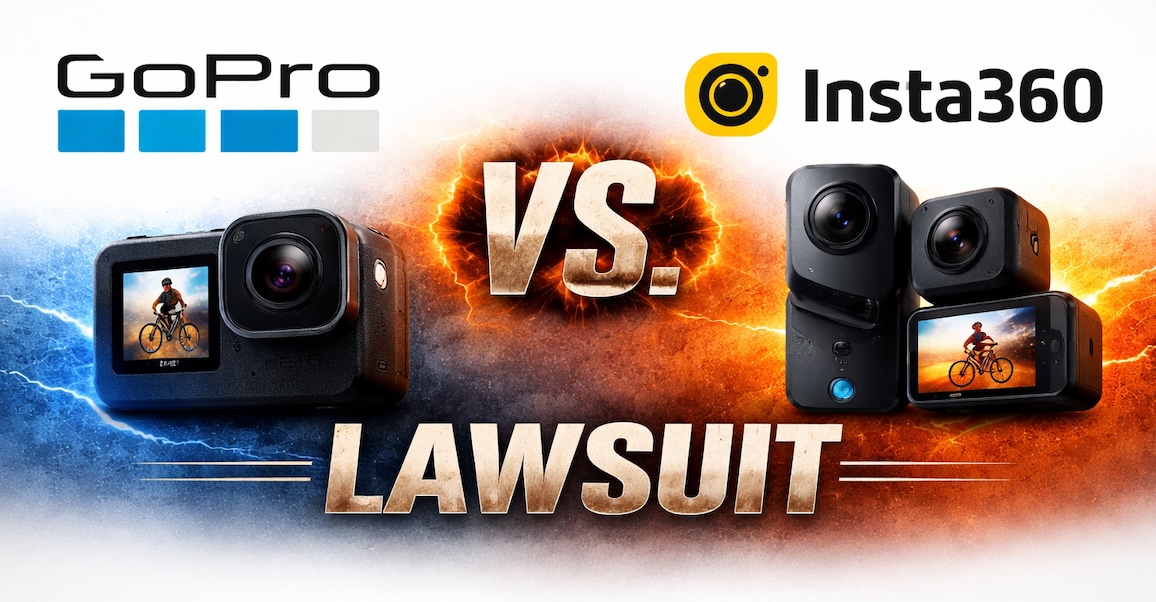
Here is a short recap of the GoPro vs. Insta360 lawsuit results:

  • Insta360 won decisively on the tech patents: The ITC ruled no violation on all five utility patents (covering stabilization, horizon leveling, distortion correction, etc.).
  • GoPro won narrowly on design: The ITC found infringement of GoPro’s HERO camera body design patent — but only on certain older/legacy Insta360 Ace models. Newer/current Insta360 cameras (including 2025+ versions) do not infringe.
  • Practical outcome: Limited Exclusion Order + Cease & Desist Order issued against the specific legacy models only. No impact on Insta360’s current product lineup or U.S. sales/import of new cameras.
  • Next steps: Orders subject to 60-day Presidential Review (still ongoing). GoPro could appeal the utility-patent losses, but none have been filed yet.
  • Recap: Both sides claimed victory in their press releases, but the ruling is widely seen as a big win for Insta360 on the core innovation issues. The case is effectively over for current products.

Insta360 responds to GoPro’s patent infringement allegations

DJI has filed a lawsuit against Insta360 over patent violations

The post Update on the GoPro vs. Insta360 lawsuit appeared first on Photo Rumors.

Kodak announced new Ektacolor Pro and Ektapan photographic film

Par : PR admin
25 mars 2026 à 18:51


Kodak just dropped its final major batch of pro still films:

Ektapan Black & White (T-Max equivalent, ultra-sharp T-grain)

Formats: 35mm + 120 (P3200 = 35mm only).

Ektacolor Pro Color Negative (Portra equivalent, natural skin tones)

Formats: 35mm + 120 for all three.

Additional information on the new films can be found here:

Eastman Kodak released new Ektacolor Pro & Ektapan photographic film

The post Kodak announced new Ektacolor Pro and Ektapan photographic film appeared first on Photo Rumors.

Tamron: "We are moving toward simultaneous multi-mount lens launches" instead of Sony-first

the-back-to-the-future-delorean-and-an-actor-playing-doc-brown-at-the-tamron-booth-at-cpplus-2026

Tamron's booth at CP+ 2026 was decked out with a headline-grabbing Back to the Future display (complete with an actor dressed as Doc Brown). The theme extended to a wall showing some of the company's most significant lenses from the past.
Photo from video: Dale Baskin

"The most significant shift across the entire imaging landscape has undoubtedly been the mainstream adoption of AI-generated imagery," says Kei Nagai, the section manager of Tamron's Overseas Sales Department, when asked about the most important trend in imaging of the past year.

Out of all the companies we interviewed at the CP+ trade show this year, Tamron is one of the few to bring up that particular elephant in the room. But the company thinks the newfound popularity of computer-generated images could make real-world photography more relevant, not less.

"While it has become much easier to create an image that matches one’s specific intent, we believe this will change what people demand from photography," Nagai says. "While the importance of expressiveness and authenticity remains fundamental, we anticipate that the intrinsic value of the experience of taking a photograph – the act of capturing a moment yourself – will become even more significant than before."

It wasn't the only time AI came up in the interview, which covered a range of topics from the health of the overall market to how Tamron comes up with which focal ranges its zooms should cover.

An opportunity to grow

Asked to describe the overall health of the camera industry, Nagai says that the mirrorless camera and lens ecosystem has matured significantly, making it easier for people to find gear that matches their goals. Despite that maturation, Tamron still thinks it has room to grow.

"While CIPA forecasts suggest the overall market remains relatively flat, we see this as an opportunity to grow our share by continuing to introduce truly compelling and innovative products," says Nagai. He cites lenses like the 35-150mm F2-2.8 as options that give Tamron the opportunity to win in a certain niche.

Nagai says that taking on the risk of developing those kinds of lenses with non-traditional focal length ranges is at the heart of what the company does. "We believe that these challenges are our 'Significance of existence' – our very reason for being," he says.

tamron 35-100 in hand
Tamron's latest lens, the 35-100mm F2.8, is relatively small and lightweight for a fast zoom with its zoom range.
Photo: Mitchell Clark

"By listening closely to user feedback and challenging ourselves with unique focal ranges, perhaps by slightly shifting a standard range or offering a faster aperture, we aim to provide lenses that strike a perfect balance between performance, size, and price in ways that traditional zoom ranges cannot."

While Tamron has seen a lot of success with its strategy of making "unique focal ranges," it'll be interesting to see if it'll face more competition in that field in the mid-term. As companies flesh out their mirrorless lineups and start branching out into more obscure or ambitious focal ranges (see: Sony's 50-150mm F2, which is a similar concept to Tamron's 35-150mm F2-2.8, though much more expensive), their lenses may seem less out there and more mainstream.

As for deciding whether to come out with new lenses that fill the gaps left by camera manufacturers' first-party lineups or bring existing designs to new mounts, Nagai says Tamron tries to do both.

"We are moving toward simultaneous multi-mount launches"

"In the past, we often expanded to other systems after launching the Sony E-mount. However, with recent releases like the 16-30mm F/2.8 Di III VXD G2 and the upcoming 35-100mm F/2.8 Di III VXD, we are moving toward simultaneous multi-mount launches." He says the company believes "it is essential to take a holistic view of the entire market and existing lineups to carefully determine which spec and mounts to prioritize."

One potential area of growth that we didn't hear about was the possibility of adding new mounts to its repertoire. We asked if the success the company had seen with its APS-C lenses for Canon's RF system meant there was any possibility that we might see some of its full-frame options make it to the system, but Nagai says he can't offer any comment on that matter.

Balancing innovation and value

tamron 70-180 extended
Tamron's 70-180mm F2.8 Di III VC VXD G2 may miss out on 20mm compared to a traditional 70-200mm F2.8, but it's less than half the price of Sony, Nikon and Canon's flagship offerings.
Photo: Mitchell Clark

As we've seen manufacturers start to release second-generation iterations of their mirrorless lenses, it hasn't been uncommon to see them come with higher price tags than their predecessors. While some of Tamron's G2 lenses have been slightly more expensive than the originals, they're still usually substantially cheaper than many of their peers. Nagai says the company "sets a target cost based on a comprehensive analysis of market conditions" for each lens.

"To achieve these targets, our optical design, mechanical design, and electronic R&D teams collaborate closely with our procurement department from the earliest stages," he says, which lets the company hit the price points it does.

Our improved AF performance is a direct result of our ability to control our VXD linear motors

Despite the focus on an "accessible" price tag, Nagai says the company has been able to find ways to improve autofocus and stabilization performance, including utilizing new types of autofocus motors. "Our improved AF performance is a direct result of our ability to control our VXD linear motors at a much higher level," he says, citing improved speed when running calculations and the ability to stop the motors faster.

He also says the company has continued to use AI, along with a variety of other methods and devices, to improve its stabilization systems. He says the 28-300mm F/4-7.1 Di III VC VXD has the latest iteration of the tech, adding: "We hope our users look forward to what we have in the pipeline." He also says the company will "continue to develop 'smart' features that allow users to customize their gear," as it did with the Tamron Lens Utility app and Link connector, which let you do things like execute focus pulls and adjust the response curves of your focus rings.


This article is based on an interview with Tamron at CP+ 2026, which was expanded via email to include more comprehensive detail. It has been edited for clarity and flow.

What are your favorite secret photo taking places?

a red and silver camera is in a brown box while a hand holds the lid with a red bow
Image: Westend61 / Westend61 via Getty Images

Welcome back to our Question of the Week series! This reader-focused series aims to get our photographic community to share thoughts on all sorts of photography-related topics in our forums. We pose questions about gear, favorite camera stores, advice, problem-solving and more, and you share your thoughts and opinions.

This week, we’re leaning into the holiday spirit! The season of giving (and occasionally re-gifting) is upon us, and that means it’s time to unwrap some memories – both heartwarming and hilarious.

What are the best (and worst) photography-related gifts you've received?

What’s the best photography-related gift you’ve ever received? Maybe it was a dream lens that caused you to take on an adventure deep in the mountains, or a handmade camera strap that’s now an essential part of your kit. And what about the worst? Perhaps someone thought you needed yet another "World’s Best Photographer" mug, or that odd lens filter set that turned every photo a shade of green.

In this edition of our Question of the Week series, we want to hear your gift stories: the memorable, the useful and the truly baffling. Share your favorites (and flops) in the forum link below. Photos of the gifts (or what you created with them) are also more than welcome! We'll highlight some of your most entertaining and heartfelt responses in next week's roundup.

Click here to answer the Question of the week

DPReview forums update: Direct messaging, search, and layout refinements based on your feedback

Forum index 2
The DPReview forums received an updated user interface in October. Since then, we've been working on tweaks and improvements based on your feedback.

Since the launch of a major forum upgrade late last year, we've been making tweaks and changes here and there as you've reported issues and suggested features.

Today, we've rolled out a major package of improvements specific to the forums, including visual enhancements, new direct message features, an improved search algorithm and more. Check out the notes below and let us know if you have any questions.

Style and Visibility

  • Added an option in your profile to remove avatars showing up on the left sidebar on certain pages, especially when viewing the forums on a mobile device.
  • On mobile devices, several UI elements were removed to prevent overcrowding. This includes limiting which EXIF data appears for an image. (This adjustment was made to prevent EXIF data from covering up too much of the image.)
  • Increased contrast between Unread vs Read alerts and direct message notifications, both in the dropdown and within the landing pages (additional work on this soon).

Direct Messages (aka Private Conversations)

  • Sticky (aka 'pin') a message at the top of your direct message list.
  • Hosts ('OP' of a conversation) can now remove participants from a direct message.
  • Improved view of who's in a direct message.
  • View who has left a direct message.
  • Delete a direct message with the ability to rejoin later if there are still users within it.
  • Auto-respond to new messages, such as sending a notice while on vacation.
  • Added a Labels function for admins and moderators to establish universal categories for your direct messages.
  • Select multiple direct messages to sticky or take other actions as offered.
  • Set an "on vacation" type auto-response to new messages received.

Alerts/Notifications

  • Unread alerts are sorted to the top of the drop-down menu.
  • Per-alert 'mark read' links on each alert.
  • Multi-select ability to mark alerts as read or unread.
  • Option to prevent marking messages as read when accessing the alerts pop-up.
  • Option to prevent summarization when accessing /accounts/alerts page.
    • Option to adjust summarization threshold
  • Only mark alerts that are viewed on alert page/alert pop-up, not all alerts
    • Per-alert 'alert bell reads' configuration
  • Direct message alerts now have a hover preview of the message contents

Forum Search

  • Added option to search by user for threads they start (not posts within a thread)
  • Thread pagination now shows under the original thread start as well as at the end for most thread types (except the general, which we're working on implementing).
    • Keeps the original thread starter post at the top
  • Allow users to select the default search order independent of the forum-wide setting
    • Re-adds the global option for the default search type
  • Display search terms on the search results page
  • Add "Search only X" search criteria, where X is thread/direct message/ticket/etc. instead of searching thread/post etc.
  • Option to extend search syntax to permit;
    • + signifies AND operation
    • | signifies OR operation
    • - negates a single token
    • " wraps a number of tokens to signify a phrase for searching
    • * at the end of a term signifies a prefix query
    • ( and ) signify precedence
    • ~N after a word signifies edit distance (fuzziness)
    • ~N after a phrase signifies slop amount
    • In order to search for any of these special characters, they will need to be escaped with \.

Other Improvements

new reply button in the dpreview forums mobile interface circled
A new 'Reply' button was added to the post interface to make responding to posts more efficient.
  • Added a 'Reply' button to each post in a thread (next to the 'Quote Reply' button) to offer another way to quickly access the reply editor.
  • Removed 'Public Profile Posts' profile menu option (It was not being used, and could be confused for private message use. Possible new use for it someday.)

Let us know if you experience any issues with these changes, or have any questions.

Related, we are still working on removing the dropdown Read references, so you only see Unread notifications come up in this space. Similar contrast and other readability improvements are still on the list to adjust as well. And we are hoping to make adjustments to main website areas that link to or use the forums in various ways. This includes resolving page errors associated with user review creation and similar product page links.

Visit the forum announcement to discuss these changes with our community.

DPReview forums update: Direct messaging, search, and layout refinements based on your feedback

Forum index 2
The DPReview forums received an updated user interface in October. Since then, we've been working on tweaks and improvements based on your feedback.

Since the launch of a major forum upgrade late last year, we've been making tweaks and changes here and there as you've reported issues and suggested features.


Today, we've rolled out a major package of improvements specific to the forums, including visual enhancements, new direct message features, an improved search algorithm and more. Check out the notes below and let us know if you have any questions.

Style and Visibility

  • Added an option in your profile to remove avatars showing up on the left sidebar on certain pages, especially when viewing the forums on a mobile device.
  • On mobile devices, several UI elements were removed to prevent overcrowding. This includes limiting which EXIF data appears for an image. (This adjustment was made to prevent EXIF data from covering up too much of the image.)
  • Increased contrast between Unread vs Read alerts and direct message notifications, both in the dropdown and within the landing pages (additional work on this soon).

Direct Messages (aka Conversations)

  • Sticky (aka 'pin') a conversation at the top of your conversation list.
  • Hosts ('OP' of a conversation) can now remove participants from a conversation.
  • Improved view of who's in a conversation.
  • View who has left a conversation.
  • Delete a conversation with the ability to rejoin later if there are still users within it.
  • Auto-respond to new messages, such as sending a notice while on vacation.
  • Added a Labels function for admins and moderators to establish universal categories for your conversations.
  • Select multiple conversations to sticky or take other actions as offered.
  • Set an "on vacation" type auto-response to new messages received.

Alerts/Notifications

  • Unread alerts are sorted to the top of the drop-down menu.
  • Per-alert 'mark read' links on each alert.
  • Multi-select ability to mark alerts as read or unread.
  • Option to prevent marking messages as read when accessing the alerts pop-up.
  • Option to prevent summarization when accessing /accounts/alerts page.
    • Option to adjust summarization threshold
  • Only mark alerts that are viewed on alert page/alert pop-up, not all alerts
    • Per-alert 'alert bell reads' configuration
  • Direct message alerts now have a hover preview of the message contents

Forum Search

  • Added option to search by user for threads they start (not posts within a thread)
  • Thread pagination now shows under the original thread start as well as at the end for most thread types (except the general, which we're working on implementing).
    • Keeps the original thread starter post at the top
  • Allow users to select the default search order independent of the forum-wide setting
    • Re-adds the global option for the default search type
  • Display search terms on the search results page
  • Add "Search only X" search criteria, where X is thread/conversation/ticket/etc. instead of searching thread/post etc.
  • Option to extend search syntax to permit;
    • + signifies AND operation
    • | signifies OR operation
    • - negates a single token
    • " wraps a number of tokens to signify a phrase for searching
    • * at the end of a term signifies a prefix query
    • ( and ) signify precedence
    • ~N after a word signifies edit distance (fuzziness)
    • ~N after a phrase signifies slop amount
    • In order to search for any of these special characters, they will need to be escaped with \.

Other Improvements

new reply button in the dpreview forums mobile interface circled
A new 'Reply' button was added to the post interface to make responding to posts more efficient.
  • Added a 'Reply' button to each post in a thread (next to the 'Quote Reply' button) to offer another way to quickly access the reply editor.
  • Removed 'Public Profile Posts' profile menu option (It was not being used, and could be confused for private message use. Possible new use for it someday.)

Let us know if you experience any issues with these changes, or have any questions.

Related, we are still working on removing the dropdown Read references, so you only see Unread notifications come up in this space. Similar contrast and other readability improvements are still on the list to adjust as well. And we are hoping to make adjustments to main website areas that link to or use the forums in various ways. This includes resolving page errors associated with user review creation and similar product page links.

Visit the forum announcement to discuss these changes with our community.

Behind the scenes: how we shoot our sample galleries

When you use DPReview links to buy products, the site may earn a commission.

Our sample galleries serve two main purposes: to let you see how a camera or lens performs, but also to show that we've actually put in the hours with the product.

The recent Sigma 35mm F1.4 DG II Art was released during a particularly gray Seattle February, but Richard had a UK trip lined up, and apparently doesn't know the difference between work and vacation.

Read about our experience with the Sigma 35mm F1.4 DG II Art

A friend was kind enough to shoot a short video as he fleshed out the gallery with some portraits from London, so join us for a quick stroll around London's Soho, to see one of the ways we collect sample images.

Sigma 35mm F1p4 DG II Art with box 1

The Sigma 35mm F1.4 DG II Art made a pleasantly compact travel companion.

Photo: Richard Butler

You can see our full gallery below and, as always, download the original Raws, to form your own conclusions.

Sigma 35mm F1.4 DG II Art sample gallery

Please do not reproduce any of these images on a website or any newsletter/magazine without prior permission (see our copyright page). We make the originals available for private users to download to their own machines for personal examination or printing; we do so in good faith, so please don't abuse it.

Sample gallery
This widget is not optimized for RSS feed readers. Click here to open it in a new browser window / tab.

Thank you to Panasonic for the loan of a Lumix DC-S1RII to capture this gallery. All images were processed using our standard lens workflow in Capture One, with the manufacturer's distortion correction applied but no correction of vignetting. There is extremely minor pincushion distortion before the correction is applied: we do not consider it to be an essential part of the lens design, if you prefer not to use it or your preferred software does not support lens corrections.

Panasonic Lumix TZ300 compact camera officially announced

Par : PR admin
24 mars 2026 à 14:22


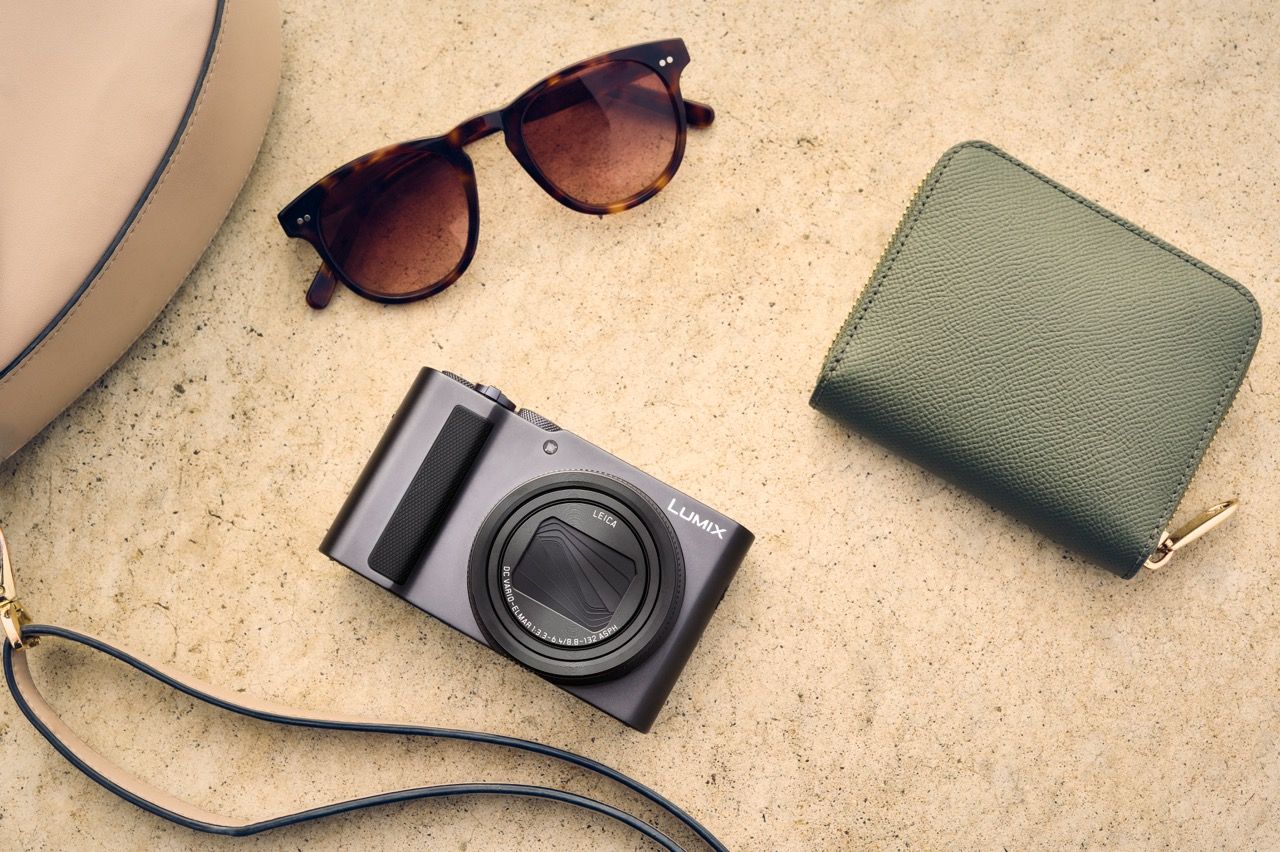
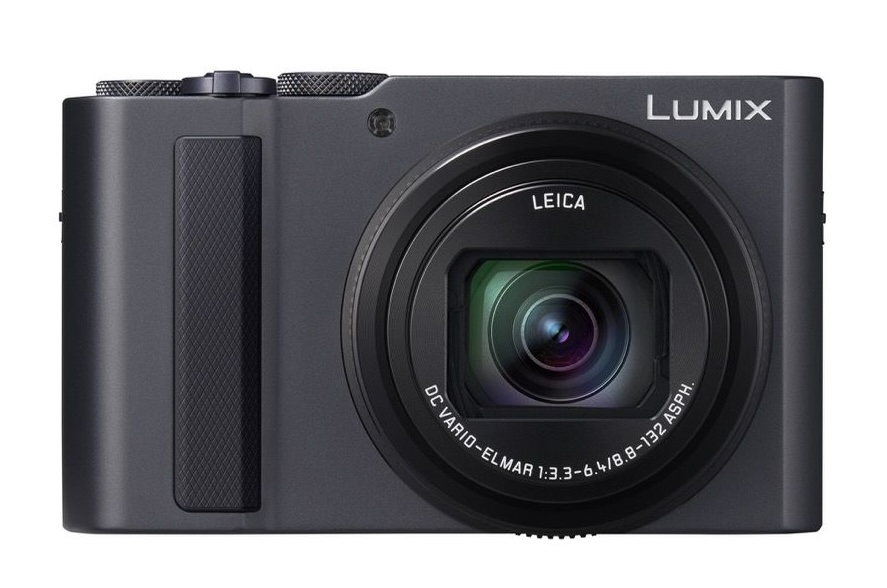
The previously leaked Panasonic Lumix TZ300 compact camera is now officially announced

Panasonic Lumix TZ300 compact camera additional information

Press release:

Panasonic Introduces New Pocket-sized *1 15x Zoom Travel Camera: LUMIX ZS300

Newark, N.J. (Mar. 24, 2026) – Panasonic is pleased to introduce the new LUMIX ZS300, a pocket-sized *1 digital compact camera designed for travelers and everyday creators who want exceptional image quality in a portable form. Whether you’re photographing distant landmarks on a vacation, capturing vibrant night views in a busy city, or recording spontaneous moments with friends, this versatile camera adapts to any situation.

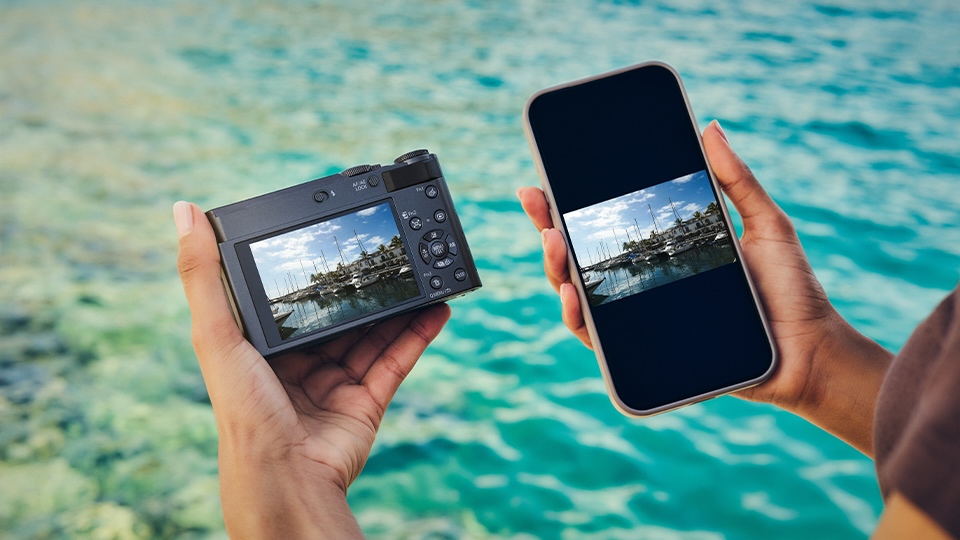
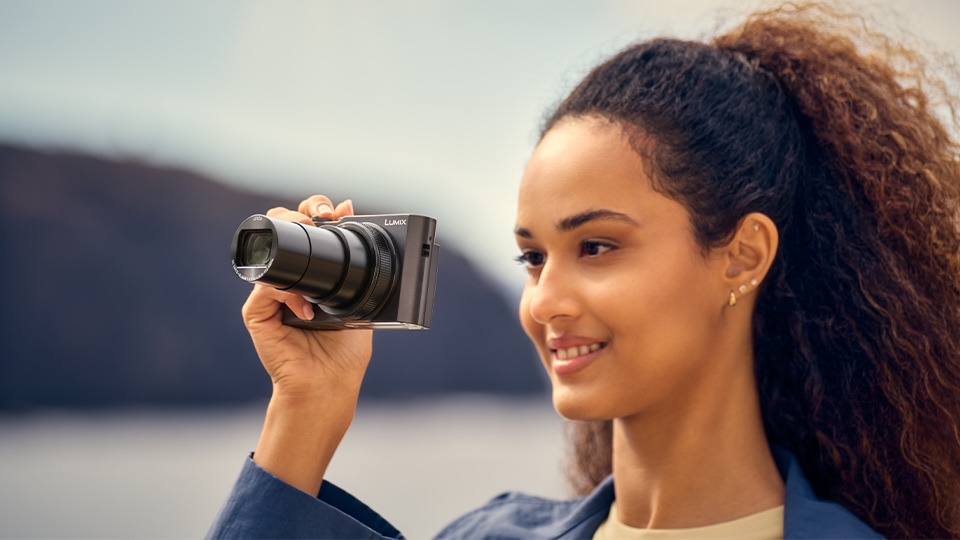
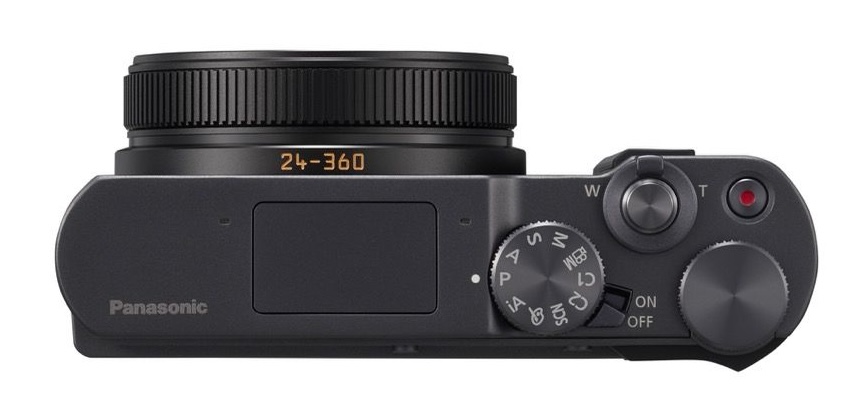
The LUMIX ZS300 combines a powerful 15x optical zoom with a 1.0type BSI CMOS sensor to deliver clear, detailed images even in challenging lighting. Its LEICA certified lens covers a 24–360mm *2 focal range, enabling everything from sweeping landscapes to faraway subjects to be captured with crisp precision. The high sensitivity sensor minimizes noise in nighttime scenes, preserving natural brightness and fine detail at approximately 20.1 megapixels.

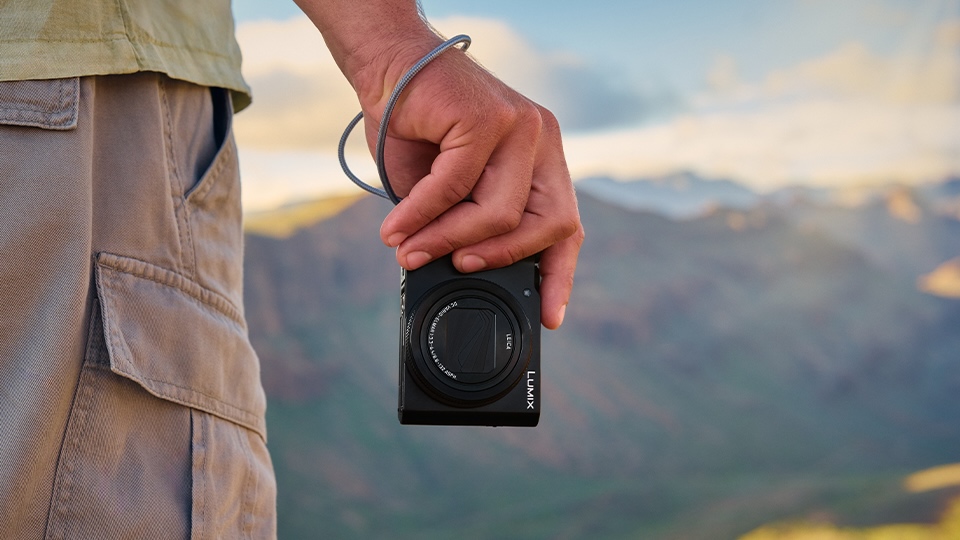
For creative close-up shooting, the ZS300 features AF Macro, allowing users to focus as close as 3cm. Small objects—from delicate flowers to everyday accessories—can be captured with sharp clarity. Despite its advanced capabilities, the compact camera body fits easily into a pocket or bag, making it ideal for daily carry and travel.

For video shooting, the ZS300 offers 4K recording at 3840 × 2160, providing lifelike detail for travel scenes and fast-moving action. Highspeed FHD 120fps recording offers smooth slow-motion expression, while 4K PHOTO captures moments at 30 frames per second, letting you extract the perfect shot.

To ensure stable and blurfree shooting, POWER O.I.S. effectively compensates for handshake at telephoto or in low-light environments. When filming while walking, 5axis HYBRID O.I.S.+ provides smooth, stable video.

A variety of 22 creative filter effects allow users to tailor the look of their photos to match their personal style. A builtin flash ensures bright, clear results even in dark settings such as indoor parties or nighttime portraits.

With Bluetooth® connectivity and WiFi® image transfer via the Panasonic Image App, sharing photos and videos from the ZS300 is fast and convenient. USB TypeC® charging *3 provides added flexibility, allowing users to power the camera on the go using AC adapters, PCs, or portable power banks.

Main Features

1. High Image Quality

  • 1.0-type 20.1MP BSI CMOS sensor captures bright, detailed images with minimal noise, even in low-light scenes
  • LEICA certified 24–360mm *2 15x optical zoom lens delivers clear results from wide landscapes to distant subjects
  • AF Macro enables close-up shooting from 3cm, ideal for small objects and everyday use discoveries

2. Powerful Photo & Video Performance

  • 4K video (3840×2160) records travel scenes with lifelike detail
  • High-speed FHD 120fps for smooth slow-motion footage
  • 4K PHOTO captures 30 fps burst images, allowing you to select and save the perfect moment
  • 22 creative filters offer a wide range of in-camera effects to match your preferred shooting style

3. Reliable Image Stabilization

  • POWER O.I.S. minimizes blur when shooting handheld, especially at telephoto or in low light
  • 5-axis HYBRID O.I.S.+ ensures smooth and stable video while walking

4. Smart Connectivity & Convenience

  • Connect to a smartphone via Bluetooth®, and transfer images through WiFi® using the Panasonic Image App
  • USB TypeC® charging *3 from AC adapters, PCs, or power banks for easy power on the go
  • Compact, pocket-sized *1 design makes it ideal for travel and daily carry

*1 Approx. 111.2 (W) x 66.4 (H) x 45.2 (D) mm. Dimensions exclude protrusions.
*2 35mm camera equivalent: 24-360mm
*3 Power supply is not available.

The post Panasonic Lumix TZ300 compact camera officially announced appeared first on Photo Rumors.

Panasonic's new compact is a familiar travelzoom but with a crucial feature missing

When you use DPReview links to buy products, the site may earn a commission.
Panasonic Lumix ZS300 silver grey
Image: Panasonic

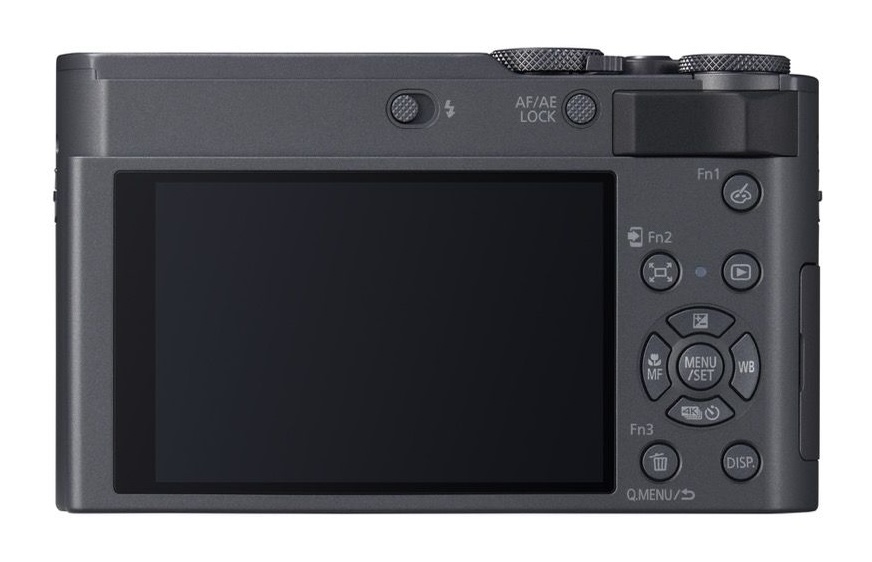
Panasonic has announced the Lumix DC-ZS300, which will be known as the TZ300 outside North America. It's a pocketable compact with a 15x, 24-360mm equiv zoom lens in front of a Type 1 (13.2 x 8.8mm) BSI CMOS sensor. But, unlike its predecessor, there's no viewfinder if your travel takes you to sunnier climes.

For those who have memorized Panasonic's compact lineup, the specs set out in the company's press release will be very reminiscent of its ZS200 / TZ200, announced in February 2018. Other than the absent viewfinder, the other significant change is the adoption of the newer USB-C socket. The actual interface is likely to be the same as before as, like the previous model, the ZS300 can be charged, but not powered, over USB.

The ZS300 has a zoom covering an impressive 24-360mm equivalent range. Its maximum aperture drops from F3.3 at the wide end to F6.4 by its full reach. The Type 1 sensor means there's a 2.72x crop factor at play.

The ZS300's Macro mode can focus down as close as 3cm (1.2") at its widest focal length, but this increases to 100cm (39.4") at the long end of the lens. Based on what we've been shown and told, it's likely to retain the fixed 1840K dot (960 x 640 px) fixed rear screen from the mid-life ZS200D update, along with a small pop-up flash.

Panasonic Lumix ZS300 black

We wonder whether Panasonic has found it difficult to source the field-sequential viewfinder panels used in older models, but still think a travel zoom will be limited by the absence of any sort of viewfinder.

Image: Panasonic

Focusing on the positives, though: the announcement of the ZS300 as a new model suggests you might actually be able to buy one. The deletion of the viewfinder means that, unlike the more EU-compliance updated G97 model, its price has only gone up by a relatively modest $100 in the eight years since the Micro-B USB version was launched.

We're still awaiting full specs and availability information, but we're told the ZS300 will be available in silver or black variants for $899, ex tax. It will be £869.00 in the UK.

Panasonic Introduces New Pocket-sized *1 15x Zoom Travel Camera: LUMIX ZS300

Newark, N.J. (Mar. 24, 2026) – Panasonic is pleased to introduce the new LUMIX ZS300, a pocket-sized *1 digital compact camera designed for travelers and everyday creators who want exceptional image quality in a portable form. Whether you’re photographing distant landmarks on a vacation, capturing vibrant night views in a busy city, or recording spontaneous moments with friends, this versatile camera adapts to any situation.

The LUMIX ZS300 combines a powerful 15x optical zoom with a 1.0type BSI CMOS sensor to deliver clear, detailed images even in challenging lighting. Its LEICA certified lens covers a 24–360mm *2 focal range, enabling everything from sweeping landscapes to faraway subjects to be captured with crisp precision. The high sensitivity sensor minimizes noise in nighttime scenes, preserving natural brightness and fine detail at approximately 20.1 megapixels.

For creative close-up shooting, the ZS300 features AF Macro, allowing users to focus as close as 3cm. Small objects—from delicate flowers to everyday accessories—can be captured with sharp clarity. Despite its advanced capabilities, the compact camera body fits easily into a pocket or bag, making it ideal for daily carry and travel.

For video shooting, the ZS300 offers 4K recording at 3840 × 2160, providing lifelike detail for travel scenes and fast-moving action. Highspeed FHD 120fps recording offers smooth slow-motion expression, while 4K PHOTO captures moments at 30 frames per second, letting you extract the perfect shot.

To ensure stable and blurfree shooting, POWER O.I.S. effectively compensates for handshake at telephoto or in low-light environments. When filming while walking, 5axis HYBRID O.I.S.+ provides smooth, stable video.

A variety of 22 creative filter effects allow users to tailor the look of their photos to match their personal style. A builtin flash ensures bright, clear results even in dark settings such as indoor parties or nighttime portraits.

With Bluetooth® connectivity and WiFi® image transfer via the Panasonic Image App, sharing photos and videos from the ZS300 is fast and convenient. USB TypeC® charging *3 provides added flexibility, allowing users to power the camera on the go using AC adapters, PCs, or portable power banks.

Main Features

1. High Image Quality

  • 1.0-type 20.1MP BSI CMOS sensor captures bright, detailed images with minimal noise, even in low-light scenes
  • LEICA certified 24–360mm *2 15x optical zoom lens delivers clear results from wide landscapes to distant subjects
  • AF Macro enables close-up shooting from 3cm, ideal for small objects and everyday
    discoveries

2. Powerful Photo & Video Performance

  • 4K video (3840×2160) records travel scenes with lifelike detail
  • High-speed FHD 120fps for smooth slow-motion footage
  • 4K PHOTO captures 30 fps burst images, allowing you to select and save the perfect moment
  • 22 creative filters offer a wide range of in-camera effects to match your preferred shooting style

3. Reliable Image Stabilization

  • POWER O.I.S. minimizes blur when shooting handheld, especially at telephoto or in low light
  • 5-axis HYBRID O.I.S.+ ensures smooth and stable video while walking

4. Smart Connectivity & Convenience

  • Connect to a smartphone via Bluetooth®, and transfer images through WiFi® using the Panasonic Image App
  • USB TypeC® charging *3 from AC adapters, PCs, or power banks for easy power on the go
  • Compact, pocket-sized *1 design makes it ideal for travel and daily carry

*1 Approx. 111.2 (W) x 66.4 (H) x 45.2 (D) mm. Dimensions exclude protrusions.
*2 35mm camera equivalent: 24-360mm
*3 Power supply is not available.

Panasonic Lumix DC-ZS300 specifications

Price
MSRP$899
Body type
Body typeLarge sensor compact
Body materialMetal
Sensor
Max resolution5472 x 3648
Image ratio w:h1:1, 4:3, 3:2, 16:9
Effective pixels20 megapixels
Sensor photo detectors21 megapixels
Sensor size1″ (13.2 x 8.8 mm)
Sensor typeCMOS
ProcessorVenus Engine
Color spacesRGB
Color filter arrayPrimary color filter
Image
ISOAuto, 125-12800 (expands to 80-25600)
Boosted ISO (minimum)80
Boosted ISO (maximum)25600
White balance presets5
Custom white balanceYes (4 slots)
Image stabilizationOptical
Image stabilization notesHybrid 5-axis available in movie mode
Uncompressed formatRAW
JPEG quality levelsFine, standard
File format
  • JPEG (Exif v2.31)
  • Raw (Panasonic RW2 format)
Optics & Focus
Focal length (equiv.)24–360 mm
Optical zoom15×
Maximum apertureF3.3–6.4
Autofocus
  • Contrast Detect (sensor)
  • Multi-area
  • Center
  • Selective single-point
  • Tracking
  • Single
  • Continuous
  • Touch
  • Face Detection
  • Live View
Autofocus assist lampYes
Digital zoomYes (2X)
Manual focusYes
Normal focus range50 cm (19.69)
Macro focus range3 cm (1.18)
Number of focus points49
Screen / viewfinder
Articulated LCDFixed
Screen size3
Screen dots1,840,000
Touch screenYes
Screen typeTFT LCD
Live viewYes
Viewfinder typeNone
Photography features
Minimum shutter speed60 sec
Maximum shutter speed1/2000 sec
Maximum shutter speed (electronic)1/16000 sec
Exposure modes
  • Program
  • Aperture Priority
  • Shutter Priority
  • Manual
Scene modes
  • Clear Portrait
  • Silky Skin
  • Backlit Softness
  • Clear in Backlight
  • Relaxing Tone
  • Sweet Child's Face
  • Distinct Scenery
  • Bright Blue Sky
  • Romantic Sunset Glow
  • Vivid Sunset Glow
  • Glistening Water*
  • Clear Nightscape
  • Cool Night Sky
  • Warm Glowing Nightscape
  • Artistic Nightscape
  • Glittering Illuminations
  • Handheld Night Shot
  • Clear Night Portrait
  • Soft Image of a Flower
  • Appetizing Food
  • Cute Dessert
  • Freeze Animal Motion
  • Clear Sports Shot
  • Monochrome
Built-in flashYes
Flash range6.80 m (at Auto ISO)
External flashNo
Flash modesAuto, Auto/Red-eye Reduction, Forced On, Forced On/Red-eye Reduction, Slow Sync., Slow Sync./Red-eye Reduction, Forced Off
Continuous drive10.0 fps
Self-timerYes (2 or 10 secs, 3 shots @ 10 sec)
Metering modes
  • Multi
  • Center-weighted
  • Spot
Exposure compensation±5 (at 1/3 EV steps)
AE Bracketing±3 (3, 5, 7 frames at 1/3 EV, 1/2 EV, 1 EV steps)
Videography features
FormatMPEG-4, AVCHD, H.264
Modes
  • 3840 x 2160 @ 30p, 8-bit, H.264
  • 3840 x 2160 @ 24p, 8-bit, H.264
  • 1920 x 1080 @ 60p, 8-bit, H.264
  • 1920 x 1080 @ 60p, 8-bit, H.264
  • 1920 x 1080 @ 60i, 8-bit, H.264
  • 1920 x 1080 @ 30p, 8-bit, H.264
  • 1920 x 1080 @ 30p, 8-bit, H.264
  • 1920 x 1080 @ 24p, 8-bit, H.264
  • 1280 x 720 @ 30p, 8-bit, H.264
MicrophoneStereo
SpeakerMono
Storage
Storage typesSD/SDHC/SDXC card (UHS-I compatible)
Connectivity
USB USB 2.0 (480 Mbit/sec)
USB chargingYes
HDMIYes (microHDMI)
Microphone portNo
Headphone portNo
WirelessBuilt-In
Wireless notes802.11b/g/n + Bluetooth 4.2 LE
Remote controlYes (via smartphone)
Physical
Environmentally sealedNo
BatteryBattery Pack
Battery descriptionDMW-BLG10 lithium-ion battery & charger
Battery Life (CIPA)360
Weight (inc. batteries)337 g (0.74 lb / 11.89 oz)
Dimensions111 x 66 x 45 mm (4.37 x 2.6 x 1.77)
Other features
Orientation sensorYes
Timelapse recordingYes
GPSNone

Panasonic Lumix TZ300 compact camera additional information

Par : PR admin
24 mars 2026 à 12:11


Here is some additional information on the previously leaked Panasonic Lumix TZ300 compact camera that should be announced soon (price: €999):

Update: the camera is now officially announced and available for pre-order at B&H Photo, WEX Photo, and Foto Erhardt.

  • Sensor: 20 Megapixel 1-inch BSI CMOS sensor
  • Lens: Leica DC Vario-Elmar, 24–360 mm equivalent focal length
  • Optical Zoom: 15x
  • Video Recording: 4K video at 30p + 4K PHOTO mode
  • Image Stabilisation: 5-axis Hybrid O.I.S.+
  • Display: Touchscreen LCD
  • Viewfinder: Built-in electronic viewfinder
  • Storage: SD / SDHC / SDXC memory card
  • Connectivity: Wi-Fi and Bluetooth
  • Ports: USB-C (charging + data transfer)
  • Power: Rechargeable battery (included)
  • Build: Compact travel-zoom design, available in dark silver finish

The Panasonic Lumix DC-TZ300 in dark silver combines powerful technology with an elegant, modern design, making it the ideal companion for demanding travel and everyday life. Thanks to its compact design and high-quality construction, it can be easily taken anywhere without compromising image quality or functionality. The Panasonic Lumix DC-TZ300 impresses with its versatility – from spontaneous snapshots to detailed landscape and telephoto shots.

High-quality sensor and flexible LEICA zoom lens

Equipped with a 20.1-megapixel 1-inch BSI CMOS sensor, the Panasonic Lumix DC-TZ300 delivers clear and detailed results even in challenging lighting conditions. The integrated LEICA DC VARIO-ELMAR lens with a focal length range of 24–360 mm enables both impressive wide-angle shots and powerful telephoto photography. The 15x optical zoom ensures that distant subjects can be captured precisely without any loss of quality.

4K video, stabilization and modern equipment

The Panasonic Lumix DC-TZ300 offers extensive video capabilities, including 4K recording with high detail. Features like 4K PHOTO and slow-motion recording significantly expand creative possibilities. The integrated 5-axis HYBRID OIS+ image stabilization ensures smooth footage even at longer focal lengths. Additionally, the camera boasts Wi-Fi and Bluetooth connectivity, an integrated viewfinder, a touchscreen display, and convenient USB-C charging for maximum flexibility on the go.

Upcoming Panasonic Lumix TZ300 compact camera leaked online

Panasonic registered two new cameras overseas

The post Panasonic Lumix TZ300 compact camera additional information appeared first on Photo Rumors.

Sony says its vlogging compacts aren't a replacement for the RX100

20260227-6K9A0799-A  1

Left: Mitsuhiro Suzaki, Deputy General Manager of the Lens Technology and System business unit.
Right: Yasufumi Machitani, General Manager of Sony's Camera Business Department

Photo: Dale Baskin

"In terms of imaging quality, needless to say, the image sensor is one of the most important factors," says Yasufumi Machitani, General Manager of Sony's Camera Business Department, addressing where he thinks the next noticeable improvements to stills will come from.

"Sony Group has the Sony Semiconductor Solutions Group, which develops and produces image sensors," he says. "So the image sensor development group and the camera and lens group closely communicate. That means we can discuss future products: What kind of image sensor there should be, or what kind of signal processing we can do on the camera side. We can align the image sensor technology and the camera development together, which we think is a great advantage for us."

Advancements in image quality were just one of the topics we discussed with Sony executives during our interview with them at CP+ 2026, but it, and the company's desire for innovation, is something that came up a lot during our discussion.

"There is still solid demand"

zv e10 ii with microphone
Sony says vlogging cameras like the ZV-E10 II have been received well by the younger generations.
Photo: Richard Butler

Discussing the state of the camera market, Machitani says he thinks the market will continue to grow. "If you look at the CIPA numbers, there was growth this year. I think there's still solid demand from customers, in terms of our core business of camera bodies and lenses." According to him, the growth comes from several places, citing conventional uses and also newer use cases, such as live streaming and 3D photogrammetry. "We think that creators are diverse and their demands are varied. But in general, [stills/video] hybrid usage is popular," he says.

While there have been concerns that the growth may be temporary, spurred by people switching from DSLR systems to mirrorless, Sony also talked a lot about the next generation of photographers: younger people who may be buying their first camera.

"In general, hybrid usage is popular"

"We see generational differences in how people shoot," he says. "Especially younger customers stepping up from smartphones, they often shoot both photos and video. They are a different type of customer from traditional enthusiasts. They start recording their life with smartphones, but they want more creative control, which is hard to get. So they switch to compact cameras or to the Alpha system for photography. And then they try to shoot video too."

Another interesting generational divide Sony sees has to do with colors and editing. Atsushi Ueda, General Manager of the Imaging Marketing Division's Marketing Communication Department, says more experienced photographers will value specs like a claimed 16 stops of dynamic range. "Advanced photographers tend to shoot Raw, while many younger photographers enjoy the real-time creativity using Creative Look for different color and tones. So, with our Alpha lineup, we can cover different types of customers," he says, referring to the customizable color modes that apply to your JPEGs and HEIFs.

The compact question

Sony rx100 vii
The last entry in Sony's RX100 series, the VII, came out in 2019.
Photo: Dan Bracaglia

Machitani says that Sony has seen the compact camera market growing, and specifically cites the ZV series of vlogging cameras (which are a mix of interchangeable and fixed lens designs) as being particularly well-received by younger generations. "I think there are two aspects," he says. "Everyone is now getting used to taking photos with their smartphone. They start to become eager for better devices or tools to capture great image quality or express their feelings. So that's why a dedicated camera is necessary. And the second point is, at the same time, interchangeable mirrorless cameras are also getting bigger. Photo enthusiasts, or even professionals, need a more compact one to carry around every day, or for holidays and family time."

"Users of our competitors' mirrorless cameras also love this RX1 series"

In the case of Sony's latest compact, the RX1R III, he says the audience for it isn't just people who already own another Sony camera. "The people who buy an RX1R Mark III also tend to have a mirrorless camera. Not only a Sony camera, but users of our competitors' mirrorless cameras also love this RX1 series."

a sony rx1r iii camera cut in half
An RX1R III, cut in half at Sony's CP+ booth.
Photo: Dale Baskin

While the RX1R III and the ZV-series cameras fill their own niches, Machitani says Sony hears customers who are asking for a new entry in the more all-rounder' RX100 series. "We understand the necessity and requests for the RX100 series," he says. When asked if Sony views its vlogging compacts as a good solution for photographers looking for a fixed lens camera, he adds: "I think ZV-series and RX series are different concepts, so they meet different needs." In other words, it seems the vlogging cameras aren't intended to be a replacement.

"This is a basic model, but we try to raise the standard"

sony-a7-v-articulating-display

Machitani cites the a7 V's "4-axis multi-angle monitor" as a feature requested by creators and hybrid shooters that also benefits purely stills photographers.
Photo: Mitchell Clark

Despite the references to hybrid shooters and younger generations interested in video and color profiles, Sony made it clear that the innovations that benefit those users aren't wasted on people purely interested in photography.

"If you look at the a7 Mark V, which we recently just launched, this camera is also very good for traditional photographers," Machitani says. "We think creators and their demands are very diverse, and sometimes there are conflicts. But we try to understand their needs, and try to meet them in our future products or services, and deliver several solutions to meet their diverse demands."

When we asked if there were any specific features from the a7 V that were good for hybrid users and photographers, he gave us a few examples. "We renewed the image sensor and BIONZ XR2 processing unit. Although we say this is a 'basic model,' we try to raise the standard for the camera industry so that everyone can easily capture the decisive moment or the important scenes in their lives. So the BIONZ XR2 processor is now combined with AI processing unit functions from the latest Alpha-series cameras. So this is a basic camera, but the basic is great." He also cites blackout-free shooting and the combination tilting/swivel screen as features, and says the latter was requested by lots of creators.

Finding the balance

The idea of balancing the needs of different audiences came up again in our discussion of lenses with Mitsuhiro Suzaki, Deputy General Manager of the Lens Technology and System business unit. "We continue to expand the E-mount lens lineup in order to meet our diverse creators' needs," he says, citing the Sony FE 50-150mm F2 GM as an example of a new offering that's popular with both photographers and videographers.

"If we tried to make a 50-200mm F2, the size and weight would increase significantly"

As for how they decide what kind of lenses to make, Suzaki says they start by thinking about how they can create something that gives people new options. For the 50-150mm, they started with the concept of a fast zoom lens that was still compact, and experimented with a few different focal lengths, trying to find the right balance of weight, optical performance and balance. "Some people said 'we wish Sony made the 50-150 compatible with teleconvertors' or that they'd prefer a 50-200 F2. But if we tried to make a 50-200mm F2, the size and weight would increase significantly, and it would become a much more specialized lens," he says. "We believe this specification is the most reasonable and versatile choice for many creators."

When it comes to actually bringing a lens like that to market, Suzaki says it requires a lot of different disciplines. "We combine optical design, lens element technology, actuator technology, and mechanical engineering. Together, these technologies enable lenses with this level of performance." He also says it's not just a matter of selecting the right material to create lens elements, but also turning it into a precision surface that can be mass-produced. "This kind of development requires a long period of time and a great deal of trial and error."

On affordability, value and innovation

sony a7 v sensor
The a7 V has more all-around capability than its predecessor, but is also launching at $400 more than the a7 IV (which itself was $500 more than the a7 III).
Photo: Mitchell Clark

As prices for enthusiast-tier cameras creep higher, especially in the US, we thought it would be interesting to ask how affordability factors into their product planning. Machitani mostly demurs, saying that the company will "determine product specifications by comprehensively considering overall product value and balance," but Ueda points out the company's strategy of keeping older generations of its products on sale at different prices, such as in the case of the a7 V ($2899), IV ($2199), and III ($1699).

"We need to do something unique, something different for our customers."

Ueda adds that people look to Sony for something else: "Basically, from the customer's point of view, their request to Sony is innovation. So we need to do something unique, something different for our customers. That's our purpose." It's an interesting response, as "innovative" and "affordable" are labels rarely shared by the same products.


This article is based on an interview by Dale Baskin and Mitchell Clark at CP+ 2026. It has been edited for clarity and flow.

Remove Complex Backgrounds with Precision: Aiarty Image Matting for Photographers (Exclusive Deal Inside)

Par : PR admin
24 mars 2026 à 12:14


Beyond the Pen Tool: A Faster Way to Handle Complex Masking with Aiarty Image Matting (guest post)

We’ve all been there: the shoot was perfect, but now you’re zoomed in at 400%, wrestling with a stray strand of hair that just won’t stay in the selection. It’s the least creative part of photography, yet it’s often where the professional polish happens.

The irony of the current AI boom is that while it’s easier than ever to remove background from photo files with a single click, the results rarely hold up on a high-res monitor. Even when you remove background in Photoshop using the latest Select Subject features, the AI tends to treat edges as a binary choice. It works for a clean product shot, but it falls apart on a bride’s translucent veil or a portrait against a leafy backdrop, leaving that jagged, “cut-out” look.

This is when the distinction between a simple “remover” and true Image Matting becomes critical. What I was really looking for was something that understands the physics of light and transparency – the sub-pixel details that make a subject feel natural in its environment. In testing different tools, I came across Aiarty Image Matting, which stood out in how it handles these “impossible” edges with a level of nuance I haven’t seen in most standard plugins.

It’s worth a look for photographers who frequently deal with complex selections and high-resolution workflow. Now PhotoRumors readers can access an exclusive offer to get Aiarty Image Matting Lifetime License at up to 43% OFF, with benefits including:

  • Use on 1 Windows + 1 Mac, 3 Windows or Mac computers
  • Unlimited access to all features
  • Permanent free upgrades and technical support
  • No subscription, no recurring cost

Why Aiarty Image Matting is the Secret to Professional Composites

The term “background removal” is a bit of a misnomer in professional circles. Most tools – from the built-in best background removal app on your phone to standard web filters – simply use a mask to hide pixels. This often results in a “cookie-cutter” effect where the edges look harsh and artificial.

Aiarty Image Matting operates on a different level. It uses dedicated AI models to calculate an “alpha matte,” which essentially determines the exact transparency of every single pixel on the boundary. Instead of a binary “in or out” choice, it understands that a stray hair or a glass edge is partially transparent. If you’ve ever wondered which ai tool is best for background removal for high-end work, the answer lies in how it handles these “soft” edges. Aiarty doesn’t just cut the subject out; it extracts it.

This extraction process achieves a level of sub-pixel precision that identifies details thinner than a single pixel – think individual eyelashes or the fuzz on a woolen sweater. It also solves one of the biggest headaches when you remove background from photo: color decontamination. We’ve all dealt with that annoying color spill, like a green tint on a model’s skin from a forest backdrop. Aiarty’s AI is trained to “clean” these edges, ensuring the subject looks natural when placed in a completely different lighting environment.

For things like steam, smoke, or a translucent bridal veil, the software preserves the true, semi-transparent nature of the material. This is a game-changer for anyone trying to make background transparent without losing the ethereal, airy quality of the original shot. By moving away from simple “erasing” and toward “intelligent extraction,” it finally bridges the gap between a quick social media edit and a gallery-ready composite.

Key Features: How Aiarty Streamlines Complex Masking

When you’re looking for the best background removal software, you’re really looking for consistency. You want a tool that doesn’t require you to go back in with a layer mask to fix 20% of the edges. Most standard matting tools rely on simple edge detection that often fails the moment things get slightly out of focus or highly detailed. Aiarty Image Matting differs by using deep-learning models that actually understand the “semantic” structure of a photo – it knows the difference between a strand of hair and a stray digital artifact. Instead of just tracing a line, it reconstructs the edge data based on real-world light and texture.

In my time testing the software, four specific capabilities stood out as legitimate game-changers for a professional workflow:

  • Hair-Level Fidelity: This is the ultimate stress test. Whether it’s a high-fashion portrait with flyaway hair or a wildlife shot of a wolf’s fur, Aiarty’s AI models are trained on millions of real-world edge scenarios. It identifies individual strands that traditional “Select Subject” algorithms usually blur or chop off. If you’ve ever wondered how to remove white background from image files with fine texture, this level of detail is a massive relief.
  • Complex Transparency Awareness: Most “one-click” apps treat glass, smoke, or veils as solid objects or just erase them. Aiarty actually understands the transparency levels. This means if you have a shot of a bride in a lace veil, the software preserves the semi-transparent layers, allowing the new background to show through naturally. It’s easily the best ai tool to remove background from delicate, translucent subjects.

  • Seamless Background Replacement: Beyond just cutting things out, the tool makes it remarkably easy to change background of photo assets for creative composites. It handles the edge blending so well that you don’t get that “pasted-on” look. You can drop in a solid color for a clean e-commerce shot or a complex landscape for a fine-art piece, and the lighting and transparency on the edges remain believable.

  • Privacy and Speed via Local Processing: This is a big one for me. Many “best free ai background remover” tools are browser-based, meaning you have to upload your high-res (often sensitive) client work to a cloud server. Aiarty runs entirely on your local GPU. It’s faster, more secure, and allows you to automatically remove background elements from an entire folder of RAW files in a single batch, without hogging your bandwidth.

Instead of just being another best background removal app for casual use, it feels like a specialized instrument designed to handle the 10% of “impossible” masking jobs that usually take up 90% of our editing time.

Aiarty Image Matting Real-World Scenarios

In practice, a tool like this isn’t just about saving a few minutes; it’s about enabling shots that would otherwise be a nightmare to edit. I’ve been testing Aiarty across a few common scenarios where most “best background removal app” contenders usually fail:

  • Portrait & Fashion Photography: We’ve all struggled with how to remove background from a subject with flyaway hair or fur. Standard AI usually “muds” the edges. Aiarty preserves individual strands, making the transition to a new background look organic. It’s a lifesaver for high-end beauty retouches where the halo effect is a deal-breaker.

  • Commercial & Still Life: If you’ve ever tried to make background transparent for a glass bottle, a liquid splash, or a watch face, you know the refraction usually gets ruined. This tool actually maintains the transparency of the material, allowing the new environment to show through naturally. It’s much faster than manually painting alpha channels for product composites.

  • High-Volume E-commerce: For those of us who need to remove background elements across a hundred RAW files locally, the batch processing feature is a massive win. You aren’t tethered to a slow cloud upload, and the consistency across the set – keeping the same edge softness – is much higher than manual masking.

By handling the heavy lifting of the selection process, it lets you get back to the creative part: the color grading, the composition, and the storytelling.

Final Thoughts

In an industry that’s increasingly shifting toward subscription-based tools, having a reliable one-time purchase option still feels refreshing—especially for something as time-consuming as precise masking.

For photographers who regularly deal with fine details like hair, transparency, or complex backgrounds, tools like Aiarty Image Matting can make a noticeable difference in both speed and final image quality.

It’s not just about saving time—it’s about getting results that hold up under close inspection.

At the time of writing, PhotoRumors readers can access an exclusive 43% discount on the lifetime license, making it a relatively accessible addition to a professional editing workflow.

The post Remove Complex Backgrounds with Precision: Aiarty Image Matting for Photographers (Exclusive Deal Inside) appeared first on Photo Rumors.

❌