When you use DPReview links to buy products, the site may earn a commission.
The Panasonic Lumix S 40mm F2, pictured on an S1II body
Photo: Richard Butler
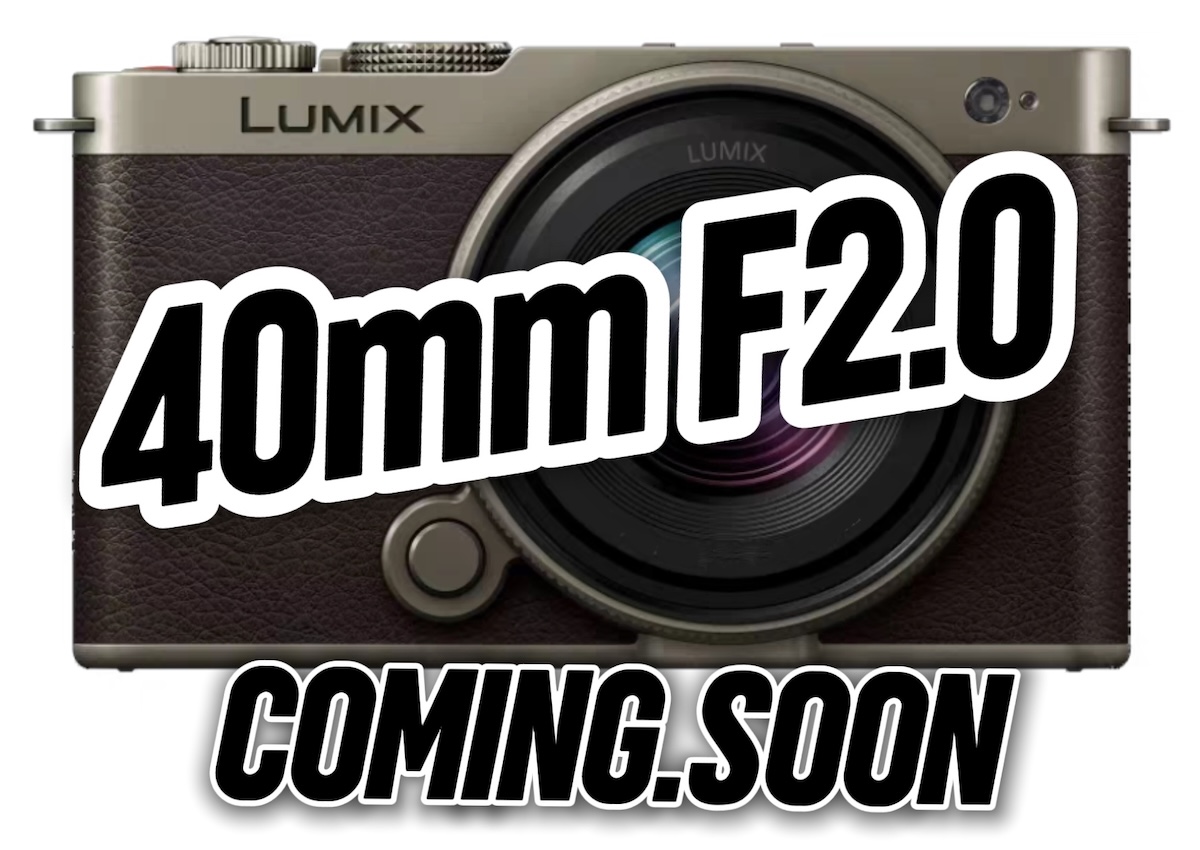
Panasonic has announced the Lumix S 40mm F2, a small, fast lens for L-mount that recalls its much-loved 20mm F1.7 prime for Micro Four Thirds.
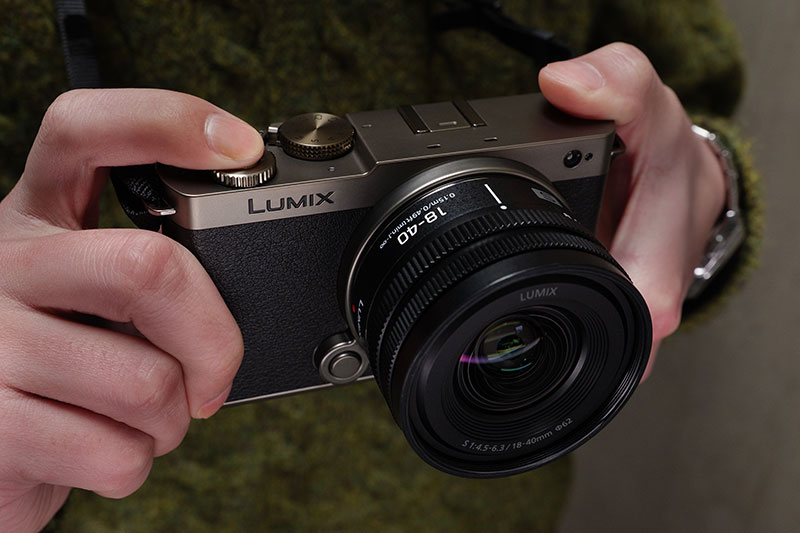
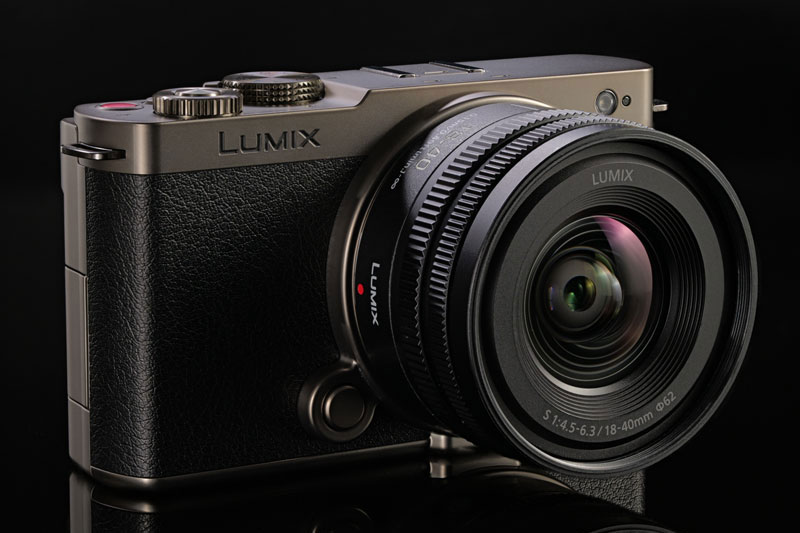
The lens gives a fractionally-wider-than-normal field of view on full frame sensors and has been designed to match the dimensions of the 18-40mm F4.5-6.3 kit zoom for the S9, in its retracted, carry-around state.
Panasonic described it to us as "more of a muffin lens than a pancake."
The $400 lens features seven elements in six groups, with three of those elements being aspherics. Its relatively modest price results in a 7-blade aperture design, but despite this, sees seals deployed at all the key points around the lens to provide dust, splash and freeze resistance down to -10°C (14°F).
Likewise, while Panasonic has avoided the cost of including a lens hood (and the costs of designing one to match it), it's made sure to include a lens function button on the side of the barrel. The focus ring has the usual options to control focus throw and focus direction, or act as a control ring.
The S 40mm F2.0 weighs just 144g (5.1oz). It accepts the same 62mm filters as the 18-40mm and its front element has a fluorine coating.
The 40mm F2 will be available from Early June at a recommended price of $399, exc sales tax.
We've been shooting with the 40mm for a while and, even paired with an S1RII, found it plays a big part in making the camera/lens combination more carryable.
While a distortion correction profile is embedded in the lens, and we've applied it to the images in the gallery, its effects are extremely subtle. The lens is not utilizing high levels of correction.
Please do not reproduce any of these images on a website or any newsletter/magazine without prior permission (see our copyright page). We make the originals available for private users to download to their own machines for personal examination or printing (in conjunction with this review); we do so in good faith, so please don't abuse it.
Sample gallery
This widget is not optimized for RSS feed readers. Click here to open it in a new browser window / tab.
News Release
Panasonic Introduces New Compact Standard Prime Lens to its Full Frame LUMIX S Series: LUMIX S 40mm F2 (S-S40)
Newark, N.J. (April. 21, 2026) – Panasonic is pleased to introduce the new LUMIX S 40mm F2 (S-S40), an interchangeable lens based on the L-Mount system standard.
A compact, lightweight prime designed for everyday versatility, the LUMIX S 40mm F2 delivers natural-looking images with beautiful bokeh — ideal for street photography, portraits, and landscapes.
Featuring a 40mm focal length, often regarded as close to the field of view of the human eye, this single focal length lens delivers a natural perspective suited to a wide range of scenes. Its bright F2 maximum aperture creates soft and beautiful bokeh for strong subject separation in portraits and helps maintain faster shutter speeds in low-light to keep clear images without pushing ISO unnecessarily.
With an overall length of approximately 40.9mm and a weight of approximately 144g, it pairs perfectly with the compact body of the LUMIX S9, creating a lightweight, portable setup that’s easy to carry. The lens shares a similar profile with the LUMIX S 18-40mm F4.5-6.3 when collapsed and maintains the same 62mm filter diameter.
While remaining compact and lightweight, the lens features a dust- and splash-resistant design for reliability in changing weather conditions. The front lens element is coated with fluorine, making it easy to remove dirt and oil from the surface.
To meet the growing demand for video production, the lens also incorporates features such as focus breathing suppression and micro-step aperture control, enabling smooth exposure transitions and high-quality video expression.
Alongside this announcement, Panasonic is also sharing its lens development roadmap, featuring a wide-angle prime lens designed to complement the compact LUMIX S9 body, and a large-aperture telephoto zoom lens to further expand the L-Mount lens lineup.
With the introduction of the new 40mm lens and its continued commitment to future lens development, Panasonic continues to expand creative possibilities for both camera enthusiasts and professionals by delivering a strong balance of image quality and mobility, contributing to the growth of the interchangeable-lens camera market.
Main Features
Natural 40mm View with large F2 Aperture
40mm focal length provides a natural perspective similar to human field of view
Large F2 aperture produces soft and beautiful bokeh
Suitable for a wide range of shooting styles including street photo, portraits, and landscapes
Compact, Easy-to-Carry Design
Compact and lightweight design measuring approx. 40.9mm in length and approx. 144g in weight
Sized to match the compact LUMIX S9 body for easy portability
Shares the same compact size and 62mm filter thread as the LUMIX S 18-40mm F4.5-6.3
Enhanced control and reliability
Features a control ring and focus button for intuitive operation and enhanced creative control
Dust- and splash-resistant design for reliable shooting in various conditions
Focus breathing suppression and micro-step aperture control support smooth video recording
The LUMIX S 40mm F2 (S-S40) will go on sale for $399.99 USD and is expected to begin shipping to customers in early June 2026.
Software company DxO has announced the ninth iteration of Nik Collection, its suite of seven creative editing plugins. Nik Collection 9 introduces updated masking tools and new filters for photographers looking to add creative finishing touches to their images.
The most notable update is the addition of more advanced masking tools via the Local Adjustments toolbar. In Nik Collection 8, DxO added the ability to import Photoshop's AI-powered selections (such as Select Subject), but otherwise, selection tools remained rather simple and required direct user input. Now, the company has added AI-powered masking to Nik Collection apps, no Photoshop or manual selections required.
One of the newly added masking tools promises to select parts of a scene based on how far they were from the camera.
Image: DxO
The updated AI masks come in two different forms. First, users can select subjects and objects, just like they can in Photoshop. There's also the new Depth Mask option, which uses AI to create a depth map, allowing users to make adjustments to specific areas based on the distance from the camera. Because it's AI-powered, it works without embedded distance data from the camera.
Both types of masking rely on local processing, so images stay on the user's computer. They can be fully adjusted and fine-tuned as needed. To aid with that, DxO added new Mask Overlays that make it easier to see where a mask is. Masks can also be copied and pasted from one filter to another, saving time from having to reselect that same area for a different adjustment.
Halation filter
Blending Modes
Glass Effect
Chromatic Shift
Images: DxO
Nik Collection 9 also features three new filters. The Chromatic Shift option recreates the look of ink misalignment from magazine days, with full control over the direction and level of shift and the colors shifted. The Glass Effect filter makes it look like your subject is behind a sheet of textured glass, and the Halation filter aims to replicate the look of the glowing highlights characteristic of certain film stocks.
DxO is also giving users more control over how those filters interact with the image. It has added 18 different blending modes to Color Efex and Analog Efex, which will be a familiar option to Photoshop users. There's also a new Preset Hover Preview option, providing instant, real-time previews of presets without clicking back and forth between the options.
A new Color Grading menu aims to make it easier to adjust the colors in a photo.
Image DxO
Lastly, there is now a color grading menu, which keeps all color controls in a single color wheel. Users can select three points for highlights, shadows and midtones, adjusting the color of each area. Additionally, a slider below the color wheel shows the color grade from shadows to highlights and allows users to shift all tones at once.
DxO's Nik Collection 9 is available for download now. It costs $180 for a new perpetual license, or $100 for those upgrading from Nik Collection 7 or 8.
After months of swirling rumors, Apple CEO Tim Cook has announced that he'll be stepping down from the position later this year. He's been in the role since 2011, after being named as successor to co-founder Steve Jobs.
Replacing him will be John Ternus, who is currently senior vice president of Hardware Engineering, responsible for leading the teams that make the hardware for the iPhone, iPad, Mac and more. In his letter, Cook describes Ternus as "a brilliant engineer and thinker who has spent the past 25 years building the Apple products our users love so much, obsessed with every detail, focused on every possible way we can make something better, bolder, more beautiful, and more meaningful."
Of course, a transition this big isn't happening in a day; Cook will remain as head of the company until September 1st, 2026, and will continue on as executive chairman. (That does mean there's a chance Ternus is the one to announce the next iPhone, as those typically debut in September; a monumental task in your first few weeks as CEO.)
Apple is a massive player in the camera industry
While Apple is, at its core, a computer and phone company, it's also a massive player in the camera industry thanks to the iPhone. When Tim Cook became CEO, the company's flagship product was the iPhone 4, a phone with a single camera taking single-shot exposures that was nevertheless just beginning to have an impact on the sales of compact cameras. Since then, smartphones have largely taken over that market, now sporting much larger sensors, advanced multi-shot stacking and several camera modules to provide a selection of focal lengths.
We'll have to wait and see if Ternus' background in hardware leads him to make different decisions than Cook, who came from the operations and logistics side of the company. And any high-level changes in the iPhone as a camera, or the Mac as an editing platform, won't be immediately obvious starting with their next versions. But over a few years, we'll start to see the impact of having a new person in charge of what is one of the world's largest camera companies.
When you use DPReview links to buy products, the site may earn a commission.
Image: Viltrox
Viltrox has announced two new full-frame lenses, a 35mm F1.8 and a 55mm F1.8. The lenses are part of its Evo lineup, which it pitches as providing essential focal lengths that are sharp edge-to-edge.
The company says the lenses have apochromatic optical designs to control the color fringing that comes from chromatic aberration. The 35mm has 13 elements in 10 groups with 2 ED elements, 3 HR lenses and 1 UA element and can focus as close as 0.34m (13.4"). The 55mm, meanwhile, is made up of 13 elements in 9 groups with a similar mix of special glass as the 35mm, minus one HR lens. It can focus as close as 0.43m (16.9"). The company says the UA element used in the lenses is the same one that's found in its flagship Lab series of lenses. Both lenses have 9-bladed apertures.
The lenses have all the controls we expect from mid-range primes. We plan to produce a sample gallery with the 55mm F1.8 soon. Photo: Mitchell Clark
Both lenses use an STM motor for autofocus. They also share a similar list of physical features: a customizable FN button, a switch to change the aperture ring from clicked to declicked, and an AF/MF switch. They also have a rubber seal on the lens mount for weather resistance, and a coating on the front lens to repel water and smudges.
The 35mm lens weighs 355g (12.5oz) for E-mount – around 20g more for Z mount – and the Sony version of the 55mm lens weighs 370g (13oz), with the same delta for Nikon. Both are relatively compact at around 76mm long and have 58mm filters.
While Viltrox has long offered both F1.8 35mm and 50mm options that were similarly lightweight and compact, it's nice to see the company build out its Evo line, especially given that it's aiming to offer quite impressive optical designs. The one somewhat disappointing aspect of the launch is mount availability: both modes will be available for Sony E and, somewhat surprisingly, given recent patent litigation, Nikon Z. It would've been nice to see it also launch for L-mount, or to at least get some hint on whether it'll be available on it in the future.
The AF 35mm F1.8 Evo (also known as the AF 35mm F1.8 II) retails for $395, and the AF 55m F1.8 Evo costs $370. They're available now.
Viltrox Unveils New 35mm and 55mm F1.8 EVO Lenses for Sony FE and Nikon Z Mounts
Embracing the “Photo to Cinema” Vision in an Expanding Imaging Ecosystem at NAB Show 2026
Las Vegas, NV — April 20, 2026 — Viltrox today announced two new additions to its EVO lens lineup: the AF 35mm F1.8 EVO and AF 55mm F1.8 EVO, available in both Sony FE and Nikon Z mount systems.
The new lenses will be showcased at NAB Show 2026 in Las Vegas, where Viltrox will present its theme, “Expanding the Viltrox Imaging System — From Photo to Cinema,” highlighting its growing portfolio of lenses, cinema tools, and production accessories that support creators from photography through to filmmaking.
AF 35mm F1.8 EVO Lens
The AF 35mm F1.8 EVO is designed for creators seeking a versatile, storytelling perspective. With a 63° field of view, the 35mm focal length excels in street photography, travel, and environmental portraits. A minimum object distance of 0.34m allows for detailed close-up shots, while its compact and light weight all-metal body ensures portability and longevity for everyday shooting. Fast and precise autofocus, powered by an STM stepping motor, supports both still and video applications.
Featuring a 13-element optical construction, the lens delivers sharp, high-resolution imagery from center to edge, even at its wide F1.8 aperture. Its APO-grade design minimizes chromatic aberration, ensuring accurate color and clean edges in challenging lighting conditions.
AF 55mm F1.8 EVO Lens
The AF 55mm F1.8 EVO offers a natural perspective close to the human eye, making it ideal for portraits, still life, and detail-focused imagery. A fast F1.8 aperture enables smooth, cinematic bokeh, complemented by a minimum object distance of 0.43m for close-up versatility. Its light weight balances performance with portability, and its durable metal construction is designed for reliable use and longevity in a variety of shooting conditions.
Its 13-element optical design ensures consistent sharpness across the frame, while the APO configuration effectively suppresses color fringing and preserves image clarity. Like the 35mm, it features responsive STM-driven autofocus and intuitive physical controls for seamless operation.
Brand Vision
“NAB Show 2026 marks an important step forward for Viltrox as we continue expanding our imaging system across both photography and cinema,” said Frank Fang. “With the introduction of new EVO lenses and continued development across our ecosystem, we’re excited to share a broader vision for supporting today’s image makers.”
Guided by its philosophy, “Vision to Explore,” Viltrox continues to develop tools that empower creators to push their visual ideas further, bridging the gap between photography and cinema through a connected and evolving imaging system.
Expanding the Viltrox Imaging System
At NAB 2026 Viltrox will also present a broader range of products across its ecosystem, including an expanding EVO lineup, L-mount lenses, LAB and Pro flagship optics, and cinema solutions such as the EPIC series, Raze lenses for the DJI Ronin 4D, and the NexusFocus adapter.
Attendees are invited to experience the latest Viltrox innovations at Booth 5735, which will feature live shooting environments demonstrating real-world creative applications.
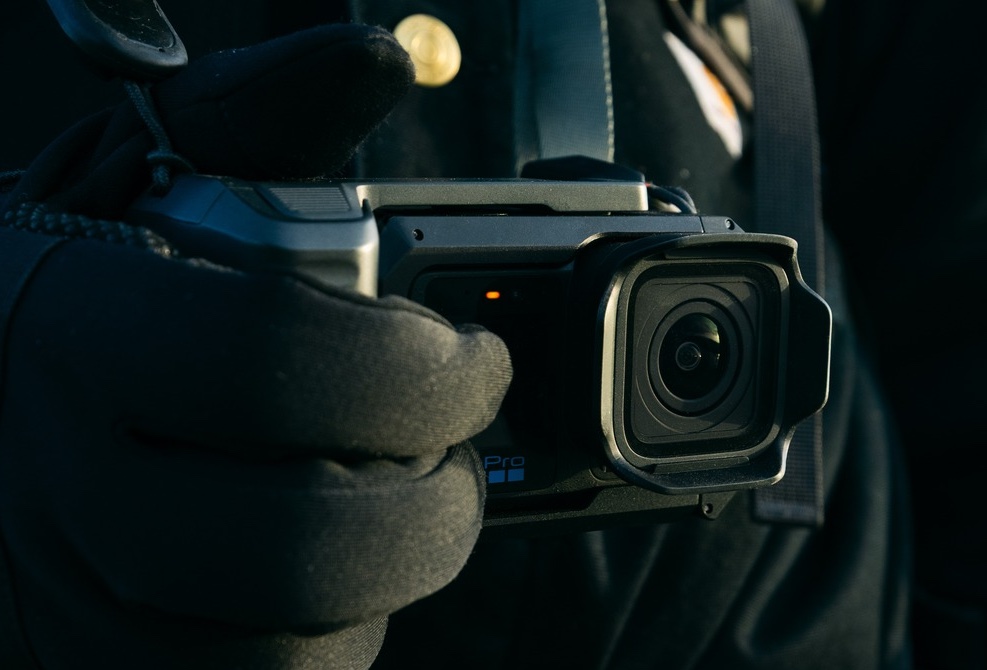
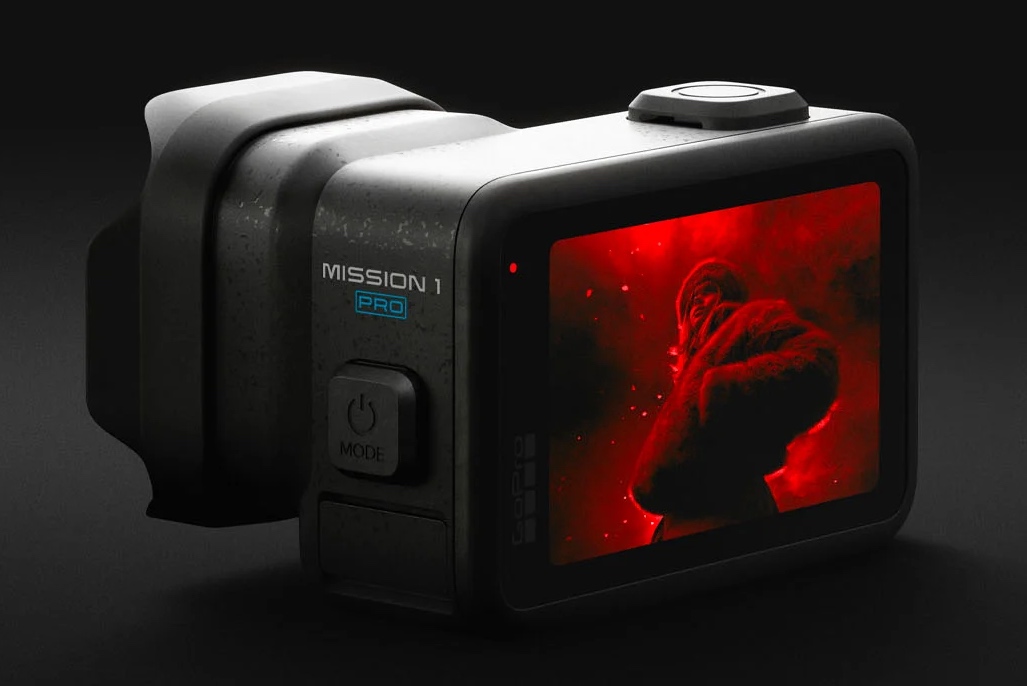
Last week, GoPro announced the Mission 1 series, a lineup of what the company says are "compact cinema cameras" with Type 1 sensors, the ability to shoot 4K/120 open gate and, on one of them, a Micro Four Thirds mount. But a key part of the story was missing: the price.
Thankfully, GoPro has just announced it, earlier than expected. The standard Mission 1 will retail for $599, while the Mission 1 Pro and Mission 1 Pro ILS will both sell for $699 (though, of course, it's bring your own lens with the latter). If you pay for the company's subscription service, which includes the ability to automatically upload footage from your camera to the cloud, you can get $100 off the MSRP of one of the cameras, or up to $150 off one of the accessory bundles.
If you want to get the full story on the cameras, you can read our coverage here. The prices, added to the fact that the cameras were announced at the National Association of Broadcasters (NAB) Show, and that the camera's maximum bitrate was designed to meet Netflix's requirements, suggest that the Mission 1 series is less consumer-oriented than the Hero series; the Hero 13 Black retails for around $430. They also put the Mission 1 Pro ILS in competition with some other video-focused, APS-C interchangeable lens cameras, such as the Canon EOS R50V and Nikon Z30.
The company has started accepting preorders on its site for the Mission 1 and Mission 1 Pro, which will be available starting May 28th. The version with the lens mount is still set to arrive in "Q3 2026."
Press release:
GoPro Announces Pricing for New MISSION 1 Series Professional 8K and 4K Open Gate, Compact Cinema Cameras, Starting at $499 for Existing GoPro Subscribers
Reserve Your MISSION 1 or MISSION 1 PRO at GoPro.com and Receive the New Point-and-Shoot Grip for Free with Purchase While Supplies Last
SAN MATEO, Calif., April 20, 2026 — GoPro, Inc. (NASDAQ: GPRO) today announced pricing for its new MISSION 1 Series of cameras—the world’s smallest, lightest, and most rugged 8K and 4K Open Gate, high frame rate cinema cameras. Built around a new 50MP 1” sensor and GoPro’s new, ultra efficient GP3 processor, the MISSION 1 Series delivers category leading image quality, frame rates, runtimes, and thermal performance in an ultra compact, durable design. GoPro is currently showcasing the MISSION 1 Series at the NAB tradeshow in Las Vegas through April 22nd; booth C5519.
Starting today at GoPro.com, customers can reserve their MISSION 1 or MISSION 1 PRO camera and receive a new MISSION 1 SERIES Point and Shoot Grip (a $100 value) for free with their order. This offer is for a limited time and while supplies last. Reserve your new MISSION 1 or MISSION 1 PRO now and be among the first to get hands on the world’s smallest, lightest and most durable high resolution, high frame rate cinematic camera system.
Pricing for the MISSION 1 Series:
MISSION 1 is $599.99 MSRP and $499.99 at GoPro.com for existing GoPro subscribers1
MISSION 1 PRO is $699.99 MSRP and $599.99 at GoPro.com for existing GoPro subscribers1
MISSION 1 PRO ILS will be $699.99 MSRP and $599.99 at GoPro.com for existing GoPro subscribers1 when the camera becomes available in Q3 2026.
GoPro’s flagship MISSION 1 PRO features a new, cutting-edge 50MP 1” sensor, incredible low-light performance, 8K60 / 4K240 / 1080p960 16:9 video capture, 8K30 and 4K120 Open Gate 4:3 video capture, 50MP RAW photo capture, all powered by GoPro’s new, ultra-power-efficient GP3 processor that enables category-leading image quality, battery life and thermal performance for mission-critical reliability in extreme use cases.
MISSION 1 PRO comes in the following editions. GoPro Subscribers can save up to $150 depending on the edition:
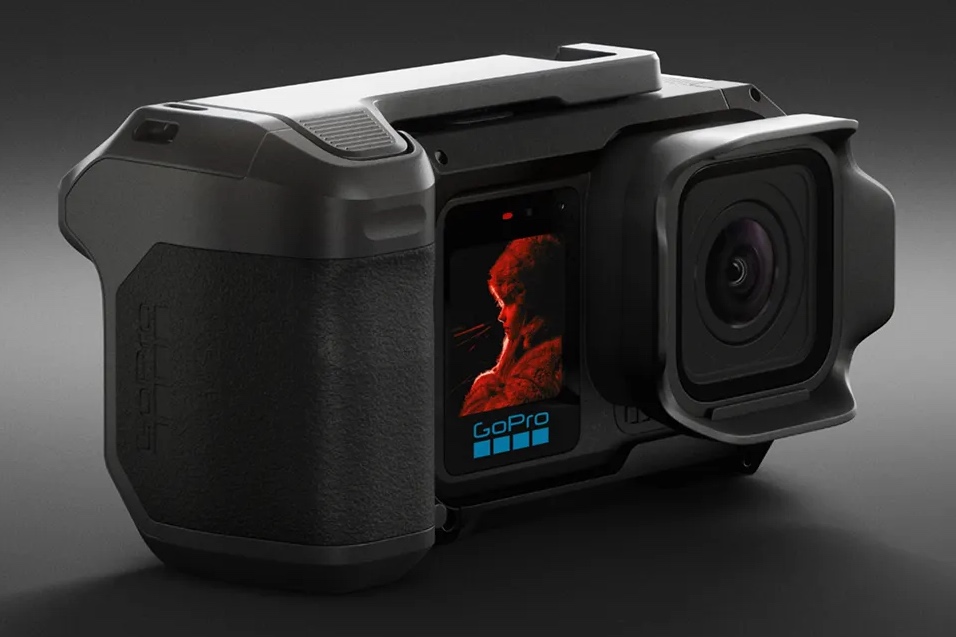
MISSION 1 PRO Grip Edition ($779.99 MSRP and $679.99 at GoPro.com for existing GoPro subscribers1) includes the flagship camera bundled with an innovative versatile grip that transforms the camera into a more rugged point-and-shoot camera designed for run-and-gun style capture. The grip functions as a 2-in-1 solution—as a lightweight, ergonomic grip for easy, one-handed on-the-move shots, or as a rugged, mountable metal cage for added protection with the option to mount vertically. Added features include cold shoe mounts, 1/4-20, magnetic latch mounting, and mounting fingers.
MISSION 1 PRO Creator Edition (available Q3 2026 for $1,099.99 MSRP and $999.99 at GoPro.com for existing GoPro subscribers1) includes the flagship camera bundled with the new MISSION 1 Series Media Mod for I/O port expansion and built-in microphone, the new Volta 2 Battery Grip for all-day power, and the new Wireless Mic Complete Kit for professional wireless audio. Perfect for vloggers and creators who want an ultra-capable and complete professional camera system that’s ready for any mission.
MISSION 1 PRO Ultimate Creator Edition (available Q3 2026 for $1,199.99 MSRP and $1,099.99 at GoPro.com for existing GoPro subscribers1) combines the flagship camera bundled with GoPro’s Fluid Pro AI gimbal for advanced stabilization in even the lowest light conditions as well as AI-driven subject tracking, the new Wireless Mic Complete Kit for a comprehensive professional audio solution, Light Mod 2 for compact, ultra-portable lighting and the new MISSION 1 Series Media Mod for I/O port expansion, enabling the addition of displays, microphones, headphones, lighting, batteries, and more. Perfect for creators looking for the best of everything and maximum flexibility.
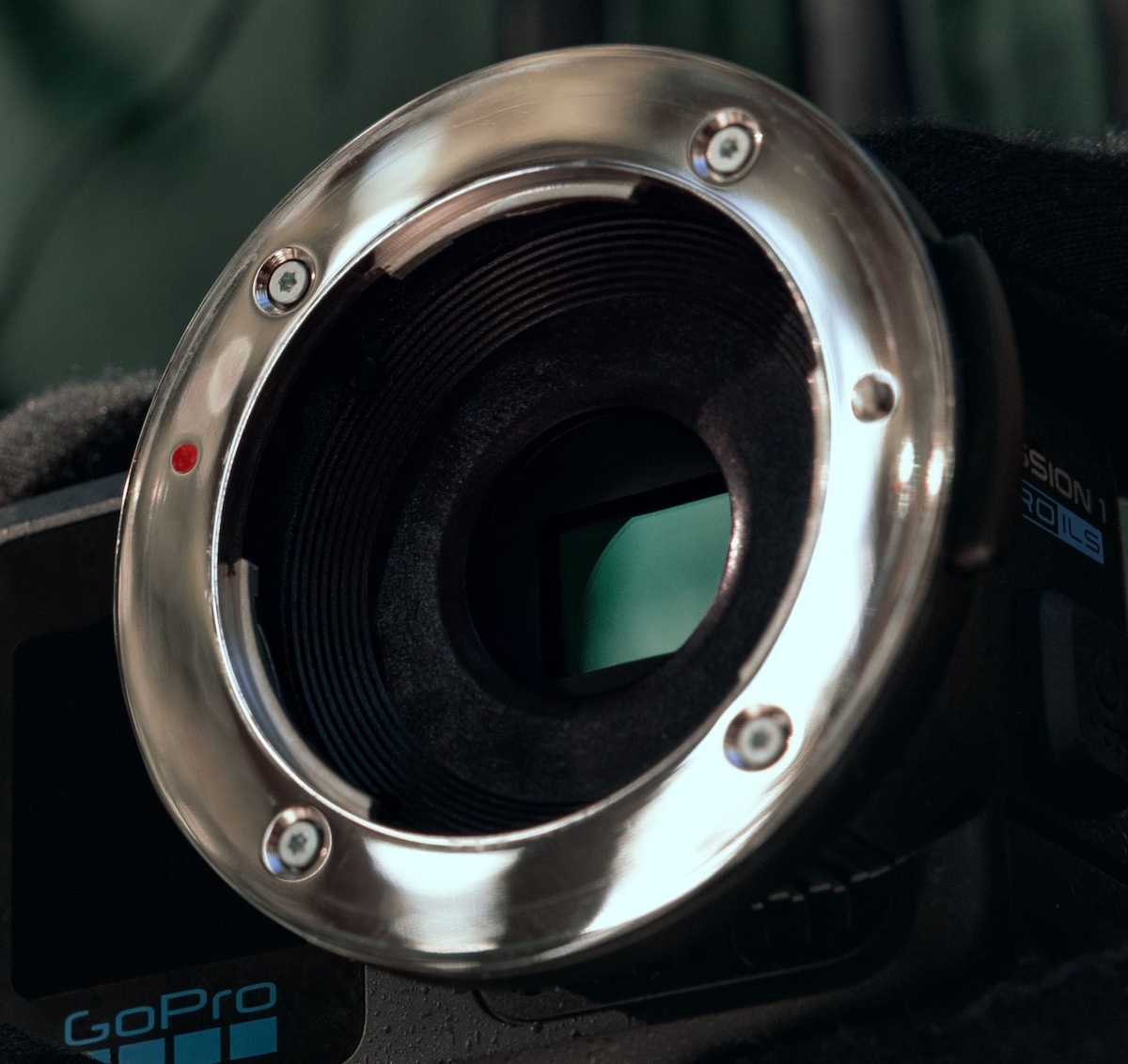
MISSION 1 PRO ILS (available Q3 2026 for $699.99 MSRP and $599.99 at GoPro.com for existing GoPro subscribers1) has the same 50MP 1” Sensor and GP3 processor as MISSION 1 PRO, but in a mirrorless form with an interchangeable lens mount that supports compatibility with the vast universe of Micro Four Thirds (MFT) lenses and adapters that allows a virtually limitless range of lenses to be paired with the camera. MISSION 1 PRO ILS also supports in-camera HyperSmooth video stabilization with any rectilinear, prime focal length lens. This versatility, combined with its video stabilization, weatherproof design and trademark GoPro durability, makes MISSION 1 PRO ILS the world’s smallest, most rugged and versatile high-speed cinema camera at a fraction of the cost and size of comparable cameras. With more creative options than ever before—including telephoto, zoom, macro, and more—the possibilities are limitless, whatever your mission.
MISSION 1 ($599.99 MSRP and $499.99 at GoPro.com for existing GoPro subscribers1) is the same as the flagship in every way but limited to 4K120 Open Gate video capture and 8K30, 4K120, 1080p240 16:9 video capture. 50MP photo capture is the same as in the flagship model. MISSION 1 is perfect for the creator who doesn’t require the higher Open Gate resolutions and category-leading frame rates of the flagship model but still wants the outstanding low-light and image quality benefits of the new 50MP 1” sensor and ultra-power-efficient GP3 processor at an entry-level price.
For a limited time and while supplies last, you can reserve your MISSION 1 or MISSION 1 PRO camera at GoPro.com and get the MISSION 1 SERIES Point-and-Shoot Grip accessory for free. Existing GoPro subscribers can save $100 when they reserve their MISSION 1 Series camera during this limited time offer.
Global, on-shelf availability begins May 28th for MISSION 1, MISSION 1 PRO and MISSION 1 PRO Grip Edition.
MISSION 1 PRO ILS, MISSION 1 PRO Creator Edition, and MISSION 1 PRO Ultimate Creator Edition will be available beginning Q3 2026. Sign up to be notified of product availability at GoPro.com.
The MISSION 1 Series Accessory Ecosystem
Wireless Mic System ($159.99): Capture crisp, professional sound anywhere with the Wireless Mic System. Designed for easy pairing with the MISSION 1 Series, GoPro HERO Black cameras, 3rd party DSLRs and phones, this compact, professional wireless audio system delivers crystal-clear 24-bit/48kHz audio and Dynamic Noise Reduction, keeping voices front-and-center in any setting. The ultra-small and light 10g transmitters are magnetic and can be clipped to clothes or objects. Adjustable gain and a Safety Track mode (recording a backup track at -6dB) ensure balanced, reliable sound no matter how dynamic your shoot gets. With 6.5 hours of runtime per mic plus a charging case offering two additional full charges, and up to 150 meters of wireless range, you’re ready for any creative mission.
Media Mod for MISSION 1 Series ($149.99): The new Media Mod for the MISSION 1 Series has a built-in multi-pattern mic and expanded I/O capability of your camera for production. Match the width of your stereo audio capture to the FOV of your video with eight different pickup pattern options. Three 3.5mm ports include an external microphone port, a line-in port for timecode sync, and a headset port for live audio level monitoring. A micro-HDMI port enables up to 4K60 video output for use with external monitors, video recorders, or live output for broadcasting. The Media Mod also features its own mounting system, so you can quickly insert or remove the camera when desired.
Point-and-Shoot Grip ($99.99): Transform your GoPro into an ultra-capable point-and-shoot camera with this ergonomic, lightweight grip. Perfect for street, travel, and urban shooting, the grip’s versatile design features cold shoe mounts for lights and mics, a 1/4-20 thread for tripods, vertical mounting and pass-through access to the camera’s integrated fingers and magnetic mounting system. For added flexibility, the grip converts into a rugged metal cage for your camera, providing added durability and vertical mounting versatility.
Enduro 2 Battery ($34.99): The 2150mAh Enduro 2 Battery delivers longer runtimes, fast-charging and a wider range of thermal performance compared to previous GoPro batteries. It’s also compatible with HERO13 Black. The MISSION 1 Series cameras can also work with the older HERO13 Black Enduro battery (albeit for shorter runtimes).
M-Series ND Filters ($99.99): The ND Filter 4-pack (ND8, ND16, ND32, ND64) delivers cinematic motion blur and exposure control for MISSION 1 PRO and MISSION 1. The MISSION Series cameras auto-detect which filter you’re using and auto-adjust the shutter speed for the desired blur and exposure effect. You can also manually control motion blur and exposure.
Protective Housing ($59.99): The protective housing will keep your MISSION 1 or MISSION 1 PRO camera waterproof down to 196ft (60m). The built-in mounting fingers allow you to capture content both horizontally and vertically. MISSION 1 and MISSION 1 PRO are waterproof to 66ft (20m) without a housing, while MISSION 1 PRO ILS is weatherproof.
Volta 2 ($139.99): The premium Volta 2 powered battery grip, tripod, and remote features a built-in 5800mAh battery, integrated camera control, and 1/4-20 mounting for up to 9 hours of 4K30 recording time2.
Light Mod 2 ($59.99): Add compact yet powerful LED lighting to your adventure or studio setup with Light Mod 2’s 200 lumen brightness, 33% increased battery capacity, and up to 100% longer runtimes3. Light Mod 2 includes an optimized diffuser design and versatile mounting for cold-shoe integration on Media Mod and Point-and-Shoot Grip or standalone light use.
Dual Battery Charger for Enduro 2 ($79.99): The fastest way to charge your MISSION 1 Series Enduro 2 camera batteries. Charge two batteries at once and easily check battery levels and charging status, even when the charger is unplugged. Comes with a high-performance Enduro 2 battery and is compatible with HERO13 Black Enduro Batteries.
Vertical Mount Adapter ($29.99): Use this adapter to easily capture social media-friendly footage with three convenient vertical mounting options: built-in mounting fingers, 1/4-20 mounting threads, and Magnetic Latch Mount compatibility.
The entire suite of MISSION 1 Series accessories will be available on a rolling basis beginning May 28, 2026, through Q3 2026. GoPro will announce on-shelf availability as each accessory becomes available.
1 Existing GoPro subscribers can take advantage of available GoPro subscription benefits and get $100 off the purchase of any MISSION 1 Series camera and up to $150 off MISSION 1 Series camera and accessory bundles. Available to yearly subscribers only upon subscription renewal.
2 Total recording time based on recording 4K footage (average of 5.97 hours total) at 30 frames per second with Bluetooth® on and using the combined power of a fully charged MISSION 1 Series camera with an Enduro 2 battery and Volta 2 battery grip at 77°F (25°C). Recording times may vary with HERO13 Black, HERO12 Black, camera settings and environmental conditions.
3 Measured in Level 3 Brightness Mode. Battery life may vary based on usage and other external conditions.
The National Association of Broadcasters (NAB) Show is in full swing, and Nikon has joined in, releasing a YouTube video teasing new Z Cinema glass. The video, which is also co-branded with Red, also heralds "a new Nikkor chapter."
The lens(es?) is only shown in shadow, but behind it, videos of older Nikon lenses are projected. Notably, it seems like the footage largely depicts wide-angle lenses, including a fisheye model and a 12-24mm; whether that's a hint or a coincidence, we'll have to wait and see. The video also shows cinema-styled controls, an autofocus/manual focus switch, and a line of lenses, which could hint that what's being announced is a series, rather than a single option.
Whatever Nikon ends up announcing – currently, the video and its description contain no mention of a date – it's interesting to see that the company is working on expanding its options for pro video. It already teased late last year that it was working on cinema-focused lenses, and has released a very video-focused lens in the Z 28-135mm F4 PZ power zoom.
Thypoch is showing off a groundbreaking lens at the NAB (National Association of Broadcasters) Show this weekend: the Voyager 24-50mm F2.8, a full-frame autofocus zoom. It's not just a first for the brand; it's the first full-frame autofocus zoom lens we've seen from a Chinese manufacturer.
While this kind of lens has seemed like an inevitability for a while, as we've seen increasingly ambitious primes from the likes of Viltrox, Laowa and Sirui, it's a bit surprising that it's come from Thypoch. The company is mainly known for manual focus primes, though its sister brand, DZOFilm, does make a range of manual focus zooms focused on cinema users.
The company isn't releasing full details for the lens yet – though stay tuned – but you can tell just by looking at it that the goal was to make it relatively compact. It's around the same size as Sony's 24-50mm F2.8 G lens, though Thypoch's lens features an internally-zooming design: this is no clone. It also has a clicking aperture ring, a customizable function button and an AF/MF switch.
The Voyager 24-50mm F2.8 is relatively compact for a fast, full-frame zoom.
The brand teased this lens on Instagram a few weeks ago, but its public unveiling is exciting, as it means it's one step closer to launching. We've seen Chinese manufacturers offer very decent budget prime lenses, and even come into their own with more advanced optics, becoming a competitive force driving the traditional players to come up with interesting offerings. If the same happens for zoom lenses, 2025 may not hold the title of the most interesting year for lenses for that much longer.
We've been able to spend some time with the lens and get some sample images with it, which you can check out below. We'll go more in-depth into image quality in a future article. For now, the high-level overview is that we found it to be relatively impressive, though we noticed some softness at the edges (especially when shooting wide open) and a propensity to flare under bright lighting.
We were impressed by its build quality; the aperture ring is satisfying to turn, and the rubber coating on the zoom and focus rings makes it very easy to handle.
Sample Gallery
Please do not reproduce any of these images on a website or any newsletter/magazine without prior permission (see our copyright page). We make the originals available for private users to download to their own machines for personal examination or printing; we do so in good faith, so please don't abuse it.
Sample gallery
This widget is not optimized for RSS feed readers. Click here to open it in a new browser window / tab.
Thank you to Sony for the loan of a Sony a7R V to capture this gallery. All images were processed using our standard lens workflow in Capture One, with no vignetting correction applied.
Nextorage today announced the start of its NAB Special Deals at B&H Photo and Amazon. The promotion includes significant discounts on CFexpress memory cards and card readers.
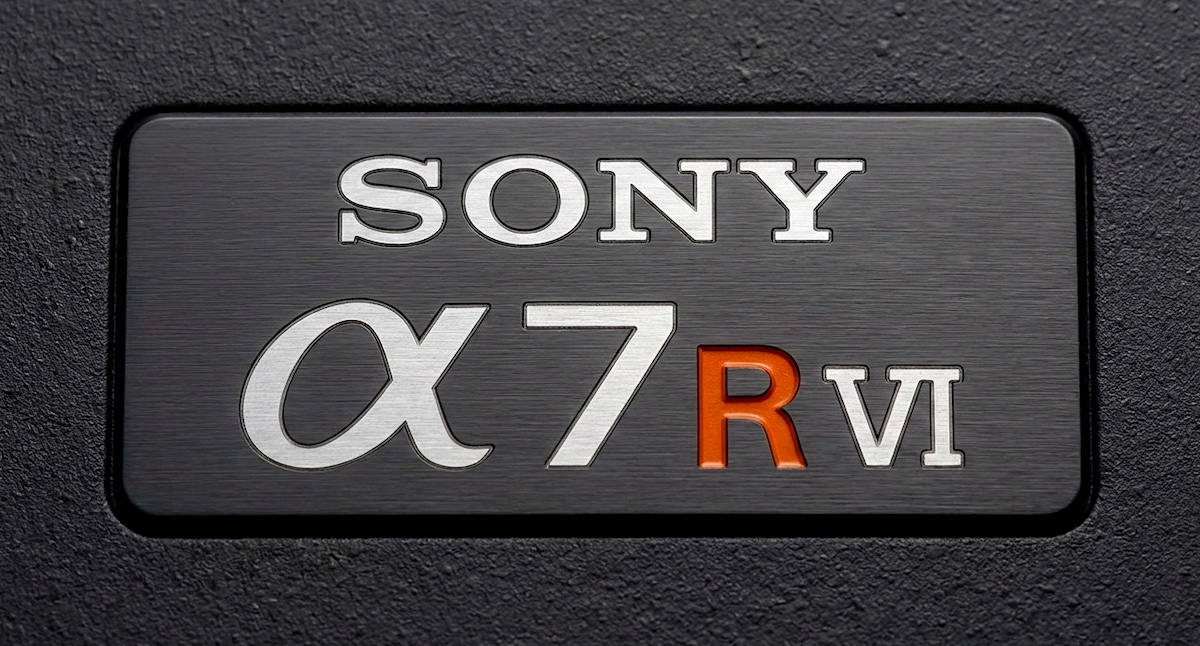
Sony is expected to announce the long-rumored a7R VI camera in May. Here are the latest rumored specifications:
Sensor resolution: approx. 67 megapixels
Body design: All-new body design
Processor and core performance: BIONZ XR2 processor + High-Bandwidth LSI; up to 8.5 stops of IBIS compensation; 30 fps continuous shooting in 14-bit RAW (electronic shutter); very fast readout (~60 fps full sensor in 14-bit ES with AE/AF).
Autofocus and dynamic range: New professional-grade AI autofocus model with significantly improved accuracy; 16 stops of dynamic range in mechanical shutter mode via Dual Conversion Gain HDR (DCG-HDR).
Video capabilities: High-end options including 10K oversampled 8K 30p (full-frame), various 4K/6.4K oversampled modes, and 4K 120p options.
Other rumored features: 9.44M-dot OLED EVF with grayscale correction and high brightness; triple-band Wi-Fi (6/5/2.4 GHz); support for importing custom stylized looks from the Creators’ App.
While video is becoming increasingly popular, and cameras' video features continue to become more sophisticated, there are still plenty of photographers who simply aren't interested in it.
And, in a time where cameras are already so good that the improvements on the photo side tend to be incremental, rather than groundbreaking, it can look like manufacturers are only interested in expanding their video capabilities.
This has, perhaps understandably, led to frustration among sections of the photography community. But it can also lead to the belief that a photo-only camera would be cheaper, which is not generally the case.
Generally, manufacturers only develop separate models if they believe there is a distinct audience to target, which is why, for instance, Nikon's ZR cinema/vlogging crossover camera is intentionally missing some features that would make it more appealing to someone that might otherwise buy a Z6III. Wheras, conversely, a stills-only version of the Z6III would compete for the same audience, leaving people to choose between a full-featured hybrid and a camera with the same components but artificially restricted.

 Connexion